The BLADE Blogs

The blogs of the BLADE editors, Steve Shackleford and Erin Healy.

Dozier 9-11 Knife Raises $1,525 For Benefit Fund

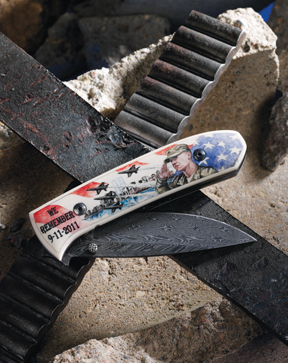
The Bob Dozier 10th anniversary 9-11 knife sporting a damascus blade that includes steel from the South Tower of the World Trade Center brought $1,525 in an auction that concluded earlier this week, with proceeds going to the New York Police and Fire Widow’s and Orphans Benefit Fund.

The bid for the winning knife—the folder was featured on page 50 in the December BLADE®—was submitted by retired New York City firefighter Keith Kaiser.

Forged by Daryl Meier, the knife’s blade includes a piece of South Tower steel and 1095 carbon steel. The pre-ban ivory handle boasts scrimshaw scenes by Sandra Brady. On one side is “We Remember 9-11-2011” commemorating the 10th anniversary, and the New York city skyline, including a shadow outline of the Twin Towers in place of the missing jet in a flyby jet formation, and a soldier saluting. On the flip side is a scene of firemen fighting the fires of the Twin Towers before they fell, an American flag, and the words, “Lest We Forget 9-11-2001.”

“There will never be enough to repay our debt for what [the first responders] paid,” Dozier noted. “All proceeds from the auction of this knife will go to help the families of the firefighters and policemen who lost their lives that day.”

For more information contact Bob Dozier Knives at [email protected] or visit www.dozierknives.com.

Still Time to Help BLADE Donate to Red Cross

There’s still time to help out the Red Cross relief efforts in Japan. Until the end of today, BLADE will give half of all sales profits at ShopBlade.com to the Red Cross. Just go here: http://tinyurl.com/4u5p8pr

Kit Carson Enters Blade Magazine Cutlery Hall Of Fame©

Harold “Kit” Carson, long-time knifemaker and designer of the M16 folder for Columbia River Knife & Tool (CRKT), was inducted into the Blade Magazine Cutlery Hall Of Fame© this past weekend during the 31st Annual BLADE Show (www.bladeshow.com) at the Cobb Galleria Centre in Atlanta, Georgia.

    In addition to the M16, which has been one of CRKT’s most successful knives for many years and is available in a number of iterations, Carson is also known for his Model 4 folder and other custom knives, and his willingness to help most any aspiring knifemaker on how to make knives. Carson’s patience in answering questions from up-and-coming makers on the Internet and elsewhere approaches near legendary status, and he has helped guide the careers of such established makers as A.T. Barr, John Greco and many others.

    A career Army man, Carson was inducted by his fellow Cutlery Hall-Of-Fame member and good friend, Ken Onion. In addition, CRKT head man Rod Bremer was on hand to add his observations on Kit and read a letter from Kit to the Blade Magazine Award Banquet, the site of the induction. Due to health concerns, Kit was unable to attend but he was definitely there in spirit.

    A complete story on Kit’s induction will appear in an upcoming issue of BLADE® Magazine.

Some Carry-On Pocketknives Will Be Allowed

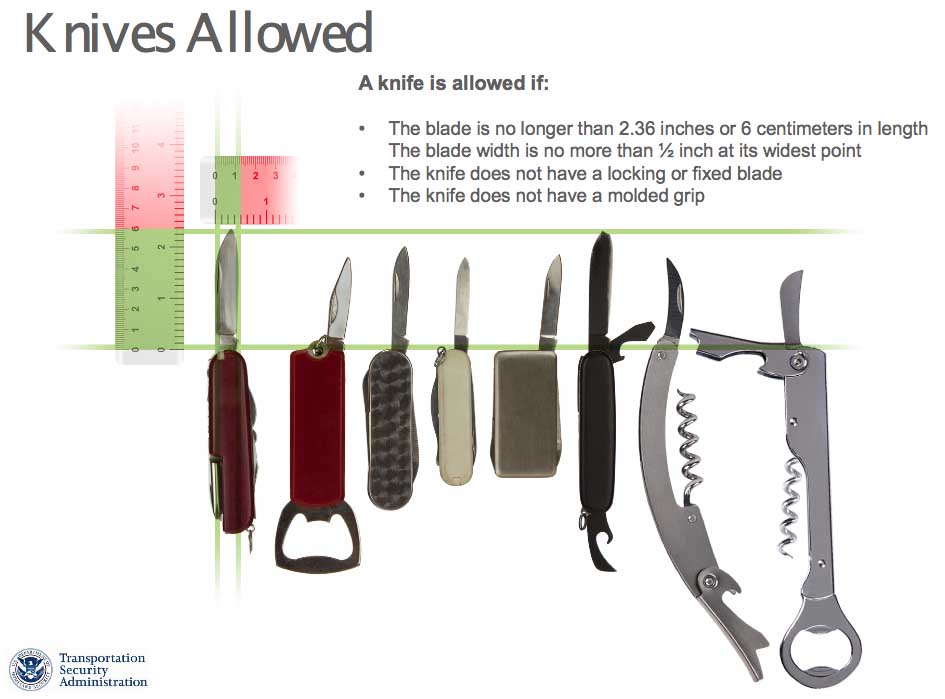
TSA Knives Allowed

Update: Click here to download the official PDF from the TSA outlining approved knives.

For the first time since the 9/11 terrorist attacks, passengers on U.S. airline flights will be allowed to have some small carry-on pocketknives by the U.S. Transportation Security Administration (TSA).

The change reportedly will go into effect April 25.

Knives with “retractable blades” under 2.36 inches and narrower than 1/2 inch at the widest point will be allowed, TSA Administrator John Pistole said. However, some knives will remain prohibited, including those with “locking blades” and/or molded handles. Exactly what “molded handles” pertained to in terms of knives is unclear at this time, though handles with finger grooves and otherwise contoured for an enhanced grip appear to be targeted. Box cutters and razor blades will continue to be banned.

As a result of the knives that remain prohibited, it appears that “small pocketknives” would be those within the aforementioned blade and lock constraints with uncontoured handles such as traditional Swiss Army knives, keychain knives, utility/scout pocketknives with can openers, screwdriver blades, etc., and “champagne patterns”—wine/bottle-opening knives with corkscrews. However, it is difficult to find a utility/scout pocketknife with a blade that is less than 2.36 inches long and 1/2-inch wide. As a result, it would appear that only such knives as the Victorinox Swiss Army Classic and other similar pieces will pass muster.

Meanwhile, overseas passengers will not have to check their applicable knives when traveling through the USA.

For the latest on knives, stay on www.blademag.com.

1 Day To The BLADE Show: Bring Your Walking Shoes!

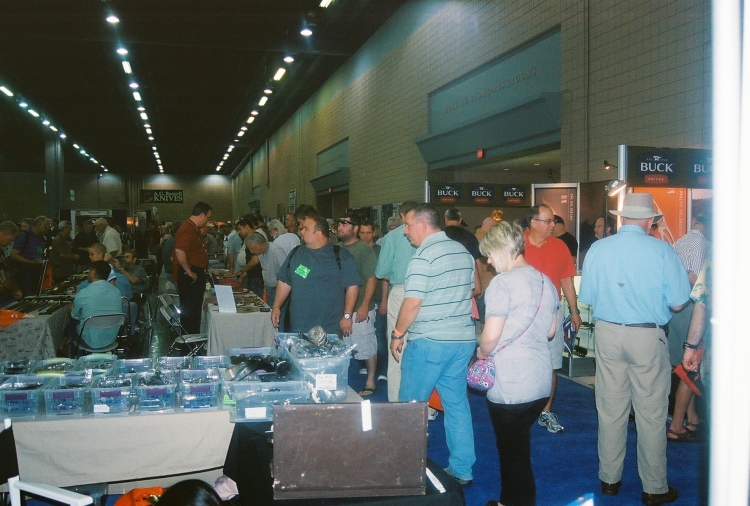
    Tomorrow it all begins: the 31st Annual BLADE Show (www.bladeshow.com) June 8-10 at the Cobb Galleria Centre in Atlanta. To see all 900 exhibitors and thousands of knives and knife accessories, you’d better bring your best, most comfortable walking shoes. Some people bring two pair, switching out one for the other for the second half of the day’s walking and standing.

    Show hours are 2 p.m. to 7 p.m. Friday, 9 a.m. to 6 p.m. Saturday, and 9 a.m. to 2 p.m. Sunday. Daily ticket prices are $15. As part of our “Welcome Home Troops” theme for the show, all active military will be offered a discounted show ticket rate of $8. The discount applies to law enforcement personnel, too. An active I.D. card must be presented onsite to receive the discount.

    See you soon!

 For more on the latest knives, knife legislation, knifemaking instruction, knife trends, knifemakers, what knives to buy and where and much more, subscribe to BLADE Magazine, the World’s No. 1 Knife Publication.

Take the BLADE® Quiz and Get Sharp!

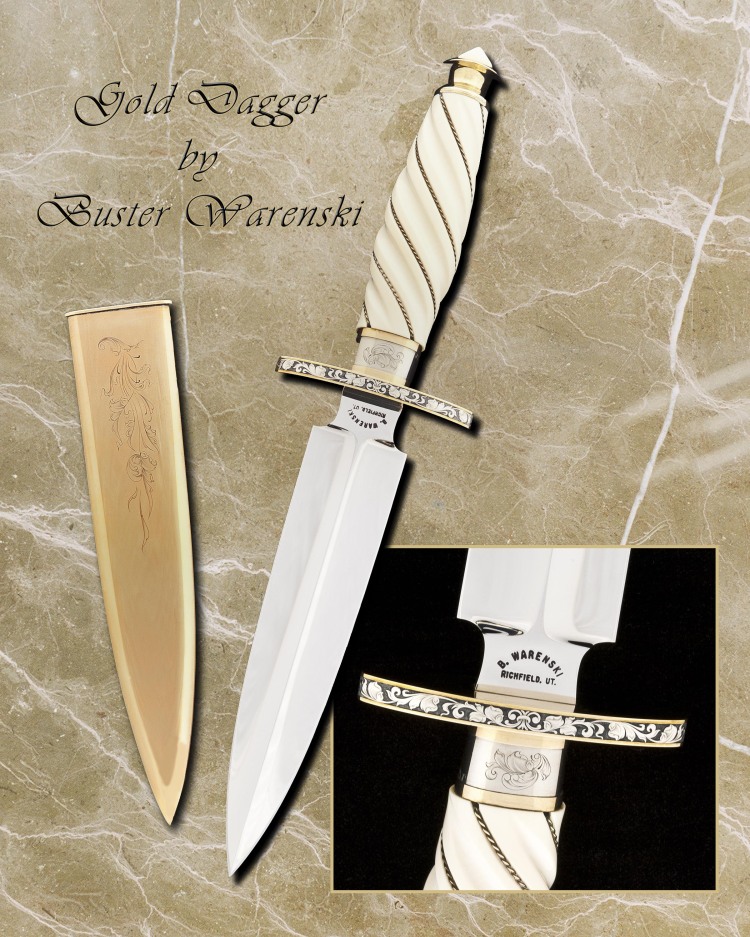
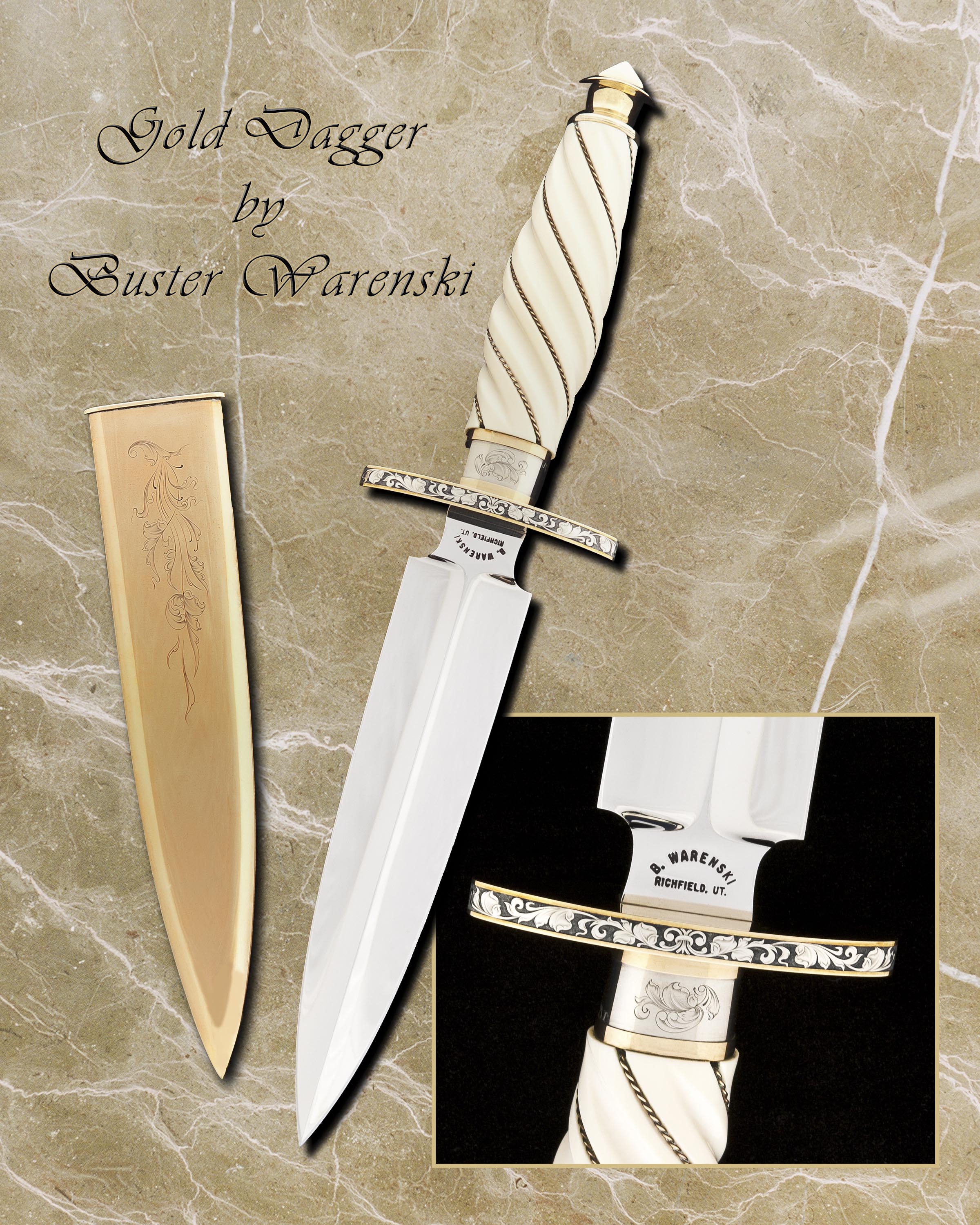
When knife enthusiasts think Knifemakers’ Guild, thoughts of Blade Magazine Cutlery Hall-Of-Fame© member Buster Warenski cannot be far behind. His gold dagger includes a gold separator band between the guard and also a gold pommel. The handle is carved antique ivory with twisted gold wire. The engraving is by Julie Warenski-Erickson. (from the Dave Nittinger collection; photo by Dave Siegel)

From One Cutlery Cradle To Another


The first BLADE Quiz focuses on Sheffield and the early days of the Knifemakers’ Guild


ARE YOU UP ON YOUR KNIFE HISTORY, especially the golden age of Sheffield and the beginnings of the Knifemakers’ Guild? Our first installment of a new BLADE® department, the “BLADE Quiz,” should let you know how schooled you are in short order. The answers appear below.

    1) The very early Sheffield knives carried the stamp “GR.” To what/whom did the initials refer and what were the knives better known as? A) Green River and Green River Knives; B) King George and Green River Knives; C) Great Britain and Green River Knives

    2) Knifemaker Ted Dowell served as a gunnery officer on which U.S. Navy ship during the Korean War? A) U.S.S. Minneapolis; B) U.S.S. Missouri; C) U.S.S. Intrepid

    3) How many cutlery factories were in Sheffield in 1910? A) 400; B) 1,400; C) 4,000

    4) Which Guild knifemaker was known early on by the moniker of “El Lobo Solo” (Spanish for “lone wolf”)? A) Chubby Hueske; B) Ruffin Johnson; C) Clay Gault

    5) Upon completion of 50 years of service, each Joseph Rodgers & Sons Ltd., employee was presented with: A) A 5-inch-tall silver statue of Vulcan holding the Rodgers trademark of a six-pointed star and a Maltese cross; B) a replica of the world-famous Rodgers “Year Knife”; C) a gold watch

    6) The obverse side of the blade is: A) the front or display side bearing the maker’s mark; B) the side without the maker’s mark; C) the blade spine

    7) Knifemaker Red Watson’s first name was A) Red; B) Herbert; C) Quinton

    8) In 19th-century Sheffield, the men who worked knife grinders feared: A) grinder’s asthma or grinder’s consumption; B) shattering grindstones, which could kill a worker; C) A and B

    9) Who stated, “Is knifemaking an art? I feel that anything done well is an art, be it a Rembrandt, a custom knife, or the Golden Gate Bridge. In short, what is art? More important, what isn’t?” A) Bud Cronk; B) Buster Warenski; C) Harvey McBurnette

    10) A cross guard has: A) Two quillons; B) one quillon; C) no quillons.

    11) According to The Knifemakers Guild Directory of the Membership, Bob Dozier is the son of: A) a blacksmith; B) an ironworker; C) a farrier

    12) The tool used by many Sheffield cutlers to put inlay holes in mother-of-pearl scales or to drill holes in scales is known as the: A) stidder or stiddy; B) parser or parsey; C) doller or dollie

    13) The first female knifemaker to apply for membership in the Knifemakers’ Guild was Carolyn Tinker, at the 1974 Guild Show. However, there was also another female maker who applied for membership at the ’74 show. Her name? A) Mary Jean; B) Ethel Waters; C) Rita Winter

    14) The term pocketknife originally referred to: A) a knife with blades opening at one end only; B) any knife that could be carried in a pocket; C) a knife that was always handy and could be used for any number of cutting chores

    15) Which of the following is not a founding member of The Knifemakers’ Guild? A) Jon Kirk; B) John Applebaugh; C) John T. Smith

    16) In old Sheffield, a bolster was cast or forged from nickel, iron or brass and had a projection used to tommy it to the liner. In this instance, to tommy means: A) to pin; B) to rivet; C) to solder

    17) Xylonite was the first of many types of imitation: A) bone; B) ivory; C) pearl

    18) Knives with handles made by burning an imitation tortoiseshell pattern into clear horn with lye were known as: A) spotted penknives; B) shell knives; C) turtle blades

    19) The Deguello, the tune Santa Anna adopted to signify no quarter would be given to the defenders of the Alamo, was originally used by: A) the Moorish invaders of Spain; B) Christopher Columbus; C) the Spanish conquistadores


Answers: 1) B; 2) B; 3) C; 4) B; 5) A; 6) A; 7) C; 8) C; 9) C; 10) A; 11) A; 12) B; 13) A; 14) A; 15) C; 16) B; 17) B; 18) A; 19) A. Scoring: 0-3—Your tongs just got gonged. 4-7—Have you considered foregoing knives and taking up Farmville? 8-12—You’re spending too much time playing mumbley-peg. 13-16—Your knife neurons are starting to fire. 17-18—You are qualified to run for mayor of The Pit at the BLADE Show. 19—You must be Pete Cohan, curator of the National Knife Museum.

For more on the latest knives, knife legislation, knifemaking instruction, knife trends, knifemakers, what knives to buy and where and much more, subscribe to BLADE Magazine, the World’s No. 1 Knife Publication. For subscription information click on http://www.shopblade.com/product/blade-magazine-one-year-subscripti…?r+ssfb050512#BL1SU.


 

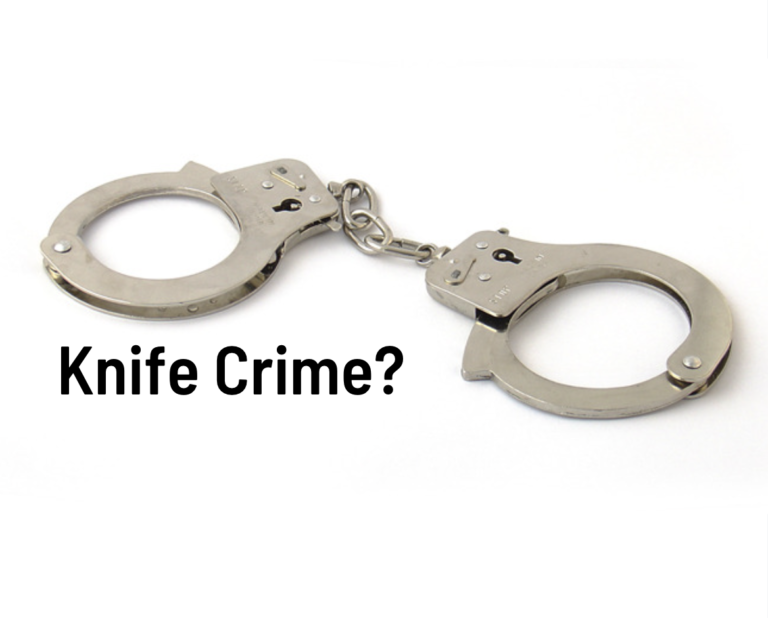
3 Things to Do if You’re Arrested for a (Possible) Knife Crime

You’re innocent until proven guilty, but don’t expect any special treatment for you or your knives.

The following in an excerpt from Knife Laws of the U.S.

You have NO need to read this article because it could never happen to you. Right? This article must have been written for knife-wielding thugs or street gang members. Right? Why would law enforcement authorities ever come after you? Right?

WRONG! Merely because you possess or carry a knife, knife law enforcers may try to justify their existence by turning you into an accused “law-abiding” criminal. Even though you are a careful, honest knife owner, with no intent to do any harm, and would never knowingly break the law, this can easily happen to you. I have plenty of criminal case files of examples of innocent, unsuspecting, law-abiding folks having to fight their way through the justice system to “prove their innocence.”

#1: Remain Silent

The Fifth Amendment protection against self-incrimination, also known as the “Right to Remain Silent,” is one of the most important Constitutional protections Americans have, that many other countries do not grant.

Yet, naive people in the United States routinely ignore Fifth Amendment protections and bury themselves with “explanations.” When it comes to a criminal violation, most law-abiding citizens are ignorant about the details of the law and its many loopholes and defenses. By opening their mouths, they remove all doubt about their ignorance and usually give the state something not just to use against them, but to twist against them.

#2: Ask for your Attorney

The Sixth Amendment guarantees an individual’s right to an attorney. By asking for your/an attorney and remaining silent, honest knife owners provide themselves with a fundamental foundation for a strong legal defense. Defense attorneys smile when they learn their clients stood firm on their rights.

Say, “I want my attorney.” If you do not already have an attorney, say, “I want an attorney.” Requesting an attorney does much more than simply getting legal counsel. Simply requesting an attorney causes a wall of Constitutional protection to spring up around you.

#3: Do Not Consent to Waiving Any Rights

A right given up is a right lost. Do not consent to a search without a warrant. Do not sign any documents or statements without an attorney’s advice. All citizens have a Fourth Amendment right to a warrant being issued before their person or premises are searched.

There are exceptions to the necessity for a warrant, and there is a large body of law that exists as to when law enforcement officers have justification or probable cause for a warrantless search. However, whether an exception for the warrantless search exists or not, you should never consent to a warrantless search.


Advertisement

Must Read Articles

Read this before you make a knife

Knifemaking 101 – Read This Before You Make a Knife

  by Wayne Goddard My experience has taught me that there's nothing like digging in and getting started. I've often said the hardest part of the...
how to forge damascus steel

How to Forge Damascus

Advertisement
Advertisement