
The BLADE Blogs

The blogs of the BLADE editors, Steve Shackleford and Erin Healy.

Waki Talk: What’s Hot in Wakizashis

The wakizashi may be the most sensible and useful Japanese sword. Between a katana and tanto in length, the “waki” is long enough for any number of heavy-duty jobs but also short enough to use in confined spaces. And, for those into collecting/displaying Japanese swords, the waki offers all the traditional accouterments of high-end pieces, too.

    “The CAS Hanwei Tactical Wakizashi crosses over to the machete market to a large extent but still has the mystique of the traditional wakizashi, which a lot of people know about, so it’s a pretty good combination of a machete and an old-time weapon,” CAS Hanwei’s Barry Ross noted. “A lot of our customers use it as a brush-cutting sword. Those hiking in the backwoods carry one for cutting brush for paths and to make shelter, and [some other of our customers] use it as a defensive weapon.”

    With a manufacturer’s suggested retail price of $209, it is a lot less expensive than traditional wakis that have more expensive fittings and cost much more to build, Ross added. Sporting a checkered Kraton handle for a sure grip in slippery conditions, the CAS Tactical Wakizashi has a 20-inch blade of 5160 carbon steel plasma coated for corrosion resistance.

    For the plasma coat, CAS Hanwei has a process that applies a thin layer of nickel to the blade. It is a very tough coating that forms a physical bond with the steel, one Ross said will not wear off. “5160 will rust easily if left to its own devices and since these things will see a lot of work, we needed to do something for that”—thus the plasma coat, he reasoned. The weatherproofed, glass-filled-resin scabbard is equipped with a drain hole so it will not hold water.


THE G2 TEST

ABS master smith Wally Hayes offers tactical, traditional and high-end wakis. “I make tactical wakis for Larry Brahms of Bladeart.com,” Hayes said. “Brent Beshara tested one at the [Usual Suspect Network] G2 Show. We had to make something that was the biggest bang for the buck, something to take into battle and not cost an arm and a leg, so we came up with the tactical waki.” It has a 14-inch blade of 1084 carbon steel and an 8-inch handle with a Turk’s head knot and a ray-skin nylon wrap resin coated to waterproof it. Hayes indicated he has since switched to W2 tool steel for the blade because W2 produces “cooler temper lines and stays straight in the heat treat.” His list price: $1,200. He also offers the double-edge/double-temper-line Hayabusa that he lists for $1,800. It has a 15-inch blade and an 8-inch handle of black ray skin and purple silk.

    While Hayes said his waki production is about half tactical/half traditional, which breaks things up and makes them more fun for him, he indicated he is learning more toward the more expensive models to “push his limits.”

    “As I move up the food chain, so does the demand for my higher-end stuff, more engraving and gold,” etc., he said. “I’m attracting higher-end collectors” from such places as Cypress, Germany, China and Australia, to name a few. “And Axl [Axl Rose of Guns ‘n Roses fame] loves my stuff—traditional and tactical,” he added. “He’s got my wakis hanging in his kitchen.”

    An example of Wally’s higher-end waki would include one with 1600 layers of three different carbon steels—1050, W2 and 15N20. “I put in some of Alfred Pendray‘s carburized electrolytic iron; that way I can get the brightness and tool up to between a thousand and 1600 layers,” Wally noted. All the handles are traditional. He carves and engraves them and embellishes them in gold and silver, depending on the price, which starts at $3,500.


BACKYARD CUTTERS

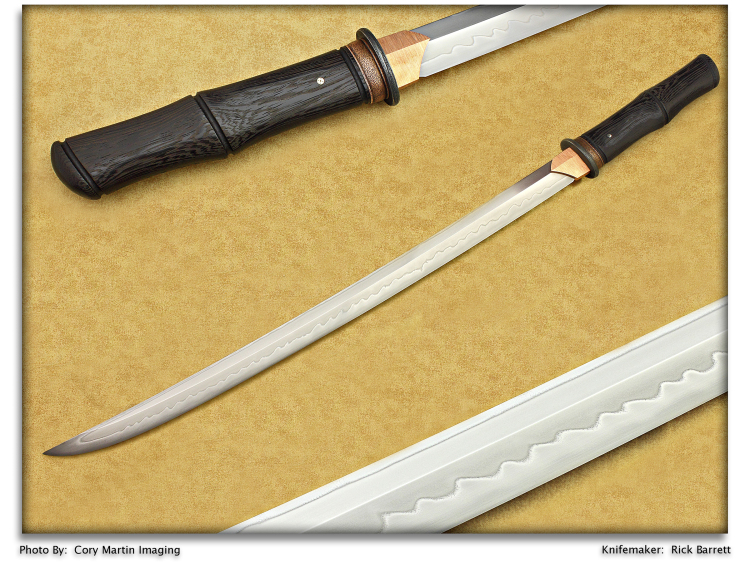
Rick Barrett, who also goes by the Japanese name of Toshi Hisa, said he prefers to make his wakis with semi-traditional-type blades. “I like the longer or oh wakizashi in the 23-to-25-inch blade range, so it’s almost a short katana,” he said. “It makes a great tactical blade; it’s not so long you can’t use it in confined spaces.” Rick uses 1075, W1 and W2, modern carbon steels heat treated traditionally for a hamon.

    He indicated many of his customers include martial artists and “backyard cutters,” the latter whom cut rolled-up straw mats and bamboo in their backyards. “In my opinion, cutting things is similar to shooting firearms. You go out and practice to improve your technique; it is a bit of a hobby in itself,” he opined. “It’s like people who don’t shoot; they don’t know the pleasure people get hitting a target. Those who don’t cut don’t get it either, but [those who do] get a thrill from cutting targets.” Rick said he also has military customers who order anything from a long tanto to a short waki for use in Afghanistan as a backpack piece, as well as collectors who “just put the swords on the mantle.”

    Rick sells most of his wakis—and swords in general—without handles. “I usually do the blade alone and let the customer decide if he wants the rest done traditionally or contemporary. That’s the way the Japanese makers do swords [without handles]. A lot of Westerners look at it as not finished, whereas the Japanese look at it as finished; the rest is ancillary. I get questions all the time: ‘When are you going to finish it?’ For years I would finish it and people would say they wanted something different. You can’t just change it easily. It requires redoing a lot of things. I spend $200 on getting the handle wrapped and if I have to rewrap, I will have to undo the handle, which costs $200, and rewrap, which is another $200.”

    When he offers a waki with traditional mounts, he hands it over to a traditional mounter. “[Traditional mounters provide] a more accurate wrap than I could ever get,” he observed. “[Traditional mounting] takes years in itself to perfect. I don’t want to offer something sub-par for a sole-authorship piece. It is far better to have a tighter handle wrap, diamonds lined up perfectly, and so on. The contemporary handles I do all myself.”


3V WAKIS

Dan Keffeler makes tough, functional user wakis. He said he was invited to a dojo in 2004 and watched a participant’s sword bend during a cut. “He wound up taking it to a polisher to straighten the blade and the bill was $900,” Dan recalled. “I was working with CPM 3V and wondered why can’t I make a [sword] blade out of 3V? It has a lot of impact and chip resistance and though it’s not as tough as S7 it’s still tough, so I started making Japanese swords from 3V, testing, dialing in heat treat for a balance of all the properties we’re looking for, one that would not take a set [bend] and would chop through a 4×4.”

    Since then Dan said 3V has developed a durable reputation for both knives and swords, including his wakis. “I am one of the first if not the first to use 3V for swords, and I hope my work with it over the last eight years has helped contribute to that,” he noted. “I think 3V has the best combination of toughness and edge retention for a sword blade of any steel I’ve tested. I compete in BladeSports International cutting competitions and hold the world record [1.21 seconds] for the fastest 2×4 cut, so I have spent a lot of time on what makes things cut.

    “With a sword, toughness is primary; with a knife, edge retention is primary. For swords, I have not seen another steel that can put those two attributes together like 3V can. When heat treated properly, it’s semi-stainless like D2. You have to care for it but not like for steels like O1. 3V is abrasive resistant so it doesn’t scratch up like other sword steels. It’s harder to sharpen and grind but because it’s so tough and chip resistant, I can grind it to a thinner edge, and a thinner edge is easier to sharpen.”

    For handles for his user pieces he uses a material called Tero-Tuf. “Brian Wagner and Jeff Crownover turned me onto it,” he said. “It’s synthetic like Micarta® or G-10 but is tougher than both. It’s laminated and has a resin like canvas Micarta to make it stronger.

    “I was testing different glues on G-10, Micarta and Tero-Tuf and trying to break the glue and hitting the handle with a hammer. The G-10 would break and crumble in chunks. The Micarta took more hits but would shatter. The Tero-Tuf would throw the hammer back at me. It’s hard to get it to fracture.

    “I sent a knife [with a Tero-Tuf handle] into Knifetest.com and [the tester] hit the handle with a sledgehammer 50 times and couldn’t break the scales. It’s really a high-impact material. Another benefit is it has a really good grip when wet.”


EQUAL PARTS HOT & COOL

Useful, traditional, contemporary and collectible, today’s wakizashis have everything going for them that enthusiasts look for in a Japanese sword. If buying such a sword is on your list, consider the wakizashi, especially one of those described herein. Equal parts hot and cool, wakis are hard to beat.—by Steve Shackleford

How Long The Waki Blade?


How long is the blade of a wakizashi? According to Rick Barrett, since the waki is more of a short carry sword, the blade normally is in the 14-to-22-inch range. As for the oh wakizashi—translated as long wakizashi—he said the range is 23 to 25 inches.

    Barry Ross put the waki blade-length range at 18 to 21 inches. Dan Keffeler said waki blades generally span from 16 to 24 inches. His assessment gibes with the description by the late Bob Engnath in his “Basic Blade Shapes of Ancient Japan.” After 25 inches, Keffeler noted, the blade falls into the short katana range, with the standard katana blade at least 27 to 28 inches long.

    According to information supplied by swordsmith David Goldberg, a wakizashi is “a medium-sized blade over one shaku but less than two shaku in length.” Wikipedia indicates the Japanese shaku has been defined to equal 11.93 inches. Two shaku equal 23.86 inches.—by Steve Shackleford


For more on the latest knives, knife legislation, knifemaking instruction, knife trends, knifemakers, what knives to buy and where and much more, subscribe to BLADE® Magazine, the World’s No. 1 Knife Publication. Click on http://www.shopblade.com/blade-magazine-one-year-subscription-us/?r+ssfb072512 for more information.
Sharp Knowledge: 3 Knife Steel Basics

How the knife will be used, edge geometry and heat treating are all key to deciding which knife steel to choose.
The knife steel you choose depends a lot on what jobs the knife will perform.

One of the questions knife enthusiasts ask most is What is the best steel for a knife? Before you can answer such a question, you must first know exactly what it is you need in a knife.

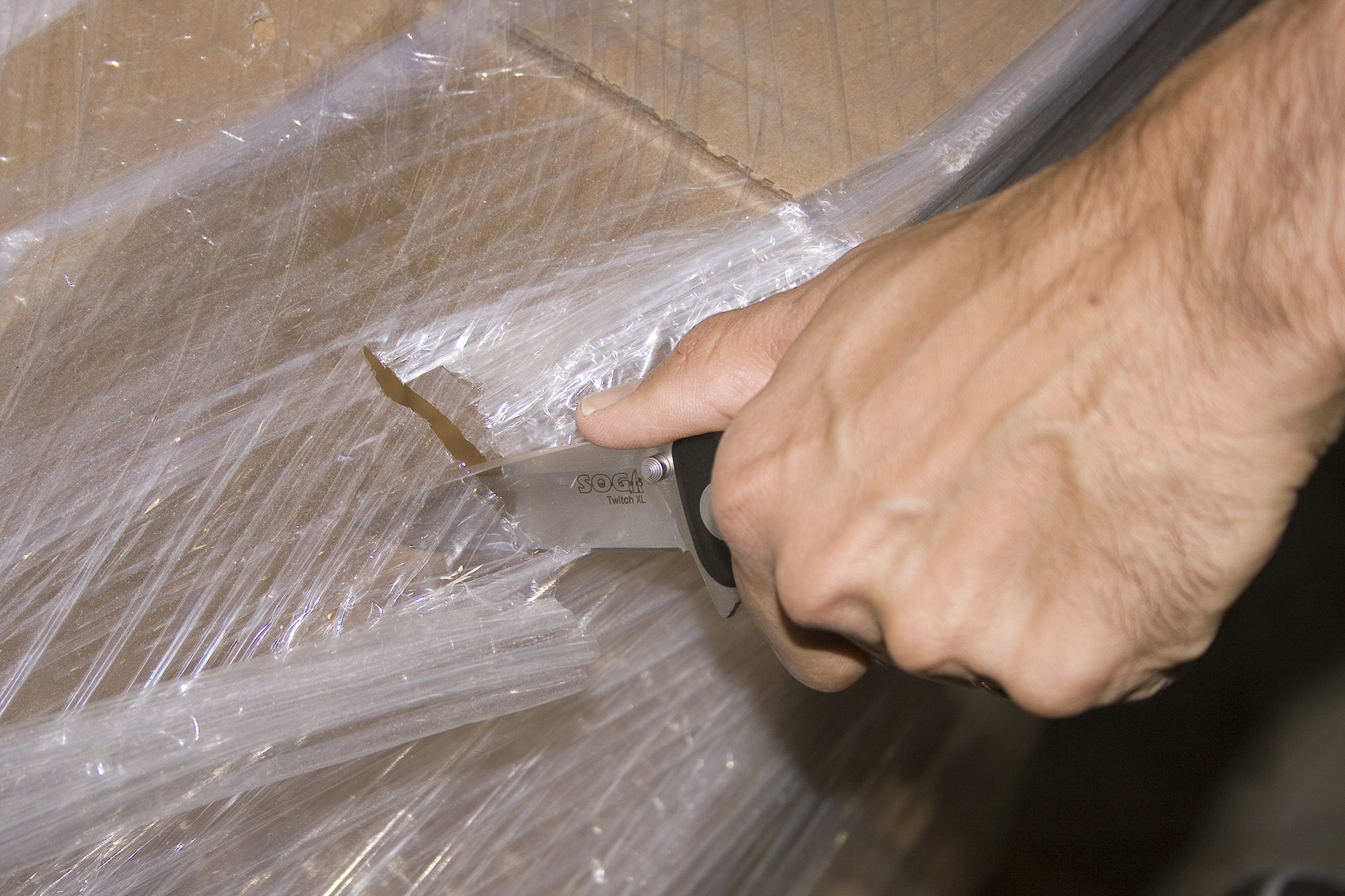
1) Will you use the knife to cut meat, or paper, or rope, or plastic, or a little bit of everything? Much depends on what you will be using the knife for, and just about any knifemaker or knife manufacturer who knows his stuff will know which steel he has on hand will be best for your purposes.

how-to-make-knives-knifemaking-book
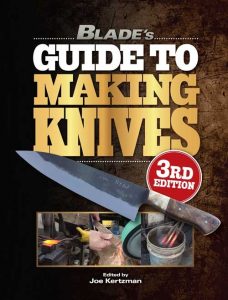
Learn more about selecting steel types and how to make knives in the third edition of “BLADE’s Guide to Making Knives.” The classic is back and better than ever!

2) The steel is just part of the equation. The blade’s geometry is also important. By blade geometry is meant how the blade is ground and tapered from the back (spine) to the edge. If too thick, it won’t slice or cut properly; if too thin, it may chip.

3) How is the steel heat treated? As BLADE Magazine Cutlery Hall-Of-Fame© member Wayne Goddard has written, “A knife of the very best steel may not perform any better than one made of an inferior type steel unless it is heat treated to bring out the full potential of the alloy content.” He also writes, “The reasons for a maker to turn out incorrectly heat-treated blades are too many to list. However, the most common is not having the correct heat-treating specifications from the steel maker.” If you find the maker does his own heat treating and does not go by the heat-treating specs provided by the steel maker, that’s an immediate red flag. In fact, many makers simply have professional heat treaters do their heat treating. Goddard is among them.

These are just three basic things to know about knife steels. There are many others.


New BLADE on Newsstands Today!

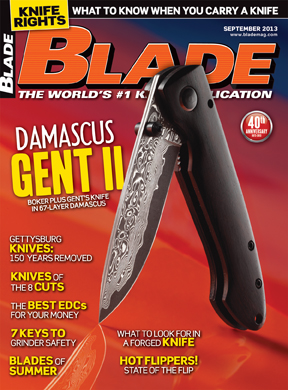
The knives from the Battle of Gettysburg, the best EDCs for your money, the blades of summer and the hottest flipper folders are but a sample of the topics covered in the new BLADE® (www.blademag.com), on newsstands TODAY!

On the eve of the battle’s 150th anniversary, we caught up with Paul Shevchuk, museum specialist at the Gettysburg Museum of the American Civil War. He was most forthcoming in providing pictures of and information about the knives, bayonets and other edged tools used by both sides in Pennsylvania in 1863. From a Confederate saber bayonet found on a Gettysburg street after the battle to side knives, pocketknives, D-guard bowies and more, Shevchuk’s contributions to the story make for an enlightening glimpse on how soldiers on both sides used their knives during the War Between the States.

Joe Kertzman tapped the know-how of a number of industry experts to get the lowdown on today’s best EDCs for the money. From the damascus and ebony of the Boker Plus Damascus Gent II—this issue’s cover knife—to the CRKT Carajas designed by Flavio Ikoma and many more, you’re bound to find an EDC that fits your pocket and pocketbook.

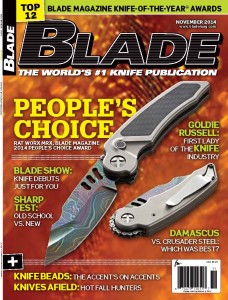
The Boker Plus Damascus Gent II graces the cover of the new BLADE®.
The new BLADE® features the Boker Plus Damascus Gent II on the cover.

Speaking of EDCs, it’s always good to know what the legal ramifications are when you carry a knife. Mike Haskew consulted such industry authorities as attorney Evan Nappen, AKTI Executive Director Jan Billeb and Knife Rights’ Doug Ritter for their recommendations on what you need to consider when you carry a knife.

With the beginning of summer mere days away, it’s time to replenish your summertime blade array. James Morgan Ayres suggests any number of ways to do it—including camping, picnic and just about every other knife need in the good ol’ summertime—in “The Blades of Summer.”

There are many more entertaining stories in the new BLADE (www.blademag.com). Check it out on newsstands NOW!


Radio Show Addressed Ivory Ban

The federal ban on elephant ivory was one of the topics on the DIane Rehm radio talk show March 4.

Ivory highlights Rehm talk show.
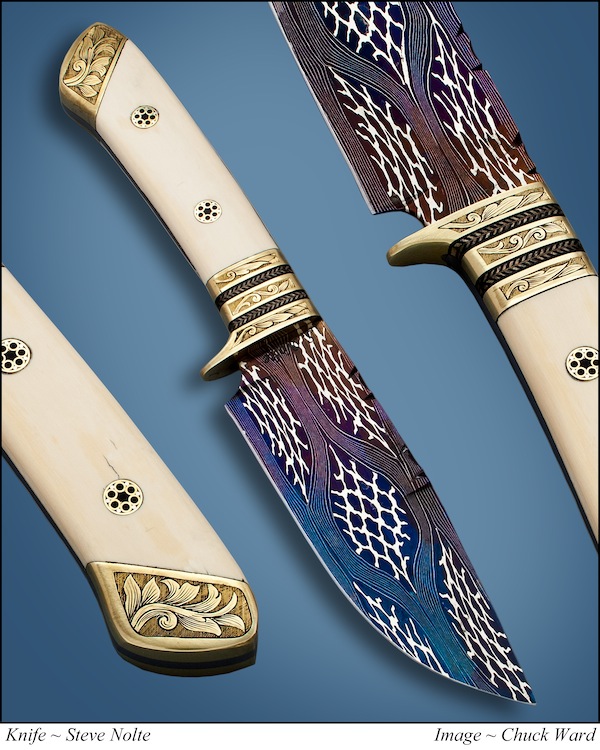
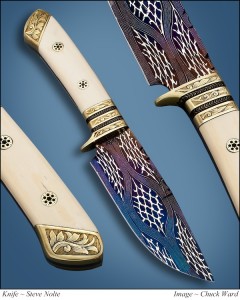
The Diane Rehm radio talk show had ivory as a topic on March 4. Steve Nolte’s fixed blade sports an ivory grip. (Chuck Ward photo)

Craig Hoover of the U.S. Fish and Wildlife Service was among the show’s guests. Hoover is one of the federal officials several in the knife industry have been contacting for information on the federal ivory ban.

Much of the program seemed geared toward the poaching of elephants and how awful that is—which everyone agrees is pretty much the case. What everyone can’t agree on is the best way to address it, and most in the knife industry agree a ban is not it.

Meanwhile, the Obama Administration’s ivory ban drags on.

In a related development, it appears the anti-ivory edict will be updated with new wording due to come out sometime in April. You can make a difference by contacting your Congressional representative and voicing your views. To find out the name of your representative and how to contact him or her, visit http://www.house.gov/representatives/find/

In addition, make your views known to Sally Jewell, Secretary of the Department of the Interior, and Daniel M. Ashe, Director of Fish and Wildlife. Both can be reached at their respective departments at 1849 C St., NW, Washington, DC 20240. For the former call 202-208-3100 or email [email protected] for more information.

Stay tuned to www.blademag.com for the latest knives, knife news and more.

Elvis and Gil: A Sharp Evening To Remember

Elvis Presley died Aug. 16, 1977, but it was only three years earlier in 1974 that Blade Magazine Cutlery Hall-Of-Fame© member Gil Hibben got to spend some time with the rock ‘n roll legend.

    Along with Phil Lobred, coordinator of today’s Art Knife Invitational, Hibben gained an audience with Presley and Ed Parker, grand master of American Kenpo karate. It was only for one evening but Hibben and Lobred spent quality time with Elvis talking knives, music and more.

    It was, of course, an evening neither Hibben or Lobred will ever forget.

    Hibben has made knives for Sylvester Stallone in two Rambo movies and two Expendables movies. The second Expendables film, Expendables 2, is in movie theaters nationwide now, and the new knife Hibben made especially for it is the cover piece for the November BLADE®, on newsstands NOW.

    From left above are “The King” striking a pose while holding a Hibben knife, Parker and a young, lean Gil Hibben. Kenpo is spelled incorrectly as “Kempo” in the caption below the picture. I tried to crop it out but as a computer layout artist I am a miserable failure. (photo courtesy of Gil Hibben and Mike Carter)


For the latest knives, knife trends, knifemakers, what knives to buy and where, knife legislation, knifemaking instruction, and much more, subscribe to BLADE® Magazine, the World’s No. 1 Knife Publication. Click here to start a subscription.

A Special Knife for a President

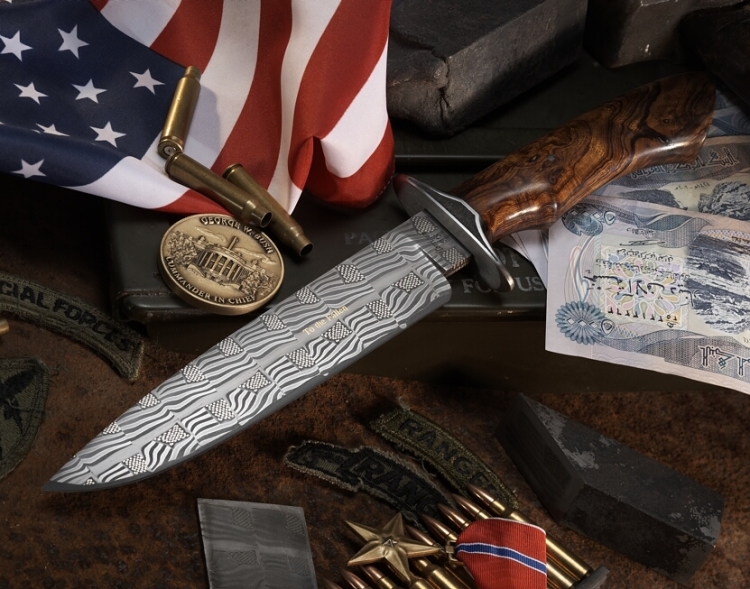
On this Presidents Day, we are honored to show you a knife American Bladesmith Society master smith John Horrigan made for and presented to President George W. Bush on Dec. 4, 2009.

    John’s twin brother Robert, also a knifemaker and a member of the U.S. Army 7th Special Forces Group, was killed in action in Iraq on June 17, 2005. John met with President Bush a week after Robert’s death, and it was then he promised the knife to Mr. Bush.

    A spectacular bowie with a mosaic damascus blade forged with images of Old Glory and engraved with the words “To the Fallen,” the knife remains a reminder of Robert Horrigan and others who have made the ultimate sacrifice for their country.

    For more information contact John Horrigan at www.eliteknives.com.

For more on the latest knives, knife legislation, knifemaking instruction, knife trends, knifemakers, what knives to buy and where and much more, subscribe to BLADE® Magazine, the World’s No. 1 Knife Publication. For subscription information click on http://www.shopblade.com/product/blade-magazine-one-year-subscripti…?r+ssfb022012#BL1SU

Gear Up with The Team Jackal

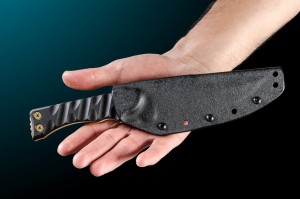
TOPS Knives Team Jackal Survivor
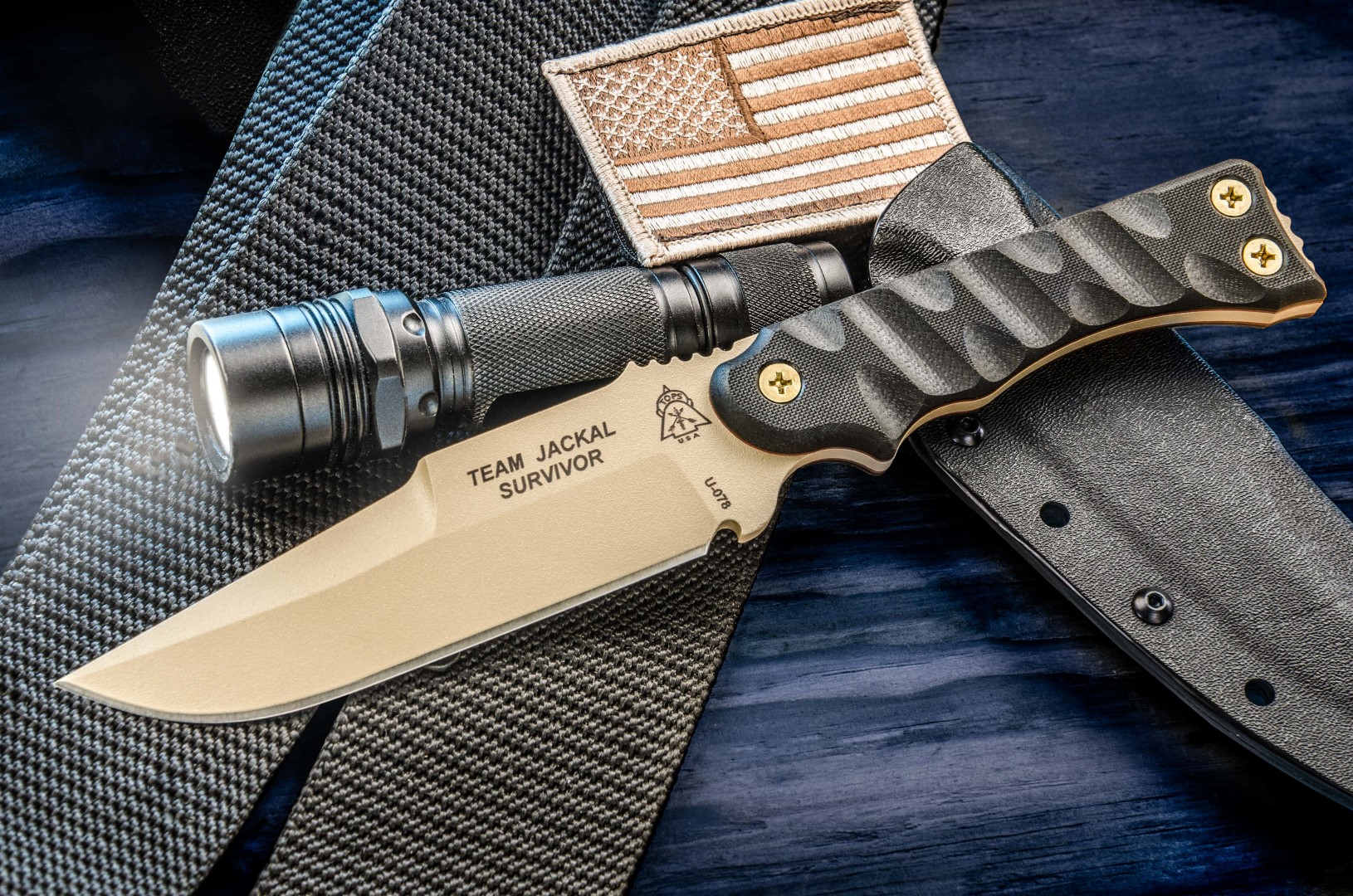
The Team Jackal Survivor is new from TOPS Knives.


Rotating spring steel sheath clip.
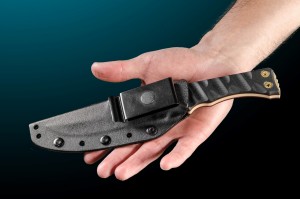
The Kydex sheath attaches to a belt or gear via a rotating spring steel clip.
Black Kydex sheath
The sheath protects the blade and makes for a handsome package, too.
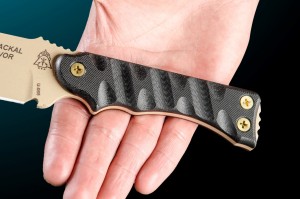
Rocky Mountain Tread handle.
The G-10 handle is textured in a Rocky Mountain Tread for enhanced gripping.
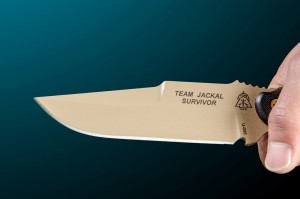
The blade is 1095 high-carbon steel.
The 5-inch blade is 1095 high-carbon steel in a Coyote Tan powder coat.

Gear up with the Team Jackal Survivor fixed blade from TOPS Knives, a great everyday utility and/or bug-out-bag knife.

The Team Jackal Survivor sports a 5-inch blade of 3/16-inch-thick 1095 high-carbon steel heat treated to a Rockwell hardness of 56-58 HRC. The cutting edge is 4 5/8 inches long. A steel favored by many bladesmiths and a growing number of factory knife companies, 1095 is easier to sharpen than some of the higher-grade stainless steels such as CPM S30V. This is a valuable trait to have in the field and/or for novice knife enthusiasts who have not quite mastered the proper sharpening techniques required or do not have the proper sharpening equipment to put an edge on the higher-grade steels.

Of course, the trade-off with carbon steel is that it tends to rust more easily than stainless steel, though if you wipe the knife down after each use rust should not be a problem. However, just in case, the Team Jackal Survivor blade features a Coyote Tan powder coating to help reduce rust. The coating also holds down on glare. Still, though, a wipe down after each use never hurts!

The contoured, straight-backed handle is a black G-10 hard synthetic textured in TOPS’ Rocky Mountain Tread for secure purchase and a cool look. Enhancing purchase is a jimped blade ramp just forward of the handle spine and a finger groove behind the choil. The knife’s overall length is 9.75 inches. Without the sheath, it weighs 8.9 ounces.

The sheath is a black Kydex with a rotating spring steel clip. Counting the sheath, the complete knife package weighs 11.7 ounces.

The manufacturer’s suggested retail price for the made-in-the-USA Team Jackal Survivor is $175, but if you visit topsknives.com while its sale lasts you can get it for $140.


The latest issue of BLADE is on newsstands now!Recommended:

Stay abreast of the latest developments on this and many more knife rights issues with a subscription to BLADE.

Advertisement

Must Read Articles

Read this before you make a knife

Knifemaking 101 – Read This Before You Make a Knife

  by Wayne Goddard My experience has taught me that there's nothing like digging in and getting started. I've often said the hardest part of the...
how to forge damascus steel

How to Forge Damascus

Advertisement
Advertisement