
The BLADE Blogs

The blogs of the BLADE editors, Steve Shackleford and Erin Healy.

Knife Trends—Flipper Folders

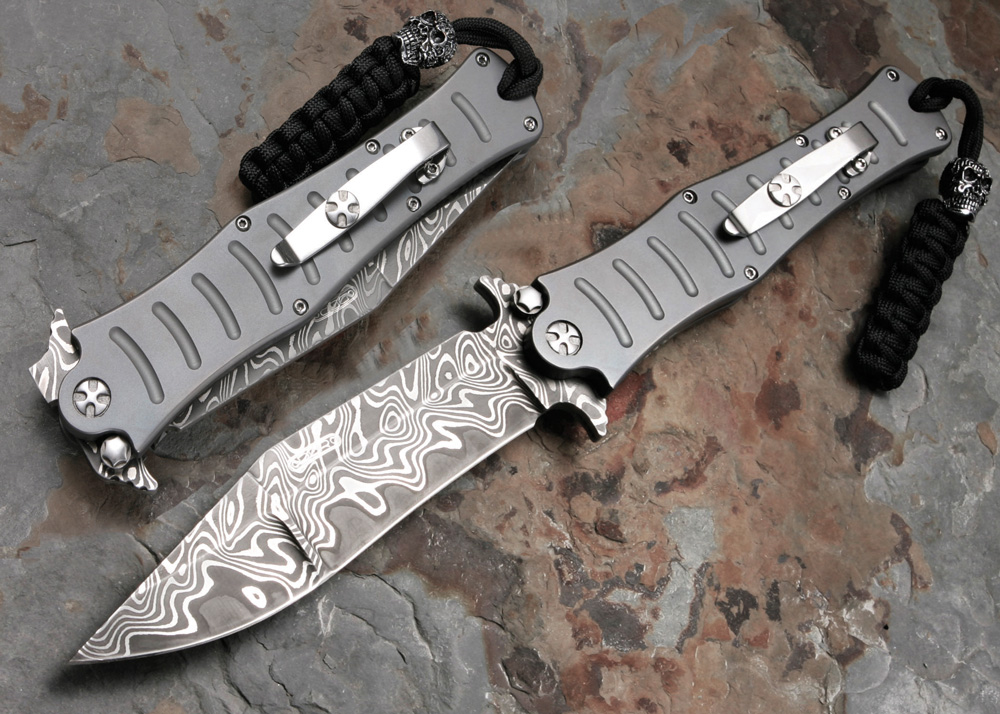
When it comes to big flippers, one of Darrel Ralph’s Madd Maxx 5.5-inch MGB bearing models fills the bill. In this instance, Ralph outfits his big flipper with a blade of PD1-core san-mai damascus forged by Chad Nichols. The knife comes in a run of 25 numbered pieces.

Flipper folders are wildly popular. Aside from adding an interesting visual element to any knife, the flipper serves a few key roles, including as a one-hand opening device, and as a guard.

Just like innovation and technology drive any industry, the same can be said for the knife industry. What’s neat about knives is that they’re often designed by handmade knifemakers, craftsmen, really, and innovations often take the form of folder locks, assisted opening devices, and in this case, flipper folders.
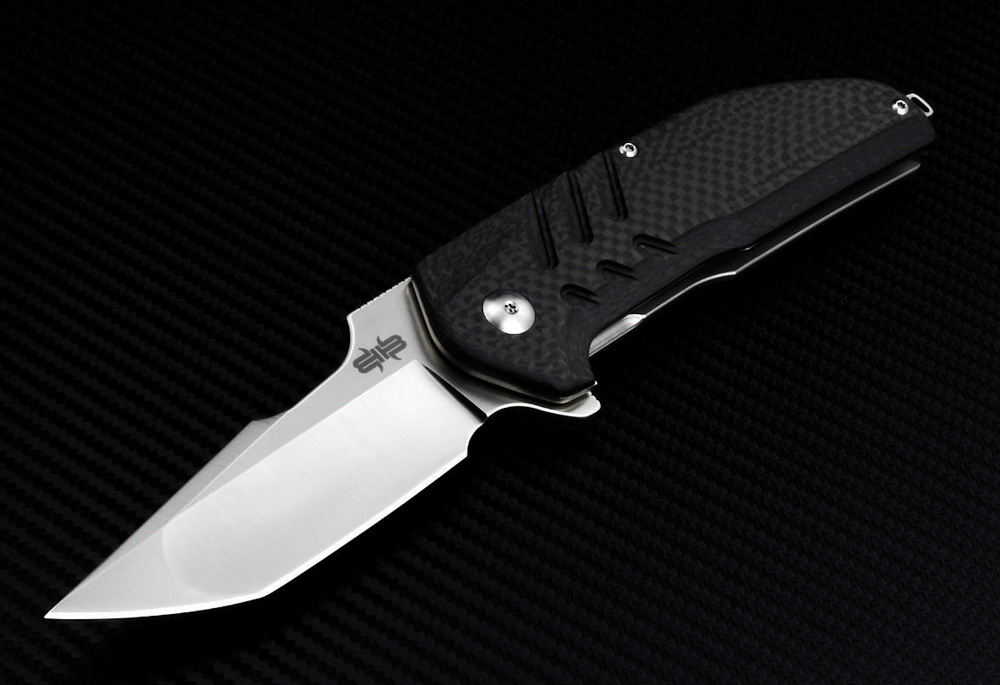
While the Strife, a collaboration between Brous Blades and Dustin Turpin, is a big flipper, Jason Brous said size is not so important as design execution.

There are some monster flipper folders today. As Dexter Ewing writes in the March issue of BLADE®, “Flipper folders, aka flippers, continue to be wildly popular. Aside from adding an interesting visual dimension to the knife, the flipper—a simple protruding lobe at the bottom of the blade’s tang—serves a few roles. One is as a quick and convenient one-hand opening device. Clutch the closed knife’s handle, give the flipper a swift tug with your index finger and the blade has enough inertia to propel itself to the open and locked position. The flipper also serves as an integral hand guard when the knife is open, providing a physical obstruction to prevent your hand from sliding forward onto the blade.”
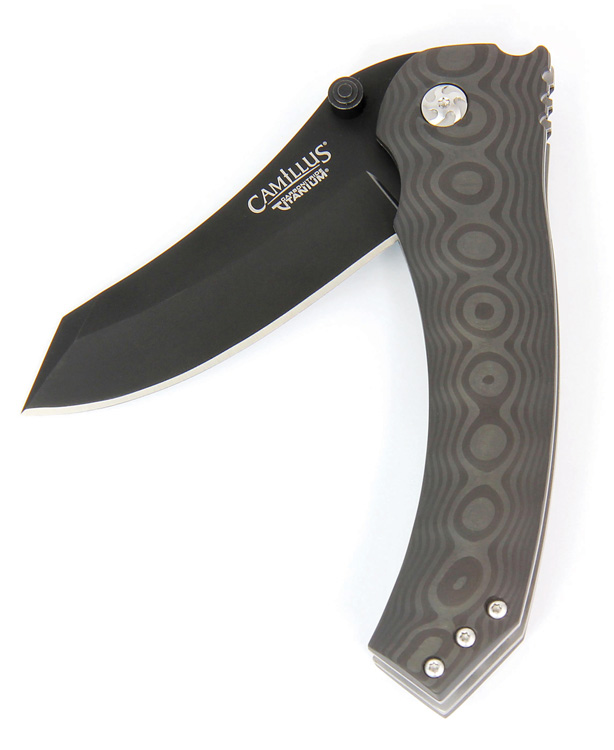
At 8.5 inches long open, the Camillus Jolt designed by Will Zermeno is a big flipper in every sense of the word. The 3.25-inch blade is hollow-ground D2 tool steel and the scales are a carbon fiber with a subtle pattern designed to enhance the frame’s curved shape.

To read the rest of the story, see the March issue of BLADE. 


Recommended for You:
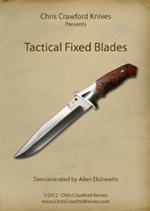
Tactical Knifemaking.Making Tactical Fixed Blades DVD

Learn both basic and advanced knife making techniques with expert instruction from Allen Alishewitz in Tactical Fixed Blades. Allen demonstrates how to craft a double-edged tactical fixed blade knife from start to finish, and creates two knives in order to fully illustrate the knife building process. You’ll learn:

– Profiling and Drilling the Knife
– Tang Tapering on a Grinder
– Tang Tapering on a Mill
– And more!
Order here

Loveless & Abercrombie: Match Made In Knife Heaven

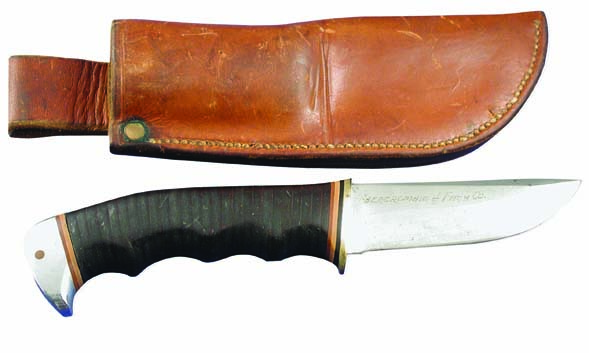
When a Merchant Marine named R.W. “Bob” Loveless walked into Abercrombie & Fitch—a retail sporting goods store—in downtown Manhattan, New York, he was looking for a Randall knife. But Randall knives were out of stock, and the waiting period was too long, so Bob decided to make a knife on his own. When he returned to Abercrombie & Fitch with a knife he had built, the store manager liked it well enough to order four more just like it.

This is one of Loveless’ first knives made for Abercrombie & Fitch during the early 1950’s. The photo is courtesy of John Denton, and the image ran in the book Knifemaking With Bob Loveless.

Louisiana Bill Would Provide Clear Definition of Switchblades

Officials of the American Knife & Tool Institute (AKTI) stated they are working to add Louisiana to the growing list of states that have changed statutes to more clearly define what is NOT an illegal knife and protect the rights of knife owners. Louisiana residents need to encourage their legislators to support SB 78, an AKTI release noted.

    For more info click http://www.akti.org/news/louisiana-knife-bill-will-provide-clear-definition-of-switchblades

For more on the latest knives, knife legislation, knifemaking instruction, knife trends, knifemakers, what knives to buy and where and much more, subscribe to BLADE Magazine, the World’s No. 1 Knife Publication. For subscription information click on http://www.shopblade.com/product/blade-magazine-one-year-subscripti…?r+ssfb032212#BL1SU.

Knife Ed 101: From the Periodic Table to the Rockwell Hardness Scale

Jim Bowie scowls as I absorb the minutia of properly conveying knife specs.
Jim Bowie is not amused with my lack of knowledge about steel mixes.

Knowing what you don’t know sometimes means knowing when to stop researching and just play with your knife. In the course of more fully educating myself about knives, I find that everything, and I mean every little thing, involves further study. It can be paralyzing. And sometimes it needs to just get silly so I can stop worrying about it.

I’m in charge of maintaining the style sheet at BLADE, which is an alphabetical list of knife industry-specific terms and instructions—or exceptions to instructions—regarding how we present certain things in BLADE. We want to be consistent.

The other day my boss and BLADE editor, Steve Shackleford, sent me something like, “Just so you know… the V in MoV is always capitalized. For example, 8Cr13MoV: Cr refers to chromium, Mo refers to molybdenum and V refers to vanadium—all elements in the steel mix.”

Cool, I thought.

And then I thought: The periodic table of elements? Seriously?

For an English major with a history minor—even one into guns and knives—this concerned me. Oh sure, there’s science in the acids and bases of a batch of cookies in the oven, but I honestly never imagined printing out that chart after I left high school. But there it lies, adding color to the growing pile, its information so obvious in hindsight. Jim Bowie perpetually scowls with what I imagine can only be his disappointment in my slow pickup.

So, when Steve explained how BLADE presents Rockwell hardness: “the Rockwell hardness is 58-59 HRC,” I figured I should try to fit more about that topic into my rock hard head.

After work I called a friend.

His response: “What is the Rockwell hardness scale and what does it mean to me?”

Exactly, I replied.

And while we’re at it, I thought, aren’t “hard” and “tough” synonyms for the same thing, like soldiers or overcooked steak? (That’s a joke. You can read about the difference between hardness and toughness in Bernard Levine’s article, “Rockwell Hardness, What It Is And What It Means To Your Blades,” BLADE Magazine, Sept. 1997, Pages 74-76.)

And why can’t I close my Twitch II? Am I not pressing hard enough? Am I afraid of the release? (That’s not a joke, and no, the lock is not engaged.)

“I can envision both scenarios,” my friend said.

That’s how he talks.

We joke about cut-resistant gloves, only he’s not joking. I’m a klutz.

He explained something about measuring divots and my ears stopped up and my eyes glazed over. I have a hard time thinking in 3D.

But I had the power all along. In the archives of BLADE itself I found this helpful article: Bernard Levine’s article, “Rockwell Hardness, What It Is And What It Means To Your Blades,” BLADE Magazine, Sept. 1997, Pages 74-76

It all makes perfect sense. I think I can now move on to worrying about whether there’s a good mix of ATS-34, 440C, CPM S30V, CTS steels and 5160, O1, D2, 1095, L6 steels represented in our Knifemaker Showcase pieces.

Your Knifemaking Questions, Answered

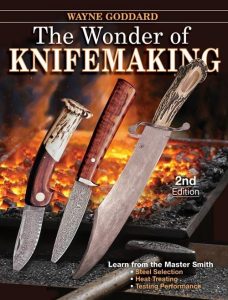
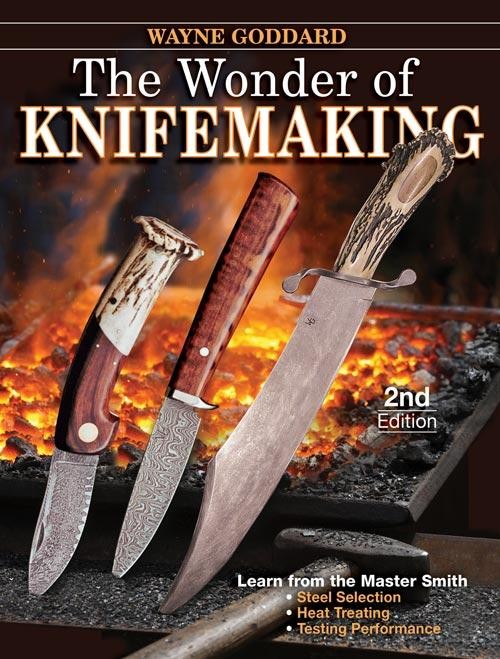
Knifemaking bookGet all your knifemaking questions answered in this collection of expert advise from former BLADE columnist Wayne Goddard. The Wonder of Knifemaking makes a thoughtful gift for someone interested in starting or perfecting their knifemaking skills


A Cool Lady’s or Gent’s Knife

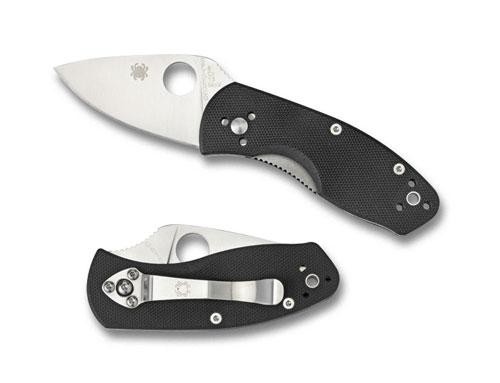
The Spyderco Ambitious is advertised as a small (3.5 inches closed) palm-sized workhorse offering big performance in a compact knife package. It definitely fits in my palm—in fact, with my hand being perhaps a tad larger than medium-sized for an adult male, it swallows the G-10 handle completely. Ergo, fully grasped, the butt is a good inch shy of the end of my palm. This is a tad small for my tastes, but then the Ambitious comes as advertised.

Looking for a cool lady's or gent's knife? The Spyderco Ambitious fills the bill.
The Spyderco Ambitious makes a cool lady’s or gent’s knife.

The edge of the 2.25-inch, flat-ground, 8Cr13MoV stainless blade is razor sharp out of the box, effortlessly slicing stationery, shaving hair and cutting cardboard with authority. It also digs into wood aggressively and makes a handy pencil sharpener if you’re in need of one, the small handle ideal for a three-finger grip that enables you to exert cutting pressure in the “little whittles” needed to sharpen something as small as a pencil. Though short, the blade is wide enough (1.25 inches at its widest) to handle larger cutting jobs, with a jimped area on the ramp to place your thumb for cuts that might take more bearing down.

The blade opens and closes off a Michael Walker LinerLock™ that, despite the knife’s small size, operates smoothly and securely after a little practice. A reversible clip runs about two-thirds the length of the small contoured handle. An integral guard offers some protection from the hand running onto the blade, though I would like to see a bit more downward lip on it to enhance that protection.

One of Spyderco’s models made in China, the Ambitious is yet another example of just how good the Chinese are getting at making quality knives that cut extremely well. Though compact, the Ambitious is solidly built and makes a great gent’s knife, backup piece or lady’s knife. ShopBlade’s price: $35.96—you save 35 percent! For more, visit http://www.shopblade.com/ambitious-black-g-10-plainedge-w8477?lid=ssfbbl082013.

Ivory Ban Targets Possession & Ancient Varieties

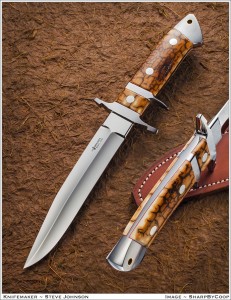
New Jersey targets fossil ivory. (SharpByCoop.com image)
Draconian New Jersey ivory ban includes the ancient ivory of animals that have been extinct for millennia. (SharpByCoop.com image)

New Jersey Gov. Chris Christie signed the nation’s most draconian ivory ban into law yesterday, one that targets not only elephant ivory but also the ancient ivory of animals extinct for over 10,000 years!

The ban also contains wording that appears to make it possible for the mere possession of any ivory to be an offense punishable by law.

According to Knife Rights, the measure bans the “import, sale, purchase, barter or possession with intent to sell” ivory from any species, including ancient ivory from mastodons and mammals, with no exceptions whatsoever.

The part of the measure that reads “possession with intent to sell” is especially disturbing as those with any experience with the law know that such language is open to any number of interpretations by law enforcement and prosecutors.

In other words, the language of this ban could make mere possession of ivory an illegal act. At the very least, it could make those wrongfully charged with possession with intent to sell have to spend the money and time to hire a lawyer, miss time from work, etc., that fighting such a charge can require.

Of course, as has been noted elsewhere, the banning of ancient ivory—that is, of animals that have long been extinct—flies in the face of the purpose behind other such bans. The stated purpose of those bans is to save living animals. A ban against extinct animals can have no effect on those animals because they have been dead for millennia. Of course, some may argue that ancient ivory may be mistaken for elephant ivory and thus should be banned, but that is a specious argument because there are scientifically proven ways of telling ancient ivory from elephant ivory.

The ban will go into effect in six months, during which time those in the Garden State who own ivory items must sell them or face fines of $1,000 on the first offense and $5,000 on the second.

For more information on how you can help fight draconian ivory bans and, at the same time, help save the elephant, visit elephantprotection.org.

For the latest knives, knife news and more, stay tuned to blademag.com.

Virgil England Exhibit on Display in Solingen, Germany

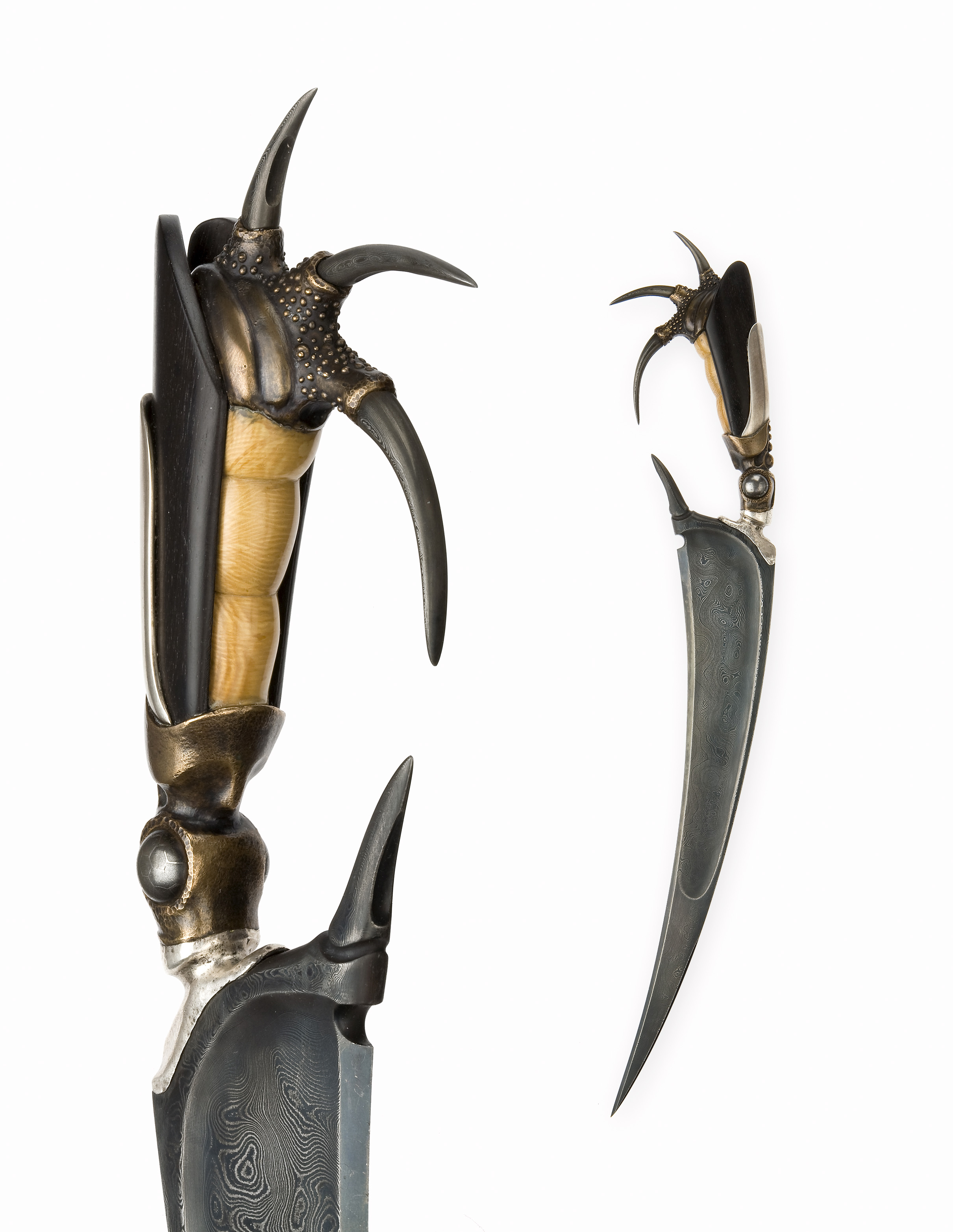
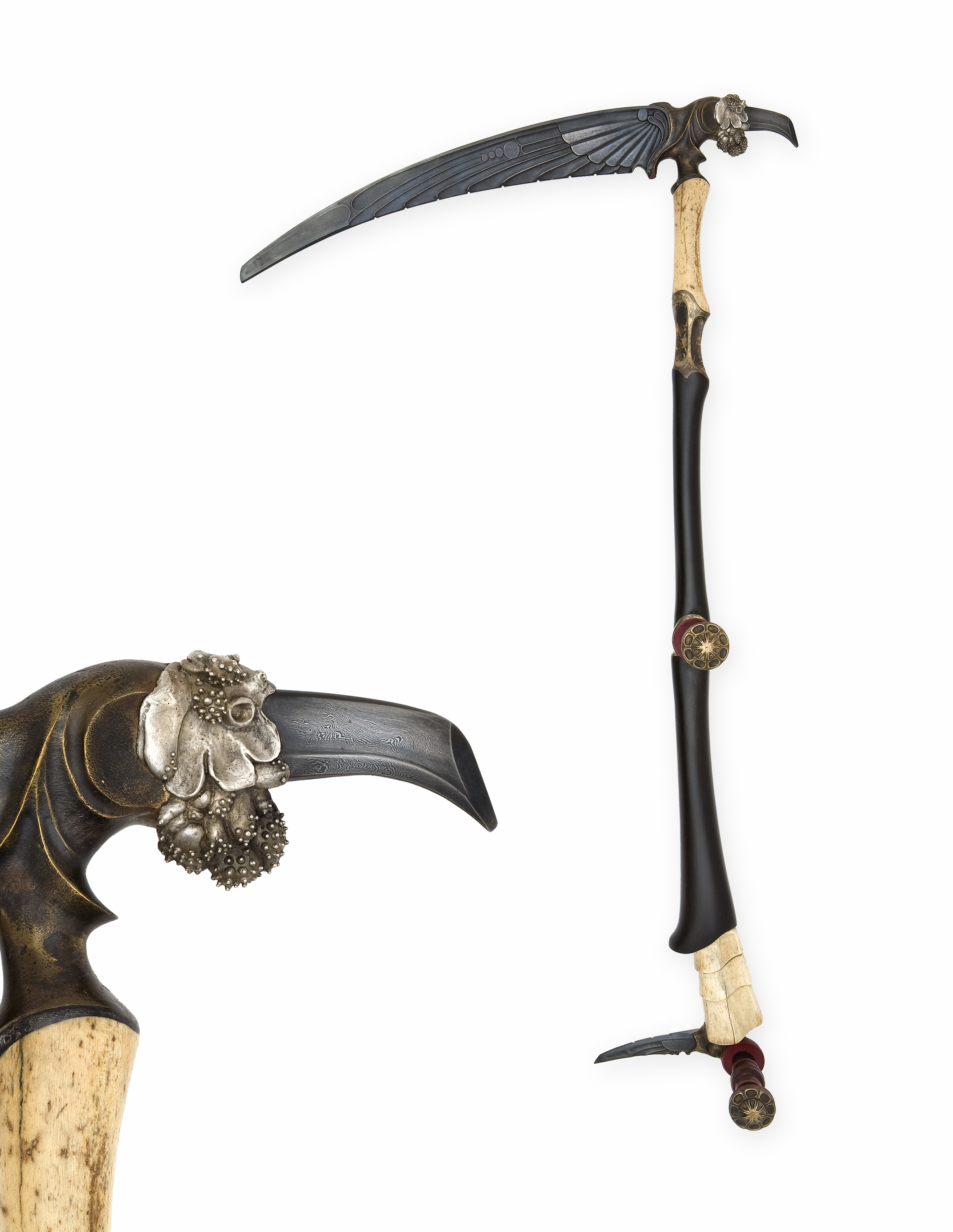
The knife-designer and artist Virgil England, who lives in Anchorage/Alaska, is a visionary in several respects. As a talented artisan and smith he creates unique knife-and weapon objects which, at the same time, are perfectly interwoven with figurative allusions and details. All his works are part of the environment of a fantastic place which he calls “Het Lands”, a place sometime in the universe where an archaic civilisation is confronted with the apparition of the “Seth Daemon”.

But also actual antique eras inspired him to these fantastic ideas and to exactly these pieces of work.

In 2004, he designed the “Empire Sword”, a series of Yatagan swords with reference to the powerful ancient Iranian kingdom of the Achaemenidic kings Cyrus and Darius, approximately 2600 years ago.

Since the 1970’s, Virgil England worked as a knife maker and started to increase his interest in intricate, multipartited projects of art. However, he never abandoned the knife blade. The famous American Damast smith, Daryl Meier, delivered the material for Virgil England’s blades. Now, for the first time, Virgil England will be introduced in a “personal show“. This was only possible through the generous loans of collectors of his works from the USA and also from Germany.

About 45 works by Virgil England – knives, swords, daggers, axes, a helmet, a shield and pieces of jewellery – were put together in a collection by the German Blade Museum, additionally, sketches and detailed drafts in colour can be seen.

“I wanted something that used the techniques of the past but allowed me to skew the civilization and its history to fit my scenario. The result was the creation of the “Het Lands”, a place sometime in the universe where an archaic civilization is faced with the appearance on their world of the “Seth Daemon”.

From the beginning the purpose has been to make real items, not movie props. The pieces are made utilizing techniques that were being used in ancient armouries on our own world. (The history may be fabrication but the physics are not.) Everything is hand made. Whether it is steel or woven fabric care is taken that each piece is a one-of-a kind item. With the assistance of fellow artisans in woodcarving, glass blowing, potting and weaving I continue to flesh out the history of the “Het Lands” with items of everyday life.” (Virgil England)

Press conference

Thursday 10 June 2010 at 12.00 pm at the German Blade Museum in Solingen. Virgil England will be present.

Opening
Friday 11 June 2010 at 6.00 pm

Advertisement

Must Read Articles

Read this before you make a knife

Knifemaking 101 – Read This Before You Make a Knife

  by Wayne Goddard My experience has taught me that there's nothing like digging in and getting started. I've often said the hardest part of the...
how to forge damascus steel

How to Forge Damascus

Advertisement
Advertisement