The BLADE Blog w/Steve Shackleford

Knives, knife people, knife news, knife use, knife collecting, knifemakers, knife events, the BLADE Show, BLADE Magazine, and more.

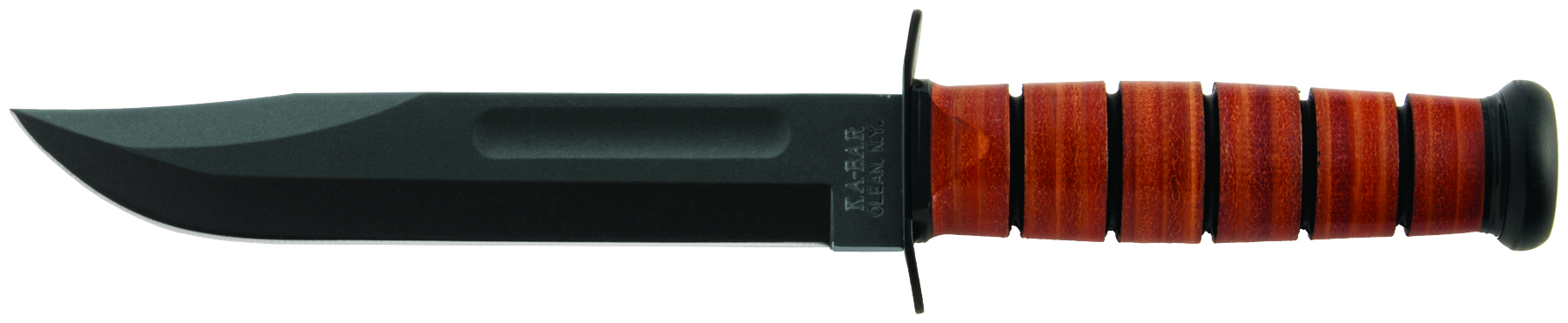
KA-BAR Knives Featured on New History Channel Show

KA-BAR Knives will be featured on a new History Channel Show, What People Earn, Sunday, March 10.

Highlighted on the show’s premier episode entitled “Beer, Knives & Football,” the 115-year-old manufacturer will star along with American brewer Samuel Adams.

The March 10 issue of Parade Magazine will run a companion piece on the new show and KA-BAR.

The show will air at 10 p.m. EST in most areas, though be sure to check your local listings.

Of the 45 products that were in the KA-BAR line in 1996, only five still remain in line and one that is/was made in the USA: the 1217 Marine Combat Knife. There are now 85 products made in the USA by American cutlers stemmed in the KA-BAR tradition born in 1898. Among them is KA-BAR’s Zombie® Knives line, the Becker Knife & Tool line, a number of Bob Dozier designs, the TDI Law Enforcement line, Union and traditional KA-BAR knives including the Dog’s Head pocketknives, the Mule line of folders, and more.

For more visit KA-BAR.com or call 800-282-0130.

KA-BAR's USMC fighting/utility knife, an industry icon.
KA-BAR’s USMC fighting/utility knife, an industry icon.

Design and Make a Combat Knife

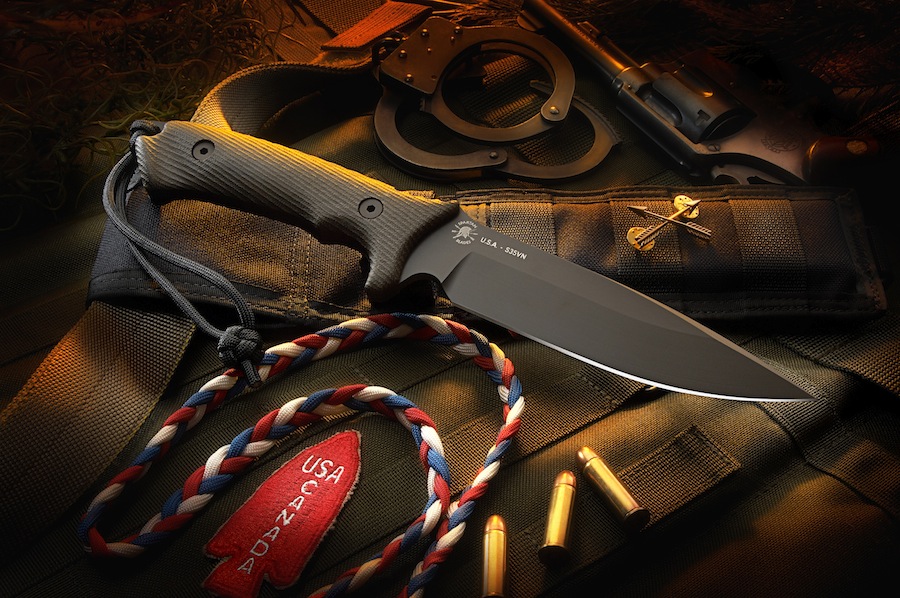
Spartan Blades Difensa
Learn how to design and make a combat from Curtis Iovito and Bill Harsey at BLADE U.

Learn how to design and make a combat knife from two who have been there/done that—Curtis Iovito of Spartan Blades and award-winning custom knifemaker William W. “Bill” Harsey—at the 2nd Annual BLADE University.

Award-winning knifemaker Bill Harsey.
Bill Harsey’s designs have won numerous BLADE Magazine Knife-Of-The-Year® Awards.

Held the day before (June 4) through show Saturday (June 6) of the 2015 BLADE Show June 5-7 at the Cobb Galleria Centre in Atlanta, BLADE University assembles the world’s leading knife professionals to instruct you on most anything that has to do with the subject of cut.

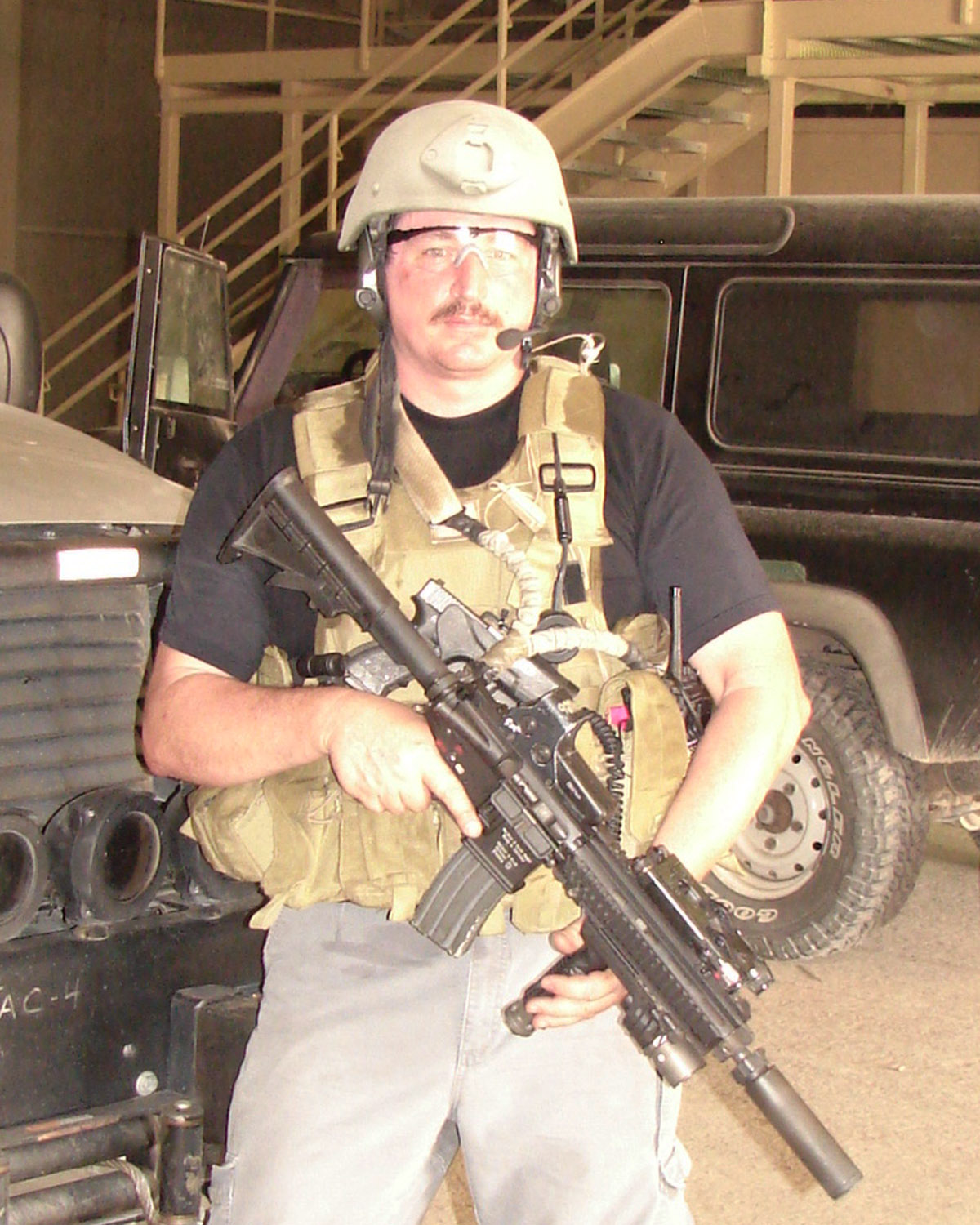
Along with Mark Carey co-owner and co-founder of Spartan Blades, Iovito is a retired U.S. Army Ranger who saw action during Operation Just Cause in Panama and numerous sensitive deployments and missions throughout Asia and the Middle East. It was while in 1st Special Forces Group (Airborne) that Curtis got into making custom knives for his teammates. After finishing up his 20-year career he hooked up with Carey—himself a 21-year man with U.S. Army Special Forces with many deployments in Asia—to start Spartan Blades.

Harsey is well-known throughout the custom and factory knife industries for his custom knives and custom and factory knife designs. He collaborated with BLADE Magazine Cutlery Hall-Of-Fame© member Col. Rex Applegate to design Gerber’s award-winning Applegate-Fairbairn line; with Chief James “Peaches” Watson to design Gerber’s Watson/Harsey Silver Trident, and with Chris Reeve and Matt Larsen to design Gerber’s LHR Combat Knife; and one of Harsey’s most significant efforts—the Yarborough Knife, aka the Green Beret Knife for Chris Reeve Knives—named after Lt. Gen. William P. Yarborough, who is credited as being the “father of modern Special Forces.”

Curtis Iovito, co-founder and co-owner of Spartan Blades.
Retired U.S. Army Special Forces and co-owner and co-founder of Spartan Blades, Curtis Iovito will help you learn how to design and make a combat knife.

A number of Harsey’s designs, including the Green Beret Knife, have won BLADE Magazine Knife-Of-The-Year® awards. Spartan Blades also has won BLADE Magazine Knife-Of-The-Year® Awards with its knives.

Today Harsey is one of several custom makers who design knives for Spartan Blades, a list that includes BLADE® Magazine field editor and retired 5th Special Forces Master Sergeant Kim Breed and also ABS master smith John Horrigan. Among Harsey’s design efforts for Spartan is the Difensa combat fixed blade.

In “Designing and Making a Combat Knife,” Iovito and Harsey will take you through the process, including:

•The terms “combat” and “tactical” as they relate to knife use;

•Understanding task-specific uses of a combat knife;

•Combat knife geometry;

•Carry options for a combat knife, vehicle and on foot;

•Design features that make up a combat knife;

•Blade geometry, and;

•Materials that lend themselves to improving a combat knife.

For more information on Iovito and Harsey’s class, BLADE University and the BLADE Show, visit BLADE Show or e-mail [email protected].


Recommended for You:

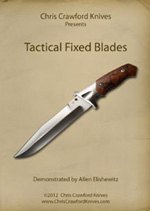
Tactical Knifemaking.Making Tactical Fixed Blades DVD

Learn both basic and advanced knife making techniques with expert instruction from Allen Alishewitz in Tactical Fixed Blades. Allen demonstrates how to craft a double-edged tactical fixed blade knife from start to finish, and creates two knives in order to fully illustrate the knife building process. You’ll learn:

– Profiling and Drilling the Knife
– Tang Tapering on a Grinder
– Tang Tapering on a Mill
– And more!

Order here


Knifemaker Steve Fecas Passes at 66

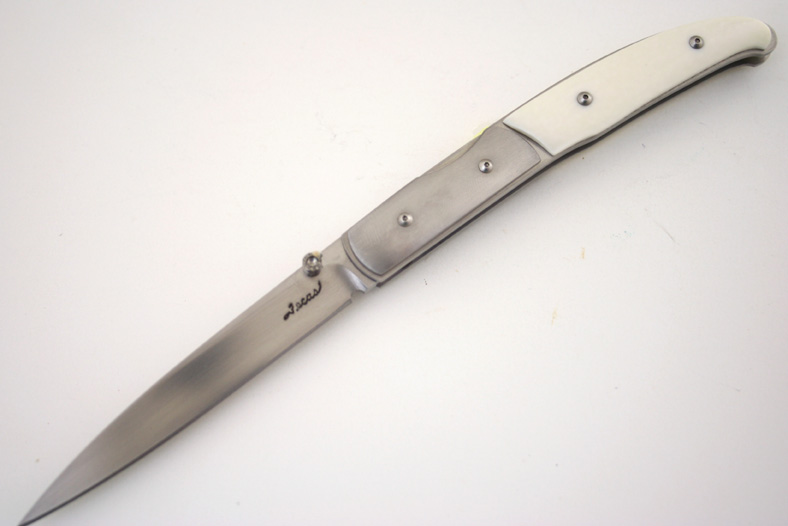
Steve FecasThe world of knives lost a class act when knifemaker Stephen John “Steve” Fecas passed away Feb. 1. He was 66.

A long-time member of the Knifemakers’ Guild and one of the original members of the South Carolina Association of Knifemakers (SCAK), Steve operated out of Anderson, South Carolina. He sold his first knife in 1977 and started making knives full time in 1980. One of the many disciples of Blade Magazine Cutlery Hall-Of-Fame© member George Herron, Steve made tight, clean folders in the stock-removal style and also designed knives for Benchmade.

A Vietnam War-era veteran of the U.S. Air Force, Steve was easy going and always had a joke or kind word to impart in his deep South Carolinian drawl. He and Blade Magazine Cutlery Hall-Of-Fame© member Frank Centofante were good friends and often were seen hanging out together at knife shows.

Steve is survived by his wife, Mary, six brothers, one sister and a number of nieces and nephews. Memorials may be made to the charity of your choice. Condolences may be expressed online at www.robinsonfuneralhomes.com or visit www.legacy.com/obituaries/charleston.

M16 & the K.I.S.S.: 2 Knives For The Ages

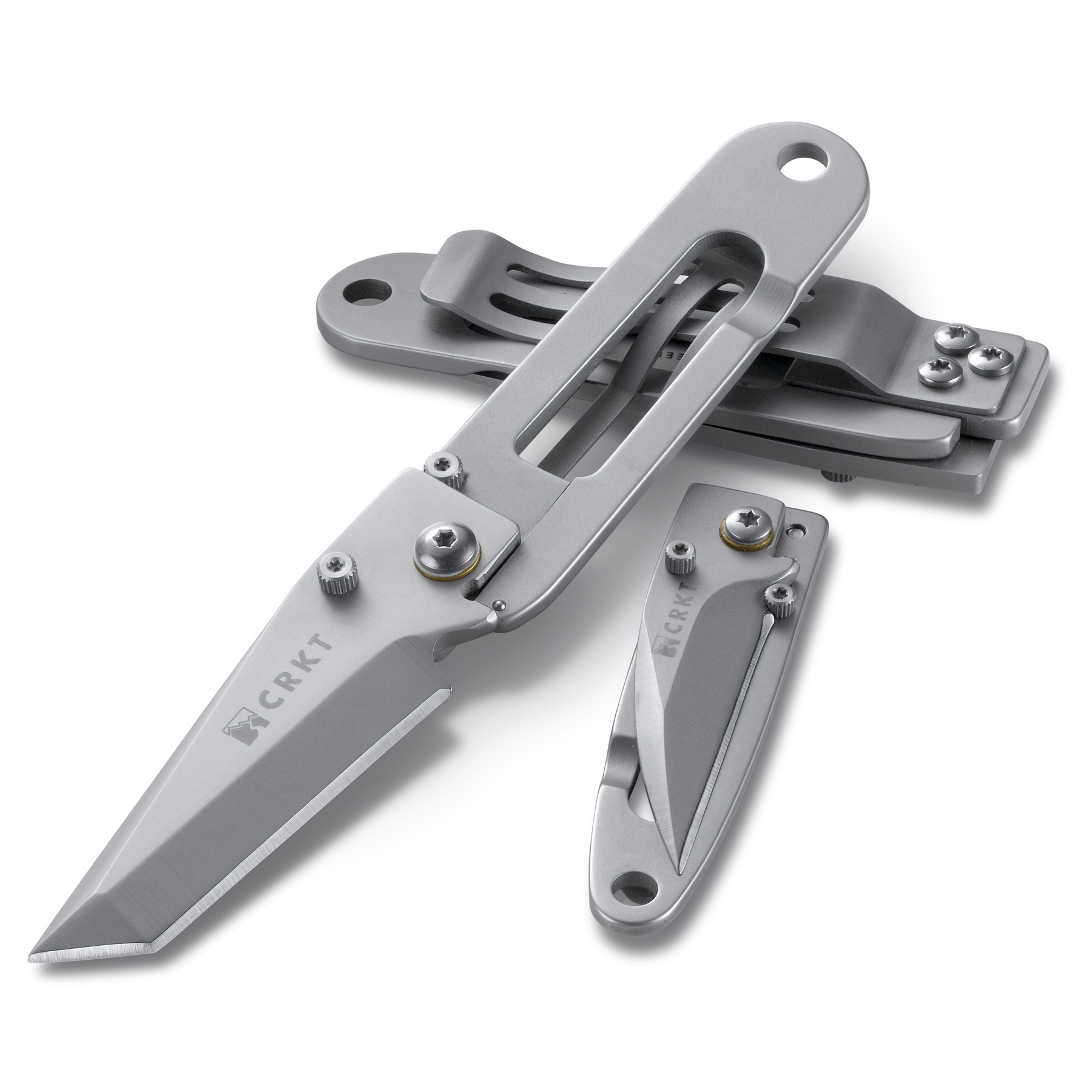
The K.I.S.S. and the Delilah's P.E.C.K.
Ed Halligan’s K.I.S.S. design (left) revolutionized factory folding knives. At right is his Delilah’s P.E.C.K. design. Both knives are reproduced by CRKT. (CRKT image)

An unusually high number of knifemakers have died recently, all of whom left more than their fair share of lifelong marks on family, friends and the knife industry. In terms of influence on knife design, though, the two that probably had the largest impact were Ed Halligan and Kit Carson.

Ironically, both men designed wildly popular folding knives for CRKT, and it is those folders that have been so influential on the knife industry.

A member of the BLADE Magazine Cutlery Hall Of Fame©, Carson passed away Sept. 5. Halligan passed away Nov. 8. Though both made many great knives, each will be remembered most for their industry standards: Carson for the M16 and Halligan for the K.I.S.S.

The K.I.S.S. is a simple yet ingenious folding knife. In the closed position, its two-piece frame-lock construction and safe, user-friendly design “seals” the cutting edge of the chisel-ground blade against the handle. As Halligan once explained, “With the K.I.S.S., the frame and the lock are all one piece … I made the original knife with the blade chisel ground on one side only so it would slide against the frame when folded and make a seal so you wouldn’t cut yourself.”

Kit Carson's knife for the ages.
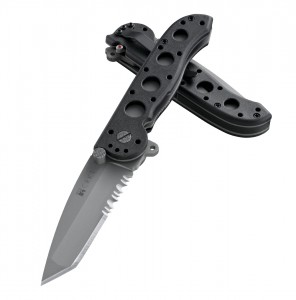
Kit Carson’s M16 design remains one for the ages. This is the M16-12Z CRKT repro. The flipper is the extension with the hole in it seen here acting as a guard just below the handle pivot. (CRKT image)

In fact, when it first came out, I recall talking to one long-time industry observer who thought the K.I.S.S. was a lawsuit waiting to happen because he thought consumers would cut themselves on the blade edge despite the blade’s seal against the handle in the closed position. However, Halligan’s version of the design works so well that such accidental cuts never happen. One of the main reasons the design is safe is that Halligan tested it in real-life conditions to be sure that such accidents never occur. “Safety is a big reason why I carried the knife around so much to make sure it worked properly,” Halligan said.

In 1997, Halligan signed a deal with CRKT for the company to reproduce the K.I.S.S., and CRKT launched the repro of the knife at the 1998 SHOT Show. Only four years old at the time, CRKT was struggling to find a knife that would help “drag the rest of the product lines along,” as CRKT’s Rod Bremer put it. The K.I.S.S. was that knife. Unfortunately, a number of unscrupulous companies blatantly knocked the K.I.S.S. off so much that it eventually became one of the most copied sporting knives worldwide. CRKT and Halligan weathered that storm, though, and Ed designed a series of K.I.S.S. iterations and spinoffs for CRKT that included the Delilah’s P.E.C.K. (for Precision Engineered Compact Knife), Samson’s K.I.S.S., the H.U.G. (Halligan’s Ultimate Gadget), the Slip K.I.S.S., the Neck P.E.C.K., the blackened K.I.S.S. In The Dark, even a fixed-blade version called the Stiff K.I.S.S. and others.

Just as they were linked in their passing, Halligan and Carson were also linked in their CRKT collaboration deals. CRKT must have been living right back in those days because it was just a year after signing the deal with Halligan to reproduce the K.I.S.S. that it signed the deal with Carson to reproduce Carson’s M16 folder. Even though Carson did not invent the flipper, his M16 is universally credited as the model that popularized flipper folders—folding knives with one-hand-opening “flippers” that double as guards when the blade is opened. “The M16 with the Carson Flipper was a huge improvement on non-assisted blade opening, making a manual knife open almost as fast as an auto without a secondary thumb stud or hole mechanism,” observed long-time knife writer Mac Overton. “Because it had less moving parts and its opening relied on inertia rather than a spring or torsion bar, the mechanism was inherently stable and reliable.”

The M16 and its military look—Carson was a U.S. Army career man—soon became not only immensely popular with consumers but with service personnel as well. In fact, by many accounts, the M16 was the most popular knife among active duty service personnel in the wars in both Iraq and Afghanistan.

Meanwhile, as with the Halligan/CRKT K.I.S.S., Carson’s M16 begat a number of CRKT iterations and spinoffs, including the M16-10KZ, M16-13Z, M16-12Z, M16-14ZSF, M16-13ZM, M16-14SFG, M21-14SFG, M21-02G, M16-13FSG and others. And, most fittingly, the K.I.S.S. and M16 were ranked third and fourth, respectively, in a BLADE® Magazine poll of veteran industry observers of the top factory knives from 1989-2000.


T7354Recommended for You:

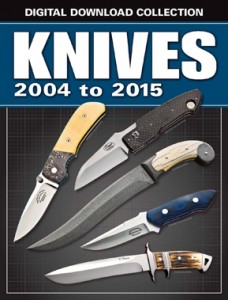
Turn back the clock with BLADE‘s digital collection of annual KNIVES books. Get every KNIVES book from 2004 to 2015 in one PDF download for just $79.99.

Click here to get the best knife books in one spot.

Michael Krein and Tom Burch—er, Make That Michael Burch and Tom Krein

For the record: that is Michael Burch at top and Tom Krein below him. (Krein photo by Mike Searson)

    Two of the most important things about a person are his/her name and likeness. As Blade Magazine Cutlery Hall-Of-Fame© member Bruce Voyles stresses, “I don’t care what they say about me as long as they spell my name right.”

    A person’s likeness is equally—some might even argue more—important than his/her name. All of which came crashing down on me on page 42 of the April BLADE®.

    On that page is the likeness of knifemaker Tom Krein. Only problem is, the caption identifies him as maker Michael Burch. The knife on the page is by Michael and, for some reason I cannot quite fathom, I gave instructions for our graphic designer to insert the likeness of Tom with the knife, thinking it was Michael’s likeness. I know Tom when I see him and I know Michael when I see him. Again, I can’t explain my mistake.

    I could blame it on Mom. I have two sisters, Chris and Juli, and a brother, Pat, and, for as long as I can remember, Mom has often called each of us a smorgasbord combo of all four. “Uh, Chris-Juli-Pat-Steve,” she goes through a checklist of all four names before finally arriving at mine, “tuck your shirt in, stand up straight,” etc. On the other hand, she has never mistaken me/my picture for any of my siblings/their likenesses (though on more than one occasion during my misspent youth she made me wish she had).

    Similarly, at last year’s BLADE Show I saw Gavin Hawk, talented knifemaking son of talented knifemaking father Grant, walking into the show, and for some reason I called him Grant. “That’s Gavin, Steve, Gavin!” he stressed. I sheepishly ducked my head and muttered, “Oops! Sorry.” Of course, I can understand Gavin’s frustration. He no doubt is called Grant from time to time, it being natural for people to associate him with his father, and he is no doubt extremely proud to be the son of such a creative dad. At the same time, Gavin wants to be recognized for his own achievements, and understandably so.

    In case you think I am getting old and forgetful—which, of course, I am—there have been a number of times over the years when I wasn’t so old that I misidentified people in person, too. There was the time at a Guild Show when I stopped at knifemaker Dennis Bradley’s table and carried on a conversation with him for several minutes, calling him Gayle (after knifemaker Gayle Bradley) repeatedly. Finally, when we were through talking, he said, “And oh, by the way, I’m Dennis.” Ugh. I slinked away.

    Another is production knife guru Vince Ford. On more than one occasion I have called him Paul, thinking he was knifemaker Paul Fox. Each time Vince has been gracious enough not to lose his temper, just shaking his head and giving me that funny little look he gives so well.

    On the other hand, some people in the knife industry simply look like others. I always thought in his later years Cutlery Hall-Of-Famer Bob Loveless resembled the older, heavier Peter Lorre. (And no, I never told Bob that. What, do you think I have a death wish or something?) I also think our managing editor, Joe Kertzman, looks like retired Major League Baseball catcher Mike Piazza. Heck, one time Mrs. Debbie Voyles told me I looked like Tom Hanks. Of course, that was a long time and many hair follicles ago. Or maybe it was just that I reminded her of Forrest Gump.

    Anyhow, I caught my mistake with Michael and Tom, though it was a day late and a dollar short—the day after the April BLADE went to the printer. I immediately fired off an e-mail with the subject line, “Man, did I screw up!” to Michael and Tom, as well as Mike Searson, the photographer of Tom’s picture that we used. Both Michael and Tom were equally gracious. “Now that will be funny!” Michael replied via e-mail. “I always wanted to be Tom for a month.” Not to be outdone, Tom e-mailed, “No worries! Michael never looked so good!”

    Thank you, Michael and Tom, for being good sports. And thank you, BLADE readers, for putting up with a well-meaning but often all-too-imperfect editor.

For more on the latest knives, knife legislation, knifemaking instruction, knife trends, knifemakers, what knives to buy and where and much more, subscribe to BLADE® Magazine, the World’s No. 1 Knife Publication. Click on http://www.shopblade.com/blade-magazine-one-year-subscription-us for more information.


Disabled Vet Knife Graces New BLADE®

Disabled vet knife in new BLADE®.
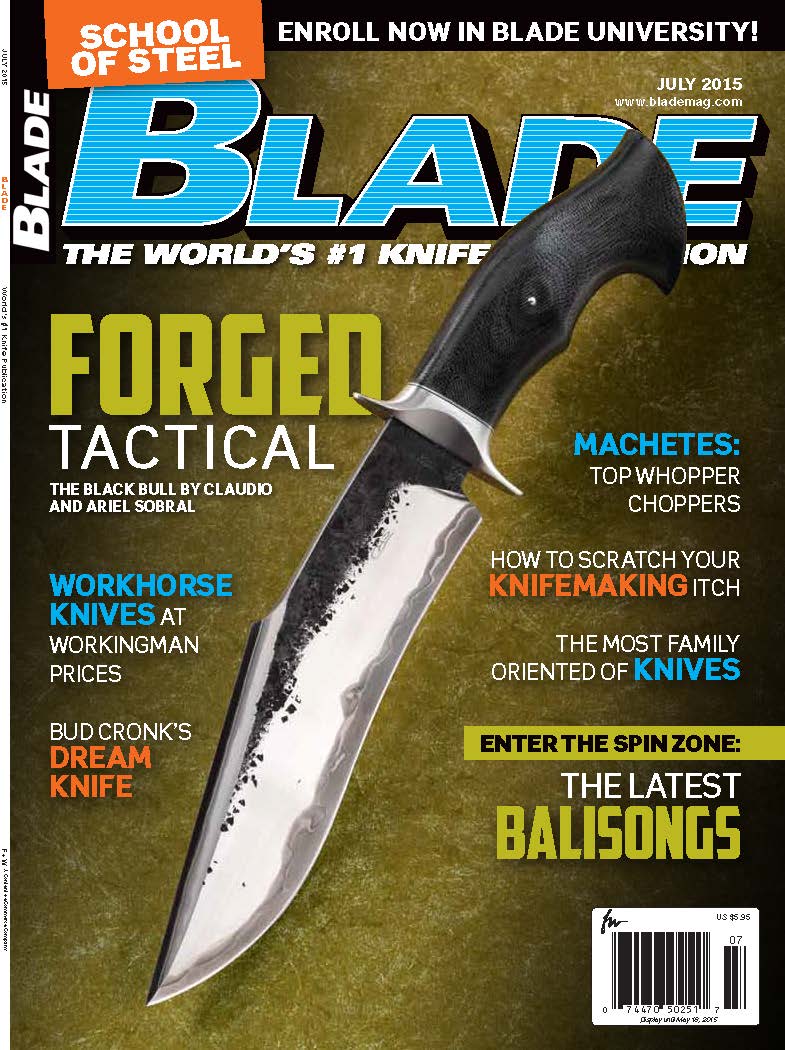
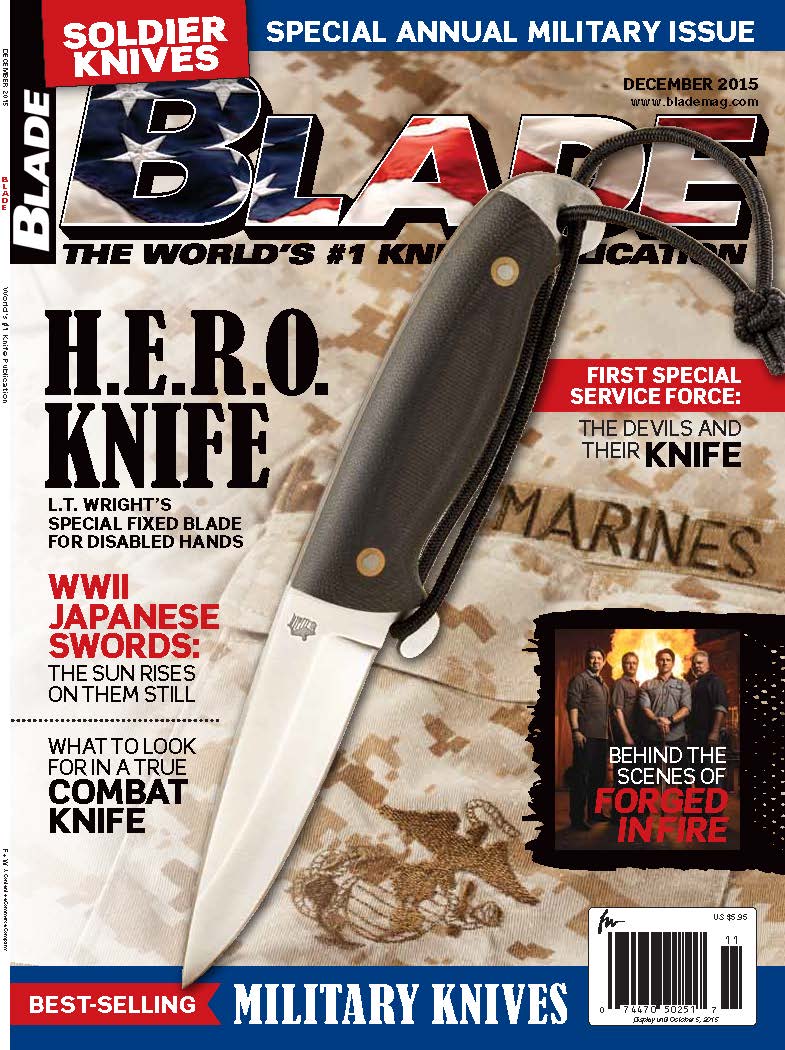
A knife for disabled vets is the cover knife for the latest BLADE®, on newsstands NOW!

A knife for disabled vets, behind the scenes of the hit TV show Forged In Fire, World War II Japanese swords and much more highlight the annual military issue of BLADE®, on newsstands NOW!

L.T. Wright’s H.E.R.O. (Helping Everyone Reach the Outdoors) knife is specially designed to accommodate people with finger and/or hand injuries. Join Abe Elias as he examines how the knife came about, how it’s designed, how it works and more in his story on page 12.

Forged In Fire has been one of The History Channel’s hottest shows in recent months and has brought the skill required to make a forged knife into full view of a wide-ranging television viewing audience. Go behind the scenes of this fascinating, action-packed show with our special story on page 84. In addition, on page 10, see if you agree that FIF may be the “Eureka moment” the knife industry has been waiting on for these many years.

The Japanese signed the formal World War II surrender on the U.S. battleship Missouri 70 years ago this month. But what of all those Japanese swords carried by those in the Japanese Army and Navy? Who made them and whatever became of them? Leon Kapp gives you the poop in part one of his “The Sun Rises On Them Still” on page 80.

There’s much more in the annual military issue, including a visit with two surviving 90-something members of the First Special Service Force that fought so well in World War II; three military veterans who are new to the knifemaking game in Pat Covert’s story on page 20; the best-selling military knives in the factory realm on page 36; a test of four military-style autos by James Morgan Ayres on page 44; “How To I.D. A True Combat Knife” by BLADE field editor Ed Fowler on page 52; the “Ultimate Survival Knives” of special-operations veterans Grady Powell and Jared Ogden, stars of National Geographic’s action TV series, Ultimate Survival Alaska; a test of two tomahawks by BLADE field editor/retired Green Beret Kim Breed on page 48; and much more in the latest issue.


The latest issue of BLADE is on newsstands now!Subscribe:

Stay abreast of the latest developments on this and many more knife rights issues with a subscription to BLADE.

Ivory Battle Enters New Phase

The battle to stop federal measures that punish law-abiding citizens and do little to address the issue of elephant ivory poaching has entered a new phase.

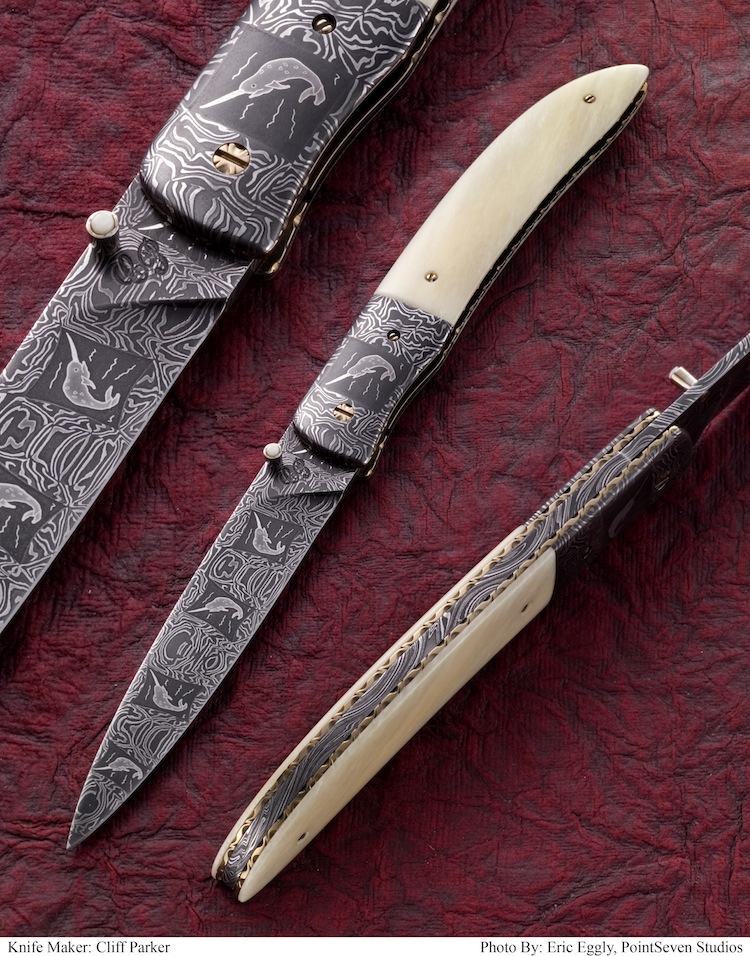
Cliff Parker's folder sports antique narwhal ivory. (Point Seven photo)
The ivory battle has entered a new phase, and the deadline for your ivory letter to Fish & Wildlife is April 14. One among many of the problems with the proposed federal regulations is that legal fossil ivory like antique narwhal, such as on Cliff Parker’s folder, may be mistaken by federal officials for elephant ivory and confiscated. (PointSeven photo)

If you are a duly authorized representative of a company with “significant commercial operations and employees,” now is the time to present U.S. Fish & Wildlife with a letter to oppose the pending federal measures, the first round of which reportedly is due to be released sometime this month. However, if you act no later than April 14 and send the letter to FWS, you will be in time to have your voice heard by those who can amend or even stop those measures before they happen.

Simply email the following letter to Doug Ritter of Knife Rights at [email protected], and he will forward it with others to FWS officials expressing concern over the harm the new federal measure would cause, not only to worldwide elephant populations but also to law-abiding citizens who own ivory knives and other ivory products and have owned the very same ones for years, if not decades.

The letter is as follows:

Subject: Ivory Ban Knife Community Letter

My name is (insert your full name) and I am (insert your executive position in the organization or company) of (insert name of your organization or company). As its duly authorized representative, I request that you add our name to the Knife Community letter opposing U.S. Fish and Wildlife Service’s proposed ban on commercial trade in elephant ivory.

(Insert Official Address of your Organization or Company)

(Insert Organization of Company Website)

(Insert your phone number in case of questions)

Regards,

(Insert Your Name)

(Insert Your Title)

(Insert Your Company’s Name)

(Insert Your Mailing Address)

(Insert Your Website Address)

(Insert Your Email Address)

(Insert Your Phone Number)

For the latest knives, knife news, trends and more, stay tuned to blademag.com.

Advertisement

Must Read Articles

Read this before you make a knife

Knifemaking 101 – Read This Before You Make a Knife

  by Wayne Goddard My experience has taught me that there's nothing like digging in and getting started. I've often said the hardest part of the...
how to forge damascus steel

How to Forge Damascus

Advertisement
Advertisement