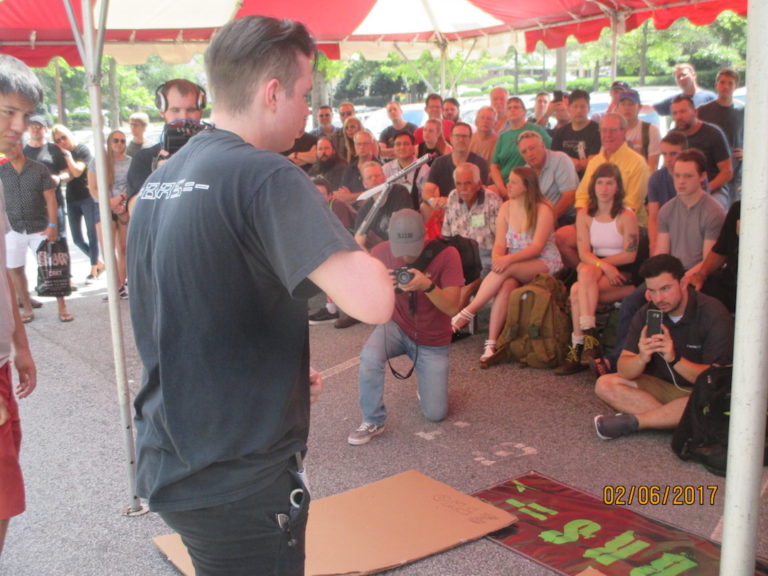
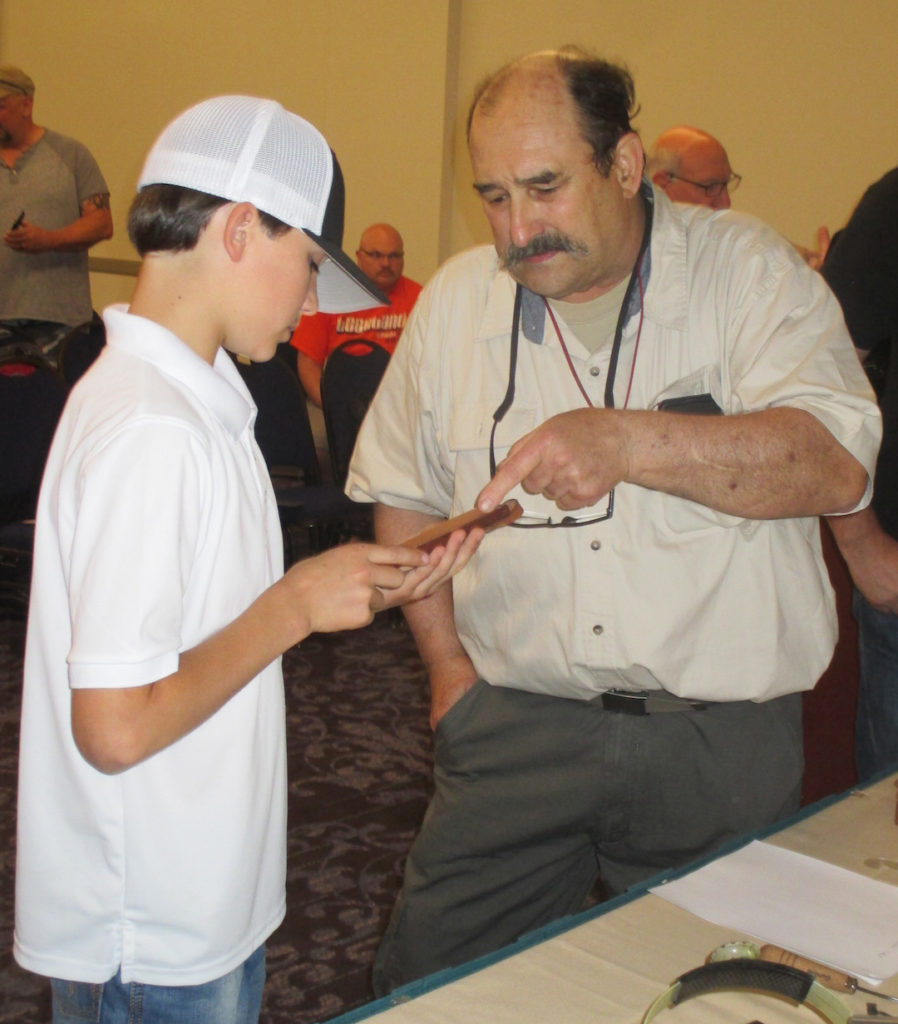
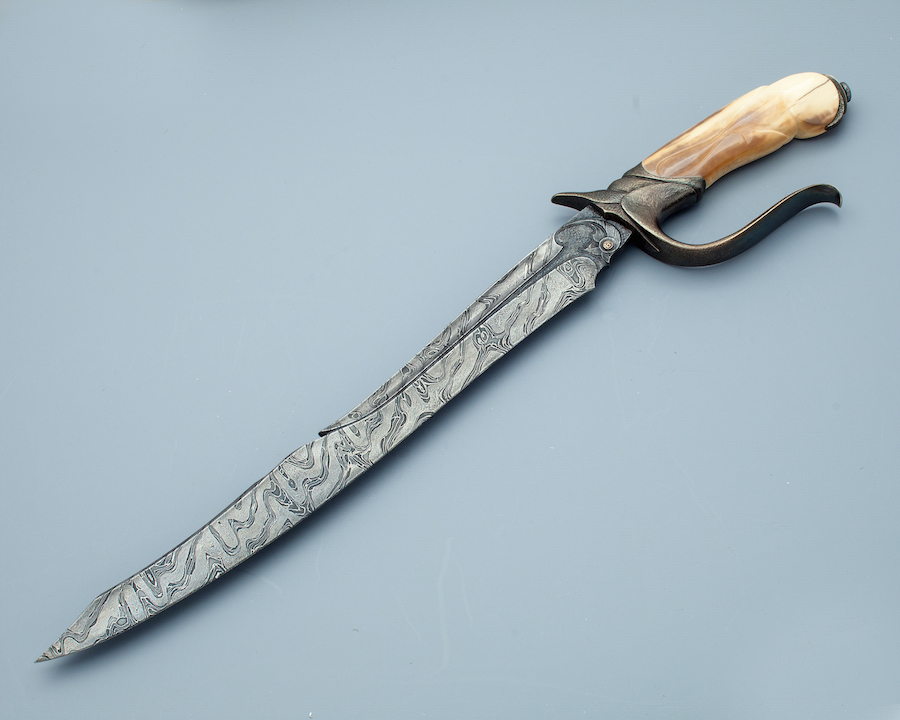
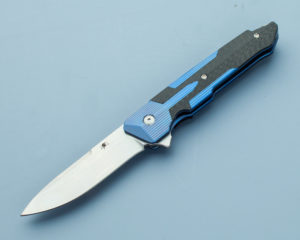
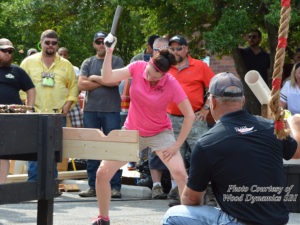
BLADE Show 2018 will host the 5th BLADE University with instruction from such teaching pros as ABS master smith Timothy Potier (right), here giving a few tips to budding knifemaker Zander Nichols.David Broadwell won Best Art Knife at BLADE Show 2017 for The Wanderer. (Ward image)The BLADE Magazine Knife-Of-The-Year® Awards will be named at BLADE Show 2018. The BLADE Magazine 2017 American-Made Knife Of The Year is the Kranos by Spartan Blades. (Ward image)BLADE Show 2017 hosted the Men’s and Women’s World Champtionship Cutting Competition. Nicole Worden shows her championship form in winning the Women’s Title for the second consecutive year.
BLADE Show 2018 will return to the Cobb Galleria Centre in Atlanta, Georgia, June 1-3 for the 37th annual rendition of what has become the seminal event in the world of knives. More exhibitors and patrons attend the BLADE Show than any other knife event. Every continent in the world with the possible exception of Antarctica will be represented. Custom and factory knives in all categories—tactical, kitchen, EDC, art, utility, combat, commemorative, antique, bowies, hunters, skinners, daggers, camp knives, assisted openers, flippers, balisongs, neck knives, folders, multi-tools, swords, tomahawks, sharpeners, knifemaking equipment, displays—if it cuts, BLADE Show 2018 will have it.
BLADE Show 2018 will be many events within the event. The most comprehensive array of classes on how to make, use, appraise, collect, sharpen and otherwise do most everything concerning knives will be presented in the 5th Annual BLADE University held the day prior to the show and show Friday and Saturday. Free demos including a balisong-flipping competition, the BLADE Show World Championship Cutting Competition coordinated by BladeSports International, on the use of swords, knife and tomahawk throwing, what to look for in custom knives and many more will be offered show Saturday and Sunday. The annual meeting of the American Bladesmith Society, a special knife collection
BLADE Show 2018 will welcome back the balisong-flipping competition.
Make plans to attend the 37th Annual BLADE Show now. For hotel and other information click here. For the BLADE Show newsletter with regular show updates, click here.
Nearly 20 years later and with my original bolo in disrepair, I thought it time to replace it with an updated and more technologically sophisticated design. My goal was to find a knifemaker from my home state of Kentucky who would be capable and willing to collaborate on the project. It was not long before several members of the Knifemakers’ Guild recommended Gene Baskett. A Guild member since 1981, Gene has proved to be one of Kentucky’s finest custom knifemakers and has earned the respect of his peers for the quality work he produces.
He and I based the knife’s design on the old bolo I had used when I served in the SEALs. Our decision was to go with CPM-154 stainless steel, and Gene made several blade adjustments. We experimented with a rubber handle made from extremely durable horse matting material—a perfect Bluegrass State touch, and a substance also favored by a number of makers and contestants in the cutting competitions. The resulting grip is firm yet shock absorbing. The handle can also be securely grasped when wet. My concerns were simple: durability and performance. I wanted a knife that would withstand a heavy amount of punishment and still perform well.
Both Gene and I agree that the knife has exceeded our expectations. Its cutting ability is just plain scary. Without honing the original edge applied by Gene, I put the knife to the test. He already had whacked through 1-inch saplings, and still the blade was gliding through blades of grass and straw. My test consisted of saplings, 1-inch tree branches and wild grape vines. All were easily severed with one clean hit.
After 20-to-30 strikes on branches and vines, I moved on to a grass mat wrap 4 inches in diameter. The grass mat was wrapped tightly around a 1-inch piece of dried bamboo. One diagonal strike went completely through. I finished the test with a piece of quarter-inch tanned cowhide. With only slight pressure, the bolo sank through the hide from tip to handle. Drawing the blade out and away left a clean, effortless cut through 8 inches of hide. The blade was still quite sharp afterward.—BY STEVE WATKINS, retired Navy SEAL
For the complete story on the author’s super bolo, you can get the digital version of the December BLADE® by clicking on http://www.shopblade.com/blade-dec-2012-digital-issue?lid=SSfbbl101612
PICTURE CAPTIONS, FROM TOP
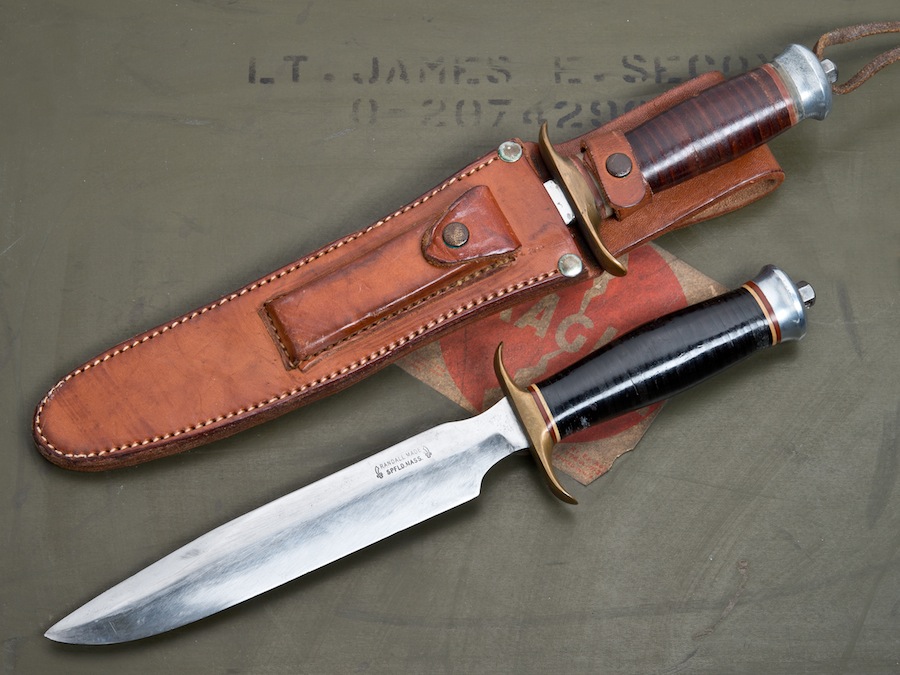
TOP: At top is the author’s old bolo and leather sheath and below it is Gene Baskett’s Super Bolo and Kydex® sheath. (photo courtesy of Steve Watkins)
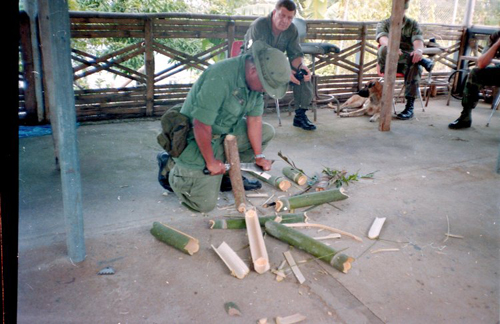
MIDDLE: One of the instructors near the author’s duty station in the Philippines circa 1990 splits wood with the author’s old bolo. (photo courtesy of Steve Watkins)
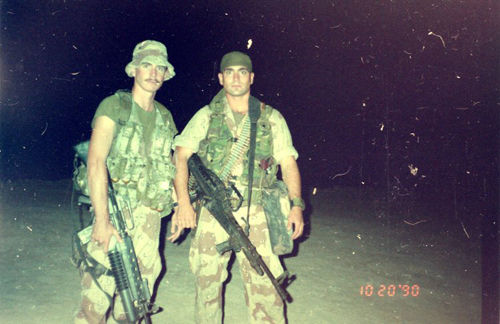
BOTTOM: The author (right) and his friend, Brad O’Neill, on patrol circa 1990. The author is shown holding an M-60 (7.62mm) and his friend an M-16 with an M-203 (a 40mm grenade launcher). (photo courtesy of Steve Watkins)
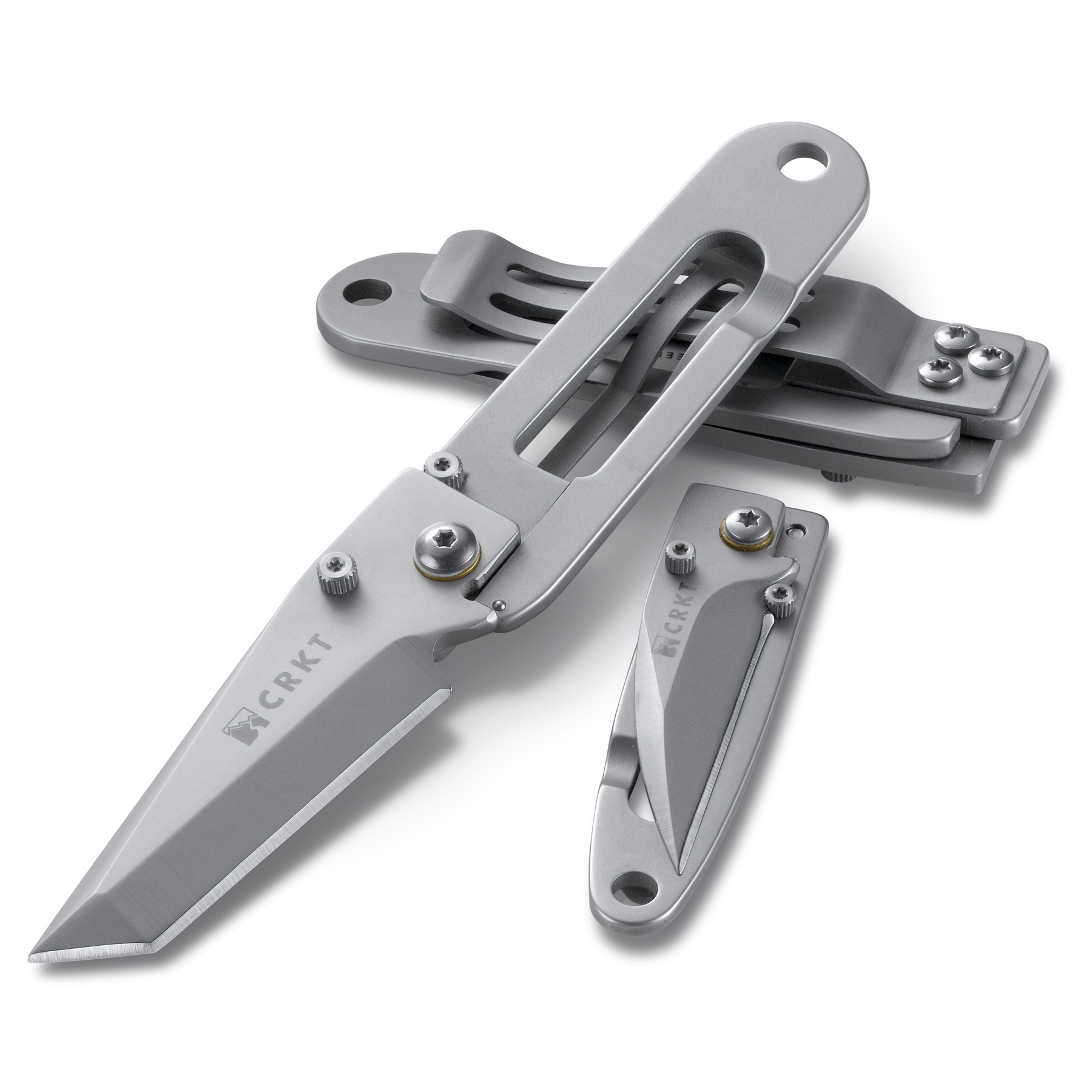
Ed Halligan’s K.I.S.S. design (left) revolutionized factory folding knives. At right is his Delilah’s P.E.C.K. design. Both knives are reproduced by CRKT. (CRKT image)
An unusually high number of knifemakers have died recently, all of whom left more than their fair share of lifelong marks on family, friends and the knife industry. In terms of influence on knife design, though, the two that probably had the largest impact were Ed Halligan and Kit Carson.
Ironically, both men designed wildly popular folding knives for CRKT, and it is those folders that have been so influential on the knife industry.
The K.I.S.S. is a simple yet ingenious folding knife. In the closed position, its two-piece frame-lock construction and safe, user-friendly design “seals” the cutting edge of the chisel-ground blade against the handle. As Halligan once explained, “With the K.I.S.S., the frame and the lock are all one piece … I made the original knife with the blade chisel ground on one side only so it would slide against the frame when folded and make a seal so you wouldn’t cut yourself.”
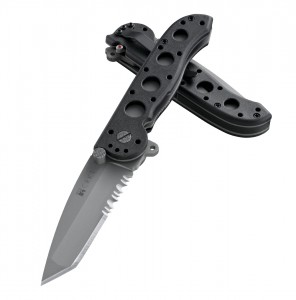
Kit Carson’s M16 design remains one for the ages. This is the M16-12Z CRKT repro. The flipper is the extension with the hole in it seen here acting as a guard just below the handle pivot. (CRKT image)
In fact, when it first came out, I recall talking to one long-time industry observer who thought the K.I.S.S. was a lawsuit waiting to happen because he thought consumers would cut themselves on the blade edge despite the blade’s seal against the handle in the closed position. However, Halligan’s version of the design works so well that such accidental cuts never happen. One of the main reasons the design is safe is that Halligan tested it in real-life conditions to be sure that such accidents never occur. “Safety is a big reason why I carried the knife around so much to make sure it worked properly,” Halligan said.
In 1997, Halligan signed a deal with CRKT for the company to reproduce the K.I.S.S., and CRKT launched the repro of the knife at the 1998 SHOT Show. Only four years old at the time, CRKT was struggling to find a knife that would help “drag the rest of the product lines along,” as CRKT’s Rod Bremer put it. The K.I.S.S. was that knife. Unfortunately, a number of unscrupulous companies blatantly knocked the K.I.S.S. off so much that it eventually became one of the most copied sporting knives worldwide. CRKT and Halligan weathered that storm, though, and Ed designed a series of K.I.S.S. iterations and spinoffs for CRKT that included the Delilah’s P.E.C.K. (for Precision Engineered Compact Knife), Samson’s K.I.S.S., the H.U.G. (Halligan’s Ultimate Gadget), the Slip K.I.S.S., the Neck P.E.C.K., the blackened K.I.S.S. In The Dark, even a fixed-blade version called the Stiff K.I.S.S. and others.
Just as they were linked in their passing, Halligan and Carson were also linked in their CRKT collaboration deals. CRKT must have been living right back in those days because it was just a year after signing the deal with Halligan to reproduce the K.I.S.S. that it signed the deal with Carson to reproduce Carson’s M16 folder. Even though Carson did not invent the flipper, his M16 is universally credited as the model that popularized flipper folders—folding knives with one-hand-opening “flippers” that double as guards when the blade is opened. “The M16 with the Carson Flipper was a huge improvement on non-assisted blade opening, making a manual knife open almost as fast as an auto without a secondary thumb stud or hole mechanism,” observed long-time knife writer Mac Overton. “Because it had less moving parts and its opening relied on inertia rather than a spring or torsion bar, the mechanism was inherently stable and reliable.”
The M16 and its military look—Carson was a U.S. Army career man—soon became not only immensely popular with consumers but with service personnel as well. In fact, by many accounts, the M16 was the most popular knife among active duty service personnel in the wars in both Iraq and Afghanistan.
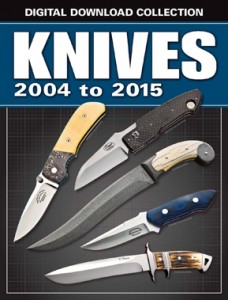
Turn back the clock with BLADE‘s digital collection of annual KNIVES books. Get every KNIVES book from 2004 to 2015 in one PDF download for just $79.99.
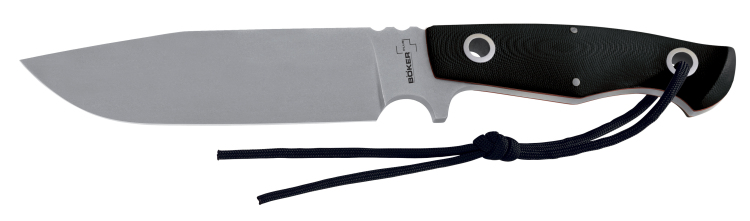
Our Knife Of The Day for Dec. 19 is the Boker Plus Rold, a VoxKnives design. The 11-inch camp knife sports a 6 1/8-inch blade of D2 tool steel and a G-10 handle. Boker’s MSRP: $169.95.
For more information contact Boker USA, attn: D. Weidner, 1550 Balsam St., Lakewood, CO 80215 303.462.0662 fax 303.462.0668 www.bokerusa.com.
Both will be formally inducted into the Cutlery Hall Of Fame the Saturday night, June 3, of the BLADE Show at the Cobb Galleria Centre in Atlanta during the BLADE Magazine Awards Reception (tickets required). The BLADE Show will be June 2-4.
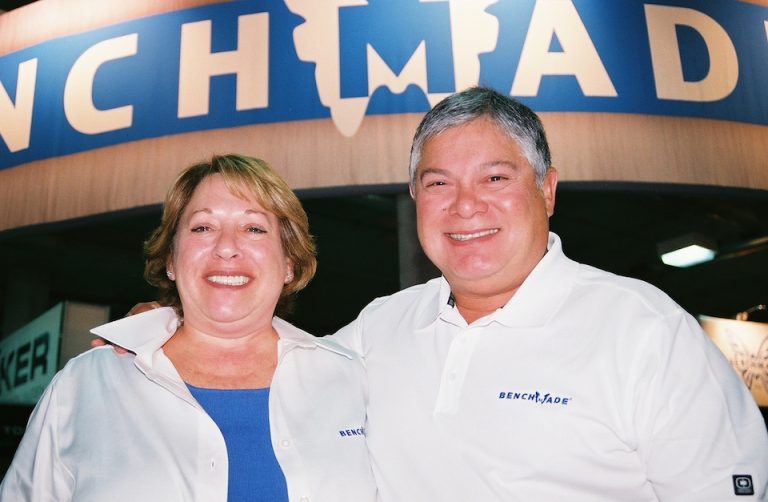
According to a fellow Cutlery Hall Of Famer, de Asis has been a major pillar in the knife industry for more than 35 years. He founded Bali-Song, Inc., which later became Benchmade Knife Co. From a fledgling business in a garage to a major force in the cutlery industry, Benchmade is among the top knife manufacturers in the world. Les was a major influence in the renaissance of the butterfly genre of knives, which continues to enjoy a large following of knife fans. He was a founder of the American Knife & Tool Institute (AKTI), one of the earliest and most successful of the organizations protecting the rights of knife enthusiasts and the knife industry, and remains a driving force in the organization. He raised the bar significantly on the quality and function of automatic knives for military, law enforcement, first responders and general use, and Benchmade remains a leading manufacturer of autos today. The AXIS™ Lock designed by William McHenry and Jason Williams and introduced into production by Les helped maintain the revolution in locks for folding knives that persists today.
James L. “Jim” Batson is one of the world’s most noted bladesmiths and authorities on both bladesmithing and Cutlery Hall-Of-Famer James Bowie and bowie knives. The Batson Bladesmithing Symposium near Bessemer, Alabama, is one of the world’s most respected and best attended annual hammer-ins, attracting bladesmiths, knifemakers and knife enthusiasts from around the world, and has been doing so for almost 30 years now. Through his symposium and his many nationwide seminars teaching the art of bladesmithing, Batson is a standard bearer of the American Bladesmith Society’s stated goal of educating any and all on how to best make knives of forged steel. He has scoured the countryside in Texas, Arkansas and the Southeast, and combed through the archives of dozens of libraries and city and town halls in search of information on bowie knives and the life and times of James Bowie. He also has written extensively on both subjects.
Batson is an award-winning master smith in the American Bladesmith Society (ABS) and two-time ABS chairman. He led the ABS through some of its most successful times in recent years and shows no signs of slowing down. In the February 2014 BLADE®, he was ranked No. 9 among the top 13 knifemakers from 1989-2000. “Jim is a great bladesmith, a great leader, a great historian, a great bowie authority, a great writer and a retired rocket scientist,” wrote one Cutlery Hall Of Famer. “I challenge anyone to match that record!”
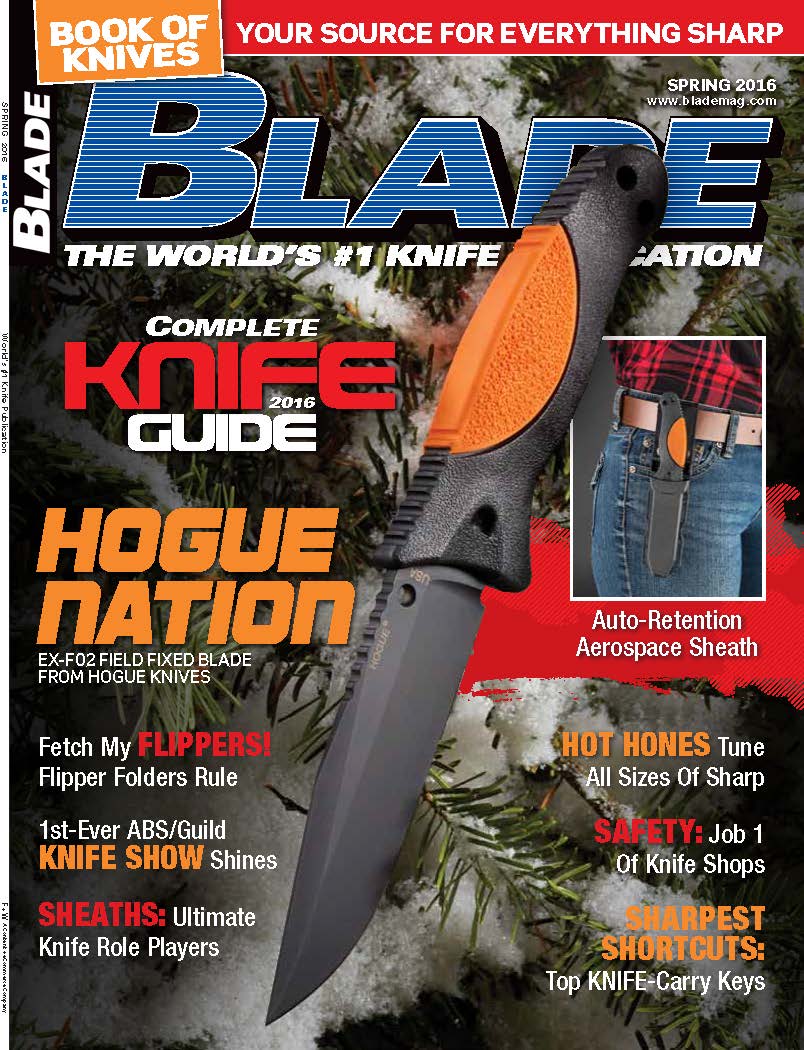
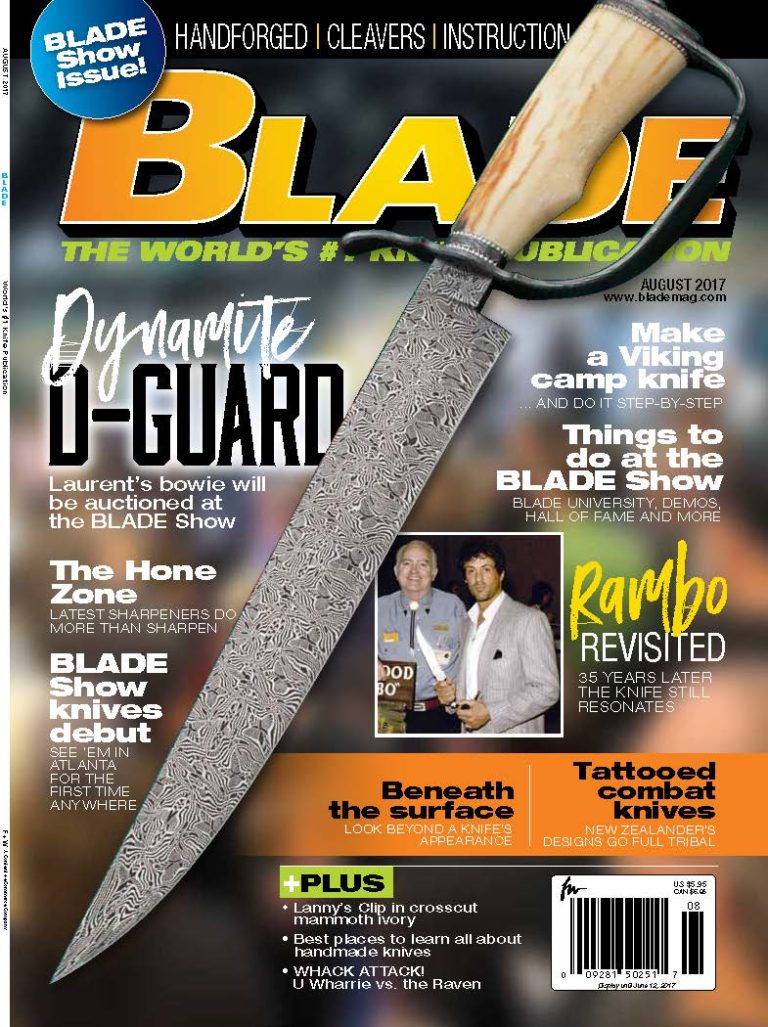
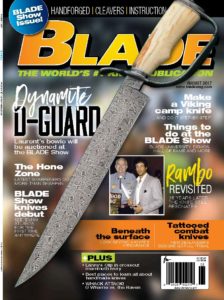
36th Annual BLADE Show preview highlights the latest issue of BLADE®.
Sneak a peak at next week’s 36th Annual BLADE Show in all its sharpened glory in the latest issue of BLADE® Magazine, on newsstands now!
June 2-4 at the Cobb Galleria Centre in Atlanta, the world’s largest and most important knife show will feature over 1,000 domestic and international exhibitors of custom and factory knives and the people and companies who make them, thousands of worldwide knife fans and much more—and it’s all in the latest BLADE.
New features include a balisong-flipping competition conducted by Blade HQ, a survival skills demo by one of the stars of the Alone™ TV series on HISTORY®, Larry Roberts, the BLADE Show 2017 Photo Contest in which patrons enter their favorite BLADE Show 2017 photos with a prize going to the one selected the best of the bunch, how to make a Brut de Forge knife—these and more are among the highlights of the 36th Annual BLADE Show outlined in the latest BLADE.
Also this issue: a retrospective of a knife that changed knife history in “Rambo Revisited”; part one of a three-part series on the latest sharpeners in “The Hone Zone”; how to make a Viking camp knife; New Zealander Jared Wihongi’s new Maori-inspired combat knives for Browning; a review of the handforged knives that will be auctioned—including this issue’s cover knife, a stunning damascus D-guard bowie by Veronique Laurent—by the American Bladesmith Society at the BLADE Show in “John White Will Be Watching”; and much more, all in the latest BLADE.