
The BLADE Blog w/Steve Shackleford

Knives, knife people, knife news, knife use, knife collecting, knifemakers, knife events, the BLADE Show, BLADE Magazine, and more.

Hones for the Sharpening Challenged

The CCKS 2-Step Knife Sharpener from Smith’s offers coarse tungsten carbide rods on top and extra-fine (1,000 grit) ceramic rods on bottom—both at pre-set angles for easy pull-through use—for sharpening and edge touch-ups/refinement, respectively. MSRP: $3.99. (Smith’s photo)

If sharpening stumps you, try one or more of these simple yet effective sharpeners

By Dave Rhea

A good working edge on a blade is one of the knife owner’s most important considerations, but sharpening is not always as easy as it seems. How do you hold the knife to the sharpener/which angle should you use? Do you use ceramic, stone or diamonds? How much sharpening is too much? How much is too little?

    Here is a better question: Since even thinking about sharpening can get complicated, why not idiot proof the subject?

Quick and Easy

Chris Fire is a sharpening expert. As the marketing manager for Lansky Sharpeners, Fire lives and breathes by the sharpening industry. His suggestion for the quickest and easiest sharpener is Lansky’s Quick Fix Pocket Sharpener.

    The Quick Fix has all the elements of an easy sharpener: Low price (MSRP: $5.99), small—about the size of a money clip—and fast results. A half-dozen or less strokes through one of the two slots clears up a problem blade edge in a hurry. One side holds a slight segment of tungsten carbide rod to return the edge to a proper geometry, and the other side holds a like-sized span of ceramic rod to deburr it.

    Fire drew a distinction between the quick-and-easy and something less expedient but perhaps wiser.

    “Tungsten-carbide sharpeners sharpen by tearing steel off the blade rather than slowly honing,” he warned. “They remove a lot of metal. Use them in a pinch, but for everyday edge maintenance you probably want to use something less aggressive like Lansky’s Turn Box Ceramic Sharpener.”

    The 4 Rod Ceramic Turn Box (MSRP: $21.99) offers a higher-grade sharpening experience but is also uncomplicated. It uses two pair of 5-inch alumina ceramic rods that are set at pre-determined angles: 20 and 25 degrees. Holding the knife upright vertically, you draw the blade down along the rods of the V-shaped sharpener. With internal rod storage, it also breaks down into a compact kit for stowing in a drawer or tool/tackle box.

    Fire added that perhaps as important as having a good sharpener is the knowledge that different tasks call for different knives. In other words, a chopping knife is not going to make a great slicing knife no matter what kind of edge it has.

    “Chopping knives have a more durable edge, but they’re not as sharp,” he professed. “Chopping potatoes with such knives is great. Achieving paper-thin tomatoes slices? Not so much. So keep a knife for slicing, a knife for chopping, a multi-purpose knife and maybe a fillet knife, and use each to its strengths.”

Hassle Free

Marketing manager for Smith’s, Russ Cowen adds that a seemingly insurmountable task is convincing the consumer on-going edge maintenance is the key to keeping a perpetually useful edged tool.

    “The best way to keep a knife sharp is to never let it get dull,” he explained. “If the consumer would just take a few minutes either before or after using a knife, and especially during use if doing lots of cuts for a longer time period, to touch up or freshen the cutting edge, he or she would see that not only would the knife cut better, but it would also take them half the time to accomplish the task.”

    For such hassle-free edge maintenance, he recommends Smith’s 2-Step Knife Sharpener, a small plastic-framed sharpener with an insanely low MSRP of $3.99. The two sharpening slots—in carbide and ceramic—offer two stages of edge work: 1) coarse “for re-setting the edge on very dull or damaged blades,” and 2) fine for finishing work that will bring a blade closer to the hair-popping sharpness so many knife users crave.

    “The 2-Step Knife Sharpener will sharpen any blade style with a flat grind on both sides of the blade as long as the blade will fit inside the sharpening slots. It works well on Euro/American style kitchen knives, everyday pocketknives, folding or fixed-blade hunting knives, fillet knives, outdoor sport knives, custom knives, and tactical/LE knives with little to no maintenance,” he said. “At most, the user may have to rinse it off or clean the ceramic rods after extended use.”

    For knives that suffer from the usual treatment—letting them go pretty much dull—Cowen offers this advice: “The best way to put a new, sharp cutting edge on a very dull or damaged knife blade is to use an abrasive surface that is aggressive enough to remove large amounts of metal from the blade quickly.”

    He suggests a sharpener with carbide blades or a low-grit diamond-coated surface. Such abrasive components are quite aggressive and remove metal from the blade very quickly—sometimes so fast you can see the metal shavings falling off the blade, he added.

Simplest Is Best

Pre-set angles and guides are all designed to make the obligatory task of sharpening a knife easier. However, according to Mark Brandon, president of Diamond Machining Technology (DMT), it does not get any simpler than the old-fashioned bench stone.

    “There’s a myth out there that sharpening is difficult,” Brandon began. “I don’t think the sharpening industry has done itself any favors—we’ve done our part to help convince people that it’s difficult by coming out with all these ‘we’ll-hold-your-edge-for-you’ kind of products.”

    He said the reality is that via its training videos available at www.dmtsharp.com, DMT has taught scores of folks to sharpen on a stone in less than five minutes.

    “We think it’s kind of idiot proof to begin with,” he stated. “Sometimes the simplest approach can be the best, and there is really nothing simpler than a 6-inch-by-2-inch stone.”

    Brandon’s two bench-stone suggestions start with the DMT Diamond Whetstone, which comes in 6- and 8-inch models. They have MSRPs of between $47.16 and $95.26, depending on the length and choice of either plastic or hardwood case. A diamond abrasive is the best and simplest material to put a great edge on a blade, he said.

    His other suggestion is the DuoSharp 8-inch model, another diamond stone that is double sided in fine and extra-fine grits to address both sharpening and refining the edge. The 8-inch DuoSharp has an MSRP of $105.03 for the stone alone and $114.58 with the stabilizing base accessory.

    “It’s all a matter of how much time are you willing to spend on it,” Brandon said. “If you have a fine stone, depending on how much time you want to take, you can get a dull knife sharp. But if you don’t have that much time, you may want to have a coarse stone available to get it to a certain level and a fine stone to get a good working edge, and if you really want to make it hair-popping sharp, go to an extra fine.”

Rule Of Thumb

No matter your preference, there are plenty of choices available. The key is to find your comfort zone and touch up the edge at least once for every three or four times you use a knife. The basic rule of thumb is do not let your knife go dull and it will be easier to keep a crisp, high-performing edge.

For more on the latest knives, knife legislation, knifemaking instruction, knife trends, knifemakers, what knives to buy and where and much more, subscribe to BLADE Magazine, the World’s No. 1 Knife Publication.

Missouri Auto Ban Repeal Is Law

According to Knife Rights, Missouri Governor Jay Nixon has signed legislation repealing the ban on the possession, sale and manufacture of automatics—such as the Benchmade Infidel (pictured above)—in Missouri as long as they are not “in violation of federal law.” In practical terms, it means you cannot do so in interstate commerce, on Indian reservations or wherever federal regulations may prevent such activities.


    Knife Rights officials indicated they worked closely with the National Rifle Association on this important legislation and appreciate the NRA as a strong partner in their second front in defense of the Second Amendment.

    For more info on the bill click on www.KnifeRights.org   

For more on the latest knives, knife legislation, knifemaking instruction, knife trends, knifemakers, what knives to buy and where and much more, subscribe to BLADE® Magazine, the World’s No. 1 Knife Publication. Click on http://www.shopblade.com/blade-magazine-one-year-subscription-us/?r+ssfb071112 for more information.

Knife Of The Day: CRKT Big Dog Carson Desert Tactical

Our “Knife Of The Day” for Feb. 27 is the M16-14ZSF Carson Desert Tactical flipper folder designed by Kit Carson for Columbia River Knife & Tool.

     The 3.875-inch blade is 420J2 stainless steel and the handle of the “Big Dog” version of the knife is Zytel® in a desert camo pattern. Weight: 6.3 ounces. An AutoLAWKS safety designed by Blade Magazine Cutlery Hall-Of-Fame© members Michael Walker and Ron Lake offers added security when the folder is locked open.

For more information click on http://www.shopblade.com/product/m16-14zsf/?r+ssfb022712#X3333


Forged In Fire Renewed For 2nd Season

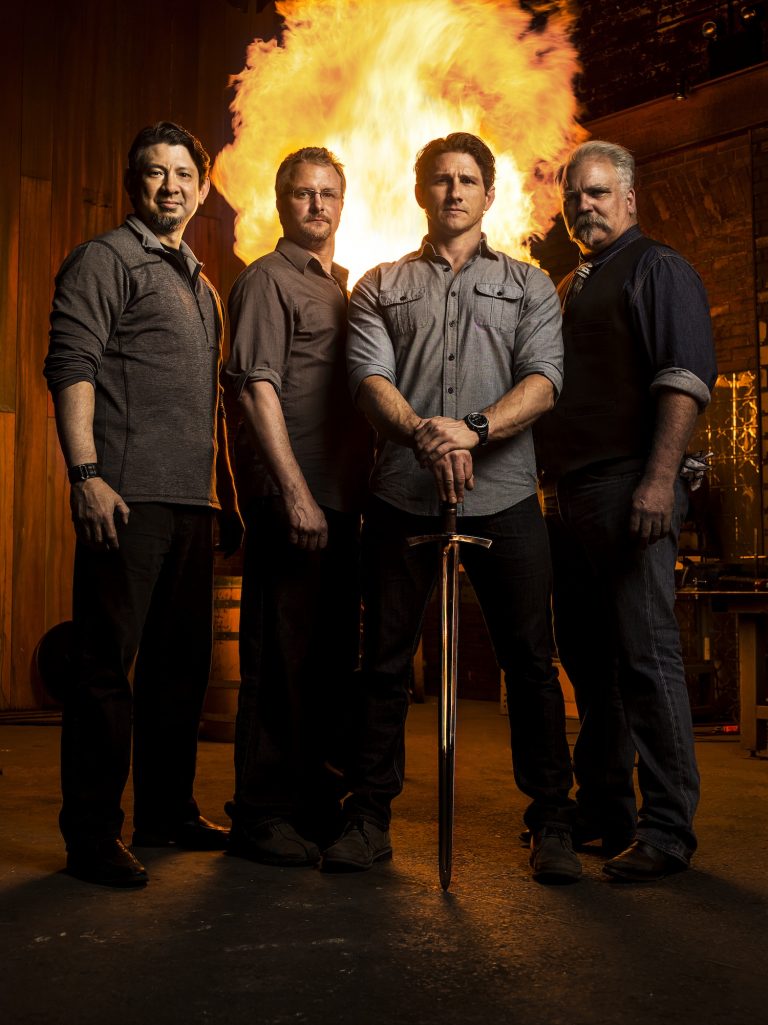
Second season for Forged In Fire.
Forged In Fire has been renewed for a second season. (Miller Mobley/HISTORY)

Forged In Fire, The History Channel’s hit summer reality TV show featuring bladesmiths who compete to see who can forge the best knife, has been renewed for a second season, Cynopsis Media reports.

According to Cynopsis, “History’s Forged In Fire will be back for a sophomore season. The show, which averaged 1.6 total million viewers in Live+7 delivery, follows the most talented bladesmiths as they create weapons from the Japanese katana to the medieval broadsword.”

The stars of Forged In Fire include a panel of three judges—ABS master smith J. Neilson, ancient weapons authority David Baker and martial artist/knife user Doug Marcaida—and host Wil Willis, along with the many competing bladesmiths.

While the show had been sending out casting calls for bladesmiths for a new season, there had been no formal confirmation of its renewal until the official announcement by Cynopsis. Whether there will be any changes in the show’s format, when the new season will begin, etc., is unknown at this time.

In a nutshell, Forged In Fire consists of four bladesmiths—different ones each episode—who compete to see who can make the best knife. In the first round each smith has roughly three hours to design and make in the show’s shop/forge a rough-forged knife of his choice according to the specs and with materials determined by the judges. The three smiths of the four the judges deem to have made the best rough knives advance to the next round, in which they must make and attach the handles and finish their knives. Of the three remaining smiths, the two who make the best knives in the judges’ estimation advance to the finals, in which they have five days in their home forges to make a knife, sword, axe or other cutting tool in a design of the judges’ choosing. The smith who makes the best piece in the judges’ estimation wins $10,000.

For a behind-the-scenes look at the show, see the December BLADE®, on newsstands now, or subscribe.


Also Check Out:

T7174Knives 2016, 36th Edition
The trusted guide for knife collectors, enthusiasts, knifemakers, and dealers around the world, this knife book covers the latest and greatest from front to back. A collection of feature articles explores the latest developments, history, and transformation of knives, swords, and edges of various kinds. Get your copy


Coast Announces New Knives For 2012

     Coast Cutlery will introduce a new lineup of precision knives, multi-tools and LED lights in 2012.

     The new knives will be led by the Rapid Response assisted-opening models designed by Blade Magazine Cutlery Hall-Of-Fame© member Ron Lake. Patented SAT (Smooth Assist Technology) delivers fast, smooth blade opening. Patented Max-Lock and Double-Lock systems offer safe operation.

     Coast also will present a new line of multi-tools, including the Model C5899 Pro Pocket Pliers with two built-in LED lights and tools accessible without opening the pliers.

     Stay tuned. Coast will be offering more information on the new knives and tool in early January.

     For more information on the latest knives, knife trends, hot knifemakers and more, subscribe to BLADE®Magazine. For subscription information click on http://www.shopblade.com/product/blade-magazine-one-year-subscription-us/?r+ssfb151211#BL1SU

SGT. DAKOTA MEYER’S KNIFE

In recognition of his military actions in Afghanistan on behalf of his fellow servicemen and his country that resulted in his receiving the Congressional Medal of Honor, U.S. Army Sgt. Dakota Meyer was presented with a custom knife made by Gene Baskett, a custom AR-15 rifle, and honorary membership in the Knifemakers’ Guild.

    During a special ceremony this past December in Elizabethtown, Kentucky, Baskett, formerly of Elizabethtown and now of Eastview, Kentucky, presented Sgt. Meyer with a Baskett handmade knife, a custom fighter with a black Moly-Coated CPM-154 stainless blade and a black linen Micarta® handle. The knife is engraved “MOH, Sgt. Dakota Meyer, USMC” on the mark side and “8 September 2009, Kunar Province Afghanistan” on the flip side. The engraving is by Patrick Clark of Clark Jewelers, also of Elizabethtown. Richardson Gunsmithing did the Moly Coating.

    In all, Baskett said he got to spend about three hours with Sgt. Meyer the day of the presentations. “He really loved the knife,” Baskett observed. “He was really appreciative and seemed very humbled by it all.”

    J.J. Akins and Steve Sprowls of Elizabethtown’s Sporter Express gun shop presented Sgt. Meyer with the custom-engraved rifle. The gun is engraved “Rifle presented by the citizens of Hardin County, KY. Sergeant Dakota Meyer, USMC. 8 September 2009. Kunar Province Afghanistan. Congressional Medal of Honor,” and was donated by Sporter Express.

    A member of the Guild’s board of directors, Baskett also presented Sgt. Meyer with a custom Guild honorary membership badge that includes the worlds “Medal of Honor Recipient” and the Marine Corps emblem.

ACTS OF HEROISM

Sgt. Meyer was born and raised in Columbia, Kentucky. He entered the Marine Corps after high school in 2006. On Sept. 8, 2009, Sgt. Meyer, then a corporal, was credited with numerous acts of heroism and saving the lives of several Marines in a battle near the village of Ganjgal in Afghanistan (see sidebar, page ???). As a result, Meyer was awarded the Medal of Honor in a ceremony at the White House on Sept. 15, 2011.

    Sgt. Meyer spoke to a small crowd and the media during the ceremony in Elizabethtown, saying he does not consider himself a hero and that the Medal of Honor and what it represents is much bigger than him. His actions on “the worst day of my life” may have saved several fellow Marines, though he said he could not save four of his close friends in his unit. He wears a bracelet bearing their names.

    The Americans who died in the ambush were: 1st Lt. Michael Johnson, 25, Virginia Beach, Virginia; Staff Sgt. Aaron Kenefick, 30, Roswell, Georgia; Hospital Corpsman Third Class James R. Layton, 22, Riverbank, California; and Gunnery Sergeant Edwin Wayne Johnson Jr., 31, Columbus, Georgia. A fifth soldier, Army Sgt. 1st Class Kenneth W. Westbrook, 41, Shiprock, New Mexico, later died from his wounds.

    Sgt. Meyer received the Medal of Honor in a ceremony at the White House on Sept. 15, 2011. When a White House staffer contacted him to arrange the ceremony, Sgt. Meyer famously asked to “have a beer with the President.” Sgt. Meyer received an invitation to the White House the afternoon before the ceremony (see sidebar, page ???). He also requested that when he was honored, simultaneous services should be held at other applicable locations to honor the memory of his fellow service members who died or were mortally wounded during the ambush and his rescue attempts.

    Sgt. Meyer is the third living recipient of the Medal of Honor since the Vietnam War, and the first living Marine in 38 years to be so honored. In addition to the Medal of Honor, he also received the Purple Heart, Navy Commendation Medal w/Combat V, the Navy Achievement Medal and the Combat Action Ribbon during his years of service from 2006-2010.

MILLION DOLLAR CHALLENGE

Sgt. Meyer uses his fame to raise money to provide college scholarships to the childen of those soldiers who did not survive the war. His goal is to raise $1 million for his “Million Dollar Challenge” (see sidebar, page ???). During the presentation ceremony, Sporter Express presented a check for $750 toward that goal.—BY MIKE CARTER

For more information on the Million Dollar Challenge, visit www.dakotameyer.com. For more on Gene Baskett knives, contact Gene Baskett, Dept. BL12, 427 Sutzer Ck. Rd., Eastview, KY 42732 270-862-5019 www.baskettknives.com.

To stay abreast of the latest in knives and knife information, subscribe to BLADE® at http://www.shopblade.com/blade-magazine-one-year-subscription-us?lid=SSfbbl101212

Keeping Up With Dakota Meyer

It is not often a living U.S. Marine receives the Congressional Medal of Honor, and Sgt. Dakota Meyer is the first one to do so in 38 years. Neither is he one to rest on his laurels.

    For instance, he has partnered with the Marine Corps Scholarship Foundation (MCSF) to raise money so the children of Marines can attend college. Sgt. Meyer said he realizes the importance of education and believes in the MCSF motto, “Honoring Marines by Educating Their Children.” The Dakota Meyer Scholarship Initiative was established and Sgt. Meyer committed to personally raising a million dollars to fund the effort. In fact, during the MCSF’s 50th anniversary celebration this past spring, it was announced that he had successfully reached his goal of raising a million dollars. The Challenge to America to match the million dollars Sgt. Meyer raised is ongoing. To learn more about it and to make a donation visit www.dakotameyer.com

    He indicated he was honored President Obama accepted his invitation to have a beer the afternoon before the Medal of Honor ceremony. (As a side note, Sgt. Meyer said the White House brews its own beer, a honey ale, which he said both he and the president enjoyed.) He added he appreciated the opportunity to speak with and ask advice from the president. The president emphasized the importance of education, a priority Sgt. Meyer shares. In fact, Sgt. Meyer said he hopes to continue his education when his travel schedule slows down.

    Meanwhile, he spends much of his time on the road, traveling all over America to share the story of his fallen brothers. He also advocates for veterans and has recently partnered with the U.S. Chamber of Commerce and Toyota on the Hiring Our Heroes campaign, which provides jobs fairs for veterans nationwide, as well as training veterans to successfully make the transition from military to civilian employment. At press time, Sgt. Meyer’s book Into the Fire was slated to be published this September.

Above and Beyond The Call

 According to Dakota Meyer’s citation for the Medal of Honor, he was recognized, “For conspicuous gallantry and intrepidity at the repeated risk of his life above and beyond the call of duty as a member of Marine Embedded Training Team 2-8, Regional Corps Advisory Command 3-7, in Kunar Province, Afghanistan, on 8 September 2009.

    “When the forward element of his combat team began to be hit by intense fire from roughly 50 Taliban insurgents dug in and concealed on the slopes above Ganjgal village, [then] Corporal Meyer mounted a gun-truck, enlisted a fellow Marine to drive, and raced to attack the ambushers and aid the trapped Marines and Afghan soldiers. During a six-hour firefight, Corporal Meyer single-handedly turned the tide of the battle, saved 36 Marines and soldiers and recovered the bodies of his fallen brothers.

    “Four separate times he fought the kilometer up into the heart of a deadly U-shaped ambush. During the fight he killed at least eight Taliban, personally evacuated 12 friendly wounded, and provided cover for another 24 Marines and soldiers to escape likely death at the hands of a numerically superior and determined foe.

    “On his first foray his lone vehicle drew machine gun, mortar, rocket grenade and small arms fire while he rescued five wounded soldiers. His second attack disrupted the enemy’s ambush and he evacuated four more wounded Marines. Switching to another gun-truck because his was too damaged, they again sped in for a third time, and as turret gunner he killed several Taliban attackers at point blank range and suppressed enemy fire so 24 Marines and soldiers could break out.

    “Despite being wounded, he made a fourth attack with three others to search for missing team members. Nearly surrounded and under heavy fire, he dismounted the vehicle and searched house-to-house to recover the bodies of his fallen team members. By his extraordinary heroism, presence of mind amidst chaos and death, and unselfish devotion to his comrades in the face of great danger, Corporal Meyer reflected great credit upon himself and upheld the highest traditions of the Marine Corps and the United States Naval Service.”


TOP PHOTO AND SECOND PHOTO FROM TOP

Congressional Medal-of-Honor recipient Sgt. Dakota L. Meyer recently was presented with a Gene Baskett handmade knife. The custom fighter has a black Moly-Coated CPM-154 stainless blade and a black linen Micarta® handle. The knife is engraved “MOH, Sgt. Dakota Meyer, USMC” on the mark side. The engraving is by Patrick Clark. Richardson Gunsmithing did the Moly Coat. (photo of Sgt. Meyer courtesy of the United States Marine Corps; knife photo by Mike Carter)


Can Fire-Steel Bushcrafters Take the Heat?

BLADE and Bold Action
Bear & Son Cutlery’s Bold Action V is the cover knife for the new BLADE®, on newsstands now!

See if bushcraft knives with fire steels can take the heat, meet a Marine Corps vet who helps spread the good word of Zac Brown’s knives, learn whether paying knife deposits on custom knives is for you and more in the latest issue of BLADE®—on newsstands now!

BLADE field editor Abe Elias puts four new bushcraft knives, all equipped with fire steels, through a series of tests and critiques. See how they fare and what makes a good bushcraft knife—not what makes good hype—in “Bush The Envelope.”

Losing both legs from above the knee down would understandably destroy most people, but not veteran Marine Staff Sgt. Joey Jones. Fitted with prosthetic devices after the devastating effects of an IED in Afghanistan, he picked up the pieces in civilian life and has become a powerful motivator for individuals, corporations and charities. He also works with Zac Brown’s Southern Ground, which, in addition to the Southern Grind knife company, funds Camp Southern Ground for children, especially those with neuro-developmental disorders or in families with a parent deployed, wounded or lost. Erin Healy examines Jones and Brown’s Southern Ground in “Joined By Knives.”

Ordering a custom knife from a knifemaker and making a down payment—better known as a deposit—on the knife is something collectors have done for many years. But is paying deposits for you? Custom knife purveyor Les Robertson guides you through the do’s and don’ts of the practice in “Knife Deposits: Yea, Nay, Maybe.”

Casstrom bushcraft knife
Can Casstrom’s Woodsman bushcraft knife with fire steel take the heat? Abe Elias shows the way in the latest BLADE®,

Also in this issue of BLADE:

•The latest in factory automatics, including the cover knife, an entry from Bear & Son Cutlery’s first-ever line of autos, the Bold Action V;

•Learn how the super-lightweight Gerber LST folder changed knife history in “Father of the EDC?”;

•MSG Kim Breed, retired 5th Special Forces, puts a couple of heavy-duty camp knives through the ringer in “Is Bigger Better?”;

•James Morgan Ayres tests four of the latest factory tomahawks in “Tomahawk Toughies”;

•BLADE field editor Ed Fowler recounts his lifelong addiction to knives in “Just Say Yes!”;

•In “A Linerlock On Roller Skates,” Leroi Price describes a new approach to the linerlock developed by Jake Hoback;

•BLADE field Dexter Ewing concludes his three-part series on 12 of the newest knife sharpeners in “The Hone Zone”;

•Reload your knife with sharp blades or simply discard them in “The Replaceables” by Pat Covert, and;

•You can almost hear the mosaic damascus “snakes” on Greg Cimms’ chef’s knife blade hiss in “The Dubai Vipers.”

You get all this and much more in the latest BLADE. Click here for the download edition. To subscribe to BLADE, click here for the domestic print edition, here for the international print subscription, here for the Canadian print subscription and here for the digital subscription.


Advertisement

Must Read Articles

Read this before you make a knife

Knifemaking 101 – Read This Before You Make a Knife

  by Wayne Goddard My experience has taught me that there's nothing like digging in and getting started. I've often said the hardest part of the...
how to forge damascus steel

How to Forge Damascus

Advertisement
Advertisement