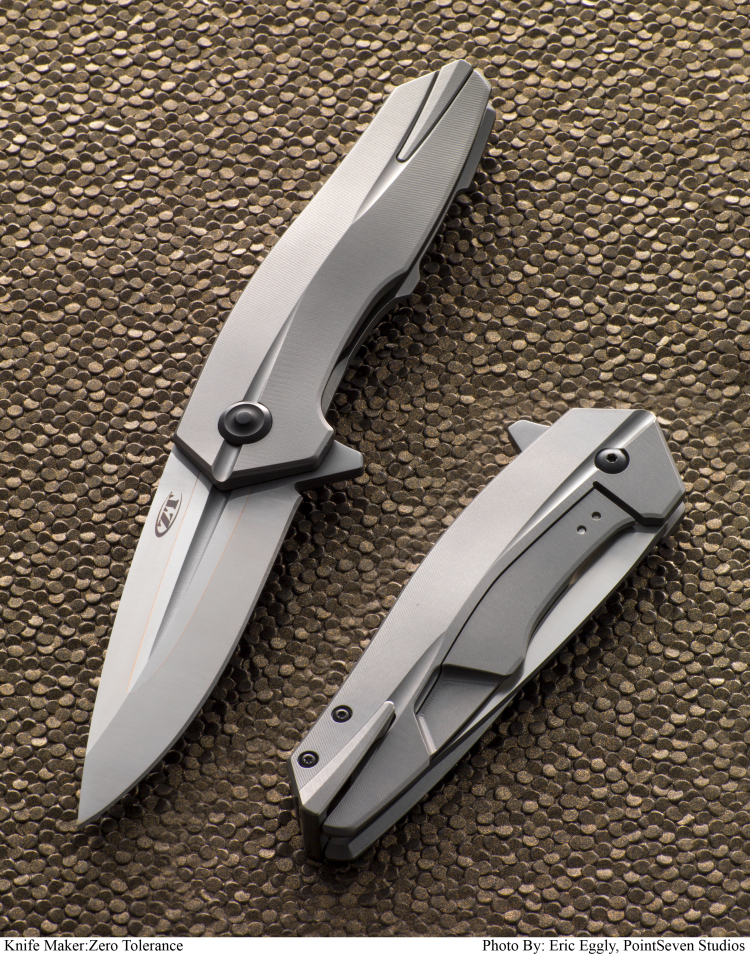
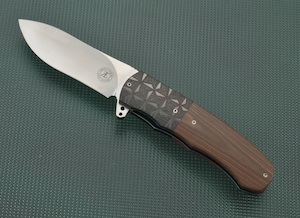
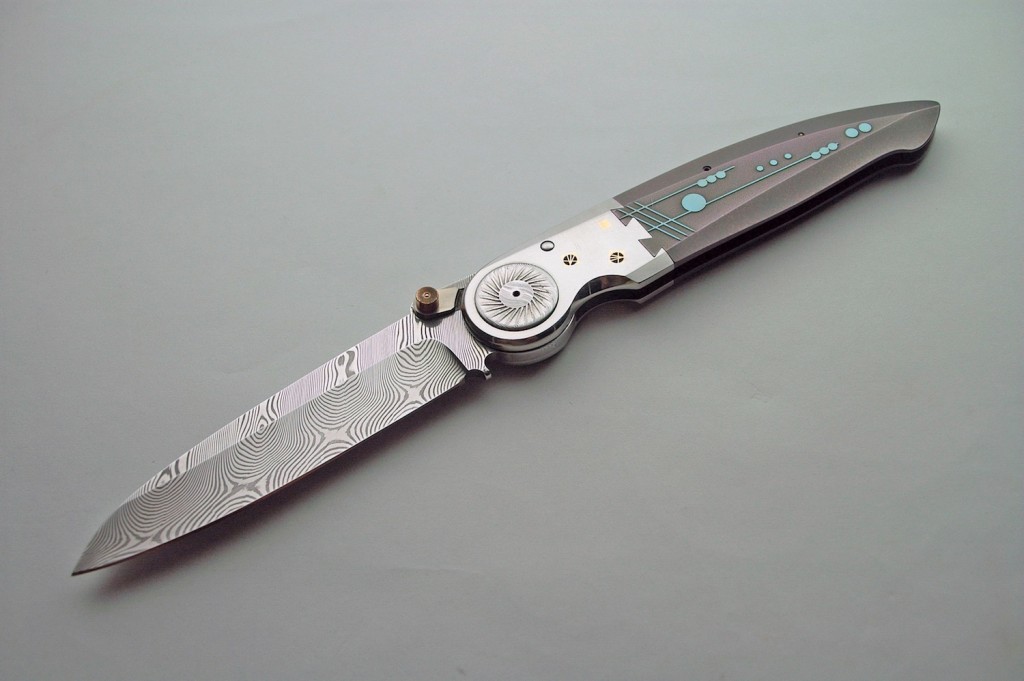
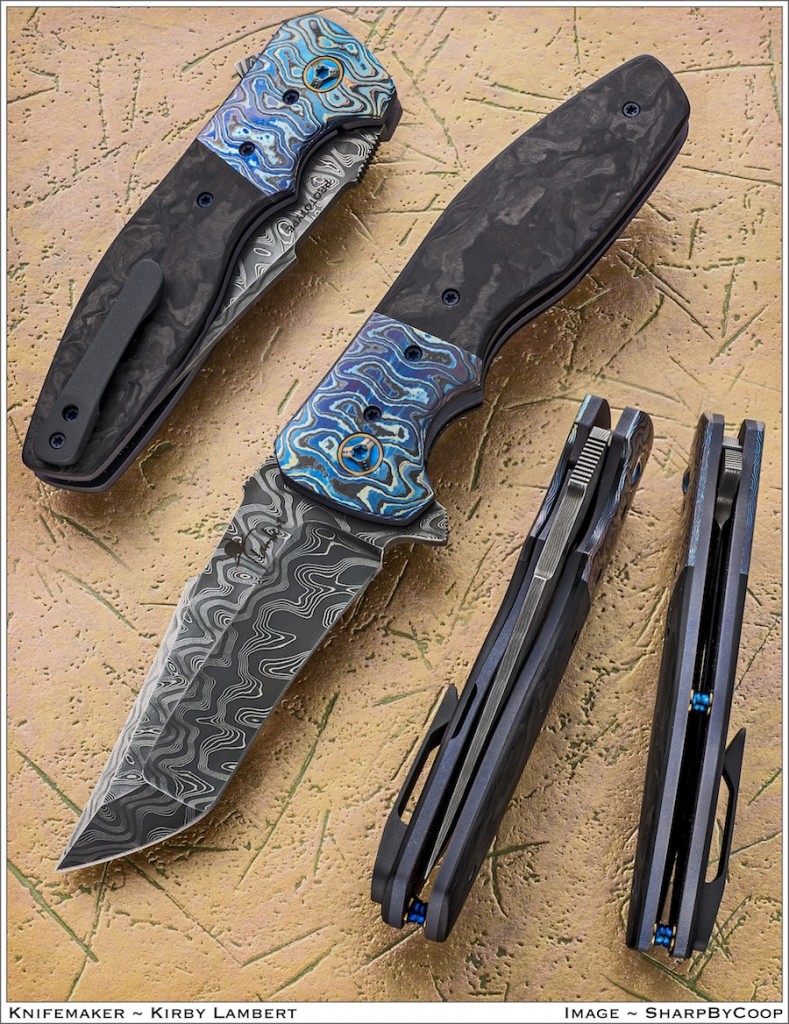
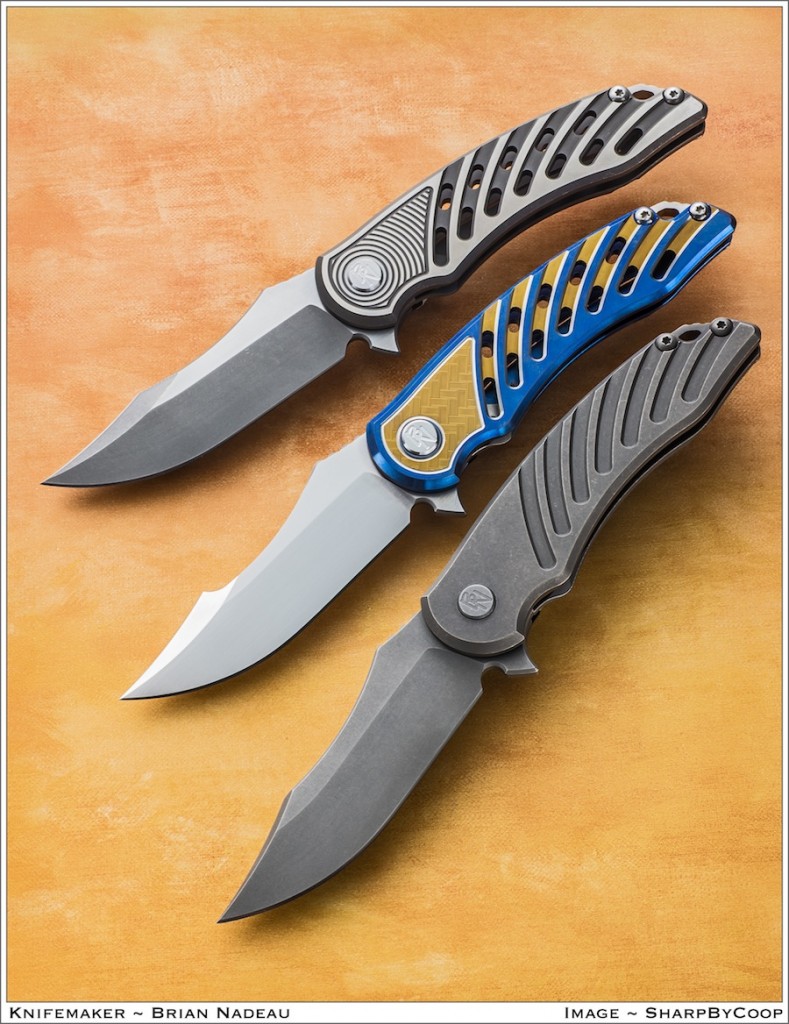
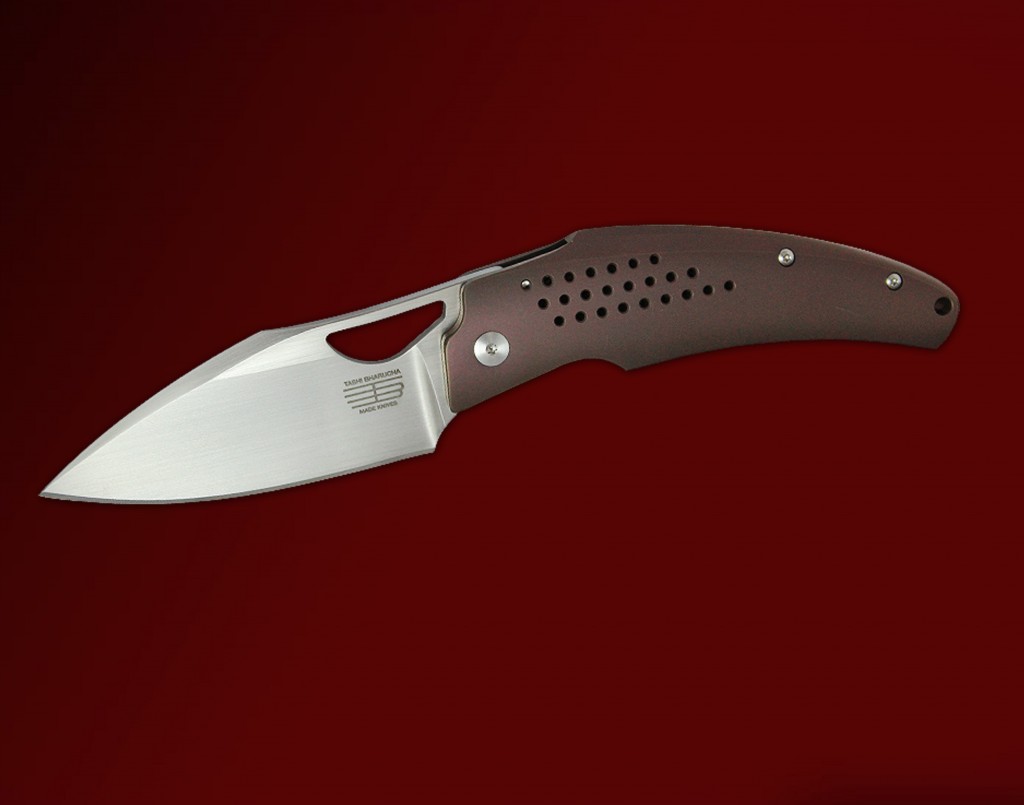
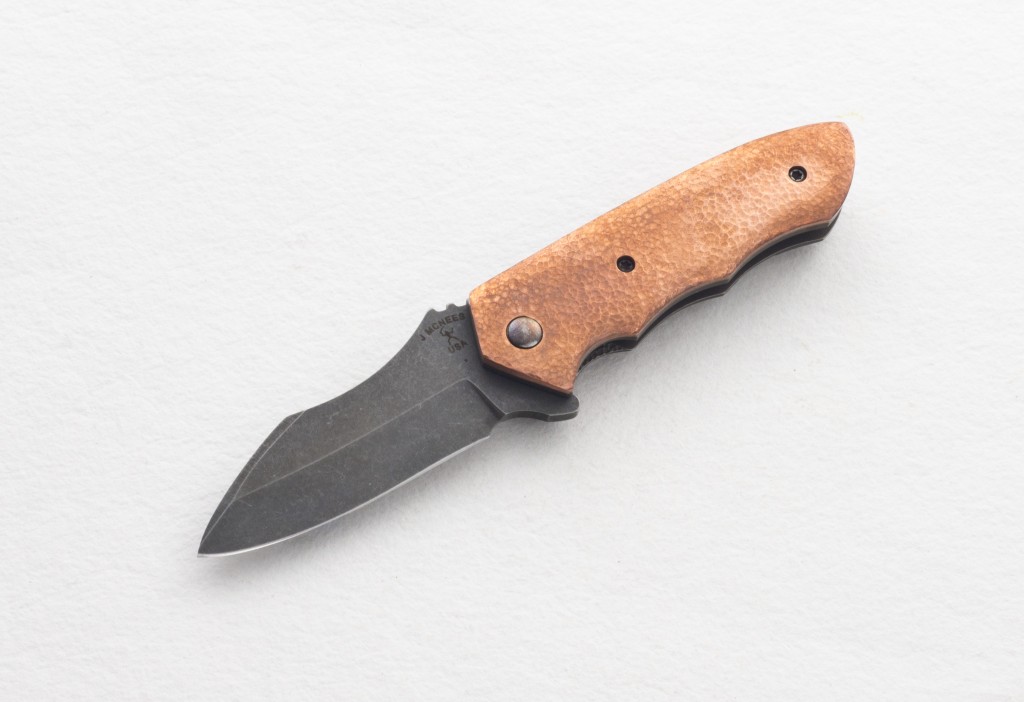
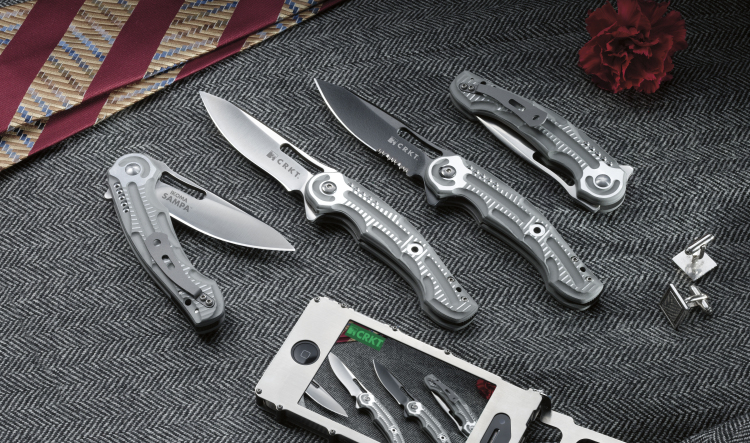
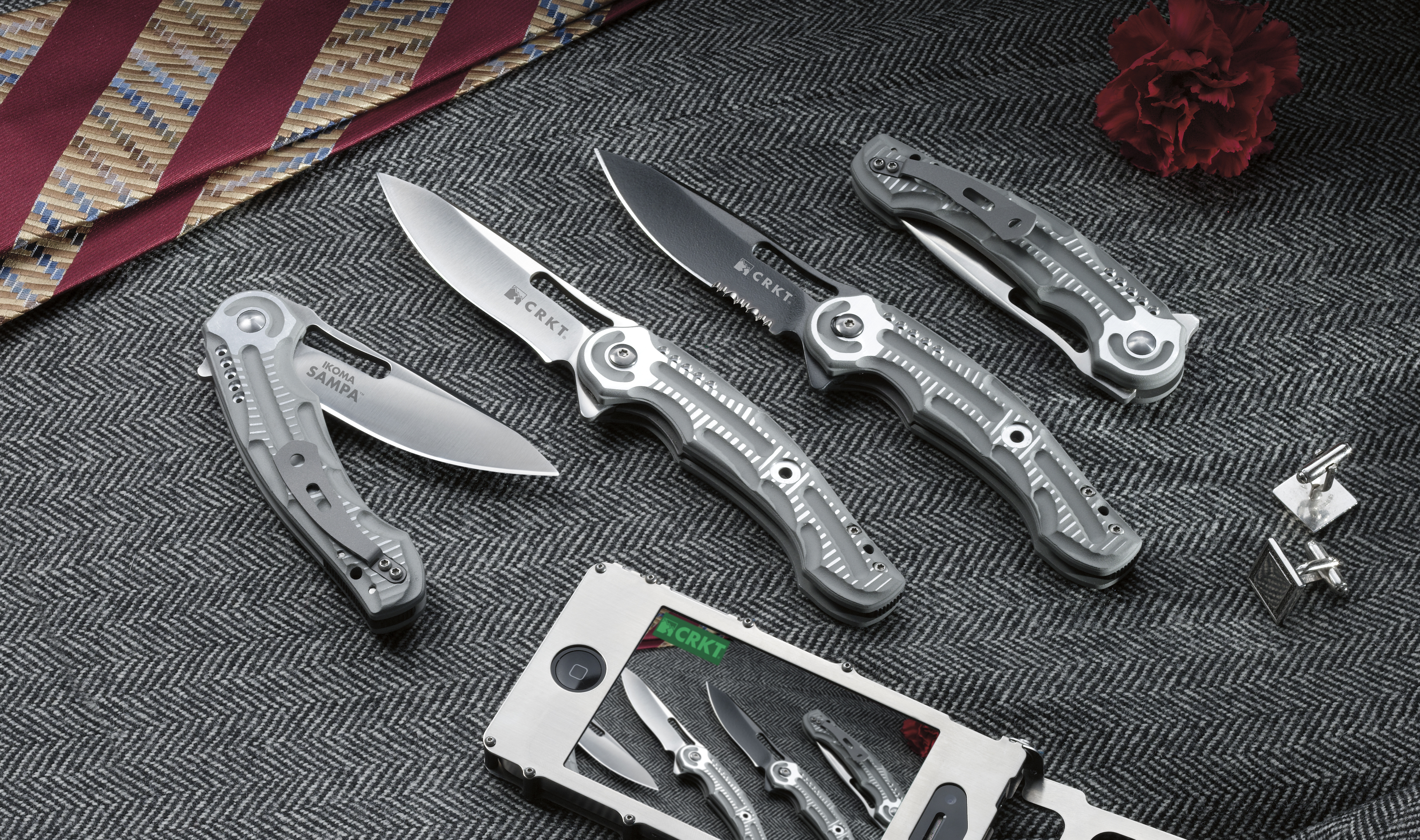
 Designed by Flavio Ikoma and using the IKBS (Ikoma Korth Bearing System) Flavio helped create, Columbia River Knife & Tool’s Sampa line is an example of the non-assisted-opening flipper folder purveyor Duane Weikum said seems very popular at the moment. (CRKT photo)
User needs and refined design/construction rule the hottest knife mechanisms
By Dave Rhea
Mechanisms are everywhere on the knife market. There are so many different ways to open, shut and lock a knife it seems there could never be anything new under the sun. Invariably, though, advanced, creative minds push the boundaries of what is out there. Sure enough, along comes something that revolutionizes the cutlery culture.
So what is going on in the sphere of knife mechanisms? Owner of New Graham Knives retail knife store, Michael Dye said it is difficult to have a really fresh, new idea, and pointed to a visit he had with Blade Magazine Cutlery Hall-Of-Fame© member Ken Warner a few years ago.
“He showed me drawings in a bound notebook that were dated back to the ’70s,” Dye recalled. “Ken said, ‘Recognize these?’ and they looked the same as the handles that are on [a line of leading field knives now].” Dye was not alluding to any sort of theft or malicious intent, but to the fact so many people have so many ideas, and over the years the ideas start to overlap.
Which is a roundabout way of saying what is hot today in knife mechanisms is not necessarily new but a combination of consumer preference and a refinement of existing mechanisms.
Get Your Tweak On
“I think you’re seeing a lot of refining, where the changes are in movement improvements and [modifying] existing mechanisms,” he said. “The devil is often in the details. Also, like putting mechanisms such as the IKBS [Ikoma Korth Bearing System] in affordable production knives.”
He used the Taylor Cutlery/Smith & Wesson knives as an example of the benefits of tweaking a design. “Their third-generation flippers really hit the mark,” Dye explained. “When people put that little knife in their hand, they really are impressed with how the assisted opening works. Refining and tweaking of the geometry to make flippers open more easily—that’s what I have been seeing more than anything in the last year.”
Owner of EDC Knives, purveyor Duane Weikum cited the venerable non-assisted-opening flipper folder popularized by Kit Carson as probably the most-sought-after mechanism this year. “A flipper tab on the knife, along with a strong detent and a smooth pivot, makes for an impressive-opening knife,” he said. “I prefer a straight flipper to an assisted knife myself—fewer chances of it opening in my pocket.”
Weikum is also a big fan of Flavio Ikoma and the IKBS bearing pivot system (page 50, June BLADE®). “There are other bearing systems coming online, people tweaking things so they can call it something other than IKBS,” he opined, “but Ikoma and Korth were putting it into practice long before these other systems came along. Some guys were even using IKBS before they knocked it off—sad but true.”
He added that Columbia River Knife & Tool (CRKT) has licensed the IKBS for Ikoma’s and Cutlery Hall-Of-Famer Ken Onion’s CRKT designs (the Sampa and Ripple, respectively), which he said speaks well for the mechanism’s performance.
Another hot existing mechanism Dye singled out is the one on the Blade Magazine 2010 Overall Knife Of The Year®, the Chris Reeve Knives Ti-Lock. “You definitely have some people who are pushing the envelope, like Gavin and Grant Hawk with the Ti-Lock,” Dye pointed out. “That is, without a doubt, a very unusual locking mechanism.”
The Ti-Lock lock bar is mounted along the back of the blade toward the pivot. When the blade is opened, the handle edge of the lock bar, which has a cross bar with thumb-stud-like grips, is forced down into a slot through spring pressure, locking the knife securely open.
The Ti-Lock folder by Chris Reeve Knives is a collaboration between the father-and-son Hawk team and Chris Reeve. According to Dye, it is a design that, initially, was almost complete but shy of actual fruition. “I think Gavin and Grant got it about 90 percent figured out,” Dye noted. From there, he said Reeve took the lock and made it economically feasible to build on the larger manufacturing scale of Chris Reeve Knives. “It works very well and it adds a different look to the knife, to say the least, with the [lock’s] anodized titanium bars,” Dye observed.
Another hot mechanism is Benchmade’s Paul Axial system, according to Trevor Darby, owner of BladeOps LLC. “I think the [Benchmade version of the] Paul Axial system that has just been hitting the market is very interesting,” he said. “It’s a smooth-opening one-handed mechanism that seems to be generating quite a bit of buzz, as well as demand.”
Developed by Paul Poehlmann in the 1970s (page 50, November BLADE), the Paul Lock has a spring-loaded interlock key that can be depressed and rotated. It is simple and strong. “Along the same lines,” Darby added, “even though it is a mechanism that has been around for a while, the Tri-Ad lock that Cold Steel makes is always in huge demand.” Darby also points to the Spyderco Ball Bearing Lock (page 24, February BLADE) as something that has been gaining interest with his customers.
Hard To Put Down
Sometimes it is the mechanism itself that pushes a buyer into purchasing a knife. The “gadget factor” has a strong allure, and, when someone puts a knife in his hand and starts toying with it and it is hard to put it down, that is an almost certain sale. For many of BladeOps’ clientele, Darby said there is often a specific mechanism that drives them to buy.
“We have a lot of customers who have seen something somewhere and want that particular mechanism,” he related. “I would say there’s about a 50/50 split between buyers looking for a specific mechanism and those looking more along a size, brand and price range.”
A great example of a company that excels in the marketing of interesting mechanisms is CRKT. It has led the way by offering an incredible array of opening and locking mechanisms to the point that, each year, this writer cannot wait to see what is in its new catalog.
“Things like what Ed Van Hoy did with the Snap Fire with the anodized wheels and stuff,” Dye pointed out. “We have a lot of people who come in and really get mesmerized by the glitzy opening systems that you see in some designs.” (Editor’s note: Though CRKT offers at least one other Van Hoy design, the Snap Fire has been discontinued.)
Dye mused that sometimes the mechanism itself outweighs the knife’s actual usefulness. “In such cases, the knife is not utilitarian by any means,” he said. “But what sells the knife to every customer that puts it in his hand is the way it opens and closes. It becomes a gizmo at that point—it just happens to have a sharp blade on it.”
For more on the latest knives, knife legislation, knifemaking instruction, knife trends, knifemakers, what knives to buy and where and much more, subscribe to BLADE® Magazine, the World’s No. 1 Knife Publication. For subscription information click on http://www.shopblade.com/product/blade-magazine-one-year-subscripti…?r+ssfb020512#BL1SU