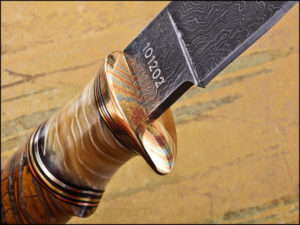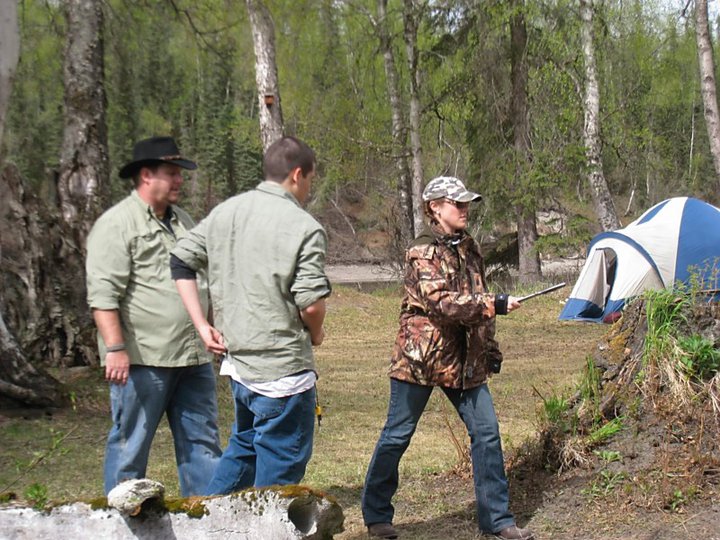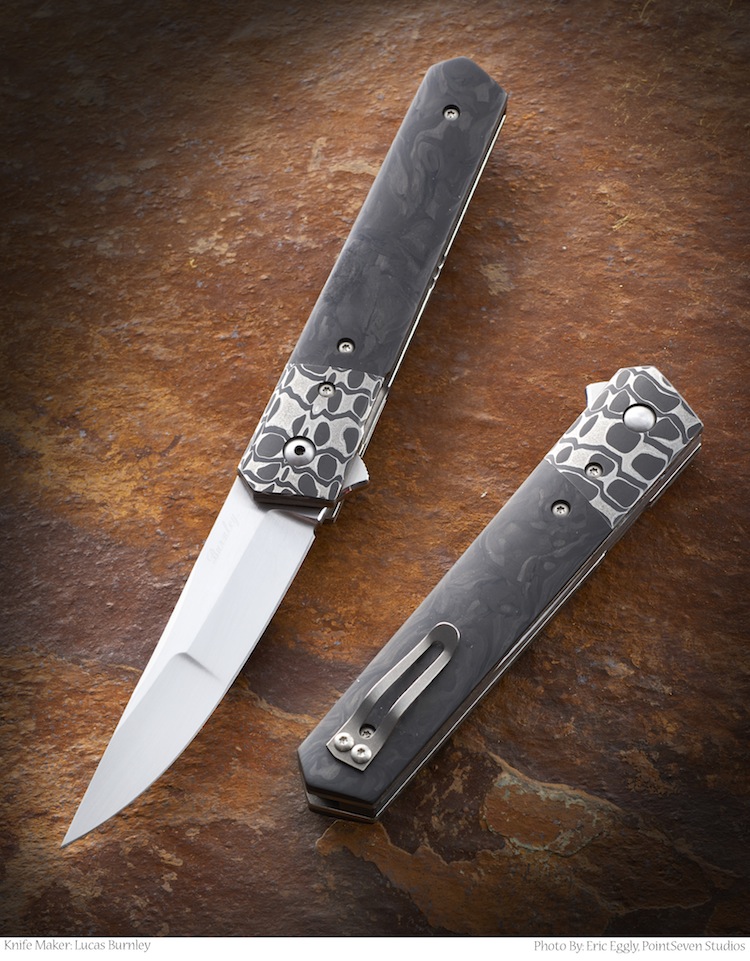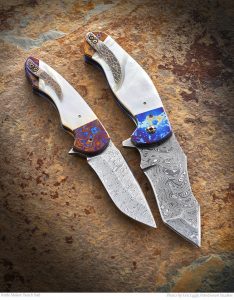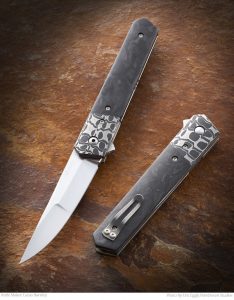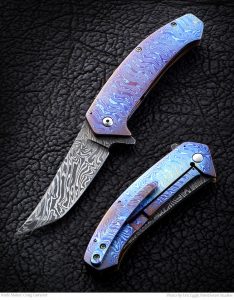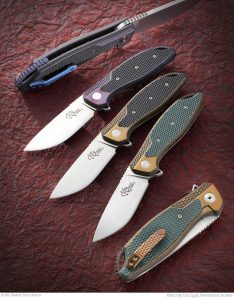
Get hunting knives designed by Alaska hunting guide/award-winning maker Russ Kommer or build your own via a Gene Osborn video at ShopBlade.com.
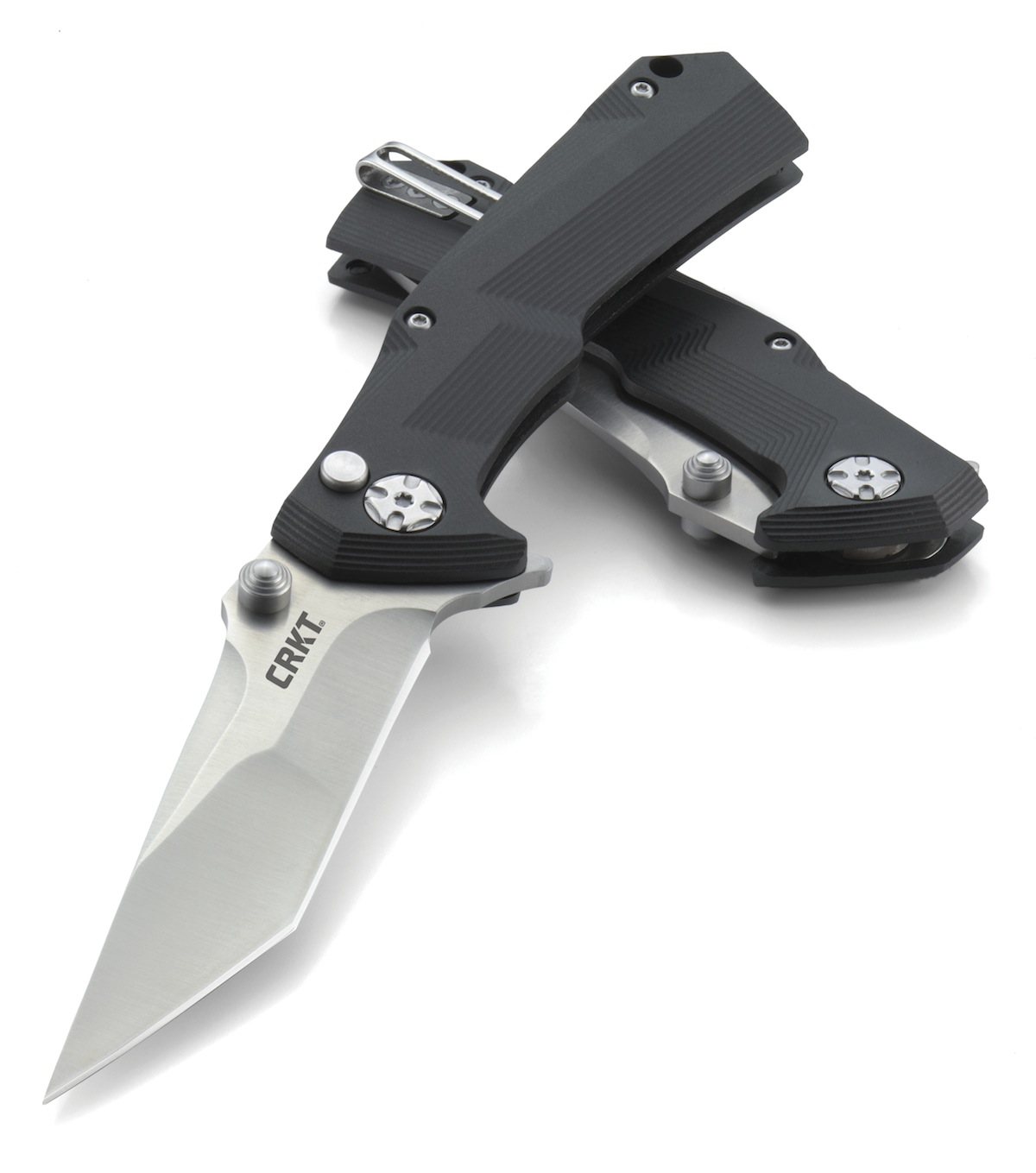
The CRKT Kommer 2-Shot Skinner is a smaller semi-skinner designed for the biggest game. The 3.15-inch blade is 12C27 Sandvik stainless and the handle is orange G-10. The accompanying horizontal sheath also has two pockets to handle ammo from .243 up to .338. ShopBlade’s price: $104, a savings of $26 over the regular cost.
For a limited-edition Kommer skinner built in Russ’s Fargo, North Dakota, shop, check out GATCO’s 20th Anniversary Kommer model. The 3 9/16-inch blade is ATS-34 and the handle is black ash burl. ShopBlade’s price: $600, a savings of $150 over the regular cost.
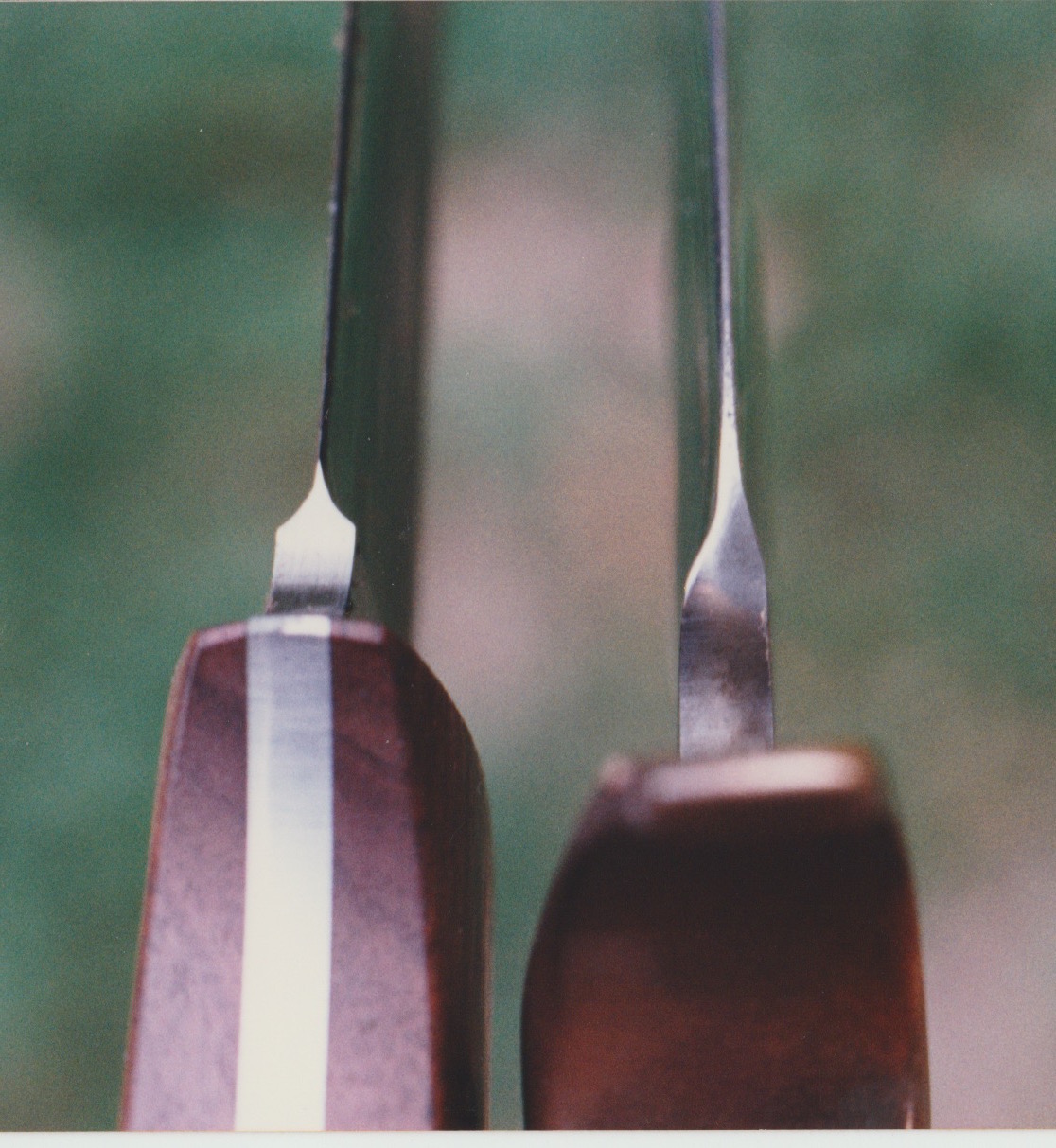
If you’d rather build your own hunter, Gene Osborn’s “Kit Knife Video 2 Hidden Tang Hunter” takes you through the process from start to finish. ShopBlade’s price: $25.
According to Knife Rights, Missouri Governor Jay Nixon has signed legislation repealing the ban on the possession, sale and manufacture of automatics—such as the Benchmade Infidel (pictured above)—in Missouri as long as they are not “in violation of federal law.” In practical terms, it means you cannot do so in interstate commerce, on Indian reservations or wherever federal regulations may prevent such activities.
Knife Rights officials indicated they worked closely with the National Rifle Association on this important legislation and appreciate the NRA as a strong partner in their second front in defense of the Second Amendment.
For more on the latest knives, knife legislation, knifemaking instruction, knife trends, knifemakers, what knives to buy and where and much more, subscribe to BLADE® Magazine, the World’s No. 1 Knife Publication. Click on http://www.shopblade.com/blade-magazine-one-year-subscription-us/?r+ssfb071112 for more information.
Learn all about Japanese swords from Wally Hostetter at BLADE University. Wally made the mounts for Steve Schwarzer’s Nagmaki, a repro of a pole arm with a sword-like blade used by 14th-17th-century Japanese warriors to cut the legs of the horses of enemy cavalry.
Japanese swords combine the elements that make everything about the world of blades fascinating—history, mystery, outstanding cutting performance, beautiful craftsmanship, collectibility and more—and Wally Hostetter will school you on it all at the 2nd Annual BLADE University.
Hostetter’s class will be one of many at BLADE University, which will be held the day before (June 4) through show Saturday (June 6) of the 2015 BLADE Show June 5-7 at the Cobb Galleria in Atlanta.
In his class entitled “Collecting & Maintaining Japanese Swords,” Hostetter will explain what to look for when you buy a Japanese sword—including different patterns/designs and genres, the proper fittings and more—and how to maintain and care for it once you’ve bought it.
Hostetter is a long-time swordsmith who also is known for making sword mounts for such world-renowned swordsmiths as Steve Schwarzer. From the tsuba (guard), habaki (collar), fuchi (pommel or metal hilt sleeve) and other mounts, Hostetter makes and knows them all quite well. No matter what question you have concerning the proper construction, sword terms, traditional Japanese handle wraps, menuki and more, Wally’s your man. He will bring examples of Japanese swords and encourages students to bring cameras and photograph them for future reference.
Wally has collected Japanese swords for 18 years and does his own restoration work on them. He also has done restoration work for others over the past eight years. They include Troy Baxley, president of the Florida Token Kia; Bob Elder, owner of East Coast Martial Arts Supplies Inc., and his students of Toyama Batto Jutsu/US Batto Federation; ABS master smith Don Fogg; and martial arts practitioners throughout the USA.
Hostetter forges katanas, wakizashis, tantos and Naginata blades, including all the fittings and poles for the latter. “I have wrapped many tsuka [sword handles] and done some intricate patterns not seen everyday,” he noted. “On sayas [scabbards] I have reproduced a lot of the old finishes and techniques. I also practice Toyama Batto Jutsu. We have cut many rolled tatami/wara [rolled straw mats] with the swords, wakizashis and tantos I make.”
For more information on Wally’s class and others, how to entroll, etc., visit BLADE University.
Also Check Out:
Sword Making Secrets (Download)
Author Don Fogg is here to help you build one of the big blades, the lengthy lopper — the sword! His step-by-step sword-making process resonates well with your fellow knife enthusiasts who can’t get enough of the romance, history, look, feel, usefulness, ethnic heritage and physical impressiveness of swords. Download here
You’ve heard all about BLADE Show 2017 but you can get the inside scoop on the show’s hottest knives and knifemakers and what and who will be hot in the future as a result in BLADE®’s special 2017 BLADE Show Recap issue, on newsstands now! Or, if you prefer a digital copy, click here.
The world’s largest and most important knife event enjoyed its longest lines ever of patrons queuing up to get in, and the patrons packing aisles for much of the three-day event enjoyed the best knives and knifemakers the international cutlery industry has to offer.
Why was the show among the best if not the best ever? What were the demographics of the patrons who attended? What nationalities were represented most in
Wally Hostetter showed students how to do the Japanese handle wrap in his BLADE U. class during BLADE Show 2017.BLADE Show 2017 hosted its first-ever balisong competition coordinated by Blade HQ.
what has become a show teeming with knife enthusiasts from all corners of the globe? Did more women attend than ever before, marking a new, unprecedented wave of knife enthusiasts from the female side? How many patrons actually bought knives instead of kicked tires, and how much did they spend?
Speaking of knives, which patterns sold most? What sub-categories of exhibitors—knifemaking suppliers, acc-
BLADE Show 2017‘s BLADE University featured instruction for young and old, including Zander Nichols, 13, of Clovis, California.
essory makers and others—emerged in terms of high numbers of sales? And what does it portend for the future of the BLADE Show and the knife industry in general? These questions and others are addressed in “BLADE Show Stands Tall & Delivers” on page 12.
Of course, the BLADE Show is much more, including the BLADE Magazine Knife-Of-The-Year® Awards, the BLADE Show Custom Knife Judging Competition and the BLADE Magazine Cutlery Hall-Of-Fame inductions. Get all the specs and fantastic images of the knives by new Official BLADE Show photographer Chuck Ward in the respective stories “Best Blades of Both Hemispheres” and “BLADE Show Custom Kingpins,” the latter including this issue’s cover knife, the CAS/Sam Lurquin Sub-Hilt that won the Hugh Bartrug Best In Show Award.
The announcement that Benchmade CEO Les de Asis and American Bladesmith Society master smith Jim Batson had been elected to the Cutlery Hall Of Fame was made earlier in the year, but why they were elected was revealed in detail during their official inductions during the BLADE Magazine Awards reception the Saturday night of the BLADE Show. Get the lowdown on their career accomplishments, their induction speeches during the reception and more in the special story on page 42.
The BLADE Show is also the place where factory knife companies introduce their latest knives, though this year’s show may have seen more new knife debuts than ever. Check out the fantastic array of production pieces in “All Blades Pointed to Atlanta.”
There’s more this issue, including a salute to Alfred Pendray, tests of locking folders and drop-point hunters, the new Case/Daniel Winkler collaboration, a retrospective of Cutlery Hall-Of-Famer Michael Walker’s landmark linerlock that changed knife history forever and much more, all in the latest issue of BLADE.
Forged In Fire made a different kind of history when it won the BLADE Magazine 2016 Publisher’s Award. (Miller Mobley/HISTORY)
When Forged In Fire won the BLADE Magazine 2016 Publisher’s Award during this year’s BLADE Show, it was the first time a television program of any kind was recognized by BLADE® Magazine in such a manner. Selected by the BLADE staff, the Publisher’s Award honors a person or organization that has furthered the knife community in a fashion that bodes well for the future of that community, both inside and out. Forged In Fire on History answers that requirement—and then some.
It’s rare that knifemaking of any type is given the high-profile exposure of television coverage, much less a weekly program of its own. However, Forged in Fire has done just that and much more. Those who watch it are familiar with the group of bladesmiths it gathers each week, each group different from the last, with the bladesmith in each charged with forging a knife—often in a very exotic style—in a stated time limit under the watchful gaze of a panel of judges and millions of TV viewers. Meanwhile, the winner of each episode earns a grand prize of $10,000.
As with most high-profile endeavors, there are those who criticize the program for portraying knives in a so-called negative way and creating an atmosphere that is not conducive to making the best knife possible—but then making the best knife possible is not necessarily the goal. The goals include to demonstrate not only how tough it can be to make a quality knife under a short deadline but also to entertain—and Forged in Fire does that quite well. Meanwhile, bladesmiths, knifemakers and the knife industry in general are getting more exposure before more people than ever before. And that is a great thing.
Now on the cusp of entering its third season, Forged In Fire will have a different look with ABS master smith Jason Knight filling in for ABS master smith J. Neilson. We fully expect the show to enjoy yet another banner season, and for bladesmithing and the knife community in general to continue to benefit from the unprecedented exposure such a TV show brings to knives the world over.
Want to Get Started in Knifemaking?
For those new to knifemaking, BLADE put together a special collection just for those starting out. The Complete Knifemaking Collection gathers great knifemaking books and tutorials to get you up to speed in no time. The price is unbeatable, too.
Forged tacticals are heating up in the new BLADE®, on newsstands NOW!
Forged tacticals as a trending new niche market, perhaps the best knives to use in corrosive saltwater environments, four hot new butterfly knives, the latest machetes and a comprehensive preview of the 2nd Annual BLADE University highlight the new BLADE®, on most newsstands today.
Purveyor Les Robertson specializes in tactical and handforged knives, so it only stands to reason he would be on the cusp of the edge if forged tactical knives were to become hot as firecrackers—and apparently such is the case. Find out why, which ones are hot and more in Robertson’s “A Niche Market In The Making?”
Spyderco has long touted its H1 steel as being not just stainless but stain proof. Ocean kayaker Lance Clinton decided to try out the company’s Pacific Salt model while floating off the coast of Costa Rica. Find out what he found out about this intriguing blade material in “Down To The Sea With Knives.”
Balisongs—aka butterfly knives—have long intrigued edged enthusiasts, and the latest examples of the genre will capture your fancy in “Enter The Spin Zone.” Factory machetes, meanwhile, are appearing in ever-increasing numbers. Check out some of the latest of the long blades in “Those Magnificent Machetes.”
BLADE University, a fresh approach to knife education at knife shows, was a huge hit at last year’s BLADE Show—and this year’s 2nd Annual BLADE University has been expanded to cover a wider range of topics, including knife grinding, collecting, how to have your design picked up by a knife manufacturer, 3D CAD/CAM knife design, how to engrave, how to design combat knives, how to make handles and guards, introduction to bladesmithing, how to sharpen, what to look for in the best high performance knife and much. Get the complete lowdown in “School of Steel.” BLADE University will commence a day before through the show Saturday of the BLADE Show, which will be June 5-7 at the Cobb Galleria in Atlanta.
There’s much more in the latest issue of BLADE. Check it out at your local newsstand.
Recommended:
Stay abreast of the latest developments on this and many more knife rights issues with a subscription to BLADE.
An all-inclusive ivory ban that would target ancient ivory such as mammoth and mastodon in addition to elephant ivory likely will pass without your help by the end of day today, Dec. 27.
A proposed ivory ban would include ancient ivory. Kevin Casey uses ancient walrus ivory on his bowie. (SharpByCoop photo)
A Presidential Advisory Committee that met on Dec. 16 recommends a total ban of ivory within the USA to the task force on Wildlife Trafficking. The ban would apply to the sale of all ivory in any form and include pre-ban and antique ivory in knives, guns, musical instruments, pianos with ivory keys, etc. The ban would affect collectors, makers and anyone who sells within or to the USA. The committee will file its report on Dec. 28, so any entreaties opposing the proposed ban must be e-mailed by no later than today in order to be registered and considered before the report is filed.
The address to send your email to is [email protected]. Copy and paste the following letter—though feel free to tailor it as you see fit—to an email, and email it to the above address:
Dear Advisory Committee,
I stand against a total ban of all ivory sales in the USA.
As called for in the Presidential Executive Order, I ask that the recommendations continue to allow for “legal and legitimate commerce.”
The ivory market in the USA is stable and/or declining, and seizure records indicate that a high proportion of the seizures were personal effects lacking the correct paperwork, not the so-called blood tusks reported on by the media. The Elephant Trade Information System (ETIS) analysis indicates that the amount of ivory by weight seized annually has not increased in recent years. We are not the consumers of the poached ivory. Therefore, banning ivory sales within the USA will do nothing to save the remaining world population of elephants.
The CITES MIKE (Monitoring the Illegal Killing of Elephants) September 2013 report analysis, page 64, states, “Africa’s elephant populations are managed sustainably,” and that in 2013 the quote for permits for legal elephants was 1,350 animals. There is legal trade that can be monitored with DNA testing and permitting. Enforcing and policing a ban would require funds that should be used to support the ban on imports already in effect.
I fully support CITES rules, closing international borders to elephant ivory trade, a law already in effect that should be fully supported and enforced. I stand against a total ban of all ivory commerce within U.S. borders, a decision that would be an enforcement nightmare. Like Prohibition of the 1920s, it would cause a new wave of illicit commerce where a legitimate one now exists. Museums, antique dealers, collectors, artisans and individual citizens have invested in a legal and valuable material. Sanctioned trade in ivory that is legal (culled and pre-ban) and comes from unthreatened sources (mammoth, boar, warthog, antique and recycled products) can pose no possible threat to elephant herds in the wild.
I believe our mutual goals are the same and a solution can be reached. Please keep the focus where it belongs. To increase the elephant population, the killing must be stopped in Africa and at its borders.