
Buyer's Guides

You’re looking for a new knife in a certain style – we’ve got recommendations on the best blades for every price point.

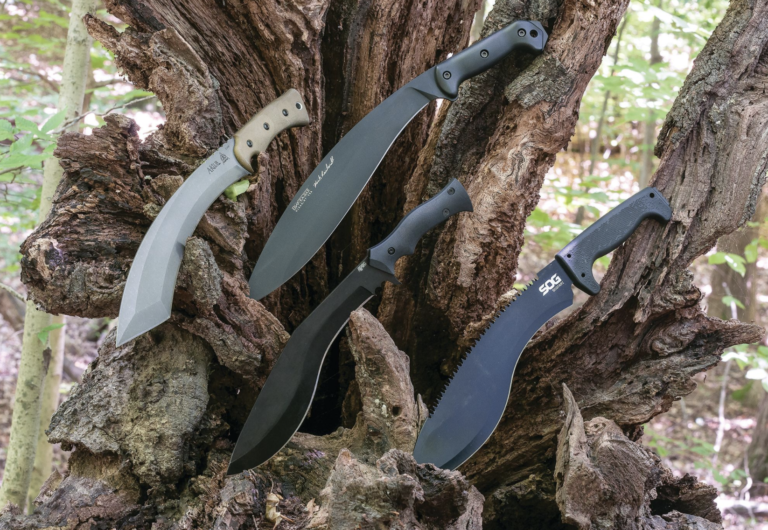
7 Of The Best Kukri Knife Options

The Kukri Is A Historic Knife With A Long History Of Military And Outdoor Use. These Are Seven Of The Best Kukri Knives Out There Today.

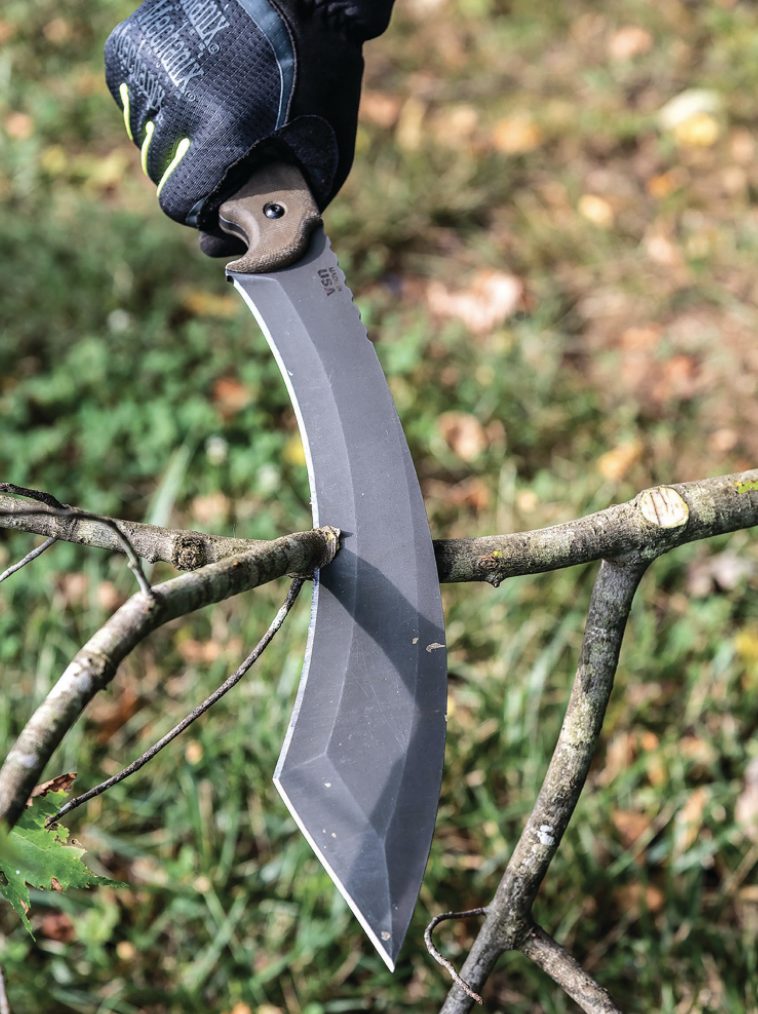
The way a kukri feels in your hand makes you want to obliterate thick foliage and saplings.  The blade’s forward-weighted feel, the ultra-secure handle, and the reach the knife provides all work together in an ancient cutting and chopping tool that packs more punch than a machete for tackling the tough stuff.

What Is A Kukri?

The kukri is a variant of the machete with a recurve blade that developed in South Asia hundreds of years ago. It may have evolved from the sickle and is today used as the standard utility knife for the Ghurkas in Nepal. The kukri is the national weapon of Nepal and still synonymous with the Nepalese Army. It remains the main weapon for all Ghurka military units around the world including the British Army’s Brigade of Ghurkas.

How To Use A Kukri

The kukri knife is designed for chopping outdoors. Like other machetes, the kukri has a longer blade of 10-15 inches depending on the type. It is a useful military weapon because its center of mass allows the fighter to slice as they chop to penetrate an enemy deeply and even slice through bone.

As an outdoor tool, the kukri machete can do a bit of everything. Nepalese use it to do everything from chopping wood, digging, slaughtering livestock, chopping vegetables, and even opening cans.

Due to its shape, with a more narrow blade by the hilt and a wider blade by the tip, the kukri can function as a nimble utility knife up close and do the work of a small spade or even an axe as well.

The 7 Best Kukri Knives Today

Today, the kukri is made of modern materials and is used around the world for its durability outdoors. These are seven of the best kukri knives on the market today that would make any lover of the outdoors happy.

CAS Iberia APOC Kukri
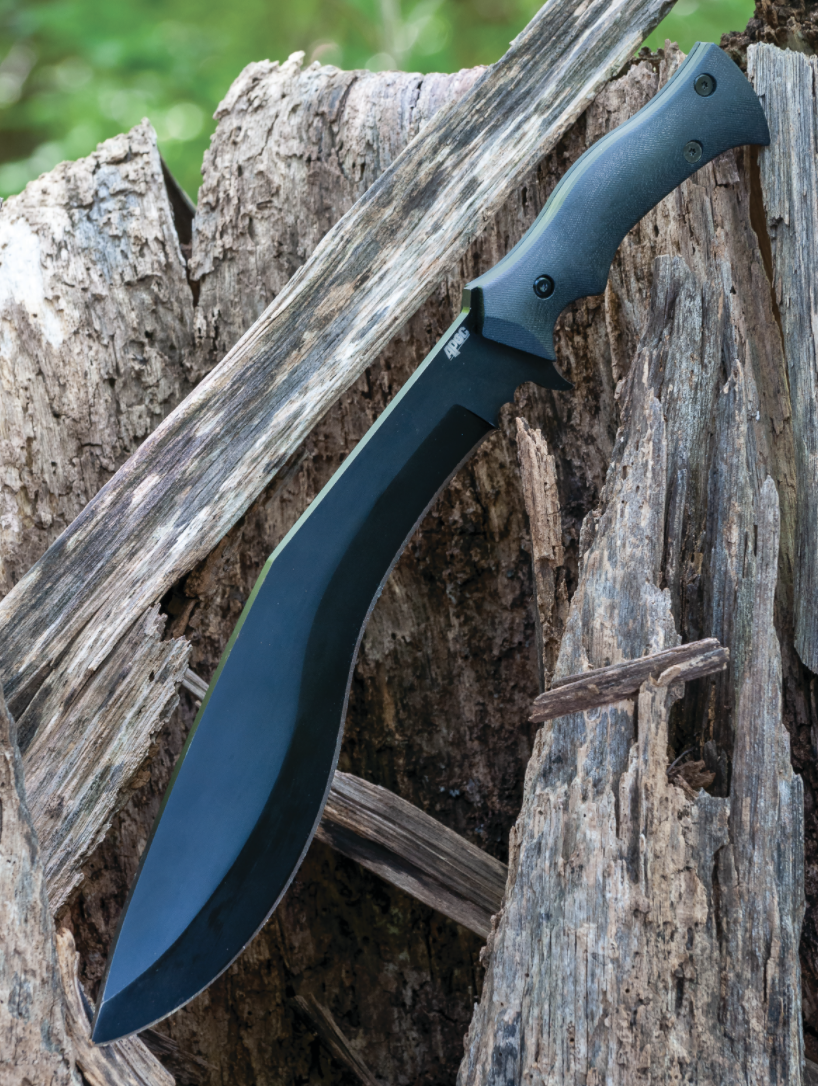
APOC Kukri
This APOC Kukri is one the author found to be very controllable—so controllable, in fact, it even whittles well in a pinch.

At 16.25 inches overall, the APOC Kukri from CASIberia is a formidable chopper.  The 10.25-inch blade of this knife is .22-inch-thick 9260 spring steel with a low-glare, rust-resistant black coating. Though it doesn’t hold an edge as long as some other steels, expect it to be easy to maintain in the field. It also is a forgiving material, able to withstand heavy use and abuse.

The ultra-ergonomic handle is machined black G-10 fastened by three Torx-head screws.  The multi-faceted grip features a pronounced index finger recess, an integral front guard, and a flared butt to prevent backward sliding of your hand. At 23 ounces, the knife harnesses the devastating cutting power of traditional kukris, and amplifies it using modern materials.  

I found rather crisp edges on the tang and guard where crispness shouldn’t be. The easy fix? Lightly file the harsh edges to soften them a bit.

Once past the aesthetic imperfections, what you see is a forward-weighted chopping tool whose overall blade shape was inspired by traditional kukris as well. The graceful curve of the belly houses the sweet spot.

I found the handle rather interesting with its varied curves and prominent finger groove. When I first held it, I didn’t like it. My initial impression was it didn’t “fill” my hand. However, once I took the kukri into the woods and began swinging it, only then did the handle start to make perfect sense. The dip behind the guard acts as a sort of pivot. The knife will move a bit in your grip because of this, but it doesn’t move so much that it’s distracting or impossible to use. The slight movement actually works with your hand in creating powerful chopping strokes. And, due to the blade’s weight and thickness, I found the knife a really effective chopper.
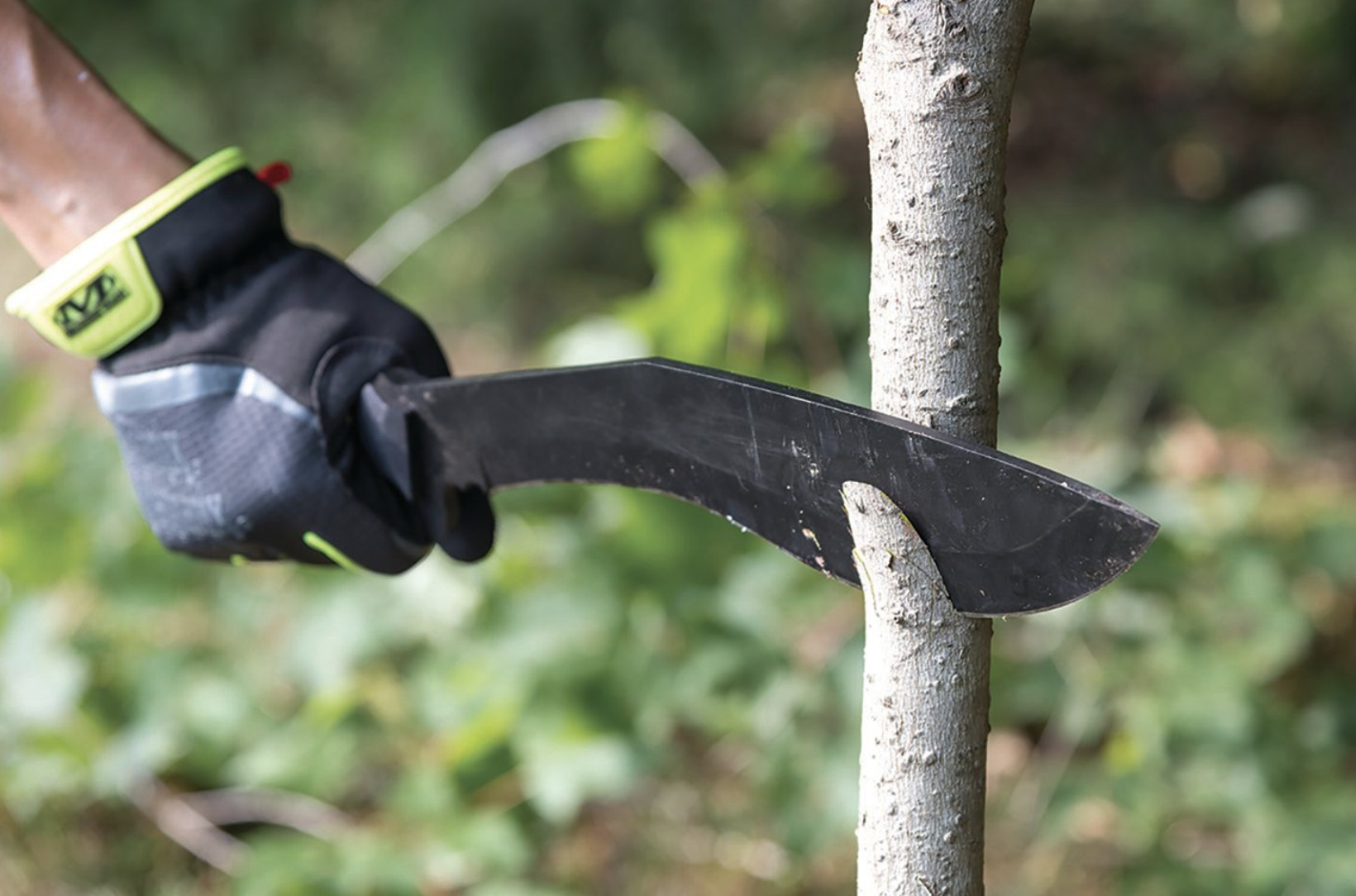
The APOC Kukri excels at chopping, with the sweet spot in the middle of the blade belly. It was the surprise of the bunch in terms of how well it performed, especially for such a relatively unknown brand.

Out of the box the cutting edge was sharp but rough—rough as in a coarse edge and not looking very refined. Nonetheless, that’s also good because the coarse edge has “teeth’’ and bites in harder. The APOC kukri really turned out to be the surprise of the test bunch. It performed very well. I was able to modify the edge by hand, evening it out a bit—and it does seem to sharpen up fast in the field.

The Kydex sheath is a side-break design, allowing the kukri to tilt itself out of the sheath. However, the sheath needs more tension as it locks onto the handle to secure the knife. A secondary button snap strap extends around the upper part of the handle to secure the kukri into the sheath. Be sure it is securely fastened or it may fall out of the sheath accidentally. The belt loop webbing is fairly flimsy as well, but it will do the job. It does, however, allow the kukri to move around in the sheath in response to your movements, so, in case it snags a branch while you’re walking through the woods, it might free itself as you move.

All in all, I think this would make a great use-and-abuse chopper, one that you won’t be hesitant to go out and beat up. Made in China, it has a manufacturer’s suggested retail price (MSRP) of $175.

SOG Knives SOGfari
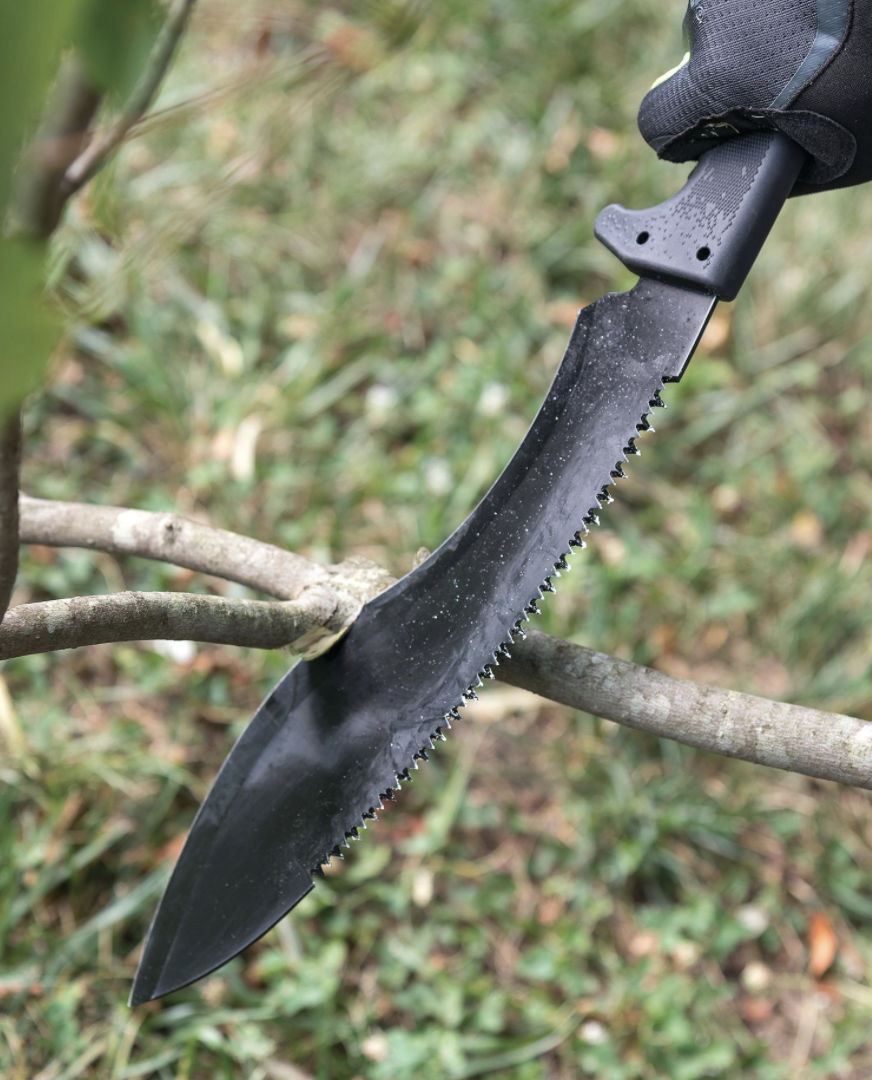
The SOGfari kukri is sharp all the way around—both the plain-edge blade and the sawtooth spine. Not as heavy as the other test knives, the author rates it for intermittent use.

The SOGfari Kukri Sawback Machete from SOG Knives combines three tools in one: kukri, machete and saw. The 12-inch blade is .1-inch-thick 3Cr13 stainless steel.

Overall length: 18 inches. The recurve blade adds cutting power and the double-cut sawback spine easily zips through saplings. The handle is molded Kraton rubber and sports dual guards at either end to prevent forward or rearward sliding of your hand. There’s plenty of handle belly to fill your grip and make the knife feel comfortable and secure. The exposed pommel is notched and can be employed as a hammer if needed. A black blade coating enhances rust resistance and cleans easily.

The sheath is heavy-duty, sewn-and-riveted ballistic nylon with plastic liners. It secures via a zipper pull. A fabric fastener flap protects the zipper to prevent accidental unzipping—a very thoughtful design. A large loop of ballistic nylon accommodates all belt sizes and a button snap secures the handle. The sawback makes it more difficult to slide the blade in and out, though the sheath unzips partially to provide more room.
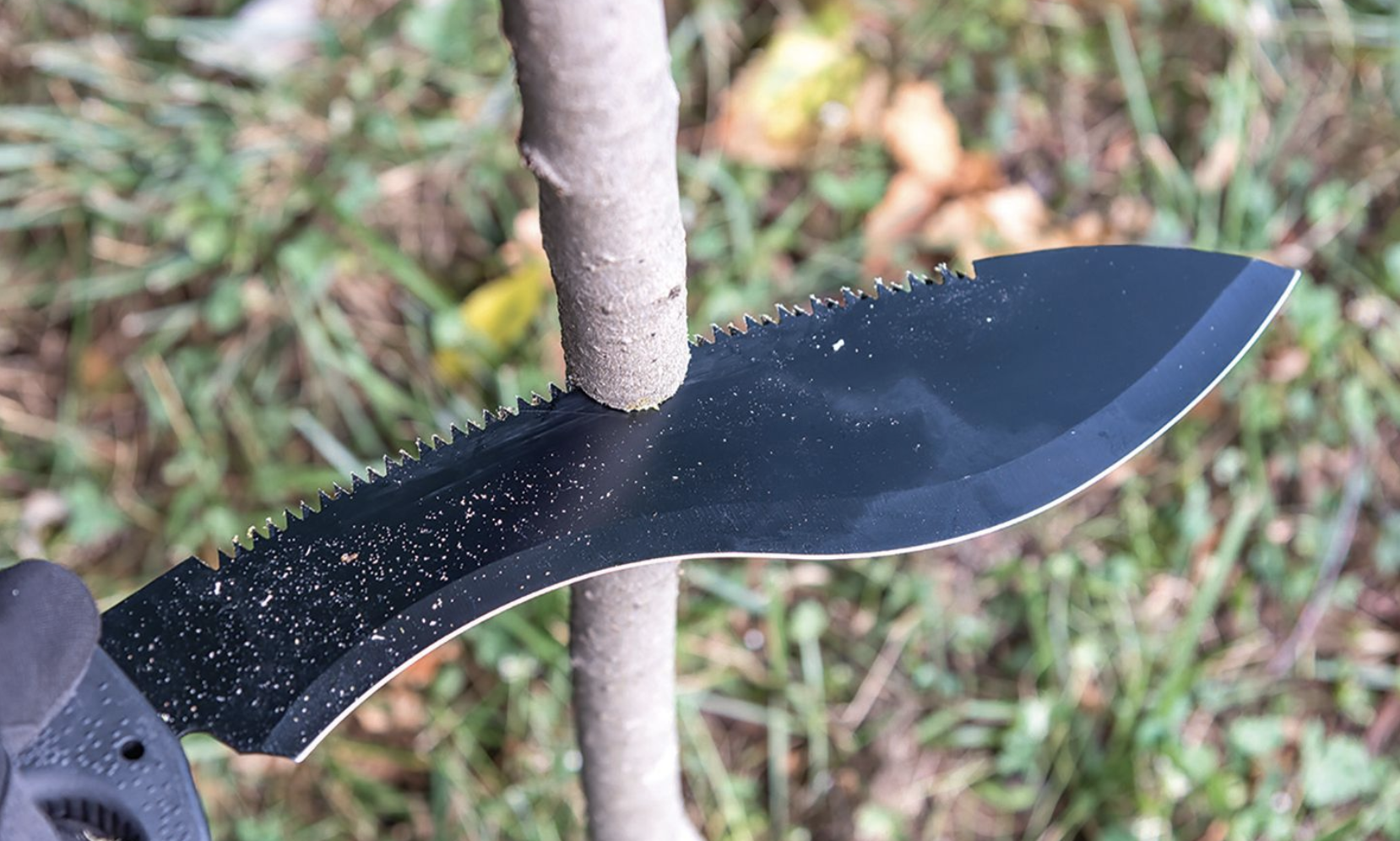
The SOG SOGfari Kukri is the only piece in the test bunch with sawteeth. While not intended to replace a nice, high-quality folding saw, it is better than no saw at all. The only problem is its tendency to bind up due to the blade’s thickness.

I found the SOGfari lacking in the weight-forward design of most kukris. This is good in that there’s less weight on your belt or pack—bad in that you must put more muscle behind chop strokes, which can be tiring. Normally, with a weight-forward blade you’d benefit from gravity on the down stroke. The sawback is more gimmick than anything. It really doesn’t work well and forces you to open the cut more to enable the thicker blade to slide through. If not, the saw binds up every time. Conversely, in a survival situation having the saw is better than no saw, so in that case it’s a plus. I would not rely on the SOGfari as your primary saw, so carry a dedicated folding saw if you’re exploring the woods.

The SOGfari is well made for the price but the lack of a weight-forward blade keeps it in the occasional-use category. Made in China, it has an MSRP of $29.99.

KA-BAR’s BK21
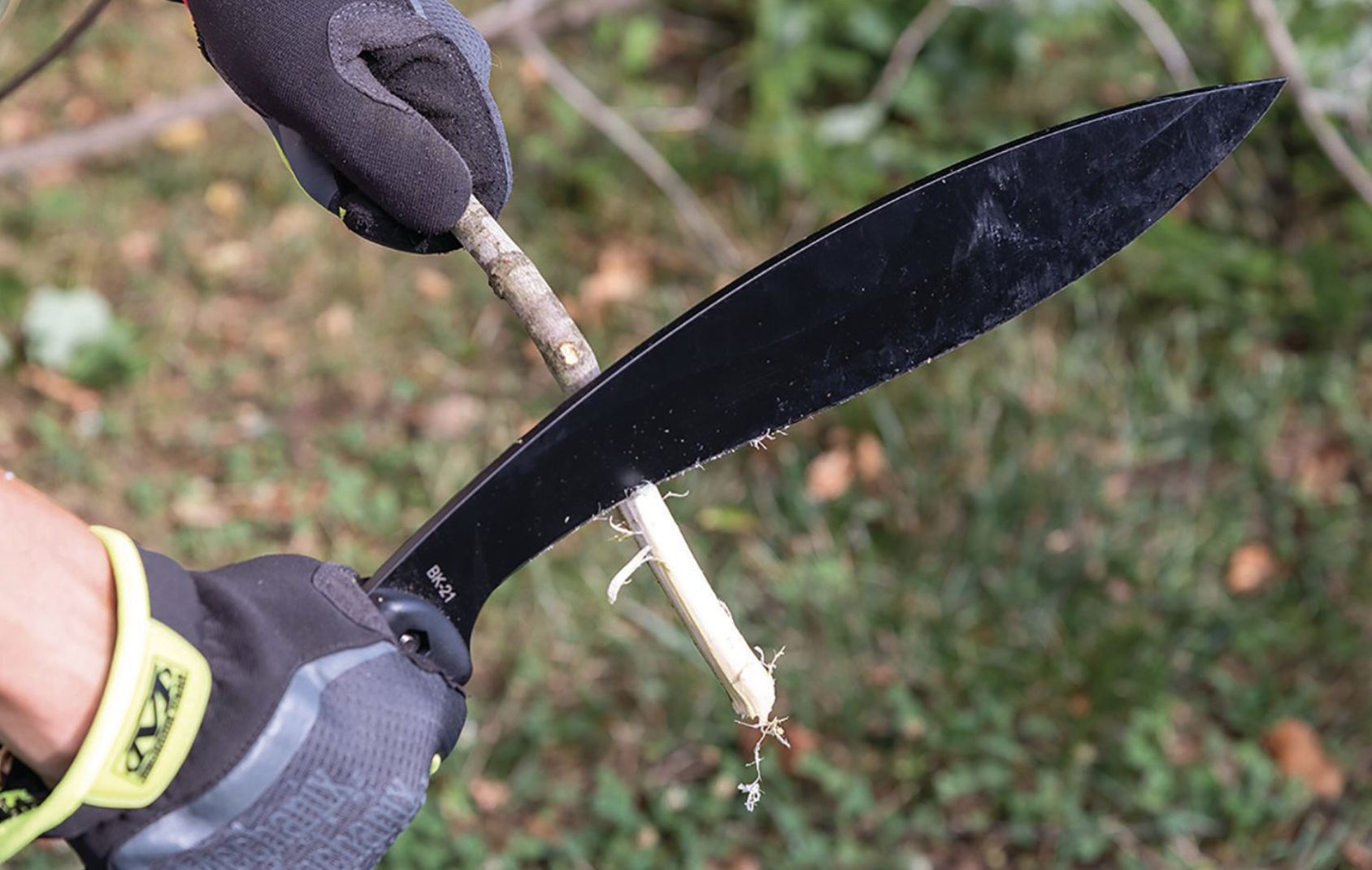
The KA-BAR BK21 Becker/Reinhardt Kukri is an exceptional all-around performer. It can be used as a chopping tool, machete or a utility knife as demonstrated here. It balances very well. Inset is Ethan Becker, one of the knife’s designers, outlining the rules of the chef’s knife cutting competition at the 2019 BLADE Show West. (Becker image by Eric Eggly)

KA-BAR’s BK21 Becker/Reinhardt Kukri was designed in conjunction with Ethan Becker and the Hank Reinhardt Estate. The 13.25-inch blade offers reach and power with plenty to spare. The blade is .195-inch-thick 1095 Cro-Van carbon steel epoxy coated for rust resistance. There is that forward-tilt signature of kukris, and the blade’s profile gently swells toward the center. Along with the flat grind, it enables the BK21 to be used as both a machete and a chopping tool.

Molded from an impact-resistant polymer called Ultramid®, the handle is dense and lightweight. It resists absorbing liquid and moisture, which makes it almost impervious to the elements. The rounded/blocky handle shape may look a bit awkward at first, but don’t knock it until you try it. The contours make for a very comfortable grip that isn’t tiring when evaluating for long-term use. Three rather large hex-head bolts secure the handle onto the full tang design, and the exposed pommel can be used as a hammer.

The BK21 has a high-quality sewn & riveted nylon sheath with a hard-plastic reinforced tip to prevent puncturing. An integral nylon loop promotes easy belt carry. A button snap closure secures the blade.
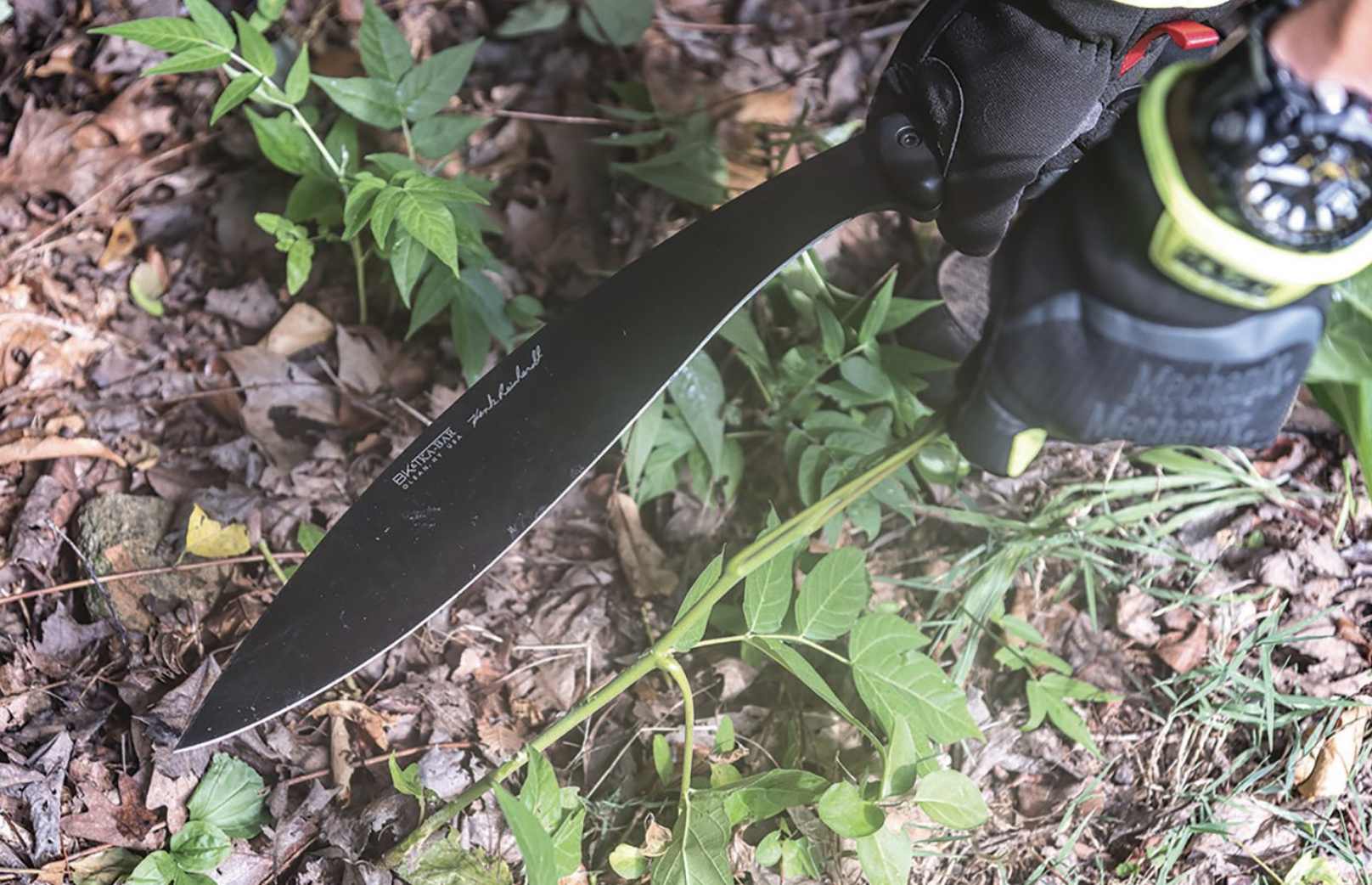
Due to the weight distribution of the KA-BAR BK21 Becker/Reinhardt Kukri, it excels as a machete in clearing tall grass, weeds, and vines.

The overall shape and weighted feel of the BK21 is reminiscent of traditional kukris. It’s not forward-heavy like some and is balanced well. Due to its length and weight/balance, it excels as both a chopping tool and a machete. It can cut vines and tall weeds as well as fell saplings. It’s really two tools in one. The entire kukri is solid. The designers knew what they were doing.

The BK21 is 18.75 inches overall, retails for $240.74, and is made in the USA. The sheath is imported from China.
Ka-Bar Becker/Reinhardt Kukri Fixed Blade Knife BK21

Ka-Bar Becker/Reinhardt Kukri Fixed Blade Knife BK21

$216.95
Prices accurate at time of publishing. Affiliate disclosure.

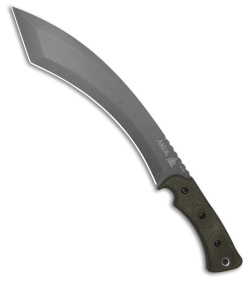
TOPS Knives A-Klub


The gunstock war club used by Native Americans inspired Amanda Kaye of Discovery Channel’s Naked and Afraid
TV show in the design of the TOPS Knives A-Klub. The blade’s curvature accentuates cutting and chopping power.

Heavy duty and ruggedly built perfectly describes the A-Klub chopper by TOPS Knives, the company’s first knife designed by a female—Amanda Kaye of Discovery Channel’s Naked and Afraid television series.

She is an avid hunter and outdoor enthusiast, as well as having an interest in Native American primitive skills. Kaye employed the gunstock war club as the design inspiration for the A-Klub.

The gunstock war club was a blunt-strike weapon used primarily in the 18th and 19th centuries by Native Americans of the Eastern Woodland, Central, and Northern Plains tribes. Named for their resemblance to the wooden stocks of muskets and rifles, gunstock war clubs were fashioned from ash, oak or hickory. The swinging force put into the weapon meant it would strike with the points of the design, and it proved very effective and devastating.
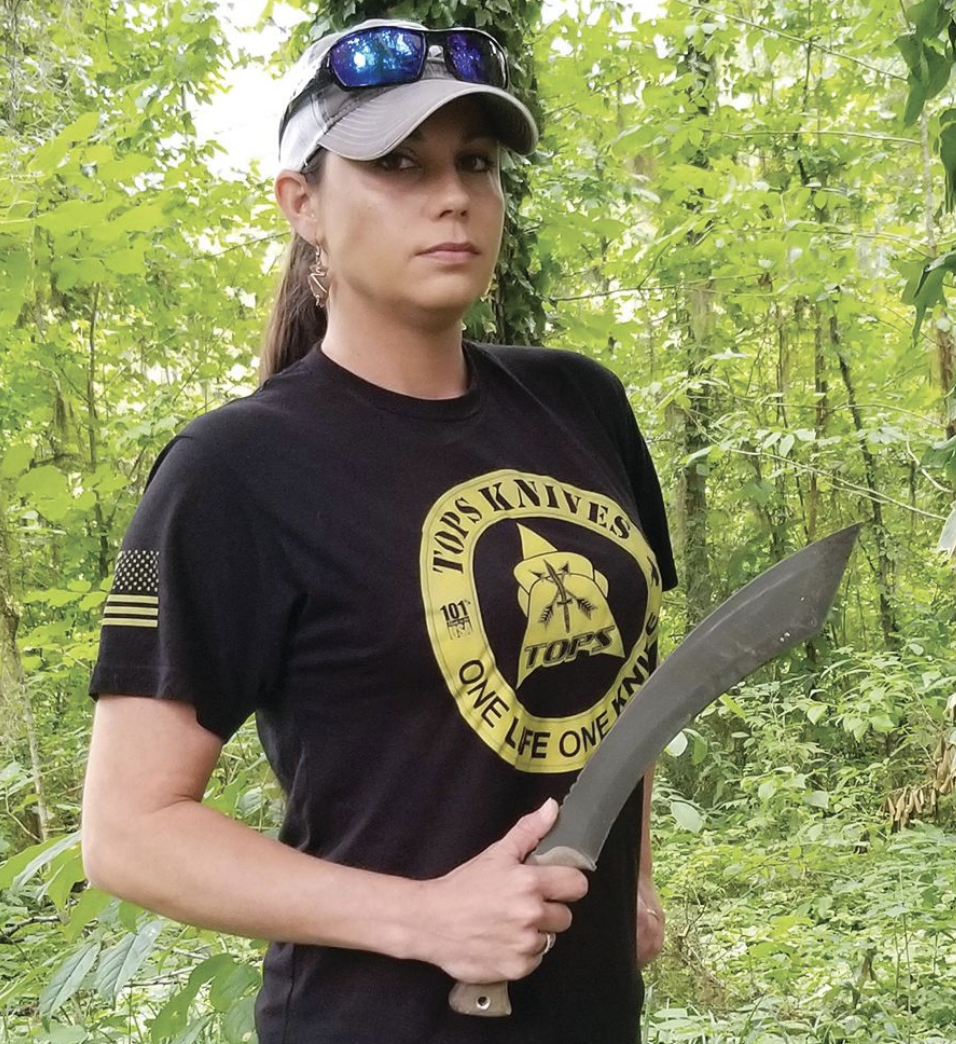
The gunstock war club used by Native Americans inspired Amanda Kaye of Discovery Channel’s Naked and Afraid
TV show in the design of the TOPS Knives A-Klub. The blade’s curvature accentuates cutting and chopping power.

Due to the blade’s curve and angular tip somewhat reminiscent of a tanto, the A-Klub is also effective and devastating as a chopper. The blade is just over 12 inches of .19-inch-thick 1095 spring steel in the company’s subdued Acid Rain finish. The overall length is 18 inches.

The 23.8-ounce A-Klub is a beast. It has a forward-weighted tendency, though not as much as some choppers or even a traditional kukri. However, the blade curve accentuates swinging power and presents the edge at an angle in relation to the target, so the knife shears on contact.

Kaye designed the handle to maximize user comfort and control. An index-finger groove assists in locking in your hand, along with a curved main grip area that accommodates your other fingers. The green Micarta® handle is very lightweight and durable, and practically impervious to the elements, fluid absorption, and impact. Three hex-head screws fasten the scales to the full tang, and there’s a hole for a lanyard.

Coming off the index-finger groove, folks with smaller hands can shift their grip rearward on the handle for increased swing leverage. The A-Klub has a pronounced rectangular profile, which helps make it feel more secure in your hand.
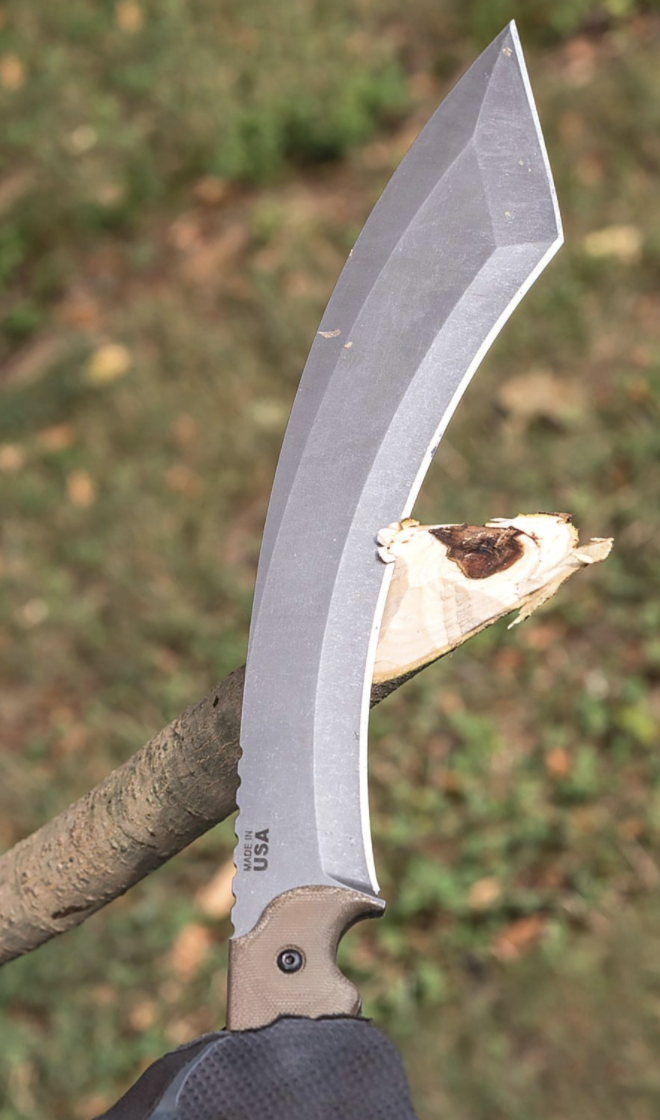
Due to its weight-forward design, the TOPS A-Klub harnesses very effective cutting and chopping power. No matter how you swing the blade, the edge is almost always going to catch the target at an angle and, therefore, cleave through it cleanly.

The knife includes an expertly designed side-break Kydex rig. The rig’s leather-dangler attachment permits the heavy knife to swing and pivot freely on your belt in response to your movement, being accidentally snagged on brush, etc. Having the knife swing freely makes it more comfortable to carry.

Performance-wise the A-Klub bites in deep and hard, consistently discharging large chunks of wood with each blow. The blade’s “sweet spot” extends from the bottom of the tanto tip about two inches back toward the curve.

The handle can be gripped in at least two ways. One is with your index finger nestling inside the forward finger groove to provide a degree of control and also leverage. In the second, back your hand out of the forward finger groove and grip the handle further rearward toward the butt end. The latter handhold will enhance the power of each stroke.

Of the test bunch, I rate the A-Klub the best chopper, hands down. Made in the USA, it has an MSRP of $350.
Tops Knives A-Klub Fixed Blade Knife 1095 RC 56-58 Canvas Micarta Handle

Tops Knives A-Klub Fixed Blade Knife 1095 RC 56-58 Canvas Micarta Handle

$299.95
Prices accurate at time of publishing. Affiliate disclosure.

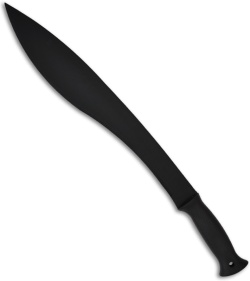
Cold Steel Magnum Kukri Machete

Cold Steel Magnum Kukri Machete

It’s been said that good things come in small packages. Cold Steel has no time for that. Their Magnum Kukri Machete comes in two varieties with the larger having a massive 17-inch blade and an overall length of 22 inches.

At 2.8 mm thick, the blade is made of 1055 Carbon Steel with a black baked-on anti-rust matte finish. It weighs in at 20.1 ounces and is weighed forward to give you better leverage while slicing.

It has a five-inch polypropylene handle and comes with Cor-Ex sheath. It will most likely need some sharpening when you get but with an MSRP of just $35.99, the price can’t be beat.
Cold Steel Kukri Machete Fixed Blade Knife 97MKM

Cold Steel Kukri Machete Fixed Blade Knife 97MKM

$37.95
Prices accurate at time of publishing. Affiliate disclosure.

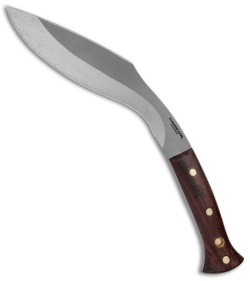
Condor Heavy Duty Kukri

Condor Heavy Duty Kukri

Condor Tool & Knife of El Salvador have made a kukri that combines the best of machetes and the best of an EDC knife. It’s smaller than traditional kukri machetes, with a blade at just nine inches, but what it lacks in size it more than makes up for in manuverability.

The blade is 6 mm thick and made from 1075 high carbon steel with a blasted satin finish. It has a more pronounced bend in the knife than most other kukris which allows for more precise knife work when needed.

With a sturdy walnut handle, and a sheath of welted leather, Condor’s kukri is made of quality materials from top to bottom. The only knock on it is that it will need sharpening out of the box to get the type of edge you want when cutting through brush. With an MSRP of $117.91, it’s a good knife for its price.
Condor Heavy Duty Kukri Fixed Blade Knife Walnut

Condor Heavy Duty Kukri Fixed Blade Knife Walnut

$100.23
Prices accurate at time of publishing. Affiliate disclosure.

Smith & Wesson Outback Kukri

Smith & Wesson Outback Kukri

Smith & Wesson makes more than just guns, and their Outback Kukri is a great example of the company’s knifemaking prowess. The 11.9-inch blade is made of 7Cr17Mov Stainless Steel and finished with a black powder coat. The rubberized steel handle provides great grip while slicing.

It’s a light knife at just under 20 ounces, and that lightness brings both pros and cons. The pros are that you can a better feel of what the knife is cutting through and can slice with more speed. The cons are that it could get damaged more easily than heavier kukri knives due to overuse.

The balance comes with its price. The MSRP is just $34.15, which is a great price. If you’re not looking to become the next Bear Grylls, this kukri might be all the knife you need.
Smithwesson Smith WessonA SWBH Outback Kukri Fixed Blade

Smithwesson Smith WessonA SWBH Outback Kukri Fixed Blade

$47.99
Prices accurate at time of publishing. Affiliate disclosure.

Editor’s Note: Mike Abelson contributed to this piece

Read More


8 Best Puukko Knife Options

Puukko Knives Are A Traditional Knife Of The Nordic Countries. It Is Used For Everything From Hunting To Chopping Vegetables

Puukko is Finnish for “knife.” It is deeply rooted in Scandinavian countries where the knife is both tool and art form. In fact, the puukko plays an important part in Nordic culture. Often included as part of the traditional cultural dress, the puukko is a historical symbol, especially in Finland and Northern Scandinavia.

The Finns treat the knife with deep respect. Many men in the country take great pride in how they carve their knife’s handle. It’s so ingrained in the culture that the Finnish Defense Forces don’t issue a standard knife to its soldiers. Instead, most men simply bring their own puukko with them into service.

What Is A Puukko Knife?

Rich history aside, puukkos are first and foremost solid work knives. They are of basic construction, consisting of a high carbon steel blade mated with a handle that is usually of a natural material, though some modern versions are synthetic.

The steel is traditionally crucible steel made from limonite iron, which was almost exclusively the type of steel made in Finland before more modern manufacturing methods were invented in the 19th century.

Primary uses are woodcarving and food prep as well as most anything requiring a cutting tool. Outside the Nordic culture, puukkos have earned a solid reputation as stout knives built for serious labor. It’s easy to see why these knives are favored among outdoor folks.

If you spend time camping or hiking or are simply in need of a good, solid fixed blade that withstands hard use and requires low maintenance, consider the sleek, slender puukko.

What Is A Puukko Handle Made Of?

One of the more common puukko handle materials is Masur (curly birch, though you’ll also find antler, bone, leather, and other hardwoods. Modern factory-made knives can come with a plastic handle instead of using traditional materials. The handle has no guard, and the blade boasts a gentle upsweep to the edge to facilitate easy cutting.

Puukko Sheaths

Puukko sheaths are usually leather and may or may not have fancy tooling. A belt loop is separate and affixed via a metal ring. Also known as a dangler, the sheath is free to move separately from the belt loop and you. This comes in handy if you’re seated, as the knife can move freely and adjust itself into position yet remain easy to withdraw.

Best Puukko Knives

Today, puukkos have become a popular knife beyond just Scandinavia. In places ranging from El Salvador to Russia and the USA, puukkos are prized for their durability and ruggedness. Below are five of the best puukkos that are available today.

TOPS Tanimboca Puukko

Puukko knives
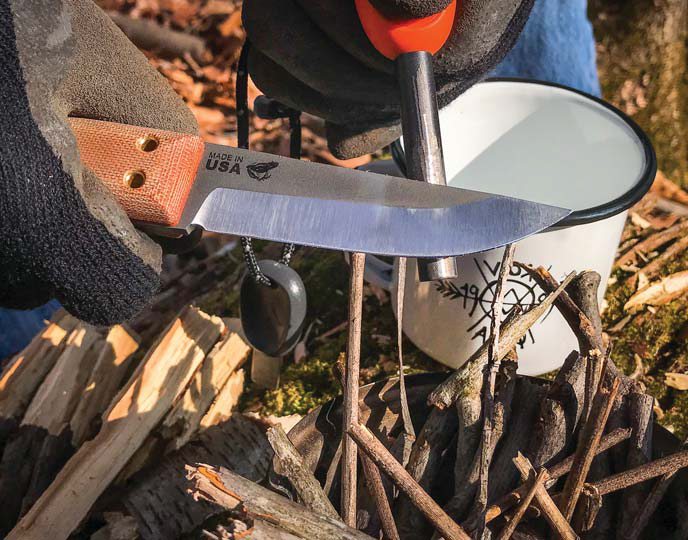
The 90-degree blade spine on the TOPS Tanimboca Puukko is for use with a fire restarter. Scrape the corner of the blade spine down the ferro rod to create a shower of sparks. (Marty Stanfield Photography)

From TOPS Knives, there is the Tanimboca Puukko. Designed in conjunction with Serbian knifemaker Goran Mihajlovic, who has spent the last two decades living in Colombia, the Tanimboca combines the best of a puukko knife with the toughness of the Amazon.

The blade has a slight clip point at the end and a flat spine is great for fire starting and scraping tasks. The knife is made from 1095 steel with a 56-58 Rockwell hardness and a length of 3.63 inches and a tumbled finish. The Tan Canvas Micarta handle honors the traditional puukko and looks great.

The knife comes with a brown leather sheath and has a belt loop so it’s easy to take with you. A cool, contemporary take on a historic knife makes the Tanimboca work the $170 MSRP.

Benchmade 200 Puukko

Benchmade 200 Puukko

You know Benchmade is going to put out a good product, and their 200 Puukko is no exception. The drop point is made of CPM-3V steel, the 200 is super hard and super durable even by puukko standards. The rubberized Santoprene handle provides excellent grip, and the lanyard hold in the handle makes the 200 easy to bring with you outdoors or on the job site.

Add in a leather sheath and you have a top-tier knife that can handle any situation you throw at it. With an MSRP of $160 it’s fairly priced and worth every penny.

Ahti Vaara Finnish Puukko Knife

Ahti Vaara Finnish Puukko Knife

Direct from Finland comes a budget puukko from Ahti. The Vaara is made from carbon-vanadium alloy steel with a traditional Masur birch handle and brass fittings. The is sharpened with a Scandi grind and is 3.74 inches in length. Overall, the knife is 8.31 inches long and well-weighted.

A neat design element is a black spine made of carbon steel. The flat edge, like with other puuukkos on this list, is great for starting fires and scraping away at material.

With a reasonable MSRP of just $51.45, the Vaara is a well-priced knife, and even with the shipping cost from Europe, it should still be under $100.

Marttini Tundra Kelo

Marttini Tundra Kelo

Another puukko made in Finland, the Marttini Tundra Kelo is not just a beautiful knife but also a quality one. Unlike most puukkos, which have a narrow tang within a solid wood handle, the Tundra Kelo is a full-tang blade surrounded on either side by a wax-coated gnarl birch handle.

The 4.33-inch blade is longer than most other choices on this list and is made from stainless chromium steel with an HRC 58 in terms of hardness. The black leather sheather contrasts nicely with the look of the knife itself.

The MSRP is € 139, which converts to $146.87 before shipping. One of the pricier knives on our list but worth it if you’re looking for a high-quality authentic Finnish puukko.

Condor Indigenous Puukko Knife

Condor Indigenous Puukko Knife

The last knife on our list is from Condor and is one of the most visually striking. The Indigenous Puukko Knife has a 3.9-inch blade made of 1095 high carbon steel with a Scandi grind.

The walnut handle features an inlaid golden wire wrap to help with grip, and it looks great. the handle is meant to combine elements from Polynesian and Sami cultures to celebrate indigenous cultures from around the world. The Sami are an indigenous group that lives in northern Norway, Sweden, Finland, and a small portion of Northwest Russia.

The knife comes with a welted leather sheath and is incredibly light at just 4.6 ounces. At an MSRP of just $95.45 this is a well-priced, nimble, and beautiful knife.

GiantMouse Ace Nimbus V2

This folder is inspired by the puukko and other Nordic knives and is built to be a mix of EDC and tool for the jobsite. The 3-inch blade is made from satin-finished Elmax steel meted to a green micarta handle for a secure grip. The blade has a full flat grind and thin edge. This allows for longer, more precise slicing strokes, and since the blade comes to an extremely fine tip the knife is also great for puncturing as well.

The nuts and bolts of this knife are great. The liners are made from AISI 420 hardened steel, and the liner lock keeps everything rigid. At 3.8 ounces it’s both light yet heavy enough to feel good in the hand.

The blade is .138 inches thick. That’s more than fine for many standard tasks around a jobsite but you might not want to start using it as a pry bar if you don’t have to.

MSRP: $185

Kellam Knives Ranger Puukko

This knife is a puukko to its core. It’s designed and built to stand up to not only combat but also the ferocious winters of Northern Europe. The 6-inch blade is made from forged 80CrV2 carbon steel with a teflon coating for added wear resistance and a Scandi grind.

At two-tenths of an inch thick, the blade is a beast and can stand up to almost anything life can throw at it. Use is aided by a 5-inch tempered rubber handle that won’t crack or deform even in hostile conditions.

Th Ranger Puukko is standard issue for troops from both the Finnish and Estonian militaries, and it’s easy to see why.

MSRP: $186.45

Helle Temagami CA

Designed by Les Stroud, the Temagami is a full-tang puukko that was precisely built to be among the best of its type on the market. It starts with a half-full tang design. That means the blade can be seen along the spine of the handle except near the fingers; this is done to better weight the knife and to better withstand harsh conditions.

The curly birch handle looks great and is ergonomically designed for hard, intense work. At 4.34 inches long, the triple laminated carbon steel blade is long enough to be used for slicing, puncturing, and even chopping for food-related tasks. The leather sheath allows for easy transport and storage.

MSRP: $209

Editor’s Note: Mike Abelson contributed to this piece

Read More

5 Best Knife Sharpeners [2022]

0

Whether A Stone, A Rod, Or An Electronic Device, There Are Many Quality Knife Sharpeners Out There. Here are five of the best.

There are all sorts of knife sharpeners out there. Some can fit in your pocket. Some are full-on appliances. Some are literal stones. No matter the type of sharpener you use, it’s important to make sure you get the best bang for your buck.

That’s why we’ve scoured the world of sharpeners to show you a variety of the five best out there today. Whether you’re looking for something quick and easy to give your knives a once over or a sharpener the pros use, there’s a knife sharpener out there for you.

Chef’s Choice Model Trizor 15XV 3-Stage Professional Electric Knife Sharpener, Platinum

Chef’s Choice Model Trizor 15XV 3-Stage Professional Electric Knife Sharpener, Platinum

The first one on this list could be called the Cadillac of home knife sharpeners. Named the best knife sharpener by numerous organizations including America’s Test Kitchen, the Trizor 15XV by Chef’s Choice is a beast of an electric knife sharpener.

It utilizes three separate stages to sharpen, hone, and polish your knives. It sharpens using proprietary diamond abrasives and then stropping discs to polish. It even adjusts between 15 and 20 degrees so you can sharpen multiple types of knives.

Yes, this is made for chefs and their kitchen knives but it’ll sharpen your EDC knives just as well. It’ll even sharpen serrated knives too! While it can’t sharpen ceramic knives or larger outdoor blades like axes, it does pretty much handles any other edge in your home or workshop.

It is pricey with an MSRP of $179.99, but if you want to sharpen like the pros you won’t find a better option on the market today.

Sharp Pebble Premium Whetstone 2 Side 1000/6000 Waterstone

1000/6000 whetstone
Sharp Pebble 1000/6000 waterstone

I love sharpening my knives freehand. I find it meditative, fun, and refreshing. As more and more people look to whetstones as a way to sharpen their knives, there’s a glut of products on the market. 

This is the type of stone I’ve used for the last several years, and it’s an excellent entry point into whetstones. Sharp Pebble has made a quality stone out of aluminum oxide that can sharpen and polish your straight-edge knives.

Starting with the coarse 1000-grit side, and finishing with the fine 6000-grit side, you can give your knives the love and care they need to stay sharp and cut at their best.

Another reason I like this stone is its accessories. It comes with a bamboo base to keep the stone secure as you sharpen. And it comes with an angle guide if you’re not confident in being able to keep the angle steady as you grind away.

While I love using my whetstone, it can be a bit confusing to jump into at first. Luckily, popular Youtube Ethan Chlebowski goes over the most common mistakes people make while using a stone and how to avoid them.

At an MSRP of $40.99, Sharp Pebble has made an affordable stone and a great entry point for those interested.

WorkSharp Guided Field Sharpener

WorkSharp Guided Field Sharpener

Need a sharpener while hunting or camping? The team at WorkSharp has you covered with their Guided Field Sharpener (GFS). Smaller than your cell phone, the GFS is packed with features any outdoorsman can appreciate.

The sharpener comes with two stones of 320 and 600-grit diamond and a 20-degree angle guide so each pass counts. It also comes with two finishing options, a ceramic honing rod and a leather strop, to polish your blade. You can even remove the diamond sharpening plates to reveal a small storage compartment with a built-in broadhead wrench.

And did we mention it can sharpen straight-edge blades, serrated knives, and even fish hooks? It really can do it all outside for you. It even has a lanyard hole so you can carry it without worry about losing it on the trail.

At an MSRP of $34.95, you get so much for the price and the peace of mind that comes with buying something sturdy from WorkSharp.

KitchenIQ Edge Grip 2-Stage Knife Sharpener

KitchenIQ Edge Grip 2-Stage Knife Sharpener

If you’re looking for a sharpener on a budget, this little countertop sharpener packs a big punch. 

Available at numerous retailers, this sharpener from KitchenIQ is priced between $10-12 and will get your knives back to a sharp edge.

It uses two angled slots, one coarse (carbide) and one fine (ceramic), for you to pull your knife through. You hold it down with one hand and pull your knife through with the other. Pulling it through 5-10 times a side should be enough to reset the edge and polish it back to new.

Your sharpening time is seconds. If you’re looking for a sharpener that’s easy to use, doesn’t take much time, and gets your knives back to fighting fit, this is the sharpener for you.

Wusthof 9-Inch Honing Steel

Wusthof 9-Inch Honing Steel

The last piece on this list isn’t a sharpener, per se. Honing steels, or honing rods, are used to fix the small, microscopic imperfections that affect a knife over time. Using a honing steel will help get the edge back to where it was before but without removing material, as occurrences when sharpening.

A good honing steel should be used a few times a week while sharpening should be done a few times a year, and you can’t go wrong with this steel from Wusthof. From a company with more than two centuries of experience making knives, the honing steel is made from stainless and will help restore the edge of your kitchen knives. 

With a low MSRP of just $25, you can’t go wrong with a steel from one of the most trusted knife brands in the world.

Read More

5 Best Pocket Knife Sharpener Options [2022]

Sometimes You Need A Sharpener On The Go. These Five Pocket Knife Sharpeners Are Everything You Could Want In A Mobile Sharpener.

Many knife sharpeners are designed exclusively for the kitchen. Whether handheld or electric, they’re made to be used on a countertop in the kitchen or in the home. But what about when you’re out and about and need to sharpen a knife.

Maybe your EDC took a beating while you were cutting up boxes as you cleaned your job site. Maybe your rough-and-tumble Bowie knife needs a little love after hacking through some brush while hiking. 

That’s where pocket knife sharpeners come in.

Small and easy to use, the best pocket knife sharpeners can fit anywhere and go anywhere. These are five that we’ve found can handle the tough task of sharpening your knives while also easily hiding away when not in use.

Lansky Quadsharp Knife Sharpener

Lansky Quadsharp
Lansky Quadsharp

What’s better than a knife sharpener with one sharpening option? How about a sharpener with five ways to sharpen. You read that right — five. 

The Lansky Quadsharp is a quintessential pocket knife sharpener. It is easily held in the palm of your hand, and its bright blue color helps it stand out if its buried in your work bag or in your hunting equipment.

The Quadsharp features four angled carbide slots to pull your knife through and a ceramic benchstone for more routine maintenance and honing. The slots each have a different angle (17, 20, 25, and 30 degrees) so you’ll be able to get the right angle for each of your knives. 

The carbide slots are meant to revive dull and damaged blades. The 800-grit ceramic benchstone is meant for more regular use and can sharpen both straight edge and serrated knives. The slots are only good for straight-edged blades. The ceramic is harder than steel so it will never wear out and can keep your knives sharp for decades to come. 

With an MSRP of $23.99, the Quadsharp swings way above its weight thanks to its small size, durability, and versatility.

Smith’s Pocket Pal X2 Sharpener & Outdoors Tool

Smith’s Pocket Pal X2 Sharpener & Outdoors Tool

Smith’s has made a product that not only sharpens but does a whole bunch more. The Pocket Pal X2 features a coarse carbide angled sharpening slot and a fine 1000-grit ceramic sharpening slot. It also features a fold-out diamond honing rod that is perfect for sharpening serrated knives, single-bevel knives, and gut hooks. 

The Pocket Pal X2 is so much more than just a sharpener. It comes with a compass and a built-in LED flashlight. There’s also a high-pitched signal whistle so you can call for help if in distress. And, what I think is the coolest part of the Pocket Pal X2, is the built-in fire starter. Use it by pulling it through the coarse sharpener to make a spark.

You can see all of the tool’s features in action in this video below.

Coming it at an MSRP of $17.99, the Pocket Pal X2 is a great pocket knife sharpener and all-around tool if you’re planning to do anything outdoors or to just keep in the car in case of an emergency.

AccuSharp Knife And Tool Sharpener

AccuSharp Knife And Tool Sharpener

AccuSharp takes the concept of “grab and go” to a whole new level with their Knife and Tool Sharpener. Rather than pulling the knife through or across the sharpener, you pull the sharpener across the knife.

By using tungsten carbide blades, and a finger guard so you don’t slice your hand, AccuSharp has made a tool that subverts what you think a knife sharpener should look like. You can see how the tool works in AccuSharp’s own video below.

The most affordable sharpener on this list, with an MSRP of $10.99, AccuSharp’s Knife and Tool Sharpener can sharpen your kitchen knives, your EDC, and even the axe you keep in the shed.

Victorinox Dual Knife Sharpener

Victorinox Dual Knife Sharpener

Shaped like a pen, the Victorinox Dual Knife Sharpener can sharpen and hone knives in a sleek, elegant package that can easily tuck away in a pocket or clip onto your belt line.

Opening one end reveals an angled pair of ceramic discs to pull across your blade to sharpen it. On the other end, there is a honing stone so you can polish and maintain the edge of your knives.

You can see how nimble and easy to use the sharpener is by watching this quick video below.

The sharpener is so compact and light, coming in at just 1.4 ounces in weight, that there’s no place it can’t go. From the same company that makes the iconic Swiss Army Knife, you can trust that the Dual Knife Sharpener, with an MSRP of $19, will be sharpening your knives for years to come.

WorkSharp Guided Field Sharpener

WorkSharp Guided Field Sharpener

From one of the top companies for all things knives, comes a sharpener that is made for you to take into the field, keep in the shop, or use at home. This sharpener from WorkSharp can sharpen straight-edge knives, serrated knives, and fish hooks. 

Utilizing five stages of sharpening and honing, the Guided Field Sharpener is as dynamic as they come. Features include 20-degree angle guides of 320 and 600-grit diamond to sharpen your knives and the pair of a fine ceramic rod and leather strop to polish and hone your edges. 

You can even remove the diamond sharpening plates to get access to the storage cavity and broadhead wrench inside of the device. There’s also a small hole in the casing so you can attach the sharpener to a lanyard or strap.

WorkSharp made this in-depth video showing off all the sharpener’s features and how to sharpen different blades with it. 

With an MSRP of $34.95, you are getting an absolute steal of a sharpener. Packed with features, and tough enough to last for years, WorkSharp once again has made a sharpener that stands out from the pack.

Editor’s Note: This article was written by Mike Ableson.

Read More

5 Best Electric Knife Sharpeners [2022]

Whether It’s An Inexpensive Model Or One The Chefs Use, There’s An Electric Knife Sharpener Out There For You.

There is no one-size-fits-all for electric knife sharpeners. Some specialize in sharpening certain steels or styles of knives. Some have multiple stages, and others are a basic, affordable option for a less discerning home cook. And some are made for pocket knives rather than kitchen knives.

No matter your desire and needs, there is a sharpener out there for you. We’ve scoured the crowded marketplace to pick out five electric knife sharpeners we think will check the important boxes for you today and for years to come.

Chef’s Choice Model Trizor 15XV 3-Stage Professional Electric Knife Sharpener, Platinum

Chef’s Choice Model Trizor 15XV 3-Stage Professional Electric Knife Sharpener, Platinum

Our list starts with what is, arguably, the baddest sharpener on the block. Highly-rated, and with a price to match, this sharpener from Chef’s Choice is called professional for a reason. With three different stages (sharpening, honing, and polishing), the device truly can do it all and revive your knives.

The sharpener is engineered to the point of ridiculousness. The sharpening stage features proprietary diamond abrasives, and the polishing stage features patented stropping disks to give your knives a pristine finish. It can even convert a traditional 20-degree edge to a finer 15-degree edge.

If there is a knock on the machine, it’s it isn’t rated to sharpen ceramic knives or scissors. Everything from a chef’s knife to pocket knives and yes, even serrated knives, can be brought back to life using the Trizor 15XV.

In a test of nine different electric knife sharpeners, the 15XV was named the best by America’s Test Kitchen. You can take a look at their methodology and how they determined the winner below.

The hefty MSRP of $179.99 is eye-popping to start, but there is no other sharpener like this on the market today.

Presto EverSharp

Presto EverSharp

Maybe a three-stage, pro-level sharpener isn’t what you need, and you’d prefer something a bit more affordable. I’m right there with you. That’s where the Presto EverSharp comes in. 

The EverSharp uses Sapphirite sharpening wheels — a synthetic material almost as hard as diamond — to sharpen your blades to a razor’s edge. The EverSharp comes with two stages, one for sharpening and the other for honing & polishing. Each stage features internal guides so your knife always is at the perfect angle every time you pull it through. There’s two slots on each stage, one for each side of the blade.

It’s so easy to use you could probably do it with your eyes closed (but please keep them open so you don’t slice off a finger). The one drawback of the sharpener is it can’t sharpen serrated blades.

Durable and affordable with an MSRP of $47.99, the EverSharp provides great bang for your buck.

Wüsthof Easy Edge

Wüsthof Easy Edge Electric Knife Sharpener

From one of the legendary makers of kitchen knives, Wüsthof’s electric sharpener is robust and easy to use. 

Unlike the previous sharpeners on this list, the Easy Edge is a belt-drive sharpener. No stones or grinding wheels in this one. The machine can sharpen, hone, and shape your straight-edge knives. It does this by varying the speed of its sharpening belt.

While the device can’t sharpen serrated blades it can sharpen Asian-style knives, which typically are ground to a different angle than traditional German-style knives. 

Made of professional quality materials, and coming in with an MSRP of $160, the Easy Edge is worth the price and can replace your whetstones, honing steels, and many other pieces of knife maintenance equipment.

WorkSharp Combo Knife Sharpener

WorkSharp Combo Knife Sharpener

Unlike the other sharpeners on this list, which are made for kitchen knives, this sharpener from WorkSharp is made for pocket and EDC knives.

Like the Wusthof sharpener, this one uses an abrasive belt to sharpen your knives and uses internal guides to guarantee that your knives are at the perfect angle every time.

There’s also a ceramic honing rod built directly into the machine to help you polish and finish your flat-edge knives. The rod is also perfect for sharpening knives with small or large serrations. 

It’s also relatively small. Some of these sharpeners are a bit bulky; WorkSharp has made a nimble sharpener that won’t take up much space on your workbench. You’ll love using this every day, and it’ll make your knives like new. At an MSRP of $59.95, it’s worth the price for the type of product it is.

Smith Essentials Compact Electric Knife Sharpener

compact knife sharpener
Smith Essentials Compact Electric Knife Sharpener

If you’re looking for an electric knife sharpener on a budget, or simply don’t need the heft of professional machines, Smith has you covered. Their compact sharpener features both electric and manual elements for the low MSRP of $29.99.

The electric part of the machine features a synthetic sharpening wheel and built-in guides to keep your knives at the best angle. The ceramic rods on the manual side are there to hone and finish your blades.

It can only be used on straight-edge Euro/American style knives though so you would need some other sharpening implement if you have serrated knives at home. However, for a sharpener under $30, you may not be able find much more out there today.

Read More

Down To The Nitty Gritty: Caping Knives

Caping Knives, Or Capers, Are Necessary For The Finer Parts Of Creating Taxidermy. They’re Also Capable Carving Knives Or A Great EDC.

Caping knives, a.k.a. capers, aren’t mentioned very often in the grand scheme of all things cutlery—though don’t tell that to those who like to mount their trophy game. The caper is a huge part of skinning game in preparation for taxidermy where preserving the fine details is absolutely essential.

Tasks such as trimming around the animal’s eye sockets and mouth area are particularly critical, and the blade must be sharp and small enough to get down to the nitty gritty. That’s not to say a caper can’t handle other functions, such as fine carving and cutting cord. Heck, it can even be used as an EDC.

WEB Pocket Hunter-Caper

 The A.G. Russell Knives Pocket Caper cut nice, tight circles in the suede thanks to the sharp tip and thin blade geometry. The two cutouts at lower right were made with the Russell blade, and the one on the lower left by another blade that didn’t fare as well.
The A.G. Russell Knives Pocket Caper cut nice, tight circles in the suede thanks to the sharp tip and thin blade geometry. The two cutouts at lower right were made with the Russell blade, and the one on the lower left by another blade that didn’t fare as well.

The WEB Pocket Hunter-Caper is produced under the War Eagle Blades division of A.G. Russell Knives, hence the WEB in the name. We’ll just call it the Russell Pocket Caper for simplicity’s sake—and what a simply utilitarian knife it is! The hidden-tang fiberglass-reinforced-nylon (FRN) handle comes in black or bright orange. The blade is a straight-back style with a V-grind from edge to spine. The snap-lock FRN color-coordinated sheath has a tubed hole in the base to hold a lanyard or neck knife cord/chain.

Since one main function of a caper is precision cutting, I wanted to see which of our test knives could turn on a dime—or in this case, a nickel. Using spray adhesive, I tacked a square of suede to a smooth wood surface and drew a group of circles using the perimeter of a nickel as a guide. I then hand-cut each circle to see how precise I could be in removing it from the base. The Russell Pocket Caper, with its much thinner blade, allowed the tip to glide around the outline of the nickel with precision and cut the suede with very little effort. As you might guess, the thinner the blade, the less resistance I encountered.

Bear & Son Rosewood Caper

 Two nice features of the Bear & Son Rosewood Caper handle are 1) the choil adds excellent purchase and 2) the gimped thumb rest on the spine enables you to choke up on the blade.
Two nice features of the Bear & Son Rosewood Caper handle are 1) the choil adds excellent purchase and 2) the gimped thumb rest on the spine enables you to choke up on the blade.

The Bear & Son Rosewood Caper is a modern take on the classic trailing-point knife many of us grew up with. The upswept blade is devoted to cutting chores. The knife’s weight is very manageable and a natural leather belt sheath is included.

The Bear & Son has the second thinnest blade of the test group and placed second to the Russell in cutting out suede circles. I also tested the knives on slicing graceful curves and upward pull-through cuts and found the Bear & Son to have its own advantages.

The generously gimped thumb rest enables you to choke up on the blade, which allows more precision and force to be placed on the task at hand, and, just as importantly, with great comfort. Similarly, the index finger has a nice place to land in the reverse grip while executing pull-throughs, which makes skinning—an equally important part of caping—easier.

Puma SGB Smooth White Bone Caper

 The Puma SGB Smooth White Bone Caper slices like a house afire, cutting strips of tanned leather with ease. Drop-point blades are skinners at heart and this little gem does the job well.
The Puma SGB Smooth White Bone Caper slices like a house afire, cutting strips of tanned leather with ease. Drop-point blades are skinners at heart and this little gem does the job well.

The Puma SGB Smooth White Bone Caper is the smallest of the test subjects but makes up for anything it may lack in size with stylish good looks. The decked-out caper boasts a hollow-ground recurved blade in a drop-point pattern. Like most all of the more budget-friendly SGB models, the blade is made in Germany and the knife is assembled in Asia.

The handle is curvaceous, tapering upward from the base to a bolster that serves as a guard. A round Puma shield graces the scales and a hole in the base has a leather lanyard attached. (I removed the lanyard for photographic purposes.)

With its recurved drop point, the Puma SGB is a totally different blade design than the other test capers. Drop-point patterns are well known for their skinning ability, particularly riding under flesh without piercing organs. This is where the White Bone Caper is at home—slipping under skin and separating viscera from its meaty rewards. It wasn’t as agile cutting out tight circles of suede because where the blade is wide at the tip got in the way as I turned it. That said, it’s a superb slicer.

Utica Shoehorn Elk 1

 The Utica Shoehorn Elk I is the bull of the woods among the test capers. The blade is 4 inches long, 3.75 of that in cutting edge. Though similar in blade configuration to the Bear & Son offering below it, the Shoehorn Elk I dwarfs it in size.
The Utica Shoehorn Elk I is the bull of the woods among the test capers. The blade is 4 inches long, 3.75 of that in cutting edge. Though similar in blade configuration to the Bear & Son offering below it, the Shoehorn Elk I dwarfs it in size.

The Utica Shoehorn Elk 1 is by far the largest of the test knives. The drop-point blade has a healthy choil and a two-inch dip on the spine that serves as a thumb rest. The handle sports ample, curvaceous scales. The knife weighs over twice that of any of the other review capers. Considering the knife’s size, the price is very reasonable.

The Shoehorn Elk 1 is not billed as a caper but it has a blade configuration very similar to that of the Bear & Son test model. The Elk in the name is a dead giveaway that the knife is meant for caping and skinning large game.

I deviated from the suede leather in testing the blade and went to something tougher. I glued together three layers of tight-patterned, corrugated postal board—stout stuff—and gave the knife a go at slicing it the hard way: across the grain. It took some pressure but the blade severed 5.25-inch lengths in single strokes. I have no doubt the Shoehorn Elk 1 could take on tough hide—even alligator scute. While the tip mauled the circle in the nickel-size precision test, it would perform much better on game proportionate to its size.

Finding The Best Caper

All of the knives brought something to the table in the tests. For tight precision caping on small-to-medium game, the Russell and Bear & Son capers were virtually neck-and-neck—the former slightly more geared to precision, the latter a tad more versatile. The Puma SGB excelled more in slicing and a bit less in precision. The Utica can handle the tough hide of larger game the others can only dream of.

Bottom line, it’s really just a matter of choosing which caper fits your needs the best.

Read More

Advertisement

Must Read Articles

Read this before you make a knife

Knifemaking 101 – Read This Before You Make a Knife

  by Wayne Goddard My experience has taught me that there's nothing like digging in and getting started. I've often said the hardest part of the...
how to forge damascus steel

How to Forge Damascus

Advertisement
Advertisement