Home Buyer's Guides

Buyer's Guides

You’re looking for a new knife in a certain style – we’ve got recommendations on the best blades for every price point.

Top Knife Sharpeners: Five Options To Keep Your Edge

Keep your knife cutting ready with today’s top sharpeners.

It’s not much of a knife if it’s dull. Getting a blade sharp and keeping it that way is what the top sharpeners are all about. Pull throughs, V sharpeners, adjustable angle models and more, contemporary sharpeners not only will keep your knives keen, some are multi-tools with Torx tools and bits, screwdrivers, fire starters and window breakers. From those for use in the kitchen, camp or workshop to portable use and more, make way for today’s sharp makers.

Lansky Master’s Edge Sharpener
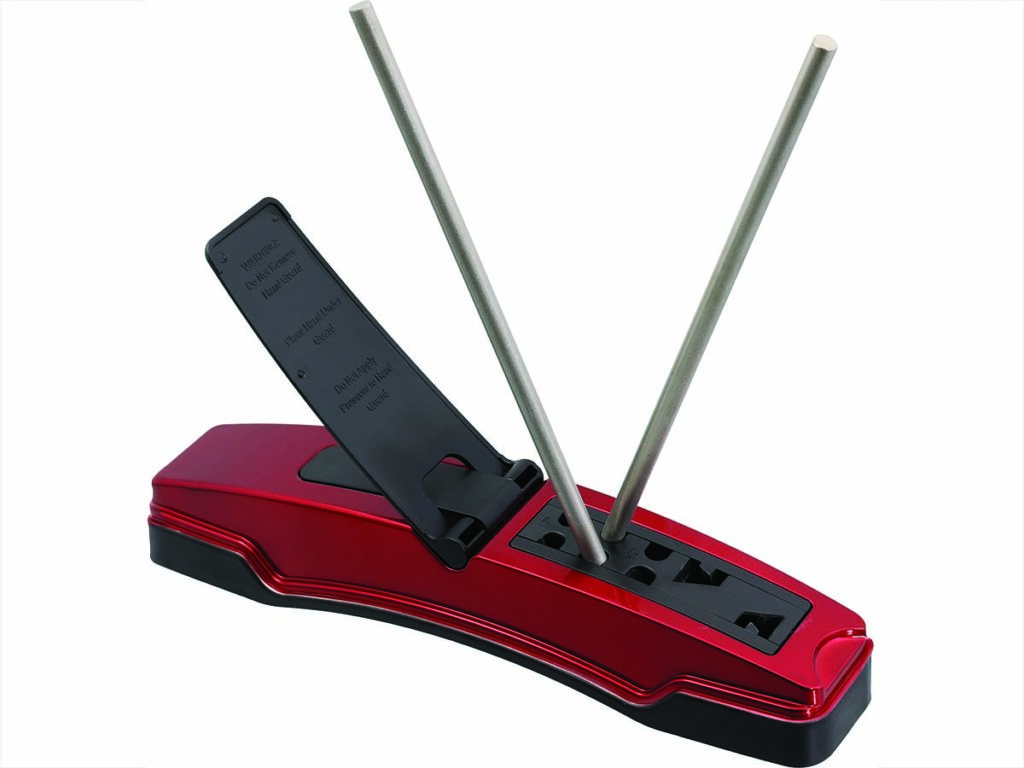
The Lansky Master’s Edge All Diamond Sharpener has a rubberized non-slip base with integrated hand guard for safe use.

Master’s Edge All Diamond Sharpener
Model type: V sharpener
Type of abrasive: Diamond coated
Grit: 400 & 600 grit round rods; triangular rod for serrations
Types of knives sharpened: Fillet/slicing, butcher, paring, skinning/kitchen/hunting, camping, utility and chef’s
Types of edges sharpened: Plain and serrated
Weight: 1.4 lbs.
Country of origin: China
MSRP: $139.95

Inspired by the design of Lansky’s top-selling Master’s Edge Sharpener, the Master’s Edge All Diamond Sharpener and its diamond-coated abrasives put a factory edge on hunting, utility, kitchen and other knives with just a few strokes. The unit includes a pair of medium (400 grit) and fine (600 grit) diamond-coated-abrasive rods for sharpening and polishing at your choice of preset angles: 17, 20 and 25 degrees. The 17-degree setting is for fillet and fine slicing knives, while the 20-degree angle is for slicing, butcher, paring and skinning knives. The 25-degree setting sharpens hunting, camping, utility and chef’s knives. A diamond-coated triangular rod sharpens serrated blades and also awls and fishhooks. A rubberized non-slip base with integrated hand guard ensures safe use and features easy snap-in storage in its underside. The unit can be kept on a counter or stores easily in a drawer.

Work Sharp Folding Field Sharpener
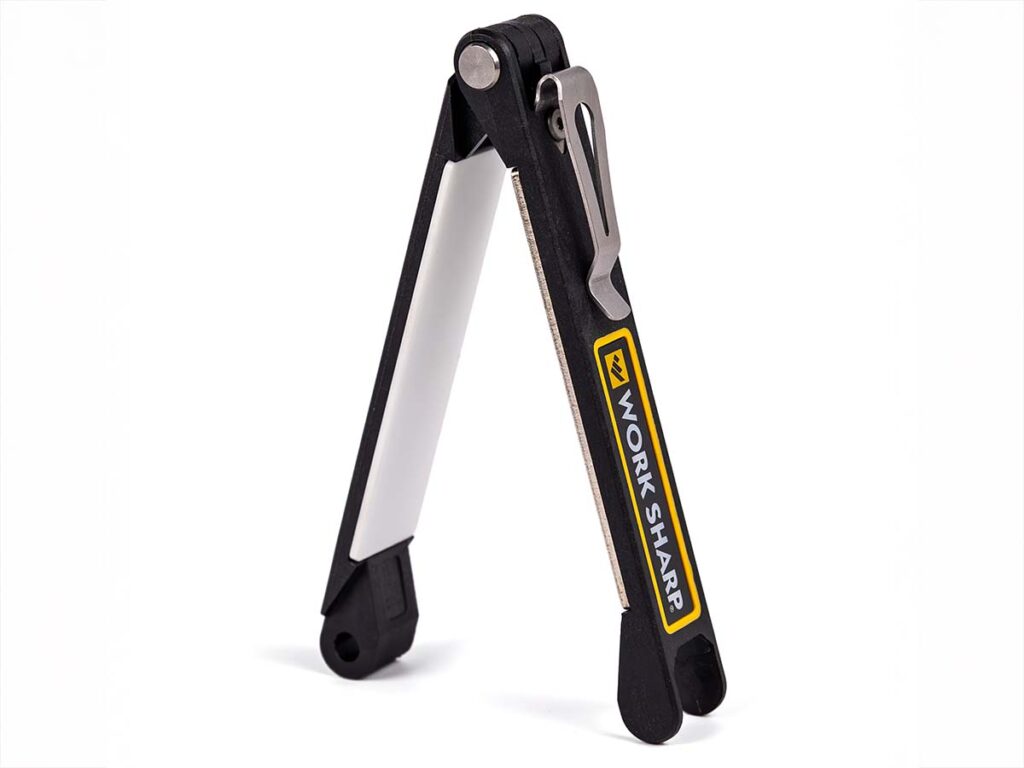
Especially effective on EDC knives, the new Work Sharp Folding Field Sharpener is one whiz-bang of a portable unit.

Folding Field Sharpener
Model type: Compact field sharpener
Type of abrasive: Diamond grit plate and fine grit ceramic plate
Grit: Coarse 400-grit for each plate
Unit dimensions:  4.75 x .75 x .5”
Unit materials: Sharpening plates, plastic, aluminum
Types of knives sharpened: Pocketknives, hunting knives, EDC
Types of edges sharpened: Plain 
Special features: Folding design; edge angle guides (20 & 25 degrees) help maintain a consistent angle when sharpening and honing; pocket clip
Weight: 4.6 ozs.
Country of origin: Designed, calibrated and quality checked in Ashland, Oregon, using foreign components
MSRP: $29.95

The Work Sharp Folding Field Sharpener is a compact, lightweight model designed for on-the-go sharpening. It features a 400-grit diamond plate with 20-degree sharpening guides and a fine-grit ceramic plate with 25-degree honing guides, ensuring consistent, reliable edges wherever you are. The folding design and integrated pocket clip make it easy to carry almost everywhere. A big package in a small platform, it’s designed to bring back an edge after a hard day’s use or simply for touchups. Especially effective on EDC knives, it is one whiz bang of a portable-type sharpener.

CRKT Knife Maintenance Tool
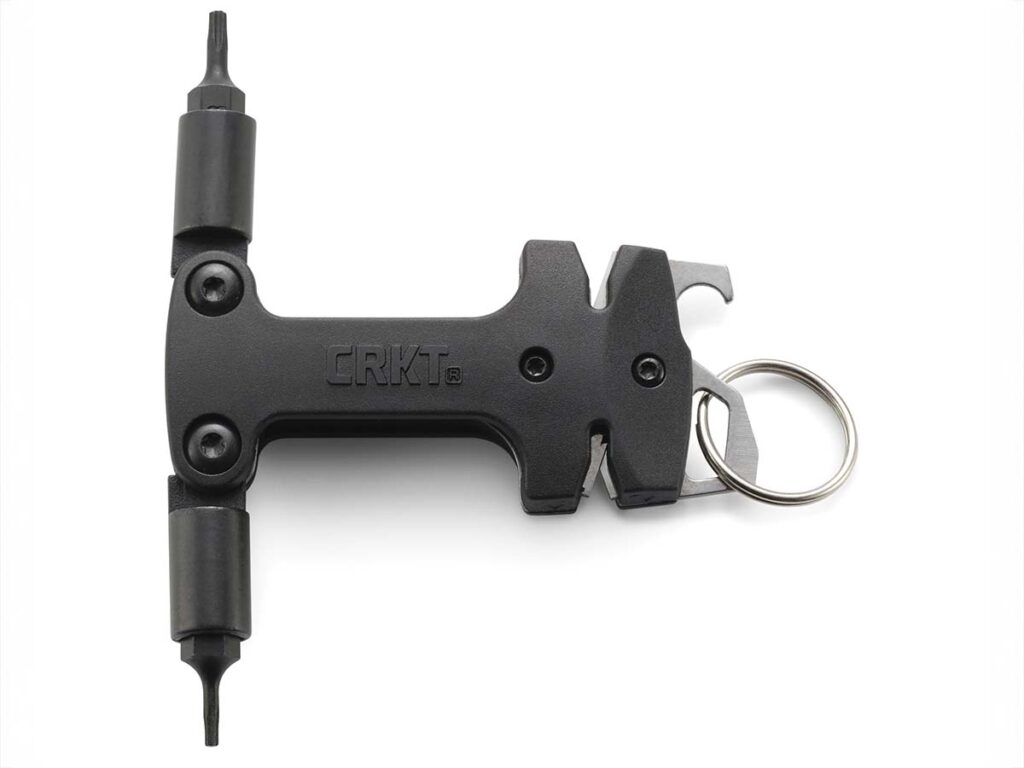
Designed by Tom Stokes, the CRKT Knife Maintenance Tool is two sharpeners and a multi-tool all rolled into one.

Knife Maintenance Tool
Model type: Keychain/pocket field sharpener and multi-tool
Type of abrasive: Tungsten carbide sharpener with ceramic honing edge
Unit dimensions: 2.7 x 1.18 x .47”
Handle: Glass-reinforced nylon
Types of knives sharpened: Pocketknives, EDC
Types of edges sharpened: Plain
Special features: T6 and T8 Torx tools/bits, flathead screwdriver, bottle opener, keychain compatible
Weight: 2.2 ozs.
Country of origin: China
MSRP: $30

Designed by mechanical engineer Tom Stokes, the CRKT Knife Maintenance Tool is a multi-tool sharpener that reflects Tom’s more than 25 years of experience in the aerospace industry, including his work with CAD software and rapid prototyping technology. He designed the Knife Maintenance Tool to prepare you for life’s various exigencies, everything from emergency repairs, popping a top on your favorite beverage—and, yes, sharpening your knives.

The Tool includes two pull-through sharpeners—one a tungsten carbide abrasive to establish a sharp edge, the other a ceramic abrasive to fine tune it—and two sizes of Torx tools/bits: T6 and T8. The sharpeners are on either side of the front of the handle, which is topped off with a bottle opener and flat-head screwdriver/lanyard hole for a keychain loop. The Torx tools are also on either side of the handle and fold out independently of one another for torquing screws pistol-grip style.

Wicked Edge GO-WE60 Precision Knife Sharpener
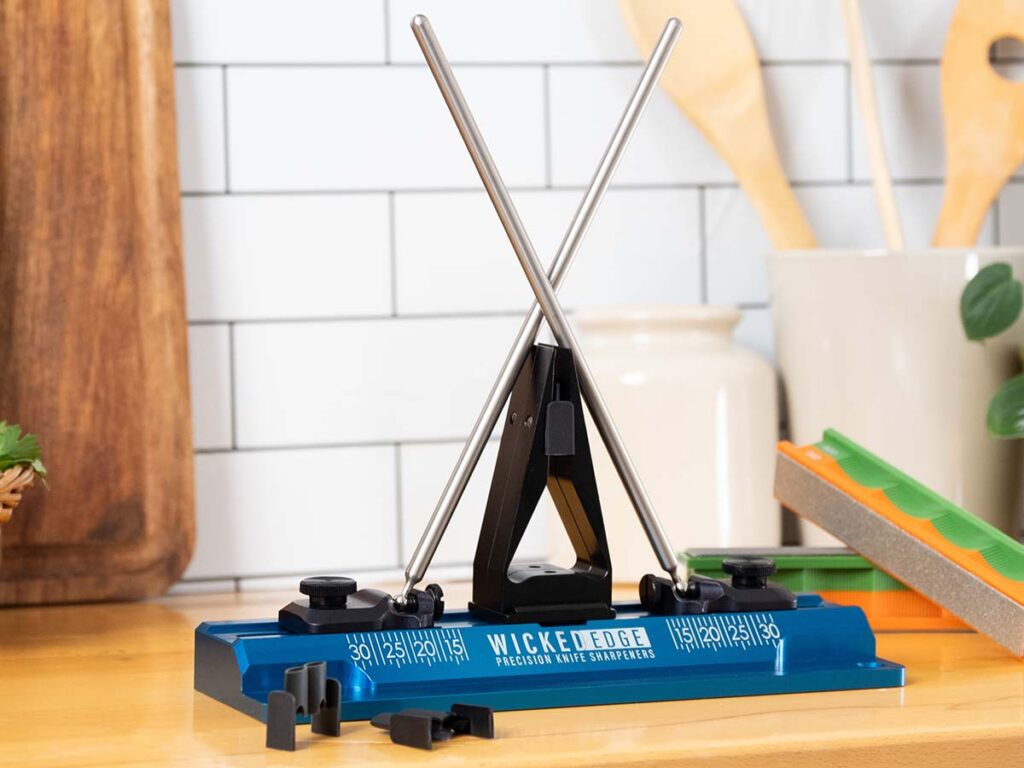
Premium abrasives on the Wicked Edge GO-WE60 are 200/600 grit monocrystalline diamond-coated stones.

GO-WE60 Precision Knife Sharpener
Blade Length Capacity: Up to 15”
Blade Thickness Capacity: Up to .25” (longer screws available for thicker blades)
Angle Markings: Calibrated for the blade’s edge to sit at 5/8” above the top of the vise
Guide Rod Length: 8.75”
Unit Weight: 3.6 lbs.
Country of origin: USA
MSRP: $299

The Wicked Edge GO-WE60 Precision Knife Sharpener is designed for novices and seasoned old pros alike, whether at home, in the field or on the road. A redesigned standard vise clamps fully flat-ground and distally tapered blades such as on pocketknives and household cutlery. Sharpening angles are adjustable from 13 to 31 degrees per side (26-62 degrees inclusive) in 1-degree increments for precise edge maintenance. Premium abrasives are 200/600 grit monocrystalline diamond-coated stones. Mounting options include securing to any flat surface with the included C-clamp or attaching directly using predrilled holes.

Bear & Son GATCO Scepter 2.0 Diamond
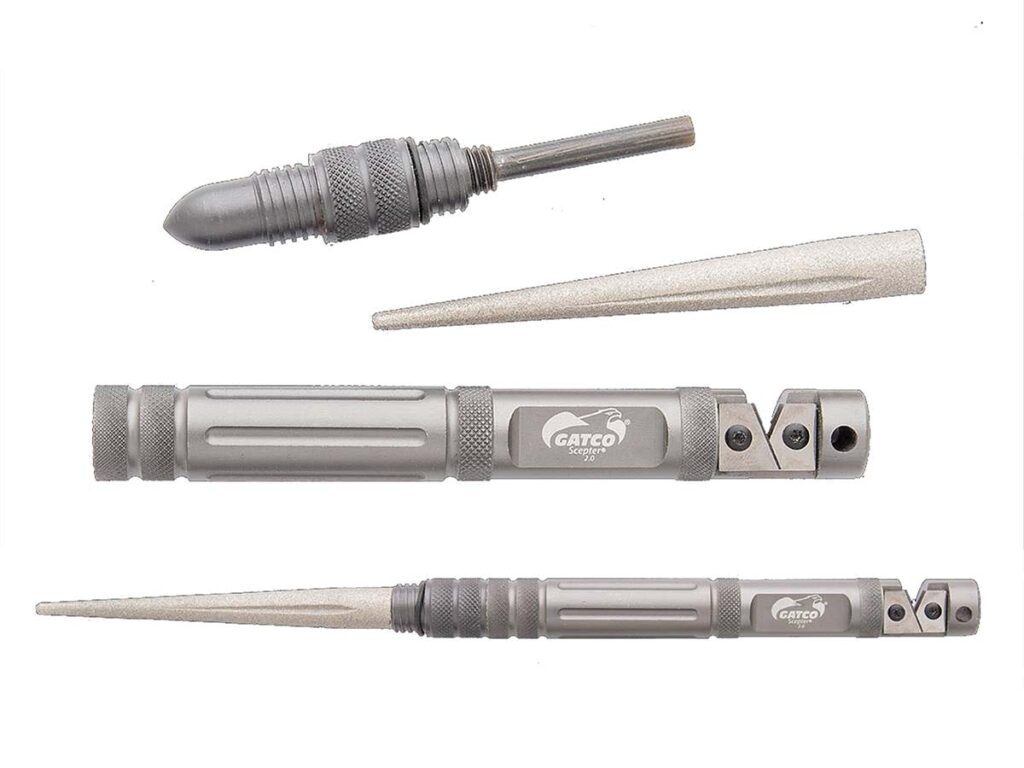
The multi-purpose GATCO Scepter 2.0 sharpens plain and serrated edges and has a magnesium rod for starting fires.

GATCO Scepter 2.0
Model type: Pull through and tapered diamond rod
Type of abrasive: Diamond coated and tungsten carbide
Unit dimensions: 6.125″
Unit material: 6061-T6 aluminum housing
Types of knives sharpened: Hunting, EDC, kitchen
Types of edges sharpened: Plain and serrated
Special features: Tapered diamond rod, magnesium fire starter rod, window breaker
Weight: 3.2 ozs.
Country of origin: China
MSRP: $49.99

The compact GATCO Scepter 2.0 Diamond Take Down Sharpener & Fire Survival Tool from Bear & Son is a multi-purpose implement for everyday pocket carry, the toolbox, to take camping and/or makes an ideal necessity for your bug-out bag. A magnesium rod for fire starting stows inside the tapered diamond sharpener, the latter which includes a groove for sharpening fishhooks. The rod and tapered sharpener are contained inside the CNC-machined, 6061-T6 aluminum carbide body, which has a pull-through tungsten carbide sharpener on the end. Each component features precision-machined threads and an outer “O” ring.

More Sharpening Articles:
Best Scissor Sharpeners: Where To Find Your Edge

Consider three cool tools to keep your scissors shearing sharp.

I sharpen knives frequently but must admit I’m a loathsome scissors sharpener. It’s not like I’ve never sharpened scissors but only when I had to and never in an organized way.

However, when my editor gave me an assignment on scissors sharpeners, I took it as a personal challenge to mend my ways—and off I went. What follows is a primer on scissors sharpening using three different systems.

Before starting, there are a few obvious things to point out.

The most obvious is the fact that there are two blades to sharpen instead of one. Second, the two blade edges are sharpened to oppose each other. Third, most scissors are made for righthanders and can give lefthanders fits, especially models with asymmetrical handles. Some southpaws have more trouble than others, and if you are among them you might seek out companies that either offer lefthanded models, such as Fiskars, or those that specialize in such products, like Lefty’s Left Hand Store. My brother’s lefthanded and he’s never bought any lefty scissors. Instead, he simply buys and uses symmetrical right-hand-only models.

Simple handheld or desktop scissors sharpeners are the way to go if you want to keep a decent edge with very little hassle and time consumption.

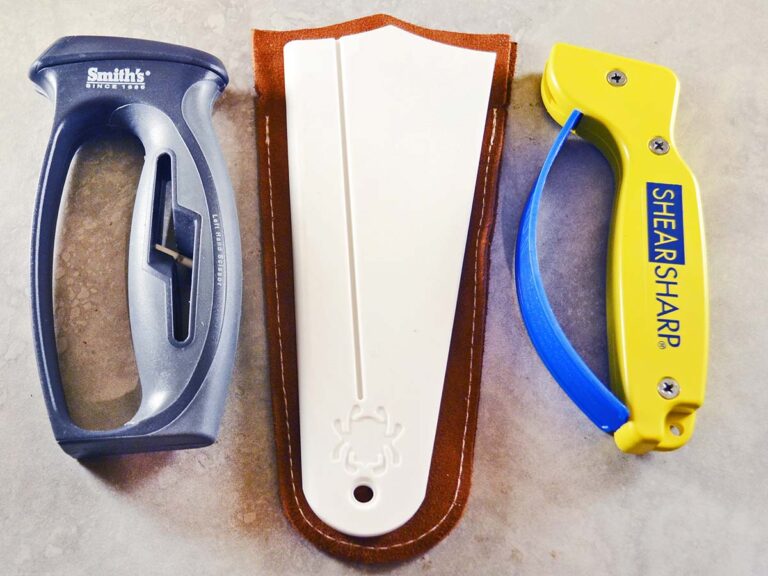
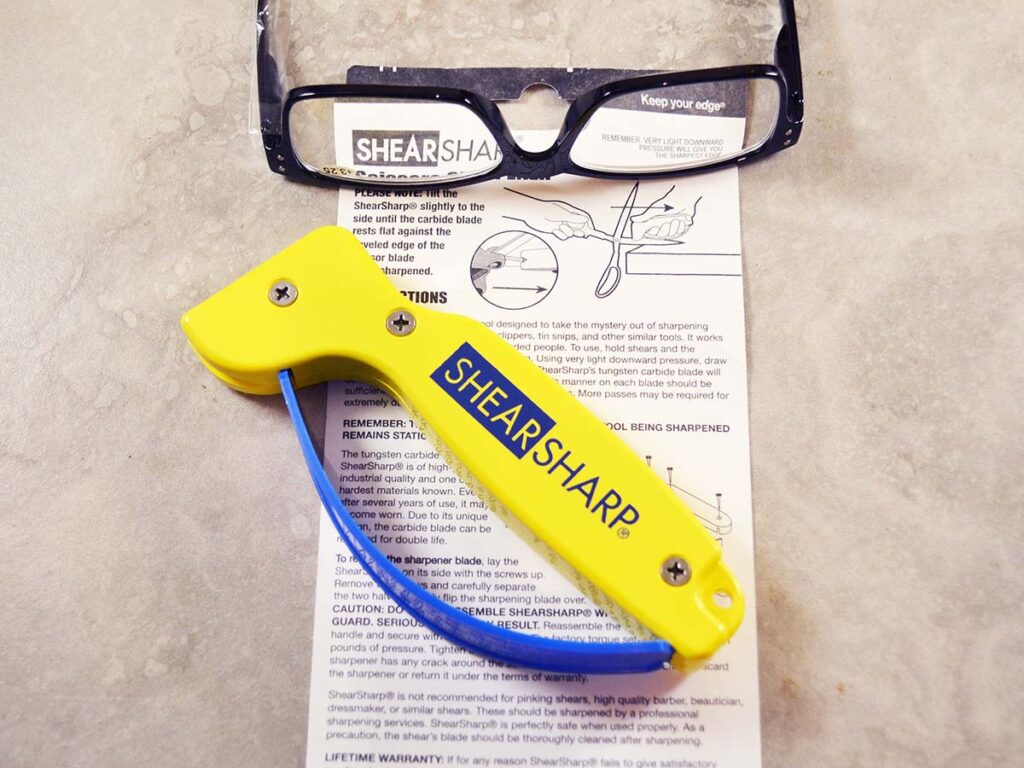
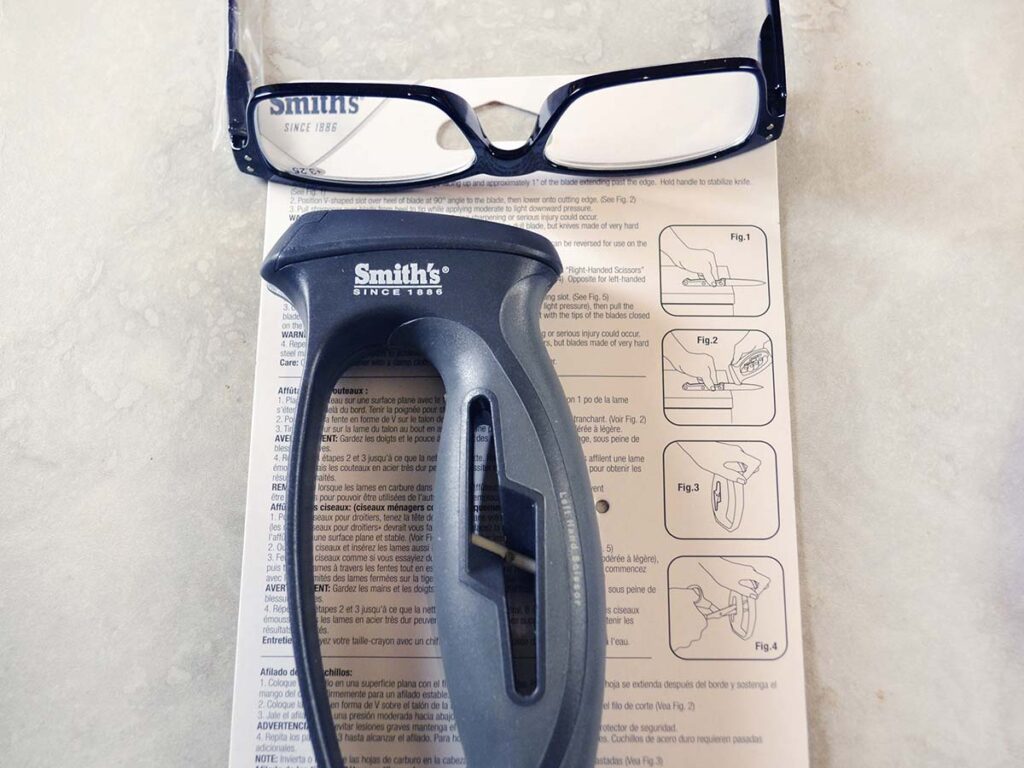
I tested two affordable versions: the AccuSharp ShearSharp Scissors Sharpener and the Smith’s V-Slot Knife & Scissors Sharpener. The pistol-grip-looking units appear similar at first but are actually quite different. The text and graphics on the back side of the cards the sharpeners are mounted on is very helpful, though if you’re like me you will need reading glasses to decipher them.

AccuSharp ShearSharp Scissors Sharpener

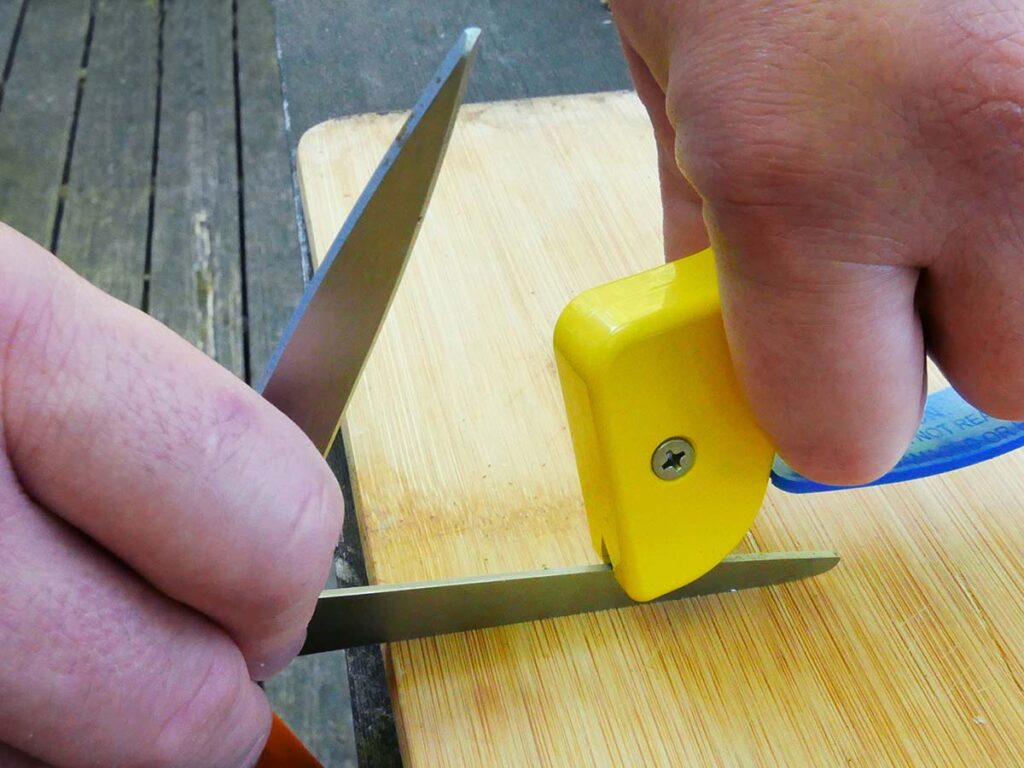
The AccuSharp ShearSharp Scissors Sharpener puts an edge on the blade bevels one side at a time. Here the blades are opened with one side resting on the flat work surface having the blade bevel sharpened. Note the other blade is off the surface. Once the first blade is done, the scissors are flipped and the second blade is sharpened in the same manner. (Covert image)

AccuSharp ShearSharp Scissors Sharpener
Size: 5.5 x 2.4 inches
Type: Hand-held, single sharpening blade
Abrasive: Tungsten carbide
Handle length: 5.6 inches
Handle material: Plastic
Country of origin: USA
MSRP: $9.59

The AccuSharp ShearSharp has a grip with a guard for knuckle protection and there’s a slot on the fore-end with a tungsten-carbide-metal sharpener for running down the blade bevel, sharpening it in the process. Open the scissors and lay the blades, one at a time, face-up to the sharpening medium. The rear blade—the one not being sharpened—hangs off the table or you can put it on a raised platform such as a wood block or book.

A hand-held design, the AccuSharp ShearSharp Scissors Sharpener addresses the blade bevels one at a time. You’ll need your reading glasses for these instructions, too!

The ShearSharp metal sharpener is canted to the angle of the bevel and runs down the blade from base to tip, rear to front. Accusharp recommends two to three passes of the sharpener, then flip the scissors over and do the same to the second blade. As with all three test units, keep an eye on your progress as scissors come in all phases of disrepair.

Smith’s V-Slot Knife & Scissors Sharpener

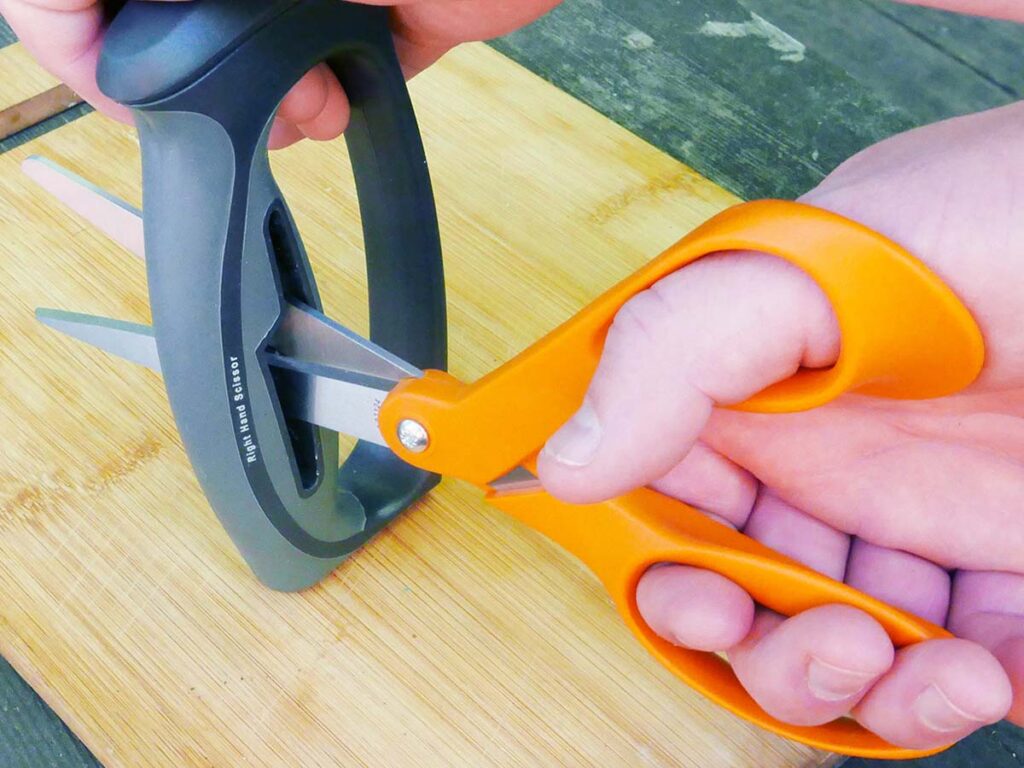
The bevels are sharpened when pushing the scissors blade tips simultaneously into the respective V-slots of the Smith’s unit. The diagonally mounted ceramic rod sharpens both blades at the same time. (Covert image)

Smith’s V-Slot Knife & Scissors Sharpener
Size: 6.75 x 2.74 inches
Type: Hand-held, two sharpening blades
Abrasive: Ceramic
Handle length: 6.75 inches
Handle material: Plastic
Country of origin: USA
MSRP: $9.99

Smith’s V-Slot Knife & Scissors Sharpener is a bit more sophisticated with great finger protection, and is easier to use. Inside the handle is a slot that holds a 1,000-grit ceramic rod angled to sharpen the two scissors bevels at the same time. The bevels are sharpened when pushing the scissors blade tips into the respective V-slots simultaneously. (Smith’s recommends not sharpening by pulling the blades out.)

You may need your reading glasses to decipher the instructions for the Smith’s V-Slot Knife & Scissors Sharpener.

Two to three passes is usually enough for blades of average dullness, more if needed. Once again, stopping to gauge your progress is your friend. An added benefit with the Smith’s sharpener is you can sharpen both right- and left-handed scissors depending on which side of the handle slot you use, and it’s conveniently noted on the sides of the unit itself.

Spyderco Golden Stone

Starting at the top, slide the blade’s beveled edge down the length of the Golden Stone, gradually working the edge toward the tip. Once the edge is sharp, give the opposite blade the same treatment.

Spyderco Golden Stone Sharpener
Size: 7.2 x 3 inches
Type: Desktop sharpener
Abrasive: Alumina
Handle: None
Carry: Suede leather pouch
Country of origin: USA
MSRP: $210

I have become very familiar with the Spyderco Golden Stone sharpener over the years and have included it in several articles, though not for sharpening scissors. Spyderco knives are well known for their premier out-of-the-box sharpness, and company founder and BLADE Magazine Cutlery Hall-of-Fame® member Sal Glesser is a long-time guru on the topic, including today on YouTube.

The Golden Stone is a Glesser design that enables you to sharpen knives in many ways and at different angles, and even serrated blades. Spyderco uses alumina (aluminum oxide) for the Golden Stone’s material and other of its sharpeners, and claims the resulting models do not require oil or water for surface sharpening. Check out Spyderco’s YouTube sharpening videos for a myriad of ways to sharpen the company’s knives.

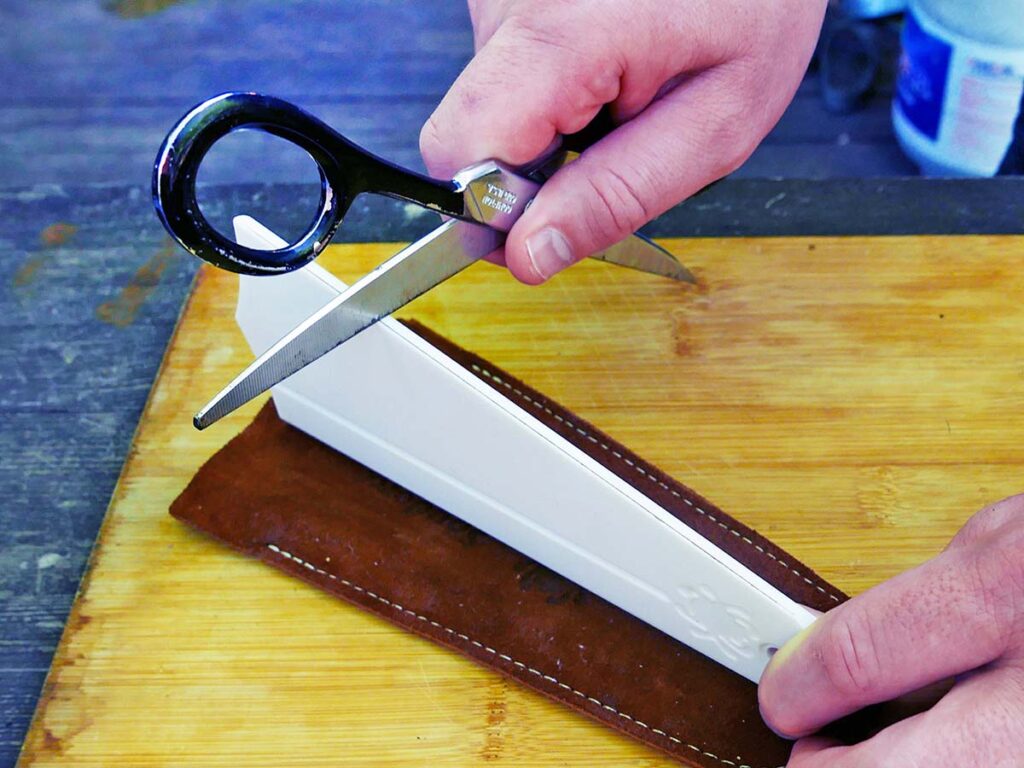
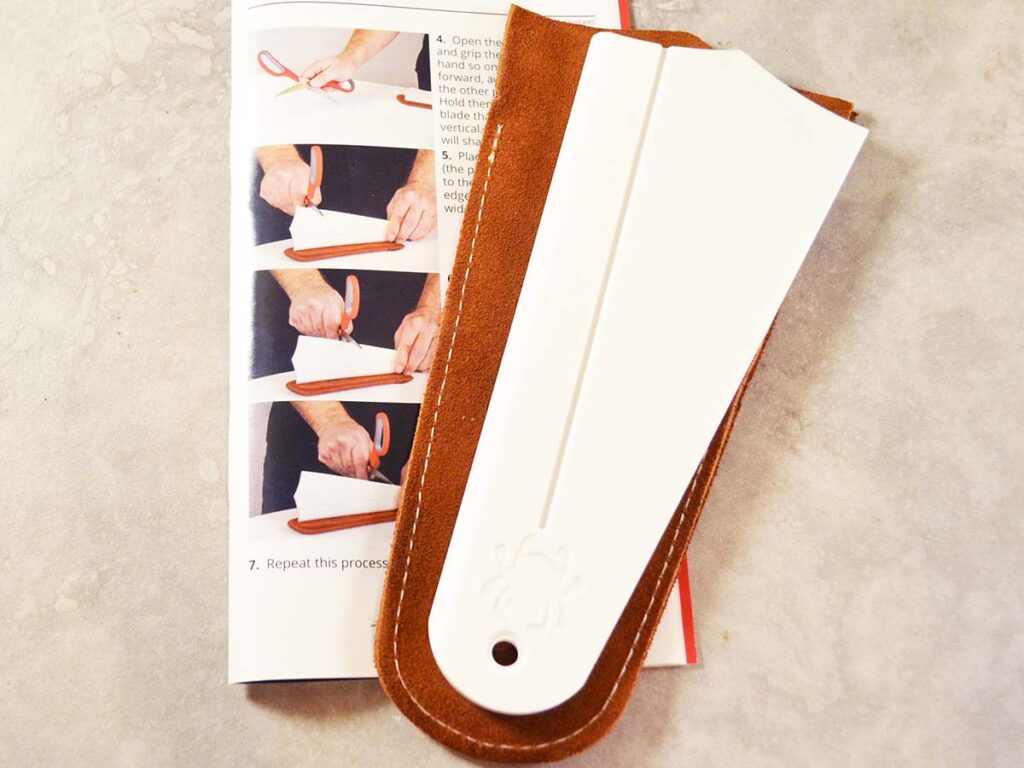
Designed by Spyderco founder Sal Glesser, the Spyderco Golden Stone is an odd triangular ceramic sharpener fit for many uses—one of which is sharpening scissors. For sharpening, position the suede pouch that carries the Golden Stone on a flat base to provide a non-slip surface. (Covert image)

To start with the Golden Stone, use the accompanying suede pouch as a non-slip surface on a flat base. Employ the stone’s rough triangular shape with the long side sideways and vertically. Grip the short side of the triangle with the long vertical side to your right, forming the sharpening platform. Now you’re ready to sharpen the first blade bevel.

Open the scissors wide and position the top of the base of the bevel grind over the high point of the sharpener, and slide it toward the low end as you slowly pull toward you.

It’s like sharpening a knife where you start at one end and slowly slide the tip toward the opposite end as you go—you’re just putting an edge on the bevel instead. Spyderco recommends eight to 10 passes but, once again, use your judgment depending on the condition of the scissors. Once you’re pleased with the bevel on the first blade, flip the scissors over and repeat the process on the second blade. When done you can remove any burr on the edges of the two blades by opening and closing the scissors a few times.

Conclusion

Both handheld units did a good job of sharpening the bevels, and though I prefer a ceramic sharpening rod just because you can better “feel” it rubbing against the bevel, there was no noticeable difference in the results. These two sharpeners are capable of putting a very decent edge on your scissors.

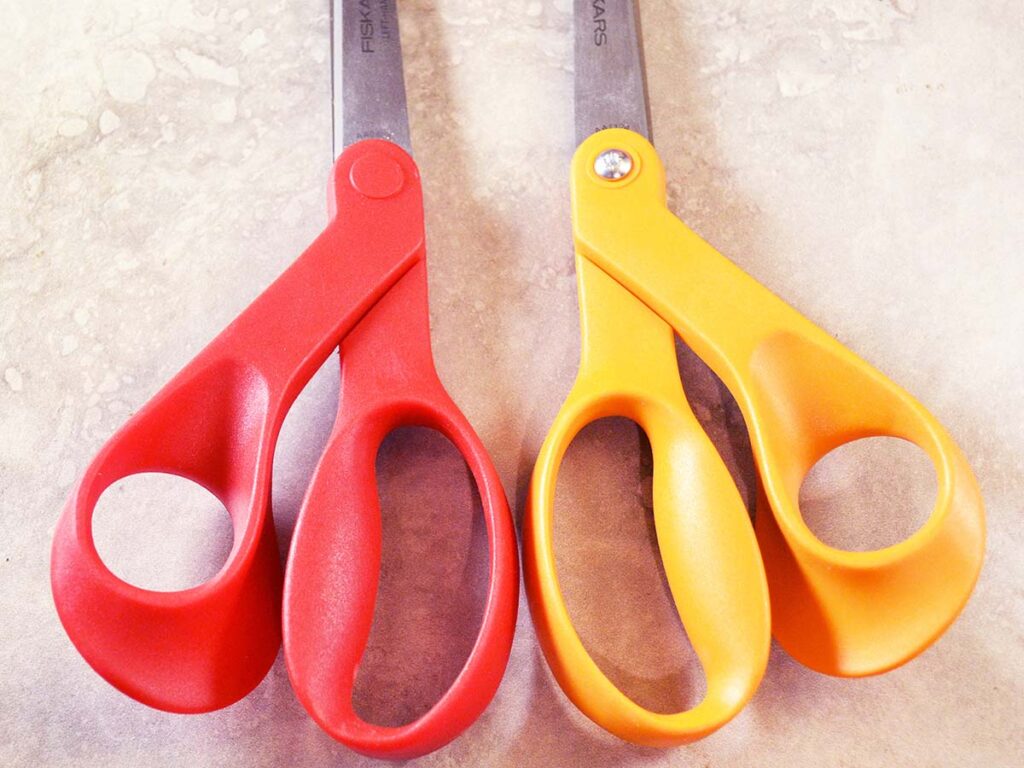
Fiskars is one of the few major companies that manufactures scissors specifically for lefthanders, and is known for such radically asymmetrical designs as these two. The red pair is for lefties.

The end result of my efforts with the Golden Stone paid off with two razor-sharp beveled edges on the scissors blades. Spyderco doesn’t assign numbers to the grits on its sharpening media, but the best I can tell the white alumina like that used on the Golden Stone is in the fine, 2,000-grit range.

Where To Find Your Edge

Is all the cost, time and increased degree of skill required by the Spyderco Golden Stone worth it? That’s up to you and what your expectations of your scissors are. There are folks whose livelihoods depend on scissors, others that just want to get the mail out the door and scads of people in-between. Choose your sharpener!

More Sharpening Articles:
Knife Buying Don’ts: How To Avoid Cutting Pitfalls

Knife buying–particularly custom–can prove daunting. We gathered industry pros to give the top mistakes to avoid.

When it comes to acquiring knives, the informed buyer is most often the satisfied buyer when the transaction is complete. So in the spirit of friendly advice, BLADE® has enlisted the help of several knife industry pros to offer a few words on making the most of the knife-buying experience—or to put it another way, 11 mistakes to avoid when buying a knife.

Don’t Deal With Questionable Sellers

“A lot of it revolves around reputation,” said custom knife purveyor and collector Paul Farina of Farina Fine Arts. “Human beings can be different, but 80 to 90 percent of the people you meet out there are great. In the knife world, many of them will give you a refund if you aren’t happy.”

Dave Harvey of Nordic Knives echoed that sentiment. “Honest sellers are not hard to find, thankfully,” he said. “Look for those with years of experience. Generally speaking, dishonest sellers will not be in the business very long.”

Along the same lines, Daniel O’Malley of bladegallery.com cautions folks interested in buying online. “If purchasing online, make sure you are buying from a company that has been around a while,” he offered. “There are a lot of fraudulent websites out there these days—often ones that are trying to appear to be a well-known website. One dead giveaway that you may be on a fake purveyor website is if the prices are too good to be true. Unfortunately, you are unlikely to find a legitimate site selling knives for half the price of other legitimate sites.”

Don’t Buy Knives On Pictures Alone

“In most cases today, knives will be purchased online, and therefore you may have to judge the knife by photographs and listed descriptions,” O’Malley advised. “Since the value of the knife is greatly affected by small scuffs and scratches, it is important that the photos are clear enough that any imperfections will be noticeable.”

Along the same track, Harvey noted, “Pictures are great, but they never fully substitute for being able to see and hold a knife in person. Make sure you buy from someone or a dealer with a 100-percent-return guarantee. If you are not satisfied with your purchase, you should be able to return it in a reasonable period of time.”

Don’t Buy Knives On Steel Only

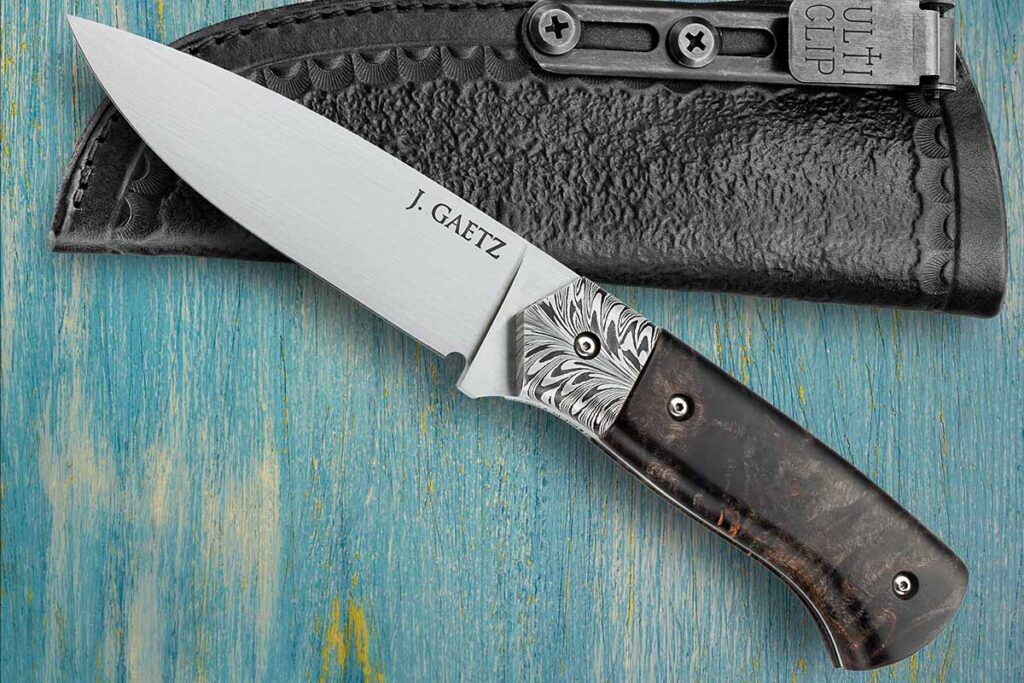
Jacob Gaetz forged the 4-inch blade of his fancy hunter
Daniel O’Malley advised that each year new miracle steels appear but often lose popularity after a year or two because they may not pan out. Conversely, tried and tested steels like CPM S35VN, Takefu SG2, 52100 and more are great benchmarks to test against. Jacob Gaetz forged the 4-inch blade of his fancy hunter from 52100. (Jocelyn Frasier image)

“I never talk to people too much about a particular blade steel,” commented Dave Ellis of Exquisite Knives. “I usually discuss with clients how the complete knife was made, how it was fashioned, and that is more important, I think. Someone may be enamored with a certain type of steel, but that is rare with my clientele and only a consideration in talking about the whole knife.”

Harvey reckons that few knife buyers take the “blade-steel-first” approach. “At least I would hope not,” he asserted. Farina added, “There are a few exotic blade steels out there right now, and these may be sought after just because they’re exotic. Also, some steels have been discontinued and knives with those steels may be selling because of the rarity.”

Taking the entire knife into account is the best way to reinforce a purchasing decision, according to O’Malley. “Knowing the stats on the knife is important,” he reasoned. “We want to know where it was made, who made it, in what country it was made, and what materials they used. That said, judging a knife by just the blade materials used ignores fit and finish as well as heat treatment quality. In some cases the identical steel at the identical Rockwell hardness can still have tremendously different edge holding. In fact, over the years I have found that the quality of heat treatment is perhaps even more important than the steel used.”

Don’t Buy Knives On The Handle Comfort

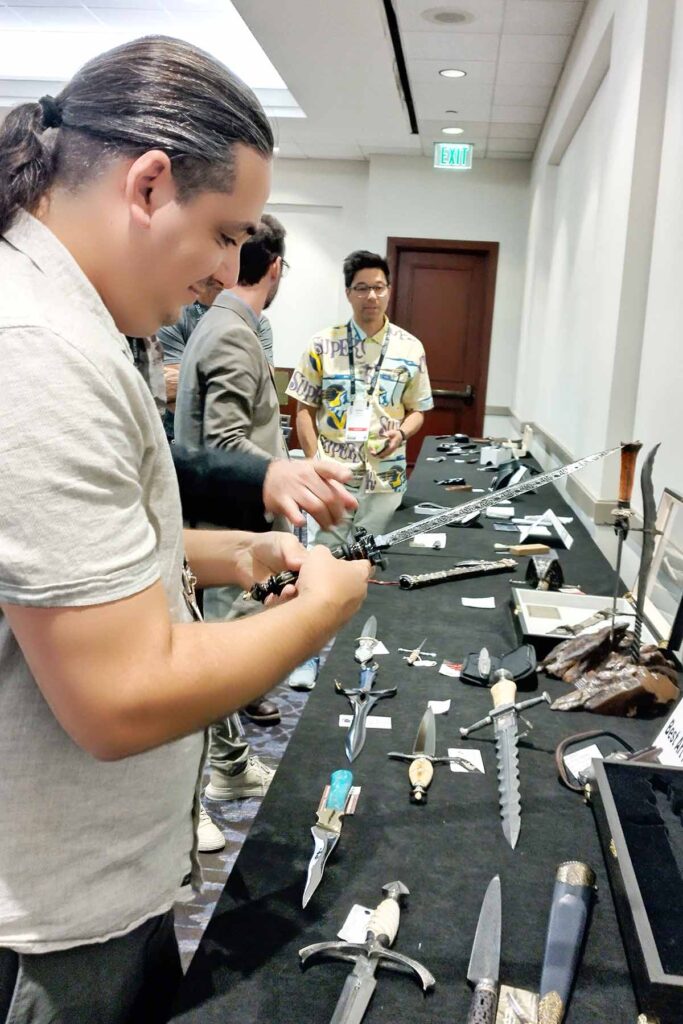
Lee Lerman, a custom knife judge
Daniel O’Malley said that even if it’s the best knife in the world, if you don’t like the way it feels it isn’t the best knife for you. Lee Lerman, a custom knife judge at BLADE Show 2024, checks the handle of one of the knives entered. In the background are observer Henry Wu (right) of the BLADE Show and judge Rodrigo Sfreddo (center).

“Getting a knife in hand and seeing what it feels like is ideal, though sometimes not possible if you are purchasing from far away,” O’Malley related. “I often advise potential buyers that even if they are holding the best knife in the world, if they don’t like the way it feels it isn’t the best knife for them. That said, some buyers feel a knife is comfortable just because it is familiar—similar to their last knife. They may have gotten used to the last knife and like the way it feels, but a different feel might actually be better, that is, a more ergonomic handle or lighter design. Sometimes it takes using the knife for a while before you know how you really feel about it.”

Don’t Adopt A Herd Mentality

“There are trends out there, but because I’m older and been around the art knife world so long, I’ve thought about the places to put my money,” Farina commented. “If you’re looking at an up-and-comer in knifemaking, check their quality, find out who taught them. That is how I get introduced to them. If they have been taught by an experienced maker, you can tell the quality, and the price may reflect in less money with younger guys.”

From the perspective of “hot styles,” Harvey remarked, “I don’t object to those who want to buy the ‘hot’ knives as long as they are styles and makers that they enjoy and collect. Buyers should always beware of ‘hot’ knife prices and not fall for overpricing.”

“What’s currently ‘hot’ isn’t always best,” O’Malley commented. “The knife industry develops relatively slowly and though each year we see new miracle steels come out, they often lose popularity after a year or two because they may not have panned out. Tried and tested steels like S35VN, Takefu SG2, 52100 and more are great benchmarks to test against.”

Don’t Overlook Makers By Name

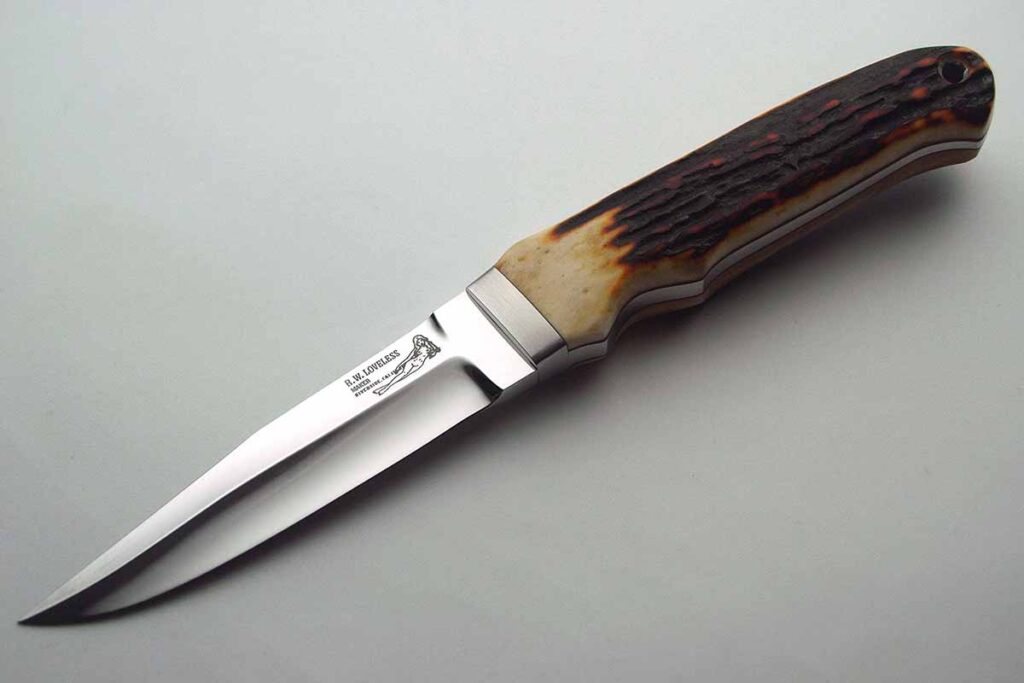
Loveless hideout model in stag
Dave Ellis said that instead of buying 10 knives you can afford, save up and buy one made by Bob Loveless. A Loveless hideout model in stag and with the iconic Naked Lady logo would be a good place to start. (Exquisiteknives.com image)

Ellis looks long-term and sees intrinsic value in the known commodities. “I recommend the blue-chip makers,” he declared. “Instead of buying 10 knives you can afford, save up and buy that one Loveless. This year I’ve sold 14 Lovelesses and the pricing has not gone crazy. So, an entry level $5,000 knife is not so ‘out there’ for someone.”

According to Harvey, most big-name makers have an established collector following, which typically relates to a lasting market for their knives down the road. However, O’Malley points out the benefits of considering numerous makers.

“The knife industry is full of tiny workshops that are doing the best work in the industry,” he noted. “While there are also some great big-name makers, these smaller shops are more likely to provide more bang for your buck. Additionally, in many cases, small workshops may be putting more attention toward quality of heat treatment, which can result in much higher performance.”

Don’t Overrate The Investment Factor

“Buying for investment is something I love because of the fact I can make money on knives,” Farina explained, “but this is not a blue-chip investment stock. So do it for the passion and love of the product. However, if the goal is only for investment, then be very structured. Listen to an adviser. I had a customer come to me after spending a lot of money in four years. He wanted to sell and make 20 percent profit on all the knives [he had bought]. Maybe that would happen on some stuff, but it is a bit unrealistic.”

O’Malley added, “Knives can be a great investment. Over the years, I have seen many knives increase dramatically in price, though certainly there are some that hold their price and even some that go down. Picking the right knives for investment does take a time commitment. You need to research and know the maker and their work. How does the knife fit in the range of knives that maker creates? Will the materials hold up over time? Where is the maker in his or her career? Taking all this into account, it is possible to collect knives as a great investment, though keep in mind that even with the best research not every investment will work out.”

For Harvey, the investment path requires some preparation. “Smart buyers can and do successfully invest in certain knives,” he said. “This does require a lot of knowledge and patience, as you generally won’t see significant increases in value in the short term. For most buyers, I suggest buying what you like and enjoy for your collection, not expecting a large return for it upon sale.”

Don’t Exceed Your Knife Buying Budget

Jurgen Steinau fixed-blade knife
Dave Ellis recommended setting a price limit at auctions and don’t exceed it or you will find yourself paying a lot more than necessary. “I remember a particular Jurgen Steinau fixed-blade knife a few years ago when an overseas bidder and a guy from the Bay Area were in there. The knife went for $110,000,” Dave noted. “People were in there butting heads and then it became an ego thing.” Steinau’s unique style is reflected here in his Folding Knife LBS. (Eric Eggly/PointSeven image)

Ellis provides sound wisdom on auction bidding. “Set a price at the auction and don’t go over the limit and find yourself suddenly paying a lot more than you wanted to pay. I remember a particular Jurgen Steinau fixed-blade knife a few years ago when an overseas bidder and a guy from the Bay Area were in there. The knife went for $110,000,” he noted. “People were in there butting heads and then it became an ego thing. Also, don’t buy with an eye toward flipping the knife. Avoid bid ups like the plague.”

“Auction sites tend to have horrible photos, making it impossible to ascertain what a knife is really like—and what it is worth. Since fit and finish as well as condition are so important to value, figuring out what to bid can be near impossible. Additionally,” O’Malley opined, “auctions can be a way to end up paying much higher than a direct-from-maker price.”

Don’t Discount Second Opinions

“Second opinions are nice and not too hard to get on many knives,” Harvey pointed out. “There are online forums and other social media outlets where collectors share information on many makers and knives.” Take advantage, then, of the availability of information but consider the source always.

“Knives are pretty personal,” O’Malley observed. “What works for you might not work for your buddy. It’s always fun to walk around a show with someone so that you can bounce ideas off each other, but at the end of the day, buying what you like is probably most important.”

Don’t Buy Knives Under Duress

Never feel pressured to make a knife purchase. Don’t always accept the line that the knife you are considering could be gone in the next few minutes. Take a deep breath and make the most informed decision possible in the current environment. If you don’t feel totally positive, walk away.

“Many knives are literally one in the world,” O’Malley said. “This means that if you don’t buy it, there is a chance that it will be gone. Over the years, I’ve found a good way to evaluate is to ask yourself, ‘If this knife sells to someone else, in three to five weeks will I be frustrated and still want to purchase it?’ If the answer is no, you probably didn’t need to purchase the knife. There will always be others. There are, however, a few knives that I didn’t buy that even years later I wish I had purchased. Figuring out if this is one of those knives lets you know to buy it before someone else does. Any big collector has had a few knives they didn’t purchase quickly enough that they still regret not purchasing today.”

Don’t Always Discount Deposits

heat treatment of knives
Over the years of buying and selling knives, Daniel O’Malley said he found that the quality of heat treatment is perhaps even more important than the steel used.

“If a maker requires a deposit, he or she must be a good accountant,” Farina related. “Some are not businessmen. They are artists and machinists. So, it’s about reputation and feeling good about the maker you are working with.”

Trust is a big factor across the board. “Paying for a knife before it is completed can be complicated,” O’Malley maintained. “A well-regarded maker once summed up the problem: ‘It’s very hard to work on a knife that’s already paid for.’ That said, collectors often commit to a purchase, have a knife made, and don’t complete the purchase or just ghost [stop communicating with] the seller. For this reason, I feel it is reasonable to pay a relatively minimal deposit, 10 to 20 percent of the cost of the knife, when purchasing directly from the maker. If working through a purveyor and having a knife made, it isn’t unusual to have to pay the full amount up front since the purveyor is committing to the purchase for you.”

Stay Informed

Advice is free, for sure, but it comes from the voices of experience. When buying a knife, it pays to listen to those already engaging in the process. Of course, every situation is a bit different. There are always additional considerations. The bottom line is to approach a knife purchase on an informed basis. That translates into a confident buy!

More On Custom Knives:

Best Honing Rods: A Complete Buyer’s Guide

Honing Rods. Honing Steel. Sharpening Steel. Here are our top picks.
Whether it’s in your knife block or you saw Gordon Ramsay using it on TV, you’ve probably seen a honing rod. While it’s a ubiquitous piece of kit in the kitchen, it’s a bit of an enigma. Many think that this long steel rod is meant to sharpen your knives, but that’s not the case. Beyond that, contemporary rods are made from materials other than stainless steel like ceramic and diamond-coated steel.

It isn’t known when honing steels were first invented, but there are records from the Company of Cutlers in Hallamshire making honing steels in Sheffield, UK as far back as the early 1600’s.

With such a long history of use by knife owners, it’s important to know what a honing rod is, how to use it, and how to find the right one for you.

What Is A Honing Rod?

While many people call it a sharpening rod, a honing rod or steel hones your blade rather than sharpens it. With regular use, your knives will start to lose their edge. Standard wear and tear such as cutting through fibrous meats or knicking the cutting board will eventually bend your knife’s edge at the microscopic level.
By using your honing rod, you fix those small deformations to keep your knife’s edge like new. It’s important to note that you’re not removing material like you do when sharpening on a stone. A honing rod won’t help you if a knife has a totally blunt edge.
The best way to think about it is that your honing steel should be used a few times a week, or even daily, while a proper sharpening of your knives should be done once or twice a year.
Honing Rod Vs. Kitchen Sharpener

Traditional honing steel will help keep your knives sharper longer. Newer honing rods made from ceramic and diamond-coated steel do remove a minimal amount of steel when honing, usually tiny bits hanging onto your blade by a thread. No matter what material rod you use, it is healthier for your knives to use them regularly to maintain the edge for as long as possible.

Popular YouTuber Ethan Chlebowski goes in-depth on honing and how to hone to keep your knives fit for daily use.

Best Honing Rods

Whether they’re made from steel, ceramic, or even coated in diamond, honing rods come in all sizes, materials, and even shapes. These stand out from the rest.

Best Honing Rods Comparison

RodWeight (Ounces)Rod MaterialHandle MaterialCountry of OriginMSRP
Wusthof 9-Inch Classic Ikon Honing Steel11.6Stainless SteelPolyoxymethyleneGermany$200
Zwilling 12-Inch Professional Oval Sharpening Steel14.4Stainless SteelPolyoxymethyleneGermany$60
JB Prince Mac Black Ceramic Honing Rod With Grooves 10.5-Inch13.4Ceramic, Steel CorePolypropyleneTaiwan$64
Opinel 10-Inch Diamond Steel Sharpening Rod24Diamond-Coated Stainless SteelWoodChina$60
Green Elephant Ceramic Sharpening Rod7.2White CeramicPolypropyleneTaiwan$30
Friedr Dick 10-Inch Honing/Polishing Rod4.9Stainless SteelPlasticGermany$83
Kuma Kitchen Knife Sharpener8.6Stainless SteelPolyoxymethyleneJapan$48
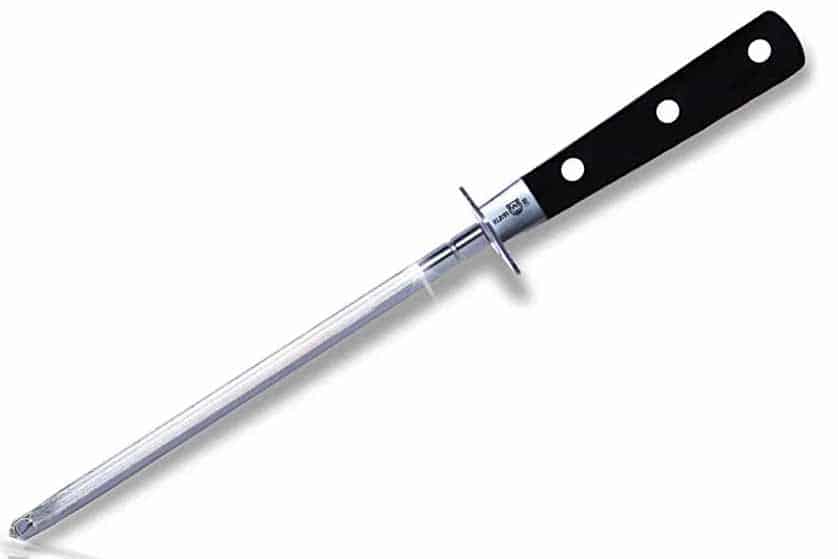
Friedr Dick Multicut Steel15Stainless SteelPlasticGermany$150

Wusthof 9-Inch Classic Ikon Honing Steel

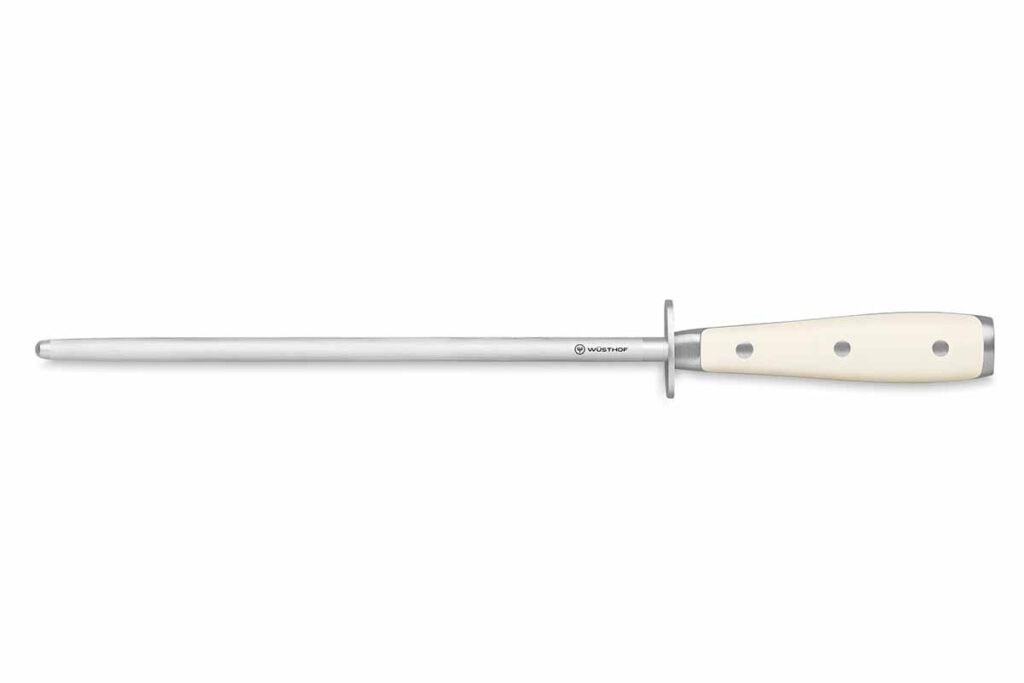
wusthof honing rod
Wusthof 9-Inch Honing Steel

A classic honing steel by any measure, the Wusthof 9-inch steel is a great honing rod to have in your kitchen. Made of stainless steel, this is everything you want from a honing rod. It’s light and tough and made by a company with more than two centuries of history making knives.

A strong, robust honing rod is what every knife owner should be looking for, and this one checks the boxes.

Classic Ikon Honing Steel Specs
Weight: 11.6 ounces
Rod Material: Stainless Steel
Handle Material: Polyoxymethylene
Country of Origin: Germany
MSRP: $200

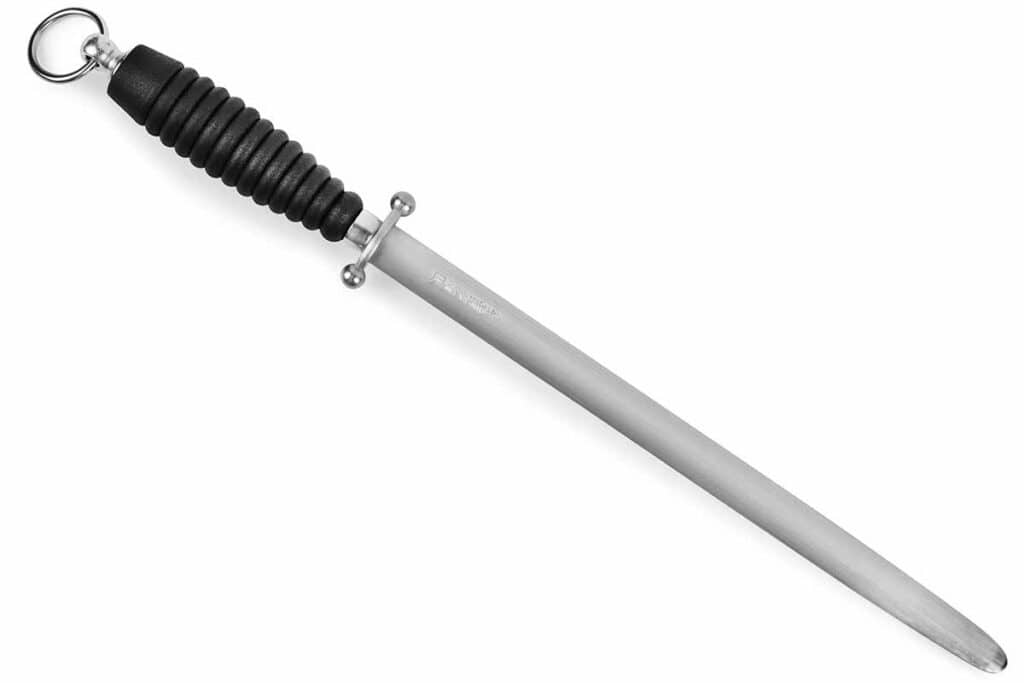
Zwilling 12-Inch Professional Oval Sharpening Steel

Honing Steel
Zwilling 12-Inch Professional Oval Sharpening Steel

Sometimes you just need something a little bigger and heartier. This steel from Zwilling is up to the task. Its oval shape and longer length make it great for bigger knives. The chrome-plated steel is hard enough to hone most types of steel with ease and is easy to clean.

The loop at the end lets you hang it up easily too. Weighing in at just under a pound, don’t let that fool you. This is a heavyweight rod that will withstand years of use in your kitchen.

Professional Oval Sharpening Steel Specs
Weight: 14.4 ounces
Rod Material: Stainless Steel
Handle Material: Polyoxymethylene
Country of Origin: Germany
MSRP: $60

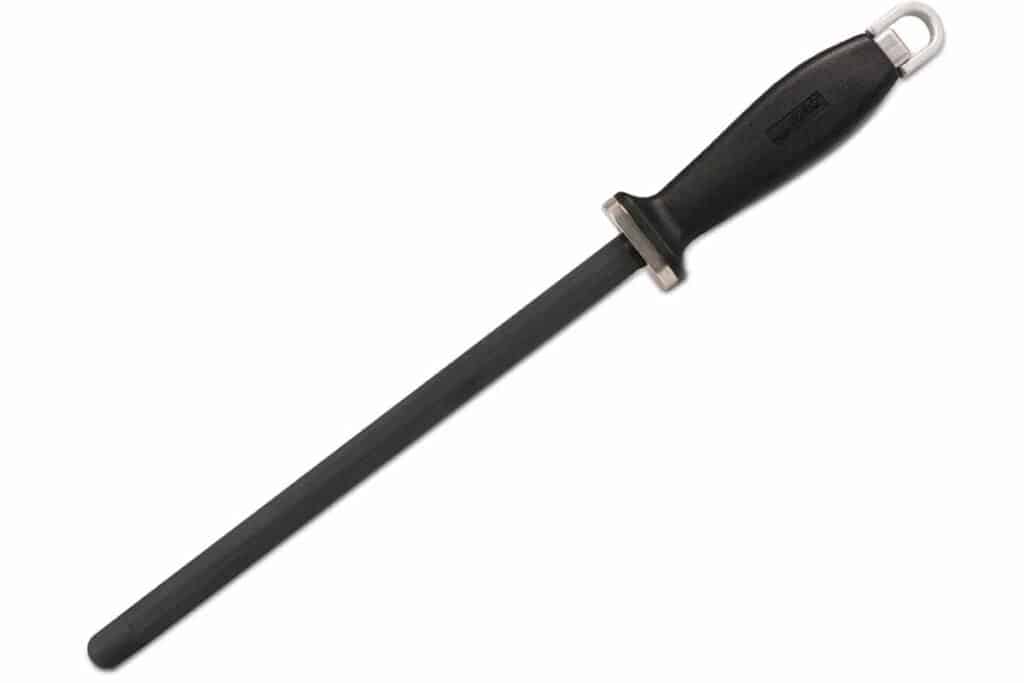
JB Prince Mac Black Ceramic Honing Rod With Grooves 10.5-Inch

JB ceramic honing rod

With a fine 1200 grit, this ceramic rod from JB Prince is incredibly hard and durable. Its black ceramic coating is harder than both white ceramic and steel, and it’s also resistant to breaking so it can handle whatever you throw at it. Since it’s ceramic, it has the benefit of being completely rust-resistant, unlike traditional steel rods.

Most knife blocks that come with a honing rod will have a steel varietal, but looking beyond the block can lead you to quality rods like this one that can last a lifetime.

Mac Black Ceramic Honing Rod With Grooves 10.5-Inch Specs
Weight: 13.4 ounces
Rod Material: Ceramic, steel core
Handle Material: Polypropylene
Country of Origin: Taiwan
MSRP: $64

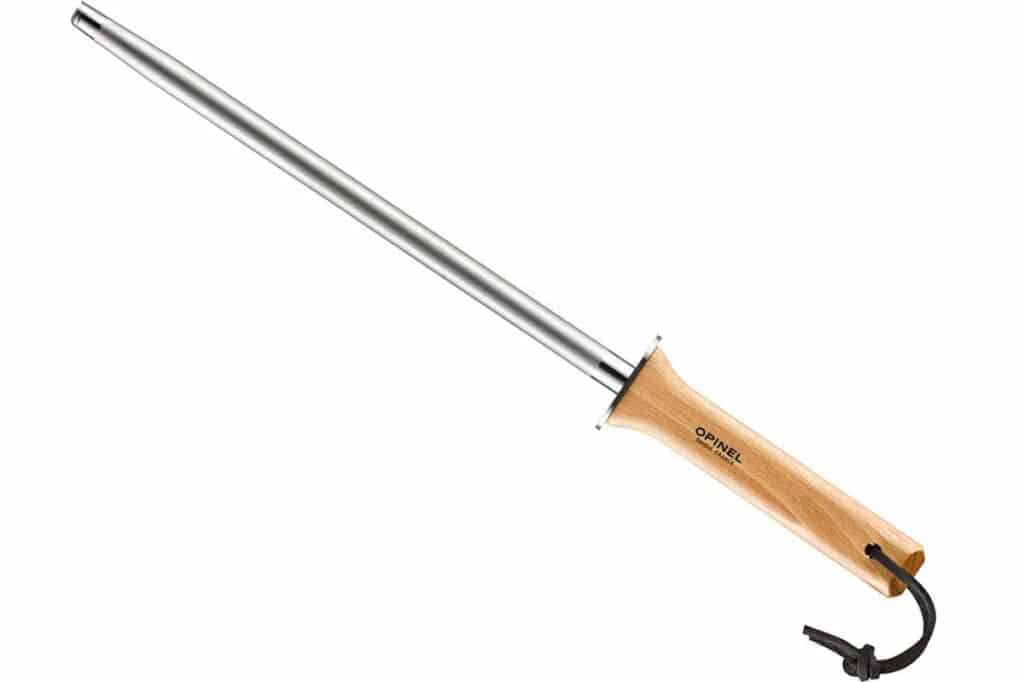
Opinel 10-Inch Diamond Steel Sharpening Rod

Opinel 10-Inch Diamond Steel Sharpening Rod

When it comes to rods that also sharpen, you can’t go better than diamond steel. This Opinel rod has a coating embedded with diamonds that sharpens as it hones. It’s good for both kitchen and pocket knives so you sharpen your EDC with it as well.

With a beechwood handle, and weighing 21 ounces, this rod feels good in the hand and will leave a pristine edge on your knives. Worth the price in every way for the discerning knife owner.

10-Inch Diamond Steel Sharpening Rod Specs
Weight: 24 ounces
Rod Material: Diamond-coated stainless steel
Handle Material: Wood
Country of Origin: China
MSRP: $60

Green Elephant Ceramic Sharpening Rod

Green Elephant ceramic honing rod

Yes, there are many ceramic rods on the market today, but you’d have a hard time finding one as robust and durable as this one from Green Elephant. With a grit of 1500, the rod is fine enough to lightly sharpen along with honing and realigning your blade. It’s also suitable for Japanese knives which may come with only one cutting edge instead of a Western, or German, style double-edged knife.

The silicone seal between the rod and the handle is designed to absorb vibrations and the whole construction is built to withstand being dropped without cracking. Lightweight and fairly-priced, this 11-inch rod is worth a look.

Ceramic Sharpening Rod Specs
Weight: 7.2 ounces
Rod Material: White ceramic
Handle Material: Polypropylene
Country of Origin: Taiwan
MSRP: $30

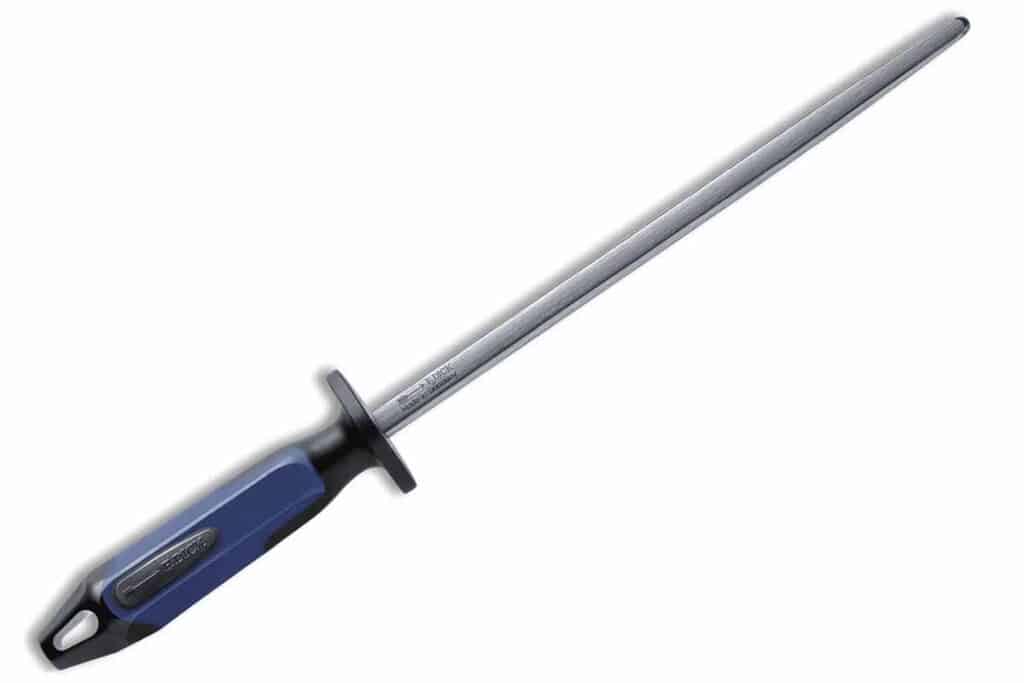
Friedr Dick 10-Inch Honing/Polishing Rod

Friedr Dick 10-Inch Sharpening Steel

It is almost impossible to chip this rod thanks to being coated in diamond dust. From German maker Friedr Dick, this 10-inch rod is diamond-coated steel is designed for the heavy knife user in mind.

An oval shape allows more of the blade to contact the rod with each pass which means each knife takes less passes to hone. The ergonomic, dual-density polymer grip keeps everything safe and secure when passing the blade down the rod.

The catch-22 is the diamond itself. Yes, it will return your knife’s edge quicker, but use the rod too often and it’ll scrape off material far faster than other types of rods.

10-Inch Honing/Polishing Rod Specs
Weight: 4.9
Rod Material: Stainless Steel
Handle Material: Plastic
Country of Origin: Germany
MSRP: $83

Kuma Kitchen Knife Sharpener

Kuma Kitchen Knife Sharpener

Some rods are designed for only one type or knife or are too short to properly hone long chef’s or slicing knives. This honing steel from Kuma is the consummate all-arounder. The steel reliably restores your knife’s edge thanks to its carbon steel construction. The triple-riveted ergonomic handle is slip resistant so even honing wet knives (although you shouldn’t do that on a honing rod) can be done safely.

Unlike most of the other rods on this list, this steel will need more hands-on maintenance due to its carbon steel construction otherwise it will rust.

Kitchen Knife Sharpener Specs
Item Weight: 8.6 ounces
Rod Material: Carbon Steel
Handle Material: Polyoxymethylene
Country of Origin: Japan
MSRP: $48

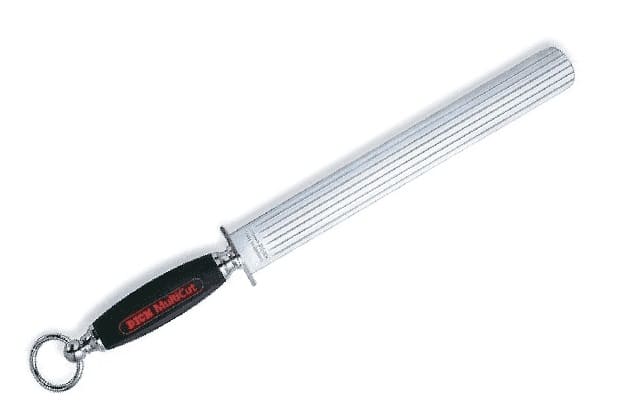
Friedr Dick Multicut Steel

Friedr Dick Multicut Steel

Another entry on this list from the German maker, this honing steel looks unlike anything else out there today. At first glance it’s easy to think this is a misplaced paddle, but in reality it’s a multi-dimensional honing steel.

The flat 11-inch blade has six parallel grooves running through it. Slide your knife down the main body of the steel and it’ll hone like any other rod. However, slide down one of the grooves and you can more precisely remove burrs and imperfections from the blade.

This is far and away the priciest honing steel on the list so you’ll need to determine if it’s worth the investment or if you would be better served using one of the other rods to hone your knives.

Multicut Steel Specs
Weight: 15 ounces
Rod Material: Stainless Steel
Handle Material: Plastic
Country of Origin: Germany
MSRP: $150

Editor’s Note: This article was written by Mike Ableson.

Read More

Factory Drops: New Knives Hitting The Market This Spring

Five knives fit for EDC to the outdoors.

Does the flow of new knives ever cease? Lord, I hope not.

Midspring is as good a time as any for knife companies to drop new models, variations and what have you. And with this round, we have five new blades from three manufacturers worth a gander.

These knives range across the board, from a very collectible outdoor option to a bevy of affordable pocket pals. Even if they don’t exactly tickle your fancy, these blades are worthwhile window-shopping fodder.

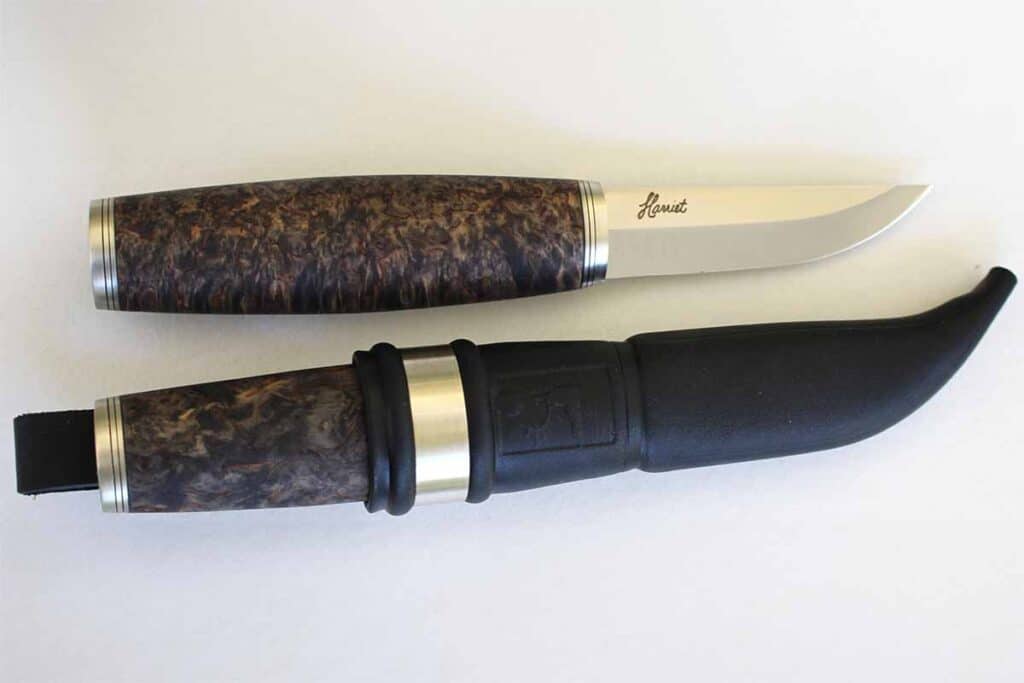
Kellam Knives Harriet70

Kellam Harriet70

Puukos are bread and butter at Kellam but its most recent introduction of this style of belt knife might prove better on the mantlepiece than on the hip.

Dubbed the Harriet70, the classic design is a tribute to Harriet Kellokoski, the wife of Kellam’s headman  Jouni Kellokoski, for her 70th birthday.

There are a lot of nice points on this limited-edition knife, but what jumped out for me immediately was the handle—more exactly its wood.
In this case, it’s arctic curly birch, darkly dyed and lightly oiled for the finish.

The curl pops and plays a beautiful counter to the nickel silver bolster and polished stainless-steel blade.

With 3-inches of wicked-sharp steel to play around with it’d make a solid hunting or fishing option, one dripping with class.

CRKT BOT Deadbolt

CRKT BOT Deadbolt

I can never complain about a design that puts fast deployment at the forefront of its engineering. Hence the BOT Deadbolt hits a sweet spot for me.

Assisted open with IKBS bearings, the action of this flipper doesn’t disappoint with the drop-point blade winking out in the blink of an eye.

Designed by Flavio Ikoma, the knife also features the Brazilian’s innovative lock—the Deadbolt—which relies on two lugs for extremely strong lockup.

This a much larger knife than what the Deadbolt is usually found on, intentionally so, since Ikoma was aiming for an overall robust system from tip to pocket clip.

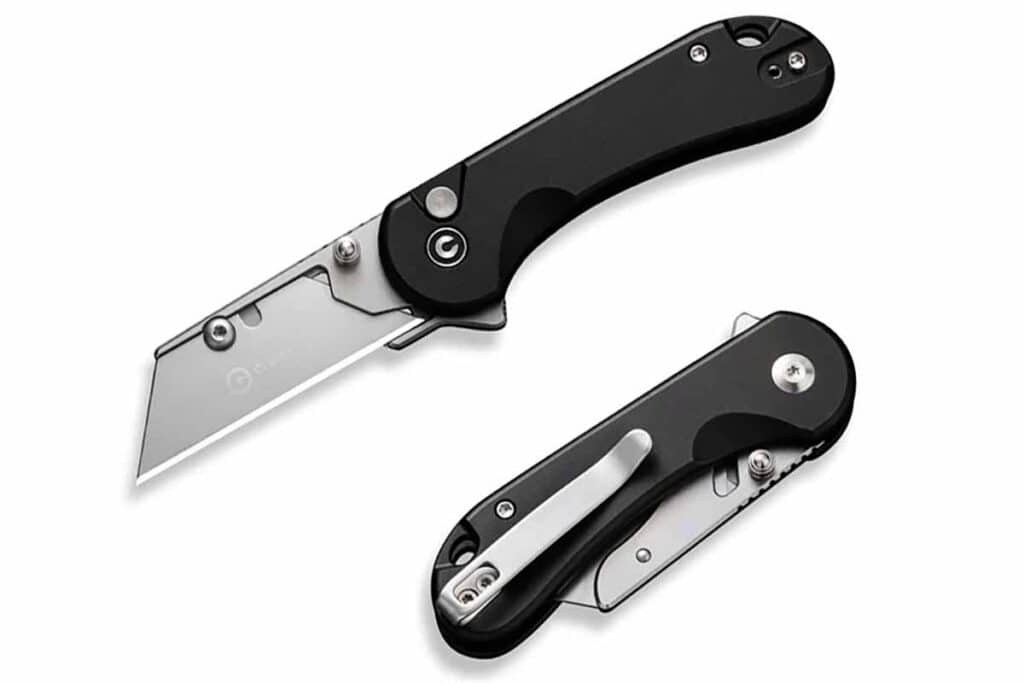
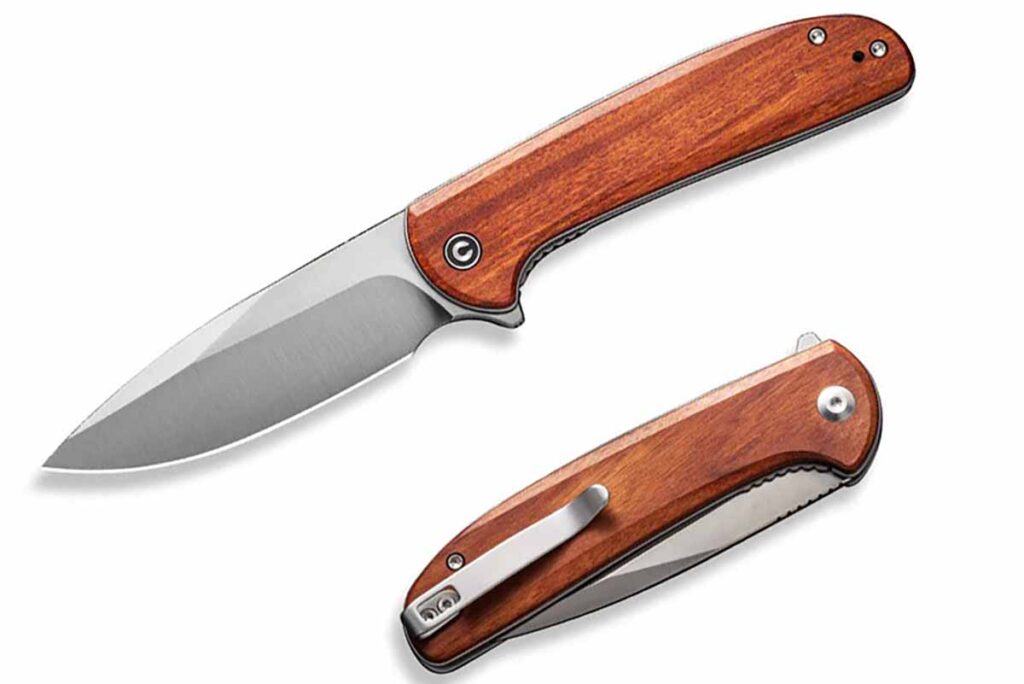
CIVIVI Elementum Utility

CIVIVI Elementum Utility

Quietly, there’s a utility knife war brew in the knife world. I, for one, say it’s about dang time.

An oft-overlooked corner of the blade world is getting some much-needed attention with the latest enhancement coming from juggernaut CIVVI.

Essentially a flipper/folder utility knife, the Elementum Utility offers perhaps the most important aspect of this class of knives—single-hand deployment. And it delivers it not in one, but three ways via kicker, thumb stud and button lock—if you like flicking out your blade.

CIVVI also delivers a bit of panache with the line, offering the replaceable-blade knife in a slew of colorways on its aluminum handle.

CIVIVI Primitrox

CIVIVI Primitrox

Even without looking at the branding, I think most knife aficionados would have sussed out this is a CIVIVI… or WE or Sencut. It just has the look, design points and action of the tirade’s knives and is close to several other options that already exist in the company’s catalog.

The one that comes to my mind is the WE Saakshi.

However, the Primitrox comes in a bit bigger thanks to a larger 3.89-inch drop-point blade.

The extra steel works to the knife’s advantage giving it not only a more robust design but more mass that flings the blade forward when opening.

I have to say, the handle options on the knife are nice as well, particularly the Guibourtia wood scale option, which gives the Primitrox a dignified look.

CIVIVI RS71

CIVIVI RS71

I have to confess this knife intrigues me. Of course, you’d have to have a heart of stone not to get geeked up over a dagger—or dagger-style—blade.

A Rob Saniscalchi design, the RS71 takes the deadly-looking blade style and tames it down for EDC with plenty of style.
But plan on having plenty of pocket space to tote it around, because the CIVIVI borders on behemoth with a full 4-inch blade and 9.31-inch deployment length.

The knife fills the hand, yet the contoured handle makes it very manageable.

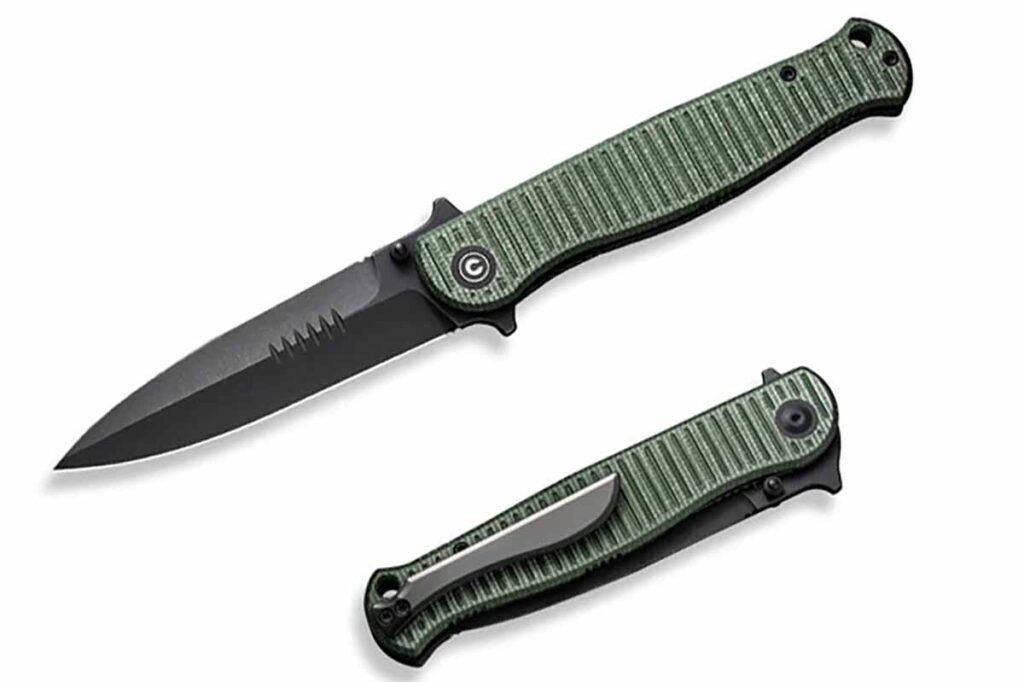
I also like the grooving on the scale, which gives it more purchase in the palm and a downright distinctive look.

Check Out More Knife Drops:

Best Clip-Point Knife: Picking The Sharpest Of This Classic Profile

Clip-point blades are one of the most common profiles you will see throughout custom and production knives. You likely know the style, the familiar drop-off of the blade spine to a curved or linear transition that terminates at the blade tip.

The earliest noted clip-point blade style dates back to the Macedonian era. Flint-knapped stone blades in a clip-point shape were discovered from this time period. Today, clip points are found across a lot of knife genres from tactical to EDC to pocket knives to fixed blades.

Pros Of Clip Points

Due to its highly streamlined and optimized blade tip, the clip point has excellent puncturing capabilities. There is more of a true point that helps to penetrate thicker materials with ease. It is more aerodynamic than a drop point and even a spear point. Think of an arrowhead and how it penetrates, and you will get the idea. Clip points are also favored among the tactical crowd because of this characteristic.

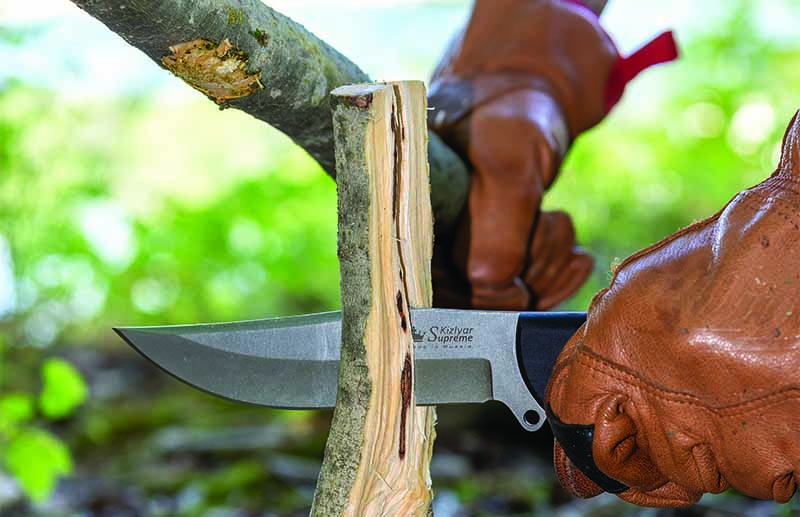
The 5.4-inch clip-point blade of the Kizlyar Supreme Caspian provides plenty of sharpened real estate to process camp tasks. Overall length: 10 inches.

The defined point also makes great scoring cuts because placing pressure on the blade tip results in the tip cutting through aggressively on the first cut. So, this blade shape is also one that is favored among those who use their knives for the trades, where having a good knife is imperative to the work at hand.

Cons Of The Clip Point

Conversely, the blade tip being tapered also results in a blade design that has a weaker tip. You cannot have everything, I guess! With a smaller clip-point blade like those found on pocket knives, refrain from any sort of prying with the tip because it will bend or break off entirely.

Clip-Point Styles

It’s interesting to note that there are different variants of the clip point blade. Two of the most recognizable are the California clip point and Turkish clip point.

California: Exhibits a long taper, which originates almost to the blade tang and gradually and progressively tapers down to the blade tip.

Turkish: It has a long taper as well (but not as dramatic as the California style) but also incorporates a little bit of a blade belly as well. The Turkish clip looks very stylish and eye-catching when done right.

You’ll see other variants like a saber ground clip point with a pronounced swedge, and even some fixed fighters with sharpened clip sections for added bite and powerful penetration.

Jack-Of-All-Trades

For general-purpose use, nothing beats a clip point for its versatility. You cannot go wrong by selecting a knife with this blade shape. Chances are high that if you are reading this, you already own a few knives that have a clip-point shape. If you don’t have any yet, here’s a rundown of 10 clip point blades knives that you should be on the lookout for and add one (or more) to your collection.

Among The Best Clip-Point Fixed Blade Knives Available Now

Kabar USMC Fighting Knife

Kabar USMC Fighting Knife

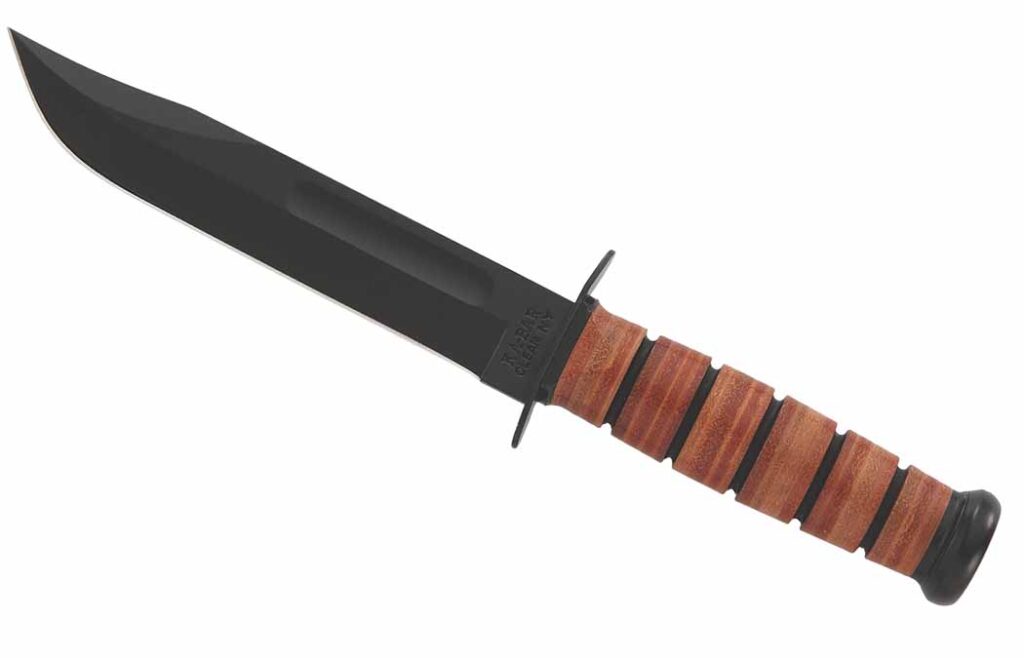
This iconic fixed blade has seen action on battlefields the world over. This knife first saw action during WWII and it still is going to this day.

The 7-inch long blade is made from 1095 carbon steel, making it easy to maintain in the field. It’s fuller adds style and strength to the blade. The iconic stacked leather washer handle is both handsome as well as very practical with its deep grooves that enhance grip and the flat metal pommel which is useful for light hammering and crushing tasks. The double guard prevents your hand from sliding up on the blade. As a bonus, each USMC Fighting Knife comes with a leather sheath.

MSRP: $135 Origin: USA

CRKT Minimalist Bowie

CRKT Minimalist Bowie

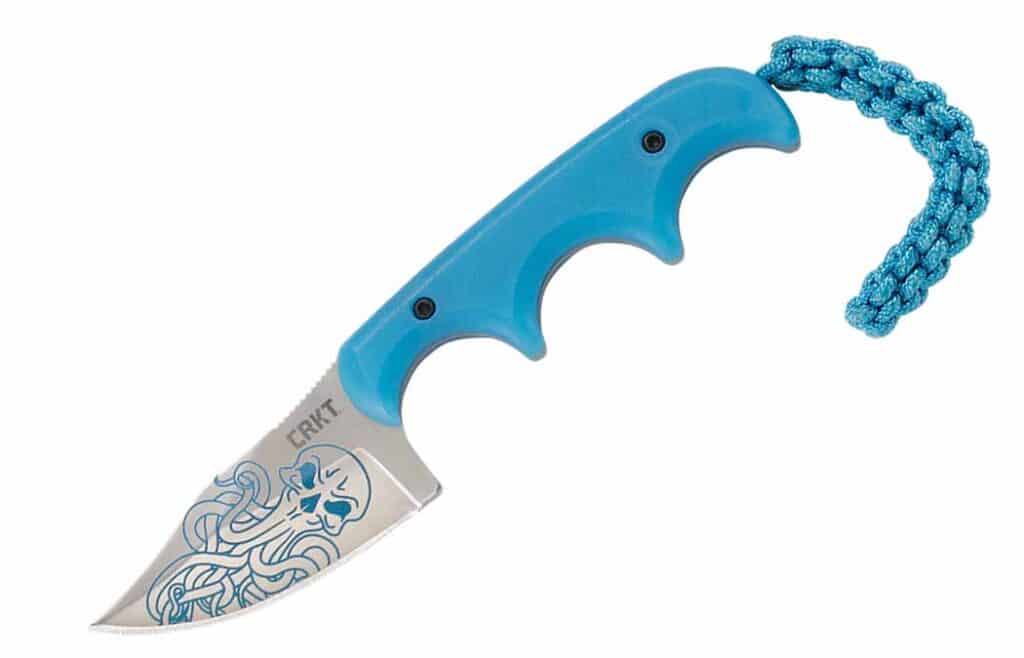
Designed by custom knifemaker Alan Folts, the Minimalist Bowie is one of Folts’ best-selling custom knives. It is available to the masses in the form of the CRKT version which sports a 2.1-inch long Bowie-style clip-point blade, made from 5Cr15MoV stainless steel.

Its prominent swedge adds style with function, permitting the blade easily penetrate most materials. The deep finger grooved handle has resin-infused fiber scales for light weight and strength. The entire knife is super comfortable to hold and it feels like the knife melts in your hand and remains very secure.
It’s a small fixed blade without the bulk.

MSRP: $45 Origin: China

Schrade Uncle Henry Golden Spike

Schrade Uncle Henry Golden Spike

This one is an older design still manufactured today.

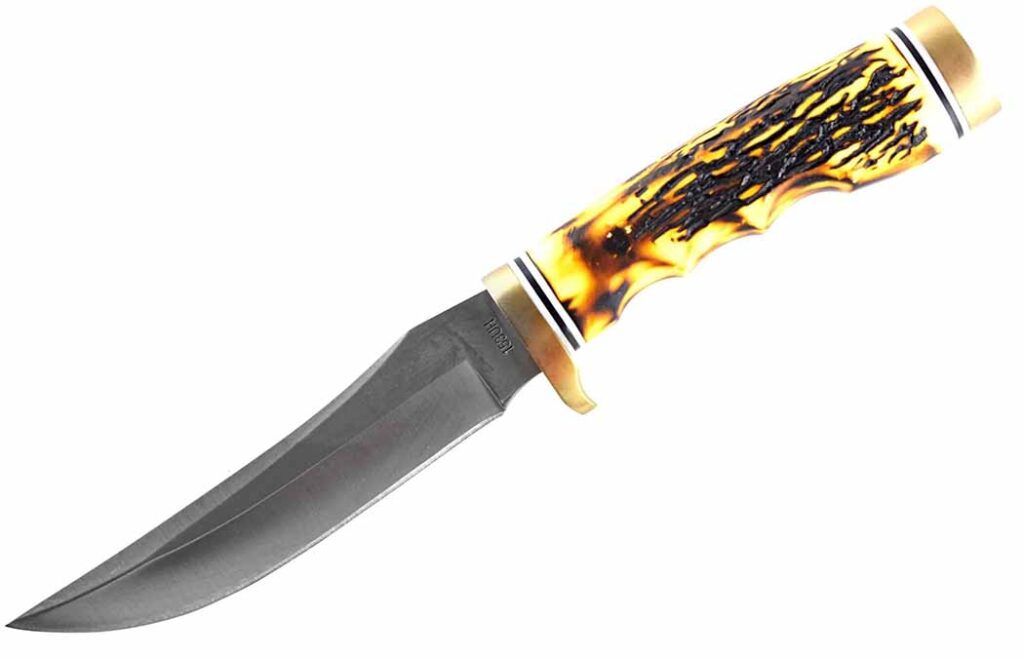
Its 5-inch 7Cr17MoV stainless steel clip point blade is a good example of what we call a California clip point, with its long taper to the blade tip. The handle is faux stag in Delrin, with finger grooves for security and control.

It is capped off at both ends with a brass guard and pommel to offset the overall appearance. This knife will fit the fill of an outdoor knife perfectly and not blow the budget. Each Golden Spike comes shipped with a leather sheath for easy portability.

MSRP: $46 Origin: China.

Cold Steel Trailmaster Bowie

Cold Steel Trailmaster Bowie Clip-Point Knife

This knife commands attention with its sheer size and heavy-duty build.

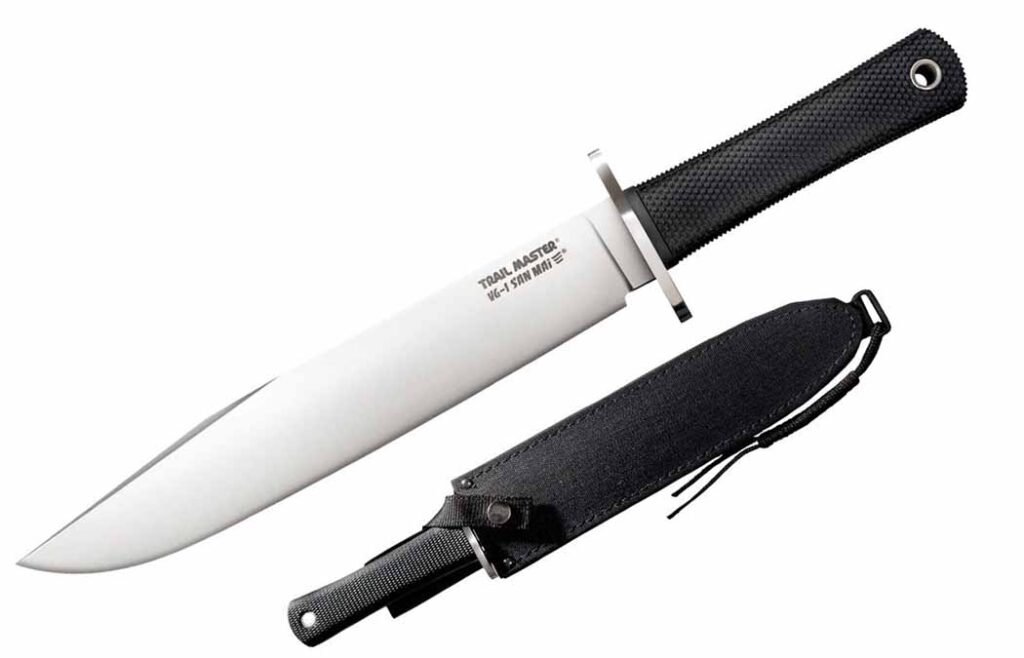
The Trailmaster Bowie is one of Cold Steel’s most recognizable fixed blades. The impressive 9 ½ inch long clip point blade is made of CPM 3V tool steel for toughness and edge holding. The unsharpened swedge gives the knife its attitude, and a full flat grind allows the Trailmaster to be an effective slicer and chopper as well.

The textured Kray-Ex rubber handle helps the Trailmaster remain in your grip and a double guard up front keeps your hand in place during use. The Trailmaster is adept at chopping and other hard-use outdoor tasks for the campsite.

It is the knife to have with you and instills user confidence when tackling tough cutting and chopping chores.

MSRP: $540 Origin: Taiwan

Condor Tool & Knife Little Bowie

Condor Tool & Knife Little Bowie Clip-Point Knife

Little knife…big attitude! That’s exactly what you get with the Condor Tool & Knife Little Bowie.

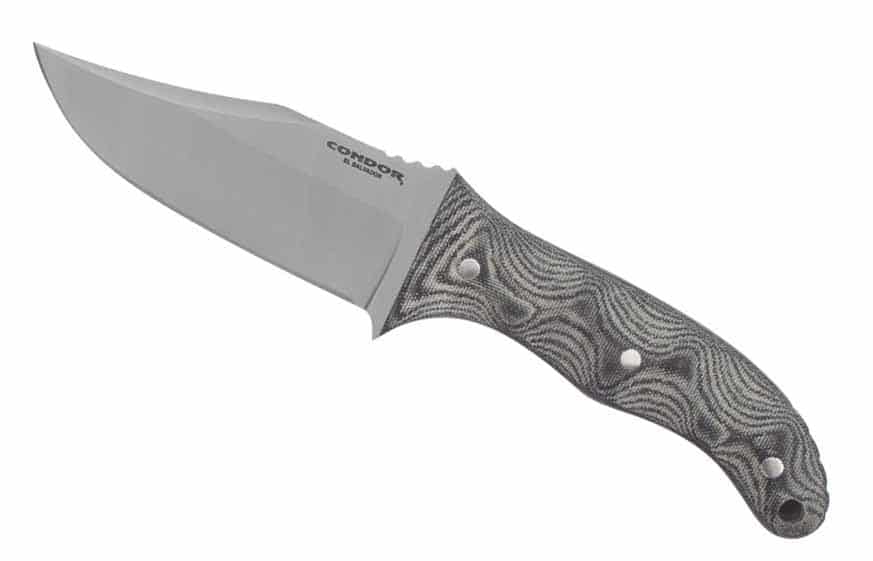
The 4.6-inch long blade makes it compact enough to carry comfortably on the belt. Overall length is just over 9.5 inches, making this knife about as long as some of the higher-end tactical folders when open. 1075 carbon steel was selected for the blade, making this knife both tough and easy to maintain. The bead-blasted finish adds a subdued finish for low reflectivity.

The ergonomic-shaped handle has black Micarta scales for a comfortable, all-weather grip. If you like Bowie fixed blades but don’t want to carry a full-size Bowie on the belt, the Condor Little Bowie fits the bill nicely. Each knife is shipped with a sewn leather belt sheath to keep the knife close at hand.

MSRP: $123 Origin: El Salvador.

Among The Best Clip-Point Folders Available Now

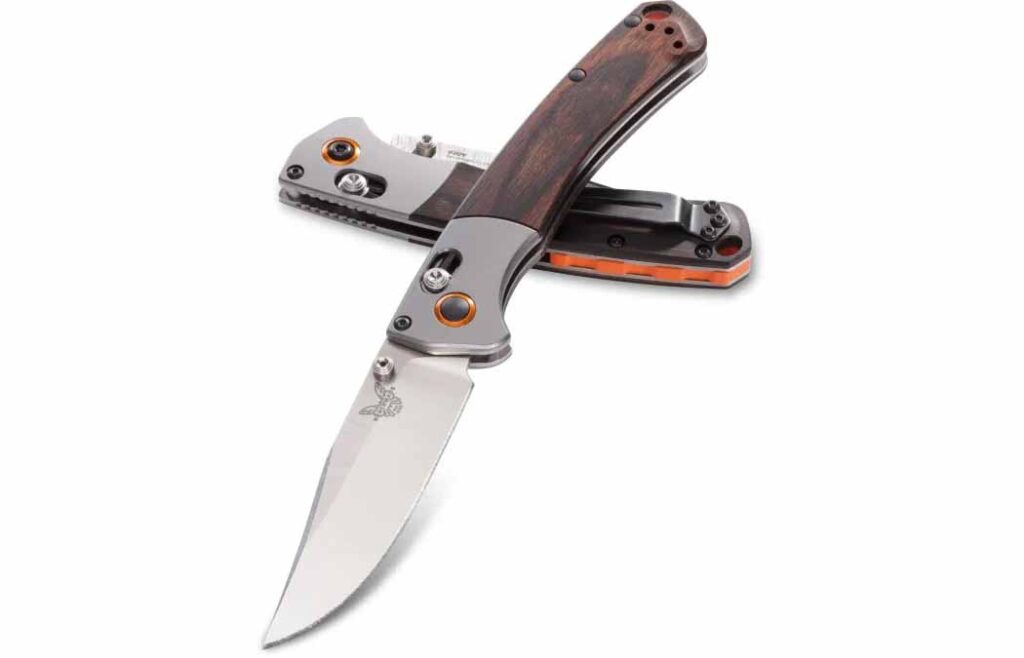
Benchmade Crooked River

Benchmade Crooked River Clip-Point Knife

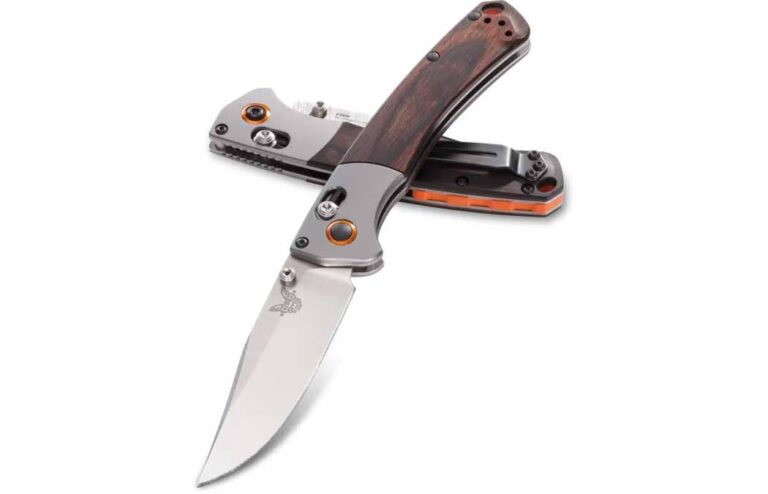
The flagship of their outdoor folding knife line, the Benchmade Crooked River is built tough for the outdoors, with a 4-inch clip point S30V stainless steel blade, anodized aluminum bolsters, and Dymondwood handle scales. The handle has a slight contour to it, making it lay in your grip that much easier.

The knife also features Benchmade’s own Axis Lock crossbar lock system for a safe and secure lockup. The Axis Lock is a Benchmade innovation that allows the blade to rotate smoothly and locks up tight, with very little blade play.

At over 9 inches overall, the Crooked River is a formidable folder that is ready to help tackle your field dressing or camp utility tasks. A steel pocket clip allows for easy carry. A Mini Crooked River is also available, scaling down the Crooked River model to a 3.4-inch blade length, and making it more EDC-friendly.

MSRP: $380 Origin: USA

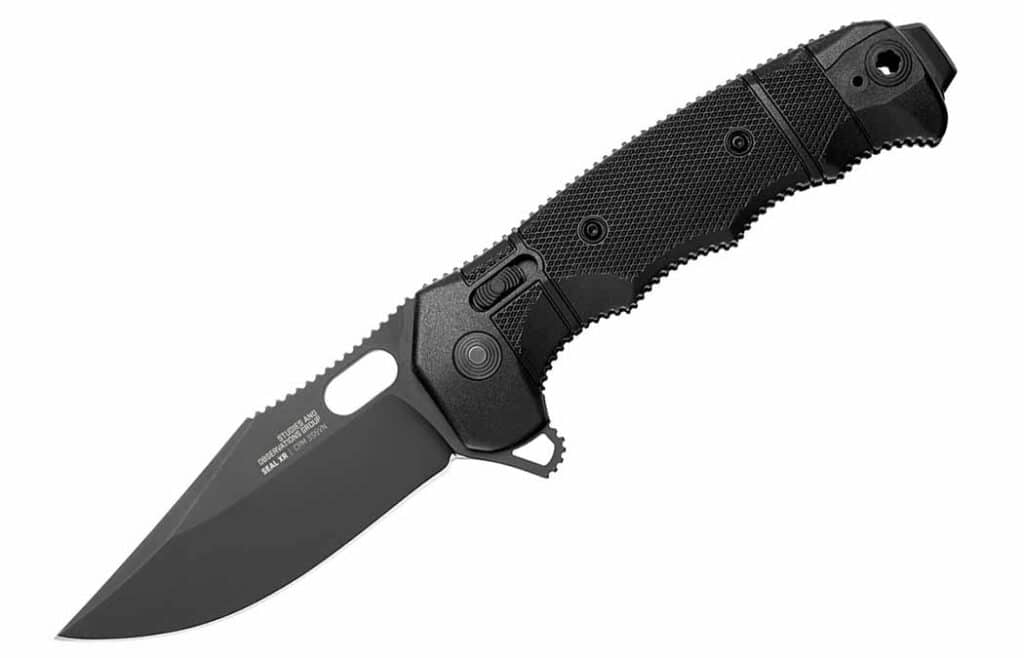
SOG SEAL XR

SOG SEAL XR

You want big and brawny? You got it with the SOG SEAL XR! Its 3.9-inch long Bowie style clip point blade is flat ground from premium CPM S45VN high-performance stainless steel. A blade hole and a flipper tab are present to offer two distinct methods of one-handed opening. The handle design is very similar to that of the SOG SEAL fixed blade. The build of the handle is definitely robust and heavy-duty, there’s weight to this knife that you notice when you pick it up.

Weighing in at a healthy 8.2 ounces, the handle has two steel liners, a steel handle spacer with an integrated extension that can be used as a blunt strike tool, and grooved, textured, and traction notches all around. The handle design is made to keep your hand in place. There is an integrated lower hand guard that prevents your hand from sliding forward. The blade lock is SOG’s own XR crossbar lock that offers true ambidextrous operation.

A beefy, wide steel pocket clip rounds out the SOG SEAL XR package. The clip won’t be sprung for sure, even with rough carry. This is by far an EDC folder due to the size and weight but if you need a knife for rough use and outdoor use, the SOG SEAL XR is it.

MSRP: $224.95 Origin: USA

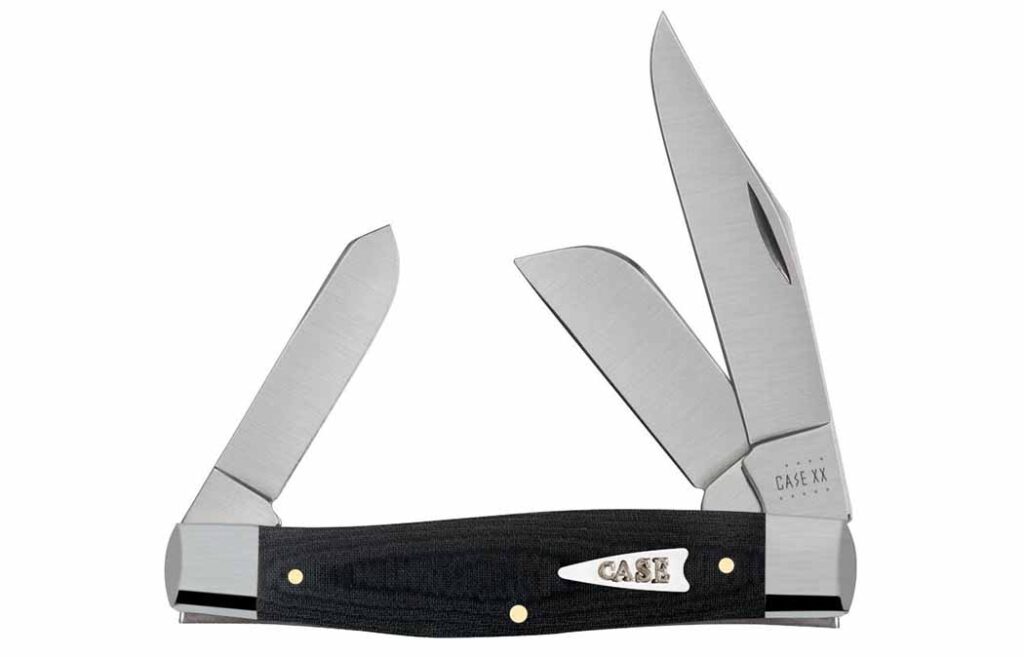
Case Large Stockman 10375

Case Large Stockman 10375

Clip points are found on many different patterns of multi-blade slipjoint knives, such as this Case Large Stockman pattern, model 10375. The main blade is a 3.3-inch long clip point, and two smaller blades – a 2.3-inch long sheepsfoot blade as well as a 2.2-inch spey blade. The blades are ground from Case’s proprietary Tru-Sharp surgical steel, and the handles are of black and green canvas micarta phenolic synthetic for long-lasting durability.

The beauty of knives like these is they are handy to have with you at all times as they sit in the pocket perfectly and they are low profile enough that using them in public won’t raise any eyebrows. These knives are used by everyone from farmers, ranchers, plumbers, electricians, carpenters, warehouse workers, and countless individuals who just want a good solid pocketknife. The main blade does well with opening packages, mail, cutting tape, stripping wire, cutting up cardboard, and any sort of utility or mundane cutting task that tend to pop up in daily life.

The clip point blade is ground fairly thin so it has really good performance characteristics and easily cuts whatever you need to. The Tru Sharp stainless sharpens up quickly and holds an edge fairly well. The stockman pattern is very handy due to the three distinct blade shapes, it’s the perfect pattern to have if you use a pocketknife frequently.

MSRP: $96 (Micarta Handle) Origin: USA

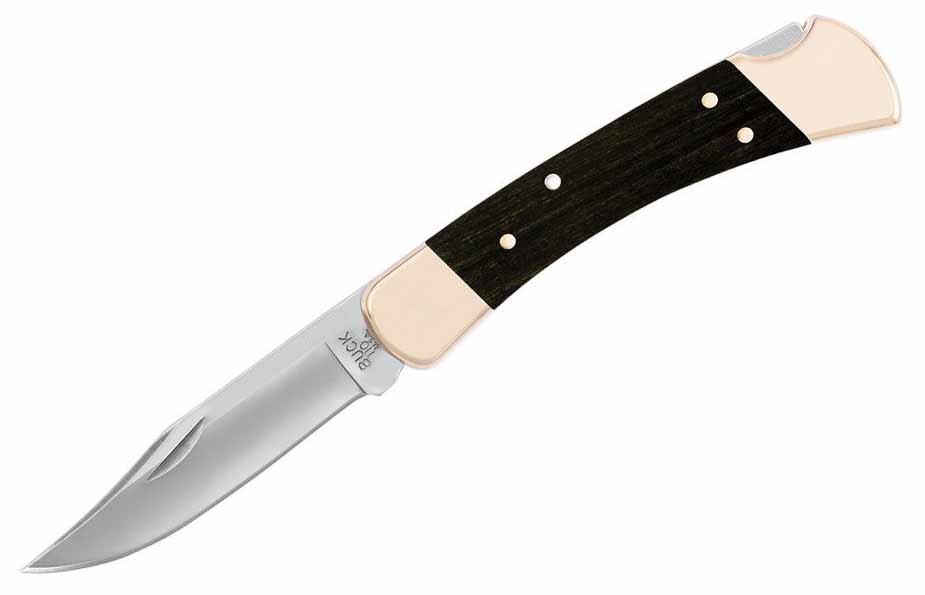
Buck 110 Folding Hunter

Buck 110 Folding Hunter Clip-Point Knife

This knife perhaps is the signature clip-point bladed folder. Its design was innovative back in 1963 when it was released, and its quality and build have withstood the test of time.

Even today, the 110 Folding Hunter is still made and enjoyed by many. The 3.75-inch long blade is of a Bowie shape and is hollow ground from 420HC stainless steel. The handle is of a robust build, with double brass bolsters and a Crelicam ebony, stabilized hardwood handle. The handle definitely has weight to it, and it’s this exact heavy-duty build that has allowed the 110 Folding Hunter to withstand hard use over time, and still hold up beautifully. The lockback design secures the blade in the open position with a satisfying audible click.

The clip-point blade is ideal for field dressing as well as general cutting tasks. The 110 Folding Hunter originally was designed for hunters as an alternative to a fixed-blade hunting knife. But the knife also found favor with those who are in agriculture, the military, law enforcement, and countless knife enthusiasts as well. For all intents and purposes, it was the predecessor to what we know now as the modern tactical folder.

Still produced to this day in the Buck Knives product line, the 110 Folding Hunter has a few variants including a lightweight budget version, a pro-grade modern version with high-end blade steel and handle material, an automatic opening version, as well as countless collector variants available through the years from Buck as well as select Buck Knives retailers as exclusives.

MSRP: $88 (original 110) Origin: USA

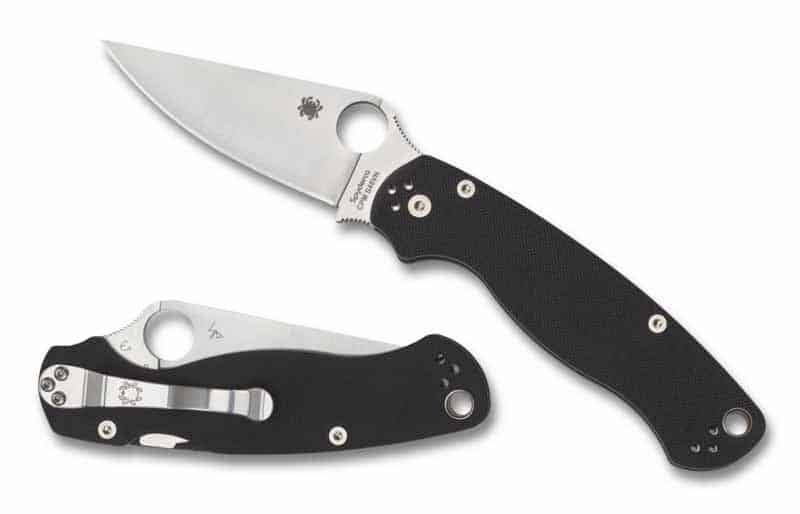
Spyderco C81GP2 Paramilitary 2

Spyderco C81GP2 Paramilitary 2

Spyderco’s Paramilitary 2 folder – better known simply as the Para2 – is a downsized version of the company’s popular C36 Military folder.

The Para2 offers the same cutting prowess of the full-size Military model with its full flat grind clip-point blade but in a more compact, pocket-friendlier form factor. The Para2’s blade measures 3.4 inches long and is ground out of premium CPM S45VN blade steel that is known for its enhanced edge-holding capabilities. The handle is textured black G-10 and mimics the ergonomics found on the C36 folder that make this one of the most comfortable and handy midsize folding knives on the market.

With an overall length of 8.2 inches, the Para2 is still large enough to tackle sizable cutting tasks. The blade is secured open by Spyderco’s own Compression Lock system, which permits easy one-hand opening and closing. It also allows the blade to have such smooth, silky-like action. The Para2 is a slender knife and carries well in the pocket.

The large blade hole allows for easy one-hand opening with either hand, even while wearing work gloves.

Performance-wise, this is one of the best in high-end folders as the flat grind clip-point blade sails through thick and tough materials easily. Spyderco engineers its blades to be some of the most efficient cutting tools on that market by paying attention to blade shape and blade grinds and optimizing both to create a cutting tool that is unmatched in both performance and value.

MSRP: $265 Orgin: USA.

Check Out More Buyer’s Guides:

Sarge Knives TK Retro Review: Throwback Bushcraft

Sarge Knives TK Retro has throwback looks, but modern performance.

The TK Retro from Sarge Knives reminds me of my first fixed blade.

The blade was pitted and the leather handle was cracking. Still, the knife field dressed many squirrel, rabbit and game birds throughout my childhood. It was an excellent camper’s or outdoorsman’s knife.

As for the TK Retro, like my first fixed blade, the stacked-leather handle still gives my hand a warm feel. It has a 440C stainless steel blade to make its good looks last even longer. However, how does it cut?

TK Retro Sharpness Test

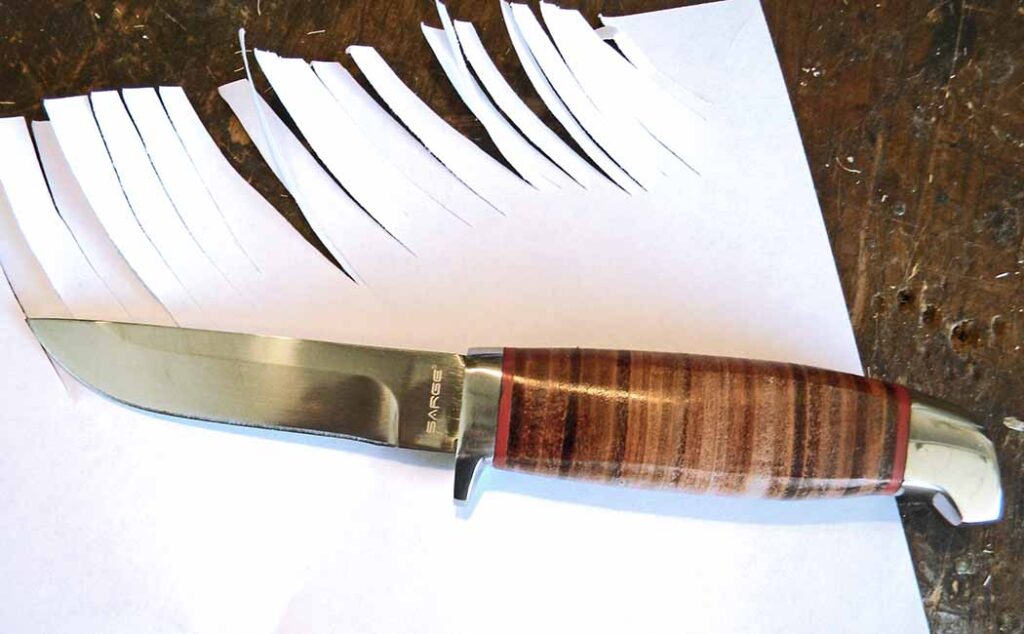
Retro cutting paper
Using the knife’s weight, the author employed push cuts in the stationery. There were no “bad starts,” just smooth slicing.

The first test medium was 20-pound bond copy paper. The TK Retro started slicing and made nice, clean cuts in the stationery. Using the knife’s weight, I employed push cuts. There were no “bad starts,” just smooth slicing.

TK Retro Light-Duty Cuting

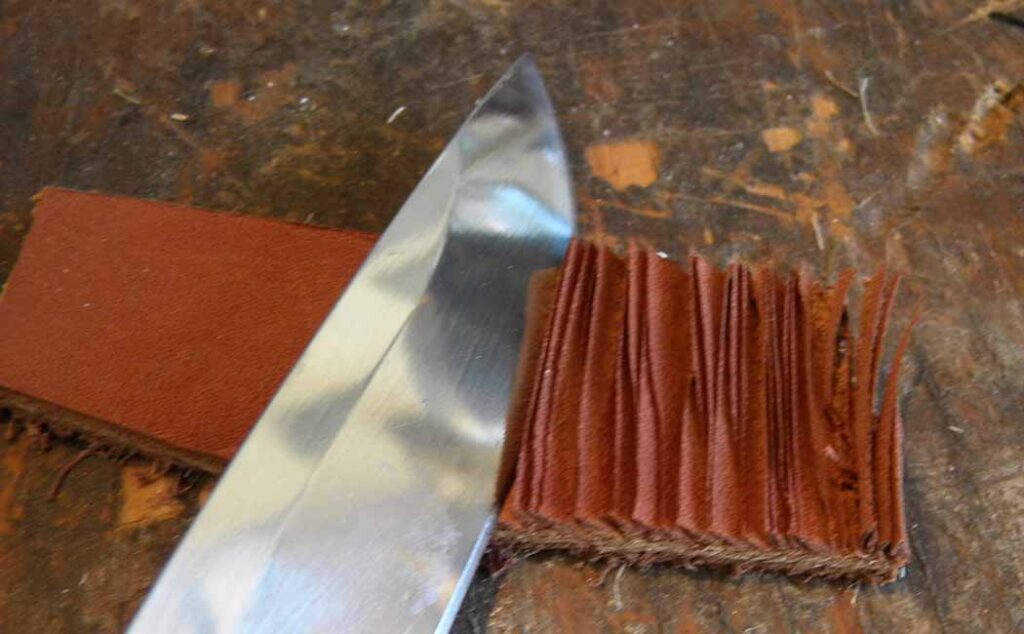
TK Retro vs leather
The blade audibly crunched the leather with each skive and made it easy to control the width of slices.

The TK Retro bit deep and smooth [into drywall], with minimal bending of the cut pieces. I could feel the cardboard’s layers with each cut. Edge performance was nice and aggressive. The handle provides a very secure grip.

Leather skiving followed. The blade audibly crunched the leather with each cut and made it easy to control the width of slices.

Heavy-Duty Cutting With Sarge’s Fixed Blade

Firesticks

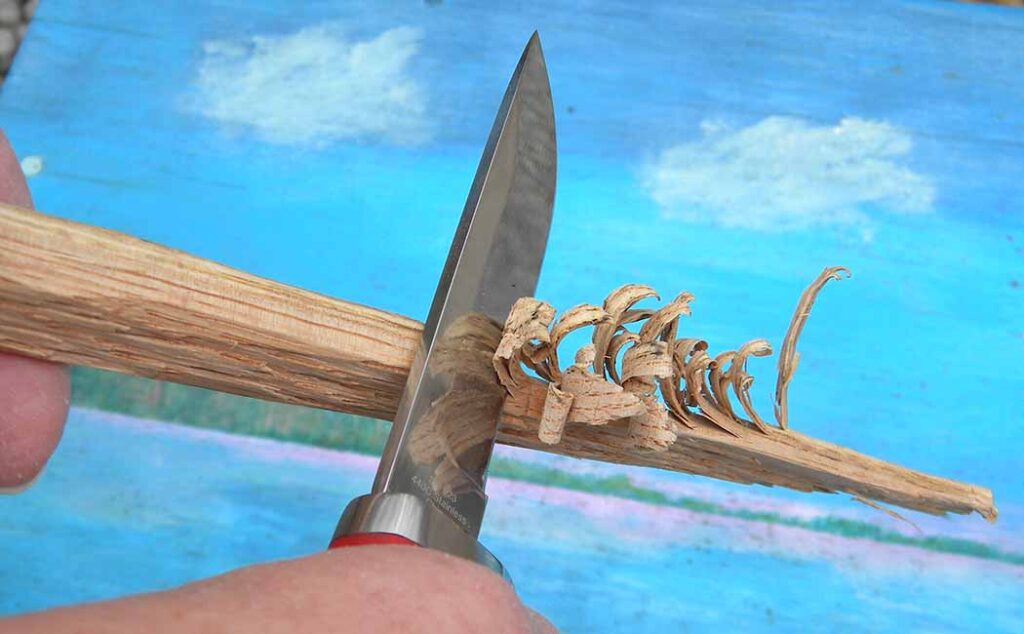
TK Retro firesticks
Melissa did a great job whittling a fuzz stick with the TK Retro over her painted bench.

While camping, I was splitting firewood for the weekend. My wife, Melissa, wanted to start the fire so I showed her how to make fire sticks. She took to whittling very quickly and did four of the sticks to aid in her fire starting. She used the TK Retro to make some very nice curlicues. Before I knew it she had a beautiful fire going—excellent job on her part! I was surprised to see her whittling over her bench that she had painted. She seemed to feel very confident using the little fixed blade.

Splitting Wood

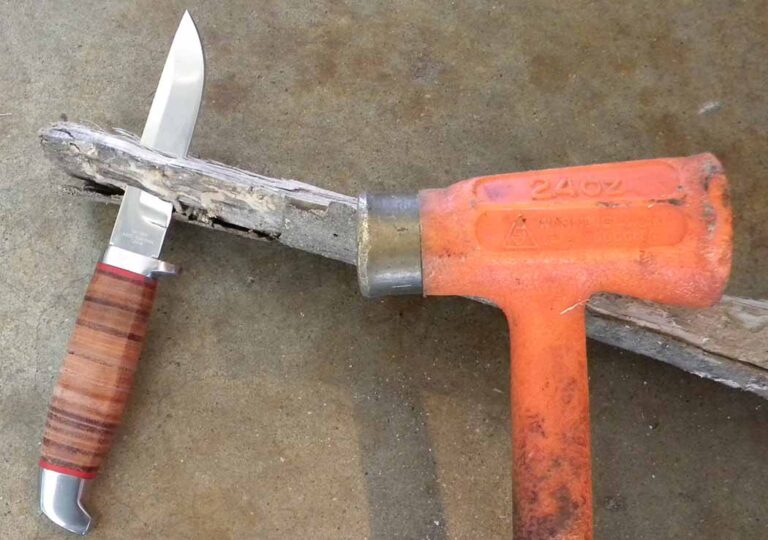
I had some dry hackberry wood to split for kindling. A dead blow hammer and the TK Retro made short work of the task. I didn’t see or feel any edge/knife damage while batonning the edge through the wood. The guard acted like a guide for my hold hand, keeping the wood away from my knuckles. The leather handle absorbed the vibrations perfectly.

Vs Rope

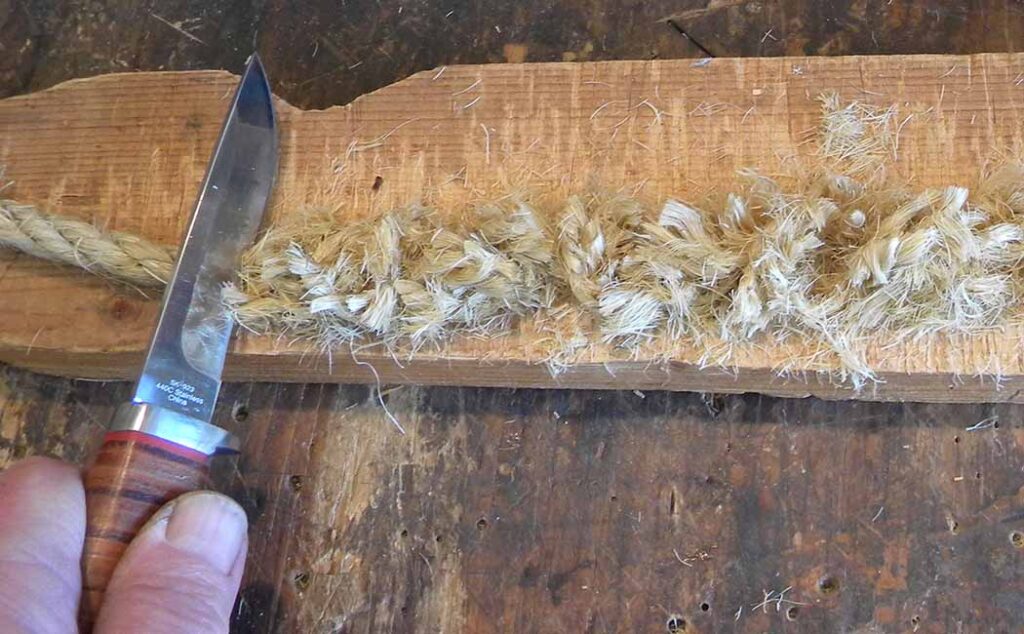
TK Retro cuts rope
The fixed blade made 82 crunching cuts in the half-inch sisal rope before the edge started to slide.

On the half-inch sisal rope, the TK Retro crunched its way to 82 clean cuts before the edge started to slide. I did find that the guard had a sharp edge that needed softening a bit. It would create a hot spot on your hand after a while. It was an easy fix with some sandpaper.

Chopping Antlers

Chopping antler
After 20 hard whacks on the antler the edge showed nary a chip, a sign of outstanding heat treating.

The last test for the edge consisted of a series of chops into a whitetail deer antler. After 20 hard whacks, I expected to see some minor edge chipping but there was none. The edge was as sharp as when I started. Sarge Knives nailed the heat treating.

Changes

The guard and buttcap need to be softened a tad. They will bite you after a period of hard use.

Final Cut

The TK Retro is a very nice medium-use knife great for game or camping.

Sarge Knives TK Retro Specs
Blade length: 3.5 inches
Blade steel: 440C stainless
Blade finish: Mirror polish
Handle: Stacked leather
Fittings: Stainless steel
Construction: Full tang
Weight: 4 ounces
Overall length: 7 3/8 inches
Sheath: Brown leather pouch w/snap and belt loop
Weight w/sheath: 5 ounces
MSRP: $53.95

Read More Knife Reviews:

Advertisement

Must Read Articles

Read this before you make a knife

Knifemaking 101 – Read This Before You Make a Knife

  by Wayne Goddard My experience has taught me that there's nothing like digging in and getting started. I've often said the hardest part of the...
how to forge damascus steel

How to Forge Damascus

Advertisement
Advertisement