Featured Knives

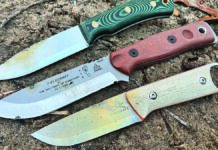
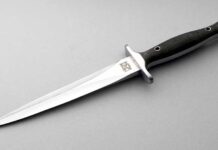
Here are BLADE Magazine’s Featured Knives of the Week. Browse through these articles to find the best knives available from both custom knifemakers and factory knives.

Click here to browse through our list of Featured Knifemakers.

Knifemaking – – Knife Collecting – – Tactical Knives – – Survival Knives

Best Bushcraft Knife: When Steel Meets The Woods (2023)

Be it chopping wood or prepping a meal, a solid bushcraft knife is an essential piece of backwoods kit.

Bushcraft is a specialized skill set that ensures survival in the wilderness using foraging, hunting, fishing, shelter construction, and firecraft, all accomplished with minimal tools. The primary bushcraft implement is a fixed blade employed not only for food prep but the other mentioned skills, too. 

As a result, such a fixed blade must be a tough tool capable of more than just standard cutting tasks, including whittling, carving, splitting wood or, in conjunction with a ferrocerium rod, starting a campfire.

What Defines A Bushcraft Knife?

Five basic chores of outdoor survival can be performed with a bushcraft knife. The tasks are elemental and a must-learn if you want to use a bushcraft knife to maximum effect.

  • Chopping
  • Batoning
  • Carving
  • Fire Starting
  • Food Prep

Chopping

Whereas a small hatchet, ax, or even a machete are better suited for the task, a bushcraft knife can turn the trick. Grip the handle as far back and as securely as you can, and chop as you would with a larger knife, ax, hatchet or machete.

Batoning

Basically, to baton a piece of kindling is to split it. Take a rather large/thick piece of wood to act as a baton/hammer in one hand, lay the blade edge on the end of the secured piece of kindling with the other, and, using firm, deliberate blows, pound the blade lengthwise through the kindling, effectively splitting it.

Again, an ax, hatchet or even a folding saw would be better, but if you lack any of these, your bushcraft knife is capable of handling such a task.

Carving

One of the most important bushcraft skills is to carve bowls, spoons, or even whittling sticks to roast hot dogs. Chopping and batoning are tasks using brute force; carving is more finesse and control.

This can be accomplished by using the knife and a ferrocerium (aka ferro) rod. The job is best done by using a knife that has a blade with a 90-degree spine as opposed to a chamfered or radiused one.

Grasp the knife firmly, cutting edge up. Lay the corner of the blade spine on the ferro rod and with one swift, downward motion, as if you are whittling o a piece of the rod, move the blade down it. Doing so will result in a white hot shower of sparks. The sparks can ignite tinder to start a fire.

The key to fire starting is always select a bushcraft knife with a 90-degree spine. If it lacks such a spine, you can always use the edge but this will dull the one spot on the edge faster than standard cutting will.

Food Prep

And, obviously, a bushcraft blade can also adeptly handle any cutting task related to food or campsite prep. Bushcraft knives prove a knife need not have sheer size and weight to be effective. It’s all in smart design of the blade and handle.

Our Picks For Best Bushcraft Knife

Boker Magnum Life Knife

Boker-A1-knive
Boker Magnum Life Knife

The most affordable bushcraft model of the test bunch, the Boker Magnum Life Knife has a 3.9-inch blade of 440A stainless steel in a modified clip-point pattern. Built rugged for the outdoors, the knife comes with a sturdy Kydex sheath for safe carry.

At 7.87 inches overall, the Life Knife sports a handle of machined black G-10 in a coarse crosshatched checkering pattern for enhanced hand traction regardless of conditions. The grooves in the crosshatching work are similar to those of a radial car tire by displacing moisture. Red fiber liners under the G-10 add a nice pop of color to an otherwise dark knife. 

The handle includes integral forward and rear guards to prevent your hand from sliding in either direction. The three large traction notches in the thumb rest area of the blade spine also help improve grip. The handle felt a bit skinny in my hand, so I would prefer a slightly wider one. 

Conversely, the Life Knife might be a great choice for those with smaller paws. The 3.9-inch blade is a great size for belt carry. The rather compact nature allows it to carry comfortably, with the length neither too long nor too short. The short blade tip accomplishes precise cutting chores easily.

The sheath is a simple fold-over design of Kydex with a Boker Plus clip for belt carry. The sheath features quality construction, retains the knife well, and is simple yet effective. 

MSRP: $59.95

Condor Tool & Knife Bushcraft Bliss

Condor Tool & Knife Bushcraft Bliss

Composed of high-quality materials, the Bushcraft Bliss from Condor Tool & Knife boasts a 5-inch blade with a flat grind. The 1075 carbon steel can be rather easy to sharpen in the field and still retains an edge well. The modified clip point shape offers a generous belly for slicing and a defined point. A swedge gives the blade a bit of attitude, and bead-blasted flats and satin-finished bevels provide a two-tone finish that’s very eye-catching.

The ergonomic handle of red linen Micarta® is an excellent choice thanks to its being largely impervious to temperature and humidity changes. Three thong tubes fasten the scales to the full tang. Three large notches at the spine permit non-slip thumb placement so you can bear down on the blade. With its rounded edges, choil, and scale contouring, the handle felt as if it were molded to my hand.

The sheath is Condor’s hybrid molded Kydex and leather rig, an unusual material combo. The belt loop and securement strap are leather. The leather belt loop allows the sheath to move somewhat, unlike the more rigid molded clamshell fastener—which doesn’t—and makes it easier to sit down while wearing it. A thumb break molded into the top of the sheath assists in extracting the blade, which is a nice extra touch.

I found the handle to be very comfortable. A distinctive trait is the prominently elevated traction notches. They almost look like part of a gear. The feature ensures your thumb isn’t going anywhere. 

The 5-inch blade makes baton work easy, as well as food prep tasks. Out of the box, the 1075 carbon steel was plenty sharp and ready for use. The Bushcraft Bliss is a consistent performer. 

MSRP: $118

TOPS Knives Brakimo

TOPS Knives Brakimo Bushcraft Knife
TOPS Knives Brakimo

Joe Flowers runs Bushcraft Global, where he instructs students on basic and advanced survival skills while in the Amazon jungle. A notable authority in the field, he also designs knives, including the Brakimo from TOPS Knives, a tool that can carve, cut, split, and perform just about any task involving outdoor survival.  

The 5.25-inch blade of 1095 carbon steel is a drop-point pattern with a Scandi grind. It has a generous belly for easy slicing and a defined point for delicate work.

The green Micarta handle is ideal for bushcraft given its stability and minimal weight. It is matte-finished for a nice grip quality without being overly aggressive. The integral front and rear guards provide a measure of safety that locks the knife in the hand. The divot in the handle is for use with a bow drill for making fire. 

If there is a solid all-around performer of the test bunch, it’s the Brakimo. I like how it easily handles heavy work like chopping and baton work, as well as such lighter work as whittling and food prep. You can choke up on the handle for tasks requiring more control where a slicing or rocking motion is used. Grip the handle more toward the rear and feel how the balance point shifts to a blade-heavy profile for easy, effective chopping. 

The Scandi grind acts as a wedge and splits the wood in a snap, almost as if no effort were invested—very impressive performance! For one knife that does it all, the Brakimo is it. In-hand it feels substantial and capable of taking on serious work. 

MSRP: $225

Spyderco FB42G Zoomer

Spyderco FB42G Zoomer

Designed by Tony Zoomer, an outdoor enthusiast and survival skills instructor from the Netherlands comes the Spyderco FB42G Zoomer. Made of high-end materials, the knife is expertly configured and has a list of features that quite possibly makes it the most comfortable bushcraft knife you’ll use.

The 5-inch blade in a drop-point pattern is premium CPM 20CV stainless steel for enhanced edge retention. The blade has an ample belly for slicing and whittling/carving tasks and a defined point for close-up detail work. The full flat grind transitions to a convex edge, which is durable and extremely sharp.

The black G-10 scales are machined where they join the tang, so the handle is completely rounded in profile. This translates into a super comfortable grip that eliminates hot spots. An integrated rest at the blade spine permits placement of your thumb for additional pressure on cuts and for added control. The full tang extends a little beyond the end of the handle for use as a light-duty hammer.

The sheath is a custom-designed, well made leather drop-leg-style rig with a free-floating belt loop. It has an exterior storage pouch with a snap closure. The pouch can carry your choice of survival supplies, a large folding knife, a multi-tool, etc. 

The free-floating belt loop allows the knife to swing freely as you move or pivot out of the way when you are seated. It also can temporarily break away in the event the sheath gets snagged by brush in the woods. 

The Zoomer is a solid performer. The heavily contoured G-10 handle feels mighty good in the hand. The full flat grind allows the blade to sail through whatever you cut.

While the handle is comfortable, it felt big in my hand. Those with smaller hands might not take to it easily. While using high-performance CPM 20CV stainless steel is not typically a bushcraft thing, with some regular stropping and honing, you can prolong the edge and skip sharpening during your trip.

MSRP: $600

Fallkniven S1 Pro Forest Knife

Fallkniven survival knife review
The Fallkniven S1 Pro Forest did fine work—as on this fish spear—with full control. (All images by Ash Ayres and Mary Lou Ayres)

Fallkniven’s S1 Pro Forest Knife is the evolutionary descendant of the company’s S1, which has been in production for over 20 years. The Pro version is made with better steel than the original S1, is more sophisticated and a better performer.

The S1 Pro simply does everything well and with no fuss. Its convex grind does not bind in deep cuts, goes through tough, knotty wood with little effort, peels bark, makes feather sticks, does fine work as on fish spear points with full control, and slices duck through skin, meat and bone like Luke Skywalker’s lightsaber. It cut through 2-inch-thick saplings in about a minute with little effort. The non-slip grip is comfortable and does not, in fact, slip.

Compact enough to always have on—or with a custom sheath, inside—your belt, the S1 Pro is as close as I’ve seen to the mythical “one knife to do it all.”

MSRP: $466

Ontario Bushcraft Woodsman

Woodsman Bushcraft Knife
Bushcrafting chopping The geometry of the Bushcraft Woodsman’s blade, combined with the overall design, good steel and heat treat, make for an exceptional big knife.

Veteran bladesmith Dan Maragni designed this issue’s cover knife, the Ontario Bushcraft Woodsman. The big blade shows his expertise and lineage as an accomplished smith, and is far more sophisticated than a first glance might suggest.

The distal taper gives it excellent balance, and, combined with the taper from spine to edge, great chopping ability.

We slashed through 2-inch-thick saplings with a single swipe, an important point in the calories-expended-vs.-results-achieved equation, and when night is falling and you need to get a fire going.

The blade’s geometry, combined with the overall design, good steel and heat treat, make for an exceptional big knife. Again referencing Tolkien, Ash called it the “Goblin Cleaver.”

Not as handy for fine work as the smaller knives, Dan’s design is a reassuring blade to have by your side in deep woods when the jackals are howling—or the Orcs.

MSRP: $137

Larry Roberts Signature Edition Gen6 Scandi (L.T. Wright Handcrafted Knife Co.)

Scandi grind bushcraft knife
Due to its scandi grind, which tends to hang up in deep cuts, an average of three minutes was required to get through 2-inch-thick saplings with the Gen6 Scandi.

The Larry Roberts Signature Edition Gen6 Scandi from L.T. Wright Handcrafted Knife Co. performs like a “Mora on steroids,” according to Ash. I agree.

If you’re familiar with the scandi grind, the only surprise with the LRSEG6S is that it takes scandi-ground blades to a higher level of performance. It excels at controlled shallow cuts, holds an edge well, and is strong enough that when batonning you can twist the blade with no worries and quickly pop the batonned material apart.

I like the longer 6-inch blade much better than the popular 4-inch pattern because you can get more stuff done faster and at no penalty to doing fine work. Due to the scandi grind, which tends to hang up in deep cuts, an average of three minutes was required to get through 2-inch-thick saplings.

Comfortable in the hand, it is also beautifully made and finished. A good all-around performer, it is a classic belt knife for the woods.

MSRP: $253

Editor’s Note: Dexter Ewing and James Ayres contributed to this post.

Read More

The Gerber Mark II: A Historic Fighting Knife

The Gerber Mark II Is One Of The Most Famous Combat Knives Ever Issued To The American Military. First Introduced In 1966, It Still Endures Today.

When it comes to military knives, few are as universally beloved as the Gerber Mark II. First issued for use by U.S. service personnel in the Vietnam War in 1966, the knife has stayed in production since with the exception of 2000-2008.

The Mark II was successful due largely to its well-designed blade and lightweight. The blade is 6.5 inches long, and contemporary versions of it are made from 420 HC stainless steel. The handle is made from die-cast aluminum which helps keep the weight to just eight ounces. 

What Makes The Gerber Mark II Special?

The Mark II stands out thanks to its blade design. There are many combat knives and bayonets, such as the M7 and M9, that are modeled after the classic dagger or spear point. The Mark II also has a double-edged spear point blade but with one massive exception: the wasp waist.

The wasp-waisted blade has a narrower section of steel, akin to how a wasp’s body narrows at its waist. On the Mark II, this narrower section comes toward the guard, and the edge on both sides has small serrations. Not the deepest you’ll find on a knife, the serrations are still there to cut.

Very few modern combat knives have the wasp waist (other famous American models like the M7, USMC fighting utility knife, and M9 don’t have it), and it is the visual signature of the Mark II.

Can I Buy A Gerber Mark II Today?

Yes, you can, but it’s not so straightforward. Gerber is, of course, still in business and thriving, but go to its website and you won’t find a Mark II for sale. There are other serrated tactical knives but no Mark II.

To purchase a Mark II today you’ll have to either go to sites like ebay or retailers such as Knifecenter, Smoky Mountain Knife Works, etc. Other makers offer knives similar to the Mark II, but if you want the real deal you’ll have to dig a little bit to purchase one yourself. 

However, the ones of recent make that are available are reasonably priced at right around $100-$115.

Read More

Best Karambits: Top Ferocious Southeast Asian Fighters (2023)

The Karambit Is A Historic Utility and Combat Knife From Asia That Has Grown In Popularity Around The World In Recent Decades.

The karambit looks unlike any other knife. The short, swooping curve of the blade dates back nearly a millennium in Indonesia and throughout Southeast Asia. First used mainly as a tool for farming and planting rice, the karambit evolved over time into a combat knife. The curve became more pronounced and became a main weapon in pencak silat, an indigenous Indonesian martial art, and Filipino martial arts.

Legend goes that as the knife became more combat-oriented, its shape was inspired by a tiger’s claw. The knife’s tight curve and finger ring allow it to stay securely in the hand in close-quarters combat.

Why Should I Use A Karambit?

The karambit today is very much a self-defense tool. Yes, it can still be used for outdoor tasks, but there are more practical blades available for such purposes. The karambit is a strong, durable combat knife used by law enforcement and militaries around the world. 

If you’re looking for a high-quality knife to keep on your person as protection, you can’t get much better than the karambit. The finger ring provides a natural, secure traditional grip or reverse grip to generate more power with each swing. 

The folks at Emerson Knives, Inc., have made a great video showing how to use a karambit.

Do I Need A Karambit?

Simply put: no. A karambit is a refined self-defense tool. If you live a life where life-and-death close-quarters combat is an extremely minute possibility then you can probably pass on a karambit.

Additionally, the sharp curve of the blade means it can be difficult to handle without experience or training, even with the finger ring. If it’s uncomfortable to use then don’t use it.

Best Karambits

Emerson Combat Karambit

Karambit Emerson

The Combat Karambit folder by Emerson Knives, Inc., was very well received when introduced years ago. It subsequently spawned a larger version called the Super Karambit. It shares the same award-winning features of its forerunner but in a larger, more impressive format. The 3-inch blade is 154CM stainless steel and opens by either the patented Emerson Wave or an oval blade hole. Handle material is G-10 reinforced by dual titanium liners for rigidity. The handle flows seamlessly into the finger ring in the butt. There are a lot of graceful curves on this knife. It’s a feast to behold. 

The handle fits my hand extremely well, instilling a high sense of security and user confidence. The Super Karambit carries nicely in a pocket though its presence is a constant reminder of just how big it is. A reverse grip feels exactly as secure as a forward one. Your hand isn’t moving once it’s wrapped around this handle!

To deploy the blade using the Wave remote pocket opener, hook your finger through the finger ring, pull the handle from your pocket and let the Wave hook engage the seam of your pants pocket. Keep pulling and as the handle comes free from the pocket, the hook grabs the seam and deploys the blade open and locked. To my knowledge, this results in faster blade deployment than any other karambit.

One thing I don’t care for is the overly aggressive texturing of the G-10. I like grippy texture but this one is downright abrasive on pants fabric. It might be a good idea to take a small piece of cardboard and rub it over the handle texture to smooth it out somewhat. The knife is offered exclusively in a stonewashed blade finish and a black G-10 handle. Country of origin: USA. Closed length: 5 inches.

MSRP: $325  

TOPS Devil’s Claw 2

TOPS Devil’s Claw 2

The Devil’s Claw 2 by TOPS Knives is a mid-sized fixed blade designed for personal protection. It’s built on the same platform as the company’s original Devil’s Claw but with an extended handle to accommodate a full grip as well as the traditional ring at the end. The 3-inch hawkbill blade is 1095 carbon steel in the company’s Black Traction Coating to help protect against corrosion, as well as provide a low profile. Overall length: 5.75 inches. Five large traction notches machined into the rest portion of the blade spine provide a non-slip grip for the thumb. The handle is blue and black G-10 with red fiber spacers at the tang—very eye catching! The sheath is molded Kydex with loops to carry horizontally on a belt. 

The DC2 is also a well-disguised utility knife. It feels agile and capable in hand. If you have jobs that require long, straight cuts, the DC2 is the answer. The angle of the blade makes it easy to use the tip to cut and score, while hiding the knife in a forward grip. The finger ring helps seat your hand during such tasks. The traction notches on the thumb rest aid with precise tasks such as wire stripping, whittling or any task that requires downward pressure on the blade. 

MSRP: $165

CRKT Du Hoc

CRKT Du Hoc

Sometimes bigger really is better, and that might be the case with the CRKT Du Hoc. This fixed blade designed by Austin McGlaun is a whopping 9.63 inches in length and 9.3 ounces in weight. McGlaun designed the knife to honor his late uncle who earned a Silver Star at Point Du Hoc.

The 5.1-inch blade is made from powder-coated SK-5 carbon steel. The G-10 handle provides an excellent grip, and the included thermoplastic sheath comes with mounting options and makes for easy transport. 

MSRP: $113

Fox Knives 479 

Fox Knives 479 

We return to folders with this piece from Fox Knives. The 479 is a large flipper that can handle whatever you throw at it. The 2.95-inch blade is made from N690Co stainless with a black Idroglider coating and a G-10 handle. The blade has been treated to 58-60 HRC, making it the hardest blade on our list. 

When opened, the knife is 7.48 inches long, and it weighs 4.58 ounces. The finger ring is made from aircraft aluminum to keep weight down without sacrificing toughness. The reversible pocket clip makes for easy carry no matter where you go.

MSRP: $156

Boker Magnum Spike

Boker Magnum Spike

At 8.25 inches overall, the Boker Magnum Spike Karambit is a full-size fixed blade. Visually, this one is quite striking! The 4-inch talon-shaped blade is 440A stainless steel coated black for corrosion protection and a low profile. A full-length swedge adds attitude.

The handle is very well executed. Multiple finger grooves aid in seating your hand comfortably. There’s a groove on the handle spine with traction notches to securely seat your thumb and help index your grip. The tan G-10 handle features a 3D texturing pattern for an excellent non-slip grip. The edges of the G-10 are chamfered properly, further enhancing grip comfort. The finger ring has an integral spike at the end for a blunt strike option if needed. When held in the reverse grip, the spike helps form a comfortable thumb rest. A molded Kydex sheath with belt adapter promotes easy carry
.  
Due to its large size, the Spike isn’t as agile in-hand as the smaller test karambits. If you tend to manipulate a karambit, this one isn’t for you. Due to the swedge, the blade is somewhat thin and while sharp and able to penetrate like crazy, it might be prone to bending or breaking if used for rough cutting. A smaller version with a 3-inch blade that is more hawkbill than talon, flat ground and without the spike on the ring could be more agile and more EDC friendly. Still, at an

MSRP: $73

Spartan Blades Ronin Shoto

Spartan Blades Ronin Shoto

Spartan Blades teamed up with Tu Lam of Ronin Tactics to design the Ronin Shoto, a folding karambit that is part of the company’s Field Grade line of tactical knives. The Ronin Shoto design leverages the knowledge of Lam along with Spartan Blades co-owners Curtis Iovito and Mark Carey—all three saw action together in the Special Forces—and their experiences serving the USA overseas in Asia. The trio developed a fascination with the karambit during that time and it wasn’t until years later that their fascination manifested itself with the Ronin Shoto. 

The knife adopts 2.5 inches of a tanto blade, rarely seen in karambits. For blade steel, CTS XHP premium stainless provides edge longevity and durability. There’s also the Emerson Wave, the only opening method the Ronin Shoto has. The blade rides on Spartan’s OIBBS (oil-infused bronze bushing system). The bronze washers are permanently impregnated with lubricant to ensure glassy smooth blade operation at all times. Textured G-10 slabs conceal dual stainless liners. A linerlock secures the blade in the open position. A deep carry pocket clip carries the knife comfortably. A contrasting red G-10 handle spacer adds a tasteful pop of color. 
 
The Ronin Shoto sports a very impressive, heavy-duty build. Like the Emerson Super Karambit, the pocket presence is something you will notice, though it’s not uncomfortable. Opening the blade is very similar to the Super Karambit—index finger through the finger hole, pull and the blade opens as the knife exits the pocket, all in one continuous motion. If you prefer the reverse grip, re-orient the clip to the left side of the handle and you can still make use of the Wave.

Whereas the curved blades of standard karambits are limited in use, the short tanto of the Ronin Shoto is more utility friendly. It tackles general cutting tasks and the CTS XHP stainless steel ensures edge quality will go the distance. I wish the folder had an alternate way of deploying the blade other than just the Wave, though it is possible to place your thumb on the Wave and push on it to open the blade as you would any one-hand knife. Closed length: 5.2 inches.

MSRP: $155

Lionsteel/Emerson LE One

Lionsteel/Emerson LE One

The Lionsteel/Emerson LE One is a collaboration between Ernest Emerson and Lionsteel. It quite possibly is the most advanced folding karambit on today’s market due to several notable features. The 3.23-inch blade is CPM MagnaCut stainless, the latest in high-performance “super steel.” It’s the most advanced steel in terms of edge holding, stain resistance and toughness. The blade opens via one of three methods—blade hole, Emerson Wave and a flipper. If you want to remove the flipper, you can do so using a T6 Torx® wrench. The removable flipper is the REF (removable flipper) system, exclusive to Lionsteel.

The framelock handle showcases another feature seldom seen on factory knives: no assembly screws because it’s machined from one billet of aluminum. The lockbar, semi-open backspacer and finger ring are all one piece of aluminum. The handle boasts a machined crosshatch pattern with milled striations. A stainless steel wear pad screwed to the end of the lockbar results in steel-on-steel lock integrity. A deep-carry pocket clip is reversible for ambidextrous use. Handle color options are black, green, red and brown. Blade finish options are stonewashed and black coated.  

A fraction over 5 inches closed, the LE One is one of the larger folding karambits. However, it’s so lightweight and carries so well that its sheer size doesn’t even factor in. I like how your hand is seated comfortably when in the forward grip—it definitely feels secure. All edges and corners are rounded and chamfered properly, making the handle melt in your hand. Even the finger ring is rounded both inside and out. The thumb ramp and blade spine are crowned—I totally dig this. These areas have a rounded appearance, not flat like most other blade spines. Crowning demonstrates that a company is willing to go the extra mile to pay attention to such a minor detail. Lionsteel has detail locked down for sure!

Sharp out of the box, the blade cuts very efficiently and the flat grind pull cuts easily. The framelock engages tight, with zero blade movement in any direction. The blade tip looks different from other karambits. It appears to be dull but is not. Emerson’s design eliminates the very pointy tip, which is prone to break during heavy use, by squaring it off slightly. This creates a strong tip. The Emerson Super Karambit has the same feature as well.

MSRP: $268

Kershaw Knives Outlier

Kershaw Knives Outlier

Anchoring the value end of the spectrum is the Kershaw Knives Outlier. In a somewhat angular handle design, the Outlier’s finger ring is integral with the handle spacer. The only karambit from Kershaw, it features a 2.6-inch blade of 8Cr13MoV stainless steel. The blade opens via Kershaw’s SpeedSafe assisted-opening mechanism designed by BLADE Magazine Cutlery Hall-Of-Fame® member Ken Onion. The opening starts via a choice of an oversized thumb stud and a flipper. The handle is a glass-filled nylon polymer outfitted with a deep-carry pocket clip and a linerlock.  

The Outlier feels very secure and comfortable in hand. Your grip is locked in via the large forward finger recess and finger recess at the butt just outside the finger ring. Fit and finish is top notch and an all-black tactical finish presents a subdued appearance. The 8Cr13MoV is a good middle-of-the-road steel, very comparable to AUS-8, which is popular in entry-level-to-mid-range knives. The curved blade is easy to sharpen with a rod-type sharpener and holds a decent edge. 

MSRP: $72

Editor’s Note: Dexter Ewing and Mike Ableson contributed to this article.

Read More

OKNIFE Beagle Review: Nice Doggy

The OKNIFE Beagle emerges from testing as one well-bred blade.

The Beagle by OKNIFE is a mid-sized folder that rides great in a pocket—big enough to handle most cutting chores but small enough to be comfortable to carry every day. As a heavy knife user, I always carry. It has to ride comfortable and perform or I won’t consider it. The Beagle was on my side for 30 days with no carry issues. Check the first block. Now for the performance side.

The Beagle was very sharp out of the box. A quick paper slice with 20-pound bond copy paper proved it. Via a push cut it sliced quite smoothly with no snags or tears. The handle shape made for easy control of the width of slices.

Next up: single-walled cardboard. The Beagle made zipping noises during the push cuts. Again, it was very controllable on the slice widths, nice and aggressive on every pass, with no snags or tears.

A scrap piece of 8-ounce leather was next. I sliced it similarly to the cardboard to see if I could get the same zipping noises. The Beagle didn’t disappoint. It zipped and crunched during every cut. I really liked the forcefulness in the leather cutting.

The knife made thin, even slices in the 8-ounce leather. The handle shape aided in controlling the thickness of each cut.

Using another piece of leather, I did some skiving. The knife made thin, even cuts. As noted, the shape of the handle really aids in controlling the thickness of the cuts. The blade was smooth and uncompromising on each slice.

I grabbed some scrap pine and whittled a bit. The Beagle produced excellent curlicues, taking deep bites. The notches on the blade spine are just grabby enough to keep your thumb in place without abrading it. There were no hot spots on the handle.

The Beagle took deep bites in producing excellent curlicues. The notches on the blade spine are just grabby enough to keep your thumb in place without abrading it.

STRENGTH TEST

Baton cutting with a linerlock folder is not recommended but I did it anyway. On the other hand, it is a serious strength test for the lockup and liner. After several whacks there were pine pieces all over the work bench. The lockup stayed at 100 percent on every whack. The handle was comfortable throughout.

Baton cutting with a linerlock folder is not recommended but the author did it anyway. On the other hand, it is a serious strength test for the lockup and liner. After several whacks the lockup stayed at 100 percent, though the spring does appear to engage the tang too far to the right (inset). Upon later examination, however, the spring had returned more toward the left, possibly due to repeated opening/closing of the knife.

It was time to break out the half-inch sisal. The Beagle made 192 crunching cuts in the rope. I was surprised at how comfortable the handle was during cutting—not a single hot spot, warm spot or liner pinch. I’m very pleased OKNIFE paid attention to this detail. Job well done!

The Beagle made 192 crunching cuts in the half-inch sisal rope. The handle was comfortable throughout—not a single hot spot, warm spot or liner pinch.

The last test for the edge and lock was chopping into a whitetail deer antler. Thirty hard whacks later and the edge had no damage. The lock was just as tight as when I started—100 percent.

In the final test, the Beagle chopped the antler 30 times with no edge damage. Verdict: heat treat spot on!

CHANGES

Maybe a few grooves in the handle for added grip?

BLADE GRADE

With its comfortable handle and sharp blade, the Beagle is a great folder for everyday carry.

OKNIFE BEAGLE Specs

Blade length: 33/8”
Blade steel: 154cm stainless
Blade grind: Flat
Blade finish: Satin
Blade pattern: Harpoon
Blade opener: Thumb stud
Handle: Green canvas Micarta®
Lock: Linerlock
Liners: Stainless
Pocket clip: Yes
Weight: 4 oz.
Closed length: 4.25”
Country of origin: China
MSRP: $79.95

More Knife Reviews:

First Look: True Knives Swift Edge

TRUE Knives Swift Edge Is A Flexible Folder That Allows You To Change Blades To Meet Your Needs.

What’s better than a good folding knife? How about a good folding knife with three blade options. The newest folder from TRUE Knives can do just that and a whole lot more. The Swift Edge can handle numerous cutting situations thanks to coming with a tanto blade, two drop points, and a sawing blade that can all be changed in seconds.

Utilizing a two-step release system for safety and simplicity, you can change blades quickly. The tanto and drop points come in a black oxide finish and are made of 5Cr13 steel. The saw blade is made from 65Mn steel and is coated in titanium nitride to aide in wear resistance.

The Swift Edge features a two-step release system that you can use to change between the knife's three styles of blade.
The Swift Edge features a two-step release system that you can use to change between the knife’s three styles of blades.

All of the blades are 3.5 inches in length, and the knife is 8.5 inches when fully open. Coming in at roughly 6.5 ounces, the Swift Edge is heavier than many other folders, but the added mass helps while cutting especially with the saw.

The handle is made from durable reinforced G10 laminate which can hold up to heavy use with ease. The knife also comes with a pocket clip that you can put on either side of the knife.

With an MSRP of $49.99, the Swift Edge comes with all four blades as well as a carrying case for the knife.

Editor’s Note: This article was written by Mike Ableson.

Trainer Butterfly Knife: Options To Hone Your Tricks

For Anyone Interested In Learning How To Use A Balisong, A Trainer Butterfly Knife Is Extremely Important.

Not all knives are built the same, and no knife embodies that more than the butterfly knife. Also known as a balisong, this blade opens with a flourish, and creating tricks and moves to open and close the knife has become a passion for many.

Take a look at this video below for just a small sample of some of the more basic balisong tricks. Even at this level, the smoothness needed to execute them is remarkable.

Why A Trainer Butterfly Knife

In order to perform tricks, and well, you need to put in hours of practice. Well, practicing slinging a butterfly knife has its pitfalls because you are rapidly moving a razor-sharp knife. 

That blade isn’t for show. If you hesitate, swing the knife the wrong way or simply shake your hand at the wrong time, that could mean the difference between successfully pulling off a new move or slicing your finger wide open. That’s why several states and countries have banned the knife in the name of public safety (at least by they’re telling).

That’s where the trainer butterfly knife comes in. It flows and moves like a traditional balisong, but it has no sharp edge. Some are metal, some are plastic, and all of them allow you to try out moves without the threat of a trip to the ER.

Instead of a traditional blade there is a steel or plastic rod in its place. This helps with the visuals of the knife as it moves and it keeps the user safe. The worst-case scenario with a trainer butterfly knife is that the blade replacement knocks into your knuckle. Sure, that might be sore for a minute, but it’s a lot better than a dozen stitches.

Best Trainer Butterfly Knives

Boker Plus Balisong Trainer

Boker Plus Balisong Trainer

Boker is a fine maker of knives, and also a fine maker of knife trainers. Their balisong trainer is well-balanced and robust thanks to a high-quality construction. The whole trainer, blade and handle, is made from stainless and the G-10 scale feels good in the hand. You can even choose between red and blue scales to customize the look of your trainer. Featuring the same mechanism as one of the company’s actual butterfly knives, this trainer may be as good as it gets when trying to learn the ways of the balisong.

MSRP: $85.95

Good Worker Butterfly Knife Trainer

Good Worker Butterfly Knife Trainer

If you’re the type of person who practices hard and gives their trainers a beating, this model from Good Worker may be your best bet. Made completely from 420 stainless, this tool can take a beating. One of the lowest-priced trainers on our list, you won’t have to feel guilty if it flies out of your hand performing tricks or takes its lumps over time. 

MSRP: $10.99

Squid Industries Squiddy

Squid Industries Squiddy

How about plastic? This trainer from Squid Industries provides everything you want from a butterfly knife trainer but is made from CPVC. In fact, it’s the first-ever CNC-machined plastic balisong trainer. Pretty cool.

Don’t worry, this isn’t a flimsy toy. The high-impact, heat-resistant CPVC (chlorinated PVC which makes it more durable) ensures a robust trainer. And it’s just as balanced as a traditional steel trainer. This would be great for a younger person interested in learning how to manipulate a butterfly knife. And it’s made and assembled in the USA.

MSRP: $44.99

Bear & Son Butterfly Trainer

Bear & Son Butterfly Trainer

This model from Bear & Son is the most knife-like of the trainers on our list. The dulled blade is in the shape of a clip point and is made from 440 stainless. At a glance, it looks like a real, working knife so this may not be the best trainer to buy depending on the laws where you live. However, it works like a charm.

The zinc handle opens easily and the weight of the steel gives it a good balance while it’s rotating. The handle comes in three different colors so there’s a level of customization with this balisong. 

MSRP: $65.99

Bbbarfly Pro V3

We wrap our list with something a bit out there. What if your butterfly trainer was also a bottle opener? That’s what you get with the Pro V3 from Bbbarfly. This model features a high-quality steel construction. The blade/opener is made from a polished 410 stainless steel and aluminum handles. The CNC-machined washers and hardware provide a smooth opening every time. Sure, this is a great tool for party tricks and start conversations, but it’s built to be a high-quality balisong trainer as well.

MSRP: $125

Read More

First Look: Imarku 9-Piece Knife Block Set With Sharpener

New Kitchen Knife Set From Imarku Looks Spectacular And Is Packed With Features That Any Home Chef Would Want.

The new 9-piece knife set from Imarku has everything a home cook could ask for. The most noticeable thing about it is the color and design. The rich blue hue of the knife block is complemented by the acrylic window that lets you look inside and see the knives while they’re inside the block.

Imarku has made a comprehensive knife set with this new release. The blades are made from high-carbon Japanese stainless steel, and the flat-edge knives are sharpened to a 16-degree edge with a Rockwell hardness of 57-59 HRC.

The set includes an 8.5-inch chef’s knife, 8.5-inch bread knife, 8-inch slicing knife, 7.5-inch Santoku, 6-inch boning knife, 5-inch utility knife, 3.5-inch paring knife, and a honing rod. The ergonomic pakkawood handle and tapered bolsters allow for an easy, firm grip when slicing and matches the bright blue of the solid walnut block. 

This knife set is not only an excellent set of tools for your kitchen, but it’s also a great conversation piece and will add a bright splash of color to any countertop.

MSRP: $599.99

Read More

Advertisement

Must Read Articles

Read this before you make a knife

Knifemaking 101 – Read This Before You Make a Knife

  by Wayne Goddard My experience has taught me that there's nothing like digging in and getting started. I've often said the hardest part of the...

how to forge damascus steel

How to Forge Damascus

Advertisement
Advertisement