Knife Collecting

Knife collecting is an extremely rewarding experience for knife enthusiasts. There truly is a knife for everyone. Many increase or hold their value throughout the years, making collecting knives something to pass on to the next generation of knife collectors.

A.G. Russell Chute Knives: A Quick History

Harry Archer is no stranger to fans of BLADE Magazine Cutlery Hall-Of-Fame® members Bob Loveless and A.G. Russell, as well as followers of Steve Johnson, Bob Dozier and other inhabitants of the custom knife scene. A larger-than life “operator” for the CIA, among others, Archer designed the chute knife, a fixed blade that got its name for use when a parachutist landed in a tree or in some other sticky situation and needed to cut the shroud lines to free himself.

Archer fell in love with Loveless knives and designed a chute knife that Bob made. In the process, Archer and Loveless became close friends and the chute one of Bob’s best-known knives, one reproduced today by scores of custom makers.

A.G. and Loveless had a special relationship, so it should come as no surprise that A.G. became friends with Archer as well—and neither should it come as a revelation that A.G. saw the potential for reproducing a chute knife. In fact, as it turns out, A.G. Russell Knives wound up ordering three different chute repros.

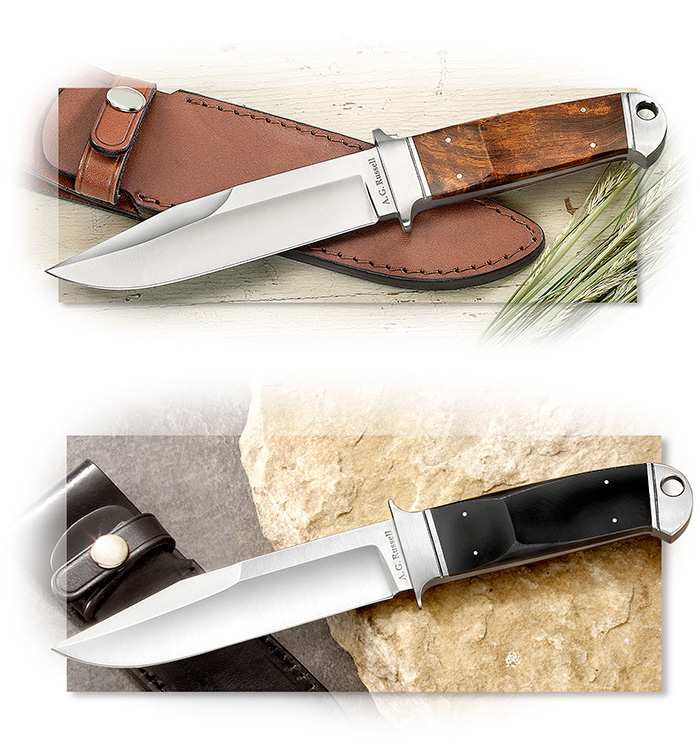
There are great similarities between A.G.’s chute knives and those by Loveless, but also differences. For one, A.G. included a hole in each end of the double guard. Loveless did not. A.G.’s early A.G. Russell and Morseth chutes used narrow-tang construction with distinctly shaped, solid handles. Loveless’s were full tang with applied scales.

Dozier was the maker behind the first A.G. Russell and Morseth chute knives. Aside from a few changes, the Dozier design is much like the Loveless, including no holes in the guard, full-tang construction and the Loveless signature green Micarta® scales.

As A.G. wrote, “In the beginning, Loveless probably would have used A2 tool steel for the blade, and later 154CM and/or ATS-34 stainless. Dozier’s design uses Dozier’s signature D2 tool steel.” It also features one of Dozier’s solidly built leather sheaths.

From 2003-2007, A.G. offered a chute knife designed in collaboration with award-winning German knifemaker Dietmar Kressler.

Russell took Archer’s basic chute and “added as much elegance” as he could manage, “using the talents of that most talented maker [i.e., Kressler]. Dietmar is the master of integral hilt-and-butt [aka hilt-and-cap] hunting and combat knives,” A.G. wrote. “He has taken my design and executed it beautifully.”

Just 75 were made and the last one sold for $2,195. ”They are available today on the secondary market only.

After that, A.G. began work on a more economical drop-forged version of the chute. It took 10 years to get the tooling finished in Taiwan and the knives made. From the blade tip to the end of the pommel, the entire knife is drop forged of 440C stainless steel and has a “very tapered” tang.

“The standard model has ebony Rucarta® scales. Blade and overall lengths: 5.5 and 9.5 inches. MSRP: $245. With ironwood scales the MSRP is $295.

As Russell wrote, “Harry Archer could well have been the pattern for Mr. Clark, the ubiquitous CIA problem solver in Tom Clancy’s novels … He spent a lot of time in the jungle teaching jungle combat and survival to American soldiers and soldiers of other countries as well … He loved knives, well made knives. In his lifetime he was probably Loveless’s #2 or #3 customer. He was a strong influence on the design of custom combat knives and his design for the chute knife is classic.”
Embrace the Skull-Cutter Craze

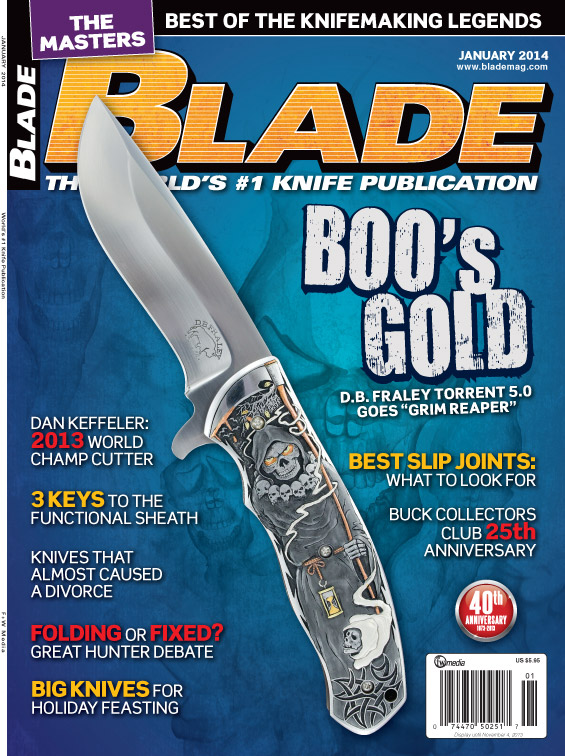
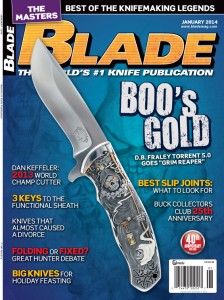
The issue of BLADE on newsstands now addresses the skull-cutter craze.
The skull-cutter craze is addressed in the current issue of BLADE®, on newsstands now.

If you like knives, swords, cleavers and other edgeware embellished with skulls, the knife industry’s skull-cutter craze is for you. And it’s ideal for Halloween, too!

Knives with skull motifs are nothing new. Knifemakers long have offered knives embellished with skulls, along with other ghoulish characters such as goblins, gargoyles, dragons, witches and warlocks, ghosts, the Grim Reaper—the current issue of BLADE® (www.blademag.com), on newsstands now, has such a knife made by D.B. Fraley and owned by Jon Ukman on the cover—and others. However, the veritable explosion of the motif in recent years seems to have sprinkled skull shards worldwide on the knife scene.

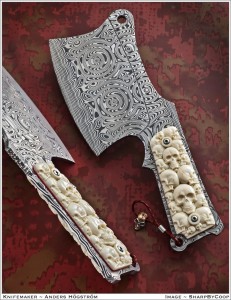
"Butch the Cleaver" is Anders Hogstrom's answer to the skull-cutter craze. (SharpByCoop photo)
Anders Hogstrom’s “Butch the Cleaver” is one of several models addressing the skull-cutter craze. (SharpByCoop photo)

Meanwhile, the skull motif has engendered a knife cottage industry of sorts. Ernest Emerson, one of the world’s leading makers and author of the legendary CQC-6, has an apparel line through his Emerson Knives, Inc., that features skulls on any number of clothing items. Companies such as Schmuckatelli sell small skulls that serve a dual purpose of both adorning knives and anchoring knife lanyards. There are others.

Of course there will be those who slam the knife industry for introducing morbid themes on what they are utterly convinced are gruesome tools of death. But we’ve heard all that balderdash and even the most irrational of anti-knife fanatics know better by now.

What about you? Do you subscribe to the skull theme, even just a little bit? If not, don’t worry. There apparently are scores of knife enthusiasts who can’t get enough of it. And with Halloween just around the corner, many knifemakers and those in the knife/skull cottage industries are loving every minute of it.

For the latest knives, knife news and much more, keep it edgy with www.blademag.com (www.blademag.com).

Navy SEAL’s Super Bolo!

Nearly 20 years later and with my original bolo in disrepair, I thought it time to replace it with an updated and more technologically sophisticated design. My goal was to find a knifemaker from my home state of Kentucky who would be capable and willing to collaborate on the project. It was not long before several members of the Knifemakers’ Guild recommended Gene Baskett. A Guild member since 1981, Gene has proved to be one of Kentucky’s finest custom knifemakers and has earned the respect of his peers for the quality work he produces.

He and I based the knife’s design on the old bolo I had used when I served in the SEALs. Our decision was to go with CPM-154 stainless steel, and Gene made several blade adjustments. We experimented with a rubber handle made from extremely durable horse matting material—a perfect Bluegrass State touch, and a substance also favored by a number of makers and contestants in the cutting competitions. The resulting grip is firm yet shock absorbing. The handle can also be securely grasped when wet. My concerns were simple: durability and performance. I wanted a knife that would withstand a heavy amount of punishment and still perform well.

Both Gene and I agree that the knife has exceeded our expectations. Its cutting ability is just plain scary. Without honing the original edge applied by Gene, I put the knife to the test. He already had whacked through 1-inch saplings, and still the blade was gliding through blades of grass and straw. My test consisted of saplings, 1-inch tree branches and wild grape vines. All were easily severed with one clean hit.

After 20-to-30 strikes on branches and vines, I moved on to a grass mat wrap 4 inches in diameter. The grass mat was wrapped tightly around a 1-inch piece of dried bamboo. One diagonal strike went completely through. I finished the test with a piece of quarter-inch tanned cowhide. With only slight pressure, the bolo sank through the hide from tip to handle. Drawing the blade out and away left a clean, effortless cut through 8 inches of hide. The blade was still quite sharp afterward.—BY STEVE WATKINS, retired Navy SEAL

For the complete story on the author’s super bolo, you can get the digital version of the December BLADE® by clicking on http://www.shopblade.com/blade-dec-2012-digital-issue?lid=SSfbbl101612

PICTURE CAPTIONS, FROM TOP

TOP: At top is the author’s old bolo and leather sheath and below it is Gene Baskett’s Super Bolo and Kydex® sheath. (photo courtesy of Steve Watkins)

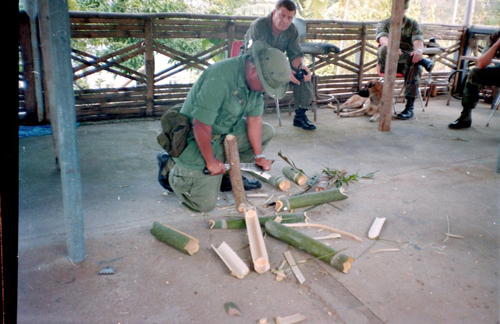
MIDDLE: One of the instructors near the author’s duty station in the Philippines circa 1990 splits wood with the author’s old bolo. (photo courtesy of Steve Watkins)

BOTTOM: The author (right) and his friend, Brad O’Neill, on patrol circa 1990. The author is shown holding an M-60 (7.62mm) and his friend an M-16 with an M-203 (a 40mm grenade launcher). (photo courtesy of Steve Watkins)

Elvis and Gil: A Sharp Evening To Remember

Elvis Presley died Aug. 16, 1977, but it was only three years earlier in 1974 that Blade Magazine Cutlery Hall-Of-Fame© member Gil Hibben got to spend some time with the rock ‘n roll legend.

    Along with Phil Lobred, coordinator of today’s Art Knife Invitational, Hibben gained an audience with Presley and Ed Parker, grand master of American Kenpo karate. It was only for one evening but Hibben and Lobred spent quality time with Elvis talking knives, music and more.

    It was, of course, an evening neither Hibben or Lobred will ever forget.

    Hibben has made knives for Sylvester Stallone in two Rambo movies and two Expendables movies. The second Expendables film, Expendables 2, is in movie theaters nationwide now, and the new knife Hibben made especially for it is the cover piece for the November BLADE®, on newsstands NOW.

    From left above are “The King” striking a pose while holding a Hibben knife, Parker and a young, lean Gil Hibben. Kenpo is spelled incorrectly as “Kempo” in the caption below the picture. I tried to crop it out but as a computer layout artist I am a miserable failure. (photo courtesy of Gil Hibben and Mike Carter)


For the latest knives, knife trends, knifemakers, what knives to buy and where, knife legislation, knifemaking instruction, and much more, subscribe to BLADE® Magazine, the World’s No. 1 Knife Publication. Click here to start a subscription.

Knife Purveyor Of The Day I

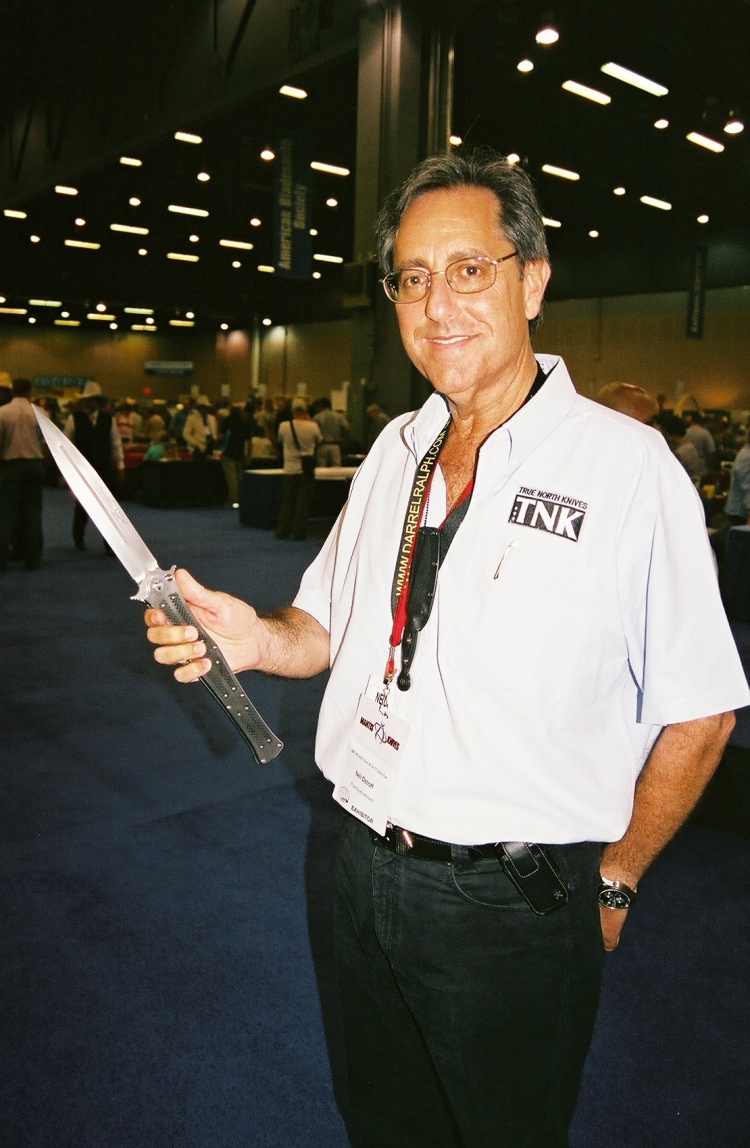
     The first in our Knife Purveyors Of The Day series is Neil Ostroff (shown above with a Darrel Ralph Madd Maxx folder at a past BLADE Show) of True North Knives in Williston, Vermont. Formerly based in Canada, TNK is now U.S.-based and brings you some of the finest in tactical and utility custom knives, a number of which are exclusives, from such makers as Kirby Lambert, Strider Knives, Darrel Ralph and others.

     For more information, click on www.truenorthknives.com.

     For more on the latest knives, knife trends, knifemakers, what knives to buy and where and much more, subscribe to BLADE® Magazine, the World’s No. 1 Knife Publication. For subscription information click on http://www.shopblade.com/product/blade-magazine-one-year-subscription-us/?r+ssfb301211#BL1SU

Collector Alert: Prices Set to Rise for Folding Knives in Canada

0
Canada import rule prohibited knives
Buy low while you still can, Canadian knife collectors.

New CBSA Rule to Drive Prices Up

If you live in Canada, expect the price of most folding knives to go up, especially in secondary markets. Collectors may want to start stock up while prices are still at par.

The culprit is a new rule by the Canada Border Services Agency (CBSA), in effect now, that prohibits the import of assisted openers and any manual folder that opens with centrifugal force. (Automatics were already restricted, but the rule covers them, too.) This only applies to imports, not knives already legal to own in Canada. Both businesses and individuals are impacted.

As BLADE reported here and here, it’s that centrifugal force qualifier that will especially limit Canadian knife enthusiasts’ choices. An inspecting CBSA official may open a blade halfway, give a flick of the wrist and determine the knife is prohibited.

If a knife can open with one hand, it’s not going to make it into Canada.

Existing Stock Will Dry Up

This wide leeway effectively ends the flow of fresh folders imported into Canada. That includes popular brands from the United States.

Imported folders already in Canada will remain on shelves and are not banned from purchase or possession. However, retailers won’t be able to reorder them.

More Investment Options than Ever Before

If anyone will benefit from this new CBSA rule, it’s enthusiasts with assisted openers and manual folders already in their collections. Mundane assisted openers and folders not originally thought of as collectibles are now investment pieces.

Collectors have more, safer bets in categories never considered before. That $50 flipper doesn’t look so insignificant anymore.

How High Could Prices Go?

It’s hard to say, but prices will only go in one direction in 2018. Beyond that is less certain. Rising prices reflect a market adjustment. Expect that prices will find a ceiling, then drop to a new normal. The trick will be to catch prices in secondary markets on the upswing before the fall happens.

Caution

Canada bans imported folding knives assisted opening
The CBSA, a federal agency in Canada, cannot make laws. However, it can issue rules based on interpretations of existing law.

The rise in prices may press some Canadian collectors to try their luck with the CBSA and order folders/assisteds from outside the country. However, authorities are already working to stay one step ahead.

“The way the Canadian government figured out all the tricks on how to get knives into Canada was reading blade forums and watching YouTube where all these people were bragging and giving instructions on how to get knives into Canada,” Neil Ostroff, owner of True North Knives, told BLADE in an e-mail. Ostroff is originally from Canada, but now resides in the U.S.

The Bottom Line: Buy Low Now, Sell High Later

If you’re a knife collector in Canada, it’s time to start buying new assisted openers and folders while you still can. Hold on to them and wait to see where prices go in secondary markets.


* For those also interested in U.S. knife laws, don’t miss this book by attorney Evan Nappen.


Video: The Kevin Cashen Phoenix Knife

Kevin Cashen
The stories behind the blades are part of what makes collecting knives so much fun. The provenance might be happy or sad, but it’s the storytelling itself that is so valuable. Knives can be keys to unlock those stories. Instead of calling up a house fire, the Kevin Cashen Phoenix Knife tells the story of getting through tough times.

Part of the appeal to knife collecting are the stories behind the blades. The so-called “Phoenix Knife” from master smith Kevin Cashen is one such knife.

Judging from the name, you’d be correct in guessing Kevin Cashen’s piece figuratively rose from the ashes. In a tragic turn of events, it literally earned the title, too.

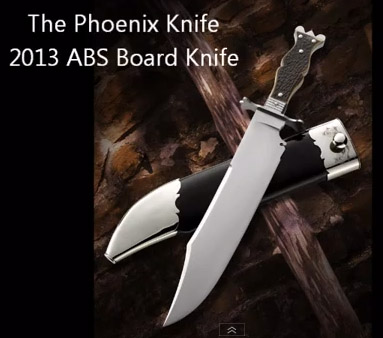
According to the American Bladesmith Society (ABS), which posted the video above, the Phoenix Knife started life as a group project. Several ABS board members got together to make a Bowie, including Kevin Cashen.

However, a house fire destroyed much of the knife’s progress. Undeterred, the board members regrouped and gave it another shot.

The result, as the video shows, is the Phoenix Knife. “It’s alive!”

Have a great knife story? Post it in the comments below.


The Stories Behind the Designs

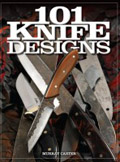
Knife Patterns BookCertain knife designs are repeated again and again for good reason: They work. Murray Carter explores the stories behind many designs in his new book, 101 Knife Designs. You know the designs that stand the test of time. Now read why.

Click here to order 101 Knife Designs.

Advertisement

Must Read Articles

Read this before you make a knife

Knifemaking 101 – Read This Before You Make a Knife

  by Wayne Goddard My experience has taught me that there's nothing like digging in and getting started. I've often said the hardest part of the...
how to forge damascus steel

How to Forge Damascus

Advertisement
Advertisement