
Knife Collecting

Knife collecting is an extremely rewarding experience for knife enthusiasts. There truly is a knife for everyone. Many increase or hold their value throughout the years, making collecting knives something to pass on to the next generation of knife collectors.

DPx Gear: Hot Knives From A Hot New Company

Robert Pelton Young (above), adventurer, filmmaker and author of Licensed To Kill*, The World’s Most Dangerous Places, and Come Back Alive, has spent a good bit of his life in places most people would not visit with a free, round-trip, first-class ticket and an 82nd Airborne Division fire team as bodyguards. War zones, low-intensity conflict areas, failed states, third world dictatorships, pestilent swamps, parched deserts and places where guys with AKs and bad attitudes hang out are home to RYP, as he prefers to be addressed. His first knife design, the HEST—Hostile Environment Survival Tool—reflects that experience, as do his later models, all now offered through DPx Gear.

    His entry into knife design was sparked by talks with Jeff Randall of ESEE Knives—then known as R.A.T. Cutlery—when both were in Peru, where RYP was doing a story on drug labs and Jeff was running one of his survival courses. The original HEST grew from those conversations and was initially manufactured by R.A.T. (page 74, October 2009 BLADE®).

    RYP has expanded his product range and manufacturing base. Ontario Knife Co. manufactures the original HEST, made to the same specs. Lion Steel of Maniago, Italy, makes another version, the HEST II, using Uddeholm Sleipner tool steel. Lion also manufactures the HEST/F, a folder with a D2 tool steel blade designed for the same hostile environments, and two models of the HEFT—Hostile Environment Field Tool—one with a 4-inch blade, the other 6 inches, both of Uddeholm Sleipner. All versions of the HEST and HEFT have a storage compartment under the scales.

    My cohort and I used the original HEST extensively over a period of a year in the California Sierras and the Mojave Desert. It also was one of the few knives I brought with me during my six months of travel in various countries around the Mediterranean. At 7 5/8 inches overall and with a 3 1/8-inch blade of 3/16-inch 1095 carbon steel in a Rockwell hardness of 56-57 HRC, the HEST and its Kydex® sheath are small enough to disappear in a pocket, tuck inside a belt, or carry as a neck knife. It is an excellent example of what I call a “traveler’s knife”—a fixed blade small enough to have with you at all times, sturdy enough to pry open a locked door, rip through a stone wall, serve as an arresting device, and with the ability to take and hold a hair-popping edge.

    We did all those things with the HEST and used it for everyday tasks: opening boxes, whittling fire boards and preparing food, including slicing potatoes, ribs, steaks and ripe tomatoes, the latter which requires a very sharp edge to avoid squishing them. If a knife is not useful on a daily basis, sooner or later it will be left behind. The HEST is effective as a daily tool and serves as a reliable emergency implement.

    It sports a wire breaker, a tiny pry bar at the butt and a bottle opener. Where he travels, RYP said good beer has caps requiring a lifter, whereas bad beer has screw tops. However, I had reservations about the bottle-opening notch and was concerned it weakened the blade. In actual practice the blade did flex at that juncture with the weight of a 200-pound person hanging from it, but it did not break and sprang back to true when the pressure was released.
     At first I thought the pry bar would poke and catch on clothing, but after a while I forgot it was there until it was needed. We used it to grind away mortar between stone blocks and to scrape out the mortar around a steel door set into concrete before ripping the door from the wall. I carry a fire starter and paper money rolled tightly in the hollow space under the green canvas Micarta® handle slabs. The HEST balances well, feels good in the hand, is small, sharp, tough, and, at 4.9 ounces, performs above its weight class.

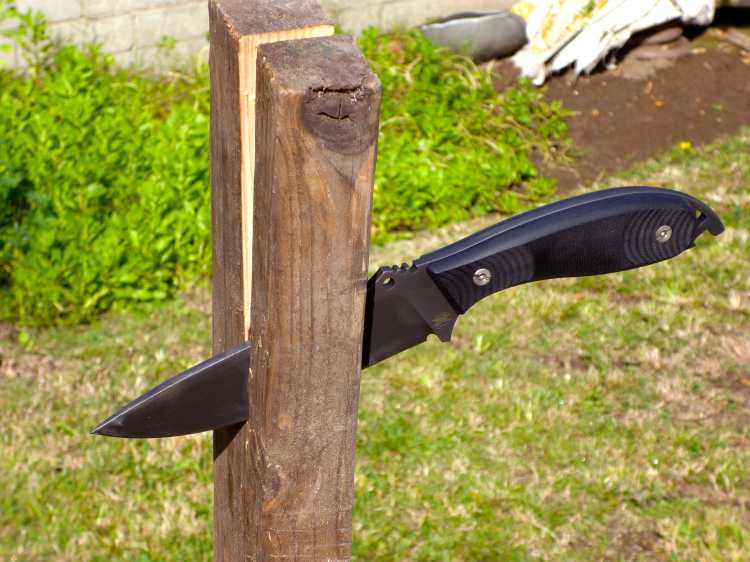
    The HEFT 6 (pictured at top splitting wood) has a 5.75 inch blade of Uddeholm Sleipner, is 10.4 inches overall and weighs 10.2 ounces. It has a combination striker and pry bar at the butt. We gave the knife a heavy month-long workout during which we used it to split a stack of 2x4s, chop through a stand of saplings, cut sheet metal, and pry open a locked steel gate. After that, and with only a quick edge touch up, I loaned it to a professional butcher, Shawn Carlson. Shawn used it for a week, during which he broke down a beef carcass, dressed out a couple dozen slabs of ribs, a stack of pork roasts, bacon and assorted other meat products. He also sliced up 20 rib slabs and split 15 chickens.

    “This is a well-designed knife with a comfortable handle,” he assessed. “It’s easy to work with and doesn’t fatigue your hand during a full day’s work. Unlike some sharpened pry bars, this knife has a fine point that allowed me to easily get into muscle and separate it from connective tissue. I didn’t need to touch it to a sharpening steel even after chopping through joints and cartilage.”—by James Morgan Ayres


*Editor’s note: Licensed To Kill is an insightful and entertaining look into the lives of military contractors, especially during the height of the Iraq War. It may not change your opinion of such contractors but it definitely will enlighten you as to what it was/is like to be one.


DPx Specs


DPx Gear

attn: Robert Young Pelton

Dept. BL7, 2321 Kettner Blvd.

San Diego, CA 92101

888-233-3924

619-780-2600

www.dpxgear.com

Specialties: Utility fixed blades and folders

Blade Materials: Uddeholm Sleipner and D2 tool steels, German Lohmann Niolox 1.4153.03 stainless steel, and 1095 carbon steel

Blade Finishes: Black texture powder coat, milspec black, stonewashed, and black satin TiCN PVD

Handle Materials: Green canvas Micarta®, olive drab G10/titanium, black G10 and Brazilian Santos wood

Geared Up: Features on some models include a wire breaker, a tiny pry bar at the butt, glass breaker and a bottle opener; all versions of the HEST and HEFT have a storage compartment under the scales

DPx FYI: Specific models are designed by Robert Young Pelton and/or Pelton in conjunction with Tom Novak and Tommaso Rumici, and made by Ontario Knife Co. and Lion Steel

Sheaths: Leather and DeSantis Kydex® models

MSRP Range: $123.75 to $275


For more on the latest knives, knife legislation, knifemaking instruction, knife trends, knifemakers, what knives to buy and where and much more, subscribe to BLADE® Magazine, the World’s No. 1 Knife Publication. Click on http://www.shopblade.com/blade-magazine-one-year-subscription-us/?r+ssfb062612 for more information.
 

WHK’s Conable In Men’s Health

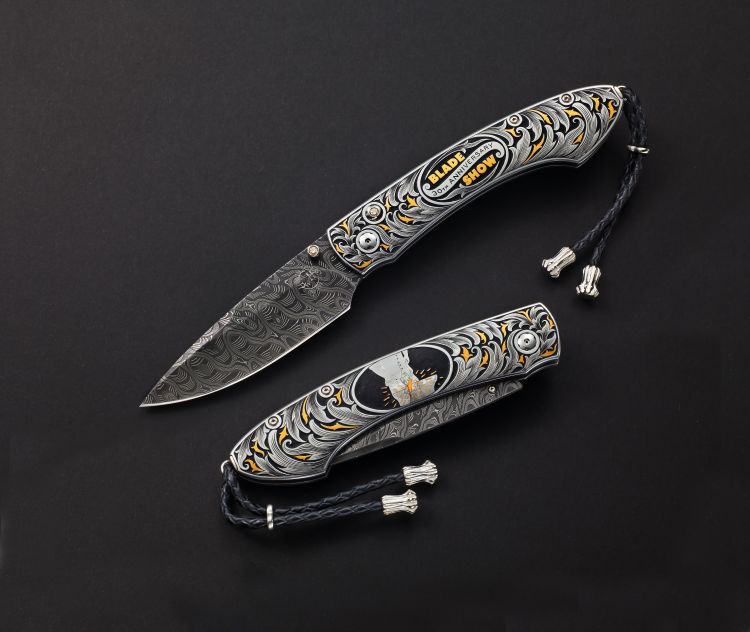
Matt Conable, founder of William Henry Knives, is featured in Men’s Health magazine. WHK has won a number of Blade Magazine Knife-Of-The-Year Awards®, including this year for Collector/Investor Knife Of The Year for the B12 Freedom. Maker of the 30th Anniversary BLADE Show Knife (above), WHK is a leading maker of high-end factory knives sold in jewelry stores and other like venues.

    Conable has been a great friend of the BLADE Show (www.bladeshow.com) and BLADE® Magazine (http://www.shopblade.com/blade-magazine-one-year-subscription-us/?r+ssfb071912) over the years, including having actor Joey “Pants” Pantoliano from The Sopranos HBO series as a special guest at the WHK booth during the 2009 BLADE Show.

    For more on the story in Men’s Health, click on http://www.menshealth.com/style/matt-conable

Best of the Weed Whackers

A big pot plant (top) requires a big knife such as the KA-BAR Kukri Machete. The 11.5-inch, hollow-ground blade is 1085 carbon steel with a Rockwell hardness of 52-54 HRC—the lower hardness providing the malleability needed for chopping—and the handle is black Kraton G. MSRP: $75.63. (Above) A U.S. Immigration and Customs Enforcement agent uses an ESEE light machete to eradicate a field of marijuana plants somewhere in South America. (photo courtesy of ESEE Knives)

    The big blades have revolutionized the way drug enforcement eradicates marijuana plants

    By Pat Covert

Sometimes only a big knife will do. Other times only a really big knife will do! Such is the case when eradicating plants that supply illegal drugs such as marijuana and cocaine.

    You have seen news stories about busts of illegal pot fields and the controlled burns in their aftermath. BLADE® takes this opportunity to fill you in on drug raids and eradication and, in the process, give you some insight into the best in “weed whackers.” We consulted a panel of experts, including an active special agent for U.S. Immigration and Customs Enforcement (ICE) who has participated in eradications all over the USA and other countries. In addition, we talked to factory officials who shared information on the dope cutters they offer.

    Marijuana is by far the most actively used controlled substance in the USA, comprising about 80 percent of all illicit drugs combined. In 2010, over 23,500 outdoor growth sites of the illegal weed were eradicated, and almost 5,000 indoor growing facilities were eliminated. Marijuana plants average between 5-to-10 feet high and even taller in the right climes.

    Cocaine is processed from coca leaves. The coca plant, which averages 7-to-10 feet high, can be found throughout most of Latin America but is most prominent in Bolivia, Columbia and Peru. It is estimated that the USA consumes half the world’s processed cocaine. Since most of the cultivation is in South America, that’s where most eradication efforts, including those by U.S. enforcement agents, take place. It is a big job for law enforcement officials, and big knives play an important role.

The Takedown

The ICE special agent said he preferred not to get into the specifics of how illegal growing fields are located and monitored by the authorities, but he did comment on where such fields tend to be situated.

    “A typical marijuana ‘grow’ [a.k.a. garden] is located in a remote section of the local wilderness accessible to a water source,” he begins. When raiding a field, he says the element of surprise is essential. “The takedown is similar to a military patrol and assault,” he explains. “The grow has to be surrounded to keep the growers from escaping the perimeters. Officers must be prepared to make multiple arrests and manage those arrests under pressure and confusion. Air support is also essential in providing cover, keeping the growers’ movements limited.”

    Once arrests have been made and the field secured, the hard job of eradication begins. “Taking the plants out of the ground is hard work,” the ICE agent says. “All the plants have to be removed. Some are taken by the roots, while others are cut at the base. The intricate watering systems also have to be dismantled and removed. The harvested plants are destroyed by being burned.” Once the plants are cut and stacked, the agents use helicopters to sling load the plants out in large nets. “The grows usually net between 5,000 to 20,000 plants, depending on the location,” he adds.

Long Blade, Flared Tip

There is no shortage of knives that can be used to take down illegal crops. Typically, a good dope chopper will have a long blade with a flared tip to add extra weight—and power—to the main area of contact. An ample handle is also preferred to give comfort to the hand over extended use. Owner and founder of ESEE Knives, Jeff Randall has been with agents on eradication assignments where his knives have seen action. “Most of the agents we deal with love our product, especially the agents dealing with coca and marijuana crops in South America, but they are used domestically as well,” he observes. “The ESEE Lite Machete and Junglas models do the best, depending on the particular plant.”

    KA-BAR senior designer and engineer Paul Tsujimoto says his company has a number of knives used for drug eradication. “The KA-BAR Heavy Cutting Tools line, which includes the Large Heavy Bowie, Grass Machete, Cutlass Machete and Kukri Machete, is almost entirely suited for heavy jungle-vegetation clearing duty,” he notes. “Our relatively new Big Brother [a large 14.2-inch version of the original USMC fighting/utility knife] has also proven itself in jungle environments.”

    Tsujimoto cited some recent additions to KA-BAR’s lineup that have proved their worth in the battle against drugs as well. “We also have a new line, Zombie Knives, that has a [Pestilence] Chopper and [War] Sword that have proven excellent at clearing and leveling plants, and our Johnson Adventure Blades line has a model called the Potbelly that is an excellent chopper. All of these knives have seen service in the drug eradication service, both domestic and overseas.”                                                                                                                                         

    In knife circles, Becker Knife & Tool founder and chief designer Ethan Becker is perhaps best known for his Machax model, a machete/ax hybrid.

    “Most of the feedback I have gotten over the years has involved the Machax,” he notes.” “I know the Kentucky State Police special ops team used the Machax for years with great success. In addition to the Machax, our most suited blades for the job are the BK9 Combat Bowie and the BK6 Patrol Machete.”

    Becker related an incident most instructive involving the Machax.

    “I made a cold sales call on a surplus store near Ashland, Oregon, some years ago,” he says. “The owner took one look at the Machax and said, ‘I’ll sell a bunch of these.’” When Becker asked the storeowner who the customers were he had in mind, the man replied, “Growers and the cops chasing ’em!”

Choppers In Action

The ICE special agent and his fellow agents had a chance to test a group of knives to evaluate their performance in cutting down the illicit drug plants.

    “The ESEE Junglas was the first tool we tested on the first grow of the season. The Micarta® handle was very ergonomic and easy to grip. Compared to a typical machete it has a shorter blade, but is much thicker and more robust,” he notes. “The blade performed very well cutting through the base of the marijuana plants. The Junglas was probably the highest quality knife/tool we used and definitely did the job.”

    However, for removing plants, the agent says he found the ESEE Lite Machete to be a better performer. “The Lite Machete changed the way we removed plants from the grows. Although the blade was much longer and not as thick as the Junglas, we were able to stand upright and cut the plants,” he explains. 

    The agents also ran several KA-BAR knives through the wringer. “KA-BAR sent the Grass Machete, Cutlass Machete, Kukri Machete and Wart Hog. We had several of each style and they were handed out to task force officers to be tested. I discussed with the officers how [the knives] performed, and the Grass Machete had the best fit and style for cutting the marijuana plants,” the agent says. Cold Steel also sent knives to be tested and, according to the agent, one particular model came out on top. “Cold Steel’s version of a light machete is called the Latin Machete,” he notes. “I would rate the Latin Machete 4.5 out of a possible 5.”

    Of all the knives tested, the agents’ favorites were the light machetes. “All the officers that used the blades came to a consensus that the Cold Steel Latin Machete and ESEE Lite Machete were the best for working in the grows to remove the plants. This [took] into consideration the weight of the knife, ease of carry, performance in removing plants, and ability to hold an edge after use,” the agent relates. “We noticed a change in the way the grows were being taken down. What previously took several hours to remove was now taking less than or close to an hour.” 

    While BLADE recommends leaving illegal plant eradication to the professionals, if you have to clear land of brush and small trees, the information herein should prove quite helpful. I have used a kukri to clear underbrush for many years but plan on trying several of the light machetes used by the ICE agents.

For more on the latest knives, knife legislation, knifemaking instruction, knife trends, knifemakers, what knives to buy and where and much more, subscribe to BLADE Magazine, the World’s No. 1 Knife Publication. For subscription information click on http://www.shopblade.com/product/blade-magazine-one-year-subscripti…?r+ssfb031112#BL1SU


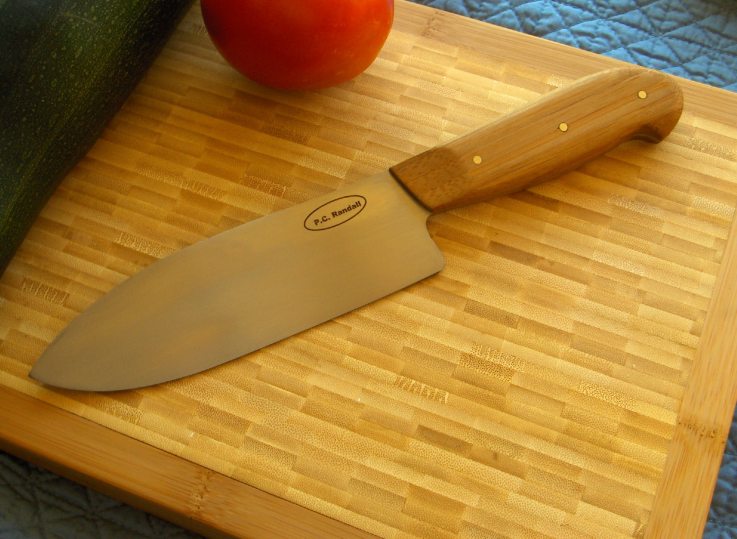
Photos: Bamboo Chef Knife from Patrick Knives

Medium Bamboo Chef Knife

Image 1 of 7

3/32 ATS 34 Stainless 10" overall cocobolo handle with brass pins

Here’s a look at a bamboo chef knife from Patrick Knives. For more blades like this one, check out the kitchen knives at ShopBlade.com.

Knife Gift Idea Of The Month

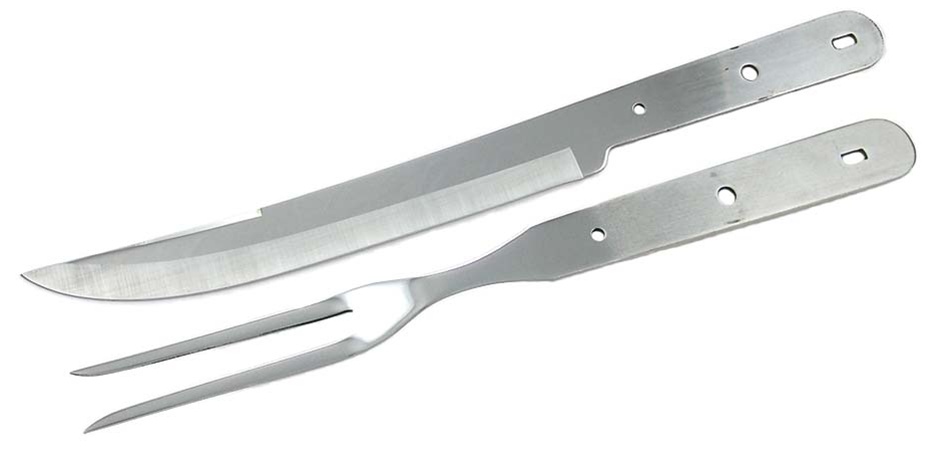
A great knife gift idea is to assemble a knife for that special someone, and with Thanksgiving near, what better gift than a carving set from Jantz? (Jantz photo)
Our knife gift idea of the month: Assemble a turkey carving set for that special someone with a kit from Jantz Supply. (Jantz photo)

Our knife gift idea of the month is just in time for Thanksgiving and Christmas. Have you ever thought about assembling a knife from one of the many kits available on today’s market and offering it to someone special in your life? There are any number of kits, some below $50, that offer all the materials you need to assemble a knife.


With Thanksgiving just around the bend, why not assemble a Jantz (www.knifemaking.com) carving set to carve the turkey? The Jantz SS807 set features a carving knife and carving fork. The kit contains blade and fork blanks, rosewood Dymondwood handle materials, 5/16-inch brass cutlery rivets and assembly instructions. MSRP: $23.95. Or, you can go whole hog and assemble an entire Early American cutlery set that includes cook’s, carver, boner, paring and four steak blades, rivets and walnut Dymondwood handle material, all for only $64.95.


At www.knifekits.com there is a selection of kits that includes assisted openers, damascus folders, hunters, bowies, balisongs and tactical knives featuring all the parts you need for assembly via common tools found around most households.


Jantz also offers a range of kits that include mini and standard-size folders. The handles are profiled, drilled and countersunk for proper fit and come in a selection of materials. Looking for fixed-blade kits? Jantz has them in its Outdoorsman Series, which includes non-glare bead-blasted blade blanks. The kits are perfect for the beginner, can be completed in a few hours and the results look and perform great for hunting and camping. Blade shapes include skinners and there’s even a hatchet. The kits range from $24.95 to $29.95 and the completed sheaths range from $12.95 to $14.50.


For the latest knives, knife news, tips, trends and more, stay sharp at www.blademag.com.


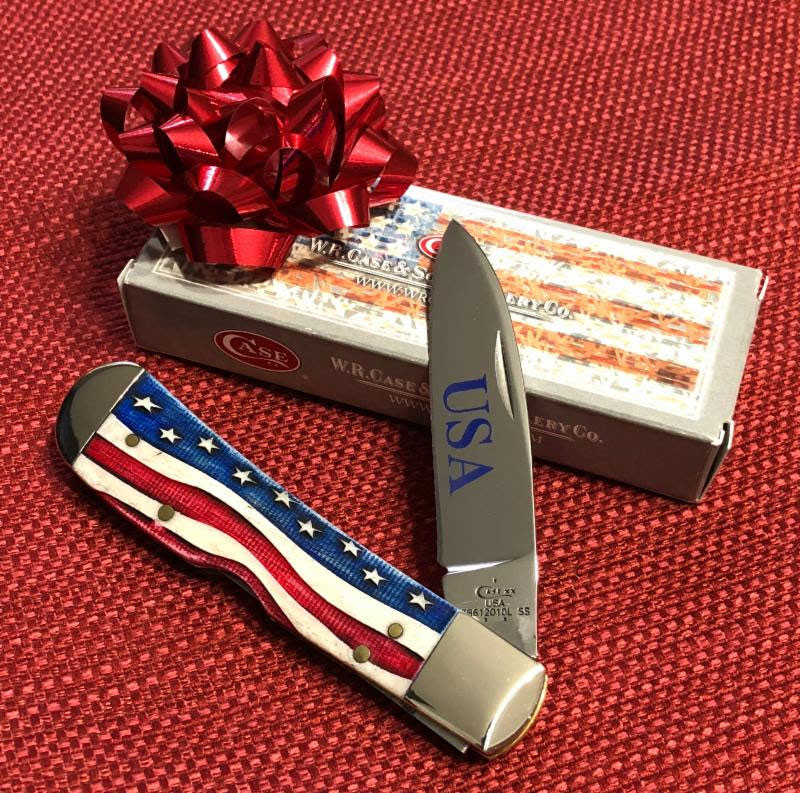
New Knife: Case Star-Spangled Tribal Lock

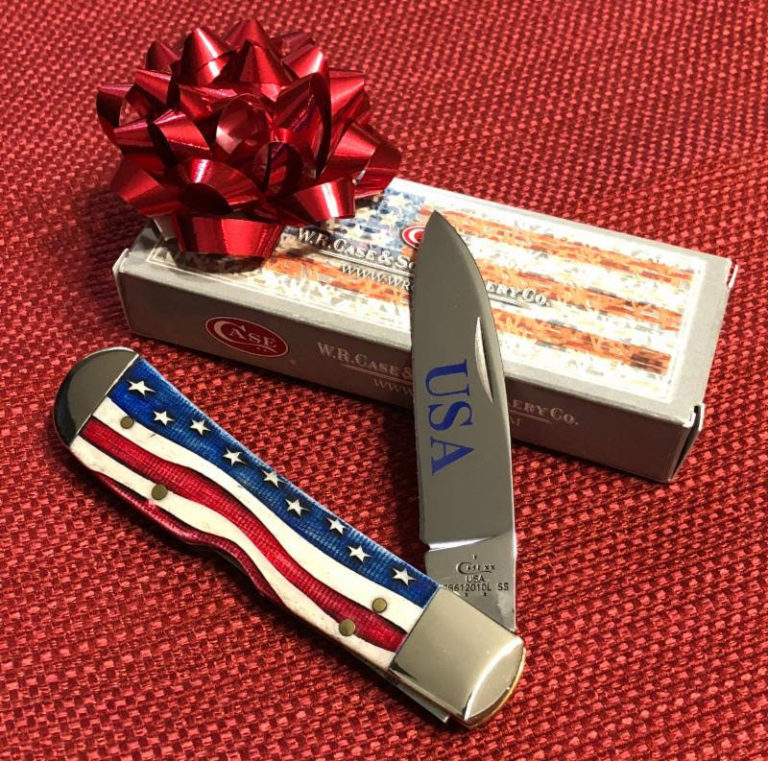
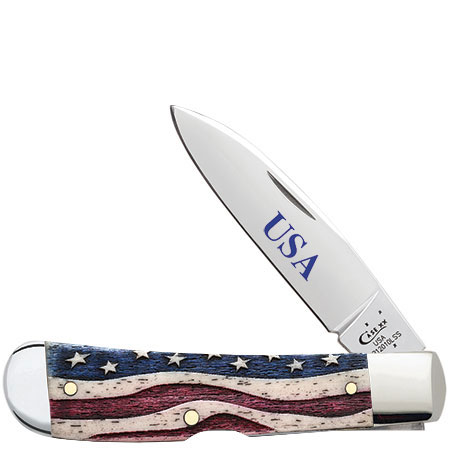
Case Tribal Lock folding knife

tony bose knifemaker patriotic knifeAmerica. Apple pie. More America. More apple pie. (Hey, it’s the holidays, and pie is mandatory, right?)

Wrap it all up with the new Case Star Spangled Tribal Lock in a patriotic-themed “natural bone” handle, and a Tru-Sharp surgical steel spear blade embellished with the iconic “USA.” The Star-Spangled Tribal Lock is the latest in the Case/Bose Tribal Lock family of knives designed by world-renowned knifemaker Tony Bose and is made in Bradford, Pennsylvania.

With a manufacturer’s suggested retail price of $148.70, the one-blade folder weighs 3.3 ounces and is 4 1/8 inches closed—a good, solid weight and size for pocket carry. Oh, and in case any of you are wondering, Case’s Tru-Sharp surgical steel is the company’s version of 420HC stainless.

Here’s an interview with Bose:

Crazy About Case Knives?

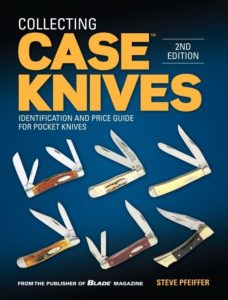
As the only full-color price guide devoted solely to Case pocket knives, Collecting Case Knives, 2nd. Ed. features nearly 1,000 photos, current values for hundreds of pocket knives from 1920 to today, and detailed information about methods for creating knives, quirks of the pattern numbering systems, tang stamps, types of blade steels, and knife shields.

Click here to order your copy of Collecting Case Knives, 2nd. Ed.

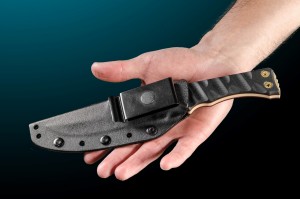
Gear Up with The Team Jackal

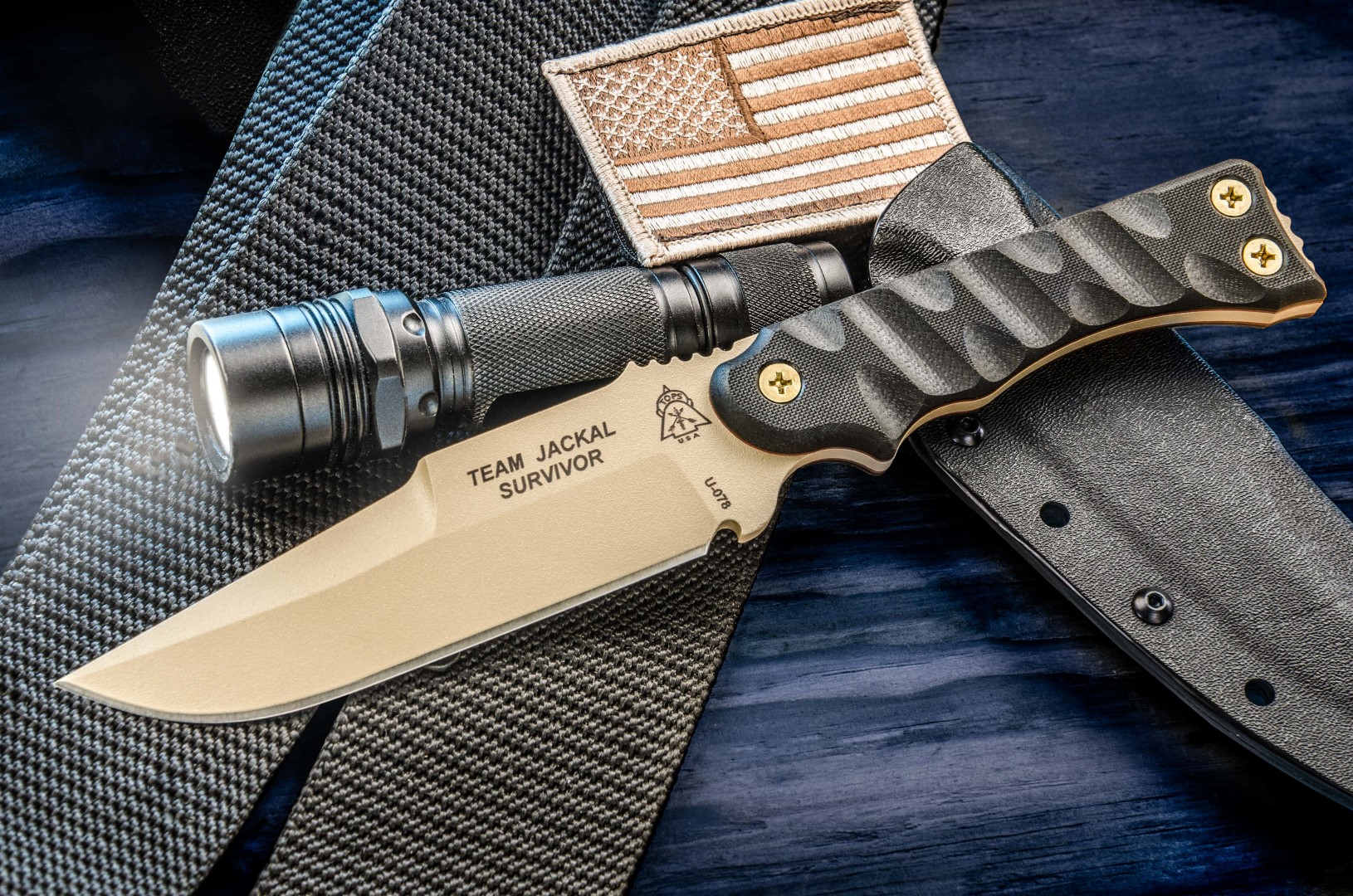
TOPS Knives Team Jackal Survivor
The Team Jackal Survivor is new from TOPS Knives.


Rotating spring steel sheath clip.
The Kydex sheath attaches to a belt or gear via a rotating spring steel clip.
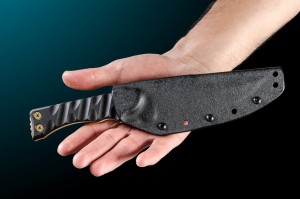
Black Kydex sheath
The sheath protects the blade and makes for a handsome package, too.
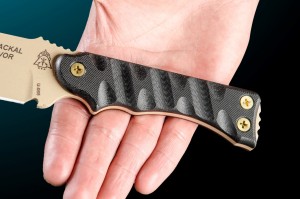
Rocky Mountain Tread handle.
The G-10 handle is textured in a Rocky Mountain Tread for enhanced gripping.
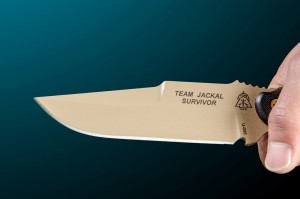
The blade is 1095 high-carbon steel.
The 5-inch blade is 1095 high-carbon steel in a Coyote Tan powder coat.

Gear up with the Team Jackal Survivor fixed blade from TOPS Knives, a great everyday utility and/or bug-out-bag knife.

The Team Jackal Survivor sports a 5-inch blade of 3/16-inch-thick 1095 high-carbon steel heat treated to a Rockwell hardness of 56-58 HRC. The cutting edge is 4 5/8 inches long. A steel favored by many bladesmiths and a growing number of factory knife companies, 1095 is easier to sharpen than some of the higher-grade stainless steels such as CPM S30V. This is a valuable trait to have in the field and/or for novice knife enthusiasts who have not quite mastered the proper sharpening techniques required or do not have the proper sharpening equipment to put an edge on the higher-grade steels.

Of course, the trade-off with carbon steel is that it tends to rust more easily than stainless steel, though if you wipe the knife down after each use rust should not be a problem. However, just in case, the Team Jackal Survivor blade features a Coyote Tan powder coating to help reduce rust. The coating also holds down on glare. Still, though, a wipe down after each use never hurts!

The contoured, straight-backed handle is a black G-10 hard synthetic textured in TOPS’ Rocky Mountain Tread for secure purchase and a cool look. Enhancing purchase is a jimped blade ramp just forward of the handle spine and a finger groove behind the choil. The knife’s overall length is 9.75 inches. Without the sheath, it weighs 8.9 ounces.

The sheath is a black Kydex with a rotating spring steel clip. Counting the sheath, the complete knife package weighs 11.7 ounces.

The manufacturer’s suggested retail price for the made-in-the-USA Team Jackal Survivor is $175, but if you visit topsknives.com while its sale lasts you can get it for $140.


The latest issue of BLADE is on newsstands now!Recommended:

Stay abreast of the latest developments on this and many more knife rights issues with a subscription to BLADE.

Advertisement

Must Read Articles

Read this before you make a knife

Knifemaking 101 – Read This Before You Make a Knife

  by Wayne Goddard My experience has taught me that there's nothing like digging in and getting started. I've often said the hardest part of the...
how to forge damascus steel

How to Forge Damascus

Advertisement
Advertisement