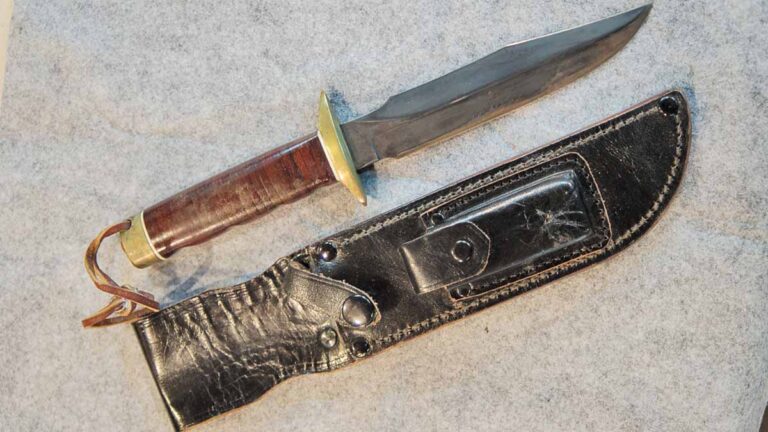
Knife History

The history of knives and other edged instruments is tied to the history of people in general. As humankind’s oldest tool, unraveling knife history can lead to even more surprising and enriching information to better understand the world.

Carrigan Knife: Is It A James Black Original?

0

In the author’s view, the Carrigan has tells that prove James Black made it.

The work of James Black is iconic. Once you’ve seen one of his knives, you’re not likely to forget it. While a casual observer sees a steel blade that’s well formed and a coffin-shaped handle with black walnut and silver trim nicely complementing each other, informed observers see much more.  

Consider yourself more than just a casual observer. You study the knife in every detail. A steady stream of questions begins to cross your mind. You may contemplate the time period, the location and the tools by which the knife came to be.

Why did the knifemaker do this? What were his thoughts when doing that? What factors prompted the design? What subtleties of design did Mr. Black discern and were there any he learned along the way?

I am not a casual observer when it comes to the work of James Black. In fact, I am among “the birds that have flocked together” to study his work. Our group has been studying and gathering data to serve as a baseline for future revelations that may occur pertaining to historic knives. The database can be used to aid in authenticating existing as well as newly discovered knives thought to have been made by Black.

While our group includes collectors, engineers, historians and archaeologists, it also includes knifemakers. The perspective of each adds invaluable insight to the discussion. And oh, what a discussion it is!

What Is The Carrigan Knife?

For several years I was fortunate to have been the resident knifemaker for the Historic Arkansas Museum in Little Rock, Arkansas. It is a rich environment to learn and observe examples of historic knives, among which are some examples of Black’s work. Noteworthy among those is the Carrigan Knife.

Its historic provenance is solid, pointing directly to Black as being the maker. Since Black did not mark his work by stamping his name on it, the reliable historic provenance of the Carrigan Knife is of even more importance—in fact, it’s pivotal to the attribution of any other possible Black knives. Once determined to be authentic, the other knives in the museum’s collection, or elsewhere, can be attributed to Black as well.  

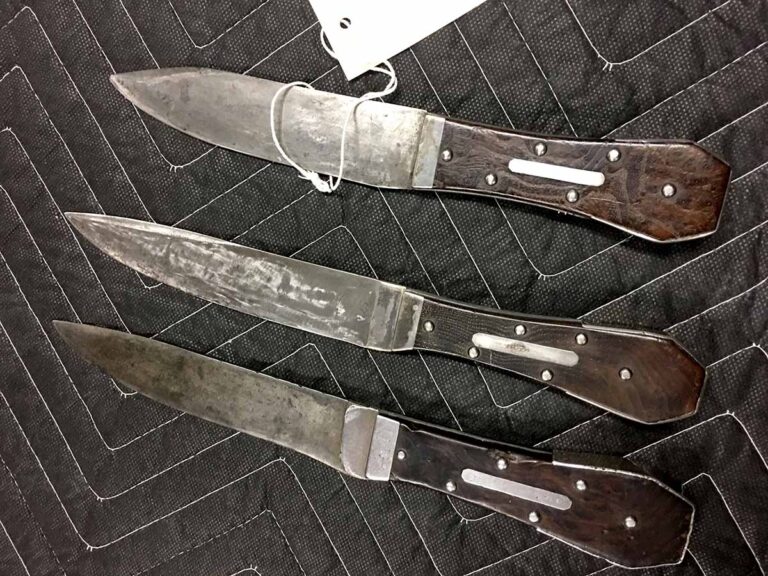
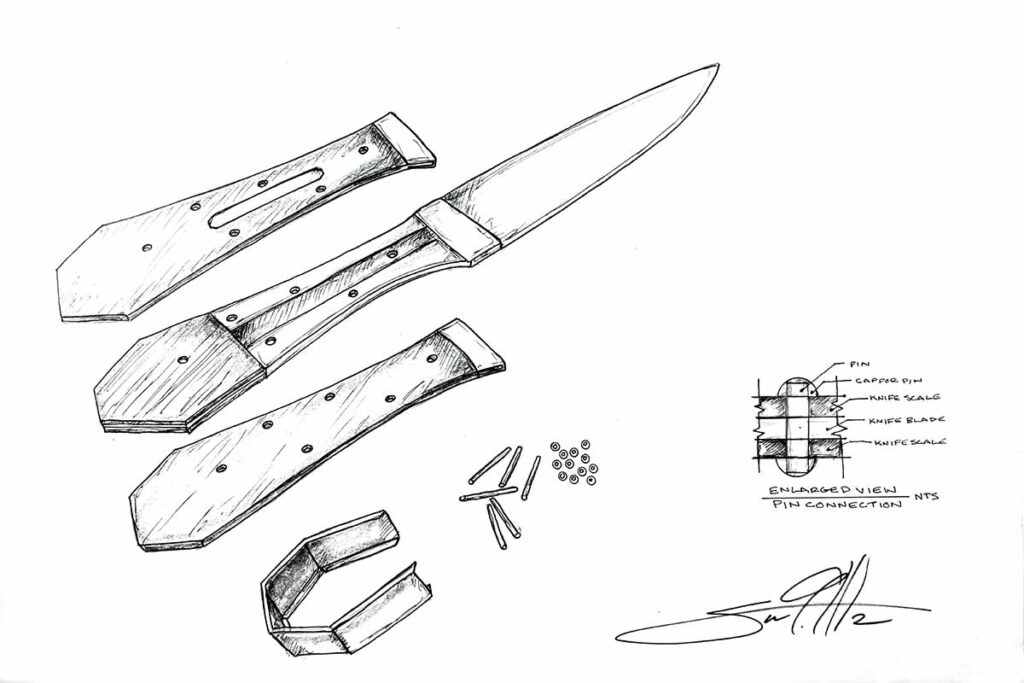
Consider Image 1 (top of page). The knife in the middle is the Carrigan, known to have been made by Black. It has provenance. What about the ones on either side? Do they have rock-solid provenance? No.

In the eyes of the museum curatorial staff as well as in the context of this discussion, an object’s provenance is important. However, some of the knives attributed to Black, while not having direct provenance, have circumstantial provenance.  Does this lessen their value in the historical narrative? No. If determined to be authentic, they are just as important. Even a newly discovered knife with no provenance at all may indeed be authenticated to have been made by Black.

Being able to determine the authenticity of a possible Black-made knife, apart from provenance, would require an examination of the knife. The examiner would need to have intimate knowledge of details and factors unique to Black’s body of work.
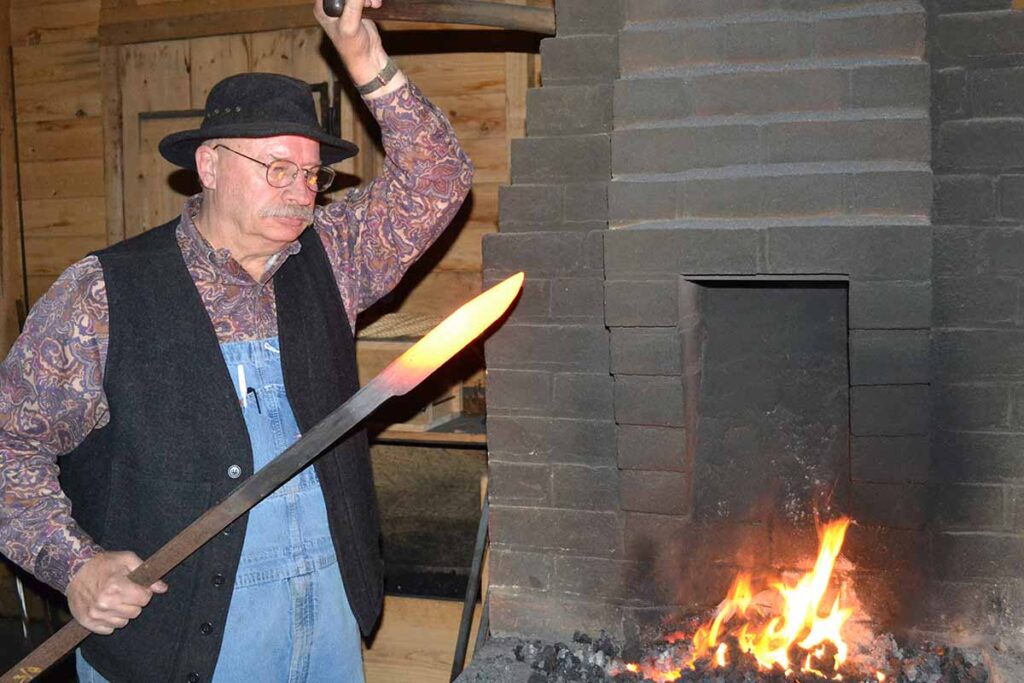
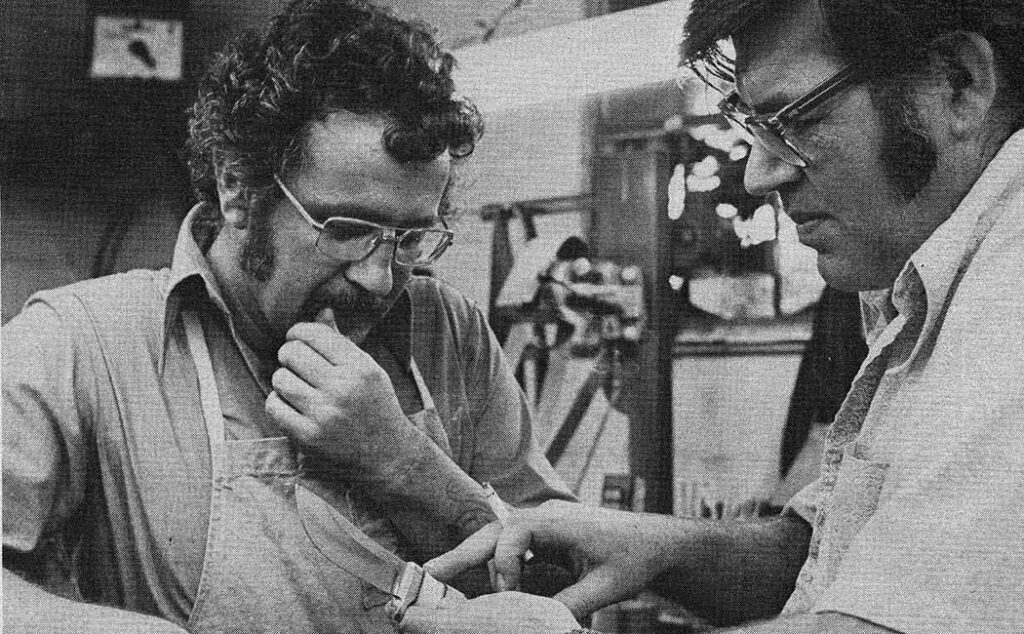
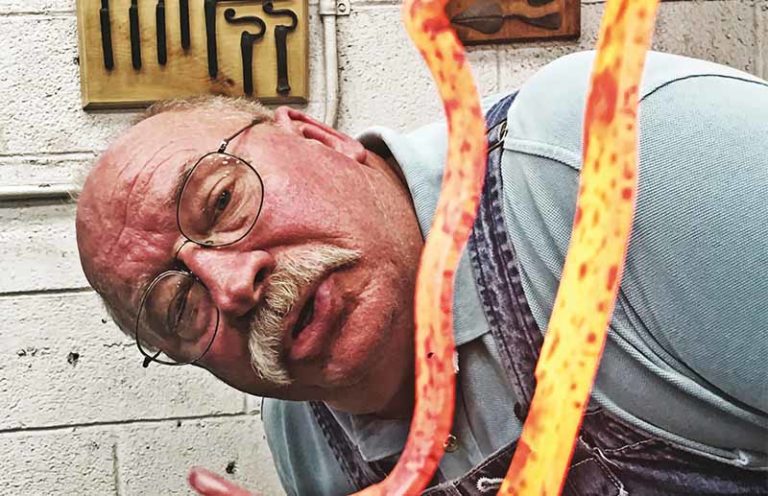
Lin Rhea forging
For several years the author was the resident knifemaker for the Historic Arkansas Museum in Little Rock, Arkansas, home to a number of authentic 1830s and other vintage bowies. (B. R. Hughes image)

In Image 1 you can’t help seeing the obvious relationship between the three knives. While they are not identical, they are so similar that it would be logical to assume they were made by the same hands. While those things are compelling to the belief that Black made all three, much more must be considered to authenticate a knife as his work. Some of those considerations follow.

Any maker’s work, whether currently or in the 1830s, will exhibit common features that, in some way, set the work apart as different from others. Some features may be noticeably subtle and some radically bold. Bold features can be imitated to a degree by others. The subtle features often go unnoticed and are much more difficult to imitate. Black’s body of work exhibits several features that tie the individual knives together circumstantially. Some features are subtle, some bold.

In Image 1 you can easily observe the bold features common to each individual knife, such as the dark handle scales, the silver trim, the coffin-shaped handles, etc. However, to authenticate them as being made by the same maker requires familiarity with that maker’s known body of work and an opportunity to document the features.

The features may be construction techniques or tool marks that are the same from knife to knife. Documenting the common features involves quite a lot. It implies that multiple knives are closely examined for these common features. In some cases, the common features can only be seen through modern technology such as X-rays or other forms of testing.

It is not known how many knives Black made but there’s enough in existence to create a problem of logistics. The knives that are thought to be authentic Black knives are scattered over several states. Getting them together has been tough but we’ve had some success thanks to the knives’ respective owners. The trust and support they’ve shown to the research group is very gratifying.

As you probably have noticed I’ve been very careful with my words since it’s not my place to share too much out of respect to the owners. Some details that are important in matters of authentication shouldn’t be divulged. Lack of these invisible details wouldn’t prevent a modern maker from faithfully reproducing a knife of the style. Remember, imitation is flattery but counterfeiting is illegal. Counterfeiting has been done and there are cases where collectors have been duped. Makers should always mark their work. 

Tells Of An Original James Black Knife

All this said, there are things “invisible” that we can discern by observation. In Image 2 (below), an illustration by Steve Hotz, notice that the construction assembly of the Carrigan Knife is comprised of three basic layers: the blade and two handle scales.

While there are three basic layers, each layer can have other parts that contribute to the overall knife. For example, the blade’s tang has additional pieces of silver: one on the ricasso and one each wrapped around the top and bottom of the spine. These serve as a soft bed for the scales to sit on. While thin, these wraps of silver can be filed flat for a good fit of the right- and left-hand scales. They extend back to where the maker chooses to put the silver pommel wrap. The blade tang is also bored for the pin holes to attach the scales. Moreover, the scales have front caps that are flush fit so the scale will lay flat, as well as escutcheon plates apparently individually mounted to the scale independent of the layer’s assembly. When the three basic layers are completed and prepared sufficiently, the scales, which are drilled to fit the tang, can be assembled to the blade and the capped pins installed as well as the pommel wrap.
The construction assembly of the Carrigan Knife
IMAGE 2: The construction assembly of the Carrigan Knife is comprised of three basic layers: the blade and two handle scales. Each layer can have other parts that contribute to the overall knife. For example, the blade’s tang has additional pieces of silver: one on the ricasso and one each wrapped around the top and bottom of the spine. (Steve Hotz illustration)

What I’ve described is the general assembly of Black’s Carrigan Knife.* The entire blade’s steel tang is covered by a protective layer of silver along with the wood scales. Considering the lack of modern epoxies and rust-resistant steels, I consider Black’s logic and resourcefulness very impressive. He strategically placed the silver on each of the three layers so that, when assembled, they meet and provide protection for the knife’s steel full tang, as well as an aesthetically pleasing appearance.  

Historically, a blacksmith shop may have had a post drill and some early machinery available. I can reasonably assume that Black had some of this equipment too, but I have no way of being sure. Where we today would likely grind a part, Black may have filed it. To save filing he probably forged very close to finish before filing. We today may skip the forging stage entirely if required and still be able to reproduce a close facsimile of his knife. For every step of his process, we bladesmiths and/or knifemakers can transpose a modern technique or tool.  
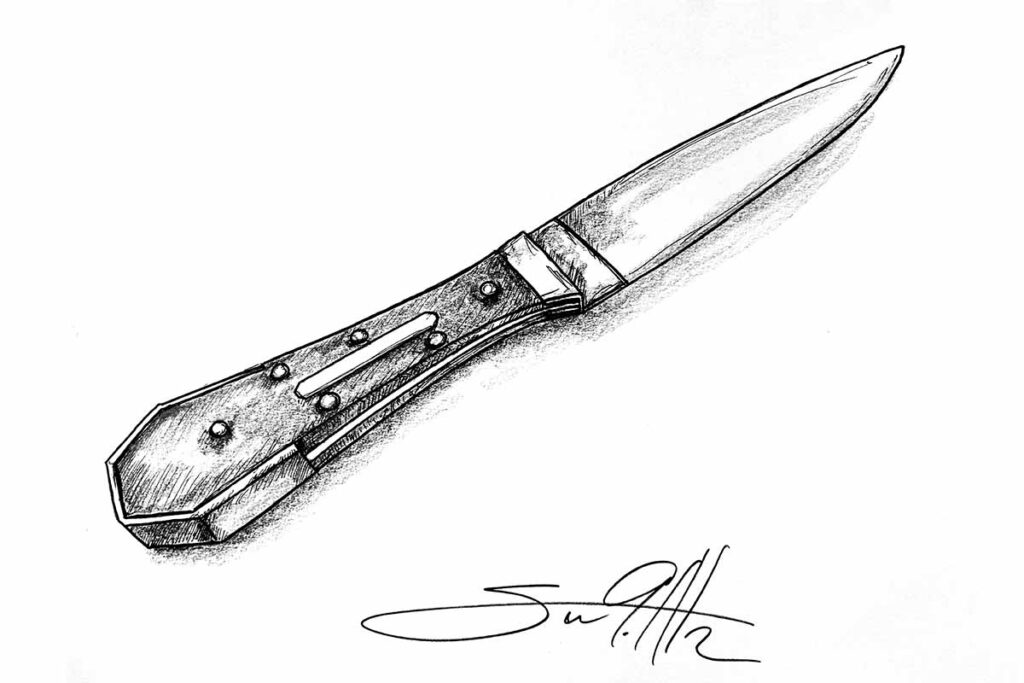
Picture of assembled Carrigan Knife
When the three basic layers are completed and prepared sufficiently, the scales, which are drilled to fit the tang, can be assembled to the blade and the capped pins installed, as well as the pommel wrap. The result is the completed Carrigan Knife. (Steve Hotz illustration)

Black’s process was an interactive, emergent one. The second step emerged from the first. The third step emerged and interacted with the first two steps, and so on. In other words, it was not precision technology as we commonly see today where the parts can interchange from one knife to the next. Emergent technology enabled a craftsman to create complex designs with a reasonable expectation of consistency, albeit not precision.

Again, study the three knives in Image 1. Although they are not identical, you can see the family resemblance. It was a structured process that was organized to lead to a predictable result. On top of that, Black was taking only three materials—steel, wood and silver—and creating a process that makes sense. Considering the relative lack of resources and technology, I think he did well to even create a knife. But he did much more.  

When thinking of Black’s work, think not only of his knife design but his process design. It’s his process design that made his knife design repeatable. Modern knifemakers can learn from him in that regard.

Three Questions To Consider

In closing, following are three questions to ponder. The first two are for all of you and the third is for the bladesmiths and/or knifemakers among you.

  1. If given a limited number of resources, would you be able to make a knife?  
  2. If given these limitations, would you be able to design a knifemaking process? 
  3. In your knifemaking endeavors, how much of your process is an imitation of others and how much is yours?

*Author’s note: I have not gone into detail on each of the individual parts and how Black performed these steps for two reasons: 1) I can only observe the appearance of the knife and speculate on his exact techniques, and
2) It would only serve the purpose of counterfeiters.

Editor’s note: While BLADE® recognizes the author’s superior knowledge concerning the provenance of the Carrigan and other knives attributed to James Black by the author and others, BLADE continues to stipulate that for BLADE to recognize that a knife was made by a specific maker, the knife must bear the specific maker’s name or mark. The presence of such a mark does not necessarily prove the knife was indeed made by the person or company marked, but the absence of a mark is enough to preclude BLADE from attributing the knife’s make to any person, company, etc. Since, as far as we know, Black did not mark his knives, BLADE does not attribute the make of any specific knife to him. That doesn’t mean BLADE is right or wrong, it’s simply our policy concerning the matter. To be both fair and accurate to all, it is a policy we apply not just to Black but to all knives and all knifemakers.

More Knife History:

Custom Knife Royalty: Russell, Moran And Loveless

0

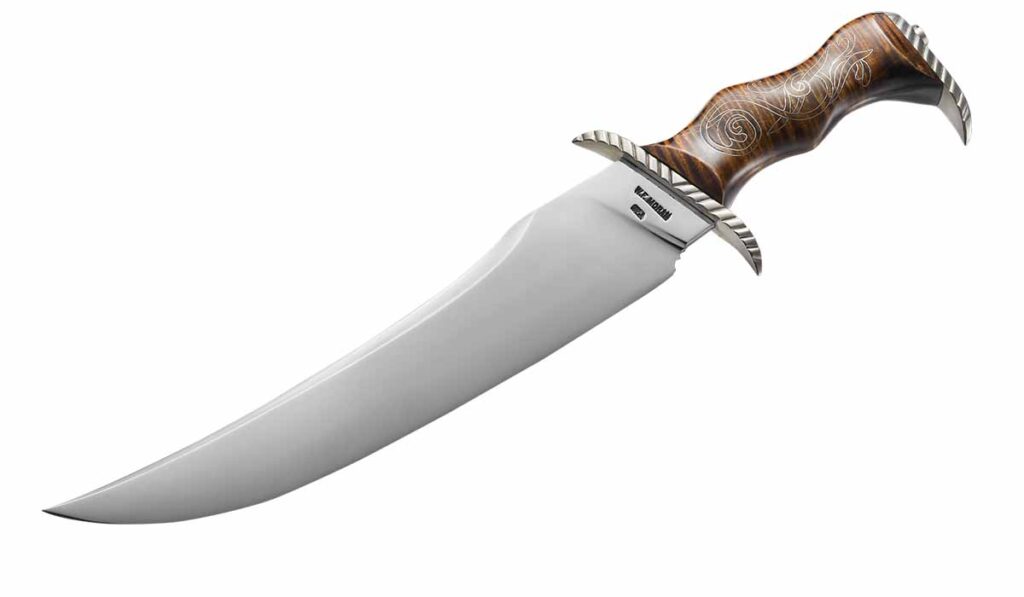
There are many names elevating custom knifemaking to the heights it enjoys today, but none loom larger than A.G. Russell, Bill Moran and Bob Loveless.

Nobody would question the straight-up fact that A.G. Russell, Bill Moran, and Bob Loveless contributed mightily to making the knife industry in the United States, and indeed worldwide, what it is today.

Their contributions to the growth and prosperity of knife manufacturers and their partners in the custom knifemaking world are well known to many, but during BLADE®’s 50th year a moment to recognize their achievements and their contributions is appropriate.

Of course, there are others whose involvement and support have had a positive impact through the decades, but Russell, Moran and Loveless—all long-time members of the BLADE Magazine Cutlery Hall Of Fame®—are the core triumvirate that ushered the modern knife industry into its golden age.

Bill Moran

Bill Moran
Bill Moran

“Moran gets credit at the top of the list because of the founding of the ABS [American Bladesmith Society],” related Cutlery Hall-Of-Famer Bruce Voyles, past publisher of BLADE and, along with Cutlery Hall-Of-Famer Jim Parker, co-founder of the BLADE Show. “That was followed by the development of the hammer-ins and the [Bill Moran School of Bladesmithing].” As he noted, the ABS was a team effort that included Cutlery Hall-Of-Famer B.R. Hughes, who was an educator.

“Bill was a renaissance man if there ever was one,” Voyles continued, “but he had the best publicist in the knife business in the form of B.R. Hughes. So, as a team they absolutely rank at the top. B.R. had the good sense to know that Bill Moran was the person to represent the ABS, and Bill was a leader in his own right, but without B.R. there may not have been a bladesmithing school.”

Bill Moran Knife
The ST-23 is one of if not the most coveted of Bill Moran knives. (Francesco Pachi image)

Hughes, now 91 and the elder statesman of knife writers, remembers his work with Moran and gives credit to Moran’s foresight at the forge as well. “Bill Moran saved bladesmithing with his reintroduction of damascus in Kansas City in 1973,” Hughes observed. “And when we formed the ABS in 1976, the only goal was to preserve the art of the forged blade. There were three people making damascus [in America] then: Moran, Bill Bagwell and Don Hastings. They met in Bagwell’s backyard and shop after the Guild met in Dallas. That’s how the ABS got started. There were four active members, including me named as a director. So, it started with four, and now there are 3,000 members. I’m still on the board, and now the main thing for me is not to go to sleep during the meetings!”

Bob Loveless:

Bob Loveless
Bob Loveless

Loveless stands out as a custom knifemaker and designer, as well as a pioneer in the organization of custom knifemakers into a cohesive group, setting standards, discussing issues, and assisting the growth and prosperity of many in later years. Loveless stands apart in his work, organizational input and one-of-a-kind personality.

Hughes recalls his introduction to Loveless courtesy of knife industry titan A.G. Russell. The men sat down at a diner, ate a meal together and Loveless spread some knives on the table. From there, Hughes authored an article about the California custom maker that appeared in GUNsport Magazine.

“Bob and I stayed in contact,” Hughes remembered, “and around that time Bo Randall was probably the most copied [of] knifemakers. Then, when Loveless [redesigned and repopularized] the tapered tang, he became the most copied knifemaker in America. He made that a standard and was very popular.” B.R. added that Loveless was also a good salesman and promoter, and his knives were selling for what were high prices even then.

Voyles said he appreciates the pure genius of Loveless to this day. “He was a phenomenally intelligent person,” he opined. “With Bob, they used to say that you loved him or you hated him. The thing about Bob was that what brought him into prominence was that he was the first person with an art background to make knives. He had gone to design school and made a handsome knife that was aesthetically pleasing, and noted that the knife’s top line should always fit a French curve.

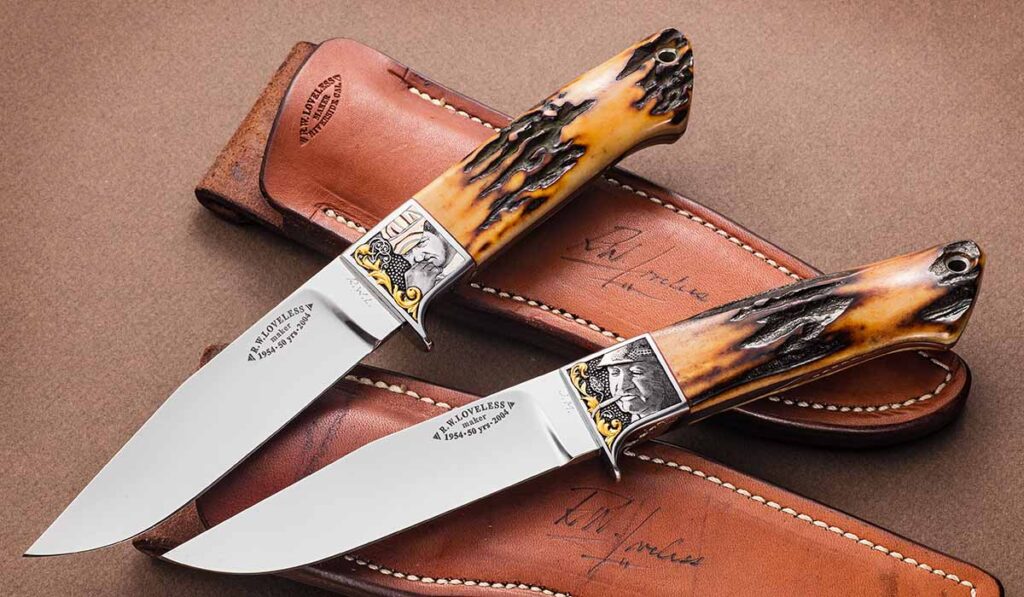
Bob Loveless hunting knife
Bob Loveless helped celebrate 50 years of knifemaking in 2004 with this hunter set complete with engraving by C.J. Cai and a couple of autographed Loveless sheaths. (SharpByCoop image)

“Loveless made a good knife and a distinctive knife. Everybody started copying that, and the whole design of knives changed. Bob was also able to sum up a complex subject in one sentence. He was infinitely quotable, which meant outdoor writers loved him.”

According to Cutlery Hall-Of-Famer Dan Delavan, Loveless was a unique character in the knife world. “Loveless was a genius in the whole industry,” Dan related, “and underrated. Because of his antics, some people didn’t think that much of him at times, but Bob was super smart. He knew things would happen before they happened. His drop point was modernized and refined, and he helped a lot of people get started. A lot of them emulated his style.”

A.G. Russell

A.G. Russell
A.G. Russell

Universally, the contribution that A.G. Russell made to the knife industry is acknowledged as tremendous. He brought people together, tried to build consensus, established the liaison between custom makers and factories that produced magnificent collaborations, developed a robust catalog mail order business that remains the envy of any businessperson, and is recalled as a true gentleman—whew!

Hughes remembers Russell not only for his introduction to Loveless, but also for another moment that proved to be a highlight. “A.G. told me there was a bladesmith in Maryland named Bill Moran and said I needed to get in touch with him,” B.R. smiled. “I kept in touch with Bill. He was always laid back and reserved and shunned a lot of publicity. I wrote a book about him in 1995 called Master of the Forge. We spent several days with Bill and Margaret that fall, Bill and I in the back seat of the car talking and Margaret and Carolyn in the front seat talking. Carolyn has been with me through all these years. I married her in 1957, and she has been the editor of American Bladesmith Magazine now for 20 years.”

Voyles remembers Russell as “the one that lit the fuse and promoted the Knifemakers’ Guild for many years and almost singlehandedly created an aftermarket for handmade knives.” Imagine the foresight, power of persuasion and business acumen that could exert such influence in the knife industry as a whole. It’s safe to say that A.G. was the catalyst for so much of the positive interaction that has taken place in the knife world over the past 50-plus years. He bought tables at gun shows for knifemakers to display their wares back when there were no knife shows to attend. He supported knifemakers with his heart, head and pocketbook.

“Knives were his passion,” Cutlery Hall-Of-Famer Goldie Russell said in remembering her husband’s dedication. “He was determined to know everything there was to know about knives.”

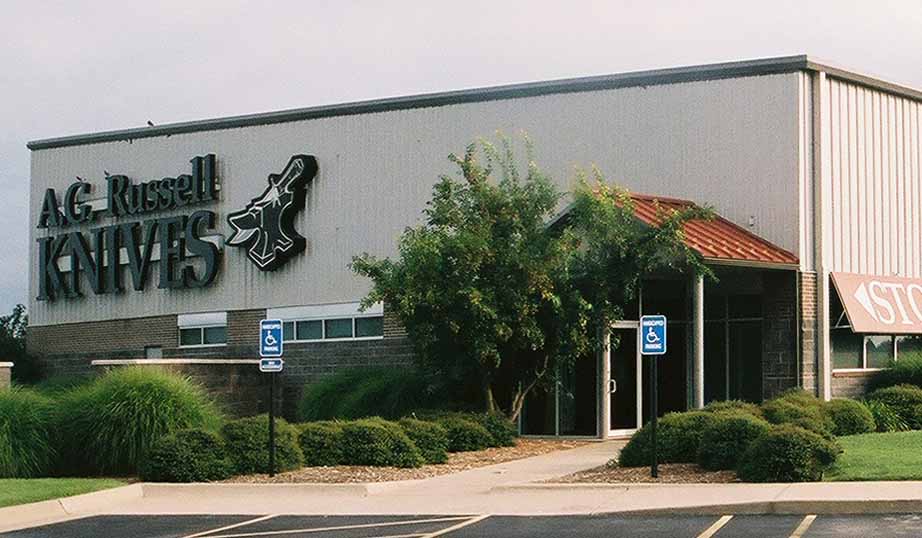
A.G. Russell Knives HQ
A.G. Russell Knives not only is a landmark in the knife industry, it is in its hometown of Rogers, Arkansas, as well.

Goldie recalls her husband’s hard work that made things happen. “By June 1970, A.G. had reserved a block of tables at the Wanenmacher Gun Show in Tulsa and invited the makers he knew to exhibit and sell their knives,” she commented. “I believe it was at this show that he introduced the idea of the Knifemakers’ Guild. A.G. told me that two knifemakers that were on board from the beginning were [Cutlery Hall Of Famer] Dan Dennehy and Bob Loveless. At that show they decided to form the Guild, and there were 11 founding members.”

A.G. secured more tables at the Houston gun show in 1971, and more knifemakers joined the Guild. The following year, the first annual Guild Show and meeting were held in Kansas City, and the membership grew steadily.

In addition to his leadership in the formation of the Guild, A.G. was a visionary business owner. He created the first mail-order company that focused strictly on knives. Until that time, consumers could leaf through the pages of the Sears & Roebuck or Montgomery Ward catalogs and hope they found something. But Russell changed the game in 1964 when he started A.G. Russell Knives with the sale of Arkansas whetstones.

Goldie remembers another seismic achievement that her late husband was directly involved in—the establishment of the first high-profile knife collaboration. “He arranged for Bob Loveless to meet with Schrade Cutlery to produce a modern fixed-blade knife,” she commented, “and the result was the Schrade Loveless Hunter. I recently read something that said [Cutlery Hall-Of-Famer] Uncle Henry Baer facilitated that collaboration. I’m not sure how involved Henry Baer was, but if you look at what was happening, it was obvious that it was A.G. Russell who had direct involvement with Schrade and Bob Loveless.”

A.G. is also known for his innovative work with Schrade to incorporate the Knife Collectors Club, the first organization of its kind. “This was A.G.’s concept,” Goldie observed. “His idea was to create serial-numbered commemorative folders, which would be offered to club members. A.G. would select the knife, develop the project and sell the knives. Schrade would make the knives.”

Goldie personally witnessed her husband’s investment of time and treasure to promote knives from every angle. He supplied Cutlery Hall-Of-Famer Blackie Collins with his mailing list in the early 1970s so that the earliest issues of American Blade, which would eventually become BLADE, had somewhere to go. He supported new manufacturing brands during the 1980s. And he was willing to provide a frank and honest assessment of a knifemaker’s work when asked to do so.

A.G.’s wisdom came shining through when he discussed with Arkansas knifemaker/Cutlery Hall-Of-Famer Jimmy Lile why the two had not become closer friends. Goldie noted that Lile said, “A.G., when I could not do better, you told someone that my knives were not very good.” She added, “A.G. said that as soon as Jimmy expressed that, he realized what he had said. After that Jimmy and A.G. were friends.”

A.G. offered his advice when asked. Goldie remembers a meeting with Stuart Leatherman and his brother, Cutlery Hall-Of-Famer Tim Leatherman, regarding the direction of the composition of the Leatherman multi-tool. “I was in that meeting,” she related. “A.G.’s advice was to upgrade the blade steel and make handles of titanium. His other advice was to find a way to make the handles easier on the hand when using the pliers. The Leatherman Charge and Charge Ti quickly followed that meeting.”

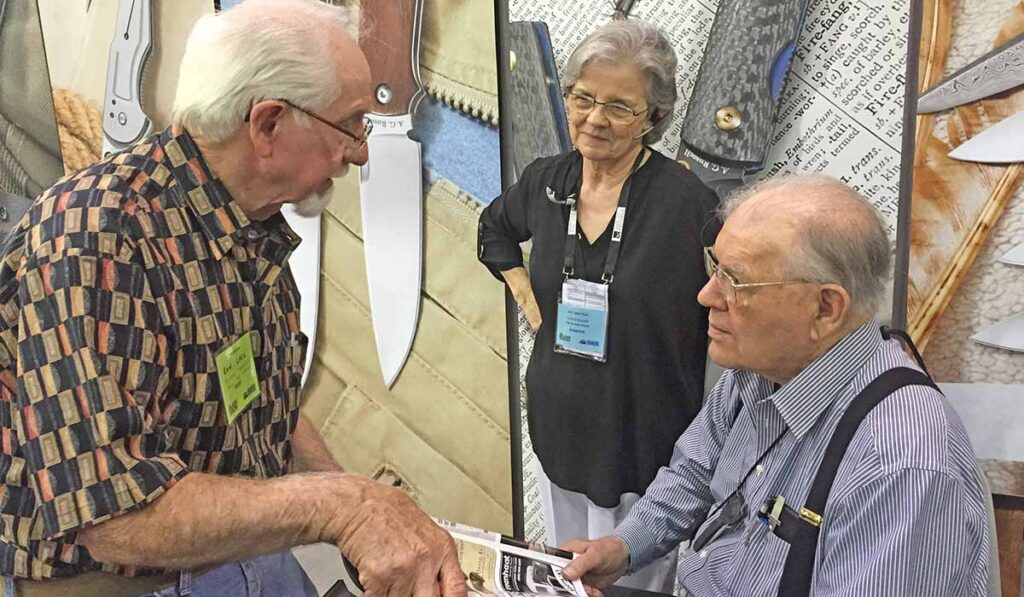
A.G. Russell, Goldie Russell and Ron Lake
BLADE Magazine Cutlery Hall-Of-Fame® members (from left) Ron Lake, Goldie Russell and A.G. Russell share thoughts at the A.G. Russell Knives booth during a past BLADE Show. (A.G. Russell Knives image)

Among other contributions that Goldie and also Phil Gibbs, knife designer at A.G. Russell Knives, remember regarding A.G. are his design innovations, particularly as the first to create folders with handle materials other than metal that did not include metal liners, and in the human element, his willingness to take time with everyone. For example, one day a couple stopped by the A.G. Russell Knives retail store in Rogers, Arkansas. Goldie was asked to step over to meet them. They were unaware of A.G.’s passing until they had seen his portrait in the entryway, and they wanted to express their sympathy.

“They said they had often come into the store and spent time with A.G. talking about knives and knife history,” Goldie noted. “With tears in his eyes, the gentleman said, ‘Mrs. Russell, we are nobody, but he treated us like we were somebody.’”

Delavan, co-owner of the old Plaza Cutlery retail knife store in Costa Mesa, California, and now of plazacutlery.com, put A.G.’s impact into perspective from a professional standpoint. “We both had businesses and a lot in common,” he reflected. “A.G. was a wealth of knowledge. He seemed to know everyone and everything, and I looked up to him.”

No doubt, there are many other individuals whose contributions to the growth, expansion, and thriving entity that the knife industry is today are worthy of praise and recognition. These three—Russell, Moran and Loveless—are, however, more than just a good start. They are giants among other giants, and their accomplishments will continue to resonate across the decades.

Read More On BLADE Magazine And Show:

Military Knives: Soldiers’ EDC From The Past 50 Years

Stepping away from standard issues, combat veterans recount the off-beat military knives they used day-to-day during their service.

Since BLADE® Magazine went to press for the first time 50 years ago, there have been wars and rumors of wars. Even in peacetime, the U.S. military has stood ready in defense of freedom around the world.

When service men and women have deployed into harm’s way through the years, their knives of choice have been by their side, sheathed or strapped, buckled or pocketed, or carried in a duffle bag. From Vietnam to Iraq and Afghanistan, service personnel have taken their chosen tools abroad and put them to use for a variety of chores.

Kim Breed

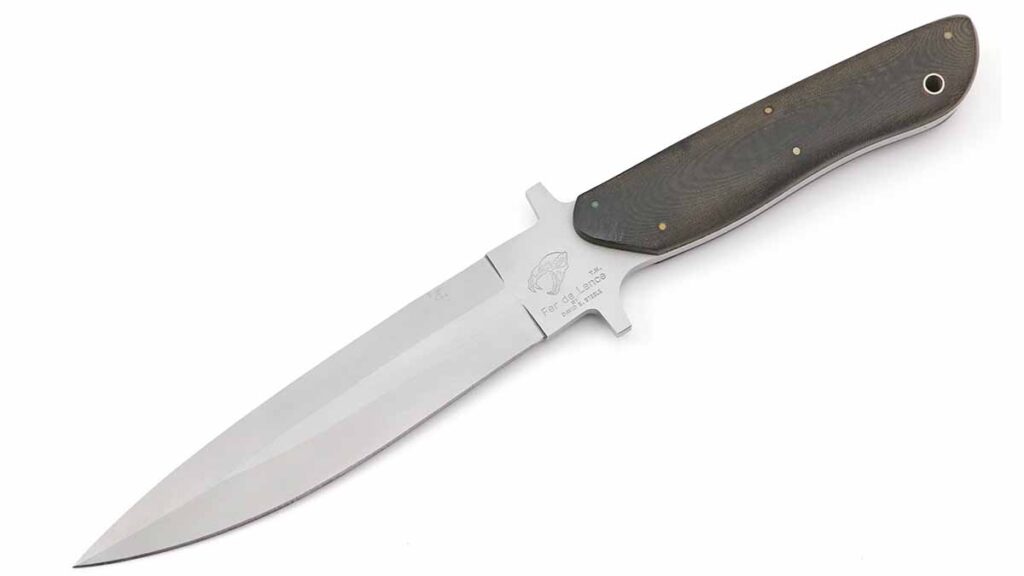
  • Fer de Lance from Pacific Cutlery
  • Ka-Bar-type fighting/utility fixed blade
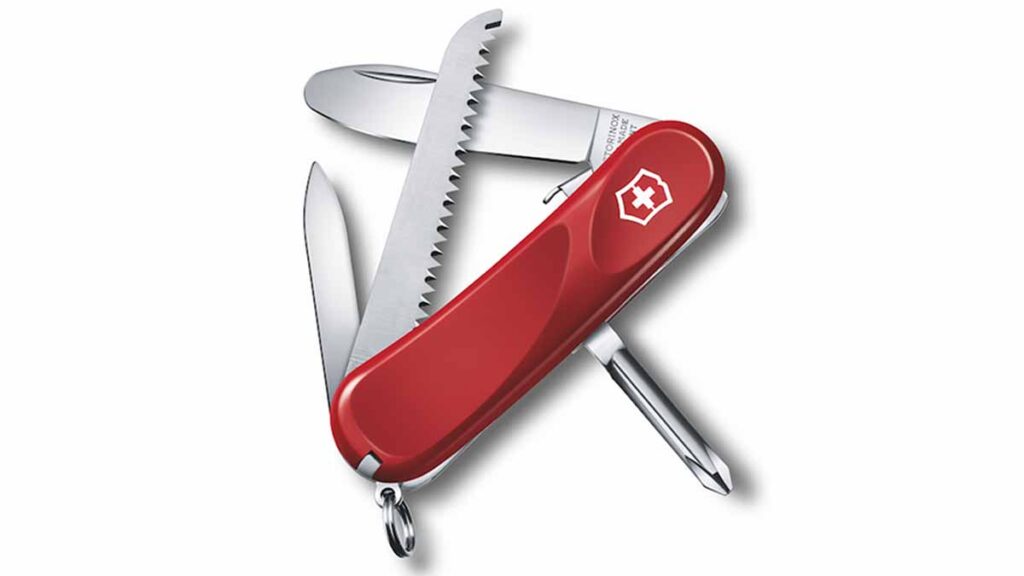
  • Swiss Army knife with tweezers
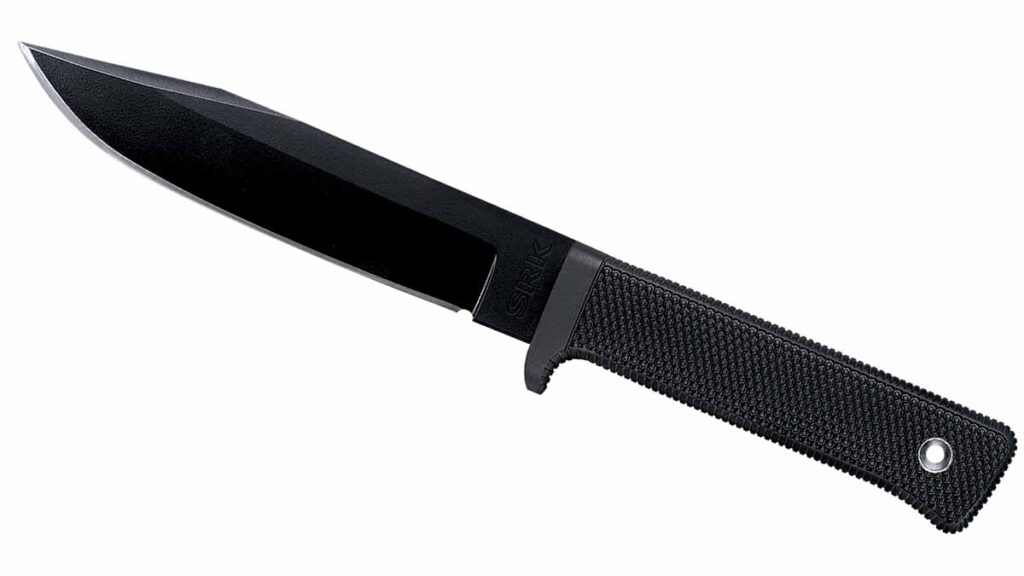
  • Cold Steel SRK
  • Randall Models 1 and 14

BLADE field editor/knifemaker Kim Breed spent nearly two decades in the Army, serving with the 10th and then 5th Special Forces Groups. His experience in the Gulf War included a mixed bag of available knives for anything that was needed.

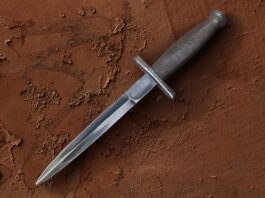
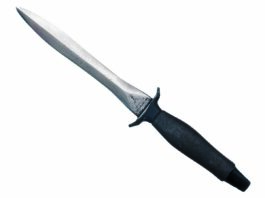
Military Knives: Pacific Cutlery Fer de lance
BLADE® field editor/knifemaker Kim Breed said his experience with military knives in the Gulf War included a mixed bag, including the Fer de Lance designed by David Steele for the now-defunct Pacific Cutlery. Pacific Cutlery was owned and operated by BLADE Magazine Cutlery Hall-Of-Fame® member Les de Asis, who went on to found Benchmade Knife Co. (image of Fer de Lance courtesy of Arizona Custom Knives)

“I carried the Fer de Lance designed by David Steel and produced by Pacific Cutlery,” he said. “It’s a double-edged fighter and I carried it almost my whole career. It’s light in the hand and has a big enough blade to do the job. Two edges meant I had one sharp for heavy duty and the other for finer stuff. Plus, the locals would freak out when I brought out a double-edged knife. It was good psychological warfare.”

Along with the Fer de Lance strapped to his back, Breed also had a Swiss Army knife at his side and an Arkansas toothpick.

Military Knife: Swiss Army Knife
An unexpected military knife: Kim Breed indicated Swiss Army knives were especially handy in Somalia for removing stickers and thorns with the tweezers.

“It wasn’t the real big Arkansas toothpick,” he remembered. “It was a smaller dagger with an aluminum handle. A lot of guys would buy the Ka-Bar because it was a good knife—but it was also cheap. When we got bored, we would throw knives, betting for a cigarette, chocolate bar or pound cake. The Ka-Bar might break but the aluminum-handle dagger wouldn’t.”

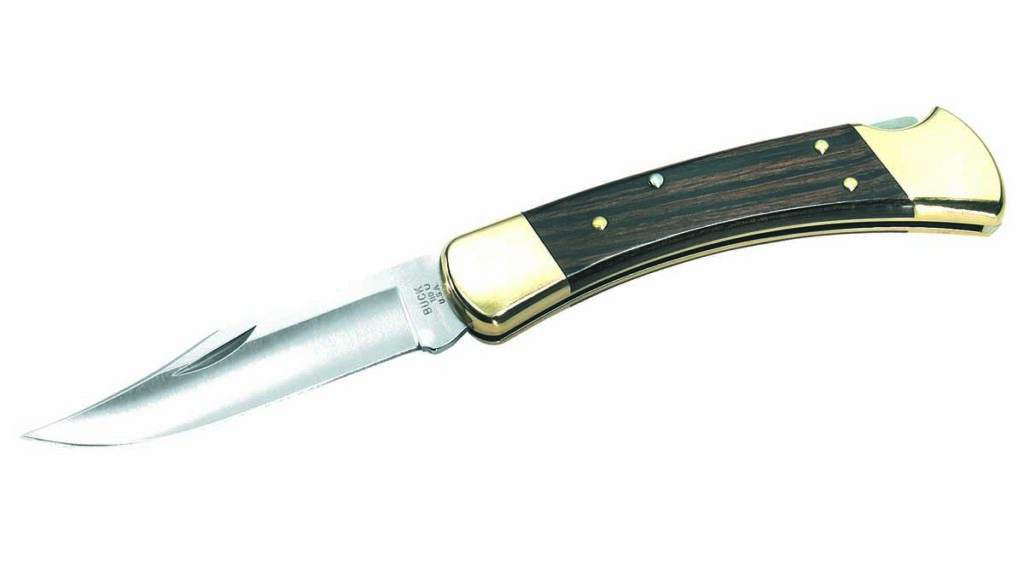
Speaking of the Ka-Bar*, it is among the top five knives of Breed’s Gulf War assessment, along with the Cold Steel SRK, Swiss Army knife, Randall Models 1 and 14 and the Buck 110. Each earned a bit of praise from the veteran.

Military Knife: Buck 110
The Buck 110 folder was widely available at the local PX and had good blade steel and easy carry for assorted cutting jobs.

The Ka-Bar has stood the test of time, and its generational tie to earlier combat deployments of family members from World War II forward may have been an influence, but for the most part, there was value, performance and availability to spare with the iconic fixed blade.

“It was in all the PXs,” Kim added. “You could get one for $12 and it worked pretty good, but if you broke one now and then you could have two or three around.”

Cold Steel SRK
Kim Breed said the Cold Steel SRK was a favorite among the troops, citing its molded Kraton handle in particular for praise.

Breed says the SRK was a favorite with its molded Kraton handle, while the Swiss Army was especially handy in Somalia for removing stickers and thorns with the tweezers. The Randalls were another legacy play. They were expensive knives but the troops’ fathers and grandfathers had carried them, so they were passed along to the sons and grandsons. The Buck 110 folder was also available at the local PX and had good blade steel and was easy to carry.

Jack Stottlemire

  • Ka-Bar-type fighting/utility fixed blade
  • Benchmade Stryker
  • Air Force/jet pilot survival knife
  • Custom Bob Horrigan
  • Randall Models 1 and 14

Knifemaker Jack Stottlemire served with the United States Marine Corps and the Army for a total of 27 years, with 14 combat deployments. He saw action in Operation Just Cause in Panama, Desert Shield and Desert Storm, the air war in Bosnia, Kosovo, Afghanistan and Iraq. The Marine service was first and he saw all his combat duty with the Army, retiring as a sergeant major with Special Operations. Like Breed, he stresses that knives were used for camp chores, prying, slicing and such.

Military Knives: Randalls
Randalls were expensive but fathers and grandfathers had carried them, so they were passed along to the sons and grandsons. Developed in the mid-1950s, the Randall Model 14 Attack gained fame as a military knife during the Vietnam War. (Dan Clinton image)

“Using a knife in combat to stab somebody is pretty much bull,” he declared. “I don’t know anybody that used a knife for that in all my years. But if you’re in a helicopter crash and you need to cut strings or get somebody else out of the wreckage, that’s more realistic.”

Again, the Ka-Bar makes an appearance in the top five knives from his experiences, particularly in the desert environment. Stottlemire’s top five knives of the Iraq and Afghanistan wars include a custom Bob Horrigan** piece with a green Micarta® handle and a 5.5-inch blade of 440C stainless steel. “Bob and I were in the same squadron together and he was a real hero,” Jack offered.

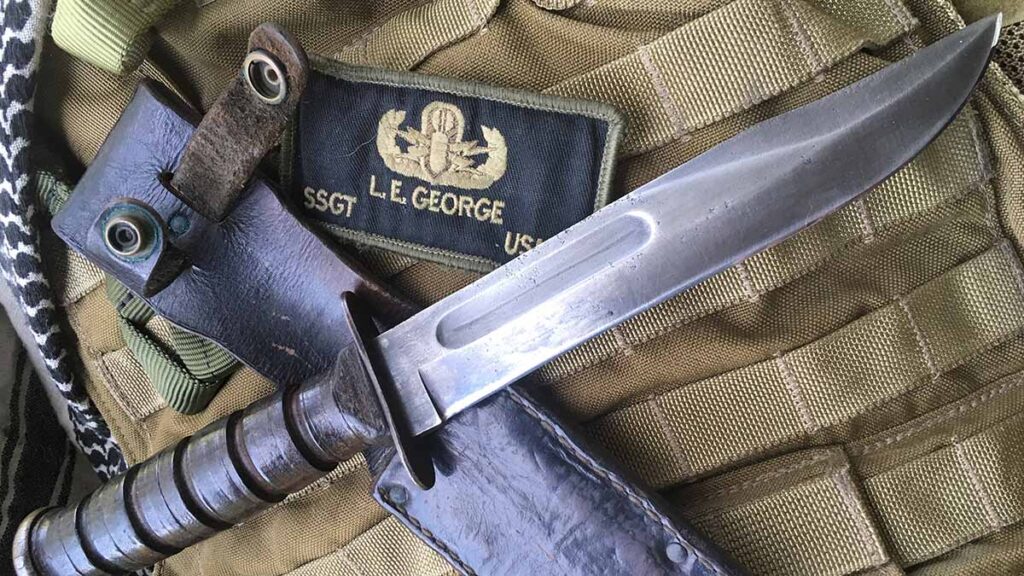
Military Knives: KaBar
Les George said he’s “pretty sure” his Ka-Bar saw action in the Vietnam War, the Korean War and possibly even World War II. The last time the knife was in combat operations was when George saw active duty in the Iraq War in 2005. (Les George’s knife and image)

“The Ka-Bar is everywhere and I carried mine from the time I was in the Marines, and still have it 40 years later,” he continued. “I remember getting them for $25 or $35 and using them to pry and hammer and to open MREs [Meals Ready to Eat] and ammo boxes. That’s what we used them for 99 percent of the time.”

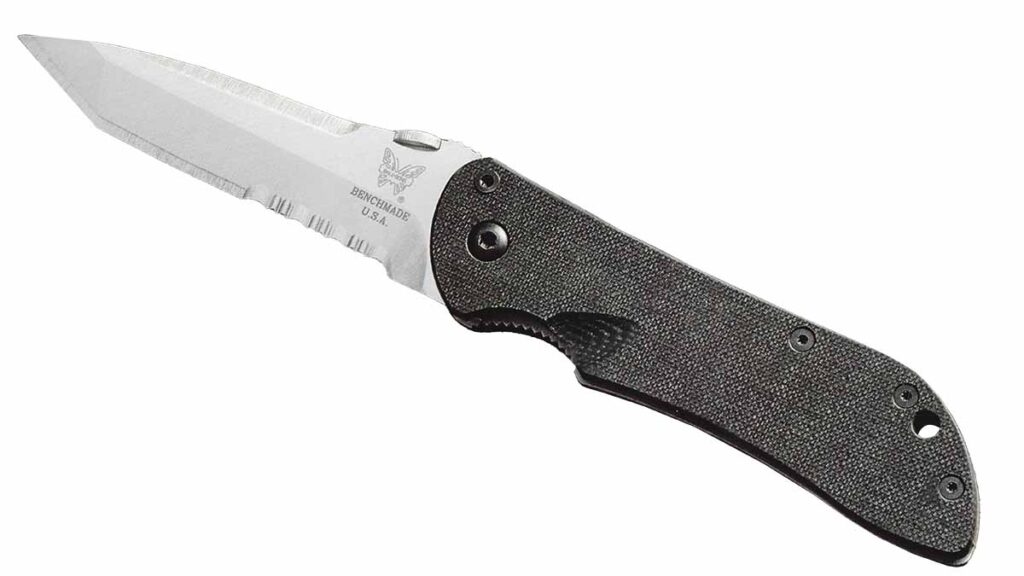
The famed Randall had stayed around as well, again identified as a legacy knife handed down from one generation to another. As for folders, Jack’s units were issued the Benchmade Stryker. “It was common to have a lot of Benchmade autos and one-hand flippers, and there were Gerbers in the same category,” he commented. “I always carried my auto on my vest front for easy access in case I needed to cut a bandage or something like that.

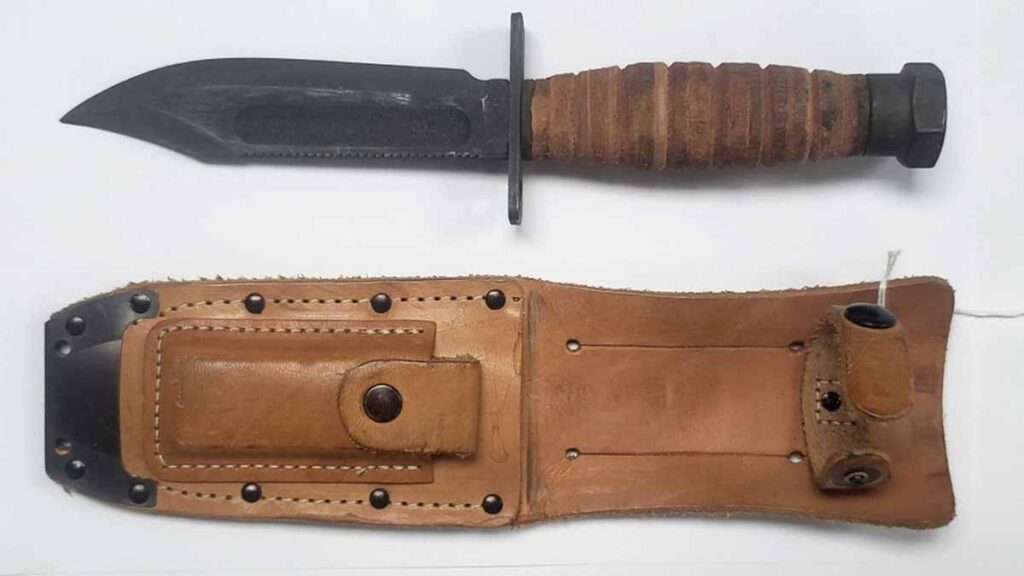
Jet Pilot Survival Knife
Air Force survival knife

“Then we also had the Air Force survival knife. It was a jump master knife that looked like a little Ka-Bar with a stacked leather handle and a short bowie blade. A lot of guys carried more than one knife. They usually had a folder stuffed in their vest or pocket and a fixed blade on their chest next to their magazine pouches. That was for easy access. It’s hard to get to your stuff unless it’s on the vest, especially when you’re in a vehicle or helicopter.”

Les George

  • Custom EOD knife (self-made)
  • M11 EOD knives by Lan-Cay
  • Gerber multi-tools/Leatherman Wave
  • Benchmade Stryker and AFO
  • CRKT M16

Knifemaker Les George served with the U.S. Marines in explosive ordnance disposal (EOD) and carried a knife specifically for EOD use. “I actually made my own EOD knife in Iraq,” he remarked. “It was the first in a series that would become the M12 EOD knife that is currently listed as an option for USMC EOD units to purchase and use.”

Benchmade Stryker
As for folder military knives, Jack Stottlemire’s units were issued the Benchmade Stryker, an Allen Elishewitz design that debuted in the late 1990s.

Among the other knives that Les saw regularly in Iraq were the M11 EOD knives by Lan-Cay, Gerber multi-tools, Benchmade Stryker and AFO, and the Columbia River Knife & Tool M-16.

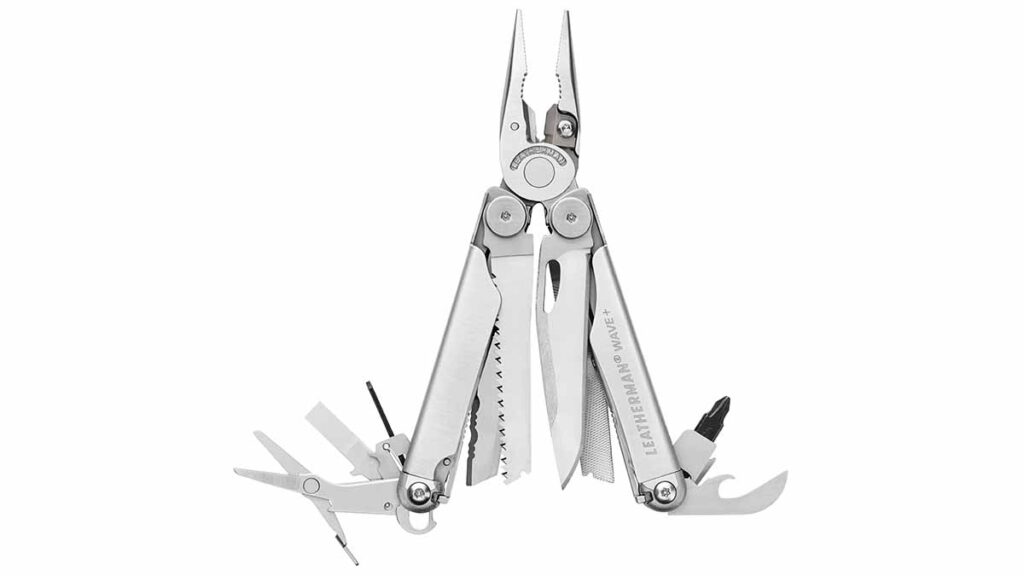
“The CRKTs were available at the PX and the other knives were issued to the Marines by unit,” George recalled. “Obviously, the Ontario bayonet was common for that reason. I had my large fixed blade that I used to probe for and dig up IEDs [improvised explosive devices] and UXOs [unexploded ordnance]. It was a brute force tool, the very epitome of a sharpened pry bar. I had a small Benchmade fixed blade that I had bolted to my pistol holster. I used it to cut tape or prepare demolition charges, and all the cutting utility I needed was done with that knife. I also carried a Leatherman Wave multi-tool. I liked the Wave over the issued Gerber because it closed up smaller, and I could access the blade without opening the tool.”

Military Knives Wave Plus Fanned
Thanks to their versatility and affordability, multi-tools have been popular with the troops since Leatherman Tool Group introduced its original multi-tool in 1982. Les George carried the Leatherman Wave because it closed up smaller and he could access the blade without opening the tool. The Wave+ is a Wave descendant.

Les chose his knives based on the situations he might find himself in during deployments. “The big and small fixed blades had their niche, while the multi-tool was available as a catchall. With the kind of war that I saw, there was not much thought of knives used outside of tools, and for me cost was not a factor. I would have spent about whatever the price to get the knives I wanted.”

Top 5 Knives From The Vietnam War

  • Ka-Bar-type fighting/utility fixed blade
  • SOG fixed blade
  • M7 bayonet
  • Air Force/jet pilot survival knife
  • MIL-K

After studying the Vietnam War era and the knives that were most often found during that period in Southeast Asia, Frank Trzaska has come up with his top five from that timeframe. His list includes—you guessed it—the Ka-Bar, which sits at the top. “The U.S. Fighting/Utility knife, the Mark 2, the Ka-Bar, call it whatever you will, but to me it is America’s fighting knife—adopted in 1942 and still serving our troops to this day,” he smiled.

M7
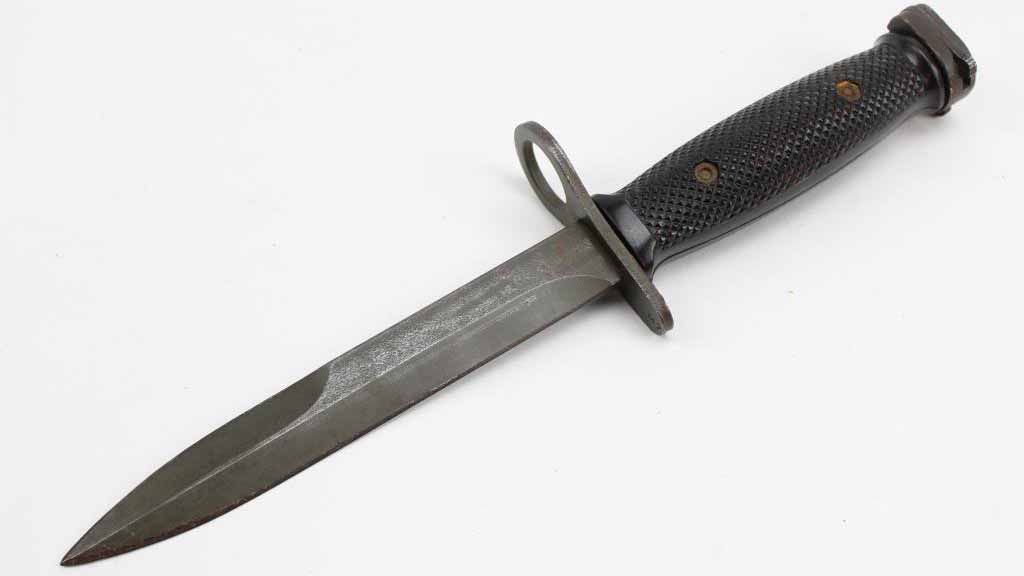
M7 Bayonet was a common ‘Nam era military knife.

Others topping Frank’s list include the original SOG, which he calls “a very hard-to-find knife made in limited numbers for the super-secret Studies and Observation Group [SOG], Green Berets that went out into the field to locate the enemy—Recon.”

Frank has also found the M7 bayonet, designed to fit the M16 rifle, to have been in regular use. “It was another piece in succession that was originally adapted from the M3 trench knife of World War II fame,” he noted. “The M3, M4, M5, M6 and M7 all used the same blade profile.”

Military Knife: MIL-K
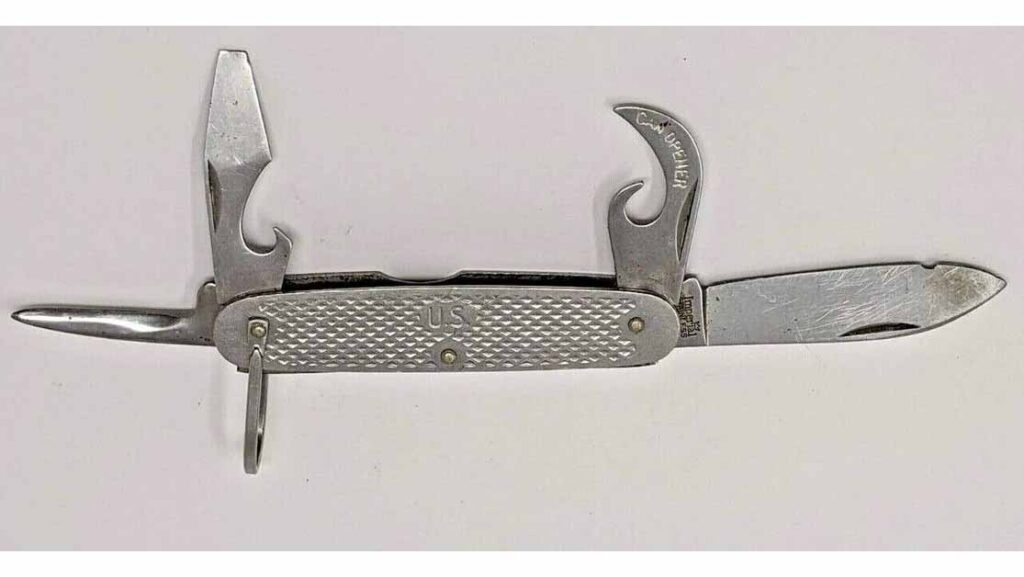
MIL-K was a handy addition to a soldier’s kit.

The Jet Pilot Survival knife, aka Air Force survival knife, and a small all-metal pocketknife called the MIL-K were frequently seen with troops in Vietnam, Frank noted. “The Jet Pilot Survival knife was an iconic knife of the Vietnam era, and it was shown in photographs everywhere,” he related. “Although the name was ‘Jet Pilot,’ it was seen on ground pounders just as often. The MIL-K was the perfect all-purpose pocketknife that, as an extra, is dated so you can collect all the years and at a somewhat low price.”

Trzaska has spoken with troops all over the world, and the multi-tool has surged to the forefront among military personnel deployed these days, but he also quickly adds that the Ka-Bar is still a favorite. Given the salaries of enlisted men, he speculates that cost was always a factor in the purchase of a Vietnam-era knife.

Final Cut

Times change but for soldiers through the last half century/publication life of BLADE, knife uses have stayed the same in many ways. “Almost everyone in Vietnam carried two knives, a pocketknife and a fixed blade, and if you count the bayonet, it would be three,” Frank observed. “They were used mostly for opening meals, mail and boxes. A pocketknife was handy but a fixed blade on your harness was meant for fighting. Along with your bayonet, they were weapons of last resort.”

From the more expensive models to everyday carry in the field, military personnel in Vietnam had their pick. “The Randalls were the knives everybody wanted,” Trzaska said, “but few had them. They became a status symbol of a professional. Young guys also liked big knives until they had to carry all that extra weight and never use them. Then the small knife was the king. Most knives of the era were common steel and would rust easily. Stainless steel was a big plus and found its way into knife production over time.”

Through the years, BLADE has published many accounts of knives in the hands of military personnel deployed around the globe. Since the early 1970s, these stories have brought valuable information to readers regarding performance, personality and collectability. That trend will continue into the future.


*As Frank Trzaska notes, no matter whether you call it the USMC fighting/utility knife, Mark 2, Ka-Bar or what have you, the fixed blade with the leather-washer handle and clip-point blade made by several different companies that first appeared in 1942 and did yeoman’s duty throughout World War II remains a U.S. military icon.

**Robert “Bob” Horrigan, a member of U.S. Army Special Operations Command, was killed in action in Iraq on June 17, 2005. His twin brother is award-winning ABS master smith John Horrigan.

Read More:

BLADE Magazine 50th Anniversary: Knife Industry Milestones

Revel in a short list of knife industry milestones that transformed the knife world.

Editor’s Note: BLADE Magazine is celebrating its 50th anniversary of its founding this year. To recognize this milestone, we are running a series of articles looking at the changes to the knife world the publication has been privy to over its history.

Time marches on. And in the cutlery industry, the half century from the early 1970s to the present has been filled with both revolution and evolution.

From the corner of a massive hall at a gun show, the slight mention of a new style of field tool, and the basic everyday factory blade carried in the worker’s pocket, the knife industry, both custom and factory, has blazed its own trail over the past 50 or so years, emerging from a somewhat obscure existence to the mainstream. And along the way have been those moments of discovery, awareness and excitement that have marked the trail.

For reference, a few of those moments include the following.

A.G. Russell and Lloyd Hale
The first “meeting” of the Knifemakers’ Guild basically was the idea of A.G. Russell. What would become the Guild Show was the leading knife show for decades. A.G. (right) discusses a Harry Morseth knife with maker Lloyd Hale (left). (Sid Latham image)

1970s

Though what would become the Knifemakers’ Guild Show was first held in 1970, the show that occurred three years later is still talked about today. That was when Bill Moran reintroduced damascus steel for knife blades, kindling a revival of interest in damascus as the new “super steel” and generating a wave of collector fervor. Also in 1973, Blackie Collins founded The American Blade, a magazine for the knife industry like nothing that had been seen before. Known today as BLADE®, the publication remains a voice for the industry and a tangible contributor to the life and times of the knife enthusiast.

In the following decade, knife shows increased in number and attendance, including the BLADE Show, the New York Custom Knife Show, California Custom Knife Show and the Guild Show, the latter which led the pack for at least 20 years. At the same time, Guild members established industry trends, including the drop-point hunter and the popularization of super steels 154CM and ATS-34 by Bob Loveless, while A.G. Russell vigorously supported the knife industry through his advocacy, sharpeners, knives and growing catalog business.

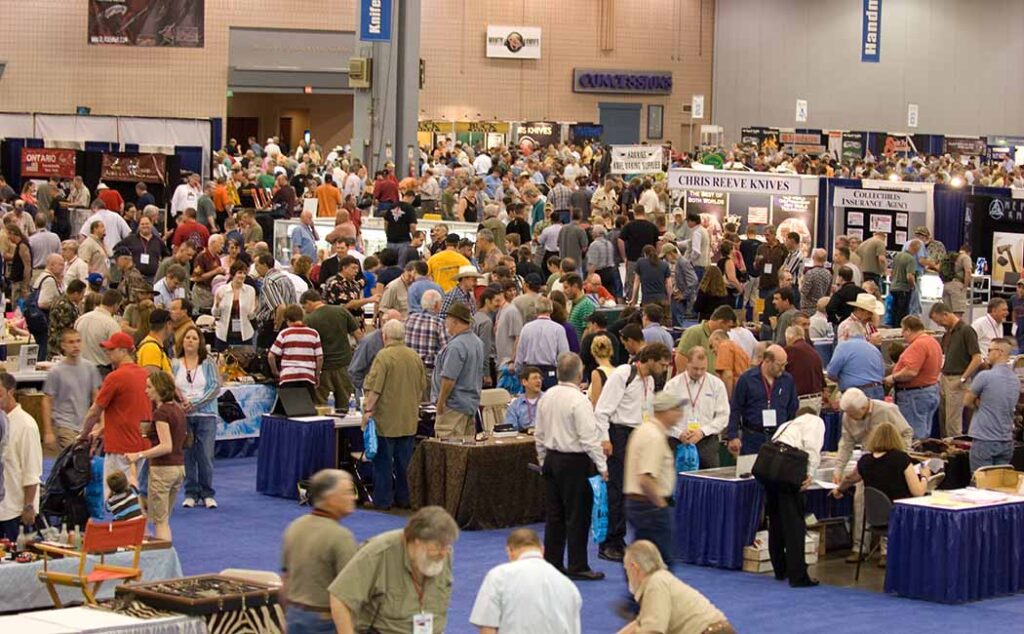
Blade Show 2007
Eric R Eggly, PointSeven Studios

In 1976, the American Bladesmith Society was formed, and those who forged their blades and worked in damascus at long last had their own organization to promote training and excellence with hammer-ins and other events that brought people together to learn the art of bladesmithing. By 1988, the ABS opened its own school, the Bill Moran School of Bladesmithing. For the first time, bladesmiths and knifemakers could take advantage of a year-round school that offered instruction in forging, bladesmithing and more.

1980s

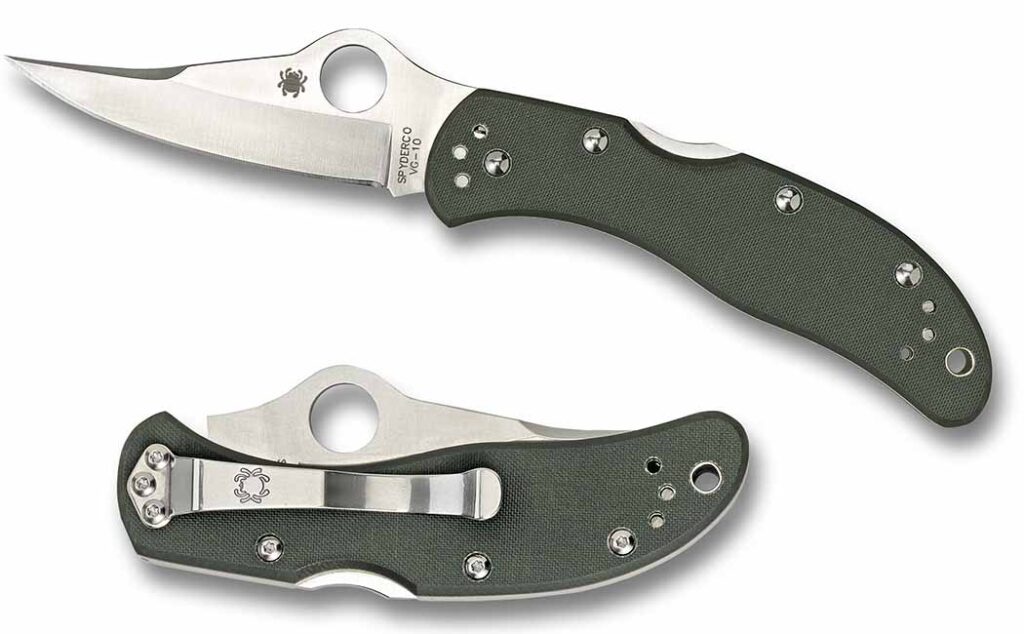
Nineteen-eighty-one saw the introduction of two watershed knife creations by Spyderco and Michael Walker. With the C01 Worker, Spyderco headman Sal Glesser introduced the first knife with both the famed hole in the blade for easier one-hand knife opening and a pocket clip for enhanced carry. Walker, meanwhile, debuted his groundbreaking linerlock folder. The innovations led to a concentration on ease of carry and deployment, focusing the industry on such elements that made the experience of knife ownership something even more special.

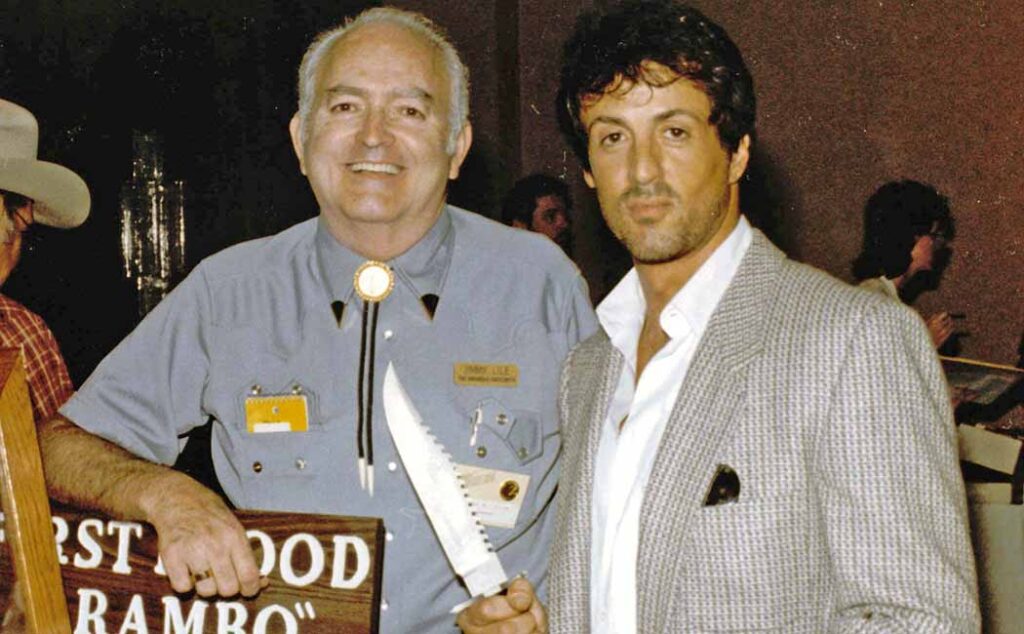
Jimmy Lile and Sylvester Stallone
Jimmy Lile and Sylvester Stallone combined to use Lile’s survival knife in the 1982 movie First Blood, and knives were never the same again.

Hollywood took its turn in the early 1980s with the Rambo series of feature films and the knives that played starring roles. Cutlery Hall-Of-Famers Jimmy Lile and Gil Hibben became celebrities in their own right, and sure enough, other knife-and-sword-oriented films followed, including the Conan series, Commando, Predator and The Last of the Mohicans. These were just a few but the knives of custom makers profoundly influenced the marketplace. Soon enough, collaborations between custom knifemakers and factory knife companies began to flower.

1990s

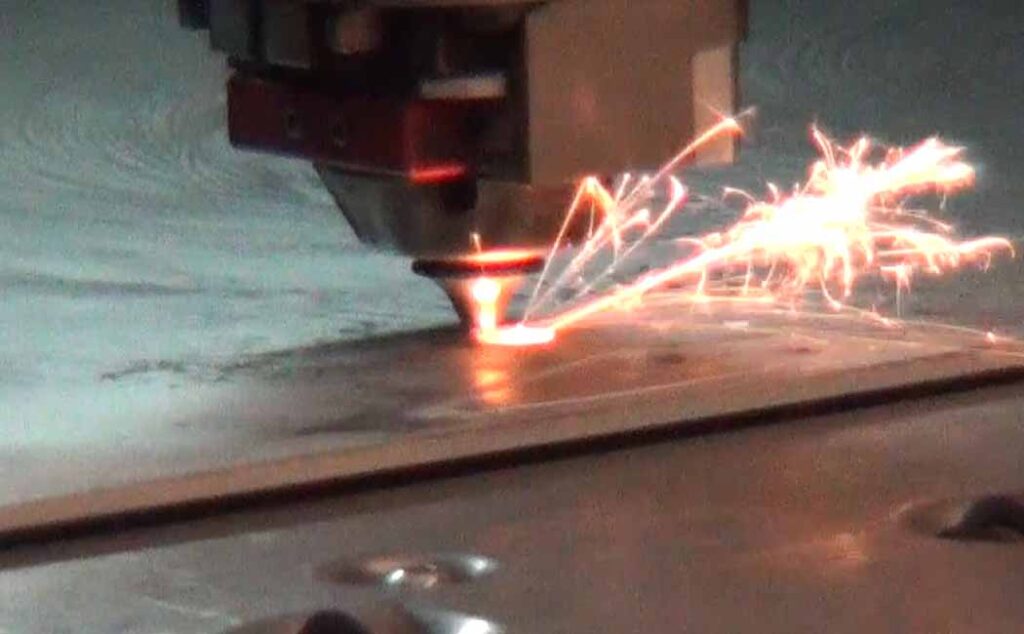
By the 1990s, equipment such as CNC, laser cutters and CAD/CAM entered the knifemaking realm and brought about rapid change in the way custom and factory knives were made. The introduction of such hi-tech equipment into the maker’s shop gave rise to a debate over the very definition of handmade—a debate that continues to this day.

CNC machine
As early as the 1990s, the use of laser cutters—here cutting a hole in a Spyderco blade—CNC machines and other high-tech equipment began to take hold in the making of knives.

At the same time, the emergence of the internet brought the commercial knife market to the world, as custom makers, factories, dealers, collectors and others offered knives for sale on an unprecedented scale. The global reach of the internet led to a burst of information on every aspect of the knife industry, from websites, forums for the exchange of information, how-to videos, online auctions, and even a bit of the dark side—buyer beware! Know your customer and other maxims rang true.

Along with the information explosion, competition was more robust than ever, particularly with the onrush of China’s factory presence, not only in quantity but also, later, in quality. The Chinese influence has redefined notions of affordability, value, and how knives are produced and distributed, and the resulting market conditions continue to impact the buying habits of consumers worldwide.

2000s On

Of course, there are ongoing challenges. Two significant advocacy groups, the American Knife & Tool Institute (AKTI) and Knife Rights, assumed leading roles in responding to knife laws and particularly to the zeal of government regulation, which at times has threatened the livelihood and freedom of Americans to carry one of man’s oldest tools. Pro-knife legislation and the legalization of automatics in many states are evidence of the credible work that has been done, with much of the organized response from the knife industry resulting from the defeat of the 2009 effort led by U.S. Customs to reclassify one-hand knives as switchblades/automatics.

Spyderco knife
With the C01 Worker in 1981, Sal Glesser and Spyderco introduced the first knife with both the famed hole in the blade for easier one-hand knife opening and a pocket clip for enhanced carry. Released in 2014, the company’s C01GPGR Worker Sprint Run paid homage to the original C01.

Knife Innovation

The history of the modern knife industry is one of rapid change and continuing innovation. Long-time maker Tim Britton recalls the influence of Blackie Collins and Blackie’s foray into publishing. “Blackie could sell refrigerators to Eskimos,” he commented. “The American Blade magazine was one of his favorite projects, and his input and support facilitated the start of the Knifemakers’ Guild. We had one show, the Guild Show, where we could share fellowship and technology. Names like Buster [Warenski], Henry Frank, [W.W. “Bud”] Cronk, Jim Schmidt and Bob Loveless became famous at our annual shows.

“Virgil England took us to another planet and then along came the Chinese industrial monster,” he continued. “Tactical knives were their focus and they had no hesitation in copying American designs. The American Bladesmith Society developed a business model whereby rediscovered damascus steel could be taken to all new levels. There was never any question in this group about ‘what is a handmade knife’ or who is copying whose design. Knifesmiths flourished, and Forged in Fire has taken us all to a new level. Knifemaking caught on in other countries, and those makers continue to produce some of the finest work imaginable.”

Opened the Bill Moran School of Bladesmithing
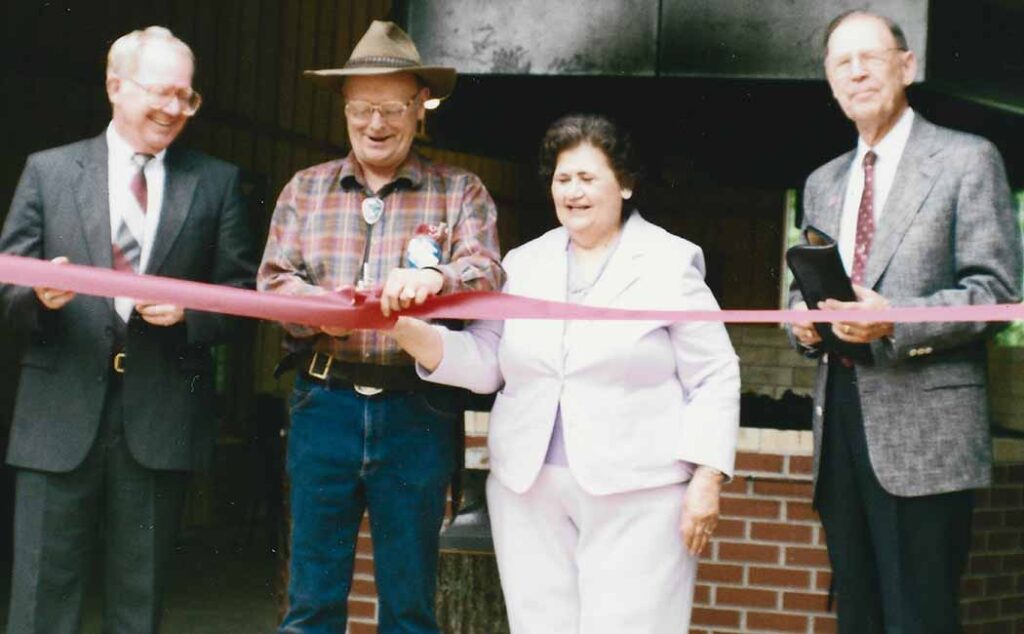
The ABS opened the Bill Moran School of Bladesmithing in 1988. The principals at the school’s ribbon cutting ceremony were, from left: Carl Nelson, president of Texarkana College, Bill Moran and Mrs. Margaret Moran, and Judge James Pilkington.

Custom knifemaker Jim Sornberger well remembers the early days of the Guild and its organization. “The Guild thing was first discussed in 1970, and that was Bob Loveless and A.G. Russell,” he said. “Actually, A.G. bought tables for a bunch of the guys and set that up. He said, ‘Let’s have a show and get a block of tables,’ and so he did that. The Guild was the best organization of knifemakers in the world, and it had the biggest knife show anywhere in the world for many years.”

As for technology, Sornberger says it is simply a fact of life. Evidence of progress and efficiency are seen in makers’ shops routinely today, including CNC equipment, mills, lathes, ingenious versions of versatile grinders and more. “You can’t reverse technology,” he reasoned. “There are always new methods of doing something.”

Ron Lake had a huge hand in the evolution of custom knives, introducing his clever tab-lock interframe folder and helping popularize 416 stainless. “It was a different world back when,” he remarked. “We had a small corner at a gun show, and Blackie Collins was sitting off by himself 30 feet away from me with a slipjoint knife, and I remember Loveless cut himself with that knife! A lot of people came and went from the knife world back in those days.”

Bob Loveless knife
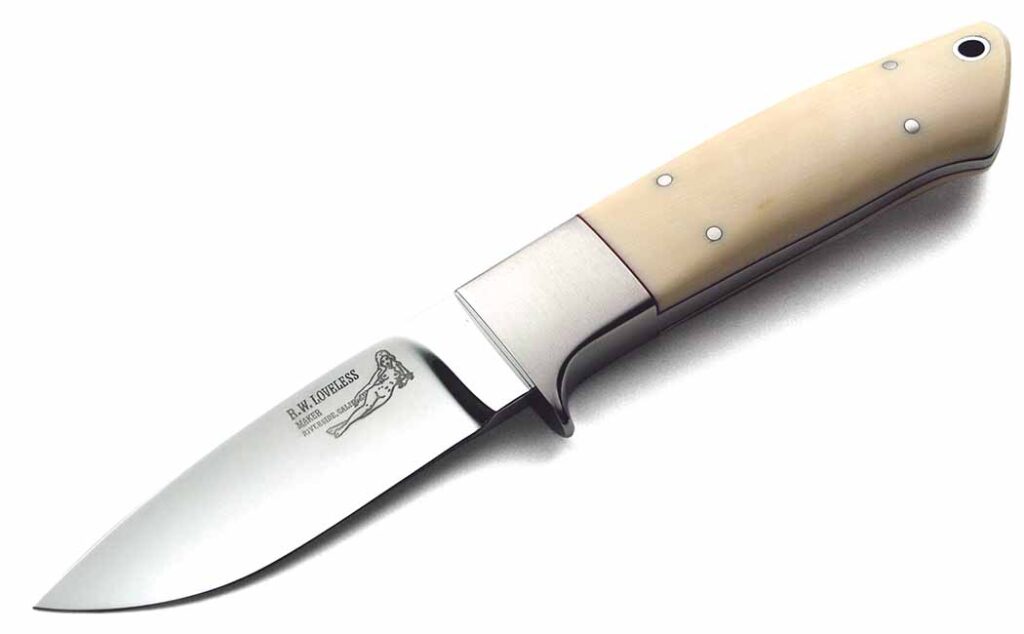
Contributions such as the dropped hunter by Bob Loveless were among the trends started by members of the Knifemakers’ Guild in the 1970s and beyond. (Exquisiteknives.com image)

As Moran brought damascus back into the spotlight in 1973 and other developments were coming along, Lake remembers the growing ranks of the virtuoso custom knifemakers, including Billy Mace Imel, Buster Warenski and others. He also recalls the sudden impact of Spyderco. “I think maybe it wasn’t so much the hole,” he said, “but the clip. That in itself was a mind-boggling event—maybe not so much at the time, but later as people started using it.”

Ron Lake, Bob Loveless, Bill Moran and A.G. Russell

The influential journalistic career of B. R. Hughes has made its own contribution to the modern knife world. Hughes was there in the beginning of the modern era. He planned the first Gun Digest Book of Knives along with Jack Lewis, and it hit the market in 1973.

“That was a meaningful year,” Hughes remembered. “Ron Lake, Bob Loveless, Bill Moran and A.G. Russell are the most influential individuals in the history of custom knifemaking, and A.G. played a bigger role than a lot of people give him credit for. He saw the need to organize and there was a meeting in Tulsa in 1970, and the first Guild Show was in 1971, and it grew unbelievably. They met in Houston and there were about 20 or so makers, and then the next year the show was in Kansas City, and there were 40 or 50, and it just kept growing.”

According to B. R., damascus was a catalyst for revival in American bladesmithing. “The inclusion of damascus saved bladesmithing,” he said, “and there were fewer than 15 bladesmiths in America in 1973. The number was going down. There was Bo Randall and then Rudy Ruana as well, but just a few younger bladesmiths.”

Bill Moran with Betty and Ted Dowell
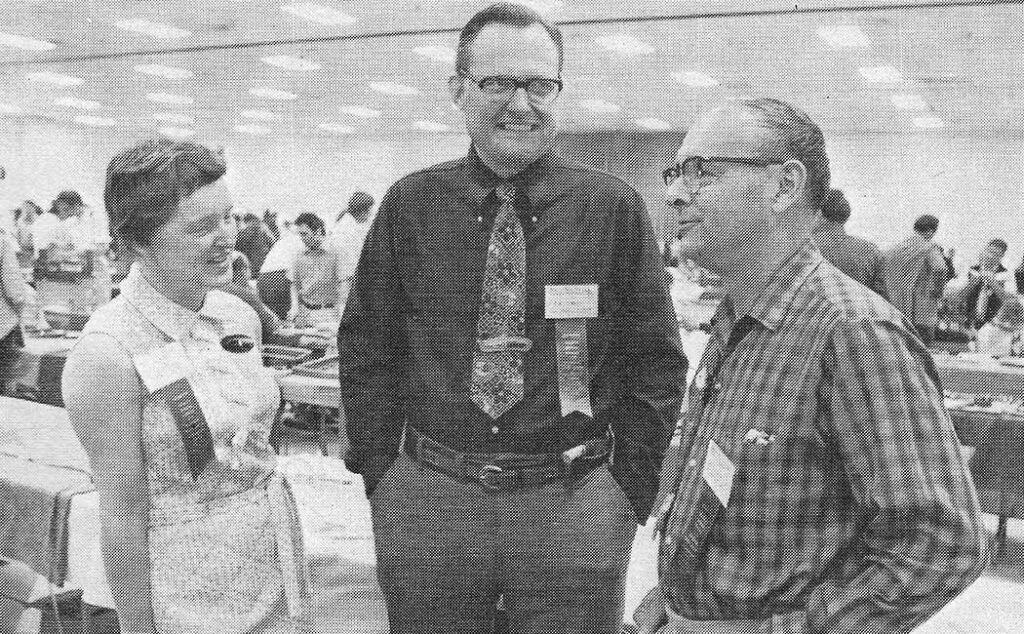
The use of a wide range of new materials in the making of knives exploded in the 1990s and continues to this day. One of the latest examples is Bill Moran reintroduced damascus for knives at the 1973 Guild Show and the rest is history. Moran (right) observes another successful Guild Show with Betty and Ted Dowell at the ’74 event in Kansas City. (Sid Latham image), employed here by Gerry Michael on the blade of his Fancy Harpoon model. (Jocelyn Frasier image edit)

Then, he says, the founding of The American Blade weighed in. “That was immense,” he offered. “I started writing about knives in the early 1960s, and there were primarily just gun magazines. I wrote for Gun Week, doing some knife articles for them, but there was no knife magazine, and the people I wrote about were people I met at gun shows. Without a knife magazine, it made it tough to write about knives.”

Hughes added, “I was fortunate to be around the first meeting of the Guild and things like that.” Indeed, B. R. saw and wrote about history as it was made.

Knife Industry Ups and Downs

These days, the world of knives continues to expand, to change, to elicit praise and criticism. Britton has watched much of this evolution. “Quality Chinese repros are available at flea markets and gun shows for $15 to $40,” he observed. “Many knifemakers are designing knives for knife companies, further blurring the differences between handmade and factory/manufactured. The internet is being used extensively for marketing—from very ornate websites to knife forums. The ‘Show Calendar’ page in BLADE is crammed full of announcements of shows from San Francisco to Paris. Several knife dealers have created a secondary market, and literally thousands of knives are available for sale 24/7.”

Concurrently, Britton is excited about what he notices these days. “We’re seeing abrasive materials, grinders, CNC equipment, new steels, and exotic types of handle materials from paua shells to hippos’ teeth,” he noted. “Creative craftsmen are exploring new horizons with acrylics and phenolics and stabilized wood burls. We see something new at every show.”

Forged in Fire
Forged in Fire debuted in 2015 and since then has exposed millions of television viewers to knifemaking and bladesmithing on a weekly basis.

That, succinctly, is a strong indication of an industry, a passion, a way of life that continues to flourish despite the strain and stress that are natural byproducts of absolutely anything and everything that is alive. A half century from now there will be more milestones, more discussions and even greater achievement.

Members of the BLADE Magazine Cutlery Hall Of Fame® mentioned in the story and sidebar are Blackie Collins, Sal Glesser, Gil Hibben, B. R. Hughes, Billy Mace Imel, Ron Lake, Jimmy Lile, Bob Loveless, Bill Moran, Bo Randall, Rudy Ruana, A.G. Russell, Jim Sornberger, Bruce Voyles, Michael Walker and Buster Warenski.

25 Knife Industry Milestones
1973 Bill Moran reintroduces damascus for knife blades at the Guild Show
1973 The American Blade debuts
1976 Bill Moran, B. R. Hughes, Don Hastings and Bill Bagwell found the American Bladesmith Society
1981 Spyderco debuts the C01 Worker, the first knife with both a blade opening hole and a pocket clip
1981 Michael Walker introduces a folder with the linerlock mechanism
1982 First Blood and Jimmy Lile’s Rambo knife appear in theaters
1983 Michael Walker first uses titanium in the construction of one of his linerlocks
1987 Buster Warenski completes the King Tut dagger reproduction
1988 The Bill Moran School of Bladesmithing opens in Old Washington, Arkansas
1992 Bruce Voyles moves the BLADE Show to the Renaissance Waverly Hotel in Atlanta, where it opens to rave reviews
1990s An explosion in Crucible Particle Metallurgy and the so-called “super steels,” and such materials as carbon fiber, mosaic damascus and more revolutionize knifemaking
1990s Computer numerically controlled equipment, laser cutters and more for knifemaking begin to appear
1990s Internet knife web pages, knife discussion forums, knife instruction videos and more start making their mark
Mid-1990s Tactical folders begin to dominate the custom and factory knife industries
1997 The BLADE Show moves from the Renaissance Waverly Hotel to the adjoining Cobb Galleria Centre and completes its ascendancy as the world’s most important knife event
1990s Chinese companies begin entering the factory knife business
1998 The American Knife & Tool Institute (AKTI), the oldest surviving knife advocacy group, debuts
2001 Terrorists bring down the Twin Towers and the knife industry reacts with a slew of military inspired knives, tomahawks and more
2006 The Knife Rights advocacy group debuts
2009 The knife industry unites to defeat an attempt by U.S. Customs to declare all one-hand-opening knives switchblades/automatics
2010s Social media begins taking the internet knife business to the next level
2010s Knife Rights and AKTI work to overhaul anti-knife legislation, including overturning automatic/switchblade bans and establishing knife preemption laws at the state level
2010s European knife manufacturers such as LionSteel, Fox Cutlery, Maserin and others begin winning more than their share of BLADE Magazine Knife-Of-The-Year® Awards
2015 Forged in Fire debuts and exposes millions of television viewers to knifemaking and bladesmithing for the first time
2020 The pandemic ravages the world and also the knife world, closing knife shows everywhere—including the BLADE Show
2020s The knife industry survives the pandemic, and, thanks to internet sales, even thrives in some segments—and knife shows begin to return

More Knife History:

Mastersmith Lin Rhea Honored As Arkansas Living Treasure

Master bladesmith Lin Rhea was recently recognized as an Arkansas Living Treasure by the Arkansas Arts Council.

Knifemaker, blacksmith, teacher … Lin Rhea has many titles. Hang another one on the master craftsman—living treasure.

That honor was bestowed upon him by the folks in his home state with Rhea recently being named the Arkansas Arts Council’s 2023 Arkansas Living Treasure. The annual award—chosen through a panel of independent judges—recognizes masters of traditional crafts and folk art in the state, of which Arkansas has a rich and wide-ranging tradition. Since the award’s inception in 2002, it has honored craftsmen (and women) from basket makers to log-cabin carpenters. Given Rhea’s propensity for traditional knifemaking and blacksmithing techniques, the Arkansas native fits right in the honor roll.

“Lin Rhea is an outstanding addition to the Arkansas Living Treasure program,” Mike Mills, secretary of the Arkansas Department of Parks, Heritage and Tourism, said in a news release. “He has contributed so much to the rich creative culture of Arkansas.”

Rhea is the second bladesmith to earn Arkansas Living Treasure recognition. In 2007, James R. Cook of Nashville, Ark., was recognized for his contributions to the craft.

Rhea has been a blasdsmith for more than 20 years and earned his master bladesmith rating through the American. Bladesmithing Society. He studied the craft at the Bill Moran School of Bladesmithing, centered at Arkansas’ Old Washington State Park. And he is known as an avid and expert historian of the state’s knifemaking tradition.

Along those lines, he presented the finer points of James Black and his creation—the Bowie Knife—at the 2023 BLADE Show Texas. The seminar not only delved into the technological advancements Black introduced to knifemaking but the ethical considerations of reproducing his work. This is a hot-button topic, given Black never signed his work.

Despite rooting himself in the traditional aspect of knifemaking, Rhea also has a keen eye for advancing the craft. Perhaps one of his more notable endeavors to this end is his X-Rhea knife, which he set out as a personal challenge to create a knife—handle and all—from a single piece of steel. As always, he turned to two tools to complete the task—fire and steel.

“Moreover, I wanted it to look good and be comfortable and as structurally sound as any good knife should be, without being overly heavy,” Rhea said in a 2021 BLADE Magazine article he authored on the genesis of the X-Rhea Knife.

As for being recognized as an Arkansas Living Treasure, Rhea admits to being quite humbled.

“I’ve gone back and looked at other videos the museum (Historic Arkansas Museum) has produced of the other Living Treasures and I know one or two of them personally, and I’ve known them for quite some time,” Rhea said, in an Arkansas Times article, “But to be associated with that group is quite an honor.”

Rhea will be honored with a reception 4-7 p.m. June 17 at Little Rock’s Historic Arkansas Museum. This coincides with the reopening of the museum’s Knife Gallery, which displays several of Rhea’s creations.

Read Up On Knife History:

The Cutlass: From The Sea To The Screen

The Cutlass Is A Short Sword Used For Centuries. Today, It Is Mostly A Ceremonial Blade, But One That Continues To Inspire

A sword can be more than just a weapon of war, the cutlass is an excellent example. For centuries, the cutlass was used by fighting forces throughout Europe as a short, one-handed stabbing and slashing weapon. 

For many, the cutlass is best known as the sword of the pirates in the Atlantic Ocean during the 17th and 18th centuries. In a lesser-known role, it also was regularly used in agriculture throughout the Caribbean like the machete is today. In English-speaking Caribbean countries, the word “cutlass” is used to mean a machete. 

In the modern era, the cutlass has left behind its fighting phase and is almost used exclusively as a ceremonial sword by several navies. However, its popularity endures among collectors and history buffs alike, thanks to its extensive use during the pirate era and the Age of The Sail.

What Is A Cutlass?

A cutlass drill on the HMS Wolverine , 1882 (Public Domain)

The cutlass is a one-handed, single-edged sword used for close-quarters fighting that was the evolution of naval sabers into a more compact, nimble short sword. While the edge does come to a fine point, the cutlass was designed for slashing and swinging at your enemies when fighting hand-to-hand. 

This is why the sword was a popular seafaring weapon. With a slightly-curved blade, usually between 28-32 inches, the cutlass is adept in the close confines of a ship. The straight handle and clipped guards of most cutlasses protected your hand when in battle. Additionally, the cutlass was robust enough to tackle general maritime tasks like slicing through heavy rope or thick fabric like canvas or even wood. And its size made it the perfect weapon for the type of in-your-face fighting that would happen on the high seas.

On land, the cutlass wasn’t as dashing, mostly used to chop sugarcane and clear tracts of land in the rainforest in the New World. Though, the same qualities that made it a great fighting implement made it adept on the farm. The short, swooping blade allowed a great deal of force to transfer from the arm to the material with every swing. 

Who Uses The Cutlass Today?

Today, the cutlass is used almost exclusively as a ceremonial sword. While it was at its most popular centuries ago, the cutlass was still a standard issue sword until around World War 2 before it became wholly ceremonial.

The British transitioned the sword to ceremonial duty in 1936, and the United States followed suit in 1949. Both countries incorporate the sword into military ceremonies today. The Brits issue cutlasses to naval chief petty officers. The United States also offers chief petty officers the ability to wear a cutlass with their formal dress for ceremonies and the like.

Can I Buy A Cutlass?

Absolutely. There are many companies making cutlasses today. While they may not be as pristine as the ones issued by the military, there are numerous companies making these types of blades. 

Factory Cutlass Options

Cutlasses are still made today, but, in general, they aren’t built to the same combat standard as in centuries past. The vast majority of these swords are showpieces meant to be hung on the wall and start conversations. However, if you are a true lover of the Age of Sail, these swords more than fit the bill.

Windlass English Cutlass

This 30.5-inch sword from Windlass is an elegant modern Cutlass, and, for a fee, can be sharpened into a real, proper sword. As is, the high-carbon steel blade is hand forged and mated to a solid brass guard. You’ll really feel like Blackbeard with it in your hand.

The sword comes with a leather scabbard adorned with a brass tip and throat to up the visual appeal of the piece. All told, this is a high-quality replica of the cutlass that will get people talking at your next party and look great in your office or hanging on the wall.

MSRP: $190

Condor Naval Cutlass

The Naval Cutlass from Condor Tool & Knife is a more modern take on the classic blade. The first thing you notice about it is the black epoxy powder finish to the blade. We’re pretty sure pirates of the 18th century didn’t have powder-coating technology, but would have loved to have had the extra corrosion resistance on the high seas.

The blade checks in at 24 inches in length and is made from 1075 steel ground to a razor’s edge. Yes, this sword comes sharpened right out of the box for no extra fees. The smooth hardwood handle is triple riveted, and a powder-coated guard keeps your hand protected when holding the sword. A black welted leather scabbard fits snugly around the blade and keeps everything protected even if dropped.

While it certainly doesn’t look like a sword from the movies, it’s designed to be a true, proper modern cutlass.

MSRP: $148.49

Kult Of Athena Pirate Sword

Complete with a skull and crossbones etched into the scabbard’s throat, the Pirate Sword from Kult of Athena looks like it could have been taken from the set of any swashbuckling movie set.

The 22-inch blade is made from stainless steel and comes, according to KoA, moderately sharp out of the box. That means it might need a more refined sharpening at home if you’re looking for a razor’s edge. However, the blade itself is .16 inches thick, thin enough to slice well but thick enough to hold up to some wear if used for more robust cutting tasks. But be aware, the sword is classed as “decorative”, or for display only, so keep that in mind before playing out your high seas fantasies. 

The cast metal handle is surrounded by a bronze-plated cup guard which features a pirate ship design. The black leather scabbard has a cast tip and throat to complete the look.

MSRP: $49

Kingston Arms Atrim Cutlass

The Kingston Arms Atrim Cutlass shows that not all collectible blades need to be centuries old. Made in the style of a naval cutlass, the Atrim utilizes modern materials and methods to make a truly remarkable sword.

The 9260 spring field falchion-style blade is hand forged and comes in a satin finish. At 25.75 inches it’s a bit smaller than some other cutlasses, letting it move more fluidly in your hand and taking up a smaller display space. The full-tang construction terminated with a stainless steel guard and pommel around a brown leather handle that provides a strong grip.

This is the most expensive sword of all the cutlasses showcased in this piece, and it’s worth every penny for the discerning, high-end collector.

MSRP: $432.95

Cold Steel 1917 Cutlass Sword

When it comes to collector pieces outside of auctions, Cold Steel’s 1917 Cutlass Sword is a prime example of what’s being made today. While it is designed for display and collection, the 1055 steel blade does come with a serviceable edge out of the box. 

In terms of size, it’s exactly what you’d expect a cutlass to be. At just under 30 inches long and 37.6 ounces, it’s a nimble sword that will feel good to hold and wield when showing off all of its intricacies. The wood handle and blued steel hand guard complete the look, and the included leather scabbard keeps the sword looking classy even when put away.

MSRP: $289.99

APOC Survival Cutlass

This option is rated for proper use rather than display. That’s abundantly clear considering it comes with a MOLLE-compatible Kydex scabbard. That doesn’t come with swords meant to be hung on the wall.

The APOC is a tactical sword that has a 21.5-inch black oxide blade made from 9260 spring steel. The black G-10 handles complete the monochromatic look and provide excellent grip in myriad conditions.

At just under 2 pounds, this is a lightweight cutlass meant to be used as a survival tool out on the trail or in more intense outdoor situations. The blade is meant to slice, of course, and the edge comes to a fine point, making this a puncturing tool as well. Versatility is the name of the game in survival equipment, and, while a machete or shorter knife might be a better option, the APOC cutlass is built for the outdoors and to handle the elements.

MSRP: $169.95

Custom Cutlass Options

There are numerous people making custom cutlasses and other swords. Whether it is for the private use and display of an individual or to be used as props in movies, at renaissance fairs, or in other forms of entertainment, there are makers and smiths crafting modern versions of the centuries-old blade.

Even the popular YouTube Series Man At Arms: Reforged did an episode about the cutlass and showed multiple ways to craft them.

Tony Swatton

Swatton runs Sword & Stone in Burbank, CA and makes arms and armor for film and television. He, and his shop, were the star of the original Man at Arms series nearly a decade ago. He’s self-educated and has been making armor since he was 17.

The first movie his work appeared in was Hook in 1991, and since then his weapons have been seen on screen in more than 300 movies including massively popular films such as Pirates of the Caribbean, Batman, and Thor. He also designed the cutlass used in Assassin’s Creed 4.

David Lisch

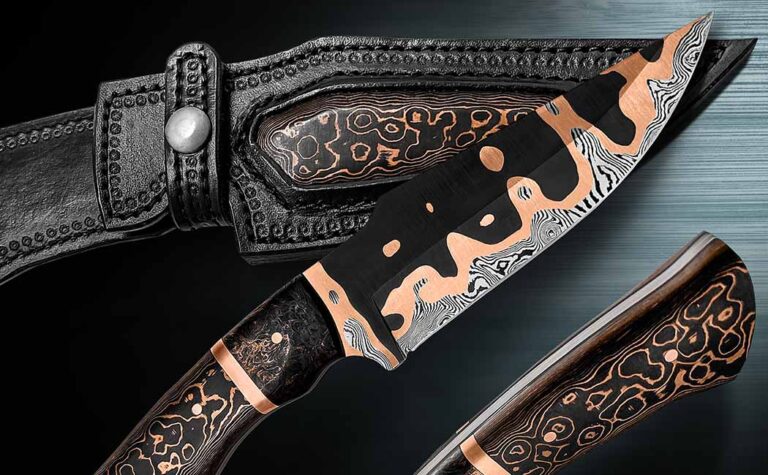
Lisch makes custom knives and swords exclusively from damascus steel. His 26 years of experience in the field are seen in the intricacy of his mosaic patterns and one-of-a-kind blade designs. He’s made landscapes and sunrise designs on his blades.

An example of David Lisch’s damascus work.

His knives have won awards and he teaches classes in blacksmithing and knifemaking with his wife Andrea at their school in Yelm, Washington, about an hour south of Seattle.

Collecting Cutlasses

The cutlass is collected by all sorts: sword lovers, pirate aficionados and history buffs. Specialty dealers help these collectors find the pieces they are looking for, and it helps keep the cutlass alive and in public consciousness.

Additionally, cutlasses have made it to auction houses around the world, sometimes fetching as much as $10,000 before the hammer falls at auction houses like Morphy’s, Sotheby’s, and Rock Island. 

In late 2022, the 1860 naval cutlass belonging to John H. Ferrell, a Congressional Medal of Honor recipient, went to auction at Morphy’s and sold for $14,760. The sale showed how, even today, the popularity of the cutlass continues to endure in a big way.

Read More

Fast And Furious: Our Top Picks for the Best OTF Knives On The Market

Despite A Rocky History Of Legality, OTF Knives Have Endured And Are Some Of The Most Popular Pocketknives On The Market Today

As its name suggests, an Out The Front (OTF) knife is a fairly straightforward affair.  In short, it has an enclosed handle with a blade that deploys from the front–the bolster, hilt or what have you. In general, these fast-from-the-gate options are small, most with an average blade length of 3-3.75 inches, though there are certainly larger examples. 

The knife is distinct from its “Out-The-Side” cousin, at least as a switchblade–one of its most common forms–in the variety of the way the blade is brought into action. Furthermore, the OTF knife needn’t any push-button, assisted-open system to flash cold, hard steel in the wink of an eye. 

Overall, OTF knives are a fascinating, if not slightly intimidating, corner of the knife world. In this guide, we’ll look at some of the history, usage and types of OTF knives. Then we’ll show you some of the best options on the market today. Get ready to flick into action.

Legality Of The OTF Knife 

In the past, these knives were favored by paratroopers and sailors. However, thanks to a media campaign in the 1950s that showed automatic knives as the tool of choice for criminals and underworld types, including popular movies like “Rebel Without A Cause”, automatic knives were banned nationwide. The Federal Switchblade Act passed into law on August 12, 1958 and effectively banned auto knives across the country. 

Going into 2023, the panic over OTF knives and other switchblades has somewhat subsided. Most states now allow ownership and carry of OTF, and other types of, automatic knives. However, 11 states still have a blanket ban. Furthermore, there are some issues when it comes to what many places call ‘stabbing instruments’ and other vague terms. Where this becomes an issue is some states that allow automatic knives have laws against double-edged blades. Given many OTF knife options fall into both categories, certain models have a narrow window of legal ownership.

As always, if OTF knives or switchblades tickle your fancy, please check your local laws before picking one up. Better safe than sorry.

Types Of OTF Knives

As mentioned above, there are four types of OTF knives. Each has positives and negatives, and the prices will vary wildly. It’s important to know the differences so you purchase the option that best suits your needs.

Manual OTF Knife

The most basic and least expensive OTF knives are the manuals. They are exactly that, knives that deploy and retract through manual operation. The most common way of doing this is via a slider on the handle. The upside is that you are in total control of the speed of your blade. However, it may not have the wow factor of other knives on the list. But hey, you’ll be safe while using it. 

Single-Action OTF Knife

These knives feature a powered deployment, usually with a button of some type, but require you to manually retract the blade to reset it. And it isn’t retracting like you might think. You pull a handle at the bottom to both retract the blade and recharge the spring so it’s ready to deploy again. 

Double-Action OTF Knife

When you think of an OTF knife you probably think of double-action OTFs–better known as fully automatic. The blade deploys and retracts with the touch of a button or flip of a switch. Prominent companies like Microtech and Cobra-Tec make dozens of different double-action OTF knives.

Gravity Knives

The four-leaf clovers of OTF knives are definitely gravity knives. Few companies still make them. The blades deploy and retract with the help of gravity.

The Reate EXO is one of the most popular gravity knives on the market today and a great example of the style. Just take into account your local knife laws as some places have specific laws banning the ownership or carry of gravity knives.

What To Look For In A Quality OTF Knife

You can find decent, but basic, OTF knives in the $30 range, but expect to pay ten times that for a model that extends and retracts on its own with the push of a button. Though, the sky is really the limit when it comes to the features on these knives, as some can easily jump over $1000 depending on what’s included.

The rub, for the price, is that even the expensive options do not do well for anything other than basic and light use as they are not as strong as other types of knives.

The basic selling point of OTFs–aside from inherent coolness–is convenience. Read that as they can be entirely used with one hand. It’s best to think of the OTF knife as a refined gentleman’s blade: a cutting tool that you could rely on for daily life and its inconveniences. 

OTF Blade Quality

The main issue surrounding blade quality on OTF knives is how light the blades have to be to function. Because the blade is entirely surrounded by the handle, the blade itself cannot be wider or longer than that existing space. As a result, most OTF knife blades are short and light. 

These blades are rarely what we would call a full-profiled knife and many are under 3 inches despite a full-sized handle. These blades are not especially strong and are essentially for cutting only, though there is utility in thrusting or stabbing depending on the strength of the locking mechanism. 

The small tang area is where the mechanisms are anchored, and this space is usually quite insignificant in surface area. It is entirely possible and even easy to break OTF knives if used improperly. 

Practicality Of OTF Knives

If you are in the market for an OTF knife, realize that there are better designs for most daily work that are substantially stronger and can handle a much wider variety of tasks, not to mention are cheaper. OTF knives do have their niche, much like karambits, balisongs, and friction folders, but each of these designs has hard limits on what they can accomplish as opposed to a fixed blade or a suitably strong folder. 

Best OTF Knives

SCHRADE VIPER OTF

Coming in at a relatively low cost (comparatively) is the Schrade Viper. The knife lacks some of the features of higher-end OTF knives, but at 1/10 the price of some of the others on this list, it is a good starting point should you want to familiarize yourself with the OTF style in general. 

The knife is a bit more manual than others in that it is assisted opening but needs to be manually closed. The overall structure of the knife is not cheap. The handle is made of aluminum and includes an integrated glass breaker in the pommel. It also features a manual safety system for opening and closing the blade to ensure it only opens when you want it to.

MSRP: $75

SMITH & WESSON M&P OTF

The M&P OTF retails in the same range as the Schrade Viper and is largely a product that appeals to an entry-level crowd. Many OTF knives on this list retail for more than some of S&W’s guns–a telling sign this market is for the discerning individual. with the M&P OTF, you get a large degree of utility without some of the additional features and glamor of higher-end models. 

Like the Schrade, this knife has an integrated glass breaker in the pommel and is similarly assisted opening/manual closing. If you already own an M&P pistol, you’ll notice that the handle contouring matches the slide machining cosmetically, including a safety lever that resembles the one on the pistol. MSRP: $70

HOGUE KNIVES COUNTERSTRIKE 

Hogue’s new Counterstrike is a flagship design that is sure to impress, not only with its modest price point for a fully-automatic knife but also the materials it is made from. 

What sets the Counterstrike apart is not just that sweet-spot price, but the high-end materials it’s made from and its excellent strength. Among these is the MagnaCut blade, which itself is a prime selling point. This steel is among the best in the industry and gives the Counterstrike excellent edge retention and adds rigidity to the already thin OTF blade profile.  Additionally, the knife has a glass-breaker pommel, aluminum, and carbon fiber handle, and is made in the USA. 

MSRP: $400

KERSHAW JENS ANSO KAPSULE MANUAL OTF 

The Kershaw Capsule is a small manual OTF excellent for concealment. At just 3.25 inches while closed and with a 1.9-inch blade, this small knife is a great self-defense tool because of its size and unassuming appearance.

However, it’s much more than that. The spear point blade works like a box cutter. The tip is great for puncturing the and edge can handle the type of slicing work you’d expect from a commercial box cutter. It’s convenient and compact enough that it can even fit on a keychain.

MSRP: $35

MICROTECH ULTRATECH D/E 

Microtech is one of the companies that popularized the modern OTF knife. In fact, most knife enthusiasts would go so far as to say that Microtech is completely responsible for this trend and has set the bar for all OTF knives going forward. The Ultratech is a solid example why the company calls the tune.A dependable OTF,  the knife displays an excellent balance in terms of material, strength, and utility. It is a fully-automatic design that opens and retracts with the same switch. If you want an incredibly reliable OTF knife for your daily use, the Ultratech is arguably the knife on this list with the most pocket hours across the board and is from an established OTF brand. Like others on this list, it features a glass breaker pommel and is made in the USA. 

MSRP: $310

HERETIC KNIVES ROC

Now here is something you don’t see every day. The Heretic Knives ROC is visually stunning, it is just so rare to see a curved blade on an OTF knife. The company no longer has the ROC listed on its site as of this writing, but it is available and in stock online. The ROC accomplishes its one-of-a-kind appearance by using a curved handle to match the blade, which overall seems like a no-brainer.

But it just isn’t seen these days, despite the advantages in self-defense or martial arts. While it resembles a karambit, this knife lacks a finger ring on the pommel. The ROC is a fully-automatic design that retracts and deploys on its own. If you are in the market for an eye-catching OTF design that is USA-made, you’d better get them before they are gone.

MSRP: $750

PIRANHA RATED-R 

The Piranha Rated-R is one of the most discreet and well-designed knives on this list. The others we’ve looked at have release buttons/switches on the side of the grip in line with the spine of the blade, whereas the Rated-R has it conveniently mounted where the thumb rests near the end of the handle. 

It is a fully-automatic knife and requires no movement of the hand to deploy and retract the blade thanks to the switch location. Unlike most of the others here, it lacks a glass breaker pommel, further adding to its discreet appearance. The knife is on the higher end of cost for OTF blades. But like any semi-custom product, it appeals to a certain customer that has specific needs for a strong, durable, and unassuming knife. The Rated-R is made in the USA. 

MSRP: $490

BENCHMADE AUTOCRAT

This list wouldn’t be complete without a knife from Benchmade. The company has been producing visually attractive and highly functional blades for the most demanding end users: hunters, cops, rescue crews, anglers, and bushcrafters, among many more. The Autocrat is the most sought-after Benchmade OTF model and it has an excellent reputation for strength and sharpness.

The knife is in the same cost range as most high-end OTF knives at $500, making it an investment for most people but a steal for those who desire American-made quality. The knife is fully automatic and is available in two colors. It does not include a glass breaker pommel, making it easier to use in the hand and a bit more classy in overall appearance. 

MSRP: $500

Read More

Advertisement

Must Read Articles

Read this before you make a knife

Knifemaking 101 – Read This Before You Make a Knife

  by Wayne Goddard My experience has taught me that there's nothing like digging in and getting started. I've often said the hardest part of the...
how to forge damascus steel

How to Forge Damascus

Advertisement
Advertisement