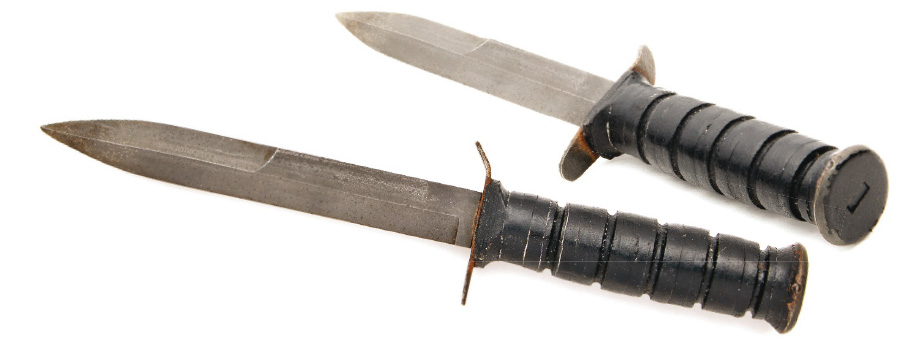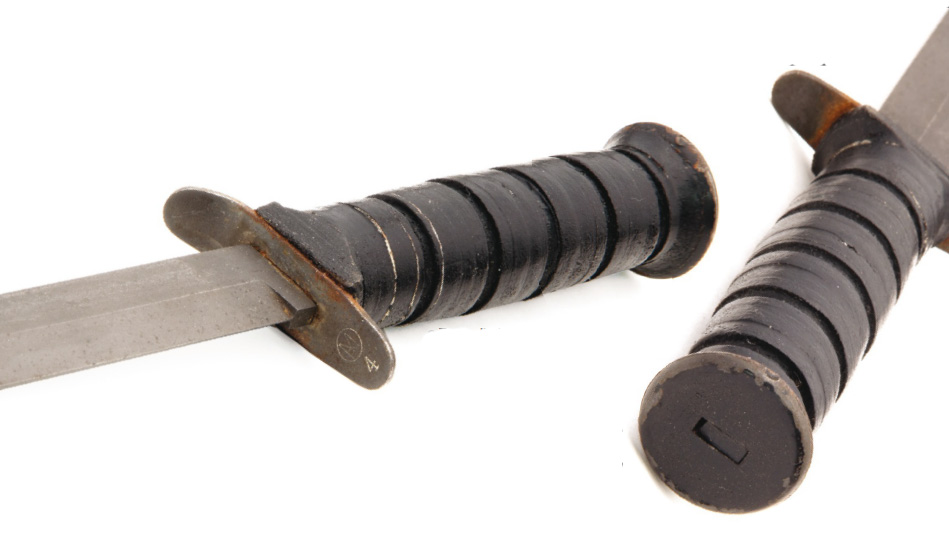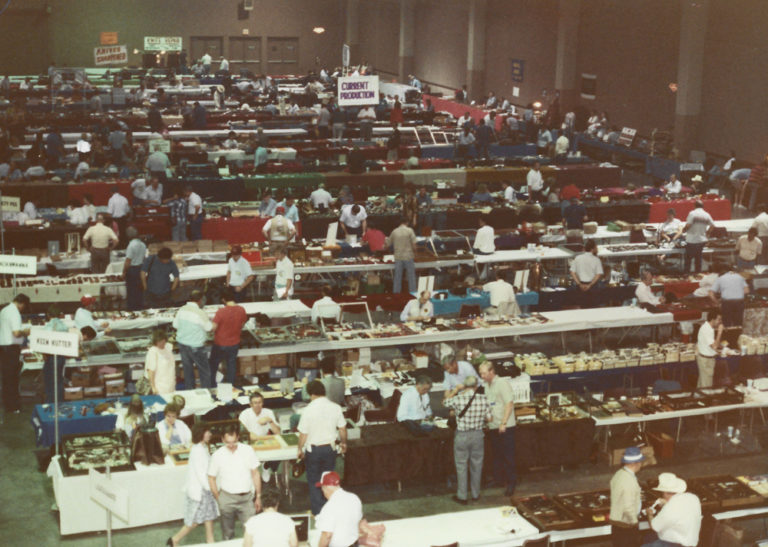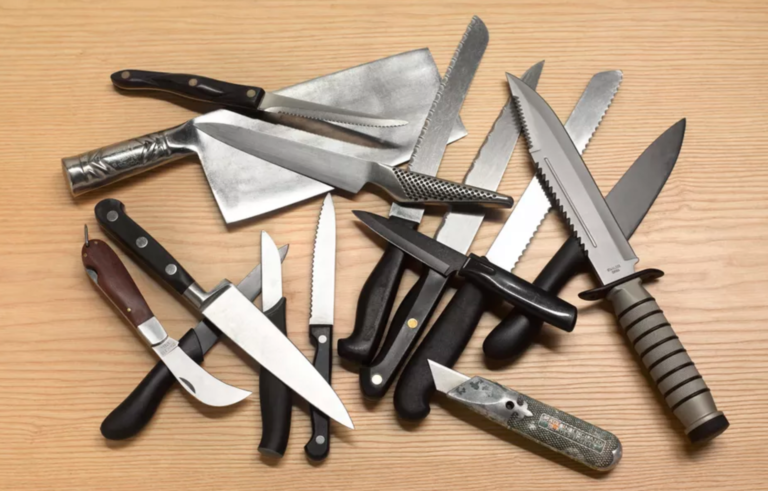
Knife History

The history of knives and other edged instruments is tied to the history of people in general. As humankind’s oldest tool, unraveling knife history can lead to even more surprising and enriching information to better understand the world.

Ballistic Knife: The Most Illegal Knife in America

Editor’s note: This article is an excerpt from the KNIVES 2004 book, but the information is still relevant.

Switchblades, or automatic knives, might attract the most attention, but reforms in recent years have relaxed restrictions in most U.S. states. The most banned knife in the country remains the ballistic knife.

Here’s a look at what ballistic knives are, how they became banned and why those bans should be repealed.

What Is a Ballistic Knife?

Federal law defines a ballistic knife as follows:

United States Code, Title 15 Section 1245
(d) “Ballistic knife” defined. As used in this section, the term “ballistic knife” means a knife with a detachable blade that is propelled by a spring-operated mechanism.
Pub. L. 85-623, Sec. 7, Oct. 27, 1986. Amended Nov. 18, 1988.

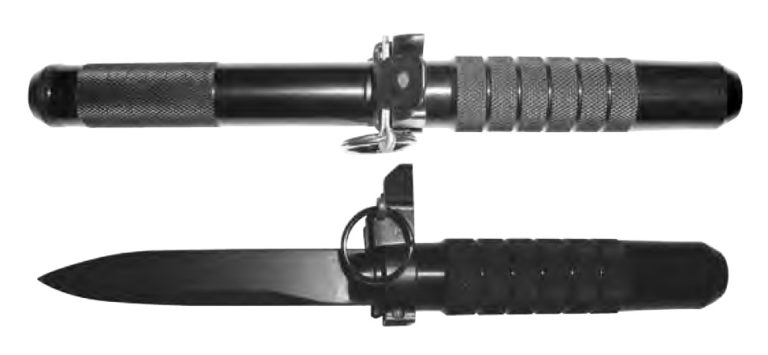
In plain English, a ballistic knife is essentially a blade attached to a hollow handle that fits inside of another outer hollow handle, which contains a coil spring. The coil spring compresses inside the handle, and a latch holds the knife blade down against the spring pressure. When the latch is released, the knife and attached inner handle launch and “go ballistic.”

The federal law on ballistic knives is very similar to federal law on switchblades, except that the switchblade law exception for “the possession, and transportation upon his person, of any switchblade knife with a blade three inches or less in length by any individual who has only one arm” does not apply to ballistic knives.

That means one-armed individuals are forced by federal law to have to throw their knives by hand just like everyone else!

Hollywood and Ballistic Knives

¿Como esta?” asks Arnold Schwarzenegger in the 1985 movie Commando, as he fires a ballistic knife into the chest of a bad guy, which amazingly causes immediate death. Hollywood never misses a chance to help fuel a misguided weapons ban, and the ballistic knife was no exception.

In May of 1986, Francis Ford Coppola’s son and Ryan O’Neal’s son were in an automobile accident in which Coppola’s son died. O’Neal’s son was charged with reckless driving and possession of a ballistic knife.

Hollywood elitism and hypocrisy is nothing new. What made the ballistic knife so frightening to career politicians, media talking heads and assorted hoplophobes (those who irrationally fear weapons) is that it’s a knife that shoots!

Why are Ballistic Knives Illegal? Hype and Politicians

Politically, the ballistic knife helped fill the gap between guns and knives. It enabled knife haters to join ranks with gun haters and both had a common, new, inanimate object to wail and screech about.

Sure enough, one year after Commando was released, the Ballistic Knife Prohibition Act of 1986 was signed into federal law by then-Republican President Ronald Reagan, as part of the Anti-Drug Abuse Act of 1986.

In addition to the ballistic knife being slandered and falsely linked to drug abuse, this was the newest national attack on knives since the 1958 Federal Switchblade Law.

Republican Sen. Alfonse M. D’Amato held a news conference pushing for and spinning the proposed ban. He announced that a ballistic knife “is a favored weapon used by drug dealers.” He further proclaimed, “Ballistic knives are at least as dangerous as switchblade knives that have been banned since 1958.”
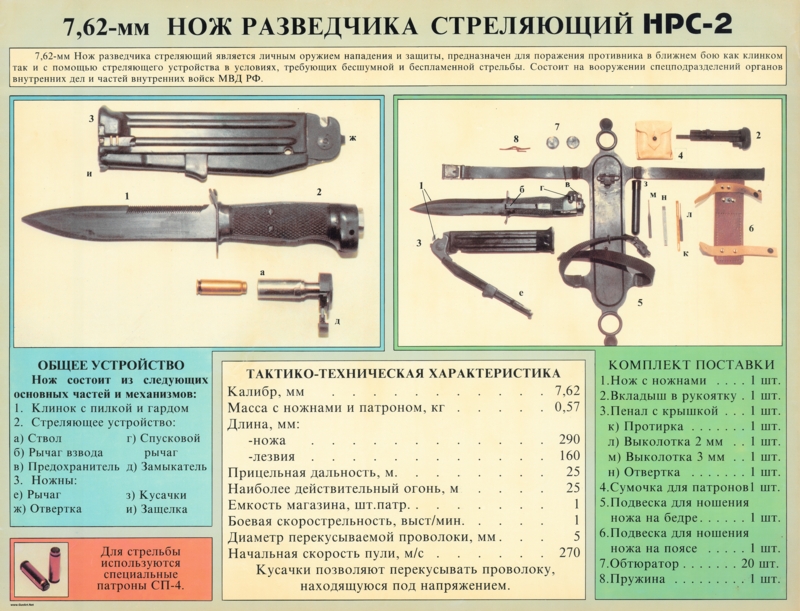
Ballistic Knife Poster
A vintage poster from the USSR showing parts of a ballistic knife. Note the firearm cartridge used to propel the blade. (image via RussianLegacy.com)

The hype surrounding ballistic knives did not help matters. The knives were advertised for sale in tactical magazines with the pitch “The Commies Had It. We Stole It. Now You Can Buy It!!!!” Ballistic knives were advertised as being able to “kill swiftly and silently.”

Sen. D’Amato claimed a ballistic knife to be a “dangerous weapon, a terrorist weapon.” He further declared, “Ballistic knives have no legitimate sporting purpose. They are sought by professional criminals because they are easily concealed and capable of penetrating a policeman’s bulletproof vest.”

Democratic Rep. Mario Biaggi (a well known anti-gun politician and a sponsor of the so called “Cop-Killer Bullet Ban”) appeared at a news conference and asserted that ballistic knives were the “latest in cop-killer technology,” and that the ballistic knife can “…fire its blade like a bullet” and “penetrate police bullet-resistant vests.”

He stated he had bought his ballistic knife via mail order from the Florida Knife Corp. by putting the $79.95 on his credit card. Biaggi stated, “…there were no questions asked. I could have been anybody. The ballistic knife is totally accessible to anyone who wants it.”
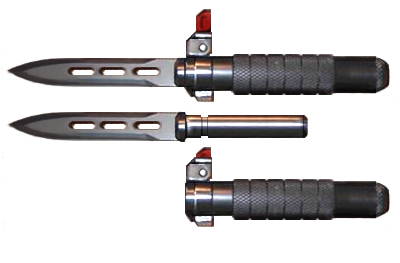
What is a ballistic knife
A button or switch in the handle, seen here in red, is usually used to release the blade. (By Jerryk50 at English Wikipedia)

At the news conference, the typical “dog and pony show” was conducted by a New York police officer who fired a ballistic knife from 30 feet at a silhouette target of a person. Of course, there were no known cases at that time of anybody ever being killed by a ballistic knife, no less any reported cases of a police officer being shot at by a “drug dealer or terrorist” (or anyone else for that matter) with a ballistic knife.

Furthermore, I could not find any official poll taken of drug dealers inquiring as to whether a ballistic knife was their “preferred weapon” of the 1980s, but somehow I doubt it considering the ready availability of cheaper and more effective black market firearms.

The Florida Knife Corp. issued a statement that their ballistic knives do NOT penetrate bulletproof vests, but noted that any ice pick could penetrate a bulletproof vest. Bulletproof vests are NOT ice pick-proof, however banning ice picks is not as politically correct or headline grabbing. A ballistic knife has as much “sporting purpose” as any throwing knife.

Since when is the “sporting purpose test” applied to knives, anyway? What sporting purpose does an 8-inch chef’s knife have? Then again, why should facts get in the way of a feel-good knife ban?

The Final Cut to the Ban: Throwing Knives

There are many books that deal with the subject of knife throwing for both fun and combat. A knife can be thrown with substantially more power and accuracy than can be achieved by firing a ballistic knife. This fact alone makes the ballistic knife ban patently absurd and useless.

Any decent fixed blade knife can be thrown (although throwing your handmade, damascus, ivory-handled bowie is not recommended). But why should facts and logic stand in the way of any headline-grabbing politician pushing a weapons ban and holding news conferences?

So What? Who Needs a Ballistic Knife Anyway?

Okay, the law is ridiculous, so what’s the problem? Who needs to own a ballistic knife anyway, right?

Well, here is the problem: the ballistic knife ban is a KNIFE BAN, and just because it isn’t your ox being gored does not mean you should ignore it. This ban paves the way for more knife bans. The politicians see our knife rights as “easy pickin’s.” They can look like they are doing something about crime, terrorism or drug dealing, when in reality it’s just another hit on our knife rights.

Ballistic knife bans lay the groundwork for further knife bans and for activist courts to be judicially dishonest and to prohibit other lawful knives and weapons that are not ballistic knives. Don’t believe it? Then you have obviously not read State of Florida, Appellant, v. Pariya Darynani, Appellee, 4th District, Case No. 4D99-4172.

In this case, the Florida Court banned formerly lawful automatic/switchblade knives under the guise of Florida’s ballistic knife ban. The case is a classic example of anti-knife bias and the abuse of our knife rights that a wrongful knife ban can cause.
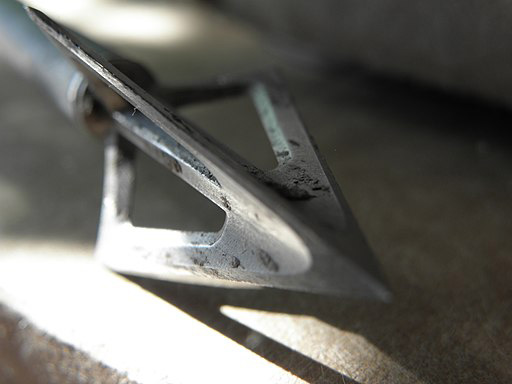
Broadhead
Modern broadheads used for archery remain legal, even though they function similarly to ballistic knives. (Wikimedia image)

New Jersey’s ballistic knife ban has even more potential for abuse. The New Jersey ballistic knife ban was signed into law by then Republican Gov. Thomas Kean, who stated, “We have to restrict the flow of knives that serve no useful or lawful purpose.” I

f the “bunny huggers” wanted to push it, New Jersey’s ballistic knife law is so overbroad that archery and bow hunting are threatened and could be banned.

Chapter 39 Of New Jersey Criminal Code Firearms And Weapons 2C: 39-1.
   u. “Ballistic knife” means any weapon or other device capable of lethal use and which can propel a knife blade.

Bows and crossbows can all shoot broadhead arrows. Broadheads are and/or contain razor-sharp knife blades. Is a compound bow with a broadhead arrow a “weapon or other device capable of lethal use and which can propel a knife blade?” Of course it is!

Sure, it was not the intent of the New Jersey Legislature to ban archery and bow hunting, but it was not the intent of the Florida Legislature to ban switchblades/automatics, either, and yet the Darynani court did just that!

Stay Vigilant

Unfortunately, knife aficionados were not organized, prepared or ready for the ballistic knife fight in the mid-1980s. We were never warned about the future effect and ramifications of ballistic knife bans on our knife rights. We dramatically lost on the ballistic knife issue and are now paying a price.
Awesome Automatics:

Knife Collecting: The History of the Camillus M3

Camillus Cutlery History

To understand the Camillus M3, you need to know a bit about the history of the company that originally designed it.

It all ended for the original Camillus on February 2007. The old Camillus went gone out of business due to poor sales, a workers’ strike and a lockout—and then the long-time knife manufacturer filed for bankruptcy. Acme United Corporation bought the company’s brand name and intellectual property rights, relaunching the Camillus brand in 2009.

Camillus hadn’t always had business problems. The company was founded by Charles Sherwood in 1876 and became a good candidate for buying when the Dingley Tariff Act, which greatly raised the import duty on knives, was enacted in 1897. The company then had 20 employees.

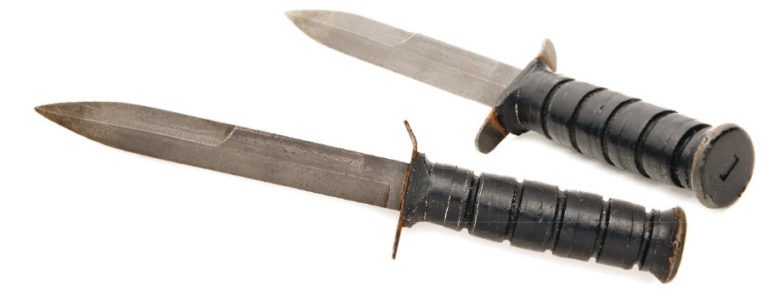
Camillus M3 knives
This issue’s cover knife, here’s the one of six “Salesman’s Sample” M3s Camillus made in the early 1990s that Bill Adams found in a bucketful of leftovers he bought at the auction of the old company in 2007. According to Phil Gibbs, who worked at Camillus when the one of six M3 was produced, it was “truly handmade” in the Camillus Model Shop. (Terry Moss image)

The War Years

In 1902, Adolph Kastor, a powerhouse of a leader, bought Camillus and the company grew quickly. Camillus had grown to over 200 employees by 1910 and produced over 900,000 knives that year alone. During World War I, the manufacturer cranked out over 470,000 knives for the U.S., British, Canadian and Dutch governments.

The company continued to do well during the ’20s and ’30s. It had knife contracts with Sears Roebuck & Co., Shapleigh Hardware, Simmons Hardware and Woolworth. In fact, in the ’30s Camillus had the reputation of being the highest quality maker of knives in the United States.

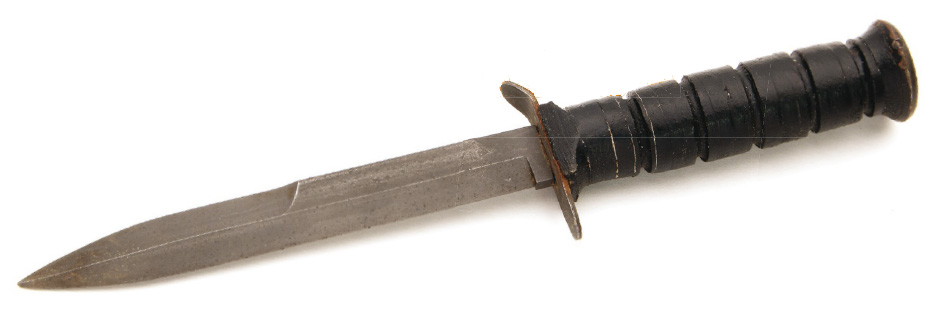
During World War II, the company made over 15 million knives for the U.S. Armed Forces. Throughout the Vietnam War, Camillus produced the GI four-blade utility knife, the pilot survival knife andthe U.S. Marine Corps 7-inch Mark II

(Author’s note: Camillus had developed the Mark II during World War II, and made more Mark II’s than anyone else, though the Marines stillcalled the Camillus-designed Mark II knife “the Ka-Bar.”)

The New-and-Improved Camillus M3

In the 1980s, the U.S. Armed Forces discussed improving the M3. Then in issue to troops, the M3 having been first produced and issued in 1943.

Of course, that was very interesting to Camillus—the company had designed the M3 in 1942—and military contracts, with additional sales in the commercial market to users and collectors, would be very welcome.

The Camillus prototype shop started work on improving the new M3 design. Most everyone thought the blade was OK as it was—6.5 inches long, .85 inch wide and made of carbon steel.

Camillus Mark III Mark 3 knives
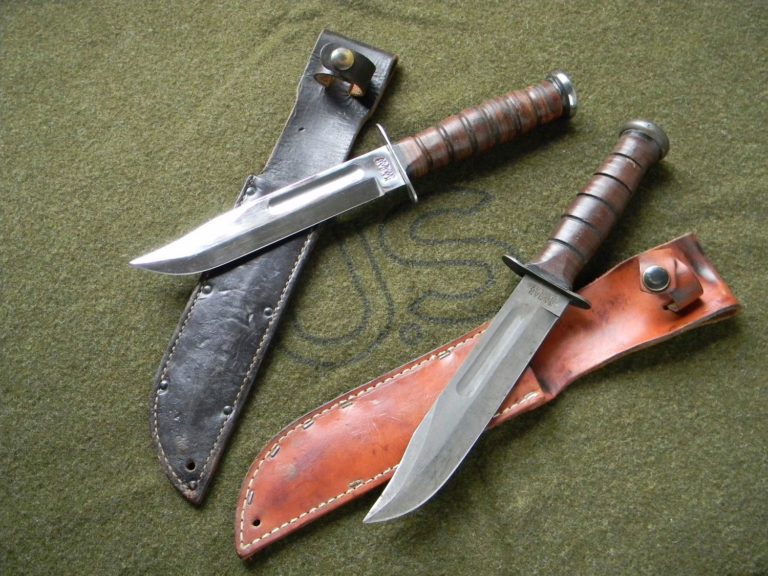
(Top) Most everyone thought the blade of the original M3 was OK as it was—6.5 inches long, .85 inch wide and made of carbon steel. As a result, the blade of the newer M3 maintained the same specs. (Bottom) The stacked leather handle of the “newer and improved” M3 has five grooves and is longer (4.7 inches) than the World War II original. (Terry Moss images)

The stacked leather handle had five grooves and was longer (4.7 inches) than the World War II version of the knife. The handle diameter was larger (1.2 inches wide) and had a pinned-on stepped pommel 1.35 inches wide.

The guard was a little wider than the one on the World War II knife. The lower leg/quillon was marked on the front with a capital “M” in a circle over the number “4.” The new design M3 weighed 9 ounces finished.

Camillus M3 knife
(Left) The guard of the newer M3 design is a little wider than the World War II knife. The lower leg/quillon is marked on the front with a capital “M” in a circle over the number “4.” (Right) The handle diameter of the newer M3 is larger (1.2 inches wide) than the original and has a pinned-on stepped pommel 1.35 inches wide. (Terry Moss images)

One of the things the U.S. Armed Forces learned in Vietnam was the importance of guarding against mold and insects—leather handles had deteriorated quickly in the jungle.

As a result, the new knife’s handle was saturated with deterrent. It would use the current fiberglass M8A1 sheath, the same sheath in issue for the M7 bayonet.

The M3 was born again.

History of the BLADE Show: It All Started With Two Names

If you are fortunate enough to attend this year’s 40th BLADE Show, when you initially walk into the mammoth show hall of the Cobb Galleria Centre, take a moment and look around you. Every table, every booth, every person and the exquisite atmosphere that screams knives! would not be if not for two people: BLADE Magazine Cutlery Hall-Of-Fame® members Bruce Voyles and Jim Parker.

Bruce Voyles

It was Bruce and Jim who organized the first BLADE Show—advertised early on as The Blade Magazine 1982 Knife Show—at the Drawbridge Motor Inn in Fort Mitchell, Kentucky. (At the time, Jim and Bruce co-owned both the show and BLADE® Magazine.) Just across the Ohio River from Cincinnati, Ohio, the event drew 7,000 attendees, by the standards of the day a huge amount of folks for one knife show. Even now, other than the BLADE Show, few if any knife shows attract that many people.

Remember, this was all done long before there was an internet and social media to generate pre-show interest. Pre-show advertising was basically all print—mostly in BLADE—and by word of mouth. Add the fact that the knife industry itself was a shadow of what it is today in terms of numbers of factory knife companies, custom knifemakers and, most importantly, knife enthusiasts, and attracting 7,000 attendees is even more remarkable.

Bruce and Jim, the latter founder of Parker Cutlery, were nothing if not visionary marketers of knives and venues in which to market them. They knew that to make the BLADE Show really stand out, they would have to make it the focal point of all things knives. To do this, they had to establish the event as the be-all/end-all knife show.

One of the things that set the BLADE Show apart even back then was it gathered all segments of the cutlery industry—factory, handmade, antique, knife collections, etc.—all under one roof. While the concept had been tried before, it had never continued in an annual fashion the way the BLADE Show was about to do it under the direction of Jim and Bruce.

History of the BLADE Show
Jim Parker

Another way to make the show unique was to establish awards that would be the factory knife industry’s equivalent of the movie industry’s Oscars. The awards would be the standard to which all factory knives and knife companies would aspire. The BLADE Magazine Knife-The-Year® Awards were the result, and they remain the most coveted factory knife honors to this day.

Bruce and Jim had the Knife-Of-The-Year concept covered, but what about a way for the show to memorialize its pioneers, the movers and shakers that made the knife industry the dynamic entity that it had been and would become even more so? The solution: the BLADE Magazine Cutlery Hall Of Fame®, with the latest members enshrined each year at the BLADE Show. Created for the 1983 event, it remains the industry standard to this day.

Jim and Bruce would continue to grow the show, moving it to the Holiday Inn & Convention Center in Knoxville, Tennessee, in 1984. In only its third year, with over 30 booths and almost 500 tables, it was vying for the title of the world’s largest knife show—if it wasn’t already.

Bruce bought out Jim’s interest in both BLADE and the BLADE Show in 1986, and moved the show to Atlanta and today’s Renaissance Atlanta Waverly in 1992. Bruce sold the show and the magazine to Krause Publications in 1994, and the event moved to the adjoining Cobb Galleria Centre in 1997, eventually evolving into the monster it is today, now under the ownership of Caribou Media Group LLC.

Jim passed away in 2004 but Bruce remains active in the knife industry as an auctioneer, show coordinator and author, among others. As of this writing, he had reserved BLADE Show booth No. 608. Unfortunately, he might not be able to attend this year’s show and if he does not, his beautiful wife Debbie and equally beautiful daughters Heather and Vanessa will be there to woman the booth. If he somehow is able to attend, he can answer any and all questions you have about knives, as well as the early history of the BLADE Show. Oh, and pack a lunch. He would have more tales to tell than a little bit.

4 Surprising Superstitions About Knives

0

Editor’s note: This article comes courtesy of Knife Aid, a mail-in knife sharpening service that’s changing blade maintenance. Visit the Knife Aid website here or read BLADE‘s review here.

There’s a certain mystique to knives. They’re ancient, crafted with secret techniques and can instantly convey a message about the person in possession of them. It’s no wonder there are a few superstitions about knives out there. Here are four.

1) A Gifted Knife Can End a Friendship

The saying goes that a gifted knife will sever the ties between the giver and the receiver. To avoid the end of a friendship, the recipient needs to hand over a penny to the benefactor. Like that, the gift turns into a purchase and no harm will be done.

2) Ease Labor Pains During Childbirth

Placing a knife under the bed of a woman giving birth is believed to ease her pain during labor. Also, sticking a knife into the mattress of a laboring woman is supposed to help her birth a boy.

3) Don’t Lay One Knife Across Another

Crossed knives on a table will cause a quarrel. Crossing a knife with another piece of cutlery is a sign of witchcraft. And if you cross your knife with your spoon, you are implying the food didn’t taste good and that you wish bad luck on the chef.

4) Don’t Sharpen Knives After Dark

It was believed that sharpening knives after sunset was bad luck – which makes sense, considering that this superstition goes back to a time before electricity.

No matter if you follow the original advice or apply the antidote of keeping “a pinch of salt in the churn to keep the witches out,” we strongly advise against sharpening in the dark. Always.


Knife Superstitions

Don’t Risk It! Knife Aid Will Sharpen Your Knives For You

No matter what time of day it is, Knife Aid can take care of your knife sharpening and repair needs. Knife Aid makes it easy to mail in your knives for maintenance.

Find out how here.

Lockback Folders Are 500 Years Old?

0

Despite or perhaps because of its requirement for tight tolerances, the lockback has a substantial lineage.

According to Bill Claussen, co-author of Sheffield Exhibition Knives, the lockback has been around in various forms since 15th-century Spain. Other European cutlers—including the French, Italians and English—have produced lockback variants during the past 500 years or so.

The Buck 110: A Gamechanger

In the modern era, Claussen cites the Buck 110, which hit the market in 1964, as an industry icon.

“It changed the face of modern pocketknives,” he commented. “Although lockbacks had been introduced to the U.S. for more than 200 years, they were not made affordable and convenient in mass production until Al Buck introduced his knife. This knife was quickly adopted by sportsmen, tradesmen, truckers and other workmen as an ideal, all-around, heavy-duty work knife. Vintage 110s are hard to find today, and one in mint condition will cost a small fortune if you can find one.”

Production Challenges

Chairman of the board at Buck Knives, Cutlery Hall-Of-Famer Chuck Buck recognizes the pivotal role the 110 has played in modern lockback development, and acknowledges the challenges that surrounded the original premise of a practical production lockback.

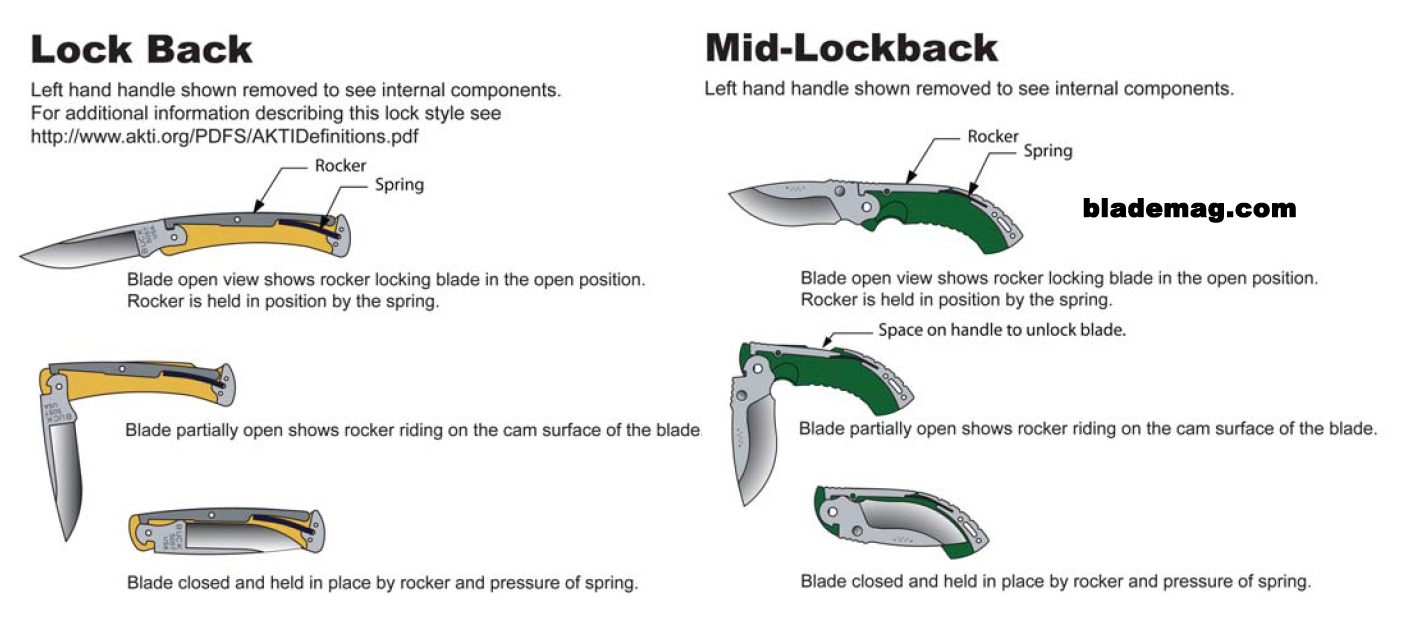
“The lockback actually is a bar that goes across the back of the blade with the spring under it, and when you push down on the bar it rocks on a stainless rivet,” he said. “So, that was always hard to get exact because you did not want it to be loose and it needed to fit perfectly.

Diagram of lockback style knife

“You need to do fine blanking of the blades to achieve that and for years components had been machined, but with fine blanking you can get that done. We worked with the design for quite a few months, and it was all new to us. That was in 1963. The first knives on the market totaled about 250 in 1964, and then in 1965 we ended up making about 10,000 of them. It just grew from there. The 110 continues to be one of our most popular knives, and we are producing them now at a rate of over 1,000 per day. We have a whole crew that just makes the 110 folding hunter. To Buck, it has been something that has sold every year, and it just keeps getting better.”

Over the years, there have been a few tweaks to the lockback design of the Buck 110. For example, during the 1970s it was discovered users were placing a great deal of pressure on the blade, and the brass rivet in the mechanism itself was shearing. The brass rivet was replaced with a stainless steel component, and the 110 continues to sell well around the world.

From large retailers to mom-and-pop hardware stores, from Main Street to Moscow, the Buck 110 is a knife user’s mainstay.

It’s Human Nature

Claussen asserts another aspect of the popularity of folding knives and of lockbacks in particular has to do with human nature.

“It’s their mystique,” he related. “People seem to have a fascination for complicated things, plain and simple. Th is is generally true in life and very specifically in the collecting field. Watches, clocks and other collectibles are favored because of their complication. The general rule, with all things being equal, is that the more complications, the more desirability, hence greater value. To have a locking feature with a knife definitely adds mystique, aura and increased value.”

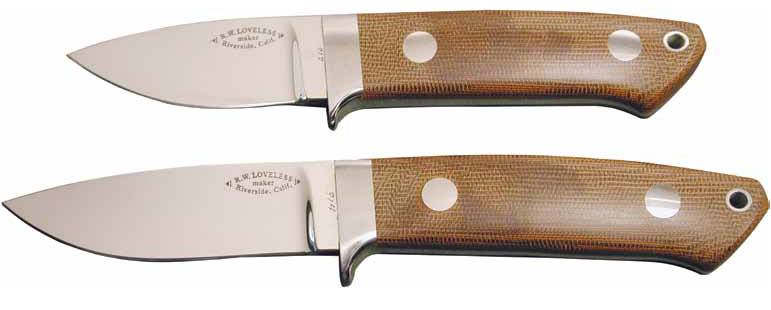
PHOTOS: 15 Greatest Bob Loveless Knives of All-Time

Robert “Bob” Loveless is regarded as one of the most influential custom knifemakers of the modern era. Here are the 15 knives that show why.

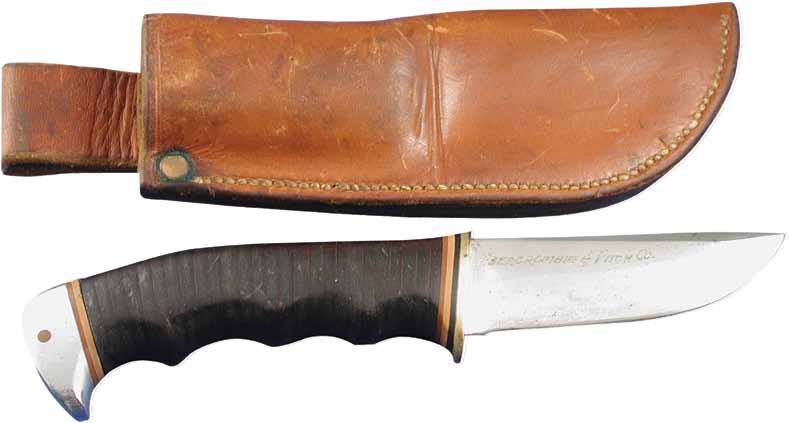
1) R.W. Loveless and Abercrombie & Fitch: A Match Made In Heaven

Best Robert Loveless knives
This is one of Loveless’ first knives made for Abercrombie & Fitch during the early 1950s. The photo is courtesy of John Denton.

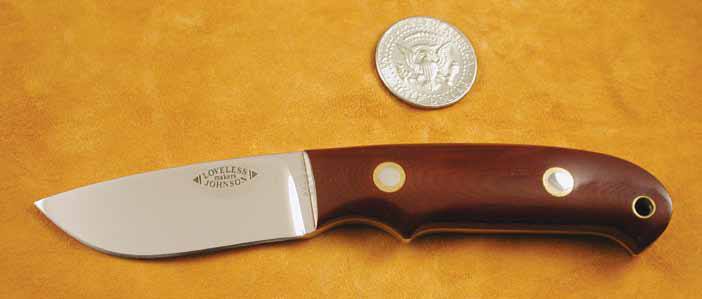
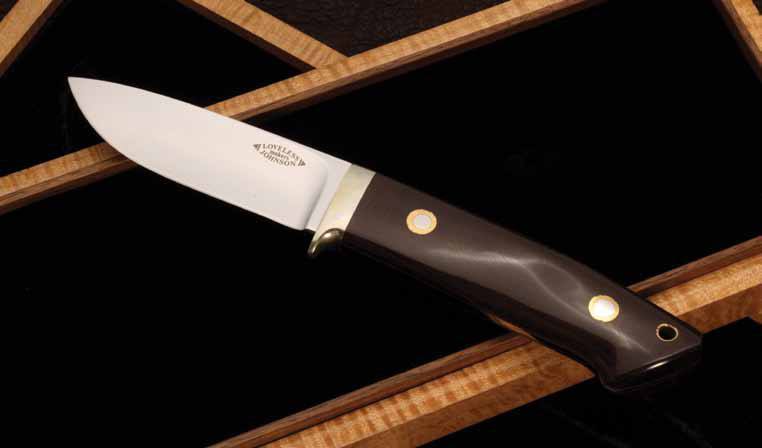
2) Loveless-Johnson Collab

Bob Loveless Knife Photos
Steve Johnson, who worked as a junior partner with Loveless, says Bob made a huge difference in his life. Pictured is one of the few knives marked “Loveless Johnson” reportedly still in existence. The image is courtesy of John Denton and the John Denton collection.

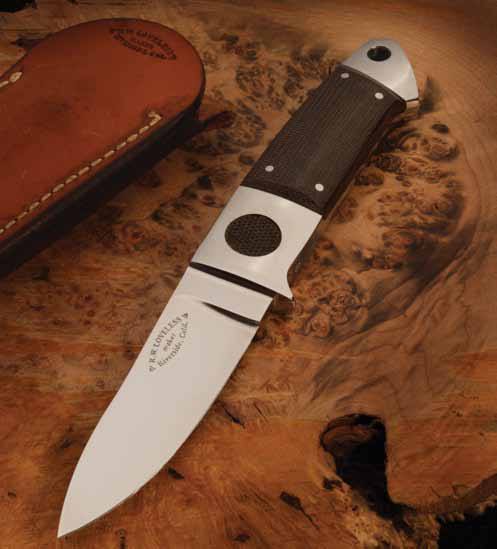
3) The Most Beautiful Knife Bob Ever Made?

Best Robert Loveless knife photos
If Bob Loveless reportedly said that this integral semi-skinner, with its dark-green canvas-Micarta handle, is “the most beautiful knife I ever made,” then who can argue? The knife was crafted about 1987 and features a drop-point blade. It is from the John Denton collection, and the photo is by Hiro Soga.

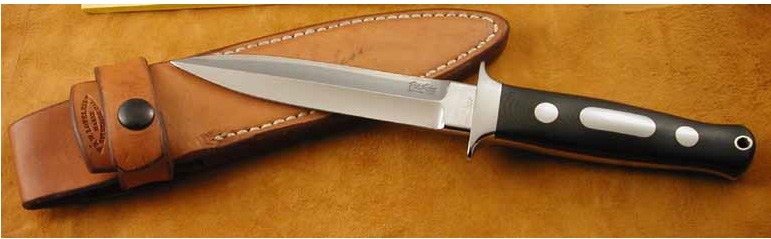
4) The Loveless Dagger

Bob Loveless Dagger Photos
The dagger looks so good, you want to pick it up, and feels so good you don’t want to put it down. The dagger in a full, tapered tang, Micarta handle and double guard looks and feels good. It is from the John Denton Collection.

5) Loveless-Merritt Collab

Jim Merritt Bob Loveless knives
The combined skills of Jim Merritt and Bob Loveless are simply without peer. This pair is a prime example of the combined efforts of Bob Loveless and Jim Merritt. The knife photo is by Durwood Hollis.

6) The Crooked Skinner

Bob Loveless Crooked Skinning Knife
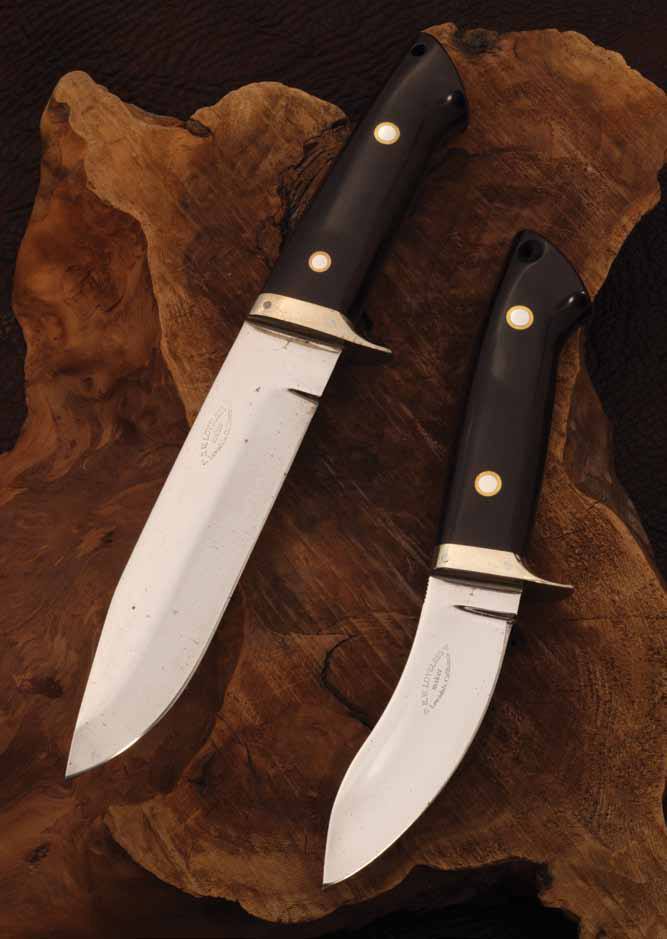
The Bob Loveless Lawndale-made crooked skinner at right in the Hiro Soga photo features a 4.5-inch skinner blade, a nickel-silver guard and ebony handle. The camp knife is wrought from 1/4-inch stainless steel stock with a 6.5-inch clip-point blade, full tang and ebony handle. The knives are in the John Denton collection.

7) Big Bear Classic

Bob Loveless Big Bear Knives Pictures
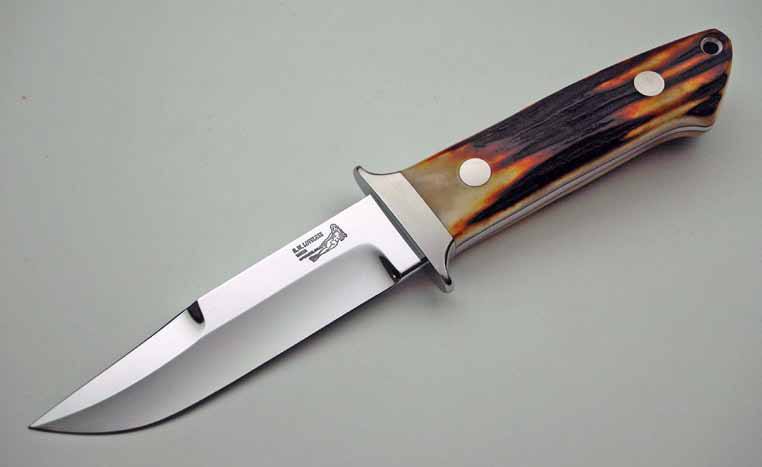
This particular Loveless Big Bear Classic fighter boasts an amber-stag handle, which makes it one of the few made, and no Loveless bolts. Its approximate value? $35,000. That’s a lot of bear bones. Image and information via Dave Ellis.

8) New York Special

RW Loveless Knife Pictures
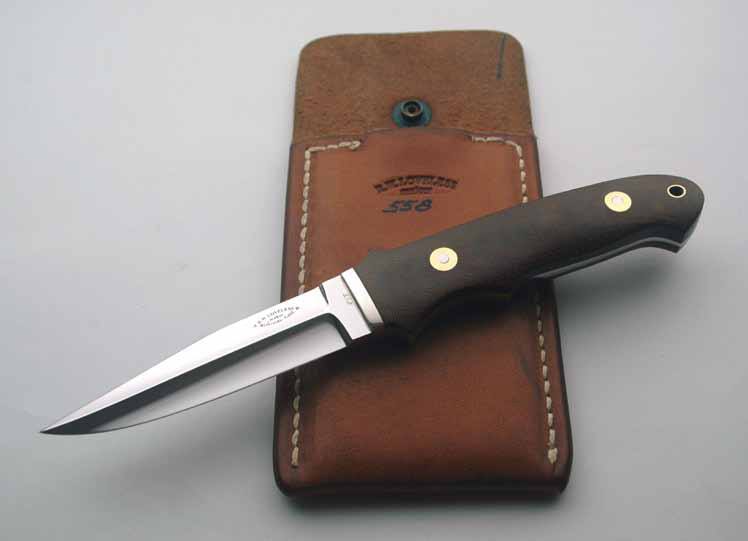
This is perhaps the rarest and hardest-to-find of Loveless pieces—the original New York Special with a snap in the sheath. According to Dave Ellis of Exquisite Knives, originally told, there were seven. This is the long-lost 8th! Image via Ellis.

9) The Pearl Gent

Bob Loveless Pearl Handle
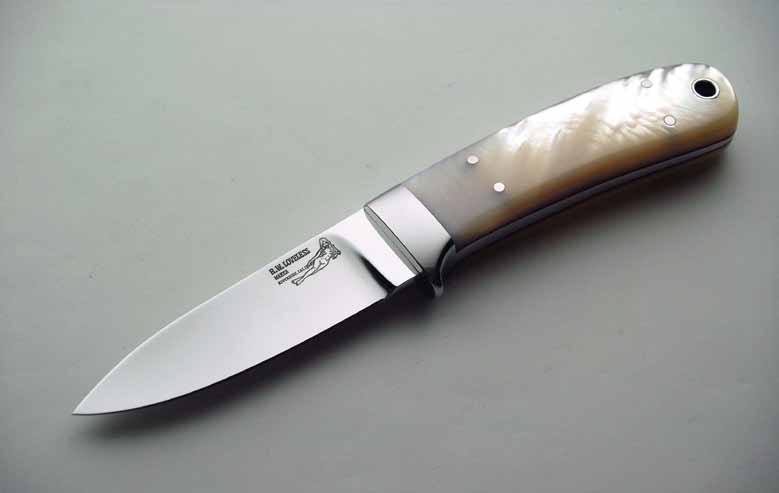
Loveless preferred Micarta handles. This “gent’s” model is one of the very few knives made with pearl. Image via Dave Ellis.

10) The Iconic Drop-Point Hunter

Bob Loveless Hunting Knife
A prime example of a drop-point hunter, made in 1973 when Steve Johnson worked with Bob Loveless, it features hidden-tang construction, a single guard and a maroon-Micarta handle. How sweet it is! From the John Denton collection, this piece was photographed by Hiro Soga.

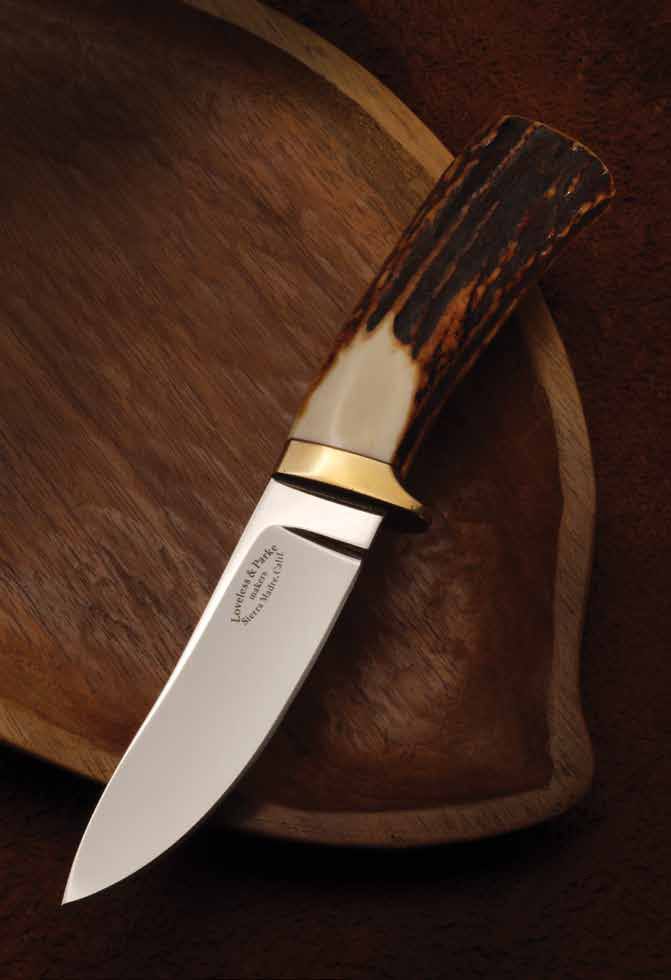
11) Loveless-Parke: Part Drop Point/Part Skinner

Loveless Parke Drop-Point Skinner Knife
Only 36 knives bearing the Loveless-Parke logo were ever produced (Parke was an investor in Loveless’s knifemaking business for a short period of time.) This knife, made in 1967, is an example of that effort. The image is courtesy of John Denton and the John Denton collection.

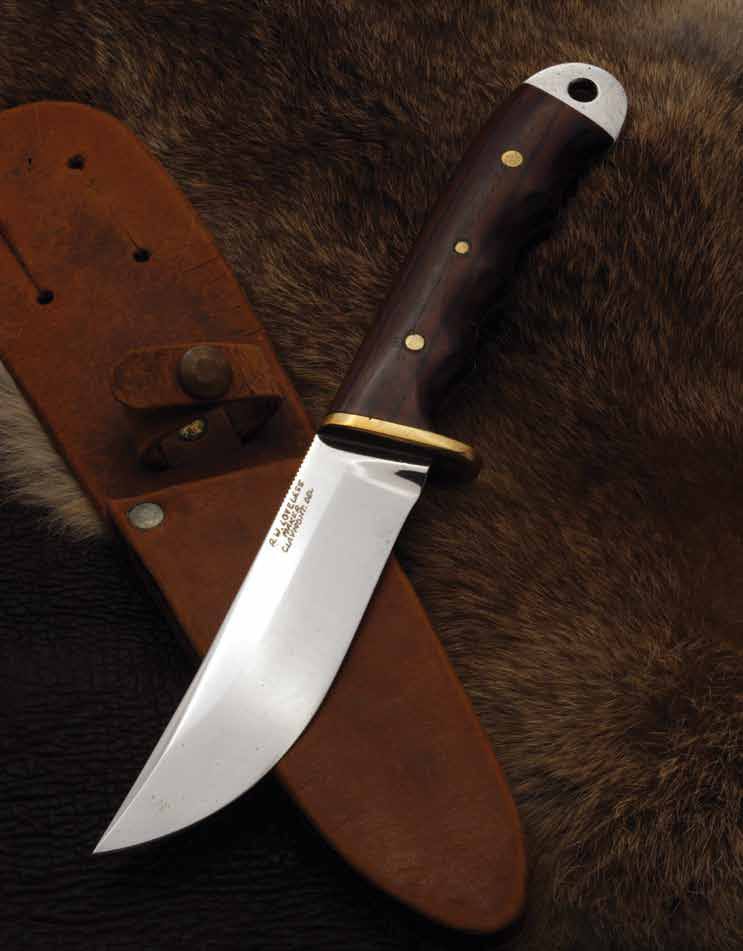
12) The Delaware Knife

Bob Loveless Rare Knives
This is an early (1950s) hunter made by R.W. “Bob” Loveless when he lived in Claymont, Delaware. Interestingly, there are thumb notches on the back of the blade, just ahead of the guard. This is an extremely uncommon feature on a Loveless knife. Photo via Hiro Soga.

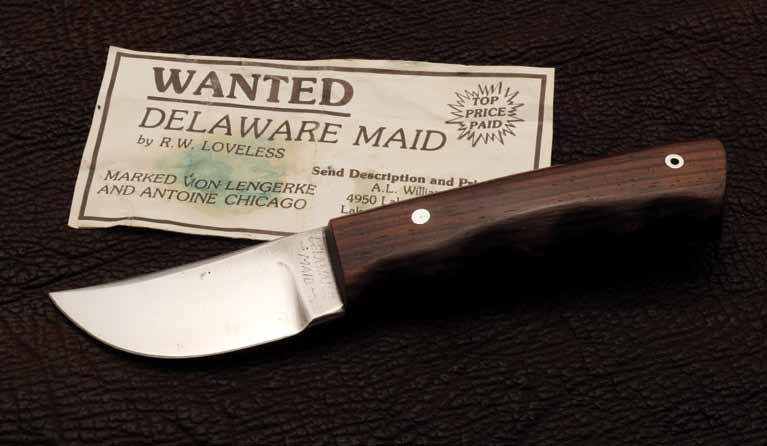
13) The Delaware Maid

Delaware Maid Knife
An ultra-rare (only three of seven survive) Loveless “Delaware Maid” hunter with the VL&A (Von Lengerke and Antoine) logo, this knife has a trailing-point blade and a slender double-pinned hardwood handle. The photo is by Hiro Soga.

14) $13,000 Chute Knife

Bob Loveless Parachute Knife
Originally designed for a Spec Ops parachutist working in jungle climates, the “chute” knife was fashioned to cut the lines of a parachute should the operative become entangled in them, a tree or other obstruction. This amber-stag handle model is valued at $13,000. Photo via Dave Ellis.

15) The Iconic Schrade Semi-Skinner

Bob Loveless Semi-Skinning Knife
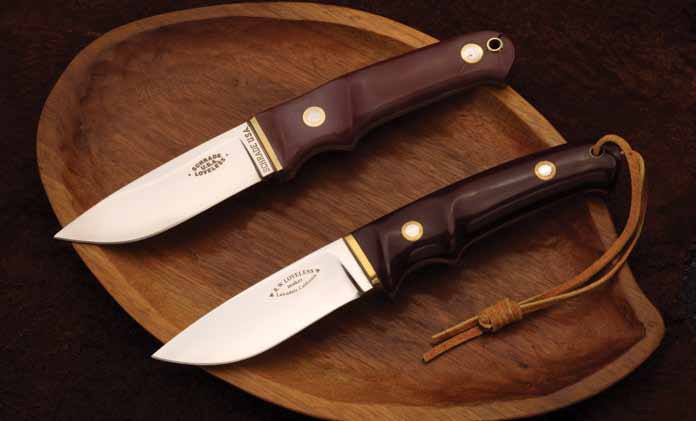
The knife Bob Loveless built for Schrade features a stainless steel blade and synthetic molded handle with no guard. The top piece is the Schrade knife, and the bottom is the Loveless semi-skinner prototype from which the Schrade knife was developed. Note the finger-grooved handle, a feature seldom seen on a Loveless knife. The photo is by Hiro Soga.

How World War II Forged the Custom Knife Industry

2019: An Important Anniversary

This year marks the 75th anniversary of many major battles that turned the tide for the Allies in World War II. D-Day, Bastogne, Anzio, Monte Cassino, the Leyte Gulf and more are forever etched in the minds of many millions of people. Yes sir, 1944 was a very bad year for the Axis.

For those who fought in those titanic struggles for freedom, 2019 designates the last of the major anniversaries they will see. Most of whom are at least 90 and older today, they obviously won’t be around for the centennial celebrations in 2044. Of course, many of the rest of us won’t as well, but then we didn’t serve in “The Big One,” as Dad liked to call it, either.

In a world that seems bent on forgetting its past, the Greatest Generation members who won that war, both at the front and the loved ones on the home front—including my parents—are unforgettable. No matter race, gender, creed or nationality, the Greatest Generation represents most of what’s good, wise, brave and kind about humanity.

Memories of them are indelible because their deeds are manifest in the subsequent accomplishments and successes apparent everywhere on the globe, including from the bounty of the USA to the remarkable recoveries of two of the Axis powers most devastated by the conflict: Germany and Japan.

Custom Knives & World War II

All Purpose Combat Knife
Bo Randall’s Model 1 journeyed to all theaters of World War II alongside U.S. forces. (Randall Made Knives photo)

The argument can be made that the custom knife industry can trace its roots to World War II. It was during the war that such knifemakers as BLADE Magazine Cutlery Hall-Of-Fame® members Bo Randall, Rudy Ruana, William Scagel, M.H. Cole and Dan Dennehy made knives for the troops. Dennehy, in fact, both made knives for the troops during the war and also served in it, joining the Navy in 1940 and seeing action in the Saipan, Philippines and other campaigns.

Other well-known makers to fashion knives for the troops during the war included Floyd Nichols, Hoyt Buck, David Murphy, John Ek, Donald W. Moore, Frank Richtig, E.W. Stone, John Nelson Cooper and no doubt more. Each played a role in inspiring what today is the modern custom knife industry.

World War II: Special Tasks Required Special Knives

Case V-42
The Case V-42 opened up new possibilities in knife design, proven on the battlefields of World War II. (Case photo)

And then there were those who used knives in the war, people such as U.S. Army Corporal Eugene “Gene” Gutierrez of the First Special Service Force (FSSF). It was the FSSF that carried the legendary Case V-42 dagger and was comprised of specialists in mountain climbing, skiing, demolition and airborne ops.

Gene Gutierrez Devil's Brigade World War II
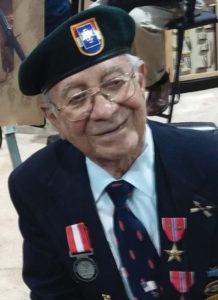
Gene Gutierrez

Wounded eight times in combat, Gene was with the FSSF when it scaled the 10,000-foot-high Monte la Difensa in the Italian campaign and dislodged the occupying Germans.

The climb was “pretty much straight up,” he said of the monumental effort. It took all night under one of the heaviest artillery barrages of the war, but the Forcemen made it up the mountain and routed the enemy. Later the FSSF was inserted at Anzio, where they pushed the Germans back again.

According to Gene, the Forcemen also were specialists in psychological warfare. While on night patrol they would paint their faces black and, after dispatching Germans, leave notes on the vanquished enemy bodies that read, “The worst is yet to come.” The Germans who found the notes nicknamed the Forcemen the Black Devils, aka the famous Devil’s Brigade.

Ninety-eight now, Gene is one of the last of a rapidly vanishing breed. The surviving Forcemen get together for reunions when possible, and Gene has served as the president of their association twice. They are among the leading members of the only generation that is truly unforgettable.

Advertisement

Must Read Articles

Read this before you make a knife

Knifemaking 101 – Read This Before You Make a Knife

  by Wayne Goddard My experience has taught me that there's nothing like digging in and getting started. I've often said the hardest part of the...
how to forge damascus steel

How to Forge Damascus

Advertisement
Advertisement