Comments on social media asked how it’s possible to know the price of a knife before it’s sold. Who’s to say it isn’t $50,000? After all, it’s not like a $75,000 knife is mass-produced. It’s unique.
Three things:
High-buck knives are usually commissioned before they’re made.
The market-rate for the materials and labor are easy to price out.
Something’s price is always what someone else is willing to pay for it. That someone else might not be you.
Disruptive Model Emerges for Financing Knife Start-Ups
Knifemaking start-ups face a tougher time securing financing because of backers’ leeriness toward “weapons.” Crowdfunding, where companies appeal directly to consumers for backing via pre-orders, is one way around this. Kickstarter is the best example of this approach.
Bolstering this business model are affiliate programs that dole out a cut of pre-order sales. This is sometimes disguised as editorial on news sites. This sort of backdoor marketing offers a pay-as-you-go approach that is appealing to start-ups with limited advertising budgets.
There’s nothing wrong with this approach. It’s just different, and worth considering if you’re starting a knifemaking business.
Quoting “Crocodile Dundee” Lands Restaurant in Lawsuit
You know the line, but here’s the clip anyway:
Best not repeat that line in formal marketing if you want to avoid legal trouble. Australian restaurant Grill’d allegedly used the famous utterance on its knife sleeves. From The Daily Telegraph:
Hogan claims the “knife line” — as it’s referred to in the claim document — is valuable because it has been “heard by the many consumers in Australia who have seen the Crocodile Dundee movie” and “has been featured, mentioned or referred to on television, in print, on the internet, and in popular culture”. He claims Grill’d has used the line “without the licence of either of Rimfire or Mr Hogan”.
This is the first installment of the Knife News Wire, a regular series that takes a wide look at the world of knives.
Regulations Hurting Traditional Swordsmiths in Japan
The centuries-old tradition of sword making in Japan is under siege by Japan itself. As a result, the swordsmith trade is nearly extinct. From the Gulf Times:
One reason for their dying art is that swords are today officially regarded as dangerous weapons, falling together with firearms under Japan’s Weapons Protection Act.
By law, the swordsmith featured in the article can only sell two swords per month. Without taking off my shoes and socks to count on my toes, that sounds like a hard way to make a living.
This legislation will repeal the Federal Switchblade Act of 1958, and allow consumers to purchase any automatic knife legal in their state.
To be clear, the Switchblade Act only impacts interstate commerce, and does not supersede state laws. Some states already decriminalized switchblades separately.
In the Everything Old is New Again Department, it looks like BLADE Show West is making a comeback. Due to the incredible popularity of the BLADE Show, organizers are looking to add a second show somewhere on the west coast.
BLADE Show staff kindly requests you fill out this survey.
Total Ivory Ban in China Goes Into Effect Next Year
While the knife world continues to wrestle with the ivory issue, and the uncertainty of the ivory issue, the end of 2017 marks the complete shutdown on the stuff in the People’s Republic of China.
Under the ban, 67 of the country’s 172 accredited ivory stores had to shut before March 31 this year with the remaining ones forced to shut by the end of December.
This is significant because the PRC is one of the world’s largest consumers of ivory. The ban marks a leap forward in the push for world-wide ivory prohibition.
That means the ivory issue in the United States, regardless of who is president, isn’t likely to go away any time soon. Stay tuned.
Are Knifemakers Too Secretive?
Most knifemakers are happy to share tips and offer guidance for newbies, but not all. That’s the problem Jared Williams, of Salt Lake City, ran into when starting out. From KSL:
“There was a bit of a thing with knifemakers that was still kind of secretive, almost,” Williams said. “It was like ‘No, these are my trade secrets, I don’t know if you’re worthy of it.’ There’s still a little bit of that in parts of the industry. Not all of it, and maybe it was just kind of a hard thing to find and maybe I just met the wrong guys.”
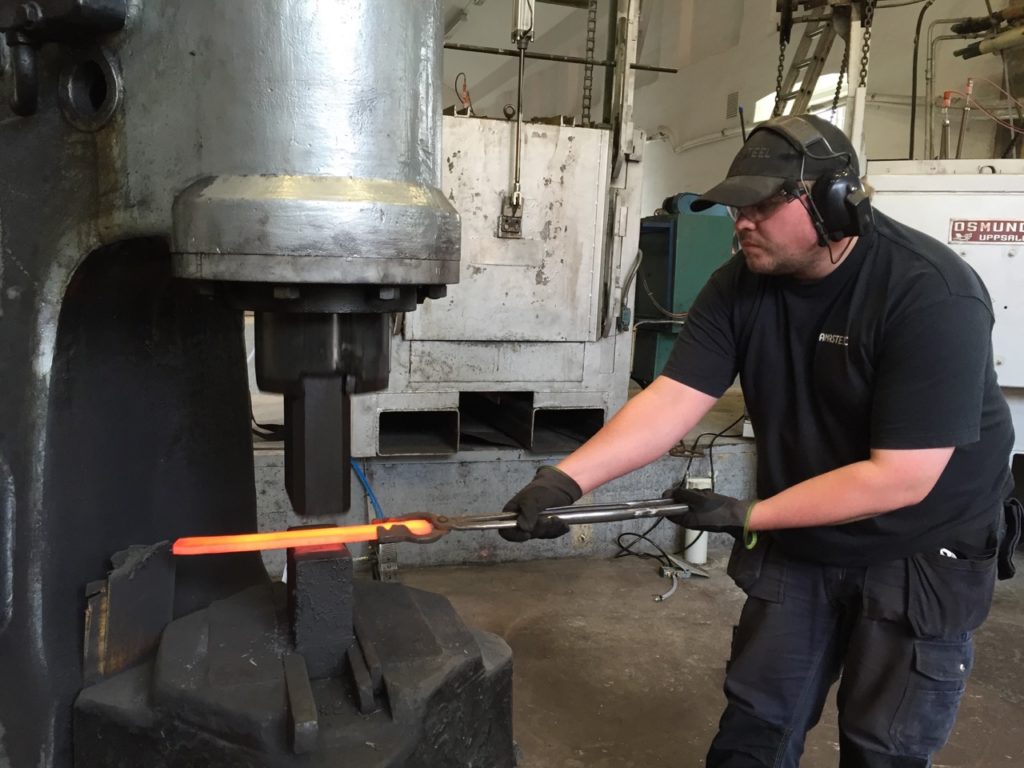
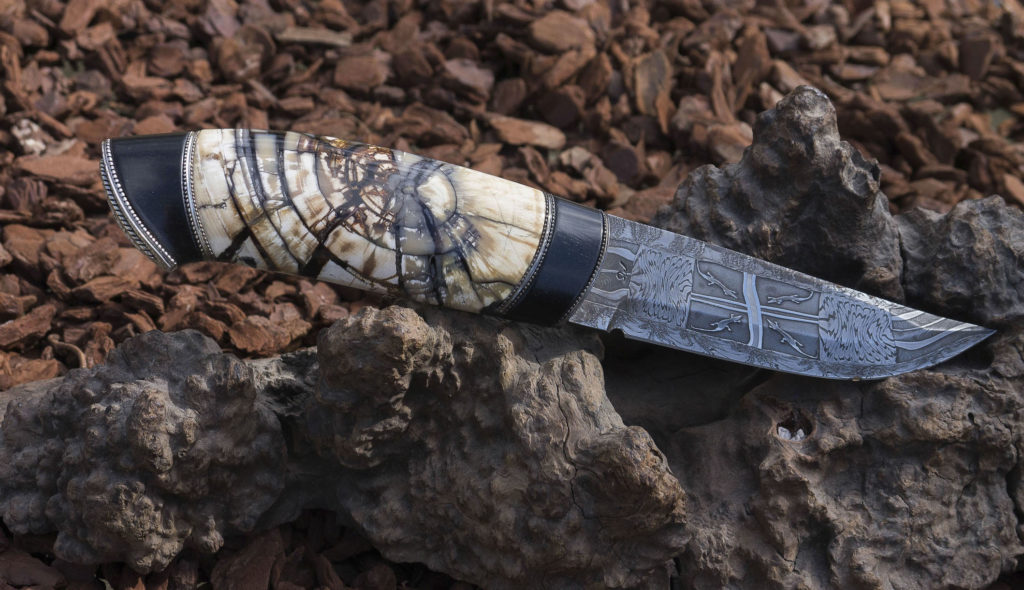
Forging some of the best blade steels is something with which Damasteel of Soderfors, Sweden, is well acquainted.The best blade steels combined with the best blade shapes can cut wonders. Puma’s SGB Buffalo Hunter comes in a recurve blade of 1.4116 stainless steel.Raffir fossil mammoth ivory comprises the handle of Danish knifemaker Tommy Astrup’s mosaic damascus fixed blade.The best blade steels, latest handle materials and more of what it takes to make the hottest knife are in the new BLADE 2018 Complete Knife Guide, on newsstands now!
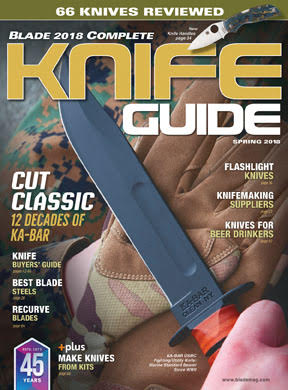
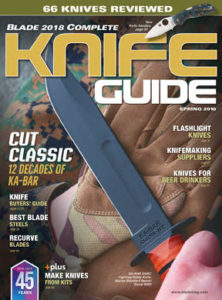
The best blade steels, latest handle materials, blade shapes, knifemaking suppliers and most everything else it takes to make a knife the sharpest it can be populate the BLADE 2018 Complete Knife Guide, on newsstands now!
What’s the best knife steel for one application can be a disaster for another. However, there exists a happy medium where a maker and an end-user get as many general bennies from the steel as possible. Dave Rhea examines the phenomenon in detail and considers some of today’s best cutting materials in his story, “Keys To The Best Blade Steels.”
Based in Hadsten, Denmark, Raffir offers an array of the most beautiful and durable synthetics yet in its range of fossil, wood and other materials. In Raffir Mammoth Tooth in particular, the cracks and abrasions that handle companies have to fill and re-fill during finishing operations with standard mammoth tooth are reduced by 80 to 90 percent. The material is most pleasing to the eye as well. Get a handle on the latest gripping stuff in “Most Beautiful Synthetics Ever?” by yours truly and Mike Haskew’s “What’s Your Handle?”
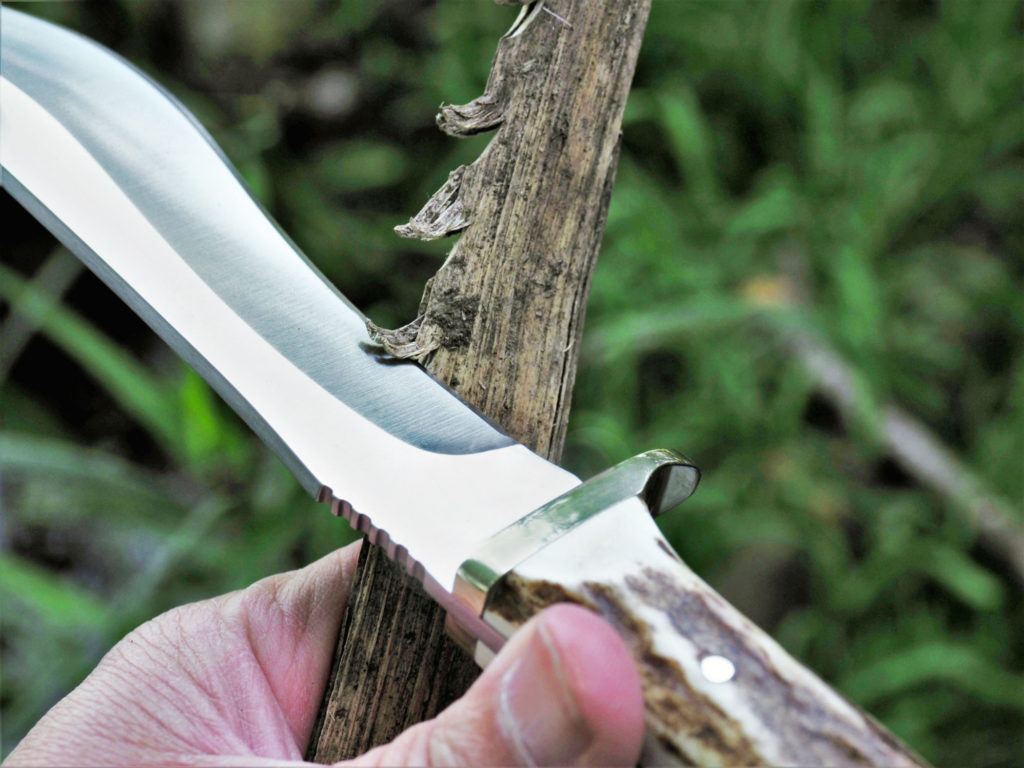
The “S”-shaped recurve blade has the rear of the cutting edge, or belly, curving inward toward the spine in a continuous curve from the point. Though most recurves have similar looks, subtle design differences mean that each knife has a distinct feel and performance. David W. Jung outlines some of the leading performers of the genre in “The Inside Edge.”
There is a wealth of knifemaking suppliers providing just what the knife doctor ordered, whether it be the best in handle materials, steels, specialized forging equipment, or the tools that make the sparks fly. Daniel Jackson reacquaints you with some of the best of the lot in “Go-To Guys of Sharp.”
There’s much more in the Complete Knife Guide, including the most comprehensive listing of factory knife companies and other professionals in the industry, a sneak peek at the coolest knife debuts for 2018, the brightest flashlight knives, three fun-to-build knife kits, the latest in beer knives and much more.
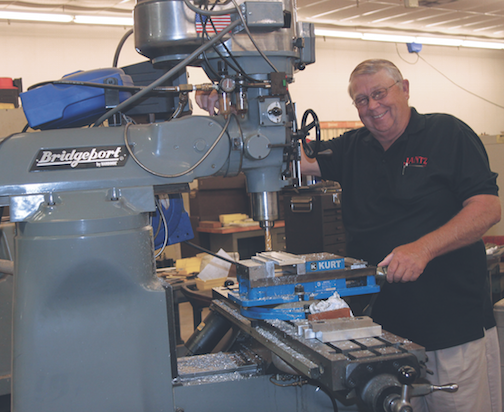
Ken Jantz of Jantz Supply works on a prototype for a new hollow-grinding fixture in the Jantz Shop in Davis, Oklahoma.
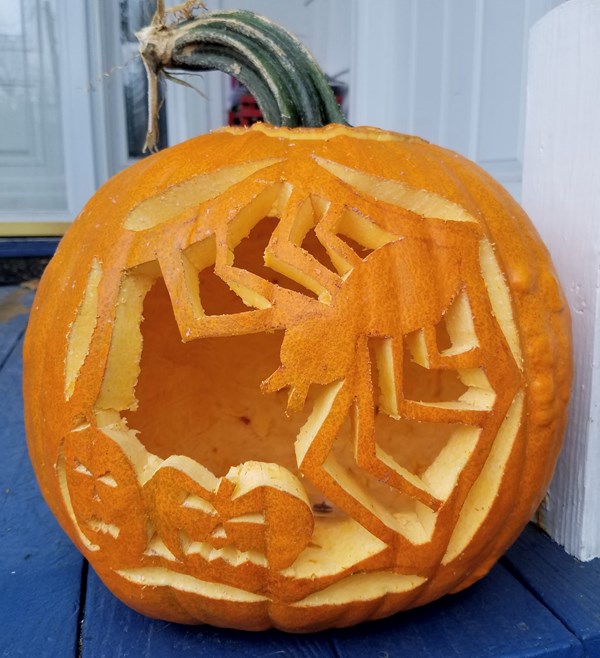
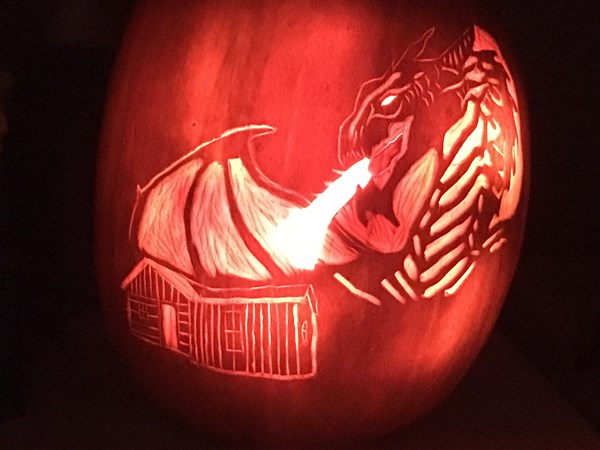
BLADE‘s Halloween pumpkin-carving contest is in the books. Here are the winners. They’ll be contacted separately for their prizes. Thanks to everyone who entered.
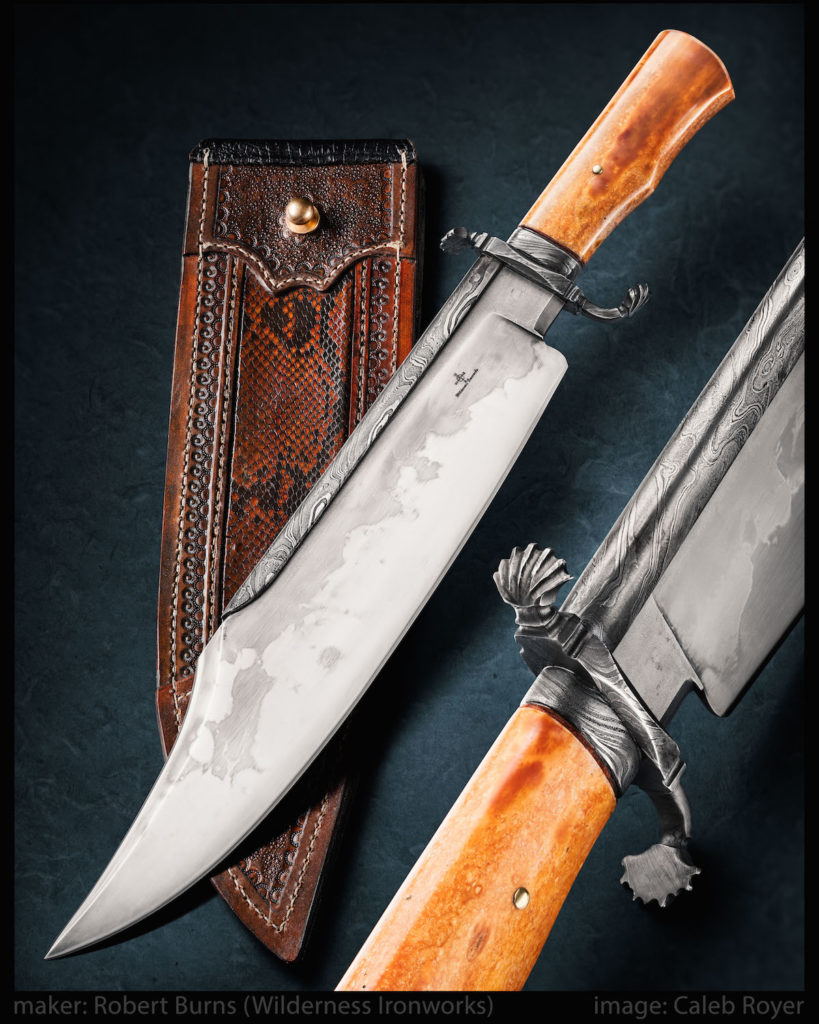
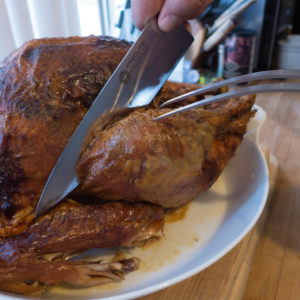
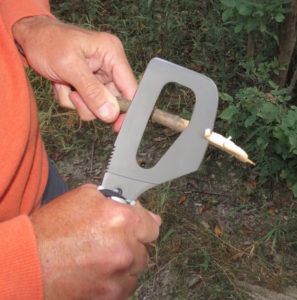
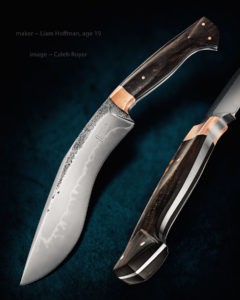
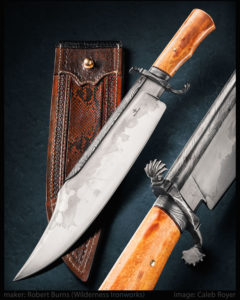
Bag Big Blades ‘n Edges in the latest issue of BLADE®—on newsstands now!Big blades can be fun to make and Chris Amos shows you how to make a big bowie in part one of his story this issue.Big blades go hand-in-hand with Thanksgiving and turkey carving. The Boker Arbolito Carving Set is big bird ready!A hatchet may not fit into your classic definition of big blades but it definitely can act like one, such as the Farson from Fremont Knives.In the realm of big blades, kukris are large and in charge—even compact ones such as this one by Liam Hoffman.As far as big blades go, Robert Burns’s Joe Musso Bowie is a cutting behemoth.
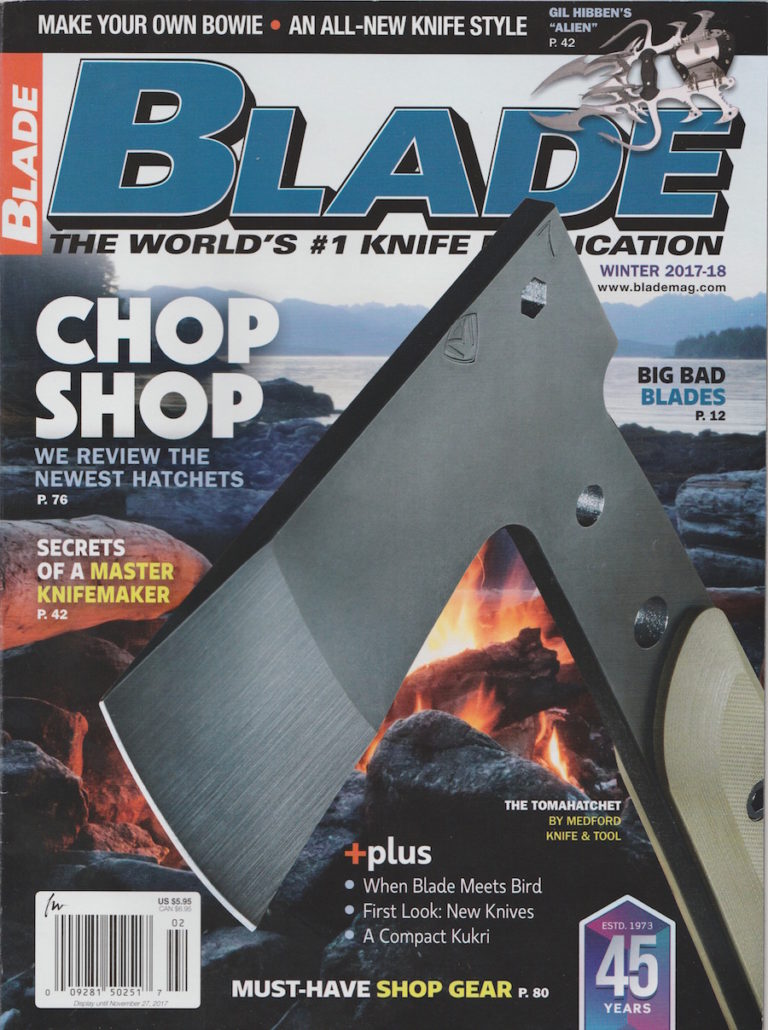
Big Blades ‘n Edges, including reviews of the newest factory hatchets, some of today’s top custom bowies and four top turkey carving sets, highlight the latest BLADE®, on newsstands NOW!
The latest BLADE leads off with “Big Bad Blades,” Daniel Jackson’s assessment of some of today’s hottest bowies and their makers, including Mike Quesenberry, James Huse II, Jason Fry and Robert Burns. Each has an approach to “America’s Knife” sure to stir your bowie blood. Speaking of which, if Daniel’s story makes you want to “take the next step,” check out part one of “How To Make a Bowie” by Chris Amos.
In “Chop Shop,” join Abe Elias as he takes four contemporary hatchets—the Tomahatchet cover piece, Condor Tool & Knife Greenland, Browning Outdoorsman and Fremont Knives Farson—and subjects them to a round of hacking and cutting exercises. And in “Turkey Cuts,” James Morgan Ayres not only tests a quartet of the latest factory turkey carving sets from Victorinox, Santa Fe Stoneworks, KAI Shun and Boker Arbolito, but he shows you how to prepare your bird for Thanksgiving, too!
Speaking of history, Pat Covert examines the over six decades of making Rambo and Star Trek knives, reproducing Paul Ehlers‘ fantasy knife designs, terms as president of The Knifemakers’ Guild, holding a private audience with Elvis Presley and much more of the fascinating life of Cutlery Hall-Of-Famer Gil Hibben.
There’s more, including a new breed of modern slip joints, the very first story of the very first issue of BLADE (then the American Blade), Liam Hoffman‘s compact kukri and scintillating scads of sharp stuff, all in the latest issue of BLADE.
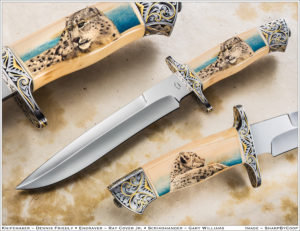
Forged knives are the focus of the latest BLADE®, on newsstands now!The Ikoma Korth Bearing System developed by Flavio Ikoma and Ricardo and Paulo Lala—here on a Korth Carved Reptile—helped revolutionize flipper folders.J.T. Oldham shares his views on whether you should reboot your knife collection in this issue.Find out where art knives such as this model by Dennis Friedly are headed in this issue of BLADE®.
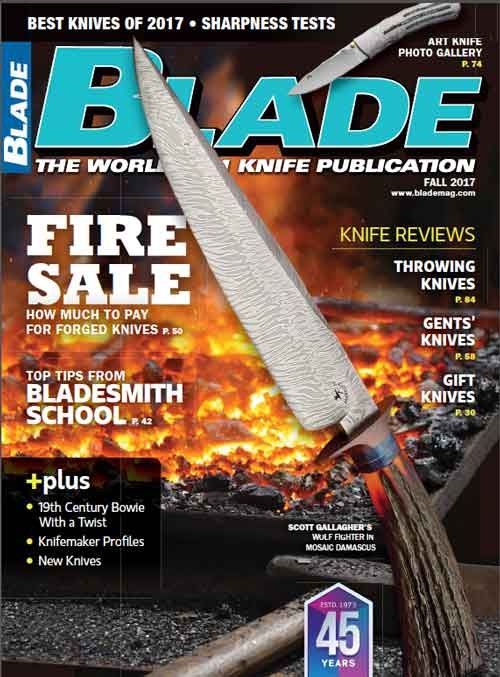
Hot knives don’t get any hotter than those hammered to shape in the forge, and the latest BLADE® focuses on forged knives in all their radiant glory.
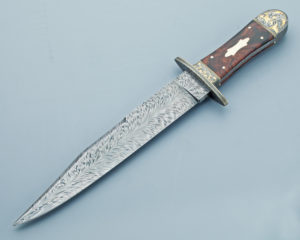
Chris Amos provides tips for novices on how to forge knives in this issue of BLADE®.Harvey Dean‘s damascus beauty won the Antique Bowie Knife Association Award for best period bowie by an ABS master smith. (Chuck Ward image)
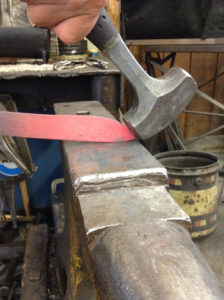
How do you get started forging knives? High Endurance Performance Knife master bladesmith Chris Amos covers the basics every newbie bladesmith should know in “Top Tips for Novice Bladesmiths.” Attending hammer-ins is another must for those serious about forging knives, and BLADE Managing Editor Erin Healy tells you about one of the top centers of bladesmithing instruction, the New England School of Metalwork, in “Hammah-Time!”
Sometimes you need to start all over again, including with the knives you collect. Pat Covert interviews some top collectors for their views on the subject in our lead story, “Is It Time To Reboot Your Collection?” Throwing knives have been enjoying a resurgence lately, and James Morgan Ayres tries his hand at flinging some of the latest ones in “Bull’s-Eye!”
Art knives were among the hottest custom knives anywhere in the 1980s and ’90s but in recent years have been overshadowed by tactical and other knives. Dave Rhea examines the current state of the genre and where it’s headed in “Where To Now, Art Knives?” Gent’s knives have an across-the-board appeal for their looks, style and utility. Abe Elias tests four of the latest in “Steel-ish & Stylish.”
There’s much more in this issue, including how the flipper folder changed knife history, tests of two hunting knives, sharp holiday season gift ideas and much more in the latest edition of BLADE, on newsstands now or available in the digital edition. Or, you can subscribe to the domestic print, digital, Canadian print or international print editions.
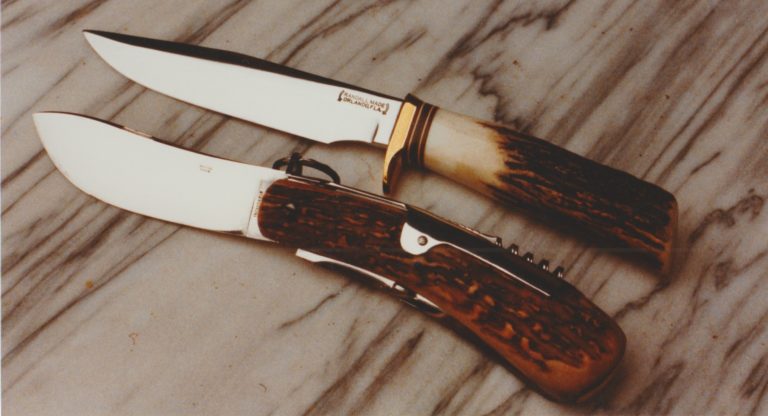
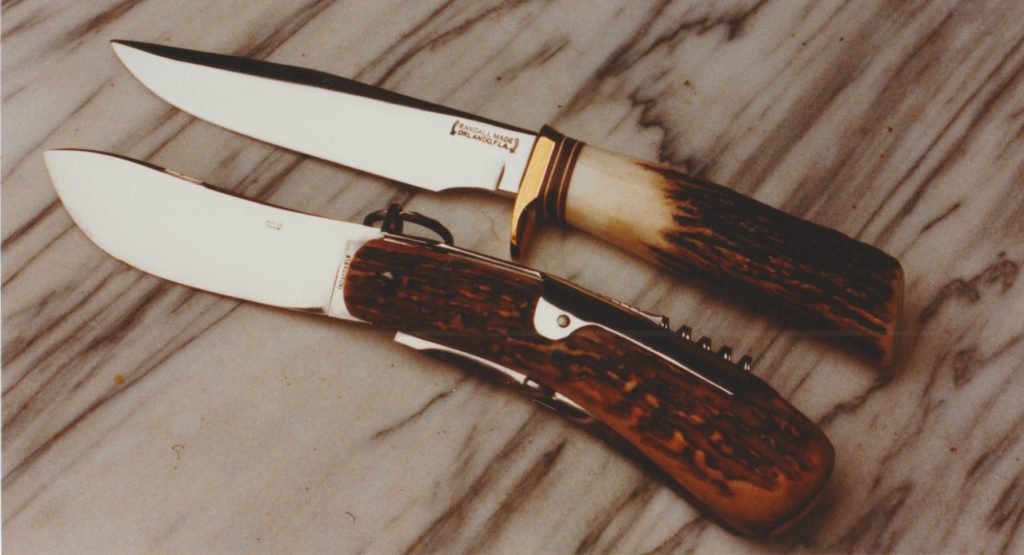
Two of Shelley’s early favorite knives: the Hermes folder (right) and a Randall.
While there have been many celebrities in and out of show business embraced by the custom knife community, none embraced it in return and then some as did cutlery’s comic, Shelley Berman. Actor, comedian, writer, poet, professor and knife collector, Berman passed away quietly on Sept. 1 at the age of 92, but not before decades of touching the custom knife community like no one else.
Known worldwide beginning in the late 1950s as a top comedian, Berman recorded six comedy albums, including 1959’s Inside
Shelley Berman, the first non-musical recording to win a Grammy Award. Three of his comedy albums went gold and he was the first non-musical comedian to appear in Carnegie Hall. According to an Associated Press story, Berman was “a pioneer of a new brand of comedy that could evoke laughter from such matters as air travel discomforts and small children who answer the telephone. He helped pave the way for Bob Newhart, Woody Allen, Jerry Seinfeld and other standup comedians who fashioned their routines around the follies and frustrations of modern living.”
Shelley also starred on stage and in musicals on Broadway, had several film roles and continued acting into his mid-80s, appearing as Larry David’s dad on TV’s Curb Your Enthusiasm, and also on Boston Legal and Grey’s Anatomy, among others. He retired in his 80s after 20 years of teaching humor writing in the Master of Professional Writing program at the University of Southern California.
Shelley Berman was known worldwide for his comedy in the 1950s and won the first ever Grammy Award for a non-musical album—of comedy, naturally enough—in 1959.
of custom knives. All that changed when he was working in Las Vegas in the late 1970s.
It was there he saw his first custom knife at a knife show in the old Sahara hotel and casino. He wasn’t sure custom knives were for him until he subscribed to the American Blade magazine—now BLADE® Magazine. “When I saw [the stories in the magazine] I realized, my God, I’m not crazy, I’m a collector!” he said in an interview with Dave Harvey in the December 2009 BLADE. “I had all these knives in my drawer, so I ‘came out of the drawer.'”
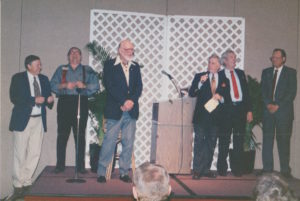
But it was more than just the knives that attracted both Shelley and Sarah—it was the makers themselves. The Bermans admired the work of such cutlers as Cutlery Hall-Of-Famer Buster Warenski, Warren Osborne and Larry Fuegen, to name a few. The Bermans also came to know the wives of the makers as well, such as Dorothy and Jim Ence, Betty and Ted Dowell and many more. The Bermans were regular visitors to the Art Knife Invitational, the California Custom Knife Show, the Solvang Custom Knife Show and other knife events. Each April during the Solvang Show there would be a barbecue, and for many years Shelley emceed the post-dinner awards ceremony. In 1996 he did a comedy routine to headline the banquet for the 25th anniversary Knifemakers’ Guild Show—now the International Custom Cutlery Convention (ICCE)—at the Marriott Hotel in Orlando, sparing no one from a comedic jab or two, including Cutlery Hall-Of-Famers Bob Loveless, A.G. Russell, Frank Centofante, D’ Holder and Dan Dennehy, Ted Dowell and others in the jam-packed ballroom.
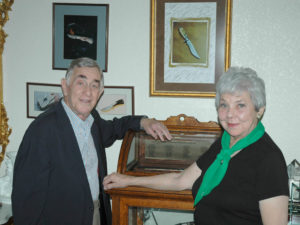
Shelley and his wife for 70 years, Sarah, and their knives in the Berman home—including the photo of the Virtue knife signed by all the participating makers at top right.
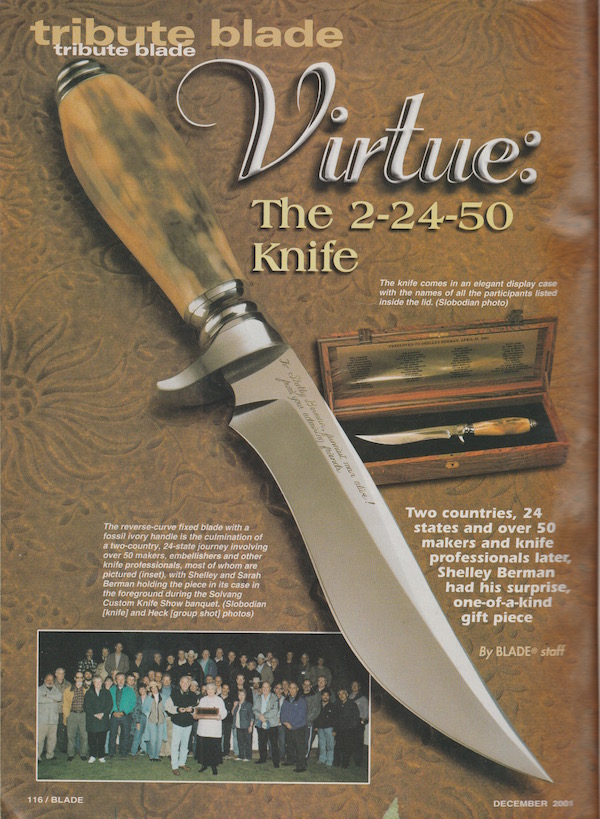
During the 2000 Solvang Show, many of the show’s custom makers the Bermans had befriended over the years huddled and decided to make a special surprise knife that they would deliver unbeknownst to the Bermans at the following year’s Solvang Show. A work schedule was planned so the knife would spend the least amount of time possible in the mail between destinations. One of the biggest obstacles was getting the knife in and out of over 50 workshops in less than 10 months. Work began in July 2000 and the completed masterpiece arrived in Solvang just three weeks prior to the 2001 Solvang Show. The project began in Arizona and from there went to Nevada; Idaho; Washington; Oregon; California; Hawaii; back to Arizona; Utah; Colorado; New Mexico; Texas; Arkansas; Kentucky; Tennessee; South Carolina; North Carolina; Virginia; West Virginia; Maryland; Pennsylvania; New Hampshire; Quebec, Canada; Ohio; Minnesota; and Wisconsin.
The worry was that the knife, christened “Virtue: The 2-24-50 Knife,” would look as if 50 different makers had made it, which, of course, would not be the desired result. However, just the opposite occurred and the knife came out beautifully. Nothing quite like it has been attempted before or since.
As Dave Harvey, Solvang Show producer and owner of Nordic Knives, noted, one concern was that word of the knife would leak to Shelley before it was finished. However, the secret was kept and Shelley’s reaction made it abundantly clear that he was genuinely surprised and thrilled when the knife was presented to him and Sarah at the 2001 Solvang Show.
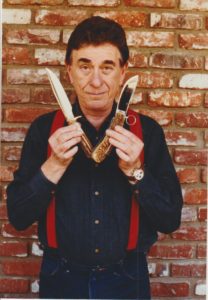
Shelley holds two of his favorite knives, the favorite being the Hermes folder. He was featured with it in the second installment of BLADE‘s “My Favorite Knife,” the forerunner to the magazine’s popular “The Knife I Carry” feature, in the October 1991 issue.
Shelley also wrote for BLADE on occasion, and even appeared in the second-ever installment of the magazine’s popular department, “The Knife I Carry,” which originally was known as “My Favorite Knife.” The knife was a Hermes folder and Shelley is pictured holding it on page 94 of the October 1991 BLADE.
With the permission of Cutlery Hall-Of-Famer Jim Weyer, the March 1996 BLADE reprinted Shelley’s story “Symbiosis” from Weyer’s Points Of Interest Book IV. In the story about knife collectors and what makes them tick, Shelley nailed it perfectly when he wrote, “Since only the Good Lord knows what makes a collector a collector, it follows that only the Good Lord knows why a collector is after only a certain kind of knife on a given day. Even then, if one should ask the collector what kind of knife he has in mind, the collector may answer, ‘I’ll know it when I see it.'”
Likewise, the members of the knife community know a great collector and friend when they see one, and along with his wife Sarah, Shelley will forever fit the mold.
Over 50 makers working on the knife in shops in 24 states resulted in the Virtue knife for Shelley and Sarah Berman.