Charles Houston Price, founder of Knife World, passed away Dec. 29.
Charles Houston Price, publisher of Knife World, passed away Monday, Dec. 29. He was 79.
Of New Market, Tennessee, the man known to many simply as Houston was a rock in the world of knives and knife publishing. Next to BLADE®, his Knife World monthly publication is the longest-running knife periodical. Knife World’s support of the knife business, including a long, successful relationship with the American Bladesmith Society (ABS), has been one of the constants in an industry that, like many, has had its share of attrition and turnover.
In addition to his role as publisher of Knife World, he wrote about knives for both it and other publications, authored six editions of The Official Price Guide to Collector Knives and, along with his fellow Cutlery and ABS Hall-Of-Fame compatriot B.R. Hughes, authored the quintessential book on Cutlery and ABS Hall-Of-Famer Bill Moran, Master of the Forge. Houston also was a recipient of what many consider the most prestigious of ABS honors, the Don Hastings Award, for selfless giving above and beyond the call to the ABS in a manner similar to the man for whom the honor is named.
A memorial service will be held at 11 a.m. Saturday, Jan. 3, at the Farrar Funeral Home (865-475-3892) with the Rev. Robin Lindsey officiating. Family will receive friends from 10 until 11 a.m. prior to the service at the funeral home. In lieu of flowers, memorials may be made to the Marine Corps Heritage Foundation, 3800 Fettler Park Dr., Ste. 104, Dumfries, VA 22025 or on line at marineheritage.org, or to American Bouvier Rescue League, ABRL, c/o Deborah Abeles, PO Box 689, Cheshire, MA 01225.
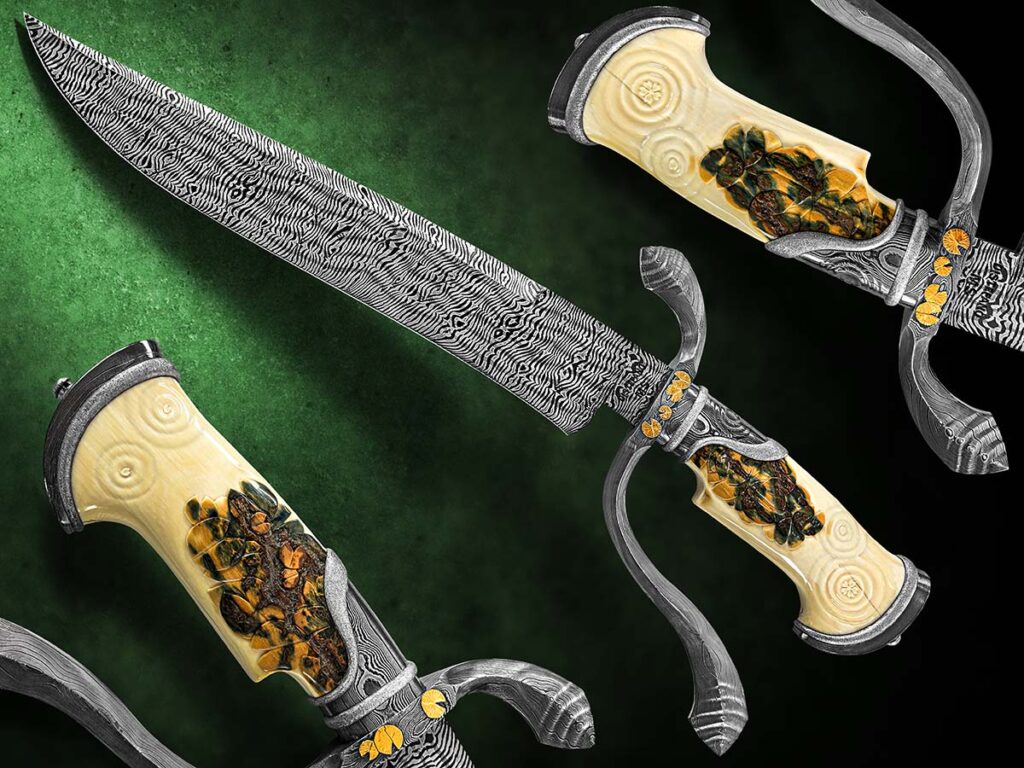
The money was raised through the CKCA’s raffle of a special bowie made by ABS master smiths/CKCA members Larry Fuegen and Tim Hancock. The winner was knifemaker/CKCA member Joel Chamblin.
The CKCA’s contributions to date to cancer research projects totals $34,053.30.
Long-time knifemaker Ron Frazier passed away on his birthday, Nov. 15. He was 71.
“Ron was one of only a few knifemakers that was a true artist,” noted his friend, scrimshander Rick Bowles.
The long, tall Frazier was a huge fan of 19th-century knifemaker Michael Price and made a number of dress bowies in the Price style. Well-liked and easy going, Frazier crafted artistic knives in a variety of styles, most if not all one of a kind.
“Each of Ron Frazier’s blades are individual expressions of art,” wrote Cutlery Hall-Of-Famer Butch Winter in his profile of Frazier in the September 1999 BLADE®. “He does not make knives, he creates them. His pieces are bursts of inspiration carried out in metal, ivory, horn, wood or bone. They are all one-of-a-kinds since, as Ron says, ‘I don’t like to make the same knife twice.'”
Among the many awards Frazier won for his knives were the 1997 BLADEhandmade Best In Show and Best Art Knife awards. At the Southeastern Custom Knife Show in Winston, North Carolina, he won Best In Show for three years running and Best Art-Best Bowie Overall four years straight.
You have NO need to read this article because it could never happen to you. Right? This article must have been written for knife-wielding thugs or street gang members. Right? Why would law enforcement authorities ever come after you? Right?
WRONG! Merely because you possess or carry a knife, knife law enforcers may try to justify their existence by turning you into an accused “law-abiding” criminal. Even though you are a careful, honest knife owner, with no intent to do any harm, and would never knowingly break the law, this can easily happen to you. I have plenty of criminal case files of examples of innocent, unsuspecting, law-abiding folks having to fight their way through the justice system to “prove their innocence.”
#1: Remain Silent
The Fifth Amendment protection against self-incrimination, also known as the “Right to Remain Silent,” is one of the most important Constitutional protections Americans have, that many other countries do not grant.
Yet, naive people in the United States routinely ignore Fifth Amendment protections and bury themselves with “explanations.” When it comes to a criminal violation, most law-abiding citizens are ignorant about the details of the law and its many loopholes and defenses. By opening their mouths, they remove all doubt about their ignorance and usually give the state something not just to use against them, but to twist against them.
#2: Ask for your Attorney
The Sixth Amendment guarantees an individual’s right to an attorney. By asking for your/an attorney and remaining silent, honest knife owners provide themselves with a fundamental foundation for a strong legal defense. Defense attorneys smile when they learn their clients stood firm on their rights.
Say, “I want my attorney.” If you do not already have an attorney, say, “I want an attorney.” Requesting an attorney does much more than simply getting legal counsel. Simply requesting an attorney causes a wall of Constitutional protection to spring up around you.
#3: Do Not Consent to Waiving Any Rights
A right given up is a right lost. Do not consent to a search without a warrant. Do not sign any documents or statements without an attorney’s advice. All citizens have a Fourth Amendment right to a warrant being issued before their person or premises are searched.
There are exceptions to the necessity for a warrant, and there is a large body of law that exists as to when law enforcement officers have justification or probable cause for a warrantless search. However, whether an exception for the warrantless search exists or not, you should never consent to a warrantless search.
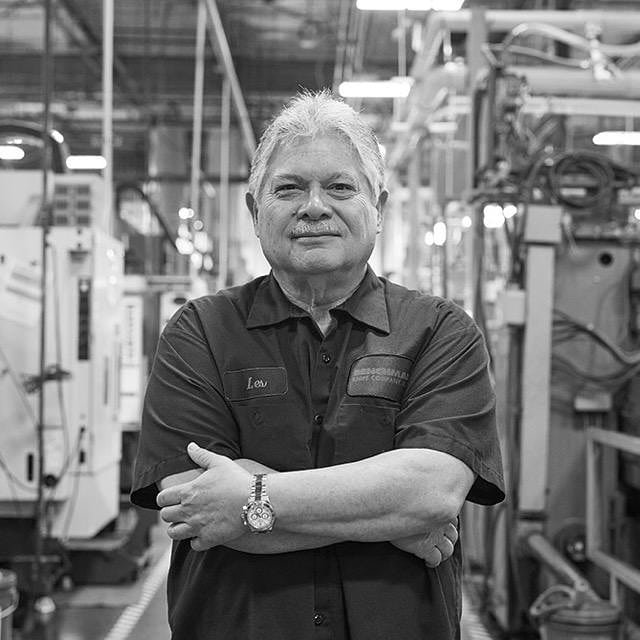
BLADE has learned the unfortunate news that Les de Asis, founder of Benchmade and a member of the BLADE Cutlery Hall of Fame, passed away on Friday, Feb. 21. The announcement came from official Benchmade social media channels.
It is with great sadness we share that Les de Asis passed away earlier today. No words can properly express the sadness of our loss. Benchmade has lost our founder, friend and visionary who built one of the greatest knife brands in the world. pic.twitter.com/dSU3VVYGBS
Les de Asis (right) with his son, Jon (left), at a Benchmade shop. (Benchmade photo)
In late 2018, Les turned the reins of Benchmade over to his son, Jon, as reported here. The company was a family affair from the very beginning. Les created Bali-Song®, Inc., in 1980, selling the now-iconic Model 68 butterfly knife. That evolved into Pacific Cutlery Corp. through 1987. Les started Benchmade a year later.
Under his guidance, Benchmade knives became some of the most ubiquitous in the world, supported by the popularity of the innovative AXIS® lock, Griptilian and much more.
Because of these achievements, Les was inducted into the BLADE Cutlery Hall of Fame in 2017. What follows is a portion of BLADE‘s write up from the event. Jon accepted the award on Les’s behalf.
Jon explained that his father visited his first custom gun and knife show in Glendale, California, in 1979 and met the craftsmen and marveled at the works they had made and offered for sale.
“I liked that they were independent and developed their skills by improving their products over time,” Jon related his father’s sentiments. “I also appreciated that they were independent and plied their skills in their home workshops.”
At the beginning of his career Les indicated he met pioneer knifemakers like Cutlery Hall-Of-Famer Bob Loveless, Barry Wood, Glen Hornby, Chuck Stapel and many more, talking knives and guns for hours at a time. Les visited their shops and learned how they worked, what their definition of quality was in regard to design, materials, fit and finish, walk and talk, and metallurgy.
“I have been constantly intrigued by all the personalities, processes, materials, artistry and innovation that are present in the custom knife world, and challenged in how to translate them into a unique, high-quality manufacturing environment able to serve an ever-growing customer base,” Jon shared his father’s words. “I confess, it wasn’t easy creating a world-class company, but the journey, one knife at a time, was worth the effort!”
BLADE extends its warmest wishes to Les’s family during this difficult time.
Read our full report on what the Buderus closure means for knifemakers, Damascus production, and company inventory.
Once when he was ill, Mark Twain famously quipped that “rumors of my death have been greatly exaggerated.” October 2025 brought troubling rumors to the knife industry regarding the potential closing of a major steel mill owned by Buderus Edelstahl.
Based in Wetzlar, Germany, Buderus is a major producer of 10xx series steels, including 1075, 1084, 1095 and 15N20, that are purchased through various suppliers. The company was founded in March 1731 and began steel production in April 1920. It has changed ownership several times, including being purchased from Bohler-Uddeholm by Voestalpine. Voestalpine sold the company to the German investment company Mutares in 2025.
BLADE® reached out to knife industry steel authorities for comment.
Dr. Larrin Thomas reported that he had spoken directly to two different Buderus employees.
“We have been hearing conflicting reports about whether the [Buderus] hot and cold mills are being shut down,” he wrote in an e-mail. “Regardless, things are a bit too murky right now to say much definitively.”
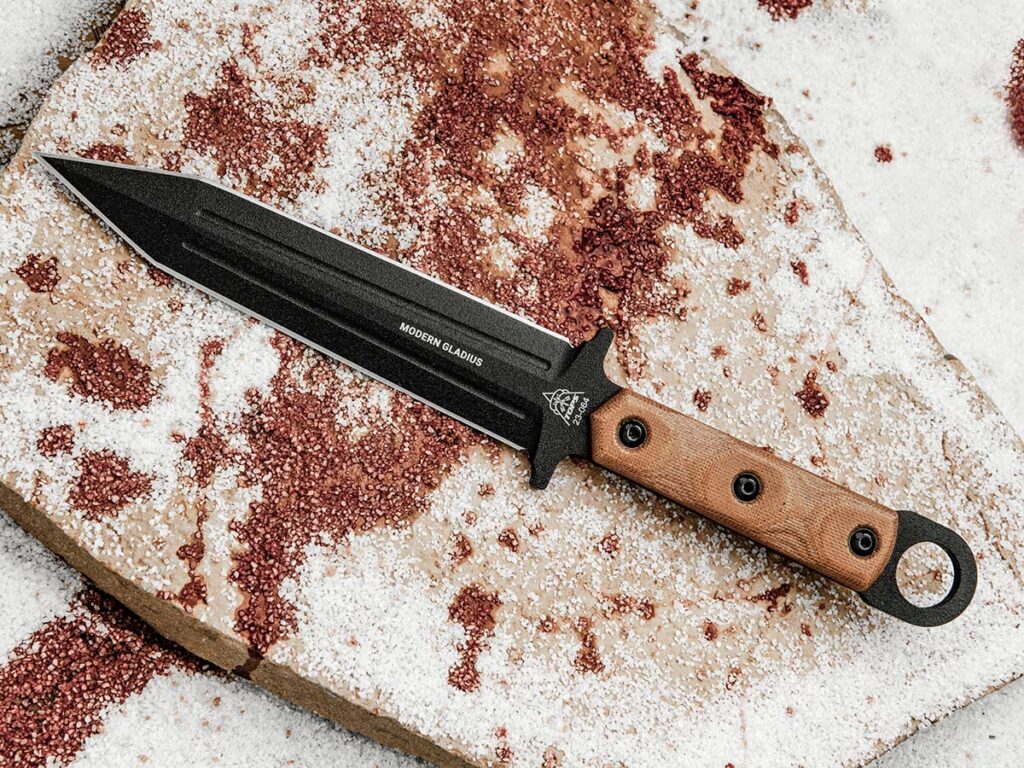
Carbon steel 1095 is the material of choice for the 6.5-inch blade of the Modern Gladius by TOPS knives.
If the rumors inside the Buderus workplace match the ones inside most large workplaces, there’s a good chance that conflicting perspectives and speculation are flying around everywhere. It could be difficult to get to the actual facts, even directly from mill employees. However, Larrin remained hopeful.
An email obtained from steel supplier New Jersey Steel Baron (NJSB) was less hopeful. This past October, NJSB officials notified their intermediaries that the Buderus mill was closing at the end of the month. The email stated, “We are writing to inform you that as of October 31, 2025, Buderus Edelstahl, one of our primary vendors, will be ceasing its rolling operations. This marks the end of a fifteen-year partnership for NJ Steel Baron, and we anticipate it will significantly impact the bladesmithing, blacksmithing, and cutlery industries. We have already begun to pivot our production to new vendors and source new alloys to ensure our inventory remains robust.”
A story on n-tv.de, an online news platform based in Germany, carried the headline “Buderus Edelstahl steel is broken up—hundreds of jobs affected.” The story reported that, “The company’s steel mill … is to be closed by the end of October, Mutares announced.”
NJSB’s Peter Bruno took the news hard, saying “I’m going to have to spend some time in the woods thinking about it.”
In the NJSB press release he stated, “This has been more than a vendor relationship; it’s been a cornerstone of our steel program. Buderus has consistently delivered high-performance German steel that’s fueled makers, machinists, manufacturers, and craftsmen throughout the world. Losing this supply chain is a hard hit, not just for us, but for the entire industry.”
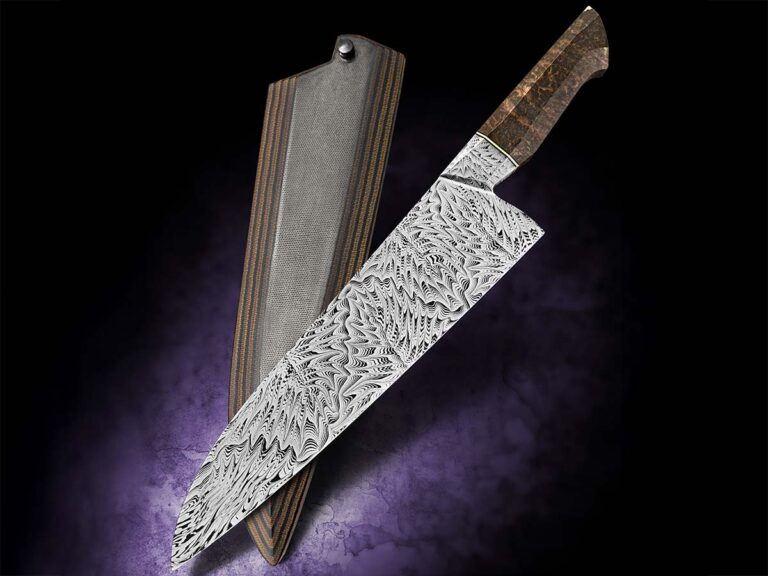
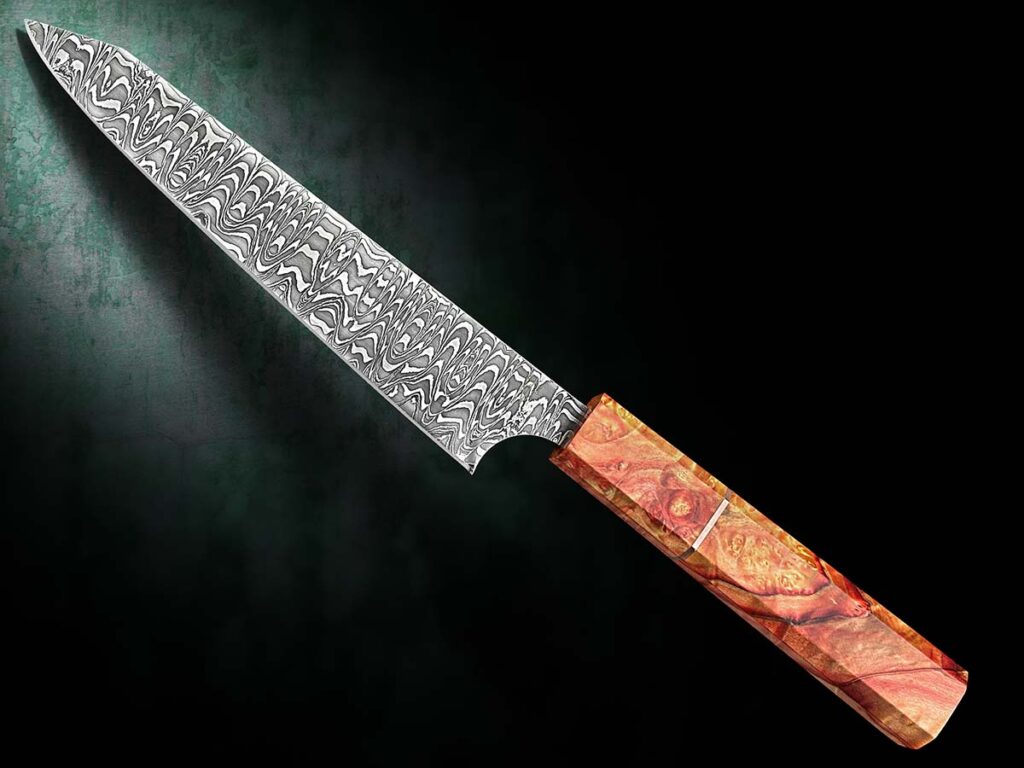
Paul DiStefano opts for 1084 carbon and 15N20 nickel-alloy blade steels for the damascus pattern configured to appear as what an animal might see if looking at a stalking tiger through a bamboo forest. Overall length: 19 inches. (pauldistefanoknives.com) (Jocelyn Frasier image)
Beyond the pure shock of losing its main supplier, NJSB is developing a plan. It has a good amount of steel on hand and is buying all the remaining Buderus stock it can. NJSB also has reached out to its customers and is selling steel by the pallet to ensure customers have at least short-term reliable access to the steel they need for ongoing orders.
“While we’re actively working to develop new sources and mill partnerships, the shift won’t be immediate, and some grades may remain out of reach for a while. Some alloys may not return anytime soon, if at all,” Bruno noted. “Once supplies run out, that may be the end of the line in some cases.”
Company Responses
The 10xx series steels are used by several knife manufacturers and importers for their hunting, outdoor, tactical and other utility-type knives. Some of those companies include Condor Tool & Knife, ESEE, KA-BAR, Utica, the previously mentioned TOPS and White River Knife & Tool. Some of the foregoing deal with Buderus and some do not. The 10xx series steels are also widely used by custom knifemakers for damascus and straight carbon knives.
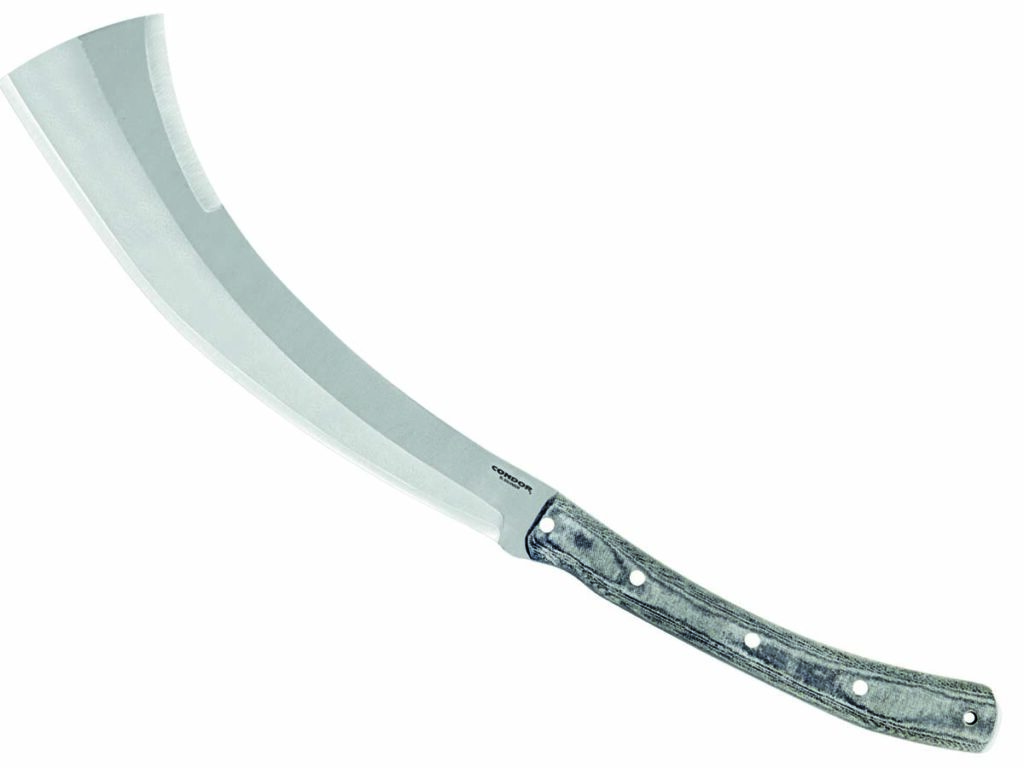
The K-Night Panabas from Condor Tool & Knife boasts a 14.29-inch blade of convex-ground 1075 carbon steel.
Mike Olen, director of sales at Condor Tool & Knife, said Condor was not sourcing any steel through Buderus.
“For the 1075 and 1095 steels, we get them from a variety of vendors, mostly Europe and Asia based,” he noted. “I’m not sure exactly, but I know a lot of our steels have been coming from German and South Korean companies lately. We do the heat treatment in house, so it opens up more options for us when sourcing the raw materials.”
“KA-BAR has had a long relationship with Buderus,” wrote KA-BAR’s director of sales and marketing, Joe Bradley, though he added any potential closure of the Buderus steelworks would not affect KA-BAR immediately.
Powell said TOPS gets its steel from a leading distributor, though it was unclear at press time whether that distributor used Buderus as a source or not. At press time, he said TOPS was fine in terms of its supply of 10xx series steels, though the company likely will start stockpiling the steels in case of any shortages.
Suppy Alternative
Jantz Supply is a leading source of 10xx series steels for custom knifemakers and others. Jantz’s Shanna Kemp indicated her company maintains various sources of the steels and as a result does not expect supply delays.
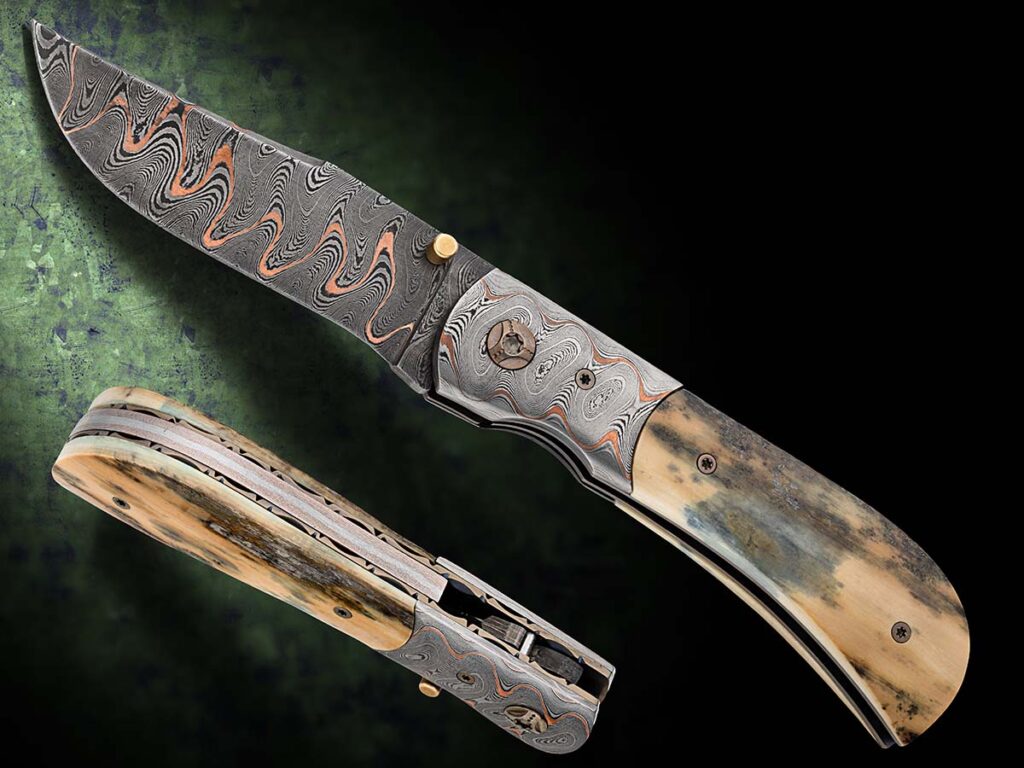
A damascus of 1084, 15N20 and copper forged by Baker Forge & Tool comprises the 3.25-inch blade of Stephen Roney’s linerlock folder. ([email protected]) (Jocelyn Frasier image)
“We don’t expect any disruption from the Buderus mill closure,” Shanna wrote. “Jantz has strong relationships with multiple mills, so makers can count on us for steady access to the high-carbon steels they rely on. Our commitment to providing reliable, high-quality materials for knifemakers will not change.
“We have long-standing relationships with multiple steel mills and distributors worldwide. The majority of our 10xx series high-carbon steels come from reputable suppliers in the United States and Germany. This diversified supply chain ensures consistent quality and availability for our customers.”
In fact, Shanna said Buderus is but one of a number of producers of 10xx series steels.
“I don’t know the exact quantity of 10xx series steels the Buderus mill produced. However, they were one of several manufacturers worldwide,” she noted. “The 10xx series is a widely produced grade family, and multiple mills continue to make these steels. While the Buderus mill was a respected supplier, their closure does not significantly impact global availability.
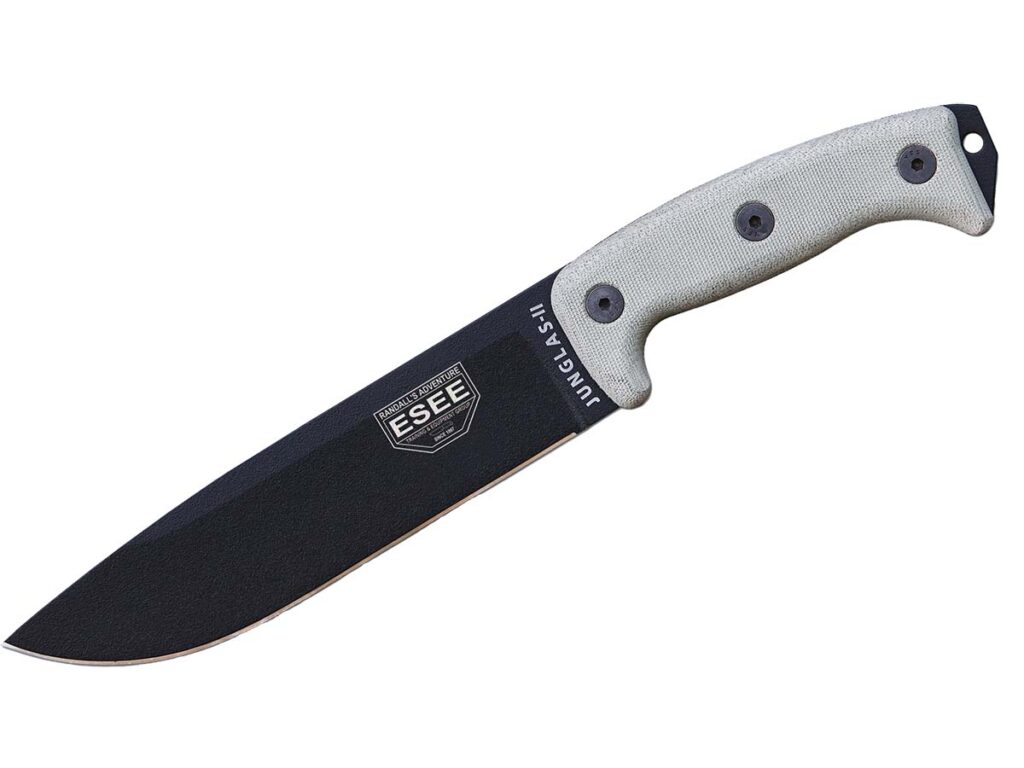
The Junglas ESEE checks in with an 8.38-inch blade of 1095 in a textured powder-coat finish.
“Several mills and processors around the world continue to produce 10xx series steels. While the Buderus mill was a respected manufacturer, these grades are not unique to any single producer. The market has ample capacity to absorb the change, and we don’t anticipate any long-term supply issues.”
Past Is Prologue
If all this sounds a bit familiar, Crucible Steel went through a similar process of bankruptcy and acquisition at the beginning of this year. Owners of the familiar CPM (Crucible Particle Metallurgy) trademarks for MagnaCut and others, Crucible was a major force in the knife industry. Eventually it restructured and cut its research and development division. Ultimately even the restructured company failed and was sold in parts to Erasteel of Europe and an American company, Lauter. Erasteel continues to produce steel of the same compositions with the same names, as it purchased Crucible’s intellectual property. Lauter owns the former Crucible factory and has begun hiring for its specialty business of manufacturing screws and fasteners.
The Crucible situation had some impact on the knife steel business. Dr. Larrin Thomas sat down with Bob Shabala of Niagara Specialty Metals in May for a conversation about the transition. Niagara is the primary rolling mill that served the knife industry in taking Crucible steels from 3,000-pound billets down to workable sizes. Bob explained that Crucible was one of Niagara’s biggest customers, but that it also was up front with its struggles. Consequently, Niagara was well stocked in CPM steels by the time Crucible folded.
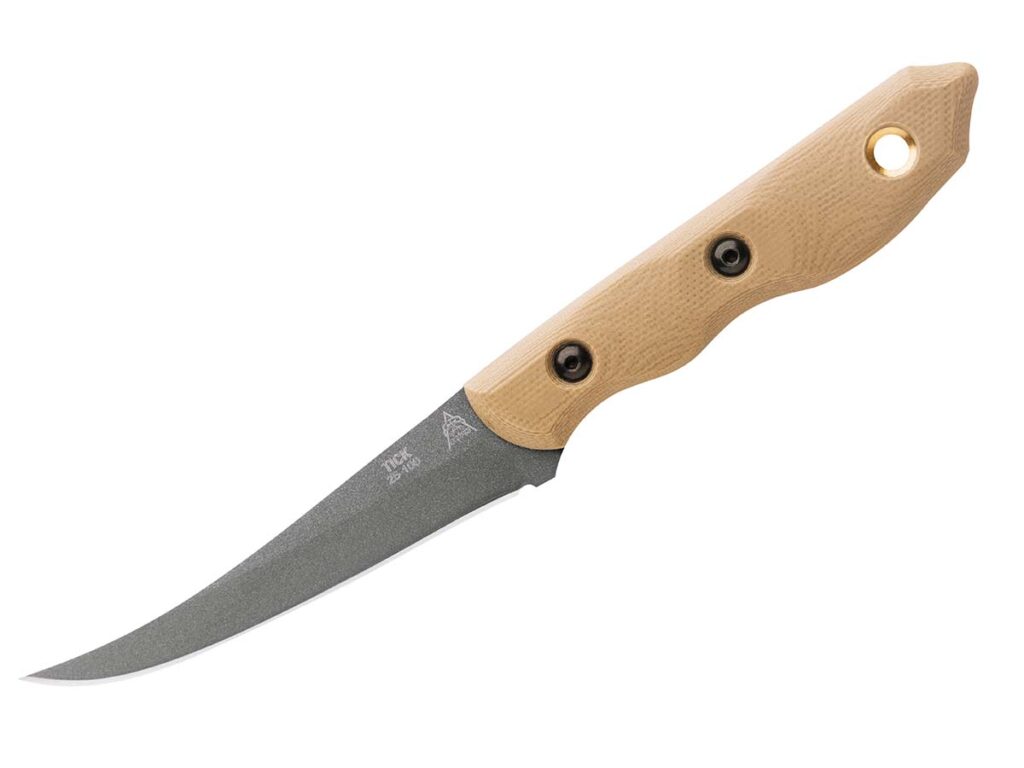
The Tick from TOPS Knives sports a 3-inch blade in 1095 carbon steel with a Tungsten Cerakote® finish.
Niagara also works with Erasteel and Carpenter, both of whom have the technology to produce steels of the same composition. Steel from Erasteel will retain the CPM trademarked names. Other versions of the same alloys rolled by Niagara will have new names for the steels the industry has used for years. Niagara officials predicted some disruptions because of panic buying as Crucible closed, but they also think business will return to “full speed ahead” for production of the knife steels in the former CPM formulations. Larrin indicated that Magna-Cut will survive and continue to be produced without disruption.
What’s Next
The steel industry has been challenged for many years, with more bankruptcies than start-up companies. To complicate things further, the steel the knife industry uses and needs is only a very small and specialized portion of a global steel industry that includes structural steel, automotive and more. With insatiable demand worldwide, the knife industry’s little corner of the market doesn’t get much attention. On top of that, steel production takes an enormous amount of energy, and with all the green and climate change talk of recent years, no one seems to be lining up to build anything but AI data centers at the moment.
Chad Jefferson chose 1080 and 15N20 to forge into a ladder W’s pattern for the 7-inch blade of his gyuto. ([email protected]) (Jocelyn Frasier image)
Like the transition away from Crucible, the probable transition away from Buderus will no doubt cause some industry disruptions. For now, knifemakers can hope that rumors of the death of the Buderus mill remain greatly exaggerated—or at least, as with Crucible, its reincarnation is on the horizon. Will some other company buy the Buderus mill? Will, like Niagara, some other supplier step in the gap left by the closure? Will someone in the market feel the void and fill it? Time will tell, but for now, the best advice seems to be for knife companies and makers to buy the 10xx series steels while they can.
Editor’s Note:Blade Magazine Staff contributed to this report.
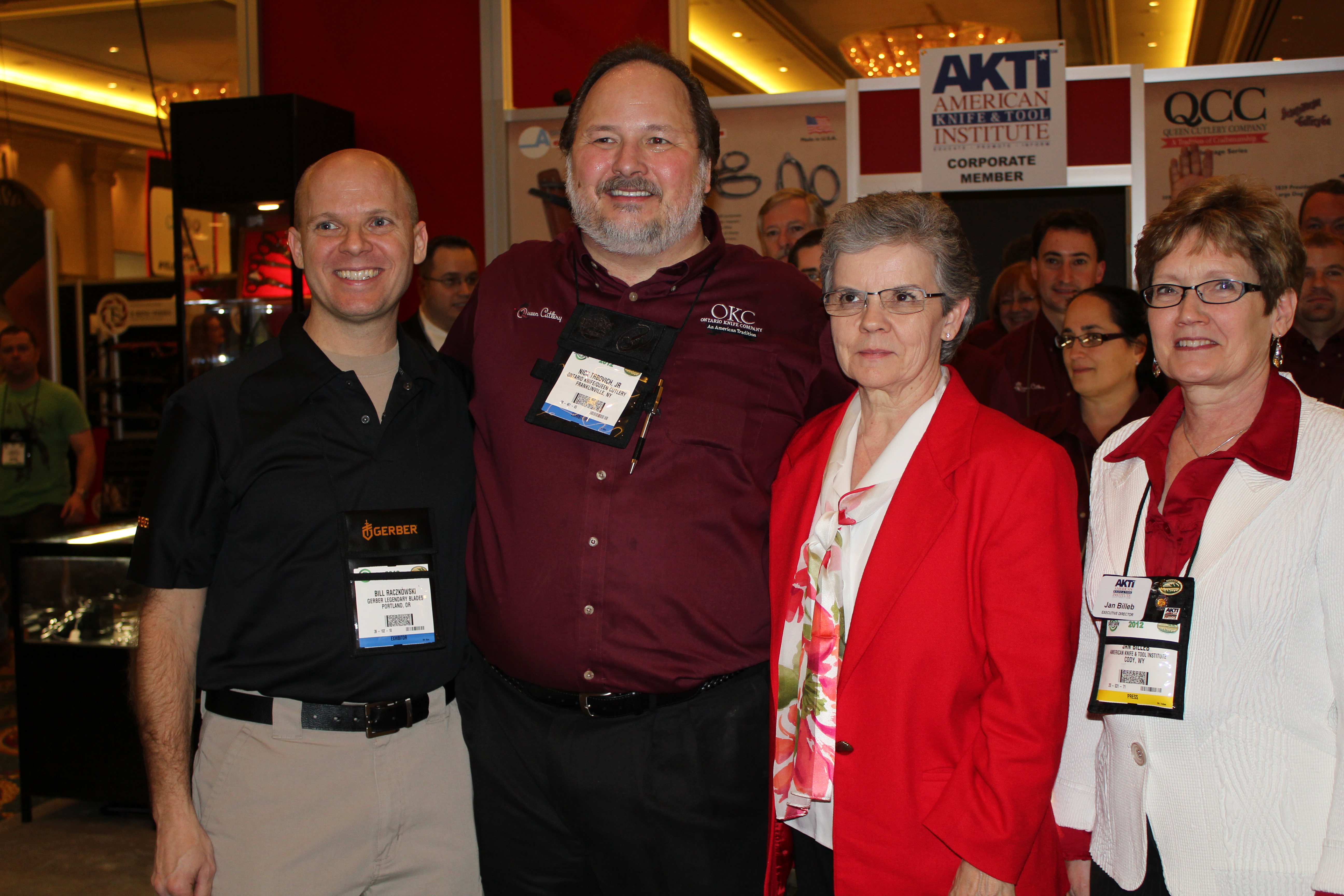
Pictured above, from left: Bill Raczkowski, AKTI president; Nick Trbovich Jr. of Ontario Knife/Queen Cutlery; Goldie Russell of A.G. Russell Knives, AKTI past president; and Jan Billeb, AKTI executive director. (Missy Beyer photo)
A Special Ontario Knife Co. Marine Bayonet was won by a current member of the American Knife & Tool Institute (AKTI) in a drawing at the Ontario booth during last week’s SHOT Show in Las Vegas. The member’s name is being withheld pending notification.
Individual members who renewed or joined AKTI between Jan. 1 and Dec. 30, 2011 were eligible to win the special bayonet and private factory tour, including a one-night stay in western New York.
The bayonet was taken from the Ontario archives. It is one of the first 200 OKC3s Marine Corps Bayonets produced and set aside in the company’s vault. Of those originally archived 200 knives, 52 were used to fill urgent requests from deploying Marines, when the company did not have regular production-run bayonets immediately available.
The reverse side of the 8-inch carbon steel clip point blade is laser engraved with the AKTI logo and the obverse side with a quote from Ronald Reagan, the Marine Corps logo and the serial #001 of 001. The one-of-a-kind knife with sheath ships with a glass-top walnut display case, and includes a certificate of authenticity attesting to its rarity, and a certificate for a one-night stay in western New York and a private tour of the Ontario facility.
“Ontario Knife Company has been a long-time member and supporter of AKTI, actively serving on the Advisory Members board as well as being an important asset on the Legislative Committee. They have been invaluable dealing with knife issues in their region of the country,” noted Jan Billeb, AKTI executive director.
AKTI has been actively changing restrictive knife legislation since 1998, working on a state-by-state basis promoting reasonable and responsible knife laws and enforcement to benefit all knife and edged tool users.
“AKTI is laying the groundwork for more knife law changes in various states to ensure that law-abiding citizens are not considered de facto criminals for carrying a tool they use every day,” Billeb said. “We are looking forward to an exciting year working with legislators for the benefit of the entire knife community.”
For more on the latest knives, knife legislation, knifemaking instruction, knife trends, knifemakers, what knives to buy and where and much more, subscribe to BLADE® Magazine, the World’s No. 1 Knife Publication. For subscription information click on http://www.shopblade.com/product/blade-magazine-one-year-subscripti…?r+ssfb240112#BL1SU