


 EdgeCraft Corp. Founder, Chairman and CEO Daniel D. Friel, an acclaimed inventor, world-renowned for engineering the best-selling Chef’sChoice® brand of small kitchen electrics, passed away on September 21. He was 92.
“It is with great sadness that we announce the passing of our founder and beloved friend Dan Friel. He was a brilliant businessman, inventor and pioneer who forever changed the fundamentals of knife sharpening,” says EdgeCraft President Sam Weiner. “Building an enterprise that in a few short years became the world leader in sharpening technology is a true American success story. His unwavering commitment to quality and innovative excellence is a legacy that will live on through his family, friends, employees, the products he invented and the consumers who enjoy them,” says Weiner.
Born in 1920 in Queenstown, MD, Friel received a Bachelor of Science Degree in Chemical Engineering from John Hopkins University in 1942. He began his career on the Manhattan Project at the University of Chicago where the first atomic reactor was assembled. Friel then spent 39 years with the DuPont company where he helped pioneer such products as Riston® Dry Film Photo Resist, used in the manufacturing of circuit boards. At the time of his retirement from the company, he was the Worldwide Director of Instruments and Biomedical Products.
At the age of 65, Friel founded EdgeCraft, highlighted by the launch of its first Chef’sChoice® electric knife sharpener in 1985. Friel’s technologically advanced sharpener immediately earned the acclaim of food experts and chefs worldwide including Craig Claiborne, Pierre Franey, Jacques Pépin and Julia Child.
“Dan Friel literally established sharpeners as a separate and important product category in the worldwide consumer market,” says Weiner. Today, the Chef’sChoice brand is not only recognized as a market leader for professional knife sharpeners, but also for advanced cutlery and other upscale kitchen electrics including tea kettles, waffle makers, and food slicers.
Friel’s brilliance as inventor and businessman spanned decades, and two distinctive careers. During that time he authored numerous technical papers and hundreds of U.S. and foreign patents on his work at both DuPont and EdgeCraft. He was active with EdgeCraft Corporation until the last week of his life. He was also a founder and chairman of the Mt. Cuba Astronomical Observatory located in Mt. Cuba, Delaware. He was a man of several passions who had an insatiable curiosity for all of life’s beauty and wonder. These passions led to several other personal achievements including pioneering the first high-speed photography studies of hummingbirds and most recently inking exquisite watercolor paintings.
Friel was married in 1943 to June, who passed away in 2008 and remarried in 2010 to Carolyn Blish. He is survived by his wife Carolyn, and three children, Barbara Holme of Denver, CO, Patricia Friel of Chadds Ford, PA and Daniel Friel Jr. of Kennett Square, PA, along with six grandchildren.
Edgecraft Founder Passes Away
SOG Twitch II Helps Save The Day
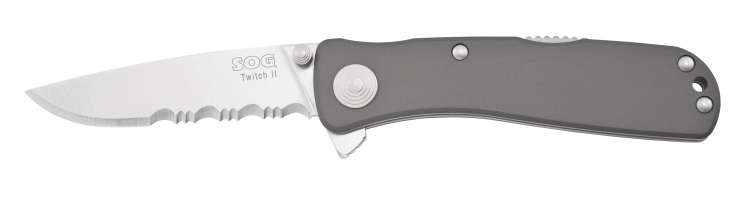
A SOG Twitch II assisted-opening knife helped save the day in a recent car accident. Zachary Taylor was the passenger in a car driven by his fiance when it spun out of control while avoiding a large animal in the road.The passenger side hit two trees and Taylor’s right leg was pinned under the dash.
As Taylor recounts the incident, “My right arm was pinned because the impact swung it up under me, but I used my left hand to retrieve the Twitch II knife from my pocket, opened it with one finger, and cut the seat belt. I then used it to cut away my pants leg that hung up under the dash. If I would’ve not been able to get out of the car, we would still be sitting there as no one was around us, we were way off down the embankment, the cell phone was busted, the front lights had busted out, it was really cold and we were wet from an exploded cooler.”
You can read the whole story, including photos of the car, at http://on.fb.me/xWdPOI
The preceding is courtesy of Knife Rights. For more information click on http://kniferights.org/
For more information on the Twitch II, click on www.sogknives.com.
For more on the latest knives, knife legislation, knifemaking instruction, knife trends, knifemakers, what knives to buy and where and much more, subscribe to BLADE® Magazine, the World’s No. 1 Knife Publication. For subscription information click on http://www.shopblade.com/product/blade-magazine-one-year-subscripti…?r+ssfb020112#BL1SU
Mount Rushmore of Knifemakers in BLADE!
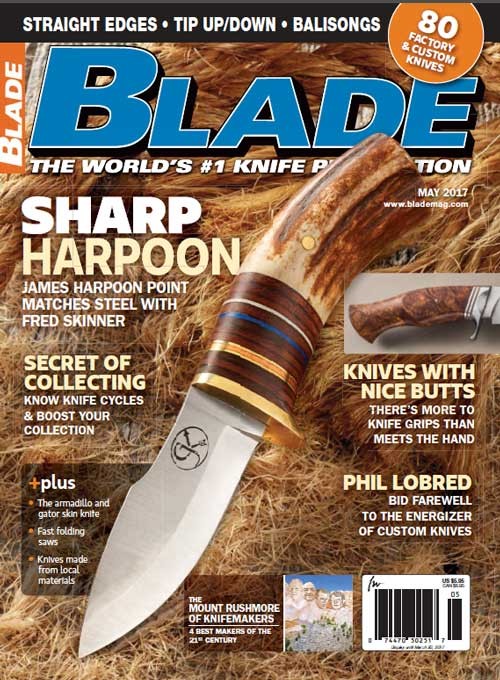
A contemporary version of the Mount Rushmore of Knifemakers, a secret of knife collecting, knives with nice butts, the Bob Loveless knife that changed knife history and more touch up the edge of the latest BLADE®, on newsstands NOW!
BLADE did an all-time “Mount Rushmore of Knifemakers”—the top four makers of the modern era—in the May 2015 issue. Afterward, one of the participants, Dan Delavan of Plaza Cutlery, suggested we do a Mount Rushmore saluting contemporary makers. The result is our poll of leading industry observers that pinpoints the top four makers—four to fit on our Mount Rushmore—from 2000 to 2017. Check out who they are, as well as the ones who just missed, in the latest issue.
Collecting custom knives must be fun and rewarding for you or else why do it? One way to make it fun and rewarding is to be successful at it, and one way to do that is to be aware of the life cycle of popular knife genres. BLADE field editor Les Robertson makes a living staying abreast of the life cycles of hot custom knife genres, something he has been doing for almost 35 years now. Learn what the cycles are, their history and how you can use them to enhance your collection in “The Circle Remains Unbroken.”
In knife parlance the end of a knife handle is called a butt—and knives with the nicest butts often are the kind that attract knife aficionados most. See why this is so and some examples of some of the best of their kind in “Knives With Nice Butts.”
The dropped hunter—aka the drop-point hunter or simply the drop point—by BLADE Magazine Cutlery Hall-Of-Fame© member Bob Loveless is probably the most emulated custom knife design of all time. Join John Denton and Cutlery Hall-Of-Famers A.G. Russell, D’ Holder and B.R. Hughes as they dissect what made the drop point a knife that changed knife history—all this and much more in the latest issue of BLADE.
Knife News Wire 2/16/18 – Knife Movie Nominated for Oscar Award

Knife Skills Movie Nominated for Oscar Award
Knife Skills is a documentary about an upscale restaurant staffed by people fresh out of prison with zero culinary experience. It’s not a knife movie like the ones BLADE normally covers, but blades do play an important role.
On the knife front, the larger point to be made is about the intentions behind the use of a knife. Here is a group of people with serious criminal records. In another context, that could be dicey, but here it isn’t. It takes the air out of arguments for regulating knives according to specs.
Knife Skills also shows how knives can create collaborative spaces for the sake of art, business or leisure. Can a restaurant function without knives? Why do the best chefs on Earth also seek the best knives? You can’t separate food and people so long as there is a tool with a cutting edge, and that means knives. The relationship is so essential that even convicts can be trusted to preserve it.
The documentary caught the attention of more than just BLADE, too. It received a 2018 Oscar nomination. We’ll see if a knife movie brings home the big award on March 4, when the awards ceremony takes place.
Knife Skills didn’t hit theaters in a wide release, but you can stream it on Amazon Prime for a couple bucks.
Heads up: The trailer above contains some coarse language.
Happy 30th Birthday, Outdoor Edge

Denver-based Outdoor Edge turned 30 years old last month, which means it’s still clinging to the spirit of its 20s but contemplating middle age while holding down a mortgage and a couple kids. (In lieu of a birthday card, BLADE respectfully submits that joke.)
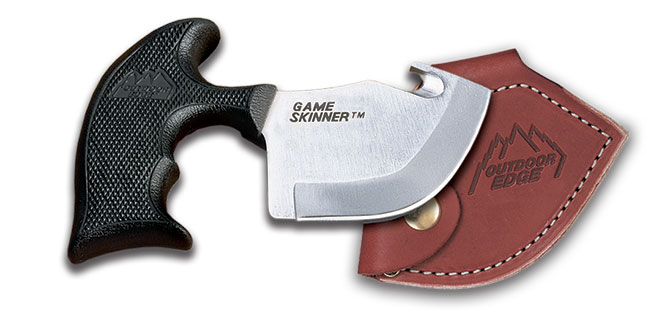
Outdoor Edge won a BLADE Magazine Knife Of The Year® in its debut year at the 1988 BLADE Show in Knoxville, Tennessee, with the Game Skinner. As BLADE‘s Steve Shackleford points out, that went on to be one of the most knocked off knives ever. No good deed goes unpunished, I guess.
Less copied is the way Outdoor Edge got its start, simply because it’s so challenging to build a knife company from the ground up. From its news release:
From its humble beginnings as a one-man show with four prototype samples, [David] Bloch’s company, Outdoor Edge, has grown significantly in the past thirty years. Currently, the company has 24 employees and offers more than 120 products. Originally based in Boulder, Colorado, the company moved to a larger facility in Denver in 2010.
BLADE wishes Outdoors Edge 30 more great years of success!
New York Times: Knives Make Excellent Gifts
For being based on an island that prosecutes electricians for carrying pocketknives on the job, this is a refreshing change of pace for the Gray Lady. A NYT article about gift registries favors knives and knife accessories as foolproof (and inexpensive) options.
Who can blame them? If you have a kitchen, you’ll use a knife. Heck, even if you don’t have a kitchen, you’ll probably use a knife at some point.
From the article:
Choose a few high-quality knives instead of a knife block set, as sets tend to have a lot of filler knives that you don’t need. Wirecutter suggests three different knives for the average cook: chef’s knife, paring knife and serrated knife.
Throw in a cutting board while you’re at it, too.
Have a News Tip? Submit it Here
Have big news? Tell BLADE with this form.
Blondie Man’s Blades in New BLADE®
The Blondie Man’s Blades, the latest in filework, the hottest knives of the hottest custom makers and much more highlight the new BLADE®, on newsstands now!
ABS master smith Wally Hayes was an up-and-coming maker when he first met Chris Stein at a late 1990s New York Custom Knife Show. The co-founder and guitarist of the new wave band Blondie featuring lead singer Debbie Harry, Stein has collected knives for decades and added another one to his collection when he bought Hayes’s first double-edged wakizashi at the show. Get the story on Stein and his knife collection in “Blades of the Blondie Man.”
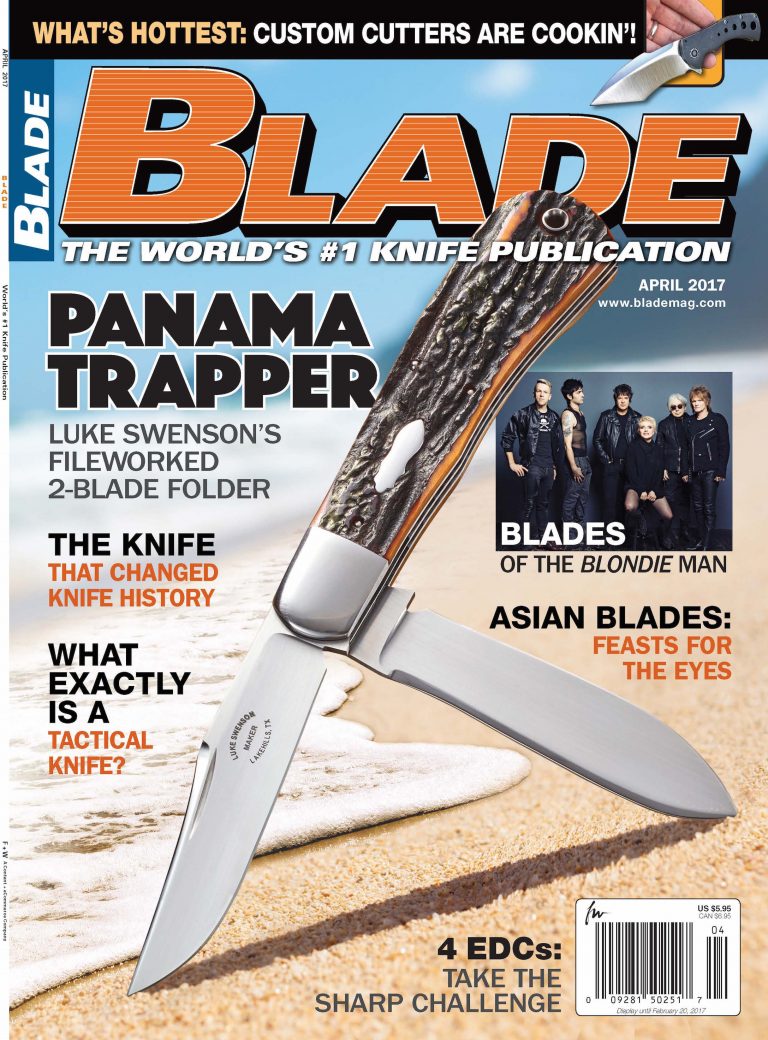
Filework is one of those understated yet elegant bits of embellished finery that many of today’s leading makers incorporate onto the spines of their knives. Daniel Jackson picked the brains of some of the top practitioners of the art in his story, “Cutting The Tool That Cuts”—which includes the Panama Trapper cover knife by Luke Swenson.
Staying abreast of the hottest knives of the hottest custom knifemakers is something the leading custom knife purveyors must do on a continuing basis if they want to keep bringing home the blade bacon. BLADE polled seven of the industry’s top purveyors to see which knives of which makers apply in “Top Of The Food Chain.”
Tactical knives have enjoyed varying degrees of popularity since the mid-’90s, but they never really go away for long before getting hot again. One of the reasons for their popularity is that they seem to constantly evolve to meet market needs. Get the lowdown on what is, isn’t and what’s to come in the genre in “Is It Tactical?”
The latest installment in our “Knives That Changed Knife History” is on the Buck 110. When the iconic folding hunter first appeared in 1964, lockback folding knives had pretty much faded into the background. The Buck 110 was big and strong and worn on a belt. It was much more a hardcore using knife than a pocketknife and it changed knives forever. Learn about the groundbreaking cutter in “The Buck That Went Bang.”
There’s much more in the latest BLADE. Get it on newsstands now!
Bushcraft Knives Highlight New BLADE
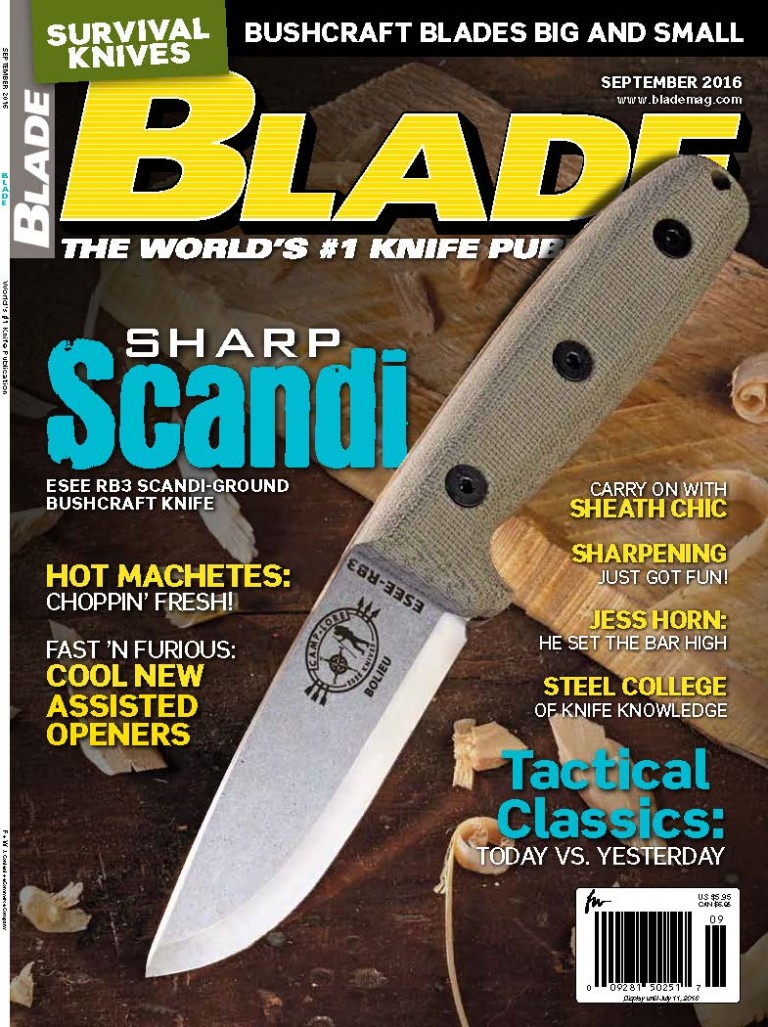
Bushcraft is the art of surviving in the wild with the tools and materials you have at hand and/or can scrounge on the spot, and few if any of those tools are more important than man’s oldest—the knife. In his story in the latest issue of BLADE®—on newsstands NOW—author, knifemaker, knife designer and bushcraft instructor Abe Elias puts four hot new bushcraft blades through the paces as only a bushcraft specialist can. One of the knives includes this issue’s cover model, the ESEE RB3. See how it and three other fresh factory bushcraft knives handle and perform in “Bushcraft Blades Big and Small.”
Jess Horn was one of the preeminent makers of custom folding knives for decades, but many of today’s younger followers of the custom knife scene don’t know of him. He passed away largely unnoticed earlier this year. BLADE® remembers him in a special story on page 22. Find out more about a knifemaking legend that you may have never heard of.
BLADE field editor Dexter Ewing is BLADE‘s resident sharpening guru. Not only does he run his own sharpening service on the side he also tests and writes about the latest and coolest sharpeners on today’s market. Check out a quartet of the newest and/or lesser-well-known models in his story, “Sharpening Just Got Fun!”
Some knife companies are taking today’s sheaths to the next level, configuring them so they are easier to clean, store added items such as firestarters and survival whistles—and in at least one instance even make such gizmo-packed sheaths for their folding knives. Learn more about today’s new generation of sheaths in BLADE field editor Mike Haskew’s “Sheath Chic.”
There’s much more this issue, including BLADE bidding a fond farewell to long-time managing editor Joe Kertzman, field tests of two custom fixed blades and four factory machetes, a comparison of today’s tactical folders vs. their original renditions, the latest knives and knife accessories, mini-knifemaker profiles and much more, all in the latest issue of BLADE—on newsstands NOW!
Antique Ivory Exceptions Rule Too Stringent
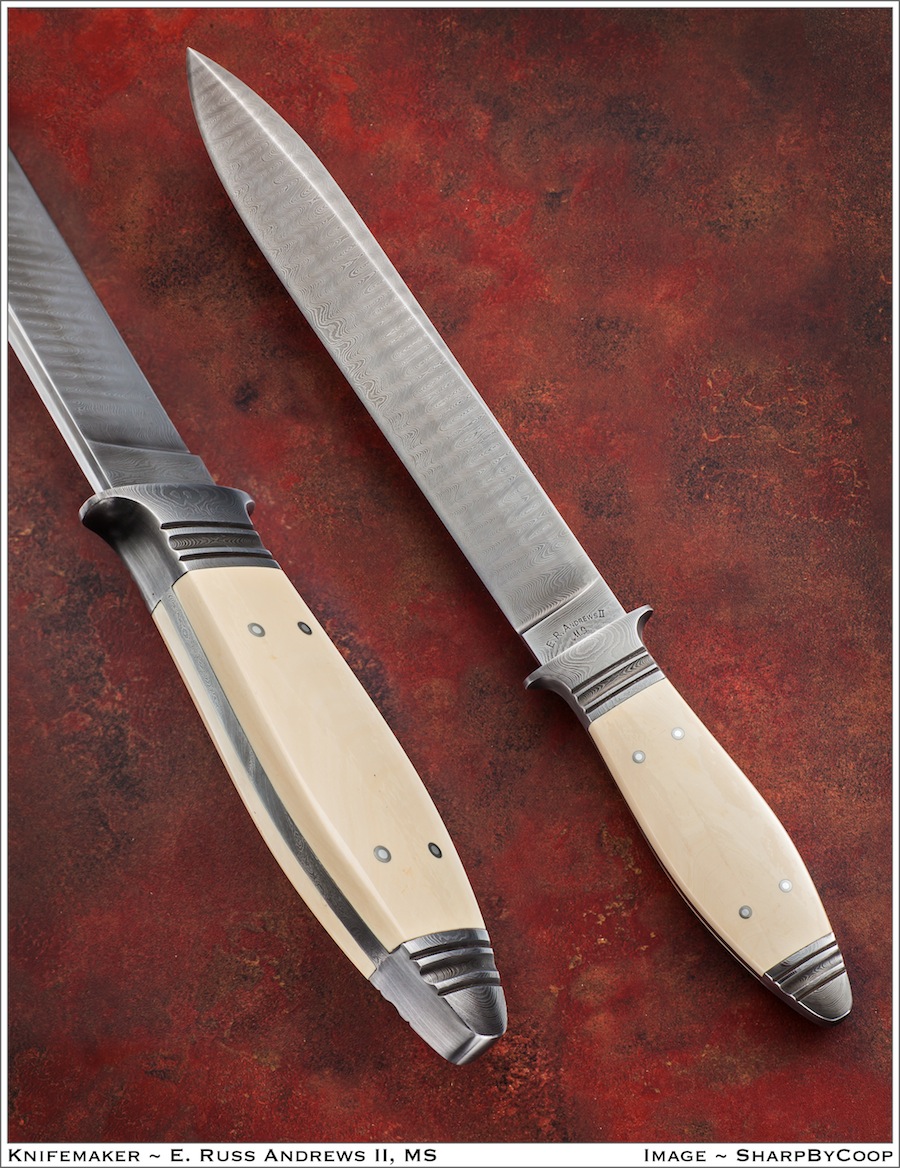
The recently announced federal ban on ivory not only seems to outlaw all import, export, interstate and intrastate sales of elephant ivory, it also appears to make all potential exceptions to the rule such as antiques virtually impossible to meet.
Initially announced on Feb. 11, the ban received more coverage Feb. 26 when the federal website http://www.fws.gov posted a story outlining the ban in more detail, including Director’s Order No. 210 from the U.S. Department of the Interior, Fish and Wildlife Service.
The story indicated that while virtually all elephant ivory is now illegal, a few exceptions exist, such as antique elephant ivory. However, to qualify as antique, elephant ivory must adhere to a hodge-podge of requirements that not only are virtually impossible to meet but present prohibitive costs in the process.
For instance, to qualify as an antique, the ivory must be 100 years old or older. However, the person claiming the ivory is that old must “definitively prove” the identity of the species. Such proof “can be in the form of bonafide DNA analysis,” a qualified appraisal or “other documentation,” such as “family photos, ethnographic fieldwork or other information.” If such analysis is required on each and every piece of elephant ivory, it would be cost-prohibitive for individual knifemakers. What’s more, the appraiser and the appraisal must meet strict guidelines in terms of the appraiser’s credentials, the scientific method used to determine the age or species must be described in detail, a detailed history of the article including proof of authenticity must be presented, etc.
Not only are the requirements draconian in nature, they don’t even take into account the fact that no one kept such records of their ivory when they bought it months or years ago, and to obtain such information now is virtually impossible.
Further, there must be proof that the ivory was imported through one of 13 specific ports of entry—12 in the USA and the other in San Juan, Puerto Rico. Notarized statements or affidavits by the exporter or seller are not adequate proof.
The maximum penalty for violations—which would qualify as violations of the Endangered Species Act—is one year in prison and a $100,000 fine for the individual, and $200,000 for an organization. Those who submit false records or identification of ivory face a maximum penalty of five years in prison and a $250,000 fine.
For the latest knives, knife news, trends and more, stay tuned to www.blademag.com.
Must Read Articles





