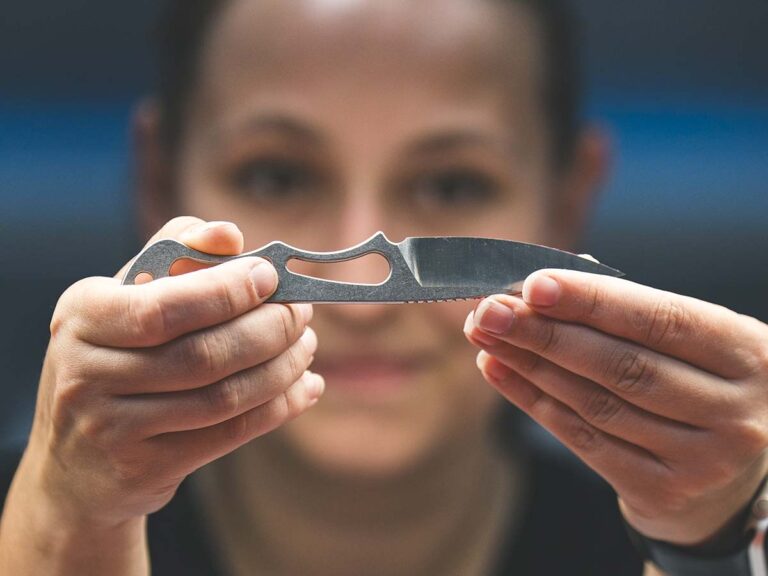
Spartan Blades and KA-BAR announce the launch of Euro Blade Worx (EBX), a new joint venture in the Czech Republic.
Pineland Cutlery, Inc., dba Spartan Blades, announces the launch of Euro Blade Worx (EBX), “a major new international initiative designed to meet the growing demand for premium knives in the European market.” Formed in collaboration with American knife manufacturer KA-BAR Knives and Czech knife designer Ondřej Němec, the joint venture represents a strategic move to localize production and better serve European customers.
Headquartered in South Moravia, Czech Republic, EBX was established to solve a common challenge for European buyers: accessing high-end knives without incurring the burdens of overseas shipping costs, customs duties, value added taxes and long delivery times.
As Spartan Blades and KA-BAR expanded their presence in Europe, it became clear that a local manufacturing solution was essential.
“For years, we attended the IWA Outdoor Classics trade show in Germany and heard the same thing over and over: ‘Your knives are excellent, but they’re just too expensive to get here,’” said Curtis Iovito, co-founder of Spartan Blades and president of product development and marketing at Pineland Cutlery. “After listening closely and exploring our options, we realized the best path forward was to manufacture directly in Europe.”
That vision led to a partnership with Ondřej Němec, a respected Czech knife designer and entrepreneur with deep roots in both trade and knife craftsmanship. Němec had previously founded and led a successful knife brand in the region and had collaborated with both Spartan and KA-BAR on earlier projects.
“As soon as we started working with Ondřej, it was clear he shared our values—precision, quality and a deep respect for the craft,” Iovito said. “He understood what we were trying to build before we even finished laying it out.”
With more than 153 years of combined knifemaking experience between Spartan Blades, KA-BAR and Němec, EBX brings together heritage and innovation in a facility equipped with advanced machining, grinding and assembly capabilities—fully supported by European logistics and operations.
In its first year, EBX will focus on producing and distributing Spartan Blades and KA-BAR knives within the European Union, dramatically reducing shipping times and removing many of the barriers that previously stood in the way of European customers. Looking ahead, the company plans to expand its capabilities to support other premium knife brands seeking access to the European market.
“This is more than a factory—it’s a knifemaking and logistics hub designed for the next generation,” said Němec, EBX’s new managing director. “We’re blending European manufacturing tradition with American design innovation to serve a truly international community.”
By uniting American legacy brands with European craftsmanship, EBX is poised to redefine how premium knives are made and delivered across the continent.
The company’s long-time marketing manager retires after nearly 30 years of service.
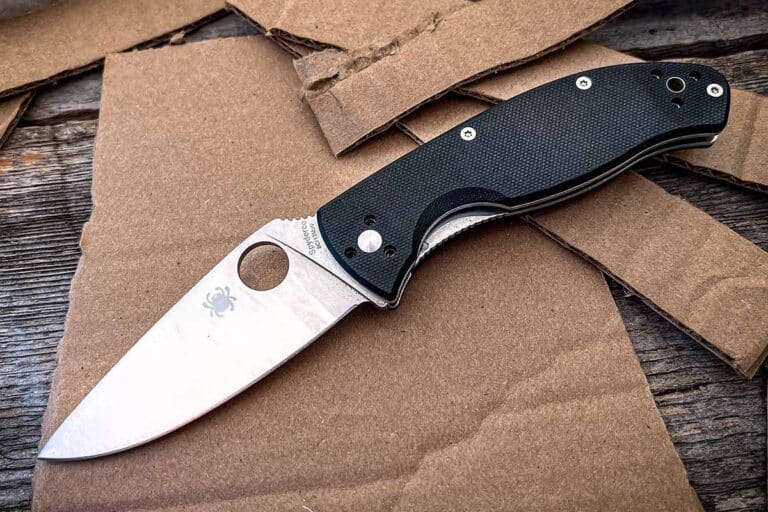
Spyderco has been one of the most successful factory knife companies of the past half century, and a not-so-secret key to its success over almost 70 percent of that stretch has been Joyce Laituri.
Joyce’s last day at Spyderco, June 1, will be only slightly in the rearview mirror when you read this, but that’s probably the way she likes it. That’s because she’s not into personal glorification and wouldn’t want anyone to make a big fuss over her departure—which is just one of her many admirable traits.
Spyderco makes great knives. However, like all products, if not promoted correctly, the knives would not have sold like gangbusters the way they have over the decades. Such promotion has been Joyce’s bailiwick for most of the nearly 30 years she’s been with the company. From customer service circa 1995 she soon went to marketing, eventually becoming marketing manager in charge of all Spyderco catalogs, most of the ads, public relations, and most of the company’s relationships with writers, editors and many other industry pros.
Joyce Laituri
The Spyderco catalogs and ads under Joyce’s direction are industry standards. Chock full of detailed color images and incisive information about the knives, their backstories, materials, designs, collaborators and more, the catalogs in particular are among the best of any knife company ever.
As super as Joyce is at promoting Spyderco knives, it’s her ability to be friendly, funny, informative and genuine in her dealings with folks that stands out. A former airline stewardess from a time when all airline stewardesses had to be pleasing to the eye, Joyce is very pretty—though there’s much more to her than that. Her sparkling eyes and engaging smile and manner immediately put people at ease and make them enjoy working with her.
She is a master of customer relations and excels at keeping a running tab on everyone’s likes and dislikes. For instance, she and I share a love of dogs, and when we communicate we almost always talk about them. She adores her boxers, emails images of them and always asks about our animals, too.
A highlight of any SHOT Show was visiting the Spyderco booth and having a sit down with BLADE Magazine Cutlery Hall-of-Fame member Sal Glesser to go over the latest Spyderco knives. Running interference for Sal would be Joyce, all smiles and ready to provide the inside scoop on all the new knives, provide quality zippered bags full of samples and, of course, a few pieces of chocolate to satisfy the savage sugar beast in all scribes.
Joyce is a fountain of knowledge not just on Spyderco knives but knives in general, and BLADE® depended on her for conveying that knowledge. A veritable quote machine, she covered everything sharp, from knives for kids, the kitchen, rescue and more. She is a knife person and it shows. “If you live an out-of-doors Colorado lifestyle you own a pocketknife,” she once noted of Spyderco’s location in Golden, Colorado. “Most likely, you own several.”
She provided a much-needed feminine perspective for the male-dominated field of sporting knives, one she indicated wasn’t all that much different from the male viewpoint. “Honestly, my personal opinion is that women don’t vary much from men when choosing a knife,” she said, adding, “Sal has a saying that when you buy a drill you really don’t want the drill. What you want is the hole.”
Good times or bad, Joyce always adapted. The pandemic was no exception. Speaking of the adjustments the industry had to make to cope with the shutdowns, quarantines and the like, she related how Spyderco emerged from the storm as strong as any knife company. “These past months have been a testament to the leadership and health of our business,” she said toward the north end of the crisis. “Whoever could have imagined shifting literally overnight to work systems not used before in knifemaking? I raise my hat to all of us! We’re a feisty bunch, aren’t we?”
Yes—though none are feistier than Joyce. She educated many thousands of people on the utility and value of Spyderco knives, and by extension enhanced the popularity, importance and relevance of the entire cutlery industry. In her field of endeavor, none have done it better.
William “Bill” Adams was a revered knife entrepreneur, author and Cutlery Hall-of-Fame member. Learn about his immense impact on the knife community.
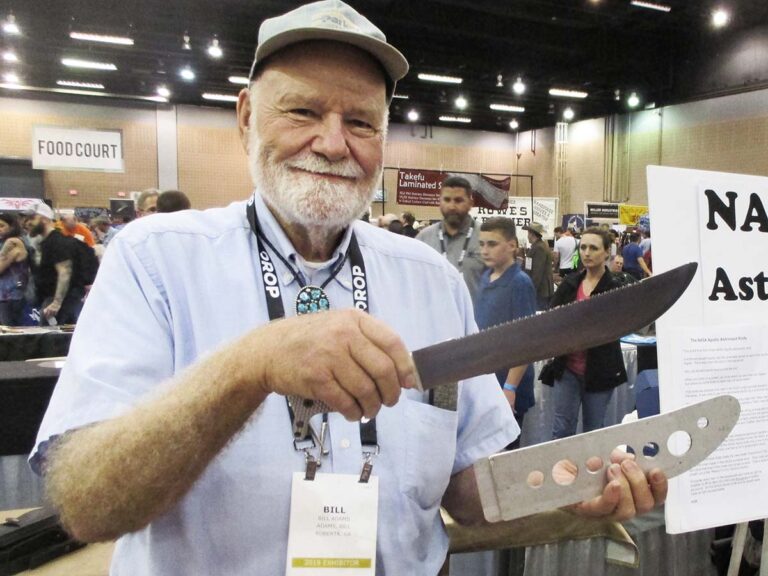
William Calhoun “Bill” Adams, knife entrepreneur, defender of all things knife, BLADE Magazine Cutlery Hall-of-Fame® member and invaluable friend of the knife community, passed away August 10. He was 87.
Known for his easy smile, snow white beard and amiable North Georgia drawl, Bill was liked and admired by many in the industry. He founded Atlanta Cutlery and, with Hank Reinhardt, co-founded Museum Replicas, both in Conyers, Georgia. Bill’s retail operations required him to travel the globe in search of the finest knives, swords and accouterments, including England, Ireland, Africa, India, parts of Central and South America, and all over the USA.
He served as president of the Antique Bowie Knife Association and helped found the Military Equipment and Weapons Collectors Association. He also helped found the Cutlery Collectors Legislative Committee, aka the CCLC, forerunner to today’s two leading pro-knife-legislation groups, Knife Rights and the American Knife & Tool Institute. In 1995, Bill was inducted into the Cutlery Hall of Fame.
He was a knowledgeable, gifted author, editing Sheffield Exhibition Knives and co-writing The Antique Bowie Knife Book, both of which are go-to guides for fans and aficionados of vintage Sheffield-made and antique bowies, respectively. He also was a dedicated knife collector, winning several awards for his wide-ranging collections at the BLADE Show. He retired to Roberta, Georgia, to live along the Flint River, where he enjoyed a quiet, peaceful and happy life.
He is survived by his sister-in-law Dee Anne Adams, his nephew David A. Adams and wife Cheryl, and dear friend and travel partner Elaine Barnes. The family wishes to express its thanks to Bill’s Roberta, Georgia, friends, especially Charles and Kate Rice, who cared for and treated him like family.
Remembering Others The Knife Industry Has Lost:
Betty Dowell, Driving Force Behind Knifemaker Ted Dowell, Passes
B. R. Hughes, Pioneering Writer And Bladesmithing Teacher, Passes Away
Nearly 70-year-old automatic-knife ban meets its demise in a 5-0 decision.
Massachusetts hasn’t been a haven for arms rights since the shot that was heard around the world, but things are changing in the Bay State.
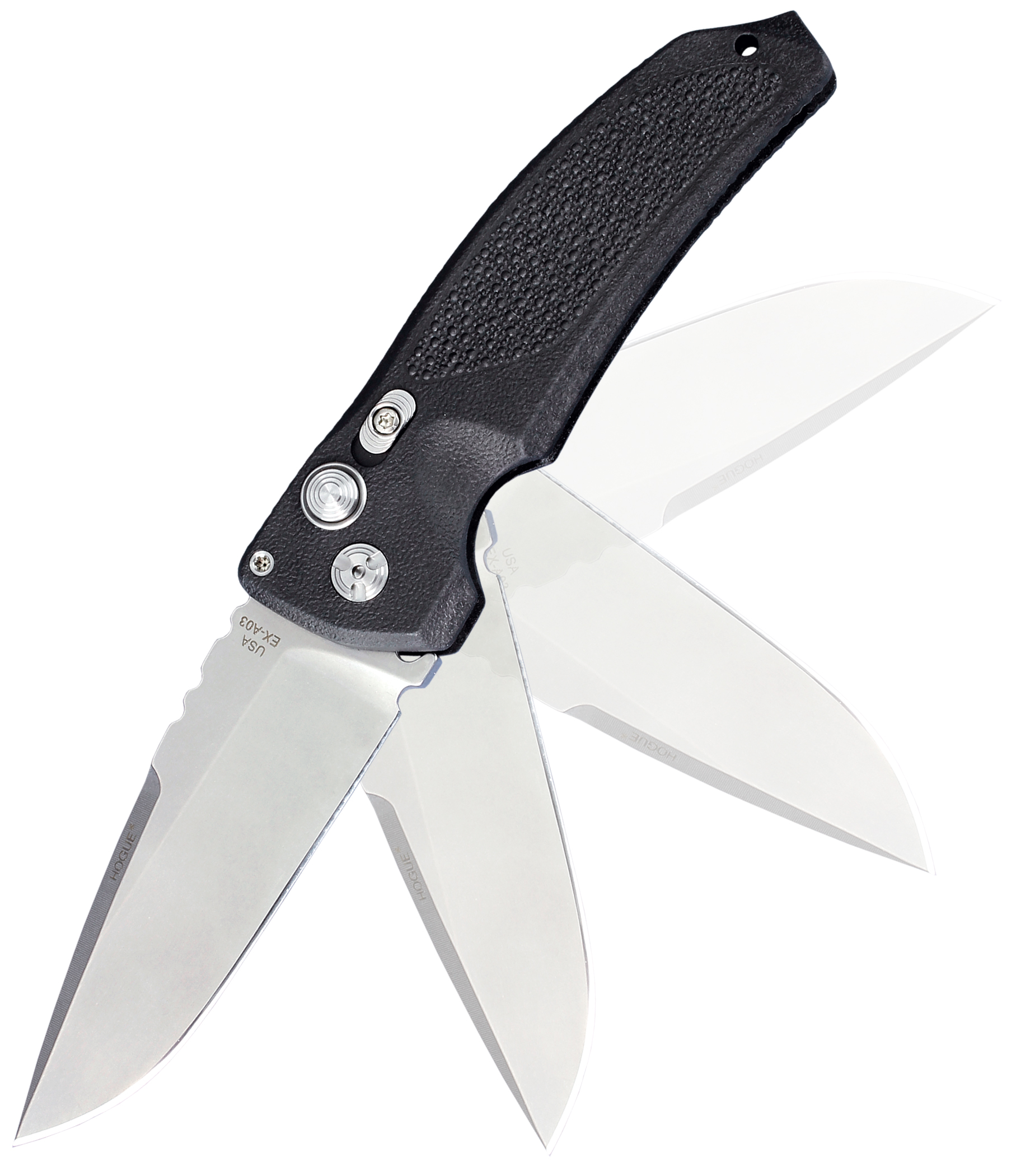
In a rather shocking 5-0 decision on Aug. 27, the Massachusetts Supreme Court struck the state’s nearly 70-year-old prohibition of the carry of automatic knives with blades greater than 1.5 inches. This is an enormous win for knife rights, given the state is among the most hostile to the carry of any weapon. And, with other recent cases, the decision shows a softening toward the possession and carry of automatic knives.
Canjura Switchblade Case
The Massachusetts ruling stemmed from the arrest of David E. Canjura in 2020 in Boston, in response to an altercation between him and his girlfriend. Upon searching Canjura, police found what they described as an “orange firearm-shaped knife with a spring-assisted blade” or in popular parlance, a switchblade.
Canjura subsequently challenged the constitutionality of the charge, arguing the knife was an arm and was protected under the Second Amendment. The Massachusetts Supreme Court agreed.
Justice Serge Georges Jr. authored the court’s 24-page written decision, drawing heavily upon landmark U.S. Supreme Court decisions of Bruen and Heller. Despite both cases pertaining to the Constitutional rights of possessing and carrying firearms, the opinions have carried over to the lawful possession and carry of other arms.
Pertinent to the Massachusetts ruling was the historic test laid out in the Bruen ruling, which requires historical precedent from when the Constitution was ratified in 1791 to maintain a prohibition on arms. Georges found this sorely lacking in Massachusetts’ ban on carrying switchblades.
Georges wrote in the decision, “Given the long history of folding pocket knives generally and switchblade knives in particular, switchblades constitute “bearable arms” within the protection of the Second Amendment.”
Massachusetts Ban
Like so many switchblade bans, Massachusetts dates back to the time of patent leather jackets and witch-trial-like panic over the supposed corruption of the nation’s youth. The state law was passed in 1957, several years after the publication of the anti-automatic knife article, The Toy that Kills. Despite being cinema classics, Rebel Without A Cause and Blackboard Jungle didn’t help out the switchblade’s reputation.
Massachusetts was a year ahead of the curve in pushing autos to the fringes of society, with the federal government passing the Switchblade Act of 1958. Drawing upon the federal government’s interstate commerce power, it act prohibited the purchase, sale, and trade of automatic knives between all 50 states.
Yeah, But…
Despite a good outcome for knife rights and following other wins for automatic knives nationwide, there are points Massachusetts enthusiasts should be aware of before throwing an auto in their pocket.
The potential stands the case may be appealed and the decision stayed. Furthermore, as pointed out by Knife Rights, there are some wrinkles knife owners to keep in mind to state on the right side of the law still.
Carry of any double-edged blade—including switchblades—is still prohibited.
Knife law preemption does not exist in Massachusetts, so cities and counties may have or might pass auto bans (check your local laws).
The state’s ban on the manufacture and sale of switchblades remains on the books.
Even with these prohibitions, Bay Staters should be pleased with the recent ruling.
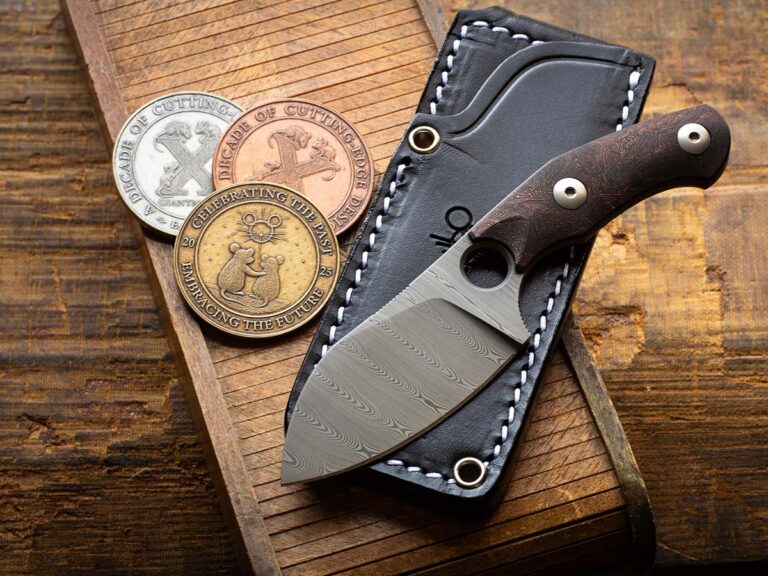
Built on collaboration, craftsmanship, and a no-compromise mindset, GiantMouse celebrates a decade of redefining what everyday carry can be.
GiantMouse Knives is hitting a major milestone in 2025—10 years of pushing the envelope in knife design, quality, and everyday adventure.
What started back in 2015 as a bold idea between a few passionate knife guys has grown into something much bigger. Over the past decade, GiantMouse has carved out a loyal following among collectors, adventurers, and EDC enthusiasts around the world—people who want tools that not only perform, but inspire.
From their iconic limited runs to reliable production models, GiantMouse has built its reputation on standout design, top-tier materials, and the kind of quality that makes a knife feel like it was made just for you.
“This anniversary is really about the people who’ve been with us since day one,” the company shared in a statement. “GiantMouse is for folks who demand quality, chase adventure, and believe their gear should tell a story. Ten years in, and we’re just getting warmed up.”
To celebrate, GiantMouse will be rolling out a year’s worth of anniversary content in 2025—including exclusive behind-the-scenes features, community shoutouts, and a look back at some of their most legendary designs. If you’ve ever carried a GiantMouse blade (or thought about it), this is a celebration you’ll want to be part of.
Hughes’ unbound energy touched outdoor writing, knifemaking, sports and higher education.
Billy Ray “B. R.” Hughes, one of four founders of the American Bladesmith Society, pioneering knife and also a gun and outdoor writer, bladesmithing teacher, member of the BLADE Magazine Cutlery and ABS halls of fame and dear friend of the knife community, passed away September 17. He was 92.
B. R. began his writing career in 1951 as a reporter for the El Dorado Daily News in El Dorado, Arkansas, and later wrote for the Arkansas Gazette and Monroe Morning World. He attended Henderson State University in Arkadelphia, Arkansas, where his flair for writing blossomed. He was editor of the college newspaper, assistant editor of the school yearbook and was active in school drama productions. He lettered in baseball and went on to play professionally for a short time in the minor leagues, topping out in the Class “C” league. He graduated from Henderson State in 1954 with majors in history and literature and a minor in speech and drama.
He began his teaching career in Huttig, Arkansas, where he met and later married Carolyn, current editor of The ABS Journal. Over the next decade, B. R. taught and coached at several Arkansas high schools. He covered the undefeated/untied University of Arkansas football team when the Razorbacks were recognized by several organizations as the 1964 NCAA national champions, a team coached by Frank Broyles and that included future Dallas Cowboys head coach Jimmy Johnson and Dallas Cowboys owner Jerry Jones. In 1965, B. R. joined the Texarkana College staff as director of public relations.
In 1961, he began his outdoor writing career with material published in Guns, Gun World, The American Rifleman and other magazines. His first knife-related stories were printed in Gunsport in 1966 and later in Gun World. His first knife book, American Handmade Knives of Today, was published in 1972. Along with Jack Lewis, B. R. co-authored The Gun Digest Book of Knives in 1973. It was the first knife publication of its kind in book form and foreshadowed the KNIVES annual introduced by Cutlery Hall-of-Famer Ken Warner in 1981, the latter of which continues to this day under the Caribou Media umbrella.
Other of B. R.’s books include the iconic Master of the Forge on the life and knives of his good friend, Cutlery Hall-of-Famer Bill Moran; Modern Handmade Knives; The Gun Digest Book of Folding Knives (co-authored again with Lewis); and others. In all, B. R. authored over 500 magazine articles on knives, including many in BLADE®, Knife World/KNIFE and others, in the process serving as a BLADE field editor for many years.
In 1976, along with Moran, Don Hastings and Bill Bagwell, B. R. was one of the four founding members of the ABS. Since 1984 he had served as the society’s secretary. Among his knife honors are the Knifemakers’ Guild Nate Posner Award and the Don Hastings Award, the latter the top honor of the ABS.
B. R. retired from Texarkana College in 1995 after having served over 25 years as dean of students. During that time he also served as commissioner of the Northeast Texas Junior College Baseball Conference, president of the Texas Junior College Dean’s Association, on the National Health Council, and on the Advisory Council of the American Red Cross.
For at least the past decade the B. R. Hughes Award named in his honor has been presented to the best knife of a successful applicant for ABS master smith at the BLADE Show. B. R. and Carolyn attended ABS hammer-ins for decades right up to the last year or two, helping coordinate the events and covering them over that time. B. R. also taught assorted subjects at the hammer-ins, at BLADE University and the Bill Moran School of Bladesmithing, first in Washington, Arkansas, and later when the school moved to the campus of Texarkana College in 2019. He also served as a judge for the testing of applicants for bladesmith ratings at the hammer-ins, the BLADE Show and elsewhere. B. R. and Carolyn’s children include Barry and Lee Ann, and two grandchildren, Cody and Cale.
Read our full report on what the Buderus closure means for knifemakers, Damascus production, and company inventory.
Once when he was ill, Mark Twain famously quipped that “rumors of my death have been greatly exaggerated.” October 2025 brought troubling rumors to the knife industry regarding the potential closing of a major steel mill owned by Buderus Edelstahl.
Based in Wetzlar, Germany, Buderus is a major producer of 10xx series steels, including 1075, 1084, 1095 and 15N20, that are purchased through various suppliers. The company was founded in March 1731 and began steel production in April 1920. It has changed ownership several times, including being purchased from Bohler-Uddeholm by Voestalpine. Voestalpine sold the company to the German investment company Mutares in 2025.
BLADE® reached out to knife industry steel authorities for comment.
Dr. Larrin Thomas reported that he had spoken directly to two different Buderus employees.
“We have been hearing conflicting reports about whether the [Buderus] hot and cold mills are being shut down,” he wrote in an e-mail. “Regardless, things are a bit too murky right now to say much definitively.”
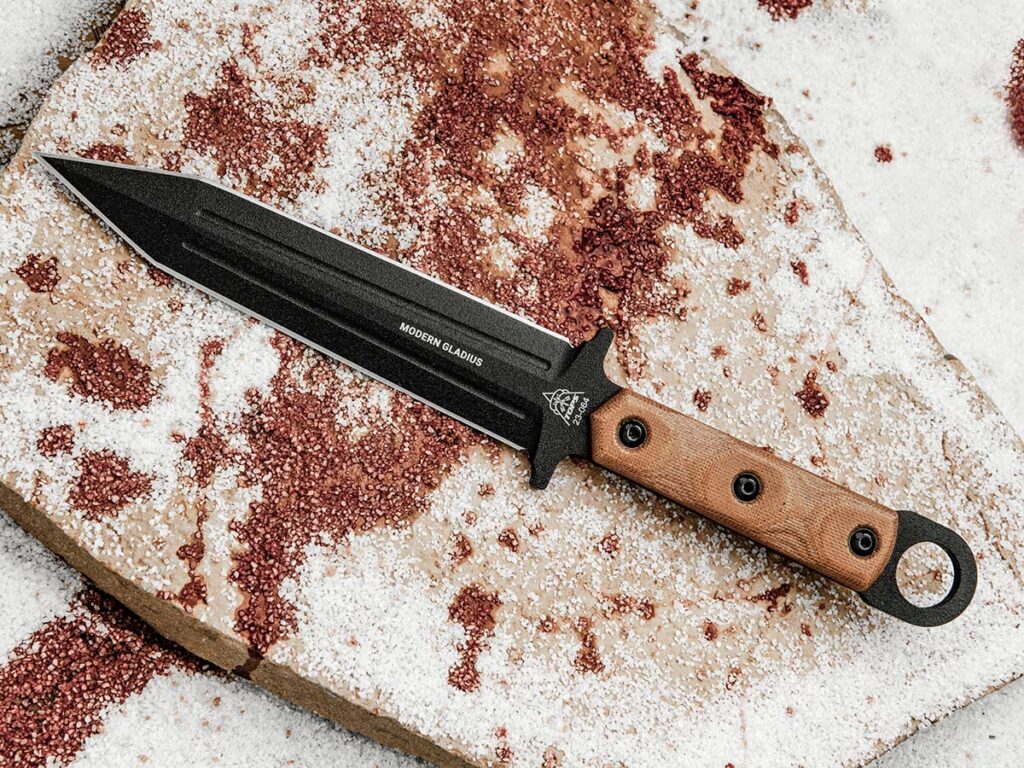
Carbon steel 1095 is the material of choice for the 6.5-inch blade of the Modern Gladius by TOPS knives.
If the rumors inside the Buderus workplace match the ones inside most large workplaces, there’s a good chance that conflicting perspectives and speculation are flying around everywhere. It could be difficult to get to the actual facts, even directly from mill employees. However, Larrin remained hopeful.
An email obtained from steel supplier New Jersey Steel Baron (NJSB) was less hopeful. This past October, NJSB officials notified their intermediaries that the Buderus mill was closing at the end of the month. The email stated, “We are writing to inform you that as of October 31, 2025, Buderus Edelstahl, one of our primary vendors, will be ceasing its rolling operations. This marks the end of a fifteen-year partnership for NJ Steel Baron, and we anticipate it will significantly impact the bladesmithing, blacksmithing, and cutlery industries. We have already begun to pivot our production to new vendors and source new alloys to ensure our inventory remains robust.”
A story on n-tv.de, an online news platform based in Germany, carried the headline “Buderus Edelstahl steel is broken up—hundreds of jobs affected.” The story reported that, “The company’s steel mill … is to be closed by the end of October, Mutares announced.”
NJSB’s Peter Bruno took the news hard, saying “I’m going to have to spend some time in the woods thinking about it.”
In the NJSB press release he stated, “This has been more than a vendor relationship; it’s been a cornerstone of our steel program. Buderus has consistently delivered high-performance German steel that’s fueled makers, machinists, manufacturers, and craftsmen throughout the world. Losing this supply chain is a hard hit, not just for us, but for the entire industry.”
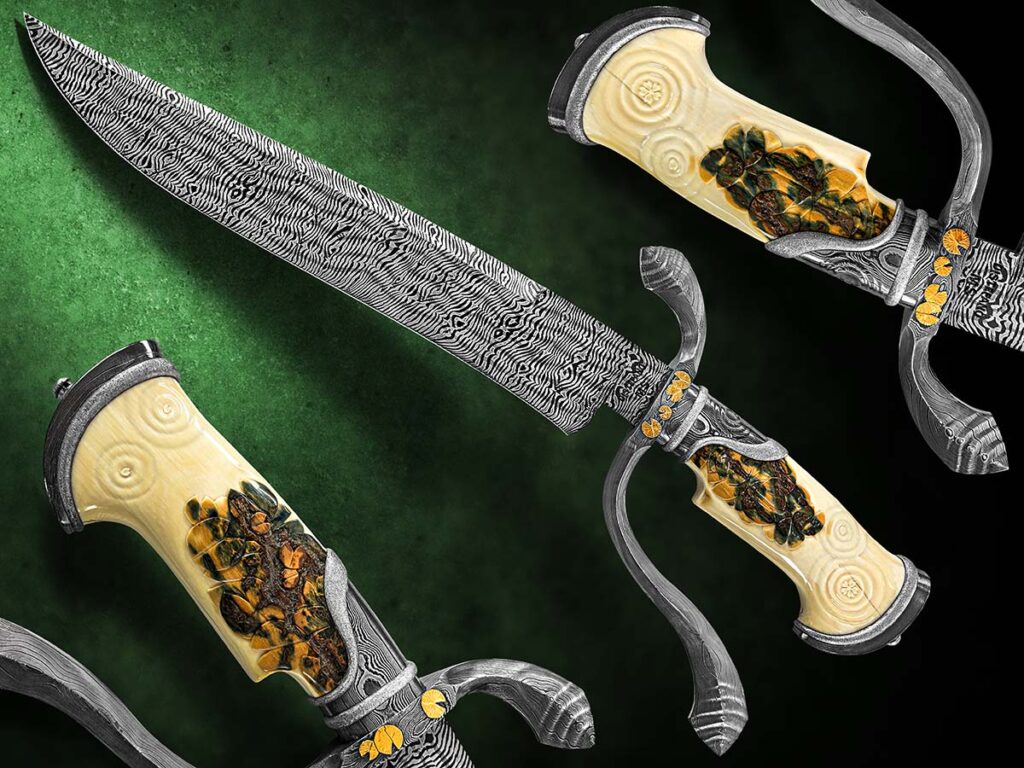
Paul DiStefano opts for 1084 carbon and 15N20 nickel-alloy blade steels for the damascus pattern configured to appear as what an animal might see if looking at a stalking tiger through a bamboo forest. Overall length: 19 inches. (pauldistefanoknives.com) (Jocelyn Frasier image)
Beyond the pure shock of losing its main supplier, NJSB is developing a plan. It has a good amount of steel on hand and is buying all the remaining Buderus stock it can. NJSB also has reached out to its customers and is selling steel by the pallet to ensure customers have at least short-term reliable access to the steel they need for ongoing orders.
“While we’re actively working to develop new sources and mill partnerships, the shift won’t be immediate, and some grades may remain out of reach for a while. Some alloys may not return anytime soon, if at all,” Bruno noted. “Once supplies run out, that may be the end of the line in some cases.”
Company Responses
The 10xx series steels are used by several knife manufacturers and importers for their hunting, outdoor, tactical and other utility-type knives. Some of those companies include Condor Tool & Knife, ESEE, KA-BAR, Utica, the previously mentioned TOPS and White River Knife & Tool. Some of the foregoing deal with Buderus and some do not. The 10xx series steels are also widely used by custom knifemakers for damascus and straight carbon knives.
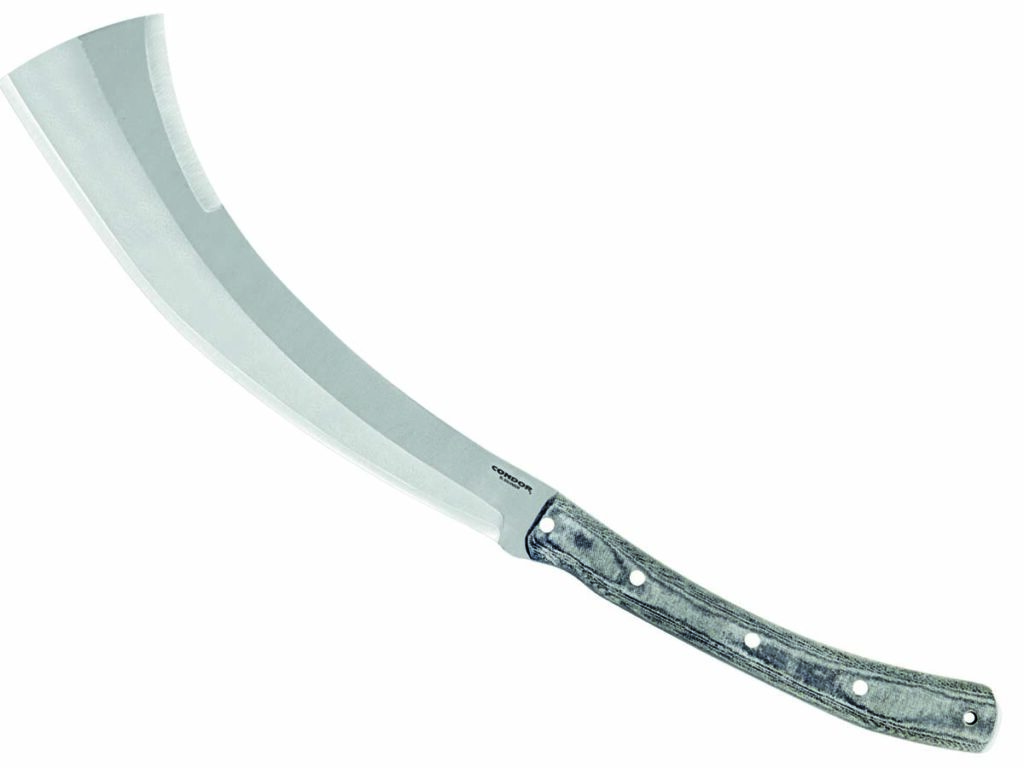
The K-Night Panabas from Condor Tool & Knife boasts a 14.29-inch blade of convex-ground 1075 carbon steel.
Mike Olen, director of sales at Condor Tool & Knife, said Condor was not sourcing any steel through Buderus.
“For the 1075 and 1095 steels, we get them from a variety of vendors, mostly Europe and Asia based,” he noted. “I’m not sure exactly, but I know a lot of our steels have been coming from German and South Korean companies lately. We do the heat treatment in house, so it opens up more options for us when sourcing the raw materials.”
“KA-BAR has had a long relationship with Buderus,” wrote KA-BAR’s director of sales and marketing, Joe Bradley, though he added any potential closure of the Buderus steelworks would not affect KA-BAR immediately.
Powell said TOPS gets its steel from a leading distributor, though it was unclear at press time whether that distributor used Buderus as a source or not. At press time, he said TOPS was fine in terms of its supply of 10xx series steels, though the company likely will start stockpiling the steels in case of any shortages.
Suppy Alternative
Jantz Supply is a leading source of 10xx series steels for custom knifemakers and others. Jantz’s Shanna Kemp indicated her company maintains various sources of the steels and as a result does not expect supply delays.
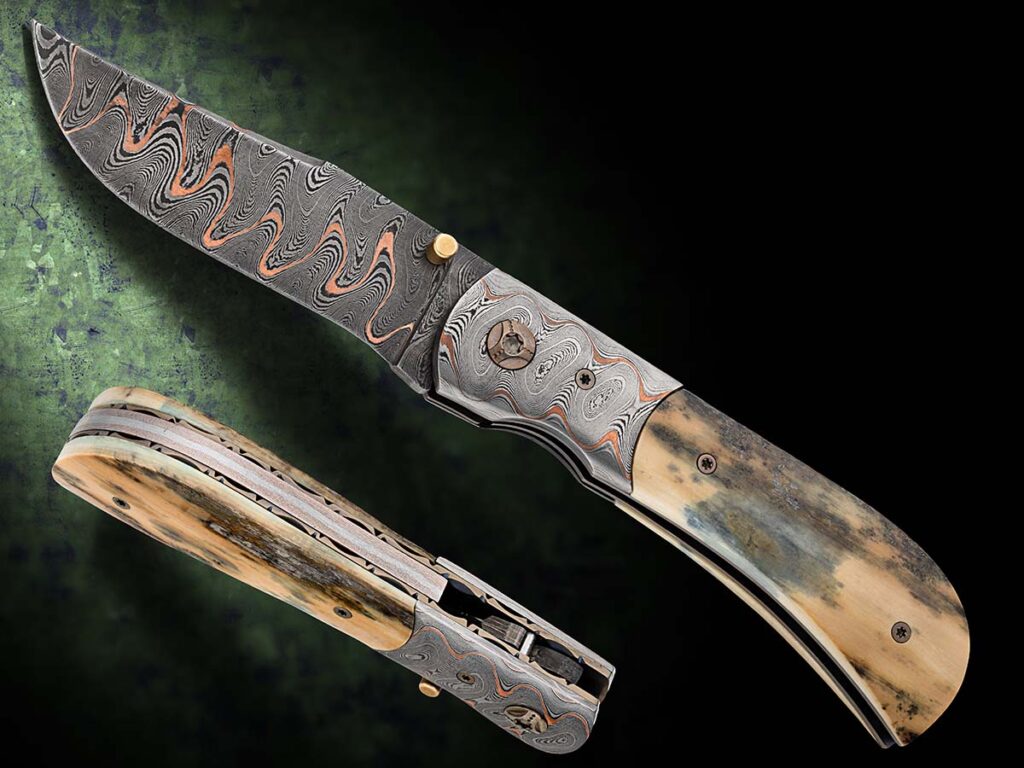
A damascus of 1084, 15N20 and copper forged by Baker Forge & Tool comprises the 3.25-inch blade of Stephen Roney’s linerlock folder. ([email protected]) (Jocelyn Frasier image)
“We don’t expect any disruption from the Buderus mill closure,” Shanna wrote. “Jantz has strong relationships with multiple mills, so makers can count on us for steady access to the high-carbon steels they rely on. Our commitment to providing reliable, high-quality materials for knifemakers will not change.
“We have long-standing relationships with multiple steel mills and distributors worldwide. The majority of our 10xx series high-carbon steels come from reputable suppliers in the United States and Germany. This diversified supply chain ensures consistent quality and availability for our customers.”
In fact, Shanna said Buderus is but one of a number of producers of 10xx series steels.
“I don’t know the exact quantity of 10xx series steels the Buderus mill produced. However, they were one of several manufacturers worldwide,” she noted. “The 10xx series is a widely produced grade family, and multiple mills continue to make these steels. While the Buderus mill was a respected supplier, their closure does not significantly impact global availability.
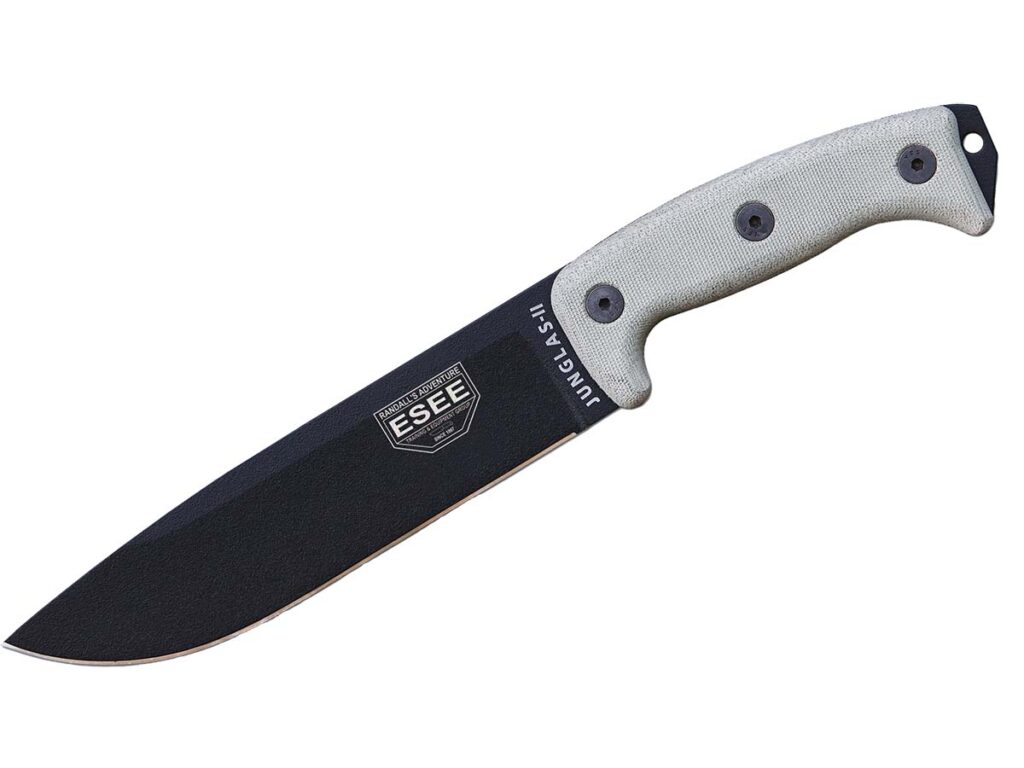
The Junglas ESEE checks in with an 8.38-inch blade of 1095 in a textured powder-coat finish.
“Several mills and processors around the world continue to produce 10xx series steels. While the Buderus mill was a respected manufacturer, these grades are not unique to any single producer. The market has ample capacity to absorb the change, and we don’t anticipate any long-term supply issues.”
Past Is Prologue
If all this sounds a bit familiar, Crucible Steel went through a similar process of bankruptcy and acquisition at the beginning of this year. Owners of the familiar CPM (Crucible Particle Metallurgy) trademarks for MagnaCut and others, Crucible was a major force in the knife industry. Eventually it restructured and cut its research and development division. Ultimately even the restructured company failed and was sold in parts to Erasteel of Europe and an American company, Lauter. Erasteel continues to produce steel of the same compositions with the same names, as it purchased Crucible’s intellectual property. Lauter owns the former Crucible factory and has begun hiring for its specialty business of manufacturing screws and fasteners.
The Crucible situation had some impact on the knife steel business. Dr. Larrin Thomas sat down with Bob Shabala of Niagara Specialty Metals in May for a conversation about the transition. Niagara is the primary rolling mill that served the knife industry in taking Crucible steels from 3,000-pound billets down to workable sizes. Bob explained that Crucible was one of Niagara’s biggest customers, but that it also was up front with its struggles. Consequently, Niagara was well stocked in CPM steels by the time Crucible folded.
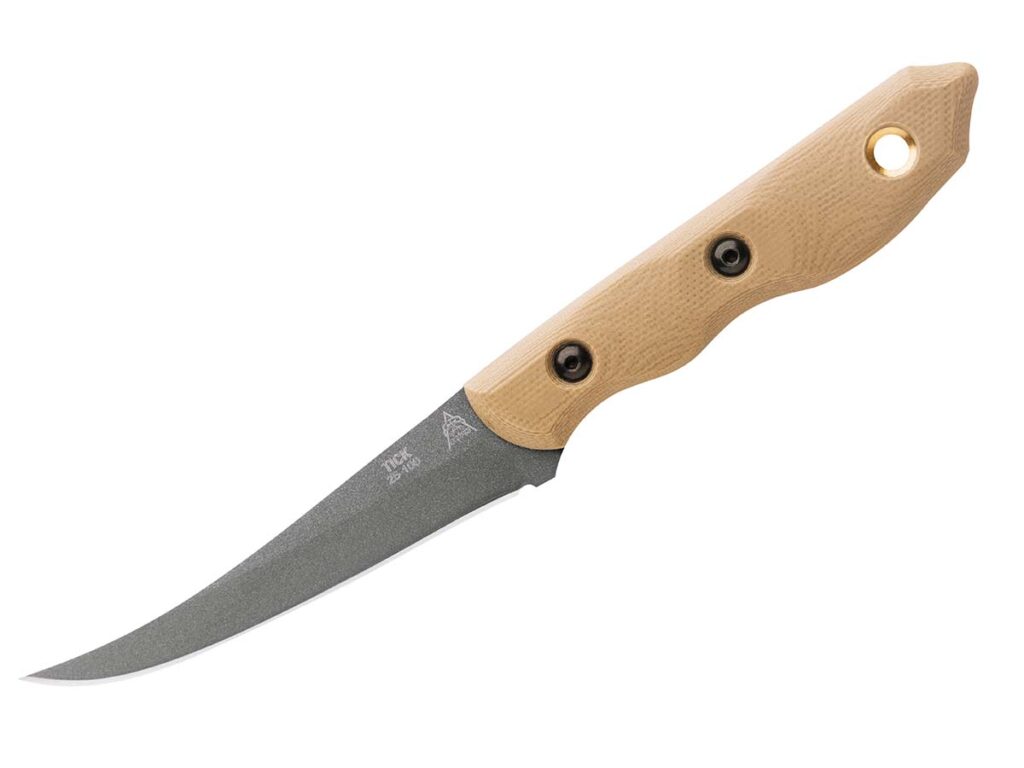
The Tick from TOPS Knives sports a 3-inch blade in 1095 carbon steel with a Tungsten Cerakote® finish.
Niagara also works with Erasteel and Carpenter, both of whom have the technology to produce steels of the same composition. Steel from Erasteel will retain the CPM trademarked names. Other versions of the same alloys rolled by Niagara will have new names for the steels the industry has used for years. Niagara officials predicted some disruptions because of panic buying as Crucible closed, but they also think business will return to “full speed ahead” for production of the knife steels in the former CPM formulations. Larrin indicated that Magna-Cut will survive and continue to be produced without disruption.
What’s Next
The steel industry has been challenged for many years, with more bankruptcies than start-up companies. To complicate things further, the steel the knife industry uses and needs is only a very small and specialized portion of a global steel industry that includes structural steel, automotive and more. With insatiable demand worldwide, the knife industry’s little corner of the market doesn’t get much attention. On top of that, steel production takes an enormous amount of energy, and with all the green and climate change talk of recent years, no one seems to be lining up to build anything but AI data centers at the moment.
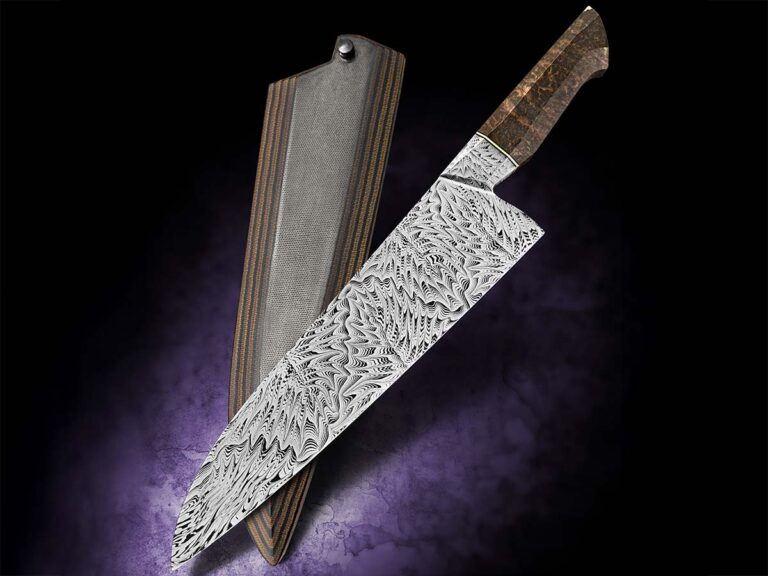
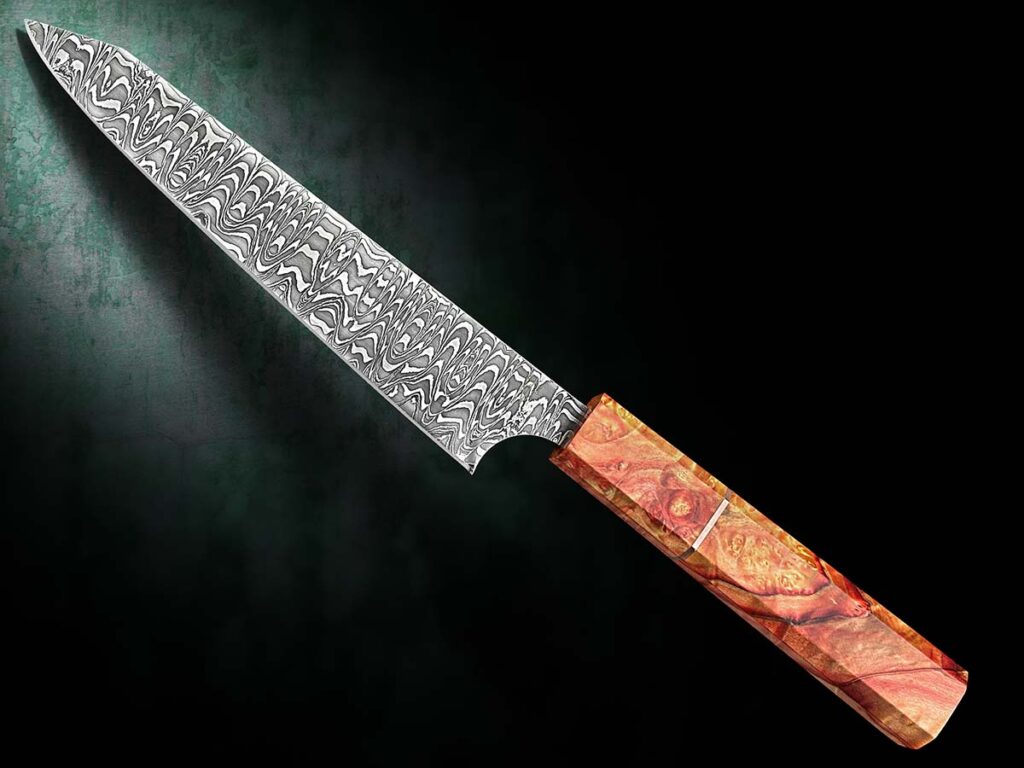
Chad Jefferson chose 1080 and 15N20 to forge into a ladder W’s pattern for the 7-inch blade of his gyuto. ([email protected]) (Jocelyn Frasier image)
Like the transition away from Crucible, the probable transition away from Buderus will no doubt cause some industry disruptions. For now, knifemakers can hope that rumors of the death of the Buderus mill remain greatly exaggerated—or at least, as with Crucible, its reincarnation is on the horizon. Will some other company buy the Buderus mill? Will, like Niagara, some other supplier step in the gap left by the closure? Will someone in the market feel the void and fill it? Time will tell, but for now, the best advice seems to be for knife companies and makers to buy the 10xx series steels while they can.
Editor’s Note:Blade Magazine Staff contributed to this report.