Home Blog Page 100

The Best Wharncliffe Options

The Wharncliffe Is An Interesting Blade Design With A Captivating History. Over The Years It’s Grown Into A Desirable EDC Blade. These Five Wharncliffes Stand Out From The Pack.

There aren’t many blade styles like the wharncliffe. The wharncliffe stands out from many other blade designs thanks to its long, straight cutting edge and spine that tapers to the point. This allows for a variety of shapes of wharncliffe blades, with some being more squared off with a sharp taper and others being more rounded with a more gentle taper.

Regardless of the taper or size of the blade, the wharncliffe has grown into a beloved blade that has evolved to meet the needs of knife lovers over the last 200 years.

Where Does The Name Wharncliffe Come From?

If you guessed that it was named for a person you’d be correct, or at least almost correct. The name for the blade dates back to the 1820s and British Colonel James Archibald Stuart-Wortley-Mackenzie, the first Lord of Wharncliffe. 

One night, while having dinner with his cousin, Archdeacon Corbett, Wharncliffe was lamenting how staid and tired the cutlery industry in Britain had become. The two then worked on a new type of knife to present to the Joseph Rodgers & Sons cutlery company in Sheffield, the epicenter of the cutlery trade in the UK.

Rodgers liked the blade so much that the company put it into production and named it the wharncliffe in the Lord’s honor.

What Is The Wharncliffe Used For?

The wharncliffe initially was used mainly as a whittling knife. The long, straight edge made it perfect for long strokes on a piece of wood. Over time, the blade has evolved with the rest of the knife industry and is now a quality all-rounder EDC. The straight edge is excellent at transferring energy from the hand into the material being cut. Not great at puncturing, it’s very good at most other cutting tasks.

5 Wharncliffes You Should Look Into Buying

Today, the wharncliffe has become a standard blade design by makers around the world. These are five that you should take a look at.

Spyderco Salt 2

Few companies have dived deeper into wharncliffes than Spyderco. The Salt 2 is a prime example of how the company has smartly developed the blade style, although there are many knives on the company’s roster that utilize it as well.

The ergonomic green FRN handle makes this knife easy to use, especially considering how it was designed to be used near water. The H-1 steel is highly corrosion resistant, which makes this knife the perfect choice to use near water. You can choose between a plain edge and a serrated edge, and the lockback keeps everything secure even when drenched. 

Spyderco is beloved because of the quality of its knives, and the Salt 2 shows many things the company can do.

MSRP: $124.25

CRKT Inara

A simple, elegant design from Richard Rogers, the CRKT Inara is a perfect example of a quality, affordable wharncliffe EDC. 

The framelock is strong. The deployment is smooth. The G-10 stands firm even in extreme conditions. This little flipper really does it all and looks good while doing it. The stonewashed 8Cr14MoV stainless blade is 2.78 inches long and the whole construction weighs just 1.8 ounces.

A small, nimble knife, the Inara showcases why the wharncliffe has become a regular EDC blade.

MSRP: $56

Emerson Knives P-Sark

If the last knife was for day-to-day use, the Emerson Knives P-Sark is for the most extreme situations. This is the standard issue knife for U.S. Navy Rescue Teams, according to Emerson Knives. It’s a thick, beefy blade designed to extract people in severe situations.

The 3.5-inch blade is made from 154CM stainless steel with a chisel grind. The G-10 handle is waterproof and perfect for the type of intense moments this knife was built for. The blade comes in both black and stonewashed varieties.

Sure, this could be used as an EDC, but this knife is designed for much more than just opening boxes and stripping wires, and is priced accordingly. If you want a strong, physical knife, then this is the one for you, but you’ll be able to find good EDC wharncliffes at more affordable prices.

MSRP: $226.95

Kershaw Leek

Kershaw has them all, and it’s no surprise that it offers a solid EDC wharncliffe. The Leek line of knives runs 16 deep, but we are concentrating on the original. 

The whole construction is stainless steel with a 3-inch blade made from 14C28N stainless steel. The Ken Onion-designed knife is a sleek, sturdy flipper held in place with a framelock. At 3 ounces it’s a bit heavier than some of the other knives on this list, which is good because it helps the piece feel better in the hand and more secure in use.

The assisted-opening flipper, the tip lock to keep it secure when closed, and the reversible pocket clip are all features on the knife that elevate it from just a good knife to a high-quality EDC.

MSRP: $79.99

Cold Steel Tuff Lite

Small. Tough. Durable. Three ways to describe the Tuff Lite from Cold Steel. This little wharncliffe is a rugged little beast. Made from Japanese AUS-8A stainless steel, the Tuff Lite’s blade is just 2.5 inches long with a relatively squared-off tip that makes it perfect for deep cutting tasks.

The handle is made from Griv-Ex which, when paired with Cold Steel’s Tri-Ad lock, provides a rock-hard construction when deployed. This is the most affordable knife on our list, but it may be the highest value thanks to how the knife was put together.

MSRP: $40.99

Read More

Factory Award Winners At BLADE Show West

Five Different Factory Makers Picked Up Awards At Salt Lake City With WE Knife Stealing The Show

Factory makers brought out their best for the BLADE Show West knife competition, and they did not disappoint. Five factories took home wins with the big winner being WE Knife, which won two categories and the Best Of Show award.

All images are SharpByCoop Images

Best Factory EDC: WE Knife Shakan

Best Factory Tactical: Bastinelli Knives Grumpy Dual Carry System

Best Factory Hunting Knife: TOPS Knives Muley Kit

Best Non-Knife: Stroup Knives Pry Tool

Best Of The Rest: UP Knife D2 & D3

Best Factory Folder/Factory Best Of Show: We Knife x Peter Carey Nitro Mini

Read More

BLADE Show West Custom Knife Awards

Awards Were Given Out In Nine Different Custom Knife Categories Including Best In Show At BLADE Show West In Salt Lake City.

Dozens of makers entered knives in competition across eight different custom knife categories. The skill on display was tremendous, and numerous knives wowed the judges. However, these were the blades that stood out from the crowd and took home the awards. All images are SharpByCoop Images.

Best In Show/Best Kitchen Knife: Trevor Morgan

Best Hunting Knife: Shayne Carter

Best Damascus Custom: Shane Taylor

Best Custom Slip Joint: Evan S. Nicolaides

Best Custom Tactical: Michael Jarvis

Best Custom Locking Folder: Tim Robertson

Best Custom Bowie: Shayne Carter

Best Custom Chopper: Mardi Meshejian

Read More

BLADE Show West Takes Over Salt Lake City

BLADE Show West Rocks Salt Lake City And Packed The Salt Palace Convention Center.

Call it home.

After bumping around the greater Pacific and Mountain West, BLADE Show West definitely felt it found its place in Salt Lake City. For two days–Oct. 7-8–the Salt Palace Convention Center was packed to the gills with top knifemakers and blade aficionados.

The main question on everyone’s lips–aside from, “How much does that knife cost?”–was, “Is BLADE Show West coming back here?” To set everyone’s heart at ease, yes, the foremost knife show in the west is due back in Salt Lake City, Oct. 13-14, 2023.

Until then, there’s plenty to discuss on what made this year’s gathering such a top-notch shine dig.

Attendance

More than 200 vendors descended on the Beehive State for the show from all across the United States. Of course there were big makers like Microtech and Spyderco in attendance but smaller factories like Schenk from Idaho and Stroup Knives from North Carolina were also on the show floor.

Blade HQ, a sponsor of the show, had a huge booth and gave out free shirts to attendees throughout the day Friday.


With so many vendors in town expectations were high, and the knife community did not disappoint. Thousands of fans came to the Salt Palace to buy, browse, and catch up with friends.

Best In Show Awards & After Party

A big thank you to Black Rifle Coffee for welcoming Blade Show West with open arms.

BLADE Show West featured stiff competition in the factory and custom knife awards. The We Knives x Peter Carey Nitro Mini collected Factory Best in Show and Trevor Morgan Jr’s kitchen knife won Custom Best in Show accolades.

Handing out the hardware was a pretty special affair, as Black Rifle Coffee hosted the awards ceremony and its after-party. Situated next to the company’s HQ, the nearly perfect Utah night added a great finish to a heated competition.

Demos Pack The House

Outside of the main convention hall was a series of demos that across the board drew large crowds. Two of the best attended were the sharpening clinic, hosted by Wicked Edge, and the knife critique, which had a panel of masters review makers’ knives.

Wicked Edge’s seminar was especially enlightening, give the company gave attendees a close-up view of the sharpening process, employing a microscope projected onto the big screen. Everything from creating a burr to polishing the edge was made crystalline with the visual aid.

As for the knife critique, Enrique Pena, Steve Schwarzer, Lucas Burnley, Bill Ruple, and Will Stelter reviewed around 20 knives created by intermediate, new, and hobbyist makers. The advice these well-respected masters gave in their critiques extended well past the knives being reviewed, but to knifemaking in general

Other demos focused on everything from texturing titanium handles with Shane Magnussen, and ABS Master Smith Neels Van Den Berg ran a course on making a Symmetrical Quillon Dagger from start to finish.

West Coast Flipping Championships

The balisong competition award winners were all smiles at the end of Blade Show West

The thumping of music and the clacking of bali-songs closed out the slew of events at BLADE Show West with the West Coast Flipping Championships. Sponsored and run by Squid Industries, the competition swelled to well over 200 participants and audience members.

The crowd was so large, the venue eventually was expanded by removing a retractable wall to the conference room next door. In the end, Nick Minges took home the $1,000 top prize with Tanner Knapp taking second and Sebastian Campas third.

BLADE Show West Vendor Highlights

Microtech

Microtech had a booth so big it even had a back room built into the signage to hold its extra product. The company has new models coming later this fall, but pieces like the Glycon caught eyes throughout the weekend.

The Glycon was one of many eye-catching knives Microtech had in its cases.

Kizer

Kizer was showing off some new knives, and showcased some of their funkier knives, like this awesome Aquaman-inspired folder.

Kizer’s Aquaman-inspired knife was definitely one of the cooler knives on the tables in Salt Lakt.

307 Forge

Being in the Mountain Time Zone brought out many makers from the Big Sky and Pacific States. The family-run 307 Forge of Big Piney, Wyoming had a wide selection of knives and showed that even in America’s least-populous state, knifemaking is thriving.

307 Forge was one of many makers from the Mountain Time Zone on hand selling their blades.

Knife And Gun Finishing Supplies

The team at Knife And Gun Finishing Supplies from Lakeside, Arizona had multiple tables dedicated to just handle materials. All sorts of woods, treated and untreated, metals, synthetics, Knife And Gun had almost every type of handle material covered.

It was materials galore at the Knife And Gun Finishing Materials Booth

Already Gearing Up For BLADE Show West 2023

It was, by all metrics, a rousing success at BLADE Show West. Start planning now to be at the Salt Palace next year for another edition of BLADE Show West on October 13-14, 2023.

Read More

Time Is Running Out To Get Your CANCON Tickets!

0

SUPPRESSORS, NIGHT SHOOT, FOOD, AND FAMILY FUN!

Welcome to CANCON A Fully Suppressed RECOIL Range Day!

Save the date and make your plans to come down on Veterans Day weekend, Nov. 11-13 to the 17 South Rod and Gun Club in Savannah, Georgia.

Hundreds of the newest and best suppressors, firearms, and optics will be on the firing line for you to get hands-on trigger time.

All ammo will be provided, just bring your trigger finger!

Veterans get in FREE Friday, so come spend your Veterans Day weekend with us at CANCON!

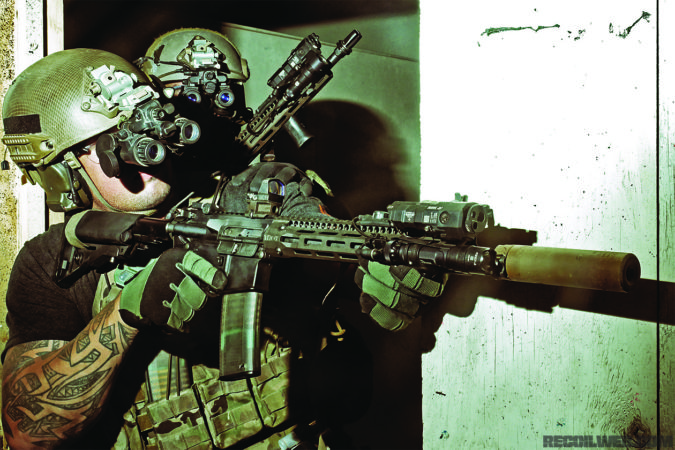
SATURDAY NIGHT VIPs will have the opportunity to shoot suppressed with night vision goggles, clip-on night vision optics, IR lasers, tracers, and more. 

CANCON will even have activities for kids, making this a completely family-friendly event.

Expect to see hundreds of firearms and suppressors, every one of them available to shoot. Don’t forget your eyes and ears for safety!

Not every day you get to shoot cool stuff like this!

Great food will be available on-site for when you need to recharge between shooting bays.

More information and ticket pre-sales coming soon!

Subscribe to the CANCON Event Newsletter

Give us your email below and click the button to be the first to learn about updates and developments!

CANCON 2022 SPONSORS

Dads And Daughters: Passing The Art Of Knifemaking Down

0

The Older Generation Is Teaching The Next Crop Of Makers The Ropes Of How To Turn Steel Into Knives And Knives Into Memories.

Though it isn’t rare for kids to follow in the footsteps of their parents when it comes to choosing a career, the path to becoming a well-known custom knifemaker may just involve a bit more dedication than most other vocations.

For American Bladesmith Society (ABS) master smith Josh Fisher and Wolfgang Loerchner, the adventure has been quite rewarding as their respective daughters, Karis and Elizabeth, have become quite accomplished in their own right. 

Josh And Karis Fisher

The 2021 Texarkana Hammer-In was a memorable one for the Fishers, with Karis earning her ABS journeyman smith (JS) stamp, Josh his ABS master smith (MS) stamp, and each taking home the annual award for the best knife submitted by a JS and MS.

“When I was younger, I would always sit out in the shop watching my dad make knives,” Karis remembered. “Over time, I slowly started messing around sanding on pieces of metal, thinking I was making a knife. This eventually led to my interest. My first knife was a small full-tang hunter with a pink handle that my dad helped me make.”

Josh, no doubt, was ready and willing to help his daughter hone her skills when the time came. “Karis has always been pretty good at grinding blades,” he smiled, “but she struggled with guard fit up for a while and finally got that figured out.”

Of course, there were challenges and an obstacle or two along the way as Karis gained knowledge in the custom knifemaking world. She spent time at the forge, hammering away in preparation for ABS recognition, but that got placed on hold for a while.

“Yes. Definitely, I had a few setbacks,” she reflected. “I first attempted the ABS journeyman smith test in 2019 and failed. I then tried to retest the next year, but due to [the pandemic] it was canceled. In 2021, at the Texarkana Hammer-In, I finally got to retest and passed. Looking back, I think it worked out for the best because I was able to come back and win the Keeslar Award.”

The Joe Keesler Award is an annual honor for the best knife submitted by a successful journeyman smith applicant. If nothing else, the award validated the hours that both Josh and Karis had dedicated to her custom knife and bladesmith upbringing. And making the year extra special, Josh received his ABS master smith designation at the Texarkana Hammer-In, and later the B.R. Hughes Award for the best knife submitted by a successful master smith applicant. It, too, is an annual honor.

Josh added that sheer space and equipment limitations have impacted the progress of the Fishers’ work from time to time.

 “One of the main obstacles is working around each other in the shop,” he said. “We currently only have one grinder, so we sometimes have to wait for the other to finish before getting to work. Another grinder is definitely one of the next tools we are going to have to get.”

Bog oak comprises the handle of a Karis Fisher fixed blade with a recurve damascus blade.

Despite a little inconvenience, Karis has come a long way in a relatively short period of time. Family and friends are impressed. 

“All my relatives have always thought that it was cool,” that I made knives, she observed, “but my friends have always thought it was a little strange, especially the fact that my Instagram account has no pictures of me, just my knives.”

Her mom, Kim, is a big fan. “My wife loves to go to knife shows,” Josh related, “so she has always been supportive and happy about Karis and her work in knives.”

While Karis isn’t sure of an exact moment when she knew she wanted to make knives, the idea was never far from her mind. “I think I’ve always kind of known that it was something that I wanted to do,” she noted. “I enjoy making all types of knives, but small hunters are probably my favorite right now. I recently made my first slip joint, and I think they could easily become my new favorite.

“Probably my favorite part of knifemaking is seeing the finished product. But, if I had to choose an actual step, it would be all of the small embellishments and final finishing of the knives. If I had to pick a least favorite part, it would be hand sanding the blades!”

Wolfgang And Elizabeth Loerchner

Wolfgang Loerchner (left) and Elizabeth (right) had to share space in Wolfe’s crowded shop in the early days—at one point including long hours seven days a week for about a year—but it has all paid off. In the middle is Wolfe’s granddaughter by his eldest son.

The year 1982 was momentous for Wolfgang Loerchner. He made his first knife, and topping that achievement, his daughter, Elizabeth, was born. 

“It almost seems as if this path was destined for her,” he smiled. “Knives were a part of her life from the very beginning in various ways—observing the stages of the creation of a knife, the many shows, photos, and articles of the knife shows as seen in various magazines, observing friends visiting, and the many conversations that surrounded all aspects of knives. In some way, shape, or form, knives have always been a part of Elizabeth’s life.”

Elizabeth made an early step into knifemaking and then regrouped. Her second foray has been hugely successful.

“Having always had a strong interest in the arts, knifemaking was something I considered at one point when trying to decide my future,” she commented. “I made one attempt at knifemaking in 2003-2004. However, it quickly became apparent that the timing was not correct. It was not until several years later, after visiting the Milano Show in 2009, that I became truly inspired.”

Elizabeth and Wolfgang were sitting together on their return trip from the Milano Show, and she presented him with the idea of teaching her again. Of course, he was more than happy to get started, and Elizabeth began working on a knife design immediately. In January 2010, she sat down with her father once more—this time in his shop—and custom knifemaking quickly became a huge part of her life.

“I’ve had a couple of personal situations that did set me back,” she related, “but they have not kept me down. All around, there has been full support of my decision. Everyone has been happy to see me working in the arts and also to be carrying on what my father has been doing.”

Elizabeth’s mother, Dianne, shared a positive perspective. “I was glad for her, that she was able to use her artistic abilities to create knives. During her high school education, Elizabeth was always happiest when she was in the midst of creating an art project. In the few years directly after high school, she was thinking about steel and what she could do artistically with steel, which seemed a logical first step to me. 

“Elizabeth has an artistic flair that is unique to her, different from her father’s, and allows her to create pieces that carry more of a whimsical note to her knives. This is reflective of her deep creative ability. When she asked her father to teach her, I was a little hesitant since she had been living away from home for several years. While there were several tense moments, overall it was a good experience for both of them.”

Elizabeth’s knives have been recognized by aficionados worldwide at such exclusive venues as the Arts In Metal Show in Stresa, Italy, including this piece from the 2014 event. In fact, both she and her father have been regular exhibitors at the elite Italian show. (Francesco Pachi image)

The commitment of time and energy made for a few challenges in the learning process, but the entire experience has been worth the investment for Wolfgang and Elizabeth. Each has a distinctive design and artistic expression, coexisting, learning, and producing outstanding objects of art.

“One of the greatest obstacles we probably had to face was learning to work so closely side by side for so many long hours,” Wolfgang recalled. “There were other small obstacles. Working together in this way involved learning a whole new form of communication. We would often be saying the same thing but speaking it in a different language. Many mistakes were made as a result, but in due time we found our way to overcome this obstacle and work through things more smoothly and efficiently.”

Elizabeth recognizes the fact that she has learned to accept constructive criticism and teaching moments from her father. Wolfgang, on the other hand, points to a new method of communication developed as they worked together. Still, Elizabeth is adjusting.

“The most difficult part has been living in the path or shadow of my father,” she noted, “with the sense of needing to live up to the expectations of others. Creating my designs, it only seems to come naturally that my style is so similar to his. There are many reasons for this, and I constantly strive to find that fingerprint of my own.”

Elizabeth has always been an accomplished artist, drawing and painting with passion. Holding a file seems to come almost as naturally as working with a paintbrush or pencil. So, as her hand-eye coordination came together almost effortlessly, working in steel and making lines flow in knives was virtually second nature.

Fixed blades and integrals are the favorite types of knives for Elizabeth, and she appreciates their aesthetic qualities. 

“There is something about the power and strength of them,” she reasoned, “and what seems to be a limitless canvas. There is something pleasurable about working with folders and how the knife changes, whether open or closed. When working with daggers, fixed blades, and integrals, the limitations of working around the mechanical parts have been removed, and I find this gives more freedom to my designs.

“The most pleasurable part of knifemaking,” she added, “is the filework. Watching the steel slowly come to life, seeing the design come out of it as if it always lived there, is highly rewarding. The final finishing of a knife can be the most frustrating part. This is when any possible flaws start coming to light. Since I am my own worst critic, it can turn into a never-ending process of doing multiple things over and over again.”

Nonetheless, the Loerchners know they were destined to work together, one to learn from the other. In turn, each helps the other reach new heights of artistic expression.

Read More

Keepin’ Those Day Jobs: Knifemaking Side Hustle

0

For Many Makers, Knifemaking Isn’t A Full-Time Job. Here’s How Some Fill Their Days When They Aren’t Sharpening Steel.

One of the more memorable henchmen of the James Bond series is the stout little fellow Odd Job, played in Goldfinger by Harold Sakata, and a popular character in the Nintendo series of Bond video games. He has a hat with a razor-sharp brim that decapitates a marble statue in the movie and guarantees an instant kill in the game.

He’s a master of body paint, a capable golf caddy, and can crush a golf ball with his bare hands. He’s a chauffeur capable of skilled pursuit and evasion in the inevitable Bond car chases. In the end, this man of many talents meets an untimely death by electrocution in the vault at Fort Knox.

Many who make knives choose not to make it a full-time career but a mega-hobby or part-time job instead. There are many of us, both known and unknown, who work “regular” and “boring” jobs to fund our knife passion. Though I write and make knives, I’m a behavior analyst in my day job. My brother Travis is a knifemaker and accountant—boring! I bet you’ll be surprised at some of the unusual talents that support some knifemakers in the daytime so they can pursue their blade craft on nights and weekends.

Michael Quesenberry

ABS master smith Michael Quesenberry is well known for his intricate integrals, precise damascus and meticulous attention to every detail. He’s a professional engineer in his day job but not one of the calculator-and-pocket-protector types; he drives a train. He’s been a full-time locomotive engineer for the past 27 years with the Union Pacific Railroad. Meanwhile, whenever knifemaking starts coming with medical, dental and 401(k), he promises to switch careers.

Ricky Bob Menefee

Ricky Bob Menefee describes himself as a “dog catcher.” For the past 24 years he’s been a full-time trapper for the U.S. Department of Agriculture. Sometimes his job is predator control, setting foot traps, snares or poison for calf-eating coyotes or lamb-snatching bobcats. Other times he hunts crop-destroying wild hogs via a helicopter or uses dynamite to blast out beaver dams.

“I’ve been lucky my whole life,” Ricky says. “The only thing I’ve ever done was hunt, fish and make knives. Knives have allowed me not to have to find a ‘real job’ because my federal job has good benefits to go along with bad pay.” Ricky specializes in fixed blades and slip joints well suited to outdoor tasks, and his tiny tapered tangs are legendary.

Jason Floyd

Jason Floyd describes himself as a “professional grass grower” after 20 years in the golf course business. The damascus and cocobolo knife is one he made in an integral construction. The Mickey Mouse golf towel is a memento from his grandfather.

After 20 years in the golf course business, Jason Floyd says he’s a “professional grass grower.” He started as a turf expert and ended up as a golf course superintendent. Now he works as a forge and blacksmithing tool fabricator for Well Shod Farrier Supply and supplements his income with knifemaking. He says knifemaking is better than watching the grass grow. Jason specializes in forged and damascus fixed blades.

Kelly Kring

I learned a new word from Kelly Kring, who used to work as a “diener” or autopsy technician. He was responsible for moving and cleaning bodies, assisting the pathologist with autopsies and collecting evidence. After that he became an occupational therapy technician in a hospital burn unit. Now he describes himself as “a full-time blacksmith who happens to teach smithing classes at a local college.” He says, “I’ve made knives for many, many people, but don’t call myself a knifemaker.” Kelly is well known in blacksmith circles for being an excellent hands-on instructor.

John Thunert

All the bugs and creepy-crawly varmints better watch out for John Thunert, a self-described “killer for hire.” John works full time as an exterminator. When the pandemic shut down his business, knifemaking took up the slack. John is a Forged in Fire runner-up from season six, episode 18, and has been making knives for four years. “I’ve gotten bored with the other hobbies I’ve been proficient in. Knifemaking and the challenges it presents should see me through another 20 years,” he observes, “and I still won’t accomplish all the things I want to do.” John prefers making fixed blades and forges his own damascus and san-mai.

Josh Howard

Josh Howard makes robots for the Polaris factory and also enjoys his Chambersburg power hammer.

Many knifemakers know how to weld. Josh Howard of Deerlick Ridge Forge can beat that—he teaches robots how to weld. In the daytime, he works for Polaris Industries in the factory where they manufacture the four-wheeled side-by-side Ranger robots and the three-wheeled go-fast Slingshots. 

He writes the programs that drive the automated welding robots, placing precise welds at critical structural points on the vehicles as they are assembled. Josh is a Forged in Fire competitor from season six and specializes in damascus kitchen and hunting knives. He says “Deerlick” is the name of the creek down the hill from his shop, and that nobody actually licks the deer.

Jason Wilder

The apostle Paul was a tent maker and did enough of that work over the years to support his ministry. Jason Wilder is a Church of Christ minister and supplements his work with knifemaking. After all, the Bible does say “the Word of God is sharper than a two-edged sword.” Jason admits that he may occasionally carry a sidearm and a knife in the pulpit and on pastoral hospital visits. 

“Nobody goes into church work or knifemaking to get rich, but my family gets by on the combination of the two,” he notes. “My ministry schedule allows me to make knives, and my knifemaking supports my vocation as a minister.” Jason makes Sunday-go-to-meeting-quality fixed blades, both forged and stock removal.

Terry Vandeventer

In addition to forging impressive fixed blades, ABS master smith Terry Vandeventer is an expert snake handler. Terry has enjoyed a long career as a professional herpetologist, an expert in reptiles and amphibians. He started out with snakes as a zookeeper, and eventually built a business breeding rare and unusual snakes for zoos. 

While he says he’s past his prime in the snake business, he still has “only” about 75 snakes in his current lab. Terry continues to make knives as a source of stress relief, and says “When the knife business gets stressful, it doesn’t serve its purpose for me.” I don’t know about you, but I’d find the North American pit viper collection a bit more stressful than knifemaking.

Bryan Borton

Bryan Borton has spent nearly 30 years in the concrete-sculpture-casting business with his wife Kristy. Bryan crafted this fileworked hunter with stainless bolsters laser engraved by Tyler Poor.

Where do birdbaths come from, anyway? Besides, were birds dirty before people started making birdbaths? Do baby birds prefer baths and older birds prefer showers? My friend Bryan Borton has spent nearly 30 years in the concrete-sculpture-casting business with his wife Kristy. He claims to have made thousands of concrete birdbaths, and his most unusual casting jobs include giant mushrooms, his brother-in-law’s headstone, and some great big soda bottle replicas. 

He began making knives seven years ago, learning first from me and then from Travis Payne and some members of the Texas Knifemakers’ Guild. His knives are popular among the rodeo and ranching crowd, as you might suspect given his West Texas location.

Robert George

Robert George is an electrical engineer. Boring, right? Not at all. Robert was the chief architect at AMD (Advanced Micro Devices) for the computer chips used in the Playstation 4, PS4 Pro and PS5 video games. 

If you’re a gamer, you’ve probably used his work and didn’t know it. Robert describes himself as a “100 percent bladesmith” because he enjoys the artistic expression of forging close to the final shape. He studied with ABS master smiths Jim Crowell, Timothy Potier and J.R. Cook at the Bill Moran School of Bladesmithing in 2010 and has been passionate about knives ever since.

The List Goes On And On

There are some lists that will always be incomplete, and this is certainly one destined for deficiency. I didn’t have time or space to include BLADE Magazine Cutlery Hall-Of-Fame® member James Batson the rocket scientist, Les Adams the bomb squad technician, Jeremy Spake, who builds armatures for stop-motion animation films, or Grace Horne, who builds custom lingerie. I

 also left out a bunch of knifemakers with exotic hobbies like ABS master smith Jordan LaMothe, who performs in musicals, Ryan Breuer, who does ballroom dancing contests, and I’m sure I left out plenty of great stories about people I haven’t met yet.

You and I may have different vocations from each other, and surely don’t have the same jobs as some of these knifemakers. Even so, one thing that joins us all together is our appreciation for knives. Handmade or user grade, for display or cosplay, for vegetable cutting or whitetail gutting, our love of knives brings all of us together in our occupational diversity.

Read More

Advertisement

Must Read Articles

Read this before you make a knife

Knifemaking 101 – Read This Before You Make a Knife

  by Wayne Goddard My experience has taught me that there's nothing like digging in and getting started. I've often said the hardest part of the...
how to forge damascus steel

How to Forge Damascus

Advertisement
Advertisement