The Gerber Mark II Is One Of The Most Famous Combat Knives Ever Issued To The American Military. First Introduced In 1966, It Still Endures Today.
When it comes to military knives, few are as universally beloved as the Gerber Mark II. First issued for use by U.S. service personnel in the Vietnam War in 1966, the knife has stayed in production since with the exception of 2000-2008.
The Mark II was successful due largely to its well-designed blade and lightweight. The blade is 6.5 inches long, and contemporary versions of it are made from 420 HC stainless steel. The handle is made from die-cast aluminum which helps keep the weight to just eight ounces.
What Makes The Gerber Mark II Special?
The Mark II stands out thanks to its blade design. There are many combat knives and bayonets, such as the M7 and M9, that are modeled after the classic dagger or spear point. The Mark II also has a double-edged spear point blade but with one massive exception: the wasp waist.
The wasp-waisted blade has a narrower section of steel, akin to how a wasp’s body narrows at its waist. On the Mark II, this narrower section comes toward the guard, and the edge on both sides has small serrations. Not the deepest you’ll find on a knife, the serrations are still there to cut.
Very few modern combat knives have the wasp waist (other famous American models like the M7, USMC fighting utility knife, and M9 don’t have it), and it is the visual signature of the Mark II.
Can I Buy A Gerber Mark II Today?
Yes, you can, but it’s not so straightforward. Gerber is, of course, still in business and thriving, but go to its website and you won’t find a Mark II for sale. There are other serrated tactical knives but no Mark II.
To purchase a Mark II today you’ll have to either go to sites like ebay or retailers such as Knifecenter, Smoky Mountain Knife Works, etc. Other makers offer knives similar to the Mark II, but if you want the real deal you’ll have to dig a little bit to purchase one yourself.
However, the ones of recent make that are available are reasonably priced at right around $100-$115.
A Good Work Knife Is Worth Its Weight In Gold. These Half-Dozen Blades All Excel At Something Outdoors From Gardening To Felling Trees.
Serious work knives are going to be fixed blades. Strength is something that can’t be sacrificed, and while many folders are incredibly rigid, they have mechanisms and moving parts that can and do become worn or damaged with hard use.
Modern folders are great knives. However, once mud, grit, sand, and the unexpected rock an inch underground comes into play, they tend to fail. Few folders are strong enough long-term for use as a trowel—fewer still can be safely batonned through wood. On the merit of ergonomics alone, the folder is usually slab-sided in profile and isn’t comfortable to hold for long periods, nor does it allow for easy cleaning. As such, the fixed blade is superior when the woodchips or dirt need to fly.
Defining work knives is merited by the individual task at hand. Some of the knives featured herein are not suitable to assume the role of another. Specialization is the name of the game and the knife you need for splitting wood is far different than one for working the ground. The main characteristic, across the board, is that these knives simply must hold up for their intended role and be at least serviceable in others should the need arise.
The test knives were all put to heavy use during an exterior cleanup, pulling up rotten posts, planting vegetables and bulbs, cutting down saplings and small trees, starting fires, making kindling, opening fertilizer and feed bags, and all sorts of things you would use a knife for in routine outdoor chores. They were exposed to rain, soil and, on occasion, cleaning supplies. I evaluated the edges and finishes for how well they cut and the handles for how well they felt in the hand after extended use.
Case Winkler Recurve Utility No. 6
The Case No. 6 was perfect for slicing straps on hay bales, removing small limbs and cutting various hoses and line.
A collaboration between Case and Winkler Knives, the Case Winkler Recurve Utility No. 6 is large, beefy, well-made, and very, very sharp. It arrived with a much finer edge than most Winkler designs, which made it all the more interesting when compared to the other Winkler knife in this article.
One of this issue’s cover knives, the No. 6 is not machete size but is big and heavily built. The deep belly and recurve result in a wide, rounded curve up to the tip, with about an inch-and-a-half of front-facing edge to the point. It is excellent at digging but not great at penetrating materials.
Where the knife really excels is in deep, long cuts. The recurve shape and handle angle make it want to sink right in. It can be batonned through wood around 2.5 inches in diameter with ease, can make tinder and is great at striking. The knife comes with a leather sheath that includes a polymer clip for a Zippo mini lighter. This is probably the only downside to this overall fantastic knife—the polymer clip isn’t strong enough to keep the lighter firmly in place and it can and does fall out.
In terms of general utility, I used the No. 6 hard and heavily for just about every task I could think of in the yard/garden. It chops well for a standard-sized knife and takes down medium branches as well as a small saw. It wants to work and, due to its shape, is simply useful and never got into a place where it was too much or too little. Overall, it is a fantastic work knife that should last you a lifetime.
MSRP: $430.99
Winkler Knives Drop Point Crusher
As a medium chore cutter, the Winkler Drop Point Crusher was great and easy to carry. The glass breaker/striker pommel is wickedly effective.
A classically styled working knife, the Winkler Knives Drop Point Crusher is a rugged gentleman’s knife with an appearance that doesn’t immediately give away its abilities. It was the only test knife with a wood grip but this never became an issue despite it being the most organic in composition. It was, like the others, exposed to rain, sap, dirt and dried wood. In addition, and thanks to the glass breaker/striker pommel, it was also used to bust down rotten posts and break glass out of a damaged windowpane.
It is a lightweight knife and easy to carry all day long. While Winkler makes knives for some of the most tactical dudes in the world, this one doesn’t draw that sort of attention in the slightest. It looks old, like something your granddad may have carried while hunting, and most people just look past it.
As an heirloom-quality knife it is hard to want to use it, but like all the Winkler blades I have looked at over the years, it wears nicely and simply gains character. For basic work the knife is great at everything but is just a bit thin for heavy batonning, though it can be used to split smaller pieces.
As a work tool, it is firmly in the everyday use category but like the Earth Skills knife is best set aside for heavy work. This is the knife I ended up wearing the most and using for the greatest number of tasks as it was so effortless to carry.
MSRP: $375
Condor Tool & Knife Woodbuster
The Woodbuster split firewood easily.
The Condor Tool & Knife Woodbuster is the biggest knife I’ve tested for BLADE®. Because of the knife’s name, I decided it best to use it on as much wood as possible, from taking down branches to dropping small trees. Designed by Joe Flowers, it sailed through things like they were hardly there. It approaches machete size, though it is heavy and the energy you need to get it moving is wasted on small brush.
I chopped firewood and reduced sections of trunk 12 inches wide into firewood with the Woodbuster. It can be batonned with surety and is great in that it has no real tip, so you don’t risk catching your hand or fingers if the blade sticks in the wood. It chops as well or better than a camp axe and with less physical effort in preparing firewood.
In taking down trees care is needed, but it is as good as an axe on anything under a foot across, which isn’t small by any stretch. The Woodbuster is 100 percent a working knife and is easy to become proficient with.
The only downside is the grip, which is rather round in profile. Smaller hands may have a hard time with it. The grip is also a bit smooth, though not all that noticeable if you wear work gloves. It becomes a bit hard to hold when wet and can roll in the hand after repeated strikes. This isn’t a serious problem, just something to be aware of.
MSRP: $171.58
KA-BAR Jarosz Camp Turok
The Camp Turok is a large knife that can handle branches, cutting chores, and light chopping.
The KA-BAR Jarosz Camp Turok is large but not as beefy as the Woodbuster, and much lighter. With the exception of heavy wood cutting and batonning, it performs most outdoor tasks. The blade is thick but draws to a relatively fine point.
Designed by Jesse Jarosz, the Turok is a great general-purpose outdoor tool in that it’s easily maintained and stays sharp when handling chores. It’s a bit too large for EDC and is, like the Woodbuster, something you will want to carry until you don’t; it’s an overt item.
It is, however, the test tool that has the most utility for the price and the broadest range of uses. The only thing I don’t like is the grip—too smooth for my taste and slippery when wet. However, the scales are removable, making the knife easy to clean and maintain.
MSRP: $129.69
Benchmade 162 Bushcrafter
The handy Benchmade 162 Bushcrafter is eminently useful for most outdoor work, and easy to carry and maintain. Designed by Shane Sibert, it arrived with a very sharp edge, though more notable was the grip profile. It’s a relatively small knife and the handle is unusually shaped, almost like a dog bone in geometry, and is very easy to get a firm, solid grip on. It can’t really be used for chopping large materials but is exceptional for fine work. It’s great at making fire and excellent in the garden and for pruning.
While billed as a bushcraft blade, it’s really a fine everyday knife and graciously civilian in appearance. It doesn’t look tactical at all and won’t draw attention anywhere from the farmer’s market to the barnyard. It held up exceptionally well and maintained a sharp edge in use.
It was used like the others to open feed and fertilizer bags and to cut cord and roots. The only downside is the sheath. While aesthetically pleasing, it has a suede feel and once wet tends to stay wet for a long time.
MSRP: $260
TOPS Knives Earth Skills Knife
The Earth Skills knife was at home in the garden and far more effective than a trowel at getting though tough roots.
The Earth Skills Knife from TOPS Knives is large and has a very atypical profile. Matt Graham designed it as a type of survival knife, though not necessarily a heavy-duty one. It is quite thin and has a generous Scandi grind, making it absolutely wonderful for working the earth, cutting through rooted soil to plant new bulbs or vegetables, and light work like cutting branches and digging up old wire netting. It’s great as a close work tool and for preparing food but has little value for hard-use tasks.
The edge geometry and thin spine are not suitable for batonning, though the blade is great scraping tinder and striking on a rod. Because of these special features, the knife is at home in the garden or camp in that it likely won’t be used for initial setup, but rather for cutting food, root vegetables, harvesting forage and as a light machete. The grip is very comfortable but quite large. The blade stayed very sharp through testing and accomplished tasks easily with minimal wear.
This Quartet Of Knives, Inspired By The Parang Of The Malay Archipelago In Southeast Asia Are Tough, Rugged Fixed Blades.
There’s something about large blades with an Eastern flair, an exotic look, and that offer devastating function. They generally are built stouter and able to complete multiple hard-use tasks beyond those of a machete. Such knives clear vines and weedy vegetation, take out small saplings, and split wood for campfires. They are equal parts tool and, if necessary, weapon.
Condor Tool & Knife Pack Golok
Batoning the Condor Tool & Knife Pack Golok is easy. The convex edge bites right in and tackles the task with gusto.
Originating in the Malay Archipelago, the golok is used primarily in Indonesia, Malaysia, and the Philippines. Varying in size and weight, it is typically anywhere from 10 to 20 inches long. Often shorter and heavier than machetes, the golok is used for bush and branch cutting. Cutting edges tend to be convex, preventing the blade from being stuck in green wood. Carbon steel is often the preferred blade material, usually with a softer temper for ease of sharpening.
A good modern production example is the Condor Tool & Knife Pack Golok. The 11-inch upswept blade is 1075 carbon steel with a convex edge great at not sticking in green wood. The handle curves down near the butt and flares out a bit to prevent the knife from sliding out of your hand while chopping. The rich brown appearance of the walnut handle material elevates the Pack Golok’s appearance. Three large brass rivets secure the walnut slabs to the tang. A thong tube provides a hole for a lanyard. The overall length is 17 inches, long enough to tackle heavy work but not too long for belt carry or easy storage.
In use, the Pack Golok feels very sturdy and comfortable. The large diameter of the rounded walnut handle turns down a bit to help keep your hand in place. The generous diameter makes the handle easy to grip and fills the hand nicely. You feel in control of the knife at all times.
The solid convex grind puts a maximum amount of meat behind the edge for durability and helps resist chipping and rolling through heavy chopping. The edge is very sharp and easy to maintain so the knife serves well in the field.
The Pack Golok performs like a larger knife without being one. Of the test bunch, it’s the best chopper. It also excels at baton work. Conversely, it works just as well for finer tasks such as whittling.
The leather sheath is extremely well done. It features two button snap closures to secure the knife. Unsheathe it by simultaneously lifting the handle and pulling it out. There’s a large loop for belt carry.
MSRP: $107
DPx Gear HEFT 12 Chop
Chopping is what the DPx Gear HEFT 12 Chop does. It’s like an axe—swing up, let gravity take the blade down and it strikes with plenty of inertia. Chopping is almost fun with the HEFT 12.
DPx Gear’s HEFT 12 Chop is a serious piece of kit. Robert Young Pelton, aka RYP, is the founder of DPx Gear, a noted journalist, and a documentary film director who spent considerable time in Iraq and elsewhere covering various conflicts. Based on the parang, which also is a favorite in the Malay Archipelago, the HEFT 12 Chop is optimized for cutting woody growth. Sporting a sweet-spot belly for chopping and forward-weighted balance, the parang is a multi-use cutting tool that can be quite handy in the wilderness.
In the HEFT 12 Chop, RYP wanted a tool that would serve as a machete, hatchet, and large survival knife all rolled into one. As a result, one knife can be carried instead of several. This is especially beneficial on long treks—the old “less is more” maxim.
The 12.5-inch blade is flat-ground D2 tool steel, a proven and highly consistent performer for hunting and survival knives. A black mil-spec blade coating enhances corrosion resistance and low reflectivity. The green G-10 handle is 3D machined and contoured for comfort with no hot spots to speak of. The grip turns down and flares out somewhat to act as a catch and prevent the hand from sliding backward. Three large Torx-head screws fasten the G-10 slabs to the full tang. There’s also a lanyard hole in the exposed tang. A single guard keeps the hand from sliding forward.
At 18.6 inches overall, the HEFT 12 Chop is a formidable cutting tool. Made in Italy by Lionsteel, it looks great with the black blade and OD green handle. When you lift the HEFT 12 Chop, you immediately notice the heavy blade-forward balance. This enhances chopping, building momentum, and using gravity to your advantage as you swing the blade. If you go into it with all muscle, trust me, you will get tired. Relax and let gravity do the job.
Rest the guard on your hand as if you are choking up and let the handle pivot a bit in your paw for additional power. A semi-loose grip works best—or at least it did for me. As you chop you can feel the power with each blow and where the blade’s sweet spot is (just behind the angled tip). The HEFT 12 takes out smaller and thinner vegetation with abandon—a testament to RYP’s design vision.
This is a wonderful blade for baton work. You can use the length for leverage as you pound the spine. The full flat grind is like a wedge, splitting wood effectively and quickly. The HEFT 12 Chop does not come with a sheath. It’s a bit on the pricey side but the design is backed by RYP’s years of real-world experience.
MSRP: $375
APOC Chop House
The APOC Chop House is a good chopper, though the author indicated the handle does raise some hot spots. Wearing gloves is a way around that.
Boasting a flared reverse-tanto-style tip, the Chop House from APOC Survival Tools is based on the dao, which originated in China as a single-edge sword primarily used for slashing and chopping. The blade’s moderate curvature and angular tip are effective for thrusting. A 12.75-inch blade and overall length of 18 inches puts the Chop House right in the middle of machete territory. It boasts 9260 carbon blade steel, full-tang construction, and a black G-10 handle. A black oxide coating reduces glare and enhances rust protection.
Featuring 3D-machined and contoured facets, the handle is certainly one of the knife’s most interesting elements. Three sets of Torx®-head screws fasten the G-10 slabs to the tang. A prominent finger groove trails a recessed grip area, and the handle flares out to create a catch for your hand, stopping rearward sliding.
An integral double guard provides additional protection. Wrap your hand around the handle and feel your fingers nestle in and lock into place. Depending on your hand size, you might feel some hot spots around the palm. In fact, those with bigger hands might find the grip objectionable.
The Chop House feels agile and has more of a neutral balance than the rest of the test bunch. As a result, it excels more at such machete tasks as cutting tall weeds, grass, vines and maybe taking out the occasional sapling. To be an effective chopper, the balance must bias toward blade-heavy, something the Chop House does not do. It has a balance more typical of a standard machete. This isn’t bad, it just means carefully selecting what you use it for.
The factory edge did not last long out of the box and I wound up resharpening the blade to my liking. It might be wise to apply your own edge before putting the knife to use as well.
MSRP: $159
Fox Knives Parang
Don’t let the Fox Parang’s short length fool you. It chops quite well, with plenty of bite to the blade.
The Fox Knives Military Division (FKMD) Parang is an outstanding example of a compact fixed blade that serves as a chopping, camp, and kitchen knife while remaining easy to manipulate and carry. Taking design cues from the traditional parang with the forward-weighted feature, the 7-inch blade has a bulbous, rounded tip great for slicing and as a skinning knife if need be.
The N690 stainless blade steel has a layer of black Cerakote® for additional corrosion protection. N690 is higher-end steel that exhibits an excellent balance of edge holding, corrosion resistance, and sharpening ease.
The ergonomic handle is Forprene, a molded thermoplastic tacky to the touch. Several large scallops on the grip section accommodate the user’s fingers comfortably. Along with the main groove, the largest scallop seats the index finger. This locks in your grip and the rest of the fingers fall naturally into place. The tang has a choil and gimping ahead of it to promote a secure choke-up grip for finer cutting tasks that require additional control. Though the handle is boxy, the edges are rounded to soften things up.
In action, the Parang—one of this issue’s cover knives—is impressive. As a chopper, the blade bites in deep and hard. The flat grind and excellent edge quality out of the box help make this possible. The Fox entry can give some larger knives a serious run for the money in terms of chopping effectiveness. When you choke up, tasks that require control like whittling are as easy as chopping. The knife feels comfortable and balanced in the choke-up grip. The large blade belly slices very well and the grip is no slip.
The Forprene handle mitigates some shock from impact when chopping. Its slightly tacky quality makes for a good grip with wet, dry, hot, or cold hands. Some may think the handle material looks cheap but the Forprene offers function rather than aesthetics—crucial when considering an outdoor blade for hard work. I wear gloves when using big fixed blades and even with gloves, the Forprene still felt very secure.
The Parang seems the most useful of the review models as it serves well as a chopper/camp and kitchen knife. If you stash a chopper in your vehicle, the compact length makes it ideal for the role. You can do the same with the other test knives but their additional length may pose an issue.
A very nicely made ballistic nylon sheath with Kydex liners for rigidity and protection from blade puncture comes standard. A wide dual-snap retention strap fastens around the handle. A smaller strap secures the knife at an additional point below the main retention straps.
This might seem redundant but when wearing the Parang on your belt in the wilds, you don’t want it to exit accidentally! A loop accommodates a variety of belt widths. There are MOLLE attachment points and a leg tie, too.
One drawback: the sheath is OD green and the Forprene handle is tan. I’d prefer the handle color to match the sheath. An aluminum box with a snap-on lid that contains common assorted survival items is included.
Few Patterns Are As Stunning And Audacious As Daggers And Fighters. These Four Makers From Around The World Show What Elite Craftsmen Are Creating Today.
Knives with attitude always have been popular among many makers and cutlery enthusiasts, and, if you’ve ever been to a BLADE Show, chances are you’ve seen some eye-popping examples. Many have in-your-face themes, with daggers and fighters getting lots of love among them.
Wardog Fighter By Samuel Lurquin
The Wardog Fighter by Samuel Lurquin includes a handsome leather pouch sheath with logo by Jeremy Guillaume, a sandblasted-then-blued blade, a tight-waisted bird’s beak handle, and a dog tag with appropriate verbiage and logo. Overall length: 12.8 inches.
If Samuel Lurquin’s Wardog Fighter looks familiar, that’s because it is—it served as one of three cover knives for the June BLADE®. However, due to space requirements, we were unable to give the knife its just due in that issue, so we correct that oversight here.
Sam is an ABS master smith from Belgium who makes bullet-proof tactical fixed blades ticketed for extreme “rough ’n tumble” use beyond the call of duty. Sam’s English is somewhat limited, so we turned to Dave Ellis, proprietor of Exquisite Knives, who specializes in upscale cutlery from around the world. Dave is California’s first ABS master smith who has since retired from hammering steel to become a purveyor of fine custom knives. Dave’s overview of the Wardog is insightful.
“Sam’s combat knife was designed to be very concealable, nothing flashy that sticks out! Twenty years discussing the needs of end users helped him design a knife to be used hard in the field,” Dave observes. “Rather than taking credit for the knife’s design, Sam instead deferred to the many experts when it came to ergonomics, concealment, and design to ultimately come up with this sleek fighter.”
The beefy clip-point blade is 7.5 inches to go with the 5.3-inch black G-10 handle.
“I asked Sam if he considered this to be the perfect combat/field knife,” Dave states. “His response was quite sincere. He said, ‘There’s never just one perfect knife.’ Use dictates the design of each piece, and this design Sam hopes is one that he could stake his own life on. This is very important to Lurquin—that if all else fails, his knife will prevail.”
Dave explained the Wardog’s finish process: “The blade was sand blasted then cold gun blued. The bluing produced a forced rusting [patina] that Sam removes with steel wool. The blade is stonewashed for the final finish, one that will stand up to hard use.”
Sam designed the thick, all leather sheath and had his friend, Jeremy Guillaume of 8 Ball Leather, make it. “It’s double welted and has double latches to keep the knife secured on many media—belts, backpacks and the like,” Dave concludes. “Sam felt that Kydex is too noisy, thus the use of leather.”
Commando Dagger By Joe Israel
Joe Israel offers his Commando Dagger with the smaller Shrike EDC knife. A big fan of the Fairbairn-Sykes dagger of World War II fame, Joe patterned the handle on that of the F-S classic. The Kydex sheaths are by Harry Savage.
One of this issue’s cover knives, Joe Israel’s Commando Dagger is born out of Joe’s intense fondness for the armed forces knives with a double edge.
“I’m inspired by all the great military daggers like the Case V-42, Fairbairn-Sykes, Gerber Mark II—these knives have always fascinated me,” he observes. “I wanted to create something both beautiful and a bit sinister which, after all, is what I think daggers are.”
Though very stylish, Joe’s knife is meant to be used.
“For the Commando Dagger, I start with 3/16-inch CPM 154 stock that I flat grind by hand and heat treat myself, including a liquid nitrogen cryo. The blade is 6 inches long and the overall length is 11 inches,” he states. “It’s then hand sanded to 3,000 grit and mirror polished.”
The blade is sharpened on both sides. If the curvaceous handle smacks of a certain famous World War II combat knife, it is purely intentional.
“I always loved the shape of the Fairbairn-Sykes handles and I try to emulate their elegant shape in my Commando Dagger,” he comments. “The knife is full tang with a brass guard that I pin and solder in place old-school style.” The scales are black linen Micarta® with blood-red G-10 liners secured with brass pins.
Joe supplies his knives with no-frills, all-business black Kydex sheaths, and also offers them in leather. “Harry Savage makes the sheaths for the daggers and he’s just great to work with,” the maker opines. “His work is always top-notch. The small knife in the picture accompanying this story is my Shrike EDC. It’s available in a variety of steels and handle materials. I offer Kydex and leather sheaths for my other knives, too.”
The Toothpick By Matthew Roberts
Matt Roberts chose ladder-pattern damascus for his Toothpick dagger because it complements the symmetrical blade profile, and the coffin-handle design for its simplicity and flowing lines.
Matthew Roberts is an ABS journeyman smith with a passion for forging.
“I modeled the Toothpick after the Gold Rush daggers and Arkansas toothpicks of the 19th century,” he explains. “I have no knowledge whatsoever of historical knives and their dimensions. I made this because it looks vicious. Utility was an afterthought for this build.
“I forged the blade from 15N20 and 80CrV2 steels,” he continues. “I chose ladder-pattern damascus because it complements the symmetrical profile. The blade geometry is very acute with a full distal taper—the point is ground to near zero.” The Toothpick has a 7.25-inch blade length and is 12 inches overall. The blade is 1.2 inches wide at the widest and has about a .165-inch maximum thickness.
Matt chose a coffin handle design for its simplicity and flowing lines. The radius of the handle profile mirrors the blade profile. The handle material is African blackwood that Matt faceted heavily.
“Blackwood seemed to be an appropriate choice because I wanted the blade to be the focus of the piece,” he notes. “Also, blackwood is a very heavy wood which helped bring the point of balance well into the handle.” The guard and spacer are 416 stainless. The spacer fluting is mirror polished.
Matt chose a simple sheath to reflect the clean lines of his dagger. “It’s buffalo hide over bridle leather,” he states. “The hide has a matte finish and is very soft.”
Coffin Dagger By Julian Sacco
Julian Sacco’s Coffin Dagger features a W2 tool steel blade made via the stock-removal method and an unusual smoky hamon he chose for an “ominous feel.” The African blackwood handle is configured in what the maker calls an “old-school-coffin” style.
Julian Sacco’s dagger redefines the word sleek—and that only begins to describe the distinctiveness of his take-down-construction Coffin Dagger.
“The inspiration for this piece came from seeing a lot of other makers do coffin-style bowie knives,” Julian relates. “I felt a shape like a coffin would fit really well on this dagger, as it’s an entirely mirrored piece all the way around. Essentially I wanted it to have an old look and feel to it and I think the coffin style fit that profile perfectly.”
The blade is ultra-slim and has a notable hamon.
“The blade is W2 tool steel and is done in the stock removal method,” he notes. “I don’t have much experience with hamons but, as per the theme of this dagger, I tried to create a smoky pattern to give it an ominous feel.” The knife has a 7-inch cutting edge and is 13 inches overall. “I wanted this to be more of a nimble and easy maneuvering piece,” Julian states, “somewhat like a stiletto dagger, but not quite.”
The grip’s modified wasp waist exudes creativity as well.
“The handle is shaped entirely to look like an old-school-style coffin, which I think it resembles quite well. I wanted to have an aggressive look to the overall construction, which is why I shaped the pommel with such sharp lines,” he remarks. “To match the guard I kept those similar shapes and lines on the outside while smoothing the areas that would be gripped in order to make it comfortable for the user. The brass pommel and guard were an excellent choice as I knew they would patina in a way that would fit the overall rustic look and feel I was going for, while the African blackwood handle complemented that look exactly how I hoped it would. It perfectly fits the profile of an old coffin with its rich lines and bold grain, tying the entire theme of the piece together.”
A Father, With The Help Of His Uncle, Works To Make A One-Of-A-Kind Knife For His Son After Living The Life Of A Military Kid.
The hardest question for my son Zachary “Kaz” Kazmir to answer is “Where are you from?” His answer usually falls along the lines of, “Home is where the military takes your family.”
Zach’s answer is true for just about any token “military brat.” Military families often move every two to three years—that’s a rate of 10 times more than average civilian families. Living this kind of life for a child requires tremendous resilience, exceptional adaptability, and an uncommonly high maturity level. Zach would repeatedly get settled in a routine, a school, a friend group, and community activities, only to pick up, leave it all behind and start fresh again.
Oh, and the trials of life do not stop there. He persevered through my frequent deployments, earthquakes, accidents, and even a direct hit by one of the strongest tornadoes ever recorded while he was living in Moore, Oklahoma. Zach’s life led him on a journey spanning two countries, four states, and five schools.
Bobby Kazmir and his son Zach.
I wanted to give the young man something special on the occasion of his 21st birthday. Even with all the places he’s lived and the experiences he’s had, Zach’s fondest memories always gravitate to his time in Okinawa, Japan. The first memories of his life were created there. Okinawa will forever hold a special place in his heart. With that, I set out to have a knife crafted in hopes of capturing and honoring these priceless memories for him.
Uncle Stanley
I could think of no better place to turn for such a task than my uncle, Stanley Buzek. Uncle Stanley is a knifemaker from Caldwell, Texas, and is most certainly the right man for the job. There’s no one I know who puts as much heart into his craft as Uncle Stanley. He guided me through the many options, and I closed in on what would become the most meaningful and elegant 4.5-inch, two-blade Texas trapper I’ve ever seen.
My uncle crafted the frame and liners from raw bars of integral 416 stainless steel. As with each of his knives, he added a personal touch to the spine. This was truly amazing to witness. I’ve seen many of his finished knives over the years, but I hadn’t realized the level of precise craftsmanship he put into the pieces that non-makers like myself often take for granted. Most of us just naturally look to the business end of a blade.
In thinking of the knife for this gift, I aimed to give Zach a glimpse into his resiliency through my eyes. He has been stretched so thin that at times his only choice to keep from breaking was to fold over in the fetal position to regain his strength. He’s been heated, hammered, pressed to the edge of his capabilities, put back in the fire, crushed, bent beyond his limits, beaten down even more, and subjected to unrelenting pressures in different directions.
Nonetheless, he emerged from the fire stronger than ever before, with a character that can only be described as beautiful—just like the banding and mottling of damascus. The beautiful steel forged by Bill Poor couldn’t be more fitting for this knife. Bill transformed raw 1084 carbon and 15N20 nickel-alloy steels into an extra-fine River of Fire pattern with elaborate feathering that perfectly captures how I view Zach’s coming-of-age: indicative of many intense moments, but not scarred. Instead, radiating with a unique, luxurious magnificence that exemplifies resilience.
Making The Knife Handle
The next essential element on my mind was the scale material. (I called it the “side of the knife” but you know how knifemakers are about educating the ignorant.) The scales had to be more than just the perfect material, they had to be uniquely sourced. I wanted my son to have a literal piece of his childhood that he could hold in his hands whenever he wanted.
Scanning the beach for seashells while barefoot along the shoreline of Okinawa’s Devils Cove is no doubt among Zach’s favorite island memories.
I reached out to a military friend stationed in Okinawa to acquire a piece of one of the famed, colossal banyan trees from the island. With travel restrictions, import/export regulations on agricultural items, and COVID-related shipping delays, it proved much more difficult than we expected. However, my contact was able to come through! After nearly a year, a heavily worn, 5-by-10-inch piece of banyan tree finally arrived in the mail.
Uncle Stanley was reluctant to use banyan. He cautioned me not to get my hopes up because he knew how challenging it can be to properly stabilize such a soft wood. In addition, the sample was very weathered, extra-soft, and had several deep cracks inflicted in transit during shipping. In other words, there wasn’t a lot of room for error!
Uncle Stanley sent the wood to the very capable Terry Dunn of TNT Enterprises, and I was truly blown away by what he was able to do. Dunn not only stabilized the wood, he preserved its beautifully subtle grains and the small, intricate pitch pocket. The latter is a cavity in the wood where the tree suffered some sort of damage over its life, or a small knot of sorts if you will.
Stanley assembled the sleek trapper, affixed the scales, and presented me with a truly remarkable knife. Then he took it from my hands and said, “Now it’s time to go get it ‘scratched up.’”
Engraving The Knife
A slight fear came over me. I worried that an engraver could potentially damage this work of art. However, the worry left me as quick as it came when I learned the engraver was Alice B. Carter. I’ve seen her amazing work in the past. I knew she could add another layer of beauty to the piece.
To my surprise, Alice asked so much more than, “What would you like me to engrave?” She had an authentic interest in the story of the knife and its eventual recipient. I think she asked me more about Zach than she did about art that day. I shared with her the things Zach tends to reminisce about from his time in Okinawa, and we honed in on a few specifics.
One of the first memories of his life is enjoying the annual Cherry Blossom Festival in Okinawa’s capital city of Naha. The festival draws crowds of thousands each January to see the city streets completely encased in the vibrant blooms. Zach also speaks of how massive he remembers the banyan trees being there. If you’ve never seen a 200-year-old banyan, the behemoths appear to be as old as time and so wide they seem to fill the sky with a majestic, towering presence as if from a fantasy movie.
Alice’s smile grew wider and wider as we continued to talk through a few other details. She drew inspiration from our chat and created an absolute masterpiece. Engraving for more than 40 hours and inlaying more than six feet of 24k-gold wire, she created so much more than a scene or picture. Her art marvelously captured the emotions connected to the memories.
Reaching from corner to corner on the upper bolster of the facing side shines the island of Okinawa in pure, radiant gold. The shading effect seems to literally draw the island’s shape out from the knife. Carefully inlaid in the exact location of Kadena Air Base where Zach lived on the island, a one-millimeter copper marker memorializes his time there.
The lower bolsters hold a personal message from father to son: Ichi-go ichi-e. Emblazoned in bold Japanese Kanji, it is an idiom roughly translating to “for this time only.” Reaching from corner to corner on one side of the upper bolster shines the island of Okinawa engraved by Alice Carter in 24k gold. The knife’s oversized shield brilliantly gleams Zach’s nickname of “KAZ” in Japanese-styled English letters. (SharpByCoop image)
On the opposite side in exquisite detail is an ancient, powerful banyan tree spanning from edge to edge. In a beautiful complement to the gold inlay, the banyan’s leaves are adorned with Alice’s self-alloyed green gold. Zach can view the upper bolsters in remembrance of the land he once knew.
As is customary in the military, a servicemember’s last name becomes his or her first name. It’s the military way. Kazmir was shortened to “Kaz” almost immediately, and that nickname stuck for the entire two decades I served. As Zach approached adulthood, he began to go by this moniker as well. The knife’s oversized shield brilliantly gleams “KAZ” in Japanese-styled English letters—an embodiment of how I’ve passed on my name to my boy.
Finally, the lower bolsters hold a personal message from father to son: Ichi-go ichi-e. Emblazoned in bold Japanese Kanji, the message is an idiom roughly translating to “for this time only.” It means that Zach’s experience in Okinawa was truly a once-in-a-lifetime episode that can never be duplicated, and he should treasure it forever.
Alice brought all the components together by incorporating gorgeous cherry blossoms engraved with intricate detail resulting in what I see as the perfect gift. Zach received it as a Christmas present and shed some heavy tears as I explained each element. He and I are both still amazed at how everyone came together to help me make this one-of-a-kind knife happen.
Uncle Stanley once told me that nearly every knifemaker is an expert at something, but no knifemaker is an expert at everything. He described knifemaking as a network of experts who bring their talents together to make the impossible possible. In the military, we have a term for this—it’s called synergy. With this beautiful piece, I’m convinced the knifemaking community is synergy at its finest.
For more information about the knife, contact Stanley Buzek, Dept. BL8, P.O. Box 621, Caldwell, TX 77836 346-412-2532 [email protected], s.buzekknives.com.
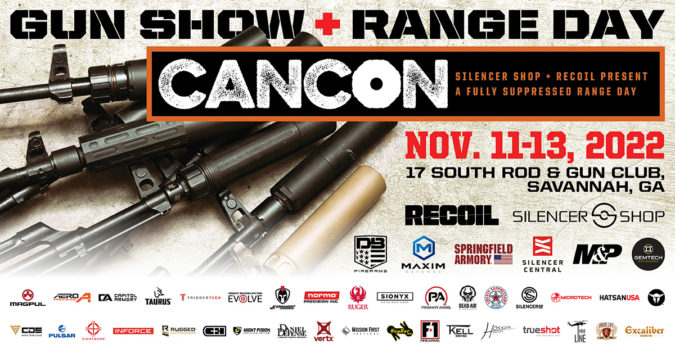
RECOIL magazine and Silencer Shop are excited to put on the first CANCON this Veteran’s Day weekend, November 11-13th, 2022, at the 17 South Rod and Gun Club near Savannah, in the great state of Georgia!
This is a big event with a lot to talk about, so we thought a guide to visiting might help some of you out.
WHAT, WHERE, AND WHEN IS CANCON?!
What:
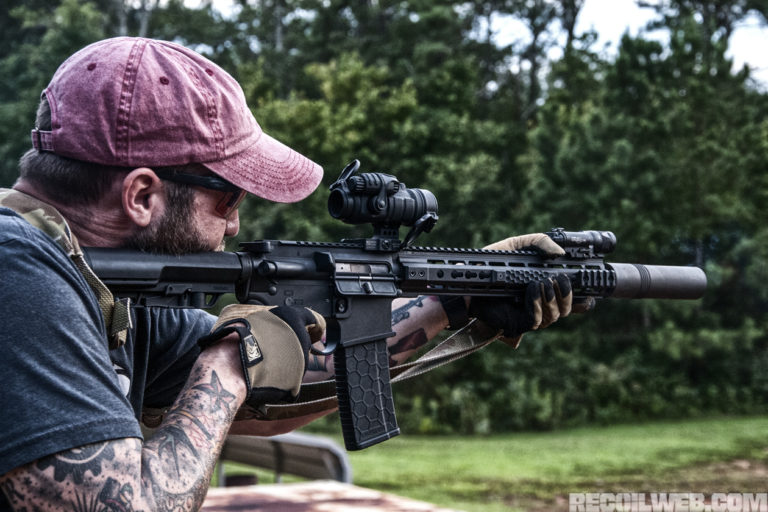
CANCON is a gun show and fully suppressed range day brought to you by RECOIL and Gun Digest Magazines.
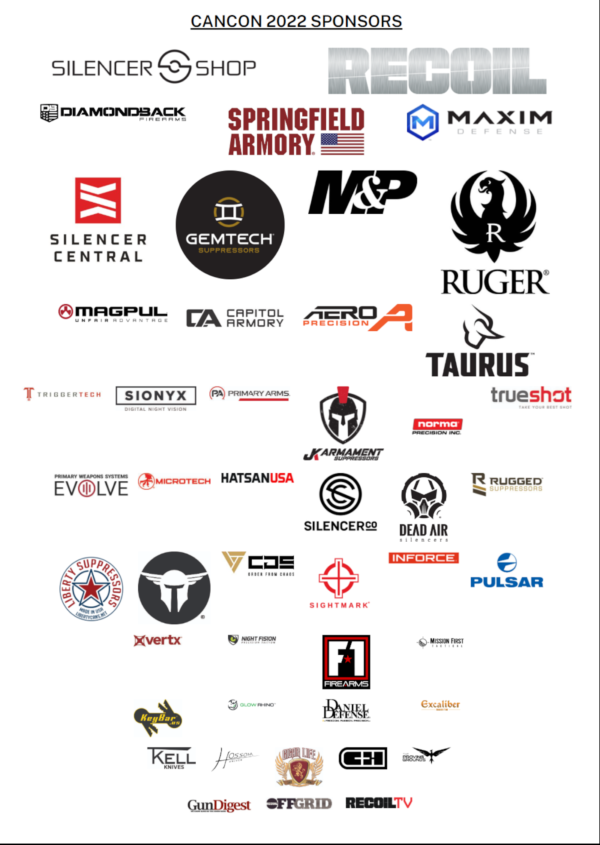
With over two dozen sponsors we’ll have hundreds of guns, suppressors, and optics for you to try out hands-on and on the range!
Ammo will be provided, all you need to bring is your shooting finger.
It’s not very often people get access to this many suppressors, guns, and accessories all in one place to actually try themselves. Don’t settle for just looking at them through glass, get yourself to CANCON and shoot them!
With over 50 lanes and acres of space, 17 South Rod & Gun Club is a wonderful venue for this event. If you’re not from the area, Fleming is about 30 miles south of Savannah, GA.
When:
November Friday the 11th, Saturday the 12th, and Sunday the 13th! Tickets are day specific, but you’re welcome to get multiple tickets for multiple days!
Veterans get in FREE on Friday!
THINGS TO DO!
The highlight of the range day will be guns. Lots of guns.
There will be a ton of sponsors with truckloads of guns and suppressors to try out!
From new releases like the Springfield Armory HELLION to classics like a Heckler & Koch MP5, there is going to be a lot of cool stuff to get your hands on.
CANCON 2022 Sponsors!
THINGS TO BRING!
Ammo is provided and refreshments are available for purchase. We recommend bringing some water and other supplies for a warm day in the sun. Hat, sunscreen, etc. Your own eye and ear protection are recommended but will be available on-site.
Personally, I like to bring a pair of shooting gloves to events like this just in case. Guns can get hot!
Entry tickets for a specific day include a certain amount of Lane Tickets together in a package.
Entry-Only Tickets
Provide entry into the event only. Visitors with Entry-Only tickets will need to purchase Lane Tickets at the event if they wish to shoot at one of the lanes.
Lane Tickets
One Lane Ticket can be exchanged at a shooting lane for one test shooting experience at a shooting lane. The amount of ammunition per experience is determined by the lane operator. Visitors must queue at each lane to get a turn for their experience and surrender a Lane Ticket to the lane operator. Lane tickets or turns cannot be combined to increase the amount of ammunition per experience.
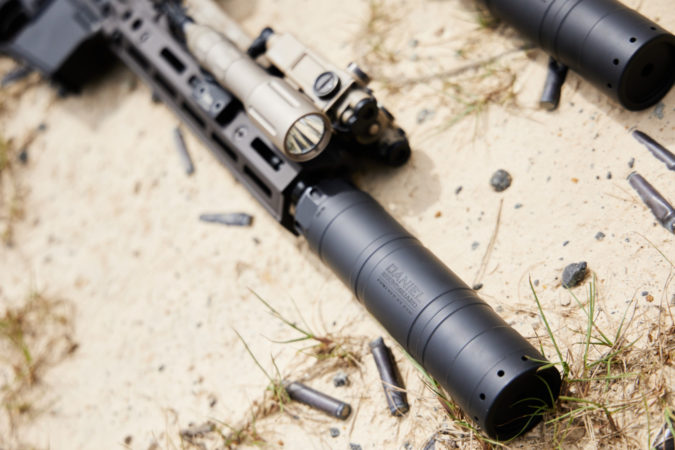
Daniel Defense will have their new SoundGuard line of suppressors at CANCON!
BRING THE FAMILY!
In addition to entry-only tickets for visiters who might not want to shoot, kids under age 12 get in FREE! Children are permitted to shoot with parental supervision, but tickets must be purchased for any children who would like to shoot. There will be kid activities available at the event!
COMING FROM OUT OF TOWN?
17 Rod & Gun Club is located in Flemming, GA but Richmond Hill is less than 10 miles away and a larger town with lots of accommodations. There are over 80 hotels with 20 miles of CANCON, so you have tons of options!
Tactical Pens Allow You To Have A Self-Defense Multi-Tool On You Even In Places Where A Knife Isn’t Allowed. These Are Five Pens That Will Keep You On Top Of Your Work And Can Keep You Safe.
The tactical pen is the perfect protection tool to have when you’re going somewhere where knives simply aren’t allowed. A tactical pen is great to take to the airport, to the big game, or to have in your pocket every day simply: it is a pen, after all.
Beyond just writing, tactical pens usually come with a glass-breaking tip, but many have additional features that make them far more than just a rugged pen.
Why Should I Buy A Tactical Pen?
For starters, they are high-quality pens that can write in adverse conditions. Beyond that, they are excellent safety tools that can go with you anywhere. Sure, you could look at a tactical pen and think “this is really excessive for a pen,” but that would miss the point of why they are so useful.
A tactical pen is an excellent way to keep yourself prepared for whatever life can throw at you. Sure, you may never need to use the pen for much more than signing checks, but it is a lot better to have the tools at hand and not need them than to need them and not have them.
5 Tactical Pens That Will Make Your Life Easier
These five pens feature a bevy of different tools and features that make them all incredibly useful as an EDC. No, none of them have built-in blades, but they do all have something that will make life much easier, and you safer when needed.
Atomic Bear SWAT Pen
Don’t let the low price of this pen fool you: it is the real deal. The SWAT pen is a beast. Made from 6061-T6 aircraft-grade aluminum, the SWAT pen is light and can take a beating. The tungsten carbide tip at the end is perfect for shattering glass when necessary and can provide an added bit of malice if you need to protect yourself.
The writing implement is smooth and easy. The inkwell takes Parker G2 ink, which is easy to find and easy to replace. All in all, this is a high-quality tactical pen at a bargain of a price.
MSRP: $15.99
Boker Plus Quest Commando Pen
Boker makes great knives and that craftsmanship carries over to their tactical pens. The Quest Commando was designed by Kevin Passon & David Cyr, and the duo left no stone unturned. The six-inch, black aluminum pen can be used like a kubaton in self-defense situations. The writing implement uses Lamy M-22 ink and is smooth as butter.
This is a durable, quality pen that you can travel the world with and feel confident when it’s in your hands.
MSRP: $44.96
Smith & Wesson Stylus Tactical Pen
It’s not a firearm but it’s made with the same care as Smith & Wesson’s famous guns. The Stylus Tactical Pen is a self-defense tool for the modern age. Yes, it is a good pen and uses Schmidt P900M parker ink cartridges, but this pen shines by what it does away from the page.
Most notable is the stylus tip atop the screw cap. This rubberized tip allows you to use the pen on all touchscreens, which is easier on your hands, especially on a phone screen, and allows you to still use your tech even in wet or cold conditions.
The window breaker at the opposite end of the pen tip works as advertised and is ridiculously strong.
MSRP: $39.99
Nitecore NTP10 Titanium Tactical Pen
The priciest pen on our list is from Nitecore. It’s the only knife on our list made from titanium instead of aluminum. Milled to a thickness of 1.8 mm, the NTP10 is almost unbreakable, and the tungsten steel tip at the end does what you expect. It is insanely light at just .64 of an ounce and takes German Schneider gel ink.
The main thing to think about with this pen is the price. Yes, the titanium is robust in a way that aluminum isn’t, but is it worth it? That’s for you to decide.
MSRP: $119.95
Schrade SCPEN4BK
Is it the most expensive? No. Is it the beefiest tactical pen? No. But boy, did Schrade pack a boatload of features into this pen at an incredibly fair price.
Of course, there’s a tungsten steel glassbreaker at one end, and the pen uses Black Starminen Fine Point D1 Pen Cartridges. But beyond that, the pen elevates to a proper survival tool. When removed from the body, the pen cap doubles as an ear-piercing survival whistle. It’ll get the attention of anyone in the vicinity and even a bit further than that.
Also embedded in the pen is a ferro rod that can be accessed by unscrewing the back half of the pen. There is a striker plate underneath the tungsten steel breaker and is reverse threaded into the pen body so you can’t accidentally unscrew it and lose it, as it is very small.
So many features in such a small space, and at a great price too. Schrade hit a home run with the SCPEN4BK.