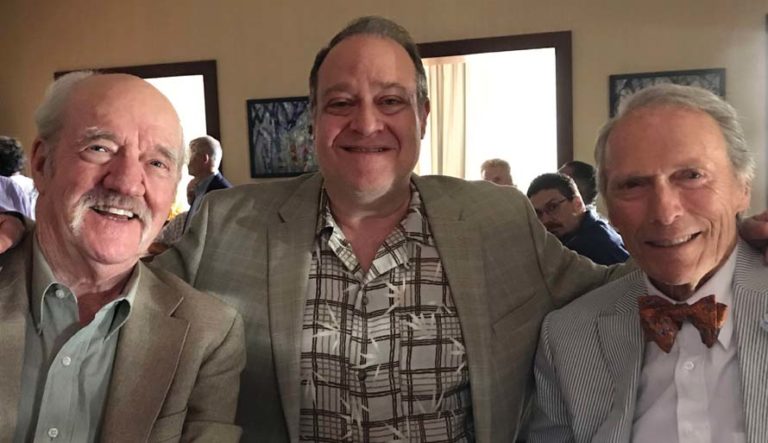
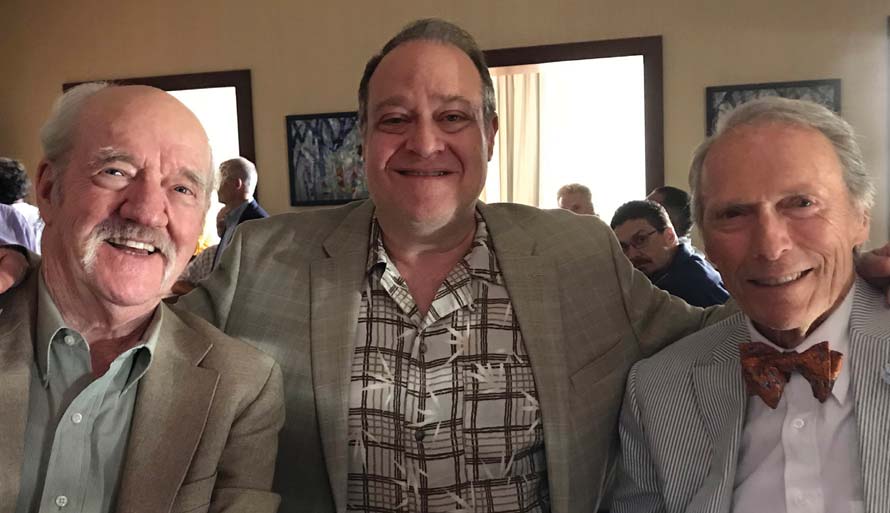
Adam Drescher (middle) during a break between scenes of the upcoming movie, “The Mule.” At right is Clint Eastwood and at left is character actor Richard Herd. Adam owns Adam Unlimited, which specializes in exotic skins for the knife and motorcycle industries, especially rayskin. (Photos by Images courtesy of Adam Drescher)
Adam Drescher, known best to the world of knives for his stingray leather supply company, has enjoyed many highlights in an acting career that spans over 40 movies and TV shows, but his experience in The Mule directed by and starring Clint Eastwood ranks at or near the top.
Released on Dec. 14, 2018, The Mule is about a botanist—played by Eastwood—who unwittingly becomes a mule transporting drugs for a criminal cartel. As with most of his roles, Adam’s character doesn’t have a name.
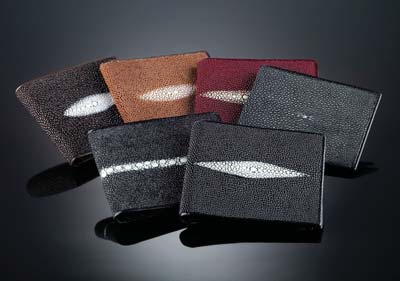
Drescher designs most of the accessories he sells, including these rayskin knife cases made in a factory in Bangkok, Thailand.
“I’m a computer online sales guy trying to talk Clint into taking his business online,” Drescher said. “I’m in two or three scenes that were shot, though I have no idea what will end up in the finished cut.”
The scenes were in a bar, which is where Adam asked the person playing the bartender to photograph him, Eastwood and actor Richard Herd.
“Working with Clint was a dream come true,” he added. “I’m what’s known as a ‘day player’—I work on a film for a day, maybe two days at a time, then I’m done,” Adam explained. “People think they remember seeing me but they’re not sure. I’m usually there and gone pretty quickly, usually just a scene or two, and this thing with Clint is almost like the epitome. Being a day player I don’t know how it could get any better. I got to work with him, got to improvise a little bit, got to actually act, had more than one line, and had a little character part to do. I had some interaction with him. That made my day.”
There are different grades of rayskin and Adam said he uses only the best. “People would come to me and say the interior of their wallet had worn out, and we began using shark skin in the interiors of our wallets,” he noted. “[Shark skin] never wears out.”
So what was Eastwood like as both a person and a director?
“He was pretty much what I was expecting only because I’ve heard so much from other people who’ve had the privilege of working with him,” Drescher said. “He knows his stuff backward and forward, totally in charge, quiet, yeah, he’s the man.
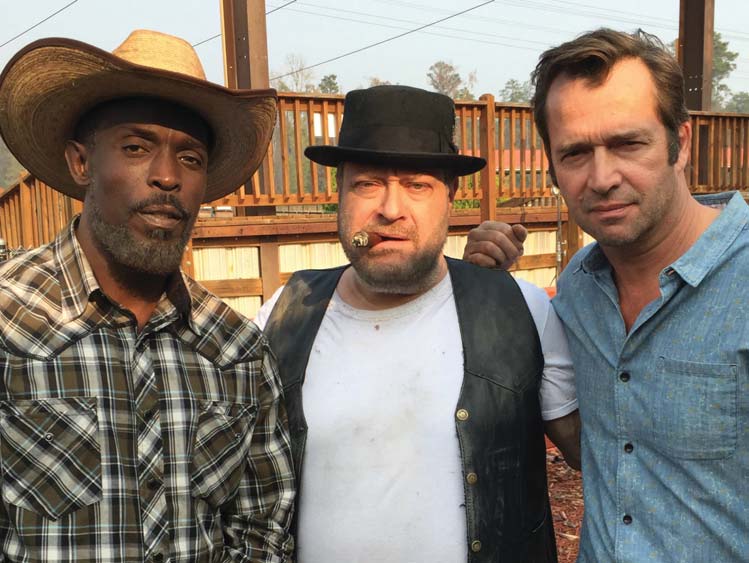
Another of Adam’s roles was as Boss Man on the TV show Hap and Leonard starring Michael Kenneth Williams (left) and James Purefoy (right).
“He never yells at you and from what I gather that goes all the way back to his days on Rawhide [the hit 1960s TV show]. Clint said the director would yell ‘action’ and it would spook the horses before they would start the scene, so Clint got that out of his system and said, OK, real quiet, and the next thing you know you’re doing the scene, you don’t even realize the cameras were rolling. Clint would say ‘cut’ and everything was respectful and really quiet and to the point. I’d heard that he shoots really fast. He did a couple of takes of our scenes, got different angles and got the dialogue right that he wanted. It was a pleasure of an experience for me, a highlight of a career that’s pleasurably been full of a lot of highlights.”
Next year’s crop of new knives will be here soon, but BLADE is offering you a sneak peek before anyone else.
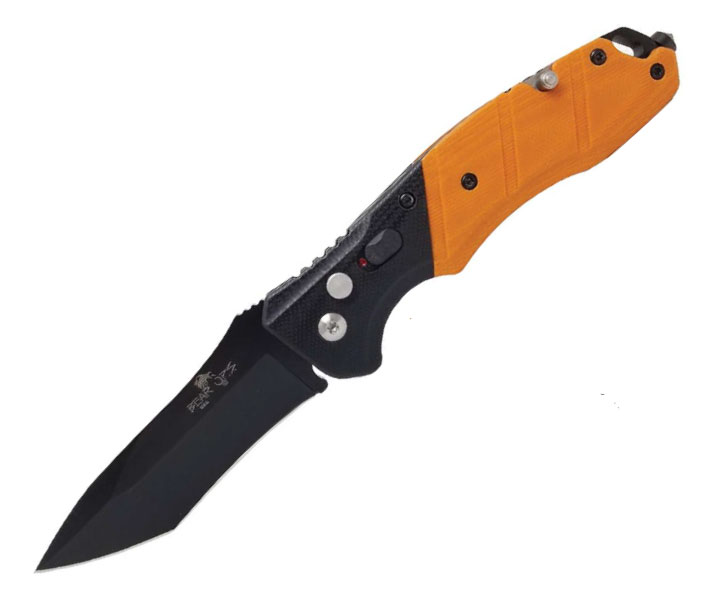
Bear OPS AC-500ROB4-B Automatic
Orange stands out on the Bear OPS AC-500ROB4-B automatic from Bear & Son Cutlery. The 3-inch modified tanto blade is Sandvik 14C28N stainless steel and operates via a button-lock system. The handle is orange and black G-10 and comes equipped with a window breaker, seatbelt cutter and reversible pocket clip. Weight: 4.4 ounces. Closed length: 4 7/8 inches. MSRP: $175.
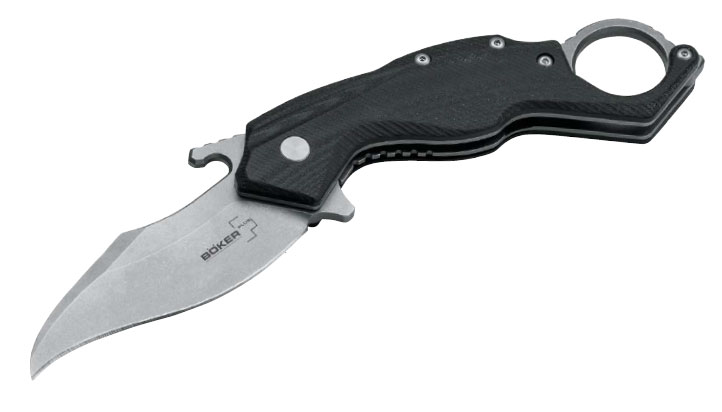
Boker Plus Toro
A plethora of lines and curves engulf the Boker Plus Toro linerlock folder. The 3.38-inch blade is D2 tool steel and the handle is G-10 with a reversible pocket clip. Closed length: 4.5 inches. MSRP: $119.95. Available: Now.
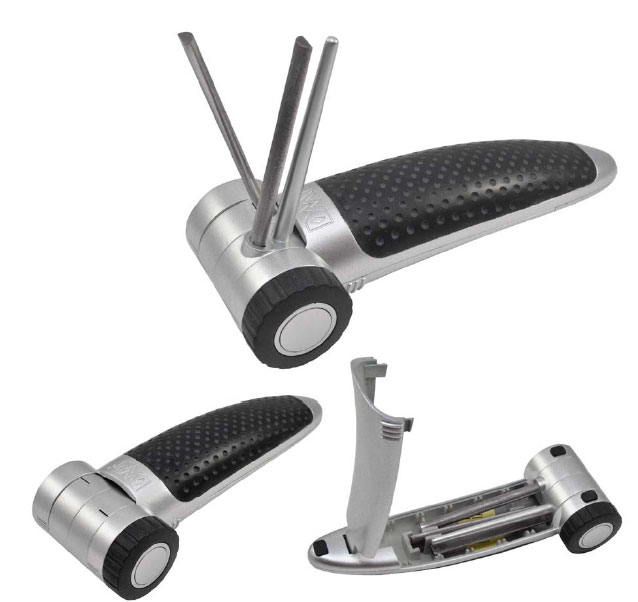
DMT Diamond-Vee
The DMT Diamond-Vee sharpens knives with serrated, plain and curved edges, and does so at angles of 10, 15 and 20 degrees. To store the sharpening rods, open the handle and fold them inside it. Abrasive: Diamond coated. Width: 2.34 inches. Length: 6.25 inches. MSRP: $32.99. Available: Now.
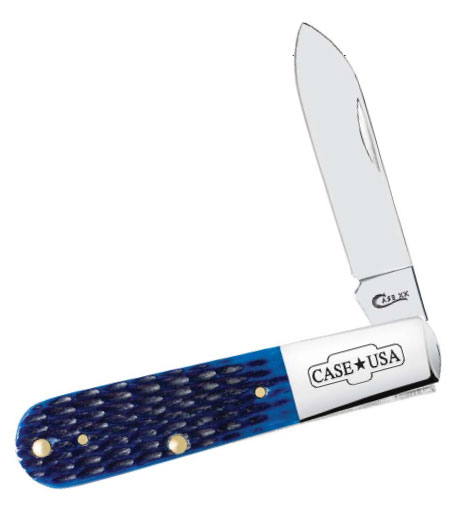
Case Blue Bone Barlow
Rogers corn cob jigged blue bone highlights the Case Blue Bone Barlow. The 2.2-inch blade is Tru-Sharp Surgical Stainless—Case’s version of 420HC—and the shield design is laser engraved into the pocket-end bolster. Closed length: 3.375 inches. MSRP: $74.99. Available: January 2019.
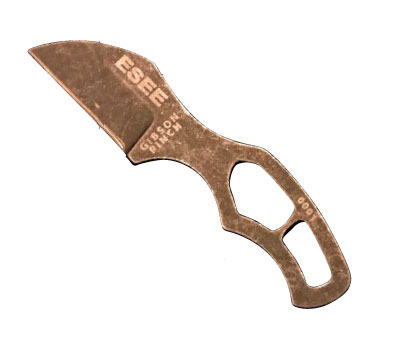
ESEE Gibson Pinch
Designed by knifemaker James Gibson, the ESEE Gibson Pinch has a 1.3-inch blade of 1095 carbon steel in a stonewashed black oxide finish. Rockwell hardness: 55-57 HRC. The knife carries in an injection-molded sheath with an earth magnet and fits inside a survival tin. Maximum thickness: .13 inch. Weight: 1 ounce. Overall length: 3.4 inches. MSRP: $49.99. Available: Now.
Grand Prairie HME (Hunting Made Easy)
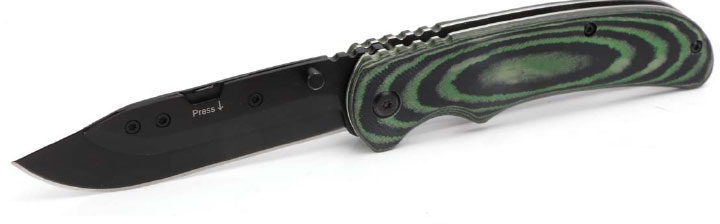
The HME (Hunting Made Easy) Razor Blade Folding Knife includes a clip-point and five replaceable gut-hook blades, all 3.5 inches long and of 420HC stainless in a black oxide coat. The linerlock folder has a Micarta® handle. Weight: 6.88 ounces. Closed length: 4.5 inches. MSRP: $29.99. Available: Now.
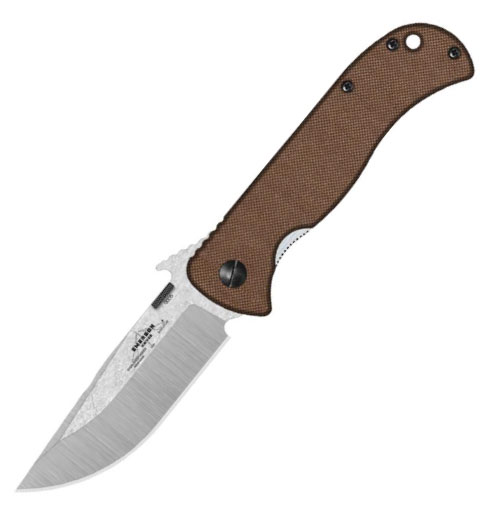
Emerson Wave Renegade
Part of the Overlander Series from Emerson Knives, Inc., the Renegade boasts a 3.6-inch blade of 154CM stainless with the Emerson Wave Shaped Feature and secures open via a titanium linerlock. Handle material: G-10. Closed length: 4.8 inches. MSRP: $254.95. Available: First quarter of 2019.
Kershaw Bareknuckle
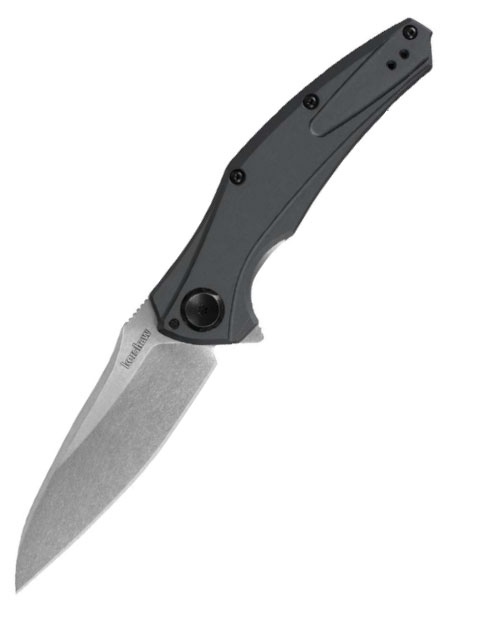
The Bareknuckle offers a slimmed-down profile and upgraded material of an original Kershaw award-winning design. The 3.5-inch blade is Sandvik 14C28N stainless steel in a stonewashed finish, and the 6061-T6 aluminum handle is anodized and has an oversized pivot and reversible pocket clip. Closed length: 4.7 inches. MSRP: $109.99. Available: Now.
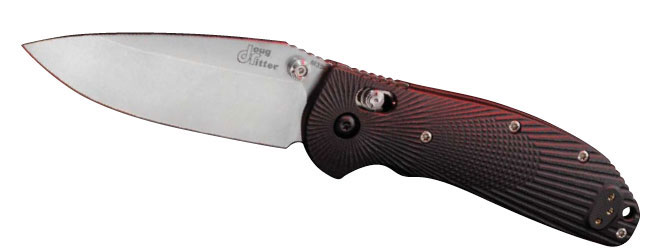
Hogue/Ritter RSK Mk1-G2 (Generation 2)
The RSK Mk1-G2 (Generation 2) is an upgraded version of the original RKS Mk1 introduced by Doug Ritter in 2004. Manufactured by Hogue Knives, it features a 3.4-inch flat-ground blade of M390 stainless steel that operates on an ambidextrous ABLE™ Lock, an “improved version of the patent-expired AXIS Lock.” The handle is a black G-10 composite.
Puma SGV Coyote
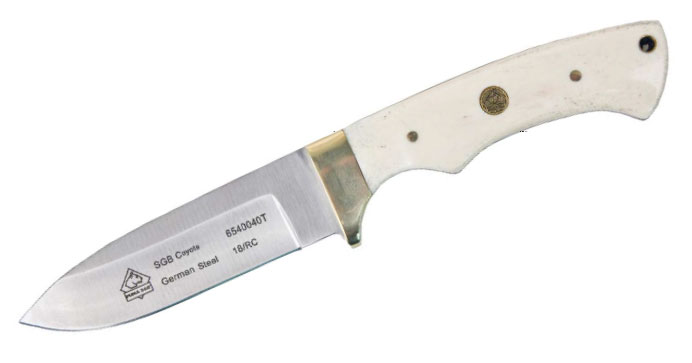
A 3.8-inch blade of 1.4116 German stainless steel in a Rockwell hardness of 55-57 HRC and a white smooth bone handle featuring a G-10 liner complete the Puma SGB Coyote. Weight: 4.5 ounces. Overall length: 8 inches. MSRP: $89.99. Available: Mid-December 2018.
Smith’s Campaign Tactical Knife
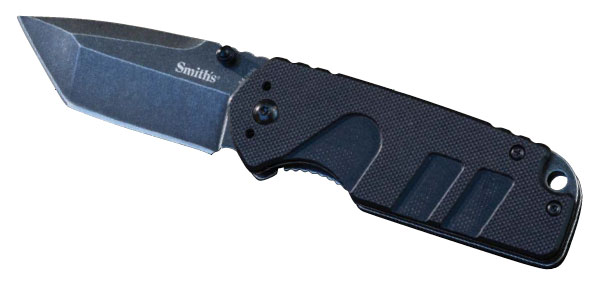
Known for its sharpeners, Smith’s joins the tactical folder parade with the Campaign Tactical Knife. The 2.78-inch modified tanto blade with ambidextrous thumb studs is 420 stainless in a black coat, and secures open via a linerlock. The G-10 handle comes in black, desert tan or OD green, and has a reversible pocket clip and a hole for a lanyard. Approximate closed length: 3.8 inches. MSRP: $24.99. Available: Now.
Smith’s PP1 Tactical Sharpener
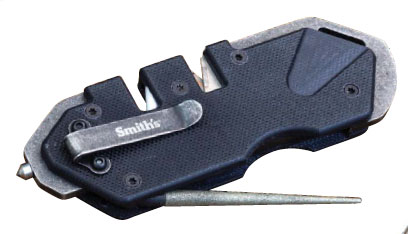
The PP1 Tactical sharpener from Smith’s sports ceramic (fine) and carbide (coarse) sharpening slots, and a 320-grit diamond-coated sharpening rod for serrated blades. Available in black, desert tan and OD green, the G-10 handle covers a 420 stainless steel frame and includes a pocket clip, tungsten carbide glass breaker and lanyard hole. Weight: 3.7 ounces. Length: 4.15 inches. MSRP: $24.99. Available: now.
Krudo Karsino10 BA
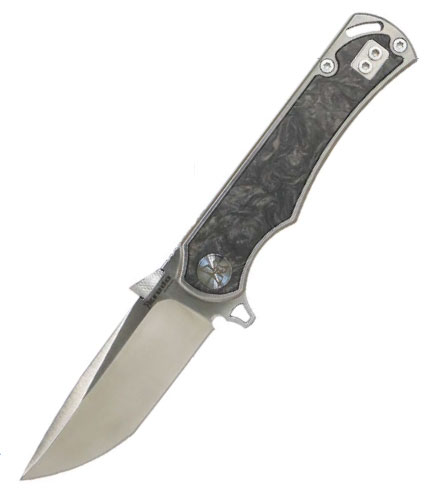
A 3.4-inch blade of CPM S35VN stainless steel and a handle of titanium and carbon fiber distinguish the Karsino10 BA flipper from Krudo Knives. The framelock folder includes a thumb wedge on the blade spine for pocket deployment and a closed length of 4.75 inches. MSRP: $297. Available: January 2019.
WE Knife Arrakis
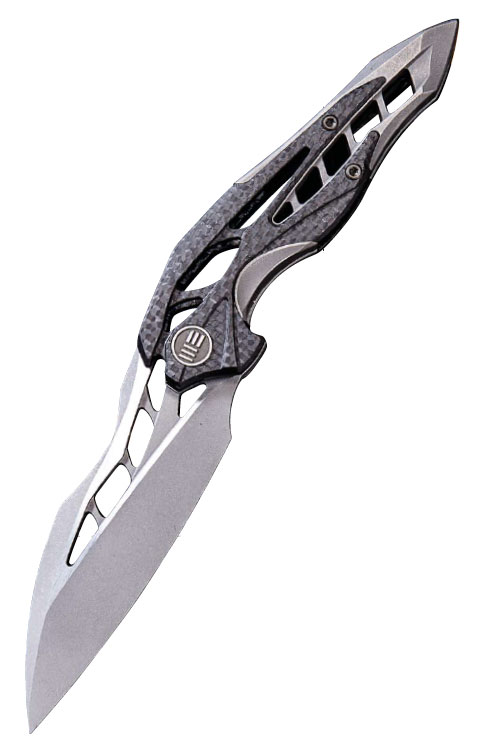
Designed by Elijah Isham, the Arrakis from WE Knife has a 3.45-inch blade of Bohler M390 stainless steel in a fl at grind and a Rockwell hardness of 59-61 HRC. Sporting skeletal construction throughout for lightweight (3 ounces), the framelock folder includes a 6Al4V titanium frame with carbon fiber inlay. Closed length: 4.55 inches. Available: January 2019.
TOPS Camp Creek
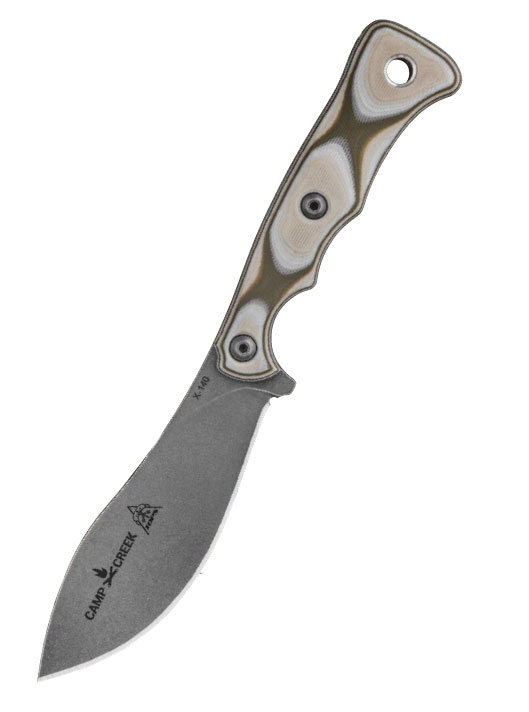
Each year TOPS President Leo Espinoza makes a knife for himself for hunting season, and the Camp Creek is it this time—and it’s TOPS’ first knife in CPM S35VN stainless blade steel to boot. Handle material: Camo G-10. Weight: 6.2 ounces. Blade and overall lengths: 4.38 and 9 inches. Sheath: Tan Kydex. MSRP: $220. Available: Now.
Zero Tolerance Model 0470
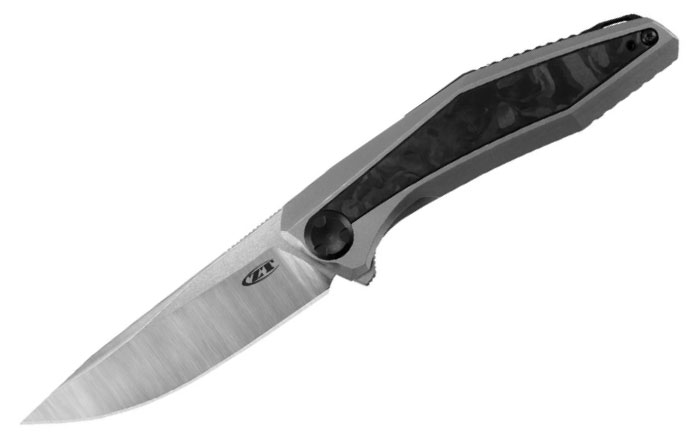
A marbled carbon fiber insert and a 3.4-inch blade of CPM 20CV stainless steel in a stonewashed and machine satin finish highlight the Zero Tolerance Model 0470. The titanium framelock includes a hardened steel lockbar insert and the company’s KVT opening system. Closed length: 4.4 inches. MSRP: $300. Available: Now.
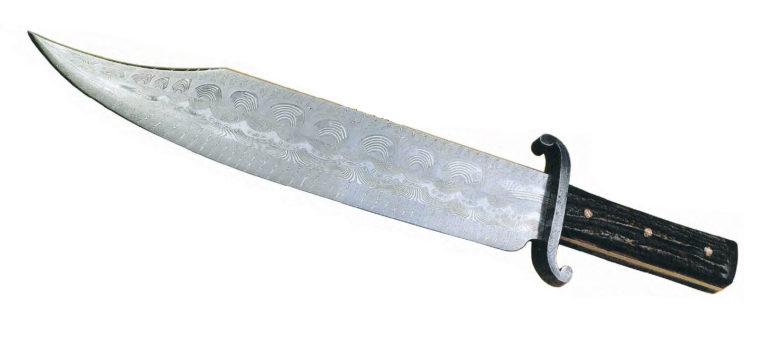
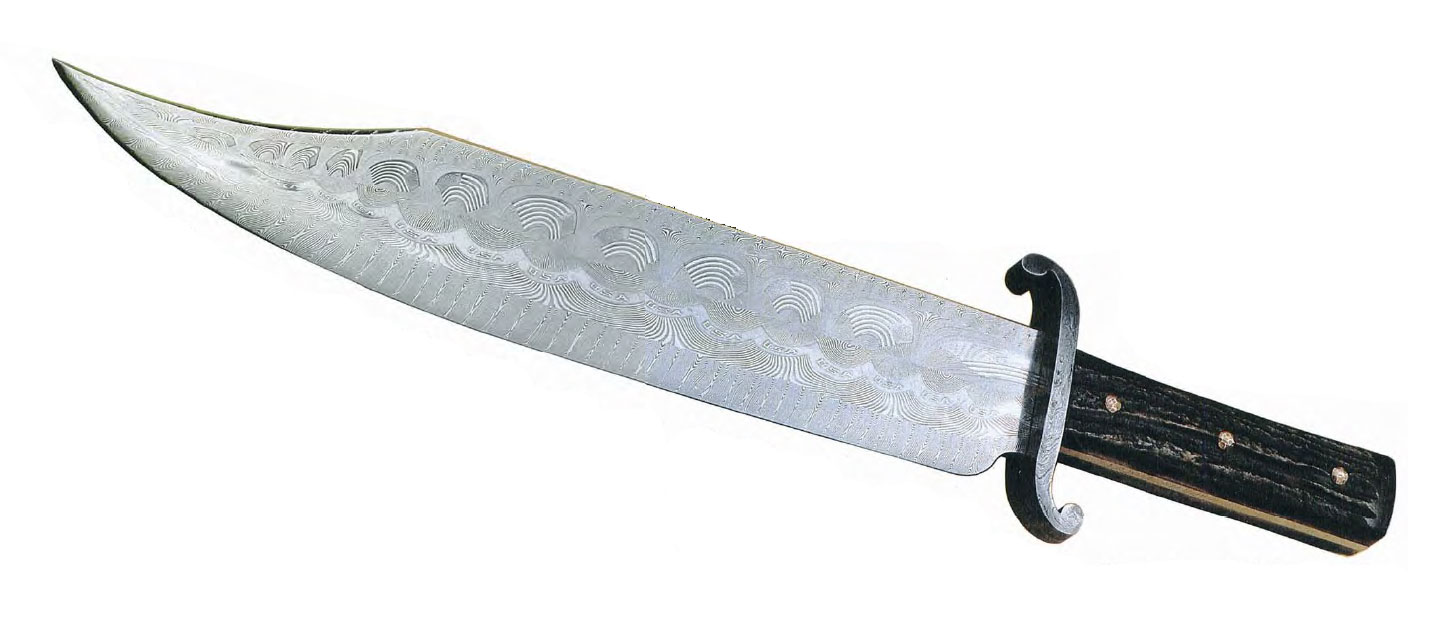
The American Flag blade consists of 13 flags, each of which is underscored with the letters “USA.” The flags are so true to the original that you can make out the details of all 50 stars in each one under a microscope. Meier says he forged the flags to appear as they might look to someone in a crowd as he/she watched a parade of flags go by. (Weyer)
Editor’s note: This article originally ran in the May/June 1991 issue of BLADE magazine. With the death of President George H.W. Bush on Nov. 30, 2018, it seemed appropriate to look back at an impressive custom knife presented to the 41st president in the early ’90s.
by Nathan Burdette
Daryl Meier wasn’t in the best of moods on a gloomy January day. His knife forge/shop had recently been burglarized and his son was about to begin Army boot camp at the outset of Operation Desert Storm.
“Maybe this interview will cheer me up,” one of the standard bearers of pattern-welded (or damascus) steel sighed. “Nothing else has gone well lately.”
He had to be kidding. Barely a month before he’d presented his revolutionary American Flag blade, a blade with American flags on it so true to the original that each will stand up to microscopic inspection, to President George Bush at the White House.
But then Meier is not your typical 9-to-5 working stiff. A case in point: He said the more meaningful part of the White House trip wasn’t so much meeting the president as was the two-hour plane trip sitting next to and conversing with Illinois Gov. Jim Thompson, who had arranged the knife presentation after seeing Meier’s work featured in a local newspaper.
The fact that Meier rejects the American dream of two cars in every garage and a boat in every driveway is not news to those who follow the knife scene. He’ll be the first to tell you that his mother raised him to be independent, and that independence is reflected in a lifestyle lacking in creature comforts. He resides in a log house of his own construction and makes a living selling his pattern-welded steel to knifemakers and manufacturers. He also teaches workshops and gives symposiums on the fine art of pattern welding. “I teach workshops from time to time, but I don’t do it for the money, though even that doesn’t amount to much,” he notes.
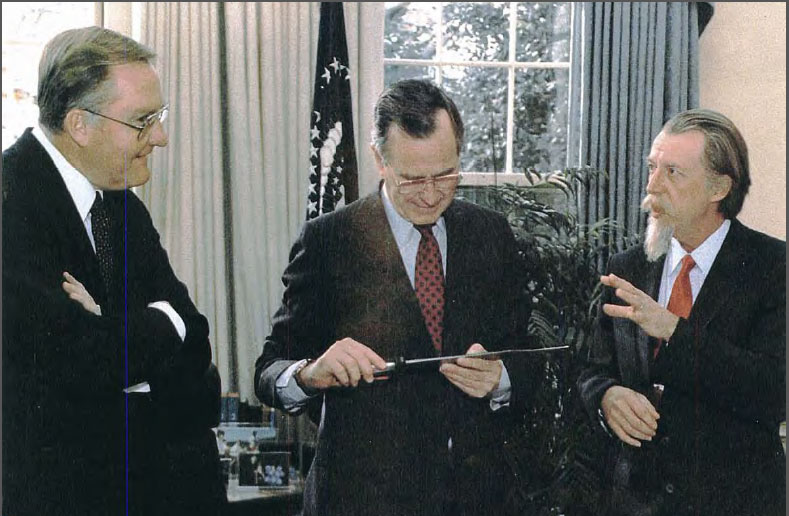
At the White House are, from left: Illinois Gov. Jim Thompson, President Bush and Daryl Meier. Bush admires the American Flag blade and listens as Meier explains how the flags were forged into the blade. Thompson arranged the knife presentation after reading about Meier and his pattern-welded steel in a local newspaper. (White House photo)
Instead of acquiring money, Meier is more interested in amassing knowledge, specifically, knowledge of how the ancients made pattern-welded steel and how he can improve on their time-tested methods. He traces the earliest pattern welds to as early as the 4th or 5th centuries B.C., and by the 4th or 5th centuries A.D. he says blacksmiths were able to control the patterns in the steel to a certain degree.
Meier says letters or words first began to appear on pattern welds between the 5th and 8th centuries, though the letters or words were forge welded on the surface of the finished blades. It wasn’t until the 18th century when a French smith named Coluet devised a method to make the word “Liberty” appear on a sword blade that letters or words were forged throughout the steel rather that on it, Meier notes. Between 1875-1925, he continues, gunsmiths refined the technique of words in the steel of pattern comforts. welded gun barrels.
Able to figure out how to forge words into the steel simply by looking at pictures of such works, Meier forged his name in a blade in 1978. But it wasn’t until the American Flag blade that he was sufficiently inspired to make what he calls “to date the most intricate thing done” in the genre.
“The tolerances (in the American Flag blade) are much tighter than in my name blade,” he begins. “The flag (there are actually 13 flags in all on the blade) that appears on the blade has 50 stars in it, each of which has five points, and which are arranged in five rows of six and four rows of five stars like on the standard flag.”
Talking about the work that went into the American Flag blade got Meier started and he wasn’t about to stop.
“I sweated blood to make that blade right. I could’ve made something that looked suggestive of what I made but then it all has to do with the philosophy of how you do a thing. That’s what’s prevalent in our society. We’re too cost conscious and few of us are willing to pay the full price for a good product,” he exclaims. “You’ve either got to say, ‘I’m going to make something I’m proud of or you’ve got to get out of the business.”
With that kind of attitude, let’s hope Daryl Meier stays in the blademaking business for a long time.
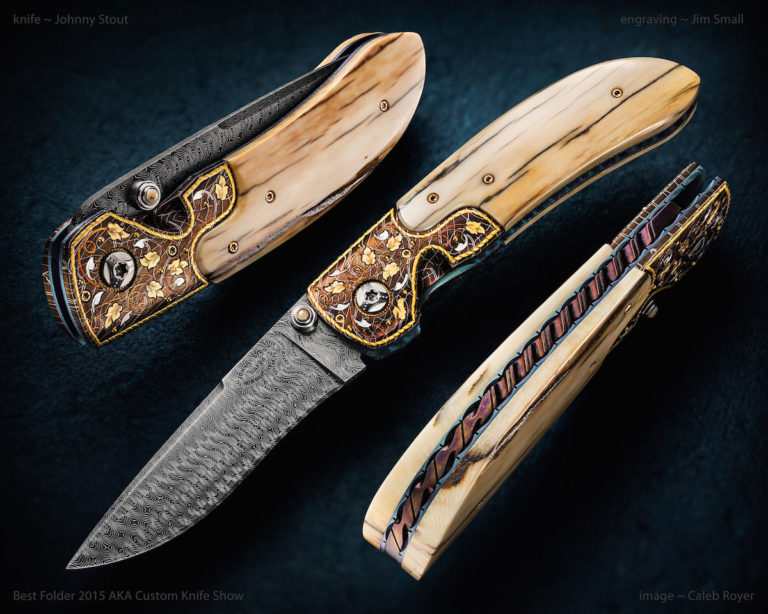
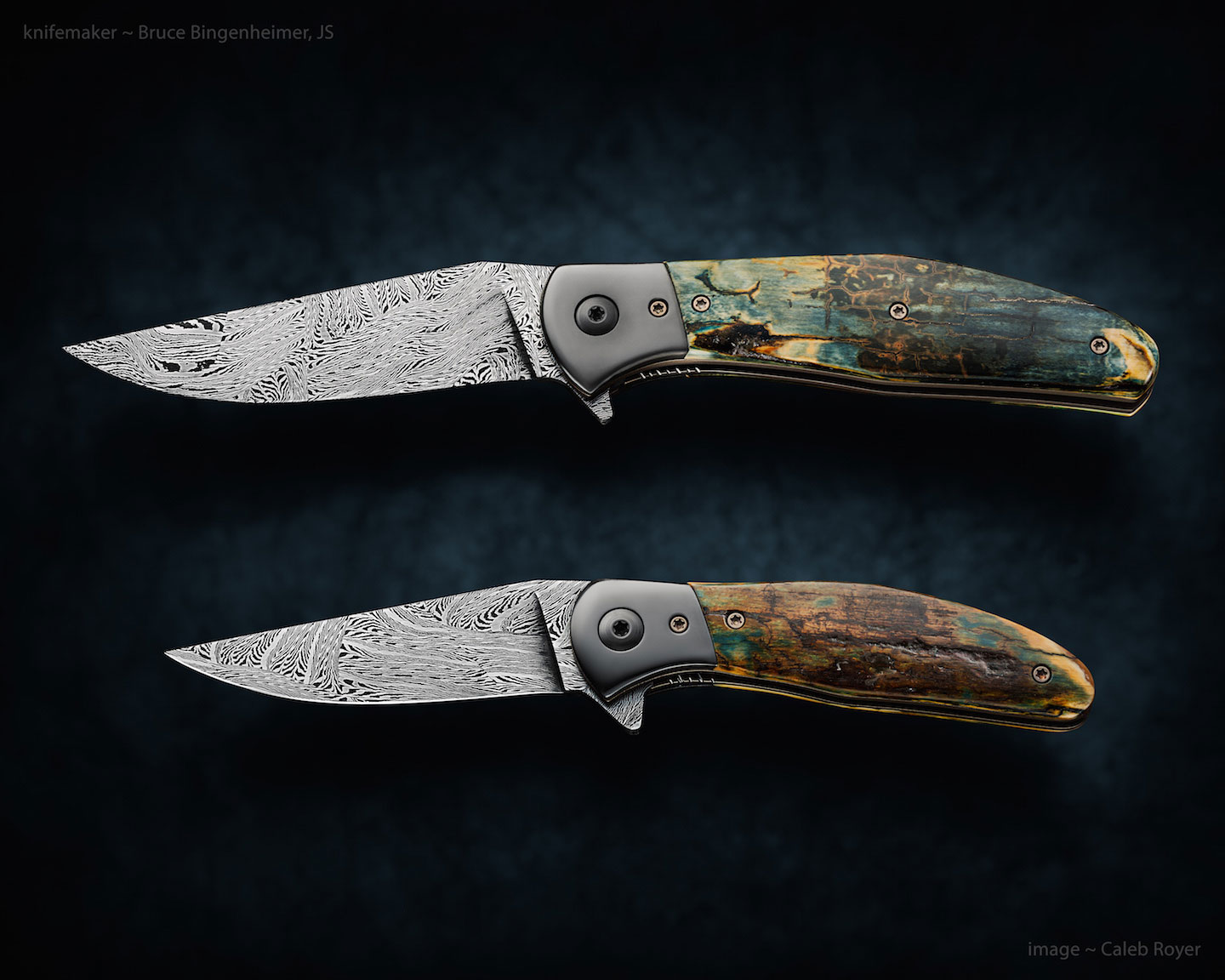
Bruce Bingenheimer’s BingaLor folders have handles of mammoth ivory. (Caleb Royer image)
New Mammoth and Elephant Ivory Bans
New laws in three states target mammoth ivory—ivory of an animal that has been extinct for several millennia—elephant ivory or both for bans, according to the Elephant Protection Association.
“Illinois and New Hampshire are the most recent states that will enact bans,” noted the association’s Sandra Brady. “This follows Nevada, which enacted their ban, including mammoth and fossil ivories, earlier in the year.”
The Illinois ban includes both elephant and mammoth ivory, while the New Hampshire ban is on elephant ivory only.
Brady said the latter two bans go into effect Jan. 1, 2019.
According to the latest lists BLADE® was able to obtain, states that ban the sale of mammoth ivory in addition to Nevada include California, Hawaii, New Jersey and New York. States with proposed legislation in process that would include banning mammoth ivory are Connecticut, Delaware, Massachusetts, Michigan, Rhode Island, Vermont and Washington.
There are probably more as well.
Specifics of the Bans
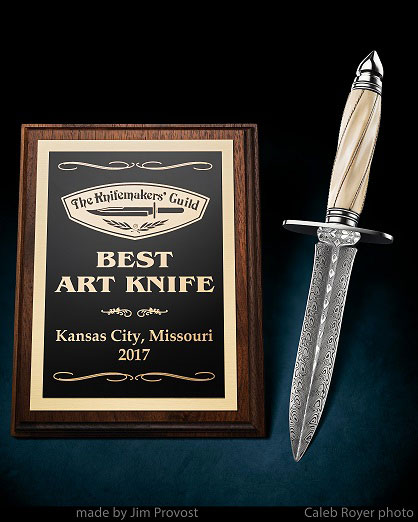
New laws in three states target mammoth ivory—ivory of an animal that has been extinct for several millennia—elephant ivory or both for bans. Jim Provost’s damascus dagger sports a handle of mammoth ivory fluted and inlaid with silver wire. Contact Provost at Dept. BL12, 1634 Lakeview Dr., Laurel, MS 39440 601-498-1143. (Caleb Royer)
Illinois HB4843 will ban “any tooth or tusk composed of ivory from any animal, including, but not limited to, an elephant, hippopotamus, mammoth, narwhal, walrus, or whale, or any piece thereof, whether raw ivory or worked ivory, or made into, or part of, an ivory product.”
New Hampshire SB 451 will ban elephant but not mammoth or walrus ivory.
Nevada SB 194 reads “a person shall not purchase, sell, offer for sale or possess with intent to sell any item that is, wholly or partially, made of an animal part or byproduct derived from a shark fin, a lion of the species Panthera leo or any species of elephant, rhinoceros, tiger, leopard, cheetah, jaguar, pangolin, sea turtle, ray, mammoth, narwhal, walrus or hippopotamus,” except as otherwise provided by state law.
Why Mammoth Ivory Bans?
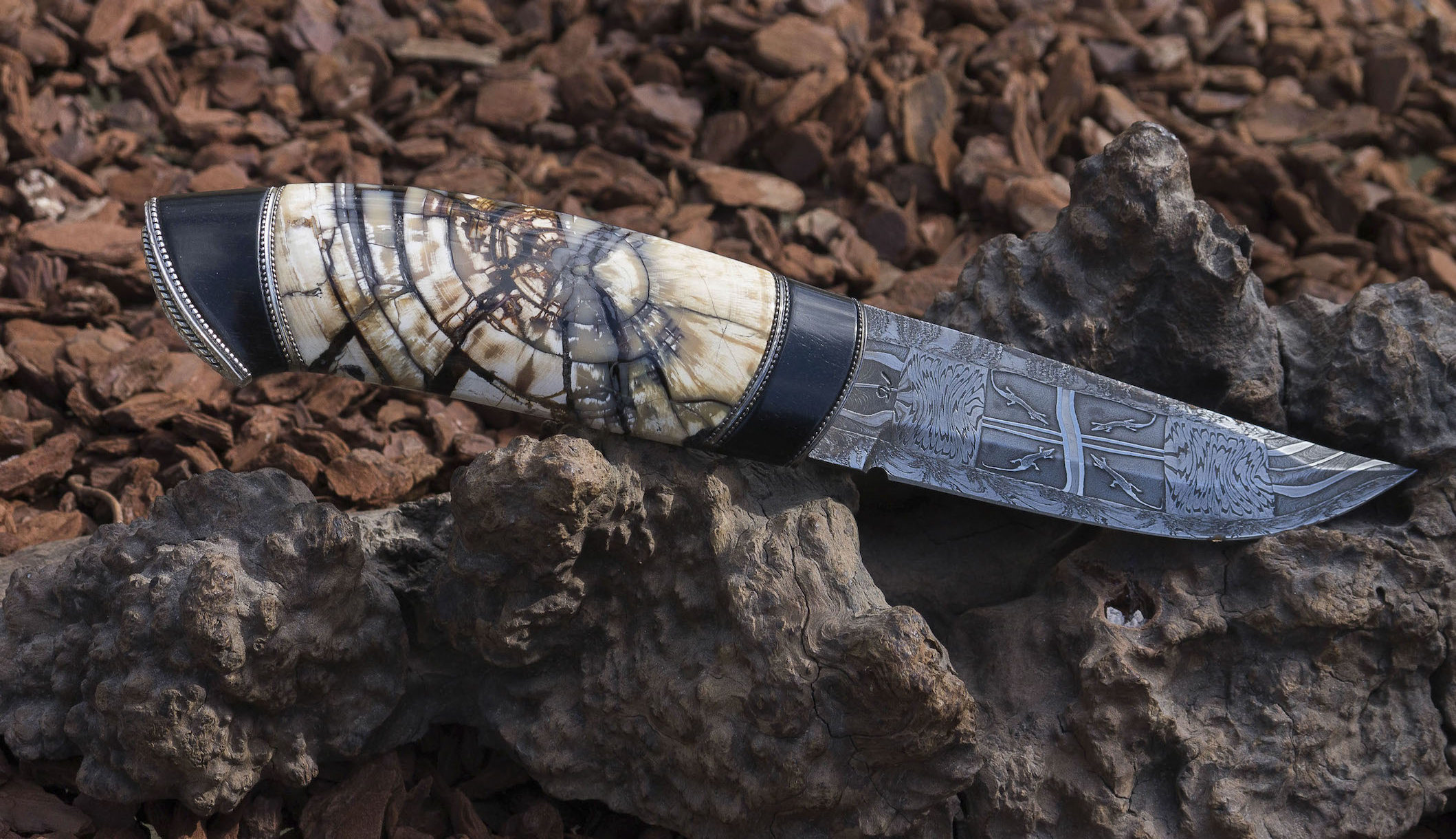
Raffir fossil mammoth ivory comprises the handle of Danish knifemaker Tommy Astrup’s mosaic damascus fixed blade.
Though bans on elephant ivory have many supporters, the bans adversely affect the local populations of Africans who depend on the legal trade in ivory for their economic well-being. Also, the elephant ivory ban is resulting in an overpopulation of elephants in some areas of Africa, an overpopulation that unduly taxes the environment at the expense of other wild animals.
As a result, as Brady noted, “Several bird species are hanging on by a thread or have disappeared altogether, and much of the habitat is being destroyed. We don’t know how bad the trickle-down effect will ultimately be, but you can be sure that it will not be good.”
Ironically, not only does banning elephant ivory impact both the pocketbooks and habitat of Africans, it also has resulted in the banning of the ivory of mammoth, a creature that has not walked the earth for 4,000 years. The reason is simple enough: money. The state governments cannot even afford to administer the fallout from their own wrongheaded bans on elephant ivory.
According to The Journal of Paleontological Sciences, smugglers have been marking shipments of elephant ivory as fossil or mammoth ivory to get them past U.S. Customs. While the differences between elephant and mammoth ivory have been recognized for some time—see this website for more on how to tell the differences—five state legislatures seem to have decided to save money and simply banned all ivory. New York and New Jersey were the first states to do so.
According to its mission statement, the Elephant Protection Association opposes such overbroad and harmful bans that undermine successful conservation programs, and raises funds for animal rights aligned groups only. For more information visit elephantprotection.org.
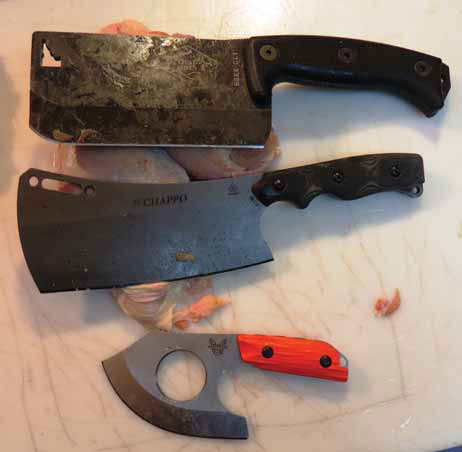
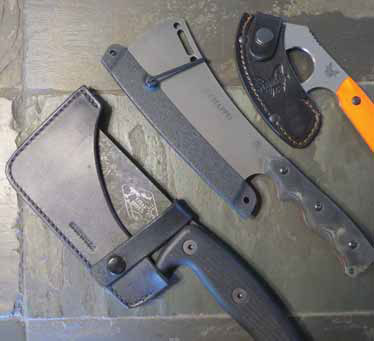
Top down, with manufacturer’s suggested retail prices in parentheses: ESEE Expat Cleaver ($276.50), TOPS El Chappo ($145) and Benchmade Nestucca ($155).The Expat has a break-free leather sheath (left). A bungee cord holds the El Chappo in its minimalist Kydex sheath (middle). The Nestucca’s leather sheath (right) is minimalist as well.
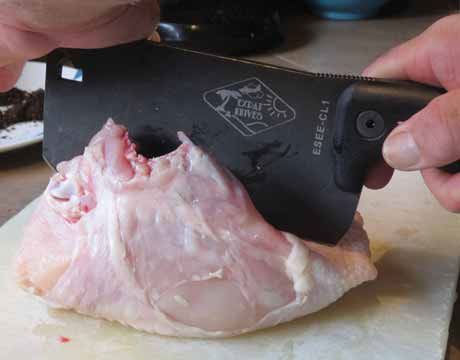
Splitting the breastbone was child’s play with the heavy-duty ESEE Expat Cleaver. Even without a large cleaver, the easy technique is to line up your edge and place pressure on the spine of the blade with your other hand. The technique enables you to cut through without having to make a lot of sawing motions.
Verdict: To be truthful, I don’t think ESEE means for this cleaver to be popping in and out of a kitchen drawer.
Overall length: 11.5 inches
Full-tang construction of .187-inch-thick 1095 carbon steel
G-10 scales
Blade width: 3.25 inches
Grind: sabre
Weight: 25.5 ounces
The ESEE Expat Cleaver is the big brute out of the test group. Frankly, it comes across as a bit of a heavy chopping tool.
To be clear, though, even though I tested the cleaver on food, ESEE does not advertise it as a food-processing knife since the coating is not certified FDA approved. Consequently, just because I am testing it this way there is no official recommendation to use it on food.
For those of us from the land of the moose, I can see the Expat being a more precise tool than a chainsaw. (Yes, some use chainsaws to field dress moose up here.) I drove up and down the highway looking for a moose to no avail, so off to the chicken test to see if the cleaver couldn’t be tamed into a precision kitchen tool.
When brought under control, the shear mass of the Expat makes cutting easy. Overall length: 11.5 inches. It is a full-tang construction of .187-inch-thick 1095 carbon steel with G-10 scales. Having a blade 3.25 inches wide makes it a handful. Weight: 25.5 ounces. All the weight gives it more cutting power when chopping or making exacting cuts.
A tradeoff for the weight can be control, and, don’t kid yourself, fatigue. After all, that’s close to 2 pounds of knife! As for its efficiency as a straight-out chopper, the answer is obvious.
Trying to choke up with a pinch grip at the top of the handle to gain control can be a bit difficult with so much metal. The final resting place for my hand to gain control for fine detail work was high up on the blade. Having a grip so high up means it is not easy to drop your hand back to grip the cleaver for chopping. Making clean, accurate cuts is possible, though the chunkiness of the grind made it harder.
As a woods tool, it was a brute chopping branches. The sabre grind is nice and sturdy—great for busting up kindling and small firewood. If you want to do detail carving with it, you will have to work out your holding technique.
TOPS Knives El Chappo Review
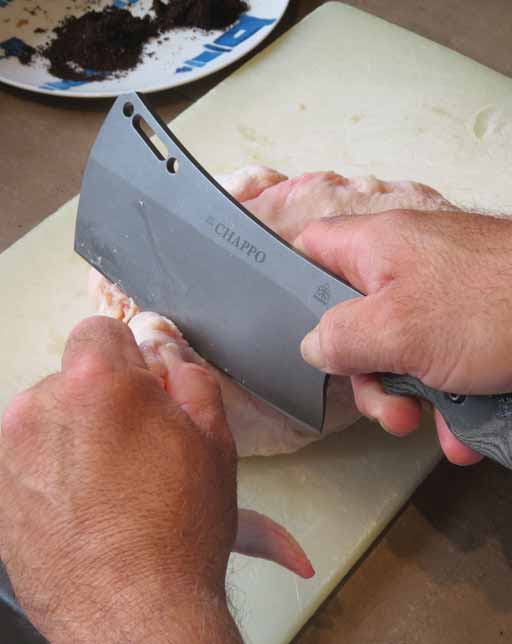
The El Chappo by TOPS Knives has a good cutting edge and plenty of weight. Even if you are not dead on with the joint, you should have no problem cutting through cartilage. You want to try not to hit the cartilage but a heavy cleaver is forgiving that way.
Verdict: a stylized cleaver—a chopper with charm.
11 inches overall with a 6-inch blade
Weight: 15.9 ounces
Grind: sabre
Blade thickness: .187 inches
Steel: 1095
Instead of just making a sheet of metal, TOPS went ahead and gave its cleaver style. It is made from .187-inch-thick 1095 carbon steel, so don’t think it’s going to see the inside of a dishwasher with any success.
It’s 11 inches overall with a 6-inch blade. As cleavers go it’s mid-size. Weight: 15.9 ounces. The balance for controlled cutting is just in front of the handle. To drop back to do some chopping, do so with a flick of the wrist. While the cleaver may be in the mid-size category, the use of .187-inch thick material makes it a bit heavy, even with a high sabre grind.
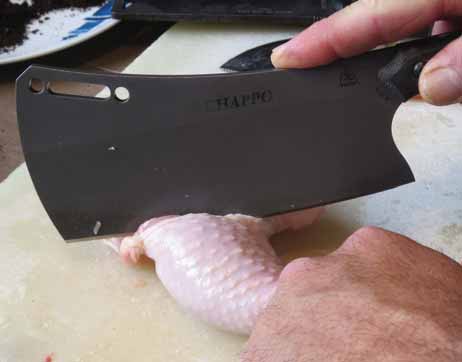
The El Chappo has weight (15.9 ounces) but is not so heavy that accurate control is difficult.
Out of the box it was razor sharp. I think the El Chappo is totally targeted for the kitchen and did well with the chicken test. I must say, though, I am not overly excited with the handle design. The profile of the finger grooves does not lend itself to the nimble work of a kitchen tool.
For me at least, if the El Chappo had the handle design of the ESEE Expat it would be rocking. Still, it performed well in the kitchen. As a tool to prepare meals it works fine. It might not get the cutting time it should, however, because of the weight.
If you need a big chopper in your field dressing kit, here it is. TOPS provides a minimalist Kydex sheath held onto the blade with a bungee cord. It performs well, though I can see the cord needing replacement after a while.
Benchmade Nestucca Review
Most times you can line up on a joint by finding the fat line and cutting down. If you aren’t dead on you will be very close to one side or the other, as here with the Benchmade Nestucca.
Verdict: A versatile design limited by few things.
6.5 inches overall
4-inch blade
.140-inch-thick CPM S30V
G-10 scales
Knife names are getting tougher to find, though Benchmade must have dug deep to pull out Nestucca. It is named after a river in Benchmade’s home state of Oregon—or I at least assume it is named for the river and not Nestucca High School.
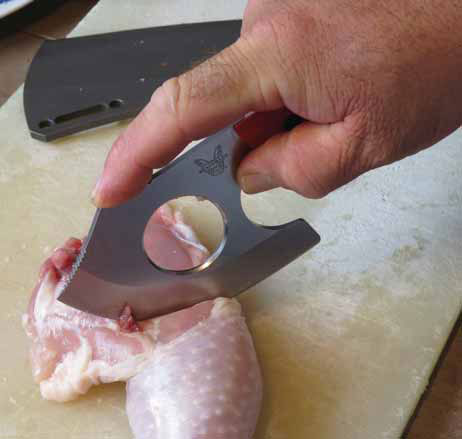
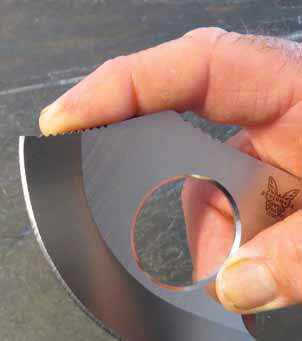
Once you see the Nestucca it’s obvious this chopper is a small skinner/utility knife. Built with the influence of an Alaskan ulu, the cutting action of the blade is mainly short curved strokes to optimize the use of the full edge. Unfortunately, this review came just before hunting season.
I can tell you, however, not every knife must be big to clean big game. It has a good, nimble grip and gimping to support multiple holds, including choking up on the blade. Measuring 6.5 inches overall it has a 4-inch blade of .140-inch-thick CPM S30V stainless steel.
To gain more control and make precision cuts, Benchmade has added gimping right behind the tip of the Nestucca, giving your index finger a solid platform.
Benchmade’s choice of thickness stumps me a bit, as 3/32 inch is .157 inch thick, and 1/8 inch is .125 inch thick. Talk about splitting hairs!
Quick in hand, the G-10 scales are textured to aid in gripping a wet handle. They work well. I can see the Nestucca being a great field cleaning tool. There is enough versatility to the design that it is the kind of knife limited by few things physical, and open to a keen eye and hand. The sheath is a simple, clean design with no loop for belt carry, so the tool will rest in the bottom of a bag or pack.
For kitchen use it would be useful, but I see it more as a trusty field knife waiting for mid-to-small-size game or even fish.
Wayne GoddardGoddard’s classic guide for new knifemakers is still popular and remains in print.
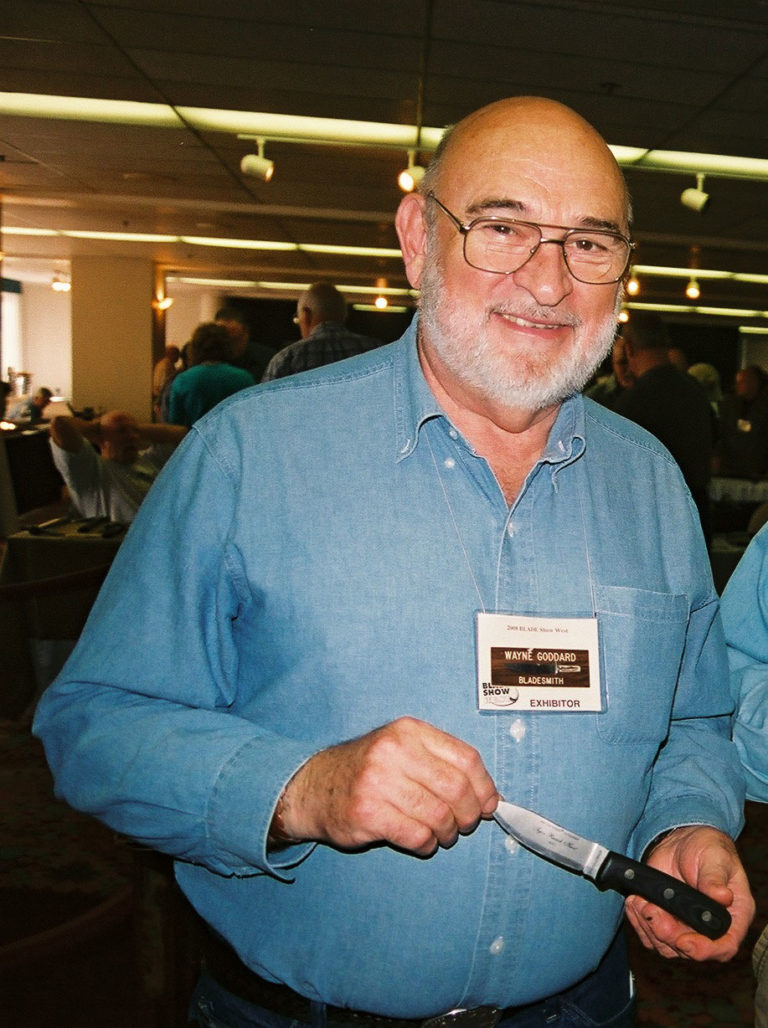
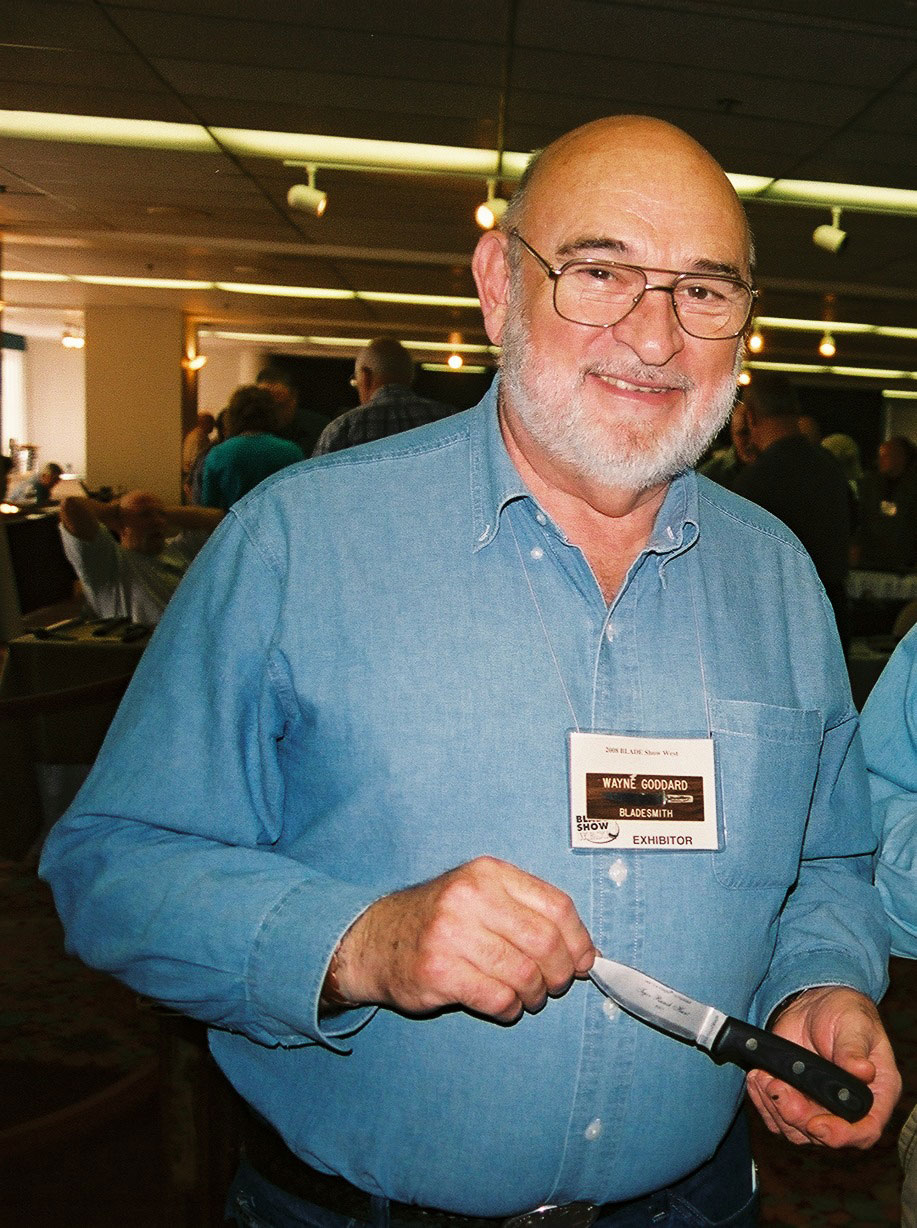
Wayne Goddard, BLADE Magazine Cutlery Hall-Of-Fame® member, ABS master smith and long-time BLADE® Magazine field editor, has passed away.
Goddard was widely respected and loved throughout the knife industry for his undying mentorship to bladesmiths and knifemakers everywhere. He was a prolific writer, and his Question & Answer column in BLADE Magazine was regularly one of the magazine’s most popular features in reader surveys, with Wayne also being picked as the most popular BLADE writer in those same reader surveys. On at least one occasion he was referred to as “The BLADE Answer Man.” He also wrote a column on knife steels for BLADE.
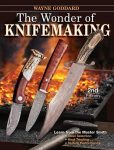
His books $50 Knife Shop and The Wonder of Knifemakingremain popular.
A long-time member of the Knifemakers’ Guild, he designed knives for Spyderco and taught bladesmithing at locations throughout the USA. His sharpening seminars at both the BLADE Show and BLADE Show West were among the best attended of each show’s seminars for many years.
There will be more here on his passing and in BLADE Magazine as details emerge. May he rest in peace.
Gift a veteran one of these blades to mark Veterans Day, or on any other day of the year.
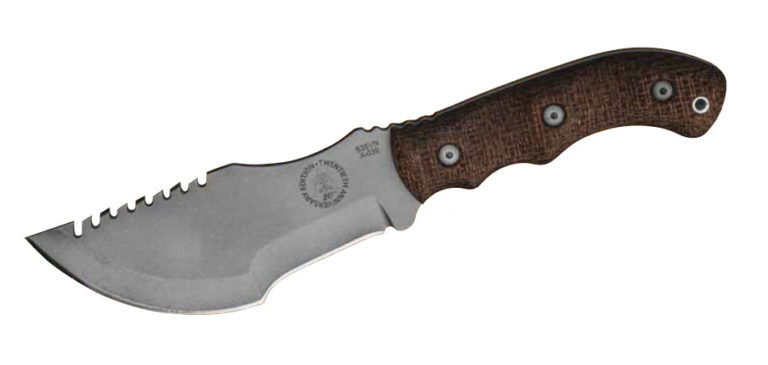
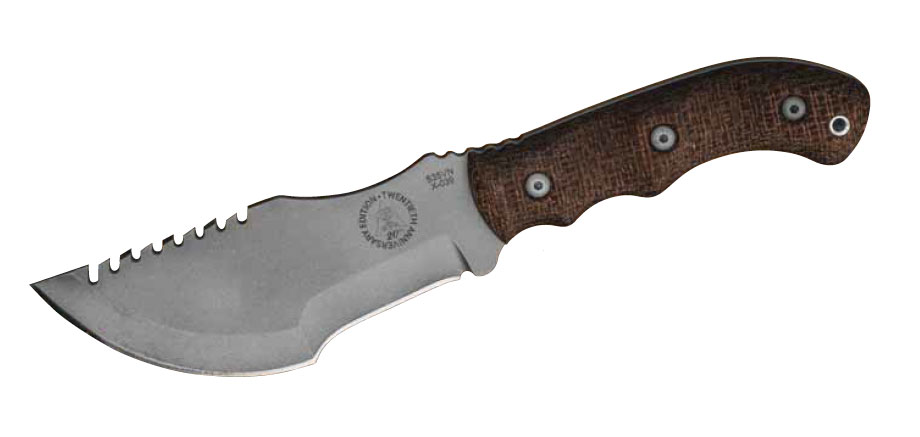
TOPS Knives Tracker
TOPS celebrates the 20th anniversary of the Tom Brown Tracker with a special limited-edition anniversary rendition of the noted survival knife.
Blade length: 5.75 inches.
Blade steel: CPM S35VN stainless
Blade finish: Tumble
Handle: Burlap Micarta®
Weight: 14.4 ounces
Overall length: 10.75 inches
Sheath: Burgundy leather w/belt loops
MSRP: $400
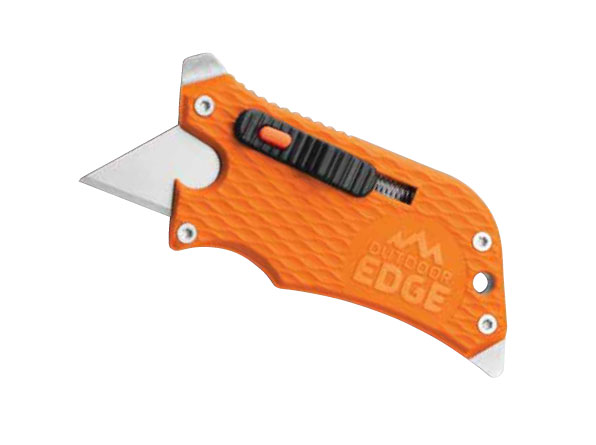
Outdoor Edge Slidewinder Multi-Tool
The Slidewinder Multi-Tool from Outdoor Edge combines a standard utility blade with a flathead screwdriver, Phillips-head screwdriver, bottle opener and pocket clip all in one package.
Blade length: .75 inch
Weight: 1.5 ounces
Overall length: 3.5 inches
The handle comes in a choice of orange, black or blue
MSRP: $14.50
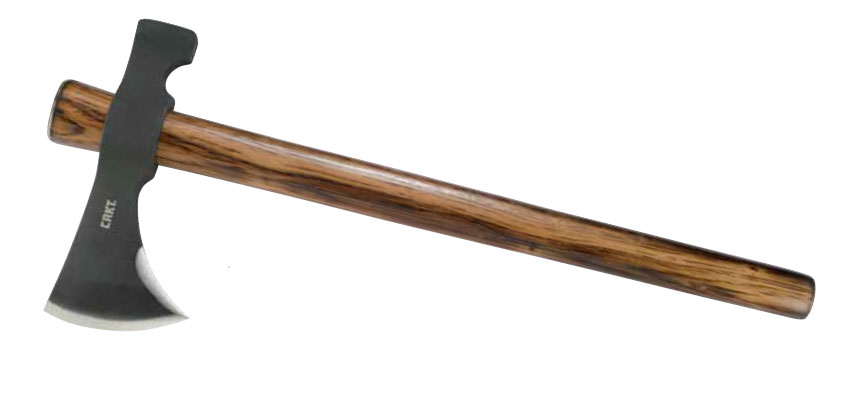
CRKT Black Woods Chogan T-Hawk
The Black Woods Chogan T-Hawk designed by Ryan Johnson for CRKT features high-end finishes for a cool take on a classic. The hammer-poll hawk has a 3.5-inch edge of 1055 carbon steel with a Rockwell hardness of 50-55 HRC for impact strength, and a magnesium phosphate coating.
Handle: Tennessee hickory
Weight: 1 pound, 15.9 ounces
Overall length: 19.13 inches
MSRP: $69.99
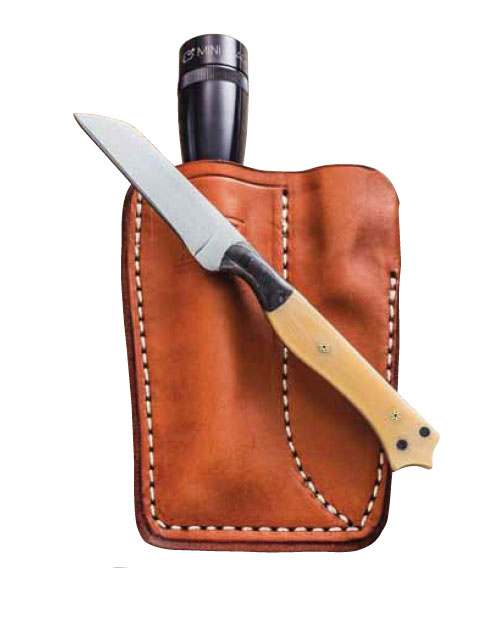
Kevin Cross Utility Fixed Blade
(SharpByCoop image)
A 2.75-inch straight-edge blade of AEB-L stainless steel and an ivory Micarta® handle with a carbon fiber bolster complete Kevin Cross’s utility fixed blade.
Blade grind: Flat
Overall length: 6.5 inches
The dual-pouch is by KSF
Cross’s list price for a similar outfit: $325
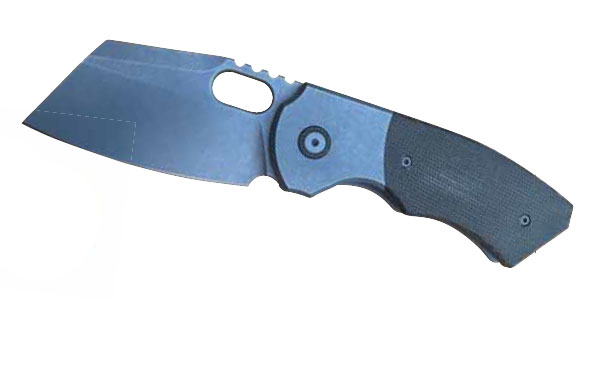
Matt Westberg SLiM EDC Folding Cleaver
The SLiM EDC Folding Cleaver by Matt Westberg sports a stonewashed blade of CPM S35VN stainless and a 2.65-inch cutting edge.
Lock: Framelock with overtravel and hardened lock face
Handle material/finish: Titanium 6Al-4V with green Micarta®/blasted and tumbled
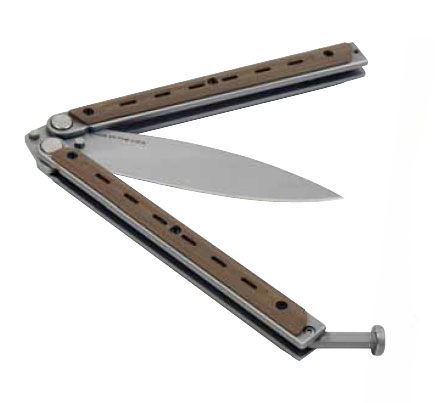
The Kimura butterfly knife, a collaboration between Bear & Son and Bradley Cutlery Co., returns in a 3.75-inch taper-ground blade of 154CM stainless with a bead-blast finish and Rockwell hardness of 58-60 HRC. The 3D-milled stainless steel handle sports contoured G-10 overlays.
T-latch: stainless steel
Weight: 6.2 ounces
Closed length: 5 3/8 inches
MSRP: $159.99
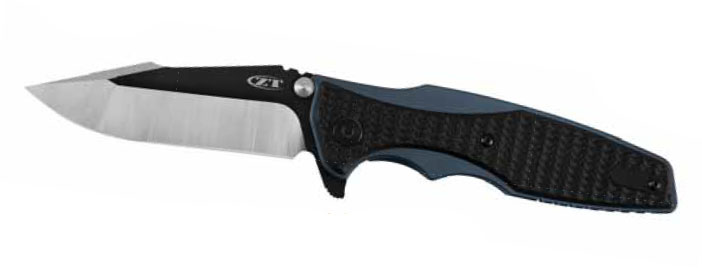
ZT 0393
The ZT 0393 features a harpoon-style version of designer Rick Hinderer’s “Spanto” blade in 3.5 inches of CPM 20CV stainless steel. The blade operates on ZT’s KVT ball-bearing opener and flipper tab. The titanium framelock sports a hardened steel lockbar insert and G-10 overlay. The clip is ambidextrous/reversible.