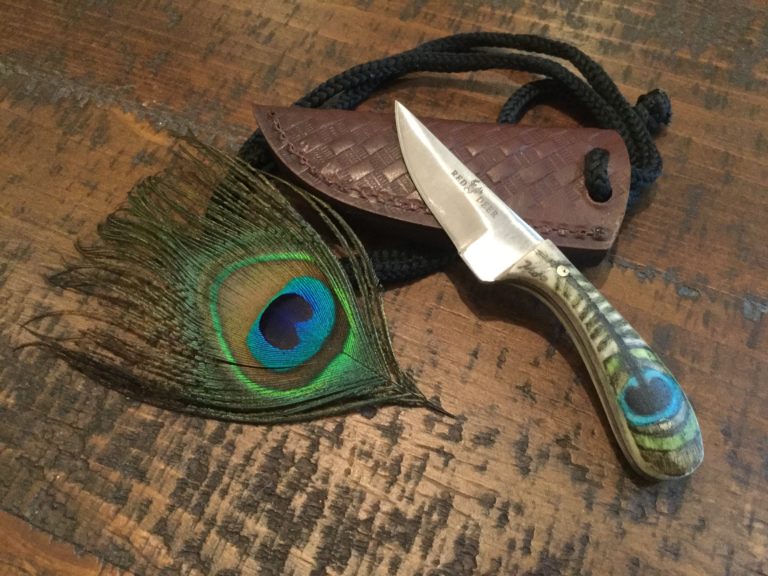
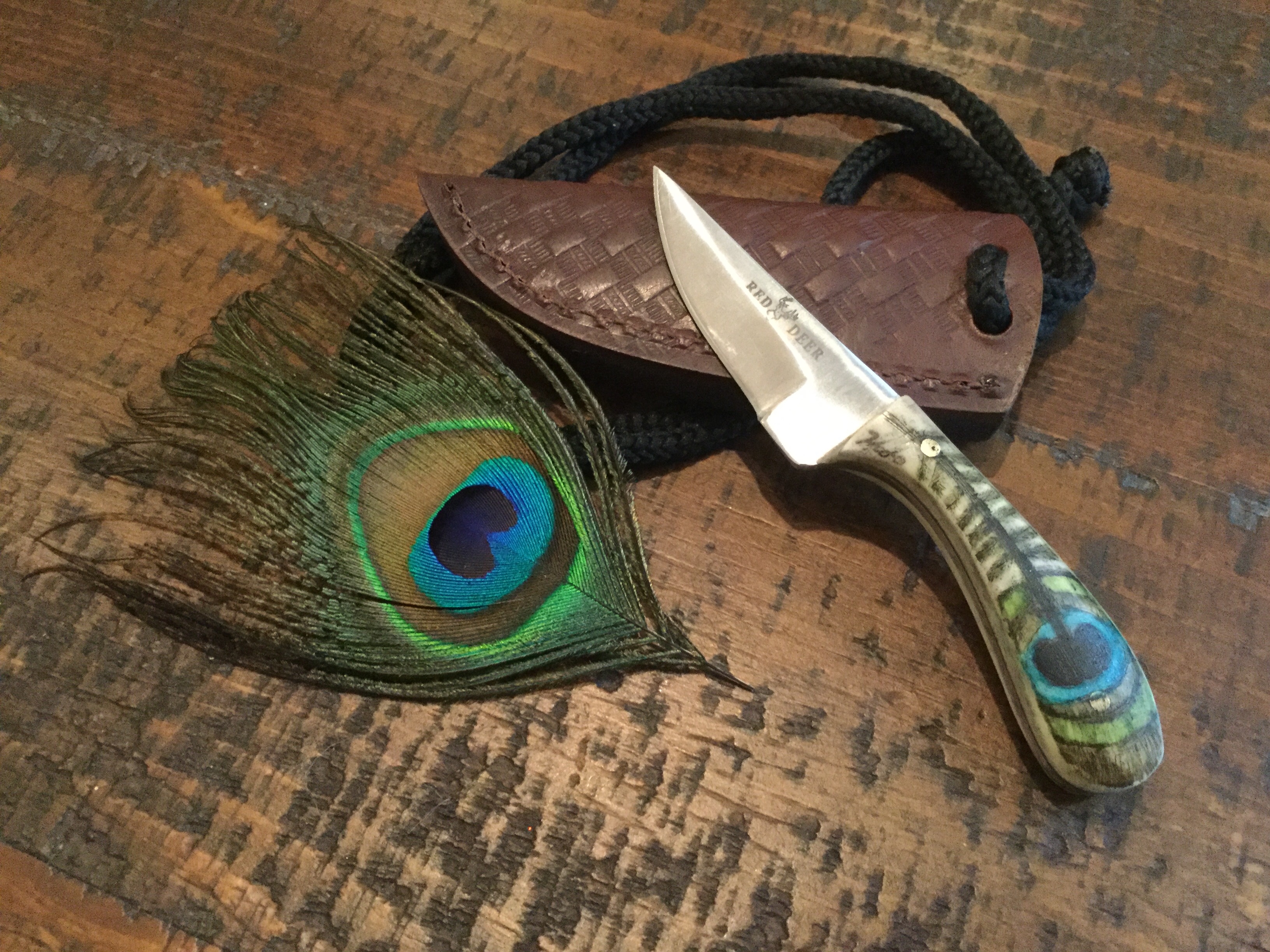
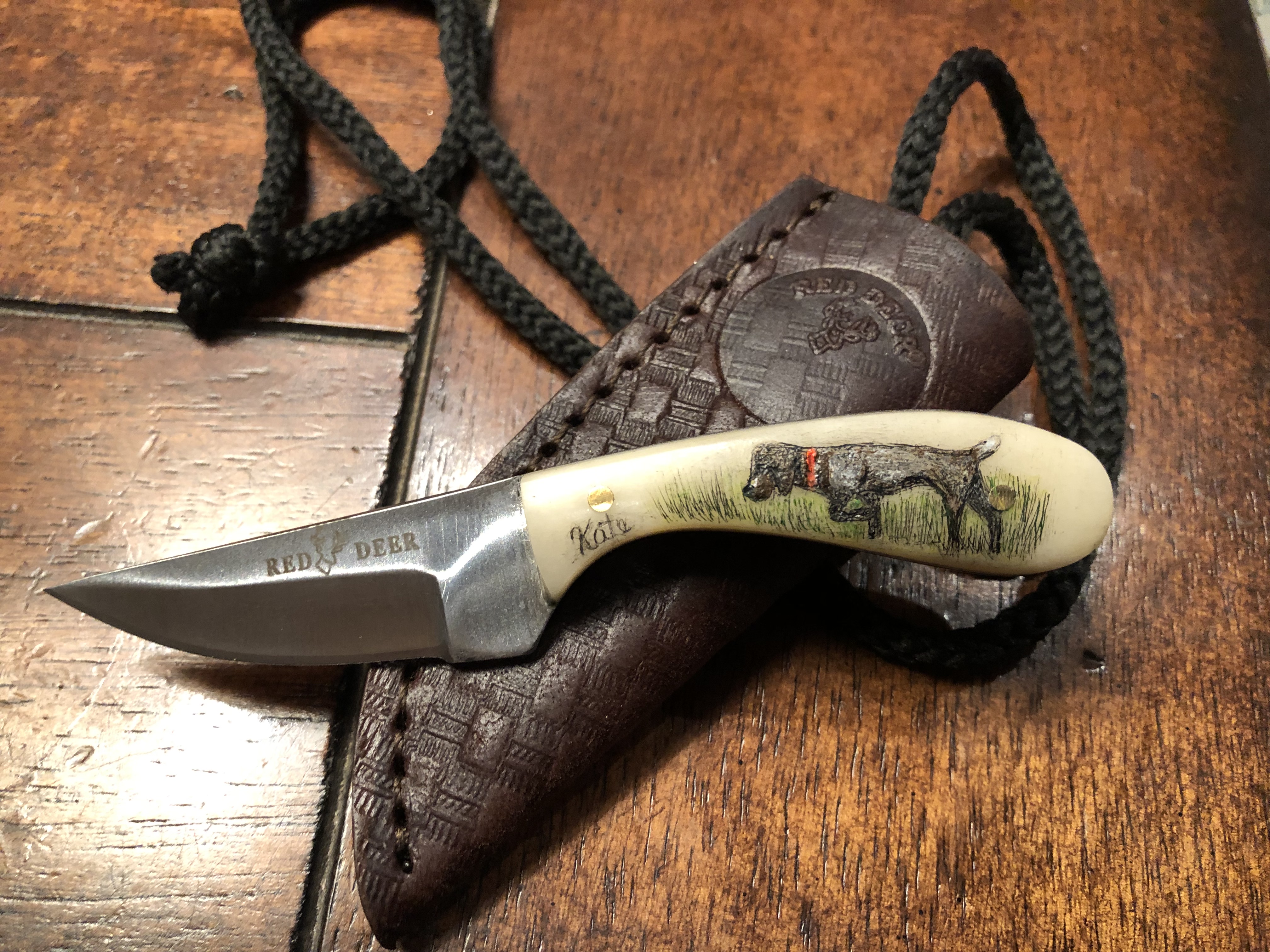
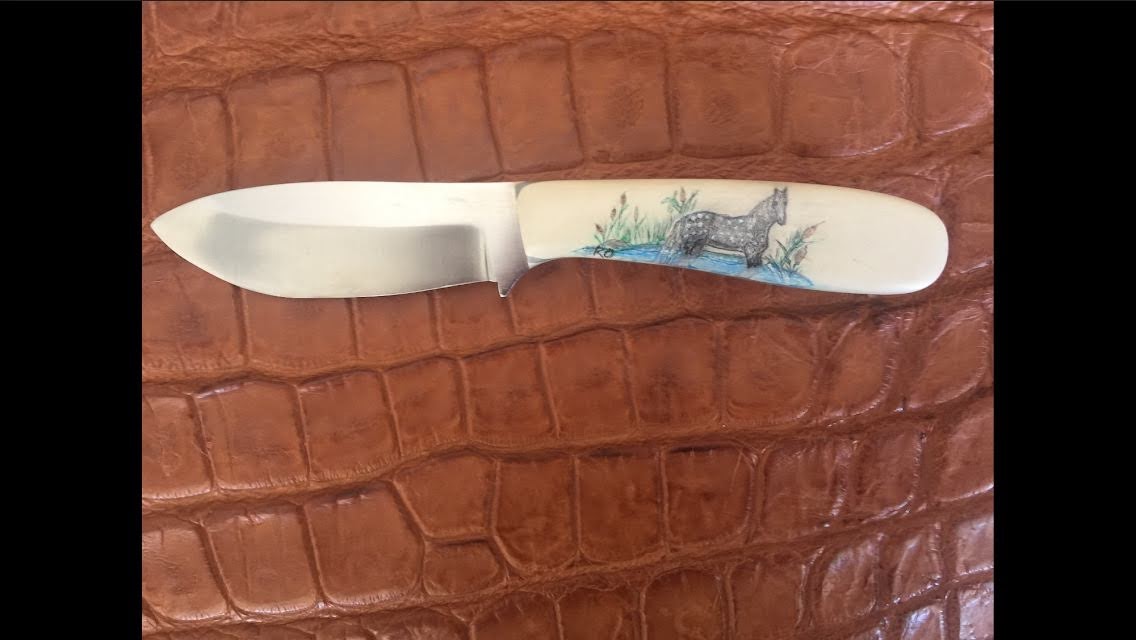
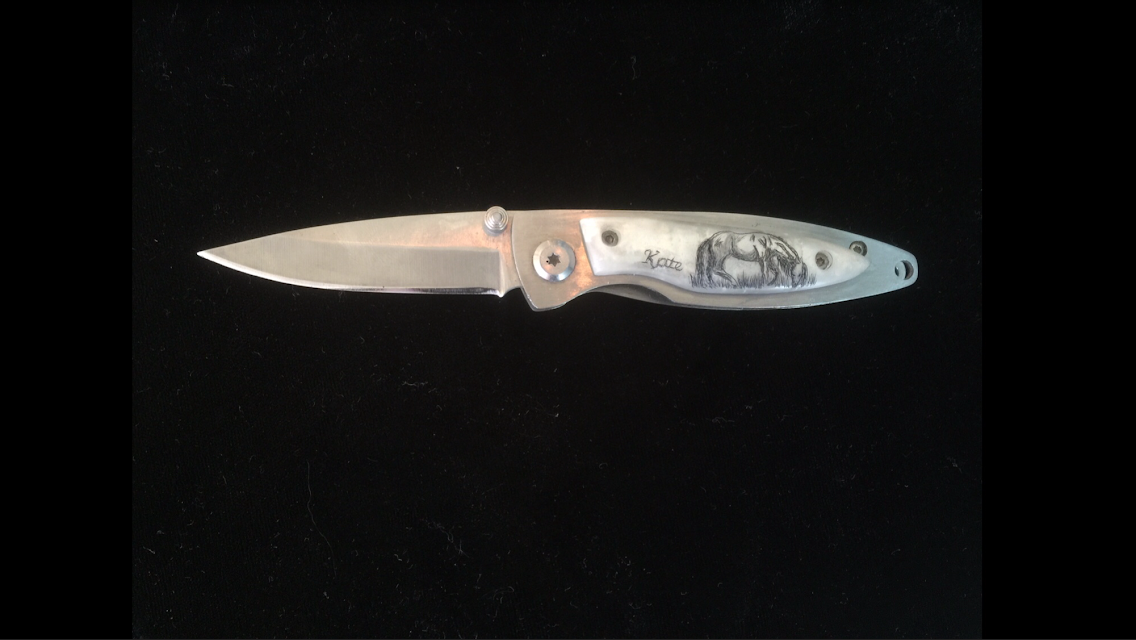
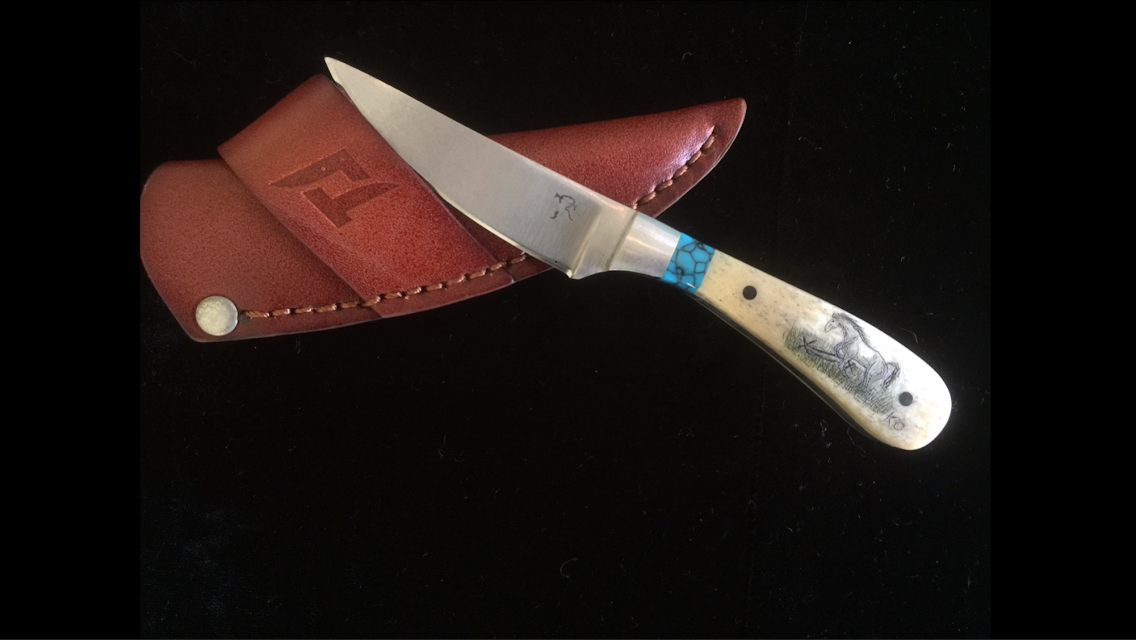
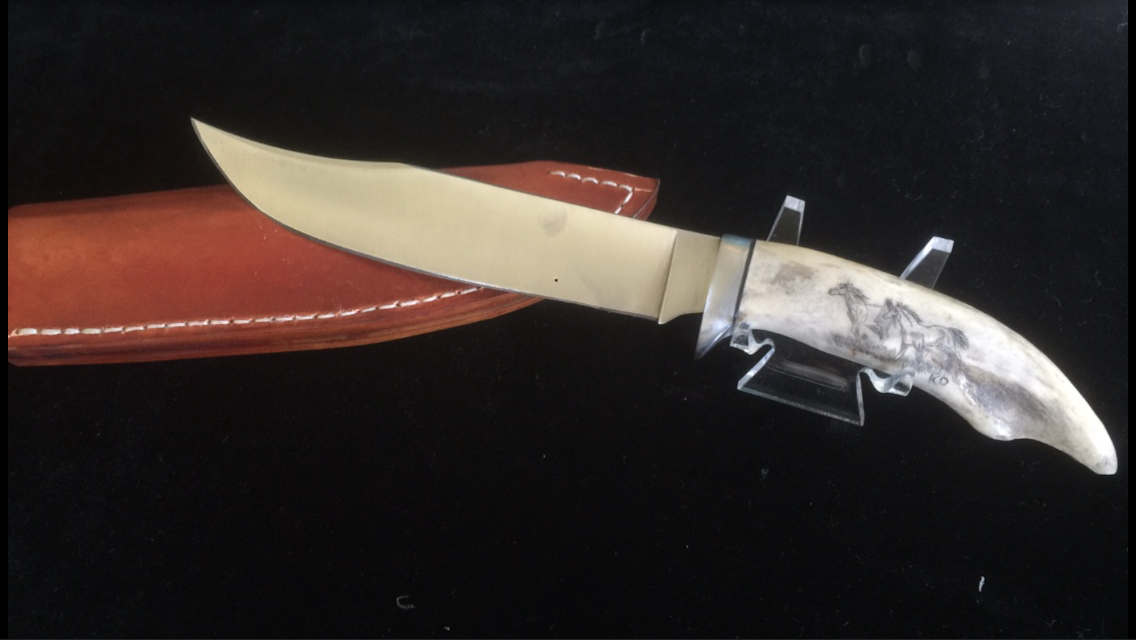
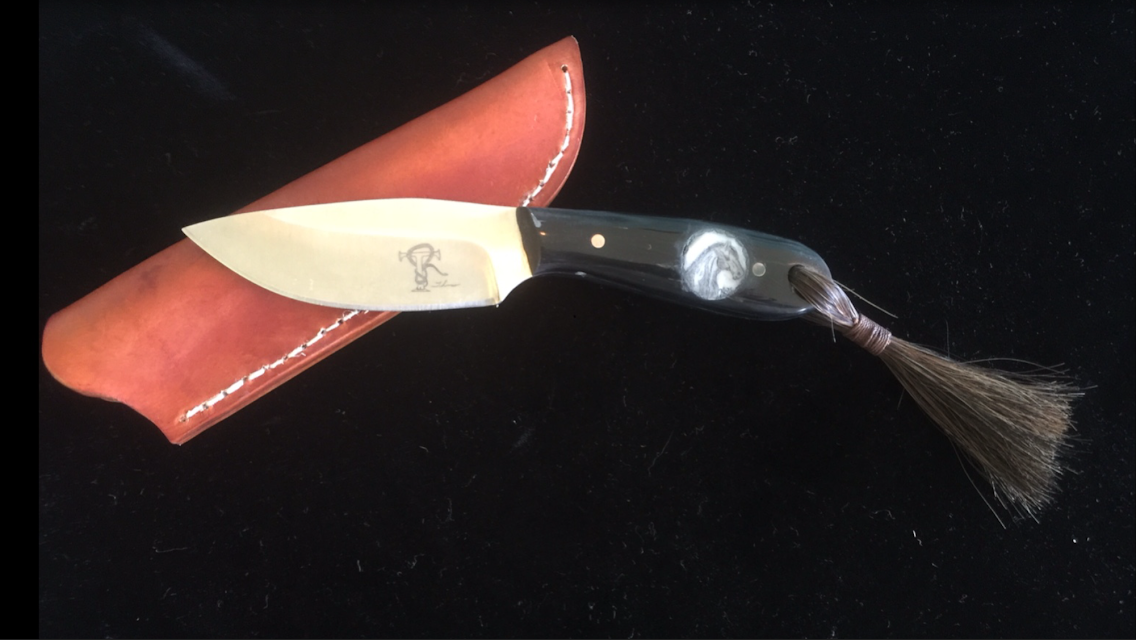
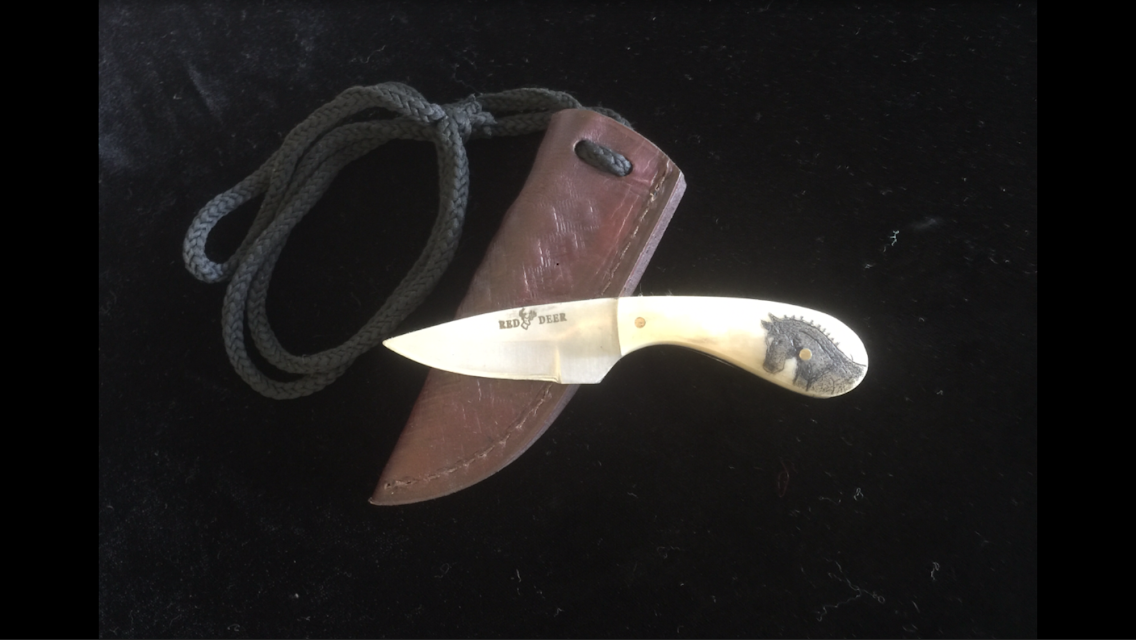
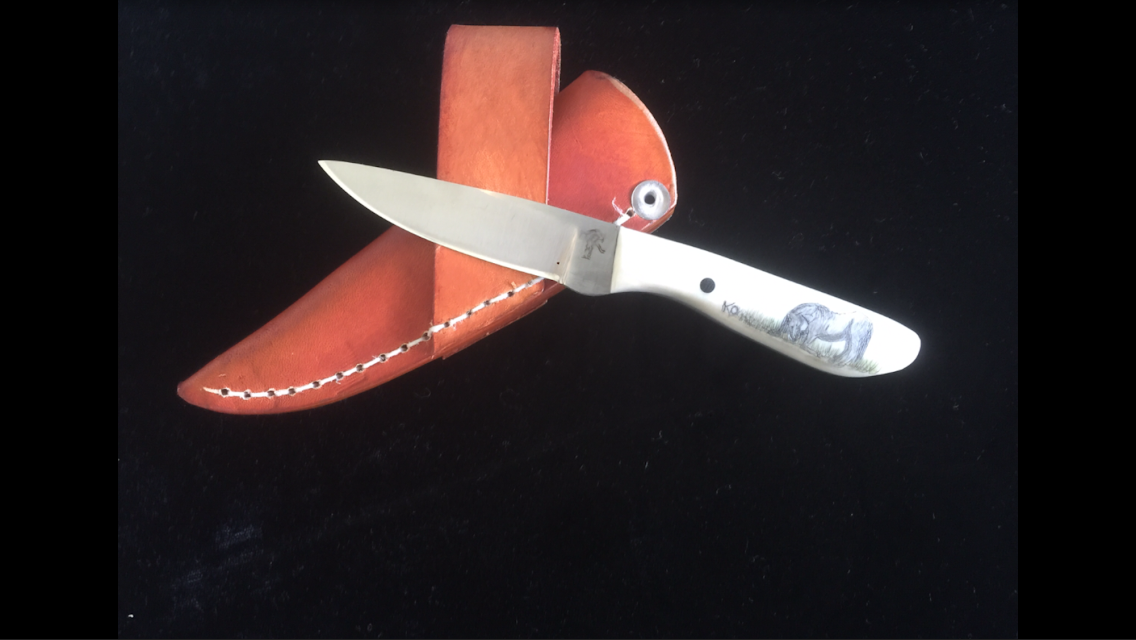
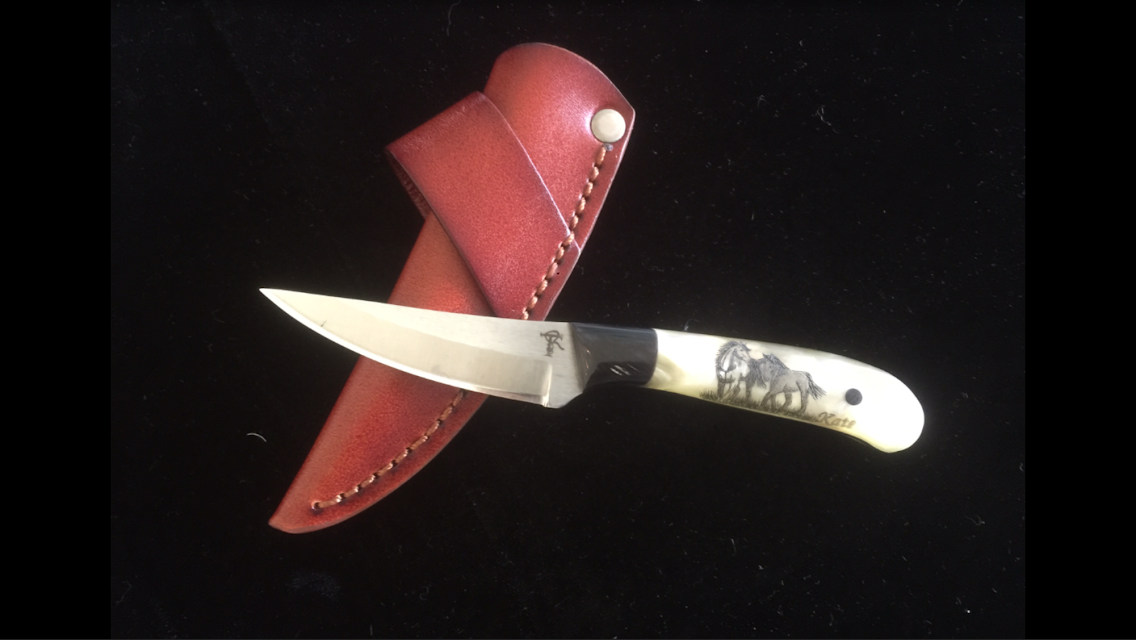
Kate Opre, of Montana, is still in high school, but she’s taking up scrimshaw in a way that’s catching the attention of many in the knife world. Who says the kids aren’t all right?
Opre wrote to BLADE about why she’s interested in this rich tradition, and she sent in some of her work. Who are we to keep such feats to ourselves? With her parents’ permission, we’re running her submission here.
How a High Schooler Came Into Scrimshaw
For Opre, the permanence of scrimshaw is part of the appeal.
“I love all forms of art, but scrimshaw is really special,” she wrote in an e-mail. “It’s a challenge because you can’t really erase; if you mess up you have to sand off the whole thing and restart.”
That requires focus, something it seems is in short supply in today’s technology-drenched world.
“It takes a lot of patience to scrimshaw. Some pieces take days, but others could take months to complete,” Opre wrote. “Not very many people know about scrimshaw anymore. Hopefully, I can have the opportunity to show people what scrimshaw is.”
She trained under Thomas and Debi Rucker (Knives By Thomas), and she makes knives in addition to handling the scrimshaw. Horses are a favorite design, and she displays her work at horse shows.
By the looks of things, BLADE expects a rewarding career to come. Keep going!
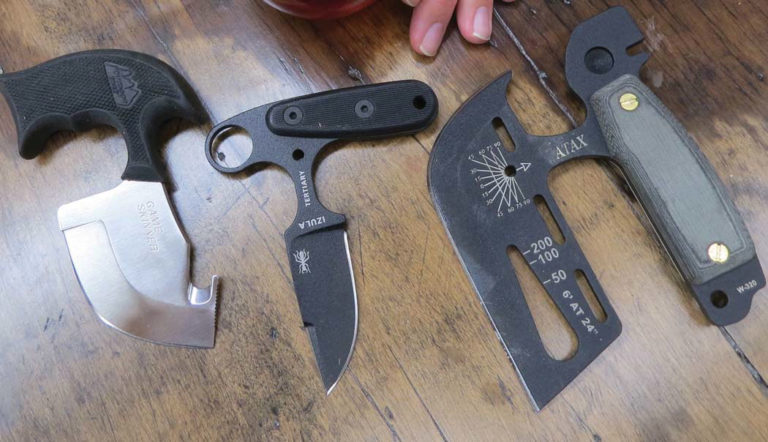
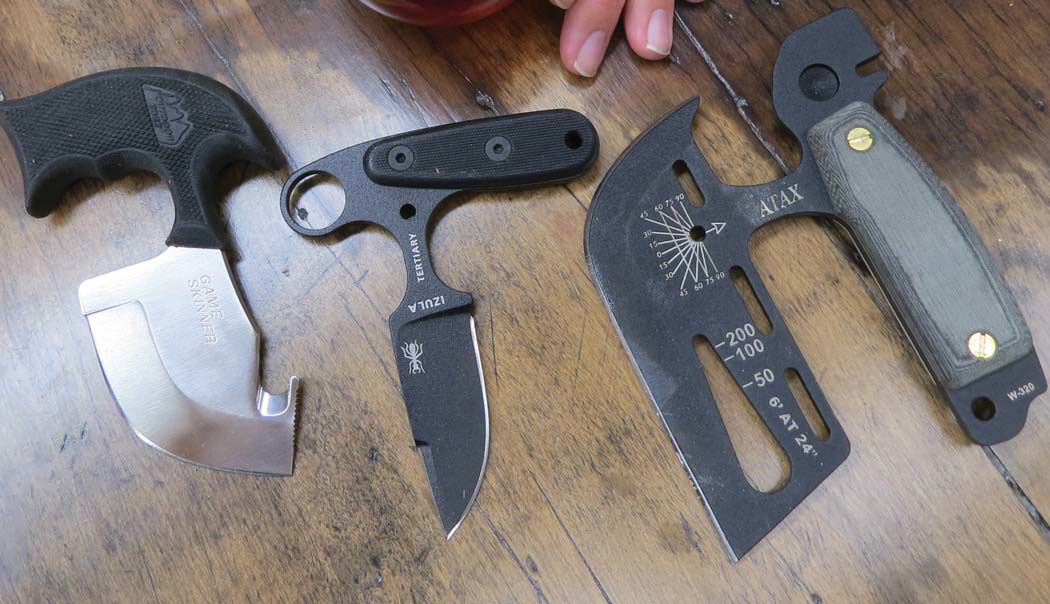
Pistol-grip knives from left, with manufacturer’s suggested retail prices in parentheses: Outdoor Edge Game Skinner ($88.95), ESEE Tertiary ($103.99) and TOPS Knives ATAX ($225).
Pistol grips aren’t only for firearms; they’re functional designs for knives, too. Here is a review of three examples.
Solid Build: ESEE Tertiary
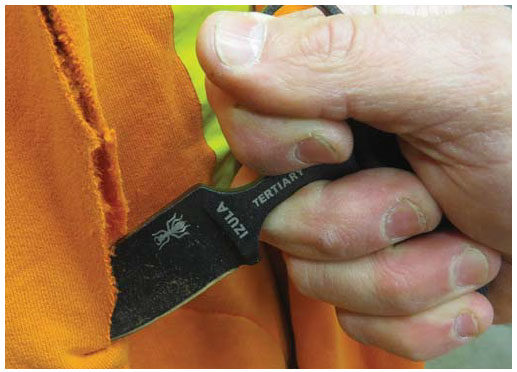
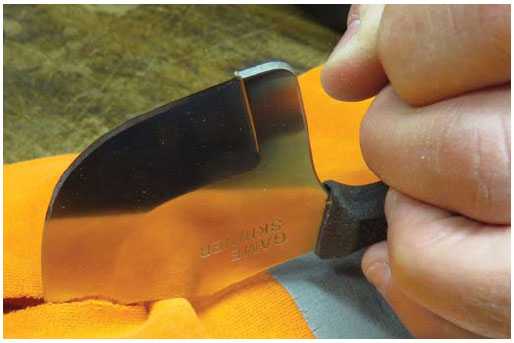
The ESEE Tertiary was super sharp out of the box. The author used the knife to make aggressive slashes on a work jersey suspended from a hanger. A good test for an edge is not necessarily cutting something hard but something loose that could easily recoil from the edge when cutting. If the edge is sharp enough not to push the material but sever it, then the edge is truly sharp.
The ESEE Tertiary is a standard push dagger design. According to ESEE, SWAT officer Lee Smith designed the knife and named it “Tertiary” because of its place in a person’s weapons system. That is, first there’s your primary firearm, then your back up and then the Tertiary, which is for hand-to-hand.
It is a double-edged knife with top blade grinds. The top grind extends a third of the blade length only. The blade profile is that of a drop point. It is important to remember that a double-edged knife is illegal in some states (one such state is Michigan). Check your local knife laws whenever you choose a knife for everyday carry (EDC).
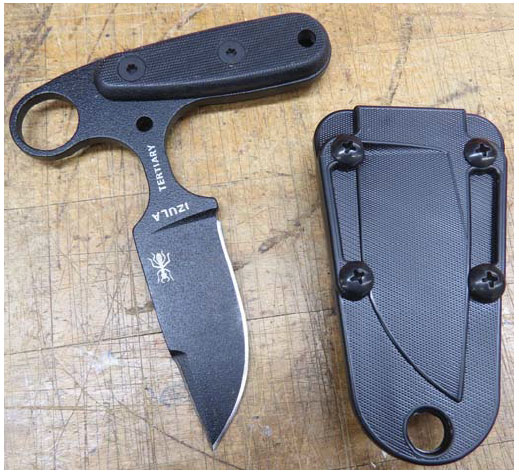
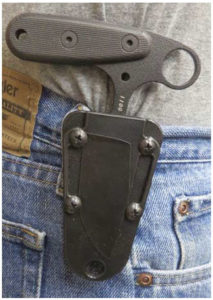
The Tertiary sheath’s clip can be changed to accommodate right- or left-handed carries and vertical or horizontal positioning. The large hole in the tip of the sheath allows you to rig the Tertiary as a neck knife as well.The Tertiary comes with a molded sheath that sports a steel belt clip for you to attach the knife on a waistband, boot or assorted gear.
The Tertiary is a full-tang design with the blade positioned between the index and middle fingers. It has a flat-ground blade of 1095 carbon steel with a textured powder coat and textured G-10 scales.
The knife works as expected as a push dagger. For an edge to get the job done it takes getting used to the grip, but you can do minor chores like the type you normally encounter.
After a while, though, the pressure of the post between the two fingers really starts a hot spot. For the most part, given the nature of ESEE’s push dagger, I would carry a folder to do my EDC work and leave the Tertiary concealed and out of sight.
Comfy Classic: Outdoor Edge Game Skinner
The author tested the Game Skinner gut hook on a number of materials, including pulling it through a jersey with only the weight of the shirt holding it in place. How razor sharp does an edge have to be to slice a loose material instead of dragging it?
When it won the BLADE Magazine 1988 Imported Design Of-The-Year Award, the Outdoor Edge Game Skinner took the world of hunting knives by storm. It remained an Outdoor Edge mainstay ever since, and appears to have been ahead of its time.
As the name implies, the knife is for skinning game. It combines a blade edge with a gut hook. It is a beefy specimen with a 3.25-inch blade that is 2 inches wide. A hollow grind forms the main edge. The blade is AUS-8 stainless steel. I have had plenty of good knives made of AUS-8. It all depends on the heat treat and grind.
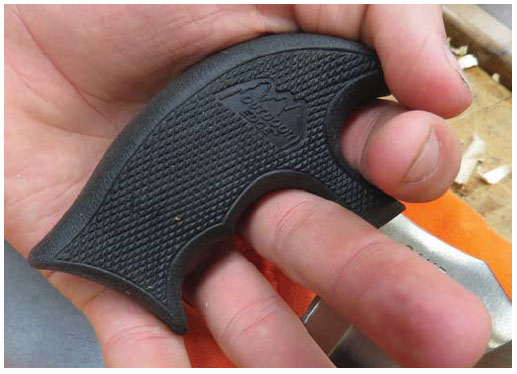
The handle is a textured, molded Kraton. I was impressed with it. It is brawny yet still comfortable, and the textured grip along with the slight give of the rubber kept the knife steadfast in my hand no matter how slimy things got.
The molded grip of the Outdoor Edge Game Skinner is designed for a three-finger hold. The rounded spine makes it easier to use a pinch grip and enables you to put forward pressure on draw cuts while maintaining a comfortable position.
During testing on leather, meat and hair on hide pieces, the edge held up well. The blade belly makes slicing cuts easy to perform, helping you get in there and skin. As for the gut hook, you might as well have a zipper on the animal.
It comes with a well-built leather sheath with snap closure. Though I personally wouldn’t have much use for this knife on my belt, I would keep it with my gear until it was time to field dress game. If you see yourself using this style of knife for hunting, it is a good quality edged tool. Over the years, I have learned that many hunters have their own style of cutlery they like to use and their own way of handling it.
Multi-Functional Tool: TOPS Knives ATAX
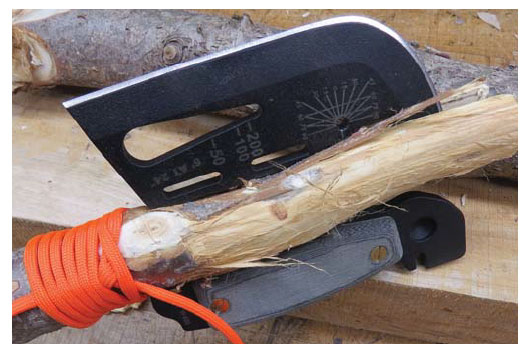
The author extended the ATAX handle using a piece of dry wood to make an axe for light chopping. For heavier use he would have used green wood and lashed the top. The addition of a long handle creates an obvious physical advantage.
From the get-go the TOPS Knives ATAX is one of those knives that catches your eye and maybe inspires a little pupil dilation.
The knife is designed as a multifunction tool. I have to say, though, sometimes you end up with something that does many things but never any one of them exceptionally well. Looking at the overall design, I would be more apt to see the ATAX as an ulu variant over a push dagger.
TOPS has been selling the knife for years. It is the design of the late Ron Hood. There are so many different tools involved in it that it would take a while to review each one. I will try to hit the main functions for now. The blade is quarter-inch-thick 1095 carbon steel with a powder coating. The handle is a black Micarta® affixed with screws. A saber grind forms the cutting edge, which I found too chunky for doing standard chores easily. The edge runs parallel to the grip just like on an ulu, but the grind is so thick that manipulations of the edge are difficult—not impossible but difficult. The design could be a great meat processor with a higher grind.
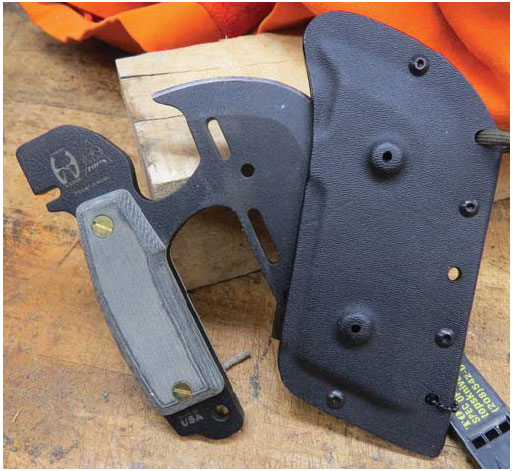
Use a rocking motion to remove the ATAX from the sheath. As the knife emerges the sharp tip presents itself, which the author stated he found a bit dangerous.
There are a number of ways to complete a cut with the knife, as the platform allows you a variety of holds. For instance, holding it upside down enabled me to better do things like whittling or shaving. The ATAX requires getting familiar with, and even then some using methods are more practical than others.
Taking a long period to set up your handholds and the material for cuts should be balanced with the practicality of effort toward the job being done. One of the design purposes for the knife is to attach it to a stick and use it as an axe. The thick edge serves the chopper feature well and allows the ATAX to take a beating. Still, as noted, the grind does many things but none exceptionally well.
Other tools designed into the ATAX are a range finder, clinometer, compass, bowl drill socket and wire cutter. A molded Kydex sheath with double steel clips provides Scout carry. The way the sheath operates gives me cause for concern as the method of drawing the knife from the sheath can easily result in injury if you are not paying close attention.
Unsheathing requires a rocking motion that leads with the pointed part of the curved edge. You will want to make sure everything is clear of the blade tip as it rocks free.
The design shows ingenuity and in a pinch serves as a backup tool. Would I want it as my primary knife? I would have to do some major changes to the edge geometry, as the ulu-style use is very serviceable.
“Vicious fantasies of omnipotence, idolatry… barbaric and sadistic atrocities, and monstrous violations of the accepted values spring from the cult of the weapon, and the switchblade knife is included in this. Minus switchblade knives and distorted feeling of power they beget – power that is swaggering, reckless, and itching to express itself in violence – our delinquent adolescents would be shorn of one of their most potent means of incitement to crime.” –Representative Sidney R. Yates of Illinois, 1958
The quote above is not from a Hollywood movie or dime novel. A politician in support of the 1958 Federal Switchblade Act said those words more than 50 years ago. To understand why, we need to look at history, society in the 1950’s and a popular magazine from that time period.
History of Switchblades in the United States
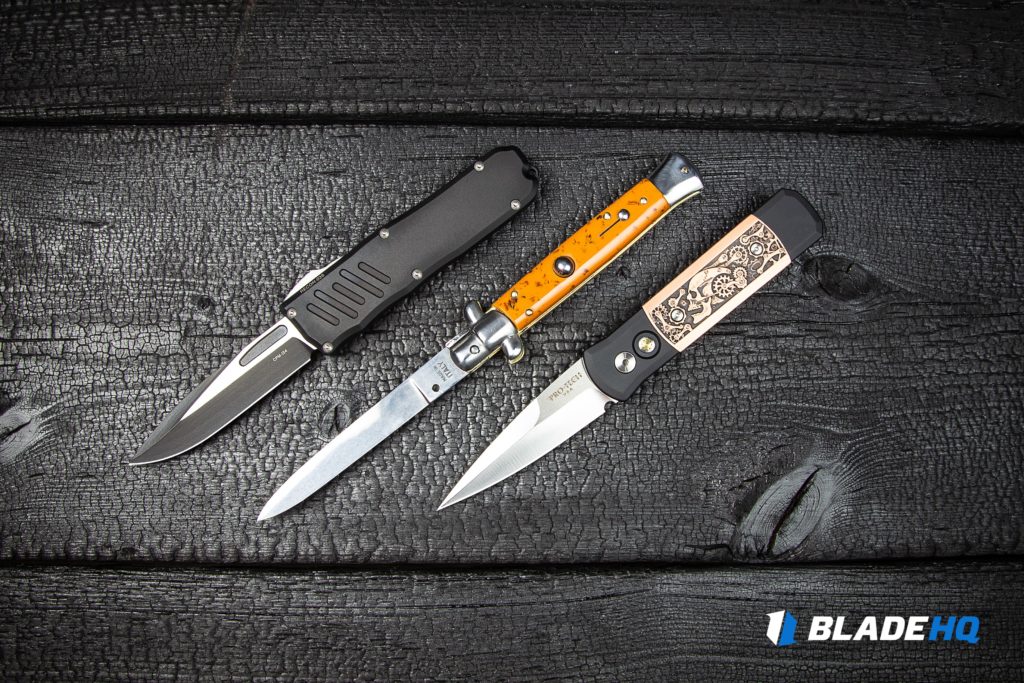
The Italian stiletto (middle) is the most iconic subset of switchblades, but the other styles on the left and right are also switchblades. They’re commonly called “automatic knives” as well. (Blade HQ image)
While the word “switchblade” might conjure up imagery of tough guys in the 1950s with leather jackets and stiletto knives, it’s just another term for “automatic knife.” Automatic knives range from the iconic Italian stiletto to the modern OTF (out the front). The defining features are always the same: the blade, biased to open and kept under tension in the handle, deploys at the press of a button or lever on the handle.
The United States led production and distribution of automatic knives for most of the early 20th century, boosted by George Schrade and the onset of mass production. Schrade set up shops all over the country as well as abroad. Schrade produced and advertised automatic knives mostly to and for ranchers, outdoorsman, hunters, and farmers as quick, one-handed utility tools. Business was good, and people liked their snappy, modern Presto pocketknives. Then World War II happened.
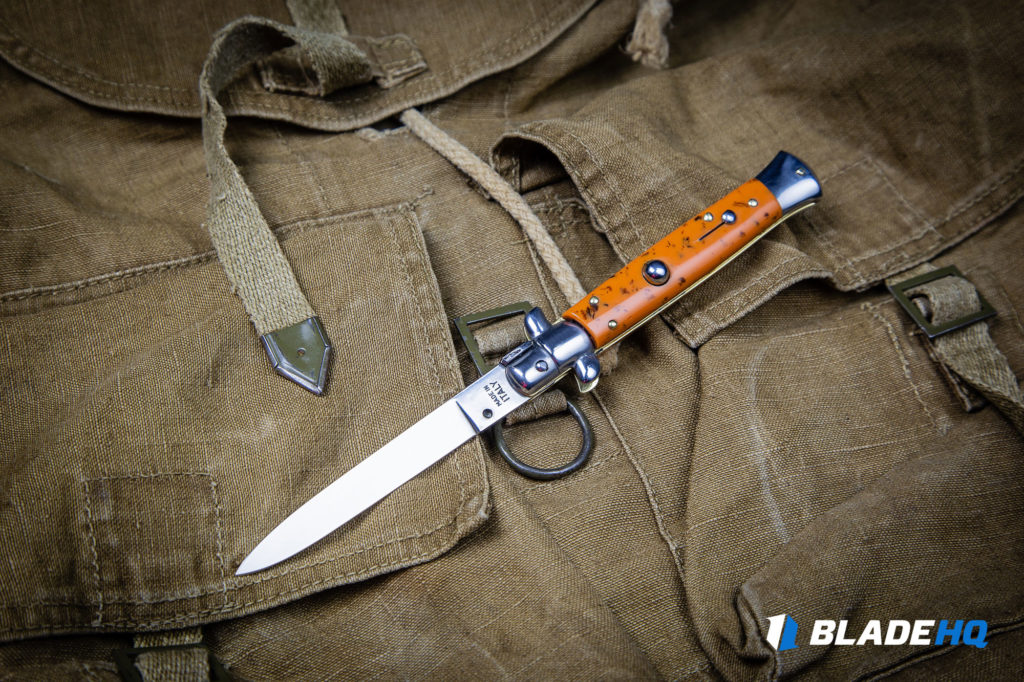
This SKM is an example of a modern, Italian-made switchblade knife. (Blade HQ image)
During the war, many U.S. soldiers carried and used Schrade’s automatic knife, but they found something even more attractive while deployed in Europe: the Italian stiletto.
Demand stateside grew as American GIs returned home with these exotic knives, and that led to large imports from Italy. It may have been the sabre-ground bayonet blade, the highspeed look, the undeniably foreign influence or a combination of all three, but it did not take long for the stiletto and, by association, all automatic knives to get noticed by up and coming politicians trying to make a name for themselves as peacemakers and protectors.
Why Switchblades are Illegal: The Toy that Kills
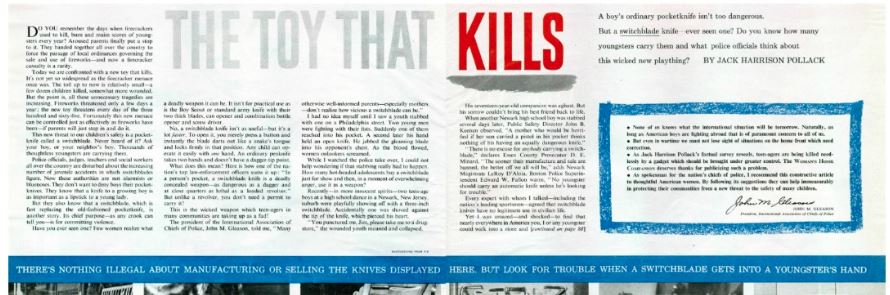
This is the hyperbolic article that started it all.
Fast-forward to November, 1950. Subscribers all over the U.S. received their new copy of Woman’s Home Companion. It contained one of the most lurid examples of anti-knife muckraking to ever be written, an article titled, The Toy That Kills. Jack Harrison Pollack, a freelance writer and ghostwriter for then-Senator Harry S. Truman, wrote the article. He filled it with a number of quotes and statistics without ever referencing a single citation. Even in today’s digital world, we have a hard time finding many facts to back up Pollack’s claims.
What exactly was he claiming, you ask? In short, Pollack alerted the mothers of America that the switchblade and the switchblade alone was the sole cause for juvenile delinquency, gang violence and ruined lives. In his own words, “Designed for violence, deadly as a revolver – that’s the switchblade, the ‘toy’ youngsters all over the country are taking up as a fad. Press the button on this new version of the pocketknife and the blade darts out like a snake’s tongue. Action against this killer should be taken now.” The article asserts a handful of shaky anecdotal experiences and dubious statistics.
Pollack offered five tips for the concerned mother, condensed into the following:
Make sure your kid is not carrying a switchblade.
Make sure to “de-glamorize knife-carrying” in general.
Use all your power as a mom and wife to get knives out of stores. (He even included verbiage for signs to hang up in stores.)
Help police round up “dangerous knives,” even though there were no significant bans or laws in place at the time.
Work on a state and national level for switchblade bans that are to be “strictly enforced.”
The end of Mr. Pollack’s article also marked the end for easy automatic knife use and possession in the United States.
Pop Culture Origins of Switchblade Ban
The Toy That Kills was the match that started a switchblade wildfire throughout the country. Newspapers ran embellished stories about gang violence and switchblade use. State legislatures started looking into the “issue,” and New York became the first state to ban automatic knives in 1954.
Even Hollywood jumped in on the frenzy. Movie studios released no less than six major titles in just as many years that included Rebel Without A Cause, 12 Angry Men and West Side Story. Every one of these blockbusters placed the switchblade front and center as a tool for violence and delinquency.
The 1958 Federal Switchblade Act Arrives
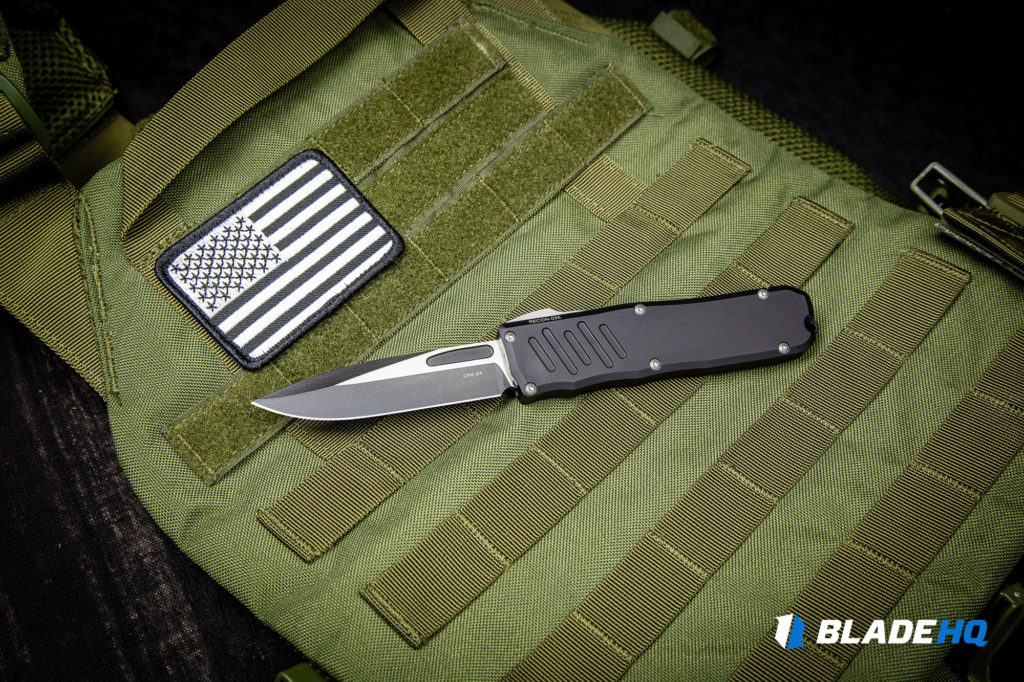
Out the front (OTF) knives are a subset of automatic knives. The blade moves vertically in and out of the handle. This is a Guardian Tactical RECON. (Blade HQ image)
It only took eight short years from the publishing of The Toy That Kills for the issue to make its way to Washington, D.C., in what would become known as the 1958 Federal Switchblade Act. Hearings fielded reports from law enforcement and concerned citizens. However, a lack of hard data pervaded the inquiries.
One well-sourced report came from the police chief of Kansas City, Missouri, which had a population of more than 400,000 people at the time. In the calendar year of 1956, this city reported around three dozen switchblade-related misdemeanors, crimes and juvenile goofing off.
Testimonies also came from the two federal entities that would ultimately oversee enforcing the Act if it passed: the Department of Commerce and the Department of Justice. From William P. Rogers, the deputy attorney general:
“The Department of Justice is unable to recommend enactment of this legislation. The Committee may wish to consider whether the problem to which this legislation is addressed is one properly within the police posers of the various States…Switchblade knives in the hands of criminals are, of course, potentially dangerous weapons. However, since they serve useful and even essential purposes in the hands of persons such as sportsmen, shipping clerks, and others engaged in lawful pursuits, the committee may deem it preferable that they be regulated at the State rather than the Federal level.”
From Secretary of Commerce Sinclair Weeks:
“The intent of these legislative proposals appears to be to improve crime prevention by control of the use of the switchblade knife as a weapon of assault. This approach gives rise to certain objections. One is that, at best, it is an indirect approach which addresses itself to only one of the many implements useable by an assailant. This casts doubt upon the resulting effectiveness in the reduction of crime in relation to its enforcement problems. To us, this ignores the needs of those who derive and augment their livelihood from the ‘outdoor’ pursuits of hunting, fishing, trapping, and of the country’s sportsmen, and many others. In our opinion there are sufficient of these that their needs must be considered.”
At the time (and in retrospect), many of the lawmakers agreed with the quotes above but said they were acting symbolically against crime. In other words, they made themselves look good to their constituents while doing little concerning the issues they claimed to care so much about. And so, on August 12, 1958, congress enacted Public Law 85-623, more commonly known as the Federal Switchblade Act.
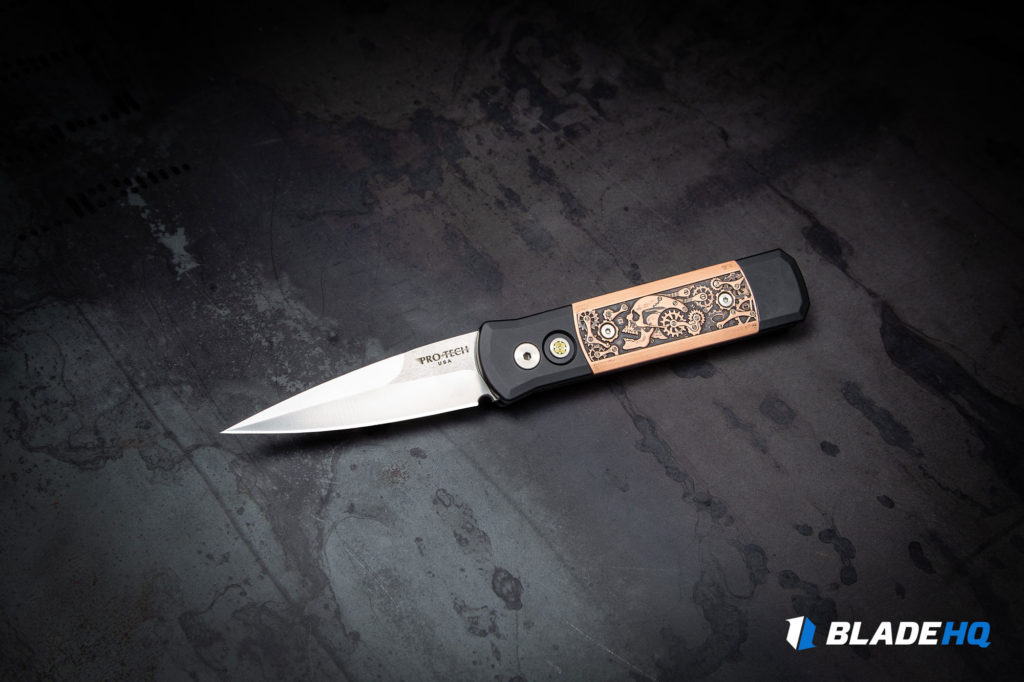
This Protech Godson represents a modern, side-opening automatic knife. (Blade HQ)
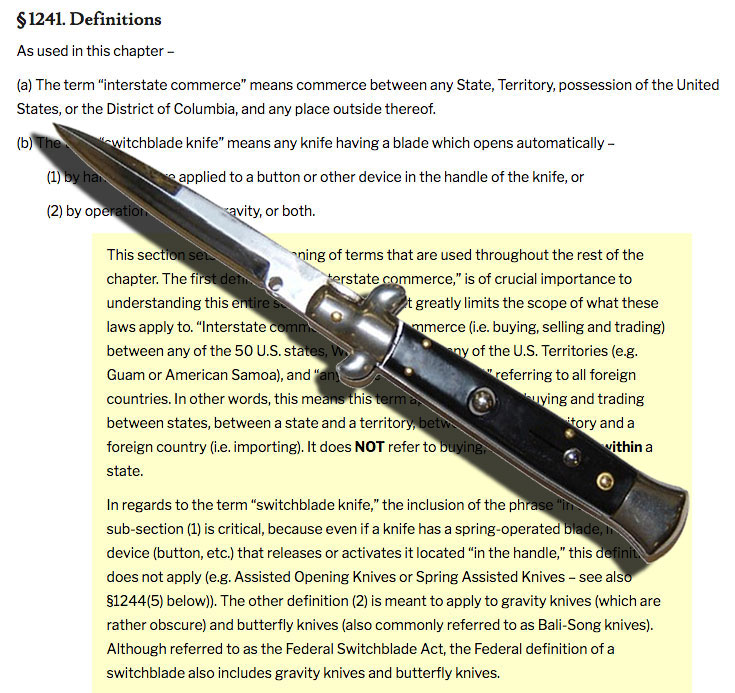
The Act itself dealt with banning certain transportation and sales of automatic knives, as well as outright banning automatic knives in certain areas and places nationally. It also defined by law what a switchblade was:
“The term ‘switchblade knife’ means any knife having a blade which opens automatically-by hand pressure applied to a button or other device in the handle of the knife, or (2) by operation of inertia, gravity, or both.”
All in all, the Federal Switchblade Act is a hard read with more than a handful of seeming contradictions. If you want to dive deeper into what exactly the Act says and how it’s parts work together, we recommend you check out Knife Rights page on the document (https://kniferights.org/resources/federal-switchblade-act/).
Just as the United States had led the way in automatic knife production at the beginning of the 20th century, it led the way for knife legislation in the mid-20th century. As soon as the Federal Switchblade Act was passed, many other countries around the world followed suit and banned switchblade knives. This led to a domino effect in many countries, where owning anything short slip joint with a blade under 2 inches is now illegal.
The Rise of Knife Advocacy Groups
Knife Rights is one organization pushing for repeal of the 1958 Federal Switchblade Act. Successes at the state level continue to build momentum for a federal repeal. (Knife Rights image)
Knife Rights and AKTI are both organizations doing a lot to amend and repeal a law that seems to have been put in place without proper foresight and consideration. With their efforts, they successfully rolled back automatic knife restrictions in 40 states and counting.
One of the biggest wins for the knife world came in 2009 when the U.S. Customs and Border Protection (CBP) tried to reverse prior ruling on assisted opening/spring-assisted knives. Essentially, the CBP tried to define any one-handed opening knife as a switchblade. The revision would have dealt primarily with the importation of these assisted knives. The real concern came from the confusing nature of the Act. If CBP got their way, it would have been easy to extend the restriction broadly on both a national and state level. Luckily, many groups, including Knife Rights and AKTI, stepped up and prevented this from happening.
For knife enthusiasts, supporting Knife Rights and AKTI are the best ways to help revise and repeal the national and state restrictions on what, at the end of the day, is just another knife. Until that day, know your local laws and stay sharp!
BLADE was on the ground for the 2019 SHOT Show. Here’s a look at what’s new.
Be sure to follow BLADE on Instagram for the most up-to-date coverage and more content from the event. More videos will be posted here as they become available.
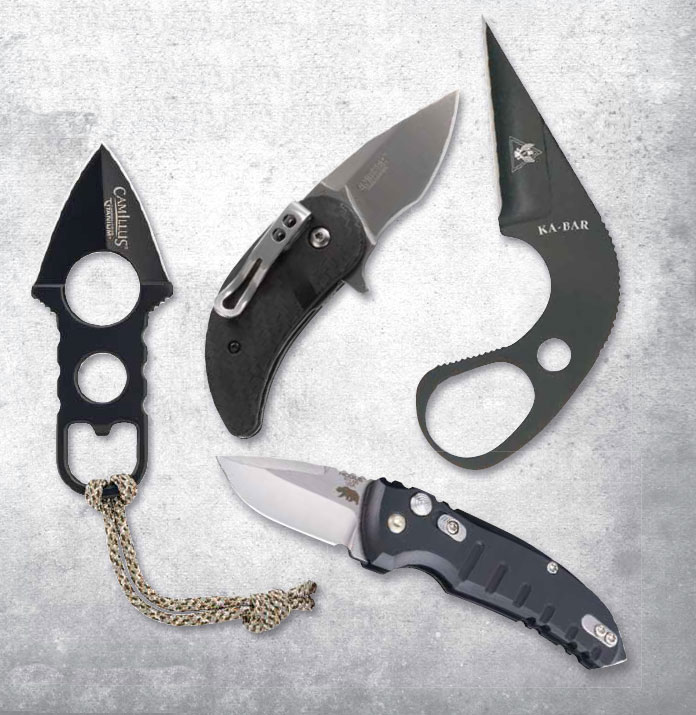
Whether it’s because of knife restrictions, portability or preference, these little blades aren’t too cute to cut.
CRKT Snicker
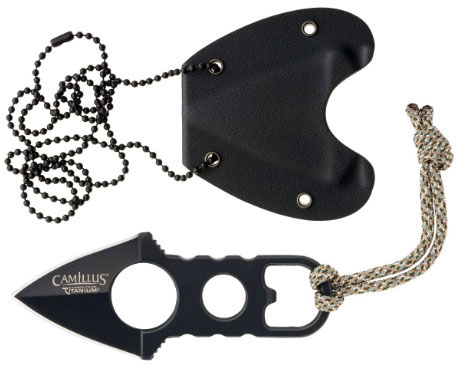
Camillus Heater
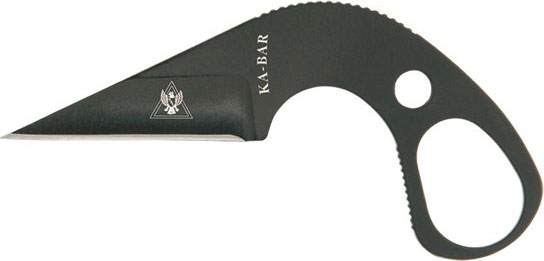
KA-BAR Last Ditch
Hogue A01 MicroSwitch
CRKT Snicker
(CRKT image)
The CRKT Snicker debuted at BLADE Show 2017 and exemplifies the growing trend of blades measuring less than 2 inches.
“It serves a niche for those looking for a small blade that will tackle a variety of tasks and is a solid performer for CRKT,” explained company spokesperson Mike May. “Ease of use and ‘approachability’ are two key factors that make blades of this size popular. In areas with strict knife laws, the sub-2-inch blade can also help alleviate any concerns. In the case of the Snicker, its style and ergonomics make it an attractive small knife for consumer pockets as well.”
Blade Length: 1.846″ (46.89 mm)
Blade Edge: Plain
Blade Steel: 420J2, HRC 50-52
Blade Finish: Stonewash
Blade Thickness: 0.106″ (2.69 mm)
Closed Length: 2.938″ (74.63 mm)
Weight: 2.3 oz
Handle: Injection Molded Glass Reinforced Nylon
Style: Folding Knife w/Locking Liner
Overall Length: 4.688″ (119.08 mm)
Camillus Heater
(Camillus image)
When Camillus launched the Heater in 2015, the idea was much the same.
“It has and continues to be an extremely popular model since it debuted,” noted Sam Dodge, Camillus senior brand manager. “We can attribute this to two factors: function and convenience. We find that people are purchasing a knife for different jobs or tasks. The fact that the knife comes in a slightly smaller package makes it more convenient to [store].
“There are still purists that will have ‘one knife to rule them all,’ but more and more we see that people want a knife for each activity.”
Blade Treatment: Carbonitride Titanium
Blade Color: Black
Blade Edge: Smooth
Blade Grind: Hollow
Blade Style: Spear
Fixed Blade
Handle Color: Black
Hand Orientation: Left and Right
Includes: Chain, Molded Sheath, Clip
Handle material: Stainless Steel + Paracord
Main Blade Material: 440
Rockwell Hardness: HRC54
Lifetime Warranty
KA-BAR Last Ditch
(KA-BAR image)
The KA-BAR Last Ditch, commonly worn as a neck knife or laced into a boot, hit the shelves in 2008 and has been a top seller ever since.
“I think two of the biggest reasons why knives with blades under 2 inches are popular is due to concealability and ease of carry,” said Joe Bradley, KA-BAR sales and digital content manager. “Many folks don’t like to draw attention, and sometimes even an exposed pocket clips will do that. Small blades offer a tremendous blend of being lightweight with a small footprint.”
Overall Length: 3.625″
Blade Length: 1.625″
Blade Material: 9Cr18MoV
Hardness: 58-59 RC
Blade Style: Wharncliffe
Blade Grind: Flat
Finish: Black
Edge Type: Plain
Handle Length: 2.00″
Handle Material: Stainless Steel
Color: Black
Weight: 2.40 oz.
Sheath: Molded Polymer
Knife Type: Fixed Blade
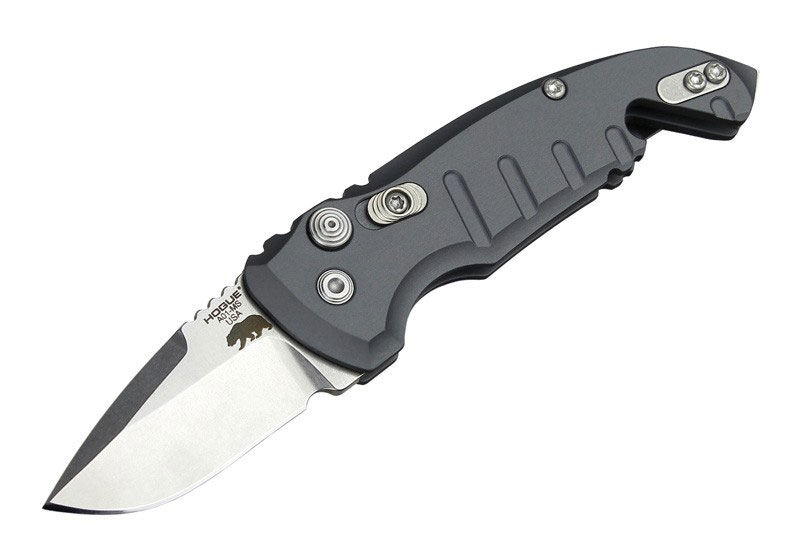
Hogue A01 MicroSwitch
(Hogue Knives image)
The A01 MicroSwitch has been a hit since it was widely distributed in autumn 2017.
“It has been difficult to keep it in stock since its release,” he said. “It is the smallest knife in the Hogue Knives line, and there has been tremendous interest in it. It moves briskly at trade shows, through dealers and over our retail website.”
Crook considers many factors that weigh in on the wave of popularity in small knives. Among these is the company’s location in California, where he says anything larger in an automatic is illegal.
Blade Length: 1.95″
Overall Length: 5.8”
Closed Length: 3.85”
Weight: 2.7oz
Mechanism: Automatic Button Deployment with Manual Safety
Handle Material (Frame): 6061-T6 Anodized Aluminum
Pocket Clip: Stainless Steel Ambidextrous Tip Up Carry
Blade Style: Drop Point
Blade Thickness: 0.12”
Blade Material: CPM154 Stainless Steel
Blade Hardness: RC 57-59
Blade Treatment: Cryogenically Treated
Blade Finish: Tumbled Finish
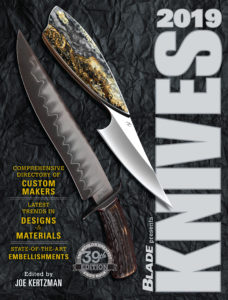
The World’s Greatest Knife Book
The KNIVES annual book is back and better than ever. Here’s what you can expect:
320 pages
Beautiful, full-color photos of knives and accessories
Comprehensive directory of custom knifemakers
In-depth features about knife collecting and making knives
Examples of the latest trends in knife designs and knifemaking materials
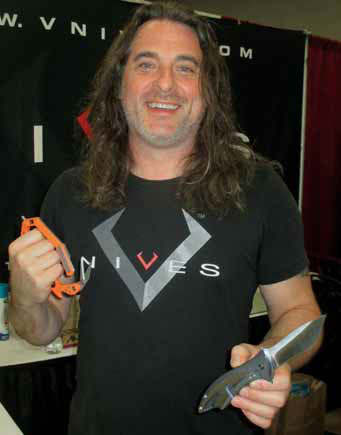
At BLADE Show West, Mike Vellekamp of V Nives holds two of his latest models: the C.R.A.B. (Cut-Rescue-Assist-Break), the BLADE Magazine 2018 Most Innovative Imported Design, in a new orange handle, and the company’s new Deplorable folder designed by Jerry Hossom. (BLADE photo)
Manufacturers in Asia, especially China, have been able to make better inexpensive knives than U.S. manufacturers for years now due in no small part to low labor, advertising and other costs. Largely as a result, Chinese manufacturers have dominated the market for “price-point” or inexpensive knives in America. However, as a result of the tariffs, Mike opined, in order to maintain profits the Chinese will be forced to make more-labor-intensive knives and charge more for them in the USA. The Chinese could continue to make knives in the same way they have been for export to America, but if they do their profits will decrease due to the tariffs.
And the likelihood of the Chinese opting to make less money, the argument goes, is basically nil.
Consequently, in Mike’s scenario U.S. manufacturers will start making price-point knives to fill the niche the Chinese manufacturers will be forced to abandon.
According to Mike, U.S. knife companies will be more able to make price-point knives and/or have them made domestically because they will not have to pass along to consumers the added costs of shipping and importing and getting the knives through U.S. Customs, among other things, that they do now by having their knives made off shore.
Of course, several things must happen in the domestic knife industry for Mike’s scenario to occur, but he indicated he sees those things happening.
“If someone wants to make something in America and compete, they can do so as long as they automate and capitalize on some of our technological resources,” he said. “This will encourage the market for U.S. manufacturing and create a lot more jobs in the process.
“It’s going to make more sense to make knives in the U.S., especially as metal-injection-molding technology takes off better and with some of the 3D printing stuff we’re doing,” he noted. “We’ve got the technology, we’ve already got all the materials, we’ve just got to get the interest. We need to have the confidence of both the consumer and the manufacturer so they’re working together to create a made-in-America force. That’s what we need to be again. We’ve always had that, we’ve always been the pioneers of basically all industry, and we need to have that confidence again and quit being just ‘buy and sell.’ We need to start making stuff again.”
Doubts
Two high-ranking industry officials I spoke to whose companies import knives from Asia expressed doubt that Mike’s scenario will happen. They said they don’t see American knife manufacturing reaching the point Mike foresees any time soon—maybe never—plus the fact that Chinese manufacturers are simply too good at making price-point knives, and will find a way to continue to maintain their dominance in that segment of the U.S. market.
Still, Mike said the new realities that will occur due to the tariffs appear to be bringing some American manufacturers around to his way of thinking.
“I think U.S. knife manufacturers are going to do just what I’m talking about,” he said. “I’m not positive and I won’t name names, but the ones I’ve talked to kind of agree with me that the U.S.-made knife needs to be the price-point type.”
Will that need turn into a real shift in the factory knife market? Stay tuned for further developments.
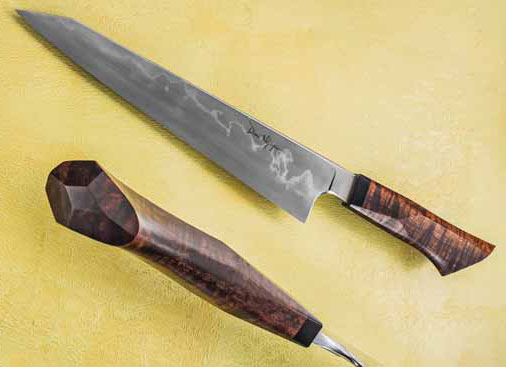
What do professional chefs look for in a chef’s knife? We asked two pro chefs, both fans of knifemaker Don Nguyen. Their answers are instructive not only on Nguyen’s work but chef’s knives in general.
“Thin Behind the Edge to Win”
Kolter Livengood is a chef at Brightwok Kitchen, “a veggie-focused, Asian inspired restaurant” in Chicago. Detail and aesthetics, with an equal emphasis on testing, are some of Livengood’s requirements in a chef ’s knife.
“A great deal of consideration is given to the ‘knife life’ or how the blade will be sharpened away over time,” he observed. “How the knife tapers both from handle to tip and spine to edge give the ability to maintain that geometry for 20 to 30 years depending on use and original blade size, making the appropriately high-priced tool seem very affordable over time.
“Don’s knives tend to be thicker at the spine, yet taper to being extremely thin behind the edge. This seems simple but it’s the subtle convexity from spine to edge that gives the knife its incredible feel when cutting. The thick spine gives the knife weight, a weight that by no means makes the knife heavy, and assists with downward momentum, which makes a huge impact on how the knife feels when cutting. The spine is also perfectly rounded, which, when combined with its thickness, makes it extremely comfortable and less damaging to the hand. The convexity aids in separating the food that’s being cut from the bulk, and since the blade is not flat, foods like potatoes and cucumbers don’t annoyingly suction or stick to the side of the knife when chopping.
“‘Thin to win’ should be amended to ‘thin behind the edge to win,’ as I much prefer a knife with heft and zero spine flex to the chef’s knives with 1-to-2-millimeter spine thicknesses popular from 2009 to 2012.”
Single-Beveled Knives for the Win
Taro Kobayashi, a chef at Mame, a sushi restaurant in Eugene, Oregon, uses Nguyen chef’s knives.
“The short gyuto I have at home for everyday tasks from poultry and fish butchering to dicing vegetables,” Kobayashi noted. “It is just a good, all-around bruiser. It is a bit thicker for a Don knife but I really enjoy it since I can just ‘go ham’ with it. Ha-ha! That almost sounded like a kitchen pun. Sorry.”
Kitchen standup comedy notwithstanding, Kobayashi’s favorite Nguyen chef’s knife is a 240-millimeter model of W2 tool steel and a lightning-strike carbon fiber handle.
“I use it to slice fish and other proteins while making sushi,” the chef noted. “Even though I am a bit old school when it comes to knife use and love single-beveled knives for fish slicing and sushi preparation, I can’t help but use this one sometimes. It’s easy on the hands, easy to sharpen and takes a keen edge. I was a bit worried about the handle shape until I used it. It’s one of the best designs aesthetically, but you would not know how good it feels until you get it in hand and abuse it.”