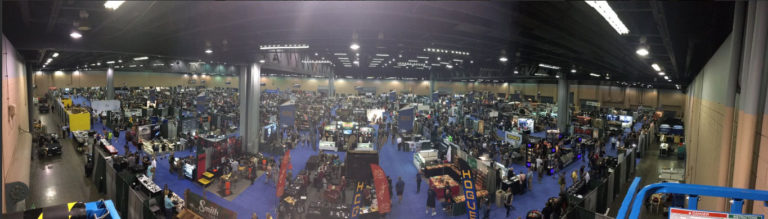
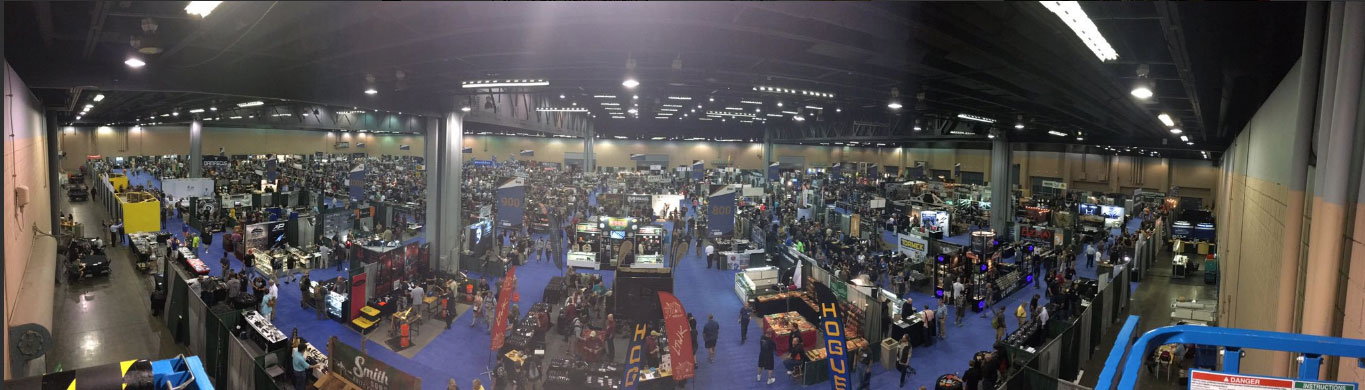
A view of one corner of the BLADE Show floor from above.
BLADE Show 2019 kicks off June 7 in Atlanta. In the hurry to get everything ready, don’t forget these considerations.
Pack comfortable shoes for all that standing and walking.
If you’re flying in, figure out how you’re getting from from the airport to your hotel. Most people opt for a taxi (available right outside the doors of the airport), a ride-sharing service or a shuttle (if your hotel provides one).
Then figure out how you’re getting from your hotel to the Cobb Galleria.
The BLADE Show is huge, and it grows every year. Make an itinerary of exhibitors and activities you want to hit so that you don’t get too far into the weeds.
On the other hand, casually browsing the show has benefits, too. You never know what surprises you might find.
How will you get the new knives you purchased home? The most popular way is with a courier service, like UPS or FedEx. Scout out locations ahead of time. Don’t wait until the last minute!
If you plan to make purchases with cash, it’s a smart idea to arrive with it in hand rather than relying on ATMs. There are ATMs located on-site, but if there’s a run on cash, they might be empty.
On that note, how will you keep your cash secure as you walk the show floor?
How will you keep your knives and cash secure in your hotel room?
Have you set a budget for yourself about how much to spend on knives? It’s easy to get carried away on the show floor.
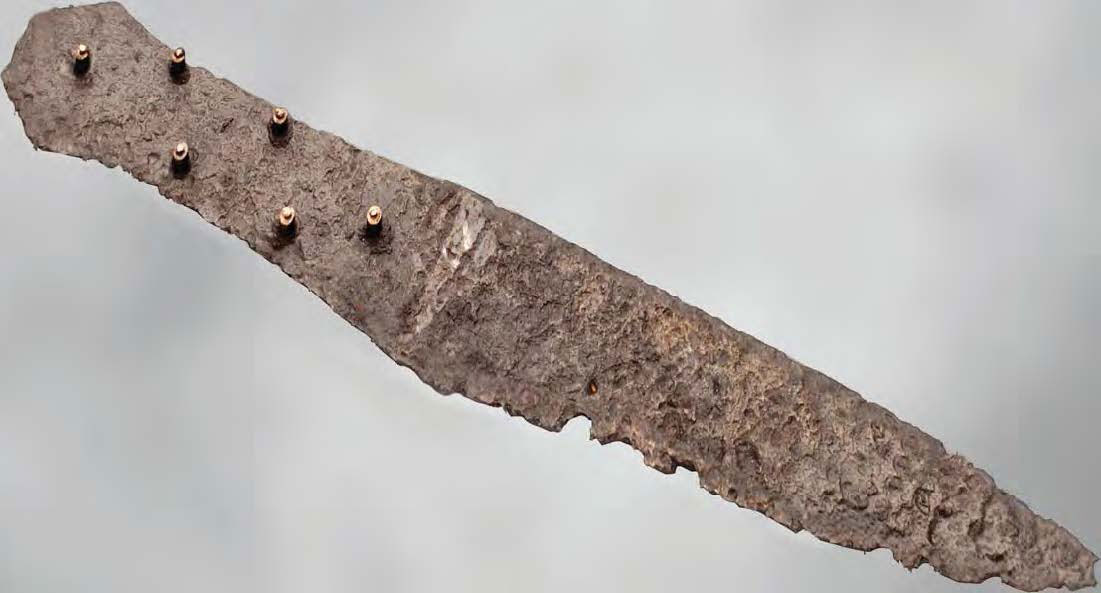
Last, but certainly not least, safety is important. How you carry every other day is different from how you carry at a crowded knife show. Please don’t be this guy:
(relic image courtesy of the Cushing Memorial Library and Archives, Texas A&M University Libraries)
Editor’s note: Read part one and two of this series first.
Did the Sea of Mud Knife Belong to Davy Crockett?
Davy Crockett passed by James Black’s Shop in 1835 on his way to the Alamo. Could he have bought the Sea of Mud knife (above) from Black or received it as a gift?
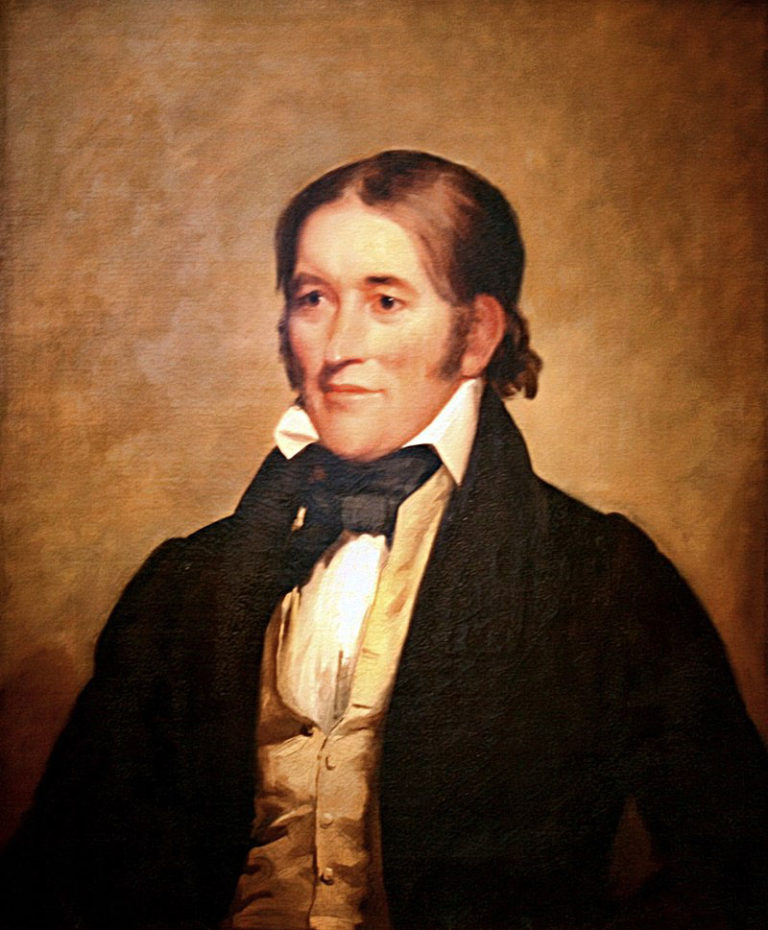
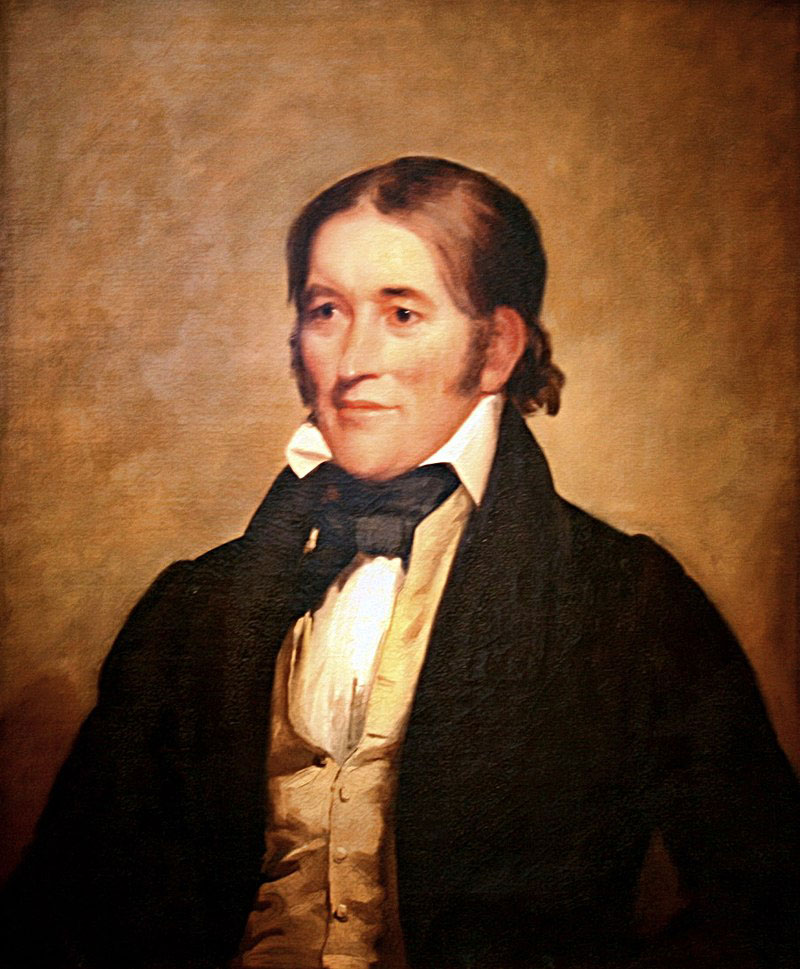
On about Nov. 18, 1835, the most famous fallen hero of the Alamo and his entourage crossed Town Creek on the Southwest Trail that led up the hill past James Black’s Shop to the Elijah Stuart’s tavern in Washington, Arkansas. Did former Tennessee congressman, Col. David “Davy” Crockett, or one of his companions buy the Sea of Mud knife from Black? Did Black give the knife to the famous folk hero?
On Nov. 1, 1835, Crockett, along with three others—William Patton, Abner Burgin and Lindsey K. Tinkle—left Crockett’s log cabin home near Rutherford, Tennessee, on a journey of adventure, exploration and fortune hunting.
Having recently lost his U.S. House of Representatives seat to Adam Huntsman, “a one-legged Jacksonian,” Crockett told his constituents, “Since you have chosen to elect a man with a timber toe to succeed me, you may all go to the devil and I will go to Texas.” Most certainly he told this tale over and over, all the way to Texas, always to the delight of his audience. He traveled to Jackson, Tennessee, arriving there with 30 well-armed men, where he gave a speech from the steps of the Madison County courthouse.
Crockett left his log cabin home in Rutherford, Tennessee, on Nov. 1, 1835, on a journey of “adventure, exploration and fortune hunting.”
From there he rode southwest to Bolivar, where he spent the night at the residence of Dr. Calvin Jones, once again drawing crowds—including one that sent Crockett off the next morning.
He arrived in Memphis with a much-diminished company on Nov. 10. There that night much time was spent enjoying horns of drink with citizens and comrades at the Union Hotel, Hart’s Saloon and Neil McCool’s establishment.
At 7:30 a.m. on Nov. 11, Crockett and his entourage of six to eight men left Memphis on a packet steamboat. He obviously was recovering from a night of carousing. The steamboat traveled 311 miles down the Mississippi River and up the Arkansas River, arriving at Little Rock at 4:30 p.m. on Nov. 12. The local newspapers reported that hundreds of people swarmed into town to get a look at Crockett, and a group of leading citizens put on a dinner in his honor that night at the Jeffries Hotel. He spoke “mainly to the subject of Texan independence,” as well as federal politics.
Washington, Arkansas
Crockett had traveled 150 miles in nine days on his large chestnut horse with the star on its forehead. He had at least three more traveling companions with him when he left Little Rock that morning. It was only 125 miles down the Southwest Trail to Washington, Arkansas, and just a few more miles to Texas. It is not known how long he stayed in Washington, maybe just overnight, because he was so close to that wonderful land called Texas.
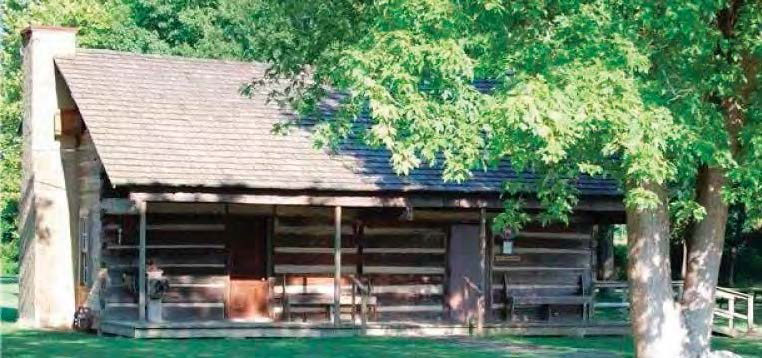
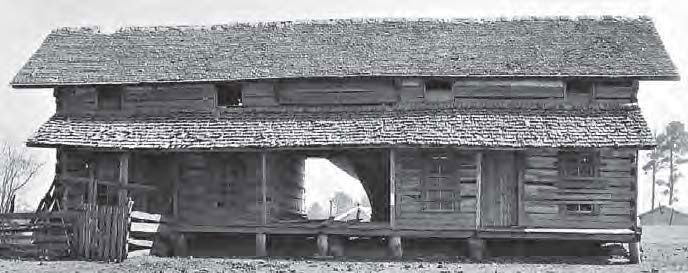
On the way to Washington, Arkansas, Crockett stayed at the home (above) of Hugh Armstead Blevins in present-day Blevins, Arkansas.
He had stayed with an old and dear friend from Rutherford County Tennessee, Hugh Armstead Blevins, in present-day Blevins, Arkansas, before riding into Washington. Blevins family tradition maintains that Crockett went on a weeklong deer-hunting trip with Hugh. Crockett stayed at Elijah Stuart’s tavern next to James Black’s shop in Washington. The people came in from all around to hear Crockett speak from the courthouse steps. After some celebrating, Davy and a half-dozen mounted companions could have ridden to the Red River and crossed into Texas at Dooley’s ferry.
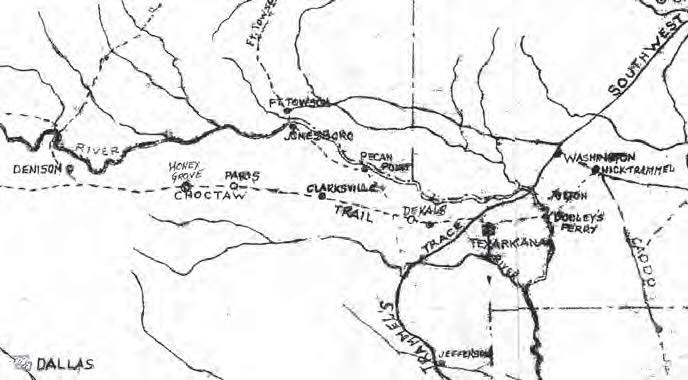
Some historians say he went down the Fort Towson road 115 miles and crossed the Red River into Texas at Jonesboro, just north of present-day Davenport, Texas. He may have crossed the Red River at Dooley’s Ferry just as W.G. Featherstonhaugh did.
Crockett stayed at Elijah Stuart’s tavern next to James Black’s shop in Washington. He may have crossed the Red River at Dooley’s Ferry as did W.G. Featherstonhaugh. Some say Crockett went down the Fort Towson road 115 miles and crossed the Red River into Texas.
Several weeks after the fall of the Alamo Crockett’s widow, Elizabeth, received a small package from Isaac Newton Jones. The package contained a watch with Crockett’s name engraved inside. In an accompanying letter, Jones wrote:
“Last winter, Colonel Crockett … passed through Lost Prairie, on the Red River, where I live … the Colonel visited me the next day, and spent the day with me. He observed, whilst here, that his funds were getting short, and proposed to me to exchange watches. He priced his at thirty dollars more than mine, which sum I paid to him, and we accordingly exchanged … I was gratified at the exchange, as it gave me a keepsake which would remind me of an honest man, a good citizen, and a pioneer in the cause of liberty … the object of this letter is to beg that you will accept the watch which accompanies it … please accept, dear madam, for yourself and your family …”
Crockett’s Letter
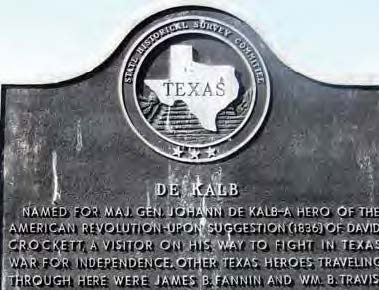
Crockett reportedly suggested the name for De Kalb, Texas and traveled through the area on his way to the Alamo.
The distance from Lost Prairie to Nacogdoches down Trammel’s Trace was 165 to 170 miles. At the rate of 25 miles per day Crockett should have arrived at Nacogdoches, Texas before the end of November. Crockett and his entourage were welcomed in Nacogdoches on Jan. 5, 1836.
Here is what Crockett stated in a letter written to his son and daughter from St. Augustine, Texas, dated Jan. 9, 1836:
“This is the first time I have had the opportunity to write to you with convenience. I am now blessed with excellent health and am in high spirits. Although I have had many difficulties to encounter, I have got through safe, and have been received by everybody with the open arm of friendship. I am hailed with a hardy welcome to this country. A dinner and a party of Ladys have honored me with an invitation to participate with them, both in Nacogdoches and this place. The cannon was fired here on my arrival, and I must say, as to what I have seen of Texas, it is the garden spot of the world. The best land and the best prospect for health I ever saw is here, and I do believe it is a fortune to any man to come here. There is a world of country to settle. It is not required here to pay down for your League of Land; every man is entitled to his head right of 4,000 & 428 acres. They may make the money to pay for it off the Land.
“I expect in all probability to settle on the Bodark or Choctaw Bayou of Red River. That, I have no doubt, is the richest country in the world. Good Land and plenty of timber, and the best springs and good mill streams. Good range, clear water and every appearance of good health, and game plenty. It is in the pass where the Buffalo passes from the north to south and back twice a year, and bees and honey plenty.
“I have a great hope of getting the agency to settle that country, and I would be glad to see every friend I have settle there. It would be a fortune to them all.
“I have taken the oath of the Government, and have enrolled my name as a volunteer for six months, and will set out for the Rio Grand in a few days with the volunteers from the United States. All volunteers is entitled to a vote for a member of the convention, or to be voted for, and I have but little doubt of being elected a member to form a constitution for this Province.
“I am rejoiced at my fate. I had rather be in my present situation than to be elected to a seat in Congress for life. I am in hopes of making a fortune for myself and family, bad as has been my prospects.
“I have not wrote to William, but have requested John to direct him what to do. I hope you show him this letter, and also your brother John, as it is not convenient at this time for me to write to them.
“I hope you will do the best you can, and I will do the same. Do not be uneasy about me, for I am with my friends.
“I must close, with great respects, your affectionate Father, Farewell David Crockett”
Crockett spent December roaming the north Texas countryside along the Red River visiting friends and looking for a prosperous place to settle down where there was good bear and buffalo hunting. He was also dodging Comanche Indians. He headed west along Ridge Trail or Choctaw Trail 175 miles along the Red River as far as Choctaw Bayou. Choctaw Bayou runs from Grayson County northeast into the Red River at the northwest corner of Fannin County above Sherman and Denison, Texas.
Crockett stayed at Elijah Stuart’s tavern next to James Black’s shop in Washington. He may have crossed the Red River at Dooley’s Ferry as did W.G. Featherstonhaugh. Some say Crockett went down the Fort Towson road 115 miles and crossed the Red River into Texas.
It is said that the morale of the defenders of the Alamo in San Antonio enjoyed a boost on Feb. 8, 1836, when the former U.S. congressman from Tennessee, bear hunter and Indian fighter rode in with a contingent of Tennessee Mounted Volunteers.
Next time: The fortifications by the defenders and the probing of them by the Mexican Army during the Alamo siege.
Msg. Kim Breed (retired), a long-time field editor for BLADE best known for his knife reviews, will partner with DoubleStar Corp. to produce knives for that company’s Edged Weapon line.
There’s no doubt that Breed’s 18 years of experience in the United States 5th Special Forces Group will inform the designs that come out of the collaboration, as well as his time as the owner of Breed Custom Knives. Although DoubleStar has not announced specific models, a release from the company suggests that Breed’s custom work will be adapted for affordable price points.
“Kim is a legend within the custom knife community and we are very excited to have the opportunity to collaborate with him, turning his custom design into something that is accessible to a wider audience. Adding Kim to our already impressive roster of collaborators only strengthens our commitment to the edged weapon market, and we look forward to unveiling his designs soon,” stated Rob Cabrera, director of Edged Weapon, in a DoubleStar release.
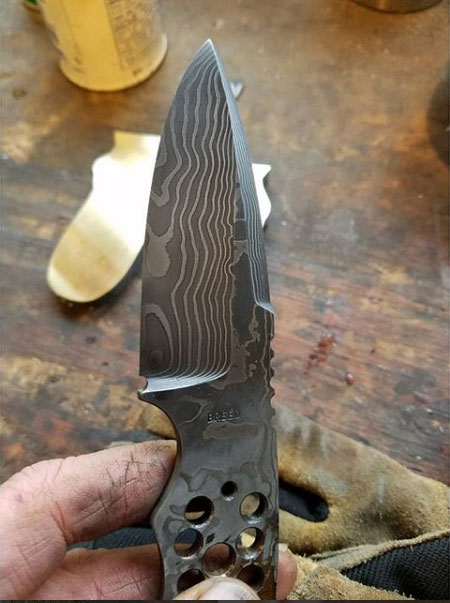
The following are examples of Breed’s custom knives:
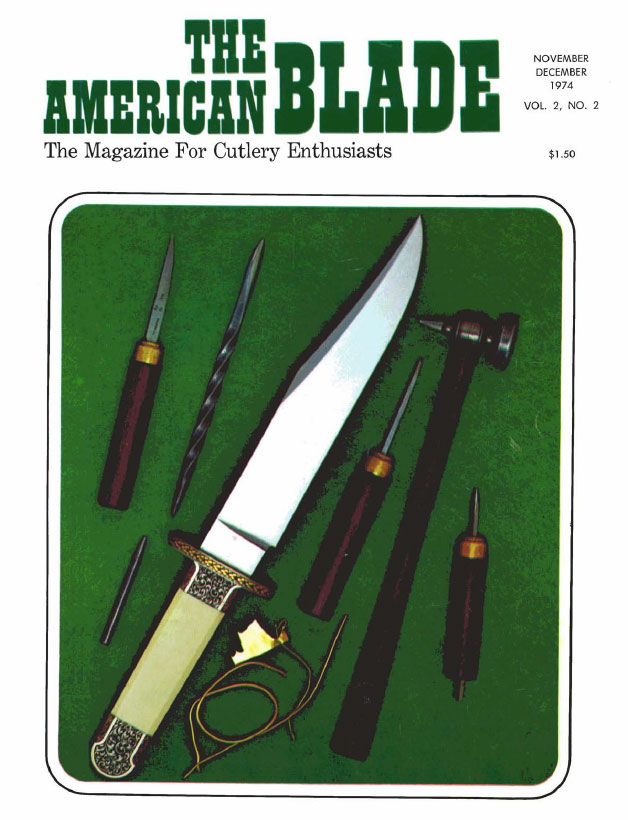
Known as The American Blade at the time, the magazine was traded by then-publisher Jack Marvich to Wally Beinfeld for a racehorse—or at least that’s what Beinfeld reportedly told one of his successors, former BLADE publisher and editor and BLADE Magazine Cutlery Hall-Of-Fame® member Bruce Voyles.
The cover of the November-December 1974 issue of The American Blade.
Beinfeld ran what was probably the country’s premier antique arms show and, in part to help promote it, published a gun magazine called the Arms Gazette. The Gazette had a large editorial, graphics and production staff that was more than big enough to produce a second magazine. Hence, Beinfeld decided to add a knife publication—The American Blade—to his, ahem, stable.
However, there was one problem. Marvich and Beinfeld could not make a deal, even if, apparently, the racehorse was at least part of the payment.
“They were sitting there talking about it one day and the more they talked, the worse it got,” Voyles recalled Beinfeld’s version of what happened.
Beinfeld and Marvich were making no headway at all. Finally, Beinfeld stood to call the whole thing off and leave when in walked Marvich’s wife.
“Marvich looked at her and said, ‘Honey, the deal’s not going to go through, we just can’t come to terms.’ And she looked at him and said, ‘What about my racehorse?’ And in Wally’s words, ‘So I sat back down.’ From what I understand,” Bruce recalled, “I don’t know if the racehorse was just part of the deal or what, but I believe it was the entire deal. That was the way it was told to me.”
And, thus, Beinfeld bought The American Blade. Bruce said he can’t recall the horse’s name, which is understandable considering how long ago it was. Meanwhile, Mr. Beinfeld passed away a few years back, and we don’t know the whereabouts of Mr. and Mrs. Marvich.
As for the horse, here’s hoping he was put out to stud and lived happily ever after. (Insert your impression of a horse whinnying here.)
Editor’s note: The following originally ran in the August 2015 issue of BLADE magazine. All images are from their respective manufacturers unless otherwise noted.
Memorial Day (taking place in 2018 on Monday, May 28) holds a revered place in the hearts and minds of Americans, and knife manufacturers recognize the heritage of freedom that fits well with such a commemoration. Knives have equipped American fighting men and women since the first call for national defense more than 200 years ago, and these modern knives convey a sense of pride and honor for our time.
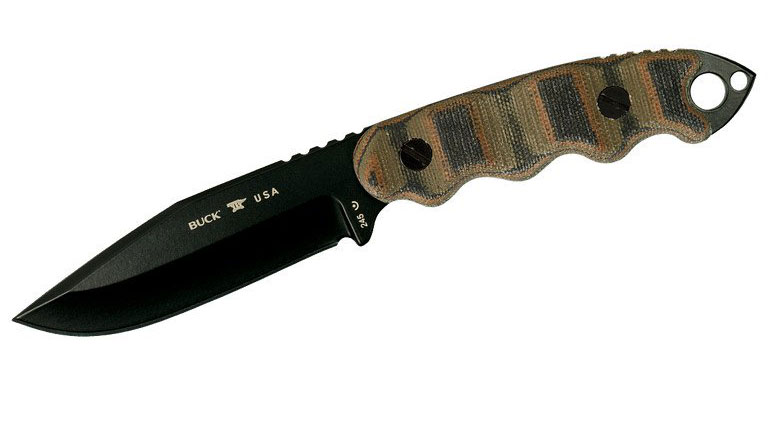
Buck 245 MWG
Buck Knives introduced the 245 MWG at the 2015 SHOT Show to honor the memory of Matthew J. Leathers, a highly decorated U.S. Navy SEAL who lost his life at sea in 2013. Matt was a member of Basic Under water Demolition/SEAL Training class 245, and the knife’s name says it all—245 to honor the class and MWG referring to the simple yet powerful phrase that was the young SEAL’s nickname: “Matt Would Go.”
The 245 MWG represents a partnership between Buck and Matt’s father, Tim Leathers. “During his nine years with the U.S. Navy SEALS, Matthew used many knives, but none that held up to his standards,” explained Stephanie Young, Buck marketing and communications manager. “He decided the only way to find a knife that met his criteria was to build it himself. Matt designed the knife that became a favorite among his fellow SEALS.”
The result of the Buck collaboration with Matt Leathers through his father is a sleek fixed-blade utility/fighting knife with a 5160 spring steel blade and tough Micarta® handle. Other features include the TEK-LOK® belt clip and a Kydex® sheath designed with a low-infrared signature.
A portion of the proceeds from sales goes to MattWouldGo LLC and in turn to the Navy SEAL Foundation.
“We are honored to bring this knife to the market for the Leathers family and happy to give something back to those who protect us,” Young commented.
Two Camillus Fixed Blades
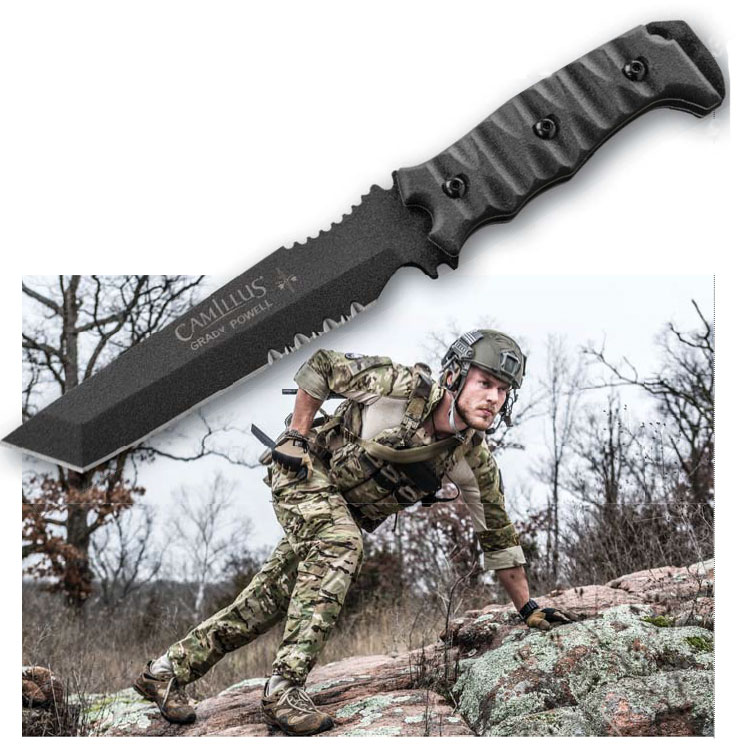
Featured on the National Geographic Channel’s “Ultimate Survival Alaska,” retired Green Beret Grady Powell (above) designed the Camillus Grady Powell fixed-blade tanto. Powell trains military, law enforcement and civilians in survival training.
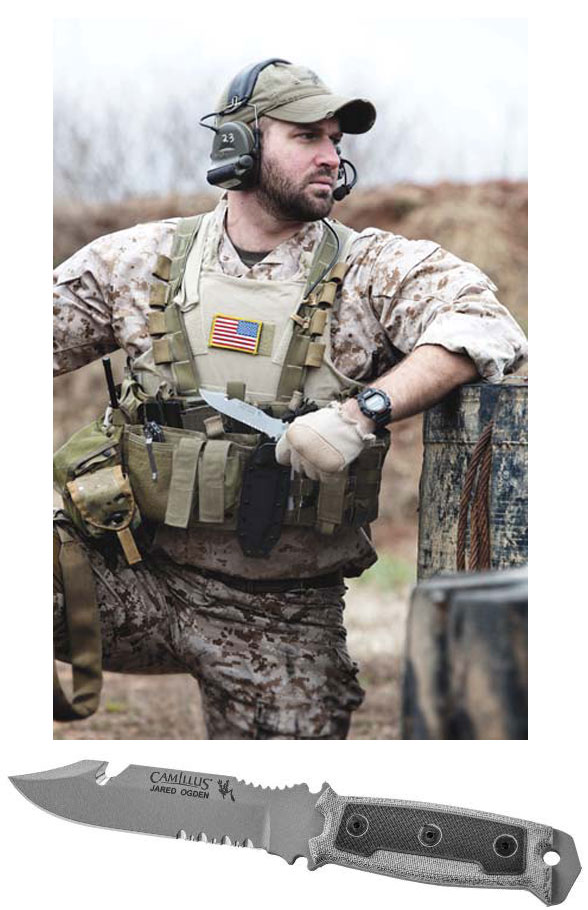
A pair of Camillus fixed blades made to the exacting specifications of retired U.S. Army Green Beret and current military, law enforcement and survival trainer Grady Powell, and of Jared Ogden, a combat-decorated retired Navy SEAL and surface warfare officer, both of whom are featured on the National Geographic Channel TV show Ultimate Survival Alaska, makes great Memorial Day remembrance knives.
“These knives accommodate everything a SEAL or Green Beret would do in their duties,” explained Rick Constantine, Camillus marketing manager. “Both of these men had input on the design of these knives. They are true-life heroes, and that’s why we went after them. We all said we wanted to build knives that anyone would be proud to carry on active duty or elsewhere.”
Both knives feature 1095 high carbon steel blades and custom molded sheaths. Constantine said Powell wanted a knife useful in hand-to-hand situations, while Ogden stressed cutting ability and grip strength—particularly in water.
The Powell model features a half-serrated 4.87-inch blade with a G-10 handle that sports Micarta accents, and a 10.5-inch overall length.
Ogden’s knife includes a 4.75-inch blade with gut hook, a G-10 handle, a 10-inch overall length, and versatility that allows the user to fashion it into a survival spear.
Ogden (above) served as both a Navy SEAL and a surface warfare officer. His military awards include the Combat Action Ribbon and the Bronze Star with “V” for Valor. He is featured on the National Geographic Channel’s “Ultimate Survival Alaska.”
Each knife is serial numbered.
“We have worked with a number of personalities through the years,” Constantine remarked, “but none have been better or more knowledgeable than these guys.”
Case FSSF V-42
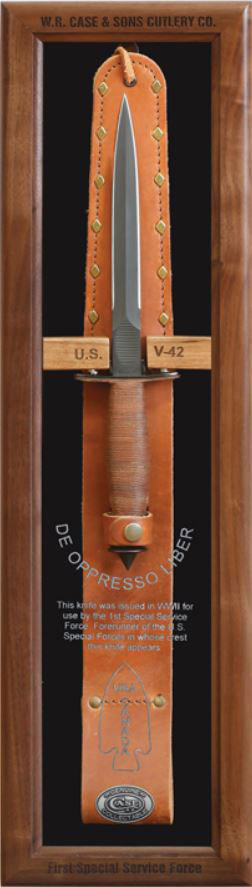
The Case V-42 reproduction is based on the company’s original museum piece. (Kris Kandler image)The V-42 in its display case.
When members of the First Special Service Force Association approached Case about a revival of the legendary V-42 stiletto, the company jumped at the chance.
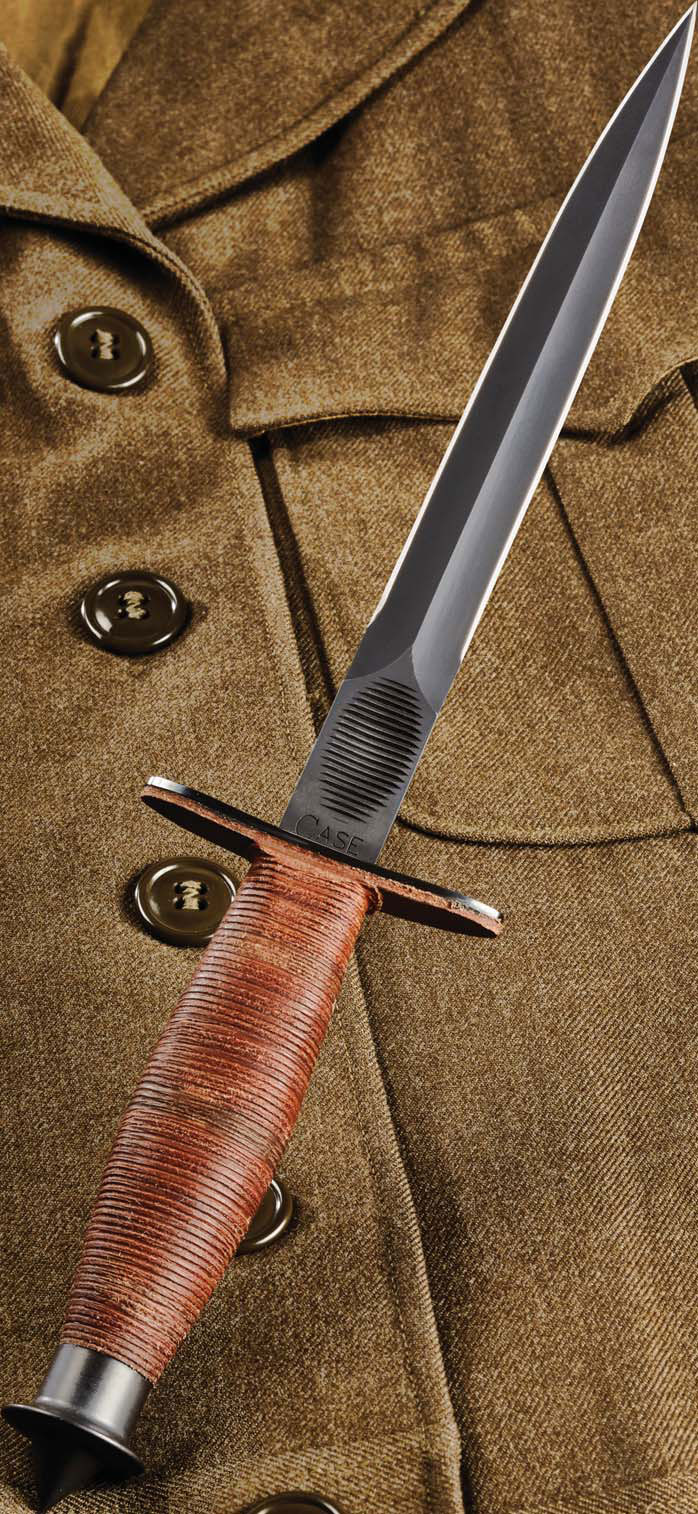
Special Forces Association Montana Chapter 28 and a large number of knife enthusiasts supported the idea, and the new Case V-42 is true in detail to its heritage. Commissioned by U.S. Army Colonel Robert T. Frederick in 1942, the V-42 was issued to troops of the joint U.S.-Canadian First Special Service Force (FSSF), popularly known as the Devil’s Brigade. These soldiers served with distinction in World War II, and the V-42 was with them all the way. Case evaluated its own original museum V-42 and reproduced that fighting gem with painstaking accuracy.
Though the V-42 has been reintroduced a couple of times in the past, Case officials indicate this rendition is more accurate than ever.
“We really have a greater appreciation for what goes into making this knife,” said Case representative Fred Feightner. “We actually had it X-rayed to see how the handle was put together. We examined the knife from the inside out, and this was done on a much more detailed basis than previous re-releases of the V-42. The project took about five years to complete.”
The V-42’s blade of Case chrome vanadium steel—essentially, 1095 high-carbon steel with added chromium and vanadium—is double concave ground to reproduce the distinctive centerline along its length. The stacked-leather-washer handle is constructed with specialty gimping, and the famed V-42 “thumbprint” is embedded in the ricasso of the 12.5-inch, 7-ounce knife for proper blade orientation/indexing and grip strength. The leather sheath is complete with steel teeth reinforcing the sleeve and brass rivet covers.
“We’re extremely proud and honored to present a reproduction knife that is symbolic of our military elite and the American freedom they fought, and fight every day, to protect,” noted John Sullivan, Case marketing director. “Case knives and the American military share a long and distinguished history dating as far back as World War I, so we’ve taken great measure to ensure that the V-42 reproduction model meets the highest standards and is deemed authentic by the same brave Forcemen who carried the original into battle so many years ago.”
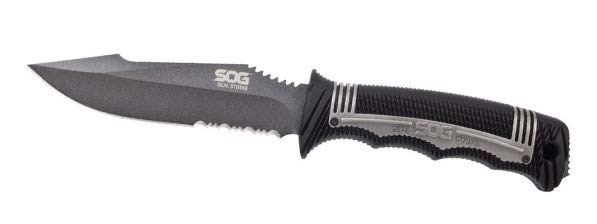
SOG SEAL Strike
The SOG SEAL Strike model SS1002-CP sports a 4.9-inch partially serrated blade of powder-coated AUS-8 stainless steel. The handle is glass-reinforced nylon with a stainless steel overwrap. Weight: 5.6 ounces. Overall length: 9.6 inches.
The new SEAL Strike from SOG Specialty Knives & Tools includes a 4.9-inch partially serrated AUS-8 stainless steel blade with cryogenic heat treatment, and a handle of glass-reinforced nylon.
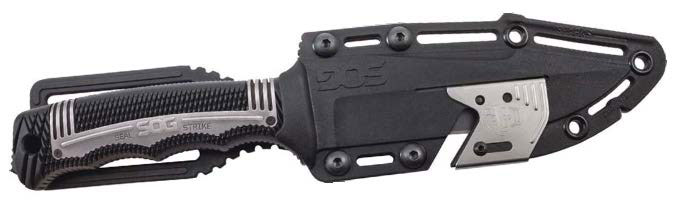
“The biggest differentiator for the SEAL Strike is the sheath,” SOG’s Chris Cashbaugh explained. “It has several features that enhance the functions of the knife. You can use the line cutter to cut cord or webbing without having to expose the blade. The carbide sharpener is in the side of the sheath and can be used to touch up the blade while out in the field. The ferrocerium rod can help start a fire in an emergency situation.”
Boasting the SOG logo etched in steel, the deluxe molded MOLLE-compatible sheath for the SOG SEAL Strike SS1002-CP includes a cutout for cutting line with the knife sheathed, a sharpening notch on the low side toward the tip, and a ferrocerium fire-starting rod.
The SEAL Strike fits the Memorial Day theme well since its design relates to the longtime SOG collaboration with the military and the ultimate goal of producing a knife that fills the bill for troops on deployment or anyone in the field.
Making knives can be gratifying, but it can also be dangerous, dirty labor that requires proper precautions. Here is a selection of gear that can make the knifemaking experience safe and more enjoyable.
If you need a reminder of what can happen if you don’t take safety seriously, read these knife shop horror stories here and here.
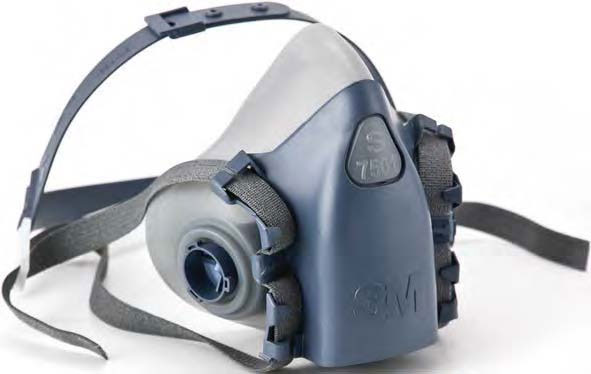
Reusable Respirator
Breathing in fine metal particles and wood dust can do serious damage to your lungs over time. While disposable respirators are good products, anyone who grinds and sands frequently needs a higher level of protection. As result, Jantz offers the 3M 7500 series Reusable Respirator.
“The biggest complaint we hear about respirator use is comfort and heat,” Jantz’s Shanna Kemp noted. “3M’s 7500 series solves these problems with a combination of comfort and durability.”
MSRP for both medium and large sizes: $33.95 each. The MSRP for a combination cartridge to complement the unit is $14.95.
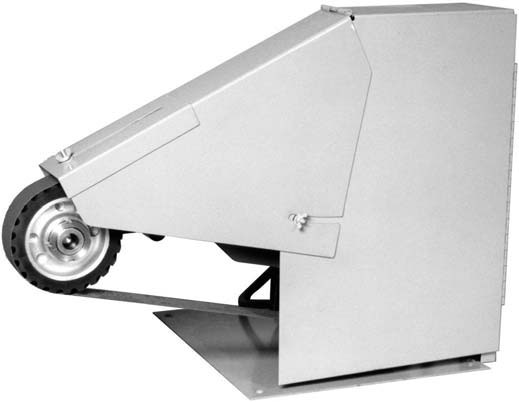
Belt Safety Guard
Hawkins Knife Making Supplies offers the Bader B3 Belt Guard, which features an adjustable front hood that minimizes the risk of injury if an abrasive belt should break while in use. Order by phone only. MSRP: $170 (plus shipping and handling).
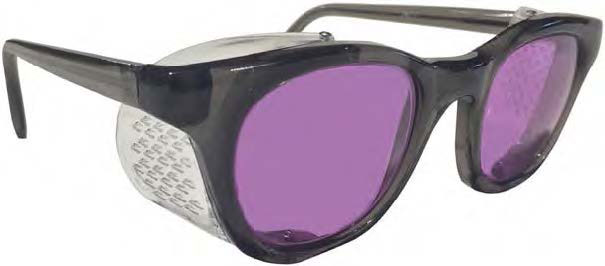
Forge-Welder Safety Glasses
David Kayne of Blacksmiths Depot says the Didymium Glasses are the company’s best-selling safety item.
“They will save the eyes of anyone who regularly works at temperatures above 2,000°F,” he noted, “forge welding of billets for damascus in particular.” MSRP: $75.
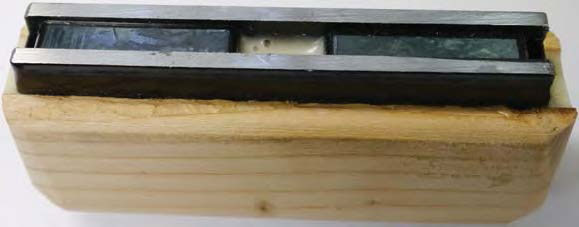
Super Magnet
According to Shannon Edgington of Knife & Gun Finishing Supplies, K&G’s model no. WT12 magnet comes in a 5-inch size and is more than strong enough to hold small pieces of steel against a disc or belt sander.
“The magnets are great ‘finger savers’ for removing the bark or just flattening the surface of steel,” she wrote. MSRP: $19.95.
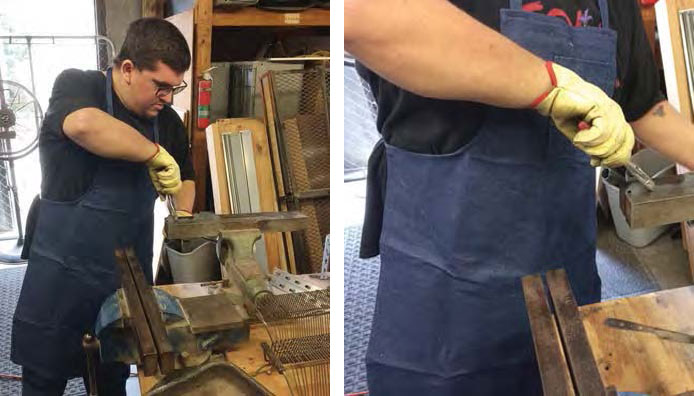
Heat-Resistant Work Apron
Texas Knifemaker Supply’s heat-treat technician wears the company’s heat-resistant denim work apron to shield himself from the oven’s radiant heat, as well as from the red-hot blades as he checks them for straightness before air quenching.
The heavy-duty denim is nice and thick and has a waistband cord to tie behind the back. One size fits all. The apron also protects clothes from dirt and grime. A handy pen pocket is ideal for telescopic magnets, safety glasses, etc. MSRP: $12.95.