Home Blog Page 177

First Family of Knives?

Hoyt Buck knives
These pre-1950 Buck knives handmade by Buck patriarch Hoyt Buck are classic examples of the Buck legacy.
CJ First Family of Knives
CJ Buck was the most recent member of the First Family of Knives to be inducted into the BLADE Magazine Cutlery Hall Of Fame, entering the hall in 2016.
Buck Knives Rush
One of several of Buck’s assisted-opening folding knives is the Rush.
Buck 110
First produced in 1964, the Buck 110 remains one of the most famous modern production knives ever.

If there’s such a thing as the First Family of Knives, the Buck family is it.

Buck Knives has been run by a member of the Buck family—Hoyt, Al, Chuck or CJ—since “H.H. Buck and Son” set up shop in 1945. Since that time, the name Buck has become synonymous with fine hunting, sporting and other knives, and Al, Chuck and CJ help comprise the only family with three members to be inducted into the BLADE Magazine Cutlery Hall Of Fame*.

According to The Story of Buck Knives … A Family Business by Tom Ables, in 1946 “Buck’s knives were all created from used metal files that had been discarded by Consolidated Vultee, the huge aircraft manufacturing plant that later became Convair. These worn-out files, with their heavy carbon content, were perfect for the toughness and edge-holding qualities that Hoyt Buck required in his knives.”

Al joined his father full time in 1947. “[Al] learned how to laminate the thin strips of Lucite plastic used on the handles,” The Story of Buck Knives noted. “He learned how to separate and drill the handles themselves. Later, he learned how to temper the blades so painstakingly sharpened by his dad.”

Sadly, Hoyt learned he had cancer in 1948 and the dreaded disease claimed his life a short year later. He was only 59. Al assumed the company reins and guided it successfully through the 1950s and into the “modern age” of the 1960s. Buck incorporated in 1961, with a young Chuck Buck on the board of directors. The company began making the iconic Buck 110 Folding Hunter on a full production basis in September 1964. The knife’s sales jumped in 1965, increased 63 percent in 1966 and vaulted another 60 percent in 1967.

The knife industry would never be the same again.

Buck flourished under the direction of Al in the 1970s and ’80s, offering the latest in knife designs, materials and more. Along with the legendary Jimmy Lile, Howard Cole and William R. Williamson, Al was inducted into the Cutlery Hall Of Fame at the 1984 BLADE Show.

First Family of Knives Al
In 1984, Al Buck became the initial member of the First Family of Knives to join the Cutlery Hall Of Fame.

As the September/October 1984 issue of BLADE® noted in reference to Al and the 110. “Buck didn’t invent the lockback, but he certainly popularized it, and despite a flood of other lockbacks, the Buck knife still leads the way. If you are carrying a lockback today, you can thank Al Buck for his enduring promotional efforts. You have a safer knife for it.”

Chuck was next in line to be inducted into the Cutlery Hall Of Fame, being inducted along with Blackie Collins in 1996. Chuck was a part of the Buck family business from childhood. By 1970 he was corporate vice president for manufacturing, involved in all aspects of the process, from purchasing to personnel to packaging. In 1979 he became company president. Through Chuck’s leadership, the company completed a modern new plant and corporate headquarters in 1980 with 4.5 acres under one roof.

Under his direction the company grew and prospered, winning several BLADE Magazine Knife-Of-The-Year® Awards. By 2004 he was Buck Knives chairman and helped oversee the company’s historic move to Post Falls, Idaho, from El Cajon, California, in 2005.

First Family of Knives Chuck
Chuck Buck was the second Cutlery Hall Of Fame inductee from the First Family of Knives in 1996.

CJ was inducted into the Hall in 2016 following a career that saw him begin by working on the Buck production line in 1978. For 21 years he handled numerous company promotions and responsibilities. In 1999 he was named president of Buck Knives and, in 2001, CEO. In 2015 he was named Buck chairman of the board. He is a co-founder of the American Knife & Tool Institute (AKTI), serving multiple terms as AKTI president, and is the AKTI’s current CEO. He played a pivotal role in the AKTI’s historic defeat of an attempt by U.S. Customs to classify all one-hand-opening knives as switchblades in 2009. Ironically, today, thanks to the efforts of such organizations as AKTI and Knife Rights, switchblades—better known now as automatics—are being legalized in more and more states, and there’s even an effort under way to repeal the archaic Federal Switchblade Act of 1958. In addition, under CJ’s leadership, Buck has an entire line of automatics, including one of its latest—a version of the iconic 110 in full auto mode, no less.

The only family with three members in the Cutlery Hall Of Fame, the Bucks can legitimately lay claim to being the First Family of Knives. Their contributions speak for themselves.

•Uncle Henry and Al Baer of the original Imperial Schrade and A.G. and Goldie Russell are the only brothers and husband and wife, respectively, to be inducted into the Cutlery Hall Of Fame.


National Fraud Week: Fight Fake Knives

Counterfeit knives
True counterfeit knives are those that not only copy the original in terms of every one of the knife’s features and markings, but also in every detail of the knife’s packaging as well, such as here on the CRKT M16-14. The authentic one is at left, the counterfeit at right.
Counterfeit knives
Counterfeiters marked their counterfeit (right) of an authentic Strider fixed blade (left) “Strider,” but from there it becomes obvious the counterfeit is not legitimate. Note the counterfeit’s incorrect dimensions, inaccurate blade grind, finish and length of clip, miniscule sawteeth and sharp corners where they should not be, as well as the shoddy workmanship of the green sheath.
counterfeit knives
The Microtech knife box above with a pinkish hue is a counterfeit. The authentic box at left is outfitted with a unique serialized barcode and also a “claw” watermark to help identify the authentic packaging.
Counterfeit knives
The authentic Microtech packaging is black and has the unique serialized bar code.
counterfeit knives
Another indication of authenticity on the Microtech product box is the special Stars ‘n Stripes “claw” watermark.

Fake knives—better known as counterfeit knives—are a worldwide problem that needs everyone concerned to pay attention, and National Fraud Awareness Week Nov. 12-18 is a good time to sit up and take notice.

Factory knife companies are especially prone to having their knives counterfeited by nefarious operations, the latter usually based overseas. The American Knife & Tool Institute has a dedicated program tailored to fight the plague of fake knives, and other cutlery companies such as BrowningCRKT, Cold Steel, Chris Reeve Knives, Knifeart and others have websites that address the scourge.

What can you do? Visit the above sites and others and familiarize yourself with the situation concerning counterfeits of those companies’ knives. While some custom knives are victims of counterfeits as well, it’s largely the factory guys that are targeted simply because their knives are recognized by many and sold on a much larger scale than custom knives, and can earn the counterfeiters much more illicit money as a result.

One thing to keep in mind is exactly what is meant here by counterfeit knife. We are not talking about design features, designs, etc., that are “knocked off” without the original maker/designer’s OK or approval. That is another matter entirely. There are some instances of where knockoffs are done and the parties involved eventually wind up in court to settle the issue. If the matter cannot be resolved otherwise, the original designer ultimately may have to prove that the design feature, design, etc., is his or hers exclusively, it has not appeared on another knife before, etc. As you can imagine, since knives have been around since the dawn of humanity, such a thing many times can be very difficult to prove. However, again, knockoffs are not the issue here.

The issue here is a counterfeit knife in which the counterfeiter has copied everything in question about the knife, from the knife’s exact features, blade stamp and even the product box in which the knife is packaged. The product box even will illegally sport the knife and company’s name, the company’s address, etc. Then, when the unsuspecting buyer purchases the fake knives and sends them to the company about a warranty issue, the company in question has the unsavory duty of telling the buyer that he or she has been duped by counterfeits, and the company cannot honor the warranty. The buyer is then stuck with worthless fake knives.

Some of the counterfeits are easy to identify because they are shoddily done. Others, however, are not as easy to spot. It’s a growing problem, one that knife companies and knife enthusiasts everywhere—including you—must continue to deal with and be vigilant about. For more information look for Daniel Jackson’s story on counterfeit knives in the January 2018 BLADE®, on newsstands Dec. 26.

Pumpkin Carving Contest Winners Announced

0

BLADE‘s Halloween pumpkin-carving contest is in the books. Here are the winners. They’ll be contacted separately for their prizes. Thanks to everyone who entered.

Reader’s Choice

heart carving pumpkin

Editor’s Choice

halloween carving contest

Runners-Up

dragon pumpkin carving cat pumpkin carving deer pumpkin carving

Midweek Maker Forged-Style: David McConnell

David McConnell is a stamping press repairman who hopes to convert to full-time bladesmithing soon. His first knife, was a cheap Wal-Mart special. Over the years he got frustrated with the lack of quality in such knives and began thinking about making his own. He knew he could make a better knife for himself, and he did. Only his buddy loved it so much that he bought it from him, David said, laughing.

North Woods Forge offers old-school styles of knives and tools.
David McConnell of North Woods Forge in Michigan. He forges, preferring a primitive style, using natural materials..

The self-taught bladesmith has been making knives for 11 now, including tomahawks and axes. “I like to make hunting knives and more traditional stuff,” David noted.

David McConnell of North Woods Forge used dyed and stabilize curly maple to make this bowie.
David McConnell made this bowie with an 8-inch blade of 1075 steel. The handle is blue-dyed and stabilized curly maple. Blue curly maple bowie. Guard is nickel silver. Overall length is 14 1/4 inches. Contacts listed at the bottom of this article.

He is an avid grouse and deer hunter, as well as and ice and fly fisherman. He lives in Kalkaska, Michigan, with his wife and 15-year-old son.

David McConnell of North Woods Forge helped his son Parker catch a trout at the National Trout Festival in Kalkaska, Michigan.
David McConnell started teaching his son Parker McConnell to fish early in life. The National Trout Festival, now in its 81st year, is held in April in Kalkaska, Michigan. Parker got this trout in the kid’s pond.
  • Best-selling knife patterns: 3 ½- to 4-inch-bladed bird-and-trout, 4- to 7-inch-bladed straight-back hunter, classic bowie
  • Favorite blade steels: W2 for hamon, toughness, ease of forging and grinding; 1075 for ease of forging and heat-treating
  • Blade grinds: flat ground, sometimes with appleseed edge
  • How he tests his knives: “If it can cut a nail and have no deformation or chipping and still stay shaving-sharp, I would have to say that’s a pretty good blade,” David commented.
  • Favorite handle materials: bone, wood, antler. “I just like the feel and warmth you get from natural materials.”
  • Price range: $85-$600
  • Knife shows he attends: local gun-and-knife shows and blacksmithing events
  • Member of: American Bladesmith Society
  • Forums he participates in: ABS
  • His website: www.northwoodsforge.com
David McConnell of North Woods Forge only forges his knives; he does not do stock-removal.
This 15-inch bowie has a 8 7/8-inch blade, flat-ground, appleseed-edged and forged from 1084 cable-patterned steel. The handle is made from axis deer crown antler with a brass guard and blue and white fiber spacers. Maker’s list price: $375.
Black Iron Days takes place every August in Grayling, Michigan. David McConnell goes each year to help with bladesmithing demonstrations.
Bladesmith David McConnell puts on a forging demonstration at Black Iron Days at Hartwick Pines State Park in Grayling, Michigan. Every August blacksmiths from all over Michigan and a few from Ohio host demonstrations for the public for the whole weekend.
This ulu was forged by David McConnell of North Woods Forge.
North Woods Forge’s ulu has a 4 1/2-inch blade forged from 1095 steel. The handle is made from whitetail antler. David McConnell loves making primitive pieces and being an avid deer hunter, he often opts for antler material.

Contact David McConnell at 989-858-6344[email protected] or on Facebook at North Woods Forge.

A Digital Subscription To BLADE® Is The Answer

Save $4 off the print price of a annual subscription to BLADE Magazine with a digital subscription.
You can read your digital issues of BLADE Magazine anywhere you have your phone, tablet or computer, and there’s no need to find storage for all your old issues.

If piling-up issues of magazines seems like a waste to you… If you feel like you don’t have time to read a magazine… If you like the stories we offer in BLADE, but want a more economical option, then a digital subscription is the answer. An annual subscription to BLADE is $17.98, $4 off the print price.


6 Knife Handles That Glow In The Dark

There are four categories of “glow.” Bioluminescence is, say, a firefly. There’s chemiluminescence, caused by a chemical reaction—think glow stick. Radioluminescence is most frequently used in clock or watch paints and on instrument panels. Then there’s phosphorescence, frequently used in toys, or toys for grown-ups: knives, or more specifically knife handles. The old-school invisible type of glow-in-the-dark scales show white-ish in daylight. The handle might have tinges of color, but it’s essentially white. If it has been exposed to enough sunlight, it will glow in blues, purples or greens in the dark. New-school daylight glow is visible day or night and comes in variety of colors. Here are six knife handles that glow in the dark, three of each variety, perfect options for Halloween or the everyday kid in all of us.

1. A son makes glow-in-the-dark-handled knife for his dad

Randy Madan of Patriot Horde Knives made this Pig Poker for his dad, Randy, who uses it on his farm in Kentucky. This type of old-school glow will appear creamy or pasty by day and either blue-violet or green by night, provided it has absorbed some UV light, explained scalemaker, Rob Carper of Rob Carper Innovations (RCI).

This glow-in-the-dark knife handle is a hybrid by RC Innovations.
Randy Madan of Patriot Horde Knives made this 4.5-inch flat-ground blade out of 1095 steel from Aldo Bruno at New Jersey Steel Baron. The Pig Poker has an acid-washed finish and a hybrid glow-in-the-dark handle by Rob Carper of RC Innovations. The knife is 9 inches overall. Maker’s list price: $200. Contact Patriot Horde Knives, 760-885-9370, [email protected], on Facebook at Patriot Horde Knives or Jr Madan and on Instagram @the_patriot_horde.
Randy Madan made this glow-in-the-dark-handled knife for this father.
In low light this Pig Poker from The Patriot Horde Knives glows blue, provided it has absorbed enough light.

2. This GITD friction folder is pinned by a grenade pull

A rescue knife has a blunt point for two reasons, explained Denny Furey of Furey’s Urban Combat Knives – Unlimited. One, it can be used to pry with, and two, if you needed to cut someone’s seatbelt, for example, you don’t want to run the risk of sticking them with a sharp point.

The grenade pull locks the blade in the open position for secure cutting. The pin can then be stored in the attached slot on the sheath, similar to how a ferro rod might be stowed.

Denny Furey of Furey's Combat Knives - Unlimited made this blunt-tip rescue knife with grenade pull pin.
The “Resukyū” (Rescue) Friction Folder is a one-off by Denny Furey of Furey’s Urban Combat Knives – Unlimited. The 3-inch blunt-tip rescue blade is made out of O1 tool steel, as are the breacher/bottle opener and spacers. The blade and back spacer have an acid stonewashed finish. The knife measures 6.75 inches closed and 8 inches overall. The handle scales are Glow In The Dark by Voodoo Resins. The hardware, including the grenade pin lock, is stainless steel. Maker’s list price: $300 with Kydex/Holstex sheath. Contact Denny Furey, Furey’s Urban Combat Knives – Unlimited, 405-642-2198, [email protected], on Facebook at Furey’s Urban Combat Knives – Unlimited.
Furey Urban Combat Knives - Unlimited made this rescue friction folder as a one-off.
This Denny Furey friction folder handle was made by Voodoo Resins and appears green in the dark.

3. New-school daytime glow is visible day or night

Jason Batdorf of Delaney Knives makes his own glow mix, using raw materials, but one would need to be a chemist with a laboratory to actually make the glow powder.

Jason Batdorf makes his own glow mix for his wood-glow hybrid knife scales.
Jason Batdorf made this 4-inch flat-ground Delaney drop-point blade out of 1095 steel with hamon. The handle is a buckeye burl and glow hybrid made by the maker with his own glow mix. Overall length is 8 inches. Maker’s list price: $250. Contact Jason Batdorf, at Delaney Knives on Facebook or call 419-583-8238.

4. Knife named for a customer’s departed sister

Brent Vacarro of Black Widow Knifeworks & Tactical Gear designed this blade for a customer as a custom order. When Brent began receiving interest in the knife, he wanted to introduce it into his lineup. But there were two problems. “First, I had to get permission from the customer, and second, I needed a name for it,” Brent explained. He contacted the customer and asked if it would be OK if he made more of this knife model. The customer was fine with that. “Then I asked him to name the blade,” Brent continued. “This is where it becomes very special very fast. He had told me about his sister passing away when they were younger, so he had asked if we can name the blade after her. My immediate response was ‘Of course!’ So that’s where H.E.R.L comes from, her initials.”

Brent Vacarro of Black Widow Knifeworks & Tactical Gear got permission from a customer to recreate his custom order. Brent let the customer name it after his deceased sister.
Brent Vaccaro’s H.E.R.L has a 4.5-inch flat-ground blade of CPM D2, acid-washed with etched skulls. The handle is Voodoo Resins’ Dr. Strangelove (green/blue glow) with green G-10 liners. Overall length is 7 inches. Maker’s list price: $280-$350. Contact Brent Vacarro at [email protected], 908-328-2049, on Facebook at Black Widow Knifeworks & Tactical Gear and on Instagram @blackwidowknifeworks.
Dr. Strangelove is a Voodoo Resins with blue and green glow in the dark.
Dr. Strangelove scales are made by Matt Peterson at Voodoo Resins. Dimensions are 5.9 inches long by 1.85 inches wide by .300-inch thick. Makers list price: $40/set.

5. Glow-in-the-dark honeycomb pattern is echoed in leather sheath

Namen Borras echoed the honeycomb glow-in-the-dark pattern in his accompanying leather sheath for the BKD Skinner.
Namen Borras’ BKD Skinner has a flat-ground 2.5-inch blade with swedge made out of CPM S35VN with acid and stonewashed finish. The knife is 6 inches overall. The handle scales are glow-in-the-dark honeycomb with clear resin by DerangedDonkey with black G10 liners. Maker’s list price: $350 with black leather sheath with matching honeycomb pattern. Contact Namen Borras on Instagram @borraskustomdesigns, www.bkdknives.com or at [email protected].
A knife handle can be a little or lot glow-in-the-dark, in random or purposeful design.
This is how the honeycomb pattern on the above knife appears in the dark.

6. Old-school Glow Hex emits violet shade in the dark

Tyler Freund's custom folder glows violet in the dark.
Tyler Freund made this one-off custom folder with a 1.3-inch flat-ground blade of pattern-welded steel from Alabama Damascus Steel. The Glow Hex scales are by Beyond Wood Products, and are paired with titanium liners. Screws, pivot pin, pivot screw, backspacers and clip are also titanium. Overall length is 9.7 inches. Maker’s list price: $400. Contact Tyler Freund, Freund Custom Knives, 1755 Madison 541, Ironton, MO 63650; 573-366-3906, [email protected] and on Instagram @freunds_customs.
Old-school invisible scale material can glow blue, violet or green in the dark.
Tyler Freund’s one-off custom folder glows a blue-purple in the dark when it has absorbed sufficient UV light.

A Digital Subscription to BLADE Is The Answer

Save $4 off the print price of a annual subscription to BLADE Magazine with a digital subscription.
You can read your digital issues of BLADE Magazine anywhere you have your phone, tablet or computer, and there’s no need to find storage for all your old issues.

If piling-up issues of magazines seems like a waste to you… If you feel like you don’t have time to read a magazine… If you like the stories we offer in BLADE, but want a more economical option, then a digital subscription is the answer. An annual subscription to BLADE is $17.98, $4 off the print price.


Bag Hot Big Blades ‘n Edges

Big Blades 'n Edges
Bag Big Blades ‘n Edges in the latest issue of BLADE®—on newsstands now!
Big blades by Chris Amos
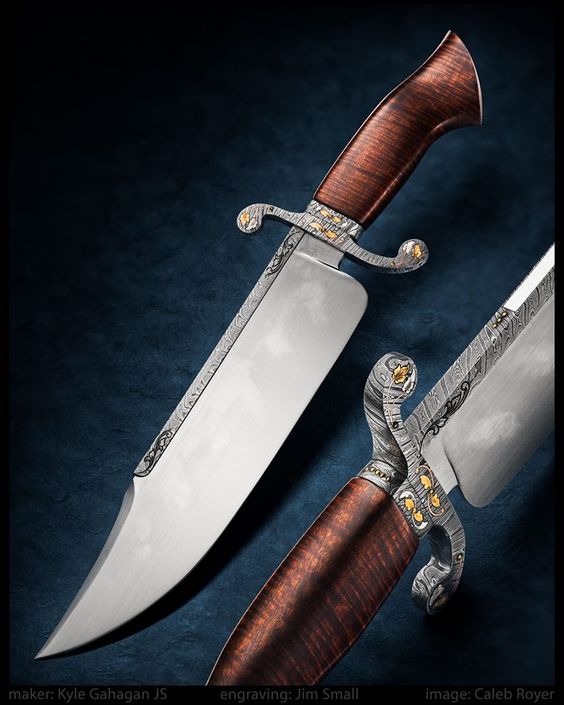
Big blades can be fun to make and Chris Amos shows you how to make a big bowie in part one of his story this issue.
Big blades from Boker Arbolito.
Big blades go hand-in-hand with Thanksgiving and turkey carving. The Boker Arbolito Carving Set is big bird ready!
Fremont big blades
A hatchet may not fit into your classic definition of big blades but it definitely can act like one, such as the Farson from Fremont Knives.
Hoffman's big blades
In the realm of big blades, kukris are large and in charge—even compact ones such as this one by Liam Hoffman.
Burns's big blades
As far as big blades go, Robert Burns’s Joe Musso Bowie is a cutting behemoth.

Big Blades ‘n Edges, including reviews of the newest factory hatchets, some of today’s top custom bowies and four top turkey carving sets, highlight the latest BLADE®, on newsstands NOW!

The latest BLADE leads off with “Big Bad Blades,” Daniel Jackson’s assessment of some of today’s hottest bowies and their makers, including Mike Quesenberry, James Huse II, Jason Fry and Robert Burns. Each has an approach to “America’s Knife” sure to stir your bowie blood. Speaking of which, if Daniel’s story makes you want to “take the next step,” check out part one of “How To Make a Bowie” by Chris Amos.

In “Chop Shop,” join Abe Elias as he takes four contemporary hatchets—the Tomahatchet cover piece, Condor Tool & Knife Greenland, Browning Outdoorsman and Fremont Knives Farson—and subjects them to a round of hacking and cutting exercises. And in “Turkey Cuts,” James Morgan Ayres not only tests a quartet of the latest factory turkey carving sets from Victorinox, Santa Fe Stoneworks, KAI Shun and Boker Arbolito, but he shows you how to prepare your bird for Thanksgiving, too!

Kim Breed tests two custom straight knives with wharncliffe blades by Ryan Sprinkle and Michael Jarvis in “Little Knives, Stout Cutters. In the latest installment of the Knives That Changed Knife History, Mike Haskew outlines how BLADE Magazine Cutlery Hall-Of-Fame© members Blackie Collins and Ken Onion spearheaded the revolution in assisted-opening knives.

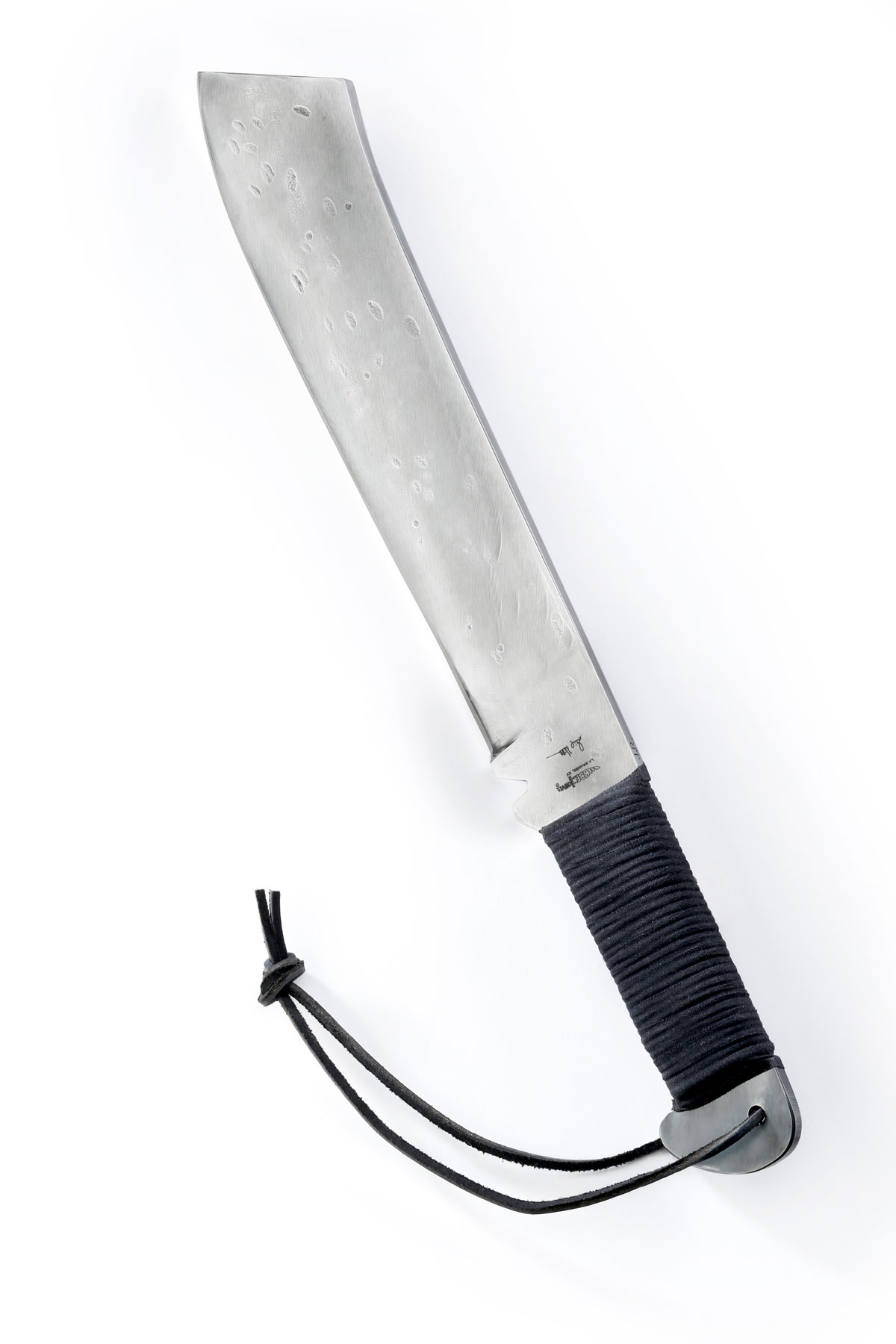
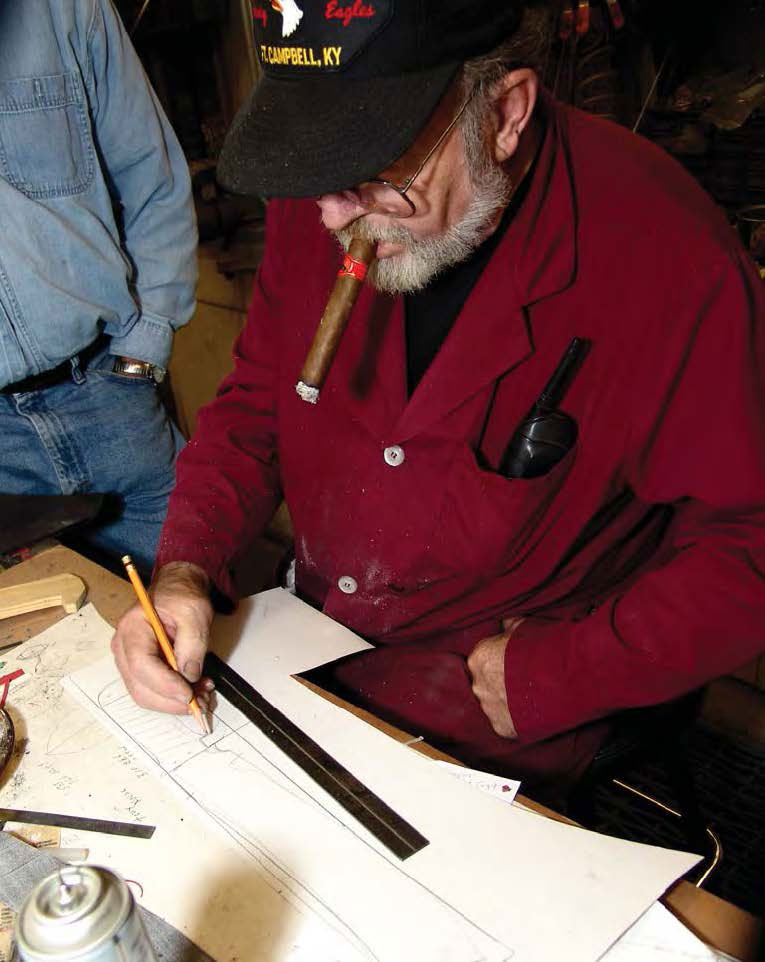
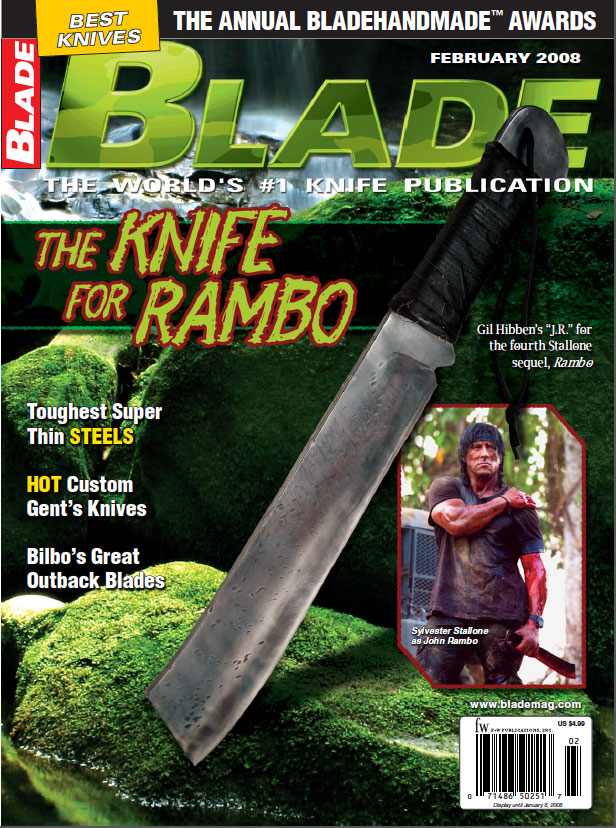
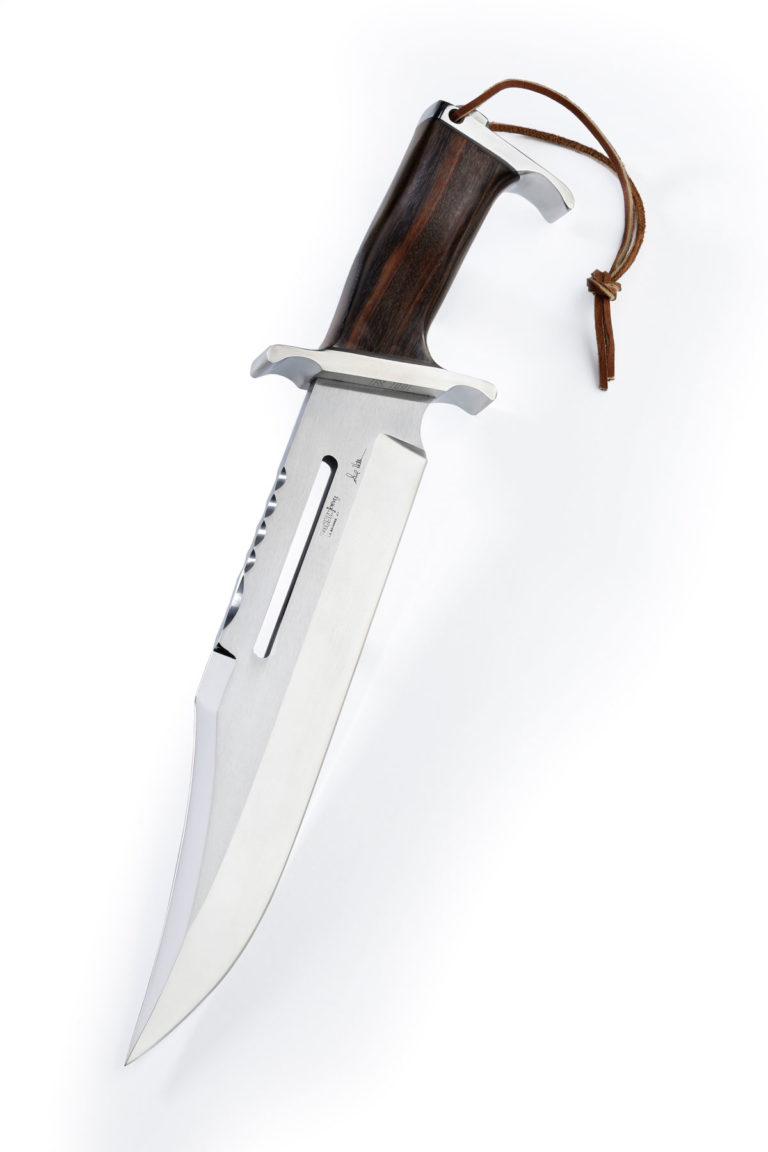
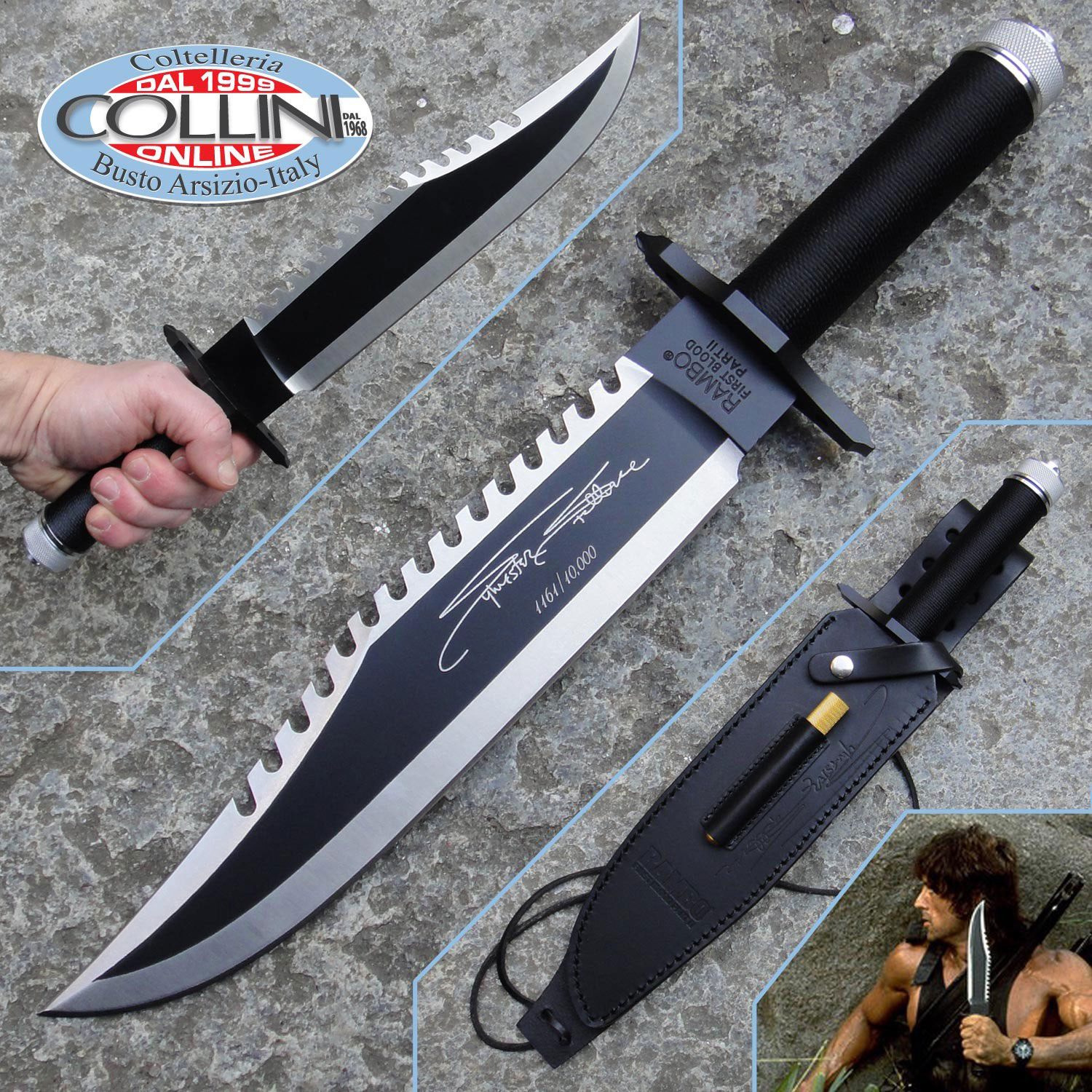
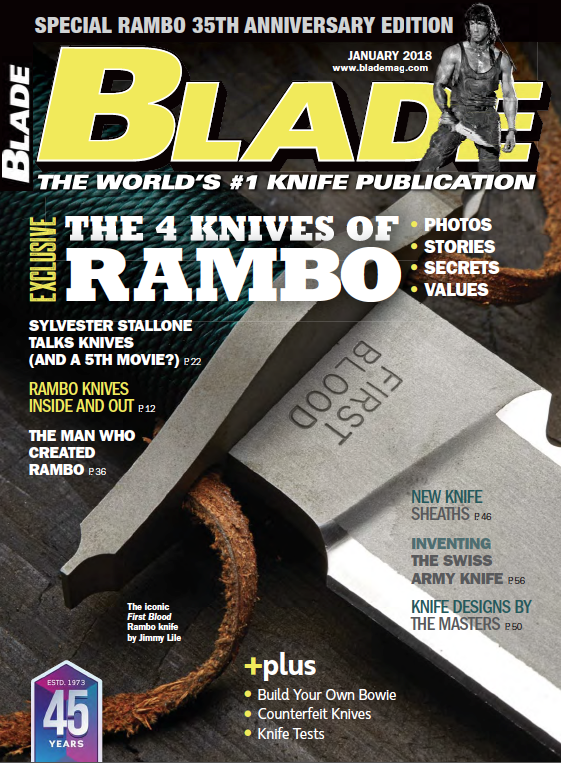
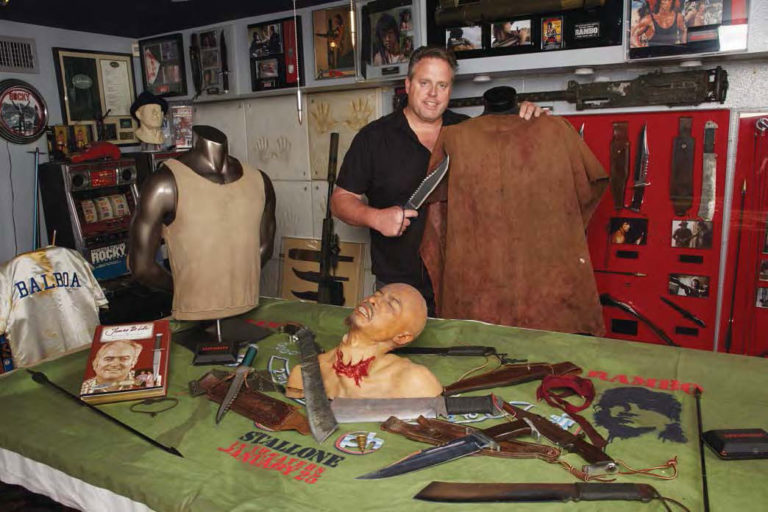
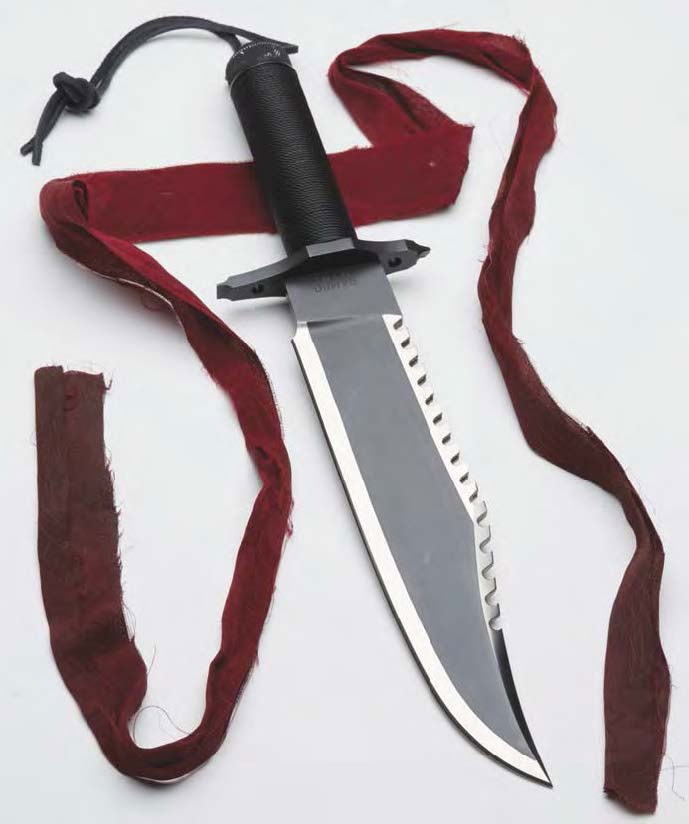
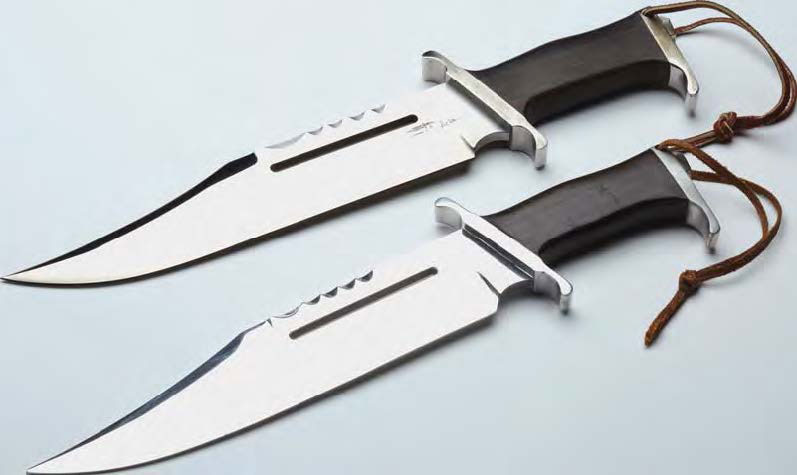
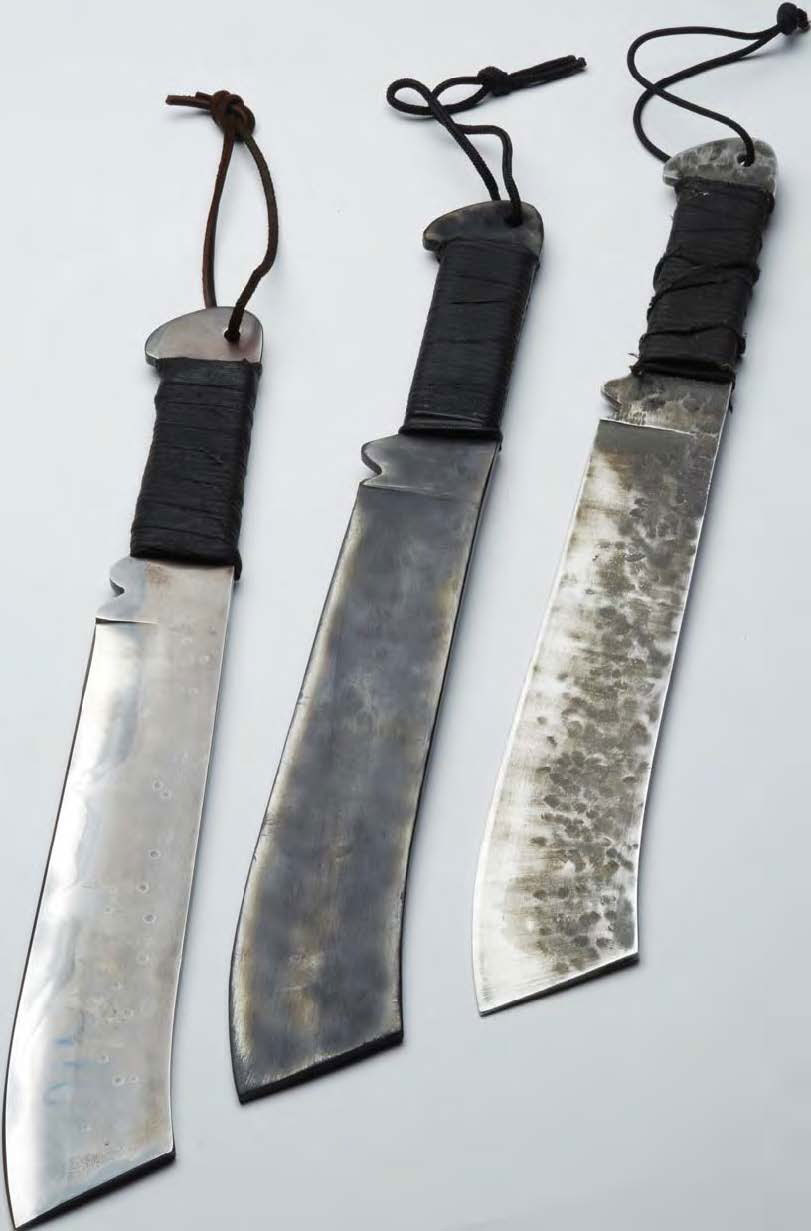
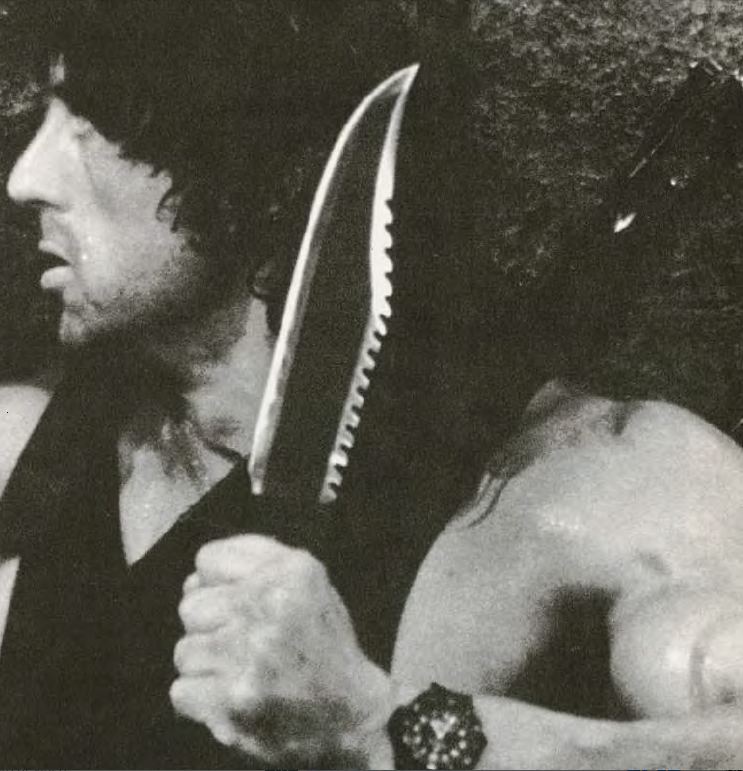
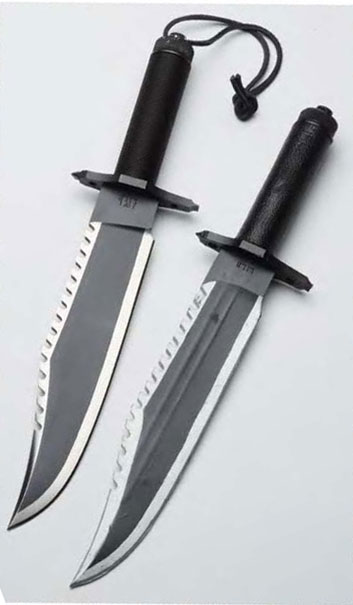
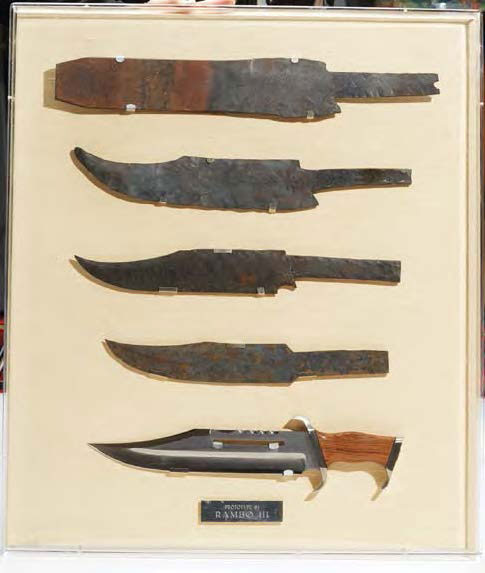
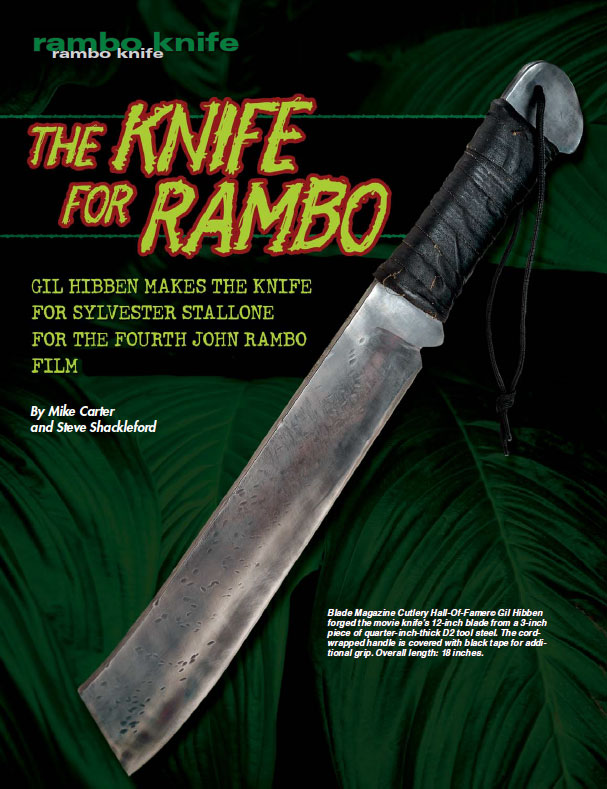
Speaking of history, Pat Covert examines the over six decades of making Rambo and Star Trek knives, reproducing Paul Ehlers‘ fantasy knife designs, terms as president of The Knifemakers’ Guild, holding a private audience with Elvis Presley and much more of the fascinating life of Cutlery Hall-Of-Famer Gil Hibben.

There’s more, including a new breed of modern slip joints, the very first story of the very first issue of BLADE (then the American Blade), Liam Hoffman‘s compact kukri and scintillating scads of sharp stuff, all in the latest issue of BLADE.

Great Knives Have “Face”

Great knives have face. I’m not talking about a face like on a Halloween mask, but a knife with a design or style that’s recognizable by a large number of knife enthusiasts as having been made first by one knifemaker and one knifemaker only.

The face, in this instance, is the unmistakable knife design or style of the maker in question.

How the term came about I’m not exactly sure but I’ve heard it from or read it written about by long-time observers of the knife scene, including BLADE Magazine Cutlery Hall-Of-Fame© members Bernard Levine, Bruce Voyles and others. One explanation of face that applies here is that I may not know or remember a person’s name, but if I know his or her face I almost always instantly recognize it. The difference in the instance of knives with face is that I recognize both the knife design or style and the maker’s name.

There are at least two provisos: 1. To fully qualify as a knife with face the knife must be recognizable by a large number of knife enthusiasts. Now, there no doubt are great knives made by makers that one or a few enthusiasts may recognize as being the knives of specific makers, but the ones that really fill the bill are the ones many enthusiasts can look at and say, “Yep, that’s so-and-so’s knife.” It’s effective in terms of a conversation starter among knife enthusiasts who are friends, or as a conversation icebreaker among those who have just met. They don’t know each other but they do know great knives with face.

2. Some of the makers of knives with face have had their designs with face emulated by many others. Even so, if the knife has face those who recognize it will say that it’s in the style of the maker who originated it.

Following is a selection of great knives with face and why they qualify. Enjoy!

  1. The Bob Loveless dropped or drop-point hunter. The Loveless drop-point hunter is one of the great knives with face on this list that meets Proviso 2 above. While it may not appear to be all that unusual, the drop-point style of the blade—where the blade tip falls below the plane of the spine—is something Loveless popularized in the 1970s and ’80s, and it remains his signature style to this day.
  2. The Bill Moran style. Actually, as with Loveless, any number of Moran knives have face, though I’ve chosen one of my favorites: the ST-24.  The flowing blade with a long clip point and ergonomically contoured dropped handle with silver wire inlay is unmistakably a Moran.
  3. The Michael Walker style. Walker’s linerlock folder changed knives forever but he also makes models unlike anyone else. Outfitted with any number of his clever and innovative locks, each of which gives the handle a notably different look at the pivot, Walker’s knives use the latest and most exotic materials, are embellished in any number of creative and ornate ways, and usually have some of the most interesting blade shapes you’ll ever see.
  4. The Jurgen Steinau style. When I first saw one of Jurgen Steinau’s knives, at first I wasn’t even sure I was looking at a knife. The designs, angles and materials of his knives are like something from a book on intergalactic architecture. Suffice it to say, Steinau’s great knives have face—and then some!
  5. Jim Schmidt’s Goblin Folder. Schmidt’s Goblin Folders have face in more ways than one. Not only do they have the face of a goblin on the handle’s stag butt, but that face makes the knife unmistakable as the style originally made by Mr. Schmidt. A number of his other models have face as well.

There are others who make great knives with face. Which ones make your list?

Loveless and Schrade
1 The Loveless dropped or drop-point hunter has face in large part because of the drop-point blade with the tip that drops below the plane of the spine. An original is shown at bottom here, with a Schrade repro at top.
Jurgen Steinau knife
4 Jurgen Steinau’s great knives have face for their design, angles and materials that look like something straight out of a book on intergalactic architecture.
Michael Walker folders
3 Michael Walker’s spectacular folders have face for any number of reasons, from their distinctive pivots to their exotic materials, creative embellishments and standout blade shapes.
Moran ST-24
2 Bill Moran’s ST-24 has face thanks to the long, flowing blade and ergonomic dropped handle with silver wire inlay—not to mention his distinctive sheaths. Those who know great knives recognize the Moran style immediately.


Schmidt's Goblin Folder.
5 Jim Schmidt’s Goblin Folder has face in more ways than one—it actually has the face of a goblin on the handle butt!
Advertisement

Must Read Articles

Read this before you make a knife

Knifemaking 101 – Read This Before You Make a Knife

  by Wayne Goddard My experience has taught me that there's nothing like digging in and getting started. I've often said the hardest part of the...
how to forge damascus steel

How to Forge Damascus

Advertisement
Advertisement