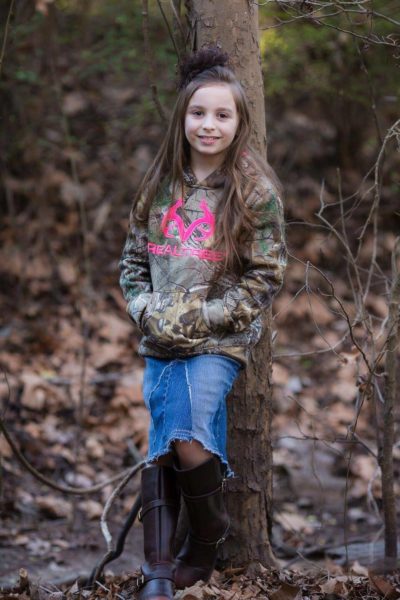
Ten-year-old Jordan Toerck had been pestering her knifemaker father, Bobby Toerck, to make her a knife for a while. But she was still young, so Bobby held her off. He promised to make her a knife when she got her first deer. Well, in January, she did just that and true to his word, Dad made a knife for his deer-hunter daughter.
Ten-year-old Jordan Toerck was in her second season of deer hunting when she got her first deer. As promised, dad made her a knife to mark the occasion.
It was bitterly cold that January day: 14 degrees, which is “almost unheard of in East Texas,” Bobby said. Jordan had been accompanying her father on hunting trips off and on for about four years, since she was 5 or 6. This was her second year of active hunting. It was youth season, which follows the general season. This particular morning father and daughter were set up in a tent blind on the ground half an hour before dawn. By 7:30 Jordan said her feet were cold. Her father admitted his feet were cold too, but if they sat still and were quiet, they’d see something.
They saw a feral hog run through at a high rate of speed, but that was about it. By 9:30, Bobby decided that they could go in. They went back out at 3 p.m. and conditions were much more favorable for father and daughter. The temperature had risen to the upper 30s and there was no wind because they were protected by a wind block. “Around 5:30 Jordan got antsy, as kids do,” Bobby said. He told her to sit still and be quiet and they’d see something.
Sure enough two other does came into view, and then a third and larger one. Jordan sighted through her Leupold 4.5-14x50mm Long Range scope and put the crosshairs where her father told her to aim. Her Remington 700 BDL Custom Deluxe bolt-action rifle was propped up on Jim Shockey-style shooting sticks, which her father had fashioned with ¾-inch dowels and paracord.
“The next thing I know, I hear a bang,” Bobby said. The deer ran off into the brush. Jordan knew she had hit it and so did her father. They waited about 10 minutes for things to calm down then walked to where the deer had been standing. “We found blood and I immediately started teaching Jordan about tracking,” Bobby said. They didn’t go more than 40 yards before they found Jordan’s deer. It was dead and had been hit exactly where she told her dad the crosshairs had been when she pulled the trigger.
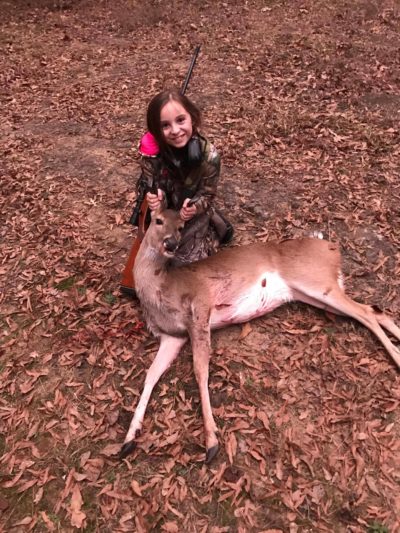
On a cold day in January Jordan Toerck tagged her first deer. She aimed where her dad instructed, learned how to track and was so excited when she found her deer that she jumped up and down, whooped and hollered and, of course, texted her mother.
It was a 110-yard shot, according to Bobby’s estimations. “I should also mention that there is a Briley muzzle brake” on that rifle, he added. It brings the kick of a 25-06 caliber rifle down to the approximate equivalent of a .22 magnum, “taking 90 percent of the recoil out of it.” The setup certainly set Jordan up for success. When they found the deer, “she was jumping up and down, screaming and hollering, then she took out her phone and starts texting her momma,” Bobby said.
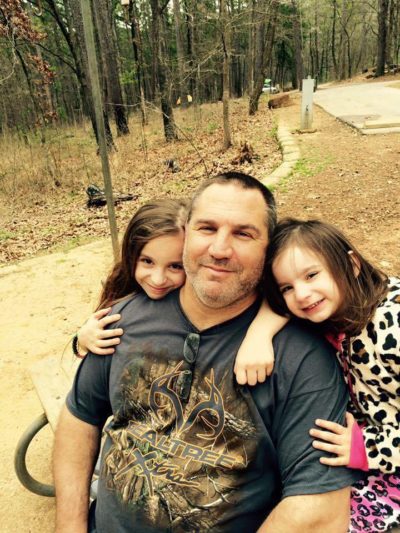
Ten-year-old Jordan and 5-year-old Morgan both love spending time with their father. Soon Morgan will be accompanying Bobby on hunts. “I don’t know what I’ll do. I can only take one at a time. I’ll let them decide which one’s going to get up early,” he said with a laugh.
Right then and there, they filled out the tag and attached it to the deer’s ear. Bobby got his pickup truck as close as possible and they transported the animal home where they hung it in a tree. “She was hands-on, blood up to her elbows,” Bobby said. Even his 5-year-old daughter, Morgan, wanted in on the action. “I’m not raising girls here; I’m raising boys,” Bobby said with a chuckle. At one point he told his wife Amy, that he didn’t want their girls to “have to depend on some man to clean their animal.”
They gutted, skinned and quartered the deer, packing the sections in ice and switching the ice out for three or four days to get the blood out. Then they processed the meat, grinding some, making steaks, ribs for barbeque, even saving the neck bones for soup, noted Amy.
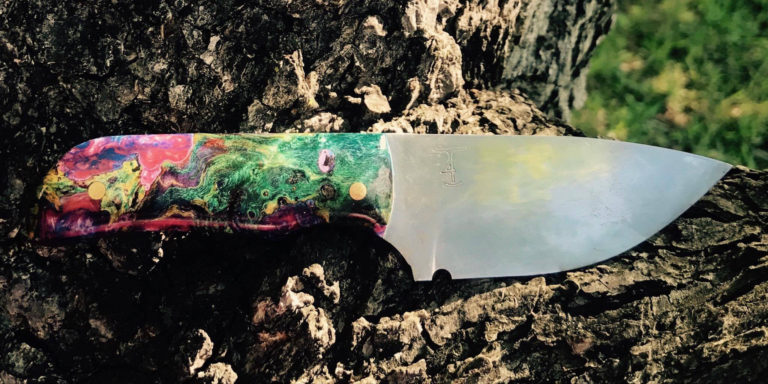
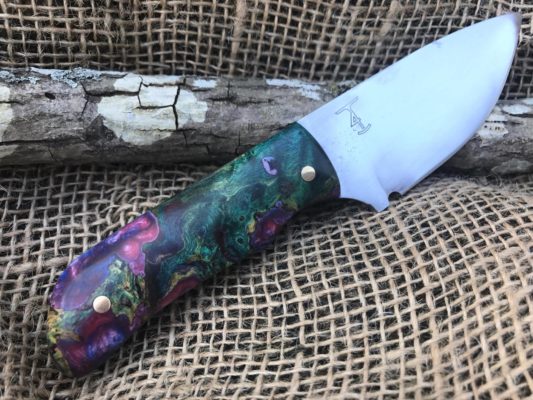
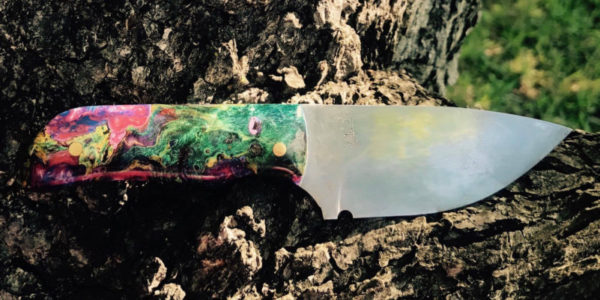
Bobby Toerck made this 6 3/4-inch skinner for his 10-year-old daughter Jordan when she got her first deer. The handle colors, made of triple-dyed box elder by Terry Dunn, reminded him of “mixed up Play-Doh or bubblegum,” and he knew it was perfect for her.
Bobby knew he’d be making a knife for Jordan so when he attended the Long Star Knife Expo in early April he was on the lookout for the exact right handle material. He found it in a triple-dyed box elder offering by Terry Dunn. “The colors in it looked like mixed up Play-Doh, or bubblegum,” Bobby said. It was perfect for Jordan, and the size fit her petite hands.
Visit T4 Custom Knives to see more of Bobby Toerck’s knives. Visit Terry Dunn to check out more handle materials like this.
The full-tang knife is 6 ¾ inches overall with a 3-inch flat-ground drop-point blade made out of 80CrV2 steel. “To me the drop point is the best overall shape for a skinning-gutting knife because you are much less apt to puncture an intestine or stomach with a less pointy front end. And the drop-point will lift the skin slightly before cutting when making the initial cuts up the legs of an animal,” Bobby explained.
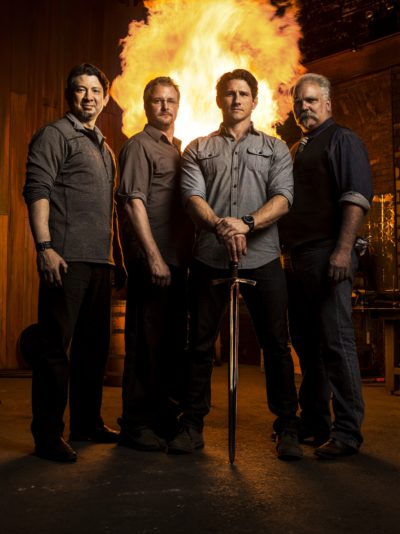
HISTORY’s “Forged in Fire” personalities include from left, Jordan Toerck’s favorite, judge Doug Marcaida; judge J. Neilson, host Wil Willis and judge David Baker. Jason Knight is also a judge. (Image by Miller Mobley/HISTORY)
What did she think when he gave it to her? “She loved it,” Bobby said. “And, of course, she said ‘It will cut,’ because she’s a huge fan of Doug Marcaida in ‘Forged In Fire.’ She loves to watch that show with me,” Bobby said.
Contact Bobby Toerck at T4 Custom Knives on Facebook or at 903-812-1173. Maker’s list price on a knife like the one he made his daughter would be $175 with a Kydex sheath, $275 with a leather sheath.
Help Dad Realize His Knifemaking Workshop
“Wayne Goddard’s $50 Knife Shop” is the perfect Father’s Day gift for the dad who wants to get into knifemaking, but who doesn’t have a lot of flexibility in his budget.
Dad’s money has to cover many expenses, but he should still be able to indulge his knifemaking interests with a modest investment. In “Wayne Goddard’s $50 Knife Shop,” dad can read what’s essential for his work area and what isn’t. This is also a terrific back-to-the-basics read for more established makers. At 50 percent off, it’ll be a $10.99 expenditure that will be referred to again and again.
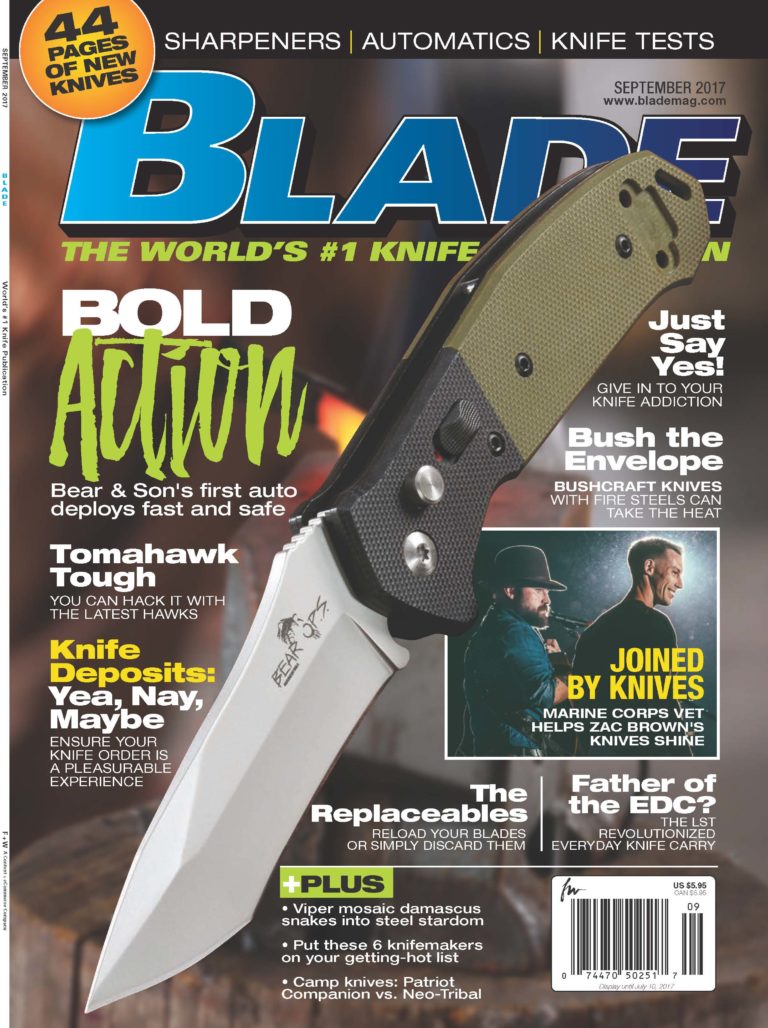
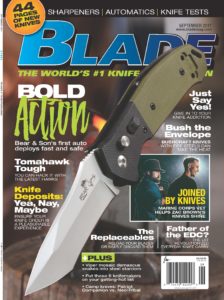
Bear & Son Cutlery’s Bold Action V is the cover knife for the new BLADE®, on newsstands now!
See if bushcraft knives with fire steels can take the heat, meet a Marine Corps vet who helps spread the good word of Zac Brown’s knives, learn whether paying knife deposits on custom knives is for you and more in the latest issue of BLADE®—on newsstands now!
BLADE field editor Abe Elias puts four new bushcraft knives, all equipped with fire steels, through a series of tests and critiques. See how they fare and what makes a good bushcraft knife—not what makes good hype—in “Bush The Envelope.”
Losing both legs from above the knee down would understandably destroy most people, but not veteran Marine Staff Sgt. Joey Jones. Fitted with prosthetic devices after the devastating effects of an IED in Afghanistan, he picked up the pieces in civilian life and has become a powerful motivator for individuals, corporations and charities. He also works with Zac Brown’s Southern Ground, which, in addition to the Southern Grind knife company, funds Camp Southern Ground for children, especially those with neuro-developmental disorders or in families with a parent deployed, wounded or lost. Erin Healy examines Jones and Brown’s Southern Ground in “Joined By Knives.”
Ordering a custom knife from a knifemaker and making a down payment—better known as a deposit—on the knife is something collectors have done for many years. But is paying deposits for you? Custom knife purveyor Les Robertson guides you through the do’s and don’ts of the practice in “Knife Deposits: Yea, Nay, Maybe.”
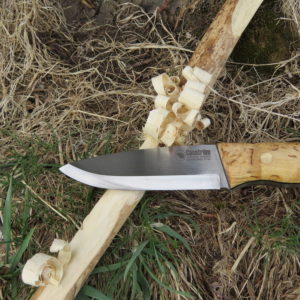
Can Casstrom’s Woodsman bushcraft knife with fire steel take the heat? Abe Elias shows the way in the latest BLADE®,
Also in this issue of BLADE:
•The latest in factory automatics, including the cover knife, an entry from Bear & Son Cutlery’s first-ever line of autos, the Bold Action V;
•Learn how the super-lightweight Gerber LST folder changed knife history in “Father of the EDC?”;
•MSG Kim Breed, retired 5th Special Forces, puts a couple of heavy-duty camp knives through the ringer in “Is Bigger Better?”;
•James Morgan Ayres tests four of the latest factory tomahawks in “Tomahawk Toughies”;
•BLADE field editor Ed Fowler recounts his lifelong addiction to knives in “Just Say Yes!”;
•In “A Linerlock On Roller Skates,” Leroi Price describes a new approach to the linerlock developed by Jake Hoback;
•BLADE field Dexter Ewing concludes his three-part series on 12 of the newest knife sharpeners in “The Hone Zone”;
•Reload your knife with sharp blades or simply discard them in “The Replaceables” by Pat Covert, and;
•You can almost hear the mosaic damascus “snakes” on Greg Cimms’ chef’s knife blade hiss in “The Dubai Vipers.”
You get all this and much more in the latest BLADE. Click here for the download edition. To subscribe to BLADE, click here for the domestic print edition, here for the international print subscription, here for the Canadian print subscription and here for the digital subscription.
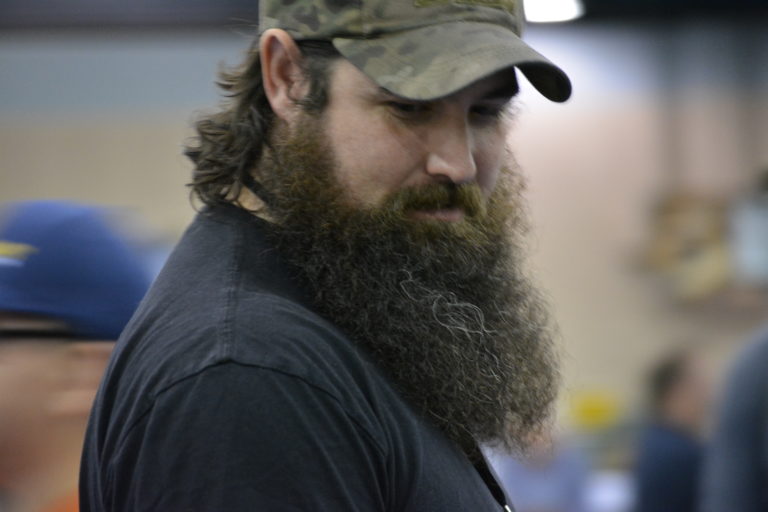
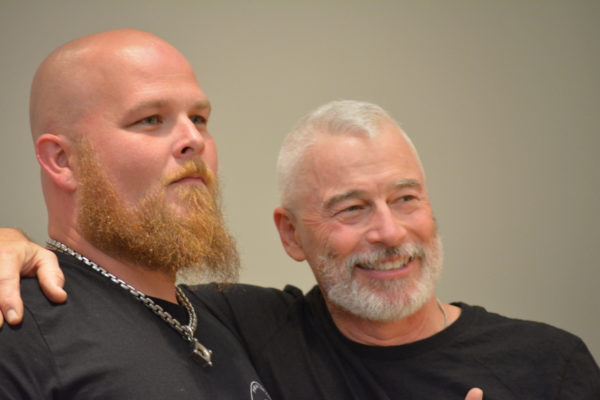
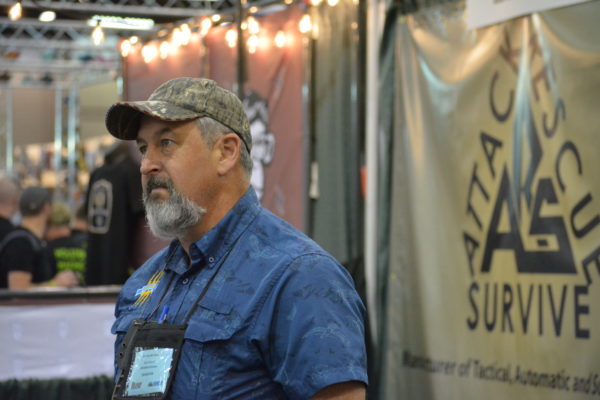
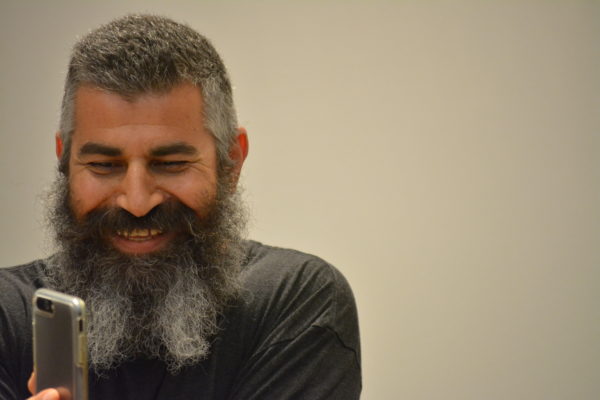
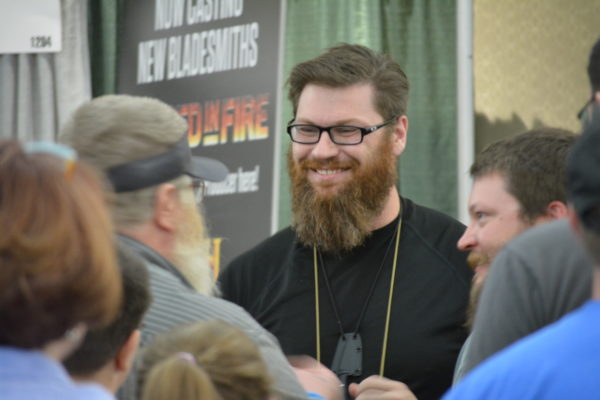
Short, long, thick, thin—and we’re not talking about the wide variety of knives at BLADE Show. No, we’re talking about facial hair that made men nod and women blush. The beards of BLADE Show impressed all! This collection is only a small representation of what we saw at the show. We don’t care about the ebbs and flows of fashion or laboratory tests on what’s found in beards, which frankly only tell us that bearded men live life to the full extent of their whiskers! Here at BLADE, we only hope the tradition continues.
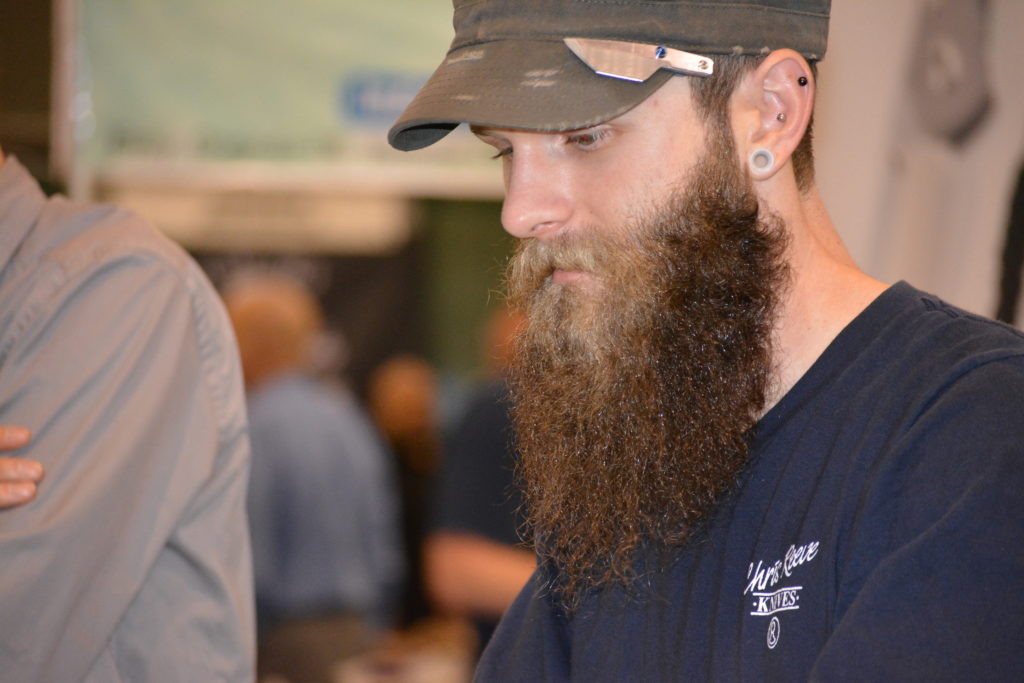
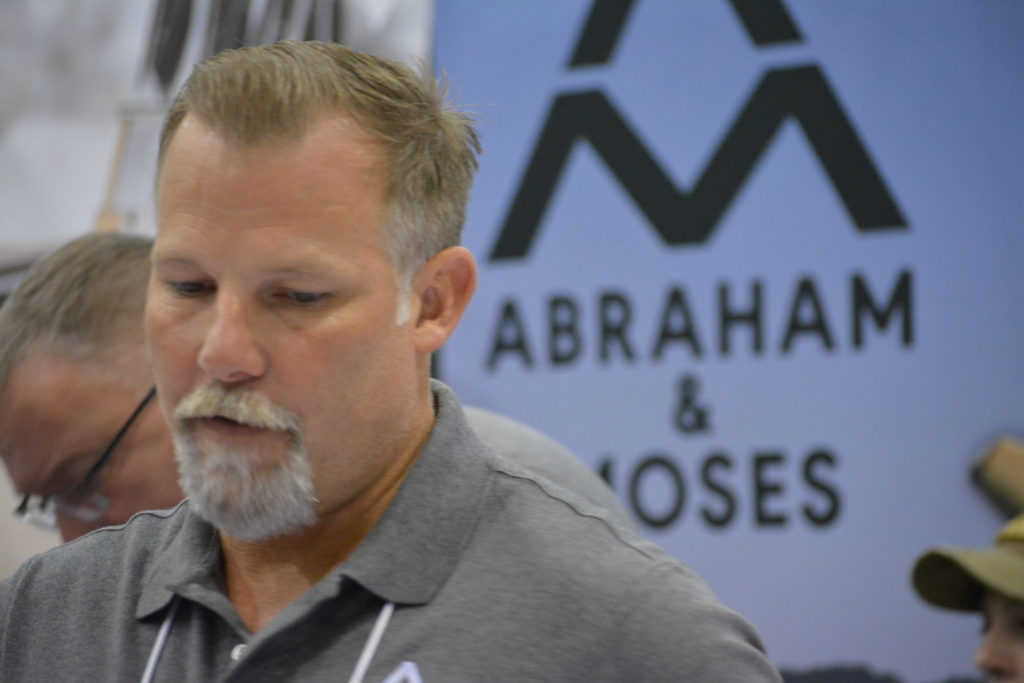
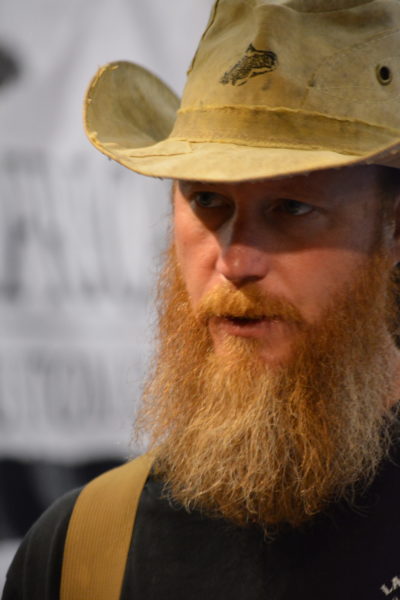
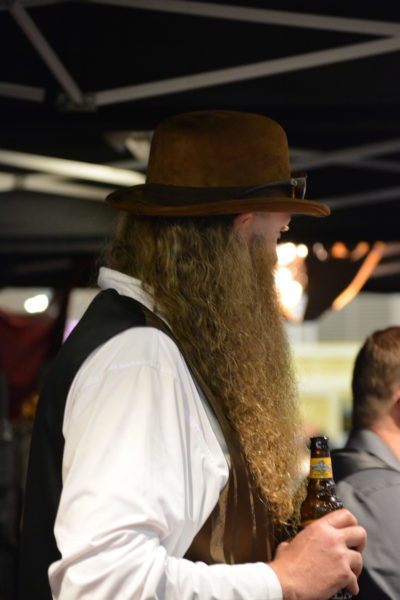
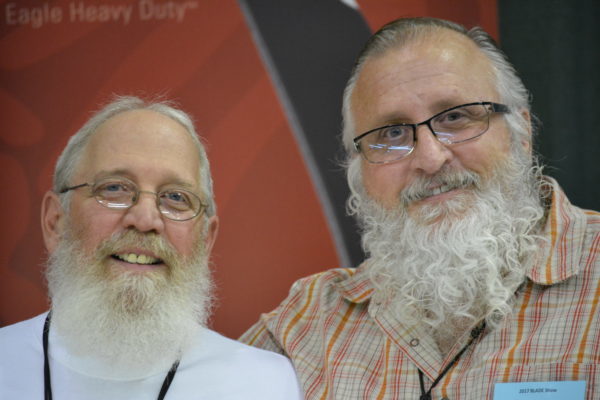
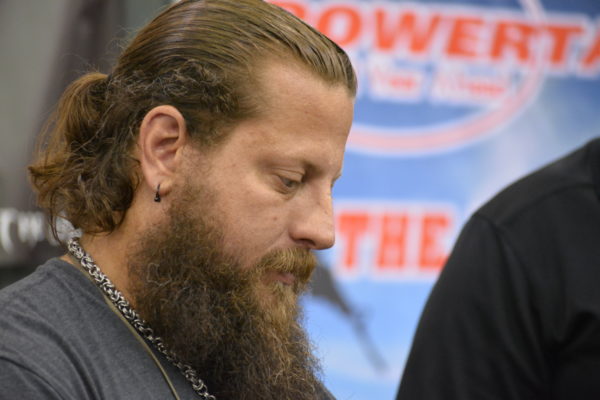
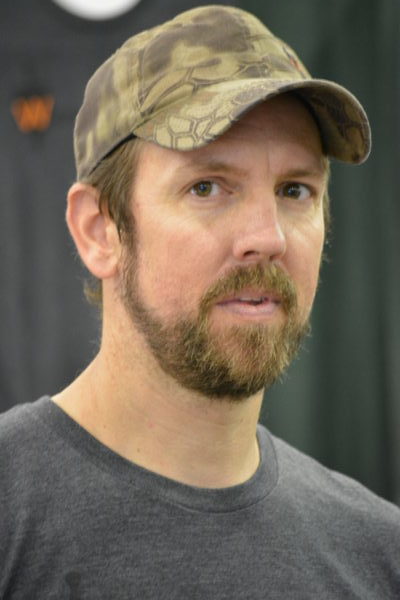
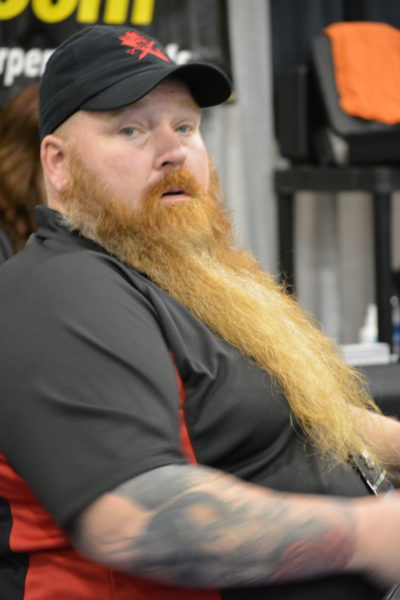
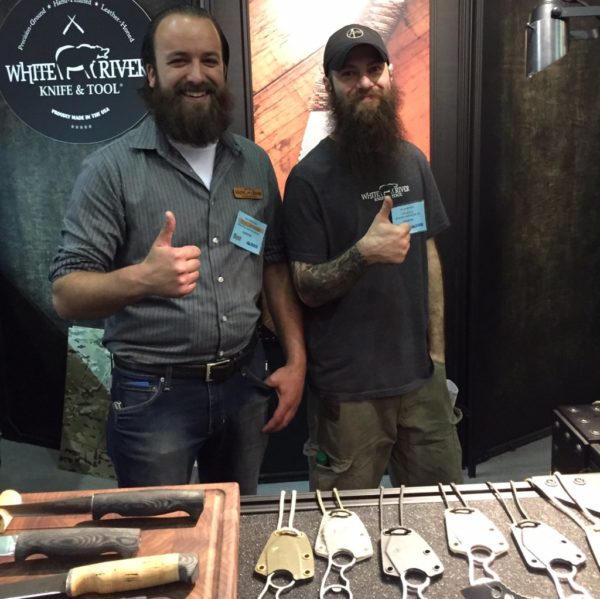
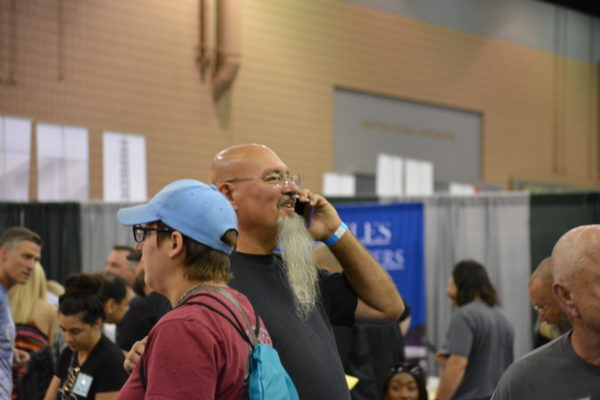
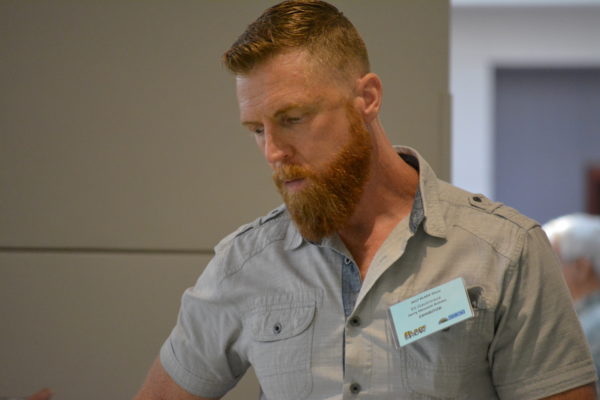
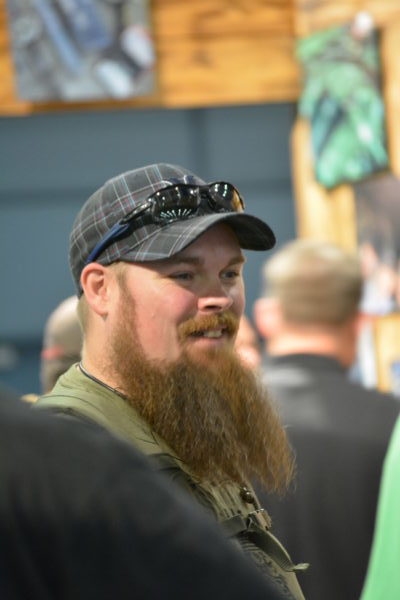
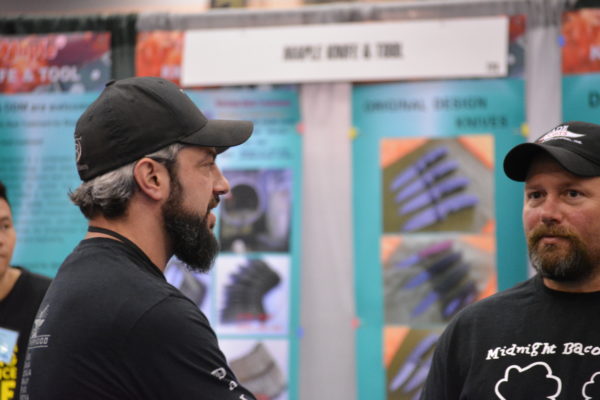
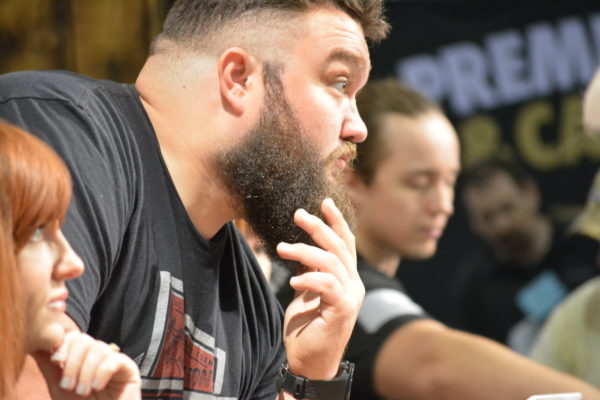
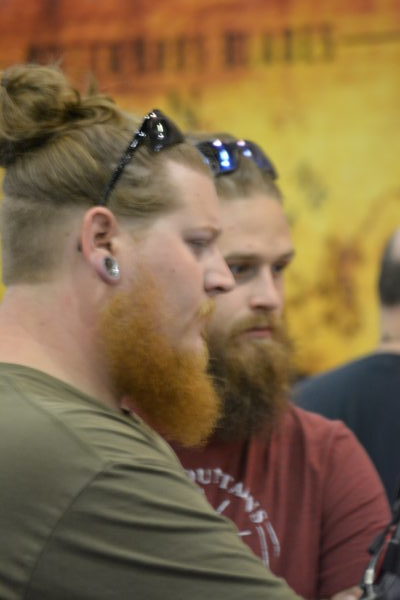
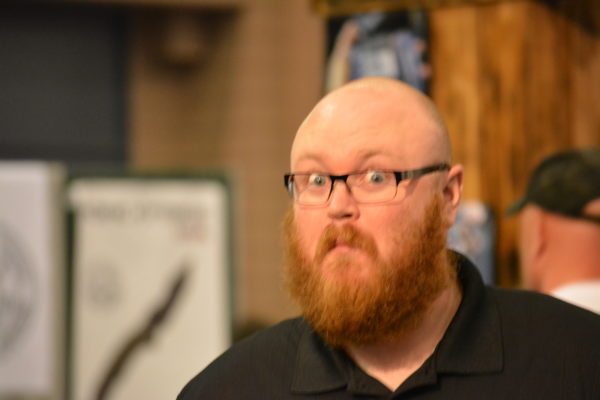
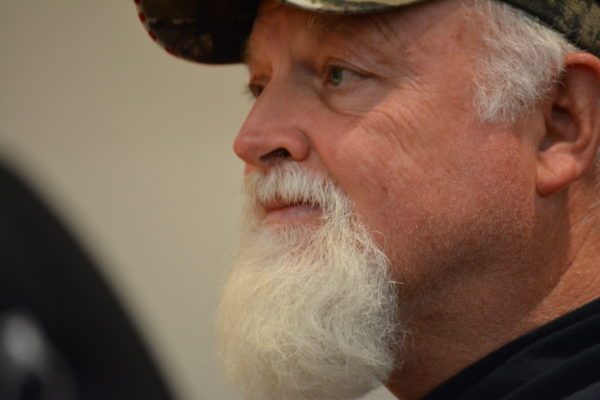
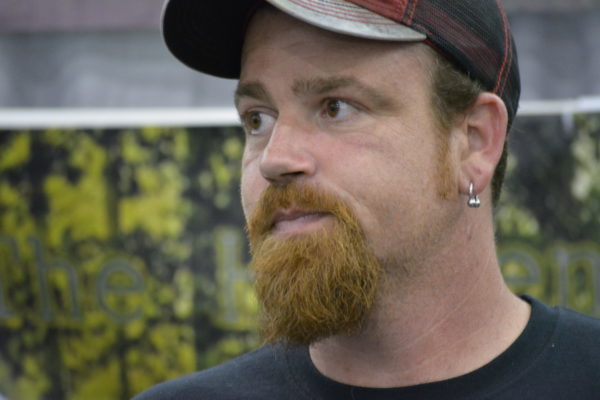
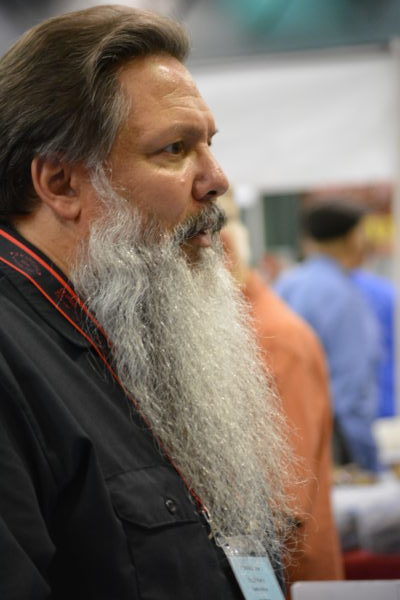
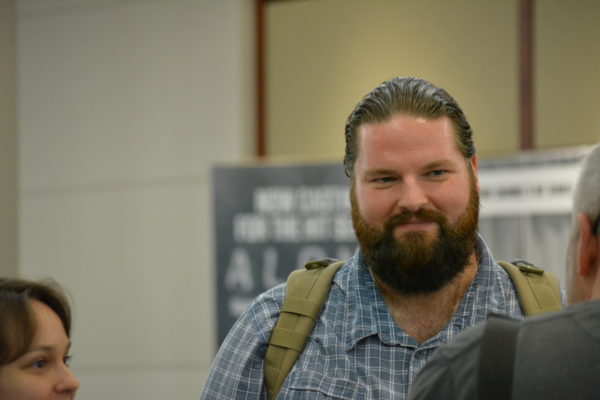
The beards of BLADE Show impressed all. This example of a full beard is combined with longer hair for a decidedly not-hipster, backwoodsy look.Another Bandholz, only this one with shorter hair, could be seen at the Chris Reeve Knives booth. We also liked the hat adornment. We guess BLADE Show had something to do with knives, but back to beards…Lou Goodman of Abraham & Moses Survival Equipment sports a neat Van Dyke, which is any mustache-beard combo but with cheeks clean-shaven.We liked the gradations of red in this full beard on Larry Roberts, “Alone” Season 2’s runner-up.Ever see a Lynyrd Skynyrd concert? We found this full beard-long hair combination, if we remember correctly, at Zombie Tools.These old-school gentlemen at Al Mar offered two styles of white whiskers and we loved them both!At Rustick Knives we found the warrior tradition expressed in a samurai-esk ponytail and full beard on the owner of Harp Leather.Dave Wenger, owner of Wenger Blades in Hudsonville, Michigan, rolled with a Hollywoodian, which from what we can figure is a trailback that meets up with sideburns. Who cares what they call it; we like it!Dan “Jake” Jaquay of KME Sharpeners chilled out on Sunday at BLADE Show with his flame-red chin tresses.Our photographer went back more than once to try to capture the wildness at White River Knife and Tool, but could never seem to catch Matt C. and Alan N. at the same time. Fortunately, they caught wind of our mission and sent this along. Double-YES!Officially a Van Dyke, the goatee on this show attendee is going as far as it wants.Eli Gautreaux of Jerry Hossom Knives checked out the Knife of the Year Award entries in the lobby.A show-goer seems to be having a good time while we admire his Hollywoodian done to full length.We found that bearded men tended to have bearded friends, so we often got twofers!A barback at Key Bar caresses the whiskers.These two show-goers worked the man buns, ear stretcher and shades.As much as we tried to capture bearded men unaware, they often knew they were being watched.This lucky winner at the Ernest Emerson Custom Knives Lottery almost looks like he is starting a French fork-style of beard. Ernie looked as debonaire as always.Ken Hunt of Attleboro Knives in Idaho sports a salt and pepper Van Dyke.Another lucky winner at the Emerson Knives Lottery, Sevag Tankian, rocks a distinctive full beard.Stephan Fowler of Fowler Blades paired his full beard with a tactikilt one day, but, well, that’s a story for another BLADE Show.This luxurious white Van Dyke was worn well by a gentleman attending the Emerson Custom Knives Lottery on Saturday.We always enjoy talking with new knifemakers…oh, and look, a beard. We hope to see this knifemaker back again next year, along with many others. Like and Follow “Erin at BLADE” on Facebook for guidance on how to get your knife into BLADE Magazine.A righteous beard! If a knife doesn’t catch your eye at BLADE Show, we’re thinking a beard or two might.Be sure to plan for BLADE Show 2018 starting now. You know there will be plenty of knives, and if there’s ever an exhibition of beards, this is the place!
This three-book set will be referred to repeatedly by those both new and established in the knifemaking craft.
Did BLADE Show 2017 get you pumped for knifemaking? This two-paperback, one-e-book set will answer question for those new to the art, while also reaffirming or acting as a review for those more established in their craft. Included are: “How To Make Knives,” “The Wonder of Knifemaking” and “Wayne Goddard’s $50 Knife Shop, Revised.” Normally this trio would cost you $99.97, but you can get it now for $34.99.
Atlanta, Georgia (June 3, 2017) – Awards recognizing the highest achievement in the custom and factory knife industries were bestowed the evening of Saturday, June 3, 2017, at the BLADE Show in the Cobb Galleria.
2017 BLADE Show Knife of the Year® Award Winners
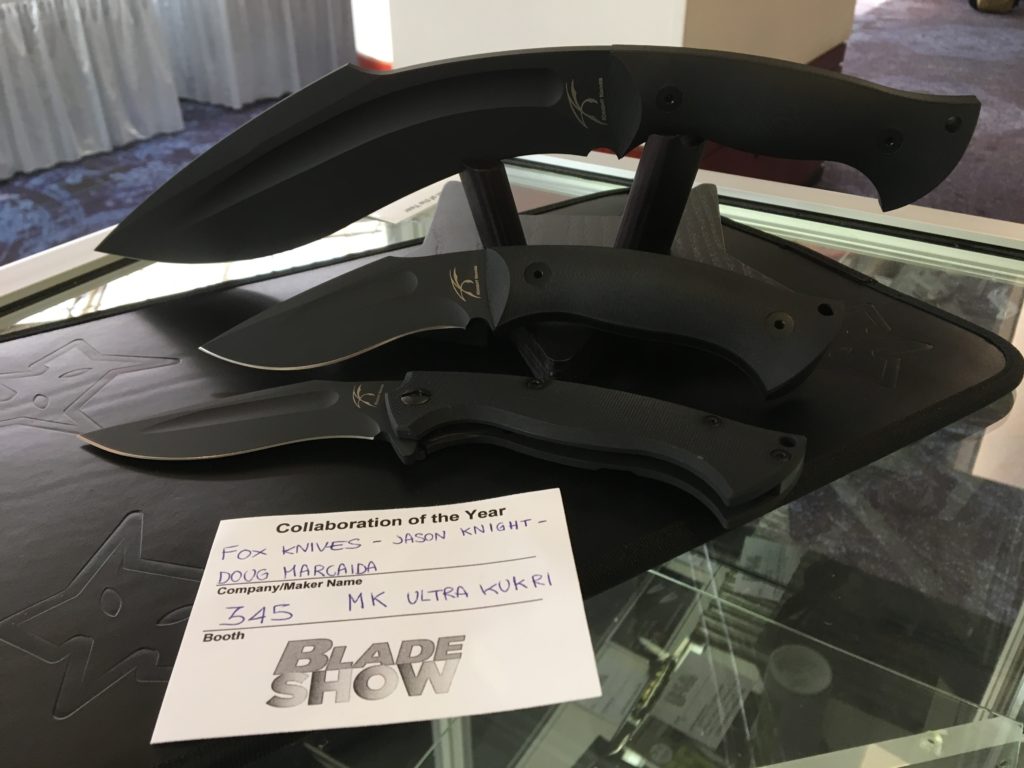
Representatives from BLADE (www.blademag.com) distributed BLADE Magazine Knife of the Year® awards in 13 categories. Two of the awards—Industry Achievement and Publisher’s—went to a retail knife store and a knife-related organization, respectively, for their contributions to the world of knives.
All entrants in the Knife of the Year® competition were judged on a number of factors, including utility, design, creativity, materials, aesthetics, feel and other traits.
The 2017 BLADE Show Custom Knife Award Winners were also announced on Saturday, June 3, 2017, at the Cobb Galleria in Atlanta.
Best in Show: CAS & Sam Lurquin collaboration
Best New Maker: Phil Jacob
Most Innovative Design: Grace Horne
Best Fixed Blade: CAS
Best Damascus: Mike Deibert
Best Bowie: Jean-Louis Regel
Best Folder: Glenn Waters
Best Fighter: Josh Fisher
Best Handle Design: Ben Seward
Best Miniature: Glenn Waters
Best of the Rest: Lloyd Studios
Best Utility Hunter: Wess Barnhill
Best Tactical Folder: Brian Nadeau
Best Sword: Ron Chen
Best Collaboration: CAS & Sam Lurquin
Best Art Knife: David Broadwell
About BLADE Show
The BLADE Show is the world’s largest, most important knife show, and has taken place every year since 1982 and in Atlanta since 1992. Upwards of 1,000 exhibitors from more than 20 countries display their knives and knife-related items over a three-day cutlery celebration that also features BLADE University knife seminars, knife auctions, custom knife awards, celebrity appearances and much more.
About BLADE
BLADE® Magazine (www.blademag.com) is the world’s No.1 knife publication. It is also the world’s oldest knife magazine, publishing its first issue in 1973. In conjunction with the BLADE Show, it has sponsored the Knife of the Year® Awards annually since 1982. The awards are the most coveted honors in the factory knife industry and are voted on by the booth exhibitors at the BLADE Show, who this year number more than 200. Only BLADE Show booth exhibitors are eligible to enter.
The BLADE Show and BLADE Magazine are the properties of F+W of Cincinnati, Ohio.
See 40 Years of Knives that Changed the World
BLADE collected the very best factory and custom knives into two digital collections to showcase the blades that changed the edged world forever. Click a cover to grab yours today.
Knives, knives, more knives, knives, knives, this knife, that knife, other knives, knives and more knives. It’s BLADE Show time!
If the first day of BLADE Show 2017 could be summed up in one word, it’d be “the line.” That’s actually two words, but it’s fitting for the enormous early turnout of knife enthusiasts waiting for the doors to open. Never before has the line gone literally out the door, and into the parking lot, and probably crossed a few state lines.
Make no mistake, folks. The world of knives is alive and well, and beating expectations on every front. The official tallies will be made later, but this must’ve been a record. A first for a Friday!
Here’s what the show floor looked like moments after the doors opened:
In fact, it was a show full of firsts. How could it not be with the length of those lines? There’s bound to be a few newbies in there.
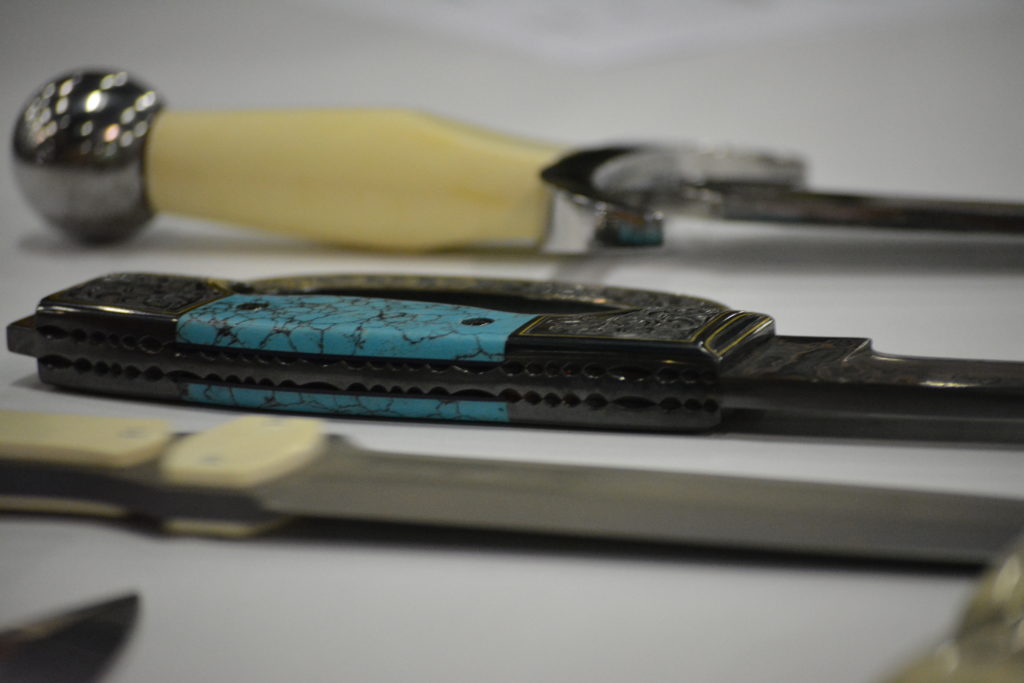
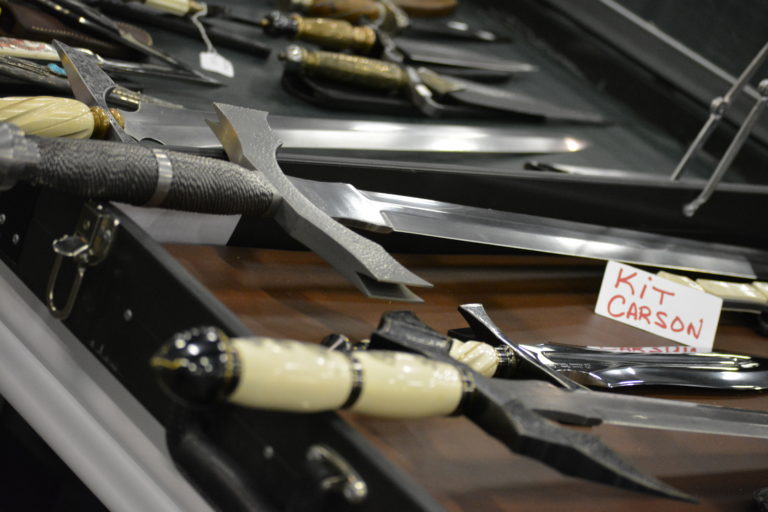
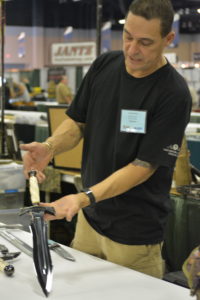
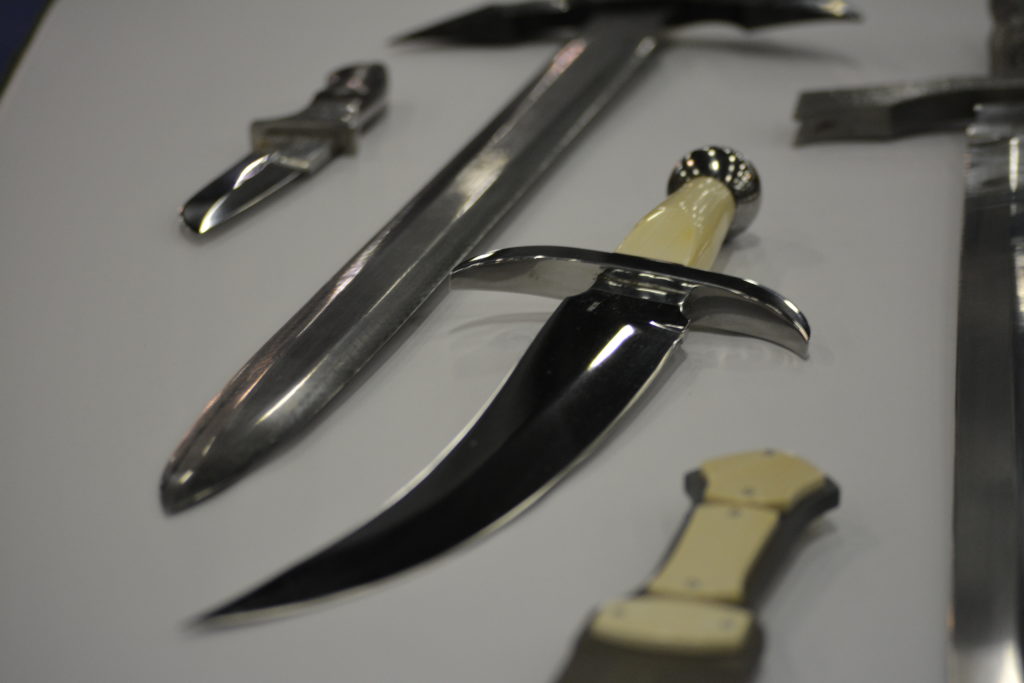
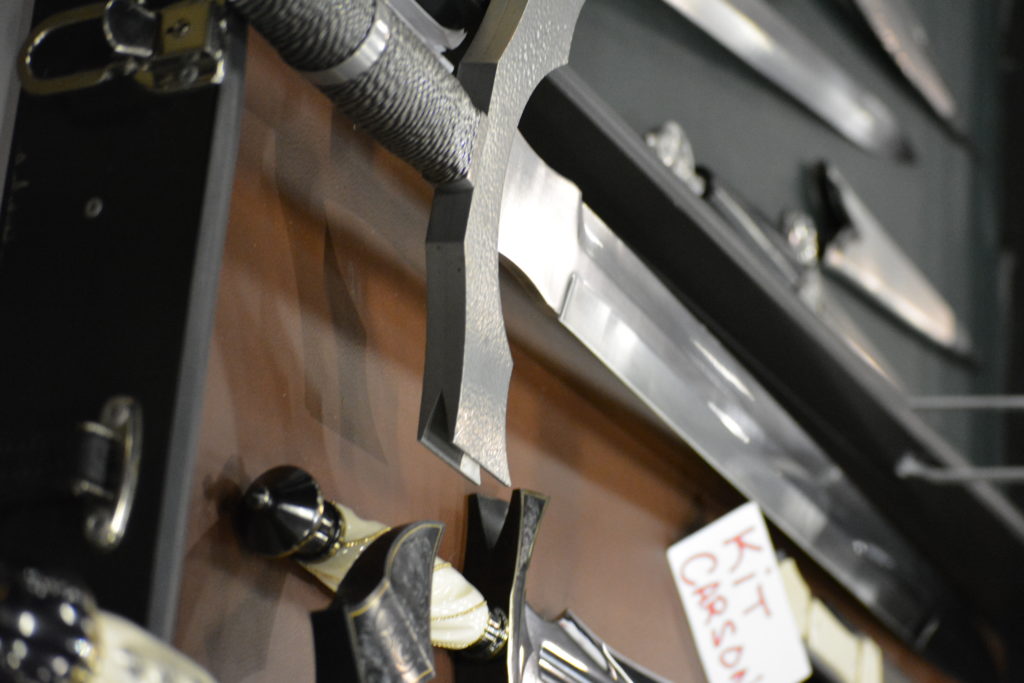
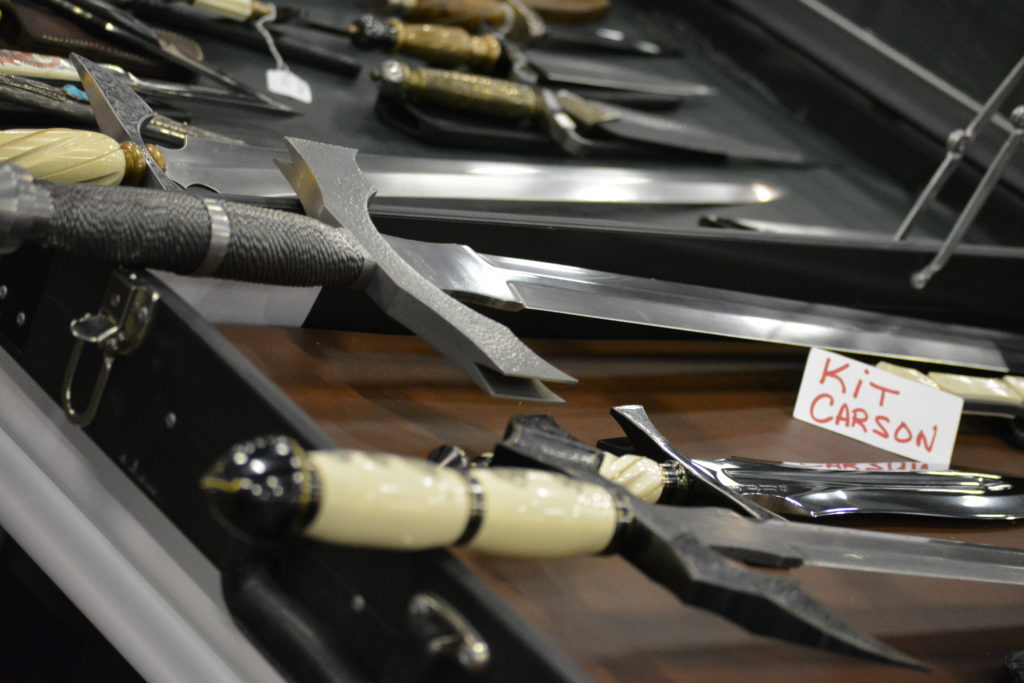
BLADE Show first-timer Erin Healy, BLADE‘s new managing editor, cut her teeth with a cool Kit Carson sword find. Did you know Kit Carson made swords? Well, now you do.
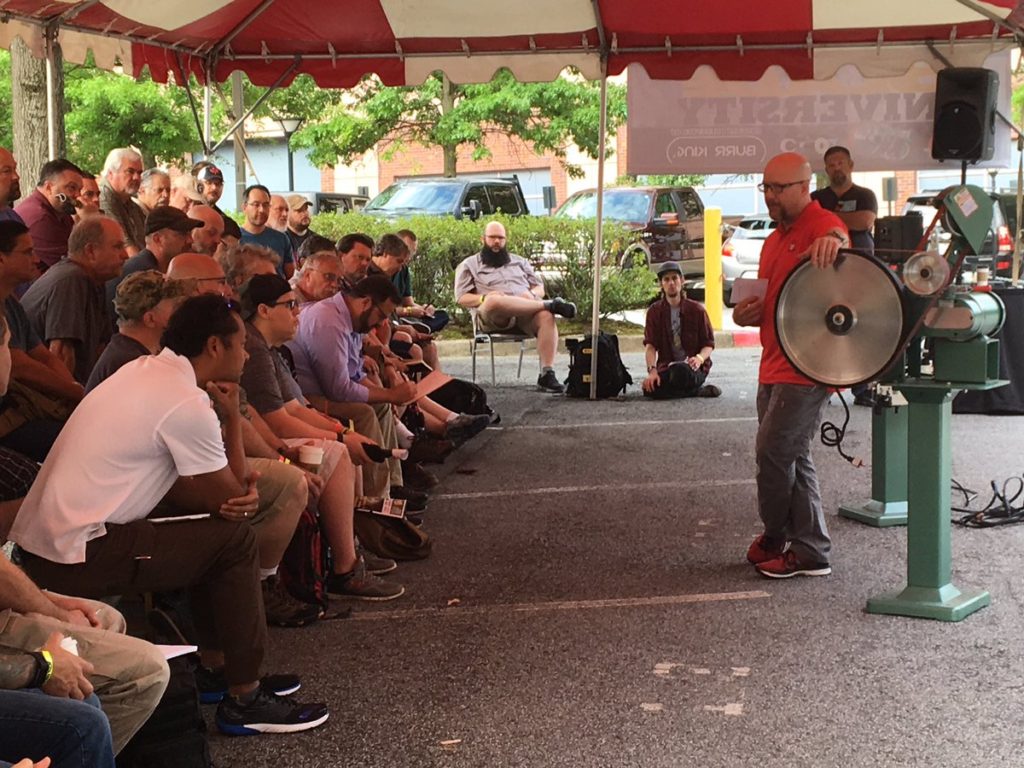
The learning didn’t stop there. BLADE University opened up a whole new world of knifemaking to attendees with not one, not two, but three classes on knife grinding. Instructors also zeroed in on how to select blade steel, making knives from simple tools, selecting an edge style and more.
Tom Krein dishes the dirt on knife grinding secrets. He conducted three well-attended sessions.
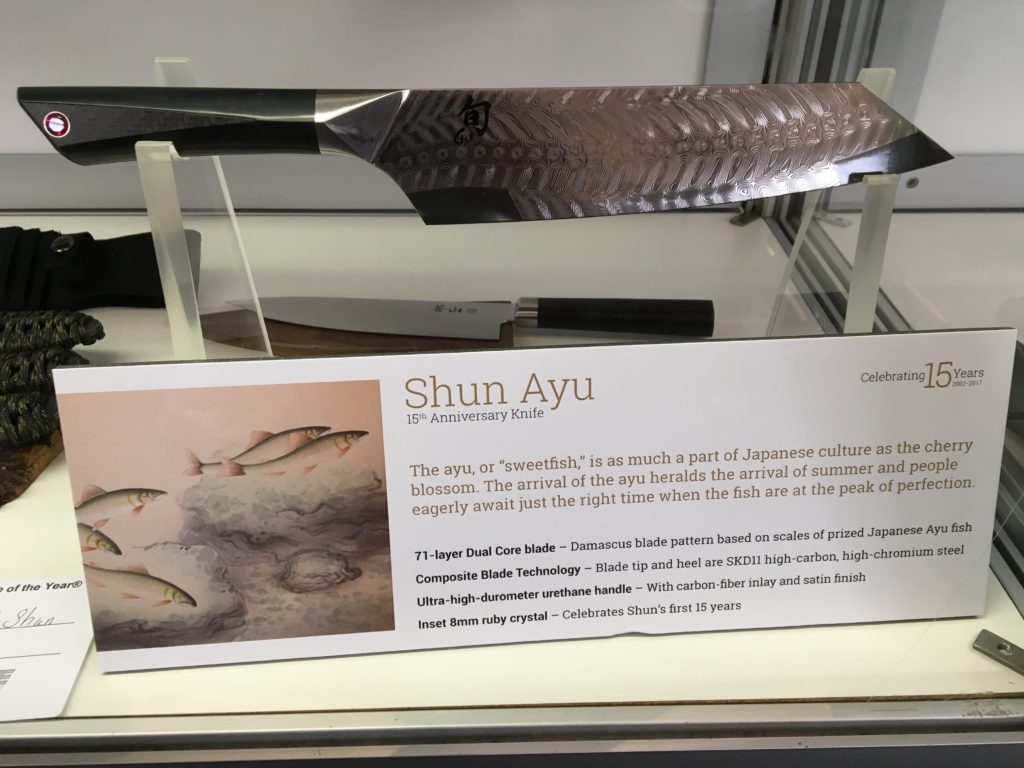
The Knife of the Year entrants went on display outside of the main show floor this year, as they did for the past few. This not only made it easier to check out these incredible knives, it put some of the best knives in the world front and center for first-time show goers. They’re the first knives they see when they arrive. What could be better?
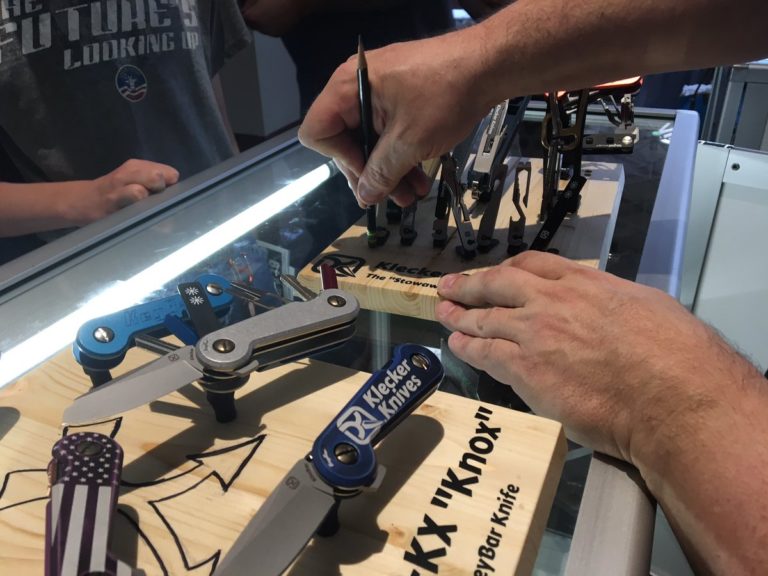
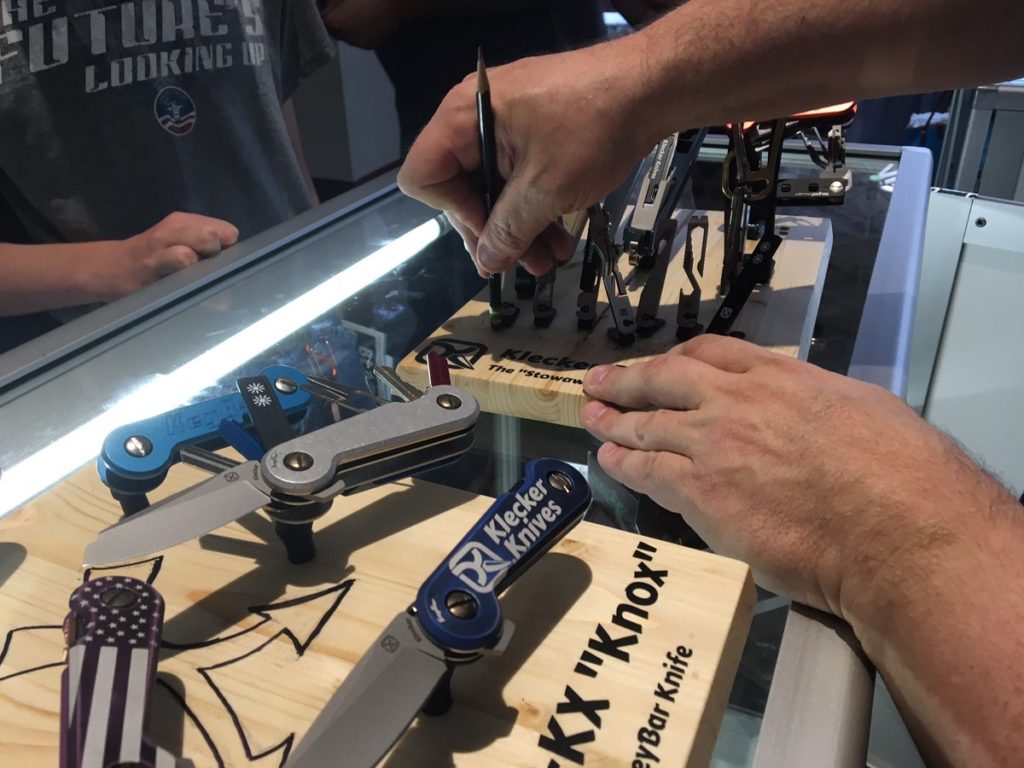
Glenn Klecker puts the finishing touch on his display with a pencil eraser before submitting to the Knife of the Year Awards. Knifemakers want their works to look their best, and it shows at every booth and table at BLADE Show.
A second day of all of that and then some, that’s what. Tomorrow will be full of more knife events, and the Knife of the Year Awards will be announced. Online ticket registration is closed, but you can still find BLADE Show information at bladeshow.com.
Jim Behring of Treeman Knives holds up a Kit Carson creation
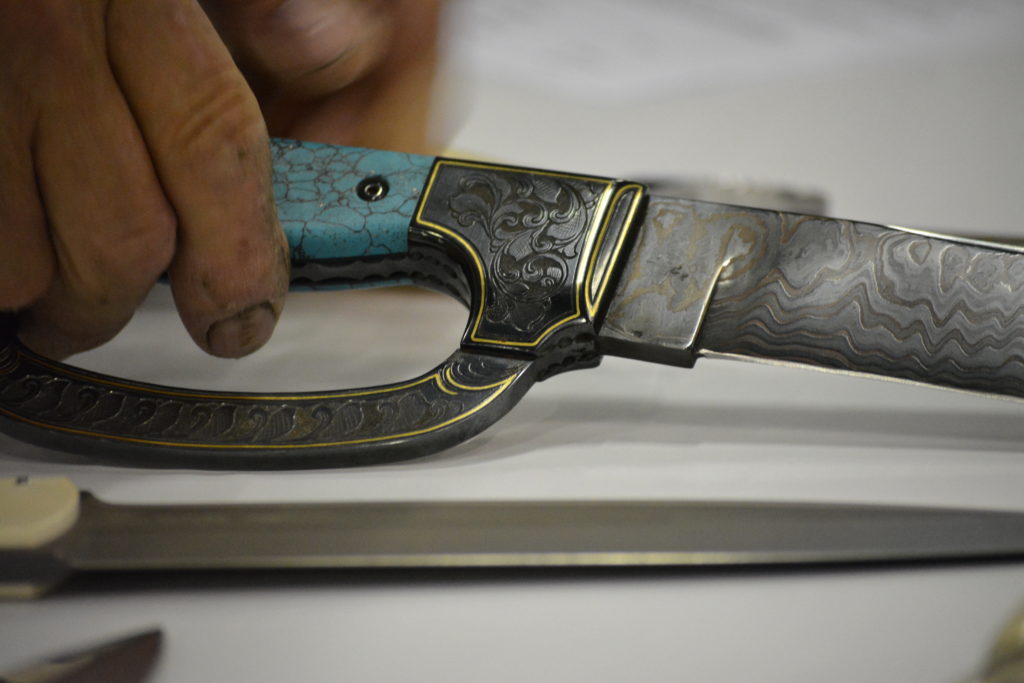
Did you known that Kit Carson, renowned for popularizing the flipper-style of folding knife, made swords? Jim Behring of Treeman Knives has two of those swords, a Persian-style dagger, a D-guard knife along with a knife Jim imagines a Roman gladiator would use as a last resort, plus a number of other fixed blades, all stamped and authenticated. All Jim would say is that he got these Kit Carson creations from an estate sale in Indiana. He’s looking to get them into the hands of someone who would appreciate their value. You’ll find Jim at booth 6E. BLADE Show is open from 9 a.m. – 6 p.m. on Saturday and from 9 a.m. To 2 p.m. on Sunday at the Cobb Galleria Centre, Atlanta, Georgia.
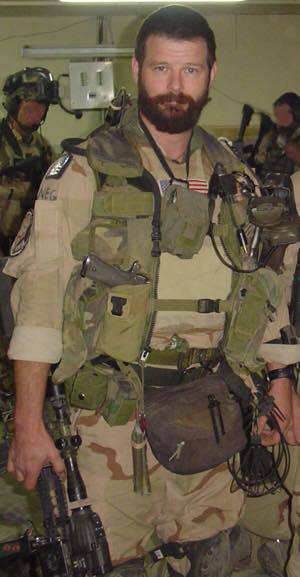
Every day is Memorial Day for the family of Master Sergeant Robert Mark Horrigan. The weeks leading up to the holiday and through June 17, though, mark an intensified period of mourning for Robert’s identical twin brother and American Bladesmith Society master smith John Horrigan of Elite Knives. Robert was a member of C Squadron, 1st Special Forces Operational Detachment, Delta Force, JSOC and June 17, 2005, was the date he was killed in action in Al Qa’im, Iraq. Gentlemanly, soft-spoken, John says, “Excuse my language, but I’m an asshole for about two weeks” leading up to Memorial Day. And with that, you know that no matter how courteous, no matter how elite the warrior pedigree of either man, John knows exactly how hard it is for Gold Star* families and fellow veterans, and he’s willing to get in the dirt and help.
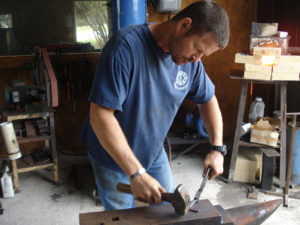
John Horrigan owns Elite Knives and works out of his home shop in Burnet, Texas. His knifemaking began in earnest after returning from his service as a U.S. Army Ranger in 3rd Battalion, 75th Regiment.
The Horrigan twins learned to hunt and fish growing up on a farm in Limestone, Maine, which is in Aroostook County, so far north it might as well be in New Brunswick, Canada. When the boys were 10, knowing jobs would be scarce, the family moved to Florida. The humidity exacerbated their father’s emphysema and tuberculosis, however, so two years later thy moved to Austin, Texas. John and Robert enlisted together and advanced to become U.S. Army Rangers, serving in 3rd Battalion, 75 Ranger Regiment. After three years, John left the military—for love. He had met Donna when he was 17 and she was almost 15. He has now been married to his high school sweetheart for 29 years. They have a daughter and a son, with one grandchild and another on the way. “I just knew the military life was not for her,” John said.
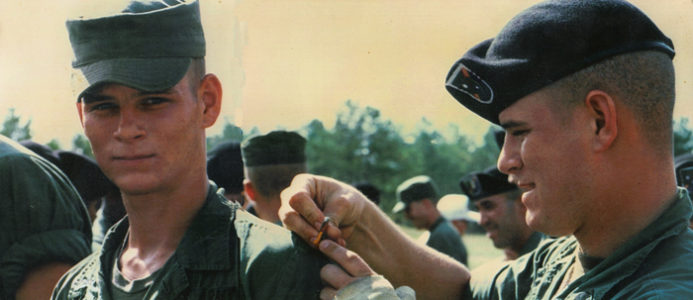
Then-U.S. Army Ranger Robert Horrigan pins the Ranger Tab on his twin brother John Horrigan’s shoulder at a graduation ceremony on Fort Benning, Georgia.
John performed security for the U.S. Department of the Treasury for a short while and then became a deputy with the Travis County Sheriffs Office as well as a fireman. In 1983 John made his first knife. After his brother’s death, he made a commemorative knife for Bob’s unit and another for President George W. Bush. He makes everything from swords, daggers and the occasional tomahawk to camp knives, hunters and bowies. John also continues to make his brother’s design, the Bob Horrigan Military Fighter. You can read more about the brothers and their knives in an article by Kevin Jones that ran in the December 2010 issue of BLADE Magazine entitled, “Twin Brothers, Makers and Heroes.”
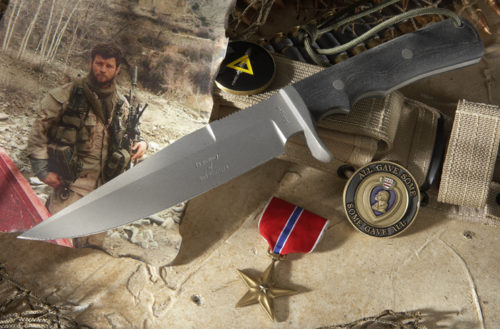
The Bob Horrigan Military Fighter has a 6 1/2-inch blade made out of 440C stainless. The guard and handle bolts are made of 303 stainless. The handle is fashioned with Black Linen Micarta. Overall length: 11 1/4 inches. Maker’s list price: $550. This design is also available with a double guard at 13 inches overall at the same price, or in pattern-welded steel with ironwood handles at a maker’s list price of $720.
While love and love of knives determined the course of one brother’s life, the warrior spirit could not be quenched in the other. Over the course of his 19 ½-year career, which culminated in Special Forces, Robert, who his brothers-in arms called Bob, deployed five times to Iraq and three times to Afghanistan. “Badass” and “real deal” can be overused, but not with Bob Horrigan. Delta operator George E. Hand IV wrote two eulogies of Bob for SOFREP News that get to the heart of the quintennial gentleman warrior: “Delta’s Robert Horrigan: A Better Man Than I” and “Delta Forces’ Own Robert Horrigan: Dwarfed By The Presence of Giants.”
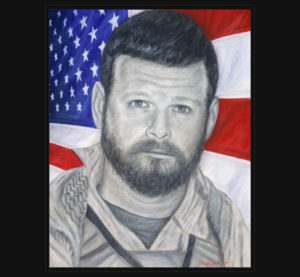
Robert M. Horrigan left the service when his twin brother, John, did but reenlisted, moving into Special Forces after his time in Ranger Regiment. He was killed in action in Iraq, June 17, 2005, in Al Qa’im, Iraq.This portrait of MSG Robert M. Horrigan was done by Phil Taylor for the non-profit The American Fallen Soldiers Project. It was present to the Horrigan family in accordance with the 501(c)(3)’s mission of bringing comfort and healing to Gold Star* families. You can watch the video about this particular portrait at the bottom of this post.
Bob did not have to go on his last mission. He was closing in on retirement. He had plans. He was going home to his wife and daughter and he was going to make knives with his brother. Five years before, John had introduced Bob to knifemaking, and he liked it. While living in base housing on Fort Bragg Bob would run an extension cord outside to work on his creations. “I’m not sure they would have been happy about if they knew,” John says, a warmth in his voice. Like John, Bob loved the artistry of knifemaking, but he only had time for making combat knives.
In addition to medals depicted here by ribbons, Robert Horrigan was posthumously promoted to Master Sergeant and awarded the Legion of Merit Medal, the Bronze Star Medal with Valor Device and the Purple Heart. In addition to his mother, Mary; twin brother, John; and sister Lisa Shine, he is survived by his wife, Denise; his daughter, Courtney; and another brother, Daniel. He is buried in Section 60, Site 9131 at Arlington National Cemetery.
John continues to live out this dichotomy. “I could make a lot more money making fighters,” he said. After banging out 40 of them, though, he longs to delve into the art of the craft. Then, when he’s deep into a showpiece and it seems like it will never be finished, he begins to long for the refreshing simplicity of hammering away on combat knives. “I flip flop,” he says. “I used to have six or seven pieces, 80 percent done” for BLADE Show. He laughs about what he refers to as his attention deficit hyperactivity disorder. Now he works on two at a time and finishes them before he moves on to the next one. After the show he enjoys being able to relax and resume his own pace.
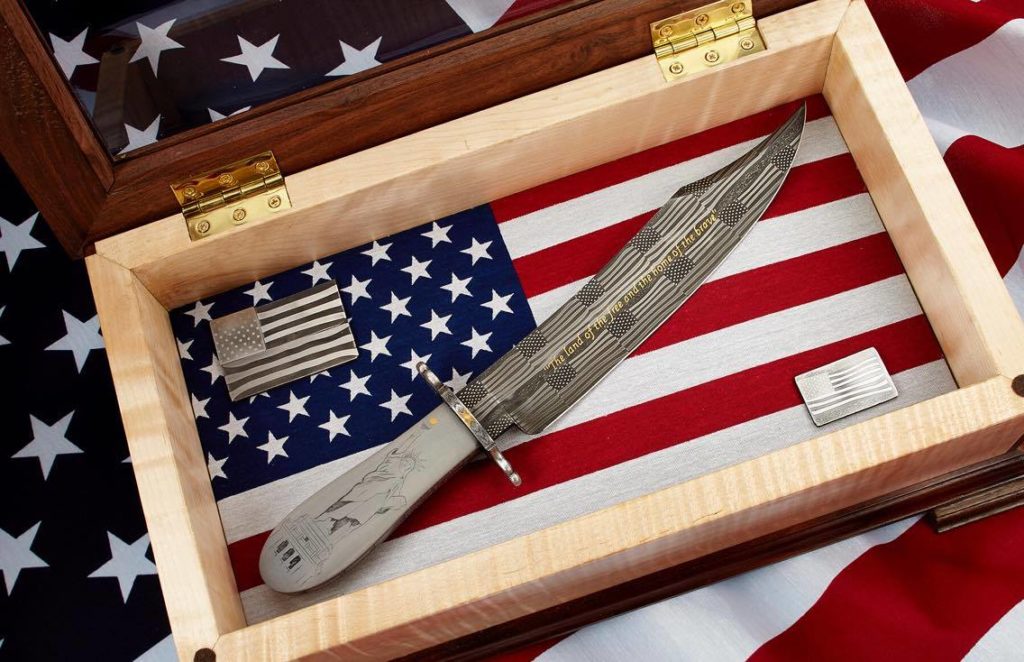
When he needs a break from combat knives, maker John Horrigan switches to crafting high-end pieces of art. This bowie is made in American flag mosaic-pattern steel. Although you can’t see it, “In God We Trust” is engraved along the spine. The handle scales are 416 stainless steel engraves with the Statue of Liberty. The quote on the blade is done in 24-carat gold. Contact: Elite Knives
So although Robert didn’t have to go on that last mission, he wanted to be with his unit. And with that decision, the dream the twins shared of living out their days together with their families and making knifes ended—hard, on the other side of a breached door. The objective was to sneak in, target Abu al-Zarqawi, the al-Qaida leader in Iraq, and get out. The problem was that by the time the mission was underway, the enemy knew the Americans were coming. Bob Horrigan was the number-one man. He got inside the room and was immediately engaged in an intense firefight. The number-two man, Master Sergeant Michael L. McNulty—also a twin—was shot down on the threshold. While teammates extracted Mike from the doorway, Bob took hits to his femoral artery and head. Both men held on while their brethren simultaneously continued the battle, plugged their wounds and extracted them to a secondary airfield approximately 1000 meters away because a closer one was under attack. Both men were alive when they were put on the aircraft and when they landed at the medical facility. Heart massage was performed on Bob. But, as John explained, when you’ve been hit that many times, when you’ve lost that much blood, no matter how much they hold on, it’s only a matter of time before they succumb.
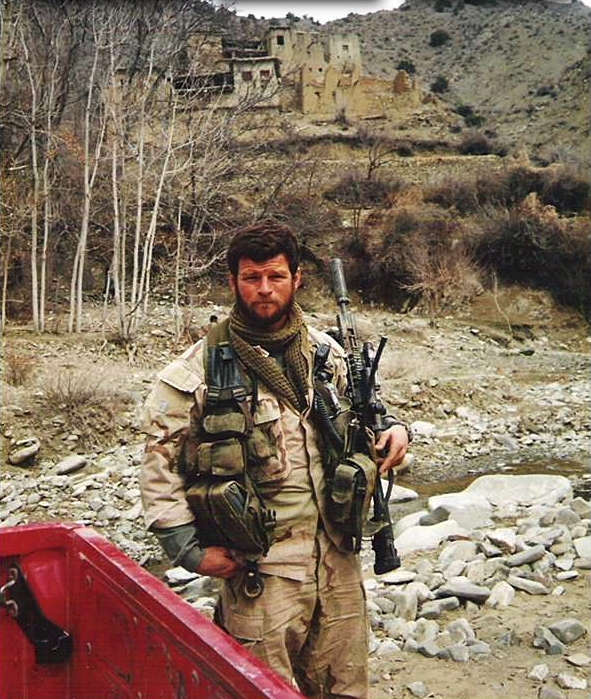
John 15:13 reads this way in the New King James version of the Bible: “Greater love has no one than this, than to lay down one’s life for his friends.” John Horrigan will tell you that his twin brother, Robert, did just that for his brothers-in-arms. Jesus did the same for us. This photo of Robert was taken taken March 19, 2002, east of the Shahi-Kot Valley on the route to Khost during the post-Operation Anaconda chase.
The part about both men being twins, was only the first of endless seeming coincidences. Robert’s wife kept his remains in an urn at home for a few years before he was interred, but John also wanted to visit the grave of the man who had died with his brother. He made the trip to Arlington National Cemetery, and when asked who he was looking for, gave McNulty’s name. There were three men also standing at the information desk. “Who did you say you were looking for?” one of them asked John. John repeated the name. He tried to introduce himself. Being an identical twin, the men already knew who John was. They were from his brother’s unit, and they too had come to visit McNulty’s grave.
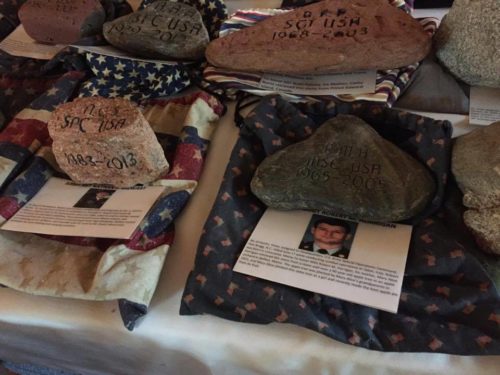
Another time the Horrigans had planned a family trip back to Maine. Many people were involved and Donna was looking at a particular house to rent. It was expensive so John suggested checking Craigslist. She found the same house listed for less. As the process continued, the twin’s sister, Lisa, began to suspect a scam. John wasn’t sure at first, especially since he was so used to dealing with wire transfers through the course of selling his knives internationally. He was busy in Boston and directed his sister to handle it. On the way to Maine, John thought, ‘Maybe it is a scam,’ and called the Ellsworth Police Department. A detective, Dotty Small, confirmed that it was indeed a scam. John called Lisa who was standing on the porch of the house, which already had tenants living in it. John told her what he had learned. In an event to commemorate Maine’s heroes called The Summit Project, Detective Dotty Small had hiked Baxter Mountain carrying a stone with the initials of a fallen warrior on it: M.R.H.
“Maine is good to its veterans,” John Horrigan said. According to The Summit Project nearly 1 in 7 Mainers are veterans or approximately 15 percent of the state’s population, one of the highest rates of any state in the nation. The Summit Project honors fallen heroes and brings awareness to the challenges of grieving families. The Bangor Daily News covered the event in 2014. The article was entitled “Feeling the weight: Hikers carry tribute stones for Maine heroes to Baxter mountaintop.”
One night at the firehouse, John had a dream. In it, Robert came to him and told him to look up Al Qa’im. “I’m thinking, ‘I’ll never remember that,’” John said. Al Qa’im was a center for insurgency near the Syrian border, and the town in which Bob was killed. It means ‘I have risen.’” John pauses. “Another translation is ‘I have ascended.’”
It is like this all the time, Bob seemingly orchestrating serendipitous exchanges for his family and especially his twin. “I lost half of me,” John said. It took me a year and a half to get beyond wanting to blow my head off,” he admitted. “God really had to hit me with a sledge hammer…It’s not about you anymore. It’s about Me.”
John and Robert’s mother was a novice nun. After five years in the convent, she knew she wanted to have children so she left. The Horrigan children were given a Catholic upbringing. “In the Army, you drift away,” John said. About two years before he died, Robert told John that he was coming back to God. John accepted the news in his easygoing manner, but perhaps didn’t think as much of it as he does now in hindsight.
“All this macho ‘I can handle it.’ Well, obviously, you can’t. You have to talk to someone,” John said. “There has to be a support network, and having God can help.” John is quiet for a moment. “Bob was a sniper,” he reveals. Bob told John that he’d killed 50 to 60 enemy combatants. “He did not have PTSD, that I know of,” he emphasized. Bob told John that he was OK, because he was “alright with God.” The Old Testament is filled with killing, John said. “Evil exists in this world and you have to exterminate it. It’s like when you have an infestation of bugs. You have to kill every one or they’ll come back. When you’re fighting an ideology where (the enemy is) hiding behind women and children, it’s like a cancer of the highest magnitude” that must be eradicated.
“Memorial Day is not a happy time,” John said. He acknowledges the day by telling people about his brother and the tragedy of leaving a hurting wife, 12-year-old daughter, mother, siblings and especially a twin with whom he did everything. But perhaps because of the leadership ingrained in him as a Ranger, John understands that he cannot be consumed by the grief of his own loss. God channels his pain in a way that reaches people just like him, veterans and family members who are wracked with unbearable grief. John recently lost a firefighting co-worker to suicide. It left him shocked because the man was always so cheerful “Everyone has demons. Call me. We’ll fight them together.”
Knifemaker John Horrigan Remembers Fallen Twin Brother Robert Horrigan
*Gold Star families are those that have lost a service member in combat. You will see the vertical red-rimmed banners most commonly on vehicles. Each blue star represents a family member serving in the military, while a gold star represents a fallen service member.
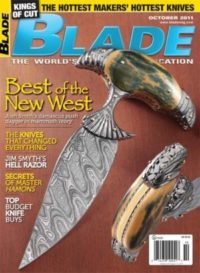
In addition to a review of Robert Horrigan’s Military Fighter from Elite Knives, you’ll also get a rundown on Old West-style push daggers in the October 2011 issue of BLADE.
So what does fellow Special Forces member Kim Breed think of Elite Knives’ Bob Horrigan’s Military Fighter? Read his review right away in this downloadable version of the October 2011 issue of BLADE for $5.95.