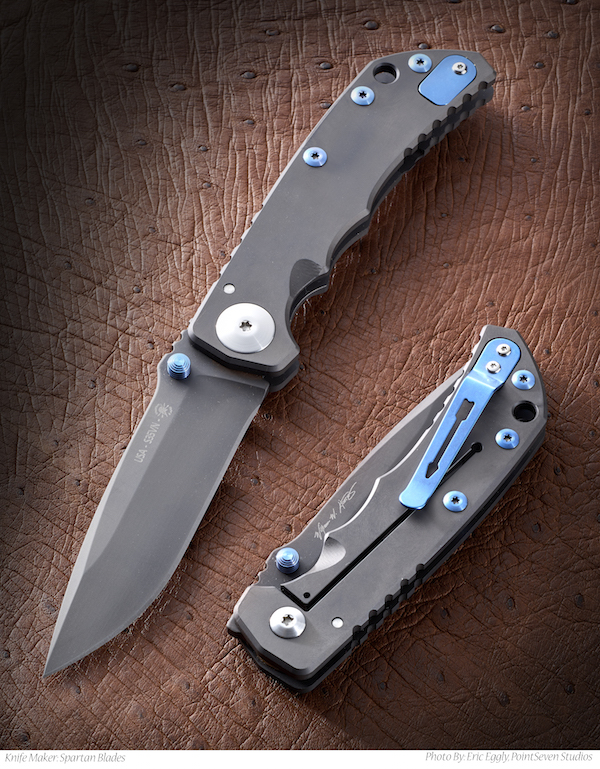
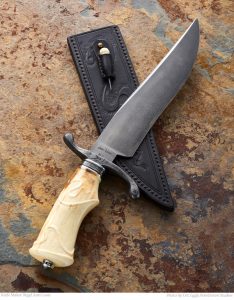
Official BLADE Show photographer since 2001, PointSeven shot such BLADE Magazine Knives Of The Year® as the 2016 American-Made Knife Of The Year, the SHF by Spartan Blades. (PointSeven image)Eric Eggly is saying goodbye to three decades of knife photography. (PointSeven image)
Eric Eggly is saying goodbye to knife photography. The longtime knife photographer and founder of PointSeven Studios is taking a job in a different though related industry.
A familiar face at knife shows worldwide, Eggly photographed knives for three decades. For about the past two decades he had owned and operated PointSeven Studios in Toledo and then Maumee, Ohio, where he photographed not only knives but products of many kinds for various companies. It was the latter commercial photography that paid the bills, but it was photographing knives that was among his first loves. Along with a number of other photographers that continue to do so, PointSeven not only photographed custom knives but supplied the photos to knife magazines and other media that helped publicize the makers and their knives worldwide.
In addition to photographing knives in his studio, Eggly also took his photography operation on the road, including shooting knives at knife shows in America and abroad. One of those shows is the world’s largest and most important knife event, the BLADE Show in Atlanta, Georgia—this year’s show will be June 2-4, once again at the Cobb Galleria Centre—for which PointSeven had served as official photographer since 2001.
Among the 2016 BLADE Show custom knife judging winners shot by PointSeven was the winner of Best Handle Design by Jean-Louis Regel. (PointSeven image)
Among the BLADE Show duties of Eric and his staff were photographing the BLADE Magazine Knife-Of-The-Year® Awards, the winners of the show’s custom knife judging competition, the American Bladesmith Society’s annual award-winning knives, the BLADE Show World Championship Cutting Competitions, and photos of the overall event inside the show hall in the Cobb Galleria Centre, all for use in the annual BLADE Show recap issue of BLADE® Magazine. In addition to the latter, PointSeven photographed any number of custom and factory knives for a goodly amount of the show’s exhibitors, which number near 1,000. Eggly also conducted BLADE Show seminars on how to photograph knives.
As these words are written, the BLADE Show is in the process of finding a replacement for PointSeven as the show’s official photographer.
Eggly’s new job will be chief product officer for F.J. Westcott, a manufacturer of high-end lighting equipment for professional filmmakers and photographers.
Beware BLADE Show hotel scammers who may contact you concerning hotel reservations for the world’s biggest knife show June 2-4 at the Cobb Galleria Centre in Atlanta. (PointSeven image)
It’s that time of year again, time when Internet, telephone and other scammers misrepresent themselves as so-called “official” agents of the BLADE Show in booking hotel rooms for the world’s biggest and most important knife event. Beware BLADE Show hotel scammers! To find out how to both identify such unauthorized charlatans and protect yourself from them, read on.
Slated for June 2-4 at the Cobb Galleria Centre in Atlanta, the 2017 BLADE Show will attract knife enthusiasts from all over the world, knife enthusiasts unscrupulous scammers will try to exploit. However, if you follow a few easy guidelines, you can foil the scammers and get the best lodging for the show your hard-earned dollars can buy.
The BLADE Show has designated EventSphere as the ONLY housing provider for the 2017 BLADE Show. If it’s anyone but EventSphere, delete. There are fraudulent companies and organizations that will try and present themselves as official partners of the BLADE Show and offer you a potential room that might not be guaranteed or available. When booking with Eventsphere use the online reservation link or call 855-547-8429 and expect to receive an immediate confirmation e-mail.
PLEASE NOTE: EventSphere will NEVER call you directly to book a reservation!!!!!!!
The only reasons EventSphere would call you are:
•You phoned and left a message requesting a returned call;
•There is a problem with an existing reservation;
•Someone from BLADE Show management told EventSphere to contact you.
Should you be contacted by someone other than EventSphere or have any question concerning what you may suspect is a fraudulent booking attempt, please let us know by emailing [email protected].
For more information on the 2017 BLADE Show, the 4th Annual BLADE University and more, stay tuned to this space or visit BLADE Show.
GATCO stopped production over the summer. Bear & Son Cutlery purchased the sharpener division and W.R. Case has officially announced that they bought the Timberline knife brand of GATCO.GATCO, following Spyderco’s lead, was a sharpening company that expanded into knives with its Timberline brand.
W.R. Case & Sons Cutlery Co. in Bradford, Pennsylvania, has purchased the Timberline knife brand from The Great American Tool Company, or GATCO. The plan at Case is to launch a new line of Timberline knives and accessories “into the existing portfolio,” according to a press release issued by Case media contact FJ Feightner. GATCO stopped production over the summer and sold its sharpener division to Bear & Son Cutlery.
“Case is excited to have acquired the Timberline brand assets, and we are developing a comprehensive market strategy around it, which includes future new products and a cohesive integration with the Case brand,” said Mark Paup, president and CEO of Zippo Manufacturing Co. and W.R. Case & Sons.
GATCO acquired Timberline in the early-to-mid 1990s, including knives designed by Timberline’s Vaughn Neeley, such as his folders with the patented NeeleyLock locking system. This transaction followed Spyderco’s lead as a sharpener company that expanded into knives.
Timberline’s specialty was tactical, hunting, utility and kitchen knives, among others. The Timberline Stealth, a tactical folder designed by Neeley, was the BLADE Magazine 1997 American-Made Knife Of The Year®. Here knife designer Swiss Bianco gives a little history of Timberline’s NeeleyLock knives.
Timberline expanded its line to include factory-custom collaborations with knifemakers like Brian Fellhoelter, Tim Herman, Russ Kommer, Greg Lightfoot, Charles Ochs and Butch Vallotton, as well as with designers like Swiss Bianco, George Sessions, Kelly Worden and Dave Young.
Timberline offered a collection of ceramic kitchen knives under the Cape Cod Collection label. In recent years, the company debuted its Javelin and Gas Monkey Garage lines.
Case has been in business since 1889. Its knives have gone from the battlefields of World War II literally to the moon. The company’s expertise is in traditional folding pocketknives, as well as fixed blade sporting knives. In 1981, capitalizing on its unique tang stamp, the company initiated The Case Collectors Club, which now has over 18,000 active members, and is one of the largest known knife collecting associations, according to Feightner.
Steve Shackleford, BLADE editor, contributed to this article.
You Can’t Have Just One Case Knife In Your Collection
Jim Bowie is not amused with my lack of knowledge about steel mixes.
Knowing what you don’t know sometimes means knowing when to stop researching and just play with your knife. In the course of more fully educating myself about knives, I find that everything, and I mean every little thing, involves further study. It can be paralyzing. And sometimes it needs to just get silly so I can stop worrying about it.
I’m in charge of maintaining the style sheet at BLADE, which is an alphabetical list of knife industry-specific terms and instructions—or exceptions to instructions—regarding how we present certain things in BLADE. We want to be consistent.
The other day my boss and BLADE editor, Steve Shackleford, sent me something like, “Just so you know… the V in MoV is always capitalized. For example, 8Cr13MoV: Cr refers to chromium, Mo refers to molybdenum and V refers to vanadium—all elements in the steel mix.”
Cool, I thought.
And then I thought: The periodic table of elements? Seriously?
For an English major with a history minor—even one into guns and knives—this concerned me. Oh sure, there’s science in the acids and bases of a batch of cookies in the oven, but I honestly never imagined printing out that chart after I left high school. But there it lies, adding color to the growing pile, its information so obvious in hindsight. Jim Bowie perpetually scowls with what I imagine can only be his disappointment in my slow pickup.
So, when Steve explained how BLADE presents Rockwell hardness: “the Rockwell hardness is 58-59 HRC,” I figured I should try to fit more about that topic into my rock hard head.
After work I called a friend.
His response: “What is the Rockwell hardness scale and what does it mean to me?”
It all makes perfect sense. I think I can now move on to worrying about whether there’s a good mix of ATS-34, 440C, CPM S30V, CTS steels and 5160, O1, D2, 1095, L6 steels represented in our Knifemaker Showcase pieces.
Your Knifemaking Questions, Answered
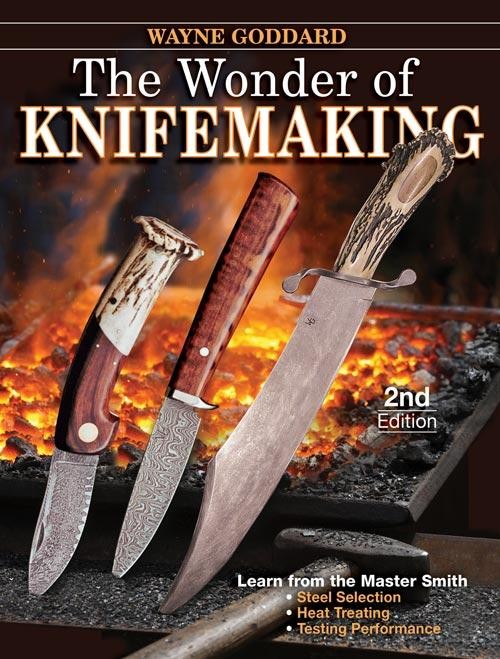
Get all your knifemaking questions answered in this collection of expert advise from former BLADE columnist Wayne Goddard. The Wonder of Knifemaking makes a thoughtful gift for someone interested in starting or perfecting their knifemaking skills
The best gift ideas for knife collectors, enthusiasts and makers can be found at ShopBlade.com. If you’re not familiar with the world of knives and aren’t sure where to start, this is the guide for you. And if you are, we at BLADE won’t cut you short with these suggestions for your own gift list.
For New and Established Knifemakers
Want to learn how to make knives, or how to make them even better? This book is a great place to start.
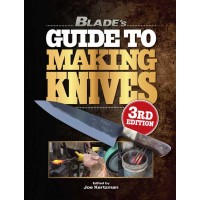
Many books claim to show readers how to make knives, but only one is trusted enough to have three editions with full-color photos. BLADE’s Guide to Making Knives, 3rd Edition is new for 2016, and it’ll be a sure hit with any knifemaker, from the garage tinkerer to the knife show pro.
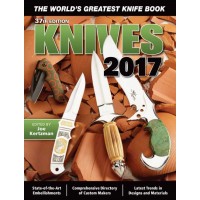
Knives 2017 is a great gift idea for someone who collects knives.
For 37 years, knife collectors have looked forward to the latest editions of Knives, the annual book published by BLADE. Knives 2017 is the newest in this long tradition, and it’s can’t-miss material for the knife collector on your list.
While the in-depth features are interesting to read, and the custom knifemaker directory is second to none, it’s the beautiful photography that makes this book stand out year after year. Vibrant, full-color photos of the hottest custom knives on the planet receive the white glove treatment in this handsome tome. It’s as at home in the shop as it is on the coffee table.
Knives can mean many things to many people, but their use as self-defense tools is undisputed. If the knife enthusiast on your list takes being prepared for the unthinkable seriously, there’s only one DVD you need to consider.
Make Ready with James Williams: Continuing Solutions to Edged Weapons is simply one of the best guides on self-defense with a knife available. Williams is a regular presenter at the BLADE Show, and his insights are second to none.
It happens. The knife nut on your list either has everything already or doesn’t seem to need to anything in the first place. Fortunately, there’s a book that fits the bill.
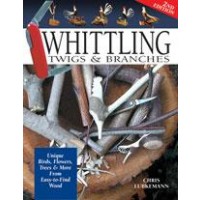
Whittling Twigs & Branches is an unexpected find that cracks open the world of whittling with knives. There’s a surprising amount of information to learn about this topic. This includes how to carve roosters, herons, pheasants, roadrunners, flowers, trees and letter openers from ordinary twigs and branches.
After conducting extensive and highly scientific research, 10 out of 10 knife experts agree: there’s no such thing as too many knives. However, there is such a thing as not having enough storage.
That’s why BLADE‘s exclusive 18-pocket knife roll is the perfect gift. Not only does it keep folding knives secure, it rolls up for efficient storage. Its strong yet flexible material keeps out dirt, moisture, light, pollutants and more.
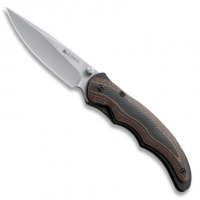
The CRKT Endorser is a great gift for someone new to knife collecting.
That knife collection isn’t going to build itself. Help a new collector along with this terrific CRKT Endorser folding knife. It’s the right mix between price (it’s a bargain for you) and features (it’s a respectable knife for them).
The knife industry’s only annual buying journal, the 2017 BLADE’s Guide includes a comprehensive listing of anyone and everyone who does business in the factory knife industry, including manufacturers, importers, accessory, material and equipment makers and suppliers, knifemaking schools, photographers, embellishers and more. The Guide also has a special section on some of the top factory knives that will debut in the coming year.
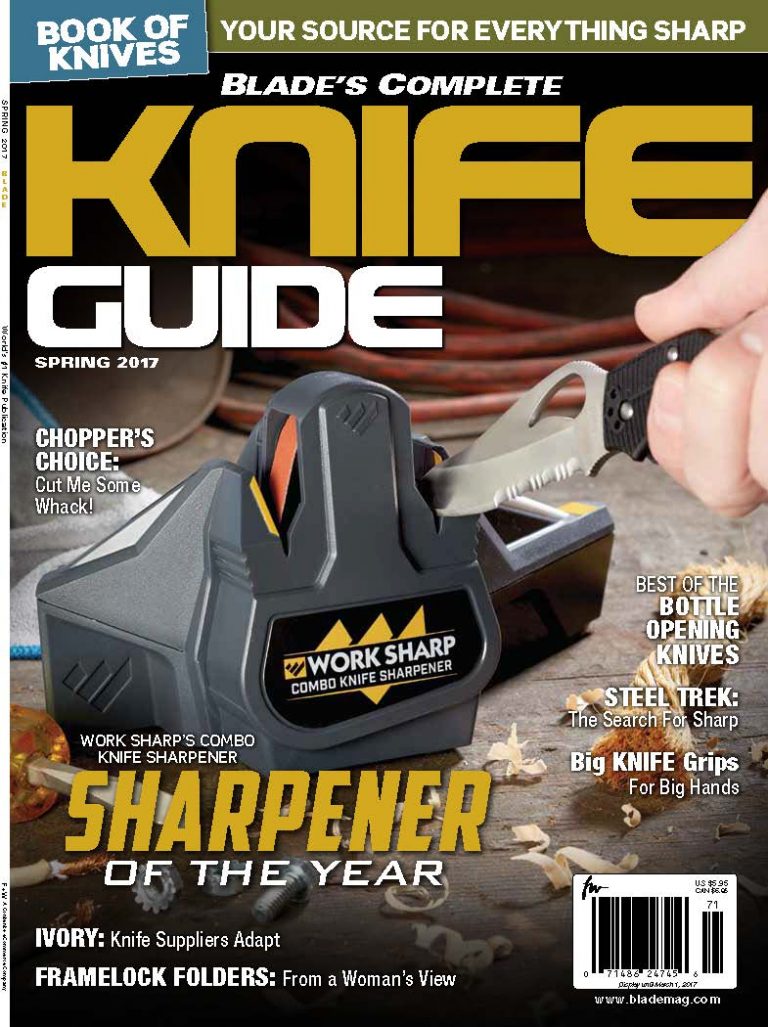
Looking for today’s hottest blade steels? In “Steel Trek: The Search For Sharp,” David W. Jung takes you through not only the latest ones but also the ones that are being used by custom knifemakers and manufacturers most on their newest knives. Need a wedge of hardened steel to chop, whop or split logs, kindling and more? James Morgan Ayres outlines the sharpest in hatchets and hand axes in “Cut Me Some Whack!”
Knifemakers who use elephant ivory have been among those under attack by federal and state legislation, but those who use ancient ivory have found themselves under the gun as well. Meanwhile, the suppliers who sell handle materials are having to change with the changing market. Mike Haskew examines the issue from the sellers’ standpoint in “Ivory: How Knife Suppliers Adapt.”
Framelock folders offer some of the most secure lockup of any folding knife—a good thing for all knife enthusiasts, including the ladies. Daniel Jackson outlines four of the latest such folders from a woman’s perspective in “Framelocks From the Feminine View.”
Also in our special annual issue: knife handles designed for those with big hands; knives that double as bottle openers; an excerpt from the world’s greatest knife book, KNIVES 2017, on bowie fighters; an introduction of BLADE® Magazine’s new managing editor, Erin Healy; and much more. Subscribe, buy the digital edition or tramp on down to the newsstand for the latest issue!
Small-to-medium-sized fixed blades make excellent cutting tools, and today’s prime cutters are good to go. Here are five of the hottest in this sharp-looking category.
The P.U.K. (Personal Utility Knife)
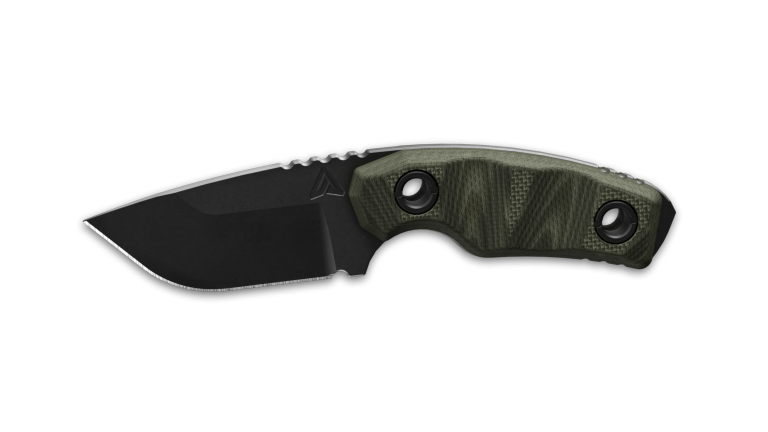
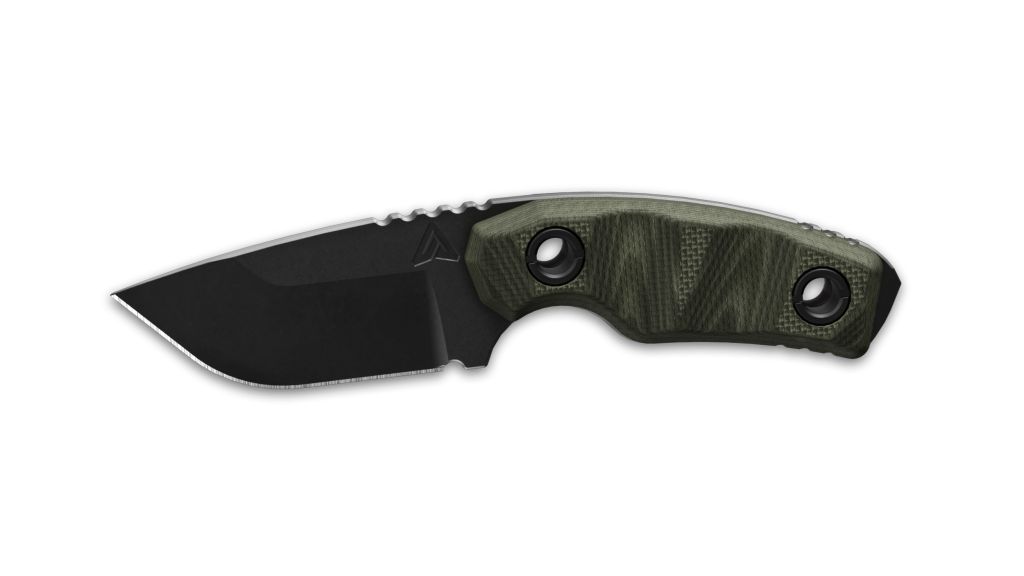
The P.U.K. from Atlas Dynamic Defense is a hungry little cutter in CPM S30V stainless.
The P.U.K. (Personal Utility Knife) from Atlas Dynamic Defense has a 2.52-inch blade of CPM S30V stainless steel heat treated to a Rockwell hardness of 57-58 HRC in a controlled vacuum with an additional -300°F cryo bath. Top that with a DLC blade coat and you’ve got one hungry little cutter. The scales are removable with a coin or rifle cartridge. MSRP: $225.
Buck Omni RT
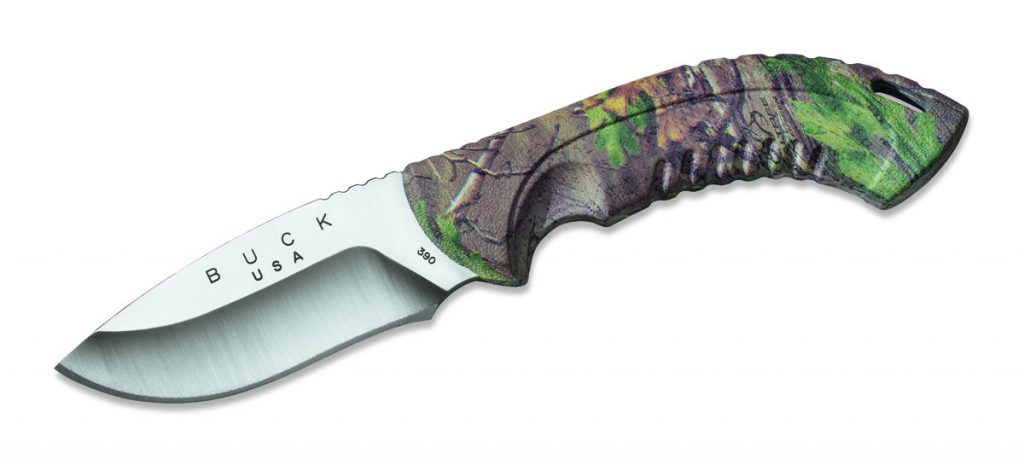
The Buck Omni RT Extra makes the list of prime cutters and boasts a stocky, 3.25-inch blade of 420HC stainless steel.
Among other prime cutters is the Buck Omni RT with a stout 3.25-inch blade of 420HC stainless steel and an ergonomic handle of Dynaflex rubber in Realtree Xtra Green Camo. Weight: 4.6 ounces. Overall length: 7.75 inches. A nylon sheath that matches the look of the handle completes the ensemble.
Western Knives Kota
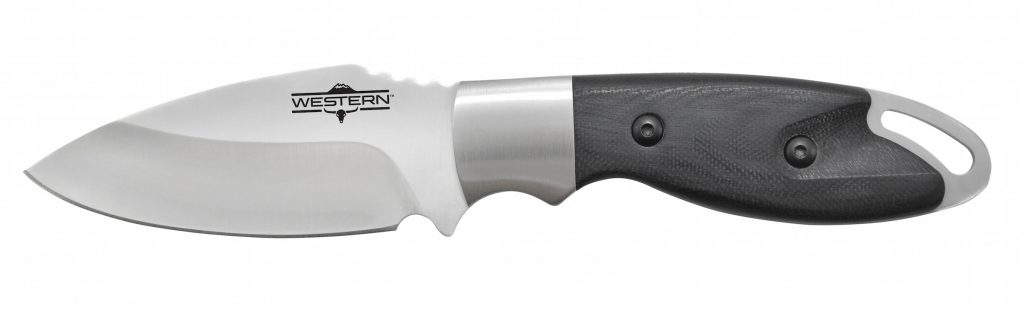
The Western Kota features a blade of titanium-bonded 420 stainless and a G-10 handle. MSRP: $29.99.
The Kota from Western Knives includes a 3.25-inch blade of titanium-bonded 420 stainless and an ergonomic handle of G-10 with an elongated hole for a lanyard. Overall length: 7 inches. It’s kind of a cool design, really. A nylon sheath is included. MSRP: $29.99.
ESEE 3HM
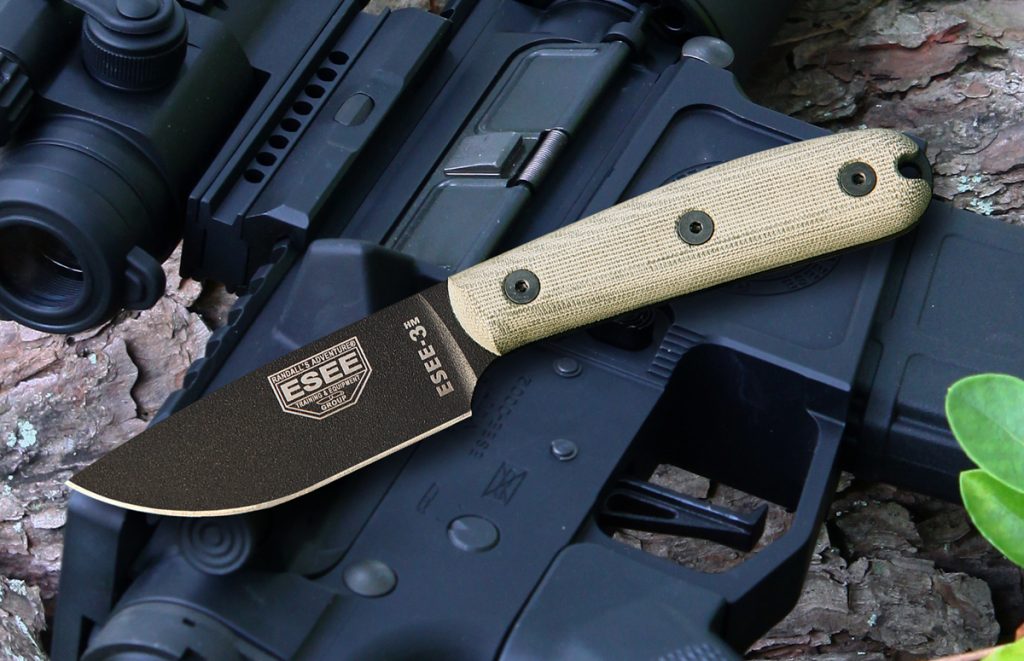
If you’re looking for a carbon-steel cutter, the ESEE 3HM has a blade of powder-coated 1095.
If you’re looking for a carbon-steel cutter, the ESEE 3HM offers a 3.63-inch blade of 1095 carbon steel in a low-glare, stain-resistant powder coat and a canvas Micarta® handle. The contrast of the light-colored Micarta and the dark blade is choice. Weight: 7.7 ounces. Overall length: 8.88 inches. A black leather pouch comes standard.