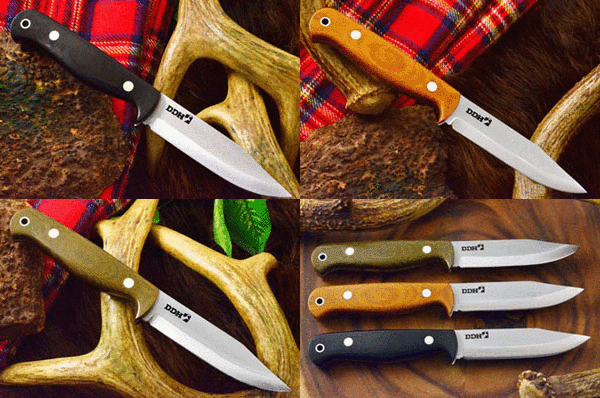
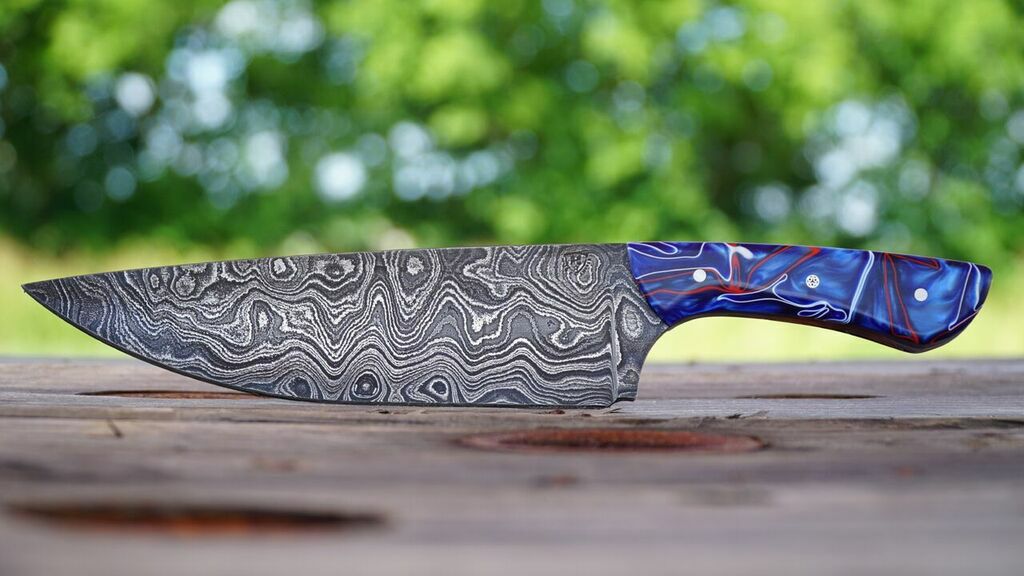
Deer & Deer Hunting knows what makes the best deer hunting knives. When it found one that met the criteria, it put its name on it. Then it made three versions of it.
BLADE‘s media sister over on the deer hunting side is Deer & Deer Hunting, and you can imagine that it knows a thing or two about knives. Deer & Deer Hunting editors recognize how a dependable blade makes all the difference. When you need a knife, you need a knife.
That’s why BLADE was thrilled to hear that Deer & Deer Hunting partnered with the American Knife Company to produce an exclusive line of hunting knives. Here are the must-know details straight from the editors themselves:
Emblazoned with the DDH logo right on the blade, this classic design puts a modern twist on an old favorite of deer camps across North America.
Micarta handles offer a firm grip in slippery conditions common to bad weather, field dressing, butchering and the rugged demands of the hunt. A healthy dose of chromium in the A2 steel blade means it’ll stand up to the worst you can throw at it. The clip point blade design is as versatile as it comes, ready to make any task at deer camp a treat.
That sounds like the makings of the best deer hunting knives around. Whether you’re a collector or a hunter, click here to get the best knife for deer hunting you can shake an antler at.
Bear & Son Cutlery, Inc., has purchased the sharpener division of GATCO.
Bear & Son Cutlery, Inc. announced Nov. 14 that it has acquired the sharpener division of GATCO. Ken Griffey, president of the Jacksonville, Alabama, manufacturing company, said he’s been in the knife industry for 39 years, and for 28 or 29 of those years Bear & Son has worked trade shows and other events side by side with the Great American Tool Company, Inc., or GATCO, as it was better known. Griffey expressed confidence that Bear & Son can now truly be a one-stop shop for knife enthusiasts. “It’s a natural fit,” he said.
Sharpener production at GATCO ceased in June or July, Griffey explained, so the number one order of business is to get merchants restocked. For the immediate future, GATCO sharpeners will continue to be made in both the USA and China. In short order, Bear & Son executives will assess whether some manufacturing can be moved back to the United States.
All GATCO sharpeners will continue to be made with the possible exception of one or two models. In place of those, Bear & Son will debut two new sharpeners to complement its knife lines. Griffey said he saw 3D models of these new sharpeners but wants to see the real thing before he approves production and sets price. Decisions will be made in time for any new products to make their first appearance at the SHOT Show, Jan. 17-20, in Las Vegas, Nevada.
GATCO celebrated its 25th anniversary in 2014. Founded by John Anthon and originally based in Getzville, New York, its specialty was offering a wide range of sharpeners. Angle guide, pull-through, stone, diamond abrasive, ceramic, carbide—GATCO had a model. The company’s Tri-Seps sharpener was the BLADE Magazine 1999 Accessory Of The Year.
Griffey said the purchase of GATCO makes Bear & Son Cutlery a full one-stop shop for knife enthusiasts. Always strong on the outdoor and hunting side of the knife market, the company also offers its Bear Ops line that focuses on law enforcement, military and self-defense knives. A new line, the affordable Bear Edge, will offer knives with some components made in China but assembled in the USA.
Steve Shackleford, BLADE® editor, contributed to this article.
Distinguishing elephant from ancient ivory can be done by the correct reading of the Schreger lines on the surface of the ivory.
Distinguishing elephant from ancient ivory is challenging and becoming more and more important for the owners of knives with handles of ancient ivory. However, there are two reliable keys to make the determination easier.
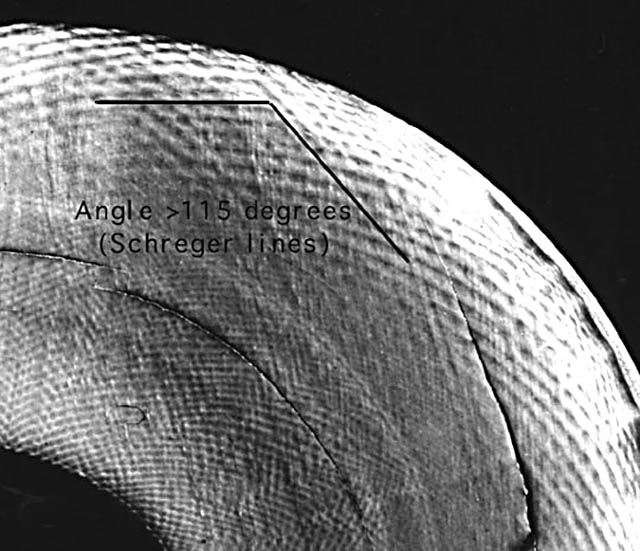
Polished cross sections of elephant and mastodon/mammoth ivories display stacked chevrons of cross-hatched lines called Schreger lines or Lines of Retzius—incremental lines of rhythmic deposition of successive layers of enamel/dentine matrix during development. The Schreger lines closest to the outer bark of the tusks are the most visible—and the ones to measure—though there are also inner Schreger lines that are less discernible around the nerve cavity. The intersection of Schreger lines form angles, and this is the key—if the average angle is greater than 115 degrees, then it’s elephant ivory; if the average angle is less than 90 degrees, it’s mastodon or mammoth. Variations in the angles can occur in individual tusks, particularly as the patterns tighten more toward the center. Plus, the visible cross section must be cut square to the axis of the tusk—otherwise the chevrons’ angles will be distorted.
Specimens from both extinct and existing animals can show angles between 90 and 115 degrees in the outer Schreger lines, so the differentiation should never be based solely on a single angle measurement when the angles fall in this range. When averages are used, a clear separation between the ivory of existing elephants and extinct mammoths/mastodons exists. Elephant ivory averages above 100 degrees and mammoth/mastodon ivory averages below 100 degrees.
Another I.D. key, though more involved, can also distinguish mammoth or mastodon ivory from elephant. These ancient ivories can often have blue-green or brownish blemishes on the surface produced by an oxidized iron phosphate called vivianite. Even if the discoloration is barely visible, ultra-violet light will make it stand out with a dramatic velvety-purple appearance. Even if elephant ivory were similarly discolored—though in its natural state, elephant ivory will not display the same discoloration—it would not exhibit the characteristic fluoresence of vivianite.
With recent ivory laws handed down by Fish and Wildlife greying the lines between elephant and ancient ivories, it is possible the laws may give federal agents the right to seize knives and materials that cannot be proven as outright ivory but simply have the ivory look. As a result, if you own knives with ancient ivory handles, having an at least a general knowledge of how to differentiate elephant from ancient ivory could save you from having your knives confiscated, from being fined or both.
Tomahawks are top chops in the new BLADE®, on newsstands now!
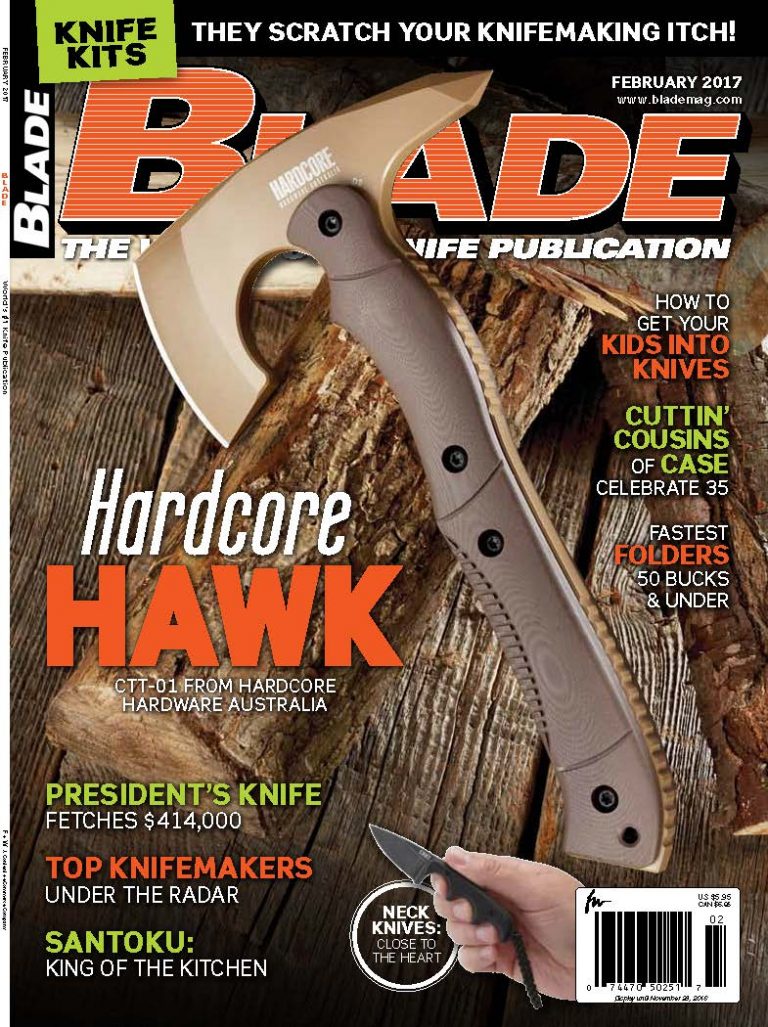
Tomahawks large and small continue to take the world of knives by storm and four of the latest models are top chops in the new BLADE®—on newsstands now!
Featuring the Hardcore Hardware Australia CTT-01 on the cover, the issue also includes the diminutive Micro Hawk from TOPS Knives. Sandwiched in between is the versatile EX-T01 from Hogue Knives. All four get in their licks and the once over several times from Pat Covert in “4 Hawk Hoedown.”
The talent level of today’s best custom knifemakers is better than ever, but what about the ones that offer some of the sharpest blades anywhere but nobody knows of them? Mike Haskew smokes out today’s most underrated cutlers in “Under-The-Radar Knifemakers.”
Every knife has its “sweet spot”—the spot on the blade that cuts better than any other, on the handle that feels better than any other and more. Some knives even have more than one sweet spot. High-endurance performance knife master smith Ed Fowler shows you how to find them in “The Sweet Spots.”
A child’s rite of passage comes in many forms, including his or her first experiences with knives. What makes that rite even more meaningful is when it includes teaching the child how to make knives. See how ABS master smith Timothy Potier and the folks at the New England School of Metalwork help usher kids through the keenest of rites in “Life Skills Meet Knife Skills.”
Also this issue: the latest in factory neck knives and a test of four of the latest Japanese-style Santoku kitchen knives; the Case Collectors Club and the festivities at its recent 35th annual reunion at the Case factory in Bradford, Pennsylvania; the latest in knife kits and how to best assemble them; President Theodore Roosevelt’s knife that brought a record price of $414,000 at an American auction; and much more, all in the latest BLADE—on newsstands now, or buy the digital edition or subscribe!
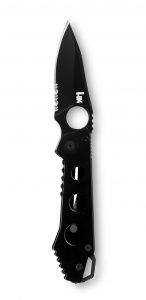
Photo courtesy of Benchmade Benchmade and H&K officially kicked off their collaboration 12 years ago with the 2004 release of the HK Pika.
Over a month ago Benchmade decision makers opted to immediately ramp down production of all Heckler & Koch (HK) knife lines, according to Benchmade Public Relations and Communications Manager Derrick Lau. Benchmade will concentrate efforts on its own brand of sports cutlery and edged tools.
The Oregon City designer and manufacturer notified knife dealers that although not official until Jan. 2, 2017, they would no longer make approximately 17 to 18 different models. Some supply remains, but is quickly dwindling. Dealers are encouraged to contact Benchmade if there are any HK knives they’d like to get before they are all gone.
The tactical design and affordability of HK knives attracted law enforcement officers. The knives include the Entourage, Patrol Axis, Ally, Turmoil, Dispatch, Plan D, Nitrous Blitz, MP5 and Epidemic families.
Benchmade designed and manufactured knives for other companies in the past, such as Harley-Davidson® and Bone Collector. Three years ago the company ended its collaboration with Lone Wolf to rededicate its efforts to Benchmade-branded knives. This is a continuation of that plan, Lau explained, adding it was a case of the company needing to “get our bearings back.”
The licensing agreement specified that Benchmade would design and manufacture the knives, and retain the use of any resulting innovations, while HK would lend its name and branding to the product. Such an arrangement can be a marketing boost for the manufacturer and provide a platform for creative innovation. Since automatics cannot be imported into the U.S., Lau explained, the German-based Heckler & Koch benefitted from the ability to get HK autos into the U.S. market through Benchmade.
“Our dealers are our most important asset,” Lau said. Dealer feedback indicated that the Benchmade brand is Benchmade’s most attractive selling point. After 30 years in the business, it was simply determined that Benchmade should refocus on its own brand.
Heckler & Koch does not have anything lined up in terms of continuing its knife brand, according to the company’s public relations spokesperson. “We’re a firearms company,” she reiterated, but “we like to offer our fans the accessories we know they want.” She added, “Benchmade did a great job of showing us there was a market for the knives.”
Benchmade would consult with HK officials on some designs they were considering, and HK would choose some for its web shop. Benchmade had the infrastructure in place for wider distribution.
In the future, Benchmade may be open to other collaborations, but for now the company is committed to growing its own line of knives. Some of the Benchmade knives in the works will have features inspired by the HK lines.
Benchmade did not issue an official press release because they wanted their dealers to know first, allow them time to ask questions, and provide any support they might need.
Steve Shackleford, BLADE® editor, contributed to this article
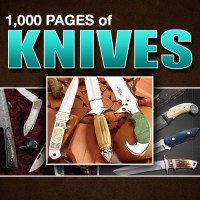
ShopBLADE is offering a not-to-be-missed package for “Knives” readers. You get the 2016 and 2017 paperback issues of “Knives,” a $67.98 value. Plus you get a digital download for the 2004-2015 editions, an $79.99 value. Your cost: $59.99, a savings of $87.98. Hurry!
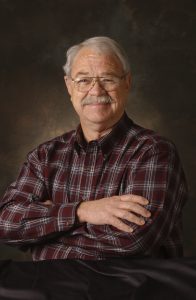
Both Hibben and Holder are Cutlery Hall Of Famers. Each served multiple terms as president of The Knifemakers’ Guild. Both have influenced many knifemakers through mentoring, teaching and their knives.
Hibben, of course, is probably best known for making the knife used by Sylvester Stallone in the third and fourth installments of the Rambo movie series. Holder is perhaps best know for his “My Knife” hunter with a handle of stacked spacers of beautiful natural materials, including amber and others.
Holder was one of the original board members of the American Knife & Tool Institute, the oldest existing organization that fights for common-sense knife laws. Hibben made some of the most spectacular fantasy knives ever, probably the most fantastic of which were designed by Paul Ehlers.
In addition to the Rambo movie knives, Hibben also made the knives for another Stallone action vehicle, The Expendables. Holder designed a number of factory/custom collaborations, including the Toad for Spyderco and a number of fixed-blade hunters for Canal Street Cutlery. Hibben has designed a number of factory/custom collaborations, too, including many for United Cutlery.
The above only touches on the outstanding careers of two invaluable members of the custom knifemaking community. Please join us in congratulating them on a combined 109 years making knives—and what we hope are many more such years to come.
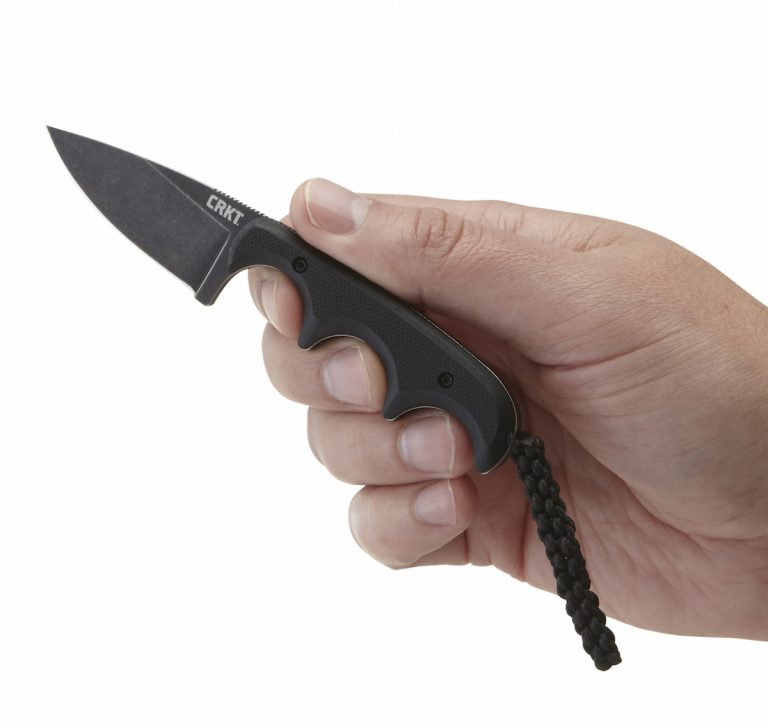
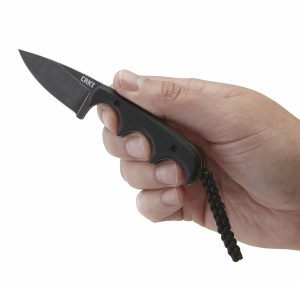
Your right to own and carry knives such as the CRKT Minimalist is at stake in the Nov. 8 presidential election.
How Hillary Clinton and Donald Trump stack up in terms of your right to own and carry your knives is an issue you should weigh carefully before voting Nov. 8.
According to Knife Rights Chairman Doug Ritter, Clinton’s anti-gun and anti-Second Amendment agenda is a major plank of her campaign. She advocates undermining the Second Amendment through legislation, executive actions and, more importantly, her appointment of justices to the Supreme Court. Over the years she has endorsed most proposals to limit gun ownership and destroy the Second Amendment through extreme taxes, regulations and executive orders.
“The loss of Second Amendment rights by way of her anti-gun agenda would be certain to disadvantage knife owners as we fight to oppose irrational restrictions on our knives,” Ritter noted. “As we have seen elsewhere, once firearms are outlawed, knife restrictions follow.”
Trump, meanwhile, is pro-Second Amendment and has been endorsed by the National Rifle Association and other Second Amendment organizations. His proposed nominees for the Supreme Court have a record of opposing efforts to weaken the Second Amendment.
As for the ivory issue, Ritter noted that the campaign against ivory owners in the USA, including owners of ivory-handle knives and raw ivory used by knifemakers and scrimshanders, was launched by the Clinton Foundation as part of its Clinton Global Initiative. “The Clinton Foundation and non-governmental organizations affiliated with it continue to advocate for the complete and total ban on all trade in ivory in any form,” Ritter wrote. “They are being assisted by the Fish and Wildlife Service. They are even pushing to ban sustainable use of wildlife in Africa, the core science behind the world’s most successful wildlife conservation efforts that have brought many species back from the brink of extinction.”
Clinton also likely would oppose the African Elephant Conservation and Legal Ivory Possession Act (AECLIPA), an act that would repeal the recent federal ivory ban, resetting the rules back to where they had been for decades, and would enhance elephant conservation efforts in Africa.
Conversely, Trump has never supported ivory bans or the end of sustainable use as a science-based conservation model. Trump would be far more likely to make executive appointments that would signal significant changes at the Interior Department and FIsh and Wildlife. If Congress passed the AECLIPA, he would likely sign it.