We’ve added some great features this year, including a filter option for our exhibitor list, a sponsor profile page for maximum exposure, a “featured exhibitors” home page rotator and a “Show Updates” page for detailed releases throughout the campaign.
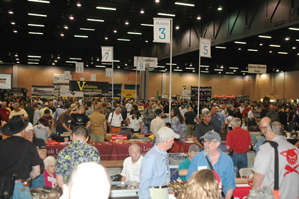
The BLADE Show celebrates 35 years in 2016! We are just as excited as you are! As we kick off 35 years, we are set to bring you the largest BLADE Show event yet! Our show floor will be jam-packed with all of your favorite knife vendors. There’s so many more exciting things happening at this year’s show, we can’t wait to see you all in June!
There’s never been a shortage of charitable acts within the knife industry. For as long as there have been knifemakers, there have been knives given to those in need, including soldiers, farmhands, friends and neighbors, or blades donated for auction to raise money for good causes. A Google search for “knives for charity” turns up too many knifemakers and knives to mention here, partly for fear of leaving someone out.
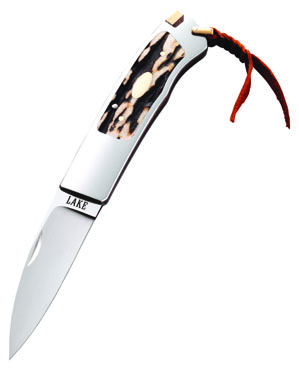
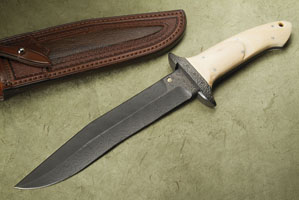
The American Knife & Tool Institute has announced that it plans to hold a “1st Annual Giving Back Event,” featuring knives donated by Ron Lake (one of Ron’s past knives shown), D’Alton Holder and others, at the 2016 BLADE Show. AKTI’s 1st Annual Giving Back Event will take place Friday, June 3, 2016, from 6-9 p.m. at the Renaissance Waverly Hotel—host hotel of the 2016 BLADE Show. No room, meeting room or ballroom has been announced as of this time.
As advertised in an AKTI press release, “We invite you to participate in AKTI’s 1st Annual Giving Back Event! Some of the finest custom knifemakers are contributing their handmade knives to Give Back to help the knife community and their favorite charities. This will be a fun evening with live and silent auctions supporting organizations that make a difference. 50 percent of proceeds will go directly to a charity of choice. 50 percent will support AKTI’s many efforts to keep knives in our lives.
How can you give back? Please stop by AKTI’s booth #18 to get more details.
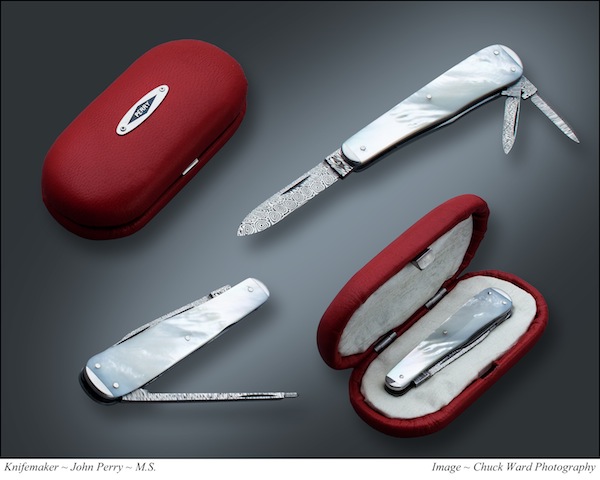
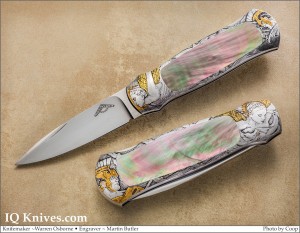
John Perry employs the classic gunstock-lobster pocketknife pattern to showcase the mother-of-pearl. (Chuck Ward image)Gold engraving by Martin Butler borders the stunning black-lip mother-of-pearl inlay in Warren Osborne’s interframe folder. (SharpByCoop image)
7 pearl knives for Dec. 7 somehow seems oh so fitting. Dec. 7, 1941—the date which lives in infamy marked the USA’s entry into World War II and the awakening of a military dynamo that would vanquish Japan and play a crucial role in the defeat of Germany in Europe. Japan’s bombing of Pearl Harbor early that day thrust America headlong into the maelstrom that would change the world forever.
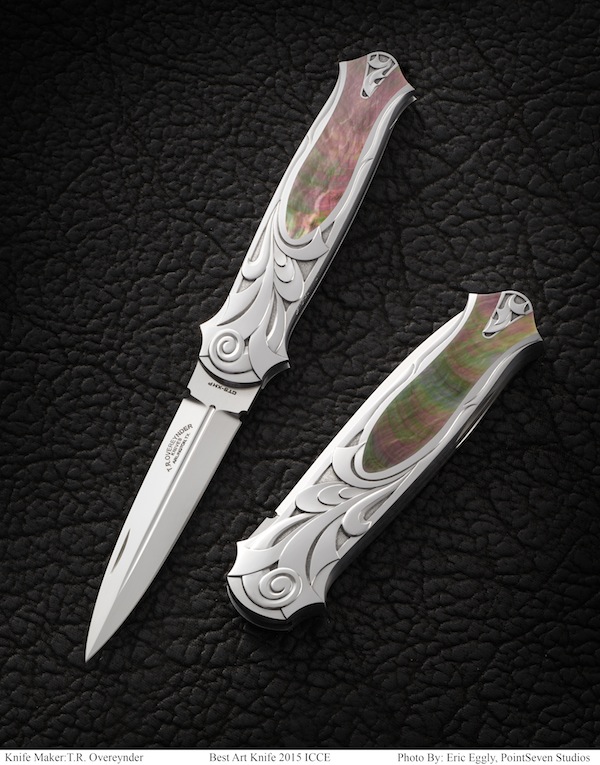
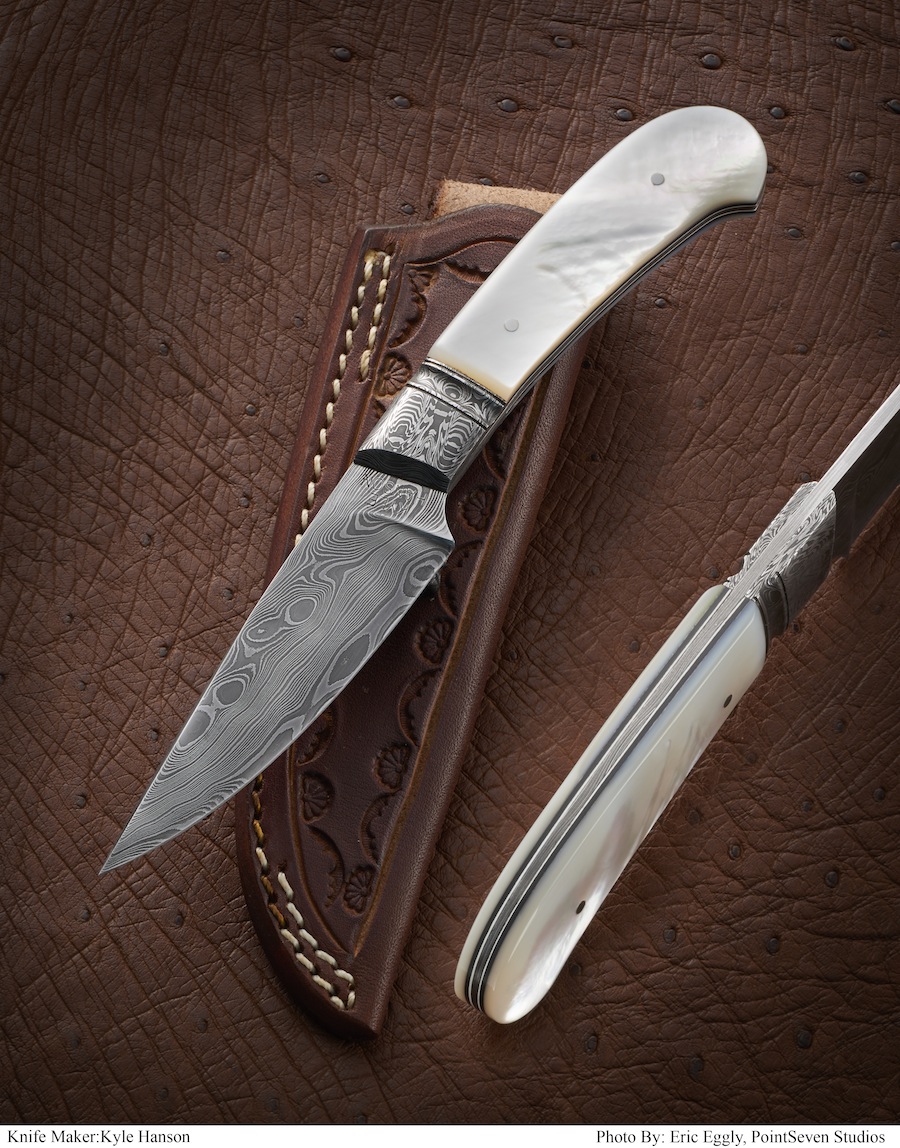
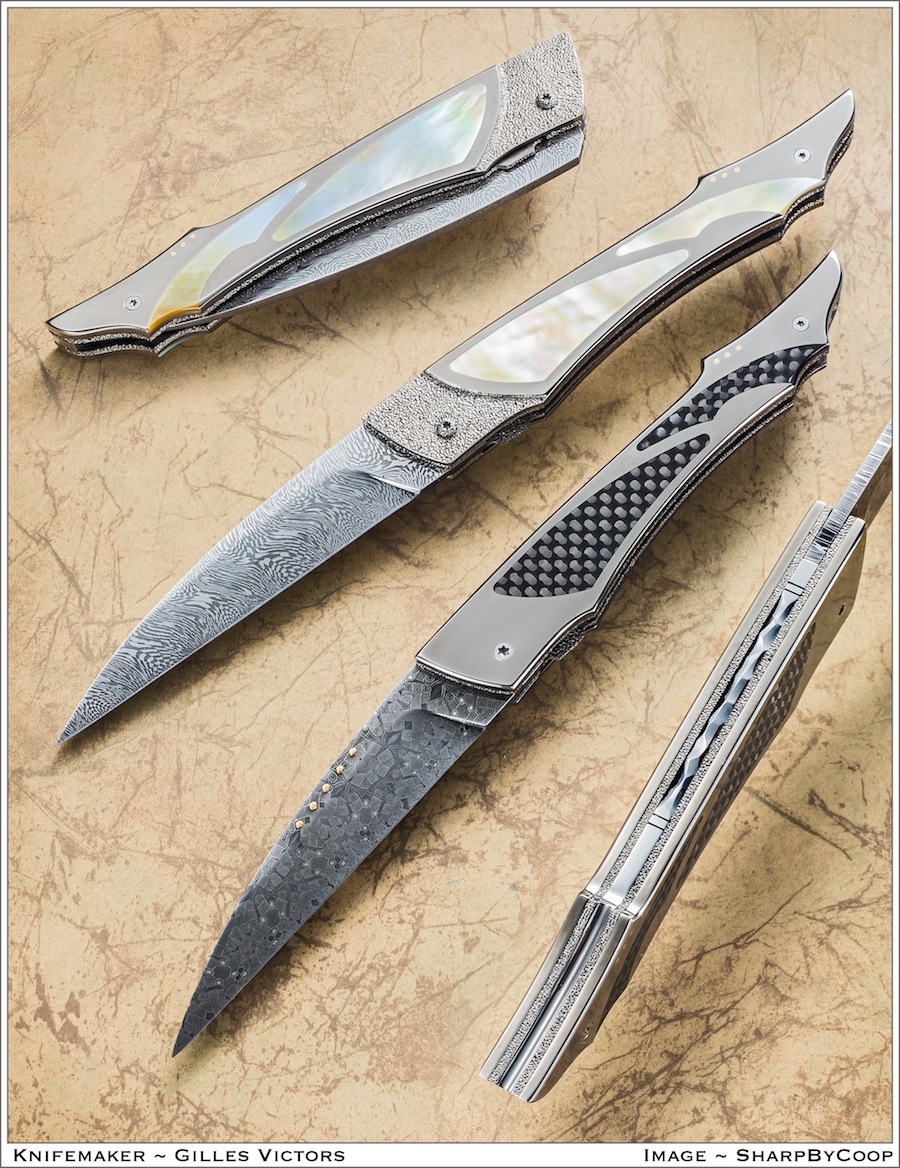
With the 74th anniversary of that momentous event upon us, we thought a fitting way to observe it would be with knives sporting one of the most beautiful of handle materials: mother-of-pearl. Called pearl by most, the material is coveted on higher-end knives and makes for a most worthy edged presentation.
Herein are seven of those knives in memory of Dec. 7. Enjoy!
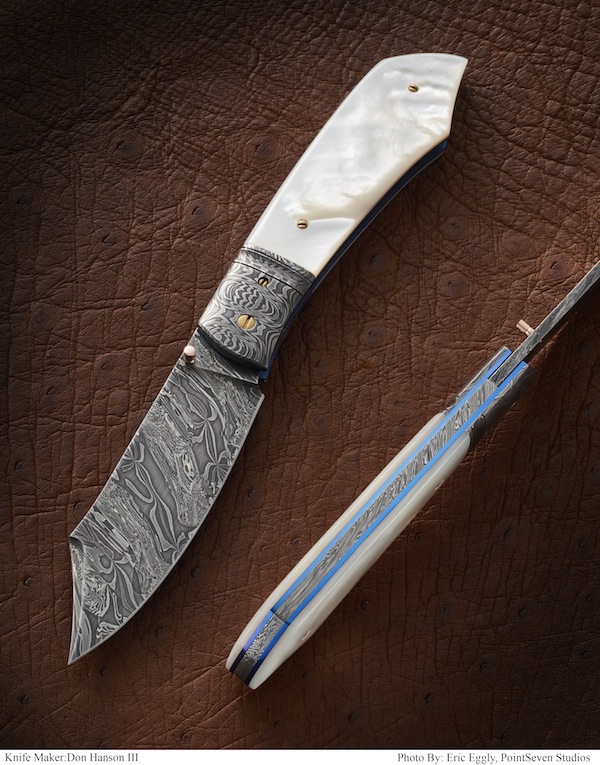
Black-lip mother-of-pearl rarely looks as pleasing as it does on Tom Overeynder’s folding art dagger. (PointSeven image)Don Hanson’s mother-of-pearl folder boasts some of the maker’s forged mosaic damascus for the blade and bolster, and titanium liners anodized blue. (PointSeven image)Kyle Hanson goes the mother-of-pearl route in damascus and with a handsome leather sheath. (PointSeven image)Ken Steigerwalt uses black-lip mother-of-pearl for the inlay on his damascus art folder with a modified tanto blade. Accents in 14k gold add to the mix. (SharpByCoop image)Gilles Victors of Vacquiers, France, offers up his “Zephyr” model in mother-of-pearl as well as a handle of carbon fiber. The damascus blade comes in a modified wharncliffe style.
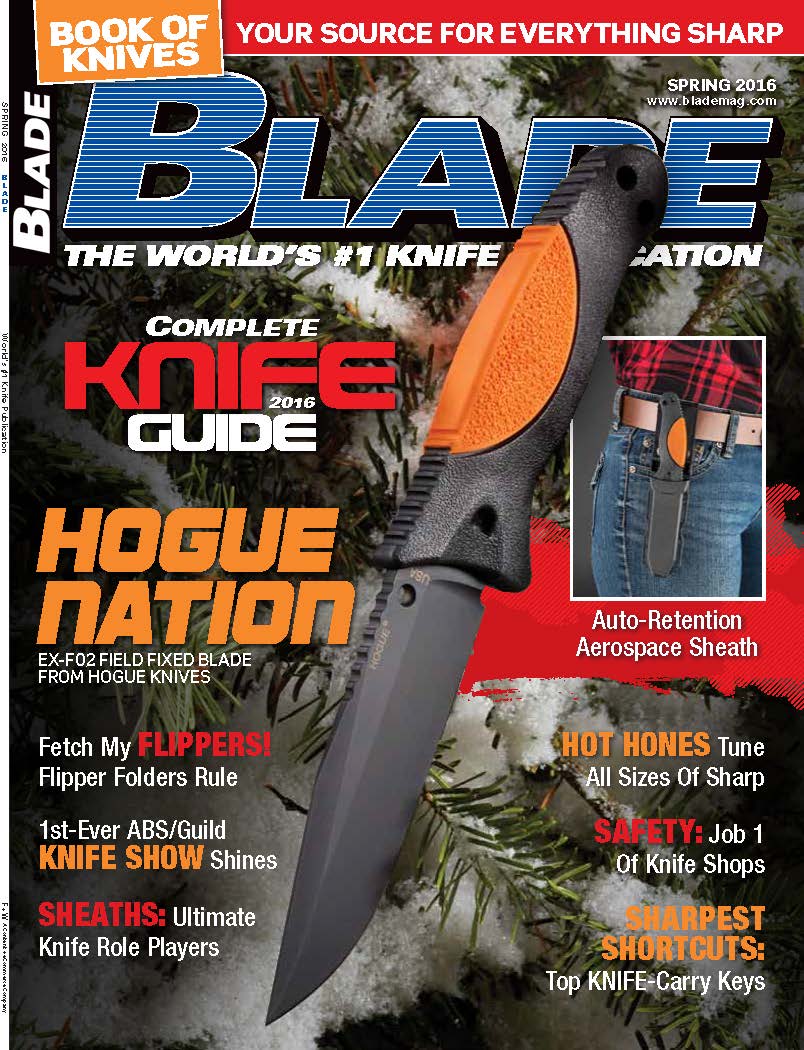
BLADE’s Complete Knife Guide Spring 2016 is your one-stop knife road map for the latest in knives and knife accessories, and how to get them.
BLADE’s Complete Knife Guide Spring 2016 is your one-stop knife road map. It features the latest in knives, sharpeners, sheaths, knifemaking safety equipment, a comprehensive directory of knives/knife accessories and who sells them, and much more—and is on newsstands now!
The first-ever International Custom Cutlery Exposition was held in September at the Downtown Marriott in Kansas City, and BLADE’s Complete Knife Guide (BKG) has exclusive coverage of the historic event. It was the first time members of both the American Bladesmith Society and the Knifemakers’ Guild—the world’s two oldest and most important knifemaker organizations—joined forces to produce and coordinate their own knife show. BKG also examines the latest folding knives for executive wear and some of the most convenient of all knives—the newest in keychain cutters.
For hobbyist, part- or full-time makers, BKG offers tips on must-have safety equipment for every knife shop, as well as an excerpt from knife-and-gun-rights attorney Evan Nappen’s new book “Knife Laws of the U.S.” The excerpt focuses on what to say and do, and, perhaps more importantly, what not to say and do if you get arrested for carrying a knife.
There’s much more, including the latest factory knives and accessories for the coming year, how knife professionals can get the most from social media and other sharp stuff, all in the latest BKG!
COVER KNIFE: The Hogue EX-F02 features a choice of a 4.5-inch tanto or clip-point blade in a low-glare black finish, and an ergonomic handle with an easy-to-grip insert in a choice of colors. An ambidextrous automatic retention sheath locks the knife in place and releases smoothly with the push of a trigger lever.
Recommended:
Stay abreast of the latest developments on this and many more knife rights issues with a subscription to BLADE.
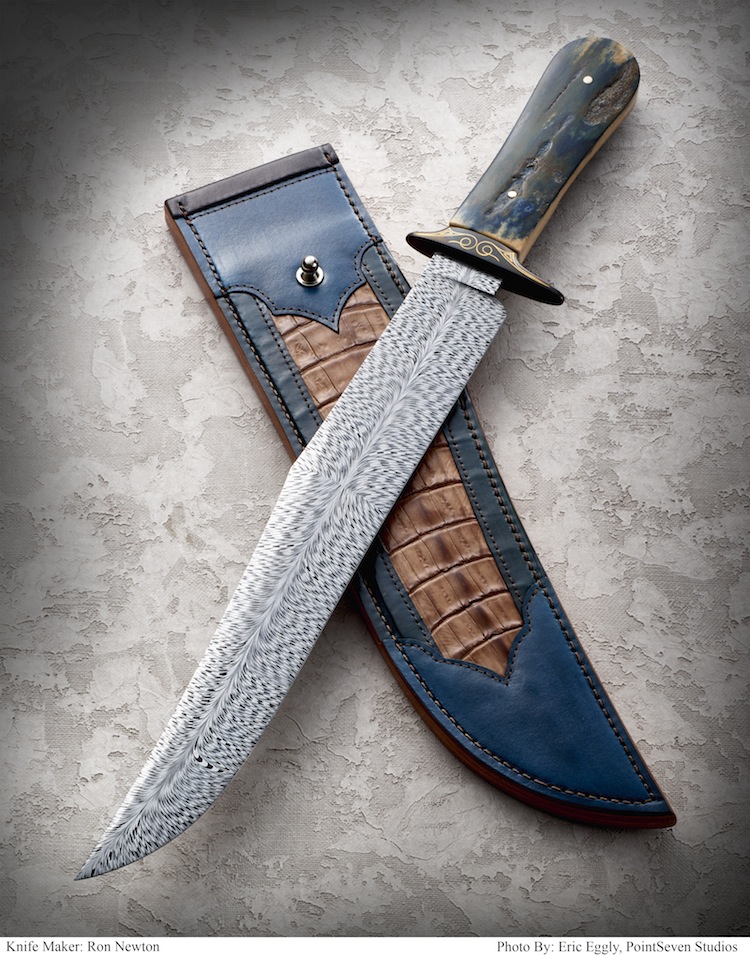
Ron Newton’s bowie features an ancient ivory handle. (PointSeven image)
Massachusetts and New Jersey made advances in the fight against each state’s ivory ban proponents over the past two weeks.
Opponents of the Massachusetts ivory ban outnumbered the proponents in a Nov. 17 hearing before the state’s Joint Committee on Environment. In other words, there were many more legitimate business people there—scrimshanders, musicians, antique dealers, etc.—than animal activists, and that’s a good thing for people interested in maintaining a legal ivory trade in the state.
The ban’s opponents gave many examples of art and culturally significant antiques that would needlessly be rendered worthless under the ban. The committee seemed to acknowledge the beauty and distinctiveness of the antiques that would be outlawed, and that an all-encompassing ban was unnecessarily broad. The activists commented on the “different tone” and the concern the committee showed for scrimshaw and antiques. Many of the questions asked related to creating legal exceptions to the ban.
The Massachusetts developments followed on the heels of the chaotic hearing on the Big 5 African Species ban before the New Jersey Senate Budget and Appropriations Committee on Nov. 10. The oppressive bill heard before the committee would have made possession of ivory a criminal offense punishable by three-to-five years in prison and a $5,000 to $50,000 fine. It also would have targeted other wildlife materials, including varieties of mother-of-pearl, shark’s teeth and many more. Thanks in no small part to the invaluable help of Knife Rights and Doug Ritter, written criticisms of the ban read to the committee helped result in a watered-down version of the bill that, among others, exempted ivory and rhino horn and no longer requires ivory owners to comply with the bill’s new possession prohibition and certification requirements; dramatically reduced the number of species covered from 11,800 to around 10; and slashed the penalty for failing to comply with their certification requirements from felony-level penalties to a civil penalty.
Despite the watering down of it, the New Jersey bill is still a bad one and represents a Pyrrhic victory of sorts. Though ivory was excluded, the bill still constitutes unconstitutional taking by criminalizing commercial trade and possession of otherwise legal private property without just compensation. It imposes taxes on those who lawfully possess wildlife through its certification requirements that remain in place, and manages to include additional species with no evidence of a connection between New Jersey and the targeted items. Finally, its one-size-fits-all-prohibition style strips wildlife of all commercial value to local African countries and communities best suited to protect them.
Also Check Out:
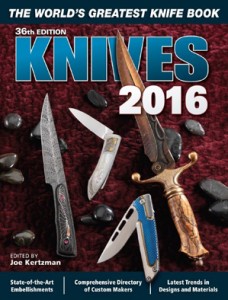
Knives 2016, 36th Edition
The trusted guide for knife collectors, enthusiasts, knifemakers, and dealers around the world, this knife book covers the latest and greatest from front to back. A collection of feature articles explores the latest developments, history, and transformation of knives, swords, and edges of various kinds. Get your copy
The following is an excerpt from the KNIVES 2016book. Click here to order your copy, read many entries like it and view some of the most gorgeous knives on the planet.
Edges of the World
You know it’s American when you see it. That’s the easy part. Isn’t it amazing how something “foreign” is also instantly recognizable? And it doesn’t matter which country you live in, a Chevy is as American as a Ford, and a Maserati as Italian as a Ferrari. One doesn’t look at a Dodge pickup truck, and say, “Wow, those Japanese imports are sure stylish.” The Dodge is easily identified as an American truck. And likewise, even the most novice of car enthusiasts can tell that a Hyundai isn’t a product of Detroit, Mich.
So should knives and swords be any different? When you shrink your product down from a vehicle that a person rides inside to a knife he or she carries, one might think that identifying it by country of origin would be more difficult. But that’s not the case. Many knife enthusiasts recognize Persian upswept blades when they see them, Scottish basket-hilt swords, Japanese tantos or wakizashis, French poniards, Napalese kukris and American bowie knives. Those are the easy ones. But can you identify a Hungarian foko or a Spanish belduque? It doesn’t take much practice.
Perhaps we’re more worldly than we give ourselves credit for. Sure, the average American can’t likely name the countries of South Africa, but we know Chinese food when we taste it, a Cuban cigar when we smoke it and a Mexican fiesta when we attend one. Regional recognition isn’t limited to geography, but also includes cultures, people, clothing, food, arms and armor. That means knives, and these exotic beauties will take you to the edges of the world and back. Or is the world round?
Knives 2016, 36th Edition
The trusted guide for knife collectors, enthusiasts, knifemakers, and dealers around the world, this knife book covers the latest and greatest from front to back. A collection of feature articles explores the latest developments, history, and transformation of knives, swords, and edges of various kinds. Get your copy
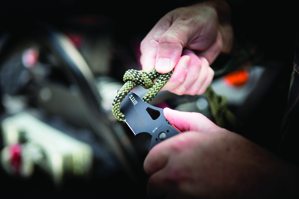
Leave it to BLADE® Magazine and BLADE field editor Dave Rhea to find quality, yes, quality, production knives for under $50 each. (shown below is the 5.11 Tactical DTP)
As Dave Rhea asks, “How does a knife company create a reliable, quality knife at low cost? According to Stephanie Young, Buck Knives marketing and communications manager, the key is to focus on robust, simple construction and tough materials. With the Buck Trigger folder as an example, she said there are several things for knife enthusiasts to consider—including Buck’s “Forever Warranty.”
“Forever is a long time and our knives need to last a long time,” she relayed. “EDC knives are truly carried every day and used more often than a task-specific knife.”
The Trigger features a drop-point blade because it functions well in a variety of situations, she said. The Trigger gets its name from the choil that transitions into a flipper “trigger.”
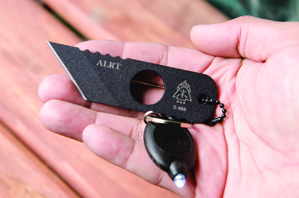
(at right is the TOPS Knives ALRT)
“Robust, simple construction with tough materials need not be expensive,” Young explained. She added … Click here to subscribe and find fascinating articles like this at your doorstep monthly, or pick up the February 2016 issue of BLADE on newsstands today.
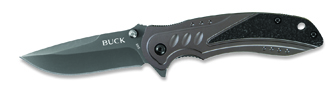
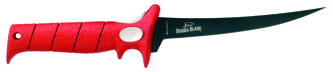
(Shown here are the BuckTrigger (top) and Bubba Blade 7-Inch Tapered Blade Flex Fillet Knife)