Home Blog Page 229

NYC Anti-Knife Ruling Has Disastrous Implications

People falsely arrested or threatened with arrest cannot sue in a federal lawsuit against New York City and Manhattan District Attorney Cyrus Vance Jr., according to a Wednesday anti-knife ruling by a U.S. District Court Judge.

If not overturned, a Knife Rights (KR) news release reported, the anti-knife ruling could have wide-ranging effects on knife enthusiasts throughout the USA, including re-classifying legal knives as illegal “gravity knives” and/or “switchblades.”

Judge Katherine B. Forrest ruled plaintiffs falsely arrested or threatened with arrest over “common pocketknives” cannot sue in part because the case documents don’t specify which knives would be illegal under NYC’s interpretation of New York state law—this despite the fact NYC’s inability to specify legal and illegal knives on a consistent basis is the exact reason the case documents cannot specify which knives are legal and which knives are not!

For the purposes of the case in question, “common pocket knife” is a legal term that covers knives with locking blades and a bias towards closure, KR’s Doug Ritter noted. As such, the legal term does NOT include traditional pocketknives in trapper, whittler, stockman and other old-time patterns.

The ruling is in response to a suit brought on June 9, 2011, by Knife Rights, Inc., John Copeland, Pedro Perez, Native Leather, Ltd., and Knife Rights Foundation, Inc., against D.A. Vance and the city of New York. The plaintiffs allege that the defendants’ “application of New York Penal Law 265.01’s prohibition on the possession of switchblade knives and gravity knives to possessors of common folding knives makes 265.01 void for vagueness under the Due Process Clause of the Fourteenth Amendment.”

Meanwhile, as KR reported, thousands of citizens in NYC have been arrested on “illegal” knife charges. “In at least one instance of which we are aware,” a KR release stated, “the result of the bogus arrest was that the victim’s entire knife collection was confiscated from his home,” adding that gun owners have had their firearms confiscated based on bogus knife arrests, too.

For information on how to fight Forrest’s outlandish ruling, visit www.kniferights.org.

For the latest on knives and knife news, stay tuned to www.blademag.com (www.blademag.com).

Sharp Knowledge: 3 Knife Steel Basics

How the knife will be used, edge geometry and heat treating are all key to deciding which knife steel to choose.
The knife steel you choose depends a lot on what jobs the knife will perform.

One of the questions knife enthusiasts ask most is What is the best steel for a knife? Before you can answer such a question, you must first know exactly what it is you need in a knife.

1) Will you use the knife to cut meat, or paper, or rope, or plastic, or a little bit of everything? Much depends on what you will be using the knife for, and just about any knifemaker or knife manufacturer who knows his stuff will know which steel he has on hand will be best for your purposes.

how-to-make-knives-knifemaking-book
Learn more about selecting steel types and how to make knives in the third edition of “BLADE’s Guide to Making Knives.” The classic is back and better than ever!

2) The steel is just part of the equation. The blade’s geometry is also important. By blade geometry is meant how the blade is ground and tapered from the back (spine) to the edge. If too thick, it won’t slice or cut properly; if too thin, it may chip.

3) How is the steel heat treated? As BLADE Magazine Cutlery Hall-Of-Fame© member Wayne Goddard has written, “A knife of the very best steel may not perform any better than one made of an inferior type steel unless it is heat treated to bring out the full potential of the alloy content.” He also writes, “The reasons for a maker to turn out incorrectly heat-treated blades are too many to list. However, the most common is not having the correct heat-treating specifications from the steel maker.” If you find the maker does his own heat treating and does not go by the heat-treating specs provided by the steel maker, that’s an immediate red flag. In fact, many makers simply have professional heat treaters do their heat treating. Goddard is among them.

These are just three basic things to know about knife steels. There are many others.


Art Knife vs. Cutting Tool Debate

SOG_HT011L

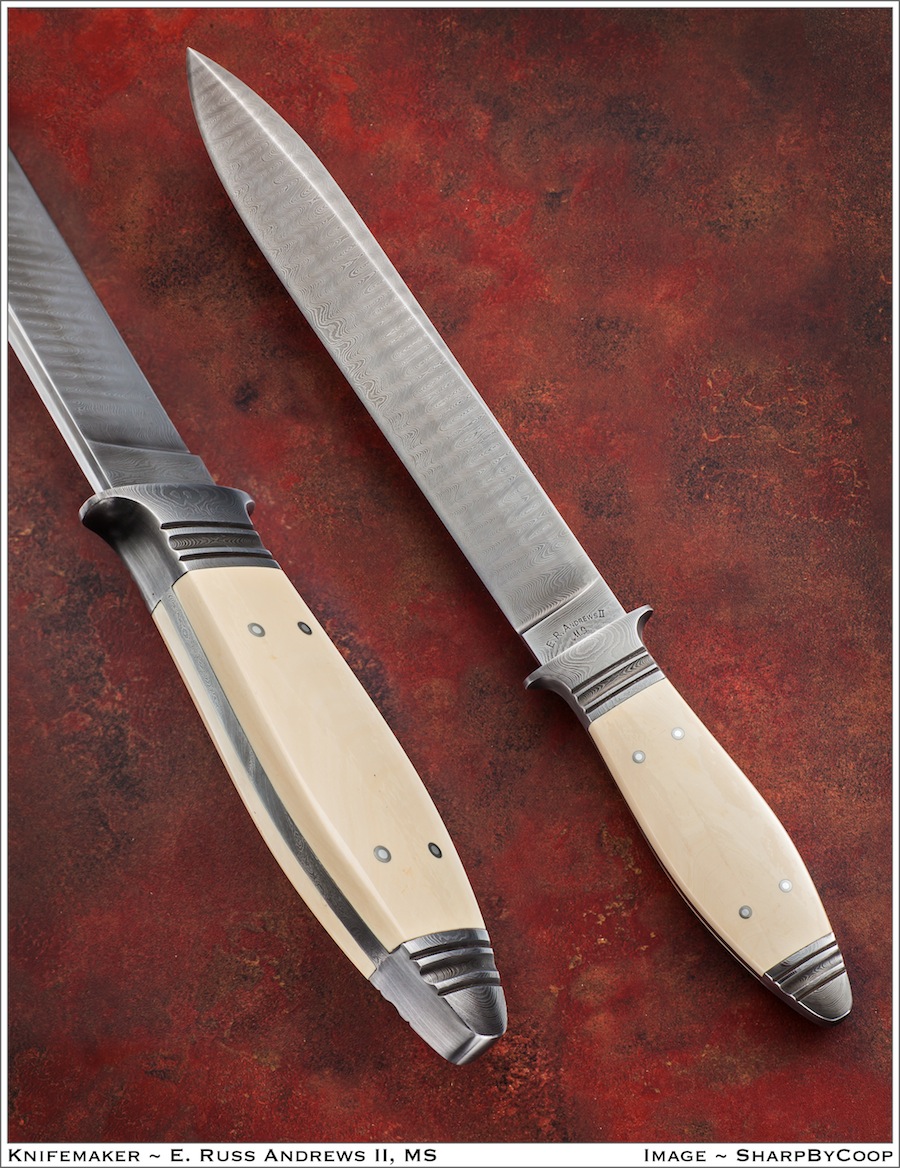
The art knife versus cutting tool debate of whether knives are, or should be, works of art or cutting tools has always intrigued me. There are those who are a bit “put off” by art knives because they prefer utilitarian knives made to be used and employed when needed. That is certainly understandable, and thank goodness there are companies and makers out there fashioning good, sturdy, sharp serviceable fixed blades and folders.

But the notion that art knives are a modern phenomenon ignores the countless officers of world armies who historically carried dress daggers, kings and queens of countries gifted with jewel-encrusted, gold-inlaid, sculpted and carved swords and other edged weaponry, and the “average joe” who saved his pennies in the 1960s and ’70s to buy a Buster Warenski, Bill Moran, Jim Schmidt or even Bob Loveless (many considered him a maker of art knives on occasion) art knife. newton knife

And one other argument I’d make is this—the debate doesn’t need to be debated at all. There is plenty of room in the knife industry for both art knives and more utilitarian hunters, soldiers’ knives, blue-collar fixed blades and folders, and many more. Look at it this way, just because one guy prefers his three-blade stockman for ranch work doesn’t mean he shouldn’t welcome the collector of high-end art knives into the industry and market with open arms. Collectors who appreciate that artistic nature and handcraft of knives help drive the industry forward and ultimately expand its offerings. And that’s just good for knives and knife enthusiasts in general!

To see and read about as many well-crafted custom knives, both utilitarian and artistic, as humanly possible, the Knives 2014 book is a must-have for your library. To keep updated on factory, custom and semi-production knives 13 times a year, subscribe to BLADE now!

What To Ask/Not Ask a Knifemaker

Don't ask a maker how long it took him to make a knife.
Knowing what not to ask a knifemaker is almost as important as knowing what to ask him. (Point Seven photo)

When you buy a knife from a knifemaker, it’s your money and you have the right to ask him or her any question—within reason—about the knife. However, there are certain questions we recommend you ask and others we recommend you don’t ask. For instance:

•Don’t ask how long it took to make the knife. Why? For one, depending on the maker’s expertise and equipment, some knifemaking operations may take some makers longer than others. Some makers may have equipment that performs a knifemaking operation faster, or some makers may simply be faster than others. Besides, how long it takes to make something doesn’t always translate into it being better or worse. It’s the quality of the end product that matters, not how long it took to make it. Besides, the question is usually one asked by people new to knives—and you don’t want to look like a knife newbie, right? Professional makers who have been around many years have heard the question umpteen times, and while some makers are patient and will answer it, it’s a good way to get off on the wrong foot with others. And it’s almost always good to get off on the right foot with anyone, including knifemakers.

•If a price for a knife seems high, don’t ask incredulously, “That knife cost HOW much?” Most knifemakers take their work seriously. They know how much talent and work goes into a knife or how much the knife brings on the market—and some knives bring four figures and higher. If the price seems too high, simply acknowledge it or nod your head, thank the maker for his time and move on.

•Things to ask the maker include how long he’s been making knives; how he tests his knives for cutting ability; why he outfits a knife with a certain feature or how he achieved it/made it that way, such as a flat grind vs. a hollow grind, blade temper line, etc.; whether he’s a full or part time maker; does he accept custom orders and how long his waiting list is; and what knifemaking training he’s had or knifemaking schools he’s attended. There are others but this is a start.

For the latest knives, knife news and more, keep your eyes on www.blademag.com (www.blademag.com).

You Know Your Knifemakers, but Do You Know Knife Laws?

Knife Laws of the US bookKnife Laws of the U.S., by renowned knife rights attorney Evan Nappen, is an indispensable guide to the legal issues every knife enthusiast should understand. It’s not just a book of laws, though. Nappen expertly explains the history behind knife regulation, the state of mind to have when dealing with law enforcement and the legal traps that are all too easy to fall into.

Order Knife Laws of the U.S. direct from BLADE here to get the best price. A few bucks can save you a lifetime of hassle.

Guild Show: Granddaddy Custom Knife Event

Great custom knives always highlight the Guild Show.
Alan Snow (right) holds the Stealth III made by Kevin Hoffman (left) at a past Guild Show.

The Knifemakers’ Guild Show will hold its 44th annual rendition—the granddaddy of all custom knife shows—this weekend at the Seelbach Hilton Hotel in Louisville, Kentucky. Knifemakers, knifemaking suppliers, purveyors and more from all over the world will convene in Derby Town, where some of the best custom knives will be shown and sold.

The Guild got its start in February 1970 when the Guild’s “founding father,” BLADE Magazine Cutlery Hall-Of-Fame© member A.G. Russell, rented tables at the Sahara Gun Show in Las Vegas and invited several knifemakers to display knives there. Later that year, 11 makers met in Tulsa, Oklahoma, to form the Guild. The makers were John Applebaugh, Cutlery Hall-Of-Famer Blackie Collins, John Nelson Cooper, Cutlery Hall-Of-Famer Dan Dennehy, Ted Dowell, Chubby Hueske, John Kirk, Cutlery Hall-Of-Famer Bob Loveless, John Owens, Jim Pugh and G.W. Stone. Loveless was elected secretary—the Guild office title today is president—and A.G. Russell was made honorary president.

The purposes of the Guild are to:

1) Promote custom knives and knifemakers

2) Assist the knifemaker technically;

3) Encourage ethical and professional business conduct;

4) Sponsor an annual business meeting and knife show.

The show has been held in assorted venues over the years, including Kansas City, Dallas, Orlando, New Orleans, Las Vegas and now Louisville. Some of the earliest Kansas City shows were held at the old Muehlebach Hotel, where, in addition to Loveless and Dennehy, such Guild legends as Cutlery Hall-Of-Famers Buster Warenski, Bill Moran, Ron Lake, George Herron, D’ Holder, Frank Centofante, Gil Hibben and many others displayed their knives and kick-started an organization that continues to be recognized worldwide today. Hibben, in fact, remains active in the Guild today, and is in his seventh and final year as Guild president. He will step down this year.

Make plans now to attend the show this weekend. There will be a special President’s Gala Thursday, Sept. 19, at the Seelbach, and should be a great place to see Gil and Linda Hibben in their final show as the Guild’s first family, as well as all the other makers and their great knives show Friday, Saturday and Sunday.

For the latest in knives and knife news, keep it here at www.blademag.com.

Do’s & Don’ts of Knives

DO ask a maker's permission before picking up a knife from his table at a knife show.
DO attend as many knife shows as possible—such as here at the BLADE Show (www.bladeshow.com)—to handle knives and meet the makers.

The do’s and don’ts of knives are many. Knowing them will make your knife experience much more rewarding and satisfying. Here are but a few:

DO use a sharpener to touch up the edge of your knife after each use or at the end of each day of use.

DON’T use your knife as a pry bar (unless it has a pry tip and is designed for such use).

DO rinse off and dry your non-stainless carbon steel knife after each extended use or at the  end of day of each use (it’s probably not a bad idea to do the same no matter what the blade material is).

DON’T store your knife in a leather sheath for extended periods.

DO cut away from other people/your body when cutting rope, cardboard boxes open, etc.

DON’T show off flipping your folding knife open and closed at knife shows in crowds of people or around any area crowded with people, for that matter.

DO ask a maker’s permission to pick up a knife from his table at a knife show.

DON’T open more than one blade at a time on a multi-blade folder (it puts unnecessary pressure on the backsprings; besides, it’s a good way to get accidentally cut).

DO carry a knife whenever possible where it is legal to do so (and when the knife meets local legal requirements).

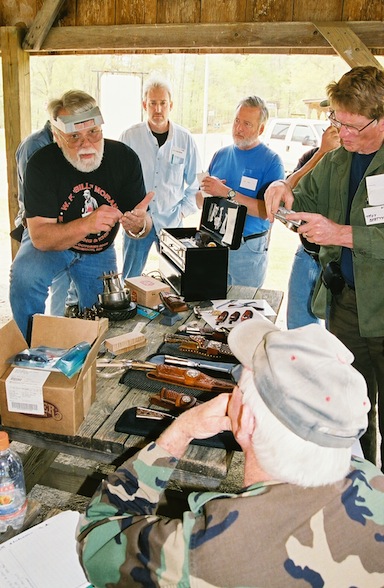
DON’T pull out a loupe/magnifying glass to closely inspect a new custom or handmade knife at a knife show (it’s just not considered good form; besides, unless you’re legally blind, if you can’t see what’s right or wrong with a knife with the naked eye, then it’s not worth worrying about).

DO attend as many knife shows as you can and view knives up close and personal and meet the makers who build them.

DON’T interrupt a conversation between a maker and someone he or she is talking to at his or her table at a knife show. It’s rude.

DO read as much as you can about knives, their history and their makers.

DON’T take everything you read about knives as gospel. Always look for at least one additional opinion on the subject.

One final DO is to check out these knife deals BLADE‘s lined up for you at ShopBlade.com.

New BLADE® Salutes Military On 9/11

The 4th annual military issue of BLADE® salutes the military on the anniversary of 9/11.
New BLADE® salutes our military personnel and their favorite knives on the 12th anniversary of 9/11.

Military heroes past and present and their favorite knives are the focus of the new BLADE® (www.blademag.com) on the 12th anniversary of 9/11—on many newsstands NOW!

Featuring a Bob Dozier Freedom Fighter on the cover that stopped a bullet and likely saved U.S. Marine Lance Corporal Josh Clysdale’s life, the latest issue of BLADE (www.blademag.com) is our 4th annual military issue, and it covers the subject of military knives like no other.

The issue kicks off with a heart-rending story about Lima Company, 3rd Battalion, 25th Marines, all save one of whom—Lance Corporal Travis Williams—were killed by an enemy IED in Iraq. Williams eventually returned home and began making knives part time under the tutelage of knifemaker James Behring Jr. Williams made a knife in honor of Lima Company that was auctioned to raise money to support the work of an artist who was painting life-size portraits of the Lima Company Marines killed by the IED. It’s must reading for military and knife aficionados alike.

There’s much more, including stories on the aforementioned Lance Corporal Clysdale and his “bullet-proof” knife; one on if a soldier had just one knife in a military emergency, what that knife would be; a knife collaboration between Andy Sharpe and Chuck Richards to honor the American GIs who fought off a furious Japanese Banzai attack in a little-known battle on Attu Island in Alaska during World War II; a ground-breaking new program to not only teach returning vets how to make knives but also to help equip them with the tools and equipment they need to do the job; a new “Arkansas Veterans” knife from A.G. Russell Knives, with $10 of the sales of each knife going toward an emergency fund for vets who are students at the University of Arkansas; a one-of-a-kind Bob Loveless Lawndale boot knife made specially for Pat R. Dailey, thought to have been a CIA operative; and much more.

    For your copy, check your newsstands. To subscribe to the digital version of BLADE, click on

www.shopblade.com/blade-1-yr-digital-subscription?lid=ssfbbl091013

Advertisement

Must Read Articles

Read this before you make a knife

Knifemaking 101 – Read This Before You Make a Knife

  by Wayne Goddard My experience has taught me that there's nothing like digging in and getting started. I've often said the hardest part of the...
how to forge damascus steel

How to Forge Damascus

Advertisement
Advertisement