Home Blog Page 230

Salute America’s Family of Veterans

Many American families have their share of veterans. In fact, you could say America is one big family of veterans. With that in mind, today is Veterans Day, the day to thank all the veterans you know—those in your family and those everywhere—for keeping America safe.

My Grandfather Frank was in the Army and drove an ambulance in Europe during World War I. My dad was in the Navy during World War II and served as a radar man on the USS Cimarron, an oiler that serviced many of its sister ships in the Pacific Theater. He never talked much about the war but I know he enjoyed his time and the friends he made while in the service. He and Mom were married in 1942 and she supported him throughout the conflict. She gets a lot of credit, too.

Dad’s brother, my Uncle Jack, also served in the Navy during the war, as did my great Uncle Grady. He was in the Army Air Corps. My Uncle Joe served on the USS Hancock, an aircraft carrier, in the 1950s. I served in the Navy during the Vietnam War era and was stationed at Roosevelt Roads, Puerto Rico, and Little Creek, Virginia. My service helped me grow from a peach-fuzz-faced kid into a young man, and also provided me with the money from the G.I. Bill to get my college degree.

I am but one of many to come from such families. How about you? Did you serve, or did anyone in your family? Tell us about your experiences or those of your family members who served—where they served, the years, etc.

Meanwhile, of course, let’s not forget all those brave souls who paid the ultimate sacrifice for our country. Without them, none of us would be living in this great nation and enjoying the freedoms we do. Maybe there are better countries to live in, but not for me. I’ll take this one.

For the latest knives, knife trends, tips, news and much more, stay sharp at www.blademag.com.

Thanks the veterans you know on Veterans Day.
Celebrate your family’s veterans—and all veterans—on Veterans Day. The author’s dad served on the USS Cimarron during World War II. The author’s mom is at left.

Knife For Veteran’s Day

On Veteran’s Day (11/11/13), U.S. Elite Gear, in collaboration with Rustick Knives, plans to introduce a limited-edition (you guessed it, only 11 knives will be released initially) fixed-blade “Kraken” model for sale through U.S. Elite’s website, www.US-EliteGear.com. The Kraken features a 6-inch, recurved, tan-Cerakote™-treated blade of 1/4-inch-thick 80CrV2 tool steel, black G-10 handle scales and a “coyote”-brown Kydex® sheath with a Blade-Tech clip for attachment to gear.Kraken-Knife-main

Designed by SGM Jack Stottlemire (retired), founder of Rustick Knives, and U.S. Elite’s Jim Erwin, former Army Ranger and 1st SFOD-D operator, who the knife is inspired after, the knife is manufactured in the Rustick Knives production facility in Ft. Bragg, North Carolina.

“Having served for 26 years as a Marine, paratrooper and Special Operations soldier, with 12 combat tours, I know firsthand that a soldier needs a good strong knife that is not going to fail,” stated Stottlemire. “Just about every soldier on the battlefield carries a fixed-blade knife on his kit, it just feels right, and is one of those essential items that we all must have.

The 11 limited-edition Kraken knives will be available for purchase for $350 each through www.US-EliteGear.com on November 11th, Veterans Day.  After those are exhausted, un-serialized knives will be available for $299 each.

For other tactical fixed blades, click here.


New BLADE® Hits Newsstands Today!

Get the new BLADE, on newsstands today.
The new BLADE® is on newsstands now!

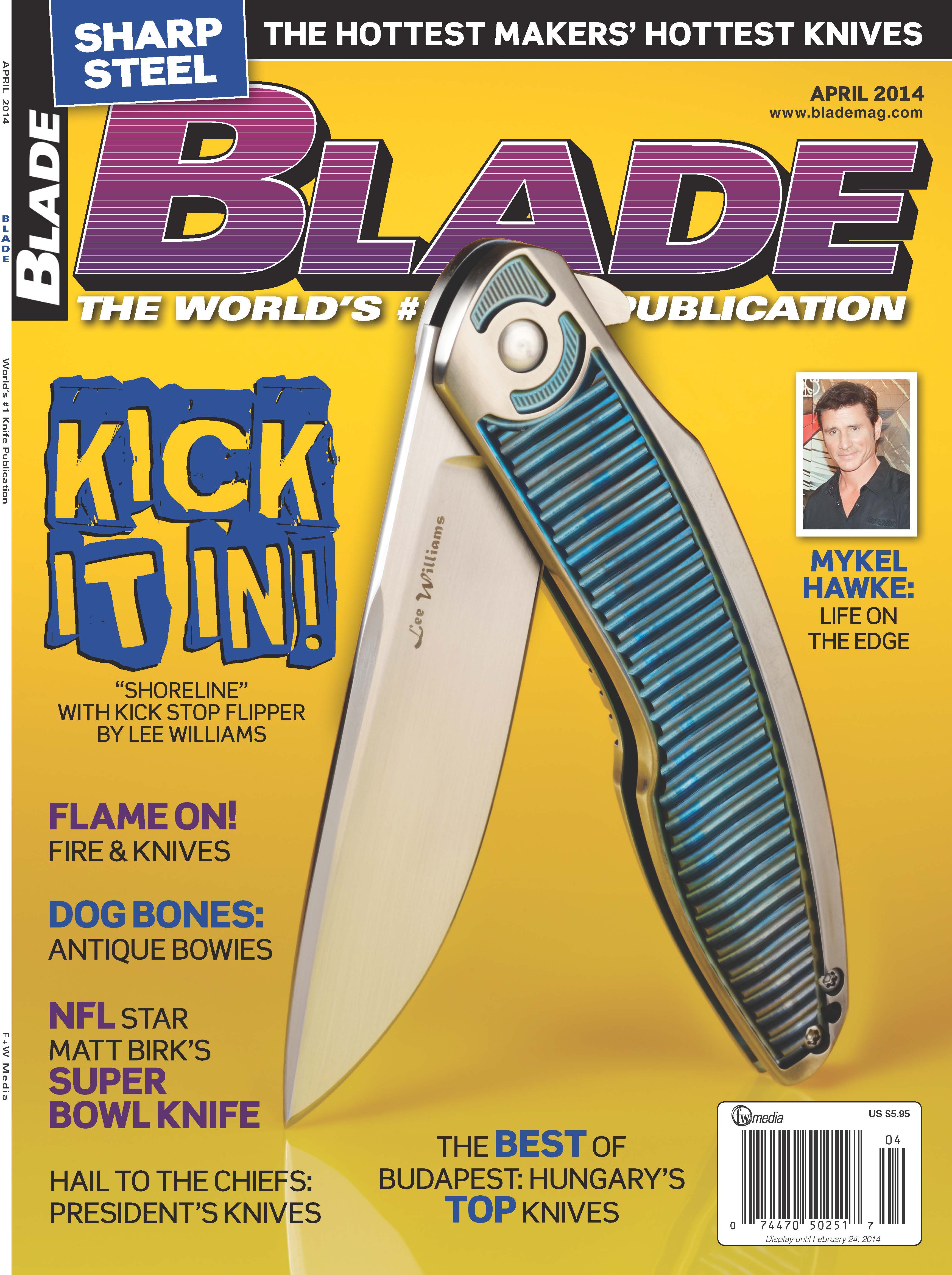
The new BLADE® is on newsstands now! Get the latest on knives for Veterans Day, the coolest factory assisted-opening knives, knife tests, knifemaker profiles and much more with newest edition of the World’s No. 1 Knife Publication.

Sporting the Condor Tool & Knife (CTK) Tactical Rescue Tomahawk (TRT) on the cover—the first time ever that an edged tool from CTK has appeared on the cover of BLADE®—the latest issue includes the TRT among four hawks tested by writer James Ayres.

It was almost 10 years ago this month that knifemaker Rob Simonich was killed in a vehicle accident. Join Dexter Ewing as he interviews those who knew and loved Rob—including Mrs. Christine Simonich, knifemaker Jerry Hossom, Mike Fuller of TOPS Knives, knifemaker Tom Mayo and others. Those who remember Rob will relish the story, and those who don’t get the chance to acquaint themselves with a man who touched the lives of many—and continues to to this day.

We often get letters from readers who want more on sheaths, and this issue ABS master smith Ed Fowler begins a multi-part story on how he makes the sheaths for his knives. Known far and wide for his sheep-handle knives with 52100 blades, Ed also makes one of the best pouch sheaths going. He shows you how he does it in part one of “Sheath How-To Step-By-Step.”

Part two of the story on the top makers in the 40 years of BLADE® focuses on the cream of the cutlery crop from 1989-2000. It was yet another golden age of knifemaking. Check out the top makers over that span as identified by our panel of edged experts. Tell us who we left out—because it’s impossible to do such a list and not leave someone out.

There’s much more in the issue—but the best way we know to tell you about it is to tell you to go get the latest issue on newsstands. Or, if you want it faster, subscribe to BLADE® digitally by visiting http://www.shopblade.com/blade-1-yr-digital-subscription


American Bladesmith Society Announces 2014 Hammer-In Schedule

One of the things that makes the knife industry such a pleasure to be involved with is artisans, bladesmiths and knifemakers in general sharing their knowledge, teaching people their craft and passing down the handcraft from generation to generation. 2

Some of the best at this are the members of the American Bladesmith Society, as well, of course, as those in the Knifemakers’ Guild and countless other knife clubs and organizations. The ABS claims to have had record attendance at its hammer-ins across the country in 2013, and has already announced its 2014 Hammer-In Schedule. Click here for a Complete Knifemaking Collection of books and digital downloads to get you started in your knifemaking endeavors. And without further ado:

ABS Hammer In Schedule for 2014

March 7, 8, and 9, 2014
Spring Great Smoky Mountain Hammer-In
Haywood Community College, Clyde, North Carolina
ABS Contact – Bill Wiggins (828) 226-2551 or Email [email protected]

April 26 and 27, 2014
Spring Piney Woods Hammer In
Texarkana College – Moran School of Bladesmithing, Washington, Arkansas
ABS Contact – BR Hughes (903) 838-0134 or Email [email protected]

June 2014
ABS Youth Hammer-In
Smoky Mountain Knife Works, Sevierville, Tennessee
ABS Contact – Houston Price (865) 397-0053 or Email [email protected]

July 11, 12, and 13, 2014
New England Hammer-In
New England School of Metalwork, Auburn, Maine
ABS Contact – Mace Vitale (203) 457-5591 or Email [email protected]

August 22, 23, and 24, 2014
Mid America Hammer-In
Miami County Fairgrounds, Troy, Ohio
ABS Contact – Butch Sheely (419) 832-5801 or Email [email protected]

September 13 and 14, 2014
Fall Piney Woods Hammer-In
Texarkana College – Moran School of Bladesmithing, Washington, Arkansas
ABS Contact – BR Hughes (903) 838-0134 or Email [email protected]

October 4 and 5, 2014
Heartland Hammer-In
Washburn Institute of Technology, Topeka, Kansas
ABS Contact – Steve Culver (785) 484-0146 or Email [email protected]

October 2014
California Hammer-In
College of the Sequoias, Tulare, California
ABS Contact – Mike Vagnino (559) 636-0501 or Email [email protected]

October 18 and 19, 2014
Smoky Mountain Fall Hammer-In
Haywood Community College, Clyde, North Carolina
ABS Contact – Bill Wiggins (828) 226-2551 or Email [email protected]

Distal Taper: Why Knives Have It

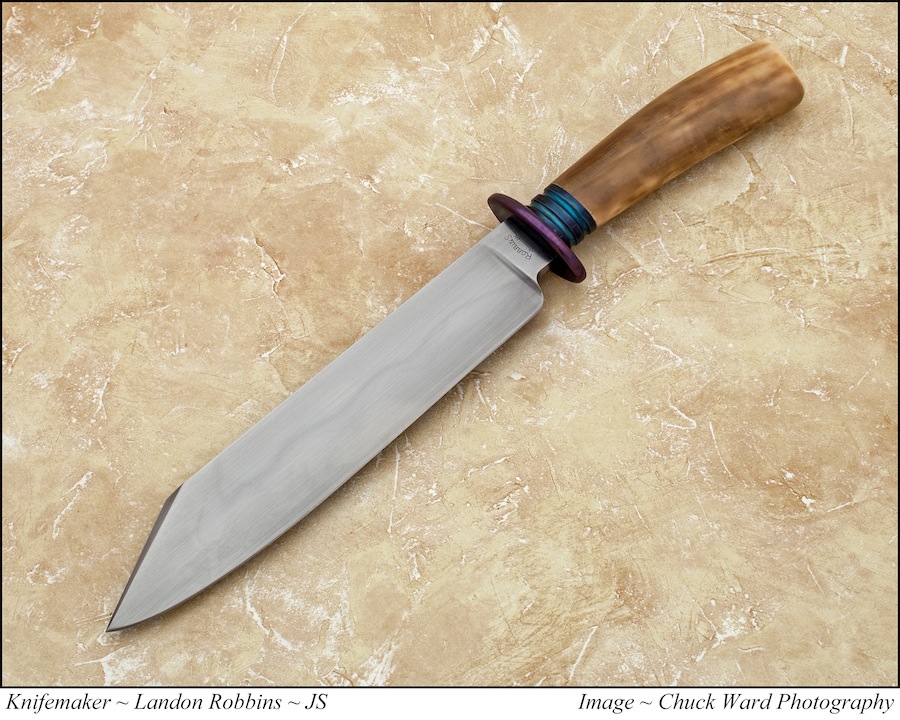
Distal taper is exhibited in the way Terry Vandeventer's blade goes from thick to thin. (SharpByCoop photo)
Terry Vandeventer’s blade exhibits the reduction in thickness known as distal taper. (SharpByCoop photo)

Distal taper is a concept long used by knifemakers in different parts of the world. Characterized by a reduction in thickness of the blade from guard to tip and spine to edge, distal taper results in a knife that is both lightweight and exhibits excellent edge geometry. The concept is also employed on knife tangs, whereby the tang is tapered in thickness from the guard to the butt.

Since knives with distal taper are both lighter in weight and have super edge geometry, they are easier to handle and cut better—all other things being equal. Who can argue with those kinds of results?

As far as we know, exactly who first used distal taper is undetermined. Some Sheffield-made kitchen knives from the 19th century exhibit the trait, and the concept no doubt was used long before that. A number of custom knifemakers apply distal taper to their knives today, following in the footsteps of such makers as Blade Magazine Cutlery Hall-Of-Fame© members William Scagel, Bob Loveless (http://www.shopblade.com/loveless-legend-w5287) and Bill Moran, as well as Ted Dowell and others.

What about you? Do you own any knives with distal taper? If so, tell us about them—what styles they are, who made them, etc. Or do you use the concept on the knives you make? Tell us about it/them. Why do you like knives with distal taper? Why, in your opinion, is the concept important? If you apply the concept to your knives, how do you go about doing it?

By the same token, if you don’t think distal taper is all that important, tell us why. Is it overrated as a concept or what exactly? Don’t hold back. And don’t worry, you won’t hurt our feelings.

For the latest knives, knife news and more, stay tuned to www.blademag.com.

Video: How to Grind a Forged Blade

0

American Bladesmith Society (ABS) master smith Jerry Fisk explains how to profile a forged blade on a grinder in this video.

Pay special attention to Fisk’s tip at the beginning of the video. Wear earplugs while running a grinder for best results. That way, you’ll be relaxed throughout the entire process.

“If you’re tense, you’re not going to get smooth operating,” Fisk says in the video.

Fisk also recommends wearing a face mask while grinding if a ventilation system is not present in the shop. Not doing so will turn your lungs into “canteens,” as Fisk says.

Learn More About Knife Grinding

How to Grind a Knife Blade
Learn how to grind a knife blade in this PDF download from BLADE.

For even more great information about grinding knife blades, don’t miss BLADE‘s Knife Grinding Secrets PDF download. It’s packed with helpful instruction in these knifemaking areas:

  • Profiling a Chisel-Ground Blade
  • Grinding the Bevel of the Kwaiken Model
  • The Finesse of Grinding
  • The Feared Flat Grind
  • Shaping the Tip
  • Two-hand pass
  • Tapering the Blade Tang

How Did You Use Your Knife This Weekend?

Tell us how you used your knife this past weekend. The knife is the Fallkniven PXLim. (Mary Lou Ayres photo)
How did you use your knife over the weekend? The Fallkniven PXLim gets a workout here. (Mary Lou Ayres photo)

How did you use your knife this weekend? Did you cut open a box or two, prepare meals, cut loose thread from an item of clothing, peel an apple or just whittle to pass the time? Maybe you performed some survival or bushcraft tasks, such as carving a drinking cup, practice building a makeshift shelter or some baton work to split small kindling. Whatever it was, tell us about it—the circumstances, what job you put the knife to, what knife you used, and how the operation came out. Did the knife do the job or did you have to go to your knife array for a smaller/bigger/different type of knife to complete the task?

I had the opportunity to use my carry knife of the day, a Spyderco Native5 in a G-10 handle and 3-inch blade of CPM S35VN stainless steel, yesterday while with my great nephew Carter at the annual Cherokee Pow-Wow at Red Clay State Park just south of here on the Tennessee side of the Georgia border. Carter and I were watching the American Indians perform a traditional dance when Carter spied a young girl holding a toy bow with rubber-tipped arrows. We asked where she got it, made a beeline for the exhibitor tent that sold them and bought one.

Carter wanted to test the bow, of course, so we proceeded to an open field in the scenic park, where we inspected the bow and arrows. The arrows were taped tightly to the bow with masking tape, so I pulled out the Native5, cut the multiple winds of tape and Carter proceeded to launch arrow after arrow into the cool October sky. “It’s a good thing you brought that knife,” Carter said.

How about you? How did you use your knife?

For the latest knives and knife news, stay tuned to www.blademag.com (www.blademag.com)


Advertisement

Must Read Articles

Read this before you make a knife

Knifemaking 101 – Read This Before You Make a Knife

  by Wayne Goddard My experience has taught me that there's nothing like digging in and getting started. I've often said the hardest part of the...
how to forge damascus steel

How to Forge Damascus

Advertisement
Advertisement