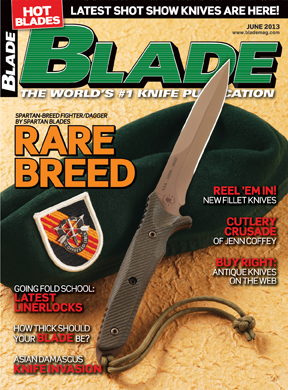
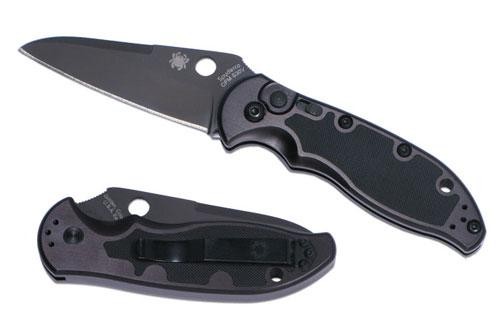
The following is written by Jenn Coffey and is excerpted from the June 2013 issue of BLADE, which hit newsstands and subscribers’ doorsteps on March 26th, 2013.
About two years ago many of you read a story about a baby who was sadly lost in a traffic accident. The added pain of the story was that they had tried to save the child, who was trapped by a seatbelt, but no one had a knife. This simple tool, if present, would have allowed the child to be cut free from the seatbelt, able to survive another day.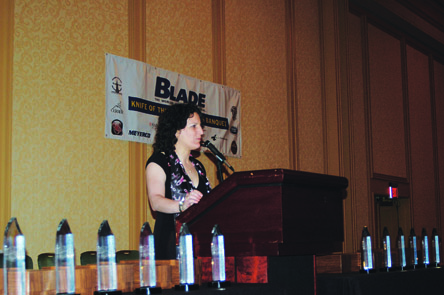
This is the story that I just cannot get out of my mind. Now, two years later, I continue working to raise awareness. I hope that when you finish reading this you will share my passion and belief.
This is something all of us can do. It does not matter if you are a collector, a manufacturer or, like me, an EMT who uses knives on the job to save lives. The simple fact is if you use, make or just appreciate knives, you should work to educate and help others avoid similar tragedies.
Not long ago I took some time out of a very busy week to drive to the New Hampshire Auto Dealers Association’s annual event. I met a huge number of folks from the industry, many of them business owners. We spoke about many things, but I always went back to the story of the child trapped in a seat for lack of something to cut away the restraints. I discovered the auto dealers had never considered a seatbelt cutter as a safety promotional item to give away with every vehicle purchase. I heard the phrase “I’d never thought about that” in almost every conversation.
Now, we all know that even if new ideas are well received, implementation of anything new does not happen quickly. It takes repeated exposure and many people to agree that a change is positive and worth making. It is difficult to get people who are accustomed to and comfortable with a current standard to accept change.
My pitch to dealers of both new and used vehicles in the auto industry was simple: include a knife designed to release a restraint when the circumstances require quick and definitive action. All customers appreciate trinkets like the little ice scrapers with the dealership name and phone number. For most people, however, the trinkets end up in the glove box or trunk, unused and forgotten. Until folks find themselves in an icy parking lot with a broken scraper, they do not think of or even see it again. But showing the car dealers how they could put a potentially lifesaving tool, with their company logo, on the sun visor, the dash, or attached right to the seatbelt received a great deal of interest. The reason was simple: the customer would be driving around with the dealer’s logo in plain view.
In Praise of the Exitool
I am impressed with the fact that CRKT’s Exitool fits right onto my seatbelt. It is easy to put on and take off with a simple click. It is compact and contains lifesaving tools. I have had one in my vehicle now for about a year and no matter what I am wearing—be it jeans and T-shirt or a fancy silk dress—it has never snagged on my clothing, which is a major plus in my book.
The CRKT Exitool comes with a shrouded seatbelt cutter, L.E.D. flashlight and tungsten carbide window breaker and, perhaps best of all, attaches directly to your seatbelt where it is handy at a moment’s notice. MSRP: $26.99. For more info visit www.crkt.com or call 800-891-3100.
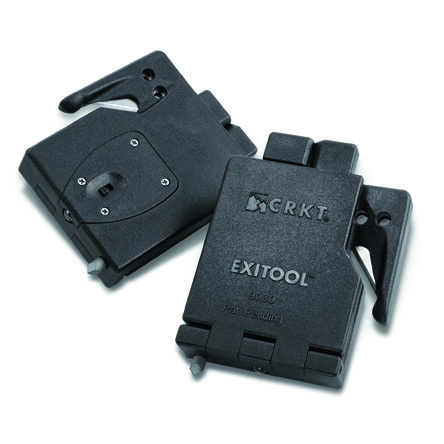
Now I am known for having knives just about everywhere, and I do—guilty as charged! But here is the thing: I am an EMT. I have handled countless patients involved in vehicle crashes that left them upside down trapped in a car. When your vehicle goes upside down or flips, everything goes flying. The Exitool will still be on your seatbelt easy for you to access and simple to use. Within moments you can cut yourself free, break your window open and even have the use of a flashlight to help you see your way to safety. The flashlight batteries can be replaced and are widely available for just a couple of dollars, enabling the tool to have a long life and be well worth the buy. The blade is shrouded and will not cut you or get caught on clothing, and the window break is perfectly placed for ease of use.
It is not expensive—and who can put a price on survival? Everyone I care about is getting an Exitool in their vehicle.—by Jenn Coffey
If you add to sales or advertising incentives just one news report of a person saved by that tool, it would have a ripple effect. One of the major selling points for vehicle sales is safety. What better way to show your customers you care about their safety than replacing the little ice scraper with a small, inexpensive safety tool? For me, using the promotional ice scraper meant reaching across the windshield to add winter salt to my brand new black dress coat! OK, maybe not all of you are as short as me and do not have that issue. But I know I found it amusing when they gave me one of those little scrapers when I bought my SUV. I would have had better luck driving around in a circle, hoping the wind would blow off the ice, rather than trying to reach more than 2 inches of the windshield with that silly piece of plastic.
A LITTLE GRASSROOTS WORK
I can tell you it was worth my time to reach out to the auto industry. I did a short presentation, opening a channel of communication with a little grassroots work. Now consider the fact that every state has an auto dealers’ association, which means each one has a central marketing staff that bulk-buys promotional items, and adds the individual dealer logos with either stickers or special-order engraving. If this is explained properly to these folks, we can help change the image of our tools and gain many new networks not there before, bringing the knife industry into new avenues.
If we all share the same message of safety and logo recognition to our respective locations, it will have a positive effect. With time, promotionally marked seatbelt cutters can grow to the level of a “must have” for auto dealers and repair services, and it will be serving a purpose that is good for people.
As a state representative serving as vice-chair of our Commerce and Consumer Affairs committee, I acquired knowledge of various businesses, and had a lot of contact with the auto dealers. Like many of you, they strive to earn a positive image. They fare much better in the public eye with stories of survival instead of tragedy. I found the dealers to be very receptive to the idea of adding safety tools, but I lacked the ability to close the deal by myself. I need help from those of you in the promotional field to show them what is possible from an advertising and sales point of view. Though the products they are likely to seek are on the lower end of the price scale, the quantity would surely make all the difference, and you just cannot put a price on what effect it would have on public perception. Think about just one life saved through this effort, and what effect that would have not only on a single business, but on the entire industry.
This simple idea, to reach out to auto dealers and sell them a product that is better than what they have now, can save lives and help both the knife and auto dealer industries. That’s a win-win situation. Time is precious to us all; most of us have many things going on in our day-to-day lives. Our jobs, our families, and our familiar pastimes usually fill up our days and weeks. But this volunteer project was well worth the time I made for it, and it can be the same for each of you; you have the same ability.
Now, stop for a moment and think: If even a few of the people who subscribe to BLADE® took just a fraction of their normal day-to-day activity to work on this, it would accomplish awareness, change the perspective of the public on our tools and, most importantly, save lives. I hope you agree to work on it or help those who are willing, maybe by just writing a letter to your local auto dealer. Perhaps you can write a letter to the editor of your local paper, or work with a cohesive team to help educate on the positives, both safety and business-promotion related.
I hope to be reading about your efforts in BLADE.
Editor’s note: The author is a former New Hampshire state representative who championed the passage of knife law pre-emption in her state, author of Knives, Lipstick and Liberty: One Woman’s Journey, and winner of the Blade Magazine 2011 Publisher’s Award for her efforts on behalf of knife enthusiasts in her state and for being an inspiration to knife enthusiasts everywhere. Her website is www.kniveslipstickandliberty.com. She is also on Facebook.