Batson was an aerospace engineer, master bladesmith, author and educator.
James Lucian Batson Jr., an aerospace engineer, master bladesmith, author and educator, passed away June 5, 2026, after a brief illness at the age of 90. He was born Feb. 2, 1936, in Steubenville, Ohio, the son of James L. Batson Sr. and Bertha Mae (Cummings) Batson.
Batson spent 33 years as an aerospace engineer at Redstone Arsenal in Huntsville, Alabama, working on several key defense and rocket programs. He earned his master’s degree in aerospace engineering from Auburn University in 1967 and a Ph.D. from the University of Texas in 1972.
Outside of his engineering career, Batson was a pioneering figure in the knifemaking and blacksmithing communities. An American Bladesmith Society (ABS) master bladesmith, he co-founded the Alabama Forge Council, served as president of the Artist-Blacksmith Association of North America and founded the Batson Bladesmith Symposium, now in its 38th year. His extensive contributions to the craft earned him inductions into both the ABS Hall of Fame and the BLADE® Magazine Cutlery Hall of Fame®. Additionally, in the February 2014 BLADE Magazine issue, he was ranked No. 9 among the top 13 knifemakers from 1989 to 2000.
An active researcher of historic cutlery, Batson authored numerous articles and books, particularly focusing on the history of the bowie knife and the material science of bladesmithing, publishing his final book at age 90.
His other accomplishments included sailing the Olympic-class sailboat called the Flying Dutchman in the pre-Olympic trials in 1967. He skippered a cruise sailing across the Gulf Stream to the Bahamas five times in 1972. He also earned the rank of Eagle Scout with the Boy Scouts as a youth and continued to lead Troop 400 as an adult, hiking part of the Appalachian Trail with the Scouts.
Following his passing, ABS Chairman and President Kevin R. Cashen paid tribute to Batson’s immense legacy and humble nature in the organization’s newsletter: “It was always a fun pleasure to point out to people that this down to earth, very approachable, guy in bib overalls, was an actual rocket scientist! That was the first thing I admired about Jim, his unpretentious and humble demeanor that had him working beside anybody to get the job done … In sorting old, and yellowed, papers one thing became noticeable about halfway through the years spanning the ABS timeline. Suddenly the volume and organization of the documents exploded … I saw one man single-handedly remake the ABS, setting it on a climbing trajectory as if it were the rockets he had worked on in his other career.”
Batson is survived by his wife, Barbara, two children, two stepchildren, 14 grandchildren and five great-grandchildren. A memorial celebration is planned for this fall in Huntsville.
Remembering Others The Knife Industry Has Lost:
Betty Dowell, Driving Force Behind Knifemaker Ted Dowell, Passes
B. R. Hughes, Pioneering Writer And Bladesmithing Teacher, Passes Away
With 200 years under its belt, the U.S.A. was in the spirit of celebration in 1976. And the nation’s bicentennial not only brought out the best in citizens, but knifemakers as well.
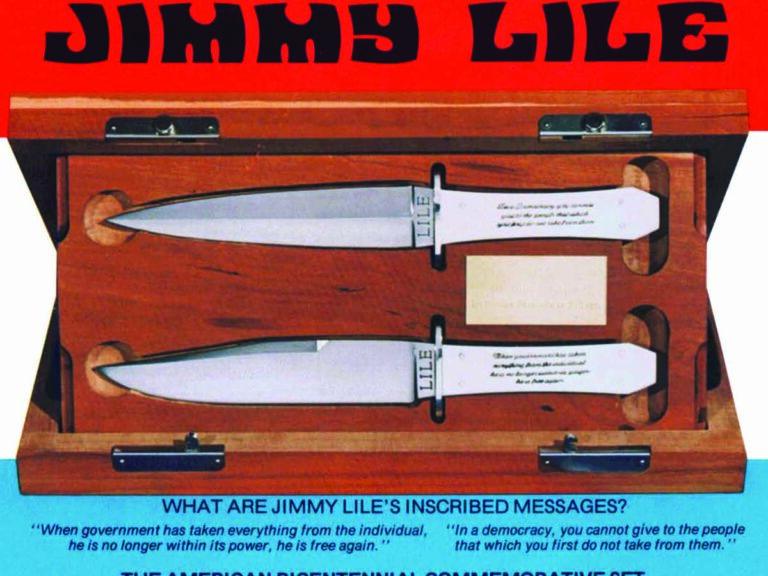
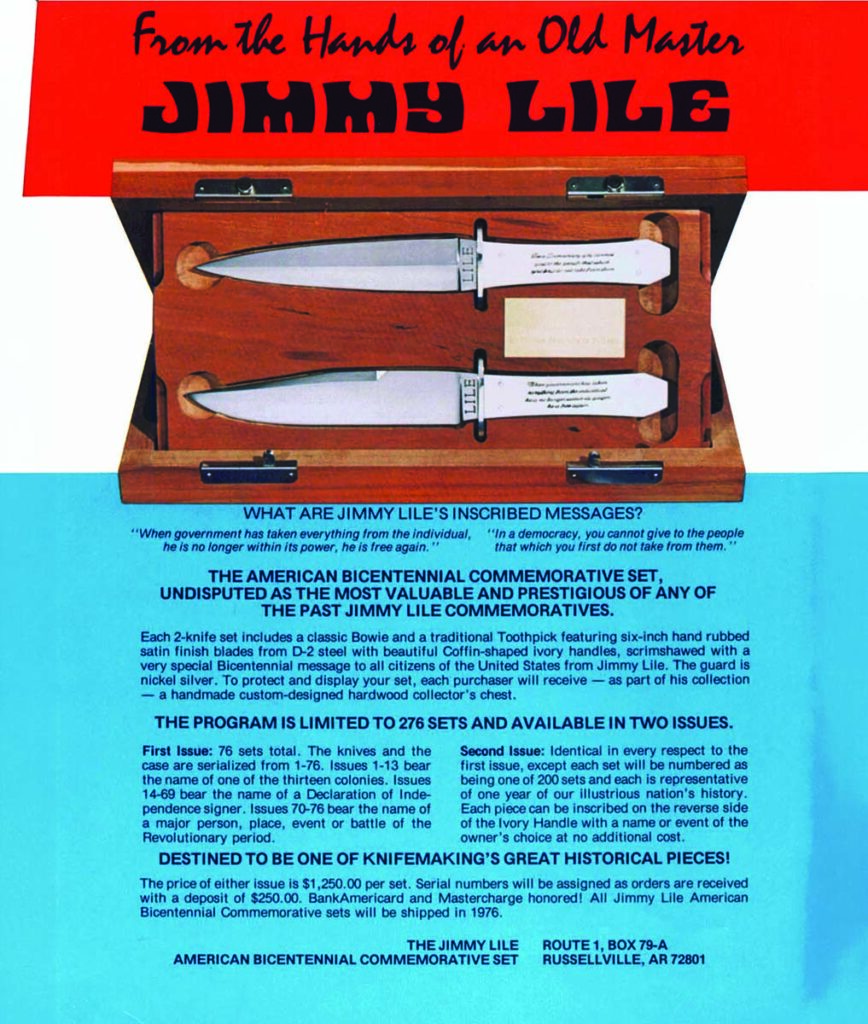
BLADE® Magazine Cutlery Hall of Fame® member Jimmy Lile was one of them, offering up a set of knives for America’s 200th birthday in the July/August issue of that year’s American Blade. Unlike other custom makers advertising flashy commemorative pieces, “The Arkansas Knifemaker” took a more stoic and serious approach to his collection.
Jimmy Lile produced 276 bicentennial sets. The first run of 76 featured historic inscriptions: colonies (1-13), Declaration signers (14-69) and Revolutionary icons or battles (70-76). The second identical run was numbered 1-200 to mark each year of American independence.
The bowie and dagger composing the set were sober in design and ornamentation, with clean lines the defining feature of the coffin-handle knives. Yet, what the pair lacked in stars and stripes celebration, they more than made up for in Lile’s deadly serious and patriotic scrimshaw on the handle scales. One might even cast the inscriptions as stark warnings.
On the bowie it reads: “When government has taken everything from the individual, he is no longer within its power, he is free again.” While the dagger is inscribed with, “In democracy, you cannot give to the people that which you first do not take from them.”
Interestingly, these do not appear direct quotes but paraphrases by Lile. The first most closely resembles a passage from Aleksandr Solzhenitsyn’s novel The First Circle. The second bears a striking resemblance to a line from an essay by French economist and philosopher Frédéric Bastiat.
No matter the words’ origins, they stand as portents as sharp as the knives they were inscribed on. And they’re as relevant 250 years after our country’s founding as they were at its bicentennial.
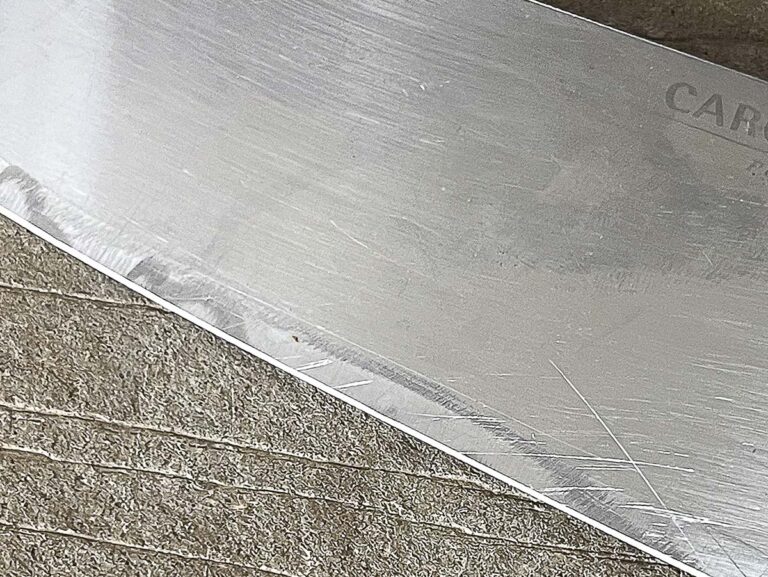
It happens. You use your kitchen knife and hit a bone and the edge chips out. Or the cutting edge of your pocketknife breaks or dulls as you lightly pry a paint can or some other stuck container. It’s just the dynamics of steel. Blades go dull through normal use or get damaged through misuse or extreme abuse (image 1). Sometimes it’s unavoidable, as the knife might be our only option for a tool at a given point. So, you have a damaged cutting edge, rendering the knife unusable. How do you rectify this minor catastrophe to restore the knife to service as a capable cutting tool?
In addition to knife writing, I run a knife repair and sharpening business. In the course of this venture, I have developed an edge-repair system that has breathed life back into what were otherwise inoperable knives. And at the risk of shrinking my customer base, I’m going to share with you my method of taking a blunted or broken blade and reapplying an edge so it’s as sharp—maybe sharper—than the day it came out of the box. This does require some specialized tools, but nothing so outlandish as to seem out of place in a common home shop or in possession of a serious knife collector or user.
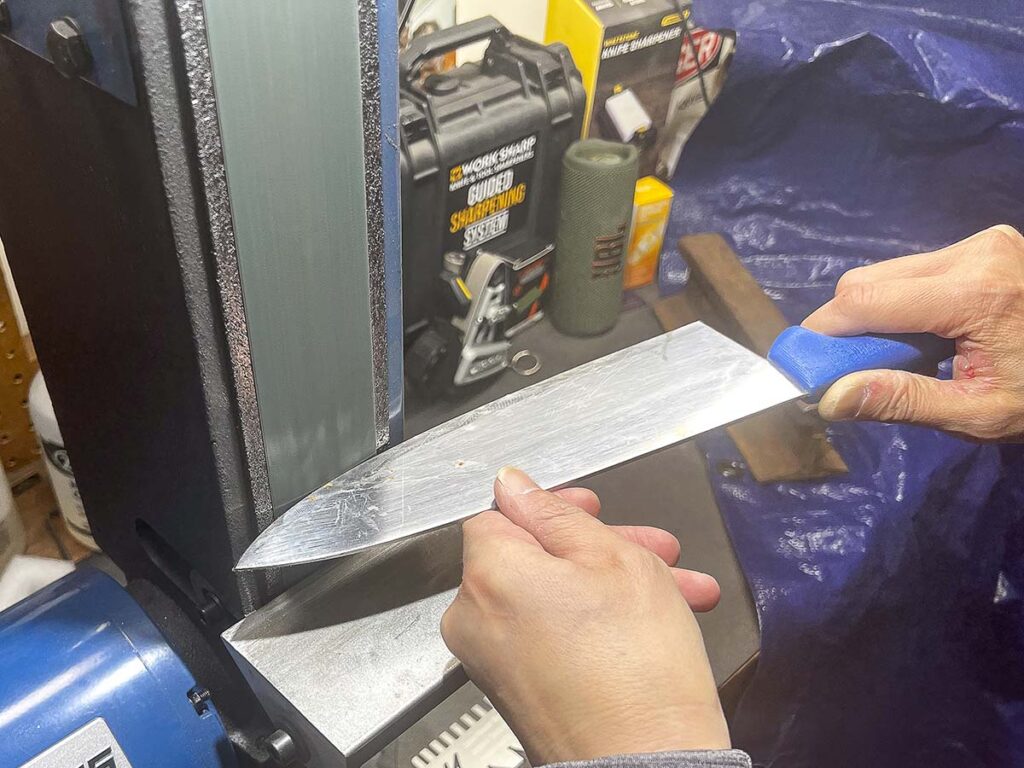
Image 1: Here we have a chef’s knife with dings in the edge. When we get done with it, the blade will be fully repaired, sharpened and ready to be placed back into service.
Before we begin, there is something that needs to be said about this type of work. Regardless of the knife—kitchen knife, hunting knife, pocketknife, tactical folder, etc.—the edge repair technique I will guide you through is the same. Furthermore, and I cannot emphasize this enough, safety comes first, last and in between. Any type of knife-sharpening activity is inherently dangerous. Be sure to do this work in a well-lit area and undertake this work only when you can give it your full attention. Forcing yourself to repair a blade when you’re tired, stressed or distracted is a recipe for getting cut—perhaps badly. To this point, you should have a first aid kit handy; even with complete focus, accidents do happen. And, hold your celebratory beer or cocktail until after you’re done getting your knife in order.
Edge Repair Tools
If you have experience with sharpening, chances are you have the background for blade repair. I recommend using a belt sander or some sort of belt grinder for the process. You use this equipment to address the damaged portion of the blade and it makes life a lot easier, trust me on this. If you are in need of a sander, an economical choice is Harbor Freight’s 1 x 30 belt sander. It’s cheaper than many sharpening stones, around $50 minus tax, and worth every penny. While you’re at it, pick up a couple of packs of 80-grit belts, just so you don’t have to interrupt a project if the grit wears off one.
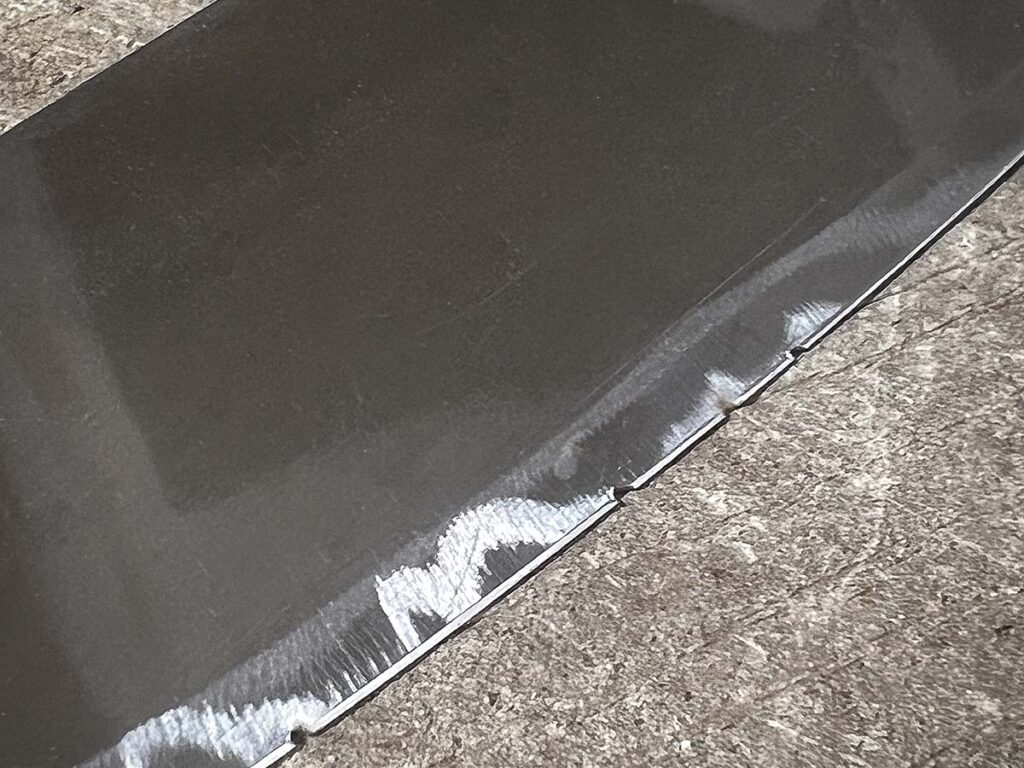
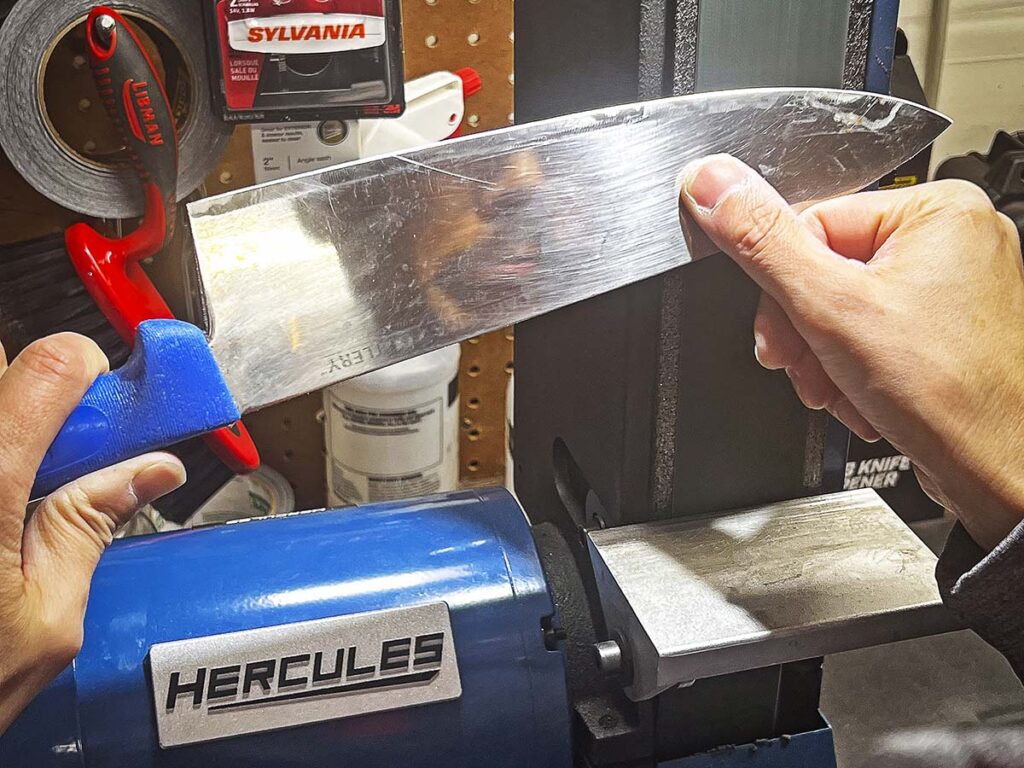
Image 2: First step is to grind the edge down past the deepest ding to remove them all. This reduces the height of the blade somewhat but not to the point where it is detrimental.
I recommend 80 grit, it’s coarse enough for fast stock removal but doesn’t heat the blade up too fast. I find 60 grit works and stays cooler, but eats steel much faster and isn’t advisable for a beginner. You can get in trouble fast at this grit size and larger. As for grit medium, zirconia and ceramic belts last longer but conversely are more expensive than aluminum-oxide belts. That said, aluminum oxide will work for these repairs.
As mentioned, heat is an issue in edge repair. Too much and you can ruin the temper of your blade. In turn, you need some way to keep the steel cool while working on your knife. A spray bottle or a jar of cool water will suffice for this task. I prefer a spray bottle because leaving an open jar of water on the workbench sometimes doesn’t work out as it’s easy to knock over and make a mess. So, I keep a spray bottle close to give a few spritzes almost immediately after each pass.
To do this project, you’ll also need some sort of angle guide sharpening kit, such as a Lansky Diamond Kit or Work Sharp Precision Adjust. Honestly, any brand of sharpener that holds the blade steady in a clamp and allows for angle adjustment while honing will do. The key here is angle consistency. You’re going to use the belt sander first to take out the damage as well as restart the cutting edge, then you’ll finish with the angled-guided sharpening system to refine your new cutting edge.
Fixing Chips
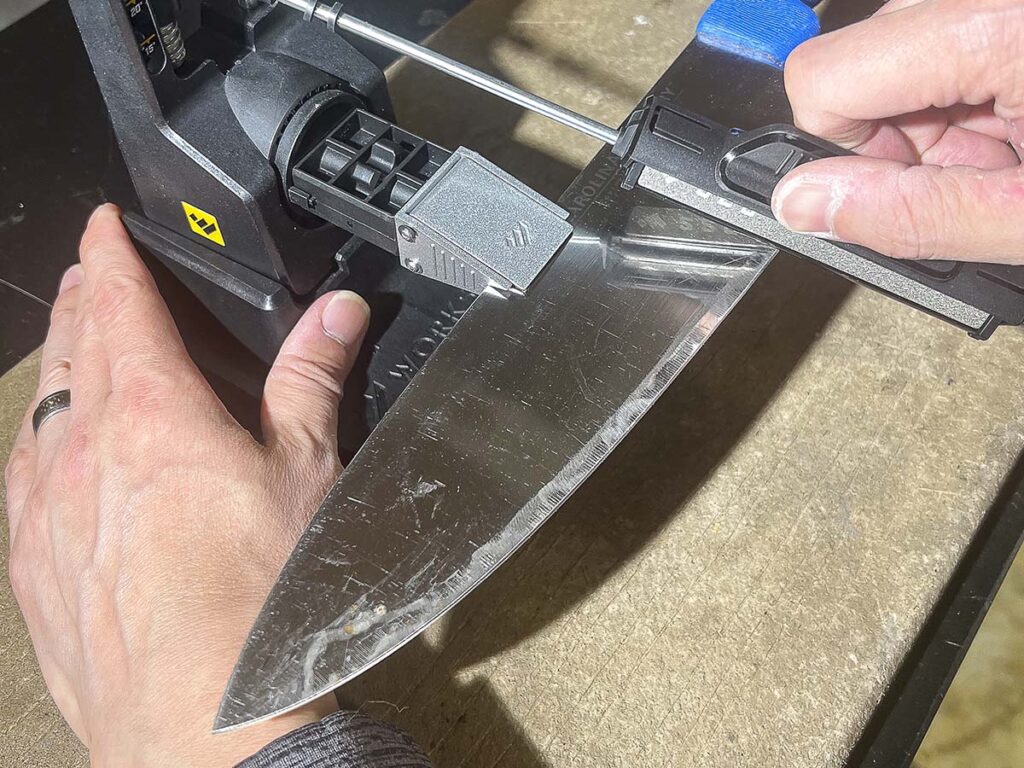
Image 3: Now that the dings have been removed, we need to create a starter edge. Best way to do this is to approximate a 20-degree angle and carefully grind away.
The first aspect of edge repair is evaluation and determining if a chip in the edge requires rigorous reshaping. Keep in mind, some minor dings come out with normal sharpening. If the damage is severe, you have to turn to the belt grinder and essentially remove the entirety of the edge just past the deepest point of the chip (image 2).
With the damage removed it’s time to restart your cutting-edge bevel on the grinder; think of it as the first draft of your final edge. It does not have to be perfect, simply a roughing in of the edge. Note, depending on the thickness of the knife’s steel, you may need to thin material behind the edge. Nearly all the knives I repair—be they pocket or kitchen—I put a 20-degree bevel (image 3). Further, I’ll sharpen them to the same angle. I know, there is some clinching of teeth out there among those who believe a more acute angle is required for culinary cutlery. That’s fine and you can apply it, if you wish. I’m explaining the system I use, and 20 degrees is a very durable, yet sharp edge. Note, 20 degrees are measured on each side of the blade, right and left; as a whole, the edge total of both sides will be 40 degrees.
Image 4: The final step in this process is to use a quality angle sharpening kit—such as the Work Sharp Precision Adjust — and continue to fine tune and finesse the final cutting-edge sharpness. This is where you want to take your time to get it right. Be sure to set the sharpener to whatever angle you desire. For this one, I am using a 20-degree angle.
After you have the edge damage removed and the new cutting-edge ground in, it’s time to sit down with the angle guide sharpening kit and really shape the edge (image 4). This is where you want to take your time; you want the cutting edge right. Again, I personally use a 20-degree edge bevel on kitchen knives and pocketknives. However, this is a personal choice and what the steel in your knife can manage. Remember, softer steels will lose a more acute edge more quickly. Whatever sharpener you choose to use for this step, be sure to follow the manufacturer’s instructions for proper use so you can get the best edge possible.
After you have a sharp edge that is fully restored, be sure to give the blade a few passes on a leather strop. If you do not have a strop, a piece of cardboard or the backing of a legal pad should work as well.
Reapplying The Edge
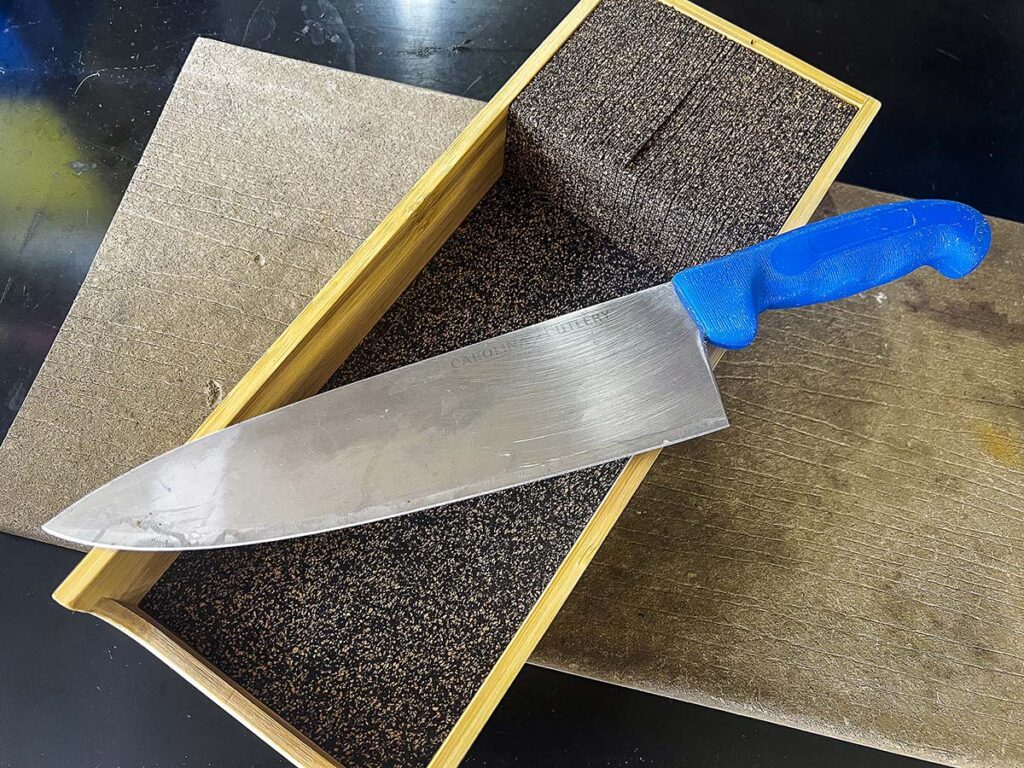
Image 5: After you fine-tune the edge sharpness, congratulations! You have successfully finished repairing edge damage. I would say, from start to finish, you can have a knife repaired in about 15 to 20 minutes, depending on the size of the knife.
Congratulations! You have fully restored a damaged cutting edge (image 5). Most people consider edge damage the end of the road for their knife. This is especially hard in the event that the knife has sentimental value attached to it. By learning to restore damaged cutting edges, you develope the skills to revive a tool that was once useless, giving it a second life of service. Resharpening a dull edge is similar, but removing the aftermath of hard use and abuse is a few steps beyond and much more satisfying.
Learning how to restore a damaged knife and giving it new life is an incredibly gratifying experience. It’s also potentially a heroic skill. You never know when a friend’s cherished pocketknife might pick up a nasty chip or a family member might foul a favorite kitchen knife prepping Sunday dinner. Edge repair mastered, you can save the day.
Scorching new knives to keep you sharp this summer.
August’s new arrivals spotlight the full spectrum of modern knife making, blending production innovation with hand-crafted custom artistry. This month’s lineup captures everything from precision-engineered factory folders built for everyday carry to one-of-a-kind custom fixed blades tailored for serious collectors. Featuring fresh designs from established industry veterans and rising makers alike, these August 2026 releases highlight the cutting-edge materials, refined edge geometry, and field-ready performance defining today’s cutlery landscape.
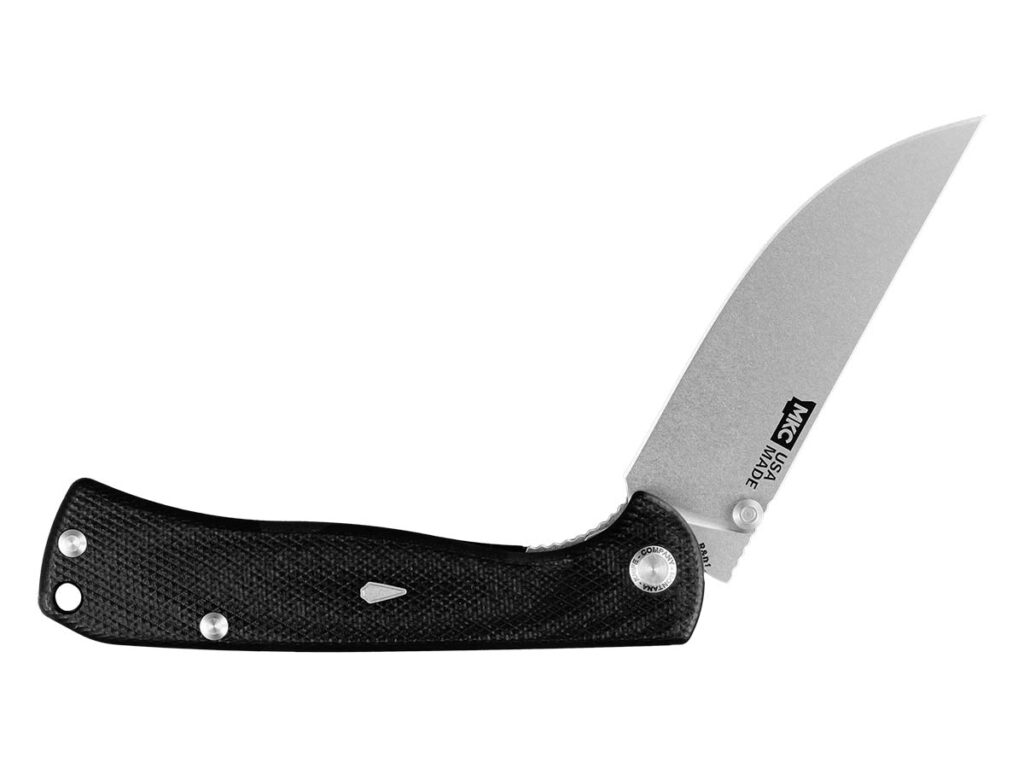
Montana Knife Co. The Montana
Knife Type: Folder Blade Length: 3.25” Overall Length: 7.625” Blade Finish: Stonewash Blade Steel: MagnaCut Blade Opener: Thumbstud Handle Material: G10 Lock: Liner Lock Pocket Clip: Tip-up, right-hand Weight: 2.84 oz. Knife To Know: The Montana is the first folding knife from the Montana Knife Company. MSRP: $390 montanaknifecompany.com
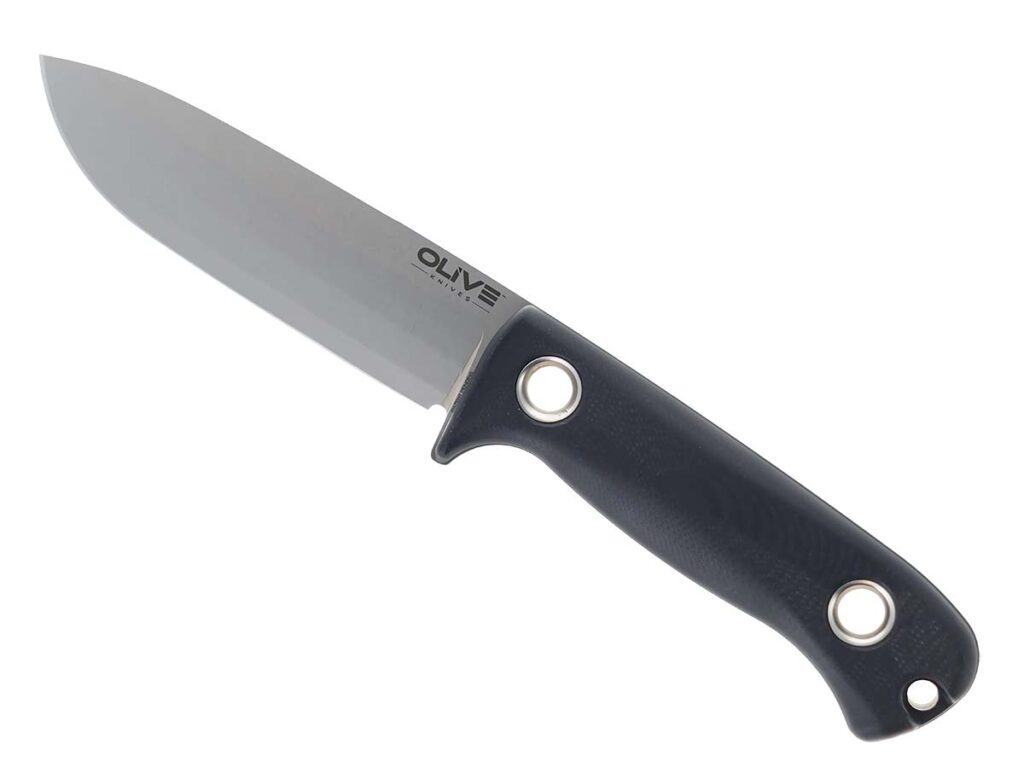
Olive Knives Arbor
Knife Type: Fixed-Blade Blade Length: 4.54” Blade Steel: Elmax Blade Grind: Fibonacci (Proprietary) Blade Finish: Stonewash Blade Profile: Drop Point Handle Material: G10 Weight: 9.14 oz. Knife To Know: Proprietary stepped grind combines convex strength, with sharpening ease of a flat grind. MSRP: $400 oliveknives.com
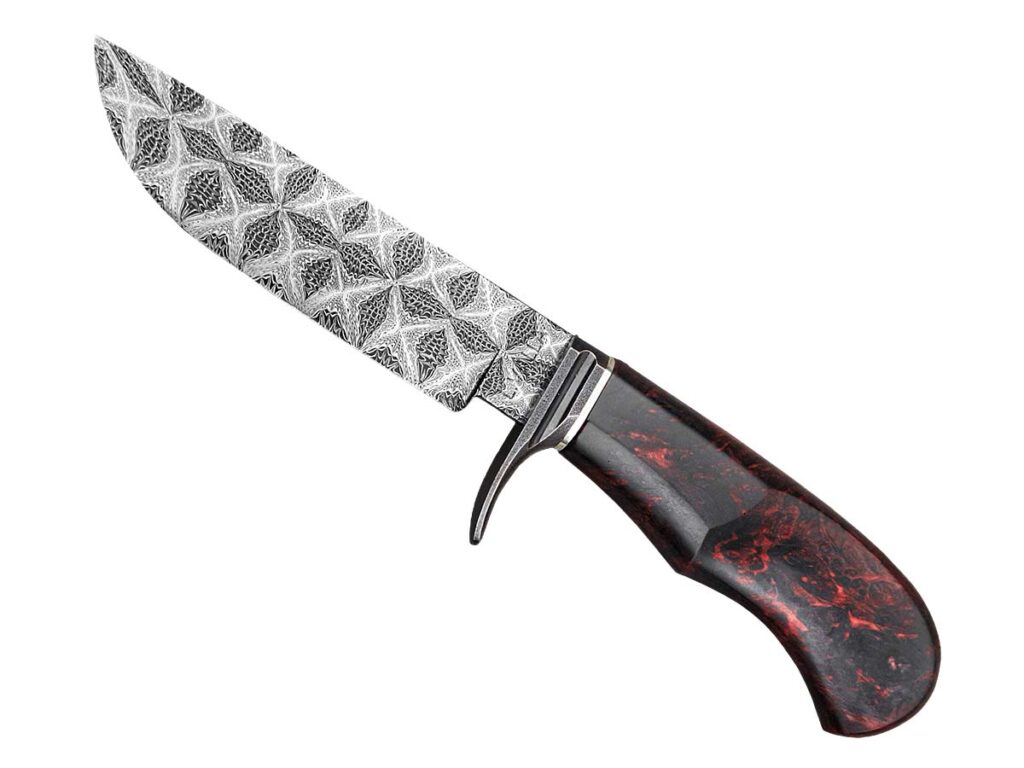
Liam Walle Anthazoa Hunter
Knife Type: Fixed Blade Blade Length: 7.75” Overall Length: 9.75” Blade Steel: 115n20/1084 Gorgon Flower Mosaic Blade Grind: Convex Handle Material: Honduran Rosewood Knife To Know: Bronze Bolster Maker’s Price For A Similar Knife: $2,300 liamvallaknives.com. Jocelyn Frasier image
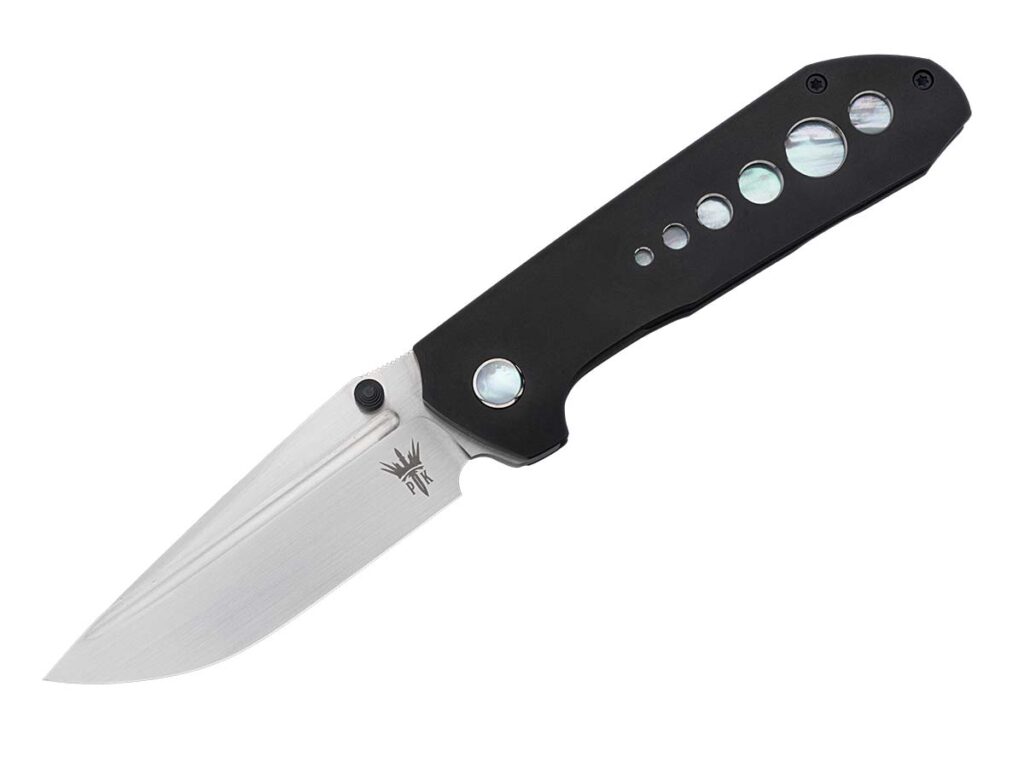
Blake Parthenay Saint
Knife Type: Folder Blade Length: 3.5” Overall Length: 8” Blade Steel: Elmax Blade Opener: Thumstud Handle/Frame Material: Blackened Titanium Knife To Know: Mother of pearl inlay in the handle, ceramic bearings Jocelyn Fraiser image
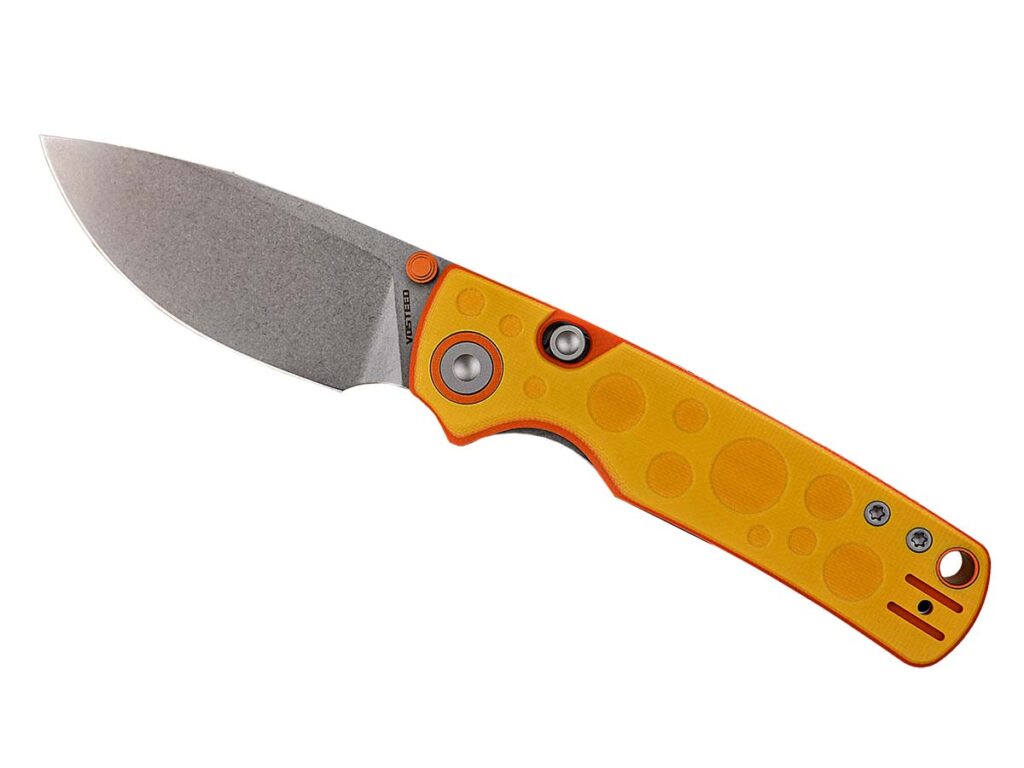
Knife Type: Folder Blade Length: 2.99” Overall Length: 7.16” Blade Steel: 14C28N Blade Profile: Drop Point Blade Opener: Thumbstud Handle Material: G10 Lock: Top Liner Lock Pocket Clip: Tip Up Weight: 3.55 oz. Special Features: Custom cheese-inspired handle. Knife To Know: Vosteed and Blade HQ plan to make a company-funded contribution to support animal rescue efforts All Paws Count from sales. MSRP: $69 vosteed.com
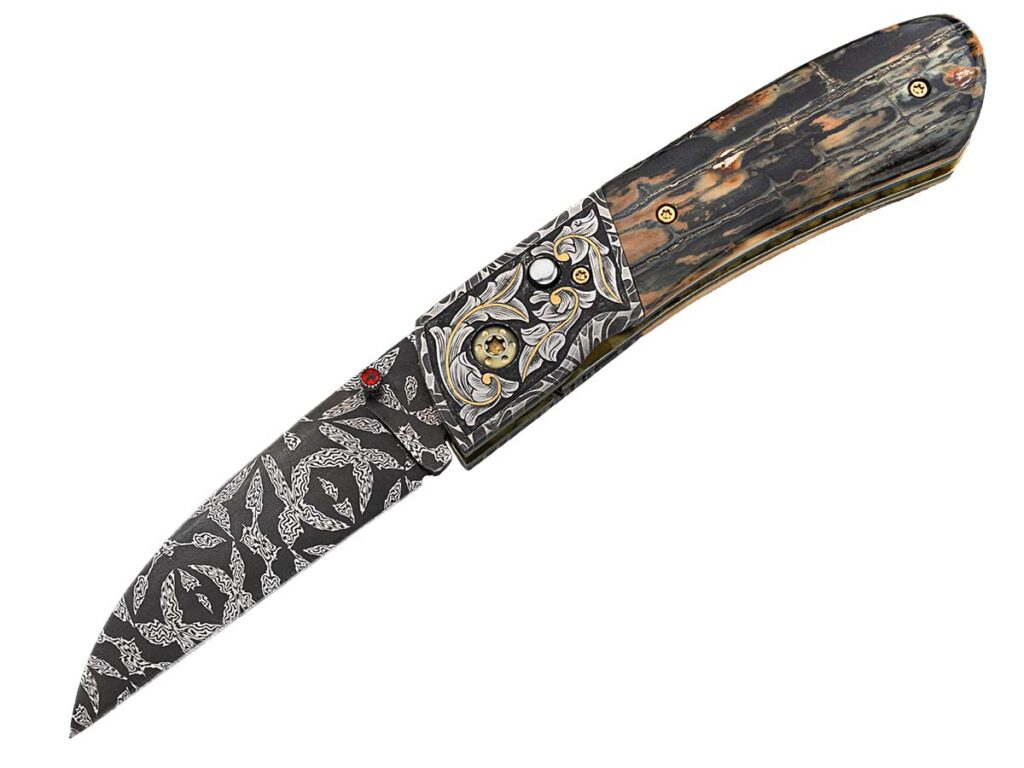
Mike Tyre OTS Automatic
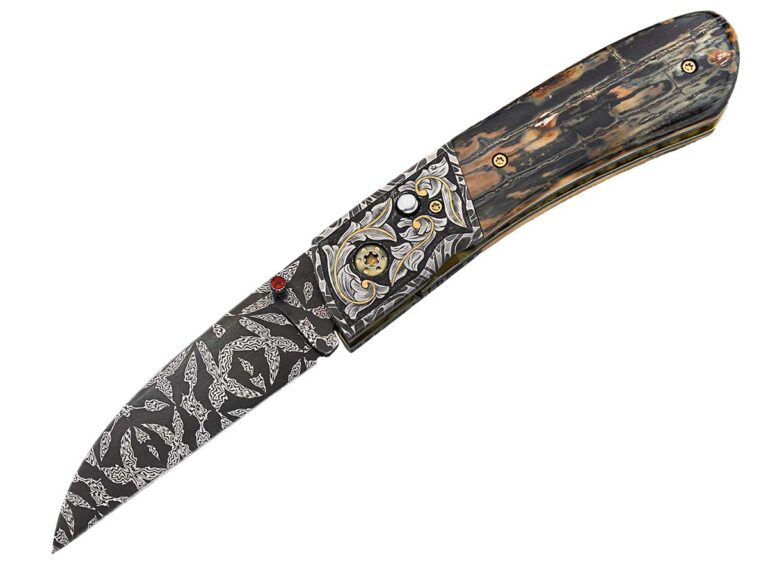
Blade Length: 3.5” Overall Length: 7.25” Blade Steel: 01/L6 damascus Blade Grind: Flat Convex Blade Opener: Button Handle Material: Mammoth Ivory Liners: Ice Finished Gold Anodized Titanium Knife To Know: Bolster engraved by Joe Mason Maker’s Price For A Similar Knife: $4,500 miketyrecustomknives.com. Jocelyn Frasier image
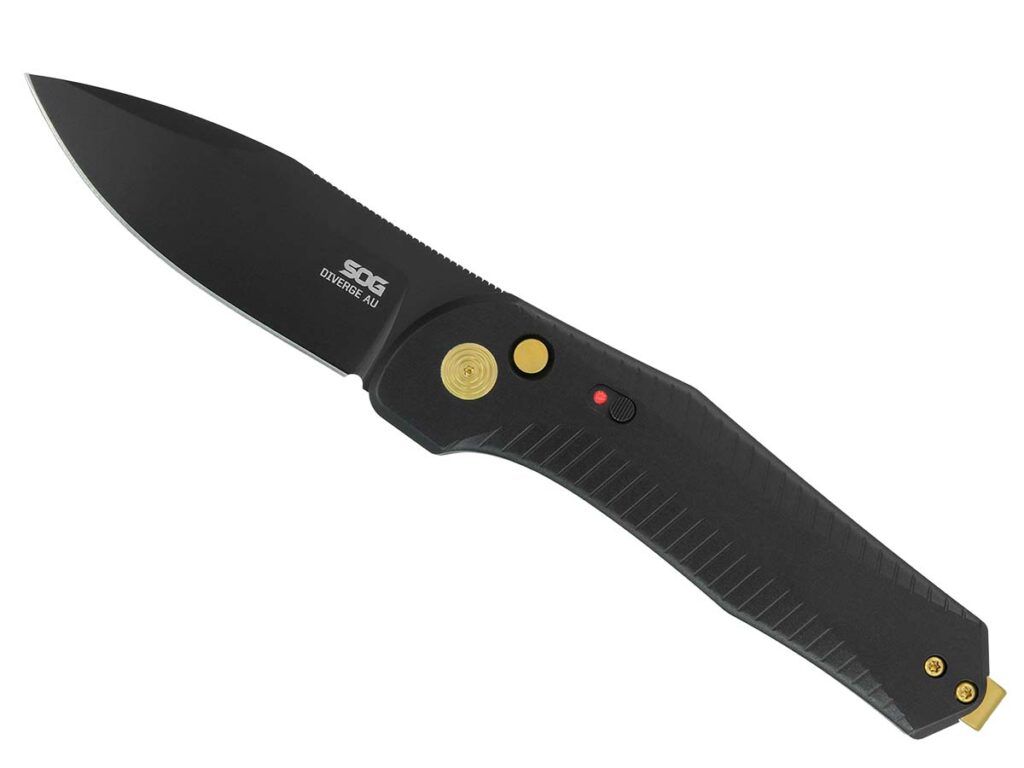
Knife Type: OTS Automatic Blade Length: 3” Overall Length: 7.3” Blade Steel: D2 Blade Profile: Drop Point Handle Material: Aircraft-Grade Aluminum Pocket Clip: Reversible Clip Weight: 3 oz. Knife To Know: Ambidextrous pocket clip and deployment lock. MSRP: $90 sogknives.com
Alex Hossom Collab With Charlie Bridges Void
Knife Type: Folder Blade Length: 3.75” Overall Length: 9” Blade Steel: 1084/1095/80crv2/Procut/15n20 Blade Grind: Symmetrical Hollow Blade Opener: Flipper Handle Material: McLaren Carbon Fiber Liners: Titanium Knife To Know: Titanium inlays in blade and pivot screws Maker’s Price For A Similar Knife: $3,000 brokenanvilknifeworks.com. Jocelyn Frasier image
Frank Edwards Push Dagger
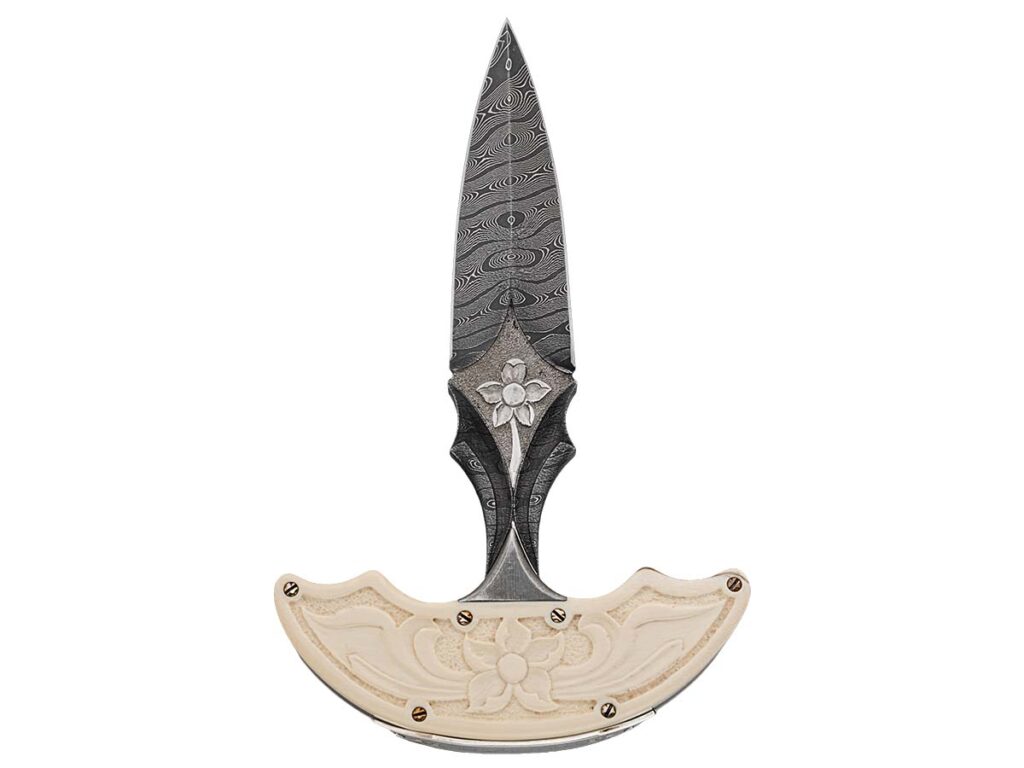
Blade Length: 3.25” Overall Length: 6.5” Blade Steel: 1084/15n20 twist Blade Grind: Dagger Handle Material: Mammoth Ivory Special Features: Carved flower on the interior of handle, matched with an engraved flower on blade. Maker’s Price For A Similar Knife: $2,550 Jocelyn Frasier image
Today’s knife market is a dynamic mix of time-tested traditions, evolving design applications and cutting-edge innovations. Designs are as varied as the people who carry them, and what someone chooses as an everyday carry (EDC) knife can be a cultural marker as much as a cutting tool. One of the key features of EDC knives is their mechanical operation. In this article, we will explore the fascinating realm of folding knives, examining the influence of knife mechanisms on consumer preference, the evolution of some of the most iconic designs and whether today’s emerging ideas are gimmicks or game changers.
Old Is New Again
The folding knife industry is often associated with mechanical innovation. However, according to industry experts, there is a notable trend regarding classic slip-joint knives. The traditional non-locking folder, often affectionately called a pocketknife, is experiencing a demand revival.
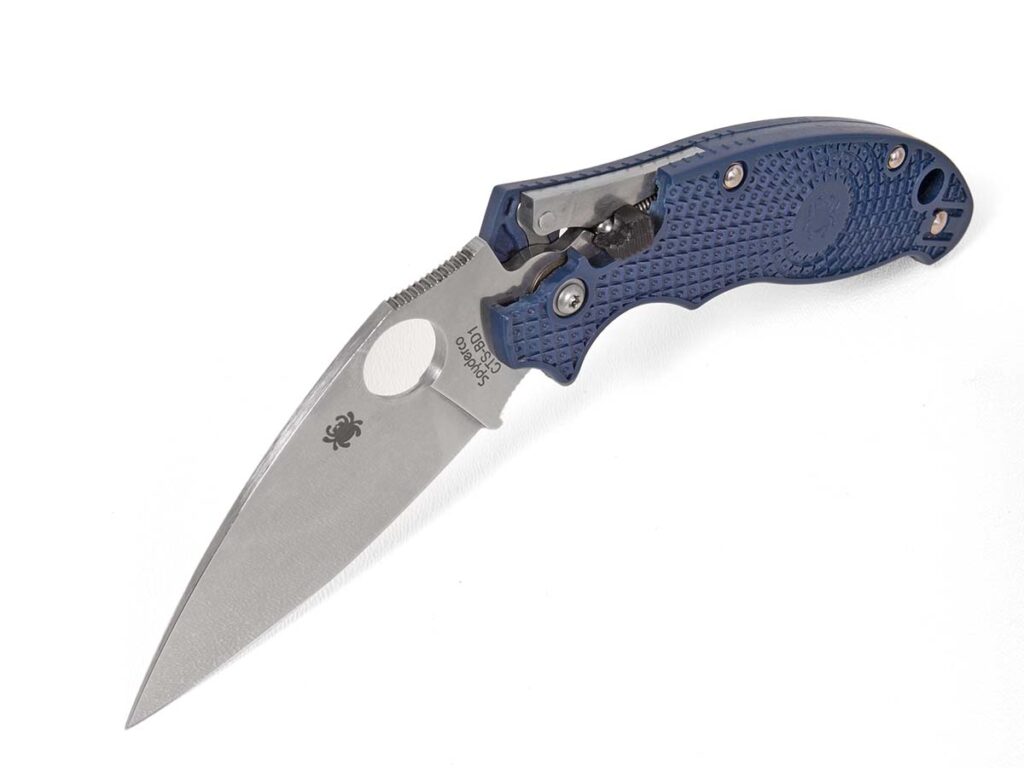
As its name suggests, the Spyderco Manix 2 Lightweight features ultra-lightweight construction and the Ball Bearing Lock mechanism, which can be seen in this custom cutaway version. The knife’s overall length is 8 inches, with a 3.37-inch blade offered in multiple steel options, depending on the specific model.
“I’d go out on a limb and say that slip-joint knives are having a moment right now,” said Doug Flagg, former vice president of marketing and innovation at Columbia River Knife & Tool (CRKT). “Innovation will never go out of style, but in a lot of ways, what’s old is new again.” Flagg added that CRKT recognized this slip-joint revival and has already developed recent models to answer consumer demand, including the Symmetry and Venandi models, designed by Richard Rogers, and the Darriel Caston-designed, double-bladed Forebear.
Regarding specializing in traditional folders, W.R. Case & Sons is arguably second to none. On the topic of slip joints, Tony DiFonzo, director of engineering at Case Knives, acknowledged that many people prefer the look and feel of tried-and-true knife designs, like Case’s Sod Buster, Trapper and Stockman. He added that their less-intricate designs imply greater reliability.
“Sometimes, it’s better to simplify and have something that you know is going to work repeatedly,” DiFonzo said. “The influence of debris and the wear and tear of repeated real-world use can cause a knife with complex components to not fire or lock up like it should. We don’t want it to look cool on a shelf; we want it in people’s pockets to use every day.” According to DiFonzo, Case continues to meet their customers’ demand for traditional knives by producing about 6,000 slip-joint knives daily, contrasting them with their locking knife line, which accounts for only about 20 percent of Case’s overall consumer line.
Mechanical Evolution
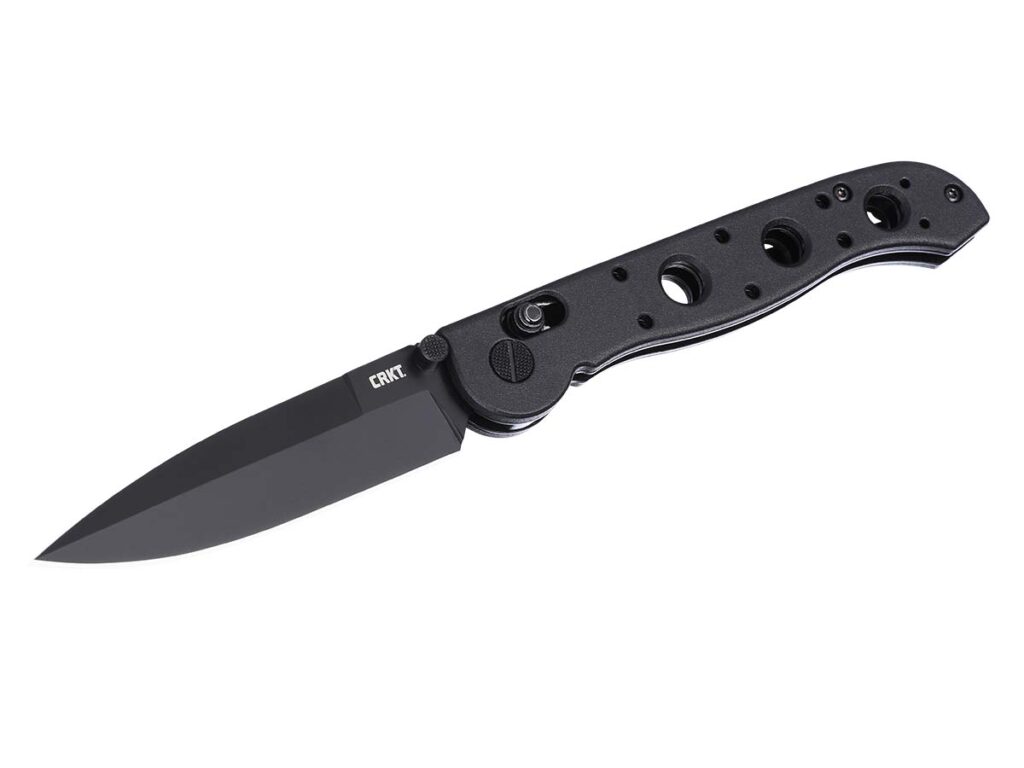
Part of the CRKT M16 series designed by Kit Carson, the M16-03XK features an ambidextrous Crossbar Lock paired with an IKBS (Ikoma Korth Bearing System) ball bearing pivot for seamless deployment and easy one-hand closing. It also has a lightweight Grivory aircraft-grade thermoplastic handle.
These days, many of the mechanisms we take for granted were once novel inventions conceived by imaginative innovators. For example, an assisted-opening knife didn’t exist before Blackie Collins bringing his design to market, famously inspired by the single-strut suspension on his Ducati motorcycle. Before Michael Walker’s revolutionary LinerLock design, closing a locked folding knife was virtually always a two-handed job. In subsequent years, variations and often improvements of both innovations began to proliferate in the industry and become all but ubiquitous. These are only two examples of numerous similar evolutions.
Time makes it easy for innovators who changed the industry to be forgotten after expired patents, as their inventions become “democratized,” as Michael Janich, special projects coordinator at Spyderco, characterized it. He drew careful attention to the importance of these noteworthy creation stories: “It’s counterproductive when it comes to promoting industry education and a sense of history,” Janich said. “People new to knives don’t understand the origin of the mechanism or appreciate its history.”
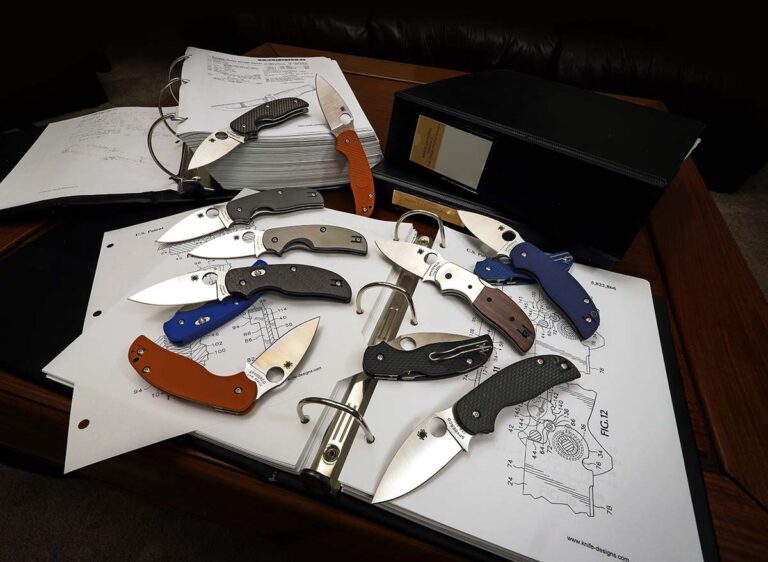
In 2008, Spyderco created the ongoing Sage Series to draw a historical line between pioneering locking mechanisms and the makers who created or popularized them to assign credit where credit is due. To accomplish this, each Sage Series model features a different key advancement. The Sage 1 incorporates two Michael Walker mechanisms: the LinerLock and the ball bearing detent. The Sage 2 features Chris Reeve’s RIL (Reeve Integral Lock), a.k.a. the frame lock. Sage 3 features Blackie Collins’ Bolt Action Lock, improved by Spyderco with easy-to-operate ambidextrous release buttons. Sage 4 pays tribute to Al Mar by integrating a mid-back lock, a signature element of Al Mar Knives. Completing the series, thus far, the Sage 5 and Sage 5 Lightweight models feature the Compression Lock designed by Spyderco Founder Sal Glesser.
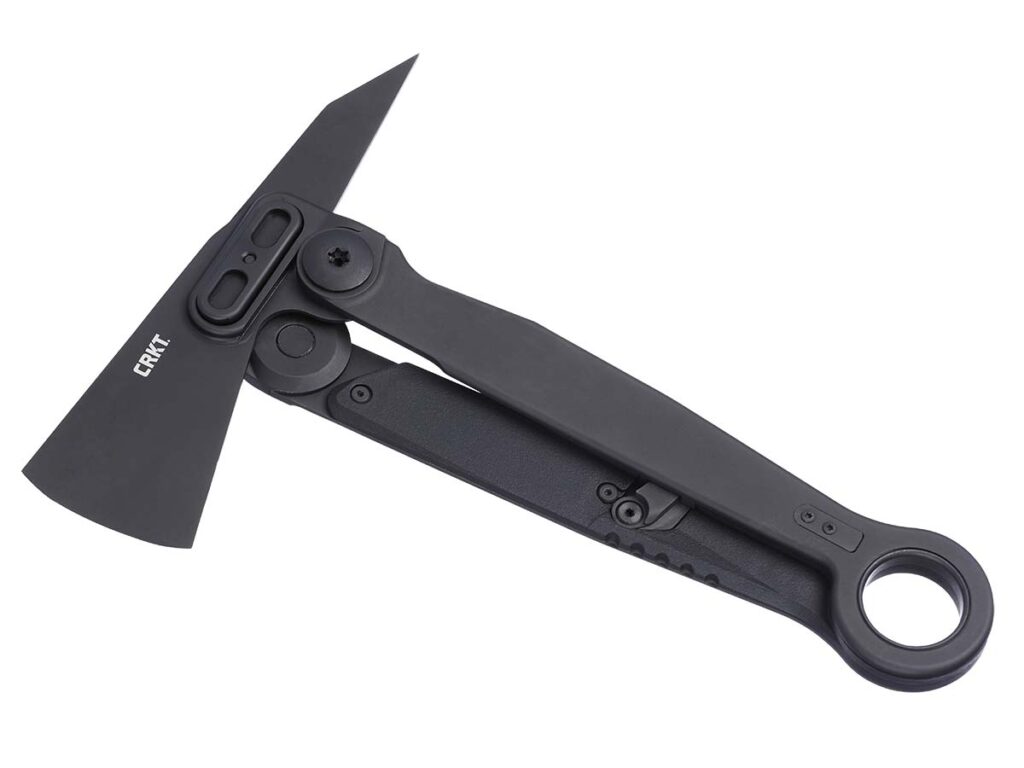
The CRKT Provoke X morphing axe incorporates the company’s Kinematic deployment mechanism from its successful Provoke folder into a new product category. This first-of-its-kind axe combines the excitement of Kinematic deployment with the security of the Deadbolt Lock.
Many folders included in Spyderco’s current line-up feature the company’s proprietary locks, such as the Para 3, a compact version of the popular Paramilitary 2 folder, featuring Glesser’s Compression Lock, and the Manix 2 Lightweight, featuring a Ball Bearing Lock invented by Sal’s son, Eric. Both locking mechanism patents have now expired.
Historical context intact or not, widespread adoption and adaptation of mechanisms due to patent expiration play a significant role in today’s popular trends. Like any other patent, a knife mechanism patent expires after 20 years, after which the design enters the public domain. Then, anyone can legally manufacture and sell products incorporating that mechanism without requiring permission from the original patent holder. Along with Spyderco’s recent expirations, the Benchmade Axis Lock patent also recently expired, which has been felt across the industry.
Versions Of Their Own
“You’ll note an uptick in knives featuring what was originally called the Axis Lock, now commonly referred to as the Crossbar Lock,” Flagg said. “Now that it’s available to the industry at large, many manufacturers, including CRKT, are coming to market with versions of their own.”
Winterblade’s Factor 8ight features an all-new “QUAD Magnet Detent System,” the company’s strongest and most adjustable magnetic detent system to date, as well as an updated “M-Lock Plus” magnet-driven blade lock, and improved titanium flip-lever deployment mechanism for snappy action.
CRKT began using the Crossbar Lock in 2024 and is now carrying it forward into the iconic Kit Carson-designed M16 collection. “It’s got a fluidity and ease of use that consumers seem to gravitate toward, and I think you’ll see more knives using the technology coming out each year,” Flagg said.
Indeed, many other knife companies produce similar bar-style locks, often under different names, including Hogue’s ABLE Lock, SOG’s XR Lock and Civivi’s Superlock. Patent expiration also levels the playing field for smaller manufacturers by allowing them to use popular mechanisms without the cost or hassle of licensing, which is a game-changer.
Janich says that many of the hot new locks are subtle mechanical variations of the original Blackie Collins Bolt Action Lock from the 1970s, which, he added, never received the recognition it deserved. “The Bolt Action Lock was, to my knowledge, the first to be based on the mechanics of creating a ramp on the back of the blade and wedging a locking device between that ramp and the stop pin or backspacer.” As an in-line mechanism, he says, the wedge concept became the basis for the Axis Lock, Ball Bearing Lock, Arc Lock and Stop Lock, among others, and it continues to be the basis for many of today’s most popular locks, including the Shark Lock, Atlas Lock and Superlock. “The in-house production secret is making the mechanics just different enough to convince the USPTO [United States Patent and Trademark Office] that it’s unique.”
The Classic American Case Sodbuster Jr. is a testament to U.S. craftsmanship and durability. It embodies reliability, functionality, and traditional style all in a compact design. The Sod Buster Jr. in this photo has a 2.875-inch stonewashed skinner blade and a Smooth Black Canvas Laminate handle with Day Glow G10 liners.
Janich said he doesn’t foresee any locks disappearing completely as new ones join the market. He mentioned that the classic back lock mechanism is still the bread and butter of many Spyderco designs. Though he acknowledges it’s an old-school design, he attributes its continued popularity to seasoned knife users who, he said, tend to have strong preferences, especially when lock failure could result in bloodshed.
Gimmicks Or Game Changers?
On one side of the demographics spectrum are seasoned knife users who field dress game and integrate EDC knives into their self-defense strategies. On the other side is the next generation of knife customers, whose industry knowledge mainly comes from YouTube influencers posting POV (point of view) knife reviews. The latter customer base is often mainly drawn to what is widely regarded as the “fidget factor,” where interest and excitement are focused primarily on knives with intriguing opening, closing and locking mechanisms. Smooth, snappy action is in demand, and the more intricate, the better.
“There are lots of younger knife users who have never had to use a knife hard,” Janich said. “In many cases, they like fidget-friendly designs that open and close easily and are entertaining.”
The Severn features Winterblade’s patent-pending compression spring, Stealth Lock, and Dual Lock actuation, which includes a bar lock and a retracting spine lock in one mechanism.
Bryan Winters, owner of Winterblade Knives and a relative newcomer to the knife industry, doesn’t have concerns about “fidget factor” characterizations, despite his knives being on the cutting edge of fidget-ry. He captures his philosophy by saying, “We can’t spell function without fun.” Winters started making his earliest creations in his modest shop in 2019, but 2022 was the year he launched his flagship design, the Factor, a stout, legitimately dependable folder, featuring cutting-edge new mechanisms that integrate magnets into the locking and deployment systems.
“I’ve never set out to design a knife just because I think it will sell well or because it’s a certain gimmick,” Winters said. “I’ll use magnets, but if I think springs are better suited for that particular mechanism, I’ll use springs, or maybe I’ll need some sort of lever or gears, whatever the case may be.”
He explained that, in the Factor, and later incarnations like the Factor 8ight, the detent magnets “suck the blade in” and keep it securely closed. An added benefit is alleviating the contact point of friction with a typical detent ball, allowing for noticeably smoother deployment. A benefit of the neodymium magnets is that they retain their power for almost a century, whereas springs fatigue or wear out much more quickly through continued use.
“My point with the people who say that magnets are gimmicks is, you can do things with magnets, physically speaking, that you cannot do with springs.”
Radical Reimagination
Another novel Winters creation is his radical reimagination of a double-action firing mechanism on the Darkfire OTF. Instead of a typical fixed slider, the blade is propelled in and out via a large blade guard that acts as a lever. The stylized blade guard is part of an overall design aesthetic inspired by the Mandalorian Darksaber from “Star Wars.” Inside, the brilliantly reimagined, simplified mechanism is powered by a single compression spring, again departing from traditional designs.
Whether one prefers the simplicity of a traditional slip joint, the fidget-friendly nature of modern deployment and locking systems, or the cutting-edge ingenuity of truly novel mechanisms, one requirement for success is that function meets the real-world needs of end users. Examples that Flagg pointed out in the current CRKT line are Flavio Ikoma’s proprietary Deadbolt Lock design, featured on several of the company’s knives since its creation five years ago, and Joe Caswell’s Kinematic opening system, which Flagg characterized as “a true innovation marker.” The Kinematic mechanism has several pivot points and linkage arms that “morph” into the opened knife when manually actuated.
“Joe is a bit of a mad scientist, in the best sense of that term, and his Provoke knife, with its Kinematic opening technology, was an instant bestseller for us,” Flagg says of its 2019 release. “Now, we’ve taken it to the next level and brought this innovation into our Provoke X, a morphing tactical axe that combines Kinematic opening with the Deadbolt Lock to create an EDC axe unlike anything the industry has seen before.”
The knife industry has a long legacy of benefiting from an enduring heritage while enabling innovators to push boundaries. It engages a wide variety of collectors and enthusiasts by offering as many knife designs as there are preferences and needs, whether nostalgic, futuristic or anywhere in between. Today’s trends show no indication of that dynamic subsiding in the foreseeable future. As such, all indicators point to an industry that will remain both reassuring and exciting.
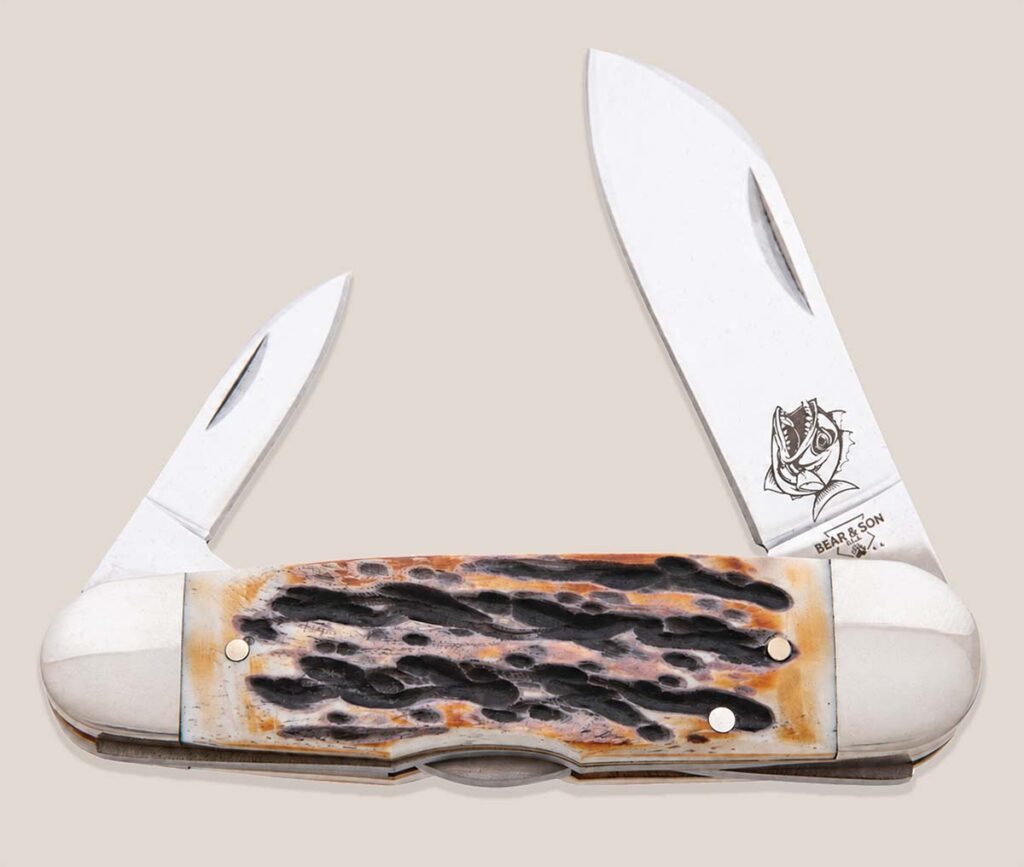
Crafted in Alabama, Bear & Son Cutlery’s Piranha pairs a 440 stainless spear blade and lockback security with classic bone handle options.
Bear & Son Cutlery has introduced a new traditional folder to its lineup with the Piranha series. Manufactured in Jacksonville, Alabama, the two-blade pocketknife combines classic American styling with a lockback mechanism engineered for secure lockup during daily tasks.
Traditional Build, Modern Mechanics
The Piranha centers on a two-blade setup crafted from 440 stainless steel, offering a balance of corrosion resistance, edge retention, and easy field maintenance. The primary cutter is a 2.75-inch spear blade paired with a secondary 1.5-inch pen blade. Measuring 4 inches closed and 6.625 inches overall, the knife delivers a comfortable, familiar in-hand feel designed for general cutting chores.
Unlike many traditional slipjoints, the Piranha incorporates a lockback design to give users extra security when the primary blade is engaged. Hand-finished detailing and polished bolsters complete the traditional pattern.
Piranha Handle Options
Bear & Son offers the Piranha in two distinct handle materials: White Smooth Bone (Model WSB59L) and Genuine India Stag Bone™ (Model 559L). Each piece undergoes individual sanding and polishing, giving every handle its own unique texture and visual character while maintaining standard ergonomic grip properties.
Weighing in at 4.6 ounces, the U.S.-made folder is backed by a limited lifetime warranty and carries an MSRP of $125. Tech Specs
Piranha Specs Manufacturer: Bear & Son Cutlery Overall Length: 6.625″ Closed Length: 4″ Primary Blade Length: 2.75″ (Spear Point) Secondary Blade Length: 1.5″ (Pen Blade) Blade Steel: 440 Stainless Steel Handle Material: White Smooth Bone or Genuine India Stag Bone Locking Mechanism: Lockback Weight: 4.60 oz. Country of Origin: USA MSRP: $125
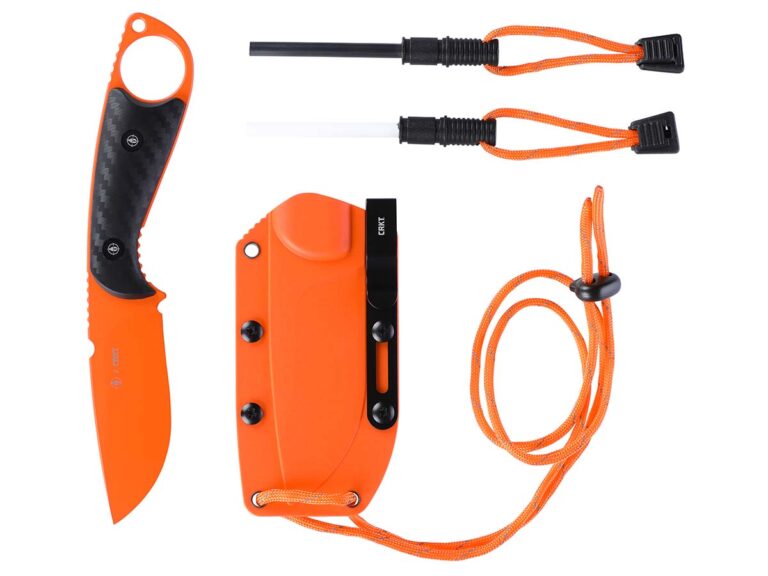
Designed with Spartan Precision Equipment, CRKT’s backcountry-ready Altai pairs 14C28N steel with an integrated fire rod and ceramic sharpener.
CRKT has teamed up with the shooting platform specialists at Spartan Precision Equipment to introduce a new backcountry fixed blade: the Altai. Named after Spartan founder Rob Gearing’s hunting excursions in Mongolia’s Altai Mountains, the knife integrates purpose-built field features directly into the cutting system and sheath setup.
Tailored for Field Processing
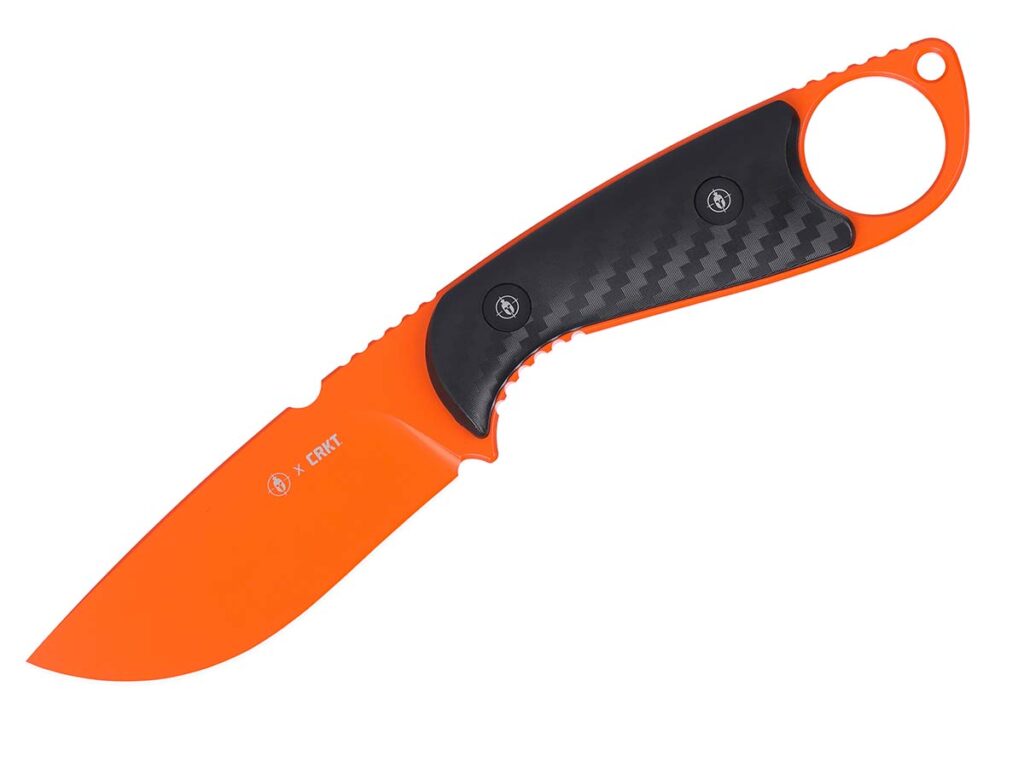
The Altai centers around a 3.53-inch plain-edge blade fashioned from 14C28N stainless steel. To withstand harsh outdoor environments, the steel is treated with a protective ceramic coating designed to bolster toughness and resist corrosion. The 0.13-inch thick blade is sized specifically to maintain maneuverability and control during game dressing, while jimping along the finger choil and spine provides positive tactile traction.
The knife features glass-reinforced nylon (GRN) handle scales textured with a carbon-fiber pattern, secured over custom pins bearing the Spartan head logo. High-visibility orange highlights run along the build, helping users spot the knife easily in dim light or deep cover. At the butt end, a ringed pommel allows for a fast draw—even when wearing thick gloves—and includes a lanyard hole for additional retention options.
Built-In Fire and Maintenance Kit
Rather than serving as a standalone cutter, the Altai incorporates essential survival and care tools into its carry rig. The knife’s spine includes a dedicated striking notch configured to work with an included magnesium alloy fire rod. For touch-ups during long trips, a ceramic sharpening rod is also housed directly alongside the blade.
Both maintenance accessories stow in the included molded thermoplastic sheath. Reflective orange paracord is used for the main lanyard as well as the pull tabs on the fire and ceramic rods, ensuring high visibility when working in low-light conditions.
At 8.0 inches in overall length and a weight of 3.6 ounces, the Altai offers a complete backcountry processing and field-maintenance package in a compact carry footprint.