Home Blog Page 45

Knife Maintenance: The Pros Share Their Tips

0

Know how the pros keep their knives and sheaths in tip-top working order.

Tricks of the trade, the go-to products, and the techniques that stand the test of time and use are beneficial for those of us who put our knives to work around the house, at the office, on the farm and in the field. Keeping the knife in top-notch working order eliminates frustration and failure when it’s time to get a job done.

Fighting Corrosion

Fighting the battle against rust is ongoing with carbon steel. Long-time custom knifemaker Bob Dozier said, “Wipe the blade off. I’ve carried a folder since 2014 and use it every day. A lot of it depends on how the maker heat treats the blade.

“I established my reputation with D2 steel,” Bob continued, “and there are a lot of steels that hold an edge a little better, some that are more corrosion resistant, and some that are tougher, but just keep it clean and it won’t rust—the chrome on the outside is a few atoms thick. D2 is bright at first but will take a little bit of a dull look. Don’t worry about that in a using knife.”

BLADE Magazine Cutlery Hall-of-Fame® member Bill Harsey says oil the blade as well as part of routine knife maintenance.

“The one oil I use on folding knives is Kano Aerokroil,” he noted. “It’s a true oil and does not evaporate. Clean the knife and put it away dry after using it.”
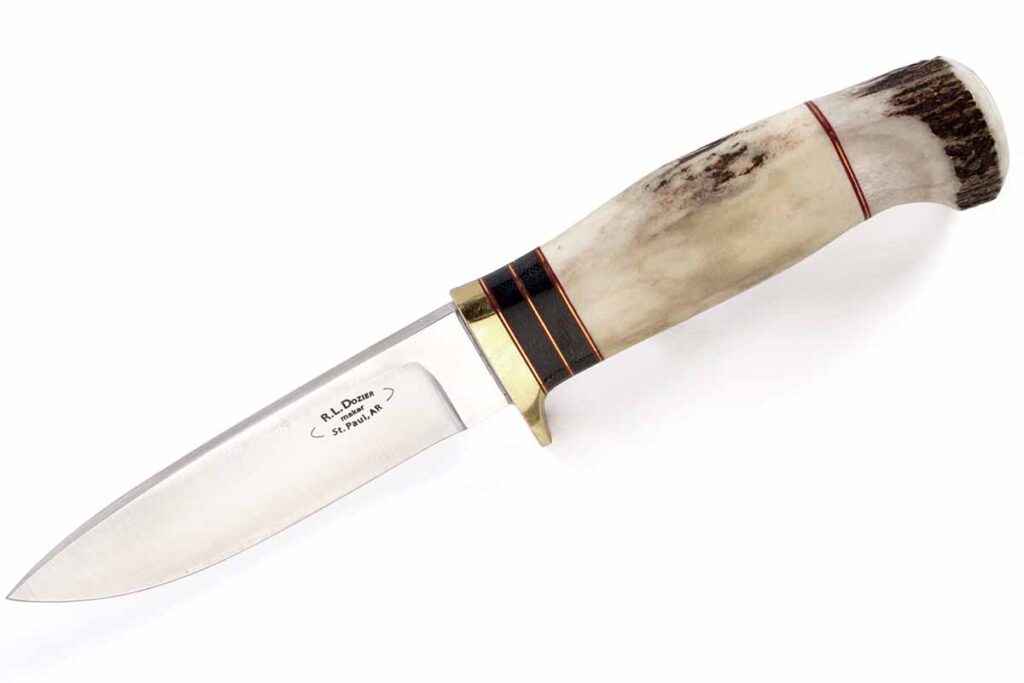
 Bob Dozier's D2 Steel
As Bob Dozier noted, he established his reputation with D2 steel. “Keep it clean and it won’t rust—the chrome on the outside is a few atoms thick,” he explained. “D2 is bright at first but will take a little bit of a dull look. Don’t worry about that in a using knife.” The blade of Bob’s Sisu has a D2 core laminated with sides of 410 stainless steel.

If that troublesome tinge of rust does show up, Bill Claussen of Northwest Knives and Collectibles reaches for a polishing cloth and paste. In more extreme situations, steel wool or wet/dry sandpaper can get the job done.

“We use Case’s Paste Metal Polish or Flitz Polish as a metal paste and corrosion protectant,” he remarked.

Other techniques and favorite products to prevent or remove rust include the careful use of steel wool when necessary, a preventive application of 3-in-One Multi-Purpose Oil, the combination of oil and Renaissance Wax, Wicked Wax, and even regrinding and repolishing in an extreme situation when pitting is present.

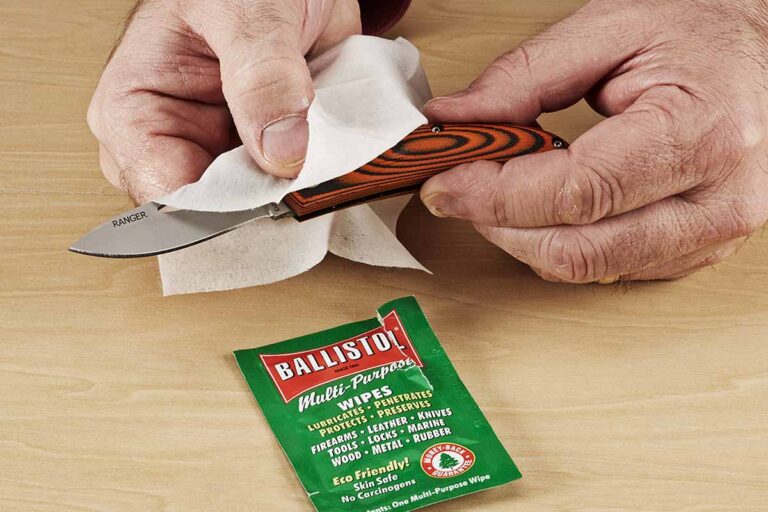
“I like 3M pads to remove rust on our malnourished edges out in the bush,” related bushcraft pro/knife designer Joe Flowers, “along with rust erasers for those fine knives some clients bring out with them. Ballistol makes good stuff including multipurpose oil in small single use packages that can be handy during hunting season when I also have firearms.”

Screw And Bolts

Loosening a bolt or screw that has frozen is a frustrating situation, but there are a few products that ease the task and a trick or two to employ when necessary. Cutlery Hall-of-Famer Dan Delavan of Plaza Cutlery offered, “I use WD-40 and chase it with an oil if needed, such as Formula 23 knife oil.”

Cutlery Hall-of-Famer Steve Schwarzer added a proviso.
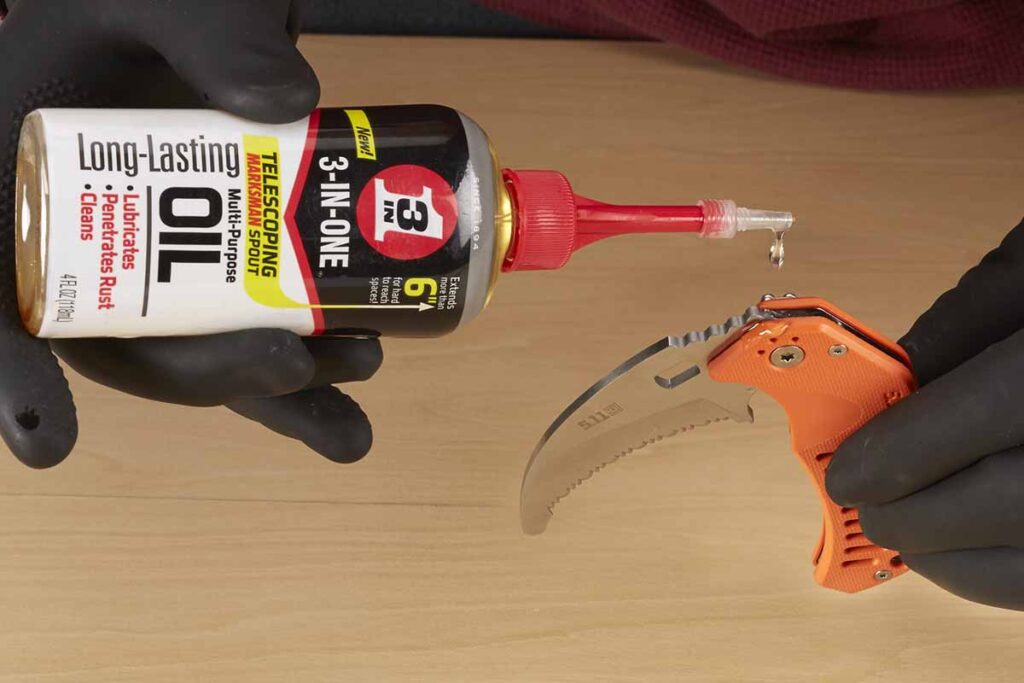
3-in-One Multi-Purpose Oil lubricating a knife.
Keeping folder pivots operating smoothly is just one application of 3-in-One Multi-Purpose Oil during knife maintenance. Applied to the blade and other steel parts, it also serves as a rust preventative.

“Normally that would mean using a penetrating oil, but the other thing you can do is set up a carbide drill fixture a little smaller than the diameter of the stuck screw and drill out the screw,” he wrote. “You can also use an induction heater and stick the knife in there to help spit the screw out. Heat will break down epoxy but don’t get it over 300 degrees. Unless you’re skilled I wouldn’t advise it, but it beats pressing the handle off and can save the material if you’re careful.”

For loosening blades or screws that have seized up, other noteworthy products include AutoBright, Kroil Penetrant, CRC Electrical Silicone lubricant and Marble Oil. “The Marble Oil is [inexpensive],” ABS master smith Harvey Dean observed.

“It works well to get something unfrozen and I used it on a pocketknife a while back. Anyway, if you put a drop of oil on the blade or joint once in a while it sure does help.”

Harsey has a great tip for loosening troublesome screws or bolts.

“I go right to the Kano Aerokroil to start the rehabilitation,” he commented. “A lot of people take folders apart when they don’t have to do that. Get a box of cotton swabs with paper stems and hammer their cotton heads flat to fit inside the small spaces of a folding knife. You can do that to oil the knife up or to clear gunk out of it. The cotton swab will show you what you’ve got without disassembly.”

Edge Maintenance

Keeping a working edge sharp is a never-ending knife maintenance job, and Harsey has spent years making knives, designing them for many prominent companies, and putting them to work in the field.

“I like to use an EZE-Lap stick diamond sharpener or honing stone with a plastic handle,” he advised. “Hold the knife still in one hand and scrub on the blade with a good angle on the sharpening bevel, then turn it over and do the other side. The result is a remarkable working edge that will do in the field.”
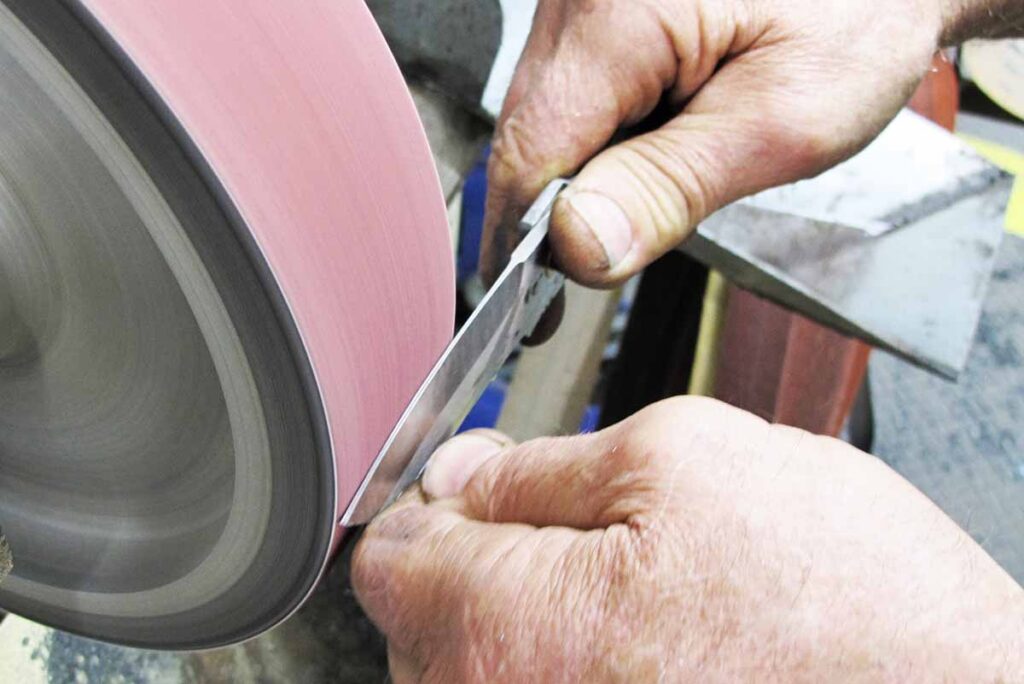
Regrinding and repolishing a knife
Regrinding and repolishing may be required in extreme knife maintenance when pitting is present. Bob Dozier does the honors here.

Harsey also likes the Norton fine India sharpening stone.

“When we go out in the field, I have never traveled without one,” he commented. “I use a rubber drawer liner mat that I can unroll and put the stone on so it won’t slide around on a truck tailgate. That becomes my workbench, and I’m the sharpener for half a dozen guys out there. At other times, I might finish with some stropping with a little WD-40 and cream buffing compound in the leather.”

Sheath Maintenance

Schwarzer is a big fan of hot wax in both knives and sheaths.

“I hot wax everything,” he said. “I have posted it online a bunch. Paraffin wax in a turkey roaster is best, and when I make my knives I put them all in there and then wipe off the excess. It also turns any leather sheath into a form of Kydex. Put it in there for a couple of minutes at 300 degrees, wipe off the excess and form the sheath with your hand. It won’t scratch your blade like Kydex will.”

Dozier has a simple approach to sheath maintenance.
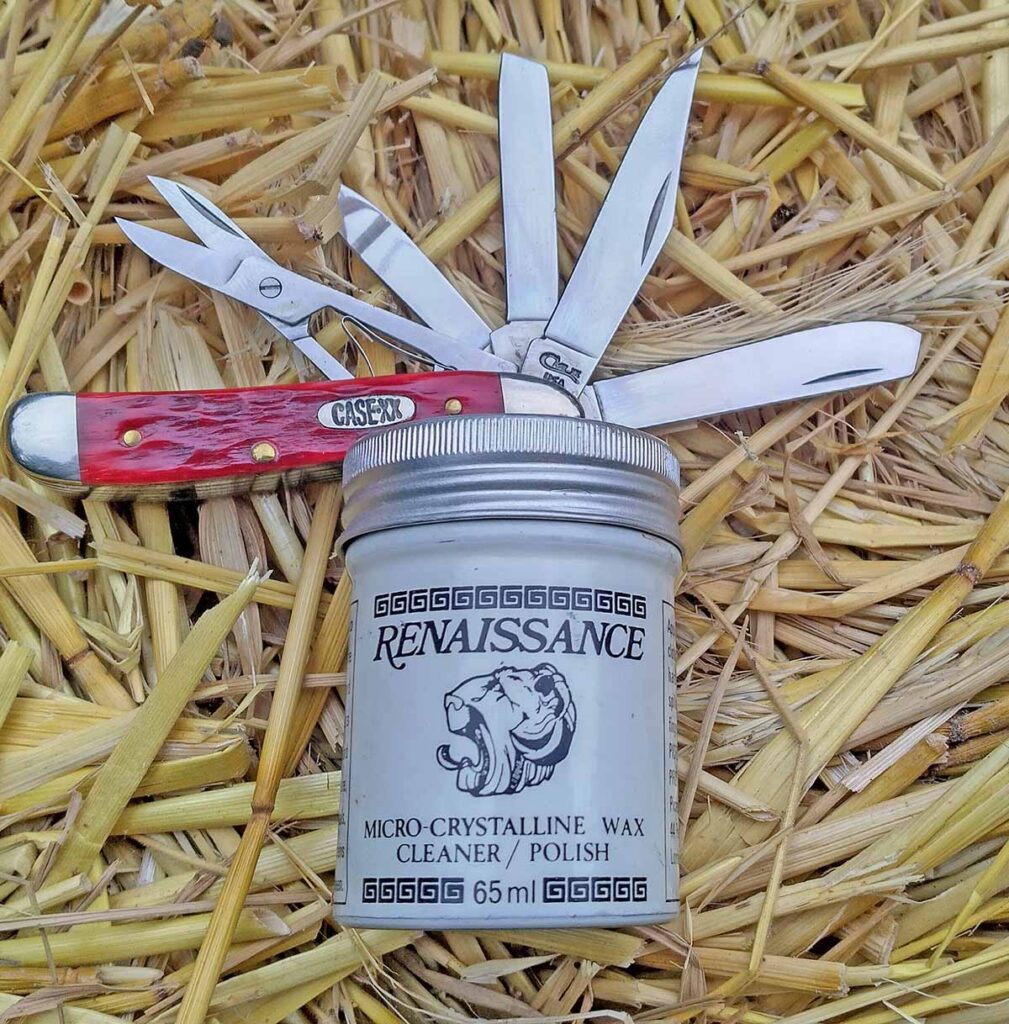
Renaissance Wax works polishing blades and prevents rust
Renaissance Wax works not only for polishing blades and handle materials but also for helping prevent rust and protecting leather. It’s good to have in your knife maintenance kit.

“Wipe off the sheath,” he noted, “and then put a tiny little bit of WD-40 on a cloth and wipe it down. You can also use neatsfoot oil. A little bit on a cloth will keep the dirt off. You can spray a little bit of WD-40 into a bottle cap and leave it on a shelf for four to five months and you have nothing more than cosmoline or grease that works for protection, too.”

Dean likes to protect his sheaths as well.

“I always put some kind of coating with wax or a spray aerosol finish on them,” he remarked. “I don’t recommend storing a knife in the sheath. I use American tanned leather, but some of the other leathers out there use salt in the tanning process, and that can cause problems with a blade.”

Harsey follows steps to make a leather sheath “knife friendly” so that one does no harm to the other. “When I hand build a leather sheath, the leather is always 10-ounce and tanned in vegetable oil,” he said. “It’s a straight, clean piece of heavy leather, and the preservative is either neatsfoot oil or a combination of one-third neatsfoot oil, one-third bees wax and one-third paraffin. That’s heated to 150 degrees, and I’m darn sure not to go any hotter or you could wreck your sheath. I preheat the mixture, paint some on, and put it back in the oven and repeat several times. Then wipe it off and let it dry. If I’m in the field and it takes more than just wiping the sheath off, something has gone wrong.”

Climate Control

Natural handle materials are always in need of some protection. Climate can cause expansion and contraction, while extreme heat and cold are detrimental, too.

“If it’s a wood handle, keep it dry and clean,” Dozier offered. “Don’t throw it in a bucket of water. Ivory needs to be dry too, and a little Navy oil or mineral oil or even a little oil off the end of your nose will help keep it from drying out too much.”

Dean adds a little advice for the owner/user who wants to maximize the longevity of their knives.
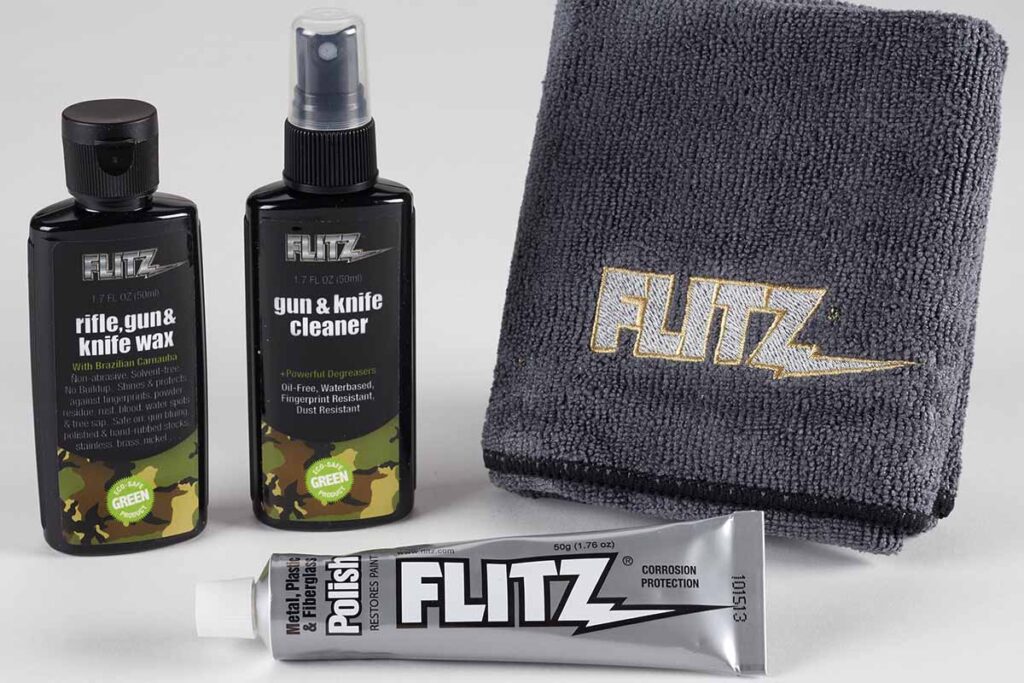
Flitz Polish as a metal paste and corrosion protectant
Bill Claussen of Northwest Knives and Collectibles uses Case’s Paste Metal Polish or Flitz Polish as a metal paste and corrosion protectant during his routine knife maintenance.

“People a lot of times just don’t take care of their knives,” he said. “I got a good damascus hunting knife back from a guy who said he had forgotten about it. He left it on the floor of his Jeep and never cleaned it. The thing was basically ruined. I made him a new knife, charged him, of course, and kept that other one myself. I had to regrind and rework it, but it wasn’t the knife it used to be.

“The main thing,” Harvey concluded, “is to take a little time with them.

Wash a knife off in hot water, the blade anyway, and don’t put them in the dishwasher! A lot of times, people take knives on hunting trips and leave them in the sheath or on the dashboard of their truck all day with the sun shining on them. Don’t do that! It’s bad. Natural handles can shrink and crack, and a windshield is like a magnifying glass.”

Try these tips. Test these products. And see for yourself how the pros actually make the best of owning and maintaining a knife in tip-top condition through the years.

For the knife and sheath maintenance items in the story, contact any of the knife suppliers who advertise in BLADE®. If that doesn’t work, enter the name of each applicable product in your internet search engine—all or almost all are offered by a wide variety of outlets.

More On Maintenance:

Best Tomato Knives: Top Picks For This Delicate Job

0

No matter how you slice it, three top tomato knives turn the trick.

Nothing beats homegrown tomatoes and tomato sandwiches, or just simply enjoying them as they are, sliced up with all their juicy goodness. Who doesn’t love a ripe and ready tomato?  

Cutting tomatoes requires a very sharp knife. Besides writing for this fine publication, I also have another side hustle of running a sharpening service. I get asked all the time, “How do I know when it is time to have my kitchen knives sharpened?” I always answer with the tomato test. If your knife cannot slice a tomato cleanly without squashing it, then it is time for a sharpening.
Tomatoes have a firm exterior and a squishy/liquid interior. A sharp knife is mandatory to break through the firm exterior. If your knife is dull, it won’t bite right into the exterior but instead will squash it, thus squeezing out the juice and ruining a good slice of succulent tomato.
Sure, any sharp kitchen knife will slice tomatoes and do a fine job of it. But there are specially designed tomato knives that take the work out of perfect slicing. If you do a lot of meal prep involving tomatoes, then you might want to procure one of the following tomato-slicing knives for the occasion.
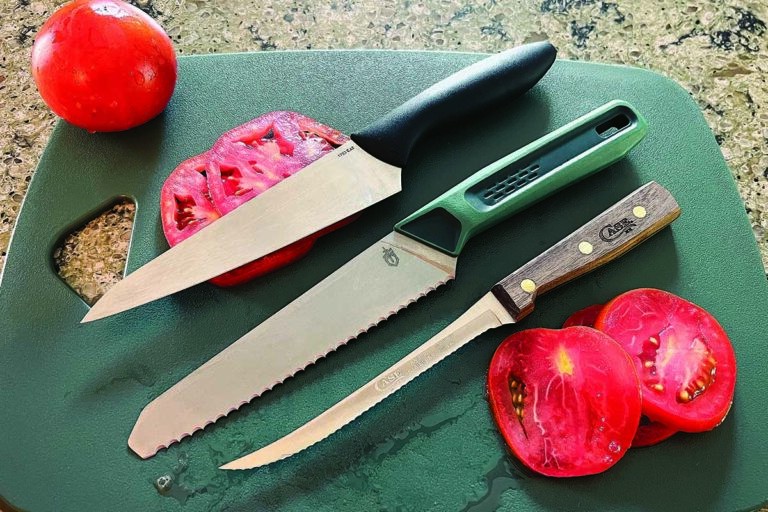
Case Tomato Slicer

Case Tomato Slicer
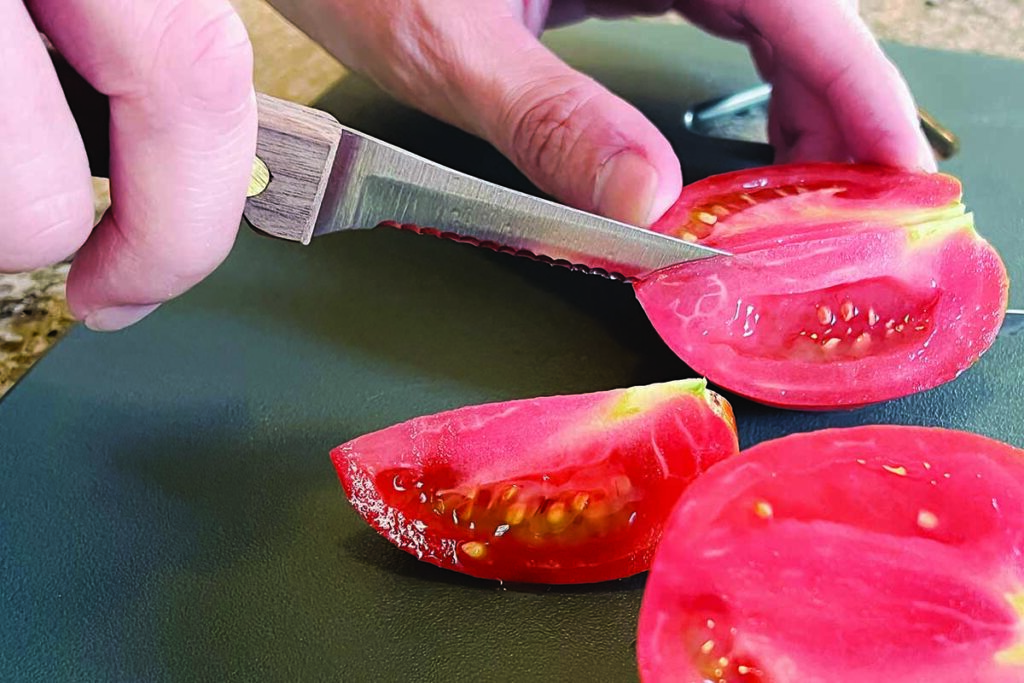
The Case works effortlessly due to the thinness of the blade coupled with the serrations.

Case Tomato Slicer
Blade Length: 5.5″
Overall Length: 9.25″
Blade Material: Tru-Sharp Stainless
Handle Material: Walnut
Country of Origin: USA
MSRP: $39

Pros

  • Hightly effective for tomatoes
  • Durable and attractive Construction
  • Effortless cutting

Cons

  • Limited to specific tasks

The 5½-inch Tomato Slicer from Case is a highly effective tomato knife. It is specifically designed to make quick work of processing tomatoes without damaging them. The 5½-inch blade is slender and has a trailing-point shape. It is hollow ground, fully serrated and Tru-Sharp stainless steel (420 HC stainless). The handle is walnut and features triple-rivet construction for strength and durability. It is a nice-looking knife and part of a larger household cutlery family Case offers with the same blade and handle materials.

Performance wise the knife excels. The serrations cut smoothly but have an aggressive bite that help break cleanly through the tomato’s firm skin. The hollow grind and slender blade aid in sailing through the fruit without collapsing it. The knife is quite effortless in action. Due to the slender, almost minimalist blade width I would limit use of the knife to tomatoes and other similar fruits like grapes and kiwi. It is sort of a specific-use knife and not one you generally grab when you need to cut something in the kitchen. It is more like a hybrid knife. It has a serrated edge but cuts clean and smooth similar to a plain edge knife. MSRP: $38.99. Country of origin: USA.  

Amazon$34Check Price
Knife Center$47Check Price
Lemans$35Check Price

Kershaw Utility Knife

Kershaw Utility Knife
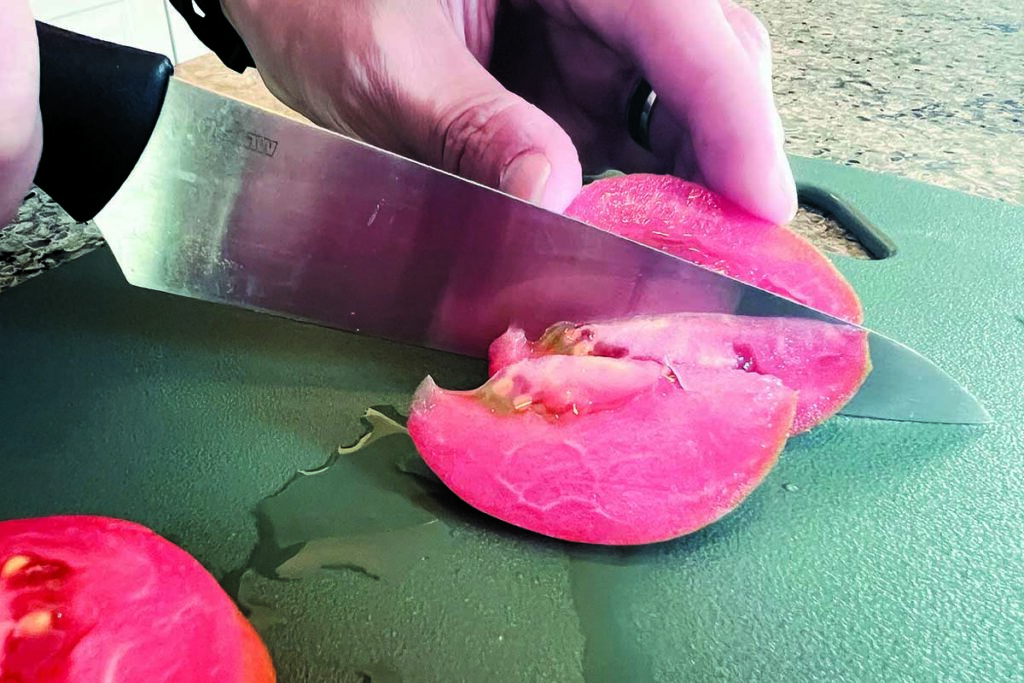
The thin blade stock gives the Kershaw Utility Knife great bite and slices very easily. The contoured handle adds a high degree of comfort and control. 

Kershaw Utility Knife Specs
Blade Length: 6″
Overall Length: 10.6″
Blade Material: DIN 1.4116
Handle Material: Polypropylene
Country of Origin: China
MSRP: $21

Pros

  • Versatile for light-to-medium tasks
  • Comfortable and Secure Grip
  • Affordable

Cons

  • Not made for tough tasks
  • Very basic design

The Kershaw 6-inch Utility Knife is designed to be a “do-it-all” knife in the kitchen for light-to-medium-duty food prep tasks, and can handle meats, fruits and vegetables with no problem. One look at this knife and the word “basic” comes to mind. It is just a no-frills kitchen knife and I say that not in a negative light but rather a positive one. Sometimes simple is the way to go; it is the most direct way.

The 6-inch blade is DIN 1.4116 stainless steel in a nice brushed-satin finish. The handle has an expanded front section that not only acts as a finger stop but also is shaped in a way that promotes using the pinch grip for more precise control for detail cutting. The handle profile is rounded so it sits in your grip nicely and comfortably with no hot spots to speak of. The material is molded polypropylene and sports a slight texturing to aid in grip retention.  As an added bonus, the knife comes with a molded plastic slip sheath to protect the blade when not in use. Because of this, the knife can be stored in a backpack for a camping trip, a drawer of your RV or a kitchen drawer, all without worry of edge damage or accidental cuts.

Due to the very thin blade stock (.057 inch at the thickest), the Kershaw slices tomatoes with surgical precision. The edge bites into the skin and glides right through with very little resistance. The blade is somewhat flexible but not as much as, say, a fillet knife. You are still able to flex the blade a bit, so I would not tackle any tough cutting with it and certainly not torque the handle. The blade shape is adaptable to all sorts of food prep tasks, from meats to vegetables to fruits.

The size is perfect to accompany a larger chef’s knife, for those tasks for which an 8-inch chef’s knife is too big and a paring knife is too small. The major selling points are the basic design, thin blade stock, rounded handle and price. MSRP: $20.99. Country of origin: China.

Amazon$21Check Price
Knife Center$21Check Price
Kershaw$21Check Price

Gerber ComplEAT Utility Knife

Gerber ComplEAT Utility Knife
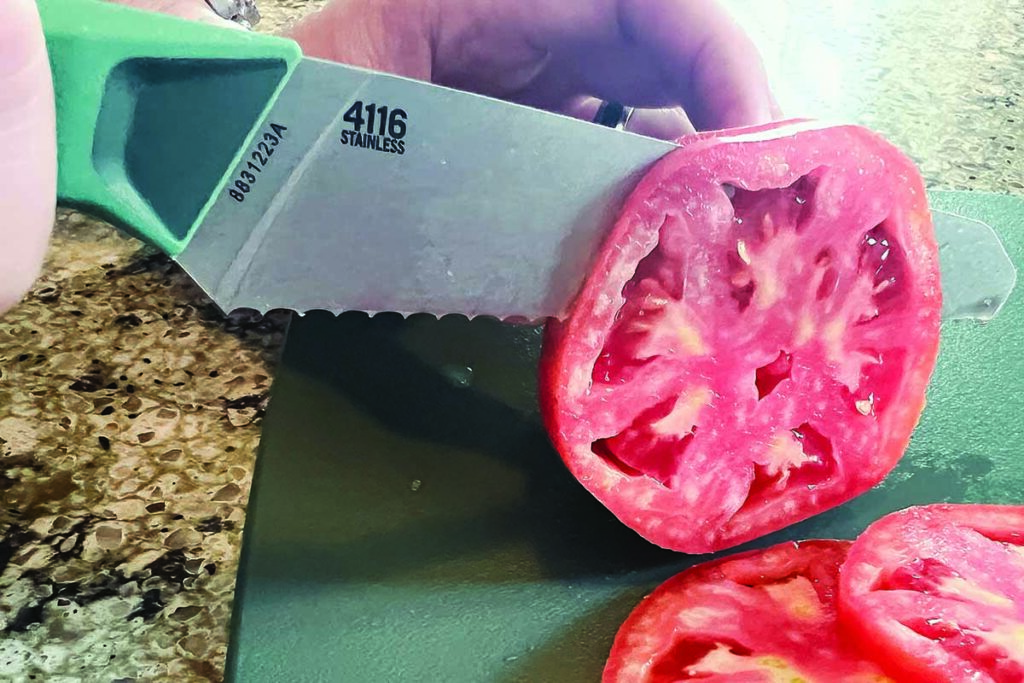
The Gerber ComplEAT Utility Knife has more aggressive serrations than the Case Tomato Slicer, slices tomatoes well and doubles as a bread knife.

Gerber ComplEAT Specs
Blade Length: 6″
Overall Length: 10″
Blade Material: 4116 German stainless stee
Handle Material: Glass-filled polypropylene
Country of Origin: China
MSRP: $35

Pros

  • Multi-use versatility
  • Serrated blade stays sharp
  • Ergonomics are great

Cons

  • Constructed of basic materials

The serrated Gerber ComplEAT 6-inch Utility Knife will handle meats, produce and bread. It’s the perfect complement to the other two models—chef’s and paring knives—in the company’s ComplEAT series.

The 6-inch blade is German 4116 stainless steel for affordability and stain resistance. Commonly used in pocketknives, the sheepsfoot blade is utility friendly. The full flat grind thins the serrations down well without being fragile and gives the edge its bite. A stonewash finish seals the micro pores in the steel to prevent rust from forming easily.

The handle is dual molded, with a hard plastic outer frame and inlays of a softer, grippier rubber-like material. The inlays are inset some to provide an innovative finger groove of sorts that allows you to obtain good handle traction, as your fingers and thumb can rest inside it, helping you to control the knife at all times. Additionally, there is a forward pinch grip/recessed area on both sides of the handle for exact control. The handle perimeter features multifaceted chamfers that not only reduce hot spots but also make the handle feel slimmer by removing bulk. An oblong hole accepts a lanyard or simply serves to hang the knife on a peg, nail or hook when not in use.

The handle color is interesting. Gerber calls it Baltic Haze and is a matte light green with dark green rubber inlays. It is more appealing than standard black and fits in well with the outdoor theme. A matching plastic slip sheath protects the blade and is safe to carry in a backpack.  

The ComplEAT handles tomatoes similarly to the Case Tomato Slicer. The serrations allow the blade to immediately bite into the tomato skin and help the edge to remain sharp over time. Unlike the Case, the ComplEAT can be used for other foods, too—cucumbers, onions, chicken, pork, beef and even as a bread knife, including bagels, baguettes and such. It is a true multi-use performer. If you need one knife to tackle a variety of food for camping, it might be the one as the evenly spaced serrations cut smoothly. If you prefer infrequent sharpening, the serrations are for you. Why? The serrations’ scallops are sharp and are protected by the teeth. 

Gerber$35Check Price

More Kitchen Knives:

Knife Buying Don’ts: How To Avoid Cutting Pitfalls

Knife buying–particularly custom–can prove daunting. We gathered industry pros to give the top mistakes to avoid.

When it comes to acquiring knives, the informed buyer is most often the satisfied buyer when the transaction is complete. So in the spirit of friendly advice, BLADE® has enlisted the help of several knife industry pros to offer a few words on making the most of the knife-buying experience—or to put it another way, 11 mistakes to avoid when buying a knife.

Don’t Deal With Questionable Sellers

“A lot of it revolves around reputation,” said custom knife purveyor and collector Paul Farina of Farina Fine Arts. “Human beings can be different, but 80 to 90 percent of the people you meet out there are great. In the knife world, many of them will give you a refund if you aren’t happy.”

Dave Harvey of Nordic Knives echoed that sentiment. “Honest sellers are not hard to find, thankfully,” he said. “Look for those with years of experience. Generally speaking, dishonest sellers will not be in the business very long.”

Along the same lines, Daniel O’Malley of bladegallery.com cautions folks interested in buying online. “If purchasing online, make sure you are buying from a company that has been around a while,” he offered. “There are a lot of fraudulent websites out there these days—often ones that are trying to appear to be a well-known website. One dead giveaway that you may be on a fake purveyor website is if the prices are too good to be true. Unfortunately, you are unlikely to find a legitimate site selling knives for half the price of other legitimate sites.”

Don’t Buy Knives On Pictures Alone

“In most cases today, knives will be purchased online, and therefore you may have to judge the knife by photographs and listed descriptions,” O’Malley advised. “Since the value of the knife is greatly affected by small scuffs and scratches, it is important that the photos are clear enough that any imperfections will be noticeable.”

Along the same track, Harvey noted, “Pictures are great, but they never fully substitute for being able to see and hold a knife in person. Make sure you buy from someone or a dealer with a 100-percent-return guarantee. If you are not satisfied with your purchase, you should be able to return it in a reasonable period of time.”

Don’t Buy Knives On Steel Only

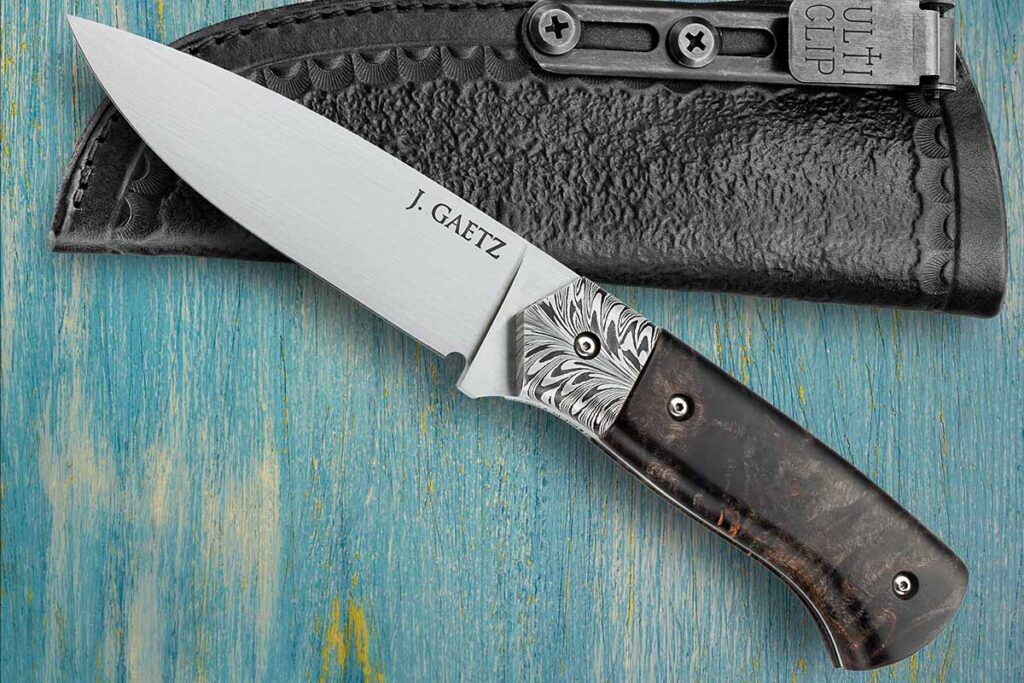
Jacob Gaetz forged the 4-inch blade of his fancy hunter
Daniel O’Malley advised that each year new miracle steels appear but often lose popularity after a year or two because they may not pan out. Conversely, tried and tested steels like CPM S35VN, Takefu SG2, 52100 and more are great benchmarks to test against. Jacob Gaetz forged the 4-inch blade of his fancy hunter from 52100. (Jocelyn Frasier image)

“I never talk to people too much about a particular blade steel,” commented Dave Ellis of Exquisite Knives. “I usually discuss with clients how the complete knife was made, how it was fashioned, and that is more important, I think. Someone may be enamored with a certain type of steel, but that is rare with my clientele and only a consideration in talking about the whole knife.”

Harvey reckons that few knife buyers take the “blade-steel-first” approach. “At least I would hope not,” he asserted. Farina added, “There are a few exotic blade steels out there right now, and these may be sought after just because they’re exotic. Also, some steels have been discontinued and knives with those steels may be selling because of the rarity.”

Taking the entire knife into account is the best way to reinforce a purchasing decision, according to O’Malley. “Knowing the stats on the knife is important,” he reasoned. “We want to know where it was made, who made it, in what country it was made, and what materials they used. That said, judging a knife by just the blade materials used ignores fit and finish as well as heat treatment quality. In some cases the identical steel at the identical Rockwell hardness can still have tremendously different edge holding. In fact, over the years I have found that the quality of heat treatment is perhaps even more important than the steel used.”

Don’t Buy Knives On The Handle Comfort

Lee Lerman, a custom knife judge
Daniel O’Malley said that even if it’s the best knife in the world, if you don’t like the way it feels it isn’t the best knife for you. Lee Lerman, a custom knife judge at BLADE Show 2024, checks the handle of one of the knives entered. In the background are observer Henry Wu (right) of the BLADE Show and judge Rodrigo Sfreddo (center).

“Getting a knife in hand and seeing what it feels like is ideal, though sometimes not possible if you are purchasing from far away,” O’Malley related. “I often advise potential buyers that even if they are holding the best knife in the world, if they don’t like the way it feels it isn’t the best knife for them. That said, some buyers feel a knife is comfortable just because it is familiar—similar to their last knife. They may have gotten used to the last knife and like the way it feels, but a different feel might actually be better, that is, a more ergonomic handle or lighter design. Sometimes it takes using the knife for a while before you know how you really feel about it.”

Don’t Adopt A Herd Mentality

“There are trends out there, but because I’m older and been around the art knife world so long, I’ve thought about the places to put my money,” Farina commented. “If you’re looking at an up-and-comer in knifemaking, check their quality, find out who taught them. That is how I get introduced to them. If they have been taught by an experienced maker, you can tell the quality, and the price may reflect in less money with younger guys.”

From the perspective of “hot styles,” Harvey remarked, “I don’t object to those who want to buy the ‘hot’ knives as long as they are styles and makers that they enjoy and collect. Buyers should always beware of ‘hot’ knife prices and not fall for overpricing.”

“What’s currently ‘hot’ isn’t always best,” O’Malley commented. “The knife industry develops relatively slowly and though each year we see new miracle steels come out, they often lose popularity after a year or two because they may not have panned out. Tried and tested steels like S35VN, Takefu SG2, 52100 and more are great benchmarks to test against.”

Don’t Overlook Makers By Name

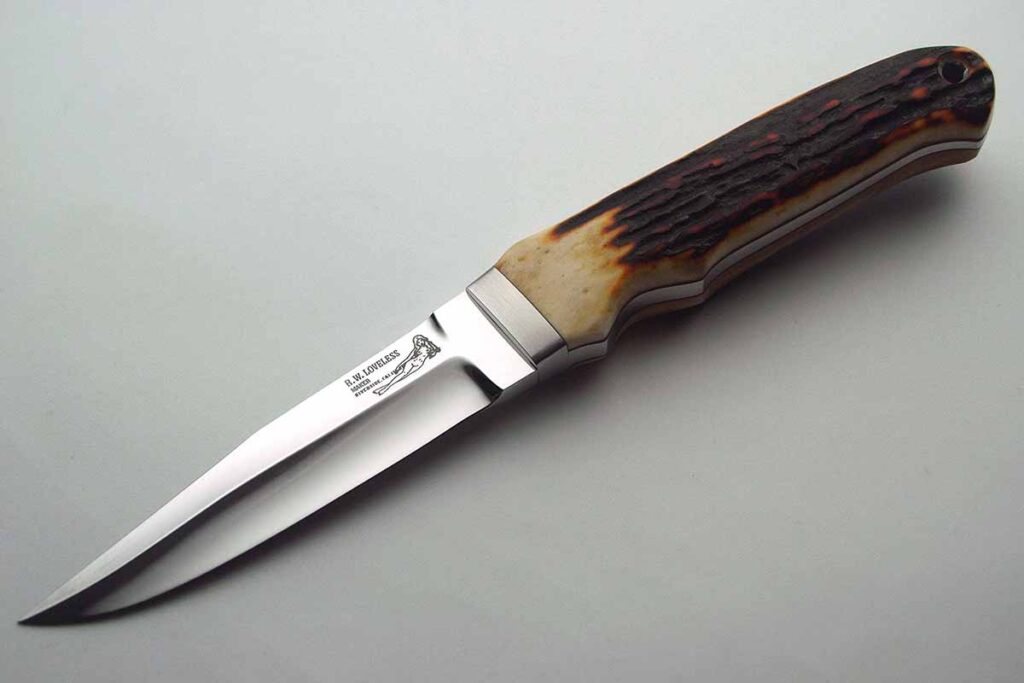
Loveless hideout model in stag
Dave Ellis said that instead of buying 10 knives you can afford, save up and buy one made by Bob Loveless. A Loveless hideout model in stag and with the iconic Naked Lady logo would be a good place to start. (Exquisiteknives.com image)

Ellis looks long-term and sees intrinsic value in the known commodities. “I recommend the blue-chip makers,” he declared. “Instead of buying 10 knives you can afford, save up and buy that one Loveless. This year I’ve sold 14 Lovelesses and the pricing has not gone crazy. So, an entry level $5,000 knife is not so ‘out there’ for someone.”

According to Harvey, most big-name makers have an established collector following, which typically relates to a lasting market for their knives down the road. However, O’Malley points out the benefits of considering numerous makers.

“The knife industry is full of tiny workshops that are doing the best work in the industry,” he noted. “While there are also some great big-name makers, these smaller shops are more likely to provide more bang for your buck. Additionally, in many cases, small workshops may be putting more attention toward quality of heat treatment, which can result in much higher performance.”

Don’t Overrate The Investment Factor

“Buying for investment is something I love because of the fact I can make money on knives,” Farina explained, “but this is not a blue-chip investment stock. So do it for the passion and love of the product. However, if the goal is only for investment, then be very structured. Listen to an adviser. I had a customer come to me after spending a lot of money in four years. He wanted to sell and make 20 percent profit on all the knives [he had bought]. Maybe that would happen on some stuff, but it is a bit unrealistic.”

O’Malley added, “Knives can be a great investment. Over the years, I have seen many knives increase dramatically in price, though certainly there are some that hold their price and even some that go down. Picking the right knives for investment does take a time commitment. You need to research and know the maker and their work. How does the knife fit in the range of knives that maker creates? Will the materials hold up over time? Where is the maker in his or her career? Taking all this into account, it is possible to collect knives as a great investment, though keep in mind that even with the best research not every investment will work out.”

For Harvey, the investment path requires some preparation. “Smart buyers can and do successfully invest in certain knives,” he said. “This does require a lot of knowledge and patience, as you generally won’t see significant increases in value in the short term. For most buyers, I suggest buying what you like and enjoy for your collection, not expecting a large return for it upon sale.”

Don’t Exceed Your Knife Buying Budget

Jurgen Steinau fixed-blade knife
Dave Ellis recommended setting a price limit at auctions and don’t exceed it or you will find yourself paying a lot more than necessary. “I remember a particular Jurgen Steinau fixed-blade knife a few years ago when an overseas bidder and a guy from the Bay Area were in there. The knife went for $110,000,” Dave noted. “People were in there butting heads and then it became an ego thing.” Steinau’s unique style is reflected here in his Folding Knife LBS. (Eric Eggly/PointSeven image)

Ellis provides sound wisdom on auction bidding. “Set a price at the auction and don’t go over the limit and find yourself suddenly paying a lot more than you wanted to pay. I remember a particular Jurgen Steinau fixed-blade knife a few years ago when an overseas bidder and a guy from the Bay Area were in there. The knife went for $110,000,” he noted. “People were in there butting heads and then it became an ego thing. Also, don’t buy with an eye toward flipping the knife. Avoid bid ups like the plague.”

“Auction sites tend to have horrible photos, making it impossible to ascertain what a knife is really like—and what it is worth. Since fit and finish as well as condition are so important to value, figuring out what to bid can be near impossible. Additionally,” O’Malley opined, “auctions can be a way to end up paying much higher than a direct-from-maker price.”

Don’t Discount Second Opinions

“Second opinions are nice and not too hard to get on many knives,” Harvey pointed out. “There are online forums and other social media outlets where collectors share information on many makers and knives.” Take advantage, then, of the availability of information but consider the source always.

“Knives are pretty personal,” O’Malley observed. “What works for you might not work for your buddy. It’s always fun to walk around a show with someone so that you can bounce ideas off each other, but at the end of the day, buying what you like is probably most important.”

Don’t Buy Knives Under Duress

Never feel pressured to make a knife purchase. Don’t always accept the line that the knife you are considering could be gone in the next few minutes. Take a deep breath and make the most informed decision possible in the current environment. If you don’t feel totally positive, walk away.

“Many knives are literally one in the world,” O’Malley said. “This means that if you don’t buy it, there is a chance that it will be gone. Over the years, I’ve found a good way to evaluate is to ask yourself, ‘If this knife sells to someone else, in three to five weeks will I be frustrated and still want to purchase it?’ If the answer is no, you probably didn’t need to purchase the knife. There will always be others. There are, however, a few knives that I didn’t buy that even years later I wish I had purchased. Figuring out if this is one of those knives lets you know to buy it before someone else does. Any big collector has had a few knives they didn’t purchase quickly enough that they still regret not purchasing today.”

Don’t Always Discount Deposits

heat treatment of knives
Over the years of buying and selling knives, Daniel O’Malley said he found that the quality of heat treatment is perhaps even more important than the steel used.

“If a maker requires a deposit, he or she must be a good accountant,” Farina related. “Some are not businessmen. They are artists and machinists. So, it’s about reputation and feeling good about the maker you are working with.”

Trust is a big factor across the board. “Paying for a knife before it is completed can be complicated,” O’Malley maintained. “A well-regarded maker once summed up the problem: ‘It’s very hard to work on a knife that’s already paid for.’ That said, collectors often commit to a purchase, have a knife made, and don’t complete the purchase or just ghost [stop communicating with] the seller. For this reason, I feel it is reasonable to pay a relatively minimal deposit, 10 to 20 percent of the cost of the knife, when purchasing directly from the maker. If working through a purveyor and having a knife made, it isn’t unusual to have to pay the full amount up front since the purveyor is committing to the purchase for you.”

Stay Informed

Advice is free, for sure, but it comes from the voices of experience. When buying a knife, it pays to listen to those already engaging in the process. Of course, every situation is a bit different. There are always additional considerations. The bottom line is to approach a knife purchase on an informed basis. That translates into a confident buy!

More On Custom Knives:

Best Cleavers: Hot Choppers In 2024

0

Looking for a blade to cut to the quick of most kitchen chores?

As a knife guy for pretty much my entire life, I can own up to the fact that I don’t collect knives, I hoard them. Among the hoard are kitchen knives. I even scour secondhand stores looking for discarded gems or diamonds in the rough. Having said that, I must admit there are only a couple that are my go-to knives in the kitchen. One of them is my old Regent 6-inch-high carbon steel cleaver.

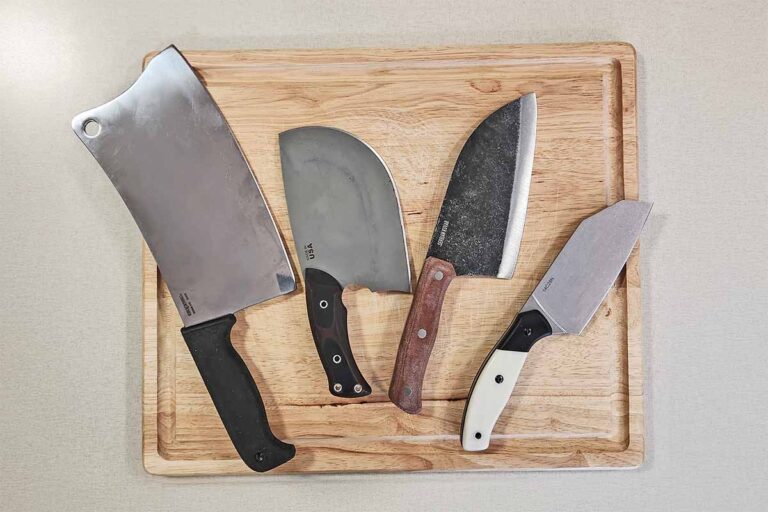
In a sea of kitchen knife styles with various design influences, it seems we periodically return to the cleaver. I use mine for almost everything and love it. Next to my Victorinox paring knives, I could not imagine a kitchen without it. Therefore, this time we look at four cleavers, some traditional and some with a modern twist.

Best Cleavers Specs Comparison

CleaverOverall Length (inches)Blade Length (inches)Blade @Thickest (inches)Blade SteelHandle MaterialSheathWeight (ounces)MSRPCountry Of Origin
Cold Steel Cleaver Commercial Series13.759.137German 4116 stainlessKray-ExNone23.7$60Taiwan
TOPS Knives XXX Dicer8.887.13440C stainlessRed and black G-10Black Kydex13.6$330U.S.A
Condor Serbian Kuvar Cleaver11.296.29.11075 carbonNatural Micarta w/red linersLeather14.46$110El Salvador
Bear & Son Professional Chopping Knife10.1255.12514C28N Sandvik stainlessBlack G-10 and white boneThermal plastic4$160U.S.A.

Cold Steel Cleaver Commercial Series

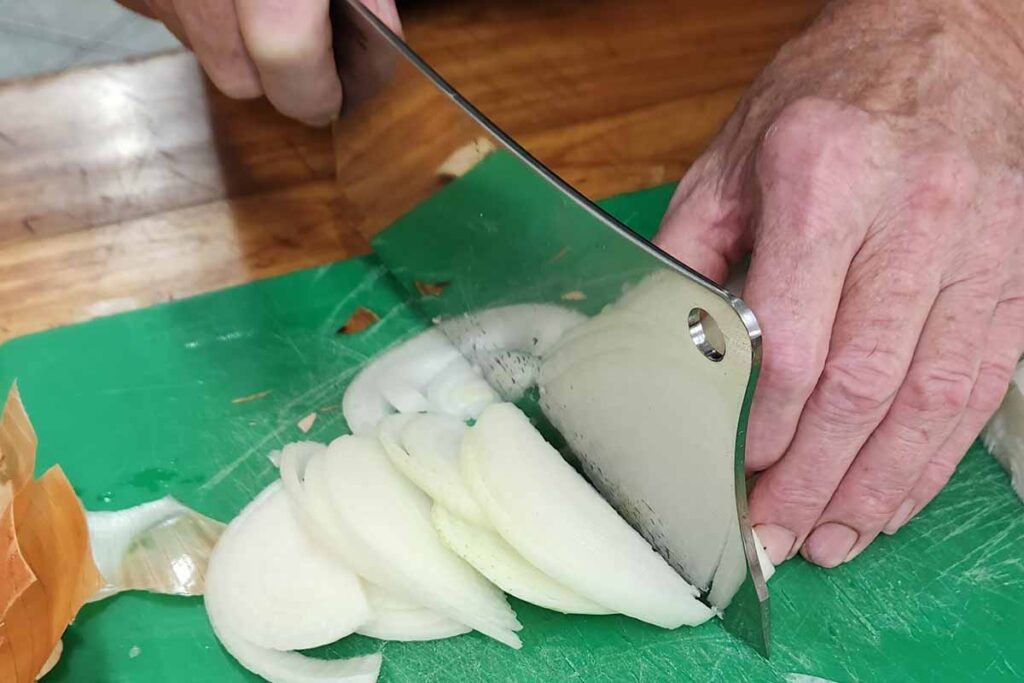
Onions are hardly a challenge for the Cold Steel Cleaver
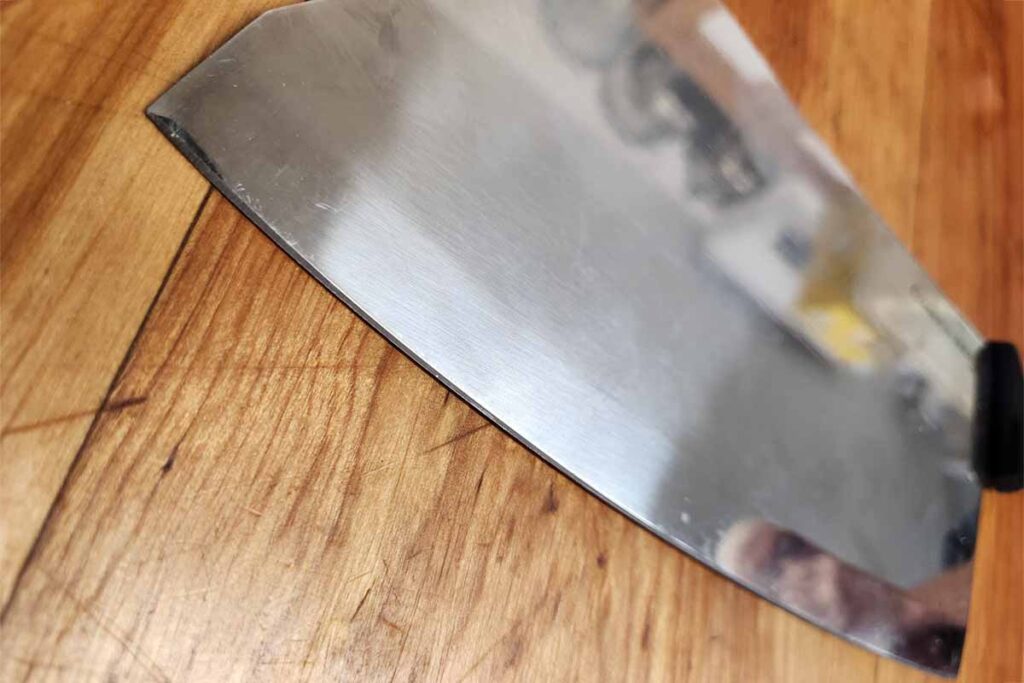
Onions are hardly a challenge for the Cold Steel Cleaver. On the other hand, its weight does make it sing through whatever you’re cutting. The effort is in picking it up—gravity handles the rest.

Commercial Cleaver Specs
Overall Length: 13.75″
Blade Length: 9″
Blade @Thickest: .137″
Blade Steel: German 4116 stainless
Handle Material: Kray-Ex
Sheath: None
Weight: 23.7 ozs.
MSRP: $56.99
Country of Origin: Taiwan

Pros

  • Excellent for butchering
  • Kray-Ex handle provides a firm grip
  • High-polished blade is a smooth cutter

Cons

  • Too Large for regular kitchen tasks:
  • Prone to Scratching

The Cold Steel Cleaver Commercial Series is a traditional style European design and is a behemoth. I could make three small knives just from the blade. It works great in the kitchen but, due to its size and weight, can be a bit much for such chores as chopping veggies. However, for butchering jobs it is a brawler. I had a chance to process some meat with it, mostly pork chopping up ribs and cutting belly up for the roaster. Not much will stand in its way.

The handle is Kray-Ex, a firm rubber for a solid, vibration-free grip. The high-polished blade finish really cuts down the friction when cutting meat. The meat just slides across the surface. The polished blade is prone to showing scratches if it gets banged around in the drawer with other kitchen wear. I only mention that as I know some people get uptight over it.

As a large butchering tool it works great. I would even pack it for hunting camp. It functions fine as a kitchen chopper, though be prepared for a workout.

polished finish on the Cold Steel Cleaver
The polished finish on the Cold Steel Cleaver might not stay pristine but such a high polish isn’t just for looks. As the author noted, “The friction factor on such blades is low, allowing them to just glide through materials that might otherwise cling to a rough-finished blade.”

Commercial Cleaver Deals

Cold Steel$57Check Price
BladeHQ$57Check Price
Knife Center$50Check Price

TOPS Knives XXX Dicer

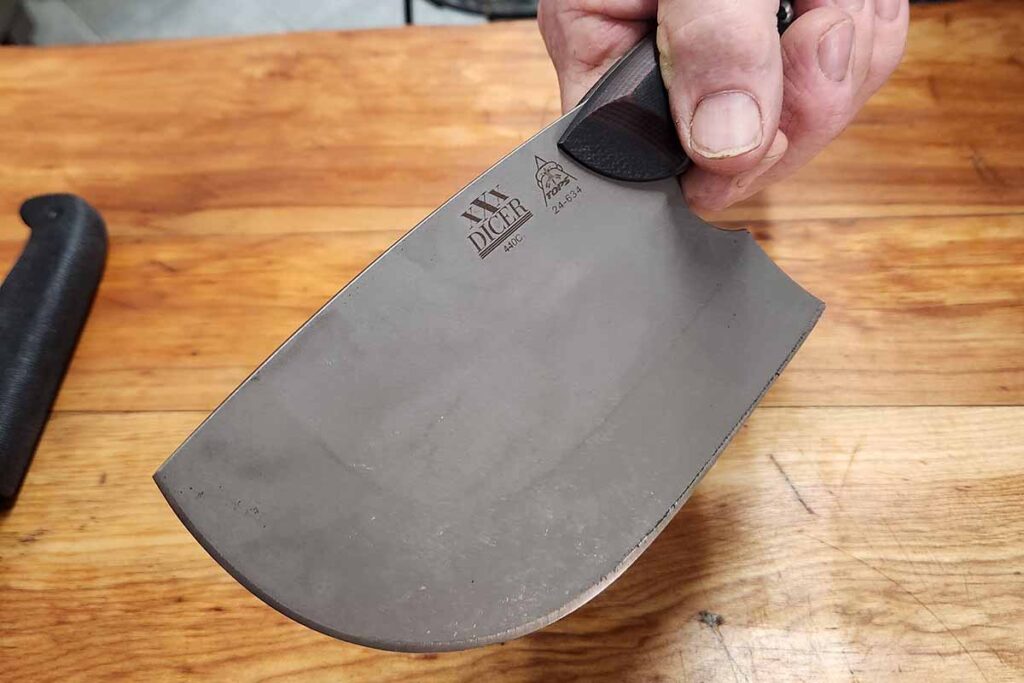
The belly of the TOPS XXX Dicer is quite pronounced.
The belly of the TOPS XXX Dicer is quite pronounced. “I suppose you could use it for rocking the blade but the forward position would make it awkward,” the author opined. “For long, drawn-out slicing moves during butchering it could work well.”

XXX Dicer Specs
Overall Length: 8.88″
Blade Length: 7″
Blade @Thickest: .13″
Blade Steel: 440C stainless
Handle Material: Red and black G-10
Sheath: Black Kydex
Weight: 13.6 ozs.
MSRP: $330
Country of Origin: U.S.A

Pros

  • Versatile for kitchen and game processing
  • Great control for chopping
  • Thin blade for easy cutting

Cons

  • Hollow pins trap debris

At first look, the broad, sweeping blade with a huge belly of the TOPS Knives XXX Dicer reminds me of a Japanese fishmonger’s knife. The fishmongers who process the large fish such as tuna and marlin often can be seen using similar blade styles. I volunteer in my local shooting club’s kitchen, so when I took the XXX Dicer there for them to try, many of the hunters commented how they would like to try it for skinning big game.

For use in the kitchen, the handle is designed so that you choke up for your chopping chores. A forward design also helps you to gain better control over the exaggerated belly curve. It is a large blade yet ground thin enough to make easy work of chopping and slicing jobs. I personally would not mind a bit more handle for when I want to back off on my grip and put some oomph behind it. The handle material works well. I must say, though, I am not fond of the hollow pins as food debris finds its way in there.

What I like about the blade overrides what problems I have with the handle. In the end, I can say I like the Cold Steel cleaver due to its utility.

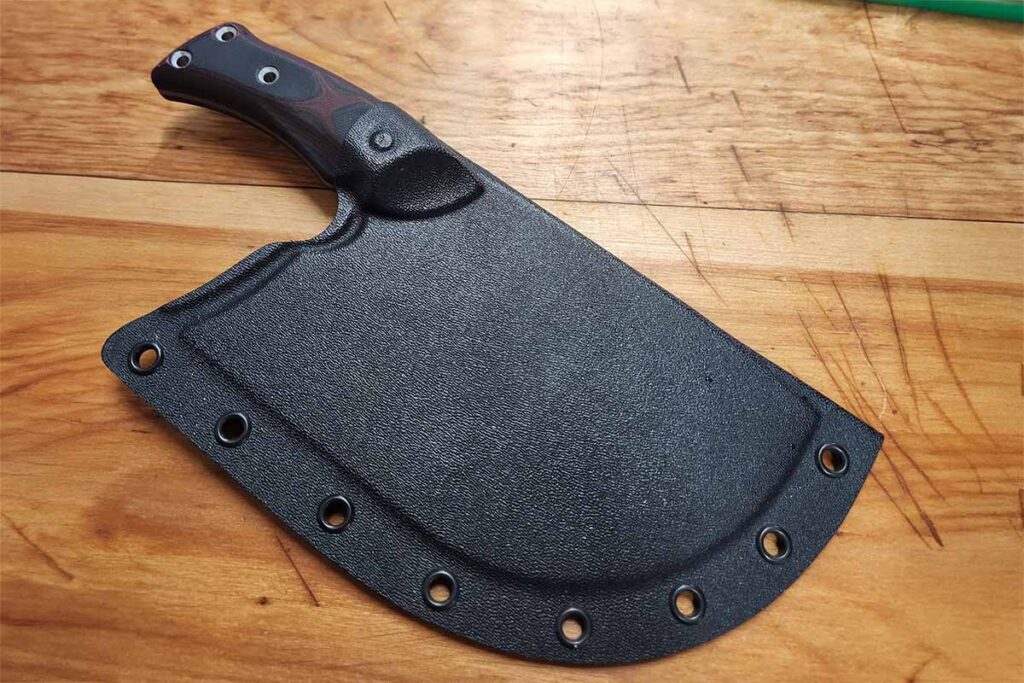
TOPS XXX Dicer in sheath
The author praised the streamlined blade cover for the TOPS XXX Dicer. It not only protects the cleaver but other blades in the kitchen drawer from being banged up.

XXX Dicer Deals

TOPS Knives$330Check Price
Midway USA$330Check Price
The Knife Connection$193Check Price

Condor Serbian Kuvar Cleaver

Condor’s broad blade
The Condor’s broad blade not only gives the cleaver some chopping weight, it also doubles as a good serving knife.

Kuvar Cleaver Specs
Overall Length: 11.29″
Blade Length: 6.29″
Blade @Thickest: .1″
Blade Steel: 1075 carbon
Handle Material: Natural Micarta® w/red liners
Sheath: Leather
Weight: 14.46 ozs.
MSRP: $109.98
Country of Origin: El Salvador

Pros

  • Versatile for kitchen and field use
  • Durable convex edge
  • Easy-to-clean handle

Cons

  • Sheath Design Issues

Even though Goran Mihajlovic designed the Condor Serbian Kuvar Cleaver, for years now—and I mean years—it has been Joe Flowers’ job to spot designers and designs for Condor Tool & Knife and bring them to market. I think I have known Joe for over 20 years, and his passion for cutlery has been unwavering. I think many people are unaware of the passion that drives the knife industry. Now, back to the Kuvar.

The Condor cleaver is a great example of how a different concept gets noticed. In the early days of the North American fur trade, many knife designs were simple kitchen or butcher models. With the Kuvar you not only have a knife that rides well for your kitchen chores, but you can use it in camp.

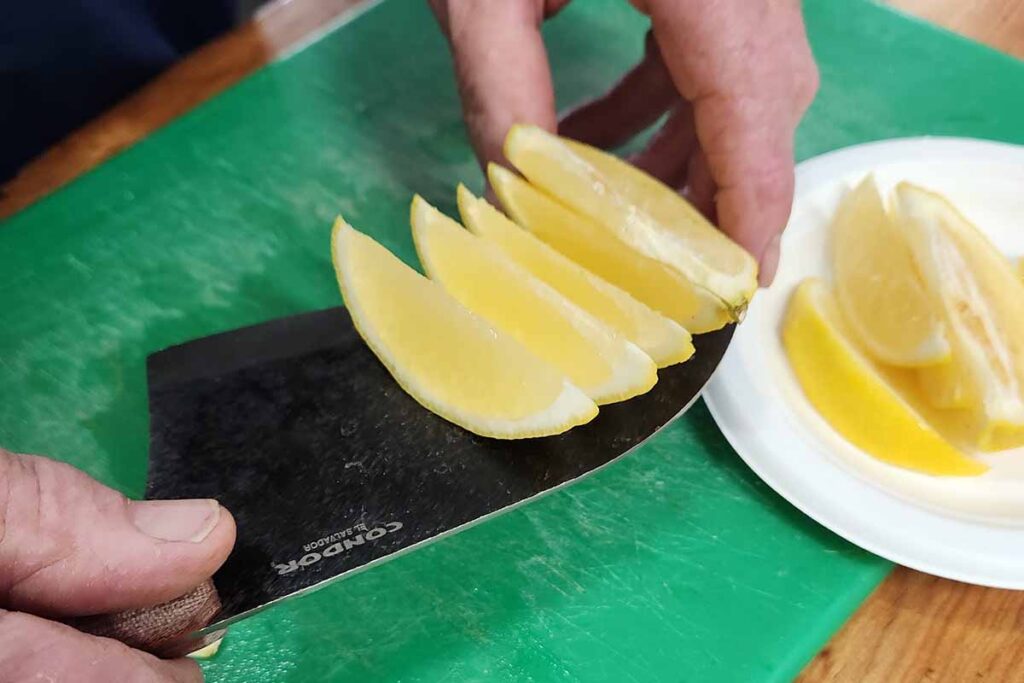
It does not have a particularly thick blade but what gives it some toughness is the convex edge. The edge is ground high to make it a cutter, though not so high as to make it fragile. As you chop, the convex edge helps the food fall away from the blade. Because of the blade style it would not be my first choice for carving. It would serve well as a field knife if need be. It would be great for chores around the kitchen and processing game. I would not hesitate taking it with me on a wild edibles trek either, while still feeling totally equipped.

The handle is durable and easy to clean. My only beef is the sheath’s snap closure. The knife gets hung up by it on deployment, but then that is the issue with many snap closures.

Condor’s convex-edged blade
According to the author, vegetables just pop off the Condor’s convex-edged blade when cut.
Condor$110Check Price
BladeHQ$92Check Price
Knife Center$110Check Price

Bear & Son Professional Chopping Knife

The Bear Professional Chopping Knife has a full handle and the 5-inch blade
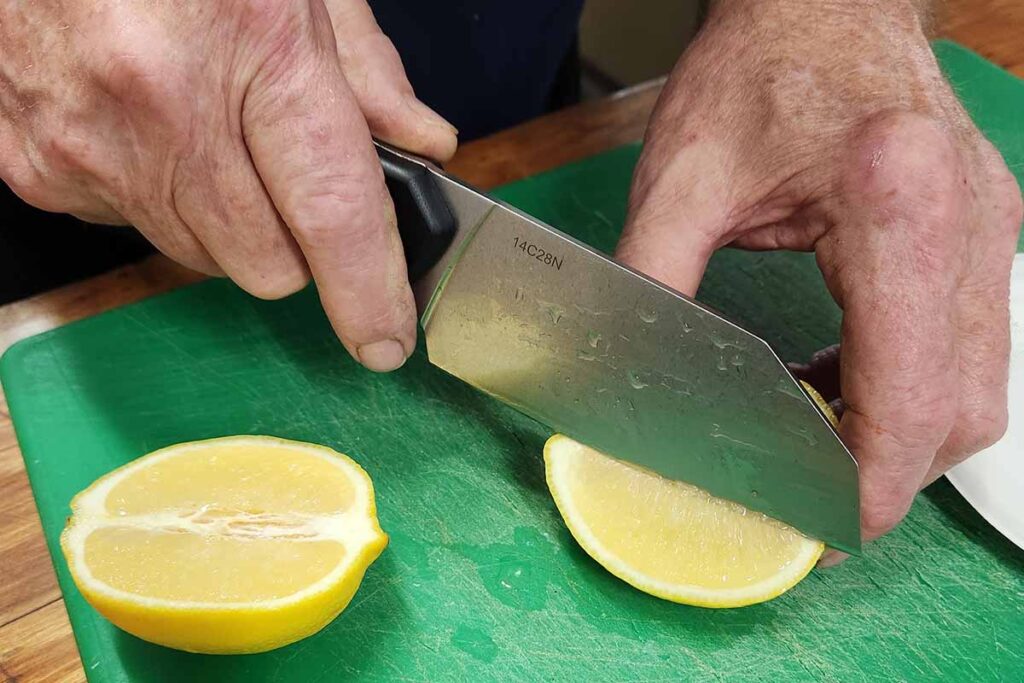
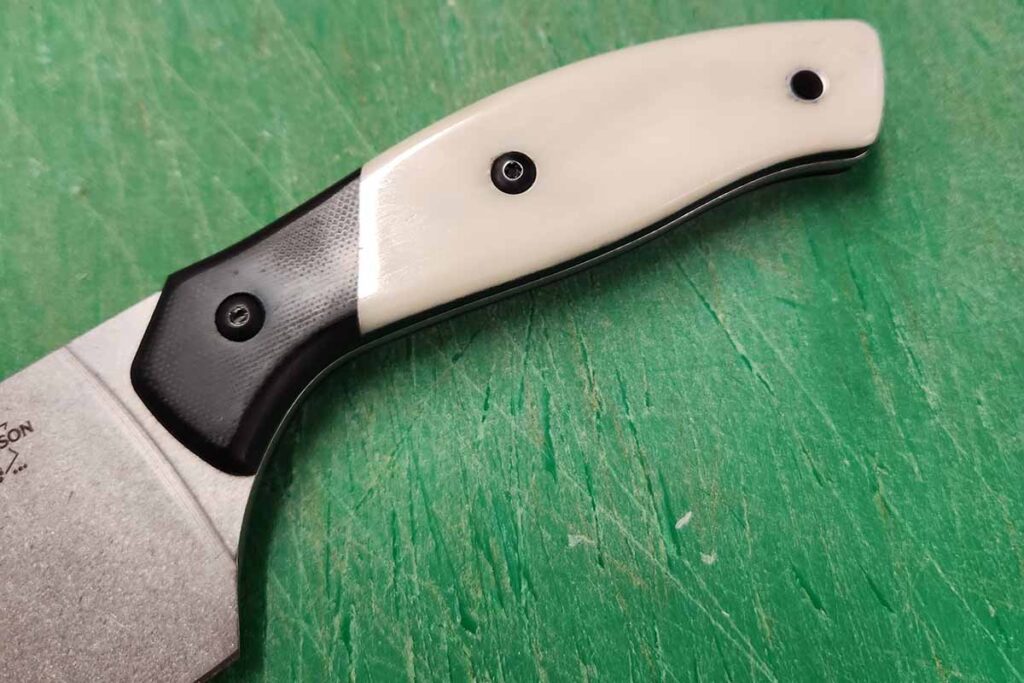
The Bear Professional Chopping Knife has a full handle and the 5-inch blade “is perfect” for the majority of everyday kitchen work. “It’s large enough to cut most food,” the author wrote, “and nimble enough for light, lively control of each cut.”

Professional Chopping Knife Specs
Overall Length: 10.125″
Blade Length: 5″
Blade @Thickest: .125″
Blade Steel: 14C28N Sandvik stainless
Handle Material: Black G-10 and white bone
Sheath: Thermal plastic
Weight: 4 ozs.
MSRP: $159.99
Country of Origin: U.S.A.

Pros

  • Visually appealing design
  • Thin-ground blade for chopping
  • Light and nimble

Cons

  • Handle can get slippery when wet
  • Limited heavy-duty capability

As mentioned, I took the test knives to my shooting club’s kitchen. The Bear & Son Professional Chopping Knife made such a splash that I barely got out of there with it in hand. The overall presentation of the handle with the stonewashed blade turned heads. It not only is a looker but, with its thin-ground blade, works great as a small chopper.

The handle ergonomics are great. The handle is highly polished and, seeing there is no texture or give to the material, it can get a bit slippery when wet. Bear & Son includes a lanyard hole at the butt but used mechanical fasteners up front. There is a slight curve to the blade and a nicely defined point.

It is a great little knife, light and nimble and suited to all kinds of chores. It is very much like one of my go-to knives, a small chef’s style. The grind on the chopper, though, is far better than my small chef’s knife. The sheath protects the blade while in transport or just sitting in a drawer. If anyone wants to buy a small chef’s knife, I need to make room for this one in my kitchen drawer.

The Bear has good handle ergonomics
The Bear has good handle ergonomics. The use of white bone and black G-10 really make the split handle design pop.

Professional Chopping Knife Deals

Bear & Son$160Check Price
SMKW$107Check Price
Discount Cutlery$104Check Price

Favorite Go-To?

It is not easy being a knife guy these days because there are so many good choices. At BLADE®, we try to bring you a number of selections and along the way introduce you to something you might not find otherwise. Cutting tools come in so many styles and for so many varieties and uses. Even with today’s latest cleavers there is variety and innovation. Use one or more of these designs and you might find your favorite go-to knife.

More Kitchen Knives:

2024 BLADE Show West Custom Knife Award Winners

See Who Took Top Honors In Salt Lake City For The 2024 BLADE Show West Custom Knife Awards.

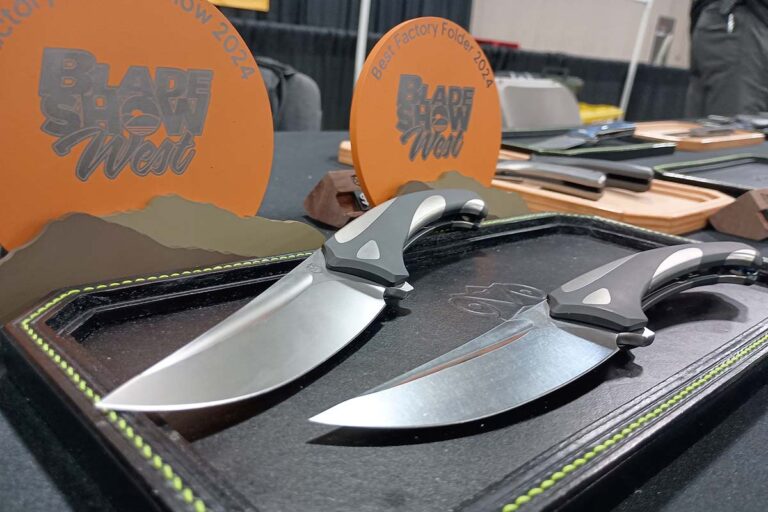
The 2024 BLADE Show West, held October 4-5, once again brought the knife community together at the Salt Palace Convention Center in Salt Lake City. Now in its third year in Utah, the show attracted custom makers, manufacturers, and collectors from across the U.S. and beyond.

One of the highlights was the Custom Knife Awards, where makers competed in nine categories. A panel of anonymous industry experts carefully judged each entry, evaluating factors like design, creativity, materials, utility, and craftsmanship. The competition was fierce, showcasing a wide range of impressive talent and innovation.


Best Fixed Blade And Best In Show: Pearce Richardson

Best Fixed Blade And Best In Show: Pearce Richardson
Photo: J. Frasier Photography

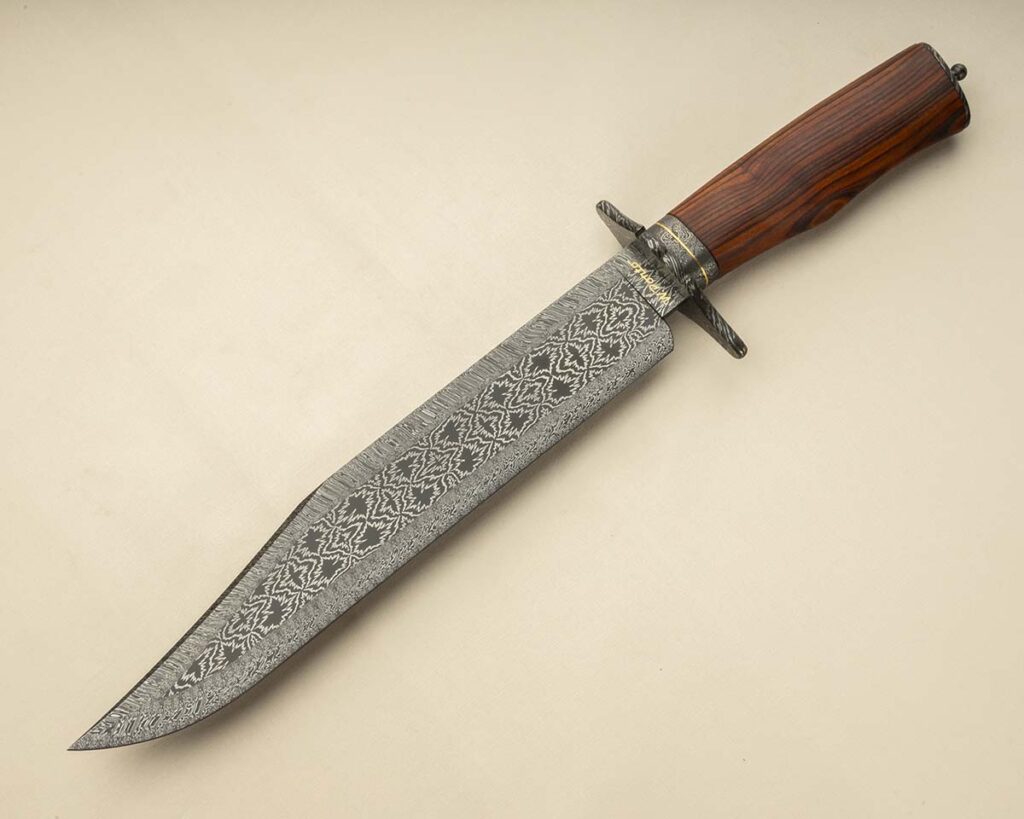
Best Damascus: William Porto

Best Damascus: William Porto
Photo: J. Frasier Photography

Best Folder: Evan Nicolaides

Best Folder: Evan Nicolaides
Photo: J. Frasier Photography

Best Hunter: James Rodebaugh

Best Hunter: James Rodebaugh
Photo: J. Frasier Photography

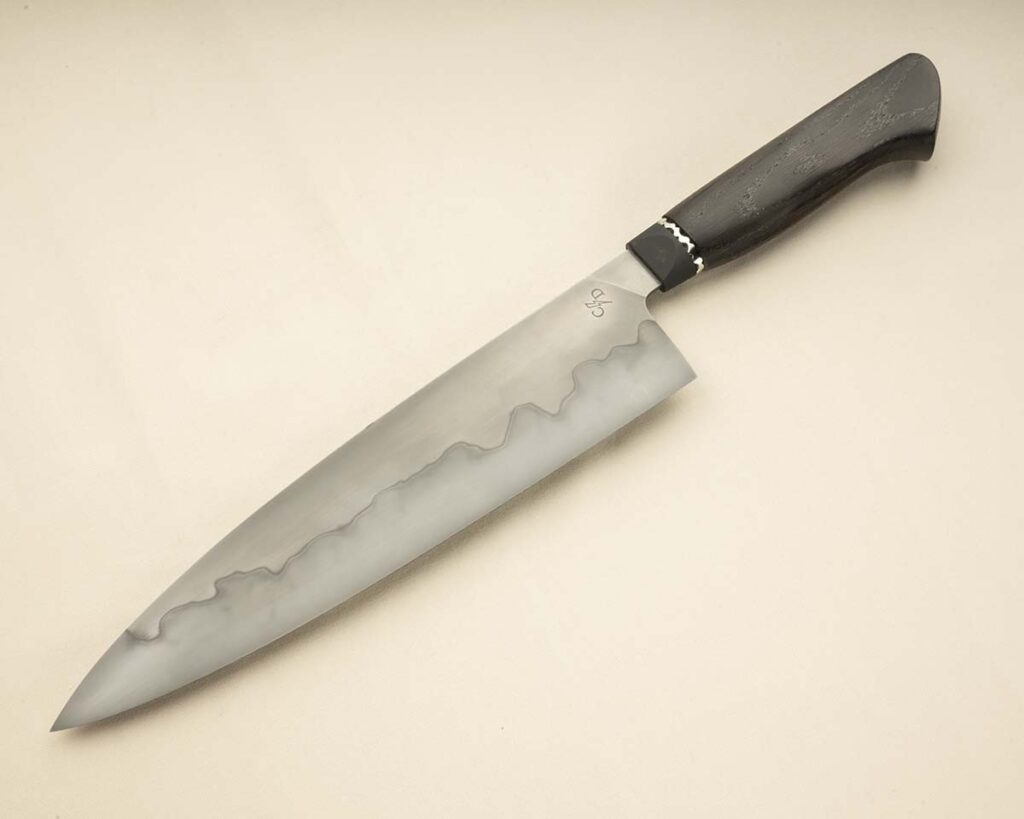
Best Kitchen Knife: Corey Dunlap

Best Kitchen Knife: Corey Dunlap
Photo: J. Frasier Photography

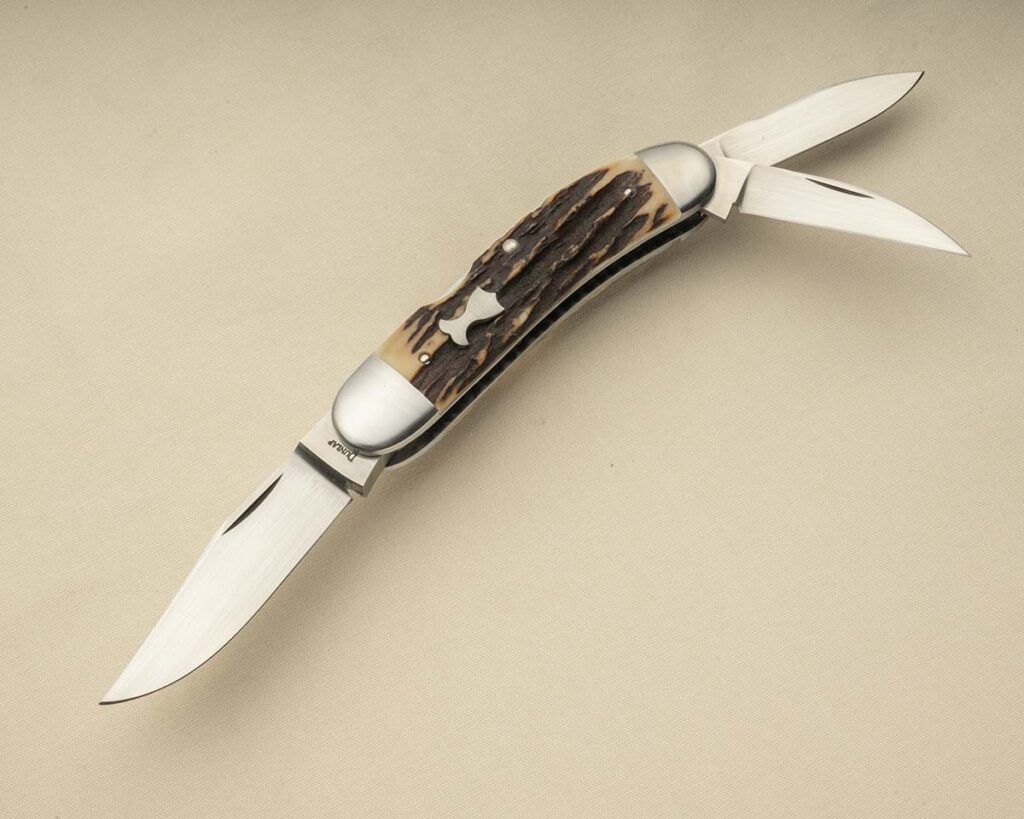
Best Slip Joint: Jim Dunlap

Best Slip Joint: Jim Dunlap
Photo: J. Frasier Photography

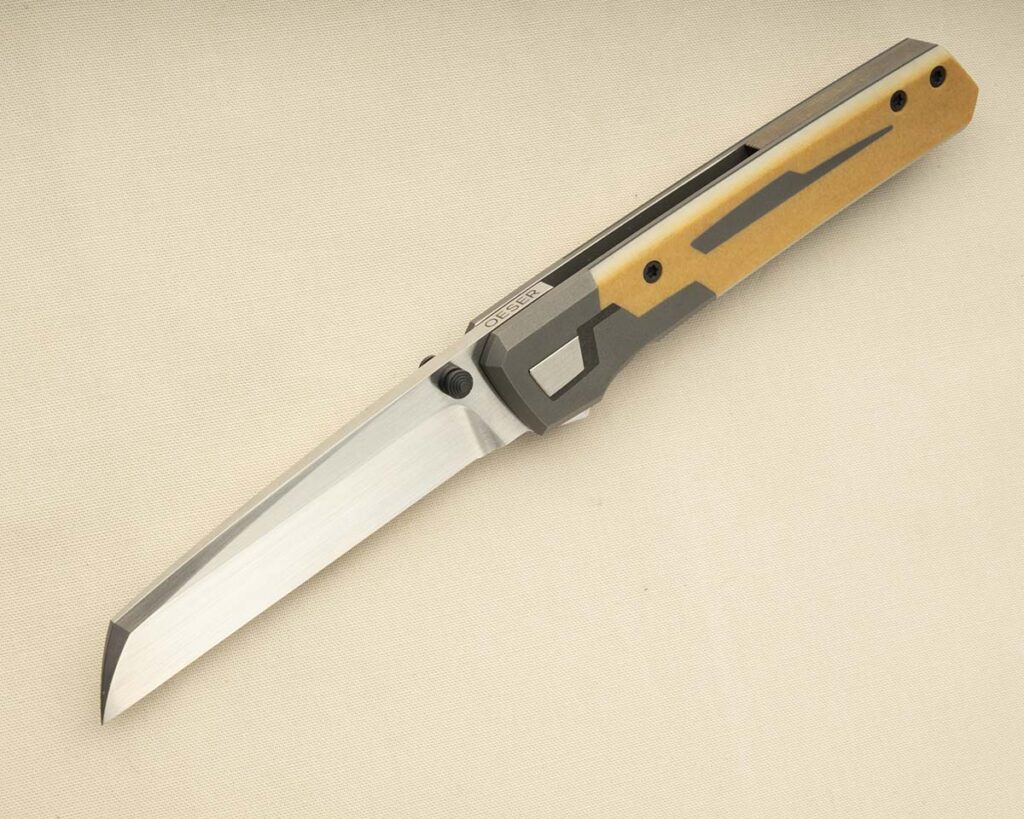
Best M.A.C.K. Contender: Jared Oeser

Best M.A.C.K. Contender: Jared Oeser
Photo: J. Frasier Photography

Best M.A.C.K.: Princeton Wong

Best M.A.C.K.: Princeton Wong
Photo: J. Frasier Photography

Best Of The Rest: Seth Lopez

Best Of The Rest: Seth Lopez
Photo: J. Frasier Photography

Past Custom Knife Award Winners:

2024 BLADE Show West Factory Knife Award Winners

See Who Took Top Honors In Salt Lake City For The 2024 BLADE Show West Factory Knife Awards.

Over its short history in Salt Lake City, the BLADE Show West Factory knives competition has become very heated. Likely none have been as hot as the 2024 field.

Held during the Oct. 4-5 show at the Salt Palace Convention Center, the event drew its largest field of entrants yet, with companies worldwide bringing their best for the coveted hardware. The undisclosed panel of judges more than had their work cut out for them in choosing the top knives out of five categories.

As a side note, the folder section—which also produced the Best In Show knife—was particularly tense. The judges started in this category and spent the better part of 30 minutes deciding the winner.

Check out what these industry experts picked as the best of the best in the last BLADE Show of the year.


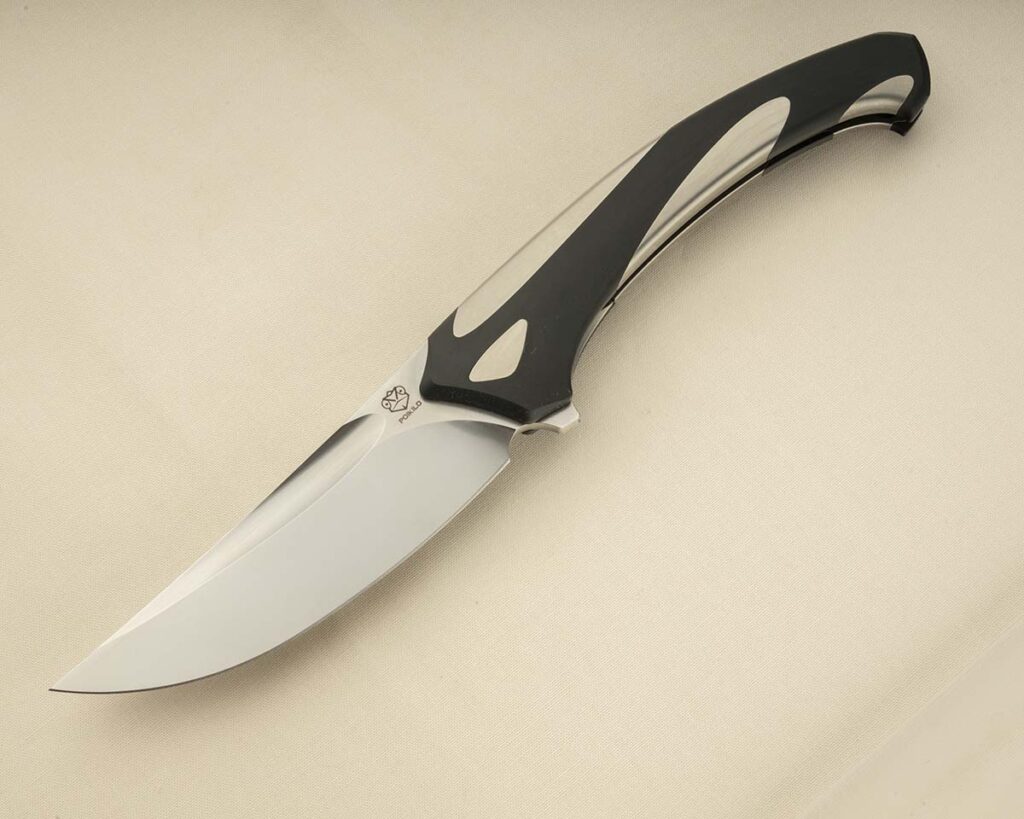
Best Folder And Best In Show: Poikilo Orca

Poikilo Orca
JFRASIER PHOTOGRAPHY

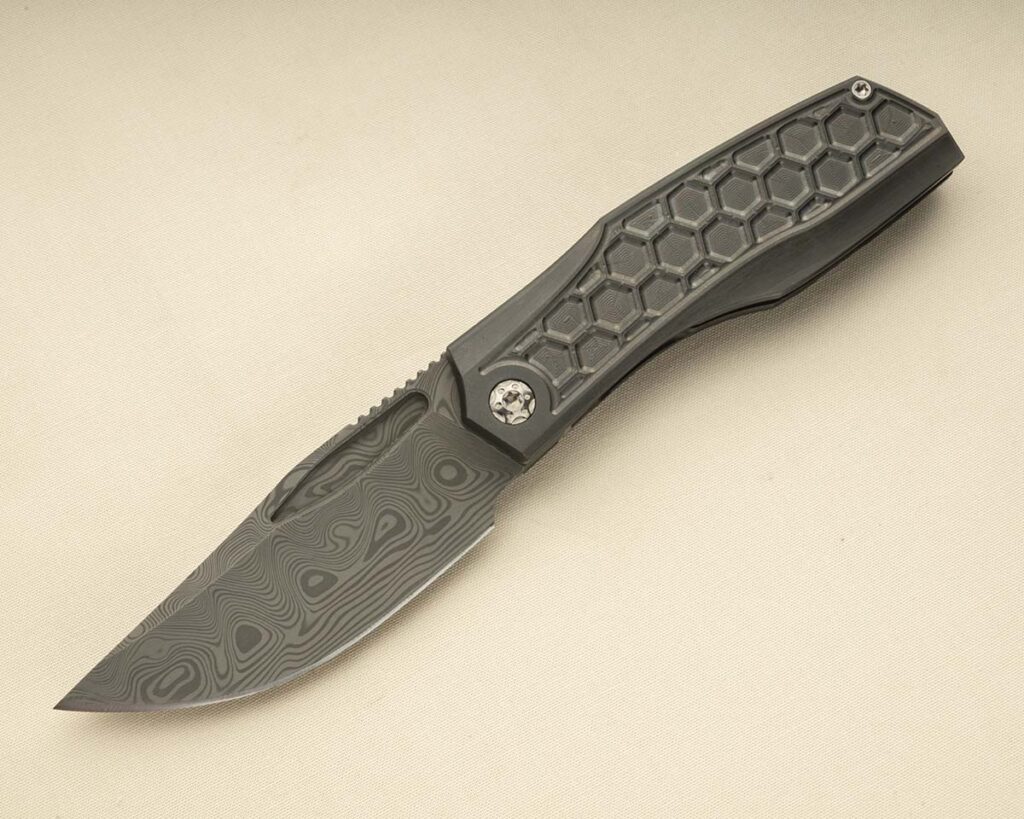
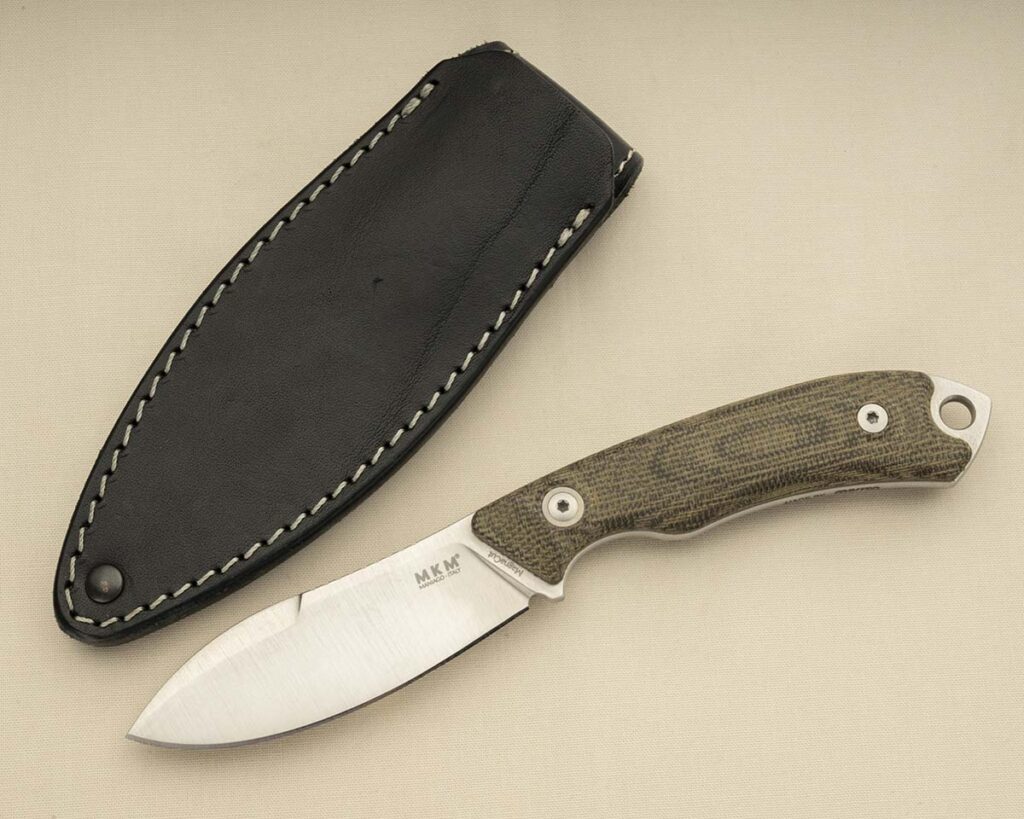
Best Fixed Blade Knife: MKM Pocket Tango

MKM Pocket Tango
Photo: J. Frasier Photography

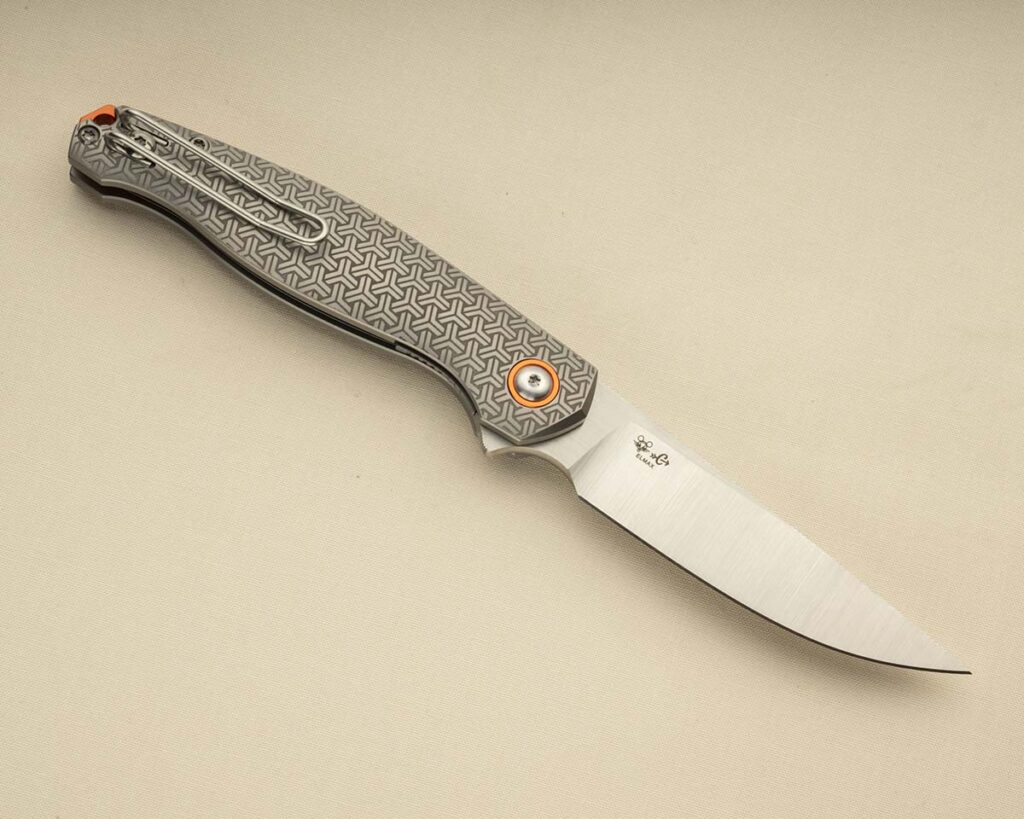
Best EDC Knife: GiantMouse Sonoma V2 Titanium

GiantMouse Sonoma V2 Titanium
Photo: J. Frasier Photography

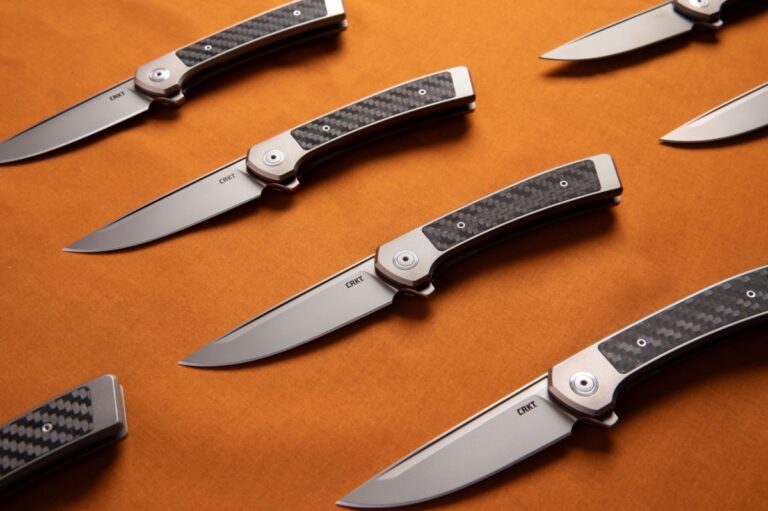
Best Imported Knife: CRKT Persain

CRKT Persian
Photo: J. Frasier Photography

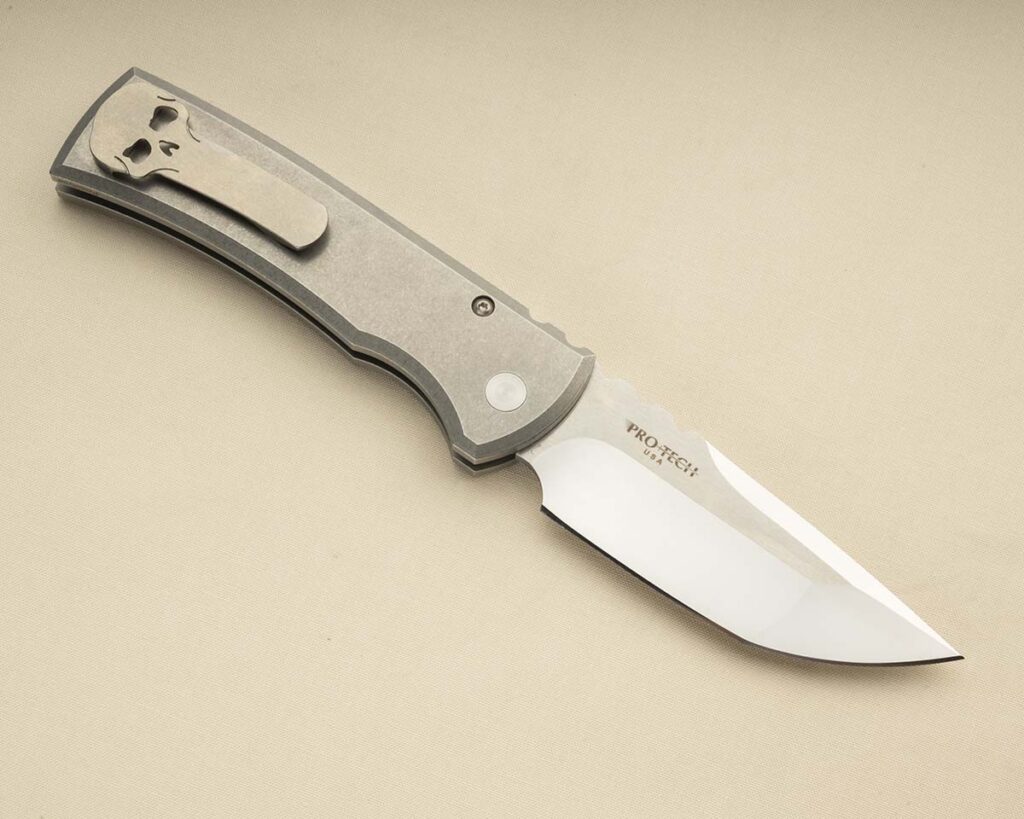
Best American-Made Knife: ProTech Redencion Prototype Chaves Auto

ProTech Redencion Prototype Chaves Auto
Photo: J. Frasier Photography

Past Blade Show Award Winners:

CRKT Drops Five New Knives At BLADE Show West

Knives showcase Richard Roger’s design prowess.

BLADE Show West hasn’t only grown to become one of the largest knife shows in the West, it’s also become a prime venue for late-season knife drops. With a bevy of new designs, CRKT has a bevy of new blades it plans to unveil to the public in Salt Lake City.

In all, the Oregon-based company will release five knives at the Salt Palace Convention Center, fittingly coming from a premiere Western knifemaker. Richard Roger’s prime gig New Mexico cattleman, but over the years has become a well-known custom maker whose designs perfectly combine clean lines, practicality, as well as eye-catching use of materials.
The folder specialist’s knives are meant for use, but dang, if they aren’t pretty enough to show off.

Here’s a gander of what Rogers and CRKT have cooked up for BLADE Show West.

CRKT Q

CRKT Q Open

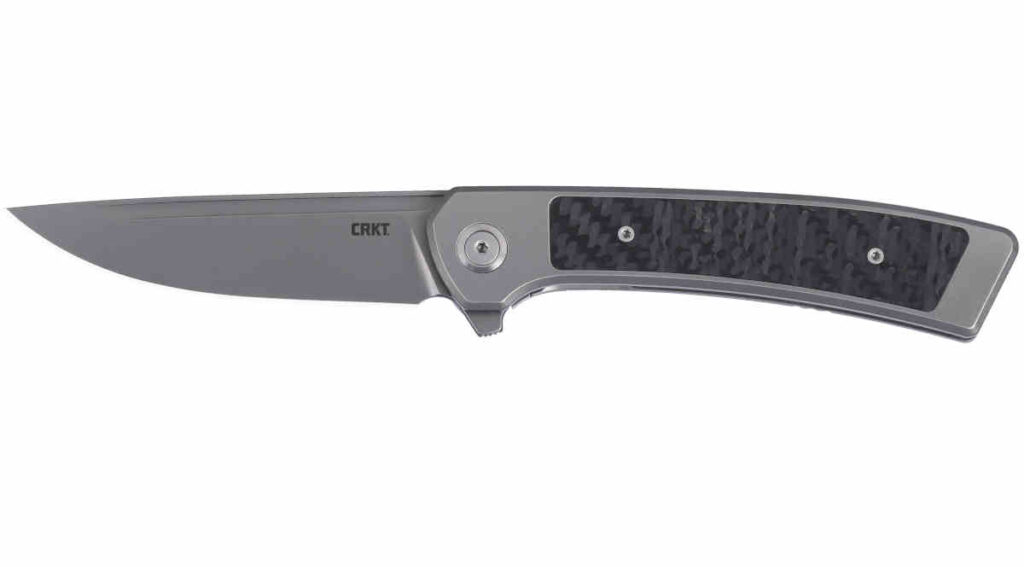
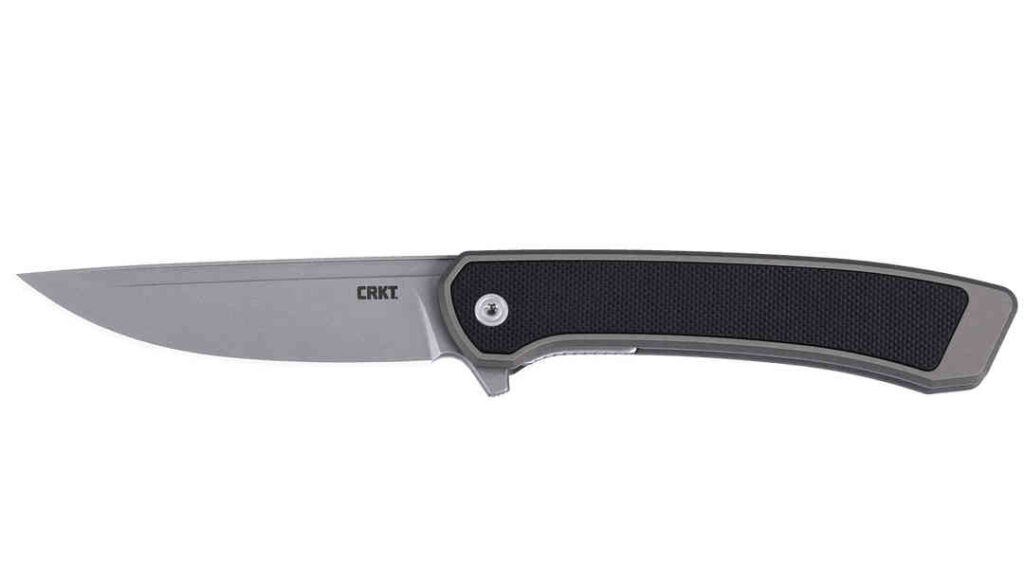
The limited-edition Q—based on Roger’s custom knife of the same name—has everything you want in a small-batch knife—chief among them, top-notch materials. The frame lock marries a titanium handle with carbon fiber inlay with a 3.31-inch MagnaCut steel blade. The lines on the drop-point knife are positively dialed in, with the point of the blade directly aligning with the pocket clip when deployed. The blade is put into action via a kicker. Topping off the Q is a floating backspacer that adds a splash of detail and hints at the knife’s premium nature, but otherwise, the Q remains perfectly understated. MSRP: $225.

CRKT Q Compact

q compact

Dang near identical to the Q, the compact model is simply scaled down for easier EDC carry. At 4 inches closed and only 2 ounces in weight, it fits the bill as an easy-to-tote option. The materials are different from the full-sized model, with an S35VN blade and a lightweight aluminum handle with G10 inlay. As well as, the small fry is also a liner lock. MSRP: $195.

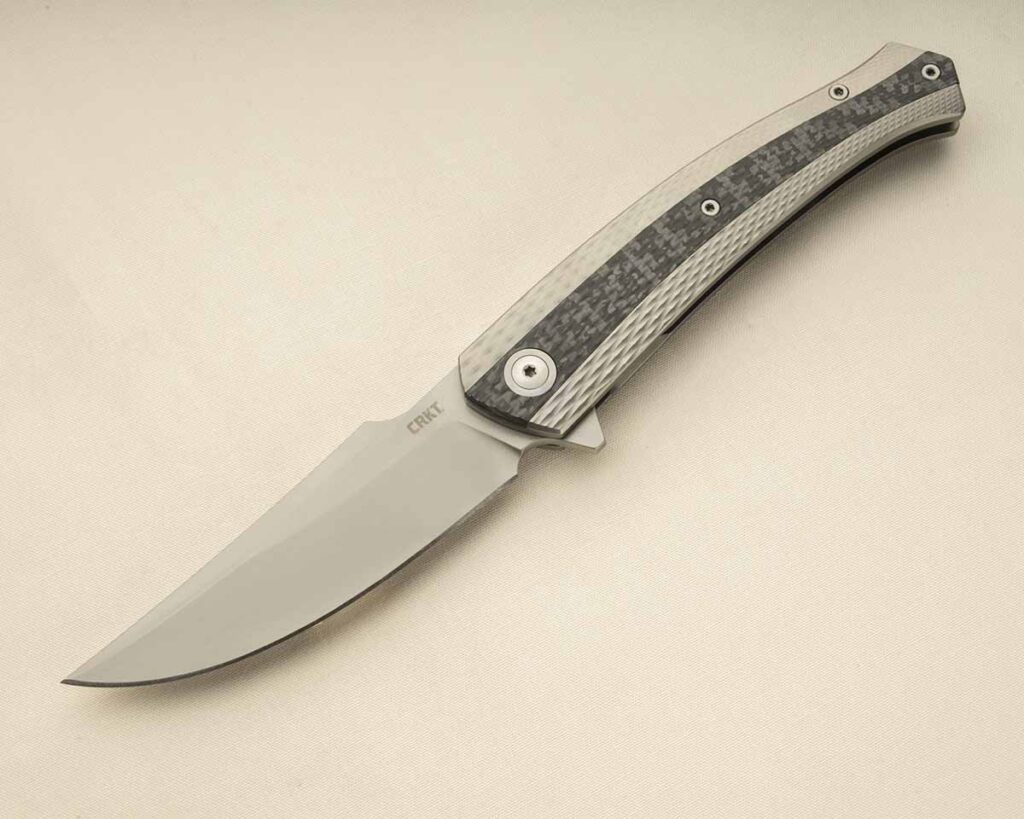
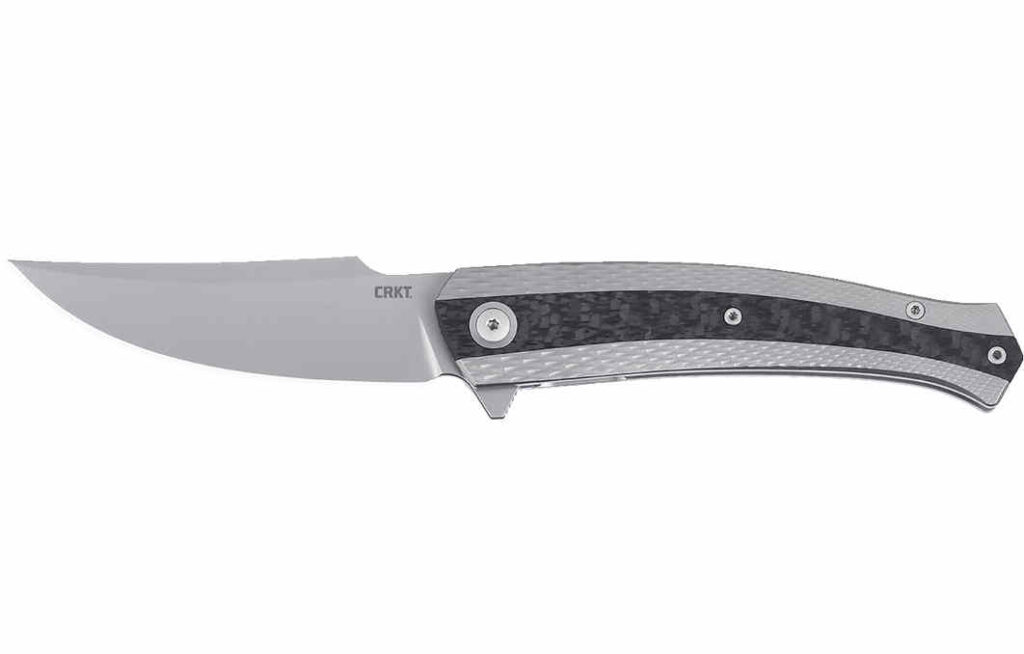
CRKT Persian

CRKT Persian

Building on a fan-favorite Rogers classic, the upgraded Persian takes all the great features of the original and cranks them up a notch. The blade’s new “harpoon Persian” shape is eye-catching, and it’s crafted from tough MagnaCut steel, known for its superior strength, wear resistance, and corrosion protection. The titanium handle is lightweight, with a cool milled pattern inspired by Richard’s custom design. Made in Italy by Lionsteel Knives, this limited-edition folding knife is a must-have for collectors. MSRP: $275.

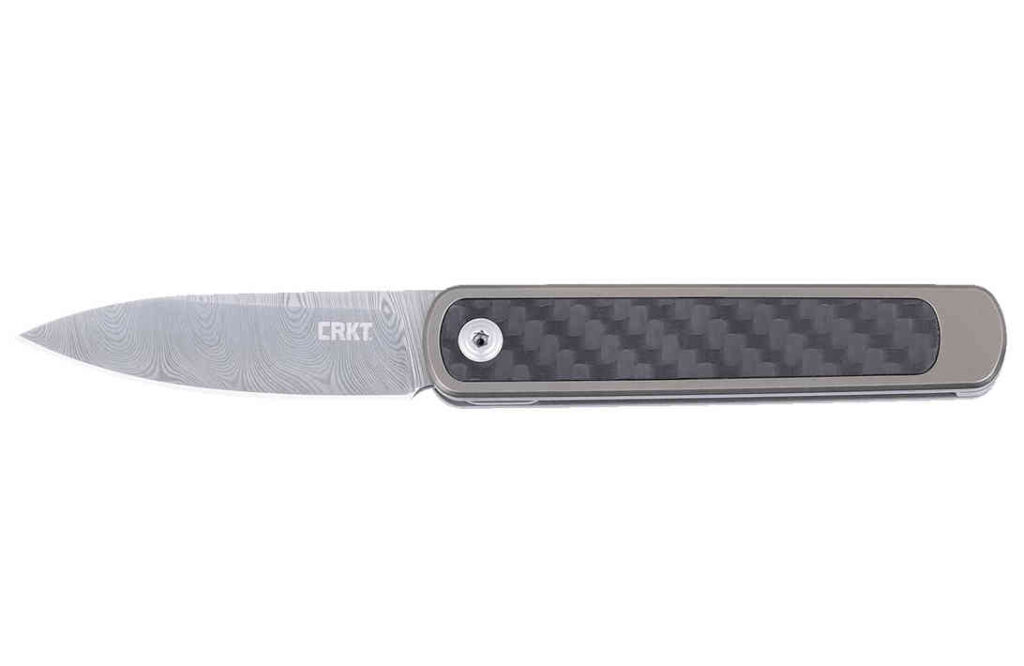
CRKT Pup

CRKT Pup

After the success of his CEO folding knife, Richard Rogers is back with the Pup, a compact everyday carry with smooth, rounded edges that slip easily into a pocket or purse. Built for modern life, it’s unobtrusive but ready to perform. The Pup comes in two models: a flipper with IKBS™ bearings, an AUS 10 steel blade, and a glass-reinforced nylon handle, or an Italian-made slip joint with a Super Dense Twist™ Damasteel® blade and a titanium handle with carbon fiber inlay for strength and style. MSRP: $70 and $275 respectively.
 

Check Out Our Knife Reviews:

Advertisement

Must Read Articles

Read this before you make a knife

Knifemaking 101 – Read This Before You Make a Knife

  by Wayne Goddard My experience has taught me that there's nothing like digging in and getting started. I've often said the hardest part of the...
how to forge damascus steel

How to Forge Damascus

Advertisement
Advertisement