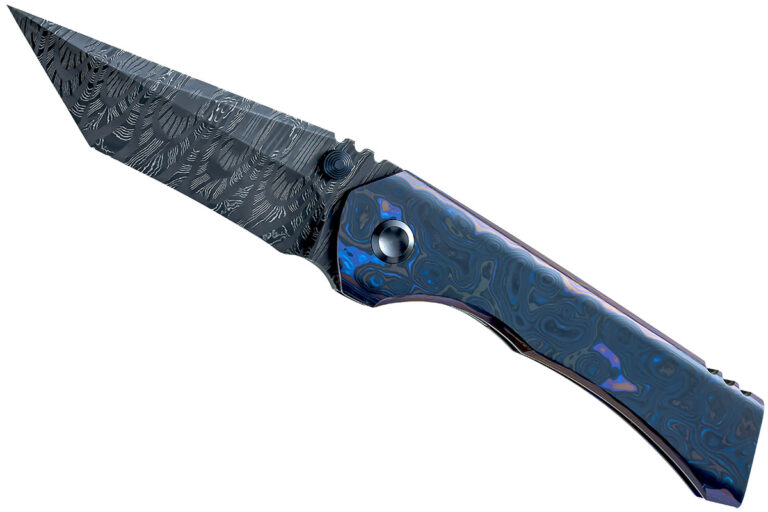
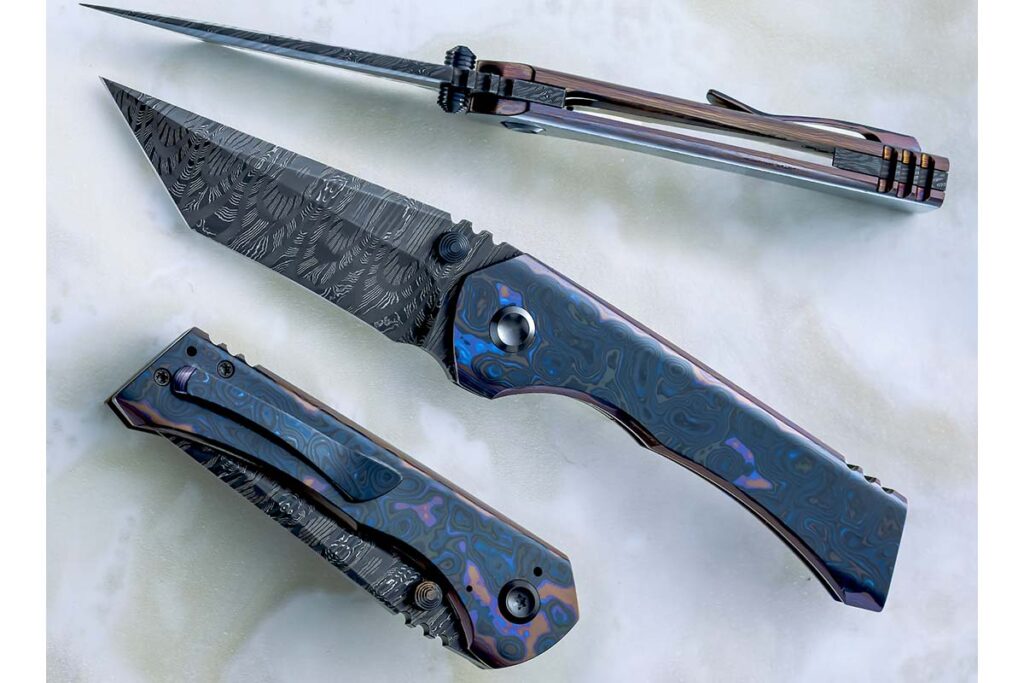
Not one of his everyday builds, the Taka v2s by Brian Brown features a notable blade, handle and lock.
Brian Brown likes a good, pointy tanto.
“It’s kind of a straight hollow grind all the way from the choil to the tip in a climbing grind,” he explained of the blade on his Taka v2s dress tactical folder. Grinding it that way helped him keep the blade extremely thin from the recurve edge to the tip. “You’ve got to be really careful [at the edge] because that’s gonna be the lowest spot where it gets thinnest the fastest—and I’ve burned through them before,” he noted.
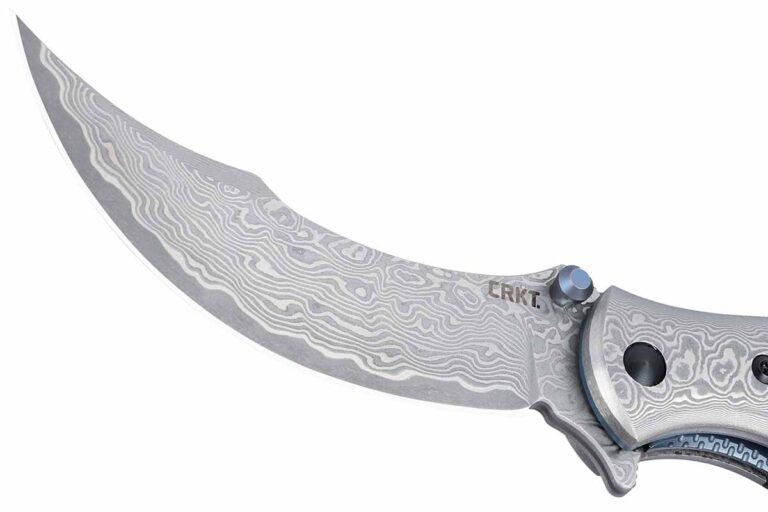
Brian Brown said he had to be careful grinding/removing the top layer of the Black Top Timascus™ handle material by Alpha Knife Supply or he would expose too much of the titanium and change the color—somewhat visible here on the spine. The 3.125-inch blade is FireClone 2 forged by Mike Norris, which Brian lauded as some of the best stainless damascus anywhere. Closed length: 4.375 inches. (SharpByCoop knife image)
Only the second one he’s done, the folder’s linerlock-like inset lock enabled him to use the fancy handle material paired with a straight, solid piece of Grade 5 titanium for the lockbar. There are several more steps involved but the upshot is the scales are symmetrical as with a linerlock—a symmetry Brian prefers to that of a framelock. Plus, the inset lock results in a thinner handle than with a linerlock because the lock side must be relieved to make room for the lockbar.
Have a hankering to extend your wish list with a little something new? Look no further as we’ve gathered up a slew of new custom and factory blades fresh on the market and ready to please. This collection has a definite tactical and outdoor tilt to it, with plenty of fixed blades. But, we’ve snuck a few worthy folders in just to keep the balance.
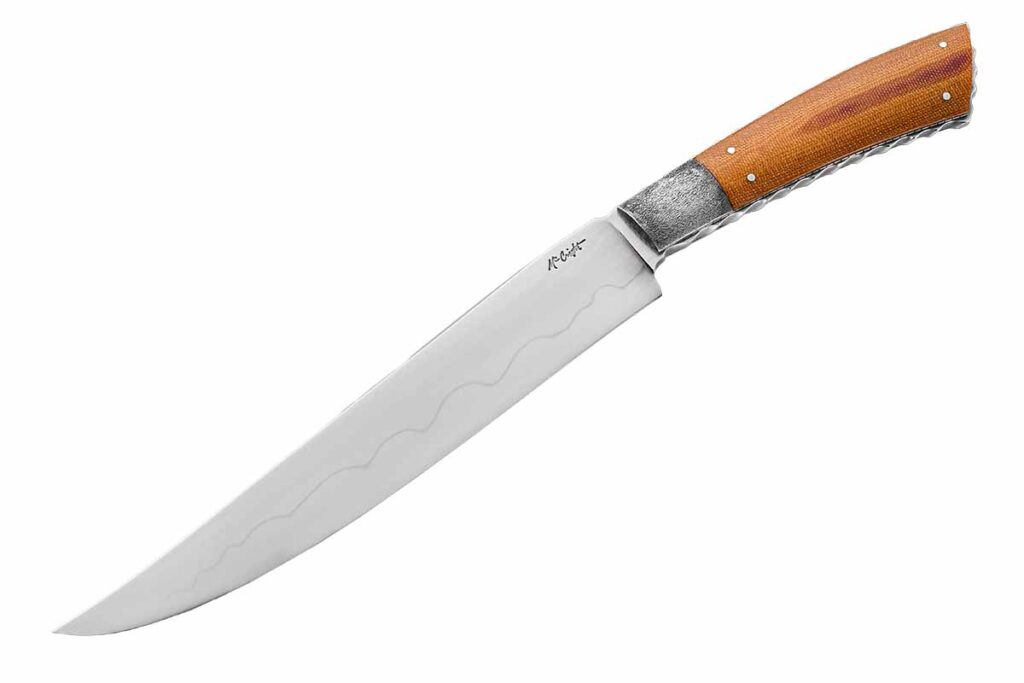
Erik McCright Fighter
Fighter Specs Blade length: 7.5” Blade material: Old W2 tool steel w/hamon Handle material: Vintage Micarta® w/a fileworked frame Bolster: Textured mild steel Overall length: 12” Knife to know: Erik McCright is an ABS journeyman smith Maker: Erik McCright (Jocelyn Frasier image)
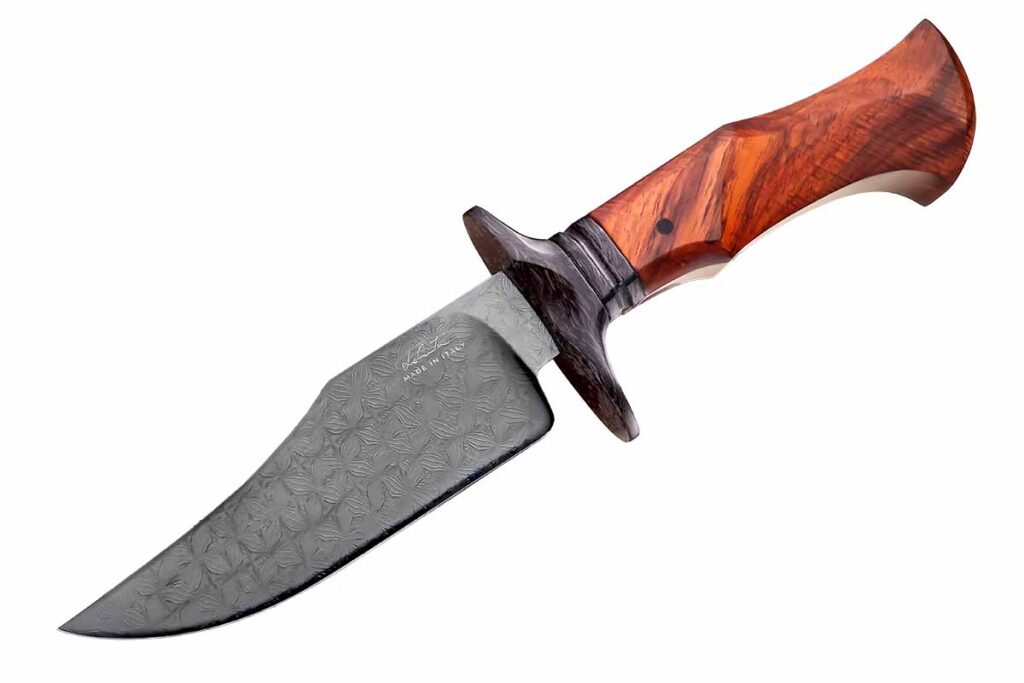
Simone Milanesi Lacantina Indy
Indy Specs Pattern: Bowie Blade length: 6.29” Blade material: Mosaic damascus of K720 tool and 15n20 nickel-alloy steels forged by Spina Gianluca Blade grind: Full flat Blade finish: DLC (diamond-like carbon) Handle material: Rosewood w/carbon pin Guard & fittings: Fat Carbon Overall length: 11.6” Maker’s price for a similar knife: $2,000 Knife to know: Simone Milanesi Lacantina’s Indy won The Knifemakers’ Guild Best Bowie Award at BLADE Show 2023 Maker: Simone Milanesi Lacantin (SharpByCoop image)
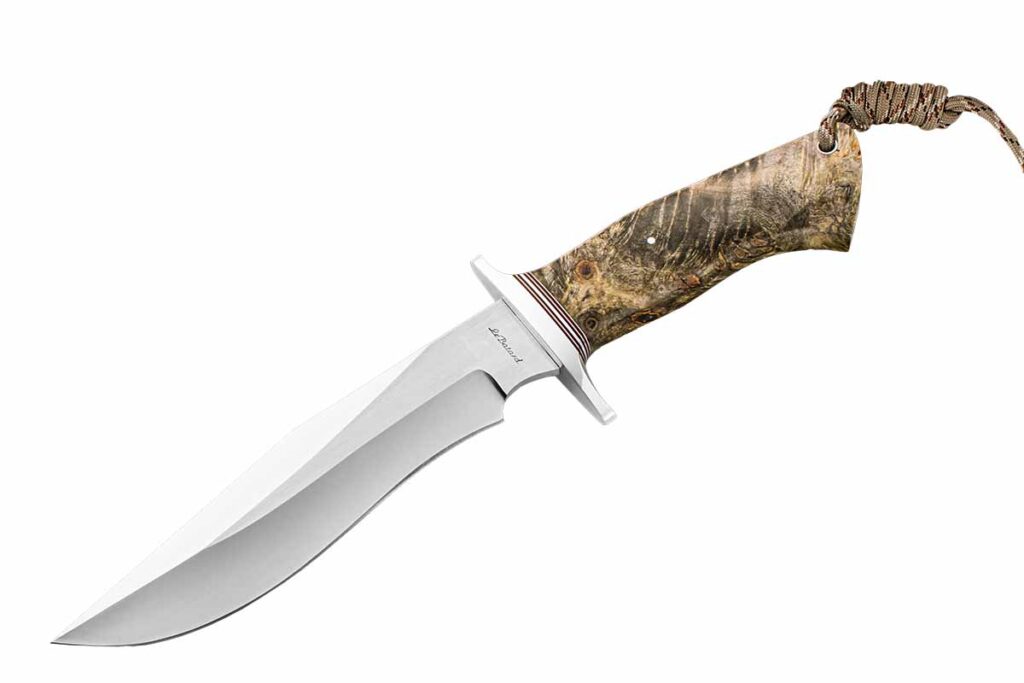
Paul LeBatard Recurve Bowie
Recurve Bowie Specs Blade length: 7” Blade steel: CPM 154 stainless Rockwell hardness: 61 HRC Blade grind: The top false edge and primary bevels are hollow ground on a 10” contact wheel and satin polished; the flats are hand finished to 800 grit Blade @ thickest: 3/16” Handle material: California buckeye burl Lanyard material: Desert camo 550 paracord Double guard: 7075-T6 aluminum Overall length: 12” Maker’s price for a similar knife: $750 Maker: Paul LeBatard (Jocelyn Frasier image)
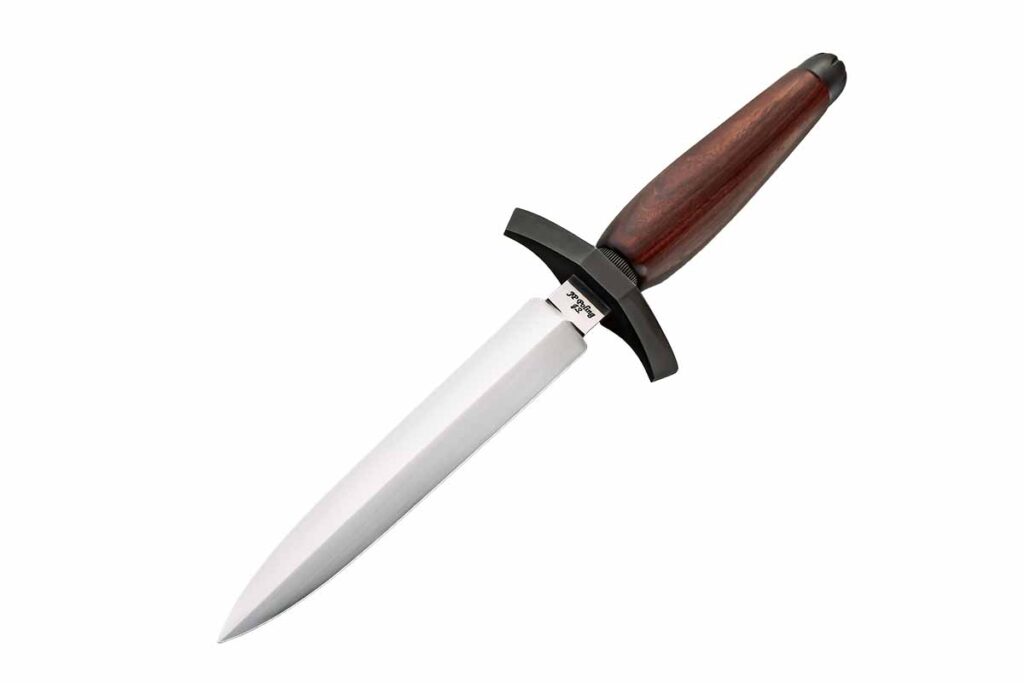
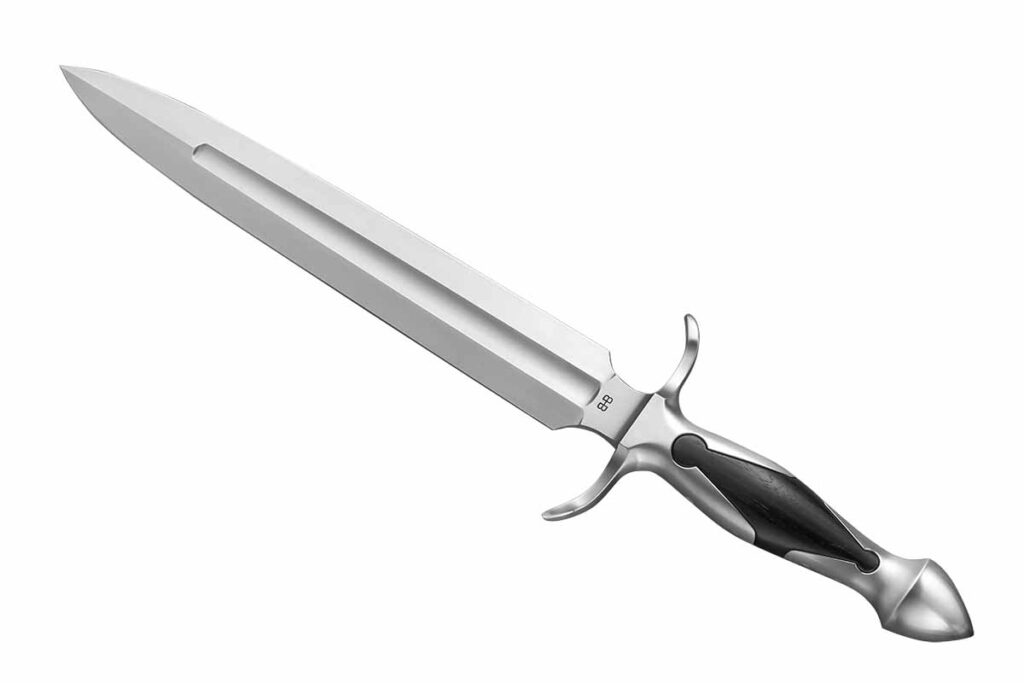
Jim Poling Dagger
Dagger Specs Blade length: 6.5” Blade material: 5160 carbon steel Blade grind: Flat/convex Handle material: Rosewood Fittings: Mild steel Overall length: 12” Maker’s price for a similar knife: $600 Maker: Jim Poling (SharpByCoop image)
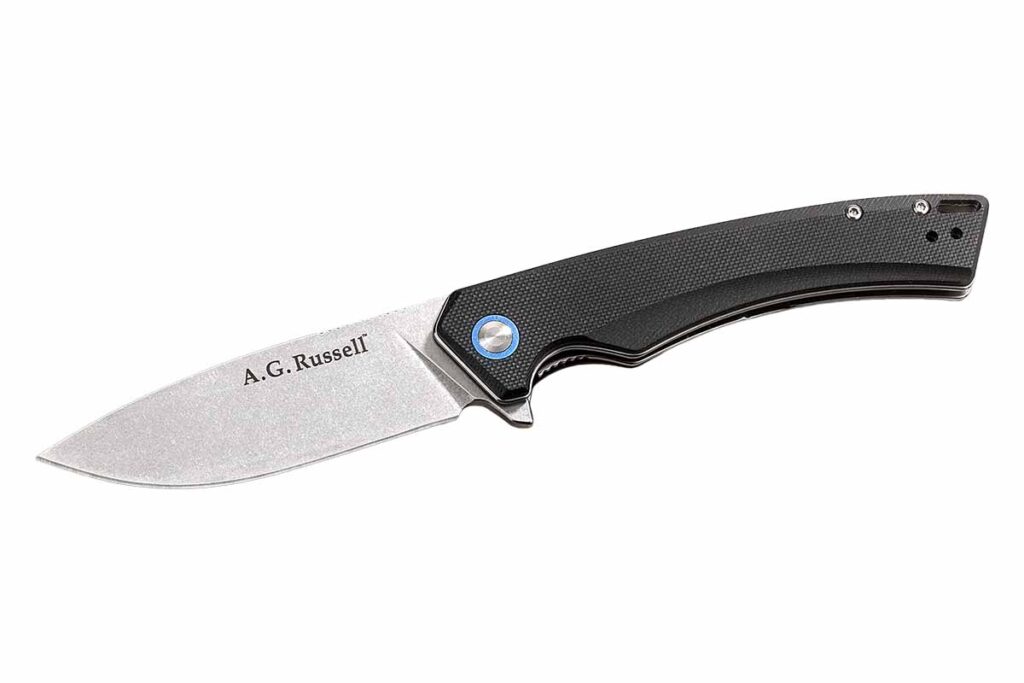
A.G. Russell Knives Power Ball C2
Power Ball C2 Specs Knife type: EDC Blade length: 33/8” Blade material: D2 tool steel Rockwell hardness: 59-60 HRC Blade finish: Stonewash Blade pattern: Drop point Handle: Black G-10 w/blue pivot accent ring Pocket clip: Reversible, deep carry Lock: Linerlock Weight: 3.7 ozs. Closed length: 4.75” Knife to know: Also available in a green handle w/orange pivot accent ring Country of origin: China MSRP: $67.95 Company: A.G. Russell Knives
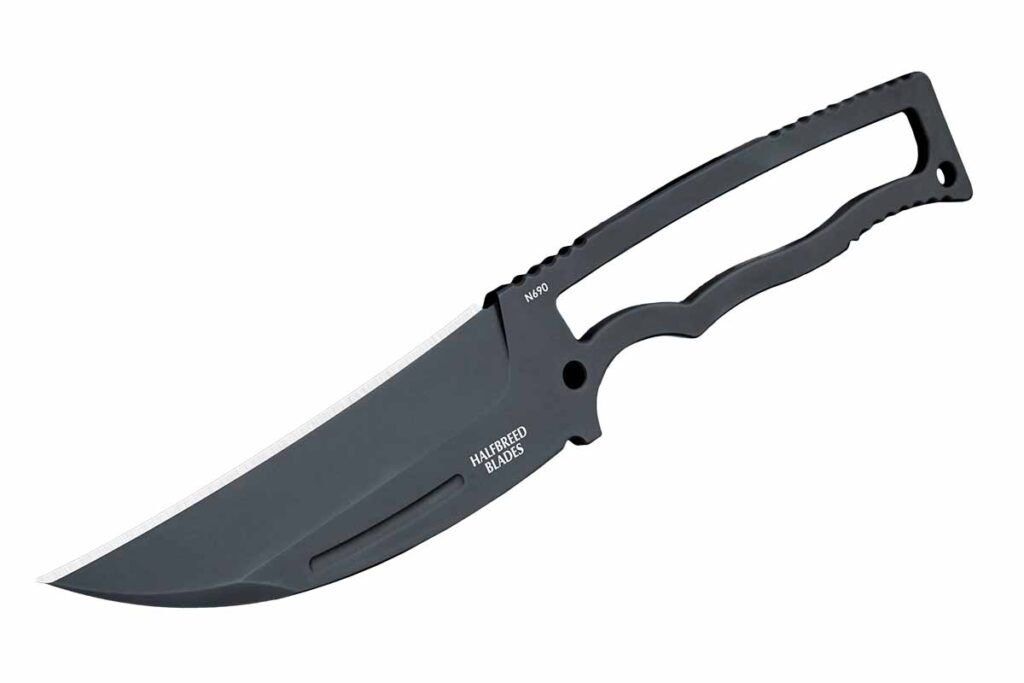
Halfbreed Blades CFK-02 (Compact Field Knife)
CFK-02 (Compact Field Knife) Specs Knife type: Fixed blade Blade length: 4.01” Blade steel: N690 stainless Rockwell hardness: 59-60 HRC Blade @ thickest: .16” Blade finish: PVD coated and stonewash options Blade pattern: Pikal Handle steel: VG-10 stainless Weight: 4.87 ozs. Overall length: 8.07” Sheath: Injection-molded plastic Mounting: Ulticlip and DOTS Belt Countries of origin: Australia and Taiwan MSRP: $275 Company: Halfbreed Blades
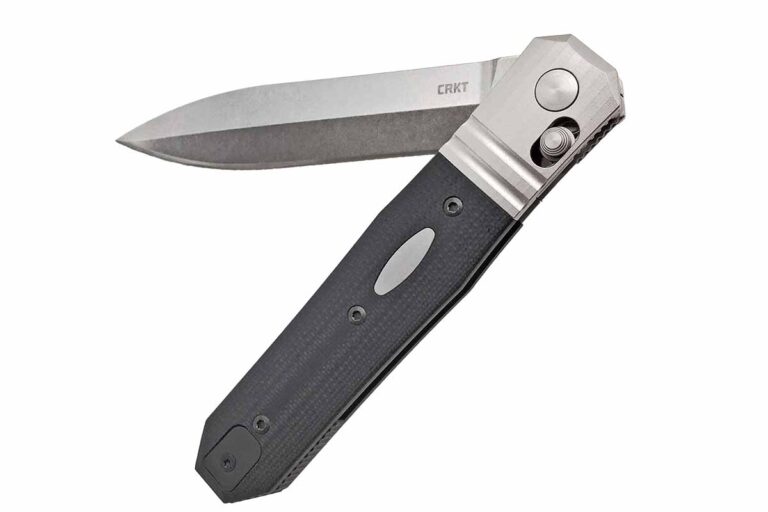
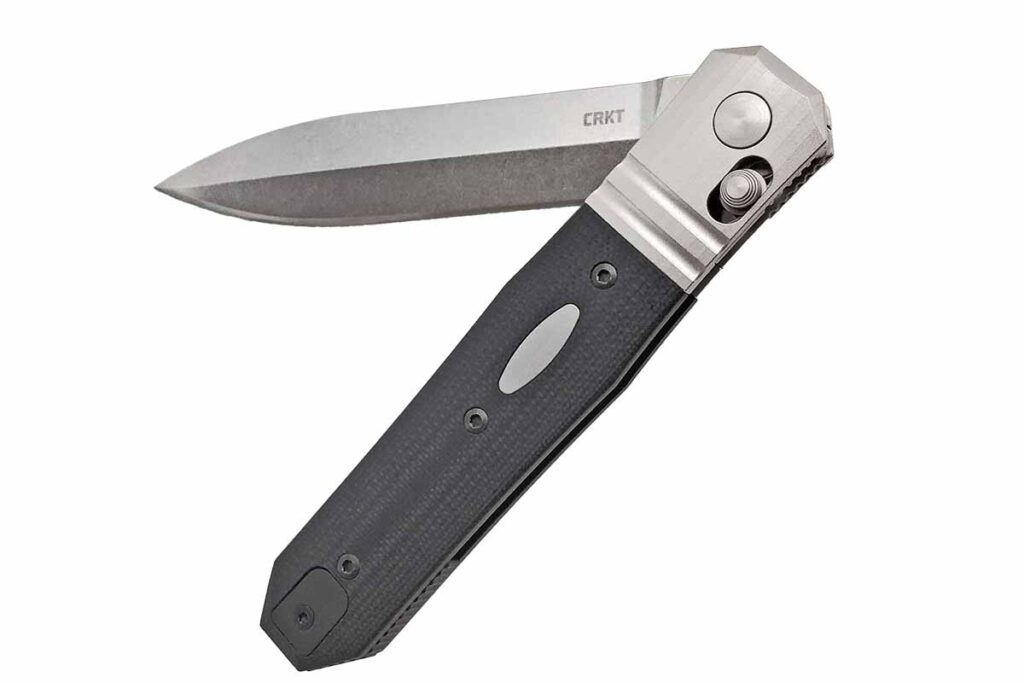
CRKT Redemption
Redemption Specs Designer: BLADE Magazine Cutlery Hall-Of-Fame® member Ken Onion Blade length: 4.06” Blade steel: MagnaCut stainless Blade @ thickest: .15” Blade finish: Stonewash Handle material: G-10 Bolster: Stainless steel Lock: Crossbar Weight: 4.9 ozs. Closed length: 5.1” Knife to know: The Redemption is based on Onion’s Deadman’s Hand custom knife named after the aces-and-eights hand Wild Bill Hickok purportedly held at the time of his death Country of origin: Made in the USA in collaboration w/Hogue Knives MSRP: $225 Company: CRKT
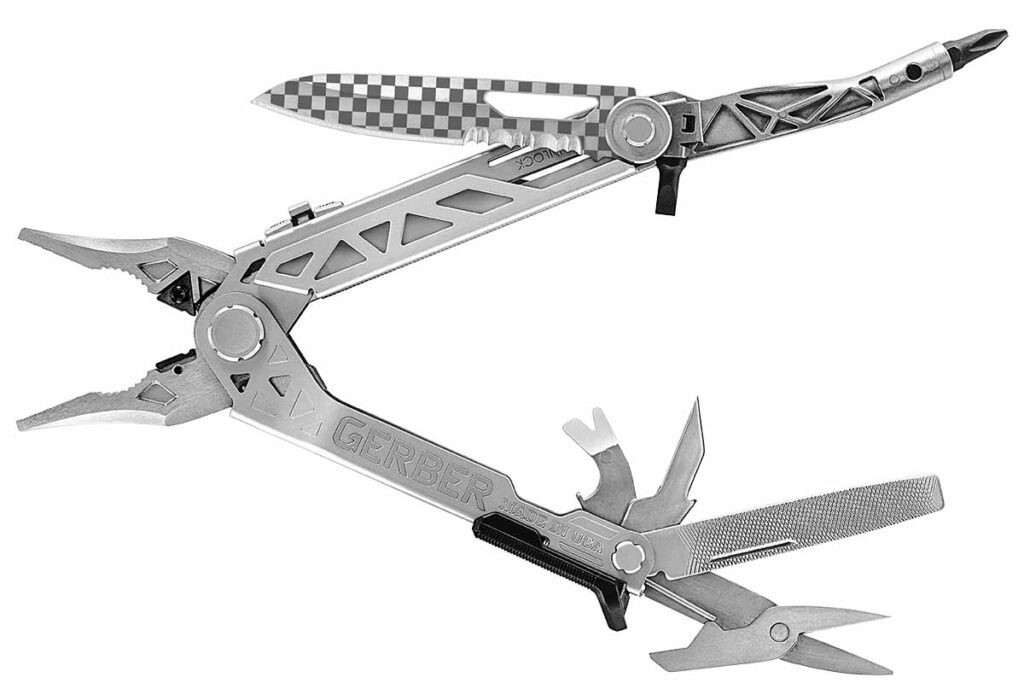
Gerber Center Drive
Center Drive Specs Knife type: Multi-tool Blade length: 3.25” Blade steel: 420HC stainless Implements: Serrated blade, file, awl, pry tool w/nail puller & bottle opener, scissors, fine- & coarse-sided file, pliers, rotatable carbide wire cutters & strippers; magnetic flathead and Phillips bits; in/cm ruler Weight: 9.5 ozs. Closed length: 4.7” Sheath: Fabric Knife to know: One-thumb opening system; the pliers are spring-loaded; magnetic 3.2” Center-Axis bit driver; tool lock Country of origin: USA (sheath made in China) MSRP: $130-$145 Company: Gerber
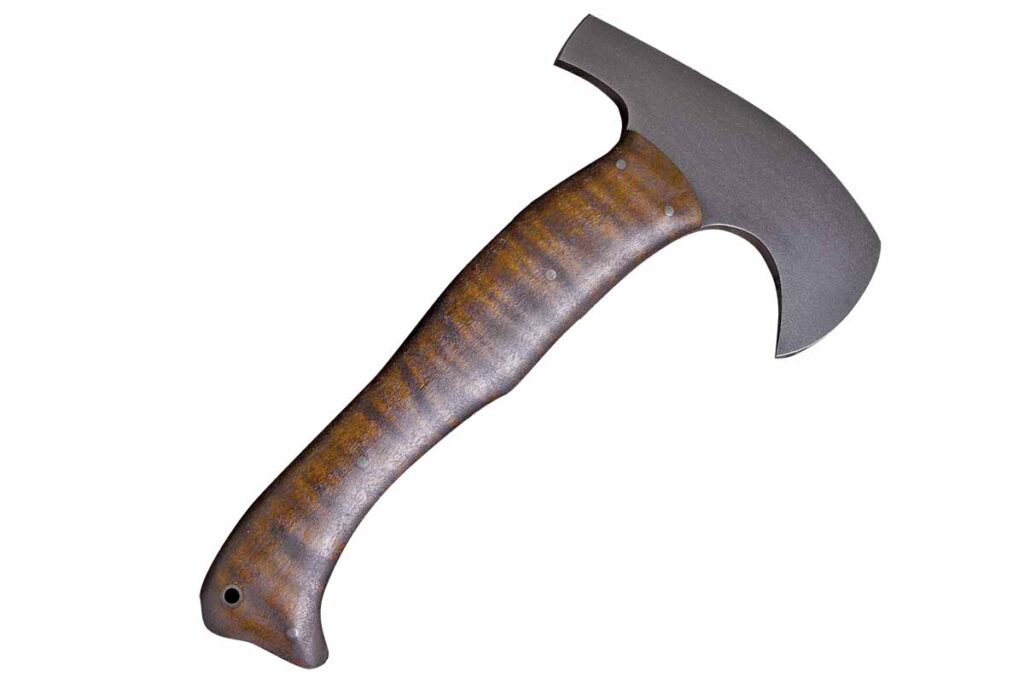
Winkler Knives WK Hunter Axe LT
New LeBatard Head length: 4.75” Axe material: 80CrV2 carbon steel Blade @ thickest: .25” Blade finish: No-glare black oxide Handle: A wide variety of natural and synthetic options; contact maker for info Construction: Skeletonized full tang Overall length: 9” Sheath: Fast-draw carrier, lined Boltaron®, HD shockcord quick-release retention system, nylon belt straps, multi-carry options Country of origin: USA MSRP: $450 Company: Winkler Knives
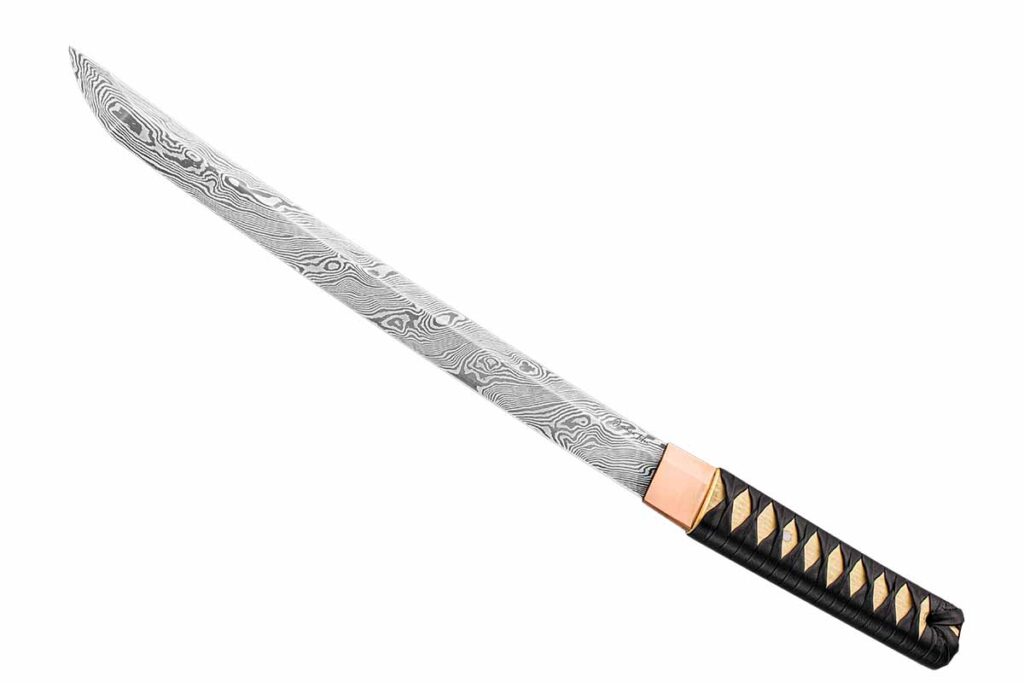
Jesse Hu Tanto
Tanto Specs Blade length: 12” Blade material: Twist Damascus of 1084 carbon and 15N20 nickel-alloy steels Blade grind: Traditionally ground w/a shinogi-zukuri geometry Handle material: Poplar and leather w/brass spacer Habaki (collar): Copper Overall length: 17.5” Maker’s price for a similar knife: $3,000-$4,000 Knife to know: The maker is an ABS apprentice smith Maker: Jesse Hu (Jocelyn Frasier image)
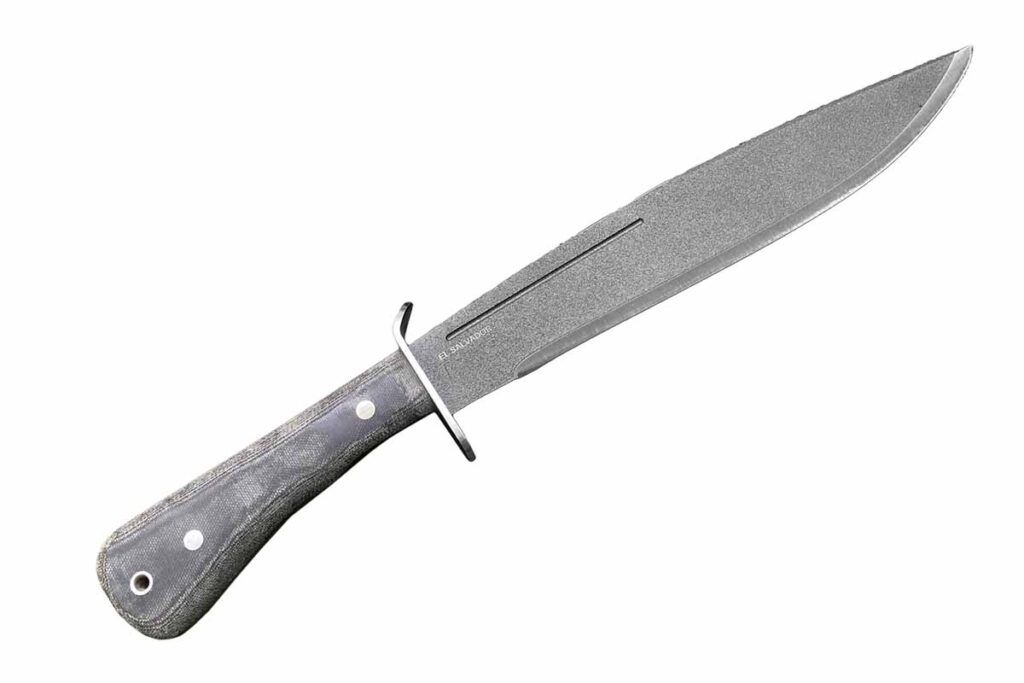
Pearson Industries MOST
MOST Specs Knife type: Fixed blade Blade length: 11.375” Blade material: 1075 carbon steel Blade finish: Black Traction powder coat Blade @ thickest: .196” Handle material: Black canvas Micarta® Construction: Full tang Weight: 24 ozs. Overall length: 17.125” Sheath: Kydex Country of origin: El Salvador MSRP: $279.95 Company: Pearson Industries
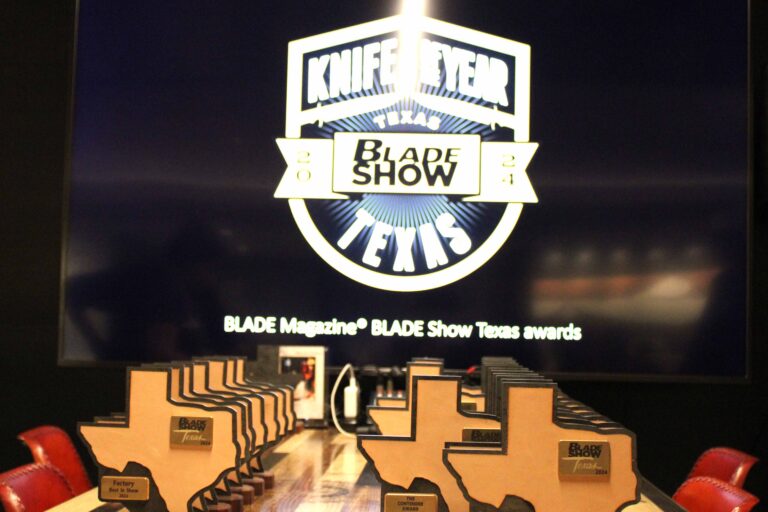
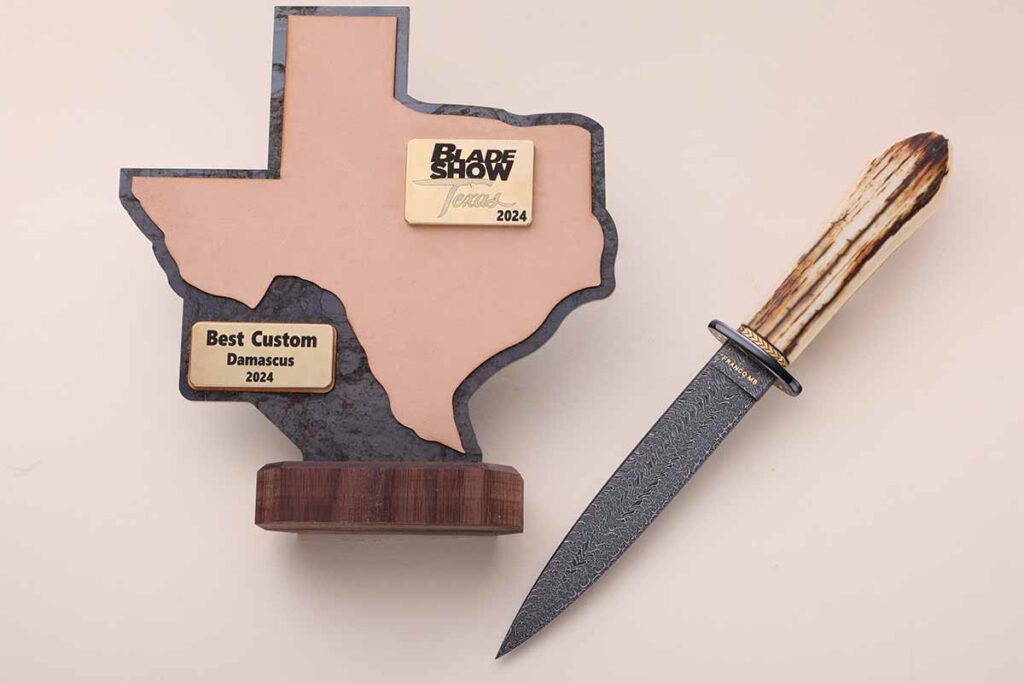
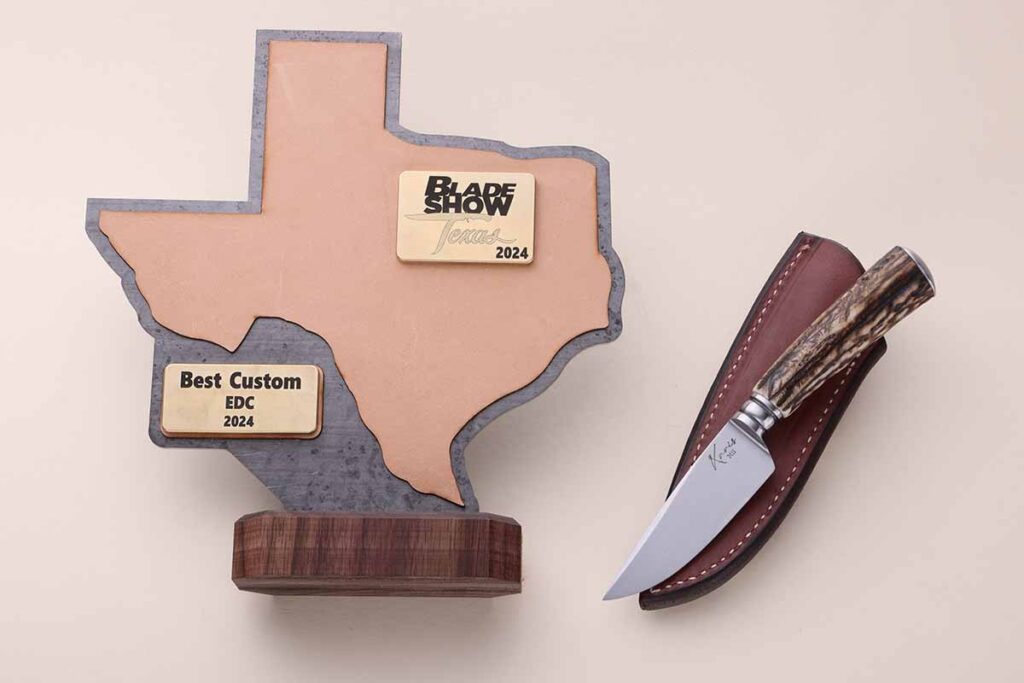
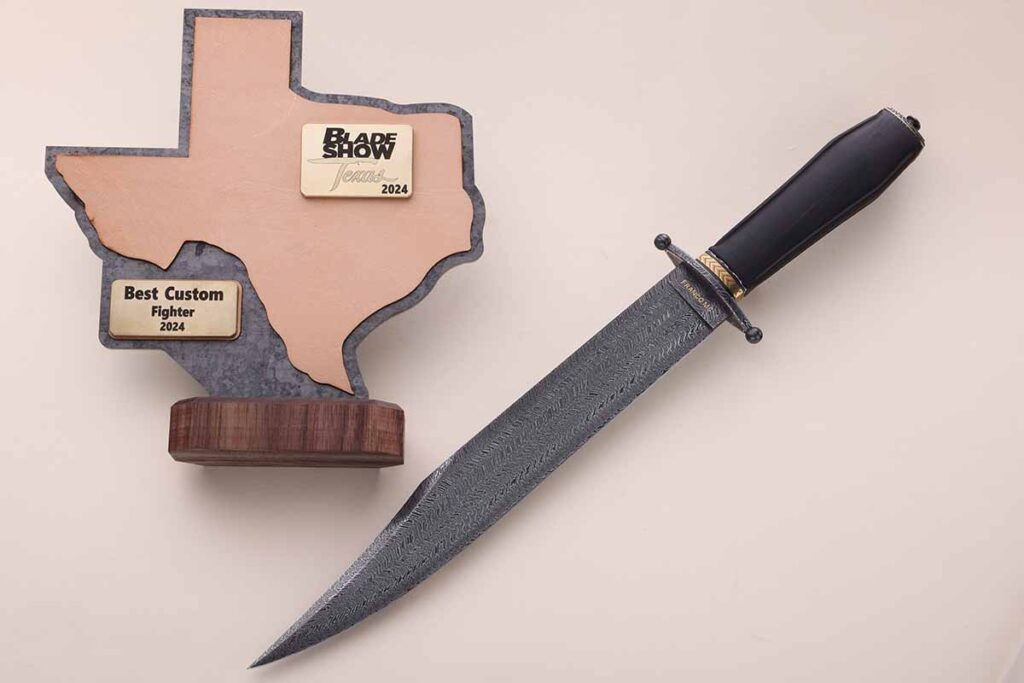
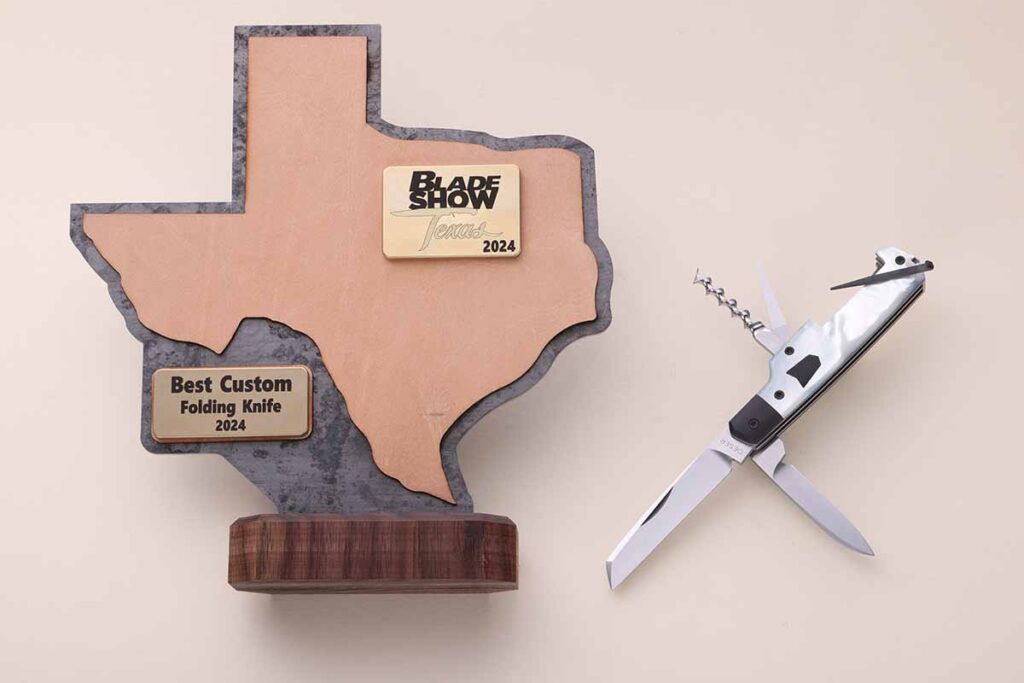
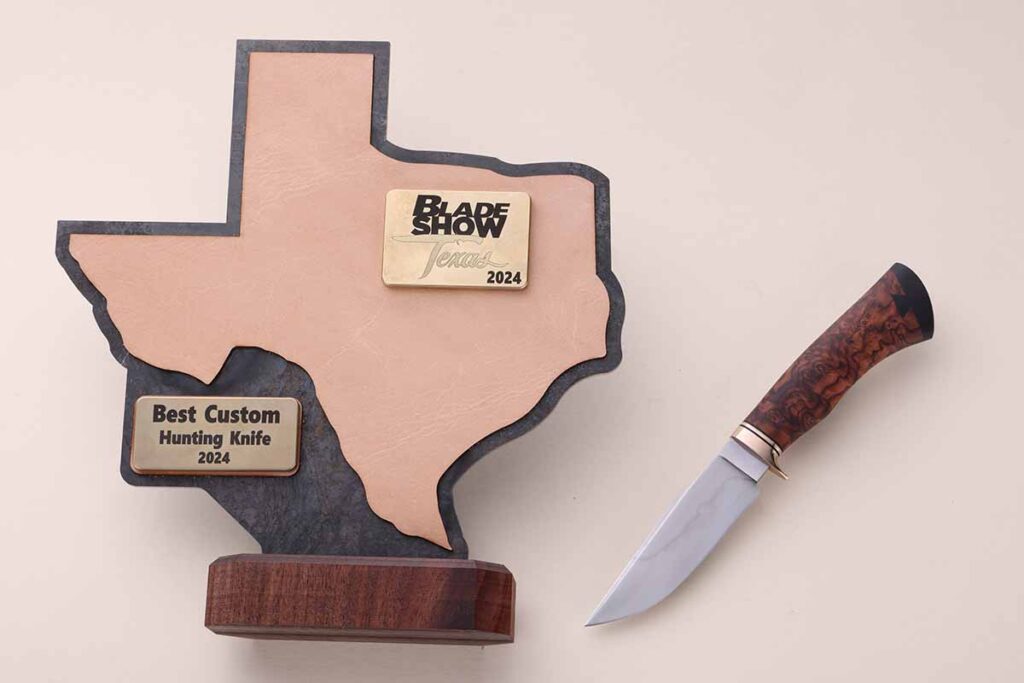
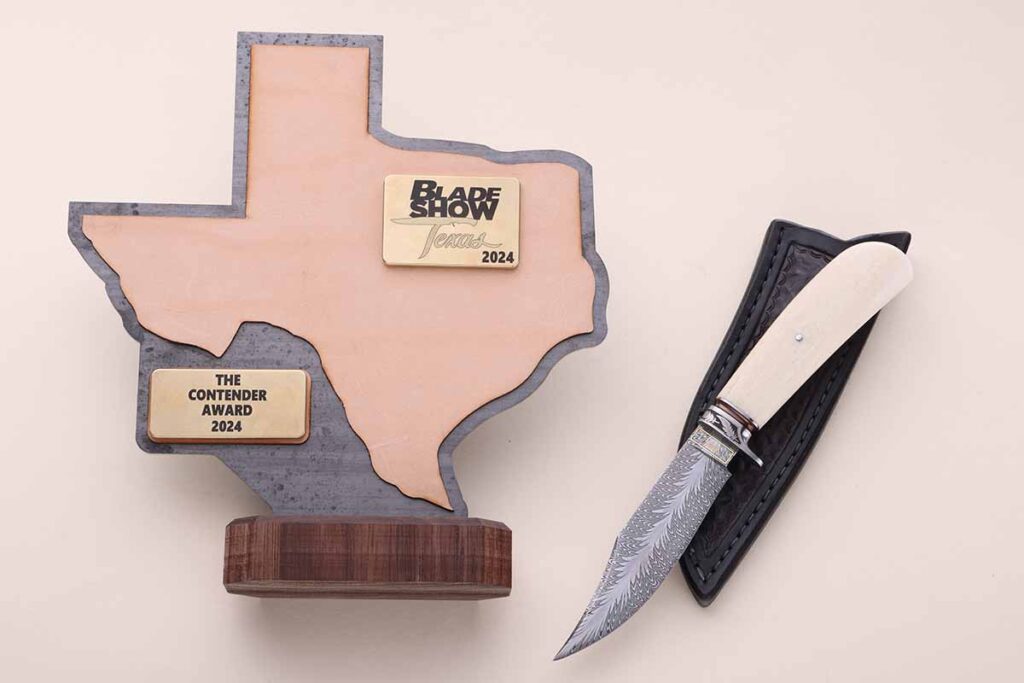
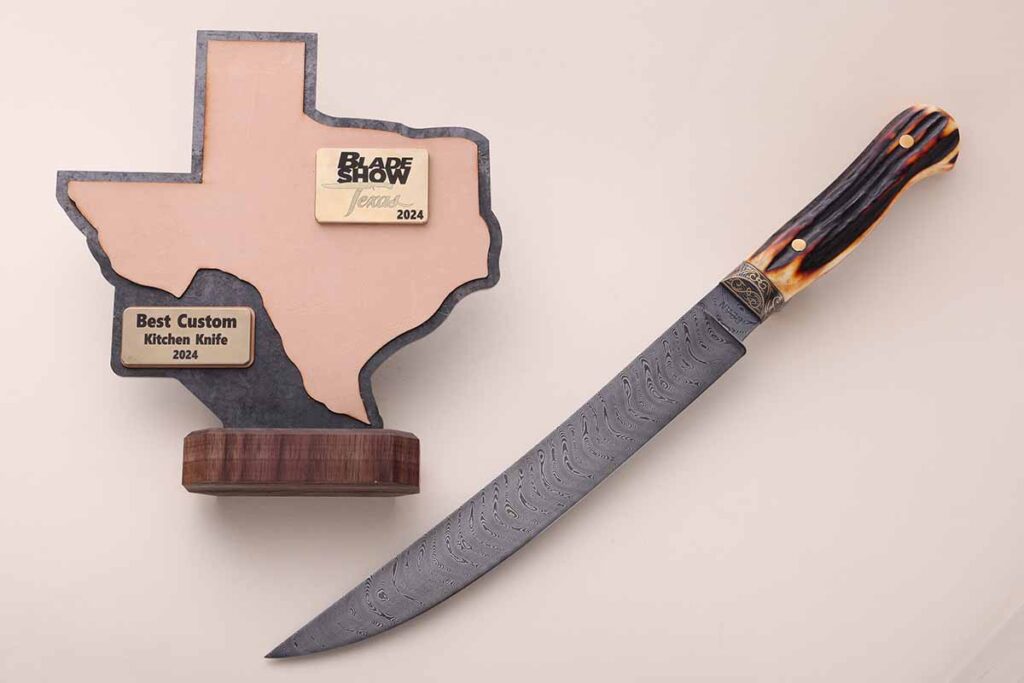
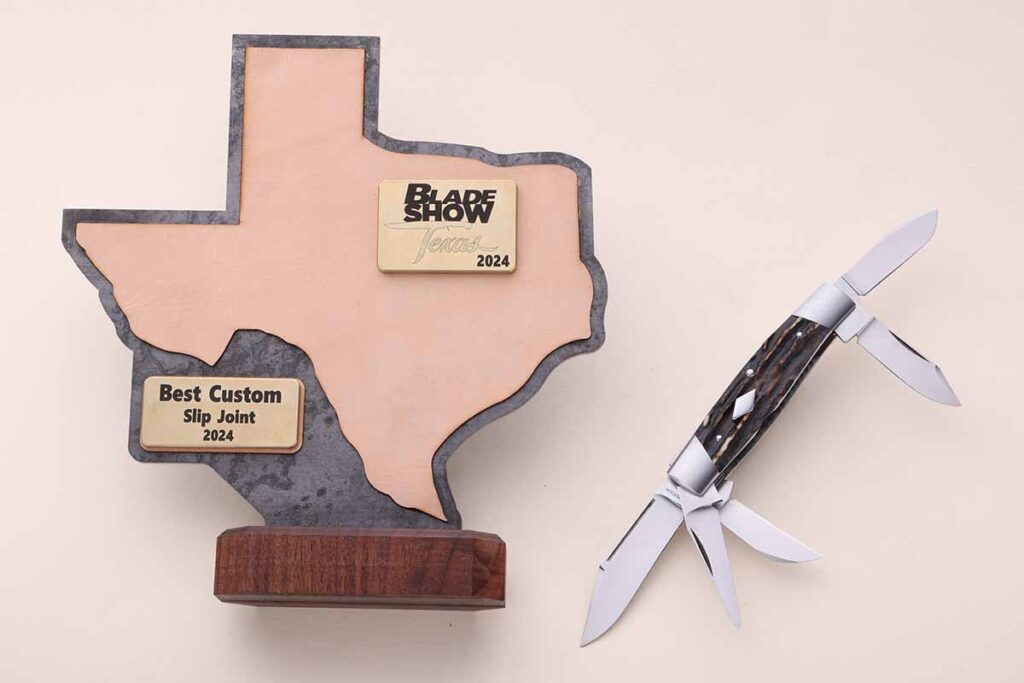
See who took home the hardware from the custom knife competition at BLADE Show Texas
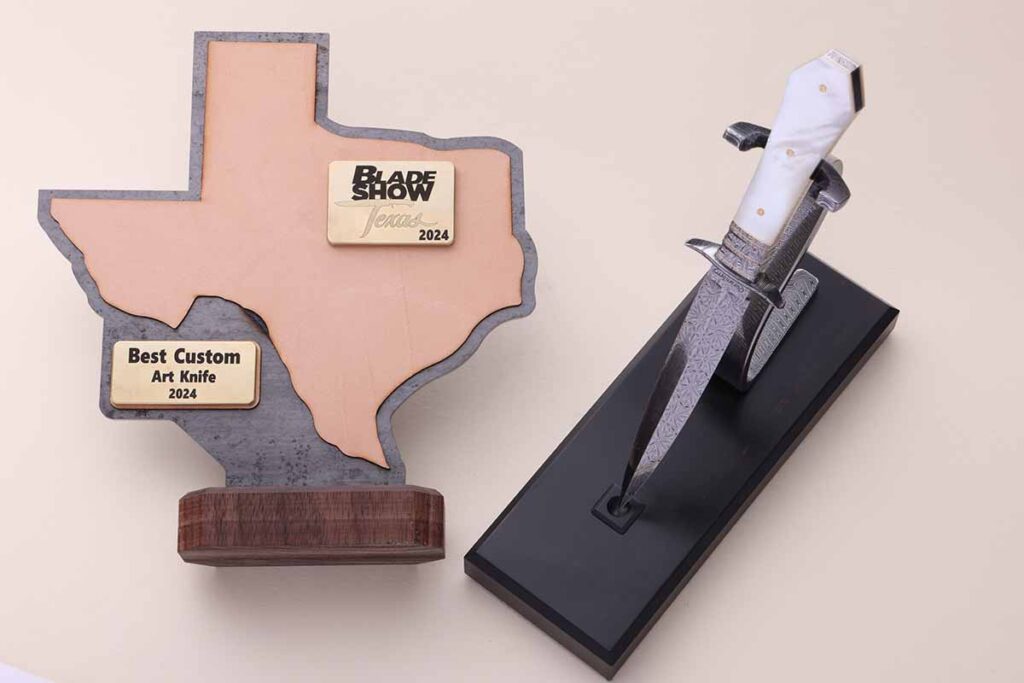
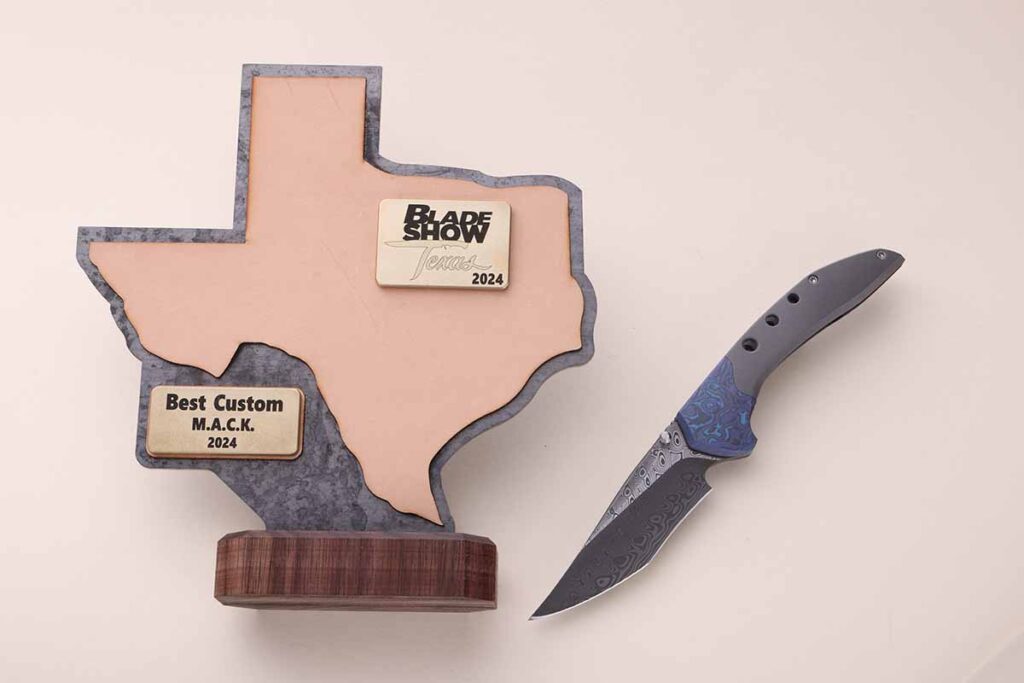
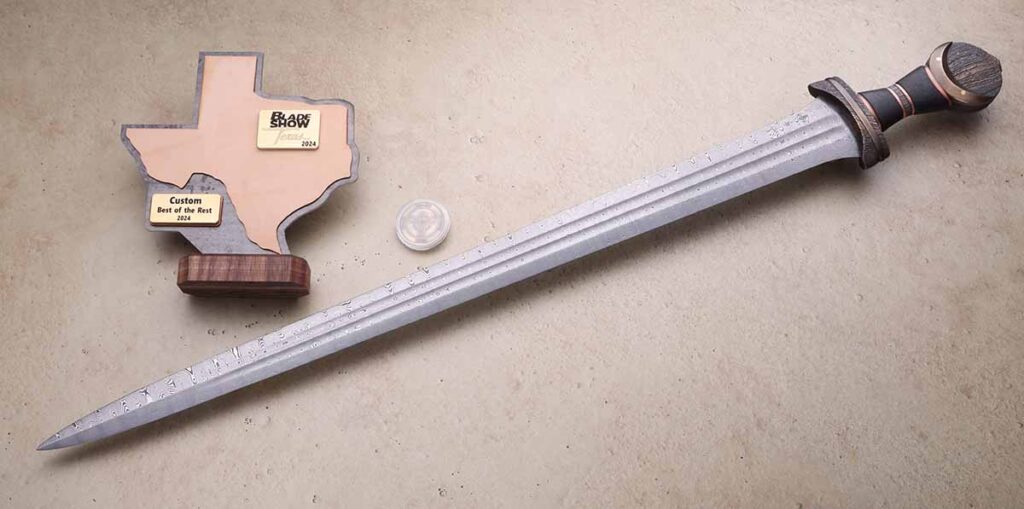
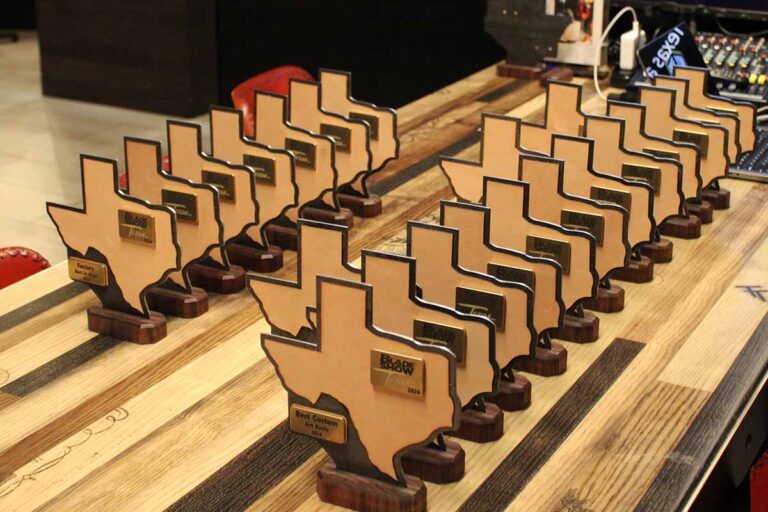
With its roots in fine custom knives, BLADE Show Texas tends to draw the top names in makers. In turn, the custom knife awards competition turns out to be a heavyweight slugfest of some of the country’s most accomplished blade artisans. The 2024 competition at the Feb. 23-24 show lived up to this expectation completely.
The judging hall buried in the catacombs of the Ft. Worth Convention Center was packed to the gills with exceptional specimens in 12 categories. To say the 3-judge panel had their work cut out is an overstatement as large as the Lone Star State itself. But after much debate and some furrowing of brows, this team of custom knife experts came up with the top picks from each category.
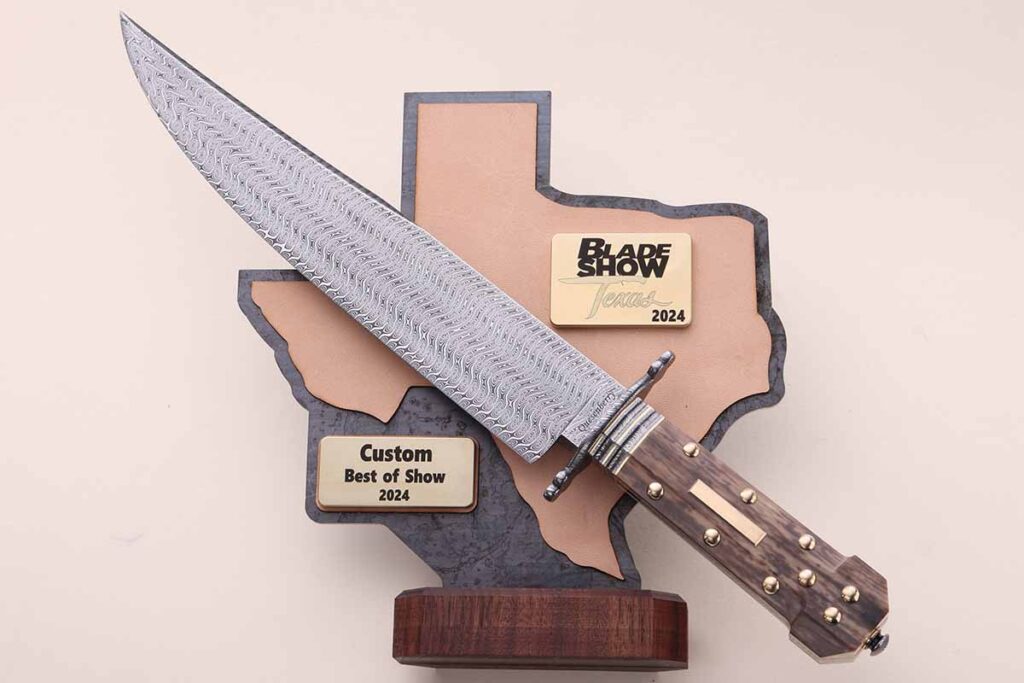
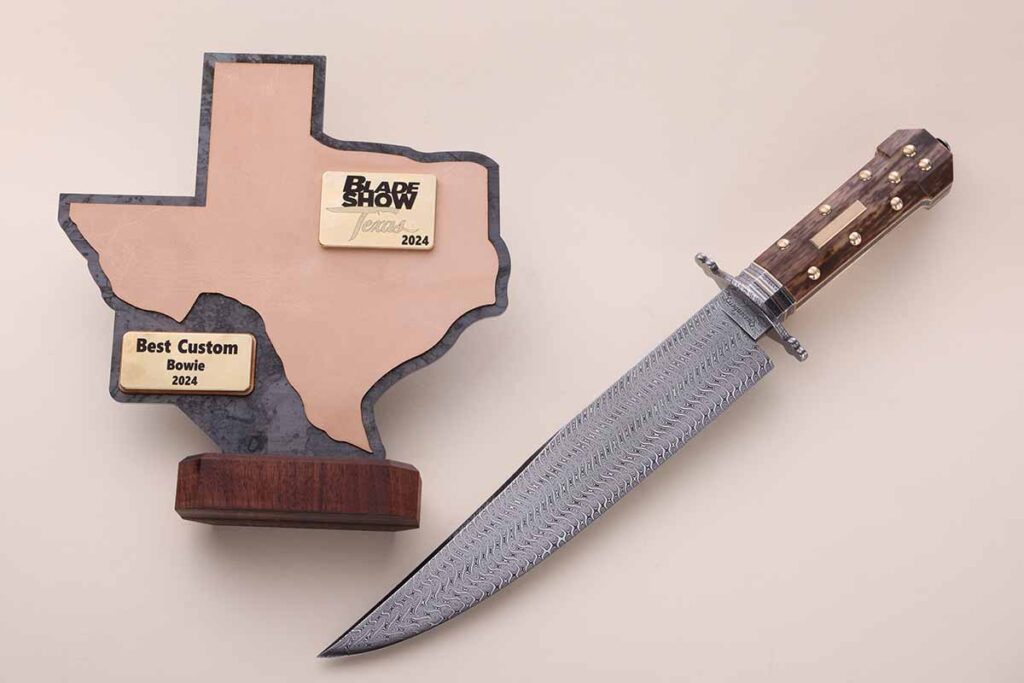
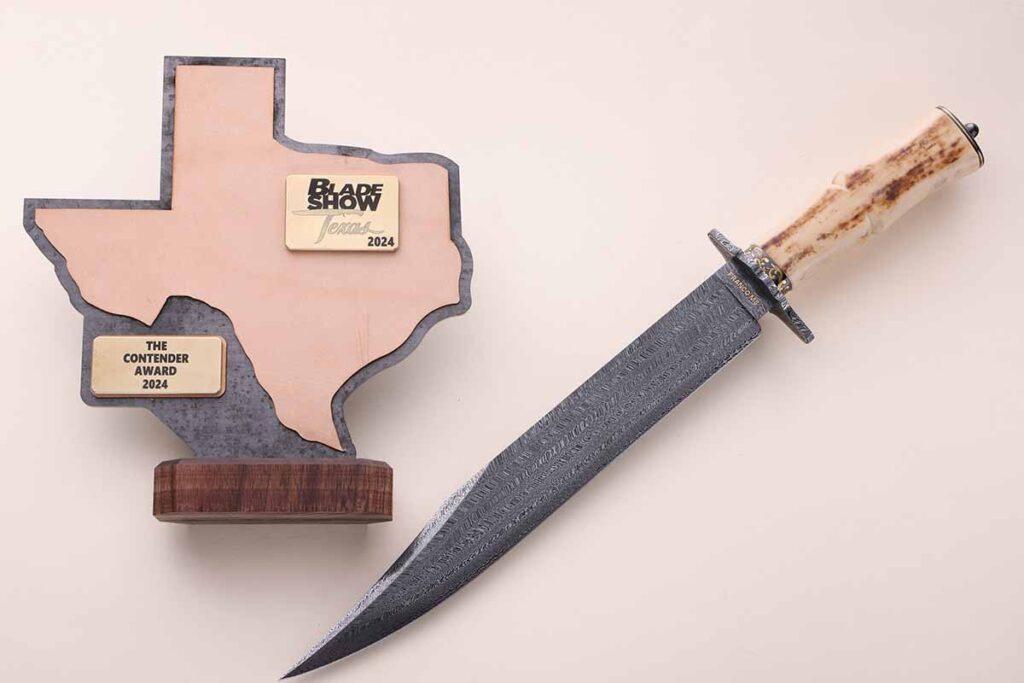
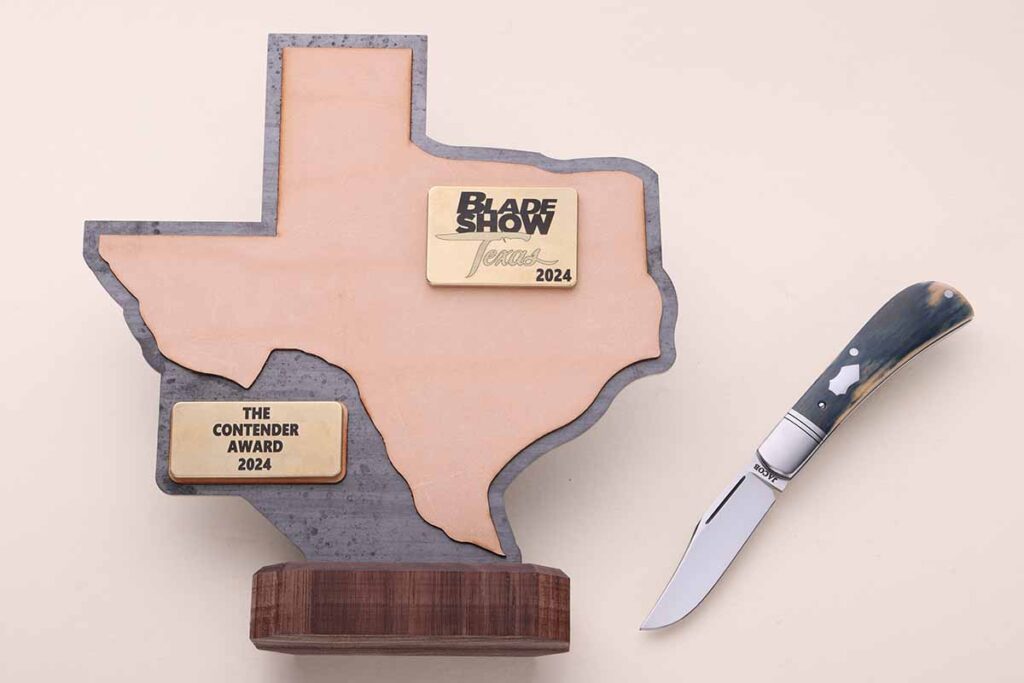
This included Best Of Show (and Best Bowie), Mike Quesenberry’s dog-gone outstanding bowie knife—a creation that sucked the air out of the room. A testament to how competitive the competition was, the judges for the first time awarded “Contender” awards in three categories for knives that were worthy of top honors, but were just edged out of the highest award.
See who took home the hardware in seven categories at BLADE Show Texas
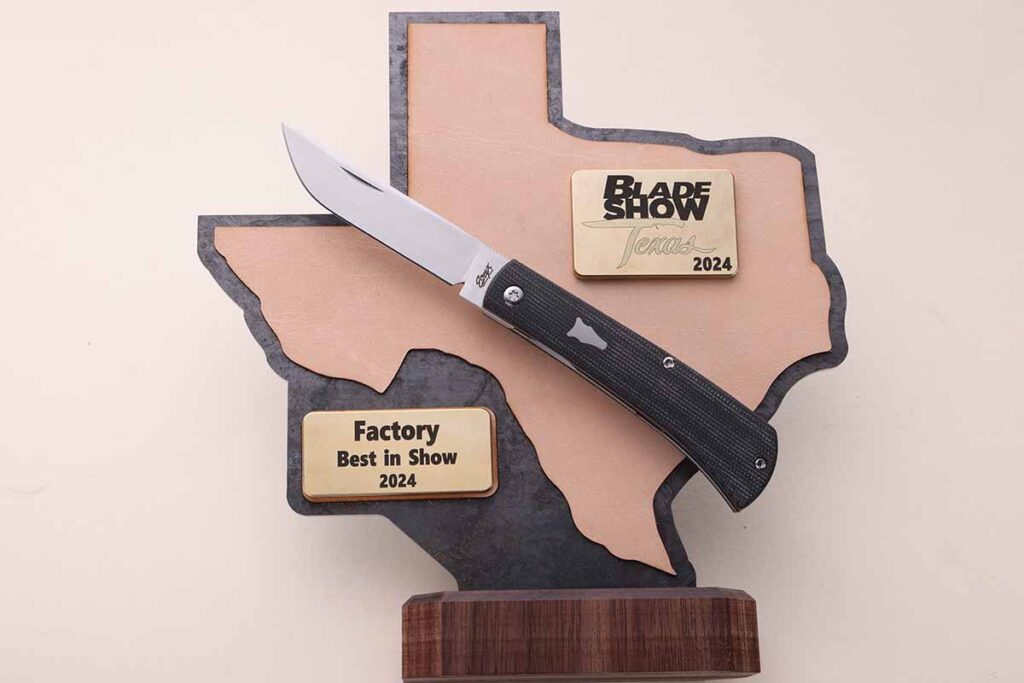
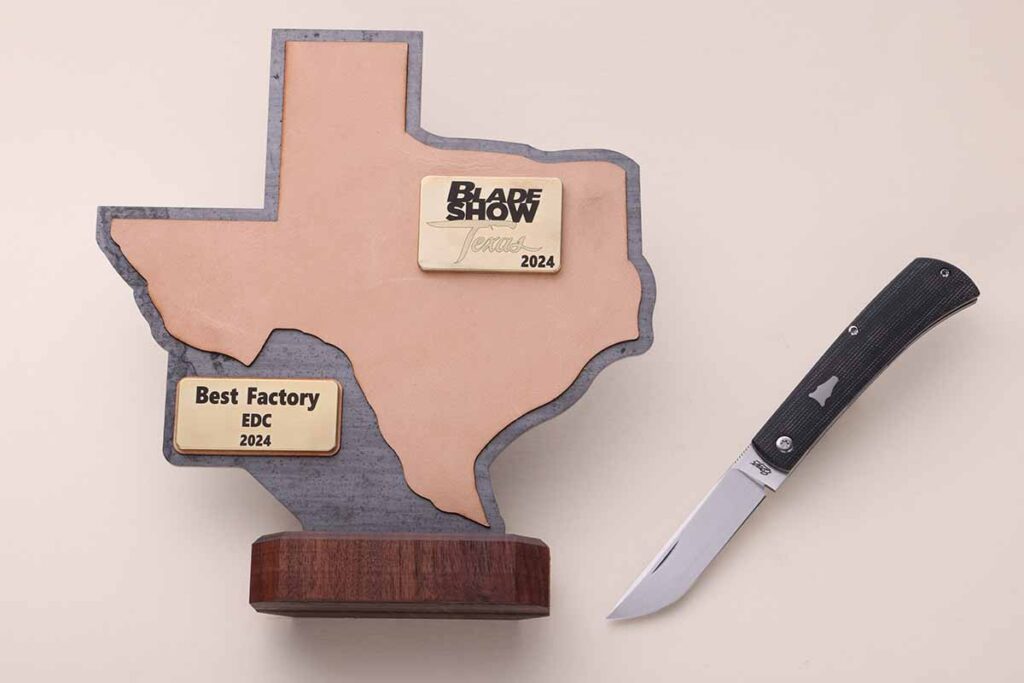
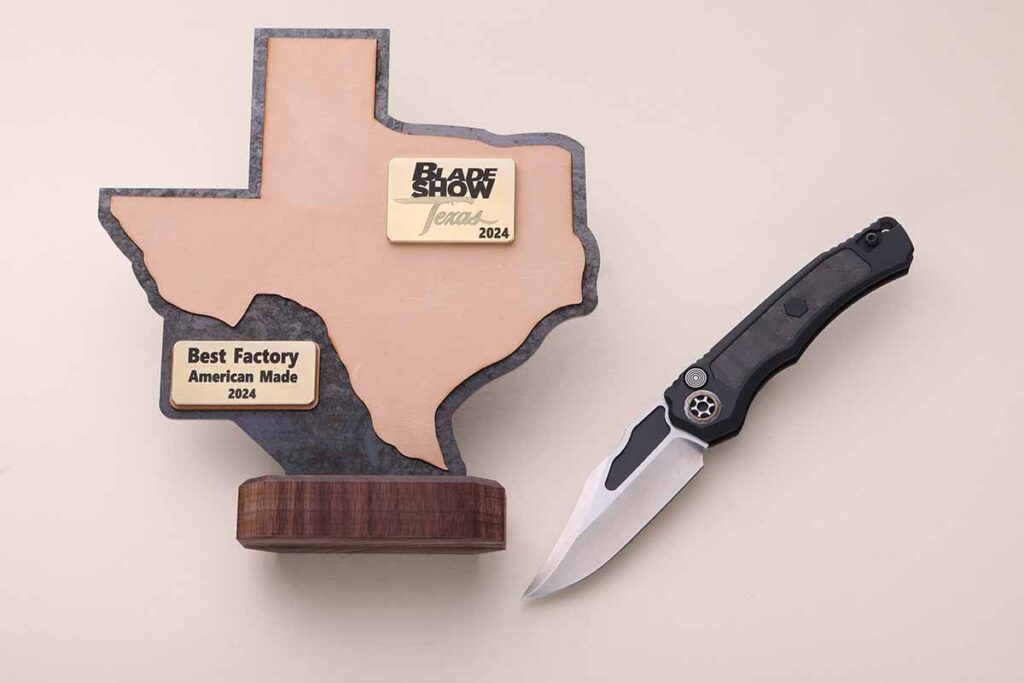
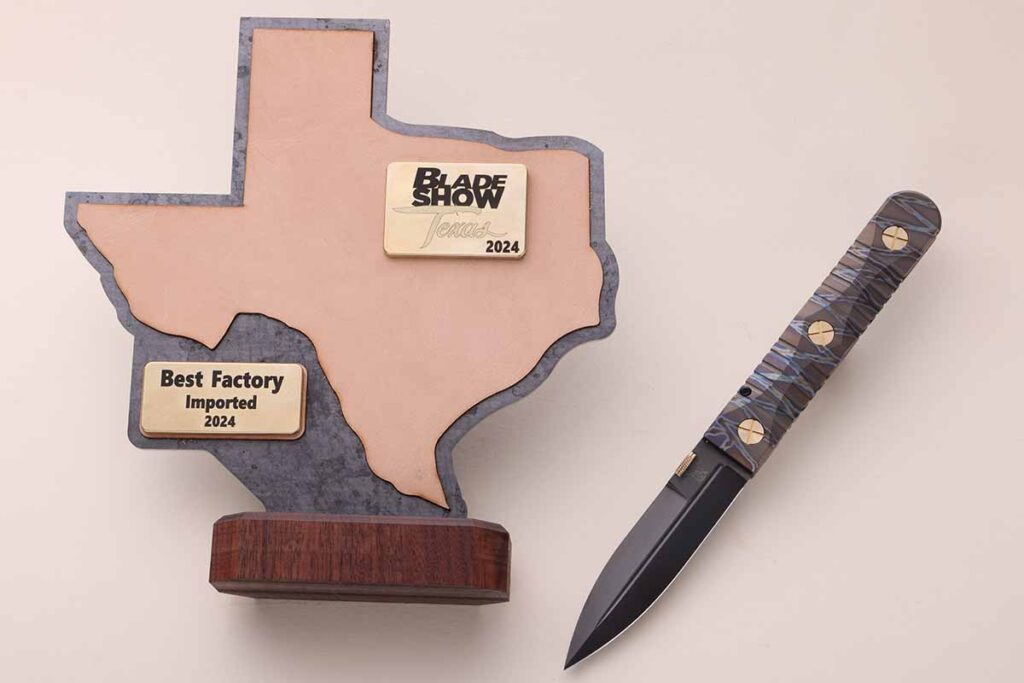
Over the years, the BLADE Show Texas Awards contest has proven among the most competitive of the triad of shows—perhaps only second to Atlanta. The 2024 event was no different with the factory section of the Feb. 23-24 drawing in cutting-edge designs and hot new takes on the age-old technology. It’s an understatement to say the three-judge panel had its work cut out for it deep in the bowels of the Fort Worth Convention Center in picking the best of a very accomplished field. Yet the experts did, choosing winners in 7 categories—including Best Of Show, ESNYX’s EDC folder. Get a gander of it and the other top picks from the ever-growing blade shindig from deep in the heart of Texas.
CRKT is releasing three Alan Folts designs–all folders–in anticipation of the Ft. Worth Knife Show.
CRKT, never one to rest on its laurels, has three new knife drops in anticipation of the Feb. 23-24, 2024 Blade Show Texas in Fort Worth. Alan Folts takes centerstage with this release, with all three of the designs emanating from the Florida-based custom knife maker. Interestingly, Folts made his mark as a fixed-blade man, but the two versions of the Ritual and brand-new Obverse mark somewhat of a new calling in the realm of folders.
“Alan Folts is a master craftsman and an acclaimed designer with over two dozen CRKT models to his credit in his time working with us,” said Doug Flagg, CRKT VP of Marketing and Innovation. “This latest collection represents Alan’s wide-ranging inspirations, innovative approach to knifemaking and the commitment to excellence that we both share.”
As a side note, the new premium knives from CRKT are listed as “coming soon” on CRKT.com but will be available for sale as BLADE Show Texas kicks off on Friday, February 23rd. For consumers in the Fort Worth area, the company also extends an invitation to its booth at the event, where they can meet the Folts in person.
CRKT Ritual Compact
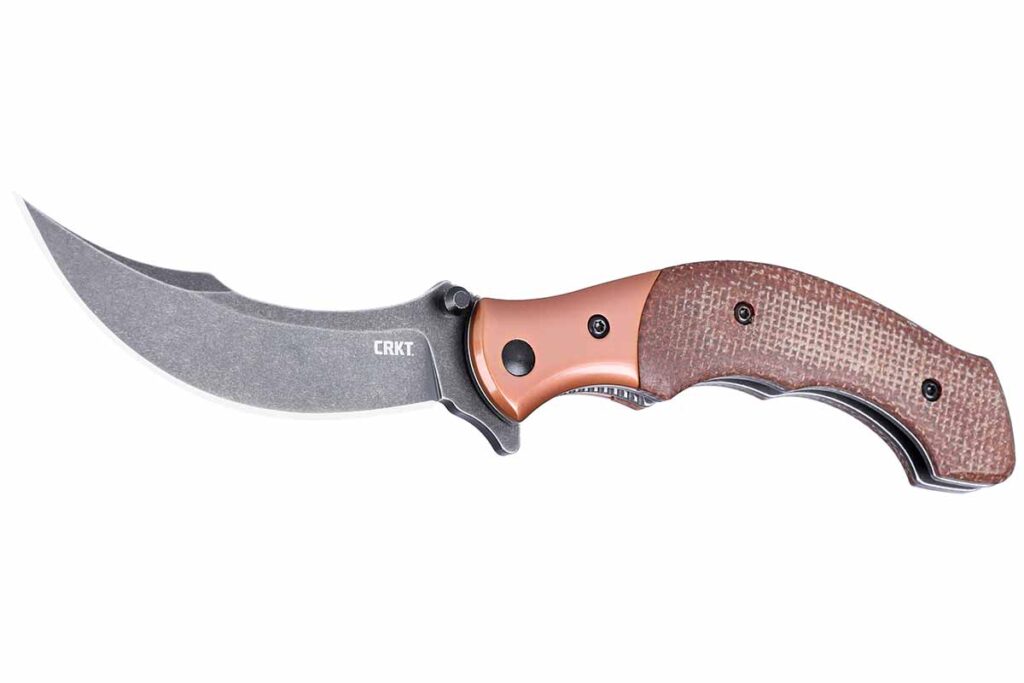
Designed for daily use, the Ritual Compact is an assisted folding knife inspired by old-world Persian fixed blades. The knife features a just over-three-inch 12C27 steel blade, ensuring excellent edge retention. With Assisted Opening technology and IKBS bearings, the knife guarantees quick and easy deployment and closure. The micarta handle with a stainless-steel bolster adds strength and striking aesthetics. The Ritual™ Compact is priced at an MSRP of $125.
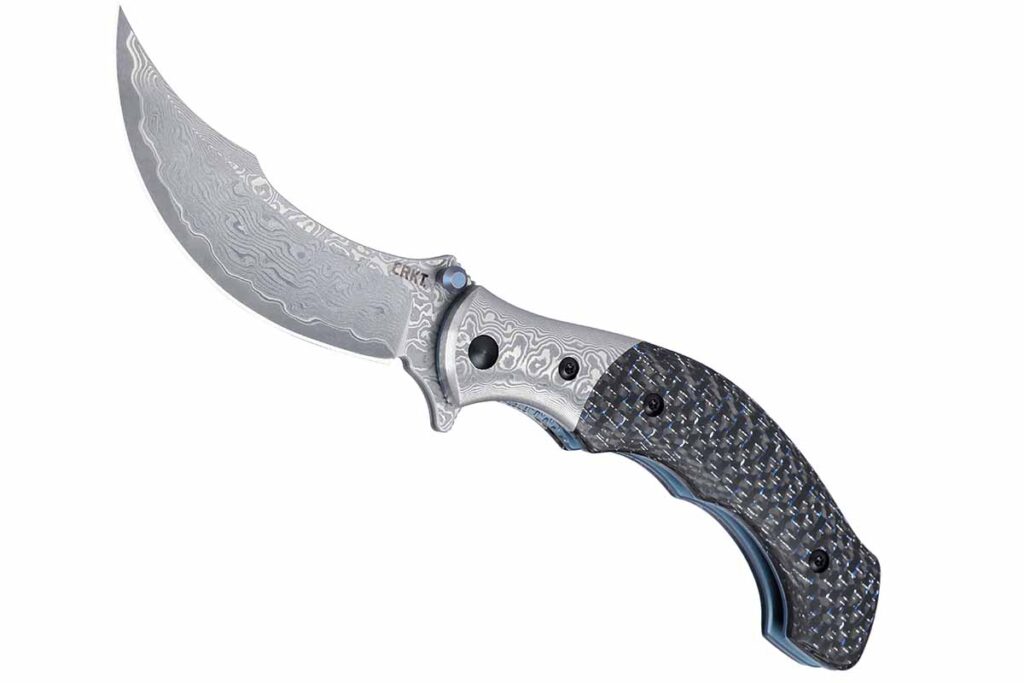
The high-end addition to the family, this Ritual Compact boasts a Damascus steel blade for superior cutting performance. The knife is adorned with a carbon fiber handle, an acid-etched Damascus bolster, a blue anodized titanium back spacer, and a pocket clip, making it a stunning addition to any collection. The Ritual™ Compact is priced at an MSRP of $275.
CRKT Obverse
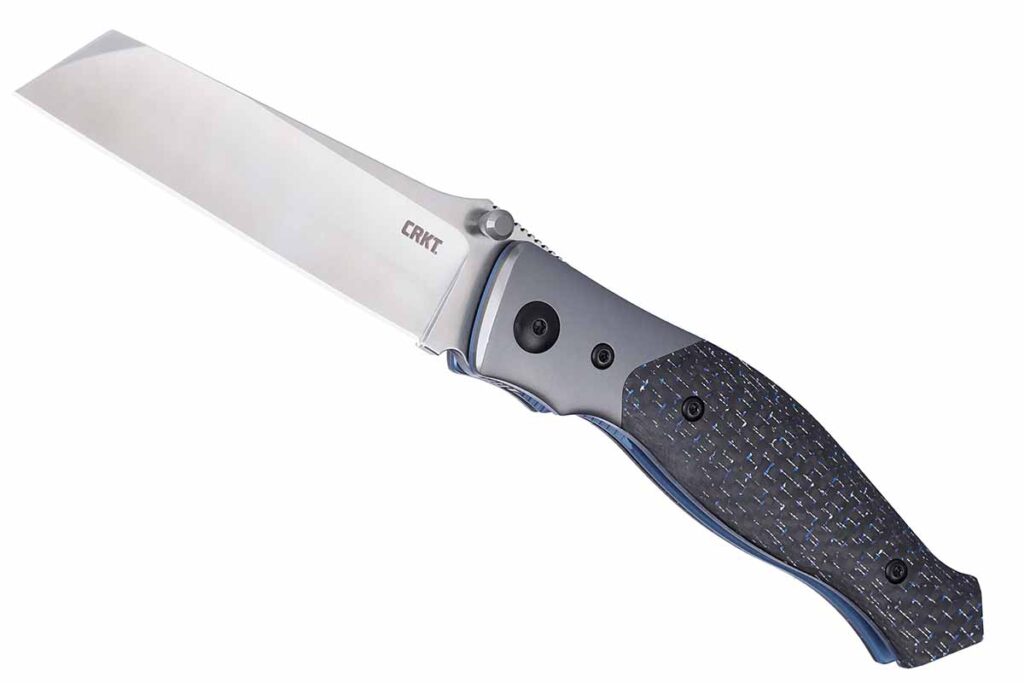
The Obverse is a distinguished folding knife made with premium M390 steel. The satin-finish, sheepsfoot blade is both sleek and durable, complemented by a carbon fiber handle with blue anodized titanium detailing. The silky smooth IKBS™ ball bearing pivot system ensures effortless deployment, while the secure liner lock allows for easy one-handed closing. The Obverse is priced at an MSRP of $275.
To be competitive, today’s balisongs must excel at flipping as well as cutting.
It’s a focus of versatility. From the style of opening to the enthusiasts who perform a variety of maneuvers with it, blade exposed, the balisong/butterfly knife is an object of curiosity and fascination.
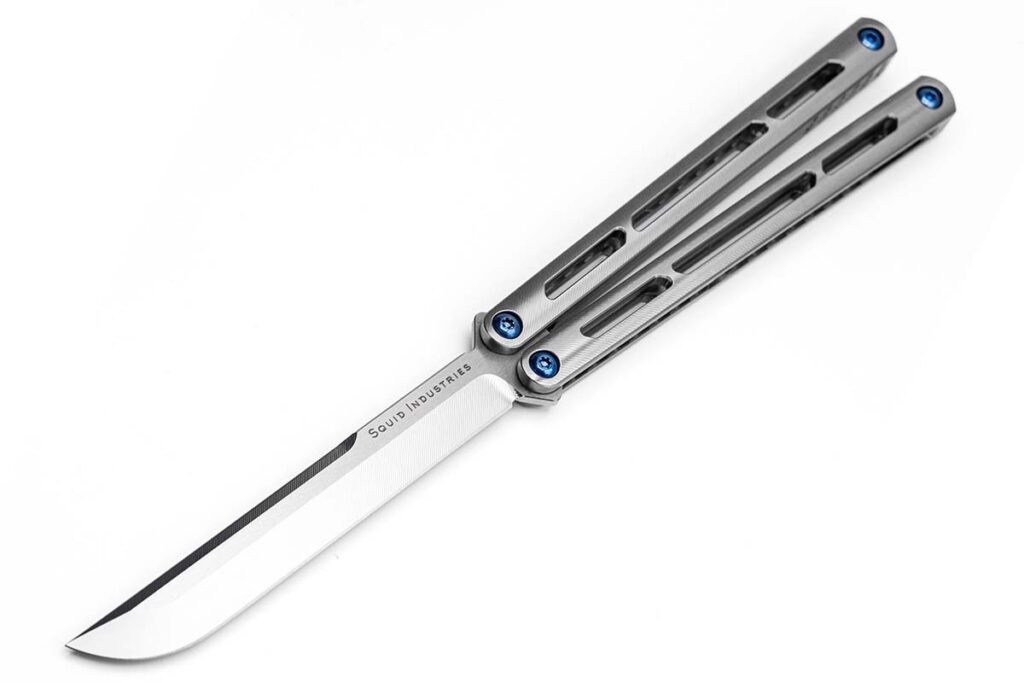
The original term for the subject knife, balisong, is a favorite of Lucas Cao, founder and president of Squid Industries, which produces the popular Tsunami balisong. “Butterfly is a great slang name that describes the mechanism,” he remarked, “but the word balisong has a rich cultural history behind it.”
Flipping competitions have played a key role in the resurgence of the popularity of balisongs, especially among young enthusiasts. James Hill is an example of the latter. He won first prize of $1,000 at the West Coast Flipping Championship during BLADE Show West in Salt Lake City this past October.
With that observation in mind, the Tsunami is true to the Squid concepts of user accommodation. “Each knife we’ve created is on the basis of more variety while still offering a premium flipper experience no matter the price point,” Cao explained. “At the top of our ladder is the Tsunami, which we designed to embody peak performance and build quality.”
Squid Industries Tsunami
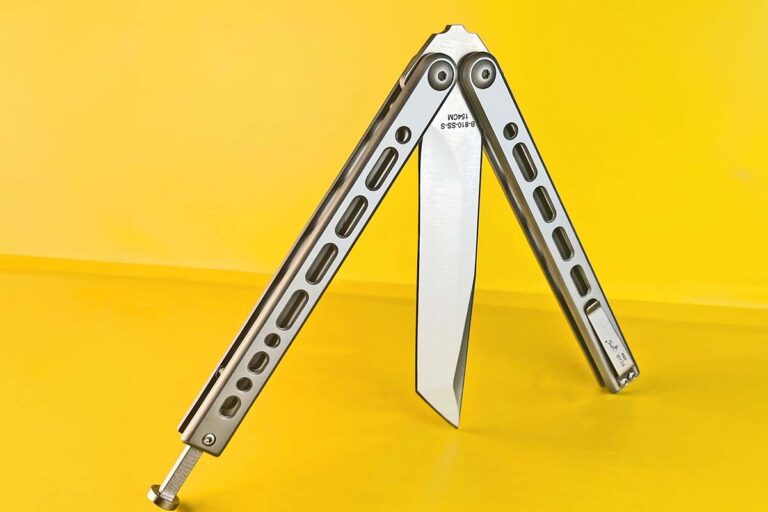
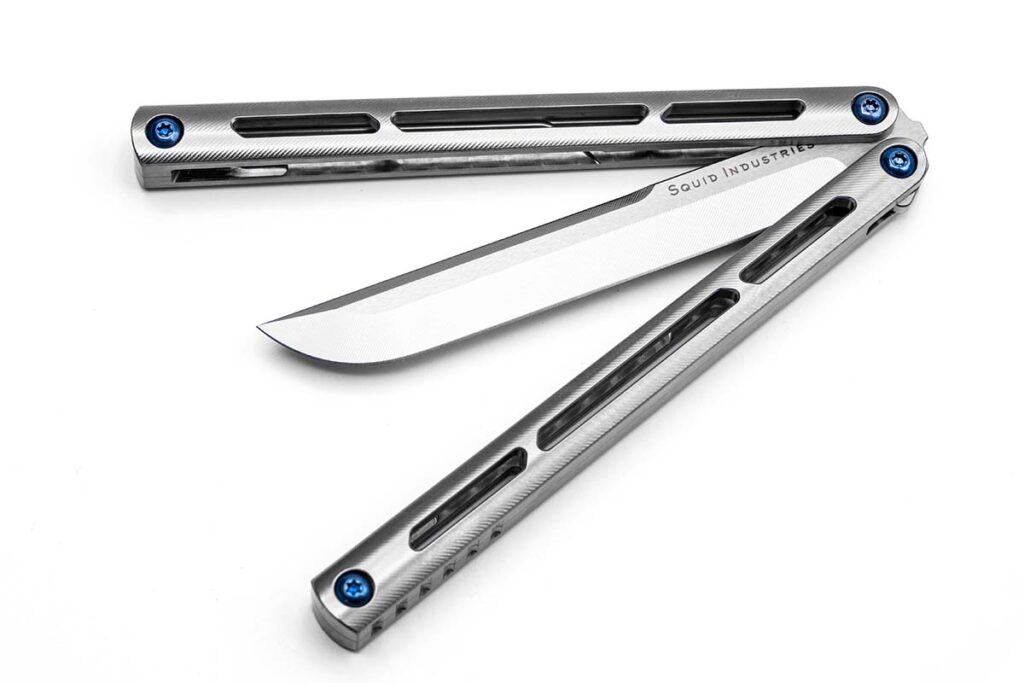
The Tsunami features a traditional Japanese-style tanto blade in a straight-back clip point and flat-ground CPM S35VN stainless steel.
The Tsunami features a traditional Japanese-style tanto blade in a straight-back clip point and flat ground CPM S35VN stainless steel intended to perform well across the spectrum of cutting requirements. However, the knife’s main constituency is the flipper community. “We serve a variety of customers with different requirements,” Lucas said, “but a majority of our customers are focused on the flipping aspect. If I had to estimate the customer desirability, I would say approximately 99 percent flipping and 1 percent cutting.”
The Tsunami employs a combination of bushings and phosphorous bronze washers in its mechanism, ensuring smooth deployment. “This is critical to flipping because it allows the user to consistently and reliably manipulate the knife,” he added. “Bearings aren’t used in our products and many other competitive balisongs from other brands because they produce a flipping experience that’s usually too smooth. Bushings are the preferred style because they offer a specific amount of smoothness and speed.”
The Tsunami reflects Squid Industries’ goal of offering balisongs that exhibit both variety and flipping fun, no matter the price. “At the top of our ladder is the Tsunami,” Squid’s Lucas Cao noted, “which we designed to embody peak performance and build quality.”
The Tsunami design is referred to as a “chainwich,” as its 6Al-4V titanium handles come together to mimic an integral grip. The handles themselves are designed with two specific tapers, one along the width and the other along the thickness. This dual taper design in combination with the rounding on the top create a comfortable and controllable feel in the hand, according to Cao.
Squid Industries Tsunami Specs Blade Length: 4.5” Blade Steel: CPM S35VN stainless Blade Grind: Flat Handle Material: 6Al-4V titanium Latch: N/A Pivot: Bushings and phosphorous bronze washers Weight: 4 ozs. Closed Length: 5.6” Country of Origin: USA MSRP: $775
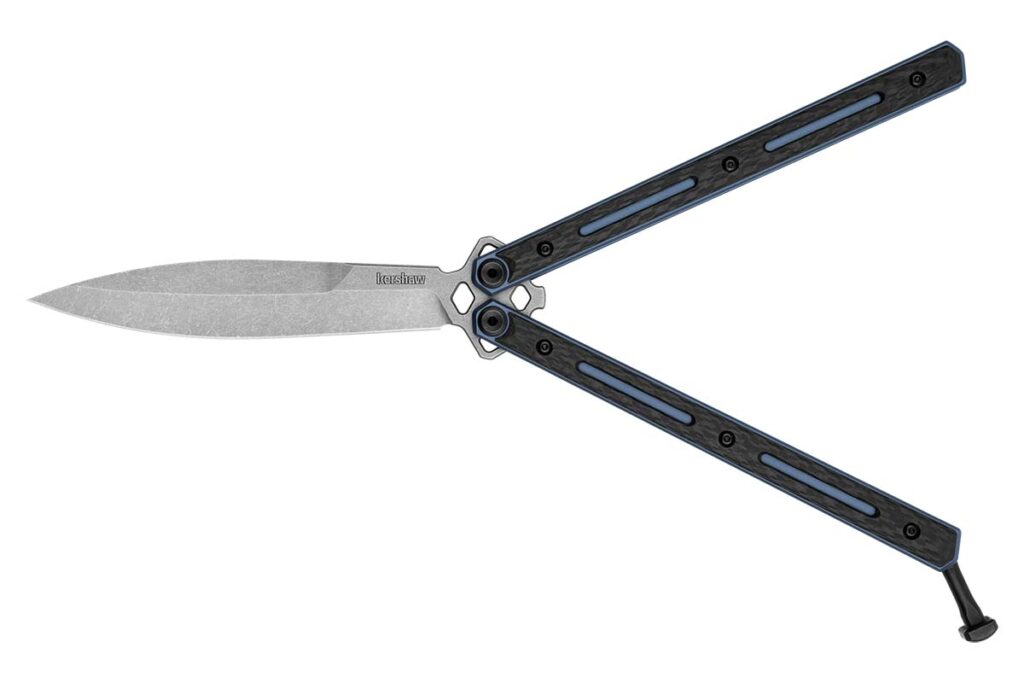
Kershaw Lucha Carbon Fiber
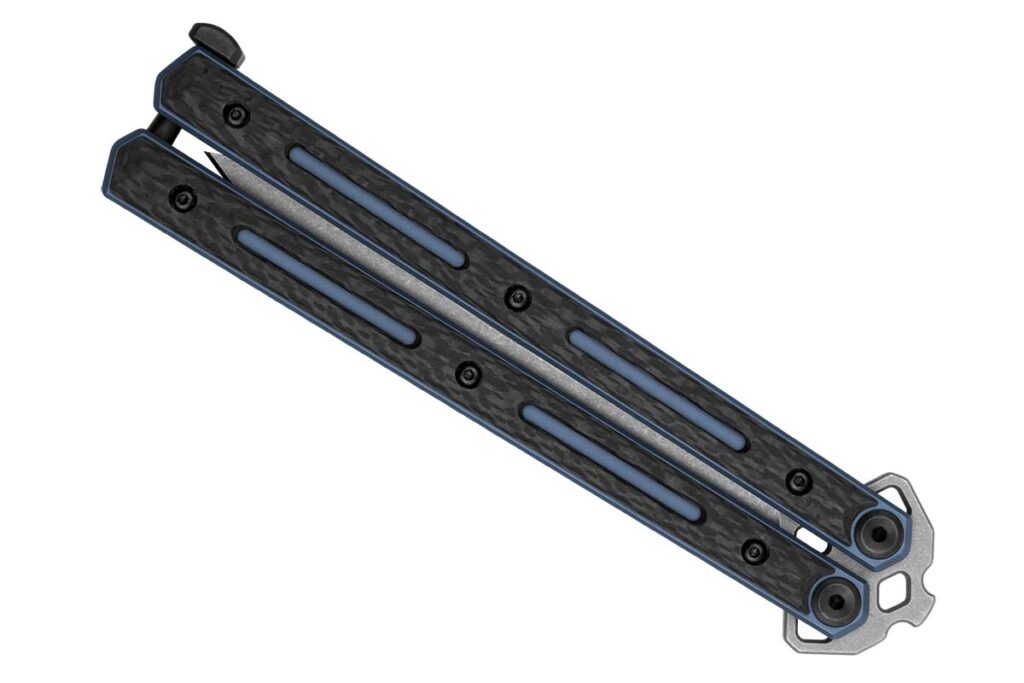
Kershaw’s Lucha Carbon Fiber is a premium edition of the company’s standard Lucha, including such high-end materials as CPM 20CV stainless blade steel and titanium handles with carbon fiber overlays.
The Kershaw Lucha Carbon Fiber’s spear-point blade of premium CPM 20CV stainless blade steel is ideal for piercing and slicing, while the “working” finish hides scratches from hard use. Company spokesperson Dominic Aiello related, “Our goal at Kershaw is to offer something for everyone, whether that be a budget-friendly knife you can abuse and lose all the way to a premium USA-made automatic. With that said, when we brought the original Lucha to the market, our goal was to offer a value packed, affordable, high-quality butterfly knife. It has been a huge hit and as a result we decided to release a premium version.”
Though the original emphasis on the practical use of the Lucha remains with cutting ability front and center, the knife illustrates the versatility inherent in the balisong style. “Of course, cutting is a critical component for any knife,” Aiello reasoned, “but with butterfly knives the flip ability, balance, and comfort are equally as important, if not more important. A lot of customers enjoy the Lucha for the fun and challenge of flipping, but there is also a segment of users that carry it as an EDC.”
The handles of the Lucha Carbon Fiber are titanium anodized blue overlaid with machined carbon fiber. The handles and carbon fiber are contoured for a rounded profile and ease of use.
The Lucha combines good looks with smooth mechanics and easy maintenance. “Each pivot uses two KVT ball bearings, four total,” Dominic commented. “The ball bearings provide an extremely fast and smooth action for easy flipping. The handles are blue anodized titanium with machined carbon fiber overlays. The handles and carbon fiber have been contoured for a rounded profile and ease of use.”
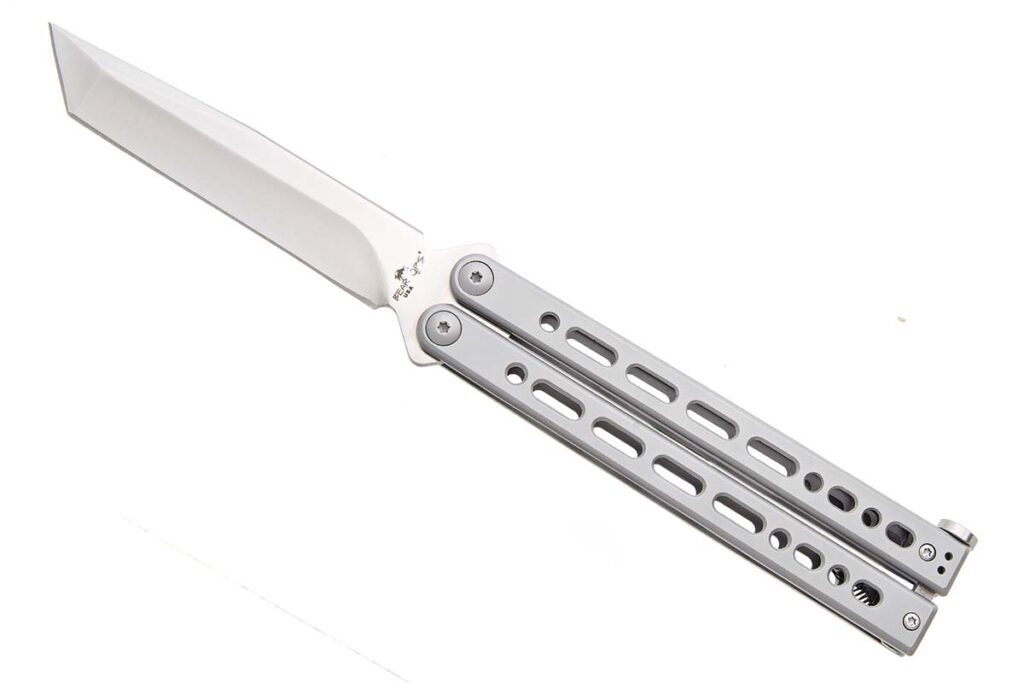
The Bear Song VIII includes a tanto-style blade in flat-ground 154CM stainless steel ideal for detailed cutting and general use.
Matt Griffey of Bear & Son Cutlery says the company has referred to the balisong as the “butterfly knife” since 1986. To that end, the company has continued to develop the famed flippers. With the release of the Bear Song VIII, the company’s design eye was fixed on a knife “being symmetrical and balanced, the most important design elements to start,” Griffey explained.
The Bear Song VIII includes a tanto-style blade in 154CM stainless steel, flat ground and ideal for fine cutting and general use. According to Griffey, the knife’s aptitude is 80 percent flipping and 20 percent cutting.
“A butterfly knife is the strongest folding knife, and as long as you are holding both handles it is as close to a fixed blade as possible for a folding knife,” Matt reasoned. “If the knife is maintained and tight there is almost no chance of lock failure. Maintenance should be just keeping it clean and oiled and checking it periodically to make sure it is not getting loose anywhere on the knife. If you find anything loose, remove the screw, and use Loctite® to replace the screw to the correct tension and let it set for at least twice as long as the thread locker recommends. We find they always give a time that is the bare minimum for the thread lock to work.”
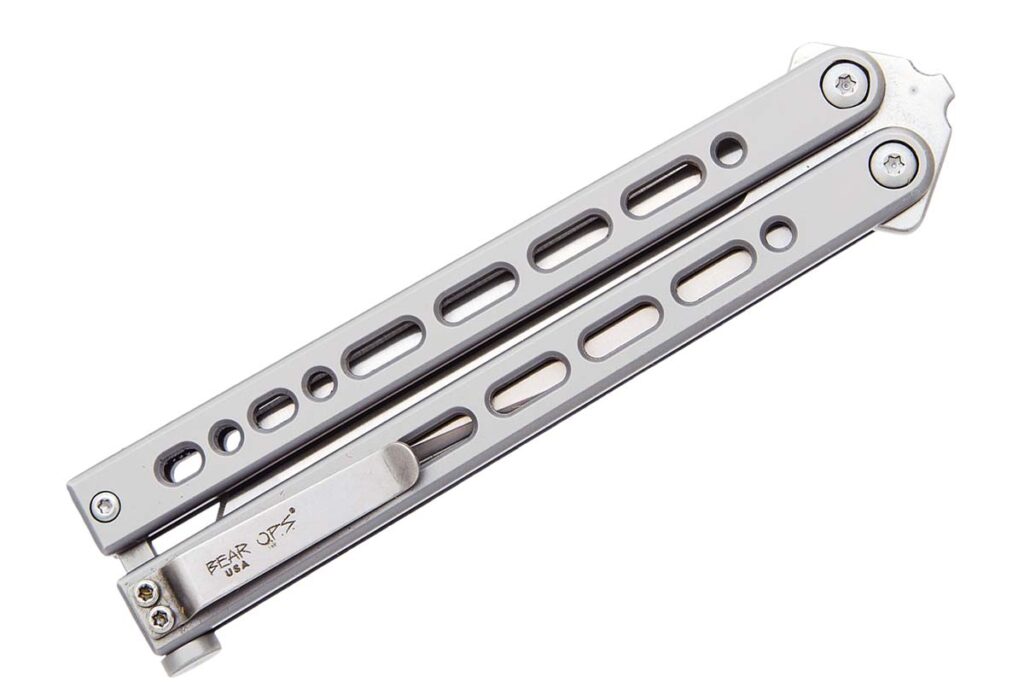
The Bear Song VIII sports stainless steel handles, rounded edges, and milled stepped holes and slots for user comfort. A spring-loaded locking latch and a stainless-steel pocket clip in a short design for easy carry and that can be removed if the user chooses completes the package.
In light of simple maintenance, the Bear Song VIII features an encased bearing design that is easily lubricated, while stainless steel handles, rounded edges, and milled stepped holes and slots provide user comfort. A spring-loaded locking latch makes operation a pleasure. A stainless-steel clip is in a short design for easy carry and can be removed if the user chooses.
“The Bear Song VIII has all the modern features with the timeless classic look,” noted Griffey, who sees the recent legislation regarding butterfly knives as positive (see sidebar). “Butterflies are far slower to open than a modern knife with a flipper on the blade that doesn’t have any spring mechanism. So anyone wasting time in their legislation to target this is just trying to fill time so they don’t have to do any work that might help the people they were elected to serve.”
Bear & Son Bear Song VIII Specs Blade Length: 4” Blade Steel: 154CM stainless Blade Grind: Flat Handle Material: Stainless steel w/Cerakote® finish Latch: Spring loaded Pivot: Ball-bearing washers Weight: 5.1 ozs. Closed Length: 5.25” Country of Origin: USA MSRP: $182.99
Butterfly Knife History
Butterfly knives, also known as balisongs, are one of the most popular knife styles today. They consist of a blade with two handles that rotate around a pivot and wrap around the blade in the closed position. That much is agreed upon. The origin of butterfly knives is still up for debate.
Where Were Butterfly Knives Invented?
Butterfly knives have a rich history, though much of it has been left up to speculation. Walk up to a knife enthusiast and ask, “Where did butterfly knives originate?” and you may get two very different answers.
Fuzzy historical records and well worn legends are to blame. The two main countries of focus are France and the Philippines. Each has evidence and supporters.
One Version: Butterfly Knives Came from the Philippines
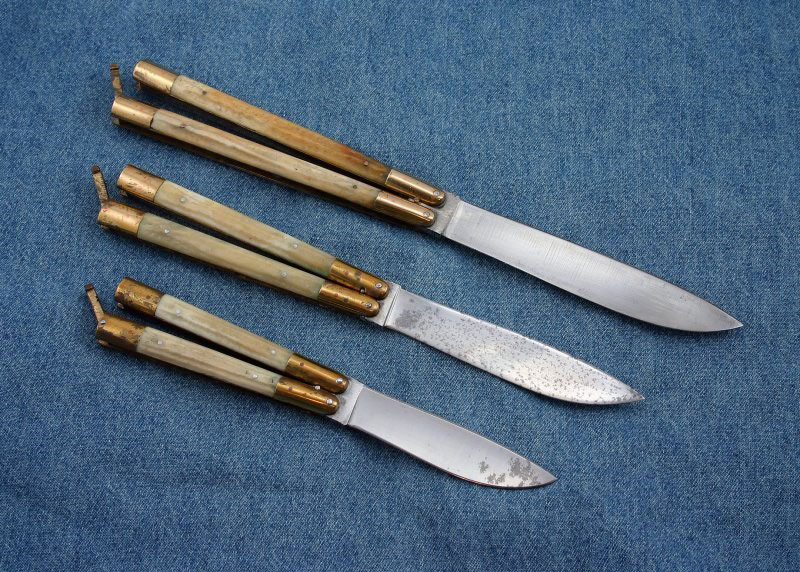
Authentic Filipino balisongs (Image from Balislinger on bladeforums.com)
The Philippines is often cited as the birthplace of butterfly knives, where “balisong” is a more appropriate term. Legend has it that the balisong knife has roots that go back to around 800 AD. This style of knife could be opened quickly with one hand and easily used as a weapon. It proved a common choice for self-defense and utility uses.
A rich balisong tradition has been present in the Philippines for more than a century. Countless stands and stores sell handmade butterfly knives today, and Filipino province of Batangas and the area of Balisong in Taal are known for the blades.
At the very least, the word “balisong” is widely recognized to have come from there. That said, the lack of physical evidence to support a Filipino origin fuels the argument.
Another Version: Butterfly Knives Came from France
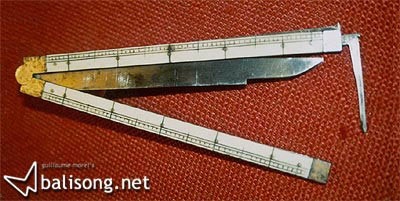
A vintage example of the Pied Du Roi. (Image from balisong.net)
Another claim is that the butterfly knife was invented in France between 1500 and 1700. The reason for this is the “Pied Du Roi,” which means “foot of the king” and is a French measurement tool that dates to the 1700s. The “Pied Du Roi” greatly resembles a butterfly knife. This tool has been pictured with measurement handles and a blade that folds out on one end. It looks like a butterfly knife, but could it be considered the first one ever made?
Proponents of the French origin argue that Spain, allied with France at the time, adopted the butterfly knife in their tasks and eventually took it to the Philippines as sailors sailed to different countries. Sounds reasonable, but hasn’t been proven.
Another supporting argument for the French is that these knives comes from Germany and England, where some butterflies can trace back to prior to 1900. I recently came across a collector’s piece online made in England with markings dating to 1873. This rules out the butterfly knife originating in the early 1900s in the Philippines, but like I said earlier, it has also been claimed to be influenced from similar Filipino knife models as early as 800 AD.
So Where Did Butterfly Knives Actually Come From?
Due to the popularity of balisongs in the Philippines, it isn’t surprising to suspect it started there. The lore passed down from generation to generation also support this idea.
On the other hand, France has pictures and documentation of a measurement device that resembles a butterfly knife and dates back hundreds of years. However, that measurement device likely wasn’t used for self-defense, flipping, or other tasks common to butterfly knives today. Could it be considered the same thing? Hard to tell.
Both sides have great arguments. More information is needed to finally determine this unsolved piece of butterfly knife history.
Butterfly Knives Today
Regardless of history, butterfly knives are rising in popularity due to the fun of “flipping.” Flipping involves tossing butterfly knives open to perform all kinds of tricks. Whether it’s the danger of it, the community, the collectible appeal, or anything else, there’s no doubt flippers are mesmerizing to watch.
Editor’s Note: Mike Haskew and Trevor Brown contributed to this article.
Jantz is a crucial source for many who fashion knives.
For 58 years Jantz Knife Supply has met the needs of cutlery craftsmen of all stripes, from green behind the ears to on up in years, with everything needed to make knives. This includes specialty steels, handle components, sheath materials, hand tools and sanding supplies, as well as the heavy equipment for knifemaking.
What started as a small mom-and-pop gun supply outfit founded by Ken and Venice Jantz in 1966 is no less than a U.S.-based juggernaut in today’s cutlery industry. The Jantzes haven’t left their humble beginnings behind, though, so no customer job is too small for the venerable knifemaking supply company in the heartland of America, Davis, Oklahoma.
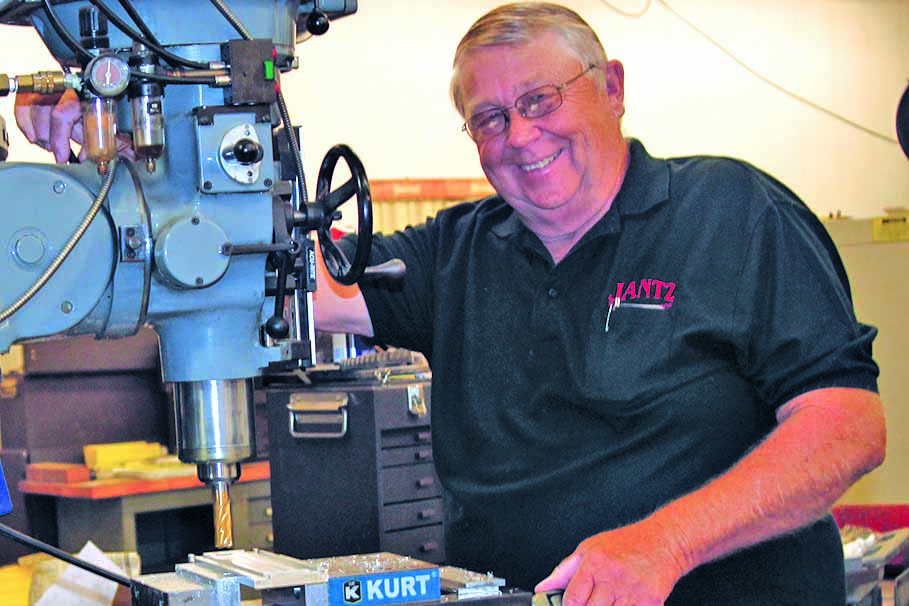
Company co-founder Ken Jantz works on a prototype for a new hollow-grinding fixture at the company facility.
Shanna Kemp oversees the marketing, financial and human resources for Jantz. She probably knows as well as anyone about the many specialty and other items available to the company’s legion of customers. “Our goal is to provide everything knifemakers could need for their project,” she begins, “whether you’re a beginner looking for a new hobby or a custom knifemaker stocking your shop to get ready for the BLADE Show. One thing we really love is creating fixtures and tools to make knifemaking more accessible for every skill level.”
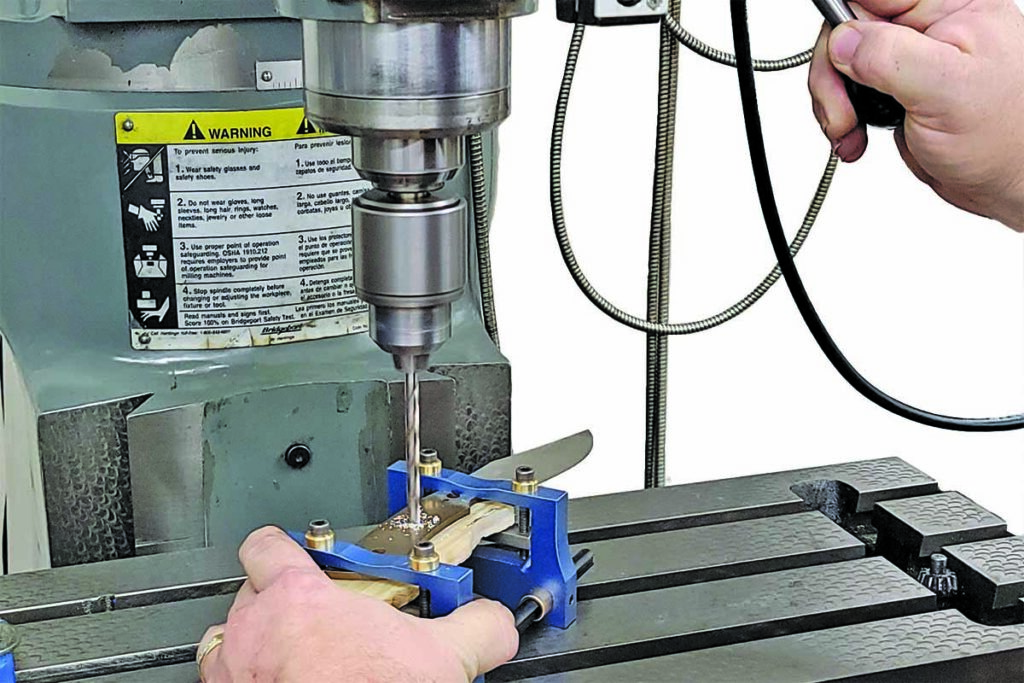
One of the company’s most popular new fixtures is the PDJ Knife Vise. “It’s handy for all levels of knifemakers as it allows you to drill perfectly perpendicular holes through your handle material” regardless of the material’s texture or unevenness, Shanna explains. Jantz stocks an abundance of parts for assembling and enhancing knives of all types. “Our most popular products are our Corby rivets, Loveless bolts and metal round and bar stock,” Shanna enumerates. “Our customers love the quality of our materials as we source directly from reputable mills with consistent quality and do our cutting and machining in house. One of our other popular products is our handcrafted mosaic pins. Each pin design is meticulously hand assembled right here in Davis, Oklahoma.”
Jantz Steel Stock
Jantz offers a range of knifemaking equipment. An example is the JS750 perpendicular vise with drill press.
An outstanding blade is the heart of any knife and Jantz offers all kinds of stainless and high carbon steels. “We carry a variety of knifemaking steels to suit both forging and stock removal,” she states. “1095 and 80CrV2 are very popular carbon steels and CPM 154 is our most popular stainless steel.” She added that the damascus forged by Brad Vice’s Alabama Damascus is very popular because of the quality and solid price point for the company’s patterned-welded steel.
“For Jantz, steel and other metals have always had a long lead time since we source from a variety of mills in the U.S., Germany, Sweden, Brazil and others,” Shanna observes. “We have strong relationships with our suppliers, and they have worked with us to keep material moving forward even when lead times began to exceed a year.”
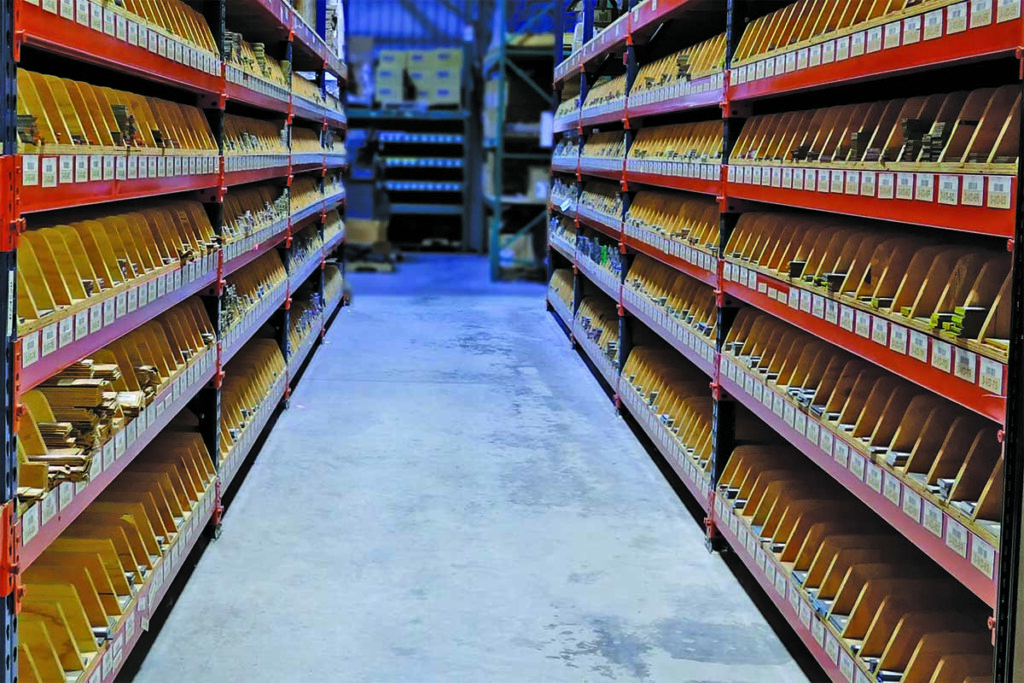
No matter the material, component or tool for knifemaking, Jantz probably has it somewhere in one of its well-stocked aisles.
Fixed blades will never go out of style, Shanna opines, and the Jantz business model caters to the mindset that drives the knives’ popularity. “We find that fixed-blade makers tend to use both stock removal and forging in their blade design and development,” she states. “The television series Forged in Fire certainly increased the popularity of forging, but we still see about the same divide between stock removal and forging. Fixed blades designed for hunting and survival are top sellers for our custom knifemakers as well as our hobbyists. There’s something special about using a knife in the field during hunting season that you made yourself that really resonates with the knifemaking crowd.”
When it comes to heat-treating ovens, Jantz recommends Paragon kilns above all others. “Not only do they make a quality oven,” Shanna assesses, “but they have a variety of ovens designed for beginners to pros. Their customer service is top notch and Burt Flanagan, who represents Paragon’s knifemaking ovens, is a custom knifemaker, so he truly understands what knifemakers need.”
Jantz-Made Blades
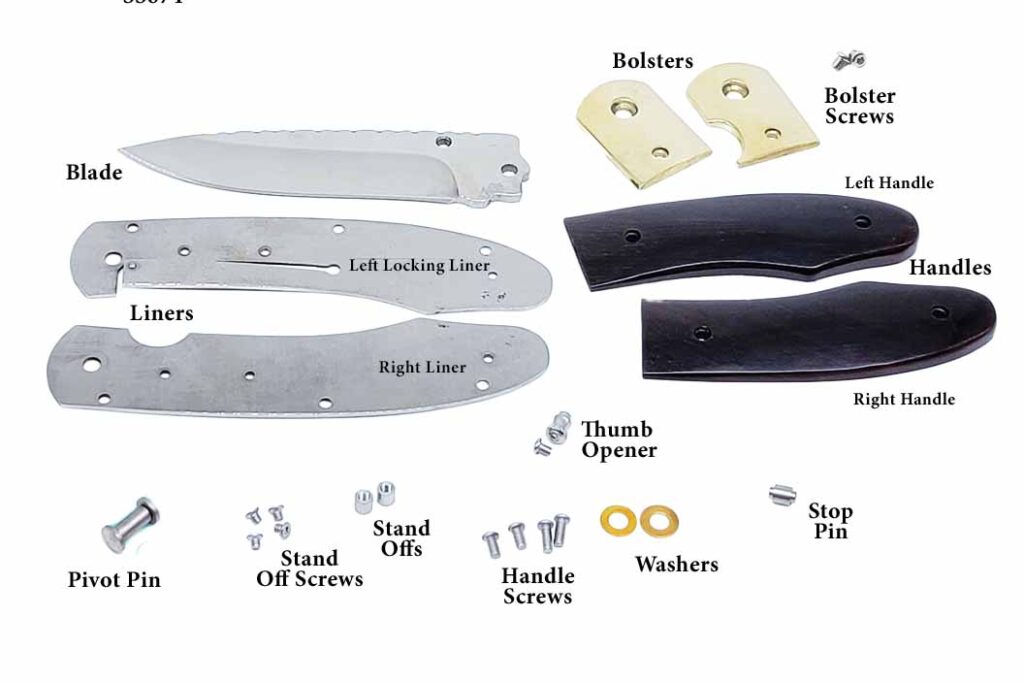
Knife assembly kits such as the Caballero are a great way to learn the ins-and-outs of folding knives. Jantz offers over a dozen knife genres, from traditional slip joints to modern tactical fare.
For those wanting to get their feet wet in the cutlery world, Jantz offers a cornucopia of pre-made blades for virtually any niche of the market, including household cutlery. According to Shanna, many custom makers order beautiful stainless damascus in various patterns from Damasteel for their kitchen knives. “Our Jantz-made line of household cutlery is especially popular with customers,” she adds. “Our santoku, cook’s and paring blades are favorites of makers using pre-shaped blades for project knifemaking. All the Jantz-made blades are manufactured in our facility.”
Jantz offers an abundance of both knife blades and knife kits. These are designed not only for the novice and hobbyist, but for those who want to tailor special knives for sale. The Jantz website offers links aplenty to a wide range of genres in both folders and fixed blades. Need a fixed-blade hunter in damascus? No problem. Like a kit to learn the ins-and-outs of folding knives? There are over a dozen styles available, from traditional slip joints to modern tactical fare.
Providing fixtures such as the JS500 for slip joints that make knifemaking more accessible to hobbyists and makers of all levels is a specialty at Jantz Supply.
If there is an innovation on the horizon, Jantz Supply will be on top of it. “One of the many things we love about the knifemaking community is how open and sharing makers are with each other,” Shanna observes. “Want to learn something [another knifemaker] is doing? Just ask. You will rarely find someone not willing to share.”
That spirit and willingness to help is what has made Jantz an important part of the cutlery industry for going on six decades now.