Home Blog Page 62

Spyderco Tenacious Review: The Relentless Workingman’s Knife

Built like a top-shelf Spyderco, but at a fraction of the price the Tenacious more than lives up to its name.

Spyderco’s knives are about as high-performance as you can get in a production knife. They look at things from all angles, from blade grinds to handle ergonomics and how each plays an important role in the other. It’s a symbiosis of sorts. Therefore, most of their knives are on the pricey side but very well worth it.

The use of high-end materials with superior ergonomics and cutting-edge blade steels get everyone drooling, but there is one factor that spoils it for some. The high price.

“No thank you”, some might retort. Then resort to looking at other brands, whose offerings might be a bit cheaper and more within their budget range. Still, they crave Spyderco.

Fear not my penny-pinching friends.

Spyderco Tenacious neutral open copy
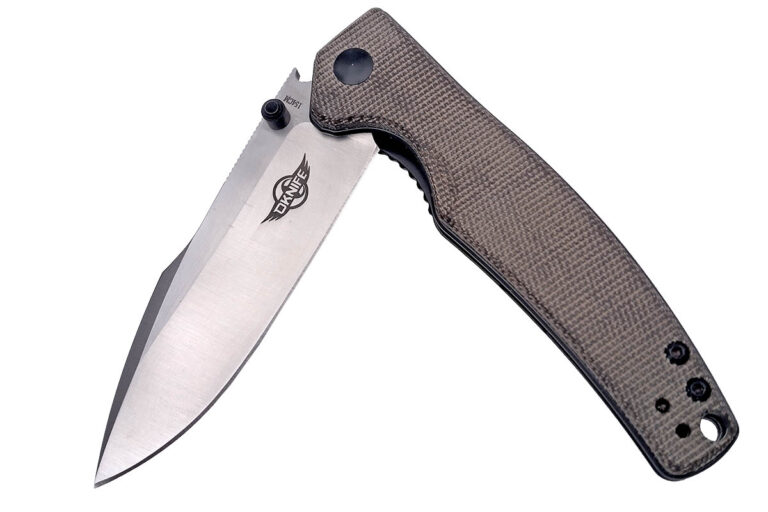
Affordable and capable, the Tenacious proves a capable workingman’s knife. Photo: Marty Stanfield

Spyderco had exactly you in mind when it unleashed the C122GP Tenacious. An excellent value folder from incorporating all the hallmarks of a Spyderco design and execution but without the scary high price tag. Essentially, it’s an everyman’s knife, with the elite performance the company has built its name on. 

How’s that for value?  

Spyderco Tenacious Blade

Starting with the modified clip point blade of the Tenacious, 8Cr13MoV stainless steel was chosen because of its great balance between edge retention, ease of sharpening and low cost. For those not familiar, 8Cr13MoV is the Chinese equivalent of the Japanese-made AUS-8. A lot of entry-level to mid-range knives have this steel. It makes a great choice for a working folder as 8Cr13MoV is relatively easy to resharpen and takes a good edge in minimal time.

The blade length is 3 ⅜ inches, long enough to for serious work but short enough to carry easily in the pocket. Jimping on the thumb rest allows you to place your thumb there to apply downward pressure on the blade. The rest sample we were sent has a satin-finished blade, though, Spyderco offer the Tenacious with a black coated blade for low visibility, as well. 

Spyderco Tenacious Blade
A 8Cr13MoV drop-point blade offers respectable steel in a useful profile.Photo: Marty Stanfield

Additionally, partially serrated edge formats are available for enhanced cutting power. This blade design is a workhorse, with its flat grind and distal taper, which allows the blade to become a voraciously efficient slicing tool. Honestly, Tenacious in hand, you’ll be able to slice through your biggest and toughest cutting tasks with ease.  

Spyderco Tenacious Handle

Look at some other budget folding knives on the market and you can tell where corners were cut. One evident area is handle design. No so with the Tenacious.

Spyderco has some of the best handle designs on the market, the company has an intimate understanding of how to design a comfortable interface comfortable for extended hard usage. In this case, the knife uses a black textured G-10 phenolic resin handle for both reduced weight and an excellent grip. As a side note, the handle length is 4 7/16-inces long and overall, well thought out. In the hand, it proves comfortable, important with any knife. There are no hot spots to speak of and it seem designed for long periods of use without fatigue.

Spyderco Tenacious lock vertical copy
In addition to G10 scale, the Tenacious has a study double stainless-steel liner to provide the handle plenty of backbone. Photo: Marty Stanfield

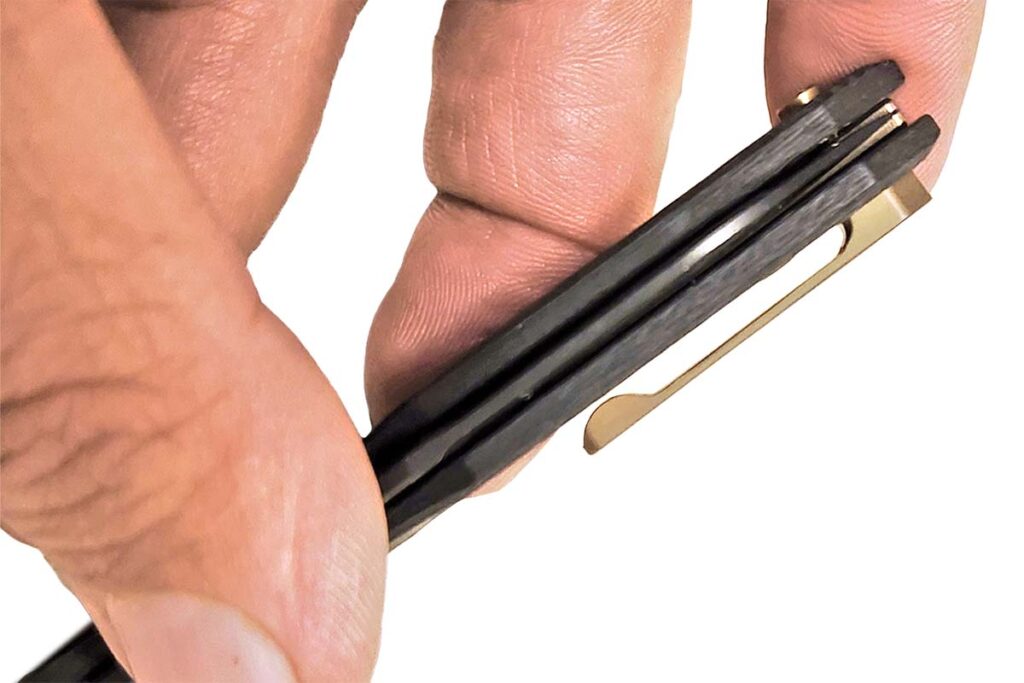
Double stainless-steel liners provide a solid backbone for the handle, and a sturdy liner lock secures the blade in the open position for ultimate user safety. A radiused gripping area accommodates the fingers well and the perimeter of the G-10 is chamfered to reduce sharp corners for a comfortable grip. 

Four sets of clip screw holes are drilled into the handle, offering a have-it-your-way approach to pocket clip mounting. You can mount the clip for left-hand use or right-hand use and within these two, you can have either a tip-up or a tip-down configuration. The clip comes from the factory set up for right-handed, tip-down configuration.

Practicality Of The Spyderco Tenacious

If you are in any of the trades and use tools in your job—a knife being one of them—it’s very important to select your work knife carefully not just from a budget/financial standpoint but feature-wise as well. Just because it is a budget knife doesn’t mean it’s stripped down and basic. 

Budget knives can include some creature comforts that make work easier. The Tenacious packs in one hand ambidextrous opening, a secure blade lock, open handle construction with dual steel liners and textured G-10 handles. Furthermore it boasts a pocket clip with user-selectable modes of carry, and a properly designed blade that will cut efficiently. All this, in one knife.

Spyderco Tenacious clip_ copy
Righty, lefty, doesn’t matter. Spyderco enginereed a clip that caters to either hand and nearly any style of carry. Photo: Marty Stanfield

With this being said, the Tenacious lives up to its name as it is eager to tackle any cutting task that awaits. The MSRP for the Chinese made Tenacious is $86, which means it probably can be purchased online for around $60. This makes it a great bargain for a sturdy, well-designed work knife. And if you lose it, you are not out a lot of money.

If you have more expensive knives in your collection and are hesitant to beat on as a work knife, then the Tenacious fills that role well. What you have here is a midsize folding knife that feels good in the hand and cuts exceptionally well.

Final Cut

As an owner of quite a few high-end Spyderco models such as the Military, Paramilitary 2, Manix 2, Shaman, and a few others, I can honestly say the Tenacious performance-wise is almost identical. Bold statement, I know. But all Spyderco knives just have that feel to them—no matter the price. If you are a fellow Spyderco owner, you know exactly what I am talking about.

Spyderco Tenacious action 2 copy
Spyderco created an affordable gem in the Tenacious. Photo: Marty Stanfield

The 8Cr13MoV steel holds an edge well but don’t expect it to be like S30V and hold an edge for a long time. Maintenance in the field is possible with the right sharpener and the steel responds well to routine touch-ups.

Just do yourself a favor and purchase a Tenacious and put it to work. You won’t be disappointed. Spyderco did their homework with this budget-conscious folder that’s packed with features that also are found on their more expensive knives.  

More Spyderco Knives:

Cool Custom: John Dennehy’s Model 1 Alpine

2

John Dennehy carries on a family tradition with a Model Alpine 1 for Kristi Noem.

South Dakota Gov. Kristi Noem and her leadership skills have captured the imagination of many Americans, including Colorado knifemaker John Dennehy.

John’s been looking for a place to retire, and Noem’s handling of the pandemic put South Dakota square on his list of places to consider. “The state stayed open and came out of the pandemic with a strong economy,” John noted. “I like Kristi’s no BS approach and her conservative Christian values.”

Kristi Noem
Kristi Noem with her custom Model 1 Alpine.

As a result, Dennehy decided to carry on a family tradition started by his father, BLADE Magazine Cutlery Hall-Of-Fame member Dan Dennehy, of making knives for notable individuals that he admires. John reached out to Kristi’s office and offered to make her the knife of her pick of his DAN-D models. One of Kristi’s aides got back to John and told him Kristi wanted the Model 1 Alpine general-purpose field knife.

John completed the knife and personalized the handsome leather sheath with Kristi’s initials and turquoise from King’s Manassa Turquoise mine near Manassa, Colorado. Though John didn’t get to talk to Kristi directly, she had a picture made of her holding the knife and had it sent to him. The smile on her face speaks volumes of how pleased she is with her sharp new gift.

Check Out More Cool Custom Knives:

D.I.Y. Power Hammer: Do You Really Need One?

0

Why a power hammer may or may not be for you.

I think almost every smith wishes at some point he or she had a power hammer. 

It’s loud, powerful and moves metal quickly. It’s also the key to improving the production speed of forging and making damascus steel, and speed without sacrificing quality quickly translates into increased revenue and more fun.

It’s under such conditions that the smith turns to the Internet and begins to look for a hammer. Quickly he or she discovers several things. 

First are stories of people who got incredible deals on a hammer stored in a barn somewhere. These are like hunting stories of novices killing giant whitetail bucks, or fishing stories of a kid catching a 12-pound largemouth bass. The stories are true but it’s not likely to happen to you that way. If you’re one of the lucky ones who find a running Little Giant 50-pound power hammer for $200 at a garage sale, I don’t like you and I don’t want to hear your story. LOL!

Jason Fry and Travis Fry
According to the author—at left with his brother/fellow maker Travis Fry at BLADE Show Texas—a good power hammer improves forging production speed without sacrificing quality. His sub-hilt fighter features “Trashcan” canister damascus. (SharpByCoop knife image)

The next thing the smith discovers is there are running hammers to be had in the world, and they’re expensive. Along with just about everything else, the prices of hammers have increased the past few years. The odds of finding a working used hammer in your area are slim, even if you are willing to pay retail.

Whether you’re looking at the new production hammers or rebuilt old ones the price tag is steep, sometimes even $5,000 or $10,000. That’s a lot of knives and for many folks, there’s no way to justify the cost. On the other hand, if you can swing it, there are many high-quality production hammers on the market that will serve you well.

Meanwhile, desperate for a tool that seems just out of reach, the smith turns again to the Internet and searches “how to build a power hammer.”  

Little Giant was manufactured in 1917
This 50-pound Little Giant was manufactured in 1917 and is a clean-running example of what’s available on the used hammer market. (James Rodriguez image)

My D.I.Y. Power Hammer

I competed on the History Channel’s Forged in Fire in May 2018 (season five, episode 26, Qinglong Ji). I thought about several ways to prepare for the show. 

One was to practice various smithing techniques. I forged quite a few blades and practiced my forge welding. Another way to prepare is to work on equipment. I built a new forge out of castable refractory suitable for forge welding. I also decided to build a power hammer. 

I figured that if I made the final round on the show, I’d sure like to have a power hammer to use in the final build. If I were eliminated in the first two rounds I’d be disappointed, but in the end, I’d still have a tool that few smiths get to have.

Consequently, I spent five weekends in April and May building a spring helve power hammer, a style often called an Appalachian or Rusty hammer. Because I had a friend with an epic scrapyard, I was able to build the hammer for under $250. I did end up trading a few knives to my friend for the metal as well.

I spent about 50 hours of work building my hammer over the course of a month. I could have built roughly $2,000 worth of knives during that time, maybe more. Between the time I spent and the knives I traded, I estimate I have roughly $3,500 in my hammer. For that price, I could have purchased a running and functional hammer. The reason for me to take the DIY path was cash outlay—I had more time than money. 

D.I.Y. Power Hammer Considerations

I believe strongly that in order to successfully build a power hammer, you need several things. 

Piotr Delega DIY power hammer
Poland’s Piotr Delega, who goes by SteelCraft on YouTube, built his own hammer. He’s a great fabricator with engineering skills and a completely stocked machine shop. He started with a fully functioning LEGO model, created a 3D software model, and then built this fine functioning hammer.

Mechanical Inclination

The first is to be mechanically inclined. Building a hammer from scrap is exactly like building a racecar from a tub of LEGOs, and nothing at all like building the same from a boxed LEGO set. In a set, there are step-by-step instructions with pictures and perfectly shaped pieces that fit together. If you build a hammer from scrap, there are no plans, instructions or pictures. You’ll have to sort through materials looking for a piece that fits or that will serve the purpose you need, just like when you dig through the LEGO tub looking for four matching wheels. 

If you don’t have the necessary experience in mechanical design and fabrication, if you can’t visualize and then build, if you can’t anticipate future problems before you weld everything together, you may be better with a tire hammer or purchasing a complete hammer.

Welding Ability

Second, you need to be able to weld, and you need a welding machine with high enough amperage to weld thick steel. An import 110v wire feed doesn’t have the power to weld the sizes of steel that you’ll need to build a hammer. I used a 220v 180-amp class wire feed, and it was underpowered for some of the heaviest welds on my hammer, requiring multiple passes to get adequate penetration. It’s not what I’d recommend, but it’s what I had.

Regarding your welding method, stick or MIG or flux core wire feed is up to you, as all can do the job if the machine is powerful enough and you have the skills. SPECIAL NOTE: If you don’t have confidence you can weld steel well enough for the weld to hold up under extreme stresses, then you should buy a hammer.

LEGO power hammer
This is the fully operational LEGO toy power hammer made by Piotr Delega. He built a 3D software model based on it and used the model as the game plan from which to construct the full-size functioning hammer shown above.

The Right Shop

Next, you’re thinking of building a machine that is loud and heavy.  If you work out of a one-car garage or live in an apartment, it just won’t work.  If you are a member of a homeowner’s association (HOA) or live in a city with zealous code enforcement officers, good luck. 

If you have employees and need OSHA approval or insurance for your shop, you should buy a hammer instead of trying to make one. If you have touchy neighbors who already don’t like the fact that you forge in the backyard because they’re irritated by your two-hour hand-hammer-and-anvil sessions on Saturday afternoons, good luck. I’m fortunate enough to have neighbors who think my hobby is cool, a city with weak code enforcement, and I have a shop in my backyard. 

With a proper base plate and a heavy anvil, you’re building a tool that could easily weigh 1,500 pounds. If you work in sales, oilfield, church or some other vocation where you move every few years, you need to think about how you’re going to move your hammer should the need arise. I built mine with several bolt-together joints so I can break it down into parts of a few hundred pounds each that can be lifted with an engine hoist.

Materials Source

Finally, a good source of scrap metal is a must if you want to build your hammer economically.  If you have to go buy steel at retail, you’ll end up spending as much as a new hammer costs. If you can score your steel for cheap to free, you’re good to build.

Read More On Knife Steel:

Throwing Knives: Ready For A Serious Fling?

0

Ready for a serious fling? We have the throwing knives–some of which are on target–to get you flying right off the bat.

While you’ll never nail an enemy sentry from 87 feet like Skeeter Vaughan reportedly did with a throwing knife during World War II, you can score a number of bull’s-eyes with today’s throwers.

To test some of the latest airborne blades, I visited my buddy’s house. Together with a few friends, we had a good ol’ time flinging the throwers at a wood target.

Unlike many of my other BLADE® articles, I went into this with very little experience or prior knowledge, except that which I learned from previous backyard throwing sessions. None of my friends had additional experience, except for a buddy’s wife who was probably the best among us as far as results went. I feel that this was probably the best-case scenario.

From left: Spyderco Thrower, CRKT Onion Throwing Knife, and Kizlyar Impulse and Kizlyar Ocetp.

In testing knives other times I went in with tons of previous experience from hunting, bushcrafting, skinning, fishing and other outdoor activities. The playing field was thus level and I was going to get the purest experience from these knives, as I had no prior notions of what success looked like—other than having fun.

As with most knives, there’s a science that goes into making throwers. I am in no way an expert. I approached the story with the distinct impression this would be more difficult than I thought. Most who are into throwing knives buy for either pure recreation or actual skill-building for competition. While I have no statistical way to prove it, I feel that 99.9 percent of people who buy throwers do so for recreation in the backyard, during cookouts with friends and family, etc.

Throwing Knives Tested

The featured knives are all factory made. The Spydercos are shaped like leaf-blade daggers with a slight crossguard and sharp, diamond-shaped tip. They come in a set of three with a handsome but tight-fitting leather sheath that will require a bit of break-in. While the knives all fit, the overall package is a bit heavy. The Spydercos were easily the favorite of the testing. They can be thrown with good accuracy using a variety of techniques. Out of the reviewed group they are a good starting set and offer the most feature-wise for the thrower looking to gain skill.

Onion Throwing Knives
Minimalist in design, the Onion Throwing Knives are long and thin, with a red-and-black-splatter-finish scheme. They are Ken Onion’s first-ever throwing knife design for CRKT. (CRKT image)

Designed by BLADE Magazine Cutlery Hall-Of-Fame® member Ken Onion, the CRKT entries likewise come in a set of three, though are far more minimalist in design. They are long and thin, with a red-and-black-splatter-finish scheme. The knives come in a black nylon sheath. The profile of the knives is quite thin with a slender cross section. They are well balanced but have little meat mid-knife, making them have an iffy rotation in flight. The knives did perform well but were more or less hard to index in the hand.

The two Russian-made knives from Kizylar Supreme vary in appearance, one reminiscent of a drop-point field knife and the other a large leaf-blade profile. The knives are roughly finished and have some issues when in use, which I’ll detail more below. The knives are somewhat hard to get these days with the various trade situations with Russia, but I wanted to put them through their paces anyway. They are solidly built and very rugged but are not for everyone. Neither knife came with a sheath or storage case.

Results

Factory-made throwers are, at least in my years of backyard trials, inconsistent at best and largely made to look cool. Most of these knives, including the ones used in this review, were only loosely able to give consistent results. The Spydercos were probably the most consistent among the people I roped into testing them. This was in large part due to the fact that one of my friends employed an underhand throw, using the holes in the handle as pendulum points to help get a consistent rotation.

Spyderco knives
The author stated the Spyderco knives were easily the favorite of the testing, in large part because they could be thrown by the testers with good accuracy using a variety of techniques.

Weight distribution among the review knives was all over the place. The Spydercos were a bit heavy across their entire length, but they did fly true for the most part. The CRKT knives ran into a bit of trouble with their relatively thin profiles. They seemed to easily spin out and rotate along the tip-to-pommel axis if they caught the air wrong. They were also significantly lighter than the rest, which made it just a bit difficult to gauge their feel in the hand when throwing. Most of the reviewers felt the Spydercos were the best, though perhaps a bit too heavy. The CRKT knives certainly look the coolest but were a bit too light and thin overall for true consistency.

The two Russian knives were the poorest performing in the test, mostly because they were just so large and heavy that they seemed to have no point of balance at all. Out of five people, myself included, none made consistent throws with either of the knives. The weight factor was a main issue. The knives are heavy, like throwing a piece of raw bar stock. We tried just about every possible style of throwing: overhand, underhand, tip hold, handle hold, etc. None of us could make them stick with certainty. This toyed with me because, in theory, a heavier knife should be easier to develop muscle memory with and should maintain more energy on impact to drive the tip home.

Ocetp designed by V.S. Kovrov
Along with the Impulse, the Ocetp is designed by V.S. Kovrov, a Russian “Grand Master” throwing knife instructor.

The tip profiles on both Kizlyar knives were wanting. Where the others were actually sharp and very pointy, these knives had a very thick, squared tip that resulted in a good number of bounce-off hits even if we got them to land straight-on. My only thought about this is that some provinces have restrictions on shipping sharp edged swords or specialty cutlery, with some places in Europe requiring a 1-millimeter edge so it’s not too dangerous to exist in their nanny states. If the intent is to sharpen the knives at home, it makes these the only throwing knives I’ve ever encountered that are not ready to go out of the box. My only other idea as to why these knives are shaped this way is they may have been intended to strike softer targets, such as hard foam. When used against wood, which I feel is safe to say is the most prevalent knife target material, they seem tremendously unsuited.

Why Fling Flyers?

Throwing knives is a lot of fun, and you should exercise a reasonable amount of caution when using them. If you want to get into the sport, these knives are a good place to start, and you’ll have a great time learning. You really can’t go wrong with any of these. I would hesitate a bit on the Russian knives, but if you have the time and patience, I’m sure that you would enjoy them as much as I enjoyed the struggle and laughs in trying to use them.

SPYDERCO THROWERS SPECS
DESIGNER: Harald Moeller
MODEL TYPE: Large
KNIVES IN SET: Three
BLADE LENGTHS: 6.63”
BLADE STEEL: 8Cr13MoV stainless
HEAT TREATMENT: Tough spring hardness
BLADE TIP: Sharpened diamond profile
BLADE EDGE: Non-sharp
HANDLE MATERIAL: Steel
WEIGHT: 10.2 ozs. each
OVERALL LENGTHS: 11.13”
SHEATH: Leather three-knife piggyback model w/belt loop
KNIFE TO KNOW: The knives are available in small- and medium-sized sets, too. Each set comes with a copy of Harald Moeller’s book, Knife Throwing: The Knives and Throwing Technique of Harald Moeller.
COUNTRY OF ORIGIN: China
MSRP: $166

CRKT ONION THROWING KNIVES SPECS
DESIGNER: Ken Onion
KNIVES IN SET: Three
BLADE LENGTHS: 6.25”
BLADE MATERIAL: 1050 carbon steel
BLADE EDGE: Non-sharp
BLADE FINISH: Corrosion-resistant powder coating
HANDLE MATERIAL: None
WEIGHT: 5.1 ozs. each
OVERALL LENGTHS: 11.66”
SHEATH: Black nylon w/belt-loop carry
COUNTRY OF ORIGIN: USA
MSRP: $75

KIZLYAR SUPREME THROWERS SPECS
DESIGNER: V.S. Kovrov, Russian throwing knife instructor
BLADE LENGTHS: 5.25” (Ocetp), 6.5” (Impulse)
BLADE STEEL: 420HC stainless
ROCKWELL HARDNESS: 42 HRC (edge) and 45 HRC (spine)
BLADE EDGE: Non-sharp
HANDLE MATERIAL: Steel
WEIGHT: 8.4 ozs. (Ocetp), 12.5 ozs. (Impulse)
OVERALL LENGTHS: 9.4” (Ocetp), 10.5” (Impulse)
SHEATH: None
COUNTRY OF ORIGIN: Russian Federation
MSRPs: $49 each

Check Out More Outdoor Knives And Tools:

Shop Dump: Tony Cetani Of Hourglass Knives

0

Tony Cetani has left his mark in the kitchen knife niche grinding it out at Hourglass Knives.

When asked why he makes knives, Anthony “Tony” Cetani of Hourglass Knives grinned and states, “It’s cheaper to make them than buy them.” It was while recovering from knee surgery that he got the idea to make one. “After weeks of reading forums and watching YouTube videos I bought a single-burner forge, a 4×36-inch belt sander, a set of files, a hacksaw and a bar of 1084, and in March 2017 made my first knife,” he recalls.

Tony Cetani
Tony Cetani specializes in such kitchen knives as his Honesuki. It features a 9-inch blade of Riptide cu-mai copper damascus from Baker Forge & Tool and an amboyna burl handle with cu-mai pins and liners. (Baker Forge & Tool knife image)

“It took me a few years to figure out what my niche in the knife world was going to be,” Cetani continues. “With so many amazing makers and designs I wanted to try and set myself apart. In late 2020 I made my first kitchen knife and fell in love. I started with some traditional Japanese styles and put my own spin on them. I love a knife where everything flows together and there are no straight lines in the profile. Though I love making all types of knives, kitchen knives have become a huge part of what sets Hourglass Knives apart.”

In seven short years, Tony has made his mark in the custom knife realm.

“My grinders are my most-used machines in the shop,” he offers. “Whether I’m grinding bevels, contouring handles, getting in tight corners with my small wheels, sharpening a pencil, or chasing scratches on a finished blade that I end up ruining, I use my KMG grinders for everything. Both of these machines have been invaluable to me. Having 1.5-inch tooling-arm slots gives me a ton of different options for attachments and fixtures. Switching belts is quick and easy with no tracking issues. Beaumont makes a tough and very reliable machine.”

Tony Cetani grinding
From grinding bevels to chasing scratches on a finished blade or what have you, Tony uses his KMG grinders for most everything. This is his classic variable speed model. (In his rush to have the picture taken of him grinding for the story, Tony forgot to don his safety glasses.)

Cetani lauds his Foredom SR flexible shaft rotary tool. “There’s a few rotary tools out there I’ve tried but the Foredom has been my favorite. It has tons of different attachments, bits, accessories and the hand pieces can fit most rotary tool bits,” he explains. “The Foredom has given me the ability to do fine detail work on plunge lines, spines, tangs and the like that no other tool can. This rotary tool has helped my finish work immensely.”

For his exquisite knife grips, Tony shares his key to success. “The Palmgren Powergrind-XP 8-inch, 1-horsepower, variable-speed buffer has changed my handle game. For years I ran a 3600-rpm buffer and was really happy with my results,” he reports. “I only use buffing compound when finishing my handles, and the change I saw after using the Palmgren variable speed buffer was phenomenal. Starting at 3600 and being able to drop it down slowly to 900 rpm really helps bring the most out of the wood. Being able to adjust speeds when buffing oxides off or polishing steels has been huge as well. The variable speed buffer is the one tool I wish I would have bought early on in knifemaking.”

Palmgren Powergrind-XP 8-inch, 1-horsepower, variable-speed buffer
The Palmgren Powergrind-XP 8-inch, 1-horsepower, variable-speed buffer has changed Cetani’s handle game. “I only use buffing compound when finishing my handles,” he notes, “and the change I saw after using the Palmgren variable speed buffer was phenomenal.”

For sanding Cetani uses a Edward Braun hand-sanding fixture. “I always disliked hand sanding because of the amount of times I stabbed and/or cut myself. When I first saw Edward Braun had a few hand-sanding fixtures for sale,” he recalls, “I knew I needed one. The fixture makes it fast and easy to secure your knife and start hand sanding. Adjusting the clamp is quick and allows for multiple holds for the specific knife you are working on. Since buying one I still don’t like hand sanding but I haven’t hurt myself!”

Check Out More Shop Dumps:

Parts Of A Knife: Crash Course In Knife Anatomy 101

Looking to learn the proper names for everything that makes up a knife?

Like sailors, stagehands, and sommeliers, knifemakers have some very particular terms for the tools of their trade. It helps to know the lingo if you’re getting into knives, or just want to know what the hell “jimping” is when you read it in a product description.

Most of us use knives regularly, and some of us may even be sharpening pros, but there’s still a lot of knife terminology out there that doesn’t come up that often and some of it can be confusing.

Today, we’re going to clear all that up with a primer on all the major parts of modern knives. This is Knife Anatomy 101.

We’re not going to cover everything because you probably don’t need to know the exact name for the type of guard commonly found on a 14th-century German langmesser, but for those of you shopping for a new kitchen or pocket knife, this should cover everything you need to know.

Blade Essentials: Things (Most) Every Knife Has

Spine

Knife Spine

The spine of the blade is the part furthest from the edge or edges. On a single-edged knife, this would be the side of the blade opposite the edge, and on a double-edged knife or dagger, this is the middle of the blade between the edges.

The spine on a good knife will typically be heat-treated differently than the edge. The goal is usually to make the spine of the knife softer, and therefore allow it to flex and absorb energy while keeping the edge harder and more resistant to wear so it stays sharper longer.

This is called a differential heat treat and is especially important on larger, hard-use knives or other blades that might have to take impact forces.

Point

Knife Point

You probably know this one, I won’t lie, but technically the point is the place where the edge and the spine or opposing edge meet, typically at a very sharp (pun intended) angle. This is what you use for piercing, and most knives have one.

Tip

Parts of a knife, tip

Technically different than the point, the tip of the blade is the forwardmost section of the blade, usually considered to be the last 20% or so of its length.

This section may be sharpened differently, have an unsharpened false edge along the spine, or be heat-treated differently to achieve different results. It includes the point of the blade.

Edge

Knife Edge

The edge of the knife is the (usually) sharpened portion furthest from the spine. It includes everything from the point to the heel, which we’ll get to later. Basically, this is the part you cut with, and on most knives, the whole thing will be sharpened the same.

There are some knives that have serrations for part of the blade, or certain fighting knives that leave sections unsharpened for the user to grip, though this fell out of fashion around the time the pilgrims landed in America. Today, most fighting or tactical knives are sharp from handle to tip.

One related term you will see is “edge geometry” or “edge angle” which refers to the angle at which the knife is ground or sharpened. Typically, this will be 20 degrees for something like a pocket knife or Western-style chef’s knife, or around 17 degrees for Japanese knives.

If you aren’t sure, a simple bevel gauge will tell you what the original edge is that you should be sharpening towards.

Grind

Parts of a knife, grind

The grind of a blade, also called the geometry of a blade, refers to its cross-section and how the blade was ground by the maker. There are many different ways to grind a blade, with the most common being some form of hollow or flat grind, with convex grinds being a fairly distant third.

Every grind is a balance between strength and sharpness and is used for different things depending on the type of blade.

Some grinds lend themselves to a more robust edge that is less sharp, and some grinds, like the hollow grind you’ll find on most kitchen knives, give us an edge that is more susceptible to damage if misused, but better at slicing.

Various common grinds you’ll see frequently are hollow, flat, sabre (or saber), chisel, convex, and Scandi.  All have their uses and are worth looking into further if you really want to dive into blade geometry and have the very best knife for the job.

Living on the Edge: Parts of the Sharp Part

Fuller

Knife fuller

A fuller is a rounded or beveled section of the blade that is either added as part of the forging process or ground in before the blade is heat treated. The purpose is to reduce weight and if forged, to strengthen or widen the blade as needed.

Bolster

Parts of a knife, bolster

The bolster of a knife, usually found on a kitchen knife or other fixed blade, is a thickened section of the blade that flows smoothly into the handle. This adds strength to one of the weakest areas of any knife (the junction between blade and handle) and helps with ergonomics by providing a smooth transition.

Heel

Knife heel

Not all knives have a heel, but if your knife has an edge that extends down and away from the handle, then you can think of the “bottom” of the blade furthest from the tip as the heel.

This is most common on kitchen knives and is typically rounded over or left rather wide to keep your middle finger comfortable when using a pinch grip. Japanese blades are notorious for having a prominent heel.

Tang

Parts of a knife, tang

The tang of a knife or sword is the portion that extends into the handle. This can be the back of a folding knife blade that is drilled for a pivot, or the longer unsharpened rectangular section of a fixed-blade knife that the handle is attached to.

A “full tang” is when the tang extends all or most of the way through the handle, and adds a great deal of strength, making it the preferred style for hard-use or high-end fixed-blade knives.

Choil

Parts of a knife, choil

The choil of a knife is the space at the bottom of the edge, furthest from the tip and nearest the handle, and is left unsharpened and hollowed out. On some knives, it’s large enough to accommodate your index finger when using the knife in order to give you a bit more control.

However, the main purpose of the choil is so that the whole length of the edge can be sharpened without any issues.

Jimping

Knife jimping

Jimping is the name of the grooves or notches added to the spine of a knife in order to increase grip. The most common places you’ll see this are on pocketknives and hard-use fixed blades, on the spine right where the blade meets the handle.

By having a grippier, high-friction surface there, you can better manipulate the knife, especially with wet or dirty hands

Getting a Handle on the Rest

Handle

Parts of a knife, handle

As you probably know, the handle of a knife is the part you hold. On a sword, or longer martial weapon, you will typically see the handle referred to as the hilt, but there’s not really much of a technical difference here.

It includes the guard, the grip, and the pommel if present.

Guard

Knife guard

The guard of a knife is the bit that stops your hand from sliding forward and generally keeps you from hurting yourself with the knife. Many kitchen knives forgo a guard because you aren’t really supposed to stab them into things while fighting knives…well let’s just say swords had crossguards for a reason.

Pommel/Butt

Knife pommel

Historically, the pommel of a knife refers to a weighted cap or round at the end of a handle that was meant to balance out the weight of a knife or sword blade. These days, few knives have one, but you may still see the bottom of a knife’s handle furthest from the tip be referred to as a pommel.

More commonly (and correctly) you’ll see this referred to as the butt of the knife.

Quillon

Parts of a knife quilon

On a sword or knife, the quillons are part of the guard that extends outwards at a right angle to the blade to keep the user’s hand from sliding up the blade when using it. These would often be very ornate on a more elaborate piece but would often be very simple.

Final Thoughts

And that does it for this one folks, thanks for stopping by. You should now know everything you need to know about the different (common) parts of knives.

There’s some other stuff out there that might come up if you start getting beyond Western-style knives or branching out from kitchen and pocketknives, but this is definitely 99 percent of what you’ll ever need to know when it comes to knife anatomy.

Also, the very distinctive nail-like guard that protrudes out on a messer is called a nagel and it is designed to stop parried enemy blades from sliding down and cutting your hand. In case you were wondering.

More Knive 101:

CRKT Clever Girl And Stylus Drop In November

1

Just in time for Christmas, CRKT adds a pair of sleek and stylish options.

Little surprise, CRKT’s insatiable march of designs continued in November with a couple of wickedly lithe designs.

The Clever Girl Fixed and Stylus most certainly cut different profiles from each other and seem different as night and day. However, the new release certainly mimics each other in their sleek and slender designs, with their nimbleness apparent even out of hand. Additionally, both are in time for the impending Yuletide season, making them both perfect additions under the tree.

Let’s take a look at what each of these new CRKT drops brings to the table.

Clever Girl Fixed

CRKT Clever Girl profile

This knife somewhat returns to its roots, taking the Clever Girl back to the fixed-blade configuration. However, the Austin McGlaun design has some new twists that keep the Persian-style trailing point fresh. In particular, partial serration of the blade.

These are a series of three large, scalloped Veff serrations (CRKT proprietary and created by professional sharpener Tom Veff) running near the midpoint of the 4.6-inch blade. This enhances the knife’s sawing power, particularly against materials such as rope or fabric—think seatbelts. But let’s face it, it also takes a pretty menacing original design and makes it look a dash more ominous.

The other change on the Clever Girl Fixed is the handle, with CRKT bidding adieu to black G-10 scales and replacing them with marbled blew G-10. Not a huge switch-up, but one adding a touch of flair to the knife, particularly when offset by the black powder-coat finish on the blade.

CRKT Clever Girl Blade

As to the finer points of the knife, the blade is made from SK-5 steel, providing a good balance between toughness and ruggedness. It comes with a molded Kydex sheath for ease of carry. And it the Clever Girl Fixed watches her weight, tipping the scales at a very nimble 6.3 ounces. CRKT lists the knife at $114 on the company’s website and a portion of every sale—as with every knife in Columbia River’s Forged By War collection—is donated to the Green Bret Foundation.

CRKT Stylus

CRKT Stylus Profile

A Ken Onion classic CRKT brought to the masses a few years back, the Stylus has proven a popular addition to the company’s catalog. Unable to leave well enough alone—lucky for knife nuts—CRKT has released an updated version of the classy and svelte, assisted-open. In particular, the new version of the Stylus offers several upgraded materials, including a titanium handle and powerful CPM S35VN blade steel. The handle is especially nice, accentuating the crisp lines of the knife, making the already clean and sleek design seem even more so

CRKT Stylus Blade

The updated Stylus offers the points that have made the flipper a favorite of many, such as an IKBS ball bearing pivot for a silky blade deployment, a thick locking bar to secure the frame-lock’s blade and an extremely low profile. At present, CRKT lists the new Stylus listed at $195 on the company’s website.

More On Fixed Blades:

Advertisement

Must Read Articles

Read this before you make a knife

Knifemaking 101 – Read This Before You Make a Knife

  by Wayne Goddard My experience has taught me that there's nothing like digging in and getting started. I've often said the hardest part of the...
how to forge damascus steel

How to Forge Damascus

Advertisement
Advertisement