Master smith Harvey Dean teams up with Turnbull Restoration Company to produce a throwback set made to droll over.
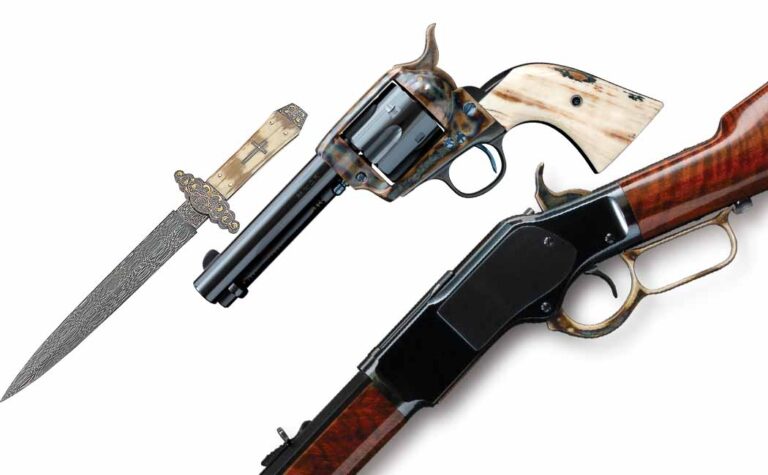
An 1873 knife/restored-pistol-and-rifle set collaboration from ABS master smith Harvey Dean and Turnbull Restoration Co. is sure to set the knife-and-gun collector world on fire.
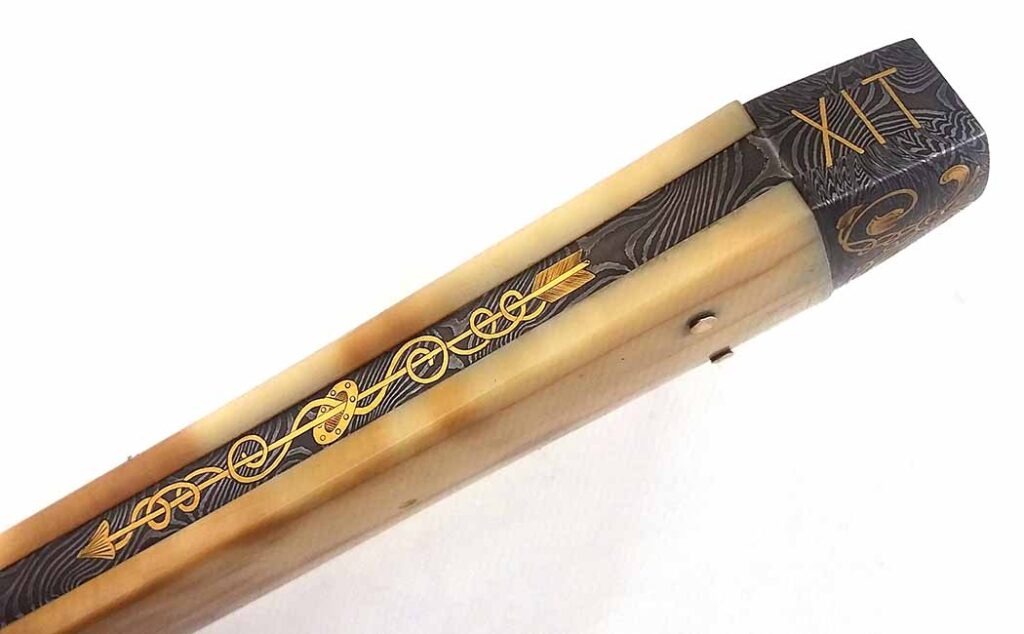
The 24k-gold arrow inlay on the spine of the damascus handle frame is in the style of famed 19th-century pistol engraver L.D. Nimschke. The XIT is a repro of an old cattle brand.
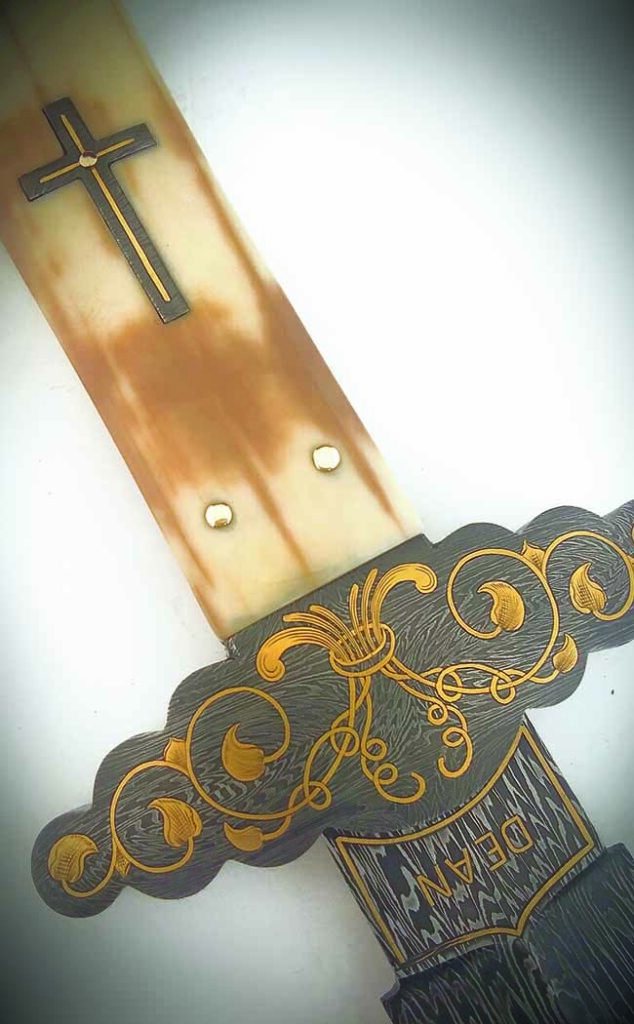
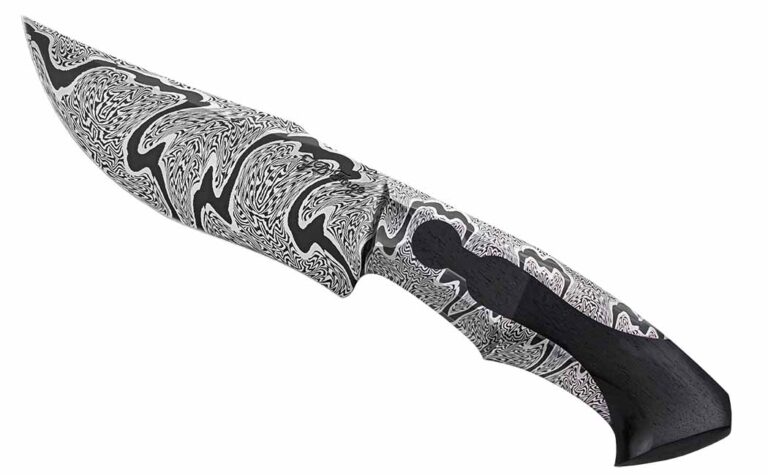
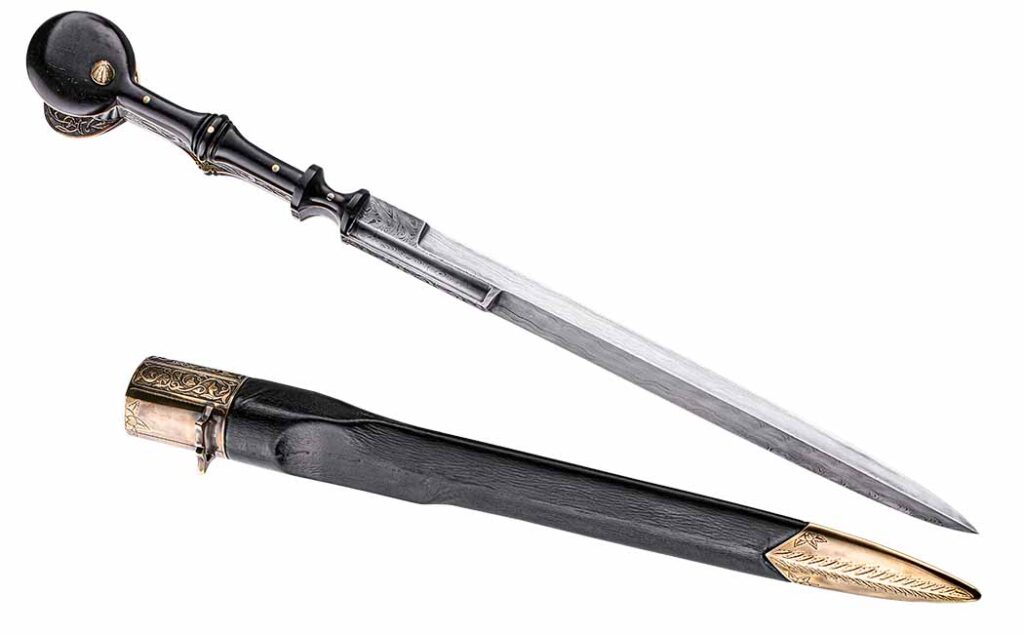
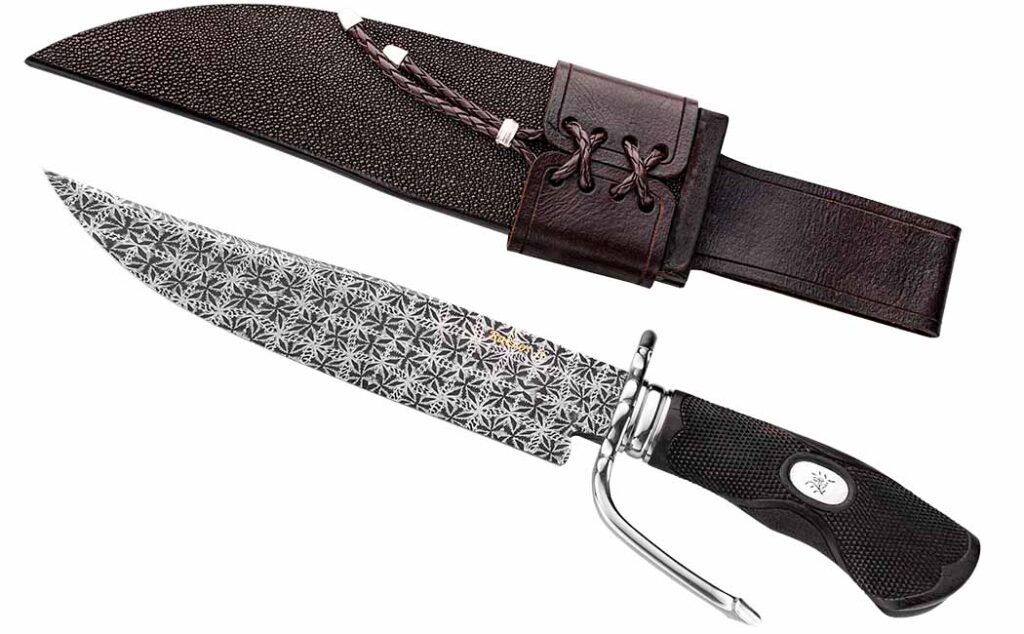
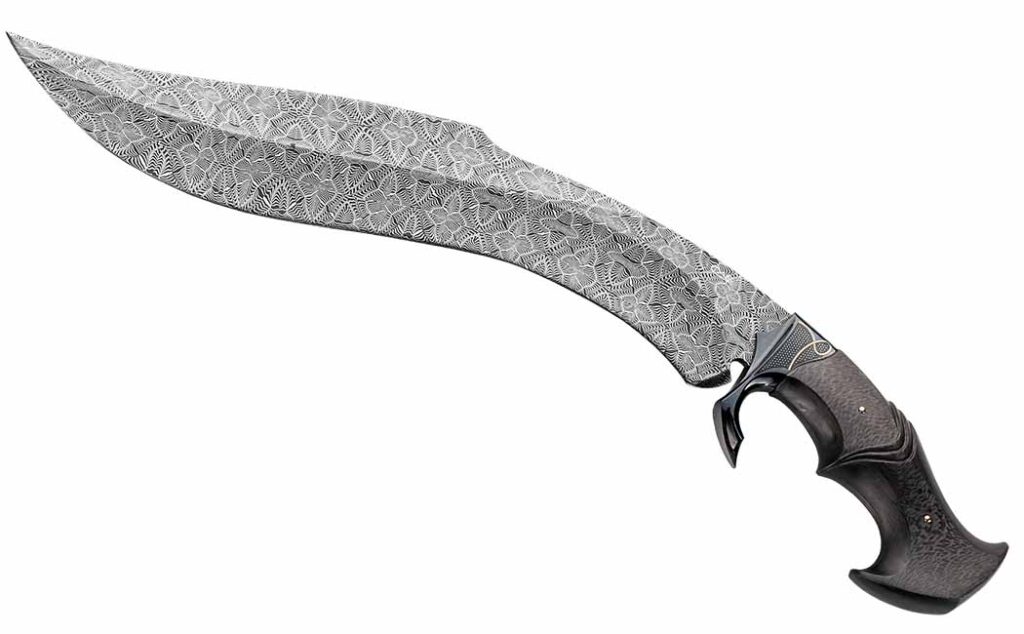
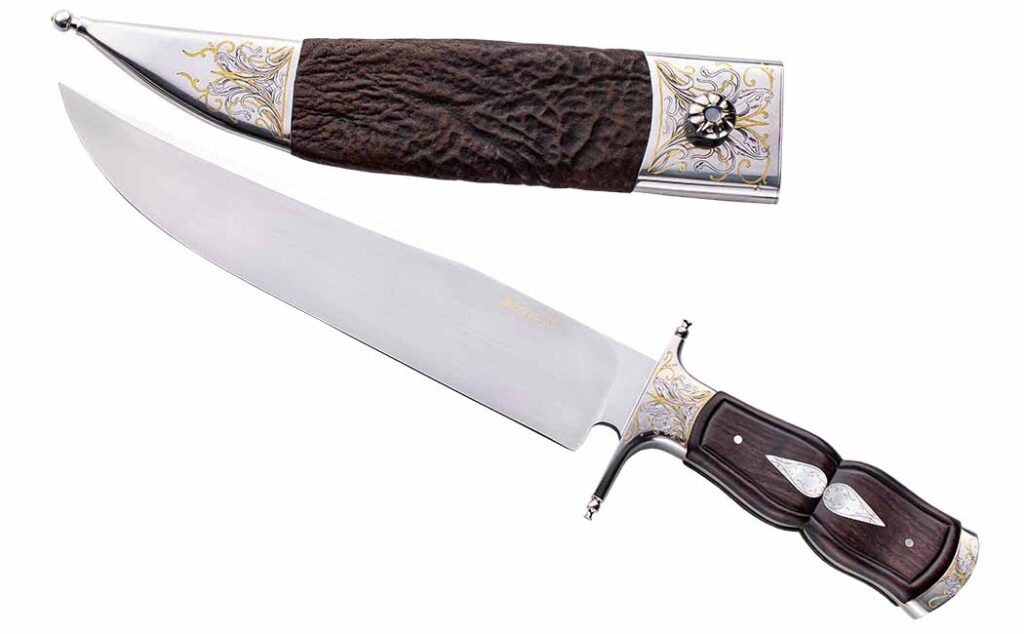
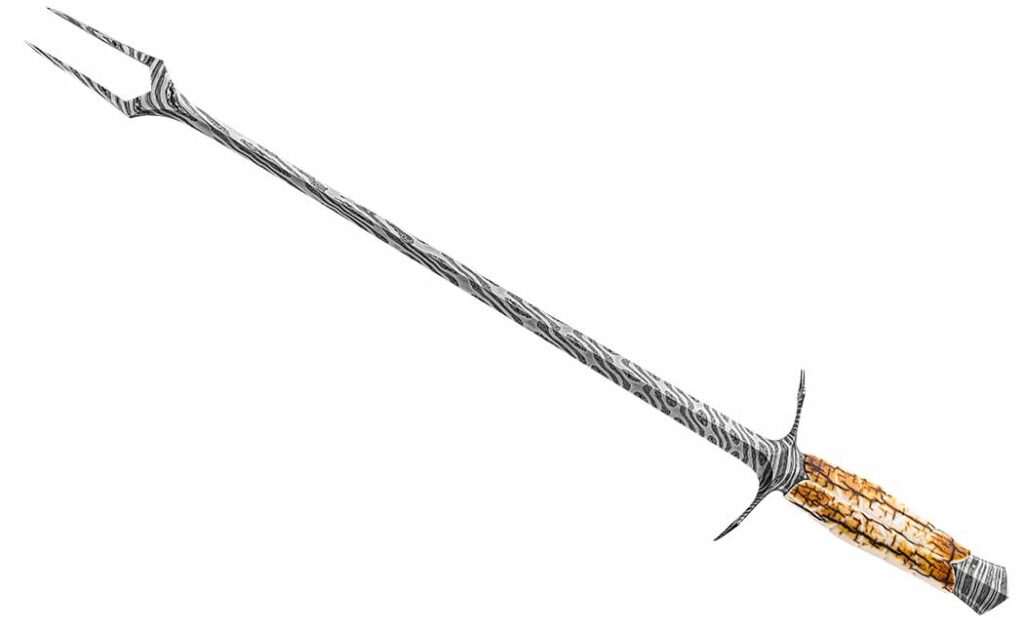
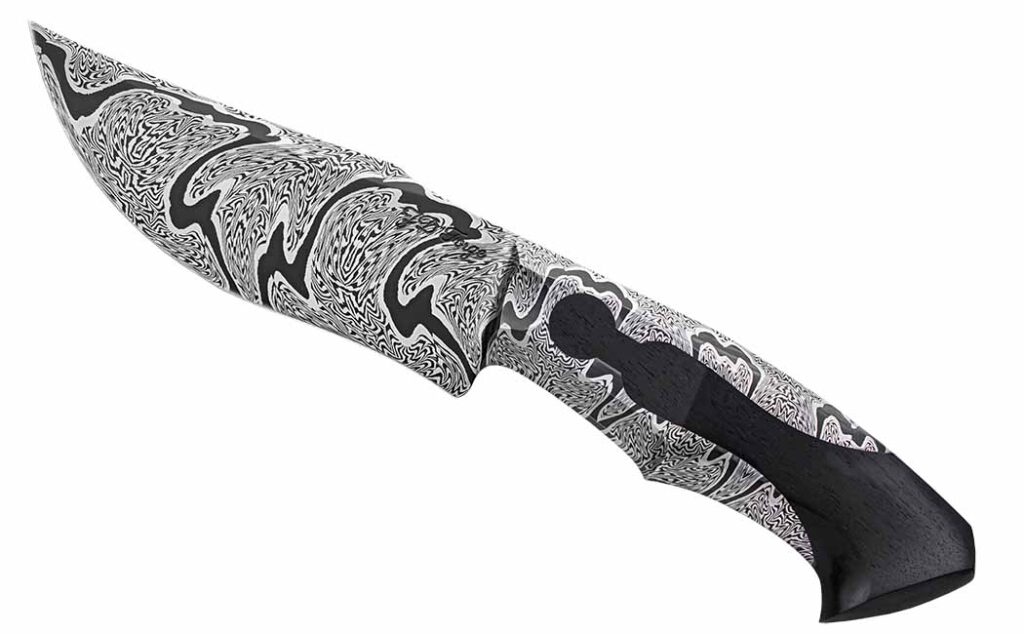
In a spinoff of Harvey’s Olympus dagger design, the 9-inch blade is his thunderstorm damascus. It’s complemented by a guard based on an antique one Harvey modified a bit to resemble a cloud that ties in with the thunderstorm theme. He picked the coffin handle because it was a design popular circa 1873. The damascus cross features a 14k-gold pin, as does the balance of the walrus ivory handle, and 24k-gold inlay. The handle frame is 42 layers of twist damascus to tie in with the fact that Harvey is the 42nd U.S. ABS master smith.
The guard is based on a modification of an antique one. The 24k-gold inlay is by Harvey Dean, as is all the knife engraving. Fittingly, Harvey inlaid the damascus cross with 24k-gold inlay on Good Friday last. The pins are 14k gold.
The restored pistol and rifle pair are part of a 150th anniversary set by Turnbull Restoration Co. The pistol is a Colt M1873 Peacemaker 1907Model P Single Action Army. Some of the most famous outlaws and lawmen of the Old West carried original examples of the handgun, including Billy The Kid, Jesse James, Butch Cassidy, Doc Holliday and Wyatt Earp. The rifle is a Winchester Model 1873 lever action from 1904. Originals of which also were extremely popular in the Old West, it was the go-to for market hunters, cowboys and stagecoach drivers through the remainder of the 19th century and into the 20th.
Part of the Texas Slipjoint Cartel, Bubba Crouch shares the tools with witch he crafts his creations.
Tommy “Bubba” Crouch is a Texan through and through. In fact, he lives only minutes from Cutlery Hall-Of-Famer Bill Ruple, who has mentored more slip-joint knifemakers than a little bit. Crouch is one of those pupils and was also the spark in naming a merry band of talented custom makers who studied under Ruple the South Texas Slipjoint Cartel.
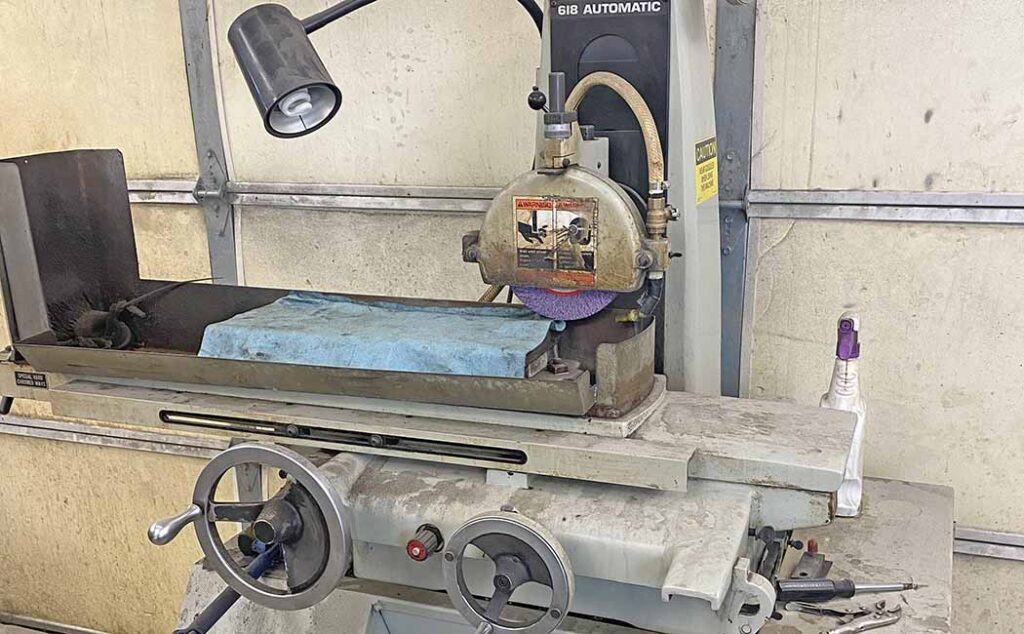
Crouch employs his Harig 618 automatic surface grinder for bringing parts to thicknesses pre-heat treat and for clean-up post-heat treat.
“Bill Ruple and I were sitting around one day in his shop and we were just talking about knives and such,” Bubba recalls. “We were talking about our bladesmithing friends in the Montana Mafia, so we came up with the name South Texas Slipjoint Cartel. It was mainly just to mess with our Montana knifemaking friends who’d formed such a group. We decided to make it an LLC. Our group has done many donation knives for charity events. It mainly consists of friends sharing techniques and better ways to do things. I have been blessed to have Bill Ruple five miles away and he has helped me tremendously. Other members sharing their knowledge have also been something that helped me personally.”
It can be truly said that Bubba is all cowboy and all hat. He grew up ranching, spent time on the competitive roping circuit, and even had a stint driving a cattle truck. He took up knifemaking in 2009 and credits his apprenticeship under Ruple as the key to where he is today.
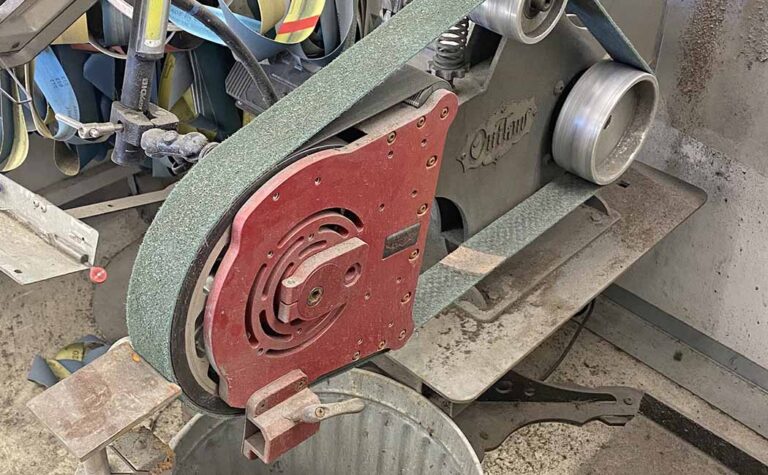
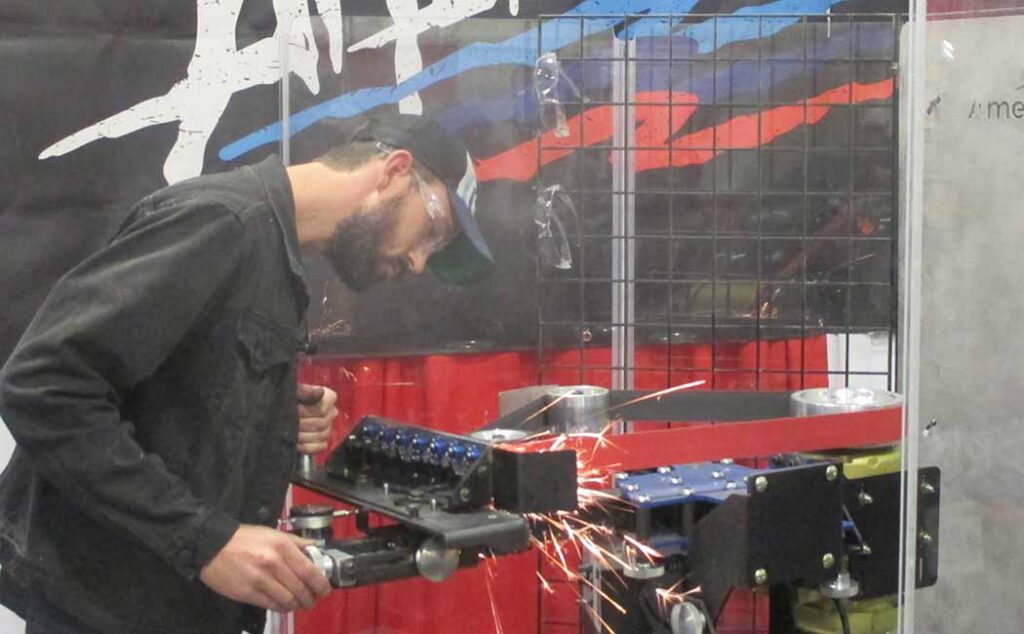
Bubba uses The Outlaw grinder with the Moen platen (above) for grinding blades exclusively. “Both work well together,” he observes.
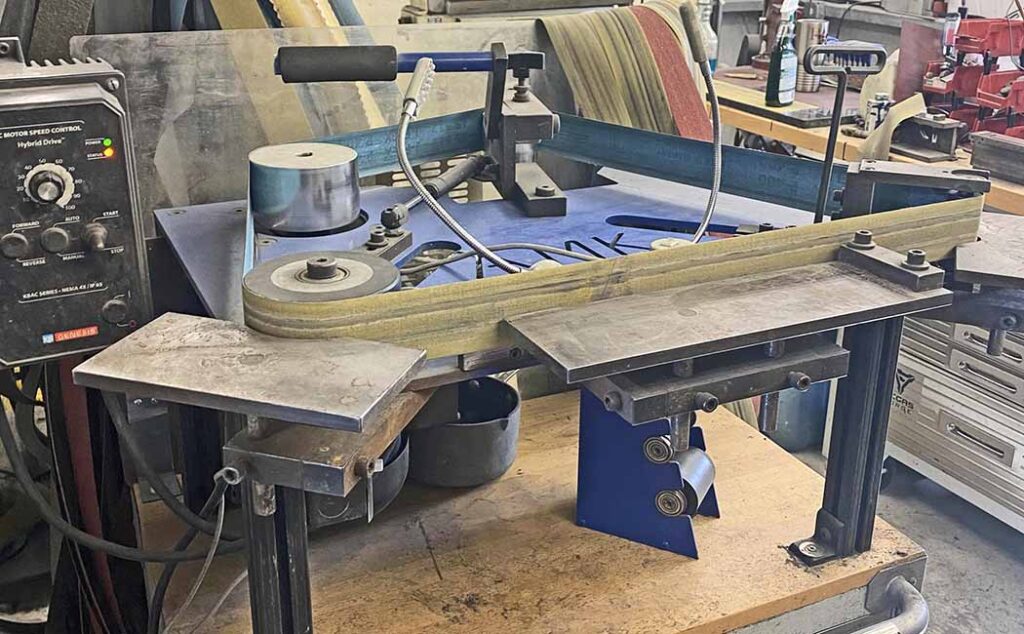
First Crouch calls out his milling machine. “The Bridgeport Mill is an adjustable speed head that I use for milling integrals, liners, relieving liners and spinning center handle pins,” he notes. As for shop grinders, he has a plethora. “My automatic surface grinder is a Harig 618. This machine I use for bringing parts to thicknesses pre-heat treat and for clean up after heat treat. The Outlaw grinder with the Moen platen is used for grinding blades only. Both work well together,” he observes. “The Northridge grinder I use for roughing out and shaping parts.
“My green grinder is made by Enrique Pena and is a great piece of equipment. The wheel and platen flip around and the back side can be used as a loose belt. The horizontal grinder is an AMK and is a necessity for making slip joints, in my opinion.”
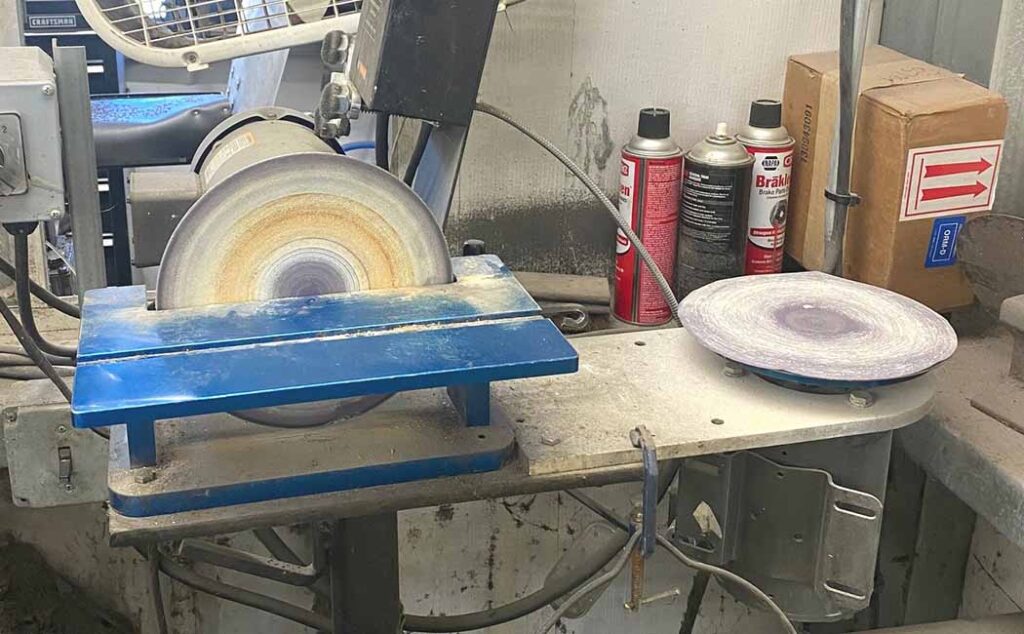
For his main disc grinder setup, Crouch uses a Hardcore model for cutting blade tangs and fitting handle material into the liners. The flat disc is homemade for thinning and flattening handle material.
Last but not least on the grinder front Bubba lists his disc grinders. “My main disc setup came from Hardcore and is used on cutting in the tang on the blade and for fitting handle material into the liners,” Bubba explains. “The flat disc is homemade and used for thinning and flattening handle material.”
Bubba Crouch
He has two ovens for heat treating. “My heat-treat ovens are both newer models. The Paragon Pro is a great oven that gets to tip really quickly,” he notes. “The Evenheat has been a great addition and is very accurate.”
Bubba also keeps two pantographs in his shop. “The first is an Alexander 1B that I use for inlays and cutting shields. It’s an older machine from the early 1880s,” he states. “The second pantograph is a Gorton P1-2. I use this machine for engraving my name into the blades.”
He also keeps another specialty machine for shop duty. “The Oliver drill point thinner has been converted with a table and a cupped stone to cut nail nicks in the blades,” Crouch advises, wrapping up with something no maker can do without: “The workbench came from Sam’s Wholesale Club and I have three of them—very well built for the money.”
See who took home the hardware from the 2023 Custom Knife Awards at BLADE Show.
As usual, the Custom Knife Of The Year® Awards at the June 2-4 BLADE Show at the Cobb County Gallery gather together some of the best examples of bladesmithing in the knife world. The difficulty was choosing which would rise to the top.
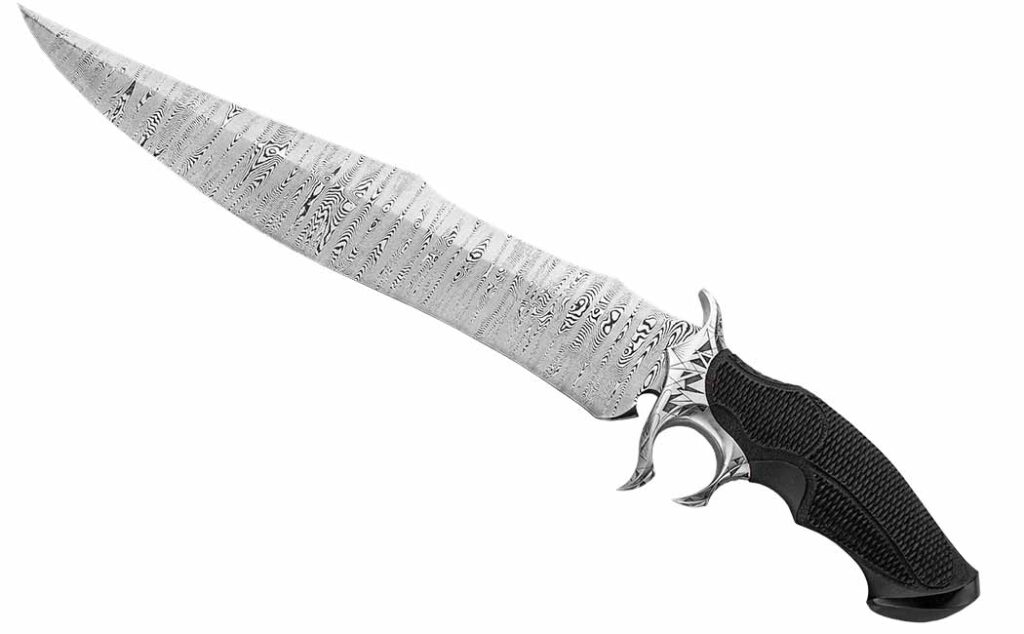
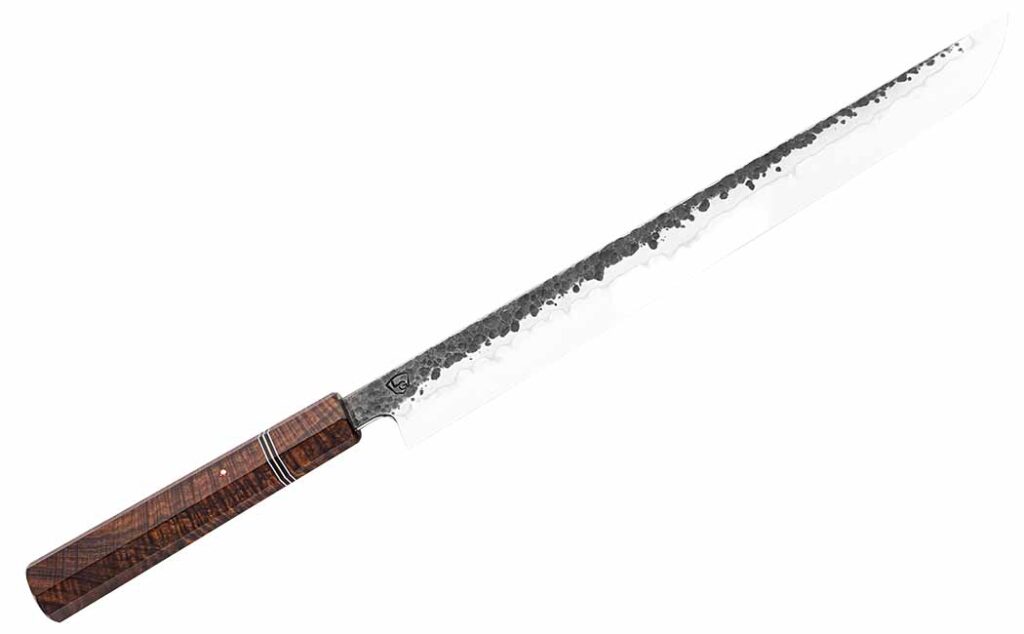
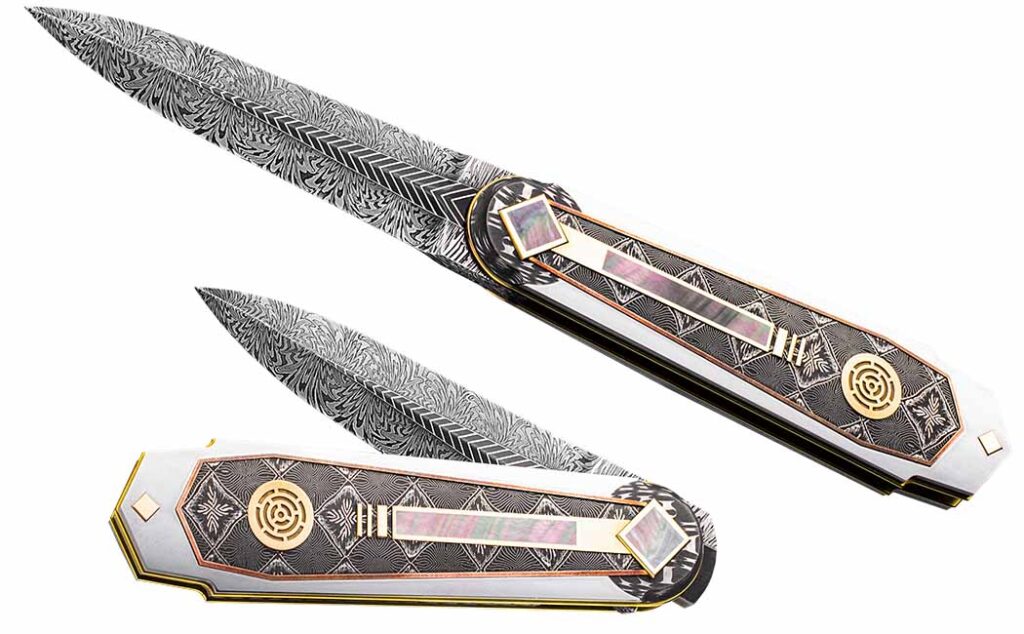
In a highly competitive field, a panel of expert judges sorted out the top knives in XX categories for the best of the best. Below are the winners, including the coveted Hugh Bartrug Best In Show.
Hugh Bartrug Best In Show & Fixed Blade: Vince Evans
Photo: Jocelyn Frasier
Best Fighter: Samuel Lurquin
Photo: Jocelyn Frasier
Best Kitchen Knife: Lucas Gumbiner
Photo: Jocelyn Frasier
Best Folder: Owen Wood
Photo: Jocelyn Frasier
Best Tactical Folder: Thomas Gony (Grind Tactical Knives)
Photo: Jocelyn Frasier
Best Handle: Fabio Barros
Photo: Jocelyn Frasier
Best Utility Hunter: Oliver Goldschmidt
Photo: Jocelyn Frasier
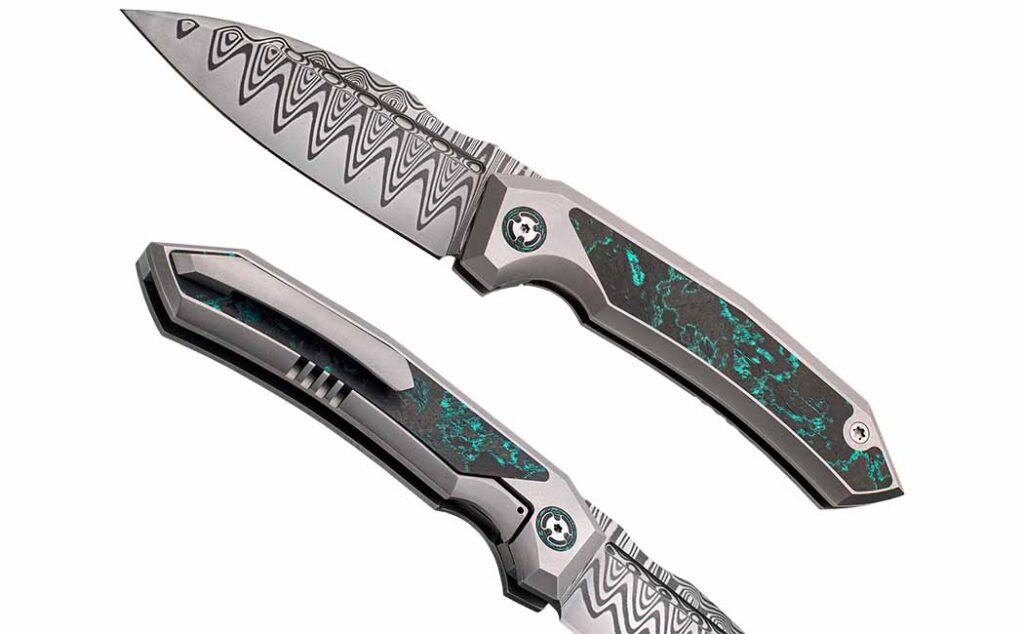
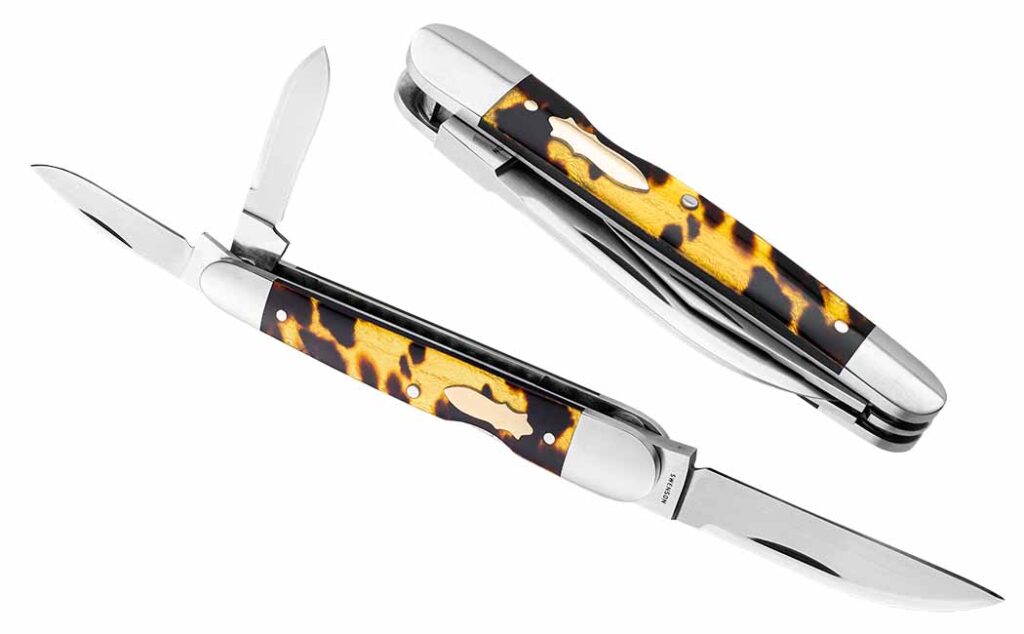
Best Slipjoint: Luke Swenson
Photo: Jocelyn Frasier
Best Damascus: CAS Knives (Sobral Brothers)
Photo: Jocelyn Frasier
Best M.A.C.K.: Shirogorov Knives
Photo: Jocelyn Frasier
Best Collaboration: Raul Sartorial Filho (Engraver) & Fabio Barros (Bladesmith)
Photo: Jocelyn Frasier
Best Art Knife: Mauricio Daletzky
Photo: Jocelyn Frasier
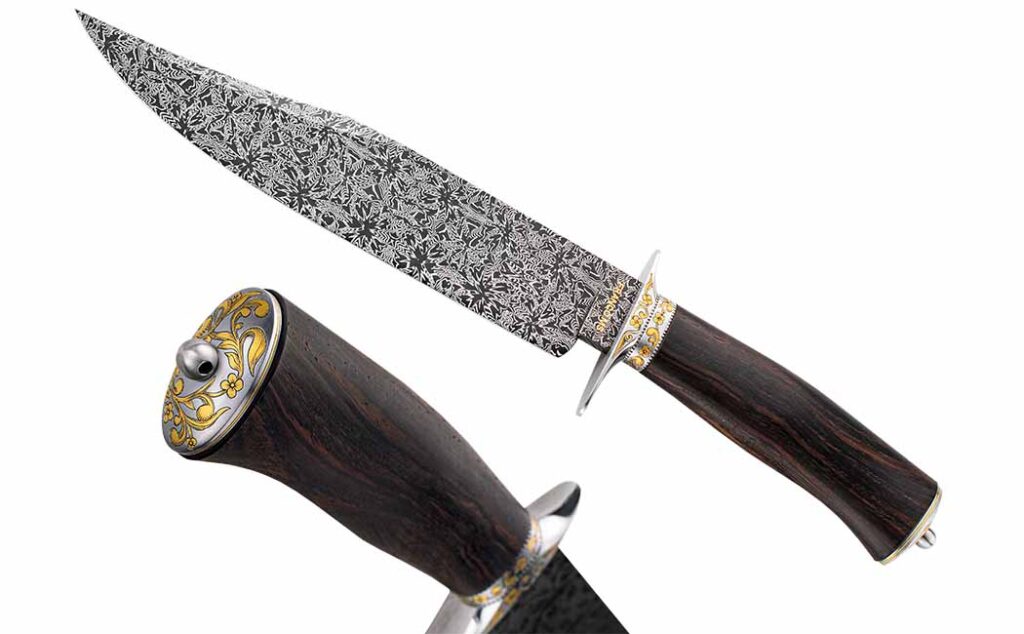
Best Bowie: Dionatam Franco
Photo: Jocelyn Frasier
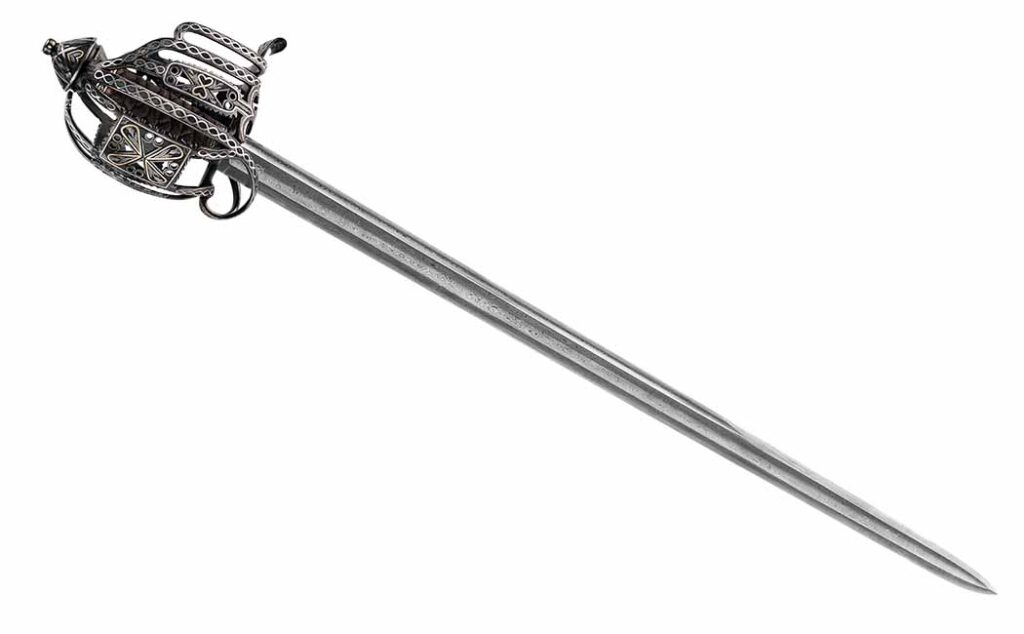
Best Sword: Vince Evans
Photo: Jocelyn Frasier
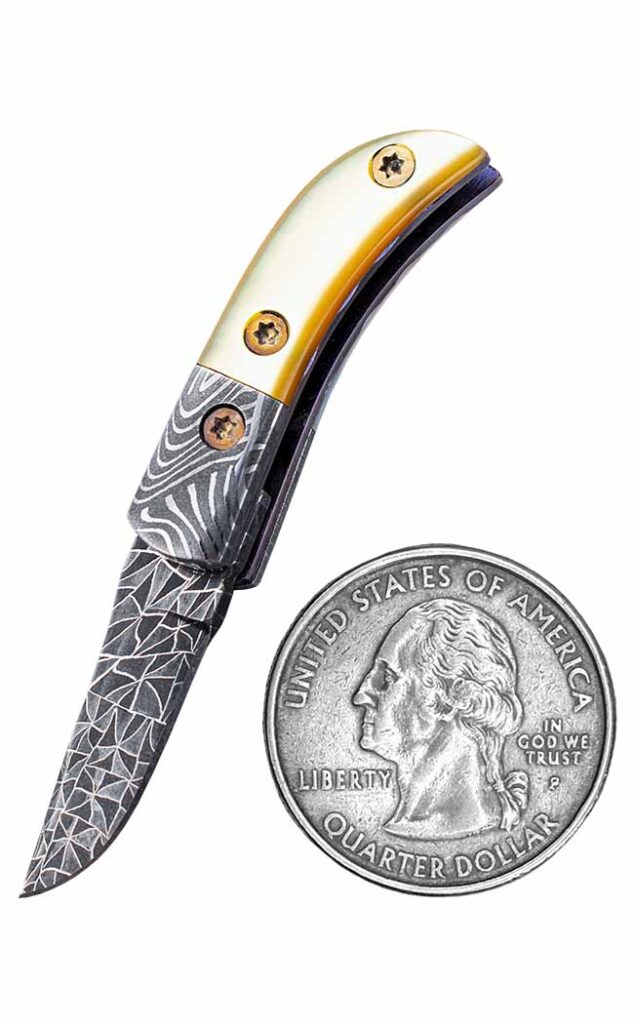
Best Miniature: Chuck Gedraitis
Photo: Jocelyn Frasier
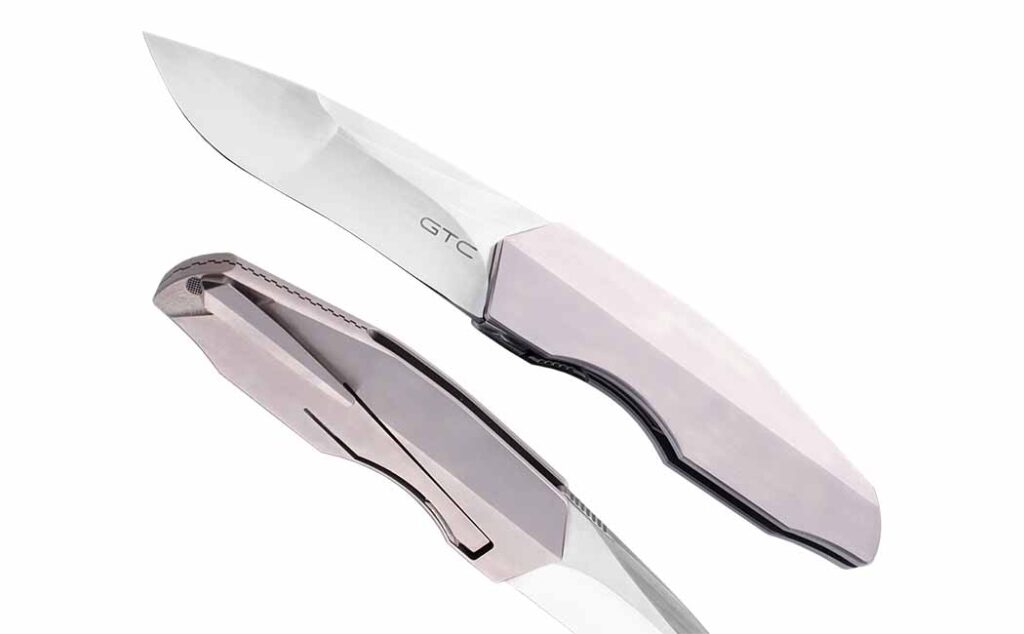
Most Innovative: GTC Knives
Photo: Jocelyn Frasier
Best of The Rest: Will Stelter
Photo: Jocelyn Frasier
Best New Maker: Zane Dvorak
Photo: Jocelyn Frasier
See Past 2023 Factory Knife Of The Year® Awards Winners:
See who took home the hardware from the 2023 Factory Knife Of The Year® Awards at BLADE Show.
The June 2-4 BLADE Show at the Cobb County Gallery hosted what might have been one of its fiercest Factory Knife Of The Year® Awards competition.
Seemingly every maker—at least a healthy cross-section—threw its hat in the ring to make a run for the coveted hardware. This was evident with the display cases outside the main hall that house the entrants at full capacity and nearly brimming over. Volume, however, wasn’t the lone variable. From knife accessories to the blades making a run at Knife Of The Year, the quality of work, innovation and craftsmanship proved top shelf.
Sufficed to say, the 10 judges—industry experts from knife writers to makers and Cutlery Hall Of Famers—who cast their ballots had their work cut out for them. Below are the knives that lived up to their exacting standards to take home 2023 honors in 10 categories and the overall Knife Of The Year award winner.
Knife Of The Year: GiantMouse GMX
Photo: Jocelyn Frasier
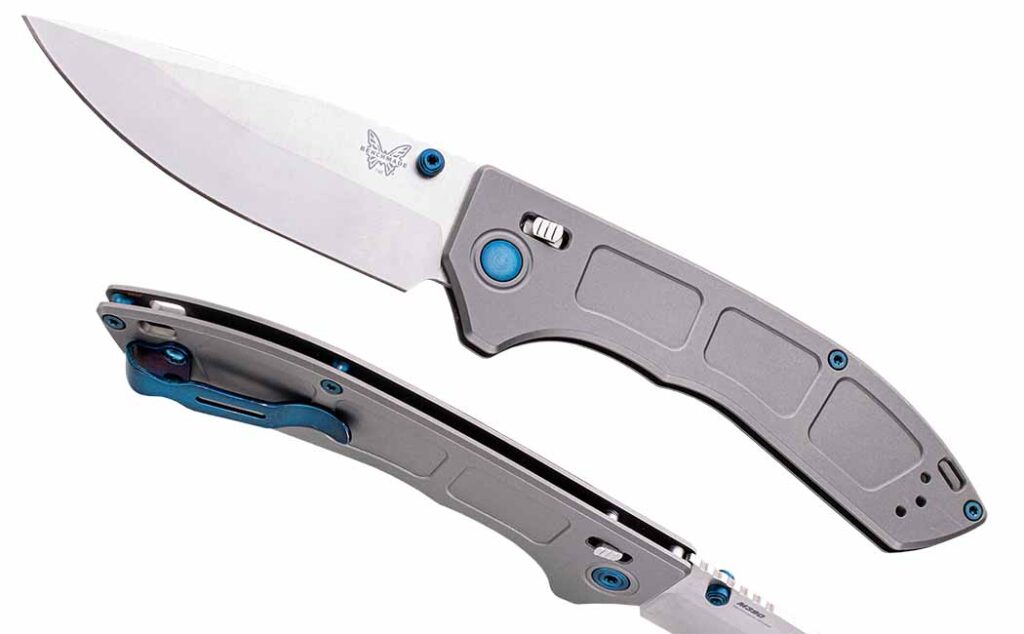
American-Made Knife Of The Year: Benchmade Narrows
Photo: Jocelyn Frasier
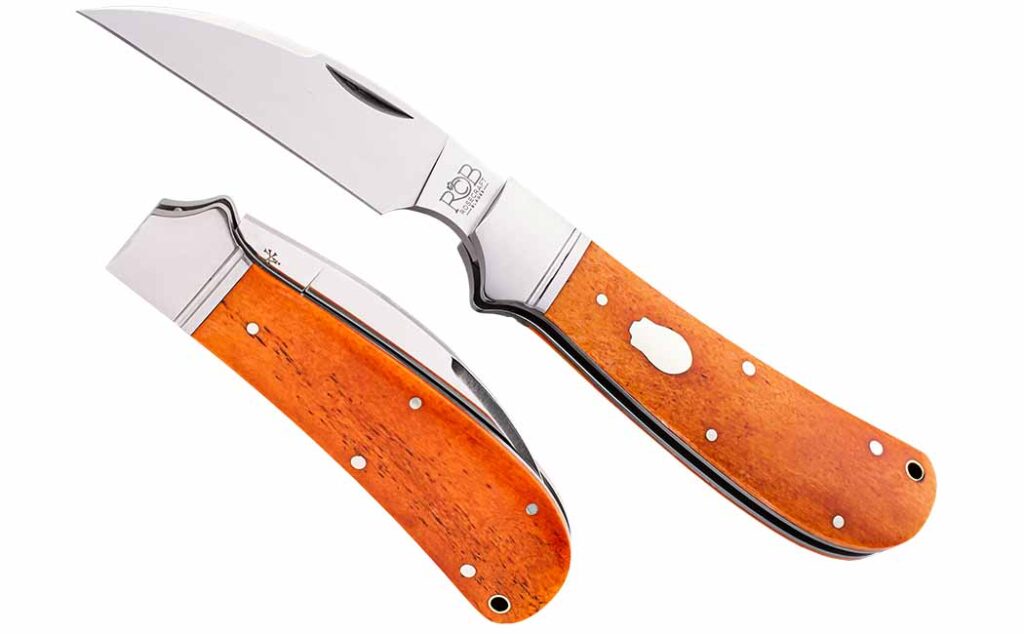
Imported Knife Of The Year: Rosecraft Blades Clinch River Swayback
Sarge Knives TK Retro has throwback looks, but modern performance.
The TK Retro from Sarge Knives reminds me of my first fixed blade.
The blade was pitted and the leather handle was cracking. Still, the knife field dressed many squirrel, rabbit and game birds throughout my childhood. It was an excellent camper’s or outdoorsman’s knife.
As for the TK Retro, like my first fixed blade, the stacked-leather handle still gives my hand a warm feel. It has a 440C stainless steel blade to make its good looks last even longer. However, how does it cut?
TK Retro Sharpness Test
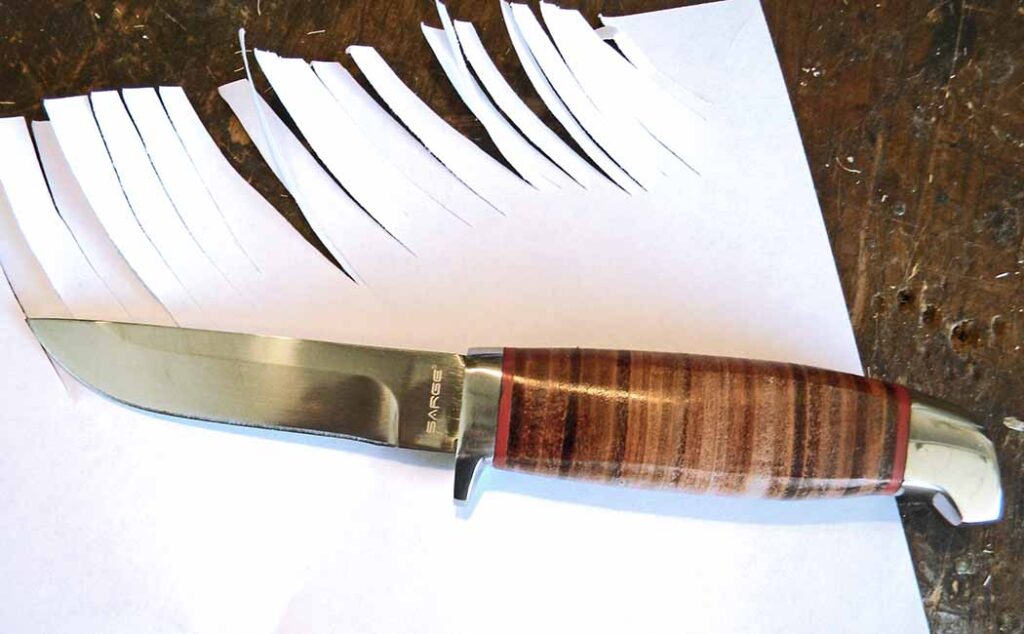
Using the knife’s weight, the author employed push cuts in the stationery. There were no “bad starts,” just smooth slicing.
The first test medium was 20-pound bond copy paper. The TK Retro started slicing and made nice, clean cuts in the stationery. Using the knife’s weight, I employed push cuts. There were no “bad starts,” just smooth slicing.
TK Retro Light-Duty Cuting
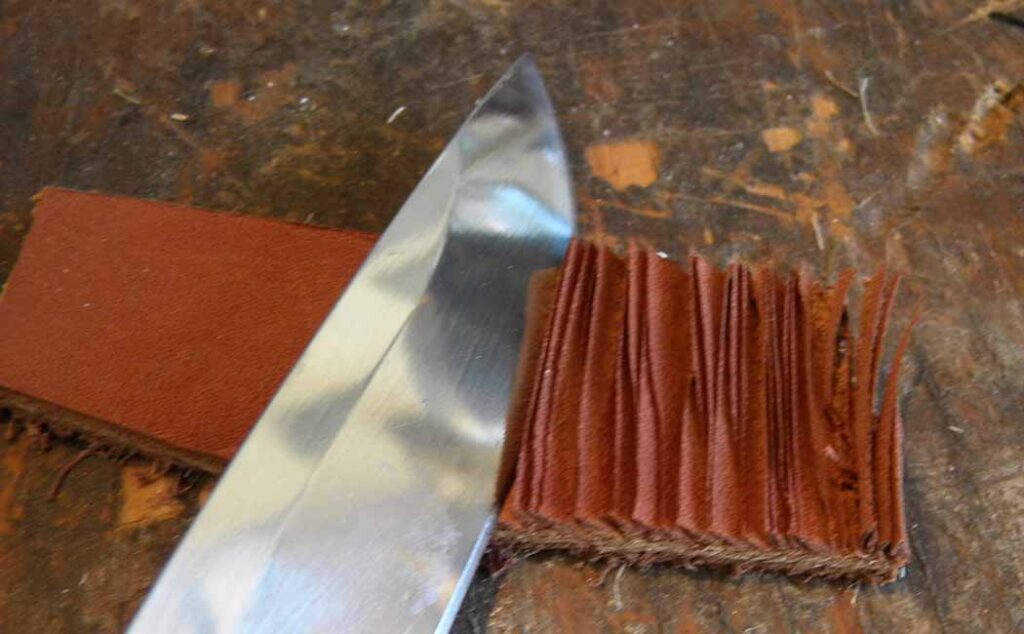
The blade audibly crunched the leather with each skive and made it easy to control the width of slices.
The TK Retro bit deep and smooth [into drywall], with minimal bending of the cut pieces. I could feel the cardboard’s layers with each cut. Edge performance was nice and aggressive. The handle provides a very secure grip.
Leather skiving followed. The blade audibly crunched the leather with each cut and made it easy to control the width of slices.
Heavy-Duty Cutting With Sarge’s Fixed Blade
Firesticks
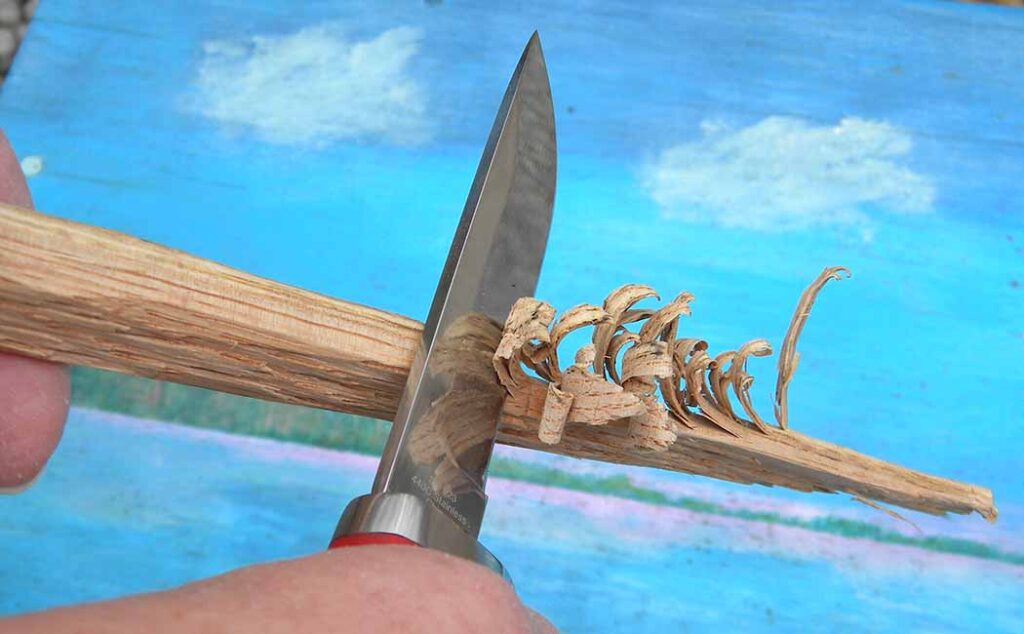
Melissa did a great job whittling a fuzz stick with the TK Retro over her painted bench.
While camping, I was splitting firewood for the weekend. My wife, Melissa, wanted to start the fire so I showed her how to make fire sticks. She took to whittling very quickly and did four of the sticks to aid in her fire starting. She used the TK Retro to make some very nice curlicues. Before I knew it she had a beautiful fire going—excellent job on her part! I was surprised to see her whittling over her bench that she had painted. She seemed to feel very confident using the little fixed blade.
Splitting Wood
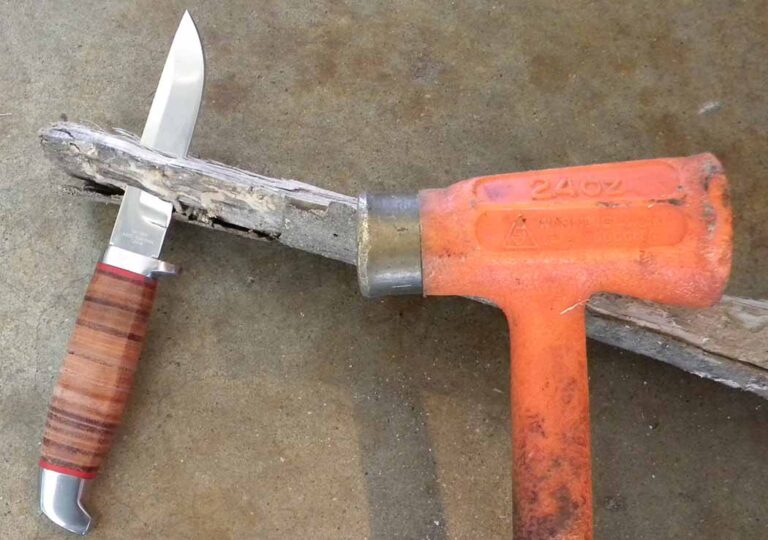
I had some dry hackberry wood to split for kindling. A dead blow hammer and the TK Retro made short work of the task. I didn’t see or feel any edge/knife damage while batonning the edge through the wood. The guard acted like a guide for my hold hand, keeping the wood away from my knuckles. The leather handle absorbed the vibrations perfectly.
Vs Rope
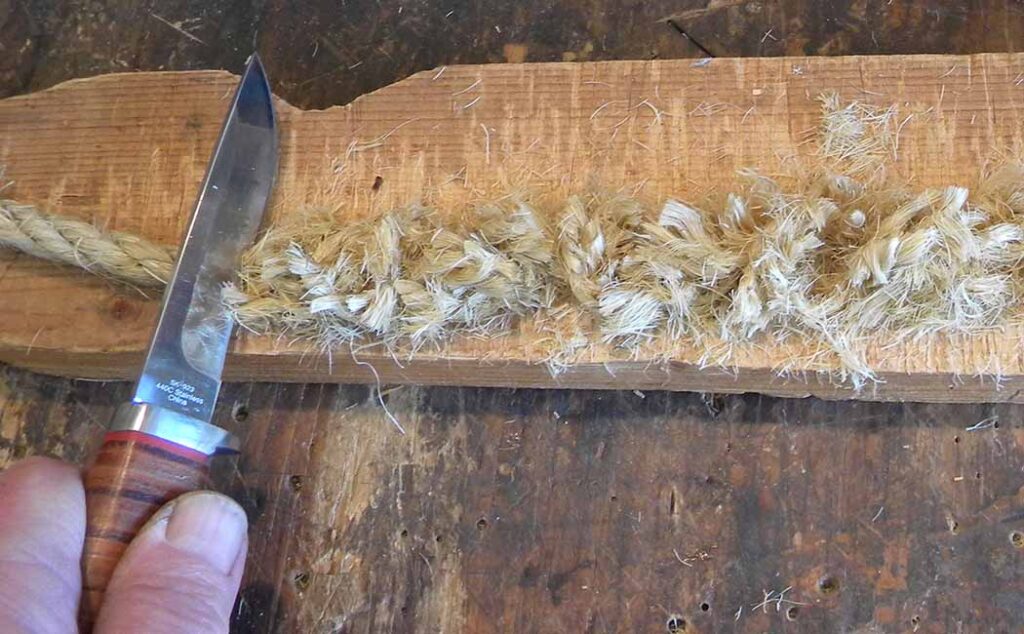
The fixed blade made 82 crunching cuts in the half-inch sisal rope before the edge started to slide.
On the half-inch sisal rope, the TK Retro crunched its way to 82 clean cuts before the edge started to slide. I did find that the guard had a sharp edge that needed softening a bit. It would create a hot spot on your hand after a while. It was an easy fix with some sandpaper.
Chopping Antlers
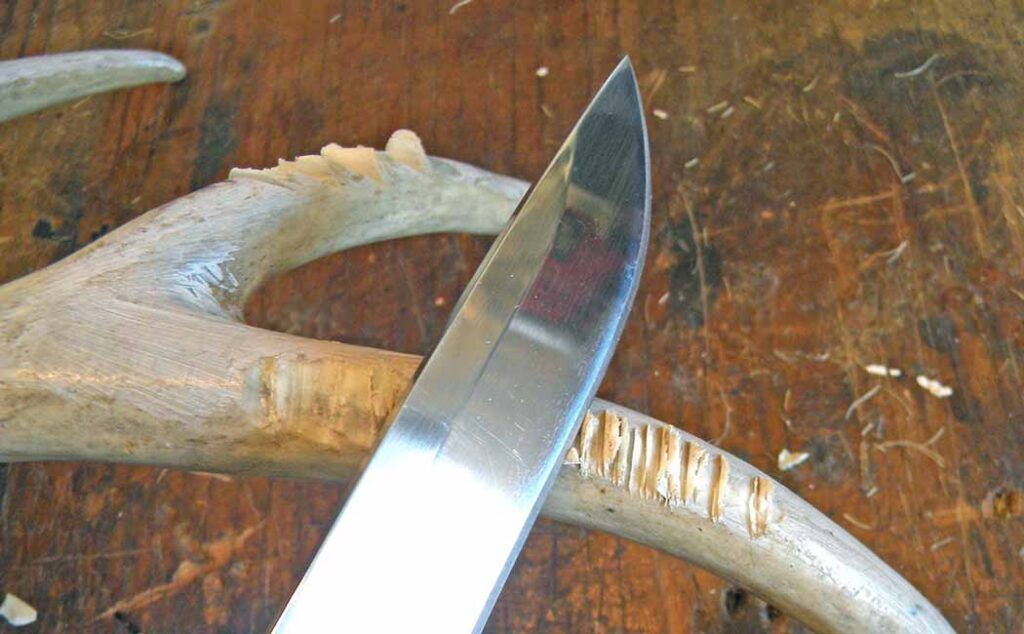
After 20 hard whacks on the antler the edge showed nary a chip, a sign of outstanding heat treating.
The last test for the edge consisted of a series of chops into a whitetail deer antler. After 20 hard whacks, I expected to see some minor edge chipping but there was none. The edge was as sharp as when I started. Sarge Knives nailed the heat treating.
Changes
The guard and buttcap need to be softened a tad. They will bite you after a period of hard use.
Final Cut
The TK Retro is a very nice medium-use knife great for game or camping.
Summer school never looked so good with the 10th Annual BLADE University.
Cutlery classes taught by Michael Walker, the inventor of the linerlock, Bob Kramer, world-class maker of chef’s knives, and father-and-son damascus wizards Devin and Larrin Thomas are among the highlights of a full slate of knifemaking instruction for the 10th Annual BLADE University.
Sponsored by Work Sharp, BLADE University will be held in conjunction with the 42nd Annual BLADE Show June 2-4 at the Cobb Galleria Centre. Classes begin Friday, June 2, and conclude Saturday, June 3.
While most classes are held in the Cobb Galleria, some also are conducted under the tent in The Courtyard, aka the parking lot of the show’s host hotel, the Renaissance Atlanta Waverly.
BLADE University gathers some of the world’s best knifemakers, bladesmiths and other cutlery professionals to teach a wide range of subjects for the knife aficionado and novice alike. If you love knives, BLADE University has a related topic that will interest you.
8-9:30 a.m. Fundamentals of Grinding, The Courtyard. AmeriBrade and guest makers provide a general overview on grinds, technique and different equipment. The class is interactive and the AmeriBrade team answers questions and demonstrates suggestions for common grinding issues.
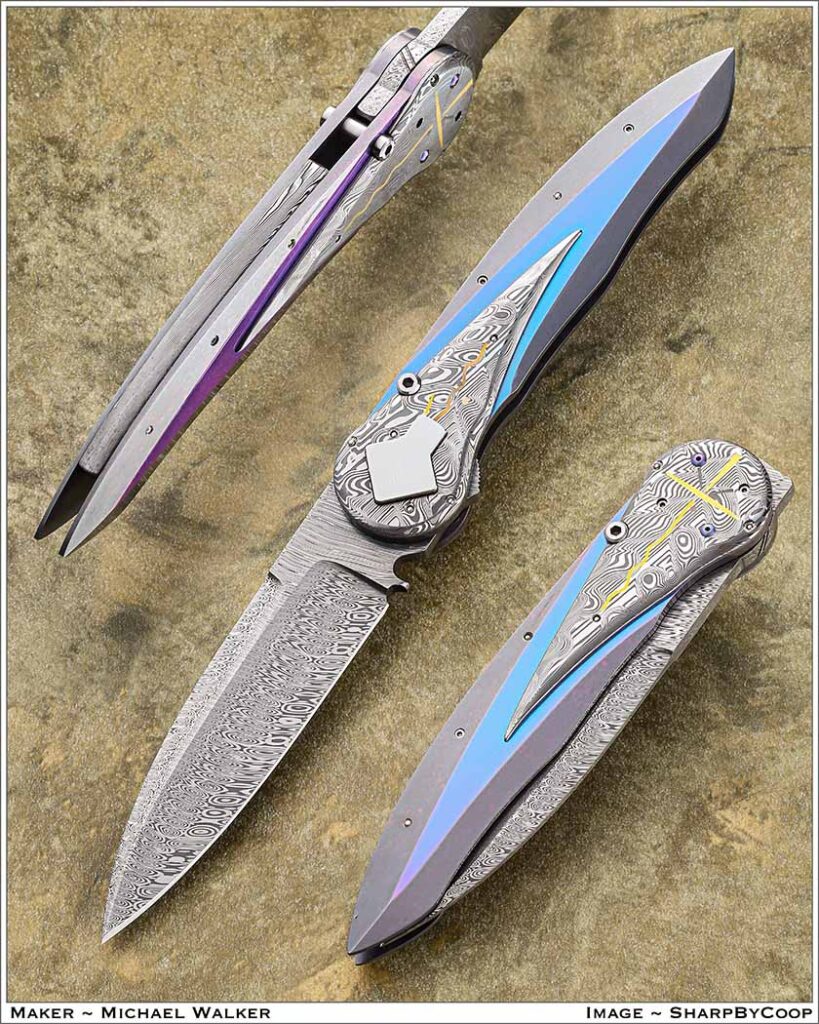
BLADE Magazine Cutlery Hall-Of-Fame® member Michael Walker (inset), maker of this stunner in damascus and anodized titanium, will present his first-ever BLADE University class on several topics, including his revolutionary linerlock. (SharpByCoop knife image)
10-11 a.m. Exploring the Performance of Pattern-Welded Steel, Room 103. How does damascus perform? What are the best steel combinations for high-performance damascus? Is there really a “damascus cutting effect”? Learn about the experiments Devin and Larrin Thomas have performed on the strength, toughness and edge retention of damascus steel.
10:30 a.m.-12 p.m. Designing Kitchen Knives, Room 104. ABS master smith Bob Kramer reviews some of the considerations to ponder when designing kitchen knives. He explains the path he took to make household cutlery and why he made the choices he did.
1-2 p.m. CRKT Presents Q&A with Michael Walker, Room 104. BLADE Magazine Cutlery Hall-Of-Fame® member Michael Walker answers questions regarding the linerlock he developed in 1981 that revolutionized folding knives. He also discusses the evolution of the many other locking systems he designed post-linerlock, how to secure a patent, and his process for fine-tuning details on his knives. Questions are determined in advance, though Michael entertains limited questions from those attending as well.
1:30-2:30 p.m. Dancing with the Devil: Algorithms, SEO and Ecommerce, Room 103. Ben Petersen, co-founder of Knafs, a “goofy brand of knife-related products and ideas,” explains how to sell knives online and build your brand while navigating Google, Amazon and Meta.
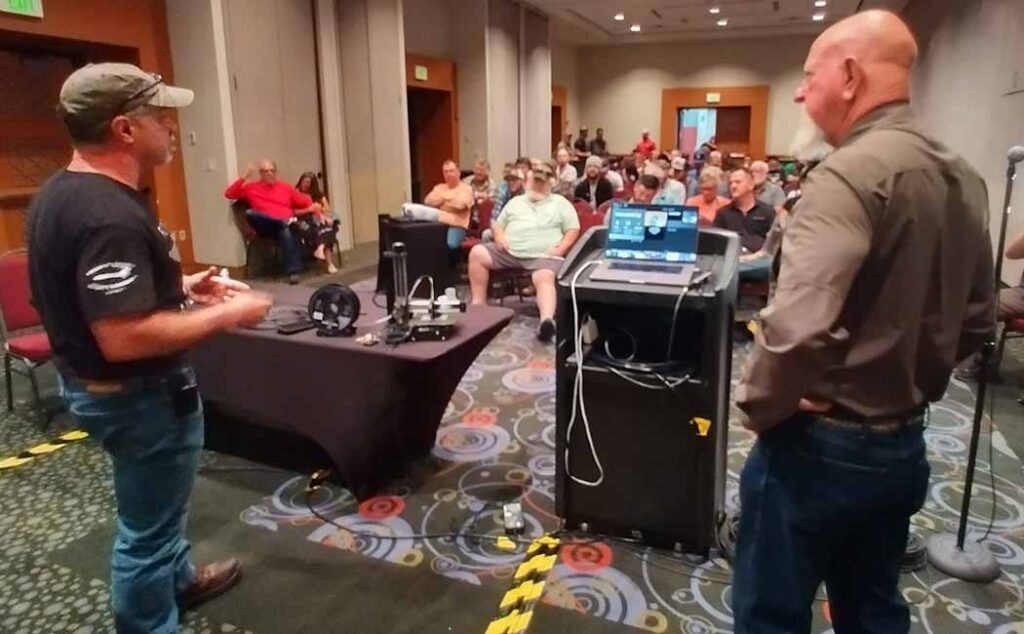
In “3D Printing for Canister Patterns,” ABS master smith Steve Schwarzer (right) and Ron Hardman (left) show you how to use a game-changing advancement to forge patterns on a budget that were previously unthinkable.
2-3 p.m. What’s Hot in Knife Steels, Room 103. The heart of the knife is the blade steel, and few know steels like those who produce and sell them for a living. Three among the leaders in the field are Mike Norris Damascus, Nichols Damascus and Vegas Forge Damascus. Join representatives from each company as they discuss today’s hottest steels and what makes the steels so much in demand. They explore each steel’s performance, ease of sharpening, looks, other desirable traits and more.
3-4 p.m. Forging Ancient Materials and Why It’s Important Today, Room 107. Hosted by award-winning knifemaker Ilya Alekseyev, the panel explores how and why practicing forging methods used by the craftsmen of old translates into modern materials, and why it is important to establish proper forging techniques with such materials.
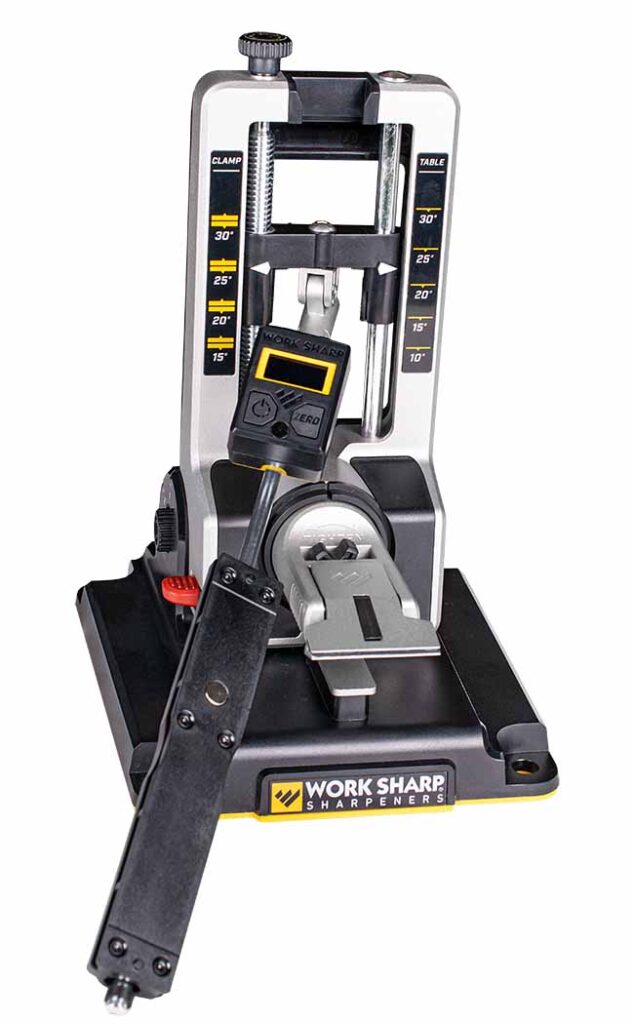
3:30-4:30 p.m. Hands-On Knife Sharpening, Room 113. Bring your knife or a borrowed one and learn the progression of shaping a bevel, sharpening and edge maintenance from the team at Work Sharp. You get hands-on practice and experience sharpening blades using a variety of sharpeners and abrasives, from whetstones to belts.
4:30-5:30 p.m. Unlearning Bad Habits: My Unique Path to JS, Room 107. Matt Stagmer focuses on knifemakers that have been in the craft for many years and how the path to becoming an ABS journeyman smith differs from someone learning those standards from day one. Included are tips and tricks to retrain your hands and mind.
BLADE University Saturday
8:30-9:30 a.m. Decorative Custom Knife Filework, Room 113. Knifemaker Kyle Daily of KHDaily Knives shows you his preferred files and the equipment he uses to make his five most popular filework patterns. The class outlines how to lay out your pattern and takes you step-by-step to being successful. Kyle does a hands-on demo and fields more-detailed questions at the end.
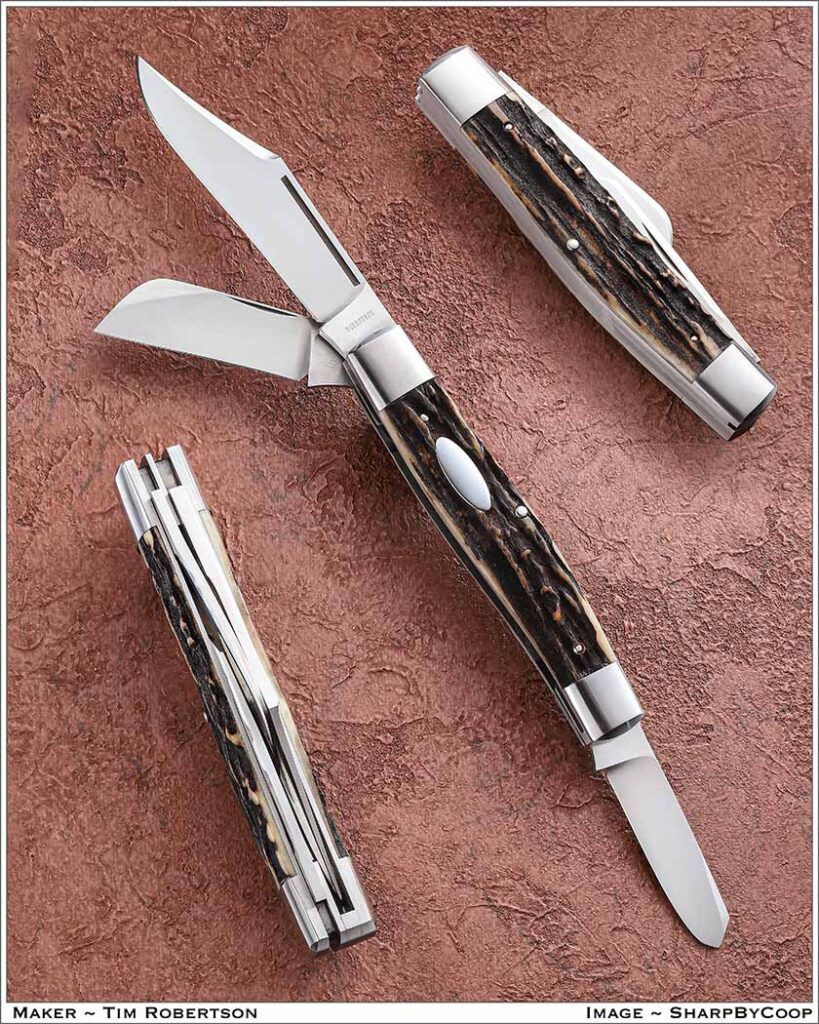
In “Reproducing Traditional Pocketknives,” Tim Robertson covers patterning traditional slipjoints from original factory knives in detail, including methods of disassembly, correct scribing techniques and proper hole layout. His three-blade stag slipjoint is a textbook example of his award-winning work. (SharpByCoop image)
8:45-9:45 a.m. How To Forge a Hunting Knife, The Courtyard. ABS master smith Timothy Potier demonstrates how to forge a full-tang drop-point hunter. Using his propane forge, Timothy goes through the entire process, including forging the blade to shape from tool steel. He also discusses heat treating, normalizing and more.
9:30-11 a.m. How To Run a Successful Knifemaking Business, Room 104. ABS master smith Bob Kramer shares his 35 years of experience running a successful knifemaking business and tips to employ along the way.
9:45-10:45 a.m. Reproducing Traditional Pocketknives, Room 107. Tim Robertson covers patterning traditional slipjoints from original factory knives in detail, including methods of disassembly, correct scribing techniques and proper hole layout (including changing the hole diameter). He also covers methods of using paper patterns commonly found on the Internet.
11 a.m.-12 p.m. 3D Printing for Canister Patterns, Room 113. Learn how to leverage 3D printer technology to make mind-blowing canister damascus patterns. ABS master smith Steve Schwarzer and Ron Hardman show you how to use this game-changing advancement to forge patterns on a budget that were previously unthinkable.
AmeriBrade and guest makers provide a general overview on grinds, technique and different equipment in “Fundamentals of Grinding.”
2-3 p.m. Let the Pros Critique Your Knife, Room 104. A panel of top cutlery craftsmen share decades of knowledge and experience in critiquing your custom knife. Award-winning makers Lucas Burnley and Luke Swenson, ABS master smiths David Lisch and Mike Quesenberry, and damascus-forging pioneer Devin Thomas examine your knife and tell you what’s good about it, what’s not and how you can make it better. Bring one knife only. Questions from attendees will be entertained throughout.
2:15-3:15 p.m. Hands-On Knife Sharpening, Room 113. Bring your knife or a borrowed one and learn the progression of shaping a bevel, sharpening and edge maintenance from the team at Work Sharp. You get hands-on practice and experience sharpening blades using a variety of sharpeners and abrasives, from whetstones to belts.
2:30-3:30 p.m. Writing for a Knife Publication, Room 107. Author/knifemaker Jason Fry and a panel of industry insiders share the tips and tricks it takes to get into the knife writing industry. Topics include idea submission and topic selection, interviews and content generation, methods for obtaining quality pictures and more.
4-5 p.m. Folder Design, Room 104. David Carver of Carver Knife Company teaches techniques on making a folding knife that works well, looks good and feels great in the hand/pocket.
A kitchen do-all, the Santoku is a must-have for foodie pros and novices alike. Here’s what to look for to get the best, plus our top picks.
Santoku knives are becoming increasingly popular in the West, especially among foodies, passionate home chefs, and anyone who brings a knife roll to work in a kitchen. If you’ve been dying to learn more about this great Japanese knife, you’re in luck.
We’re going to go over everything you need to know about the Santoku, from its origins and design, to how to buy and use one in your own kitchen. We’re also going to go over the top Santoku knives on the market right now, in case you’re looking to pick one up for yourself (or as a gift).
Origin of the Santoku
Traditionally, in Japanese cooking, knives have different roles based on what you’re preparing, more than how it’s being prepared. Around 100 years ago, you would commonly see a Gyuto (basically what Westerners call a chef’s knife) used to cut beef, pork, and chicken, a Nakiri to cut vegetables, and a Deba to cut fish.
Each of these is designed for its specific task, and so they are specialized. Of course, they can be used differently, but the idea is to have a knife for every task, rather than a knife for any task.
Around the 1940s, as steel started to come at a bit of a premium due to some noted historical world conflicts, the desire for multi-purpose kitchen cutlery rose, and out of that desire came the Santoku, or “three virtues” knife.
The purpose of the Santoku, also translated as “three uses”, was to be able to handle most food prep duties with just one knife. To that end, it is designed to be able to handle chopping, slicing, and cutting tasks, which is another interpretation of the meaning of the name.
Santoku Design
A Santoku typically uses a sheep’s foot blade and tip, which gives you a long, relatively flat blade edge and a tip that sweeps back up in a large radius towards the spine.
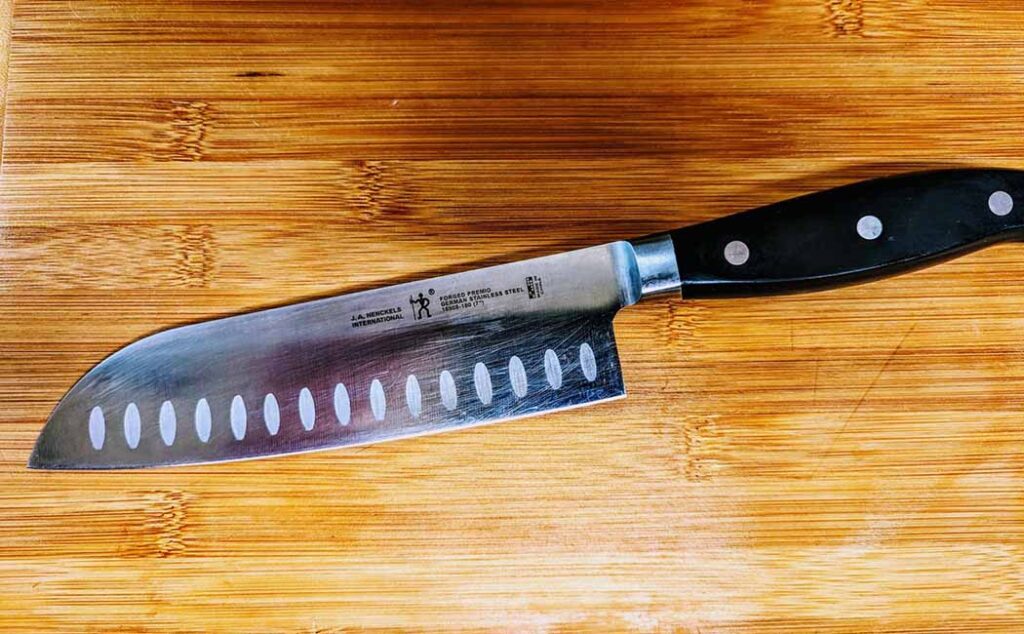
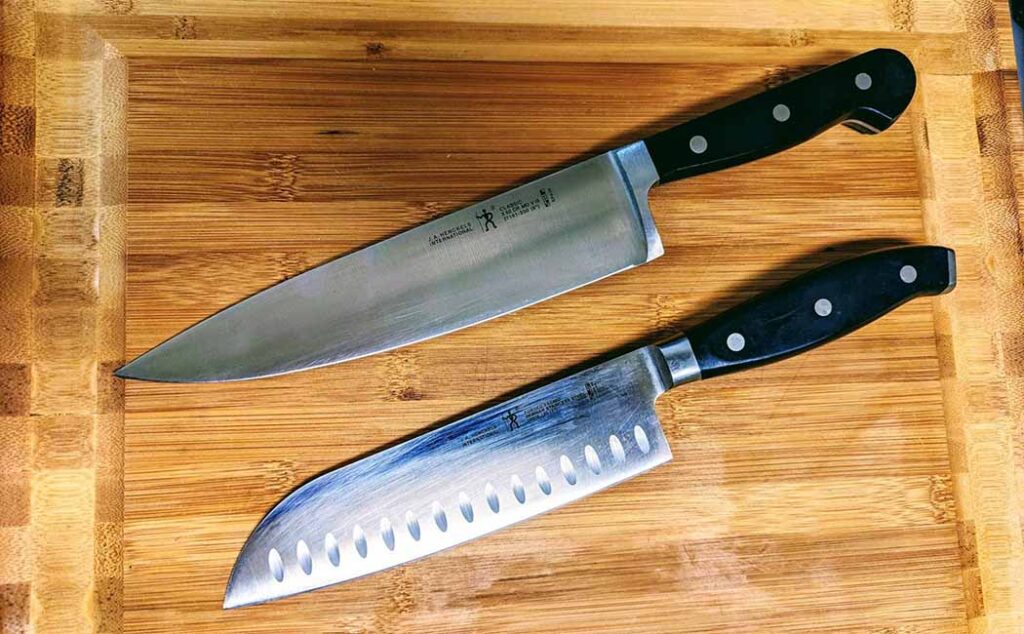
A mid-range Santoku from my personal kitchen.
Edge
Most are between 5 and 7 inches and have an edge with a very Western-style bilaterally cutting edge with a 12 to 15-degree shoulder. Many Japanese knives are ground to a chisel edge, which is only sharpened on one side, but a classic Santoku has a more familiar Western-style edge geometry.
This does mean that, for those of us in the West, sharpening isn’t too much different than with any other kitchen knife, just with a different angle. It also means that Santokus are typically made of very hard steel to prevent damage to that thin wedge.
This makes them an absolute dream for slicing and chopping tasks. If you’ve ever wanted to reliably get those paper-thin tomato slices, you’ll have every advantage with a Santoku.
Handle
Most Santokus have no bolster, which may also take a bit of getting used to depending on your grip. However, many have a handle that tapers down towards the blade, making it very comfortable for the classic pinch grip most of us home cooks are probably used to.
Granton Edge
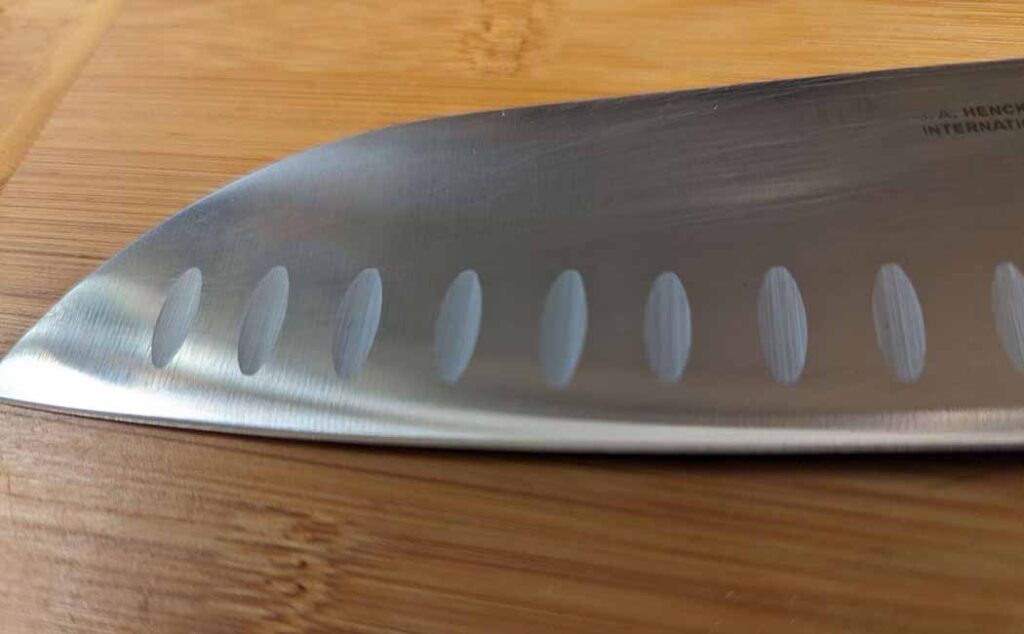
Lastly, many Santokus feature a “Granton edge”, which you can recognize by the slightly scalloped sides of the blade that look like someone took an ice cream scoop to the steel and removed little bits of the blade.
These little scallops help sticky, wet foods like meats and certain vegetables from sticking to the side of the blade as you’re chopping. If you’ve ever tried to slice tomatoes quickly or dice something like a chicken thigh, you’ll know how helpful this feature can be.
What To Look For In A Santoku
Here’s a fun fact I don’t get to bring up in my writing career a lot: I’ve worked as a chef in kitchens all over the South for a good portion of my 30ish years on this planet. In that time I’ve held a lot of knives.
Cooking may not be my main gig anymore, but it is something I’m still passionate about. I cook most meals for my family, and I still help out with the occasional catering gig when my chef friends need an extra hand.
All of which is to say, I’ve got some battle-tested, dinner-rush-proven opinions about what to look for in a kitchen knife, and we’re going to apply those to our Santoku shopping.
Blade Length
While Santokus come in a range of lengths, for your first one I definitely recommend sticking to a 5 to 7-inch blade. This is a good range for all the common tasks you’d likely want a Santoku for and makes for a very handy blade.
This gives you a blade that’s most likely shorter than your standard Western-style chef’s knife (or Gyuto), but still more than sufficient for chopping large, hearty vegetables when needed. It’s also not too big to quickly filet a fish, or other delicate tasks.
Steel
Blade steel is an important consideration with any knife, but especially the Santoku. As we discussed above, a Santoku has a very thin edge and narrow blade geometry.
While the thin edge gives you immense slicing and chopping performance when we’re dealing with vegetables, it’s potentially a liability. Specifically, the edge is more prone to rolling if you’re doing something like hacking through a chicken carcass.
To protect against such occurrences, a typical Santoku—and Japanese knives in general—are treated to a higher hardness than Western-style knives. Japanese knives like the Santoku are also typically high-carbon steel.
Practically, this means that you’ll have to put in more work to sharpen a high-quality Santoku than a Western-style knife. On the flip side, the edge will likely last you a good bit longer. This makes the Santoku a good everyday kitchen knife, especially if you don’t love sharpening.
Stay away from stainless steel, unless you’re really on a budget and want to try the Santoku out on the cheap before committing to a more expensive model. (We’ll have some very good budget-friendly options below if you want to go that route.)
Stick to a high-carbon steel of Japanese or German origin if possible, and look for something with a Rockwell hardness of 57 or higher at a minimum. I like 60 plus but that starts to get expensive quickly.
When in doubt, when it comes to any kitchen knife really, buy from one of the countries that lost WWII and you’ll probably do alright (I have similar opinions about cars).
Blade Height
Blade length and width are familiar decision points when buying a knife, but for something like a Santoku blade height (the distance from the blade edge to the spine) is also important.
Because these knives are designed for slicing and chopping against a cutting board, you want to make sure the blade is tall enough to keep your knuckles comfortably off the cutting board when using the knife.
This tall blade also makes it easier to create nice, even slices. The edge is less likely to wander to the left or right as you slice, and you have a nice large flat surface to index whatever you’re cutting against as you’re slicing.
A Note on Scalloped Edges, or Granton Edge
You will probably notice in your Santoku shopping many of these knives, and Japanese knives in general, tend to have a Granton edge. You’ll see dimples on the side of the blade.
The dimples on my personal general-use Santoku.
The idea behind these dimples is to relieve the suction effect when slicing through thick vegetables or meats and keep things from sticking to the blade. How much does that help? I’ll be honest, I don’t know.
A lot of it depends on the geometry of the dimples, what exactly you’re cutting through, and its moisture content. In other words, you may not see a huge difference, so don’t get too hung up on the dimples.
Done right, they can definitely help though, so don’t completely discount them either.
Using a Santoku
Actually using a Santoku is a bit different from a Western-style chef’s knife, but don’t let that keep you from buying one!
With a Santoku, the chief difference from the knives you’re probably used to for general food prep is the thickness and the angle of the cutting edge.
A Santoku has an edge that is ground to a much more extreme angle than most Western-style knives, and the edge of the blade is fairly linear compared to your average chef’s knife here in the US or Europe.
Why does that matter?
Where a knife with a pronounced belly, like a Western-style chef knife, will slice downward and then you rock the blade forward just a bit to complete your cut. With a Santoku, the motion is more of a flat downward chop, with very little rocking.
I promise, it’s not actually all that different in practice, but you will have to adjust a little bit when you’re first learning to use the knife.
The other thing to keep in mind is that a Santoku is more prone to chipping if you really hammer it into something hard like bone. This is not what you should be using to hack through carcass joints. Use a cleaver for that and leave the Santoku for slicing and cutting meats, fruits, and vegetables.
Santoku vs Western-style Chef’s Knives
The Santoku is a multi-purpose knife with a similar role to the Western-style knives you’re probably familiar with, but with a very different design.
Compared to a Western chef knife, it is typically shorter, thinner, and consequently lighter. The lack of a pronounced “belly” to the edge also means you will have to adjust your technique if you’re used to cutting with a Western-style chef
A Western-style knife, or Gyuto, is going to have an easier time with fine tip work, and will typically have more of a “belly” to the blade to make it easier to rock back and forth on a cutting board.
In my kitchen, I have both and use them regularly. Like most cooks, I find that a Santoku excels in slicing tasks, particularly if you’re trying to get thin, even slices. If you’re caramelizing onions, slicing tomatoes for a BLT, or dicing up chicken into bite-sized pieces, a Santoku is excellent.
If you’re doing something that requires more of a rough chop, such as dealing with a large number of fresh herbs, a Western-style chef’s knife is probably going to be a better option as you can simply rock the knife back and forth through the herbs and be good to go.
A Western-style knife is also much better for preparing heavier proteins, such as breaking down a chicken carcass or carving up a roast. For one, the blade is longer which makes long drag cuts and slices through thick pieces of meat much easier.
The edge profile of the chef’s knife also handles hacking through bones whereas you’re basically asking to chip or roll your edge if you do that with a Santoku.
For things like fish where you’re typically working with much smaller portions, and you have lighter, thinner bones to deal with, a Santoku excels. Its shorter length is a boon instead of a hindrance here, and the thin edge and blade profile keeps those thin slices of fish from sticking.
As a general rule, for something like fish, garlic, or very wet vegetables and fruits that like to stick to your knife, a Santoku is better. For heavier tasks that require a beefier edge, or a longer cutting surface, your Western-style knife is better.
The type of work you’re doing also matters, with a Santoku being much better for a straight up-and-down chop or slice, and a Western-style knife being better for a rocking slice.
Best Santoku Knives for Any Budget
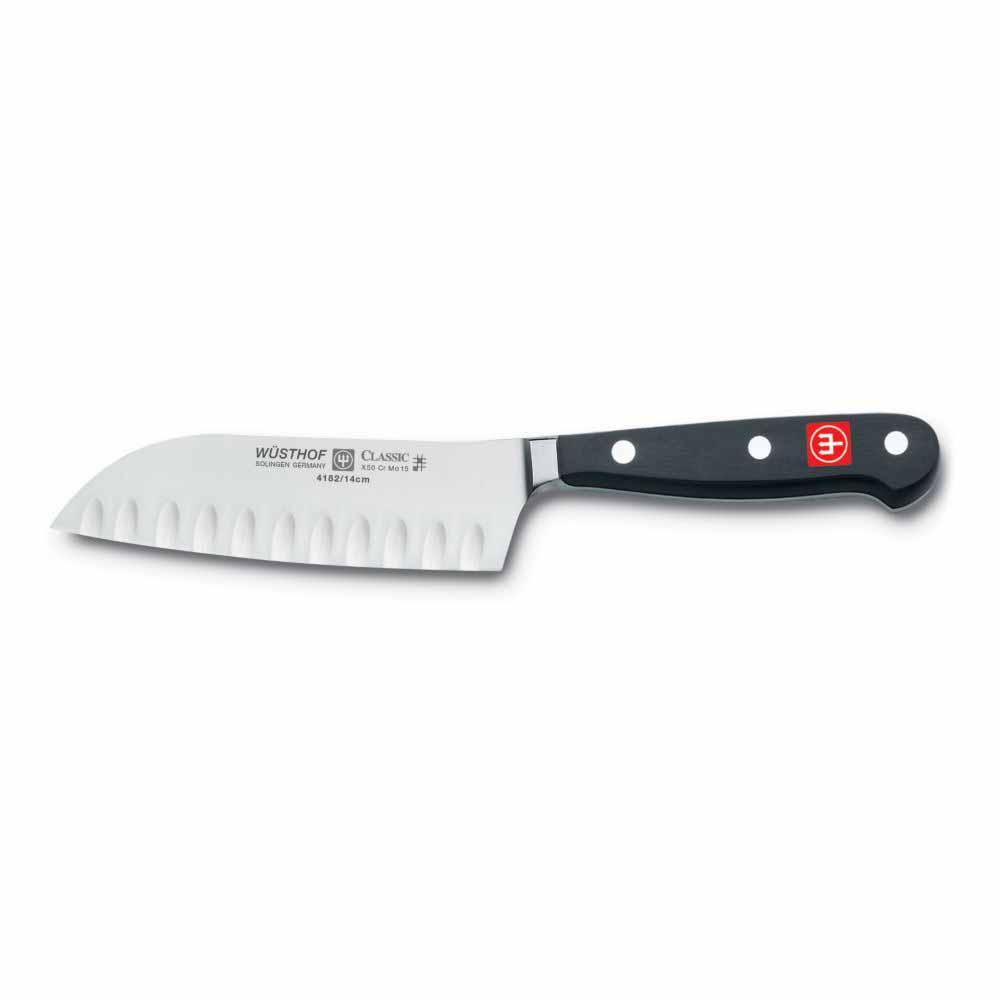
Wusthof Classic Hollow Edge Santoku Knife
First up, we have a favorite of professional kitchens, the Wusthof Classic series Santoku. Wusthof, as you can probably tell from the name, is a German company, and they’re known for making outstanding cutlery. This Santoku is no exception.
This is getting into the upper end of the Santoku market (there will be cheaper options below, never fear) but it is still an excellent value if you’re looking for a durable, well-designed option that’s going to see some heavy use.
I’ve personally used this knife for years, and have one in my personal kitchen at home. In my experience, this is the best-slicing knife out there for vegetables and fish, and I use mine several times a week.
It has a 5-inch hollow-edge blade made of X50CRMOV15 high-carbon stainless steel, making it perfect for home cooks and pros alike.
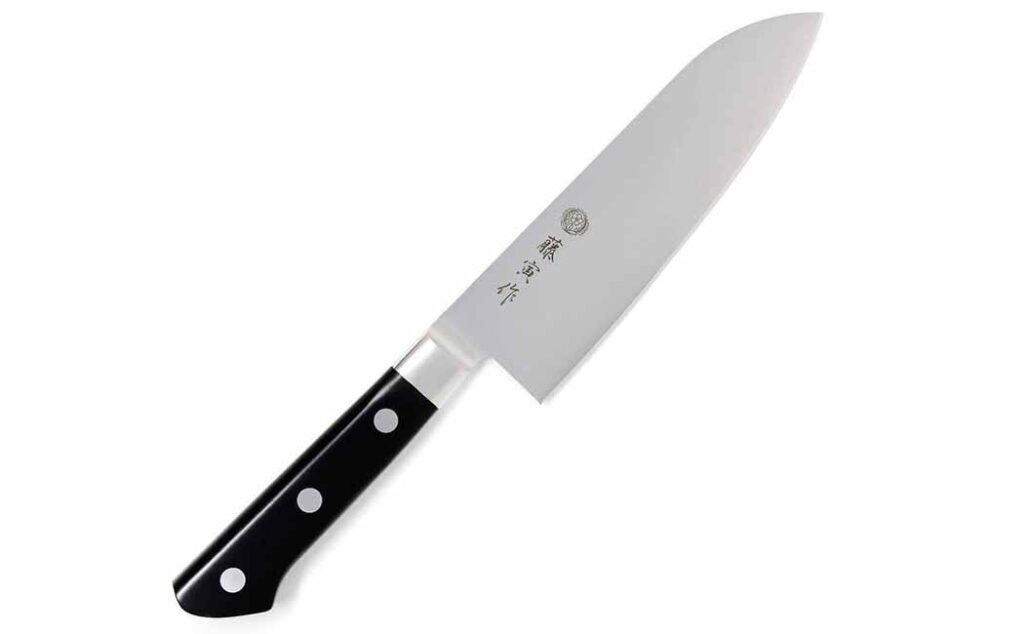
Tojiro 6.7-Inch Santoku
If the thought of paying more than $100 for a kitchen knife makes you a little itchy in the wallet area, don’t worry. Tojiro has you covered.
This Santoku is a bit on the longer side, making it a great choice for almost any kitchen task. I’ve personally used these knives for a number of years now, and I find them to be a bit chunky, but then I’ve got short sausage fingers. Your results may vary.
Even with my diminutive digits though, this knife absolutely sails through fish, chicken, and other light proteins, and slices fruit and veg like a dream. It has a bolster, and an evenly ground edge so it’s perfect for those used to more Western-style knives.
This knife has a 6.7-inch blade made of cobalt alloy steel clad in VG10, which is high-end Japanese steel with high chromium content. This makes it a great budget option for those who don’t want to spend a lot of time sharpening.
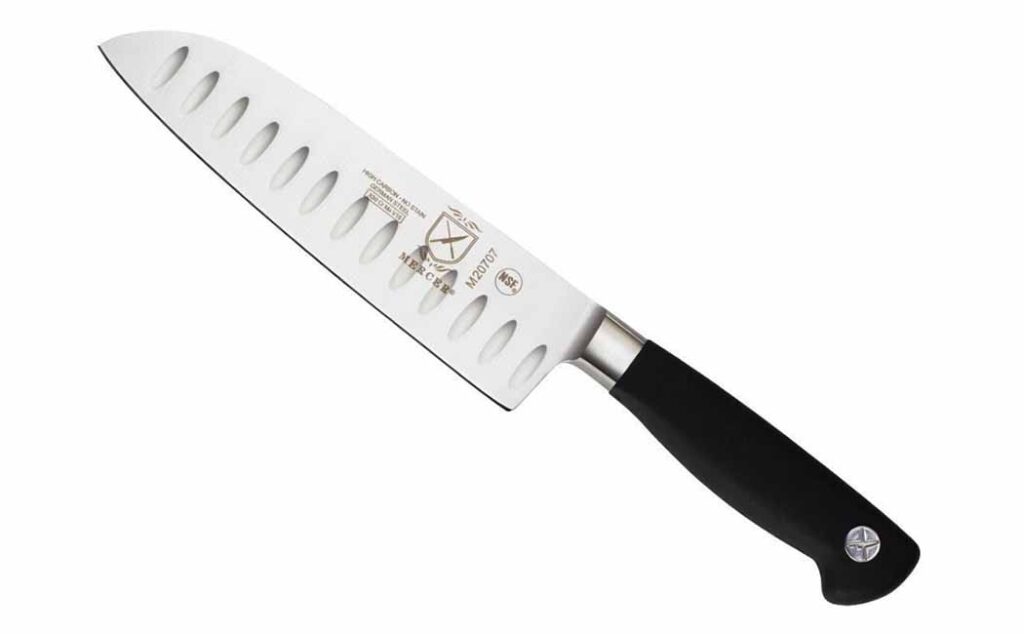
Mercer Culinary Genesis Forged Santoku Knife
For the even more budget conscious, the Mercer Culinary Genesis Forged series is a great place to start. Yes, you can absolutely get an entire knife block for $40, but they’re going to be less than stellar.
You don’t need to spend a fortune on cooking gear, but there are some places where you definitely get what you pay for. With this knife from Mercer Culinary, you’re getting a solid knife that will last for years, without breaking the bank. This is about as cheap as I’d go, personally, but it’s no less effective for that.
The Genesis Forged Santoku has a 7-inch blade made of X50CRMOV15 high-carbon stainless.
MAC Professional Santoku Knife
This is another staple of professional kitchens and a great option for passionate home cooks, as well. MAC’s Professional line is a great option for foodies and pros, and their Santoku is no exception.
I actually think I like the handle on this knife the most of any on this list, but that’s down mostly to personal preference. The blade has a 15-degree edge that slices like a dream. The high-carbon alloy is sub-zero tempered to increase hardness and wear resistance.
The handle is made of a very lightweight wood laminate that is very tough and grippy in the hand. The blade is 6.5 inches long and is made from MAC’s Sub-Zero alloy steel.
Miyabi Birchwood Santoku
If you’re looking for something that really reflects the Japanese heritage of the Santoku, a knife that has an aesthetic as nice as its cutting performance, this Santoku from Miyabi’s Birchwood line is a great option.
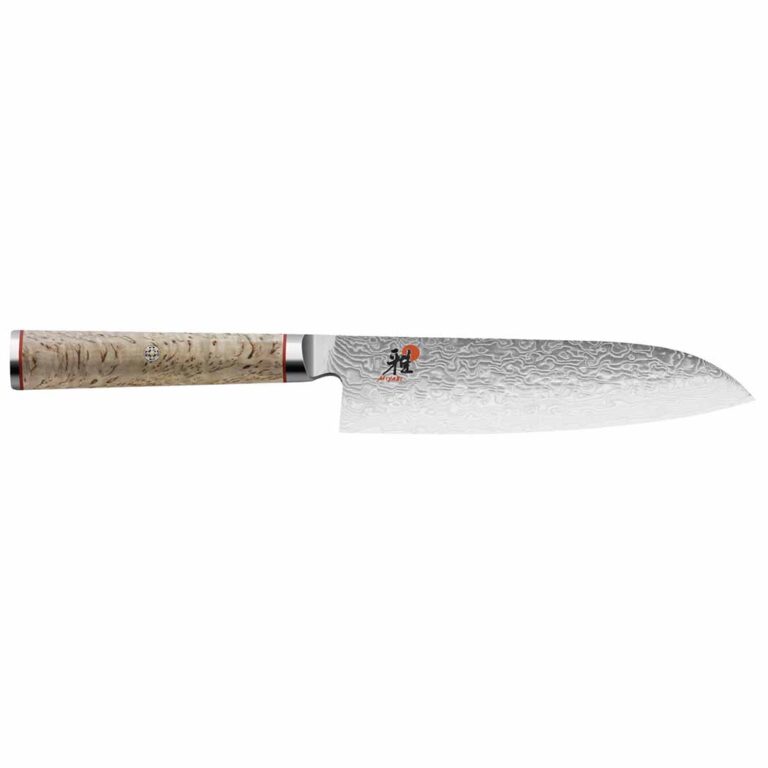
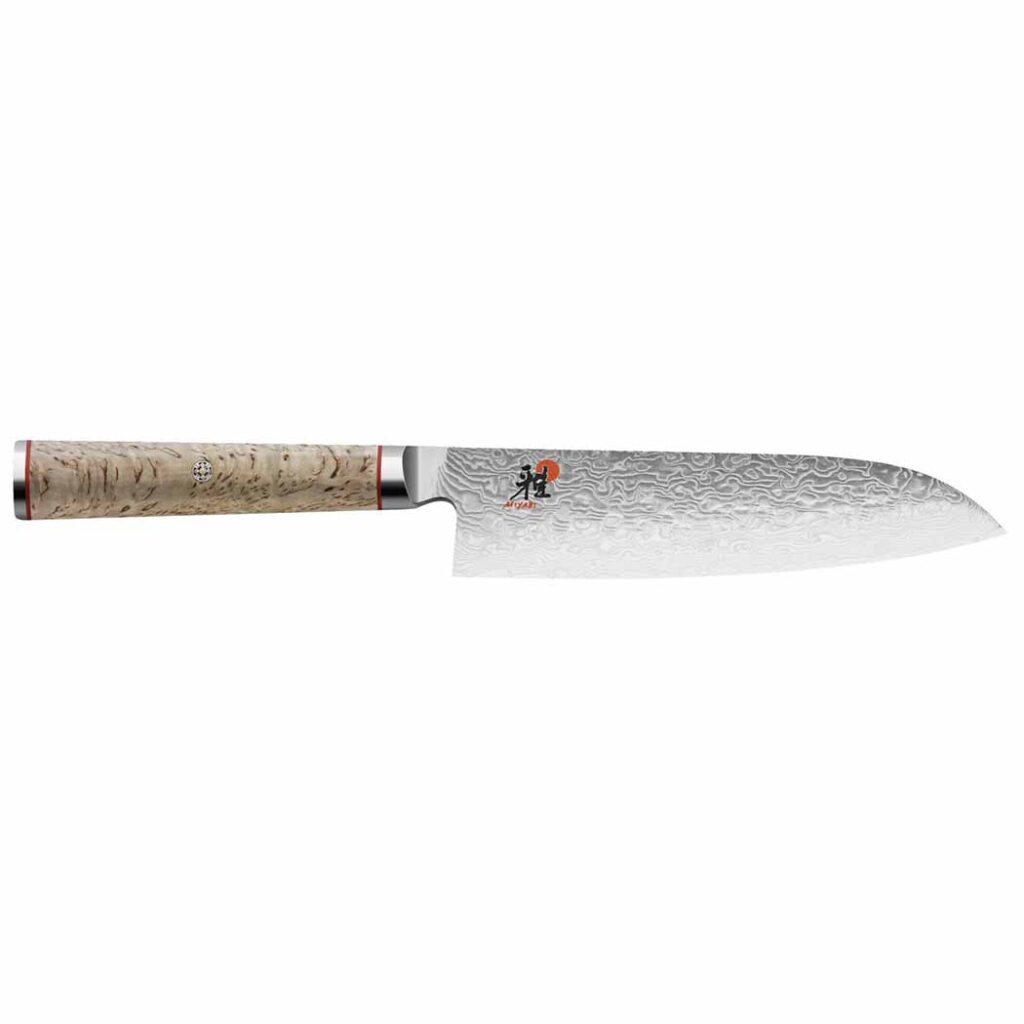
With a blade made from powdered high-carbon steel that’s been folded over a hundred times and a handle made of a beautiful Karelian birch (the only wood to ever be used in a Fabergé egg), this knife is a serious showpiece that you’ll want on display somewhere.
It also cuts like Wolverine’s claws.
Seriously, if you want a beautiful gift to give that special chef in your life, or you just want a super high-end knife that looks great and slices even better, this is a great option.
The Miyabi Birchwood Santoku has a 7-inch hand-honed blade made of G2 micro-carbide powdered steel in a folded, flower pattern Damascus.
J.A. Henckels Zwilling Hollow Edge Santoku Knife at Amazon
Our last two knives are from the same manufacturer, J.A. Henckels, possibly the biggest name in kitchen knives (with good reason).
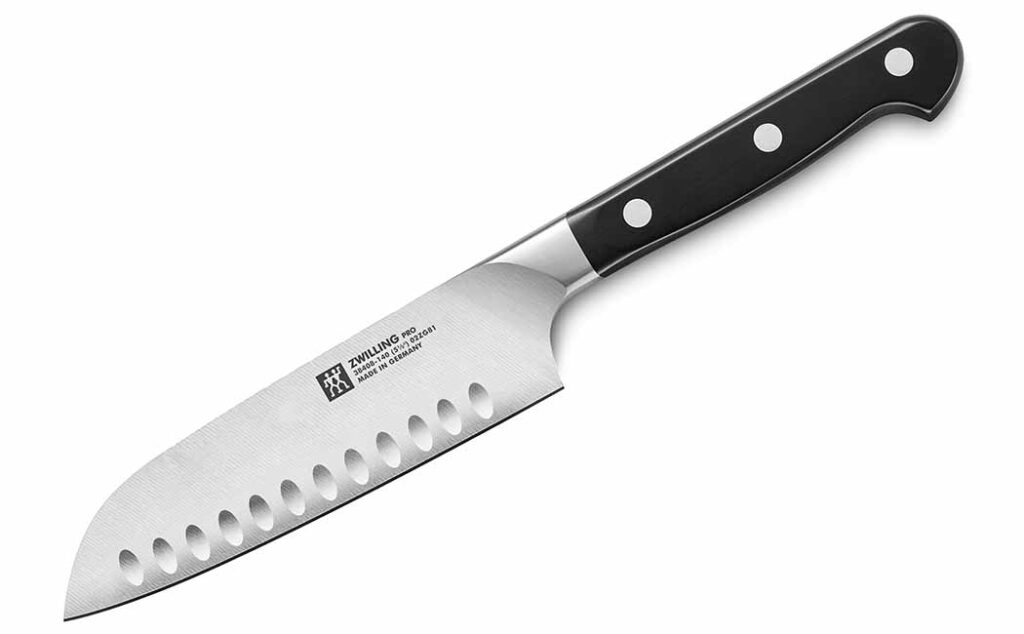
The Zwilling Signature series is one of its higher-end options, featuring a hollow-ground edge and a very comfortable handle with a very minimal bolster. This is a good cross between a traditional Santoku handle and a more modern Santoku handle design.
The 7-inch blade is made of an ice-hardened (Friodur) steel that is proprietary to J.A. Henckels that lasts for a very, very long time in between sharpenings. For a bonus, you can get it custom-engraved for basically nothing since J.A. Henckels does everything in-house.
J.A. Henckels Zwilling Pro 7 Hollow Edge Rocking Santoku Knife
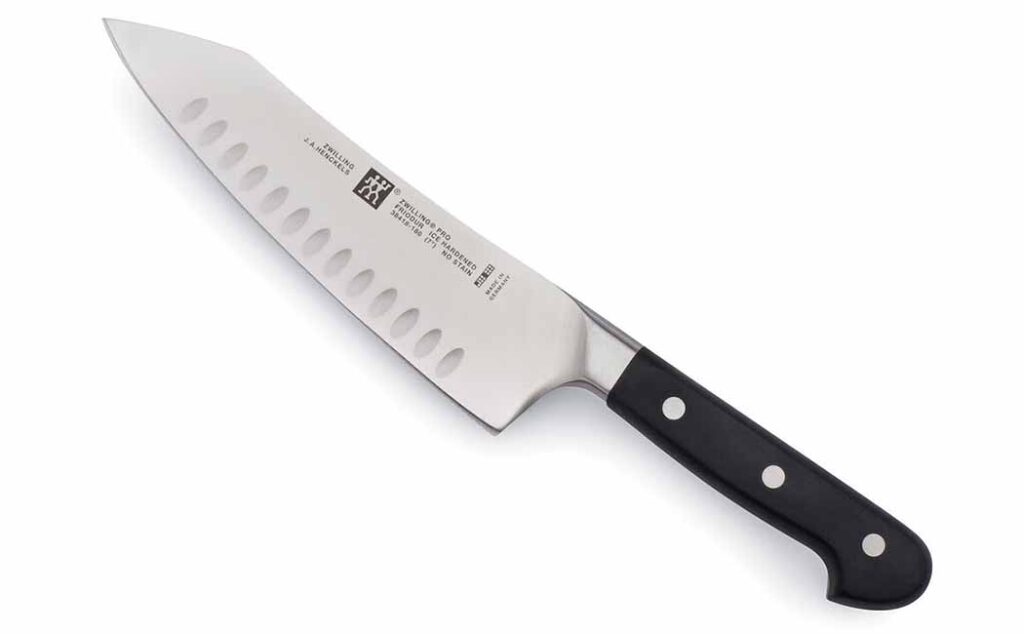
Lastly, we have a very similar knife to the one above, but with a more Western-style edge profile geared more towards the familiar rocking motion most of us know already. It still has a relatively flat edge, so you do get all of that Santoku performance, but with a little more versatility when it comes to a rocking chop.
Like the model above, it features a very comfortable handle, but the Pro series features a more pronounced, Western-style bolster, ideal for the pinch grip that we use here in the West.
It has a 7-inch blade made of proprietary high-carbon SIGMAFORGE steel (I don’t know what SIGMAFORGE means either, you’ll have to ask Henckels about it).