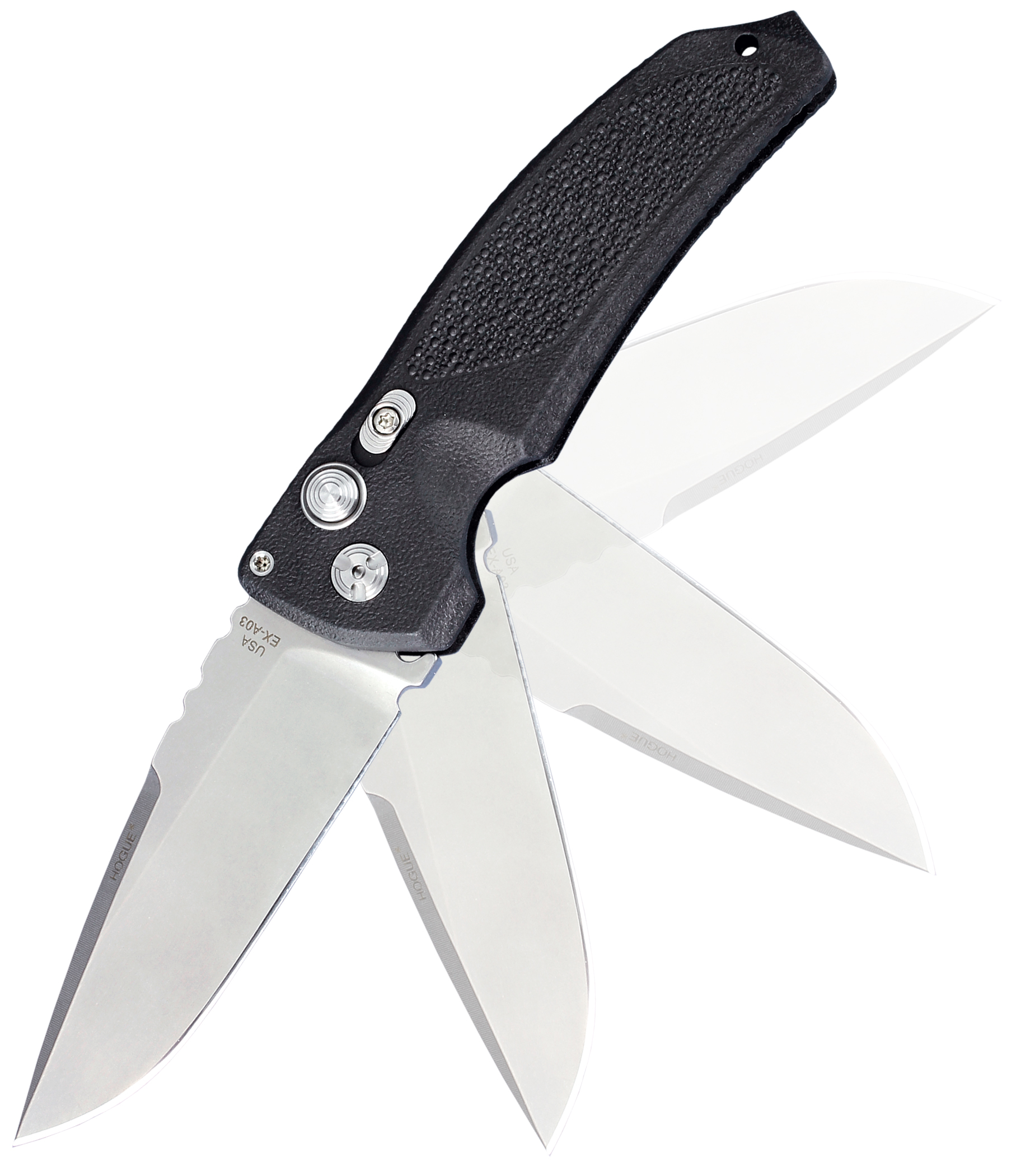
The Poros by Spartan Blades is a great feeling folder. The flipper design is spot-on for hand placement.
Company co-founders Curtis Iovito and Mark Carey are excellent to work with and built Spartan from scratch. Both are retired from Special Forces and have a lot of pride in workmanship. The Poros is their field-grade-version linerlock. It might not have the fancy material and looks but the performance is top shelf.
Poros Light Cutting Duties
Initial slicing of 20-pound copy paper was excellent. The Poros was very smooth and aggressive. The blade shape really helped slicing paper, especially when I employed a roll cut. The flat-ground blade sliced straight with no curling of the paper.
The 154CM stainless steel blade was exceptionally aggressive in the 8-ounce leather slice.
The Poros easily devoured single-walled cardboard. As with the copy paper, the blade sliced it both forcefully and effortlessly, resulting in nice, straight cuts. The slices were extremely quick with no resistance felt.
The folder was quite aggressive again in the 8-ounce leather slice. It was very easy to control the thickness of the skiving—I just needed to move my fingers faster. I had two fingernail nicks after the skiving. The edge remained sharp.
Poros Medium Cutting Duties
It was time to do a fire stick. The flat grind produced excellent curlicues. It sliced the wood incredibly fast and I had to slow down for more control to keep the curlicues on the stick. The handle was comfortable while making the deeper cuts. It was awfully simple to whittle with the knife.
The flat grind produced excellent curlicues. It sliced the wood awfully fast and the author had to slow down for more control to keep the curlicues on the stick.
For the next exercise I used 1-inch manila rope. The Poros crunched to 197 cuts before I ran out of rope. The edge was still good. The handle was very comfortable during heavy use. There were no issues with the blade lock. Nicely done, Spartan.
Poros Heavy Cutting Duties
I split kindling into smaller pieces to check lockup by doing baton work. There continued to be no issues with lockup or edge retention. The knife can handle a beating for sure. It’s not that I recommend baton work with a folder but if you have to it can be done with the Poros.
The author split kindling into smaller pieces to check lockup via some baton work. There were no issues with lockup or edge retention.
To push the knife a bit further, I grabbed my trusty whitetail deer antler. After 30 hard whacks on it, the edge was still sharp with no rolling or chips, indicating spot-on heat treatment.
The last test was back to the copy paper slice. The Poros continued cutting smoothly and my arm was tired. Outstanding job, guys!
Final Cut
The Poros folder is worthy of riding in anyone’s pocket. It’s well designed, sharp and easy on—and comfortable in—the hand. I really don’t know what I’d change on this one, though I would love to see an A-2 tool steel version.
Poros Specs Maker: Spartan Blades Knife type: Flipper folder Blade length: 3 7/8” Blade steel: 154CM stainless Rockwell hardness: 58-60 HRC Blade finish: Black PVD Handle: Carbon-fiber-patterned G-10 Lock: Linerlock Closed length: 5 1/8” Country of origin: USA MSRP: $190
Nearly 70-year-old automatic-knife ban meets its demise in a 5-0 decision.
Massachusetts hasn’t been a haven for arms rights since the shot that was heard around the world, but things are changing in the Bay State.
In a rather shocking 5-0 decision on Aug. 27, the Massachusetts Supreme Court struck the state’s nearly 70-year-old prohibition of the carry of automatic knives with blades greater than 1.5 inches. This is an enormous win for knife rights, given the state is among the most hostile to the carry of any weapon. And, with other recent cases, the decision shows a softening toward the possession and carry of automatic knives.
Canjura Switchblade Case
The Massachusetts ruling stemmed from the arrest of David E. Canjura in 2020 in Boston, in response to an altercation between him and his girlfriend. Upon searching Canjura, police found what they described as an “orange firearm-shaped knife with a spring-assisted blade” or in popular parlance, a switchblade.
Canjura subsequently challenged the constitutionality of the charge, arguing the knife was an arm and was protected under the Second Amendment. The Massachusetts Supreme Court agreed.
Justice Serge Georges Jr. authored the court’s 24-page written decision, drawing heavily upon landmark U.S. Supreme Court decisions of Bruen and Heller. Despite both cases pertaining to the Constitutional rights of possessing and carrying firearms, the opinions have carried over to the lawful possession and carry of other arms.
Pertinent to the Massachusetts ruling was the historic test laid out in the Bruen ruling, which requires historical precedent from when the Constitution was ratified in 1791 to maintain a prohibition on arms. Georges found this sorely lacking in Massachusetts’ ban on carrying switchblades.
Georges wrote in the decision, “Given the long history of folding pocket knives generally and switchblade knives in particular, switchblades constitute “bearable arms” within the protection of the Second Amendment.”
Massachusetts Ban
Like so many switchblade bans, Massachusetts dates back to the time of patent leather jackets and witch-trial-like panic over the supposed corruption of the nation’s youth. The state law was passed in 1957, several years after the publication of the anti-automatic knife article, The Toy that Kills. Despite being cinema classics, Rebel Without A Cause and Blackboard Jungle didn’t help out the switchblade’s reputation.
Massachusetts was a year ahead of the curve in pushing autos to the fringes of society, with the federal government passing the Switchblade Act of 1958. Drawing upon the federal government’s interstate commerce power, it act prohibited the purchase, sale, and trade of automatic knives between all 50 states.
Yeah, But…
Despite a good outcome for knife rights and following other wins for automatic knives nationwide, there are points Massachusetts enthusiasts should be aware of before throwing an auto in their pocket.
The potential stands the case may be appealed and the decision stayed. Furthermore, as pointed out by Knife Rights, there are some wrinkles knife owners to keep in mind to state on the right side of the law still.
Carry of any double-edged blade—including switchblades—is still prohibited.
Knife law preemption does not exist in Massachusetts, so cities and counties may have or might pass auto bans (check your local laws).
The state’s ban on the manufacture and sale of switchblades remains on the books.
Even with these prohibitions, Bay Staters should be pleased with the recent ruling.
Rhidian Gatrill reproduces the folding Marble’s Safety Hunter in grand style.
Rhidian Gatrill not only satisfied a personal goal of reproducing the classic Marble’s Safety Hunter but also parlayed it into Best Hunter and Best of Show at the 2024 Oregon Knife Show.
He said he had always wanted to reproduce the clever old pattern with the folding catch piece that covers the tip of the closed blade. Not only does the catch piece enable the folder to have a blade longer than the handle, it also locks the blade of the slipjoint knife open. As Rhidian noted, “I just thought the mechanism was really cool, and it’s a big knife. I like big knives, but mostly it’s just the mechanism.”
He found a copy of the original Marble’s patent drawing dated May 19, 1903, on the internet and used it as a reference to make the knife. ABS master smith Tommy Gann forged the damascus specifically for the repro. “Tommy and I discussed a collaboration, and I figured if a master smith was going to make some damascus for me then it should be for a big bad knife, and so the Safety Hunter was definitely it. I sent him my drawing,” Rhidian wrote, “and he forged the steel to fit the blade and parts.”
Gatrill Safety Hunter Specs Knife: Marble’s Safety Hunter reproduction Maker: Rhidian Gatrill Blade length: 5” Blade steel: A lower-layer, four-bar Turkish twist damascus forged by ABS master smith Tommy Gann Swing guard: Same material as the blade and sculpted by Rhidian Action: Slipjoint construction w/half stop; blade tip catch piece doubles as a lock to lock the blade open Handle material: European red stag in a Coke bottle pattern Bolsters: Stainless steel fluted by the maker Closed length: 4.75” Rhidian’s price for a similar knife: $5,000 ($3,500-$4,000 if in straight stainless or carbon blade steel)
We break down what common steel alloying elements add to a knife.
Alloy… in the knife world we hear the word often. Blade aficionados—many almost journeyman metallurgists in their own rights—pour over steel composition. Newbies to collecting and making, however, might be a bit perplexed over exactly what the material modification is all about.
With this in mind, we’ve boiled down what certain elements—when alloyed with iron—bring to the table for your knife. Now this isn’t a deep dive into the nitty-gritty of what each element does in a steel alloy, complete with phase diagrams and quenching charts. Honestly, if you need to cut to this quick, we recommend Larrin Thomas’ website KnifeSteelNerd.com. The son of BLADE Cutlery Hall of Fame member Devin Thomas and PhD metallurgist and material scientist, Thomas offers a much more in-depth look at steel from an engineer and knifemaker’s point of view.
What we have here is a quick and dirty guide to alloy elements and what they bring to a knife.
What An Alloy Is
If your high school chemistry class is a bit foggy right now, perhaps we should take a moment to do a quick review of exactly what constitutes an alloy. Quite simply, an alloy is a mixture of two or more elements, where at least one of the elements is a metal. Note alloys are mixtures, not compounds—the former is a physical combination, the latter a chemical. For a mixture, think of something like oil emulsified in vinegar to create a tasty salad topping, while a compound is two gases like hydrogen and water bonding together to form water.
Alloying elements is done to enhance the properties of a material. In the case of knife steel elements are combined to improve toughness, wear resistance, corrosion resistance or other factors. While we won’t delve that deep in this article, we’ll point alloys can be classified into two main types:
Substitutional Alloys: In these alloys, the atoms of one element replace or substitute for the atoms of another in the metal lattice. An example is brass, which is an alloy of copper and zinc.
Interstitial Alloys: In these alloys, smaller atoms fit into the spaces (interstices) between the larger metal atoms in the lattice. Steel, which is an alloy of iron and carbon, is an example of an interstitial alloy.
Since we’ve dusted off some of those long-lost materials lessons you learned, let’s get into the down-and-dirty of what each common alloying element brings to knife steel.
Knife Steel Alloy Elements
Carbon: This ingredient makes the difference between iron and steel; all steel will have some amount of carbon. It is the most important hardening element, but it makes hardness by combining with other elements. As a simple generalization, the amount of carbon in the steel tells you a lot about the quality of the steel. Low-carbon steel has 0.3% carbon or less, medium has between 0.4-0.7% and high-carbon steel is 0.8% and above, maxing out at around 1.2% carbon for knife steels. Up to a point, the higher the carbon content within the range, the harder the steel will get.
Chromium: Chromium combines with carbon to make chromium carbides, which are resistant to corrosion. Stainless steel knives will have chromium as a major ingredient, typically at a minimum of 12-13%. Chromium also increases the strength of a knife to a degree, but adding chromium in large amounts decreases toughness.
Cobalt: In small amounts, cobalt increases toughness.
Manganese: This changes the rate of hardening. Manganese in carbon steels yields “deeper” hardening, which requires a slower speed quench and gives a wider range of acceptable heat before quench. If added in high quantities, it can increase brittleness. Manganese makes steel etch dark in damascus.
Molybdenum: Adding this maintains the steel’s strength at high temperatures.
Nickel: Nickel adds toughness to steel. It also makes steel etch bright in damascus.
Nitrogen: This element is sometimes used as a substitute for carbon in steel.
Silicon: Silicon increases strength and removes oxygen from the metal while it is being formed. It’s typically present in small quantities in most steels.
Sulfur: This increases machinability but decreases toughness.
Tungsten: Adding this increases wear resistance and forms tungsten carbides that are very hard.
Vanadium: Vanadium leads to smaller grains within the steel. Vanadium carbides are very small and hard, which increases wear resistance and edge retention.
Knives and knife people go wall-to-wall at BLADE Show ’24.
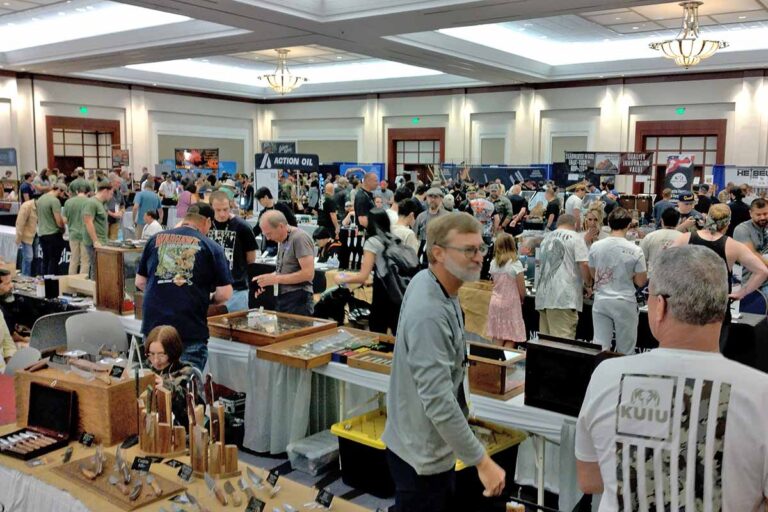
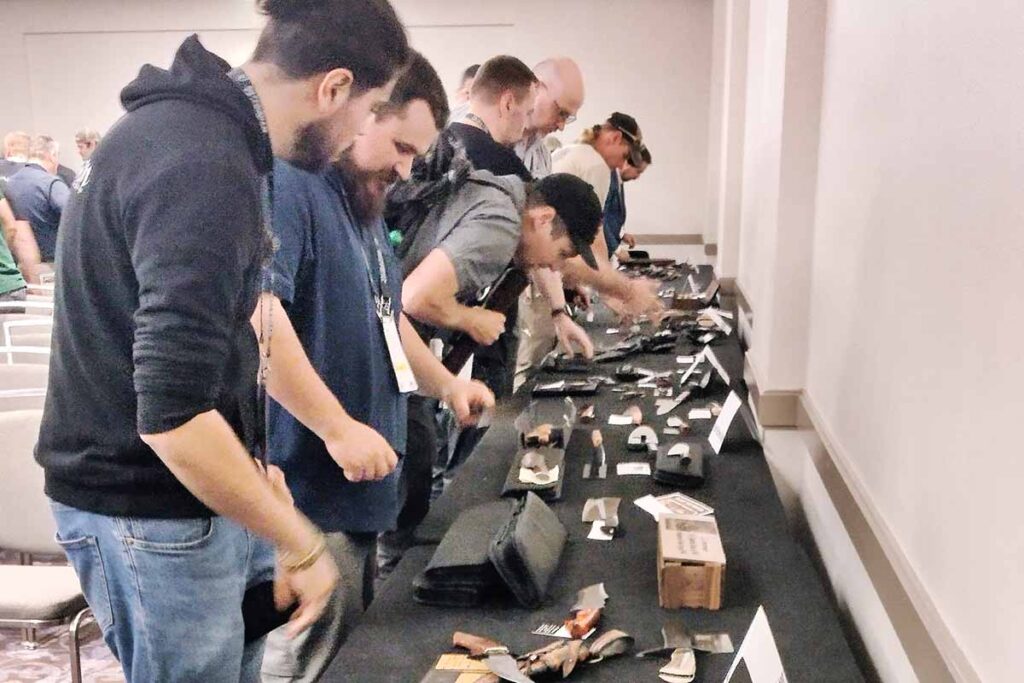
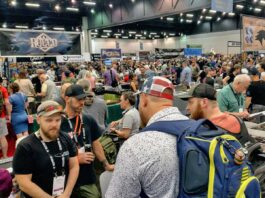
Wall-to-wall attendance, dynamite knife sales, sensational award knives and much more made BLADE Show 2024 June 7-9 at the Cobb Galleria Centre in Atlanta one for the record books. However, it took custom knife purveyor Dave Ellis of exquisiteknives.com to put things into proper perspective.
The long-time BLADE Show exhibitor of Vista, California, sold out of knives and had yet another whiz-bang show, but he said it’s the intangibles that make the BLADE Show the dynamic event it is year in and year out.
“It was a great show and the sales were fantastic, but the main thing about the BLADE Show is the camaraderie, the old friends you see and talk to that make the show so special,” he said. “It’s really rewarding, and though the sales are great, the people are better.”
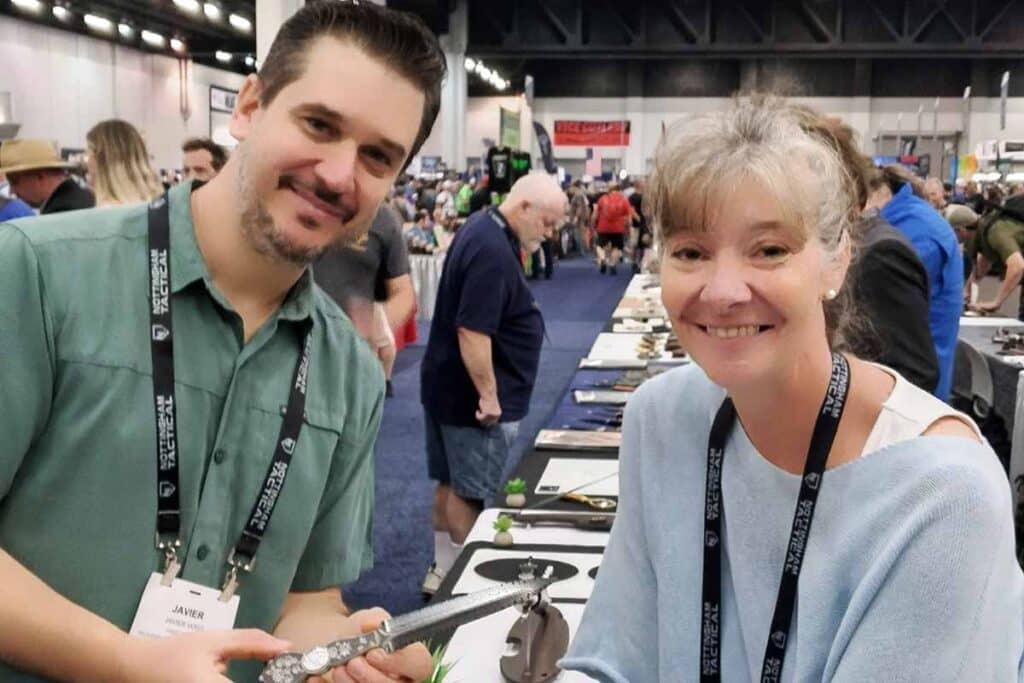
Argentina’s Javier Vogt and Belgium’s Veronique Laurent represented two of the 35 countries providing exhibitors for BLADE Show ’24. The knife is one of Veronique’s art daggers.
Speaking of people, ABS master smith Harvey Dean said it was one of the best if not the best attended BLADE Shows he’s ever seen. “At past shows there would be dead times when the crowd would thin out a little bit before increasing again,” he noted. “This show seemed crowded the whole time.”
The factory section enjoyed heavy traffic as well and patrons seemed to be buying knives.
“The BLADE Show was fantastic,” said Curtis Iovito of Spartan Blades, whose company won its first-ever BLADE Magazine Overall Knife Of The Year® with the Bill-Harsey-designed Clandestina. “Sales were the highest we have ever seen.”
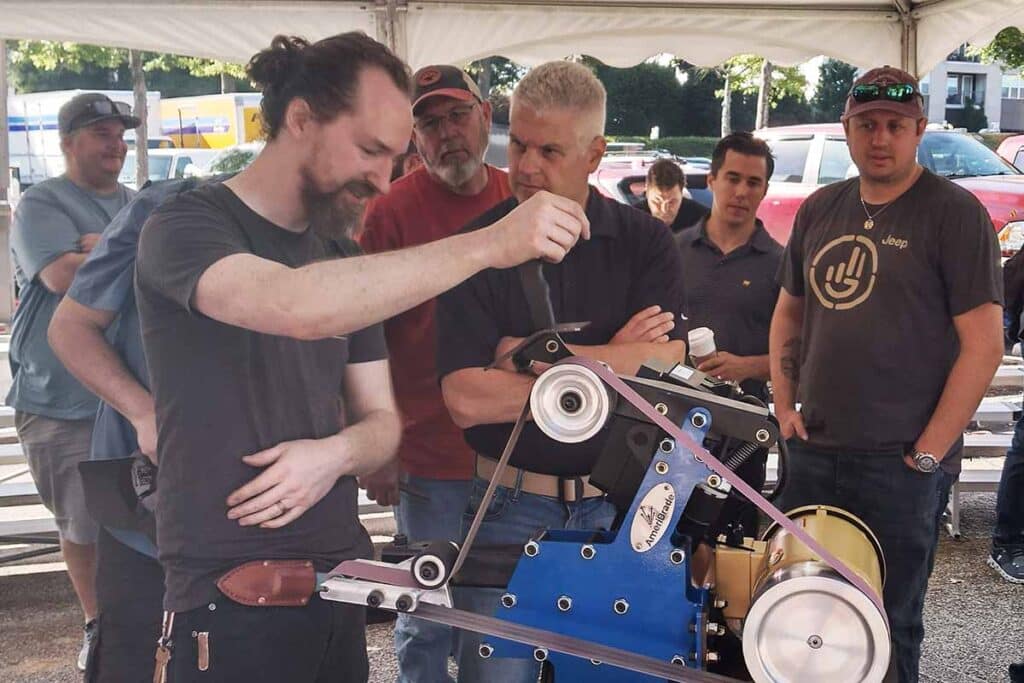
Charlie Ellis (left foreground) was one of the guest makers providing BLADE University instruction in the AmeriBrade grinding seminar.
As usual, Saturday was the busiest day, though Friday was very good for three members of the South Texas Slipjoint Cartel in particular, with Luke Swenson selling out in the first hour and Toby Hill, who brought nine knives, selling out in the first two hours. Another Cartel alum, Enrique Pena, sold out as well. Along with Javier Garcia and Jared Oeser, Enrique also won Best Collaboration in the custom knife judging competition.
Brazilian ABS master smith Dionatam Franco de Souza said the show was very good for him, as he brought four knives and sold three, all in the high-dollar range. He also won Best Utility Hunter in the custom knife judging competition.
As with all shows, other reviews were mixed. One purveyor said some exhibitors said the crowd seemed down this year. On a scale of one to 10, ABS master smith Jordan LaMothe gave show attendance a five. He brought 14 knives and sold only three, all in the three and low-four-figure range, with two going to regular clients and one going to a new one. He said 20 percent of those who visited his table seemed to be buyers. Meanwhile, Jordan won yet another custom knife judging award, this time for Best Kitchen Knife.
Makers entered their knives in the custom knife judging competition Friday afternoon.
If sales were down for some, part of the reason may be what one purveyor said is a slowdown in the sale of damascus knives. He attributed the slowdown to a “burning out” of demand due to a glut of the pattern-welded knives. While many current examples of damascus are outstanding, there’s just too many knives made from it and supply is outpacing demand, the purveyor observed. Replacing the damascus knives in demand are straight carbon steel knives with nice hamons, he added. How long the trend will last is anybody’s guess.
BLADE Show 2024 Highlights
To kick things off, a stout soul replete in Scottish kilt and playing the bagpipes led an energetic throng of patrons into the show hall Friday morning. Thousands of patrons were about to descend on the almost 1,000 exhibitors from 35 countries in the main show hall and Baller Room in the coming three days.
Meanwhile, BLADE University classes, which started the day before at 4 p.m. and earlier Friday morning, continued throughout the day and into Saturday. Friday afternoon witnessed the custom knife judging competition, with winners selected in 16 categories. The Knifemakers’ Guild announced its best knives of the BLADE Show and also named BLADE Magazine Cutlery Hall-of-Fame® member and BLADE editor Steve Shackleford winner of the Nate Posner Memorial Award in recognition of outstanding service in the promotion of handcrafted cutlery. The American Bladesmith Society held its awards ceremony after show closing Friday, including presenting Fabio Barros with his ABS master smith stamp and announcing 14 new journeyman smith awardees (for the names of all the new smiths, visit americanbladesmith.org, click on ABS News and Events and scroll to Congratulations to Our New Rated Smiths).
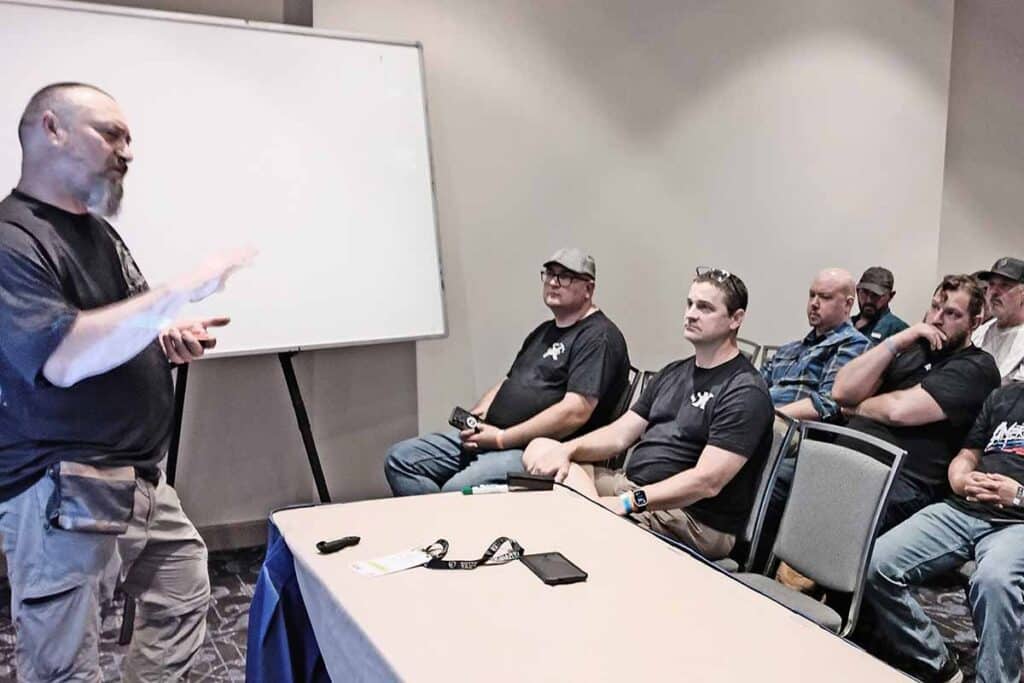
South African ABS master smith Neels van den Berg presented his BLADE University class, Symmetrical Quillon Dagger 101.
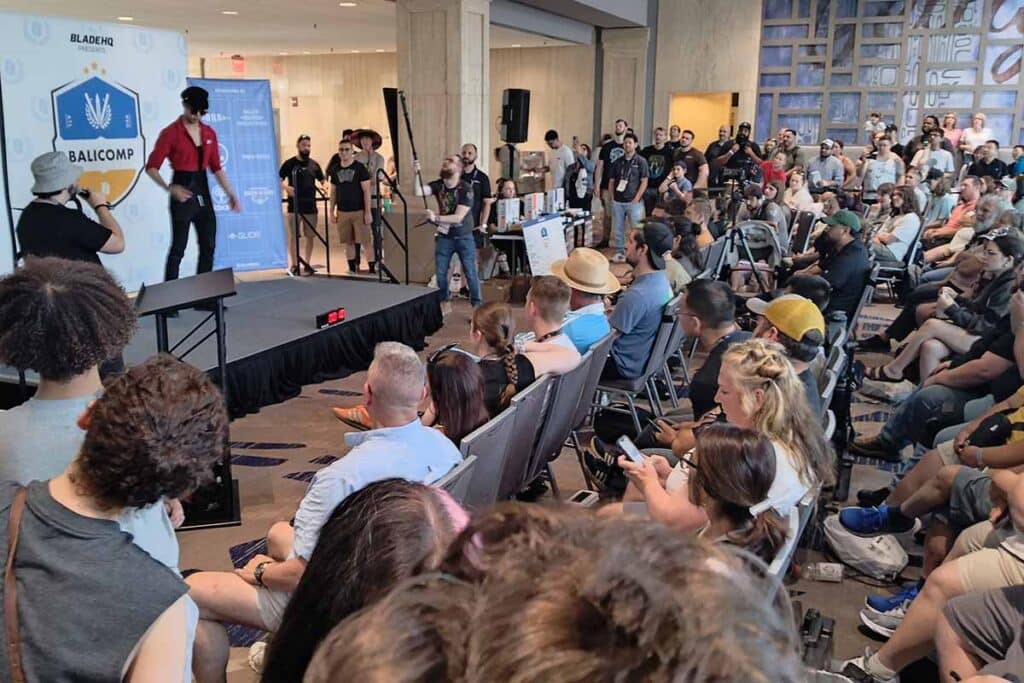
Saturday started early with the BLADE Magazine Cutlery Hall-of-Fame breakfast/induction ceremony, with Ted Dowell, Don Fogg and Bill Harsey being formally inducted in the Kennesaw Room of the Renaissance Waverly Hotel. The 8th Annual Battle for Bali-Champion conducted by Blade HQ commenced at noon in a new venue—the second floor of the Renaissance—before a packed house, with Steven Ash taking the title followed by Corbin Lovins in second place and Seiji Brown in third.
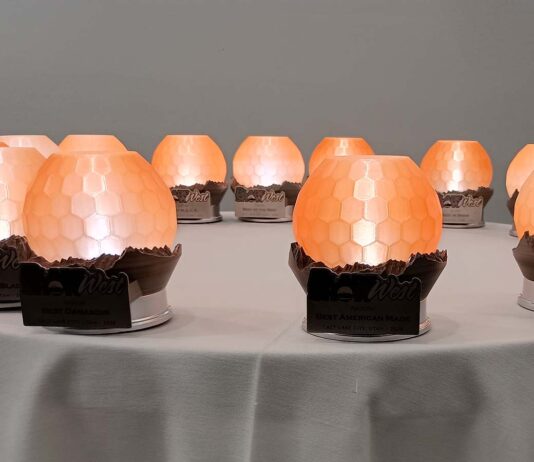
Capping off Saturday was the BLADE Magazine Awards Presentation. Held at 8 p.m. in a new venue—also on the second floor of the Renaissance—the ceremony officially recognized the BLADE Magazine 2024 Knife-of-the-Year Awards® and the BLADE Show custom knife judging award winners.
On Sunday morning, the winners of the knife collection display judging were named. Gene Merritt won Best in Show for his David Yellowhorse First 25 Years display. Judges Awards went to Dale Eichberg for his display, Preproduction Buck Knives, and Brian Hugh for Buck Tactical Knives. The Youth Award went to Caleb Lindsey for Custom Knives by David Yellowhorse.
Upcoming Shows
Next up on the BLADE Show calendar is BLADE Show West, Oct. 4-5 in Salt Lake City, Utah. For more information, visit bladeshowwest.com. After that will be BLADE Show Texas, March 7-8, 2025, in Fort Worth, Texas (bladeshowtexas.com).
Patrons enjoy the 8th Annual Battle for Bali-Champion conducted by Blade HQ in the event’s new venue on the second floor of the Renaissance Waverly Hotel.
As for next year’s BLADE Show, it returns to the Cobb Galleria Centre in Atlanta June 6-8. See you there!
Kevin Casey feathers his cap with an outstanding array of custom throwback blades.
Kevin Casey may have hit on a great idea for knives with both a custom touch and an antique look and feel.
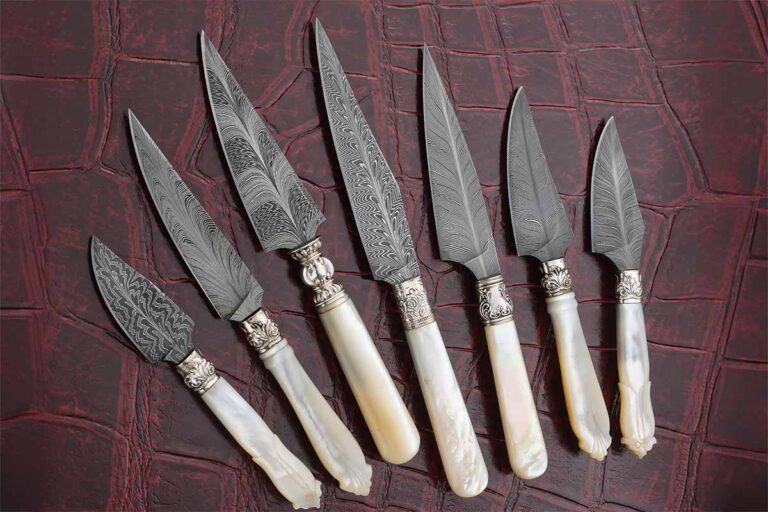
Taking some old yet inexpensive late 19th/early 20th-century dinner knives with mother-of-pearl handles and silver ferrules, he replaced the original blades with those forged of assorted patterns of his feather damascus. The result, the Little Feathers, went fast at the Solvang Show, with two selling individually and five going to one shrewd buyer.
Kevin Casey
Kevin said similar versions of the original antique knives are available on eBay, Etsy, at jewelry stores, flea markets and the like. He cleaned the insides of the ferrules with acetone before epoxying his damascus blades into them. He cleaned the ferrules with Flitz and a toothbrush, polished the handles and the knives basically were ready to go. He plans to do more like them in the future.
Little Feathers Specs Maker: Kevin Casey Model type: Dinner knives Blade lengths: 2.5 to 4.25” Blade material: Assorted patterns of feather damascus in 1080 carbon and 15N20 nickel-alloy steels w/a thin layer of pure nickel; depending on the pattern, the layer count ranges anywhere from 50 to 500 Handle material: Mother-of-pearl Ferrules: Silver Overall lengths: 6.5 to 8” Maker’s list price range for similar knives: $600 to $900 each
Bertram Edmonston IV overhauls his engraving resume on a Bruce Bump hideout bowie.
For the past decade, my career has primarily focused on engraving firearms, mostly Colts, Winchesters and custom 1911’s. A brief tour of my website shows the extent of the commissioned projects over the years. However, the number of significant knife-engraving commissions have been few.
In the summer of 2022, my wife, Jennifer, accepted a position with a Bechtel subsidiary located in the Pittsburgh, Pennsylvania, area. Being no stranger to relocation, I knew it would be the perfect opportunity to make a significant change in my career as an engraver.
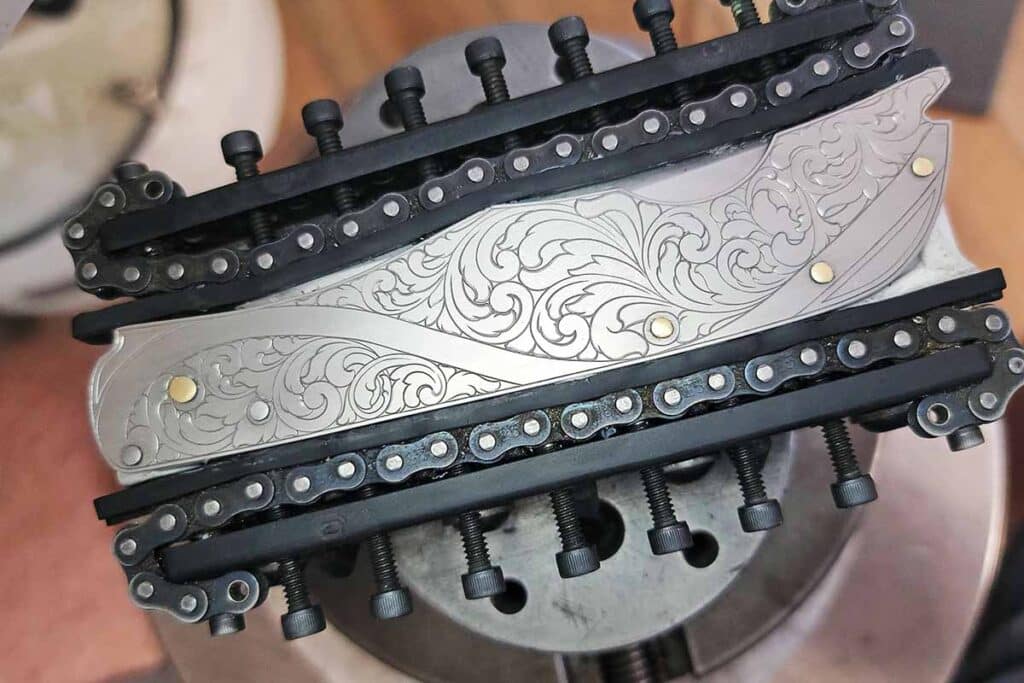
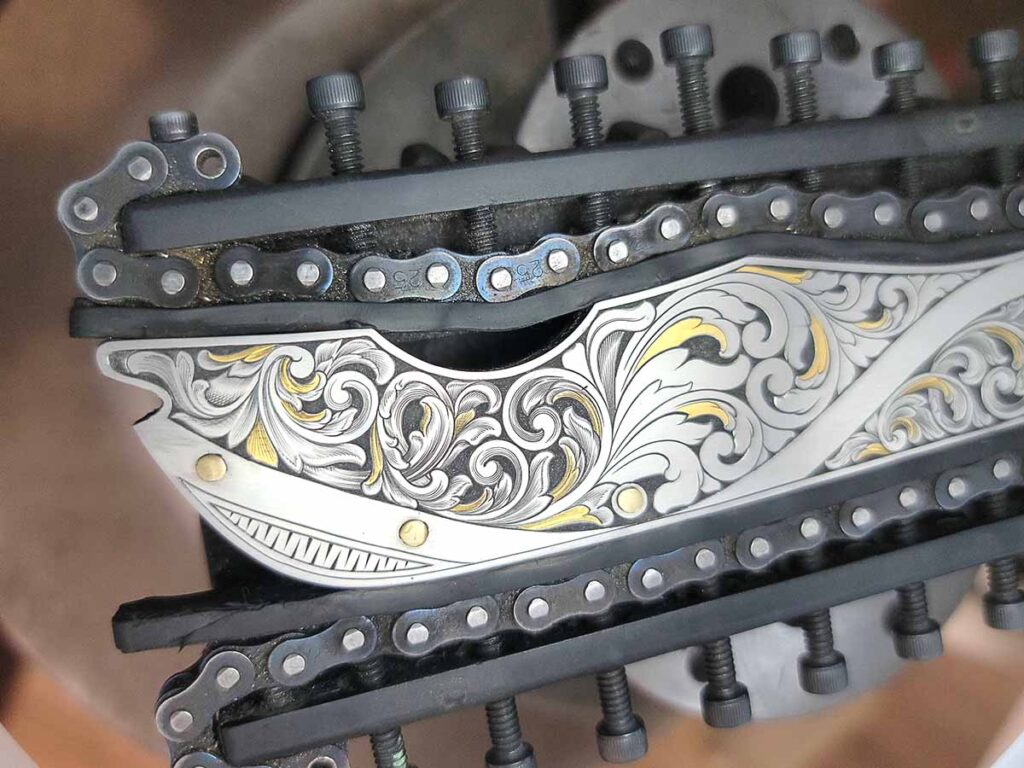
The outline of the engraving takes shape (below left). The jig holding the folder is a knifemakers contour vise from GRS Tools (see sidebar).
While still in Tennessee, ABS master smith Bruce Bump reached out to me to collaborate on one of his black powder percussion pistols. Bruce is a full-time bladesmith and obtained his master smith stamp in 2003.
Known for his bowies, daggers and combination black powder pistol knives—aka cut ’n shoots—he has an impressive list of accolades and award-winning creations spanning his illustrious career. In addition, he’s collaborated with many fine engravers, including his son, Brian. I was truly honored when Bruce reached out to me.
The Project
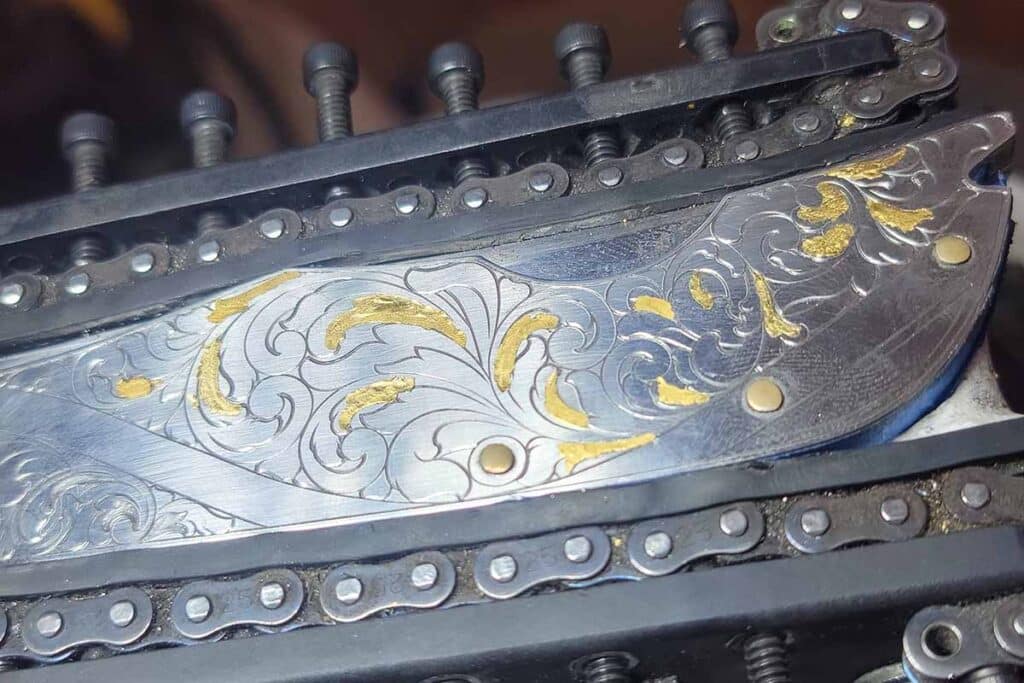
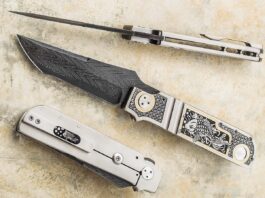
There are 23 inlays of 24k gold on each side of the folder. Sixteen have been set in the lower two-thirds of one side here (below). Polishing them flush came later.
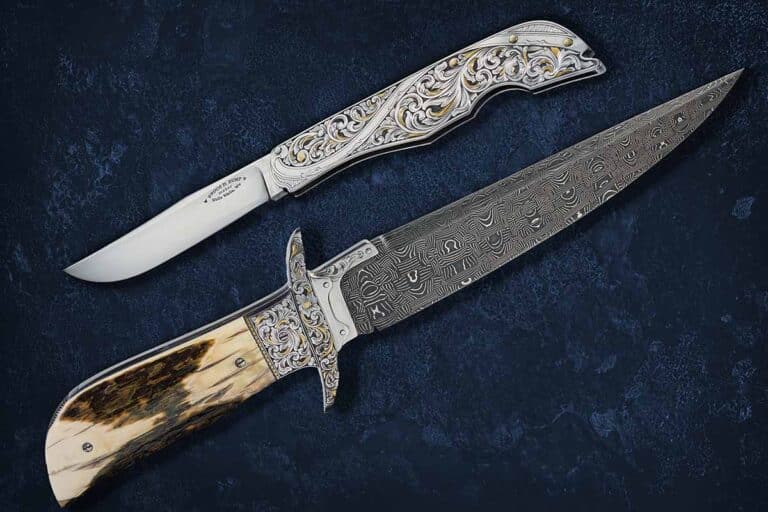
We had not met face to face but were familiar with each other’s work. We agreed to meet in person at a Nashville Arts in Metal knife show. During the meeting, he showed me one of his hideout bowies. The 15-inch knife in basketweave damascus steel immediately inspired me with its blend of high-end materials and fine craftsmanship.
Bruce forged the damascus from 1080 carbon and 15N20 nickel-alloy steels. The guard, bolster and handle frame are 416 stainless steel. The hidden slipjoint folder has a 1080 blade and 416 frame and stunning mammoth bark scales.
The locator pins on the folder presented a challenge, interrupting shading and flow of scroll.
Bruce informed me the customer wanted both knives engraved and would be contacting me to discuss ideas. It took about six months to happen due to my relocation and settling into our new home.
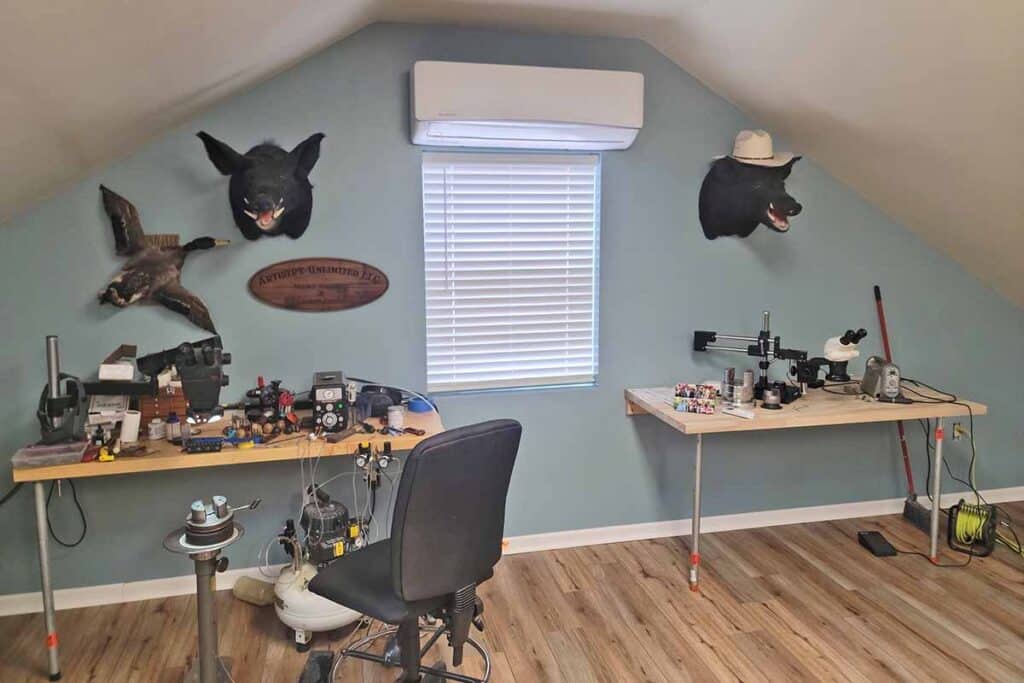
Building a studio was my first priority. It is in a loft space over a detached garage. The space was completely unfinished when we bought the property. Excluding hanging the drywall, I did the renovation. This involved insulation, flooring, painting, trim carpentry, and heating, ventilation and air conditioning. I went from a 140-square-foot shop inside my home to an entire building with about 1,600 square feet of space.
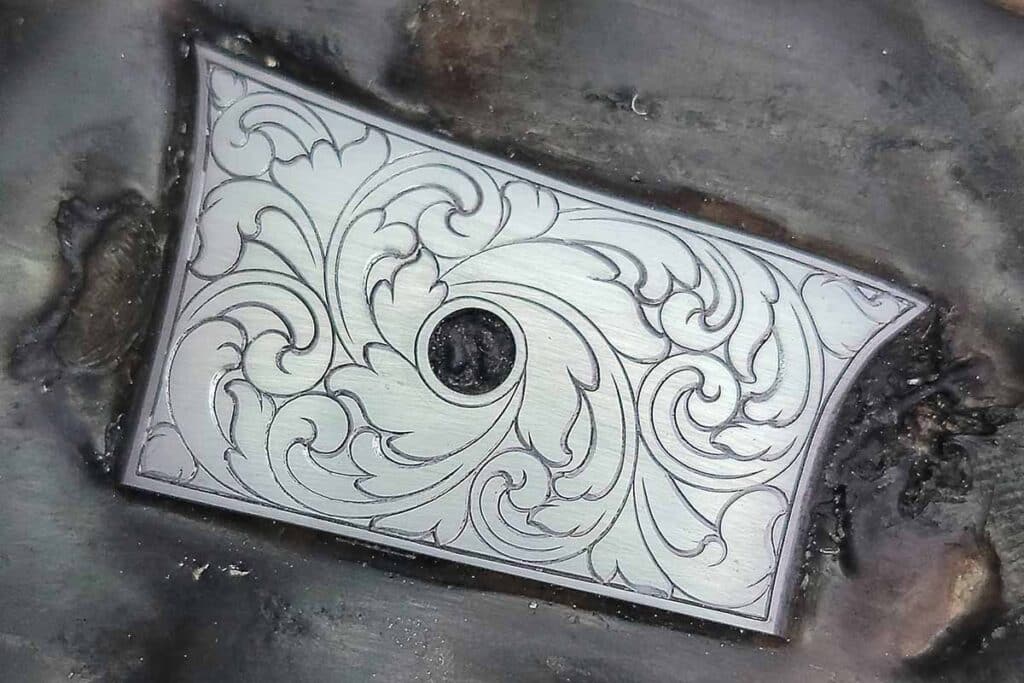
All the scroll is engraved.
Finally—I had the room to really pursue my artistic dreams! The studio is set up with specialized workstations for all the various tasks involved in creating art in metal. After a decade of working professionally as an engraver, I learned exactly what works best for me. The primary bench is set up for the majority of my engraving with everything in arms’ reach, facilitating a comfortable and efficient workflow. In addition, there are dedicated areas for design, assembly/disassembly, welding, jewelry making, stone setting and photography.
The Knife
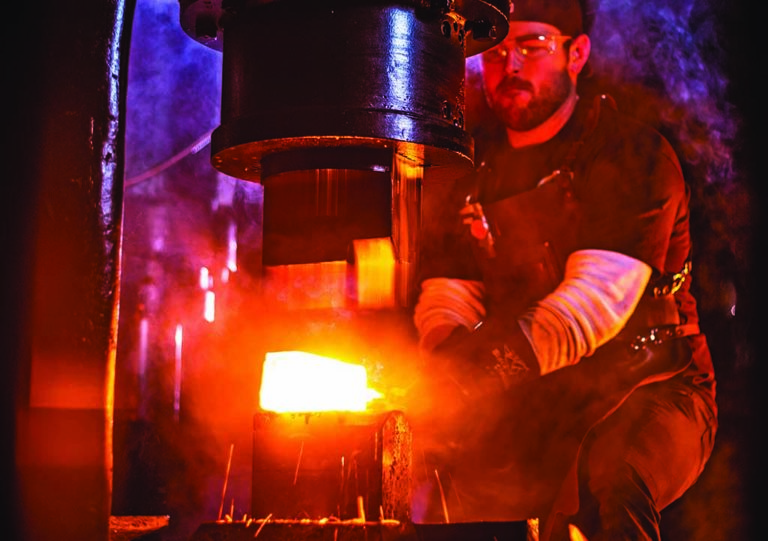
When the hideout bowie arrived for engraving, I spent some time admiring and studying the knife before doing anything. The damascus blade immediately impressed me. Bruce forged the basketweave pattern blade using the accordion method in which he opens up the forge-welded billet, using a spear-type point in his large hydraulic press, creating an accordion-shaped slab of metal. The process reveals the repeating pattern along the length of the billet.
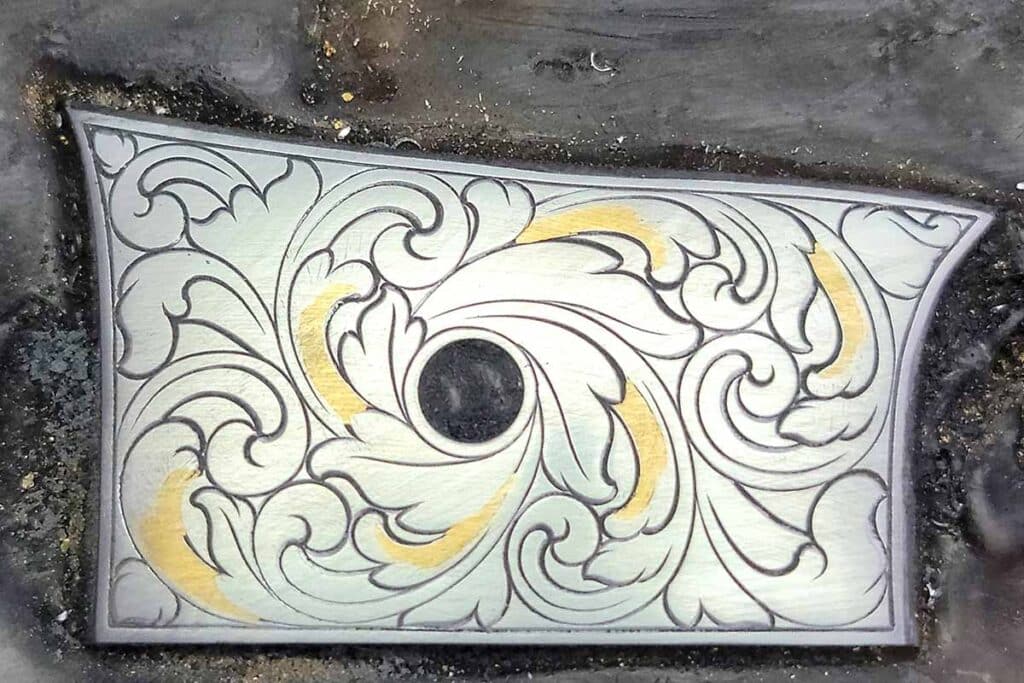
The inlays are prepared and the gold is set in the steel.
The construction of the hideout slipjoint folder is impressive as well. A flawless spring-loaded catch retains the folder inside the bowie handle. The folder has a series of small, raised pins that help locate it within the bowie handle. The pins would pose a unique challenge for me with the design and execution of the engraving.
Engraving
Much of my workflow is very old fashioned, involving traditional methods. I like to use pencil rubbings to create 1:1 outlines of the objects I’m about to engrave. The outlines are copied and duplicated to scale, allowing me to play around with the pencil to develop a pleasing composition.
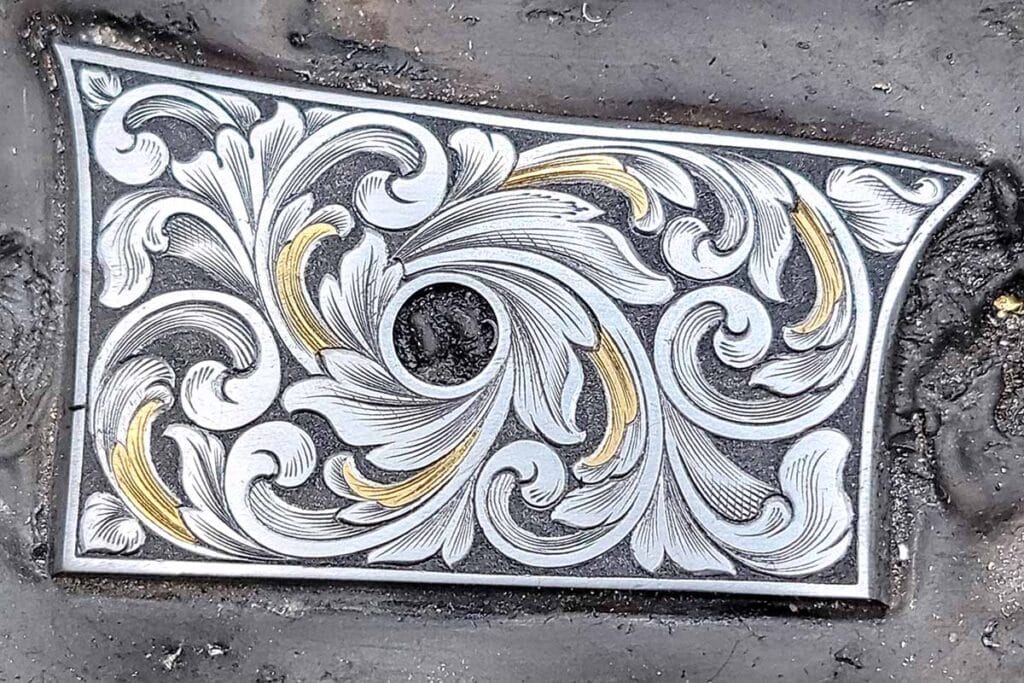
The inlays are polished flush.
Most of the time I draw the design directly on the metal, including on Bruce’s bowie and folder. I prefer this method because I understand the scale of the item better. Once one side is engraved smoke prints are taken, and a transfer is made to mirror the design precisely.
The locator pins on the folder presented a challenge, interrupting shading and flow of scroll. The solution was to embrace the pins, making them part of a simple, flowing ribbon. The ribbon was then framed with larger, relief-engraved scroll. The scroll is accented with 24k-gold inlays in the leaf structure.
Bruce Bump earned his ABS master smith stamp in 2003.
There are 23 inlays on each side of the folder. There’s something magical about prime numbers and they seem to find a way into my artwork regularly. The engraving process for this style has five major stages:
Stage 1: All the scroll is engraved; Stage 2: The inlays are prepared and the gold is set in steel; Stage 3: The inlays are polished flush; Stage 4: The scroll outlines are recut to make every line of the scroll perfectly crisp, and; Stage 5: The background is carved away, textured to black, and the fine shading is engraved.
The author’s primary bench is set up for the majority of his engraving with everything in arms’ reach, facilitating comfortable and efficient workflow. Elsewhere in his 1,600-square-foot studio are dedicated areas for design, assembly/disassembly, welding, jewelry making, stone setting and photography.
This process was repeated for the opposite side of the folder and then on the bowie knife guard and bolster. The bolster and guard also had either a pin or screw to contend with. In these areas I used them as an origin point. I also engraved the small screws to add the finishing touches to the knife.
For me, a brilliant new horizon appeared while collaborating with Bruce Bump.


![Spartan Blades Poros Review [Tested]](https://blademag.com/wp-content/uploads/Poros-2-768x511.jpg "Spartan Blades Poros Review [Tested]")