Home Blog

Copper Damascus: An Exciting New Way To Make Knives

0

Whether You Call It Copper San-Mai, Cu-Mai, Or Anything Else, Copper Damascus Is One The Trendiest Ways To Forge Knives Today.

By now most knife enthusiasts are familiar with pattern-welded steel, commonly called damascus, whose re-invention for use in knife blades is attributed to BLADE Magazine Cutlery Hall-Of-Fame® member Bill Moran. 

The damascus world has since exploded with complicated mosaics, exotic-tiled canister billets, and, more recently, even some interaction between pattern welding and 3-D printing. These new techniques are mind-blowing for sure.

Copper San-Mai

A 2.75-inch go-mai blade with a wrought-iron cladding over an Aogami2 core and a copper shim layer highlights Joe Edson’s frameback straight razor. The frame is copper with a forced patina. The scales are crosscut mammoth ivory on a G-10 backer with a forged-patina-copper-wedge spacer. Closed length: 3.25 inches. (SharpByCoop image)

One of the hottest new trends in damascus is the inclusion of copper into pattern-welded billets. Commonly called copper-mai, copper san-mai or cu-mai, the technique has been brought to near perfection by Coy Baker at Baker Forge & Tool. 

In 2019 at the request of a customer, Baker created his first copper damascus billet. Starting with Baker as a one-at-a-time weekend garage craftsman, the business exploded. Baker Forge & Tool now has a 3,000-square-foot shop and 10 employees, and they can’t keep up with demand.

Baker says the welding of copper in stacked configurations has been around for centuries in the form of mokumé gané, aka mokumé. While he’s the first to blow up Instagram with welded copper damascus, he is certainly not the first to attempt the cu-mai technique.

He primarily uses 80CrV2 carbon steel for the cores of his billets, and also various patterns of a damascus of 1080 carbon and 15N20 nickel-alloy steels. ABS master smiths Steve Schwarzer and Jason Knight helped him along in his early damascus-making journey. 

How To Forge Copper Damascus

To forge a copper damascus billet, Baker typically uses a core of 80CrV2, a layer of 20-gauge pure copper shim stock, and a cladding of 1080/15N20 damascus. 

“It’s important that the core and cladding stay in a 1-to-1-to-1 thickness ratio,” he said. “The copper doesn’t harden, and it’s critical to keep the core centered so that the cutting edge of the knife will be hardenable steel.” 

He hasn’t experimented with copper alloys other than pure copper, though he has used some bronze and nickel with good results.

It’s no surprise that there are trade secrets that Baker didn’t volunteer, and I was polite enough not to ask. Copper stacked in a billet oxidizes quickly, similar to stainless, and so the welding must be done very precisely. For the welds to stick, the surfaces being welded also must be exquisitely clean, with not even a trace of oils or fingerprints.

The Different Types Of Copper Damascus

Baker did reveal that there are two basic versions of the process. In one, the layers are welded around the perimeter as in canister or stainless welding, and then the entire billet is welded at once. In this method, the temperatures are enough to liquefy the copper, and the perimeter welding keeps the liquid in. 

In the other version, the billet components of core, copper and clad are stacked together and held at brazing temperature. This is Baker’s preferred method, as the copper doesn’t liquefy and so performs more consistently when it comes to thickness. Such exact brazing requires precise temperature control, as a 10-degree variation in either direction from the proper brazing temperature can produce failure. 

While there are no doubt smiths who have attempted and maybe even successfully welded copper damascus by hand, Baker acknowledges that the aspiring smith is much more likely to be successful using a press or power hammer to set the weld. Precision temperature control also gives increased chances of success.

Dion Damascus

A 10.25-inch blade of NBC san-mai, black ash burl handle with an ebony bolster and a white G-10 spacer help complete Andrew Mochado’s kitchen model. Overall length: 16 inches. (Eric Eggly/PointSeven image)

While Baker is the best known and most common source for copper damascus, another variation is available from Dion Damascus. Florida knifemaker Andrew Mochado recently made a knife from a bar of Dion Damascus that included brass, copper, and nickel clad over a core of 52100 carbon steel. 

“It is my take on a gyuto-style chef’s knife,” he said. It has a box elder burl handle with an ebony bolster. Mochado heat treated the blade in a gas forge. “The outside layer of the billet was nickel, so it was very difficult to get it all up to temperature,” he explained. “The nickel buckled up a bit and I thought I had a failure. I was able to successfully grind off all the buckling, and the blade was still perfectly forged together.”

Baker pointed out that the melting points of copper and nickel are above the heat-treating temperature of carbon steel. However, in a forge, the outside layers come in contact with a forge atmosphere that’s well above the desired hardening temperature, thus causing problems with the non-ferrous layers.

How The Copper Affects Knifemaking

Jordon Berthelot is a Texas maker known for kitchen knives and intricate carved and sculpted blade plunges. He’s also made dozens of blades with Baker’s cu-mai. He has been Coy’s “guinea pig” for testing new patterns for months. When Baker develops a new pattern, Jordon builds the prototype.

“I’m pleased with how the cu-mai grinds. You might expect the copper to be gummy or soft or to grind differently when you sculpt it, but it pretty much grinds the same as steel,” Berthelot observed. “You always have to pay attention to get the carving right, but the copper poses no problems.” 

Makers will notice the copper being softer if they hand-sand it aggressively, but overall the copper layers are no more difficult to finish than regular steel.

When it comes to finish work, Berthelot recommends sanding to at least a clean 600 grit prior to etching. “Regular” ferric chloride doesn’t perform well, and etching copper in it will leave a copper tint on standard damascus steel blades later. Instead, Berthelot prefers a 20/20/60 mix of ferric chloride, muriatic acid and distilled water. The addition of the muriatic acid keeps the copper from looking blurry, and keeps the material out of the solution for future etching. After the etch, Berthelot buffs with “black magic” rouge so the copper will “pop” nicely. 

Forged in Fire season 1 episode 2 “OG” winner Chris Farrell of Fearghal Forge in Austin, Texas, took advantage of the bold copper line in his piece of Baker Forge damascus. The copper makes a dramatic, bold statement, and so do the curves and lines of Farrell’s fancy faceted fighter. 

“People see my faceted handles and think they’re kinda funny until they pick one up and realize how well it fits their hands,” Farrell said. He is fascinated by innovations in the knife industry and is always looking for his own ways to innovate. He’s experimented with forging Baker’s copper damascus bar stock: “It can be done, but you really have to be careful. It’s real easy to mess up!”

Copper Damascus Around The World

Australian maker Adam Fromholtz crafted a cake knife of copper damascus from the Japanese steel company Takefu. Takefu steel can be hard to find in the USA, but there is a reliable Australian distributor. Adam’s knife is copper, nickel and brass clad over a V-Toku-2 carbon core. Handle: Tiger myrtle. Blade and overall lengths: 9.25 and 14 inches. His list price for a similar knife: $1,800. (SharpByCoop image)

The cu-mai trend is not limited to the United States. Australian knifemaker Adam Fromholtz of Canberra crafted a cake knife of copper damascus from the Japanese steel company Takefu. Takefu steel can be a challenge to find in the USA, but there is a reliable Australian distributor. 

Adam’s blade is copper, nickel and brass clad over a V-Toku-2 carbon core. Regarding the steel, Fromholtz noted that it was near impossible to forge due to the differences in ductility between the materials. Because of the softer cladding, he noted that the blade tends to gall a bit, so makers should take note of this when fitting a slotted guard on a blade of such a material. Overall, the steel is simple to finish but shows handling marks easily.

How Do Copper Damascus Knives Perform?

Is copper damascus all flash and bling or does it perform? Copper does not harden the way steel does, which makes you wonder how it impacts knife performance. First of all, copper damascus is used with a monosteel—that is, one layer of steel—or a regular carbon damascus core. 

Using a steel core makes it where the copper has absolutely no impact on the blade’s cutting performance, edge stability or toughness. Baker said he knows of two makers who have used his cu-mai material to complete American Bladesmith Society-style performance tests of rope cut, 2×4 chop and 90-degree bend.

When it comes down to it, the copper layers are very thin. Considering that the final weld-up of clad/copper/core/copper/clad may be as much as 2 inches thick, and that the copper starts out roughly .03-inch thick, the overall final billet has very thin layers of copper. It’s enough for a dramatic pattern but not enough to impact knife performance in a negative way. “I made a knife with it then beat the hell out of it,” Farrell said. “So long as it’s heat treated properly, it’s good stuff.”

Availability Of Copper Damascus

The 9-inch blade of Jordon Berthelot’s chef’s knife is Baker Forge & Tool auro-mai damascus with a core of 80CrV2 carbon steel. “It has my carved ridge that adds great weight reduction and a nice ergonomic flow, and decreases the drag coefficient,” Berthelot wrote. “It also allows me to alter the pattern.” Overall length: 14 inches. Maker’s price for a similar knife: $1,700. (image courtesy of Jordon Berthelot)

If you’re a maker looking to capitalize on the copper damascus trend, get in line. Baker Forge releases approximately 70 billets a week to the public, in addition to what it produces for commercial use. The billets “drop” Saturdays on Instagram and are usually gone by the end of the day. 

Most billets are 2-2.5 inches wide and come in thicknesses from ⅜ inch all the way down to 3/32 inch. Pricing currently runs up to $25 per linear inch, but as in all things post-pandemic manufacturing, the supply costs for raw materials keep increasing. 

As for consumers, check knife shows, magazine stories such as this one, and Instagram and elsewhere on the Internet. Cu-mai knives are out there—you just might have to do some digging to find them.

Read More

Knife Deal: Pre-Black Friday, Black Friday And Cyber Monday

The holidays are around the corner and besides spending time with family and stuffing ourselves with excellent food it is a time to give gifts and celebrate those we love. For the knife lovers in your family, whether they prefer a folder or a rugged fixed blade, now is the time to take advantage of Black Friday and Cyber Monday deals. Below are BLADE’S top picks for the best knife deals this holiday season.
This article will be updated as more deals become available, so be sure to check back often.
Amazon

Of course, Amazon has a ton of deals and is worth a look daily—especially if you’re on the hunt for a knife deal.
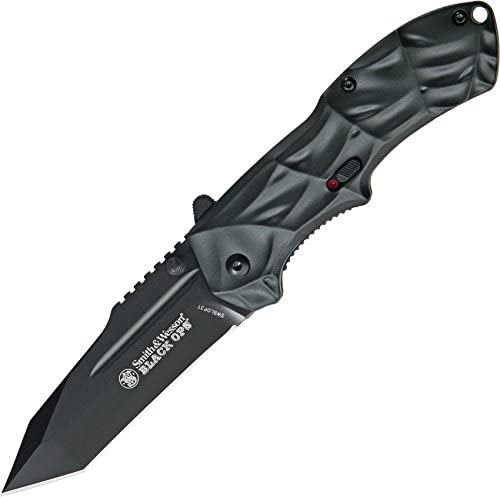
As for right now, Smith & Wesson’s Black Ops Assisted Opening Tanto for $27.41 makes a pretty good stocking stuffer.

Blade City

If the knife enthusiast in you life has more exotic tastes, Blade City will like scratch their itch. The site has its Christmas deals page up and running.

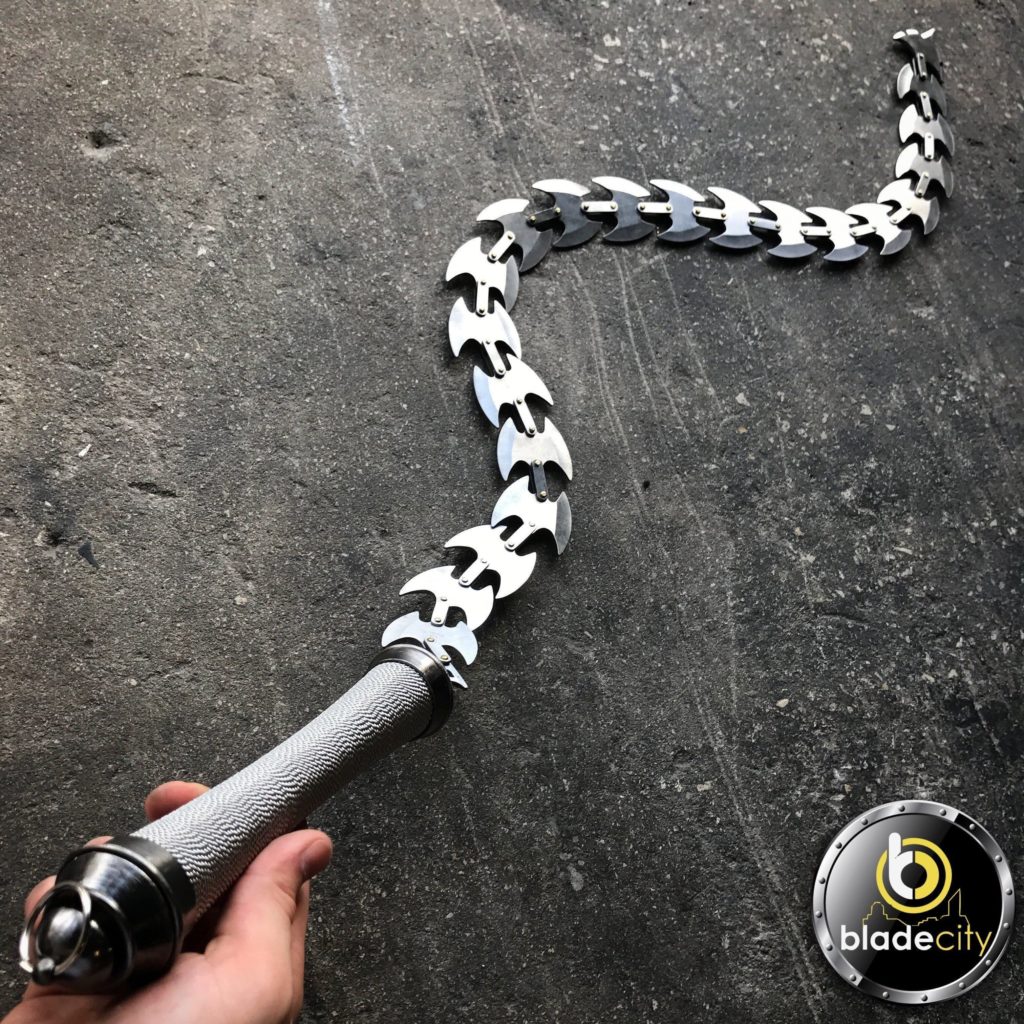
They has some unusual gems, such as Titanium Scorpion Whip … because, why not?

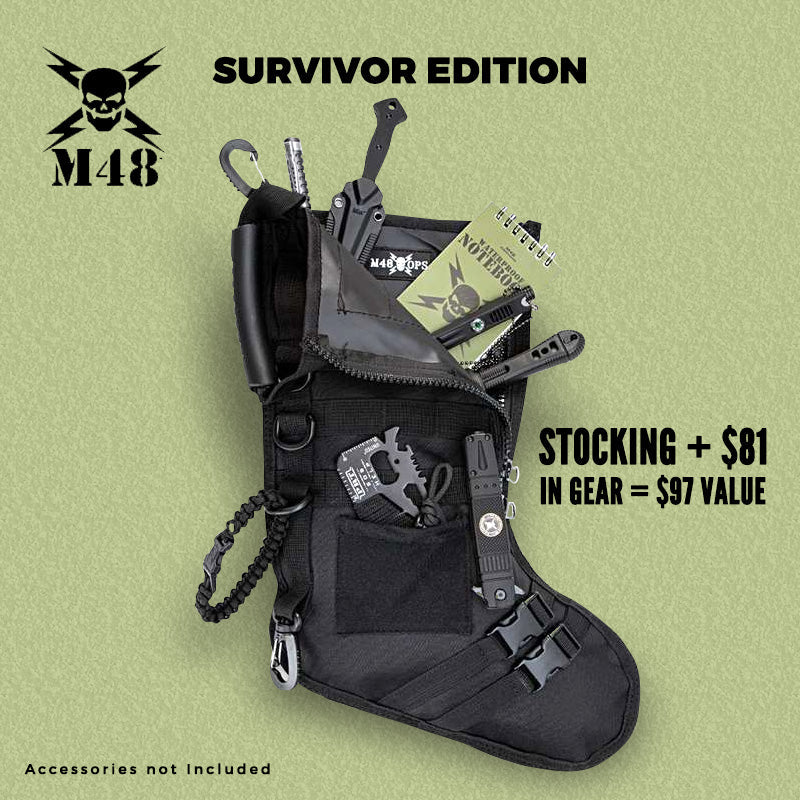
Also, their M48 Tactical Stuffed Stocking – Survivor Edition is packed full of all sorts of goodies.

Blade HQ

Blade HQ has a number of Christmas promotionals up and running. One of the more intriguing is laser engraving for an extra $9.99 on a purchase. Also, they’re giving away Winchester Shotgun Shell knives with a purchase over $75. Pretty Sweet.

The HQ also has a number of categories to shop their deals during the holidays:

Here are a couple that caught our eye.

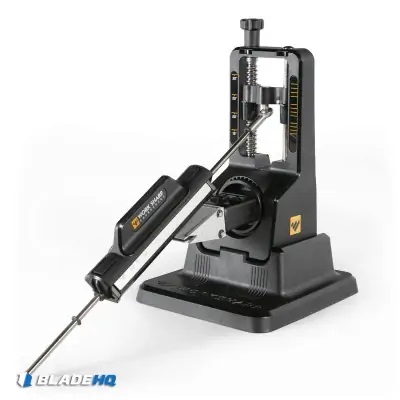
Any workshop—Santa’s or otherwise—is up graded with the Work Sharp Precision Adjust Angle Set Knife Sharpener, priced at $59.95

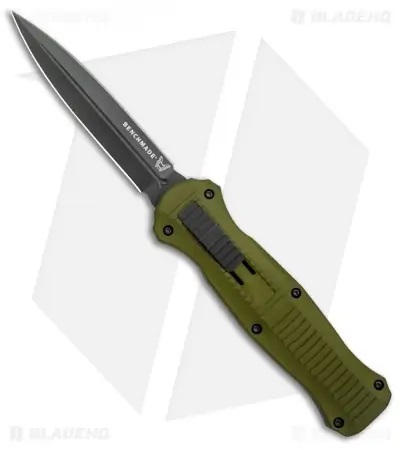
The very sexy Benchmade Infidel OTF Double Action Automatic going for just $385, more than $100 off MSRP.

Smokey Mountain Knife Works

SMKW is bursting at the seams with deals, with nine pages of site busters. You’re certain to find something for the knife lover in your life—even if that happens to be yourself.

A few we don’t think we could pass on include:

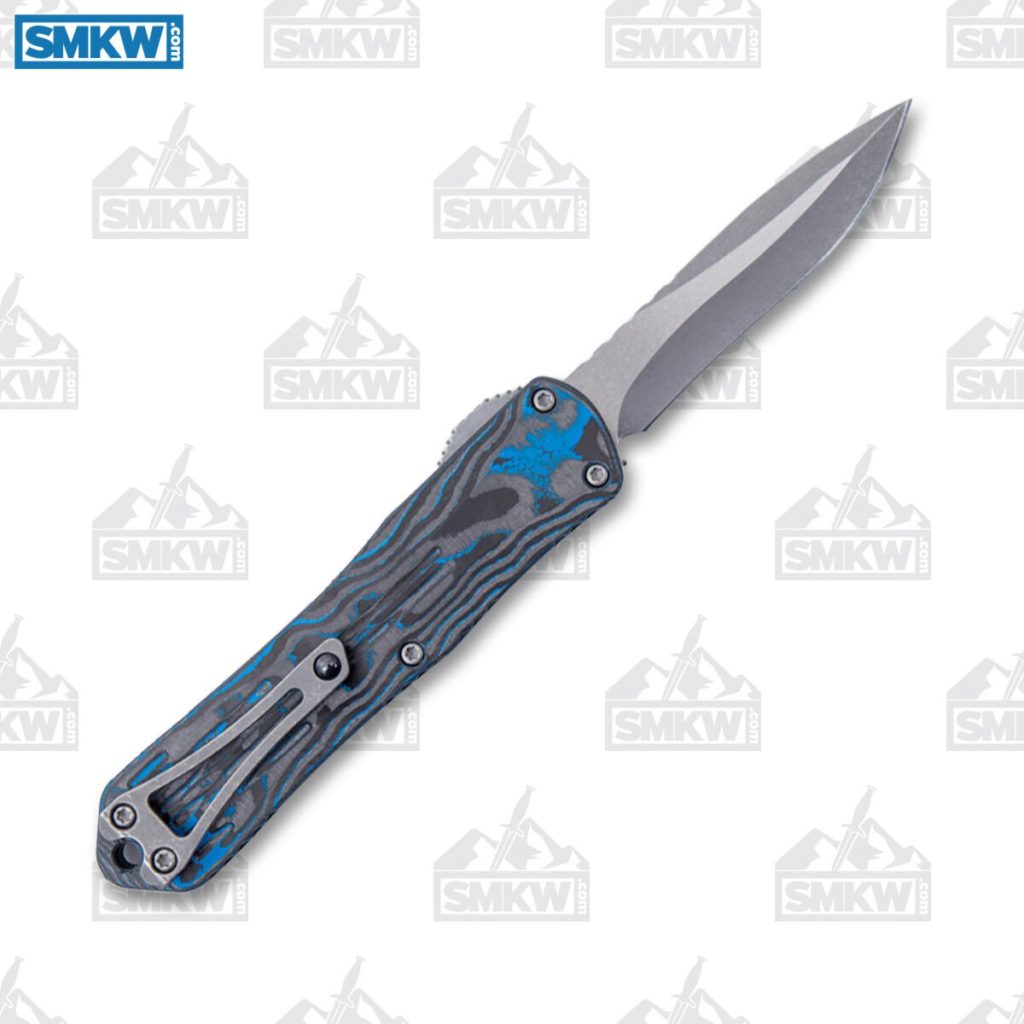
Heretic Manticore E Nightcrawler for $375

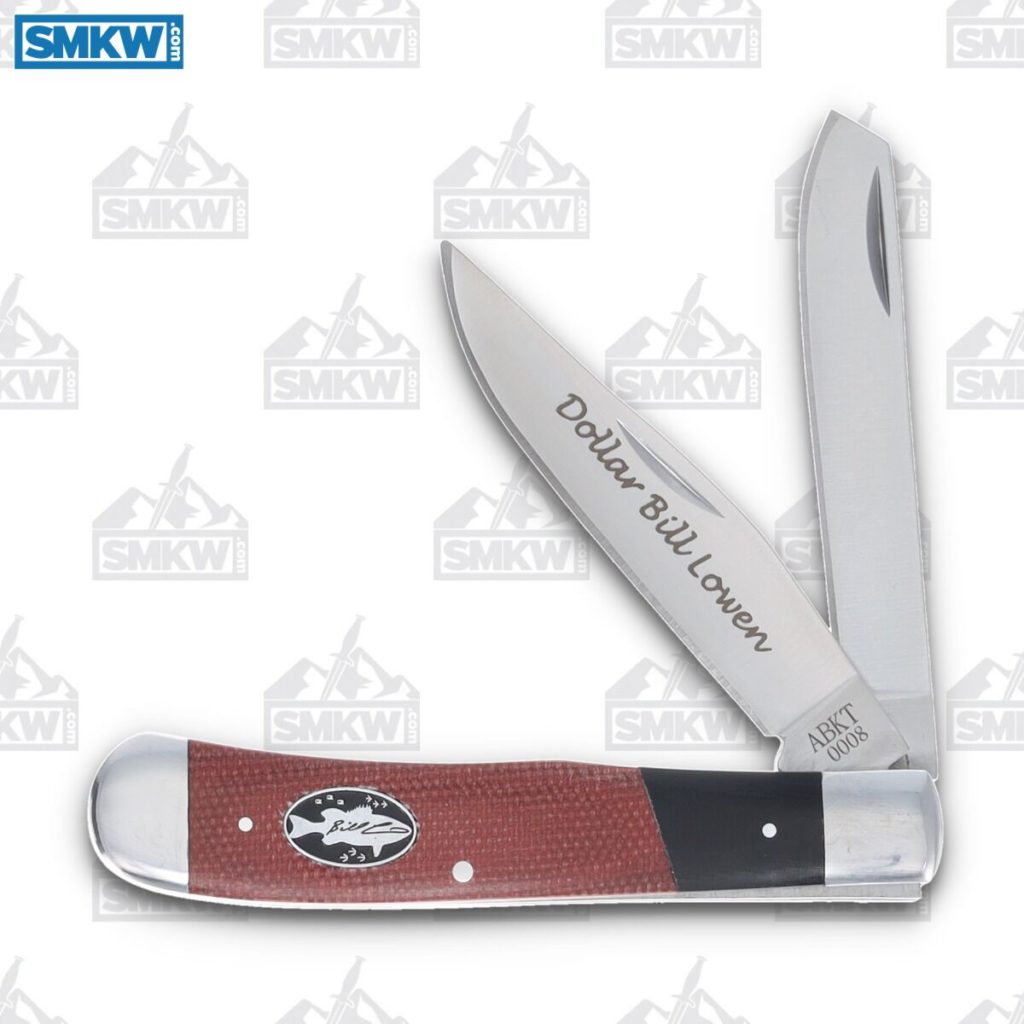
ABKT Bill Lown Trapper with Black and Read Micarta/G-10 handle for just $15.77

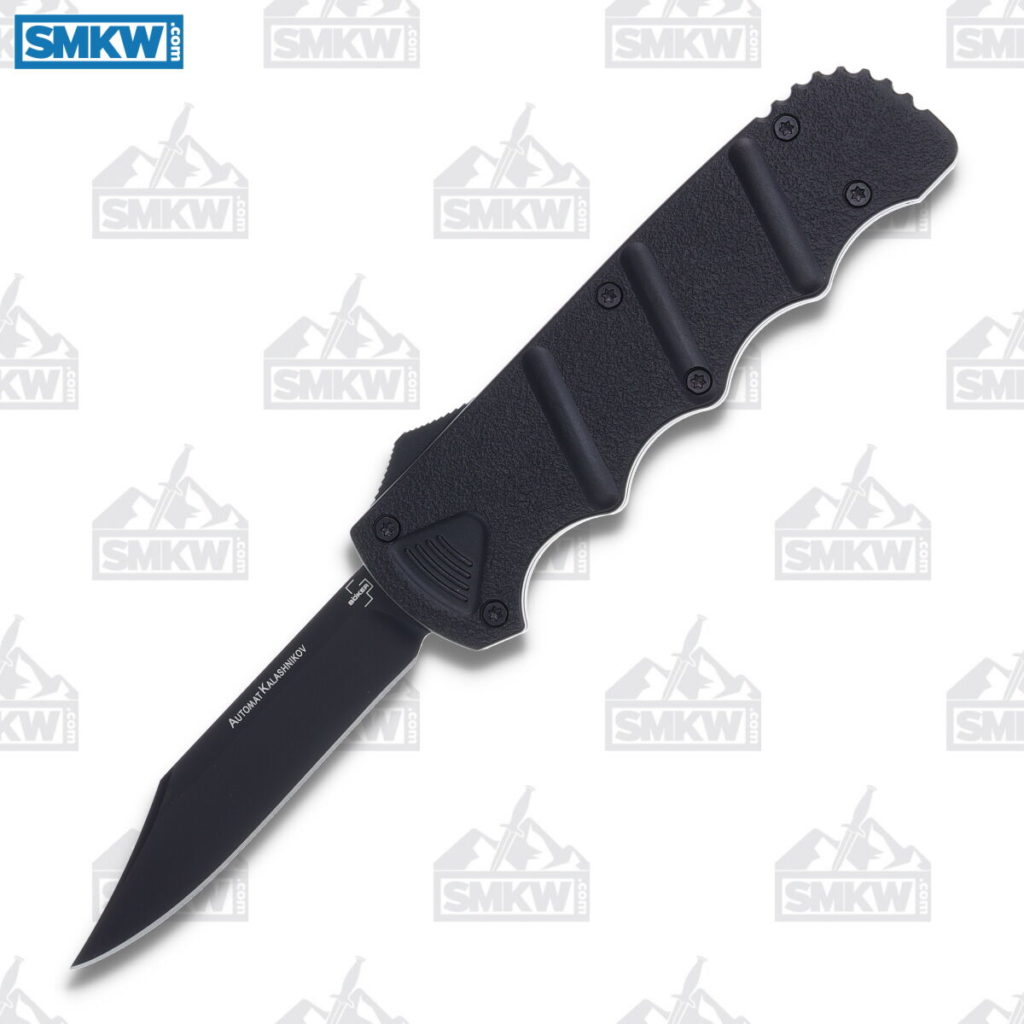
Boker-Kalashnikov OTF Blackout moving at $82.88

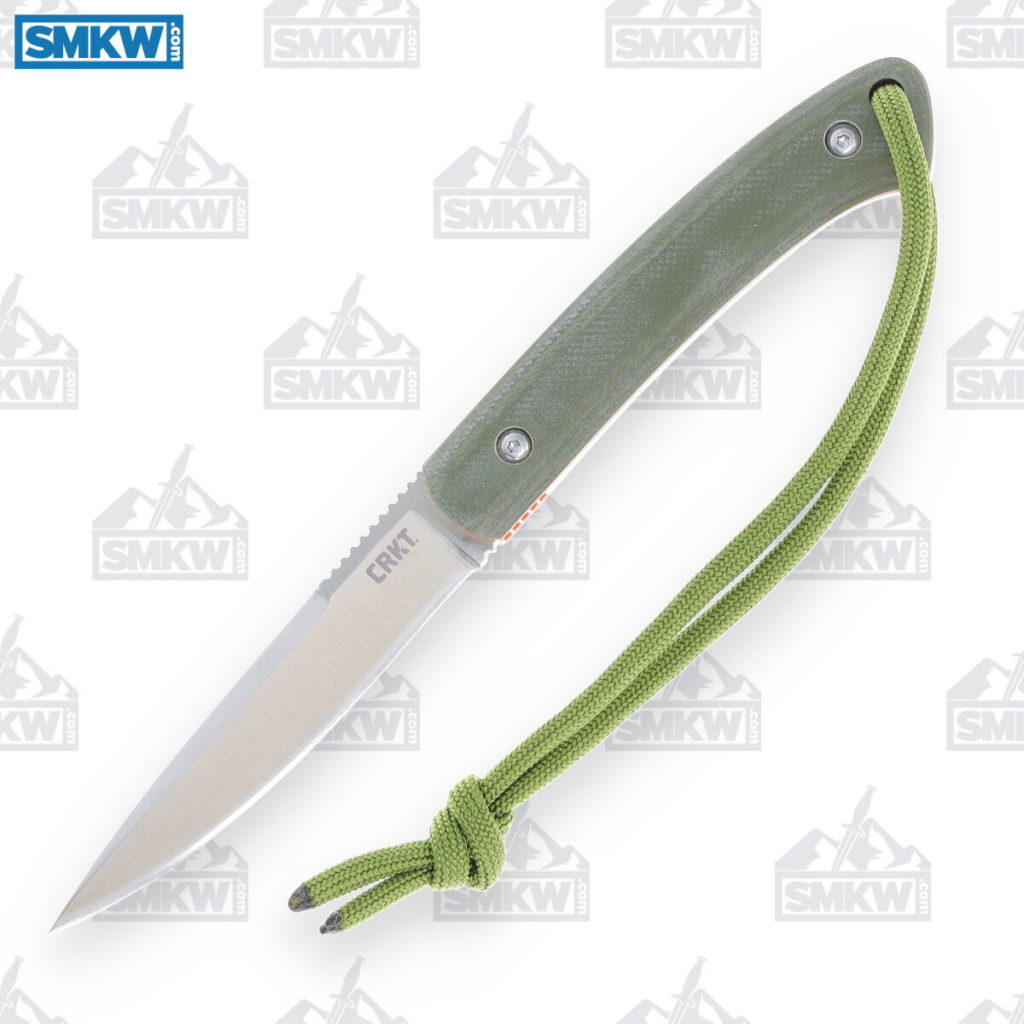
And the slick little CRKT BIWA in OD Green for only $29.99

Time Is Running Out To Get Your CANCON Tickets!

0

SUPPRESSORS, NIGHT SHOOT, FOOD, AND FAMILY FUN!

Welcome to CANCON A Fully Suppressed RECOIL Range Day!

Save the date and make your plans to come down on Veterans Day weekend, Nov. 11-13 to the 17 South Rod and Gun Club in Savannah, Georgia.

Hundreds of the newest and best suppressors, firearms, and optics will be on the firing line for you to get hands-on trigger time.

All ammo will be provided, just bring your trigger finger!

Veterans get in FREE Friday, so come spend your Veterans Day weekend with us at CANCON!

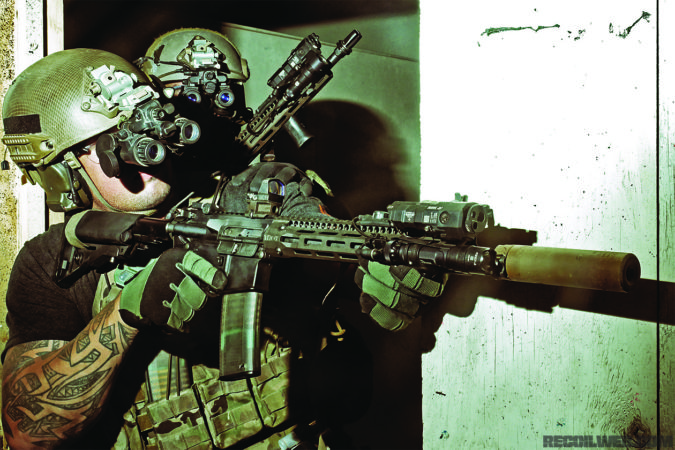
SATURDAY NIGHT VIPs will have the opportunity to shoot suppressed with night vision goggles, clip-on night vision optics, IR lasers, tracers, and more. 

CANCON will even have activities for kids, making this a completely family-friendly event.

Expect to see hundreds of firearms and suppressors, every one of them available to shoot. Don’t forget your eyes and ears for safety!

Not every day you get to shoot cool stuff like this!

Great food will be available on-site for when you need to recharge between shooting bays.

More information and ticket pre-sales coming soon!

Subscribe to the CANCON Event Newsletter

Give us your email below and click the button to be the first to learn about updates and developments!

CANCON 2022 SPONSORS

New Knives: August 2026

Scorching new knives to keep you sharp this summer.

August’s new arrivals spotlight the full spectrum of modern knife making, blending production innovation with hand-crafted custom artistry. This month’s lineup captures everything from precision-engineered factory folders built for everyday carry to one-of-a-kind custom fixed blades tailored for serious collectors. Featuring fresh designs from established industry veterans and rising makers alike, these August 2026 releases highlight the cutting-edge materials, refined edge geometry, and field-ready performance defining today’s cutlery landscape.

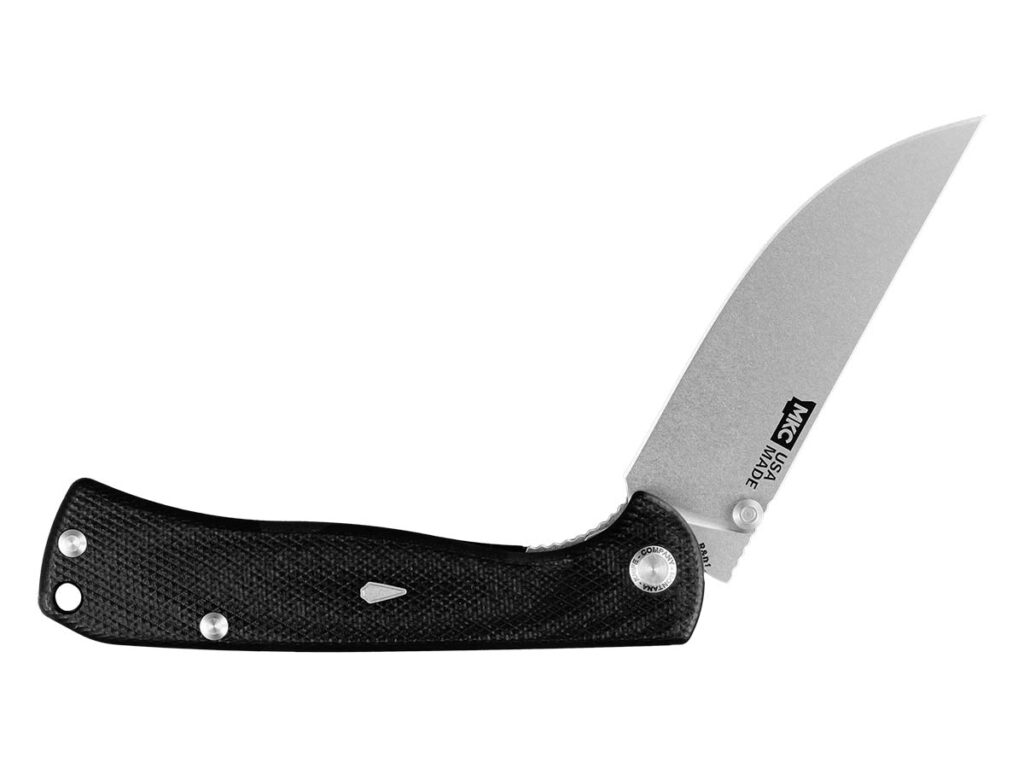
Montana Knife Co. The Montana

Montana Knife Co. The Montana

Knife Type: Folder
Blade Length: 3.25”
Overall Length: 7.625”
Blade Finish: Stonewash
Blade Steel: MagnaCut
Blade Opener: Thumbstud
Handle Material: G10
Lock: Liner Lock
Pocket Clip: Tip-up, right-hand
Weight: 2.84 oz.
Knife To Know: The Montana is the first folding knife from the Montana Knife Company.
MSRP: $390
montanaknifecompany.com


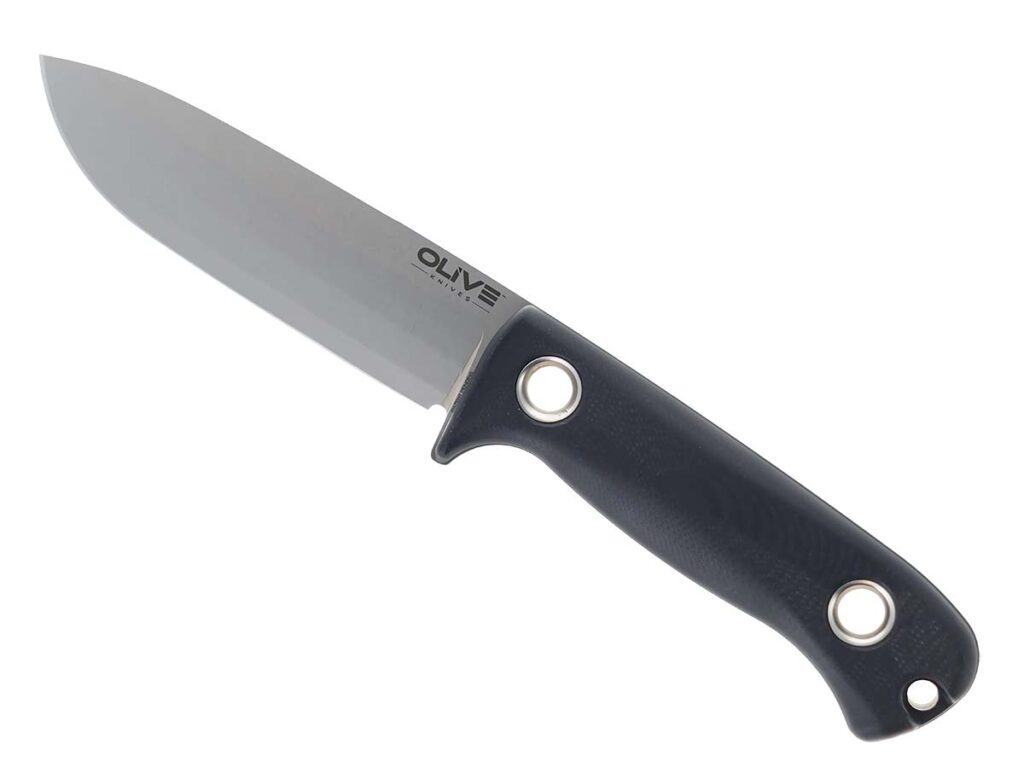
Olive Knives Arbor

Olive Knives Arbor

Knife Type: Fixed-Blade
Blade Length: 4.54”
Blade Steel: Elmax
Blade Grind: Fibonacci (Proprietary)
Blade Finish: Stonewash
Blade Profile: Drop Point
Handle Material: G10
Weight: 9.14 oz.
Knife To Know: Proprietary stepped grind combines convex strength, with sharpening ease of a flat grind.
MSRP: $400
oliveknives.com


Liam Walle Anthazoa Hunter

Liam Walle Anthazoa Hunter

Knife Type: Fixed Blade
Blade Length: 7.75”
Overall Length: 9.75”
Blade Steel: 115n20/1084 Gorgon Flower Mosaic
Blade Grind: Convex
Handle Material: Honduran Rosewood
Knife To Know: Bronze Bolster
Maker’s Price For A Similar Knife: $2,300
liamvallaknives.com. Jocelyn Frasier image


Blake Parthenay Saint

Blake Parthenay Saint

Knife Type: Folder
Blade Length: 3.5”
Overall Length: 8”
Blade Steel: Elmax
Blade Opener: Thumstud
Handle/Frame Material: Blackened Titanium
Knife To Know: Mother of pearl inlay in the handle, ceramic bearings
Jocelyn Fraiser image


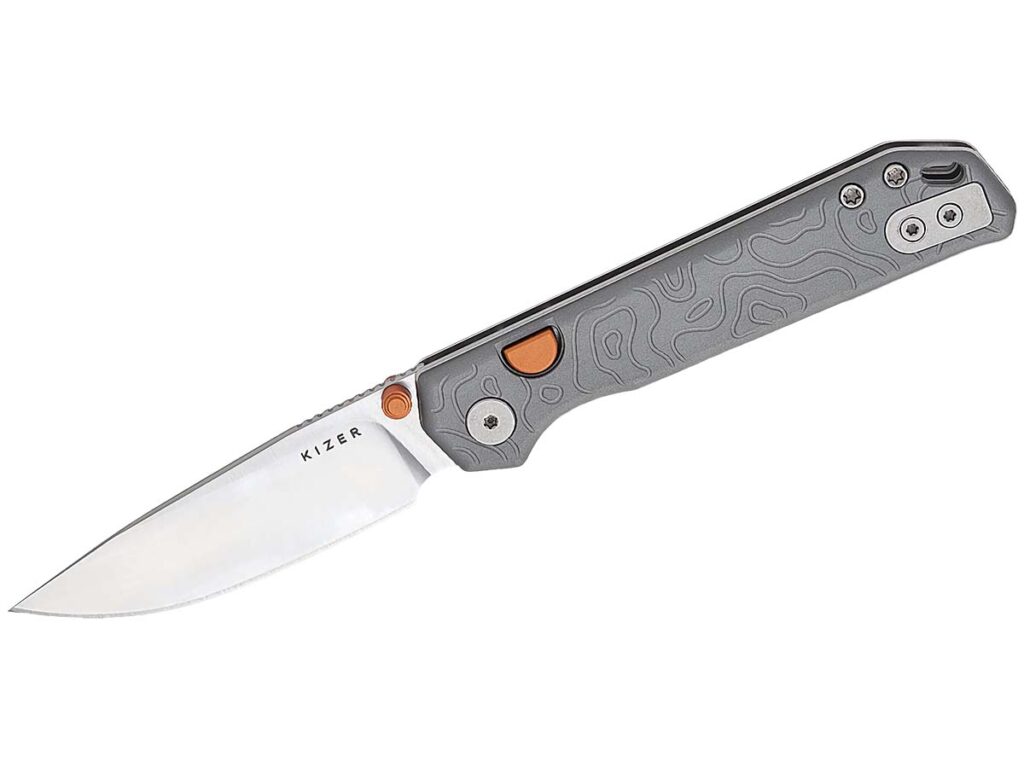
Kizer Begleiter

Kizer Begleiter

Knife Type: Folder
Blade Length: 2.97”
Overall Length: 7.03”
Closed Length: 4.06”
Blade Steel: S35VN
Blade Finish: Satin
Blade Grind: Hollow
Blade Opener: Thumbstud
Handle Material: Aluminum
Lock: Kizer Button Liner Lock
Pocket Clip: Tip Up Reversible
Weight: 2.88 oz.
MSRP: $110
kizerknives.com


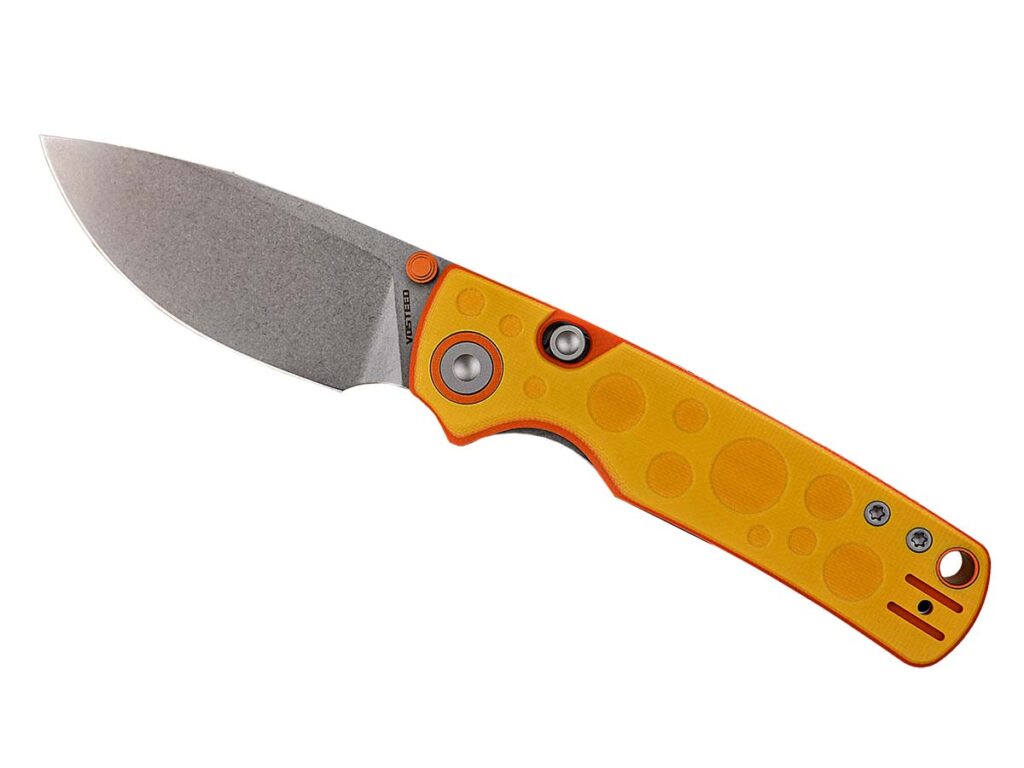
Vosteed Porcupine Cheese Pirate

Vosteed Porcupine Cheese Pirate

Knife Type: Folder
Blade Length: 2.99”
Overall Length: 7.16”
Blade Steel: 14C28N
Blade Profile: Drop Point
Blade Opener: Thumbstud
Handle Material: G10
Lock: Top Liner Lock
Pocket Clip: Tip Up
Weight: 3.55 oz.
Special Features: Custom cheese-inspired handle.
Knife To Know: Vosteed and Blade HQ plan to make a company-funded contribution to support animal rescue efforts All Paws Count from sales.
MSRP: $69
vosteed.com


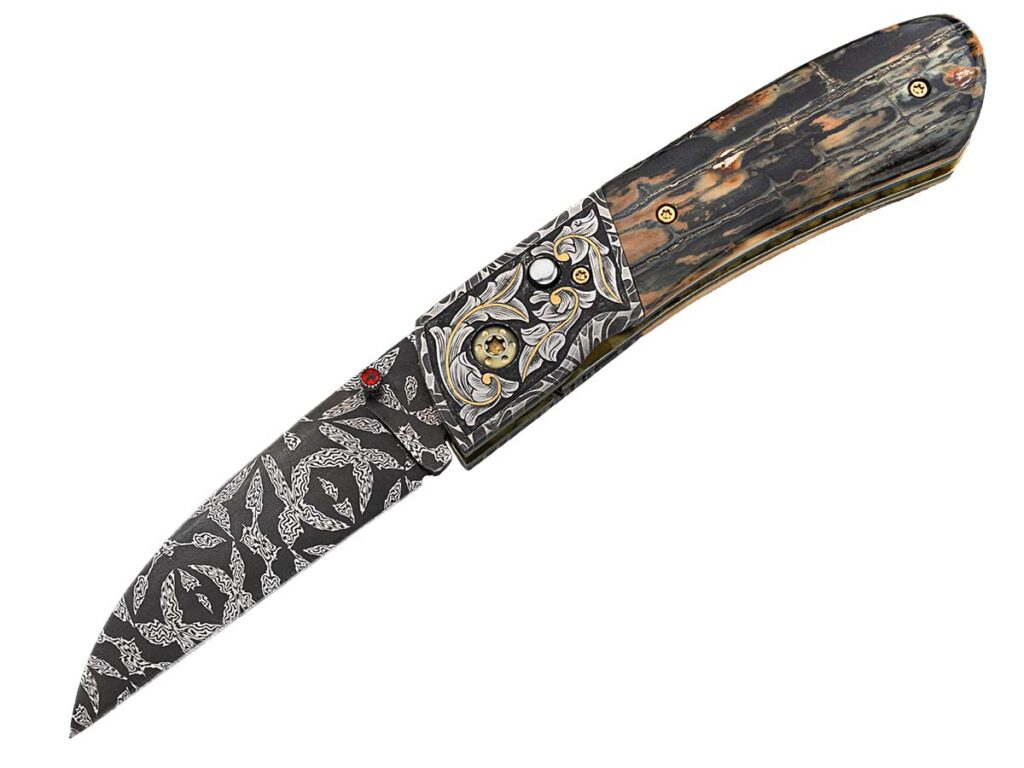
Mike Tyre OTS Automatic

Mike Tyre OTS Automatic

Blade Length: 3.5”
Overall Length: 7.25”
Blade Steel: 01/L6 damascus
Blade Grind: Flat Convex
Blade Opener: Button
Handle Material: Mammoth Ivory
Liners: Ice Finished Gold Anodized Titanium
Knife To Know: Bolster engraved by Joe Mason
Maker’s Price For A Similar Knife: $4,500
miketyrecustomknives.com. Jocelyn Frasier image


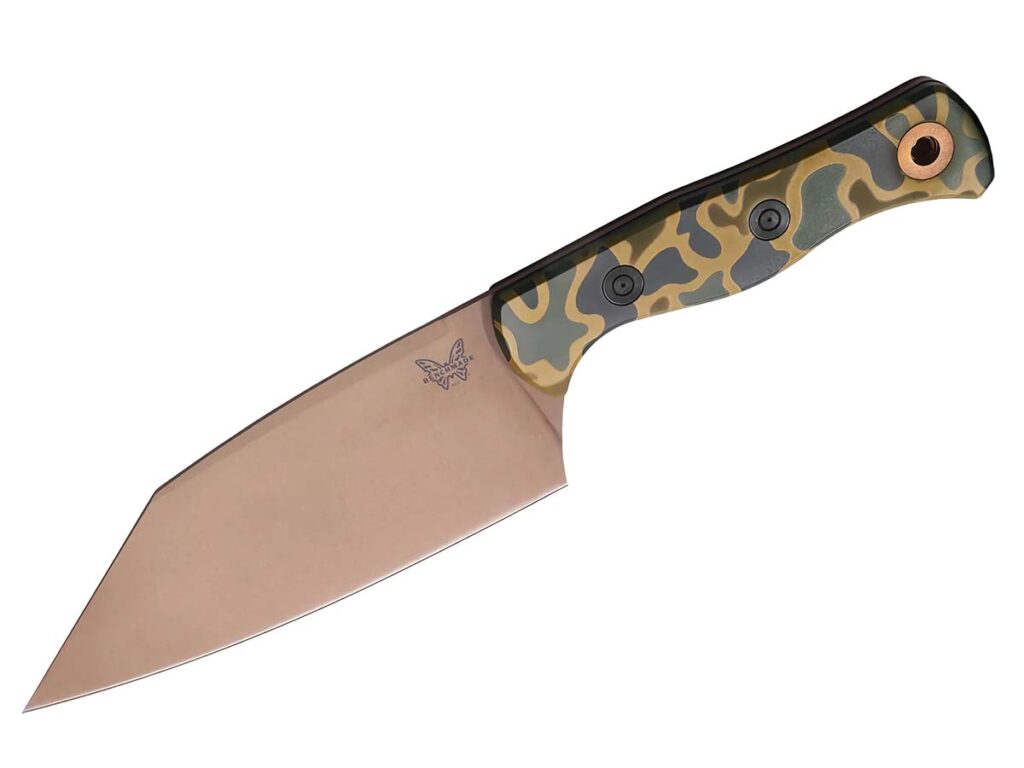
Benchmade Station Knife

Benchmade Station Knife

Knife Type: Chef’s Knife
Blade Length: 5.97”
Overall Length: 10.88”
Weight: 6.768 oz.
Blade Steel: CPM-154
Blade Profile: Clip Point
Handle Material: 6061-T6 Aluminum
Sheath: Boltaron
Knife To Know: Limited-edition camo handle.
MSRP: $450
benchmade.com


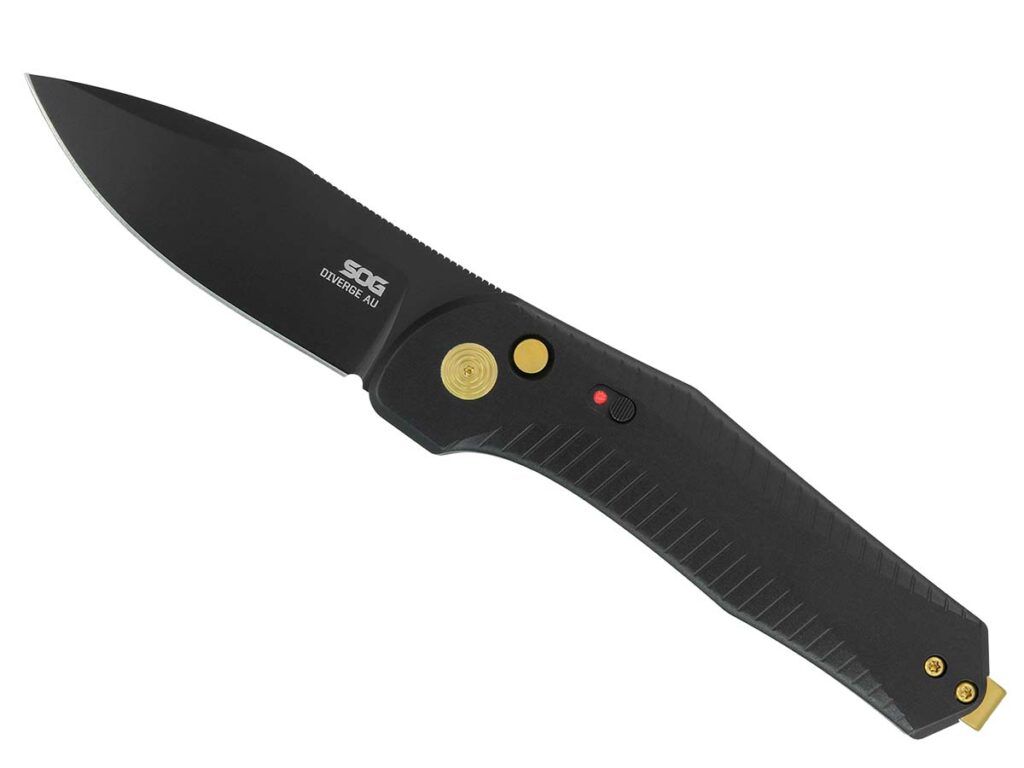
SOG Knives Diverge AU

SOG Knives Diverge AU

Knife Type: OTS Automatic
Blade Length: 3”
Overall Length: 7.3”
Blade Steel: D2
Blade Profile: Drop Point
Handle Material: Aircraft-Grade Aluminum
Pocket Clip: Reversible Clip
Weight: 3 oz.
Knife To Know: Ambidextrous pocket clip and deployment lock.
MSRP: $90
sogknives.com


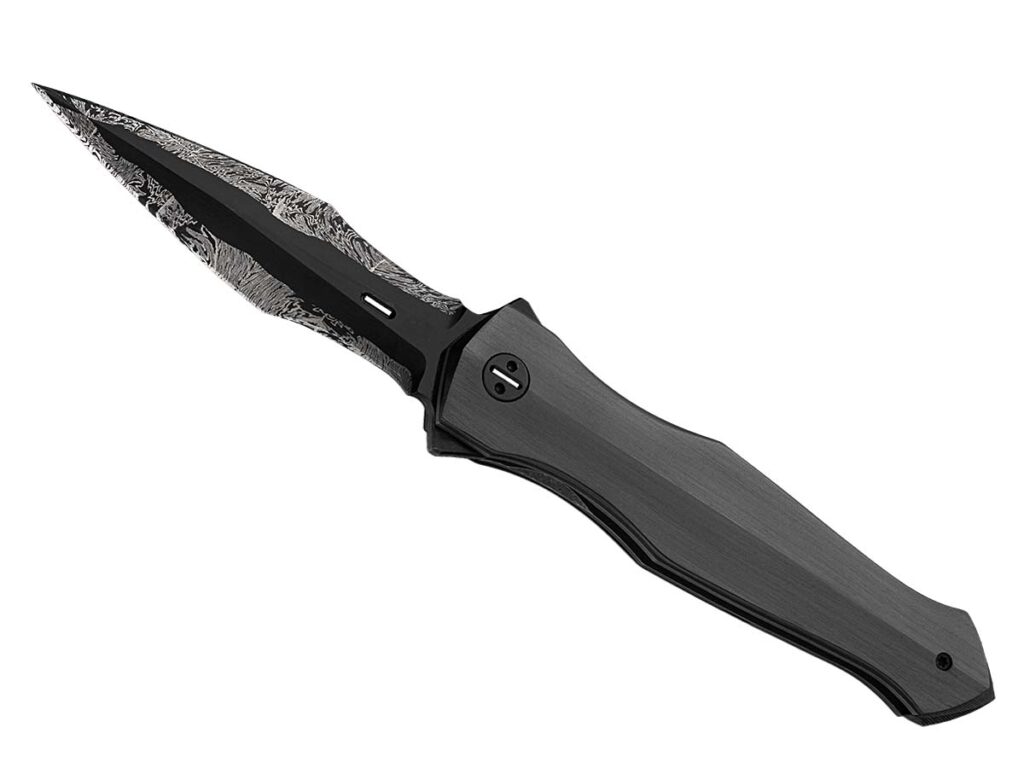
Alex Hossom Collab With Charlie Bridges Void

Alex Hossom Collab With Charlie Bridges Void

Knife Type: Folder
Blade Length: 3.75”
Overall Length: 9”
Blade Steel: 1084/1095/80crv2/Procut/15n20
Blade Grind: Symmetrical Hollow
Blade Opener: Flipper
Handle Material: McLaren Carbon Fiber
Liners: Titanium
Knife To Know: Titanium inlays in blade and pivot screws
Maker’s Price For A Similar Knife: $3,000
brokenanvilknifeworks.com. Jocelyn Frasier image


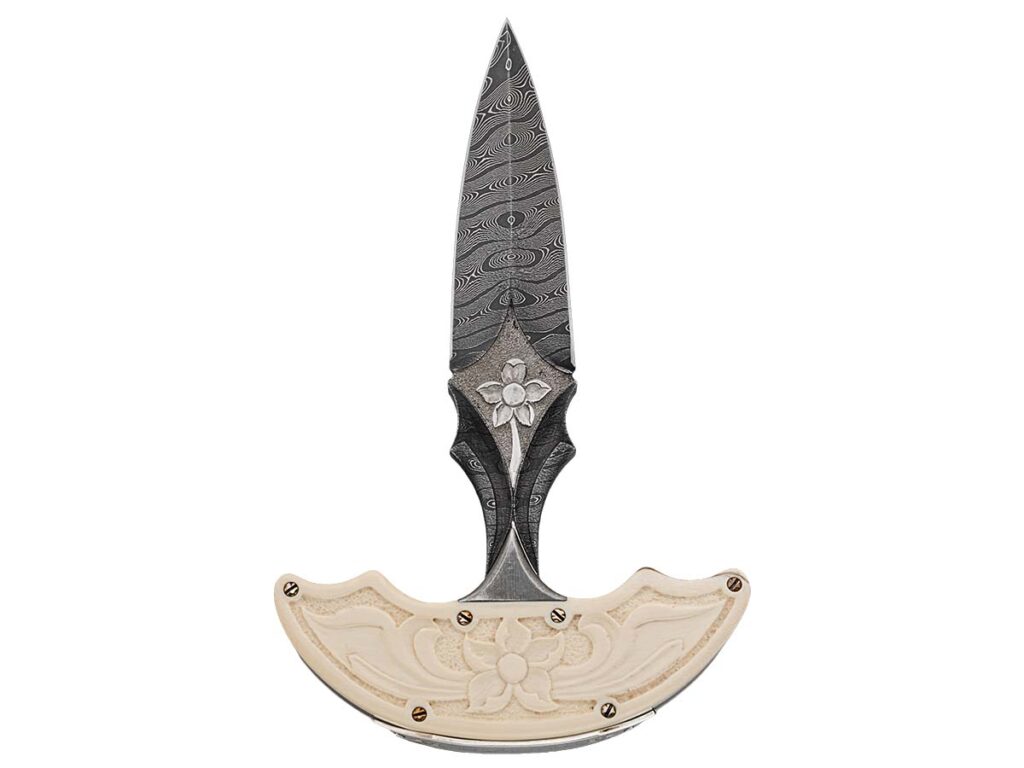
Frank Edwards Push Dagger

Frank Edwards Push Dagger

Blade Length: 3.25”
Overall Length: 6.5”
Blade Steel: 1084/15n20 twist
Blade Grind: Dagger
Handle Material: Mammoth Ivory
Special Features: Carved flower on the interior of handle, matched with an engraved flower on blade.
Maker’s Price For A Similar Knife: $2,550
Jocelyn Frasier image


Check Out Other Months:

Knife Mechanisms: Gimmicks Or Game Changers?

0

Folder features evolve at a fast clip.

Today’s knife market is a dynamic mix of time-tested traditions, evolving design applications and cutting-edge innovations. Designs are as varied as the people who carry them, and what someone chooses as an everyday carry (EDC) knife can be a cultural marker as much as a cutting tool. One of the key features of EDC knives is their mechanical operation. In this article, we will explore the fascinating realm of folding knives, examining the influence of knife mechanisms on consumer preference, the evolution of some of the most iconic designs and whether today’s emerging ideas are gimmicks or game changers.

Old Is New Again

The folding knife industry is often associated with mechanical innovation. However, according to industry experts, there is a notable trend regarding classic slip-joint knives. The traditional non-locking folder, often affectionately called a pocketknife, is experiencing a demand revival.

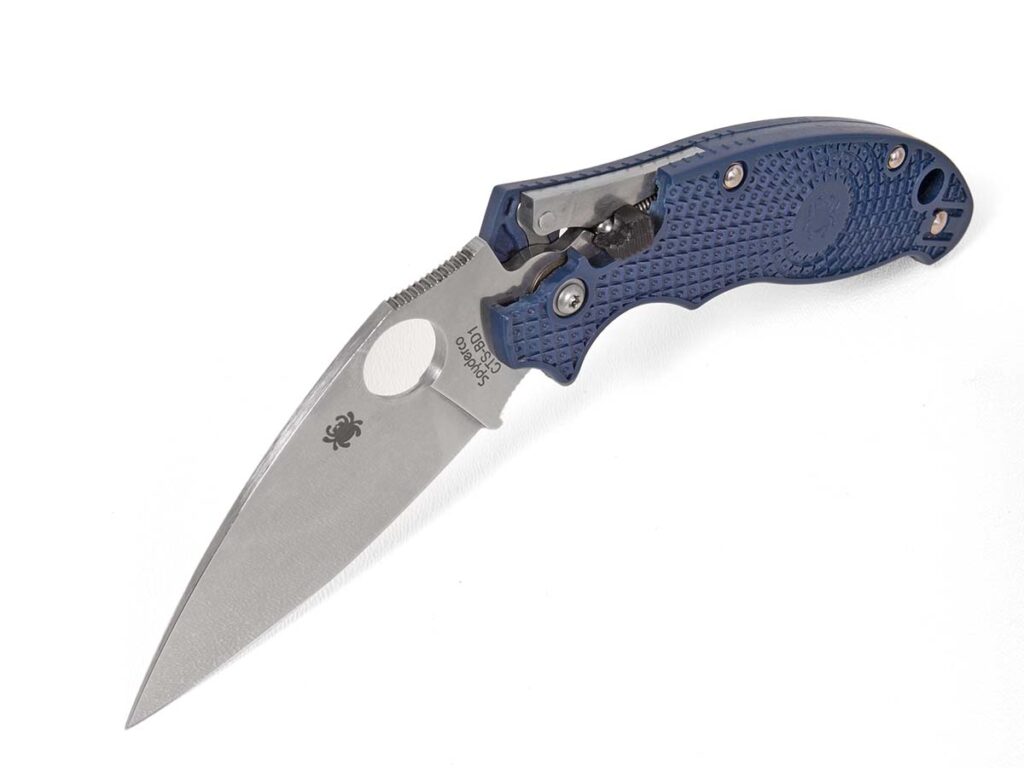
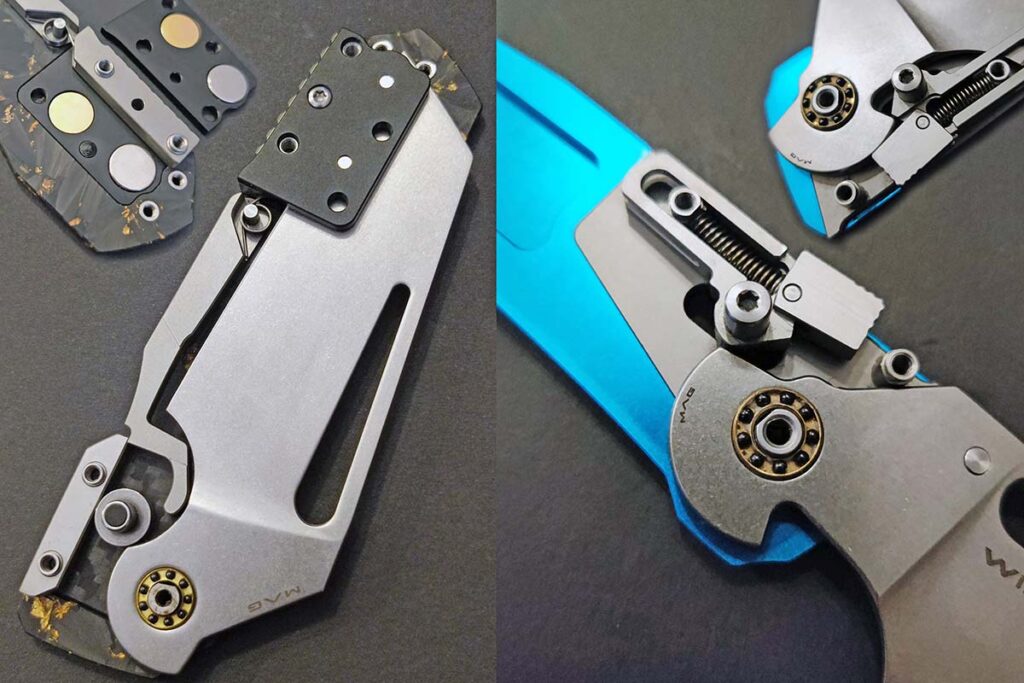
 As its name suggests, the Spyderco Manix 2 Lightweight features ultra-lightweight construction and the Ball Bearing Lock mechanism, which can be seen in this custom cutaway version. The knife’s overall length is 8 inches, with a 3.37-inch blade offered in multiple steel options, depending on the specific model.
As its name suggests, the Spyderco Manix 2 Lightweight features ultra-lightweight construction and the Ball Bearing Lock mechanism, which can be seen in this custom cutaway version. The knife’s overall length is 8 inches, with a 3.37-inch blade offered in multiple steel options, depending on the specific model.

“I’d go out on a limb and say that slip-joint knives are having a moment right now,” said Doug Flagg, former vice president of marketing and innovation at Columbia River Knife & Tool (CRKT). “Innovation will never go out of style, but in a lot of ways, what’s old is new again.” Flagg added that CRKT recognized this slip-joint revival and has already developed recent models to answer consumer demand, including the Symmetry and Venandi models, designed by Richard Rogers, and the Darriel Caston-designed, double-bladed Forebear.

Regarding specializing in traditional folders, W.R. Case & Sons is arguably second to none. On the topic of slip joints, Tony DiFonzo, director of engineering at Case Knives, acknowledged that many people prefer the look and feel of tried-and-true knife designs, like Case’s Sod Buster, Trapper and Stockman. He added that their less-intricate designs imply greater reliability.

“Sometimes, it’s better to simplify and have something that you know is going to work repeatedly,” DiFonzo said. “The influence of debris and the wear and tear of repeated real-world use can cause a knife with complex components to not fire or lock up like it should. We don’t want it to look cool on a shelf; we want it in people’s pockets to use every day.”
According to DiFonzo, Case continues to meet their customers’ demand for traditional knives by producing about 6,000 slip-joint knives daily, contrasting them with their locking knife line, which accounts for only about 20 percent of Case’s overall consumer line.

Mechanical Evolution

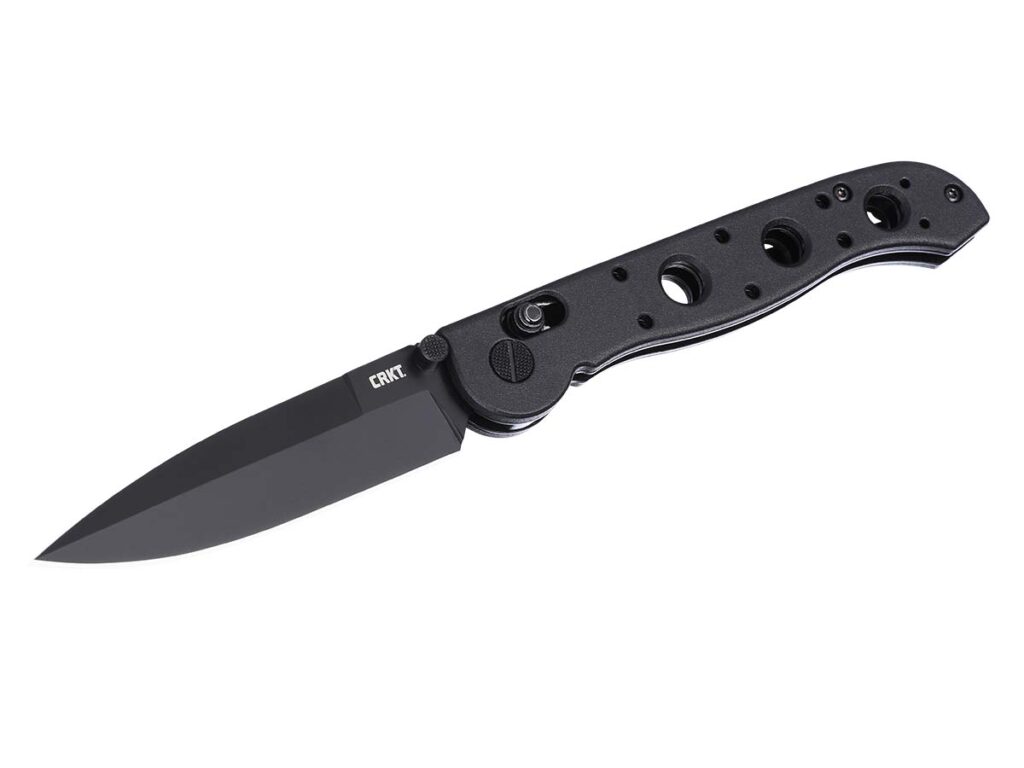
Part of the CRKT M16 series designed by Kit Carson, the M16-03XK features an ambidextrous Crossbar Lock paired with an IKBS (Ikoma Korth Bearing System) ball bearing pivot for seamless deployment and easy one-hand closing. It also has a lightweight Grivory aircraft-grade thermoplastic handle.

These days, many of the mechanisms we take for granted were once novel inventions conceived by imaginative innovators. For example, an assisted-opening knife didn’t exist before Blackie Collins bringing his design to market, famously inspired by the single-strut suspension on his Ducati motorcycle. Before Michael Walker’s revolutionary LinerLock design, closing a locked folding knife was virtually always a two-handed job. In subsequent years, variations and often improvements of both innovations began to proliferate in the industry and become all but ubiquitous. These are only two examples of numerous similar evolutions.

Time makes it easy for innovators who changed the industry to be forgotten after expired patents, as their inventions become “democratized,” as Michael Janich, special projects coordinator at Spyderco, characterized it. He drew careful attention to the importance of these noteworthy creation stories: “It’s counterproductive when it comes to promoting industry education and a sense of history,” Janich said. “People new to knives don’t understand the origin of the mechanism or appreciate its history.”

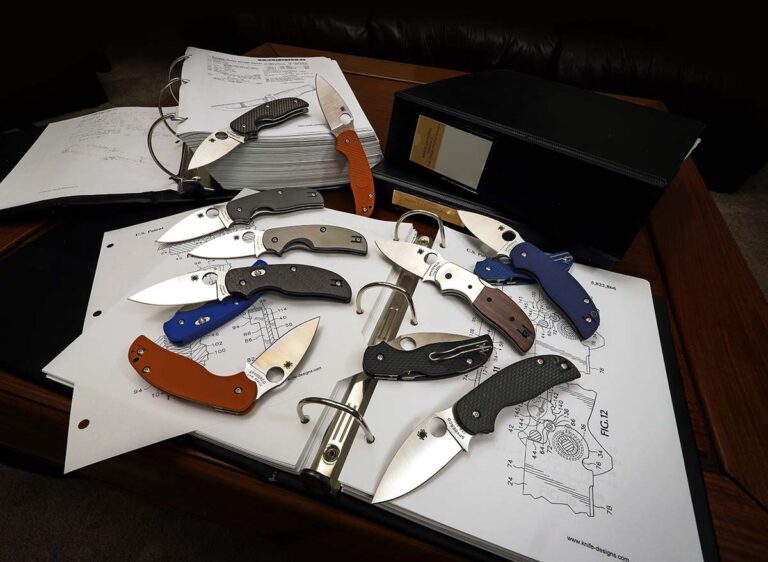
In 2008, Spyderco created the ongoing Sage Series to draw a historical line between pioneering locking mechanisms and the makers who created or popularized them to assign credit where credit is due. To accomplish this, each Sage Series model features a different key advancement. The Sage 1 incorporates two Michael Walker mechanisms: the LinerLock and the ball bearing detent. The Sage 2 features Chris Reeve’s RIL (Reeve Integral Lock), a.k.a. the frame lock. Sage 3 features Blackie Collins’ Bolt Action Lock, improved by Spyderco with easy-to-operate ambidextrous release buttons. Sage 4 pays tribute to Al Mar by integrating a mid-back lock, a signature element of Al Mar Knives. Completing the series, thus far, the Sage 5 and Sage 5 Lightweight models feature the Compression Lock designed by Spyderco Founder Sal Glesser.

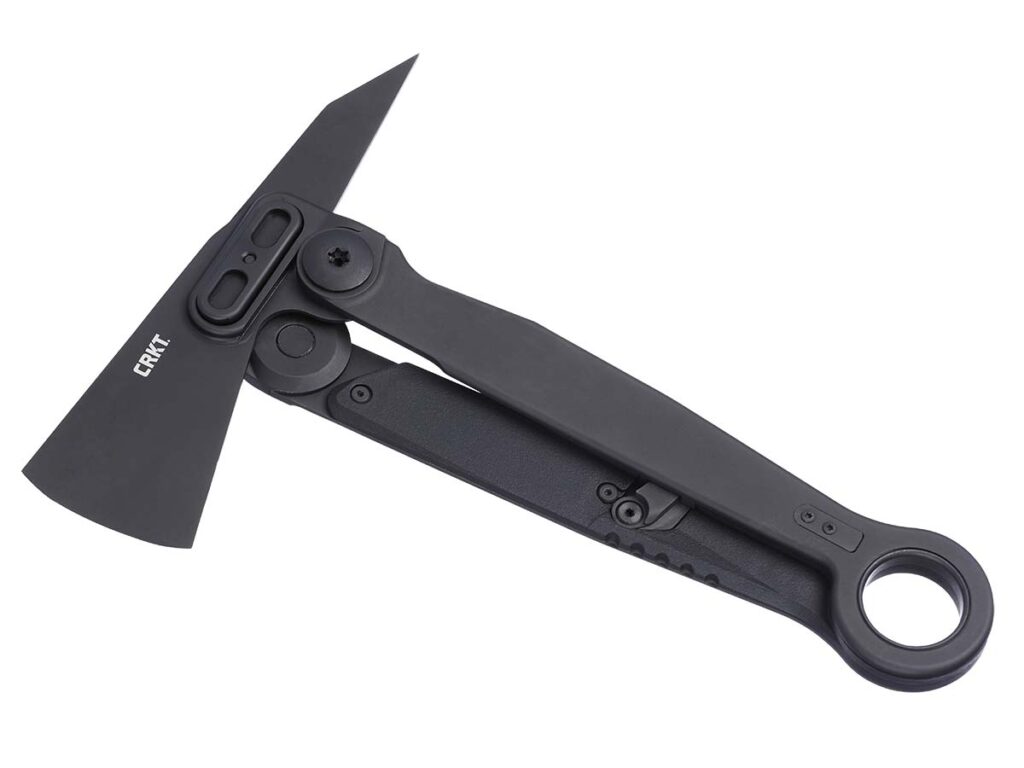
The CRKT Provoke X morphing axe incorporates the company’s Kinematic deployment mechanism from its successful Provoke folder into a new product category. This first-of-its-kind axe combines the excitement of Kinematic deployment with the security of the Deadbolt Lock.

Many folders included in Spyderco’s current line-up feature the company’s proprietary locks, such as the Para 3, a compact version of the popular Paramilitary 2 folder, featuring Glesser’s Compression Lock, and the Manix 2 Lightweight, featuring a Ball Bearing Lock invented by Sal’s son, Eric. Both locking mechanism patents have now expired.

Historical context intact or not, widespread adoption and adaptation of mechanisms due to patent expiration play a significant role in today’s popular trends. Like any other patent, a knife mechanism patent expires after 20 years, after which the design enters the public domain. Then, anyone can legally manufacture and sell products incorporating that mechanism without requiring permission from the original patent holder. Along with Spyderco’s recent expirations, the Benchmade Axis Lock patent also recently expired, which has been felt across the industry.

Versions Of Their Own

“You’ll note an uptick in knives featuring what was originally called the Axis Lock, now commonly referred to as the Crossbar Lock,” Flagg said. “Now that it’s available to the industry at large, many manufacturers, including CRKT, are coming to market with versions of their own.”

Winterblade’s Factor 8ight features an all-new “QUAD Magnet Detent System,” the company’s strongest and most adjustable magnetic detent system to date, as well as an updated “M-Lock Plus” magnet-driven blade lock, and improved titanium flip-lever deployment mechanism for snappy action.

CRKT began using the Crossbar Lock in 2024 and is now carrying it forward into the iconic Kit Carson-designed M16 collection. “It’s got a fluidity and ease of use that consumers seem to gravitate toward, and I think you’ll see more knives using the technology coming out each year,” Flagg said.

Indeed, many other knife companies produce similar bar-style locks, often under different names, including Hogue’s ABLE Lock, SOG’s XR Lock and Civivi’s Superlock. Patent expiration also levels the playing field for smaller manufacturers by allowing them to use popular mechanisms without the cost or hassle of licensing, which is a game-changer.

Janich says that many of the hot new locks are subtle mechanical variations of the original Blackie Collins Bolt Action Lock from the 1970s, which, he added, never received the recognition it deserved. “The Bolt Action Lock was, to my knowledge, the first to be based on the mechanics of creating a ramp on the back of the blade and wedging a locking device between that ramp and the stop pin or backspacer.”
As an in-line mechanism, he says, the wedge concept became the basis for the Axis Lock, Ball Bearing Lock, Arc Lock and Stop Lock, among others, and it continues to be the basis for many of today’s most popular locks, including the Shark Lock, Atlas Lock and Superlock. “The in-house production secret is making the mechanics just different enough to convince the USPTO [United States Patent and Trademark Office] that it’s unique.”

The Classic American Case Sodbuster Jr. is a testament to U.S. craftsmanship and durability. It embodies reliability, functionality, and traditional style all in a compact design. The Sod Buster Jr. in this photo has a 2.875-inch stonewashed skinner blade and a Smooth Black Canvas Laminate handle with Day Glow G10 liners.

Janich said he doesn’t foresee any locks disappearing completely as new ones join the market. He mentioned that the classic back lock mechanism is still the bread and butter of many Spyderco designs. Though he acknowledges it’s an old-school design, he attributes its continued popularity to seasoned knife users who, he said, tend to have strong preferences, especially when lock failure could result in bloodshed.

Gimmicks Or Game Changers?

On one side of the demographics spectrum are seasoned knife users who field dress game and integrate EDC knives into their self-defense strategies. On the other side is the next generation of knife customers, whose industry knowledge mainly comes from YouTube influencers posting POV (point of view) knife reviews. The latter customer base is often mainly drawn to what is widely regarded as the “fidget factor,” where interest and excitement are focused primarily on knives with intriguing opening, closing and locking mechanisms. Smooth, snappy action is in demand, and the more intricate, the better.

“There are lots of younger knife users who have never had to use a knife hard,” Janich said. “In many cases, they like fidget-friendly designs that open and close easily and are entertaining.”

The Severn features Winterblade’s patent-pending compression spring, Stealth Lock, and Dual Lock actuation, which includes a bar lock and a retracting spine lock in one mechanism.

Bryan Winters, owner of Winterblade Knives and a relative newcomer to the knife industry, doesn’t have concerns about “fidget factor” characterizations, despite his knives being on the cutting edge of fidget-ry. He captures his philosophy by saying, “We can’t spell function without fun.” Winters started making his earliest creations in his modest shop in 2019, but 2022 was the year he launched his flagship design, the Factor, a stout, legitimately dependable folder, featuring cutting-edge new mechanisms that integrate magnets into the locking and deployment systems.

“I’ve never set out to design a knife just because I think it will sell well or because it’s a certain gimmick,” Winters said. “I’ll use magnets, but if I think springs are better suited for that particular mechanism, I’ll use springs, or maybe I’ll need some sort of lever or gears, whatever the case may be.”

He explained that, in the Factor, and later incarnations like the Factor 8ight, the detent magnets “suck the blade in” and keep it securely closed. An added benefit is alleviating the contact point of friction with a typical detent ball, allowing for noticeably smoother deployment. A benefit of the neodymium magnets is that they retain their power for almost a century, whereas springs fatigue or wear out much more quickly through continued use.

“My point with the people who say that magnets are gimmicks is, you can do things with magnets, physically speaking, that you cannot do with springs.”

Radical Reimagination

Another novel Winters creation is his radical reimagination of a double-action firing mechanism on the Darkfire OTF. Instead of a typical fixed slider, the blade is propelled in and out via a large blade guard that acts as a lever. The stylized blade guard is part of an overall design aesthetic inspired by the Mandalorian Darksaber from “Star Wars.” Inside, the brilliantly reimagined, simplified mechanism is powered by a single compression spring, again departing from traditional designs.

Whether one prefers the simplicity of a traditional slip joint, the fidget-friendly nature of modern deployment and locking systems, or the cutting-edge ingenuity of truly novel mechanisms, one requirement for success is that function meets the real-world needs of end users. Examples that Flagg pointed out in the current CRKT line are Flavio Ikoma’s proprietary Deadbolt Lock design, featured on several of the company’s knives since its creation five years ago, and Joe Caswell’s Kinematic opening system, which Flagg characterized as “a true innovation marker.” The Kinematic mechanism has several pivot points and linkage arms that “morph” into the opened knife when manually actuated.

“Joe is a bit of a mad scientist, in the best sense of that term, and his Provoke knife, with its Kinematic opening technology, was an instant bestseller for us,” Flagg says of its 2019 release. “Now, we’ve taken it to the next level and brought this innovation into our Provoke X, a morphing tactical axe that combines Kinematic opening with the Deadbolt Lock to create an EDC axe unlike anything the industry has seen before.”

The knife industry has a long legacy of benefiting from an enduring heritage while enabling innovators to push boundaries. It engages a wide variety of collectors and enthusiasts by offering as many knife designs as there are preferences and needs, whether nostalgic, futuristic or anywhere in between. Today’s trends show no indication of that dynamic subsiding in the foreseeable future. As such, all indicators point to an industry that will remain both reassuring and exciting.

More Reviews:

First Look: Modern Traditionalism Of Bear & Son Piranha

Crafted in Alabama, Bear & Son Cutlery’s Piranha pairs a 440 stainless spear blade and lockback security with classic bone handle options.

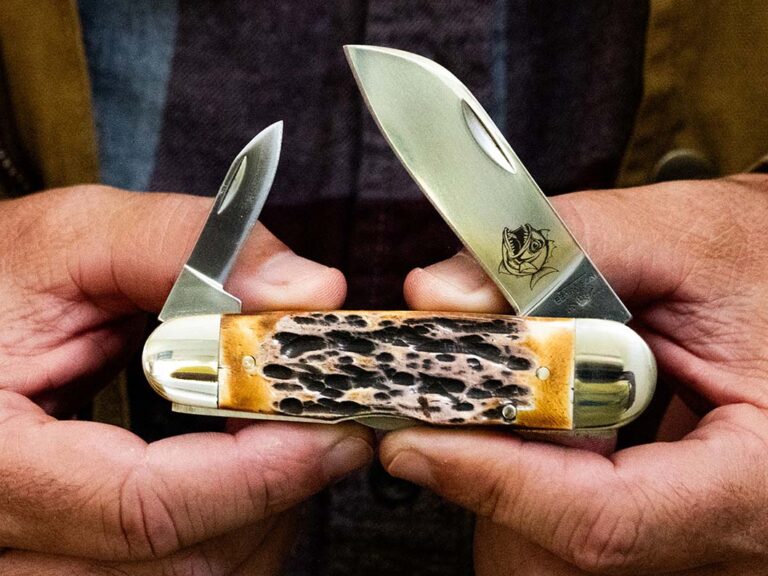
Bear & Son Cutlery has introduced a new traditional folder to its lineup with the Piranha series. Manufactured in Jacksonville, Alabama, the two-blade pocketknife combines classic American styling with a lockback mechanism engineered for secure lockup during daily tasks.

Traditional Build, Modern Mechanics

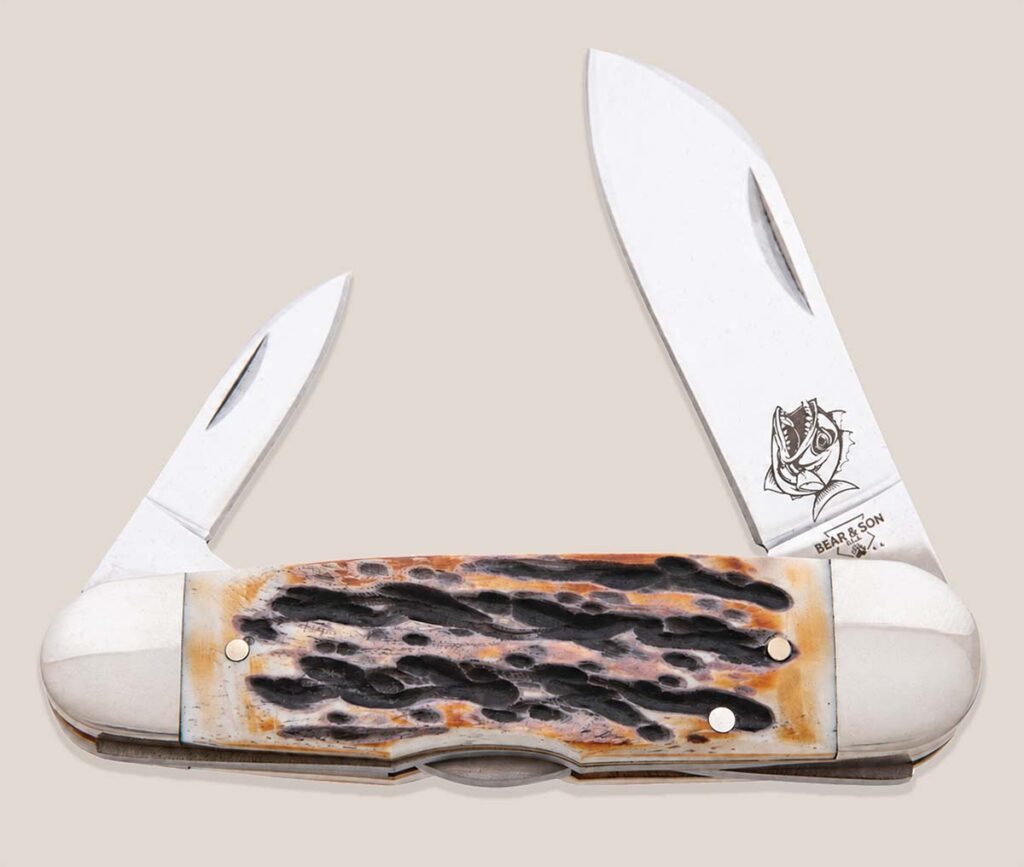
The Piranha centers on a two-blade setup crafted from 440 stainless steel, offering a balance of corrosion resistance, edge retention, and easy field maintenance. The primary cutter is a 2.75-inch spear blade paired with a secondary 1.5-inch pen blade. Measuring 4 inches closed and 6.625 inches overall, the knife delivers a comfortable, familiar in-hand feel designed for general cutting chores.

Unlike many traditional slipjoints, the Piranha incorporates a lockback design to give users extra security when the primary blade is engaged. Hand-finished detailing and polished bolsters complete the traditional pattern.

Piranha Handle Options

Bear & Son Piranha with blades deployed

Bear & Son offers the Piranha in two distinct handle materials: White Smooth Bone (Model WSB59L) and Genuine India Stag Bone™ (Model 559L). Each piece undergoes individual sanding and polishing, giving every handle its own unique texture and visual character while maintaining standard ergonomic grip properties.

Weighing in at 4.6 ounces, the U.S.-made folder is backed by a limited lifetime warranty and carries an MSRP of $125.
Tech Specs

Piranha Specs
Manufacturer: Bear & Son Cutlery
Overall Length: 6.625″
Closed Length: 4″
Primary Blade Length: 2.75″ (Spear Point)
Secondary Blade Length: 1.5″ (Pen Blade)
Blade Steel: 440 Stainless Steel
Handle Material: White Smooth Bone or Genuine India Stag Bone
Locking Mechanism: Lockback
Weight: 4.60 oz.
Country of Origin: USA
MSRP: $125

Read More:

First Look: CRKT Altai Ready For Backcountry Action

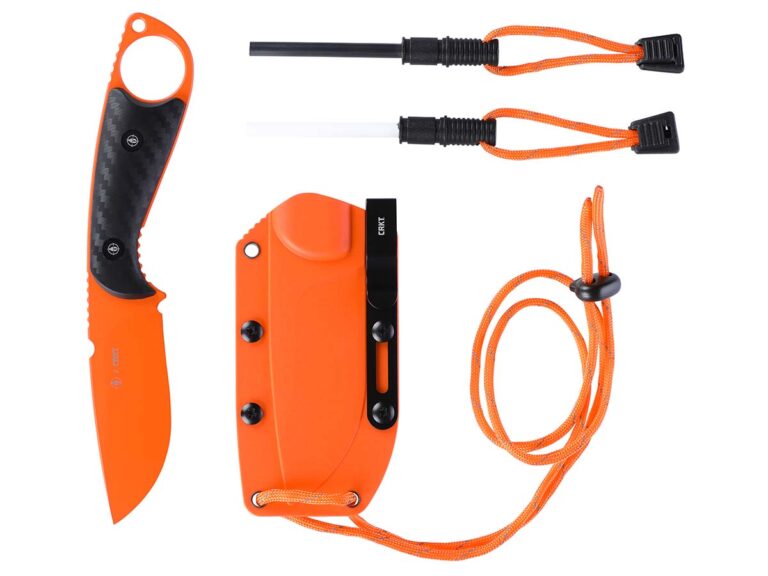
Designed with Spartan Precision Equipment, CRKT’s backcountry-ready Altai pairs 14C28N steel with an integrated fire rod and ceramic sharpener.

CRKT has teamed up with the shooting platform specialists at Spartan Precision Equipment to introduce a new backcountry fixed blade: the Altai. Named after Spartan founder Rob Gearing’s hunting excursions in Mongolia’s Altai Mountains, the knife integrates purpose-built field features directly into the cutting system and sheath setup.

Tailored for Field Processing

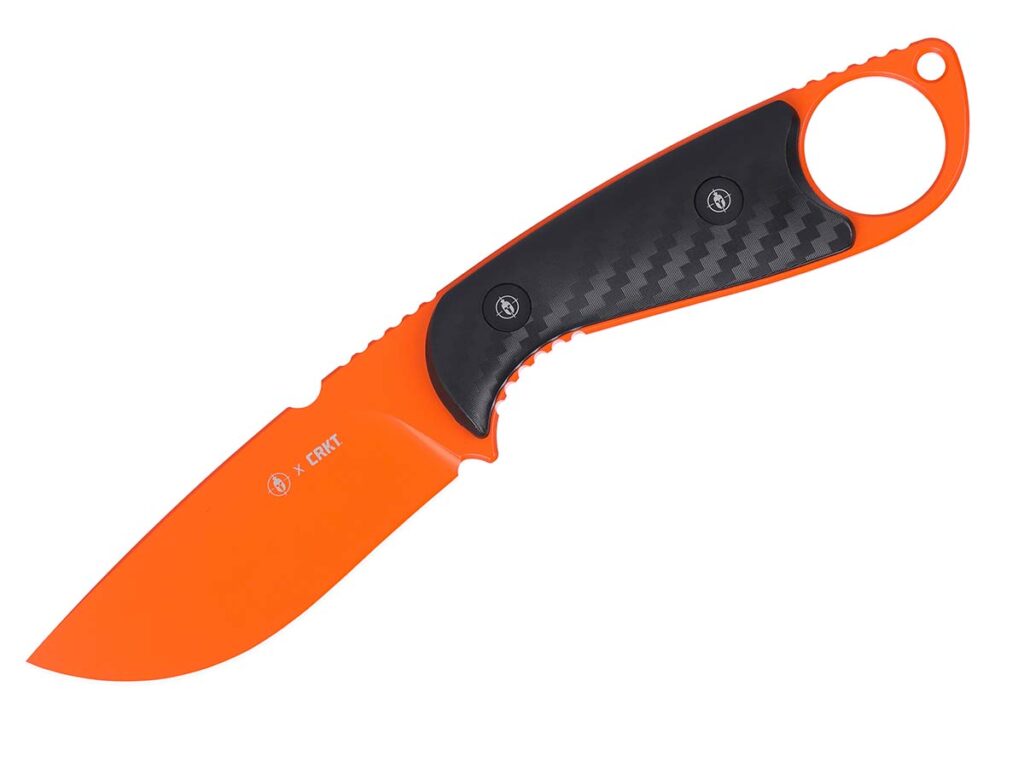
The Altai centers around a 3.53-inch plain-edge blade fashioned from 14C28N stainless steel. To withstand harsh outdoor environments, the steel is treated with a protective ceramic coating designed to bolster toughness and resist corrosion. The 0.13-inch thick blade is sized specifically to maintain maneuverability and control during game dressing, while jimping along the finger choil and spine provides positive tactile traction.

CRKT Altai Profile

The knife features glass-reinforced nylon (GRN) handle scales textured with a carbon-fiber pattern, secured over custom pins bearing the Spartan head logo. High-visibility orange highlights run along the build, helping users spot the knife easily in dim light or deep cover. At the butt end, a ringed pommel allows for a fast draw—even when wearing thick gloves—and includes a lanyard hole for additional retention options.

Built-In Fire and Maintenance Kit

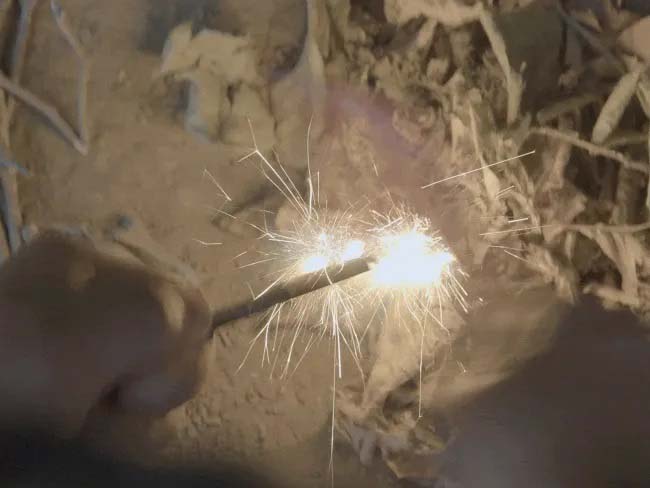
Rather than serving as a standalone cutter, the Altai incorporates essential survival and care tools into its carry rig. The knife’s spine includes a dedicated striking notch configured to work with an included magnesium alloy fire rod. For touch-ups during long trips, a ceramic sharpening rod is also housed directly alongside the blade.

CRKT Altai sparking off farro rod

Both maintenance accessories stow in the included molded thermoplastic sheath. Reflective orange paracord is used for the main lanyard as well as the pull tabs on the fire and ceramic rods, ensuring high visibility when working in low-light conditions.

At 8.0 inches in overall length and a weight of 3.6 ounces, the Altai offers a complete backcountry processing and field-maintenance package in a compact carry footprint.

Altai Specs
Overall Length: 8.00 in.
Blade Length: 3.53 in.
Blade Thickness: 0.13 in.
Blade Steel: 14C28N Stainless Steel
Blade Finish: Ceramic Coating
Edge Type: Plain Edge
Handle Material: Glass-Reinforced Nylon (GRN)
Weight: 3.60 oz.
Sheath: Molded Thermoplastic
Integrated Extras: Spine striking notch, magnesium alloy fire rod, ceramic sharpening rod, reflective orange paracord lanyard
MSRP: $85

Read More:

Sharps Makers: New Knife Sharpeners & Maintenance Gear

0

Tools and accessories to keep your edge.

As with so many tools, knives require other tools to keep them up to snuff. A vicious cycle, to be sure, but one in the modern day has been simplified with innovation. Modern knife maintenance equipment is leaps and bounds beyond what it was a few short years ago. In turn, there is little excuse to pocket a dull blade or carry around a knife whose action is choked with lint and fouling. While the concept remains the same—a sharp and functional knife—we’ve gathered up some of the latest maintenance equipment designed to keep your blades edgy and acute.


Horl Rolling Sharpener

Horl Sharpener

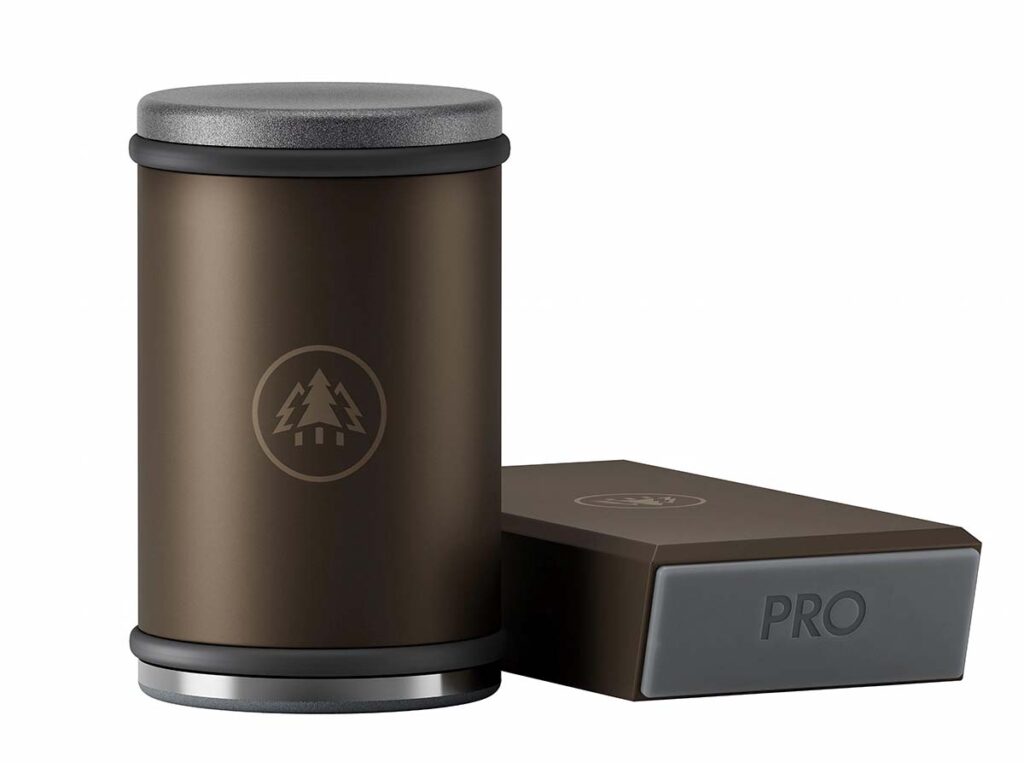
ROLLING DEEP—Horl is shifting its popular rolling sharpener system up a gear with its most recent iteration. Underneath the hood, the Horl3 Pro features a planetary gear system, increasing the sharpening head’s rotation. Geared 1:3, the sharpener hones at a much faster rate than the company’s previous versions, cutting work time down. Further, the Pro is also more versatile, offering six sharpening angles—10, 13, 15, 20, 22 and 25 degrees—so you precisely match its acuteness to the knife you’re sharpening. The new Horl still has all the features that made the system all the rage in the first place, including quick-change heads, diamond sharpening disk, ceramic honing disk and magnetic angled holding pad. MSRP: $399


Hapstone Bench Stone

Hapstone Benchstone

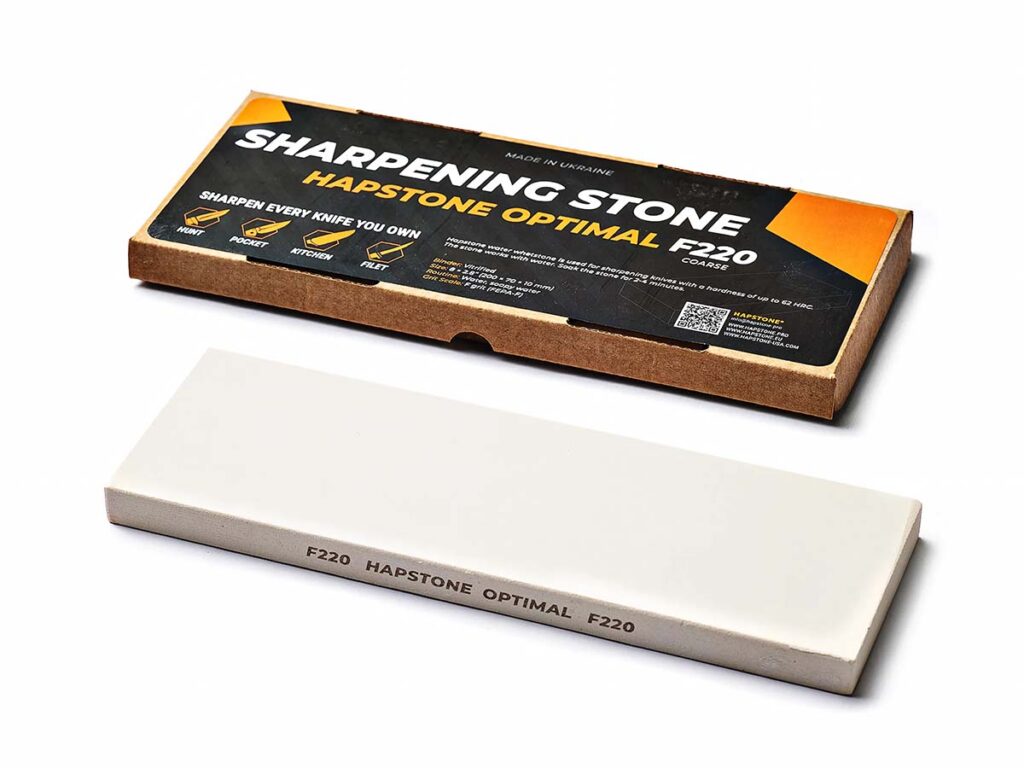
STONE COLD—Freehand sharpening is an art, one that requires the right tools. Hapstone delivers with affordable and effective bench stones in its Optimal line. Made in the Ukraine, the stones are designed to hone steel with hardnesses up to 62 HRC, which covers most of the modern super steels. The 8×2.8-inch stones use aluminum oxide as the cutting medium and a vitrified binder, and the company pre-laps the stones to ensure a smooth working surface. Hapstone offers five grit sizes—220, 400, 500, 1000 and 1200—giving sharpeners the full course to re-form, sharpen and hone their edges. MSRP: $36-$44, depending on grit size


SharpeningSupplies.com Logbook

SharpeningSupplies.com Logbook

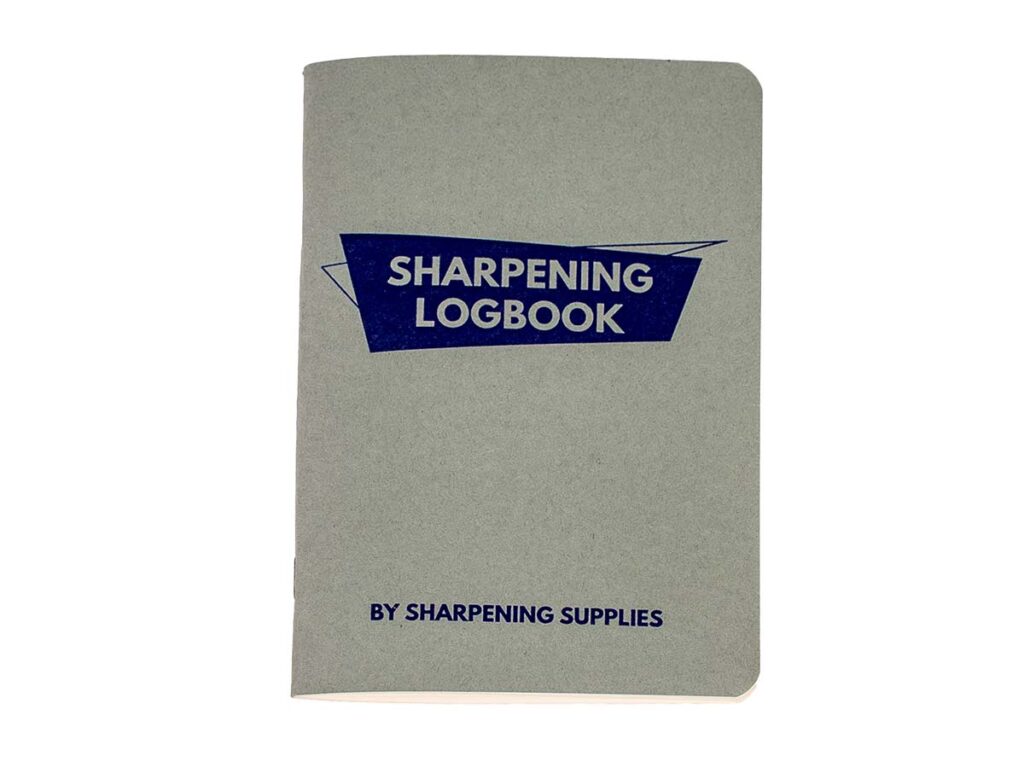
KEEPING TABS—If you’re serious about your knives and their upkeep, SharpeningSupplies.com cooked up an absolute must-have maintenance tool. Low-tech as it comes, the online retailer’s Sharpening Logbook helps you keep track of a ton of useful data on your sharpening sessions. Designed to document each knife’s session, there’s room to record knife and date specs, grits used, sharpening angle, edge condition, faults, sharpness before and after, personal notes and more. Additionally, the back of the book has some very useful guidance on sharpening in general. For those who are resolute about achieving and maintaining a pristine edge, this is the type of sharpening D.O.P.E. that proves vital. MSRP: $10


Edge Pro BevelTech

Edge Pro BevelTech

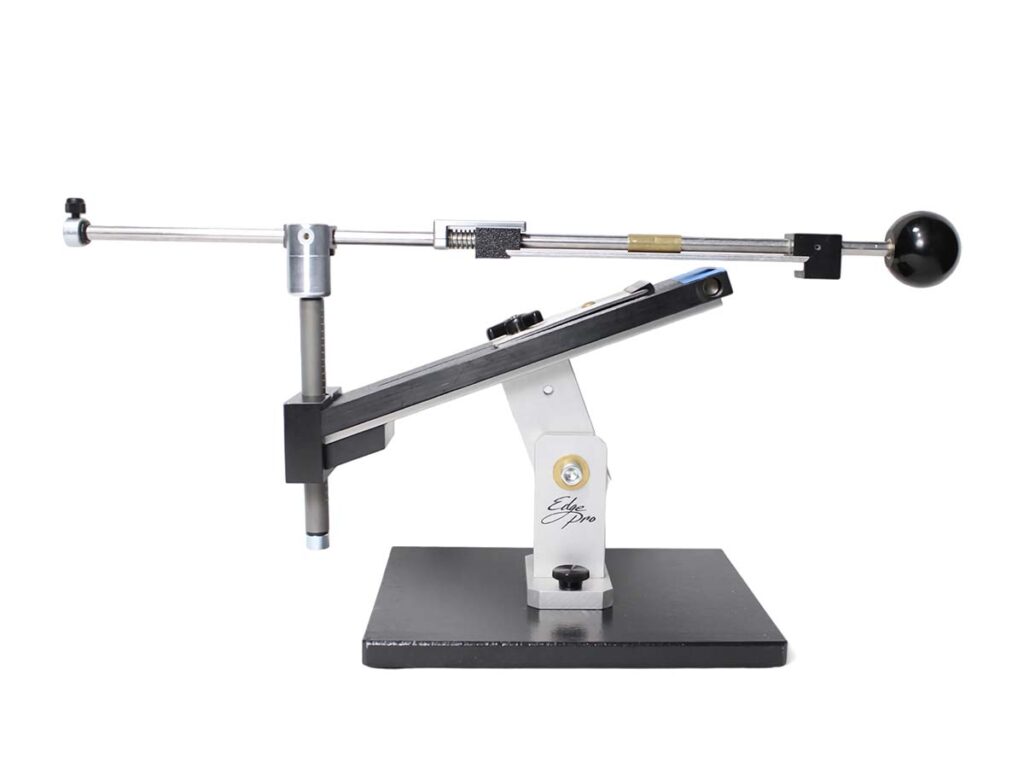
PROFESSIONAL DEGREE—Perhaps you run a sharpening business or maybe you simply take a professional approach to your sharpening projects. Either way, Edge Pro’s BevelTech system is tailored to the most exacting hone hounds in the knife world. Designed for installation in a workspace (though there are less-permanent mounting options), the all-metal angle-adjustable sharpener is designed for precision projects or high-volume honing. Features that should intrigue those undertaking either are an adjustable tilting retention surface, oversized ball grip on the sharpening arm, angle-gauge attachment point on the arm, laser-engraved angle-adjustment graduation and quick-attachment stone holders. Edge Pro offers four different tiers of its system, with more sharpening stones as you go up. But each is built around the base precision sharpener. MSRP: Starting at $435


Knafs Launchpad

Knafs Launchpad

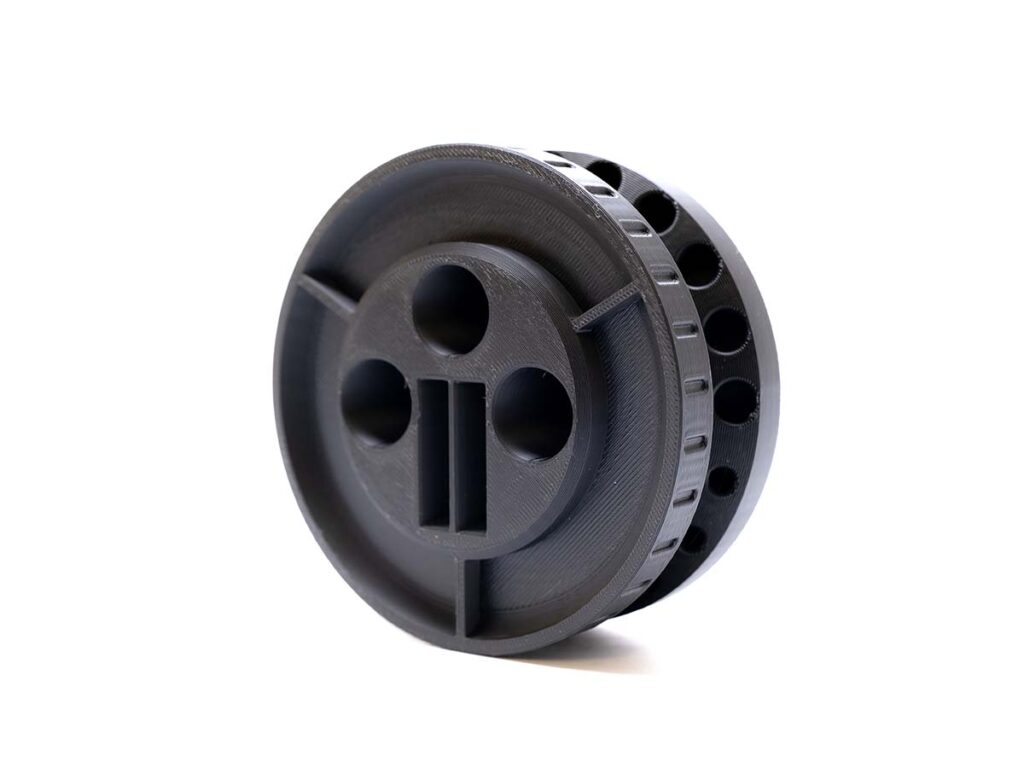
TO THE MOON—Since we talked about Knafs’ Bit Driver Grande in a bit, we’ll pitch an accessory for it that is well worth add to the cart with it—the Launchpad. Simply put, it’s a holding system for the driver, giving you an easy and organized place to hold the tool and a whole array of bits. Here’s the great thing about the 3D-printed accessory: you can spend a little coin and buy one from Knafs or—if you have a 3D printer—the company offers the files for free to print one at home. MSRP: $9


Work Sharp Guided Field Sharpener

Work Sharp Guided Field Sharpener

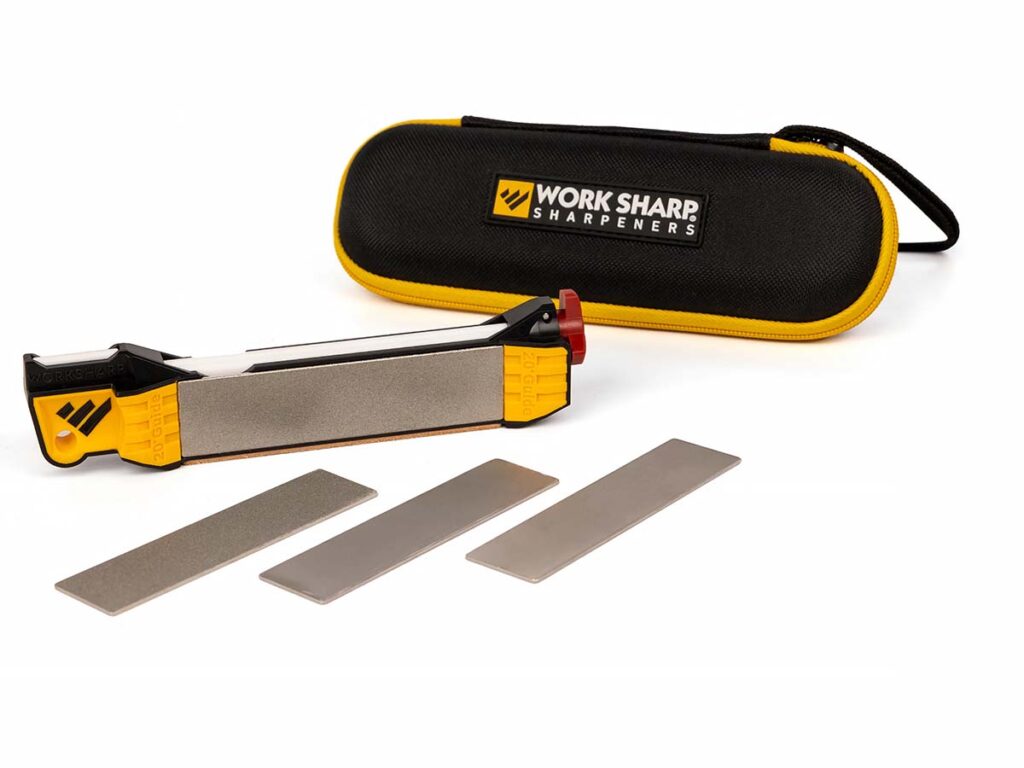
EDGY ANYWHERE—Anyone who aims at recapturing a knife’s edge is likely familiar with Work Sharp’s standby Guided Field Sharpener. It’s been around for a hot minute, but never in what’s being offered now. The Guided Field Sharpener Elite offers complete angle-guided edge maintenance in a system that delivers it anywhere. Where Work Sharp has kicked it up a notch is the sharpening surfaces it includes in the kit, with the Elite coming with 220-, 400-, 600- and 800-grit diamond plates. That takes users from course to extra-fine and covers nearly every sharpening necessity you’re likely to encounter. Plus, Work Sharp throws in a handy zippered carrying case to keep everything organized. MSRP: $75


JRW + KPL Knife Maintenance Tray

JRW + KPL Knife Maintenance Tray

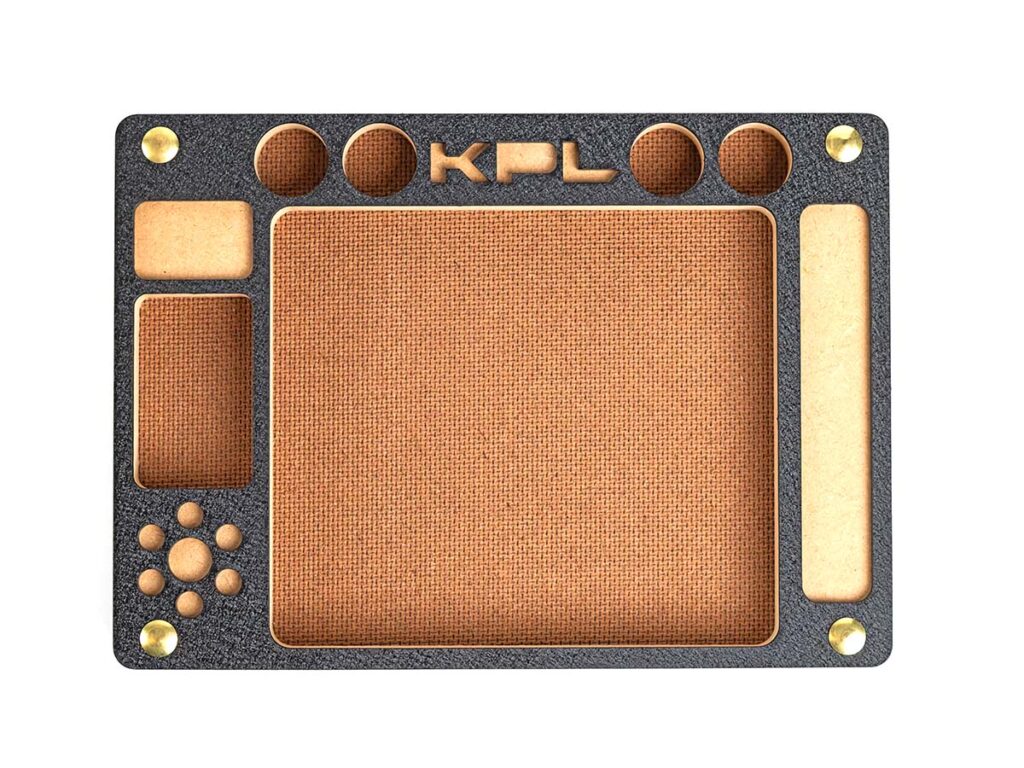
TRAY CHIC—Keeping your workbench organized during a teardown is half the battle, and KPL has teamed up with the pocket-art wizards at JRW Gear to deliver a dedicated workspace solution. The JRW + KPL Knife Maintenance Tray is a premium, multi-layered, riveted storage platform precision-machined to house your entire maintenance arsenal. Designed with custom-bored pockets, it features dedicated slots for your lubes, detailing swabs, hardware and loose knife parts. It even includes a custom cutout perfectly sized for an oil-resistant JRW dump tray to catch small screws before they roll away. Finished with silicone rubber non-slip feet to keep the station securely anchored while you work, you have a steady place to get jobs done. MSRP: $135


Sharpal 202H Adjustable Angle Sharpening System

Sharpal 202H Adjustable Angle Sharpening System

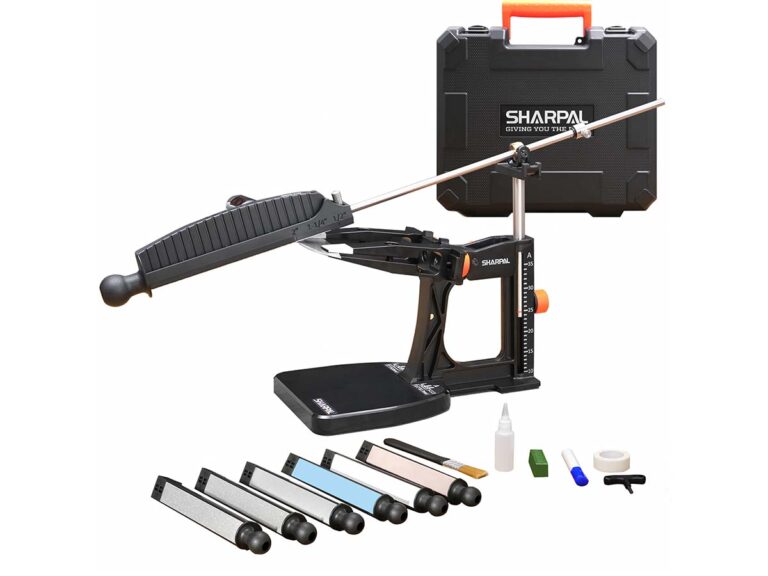
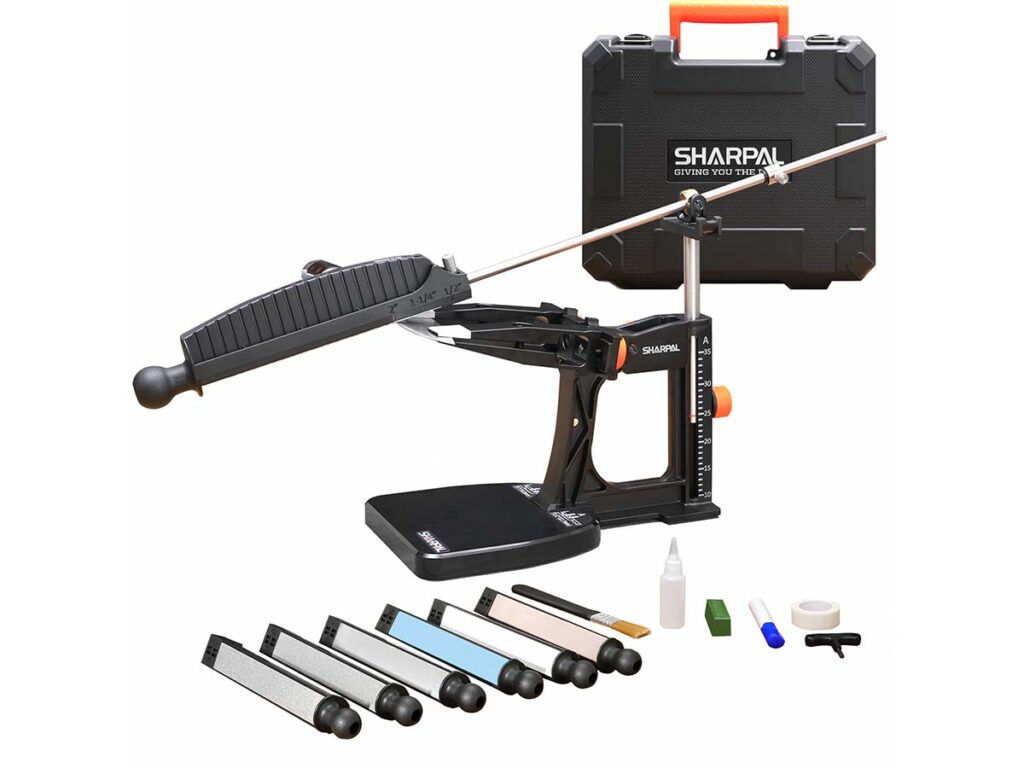
ALL IN ONE—If you want a single setup that handles everything from total edge repair to a mirror polish, Sharpal has a comprehensive solution. The 202H Adjustable Angle Sharpening System is a seven-in-one kit built around a heavy-duty metal chassis and an anti-slip base. The heart of the system is its smooth angle adjustment, delivering a wide 10-to-35-degree range with precise 0.2-degree granularity. To guide your progress, the kit includes seven different 1×6-inch abrasive plates, starting with 220-, 325-, 600- and 1000-grit diamond surfaces. From there, 3000- and 6000-grit whetstones smooth out burrs before you finish on a leather strop with green compound. A reliable flip mechanism lets you work both sides evenly without losing your exact angle. MSRP: $180


Knafs Bit Driver Grande

Knafs’ Bit Driver Grande

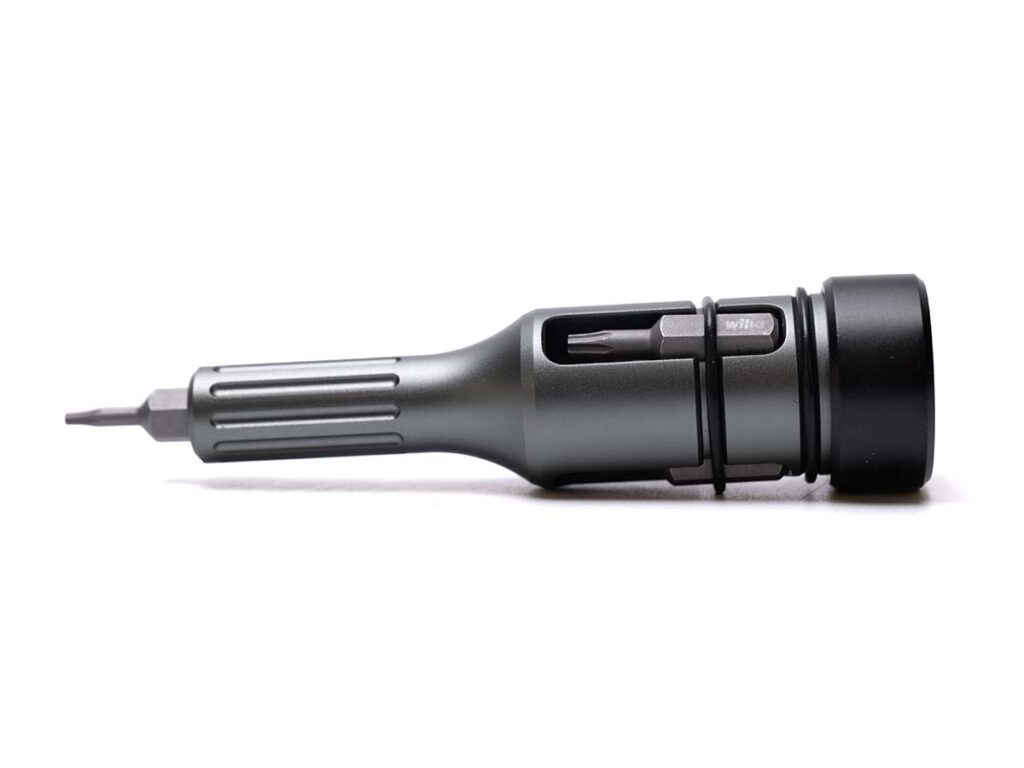
DRIVER’S SEAT—Man does not live by sharp edges alone. Sometimes there are screws to tighten and liners to swab clean. In these situations, a bit driver is the hero of the story and Knafs has a solid—not to mention manageable—option in its Grande. What’s to like about this self-contained system is that it’s the larger brother to its original driver, which, in turn, fits into the palm better to deliver more torque. At the same tick, it has an elongated neck, perfect for more control in precise operations. The tool comes with three Wiha Torx bits (T6, T8 and T10), has a spinning cap run on ceramic bearings and a body of durable, yet light, aluminum. MSRP: $38


Lansky 4-Rod Diamond/Ceramic TurnBox Crock Stick

Lansky 4-Rod Diamond/Ceramic TurnBox Crock Stick

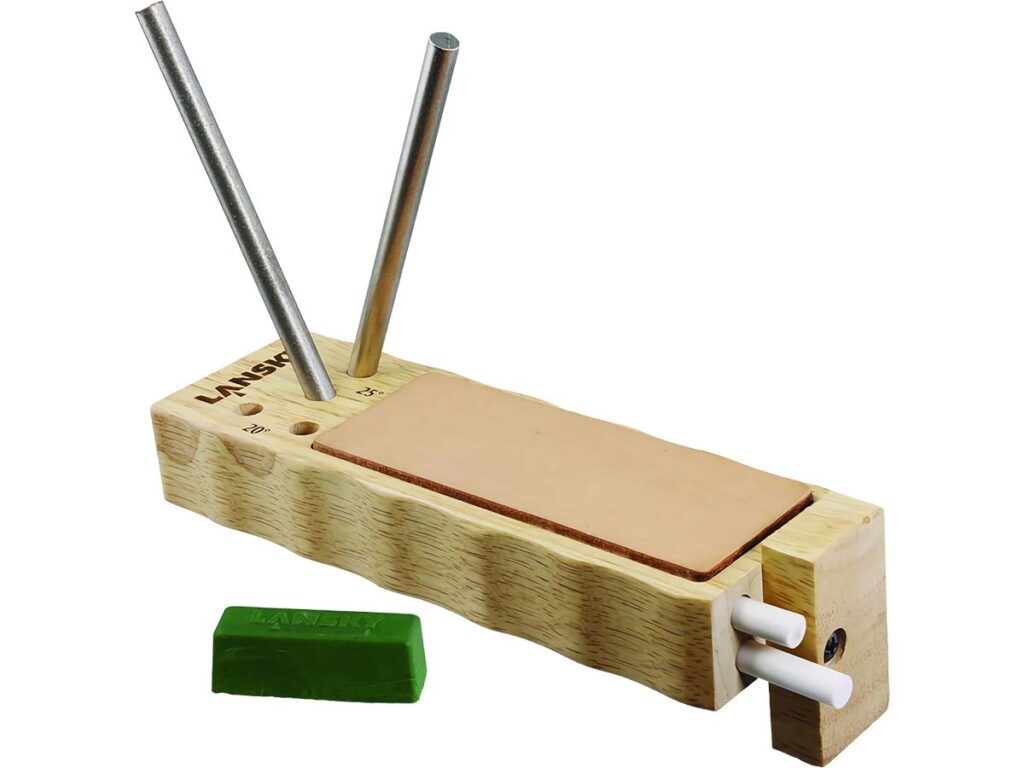
TURNING HEADS—Lansky is updating its classic V-rod format by packing an extra refinement stage into a highly portable layout. The latest 4-Rod Diamond/Ceramic TurnBox Crock Stick system features a compact hardwood block with integrated internal storage for the rods inside the base. Perfect for a kitchen drawer or a hunting pack, the system utilizes preset 20- and 25-degree angles to keep your bevel geometry completely consistent. The two-stage sharpening process leverages two 5-inch medium 400-grit diamond rods for rapid steel removal, followed by two 5-inch fine 1000-grit ceramic rods for daily touch-ups. Lansky then takes the system a step further by including a dedicated leather strop and polishing compound to deliver a true factory-level mirror edge. MSRP: $65


More On Sharpening:

First Look: Drop-Forged KA-BAR Elishewitz Pocket Tool

Designed by Allen Elishewitz, KA-BAR’s USA-made drop-forged EPT pairs a 2.5-inch blade with a clip-equipped sheath for easy pocket carry.

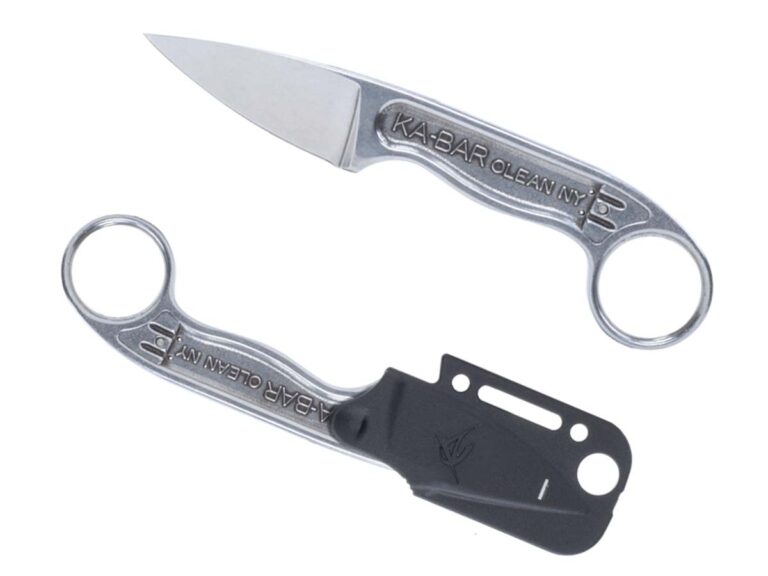
KA-BAR has expanded its line of drop-forged steel tools with the Elishewitz Pocket Tool, or EPT. Designed by veteran maker and former Force Recon Marine Allen Elishewitz, the compact fixed blade targets the growing daily carry market with a format tailored specifically for pocket carry rather than belt wear.

Built for Daily Duty

The EPT centers around a short, broad 2.5-inch drop-point blade ground flat to a 20-degree edge per side. KA-BAR crafts the knife from 0.1875-inch thick 425 high-carbon stainless steel, hardened to 56–58 HRC. The stout blade geometry offers plenty of strength for routine cutting tasks while keeping the overall footprint manageable.

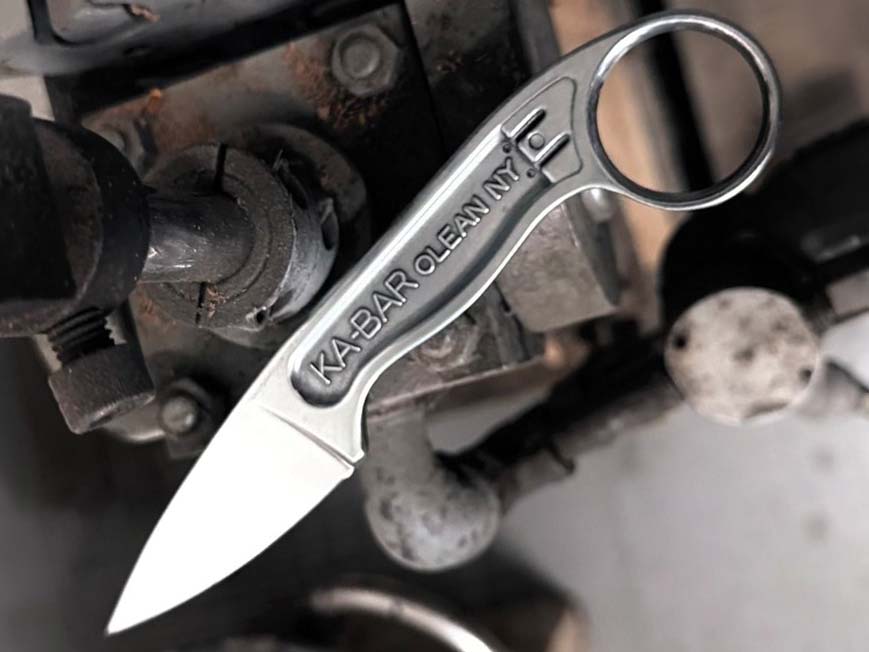
Because the knife utilizes a one-piece drop-forged construction, the skeletonized handle is integral to the blade. A finger ring integrated into the butt end assists with control during use while serving as a quick-draw indexing point when pulling the knife from a pocket.

Pocket-Friendly Carry

Elishewitz Pocket Tool at work in profile.

Rather than relying on a traditional belt sheath, the EPT comes equipped with a custom USA-made sheath featuring a reversible, loop-over wire pocket clip. This setup allows the fixed blade to ride deep inside a pocket in much the same manner as a standard folding knife.

At 6.75 inches in overall length and weighing 3.2 ounces (0.2 lbs for the knife alone), the U.S.-manufactured piece delivers the structural integrity of a fixed blade without adding unnecessary bulk to a daily kit.

Elishewitz Pocket Tool (EPT) Specs
Designer: Allen Elishewitz
Overall Length: 6.75 in.
Blade Length: 2.50 in.
Blade Width: 1.70 in.
Blade Thickness: 0.1875 in.
Blade Steel: 425 High Carbon Stainless (56–58 HRC)
Blade Type/Grind: Drop Point, Flat Grind
Edge Angle: 20 degrees per side
Construction: Integral drop-forged 425 stainless steel
Weight: 3.2 oz. total (2.24 oz. knife weight)
Sheath: USA-made sheath with reversible wire pocket clip
MSRP: $78

Read More:

Portable Knife Sharpeners: Sharps On The Go

Three options to stay keen when you’re out and about.

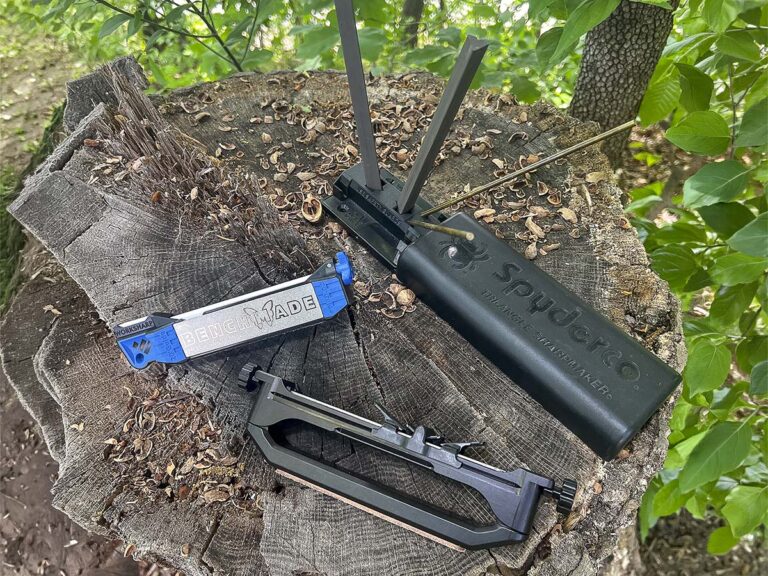
Active lifestyles often need specialized tools. Out hiking, camping or hunting, a workbench instrument is out of place. This is especially true for one of the most vital pieces of knife kit—sharpeners.

In recent years, the market has trended toward larger bench-mounted sharpeners that, while dynamite at extracting a precise edge, are all but impractical in the field. Out and about, a solid portable sharpener is more than worth its weight in gold. Even better, for those who take a more minimalist approach to edge-maintenance equipment, most mobile sharpeners are more than capable of serving as primary tools for bringing a knife back to life.

Given this isn’t the time of Charlemagne, this class of sharpeners should have an angle guide integral to their design, eliminating guesswork. And since they’re less elaborate, portable sharpeners should be cost-effective, as well. You do not want to spend a ton on something that might be lost. Most of all, these options should prove easy to tote around, be it in a pocket, tool pouch, vehicle glove compartment, backpack or anywhere else you want to cram one.

There are plenty of portable sharpeners available today, but in our trials, we found the following a cut above the rest.

Wicked Edge Venture Pro WE26

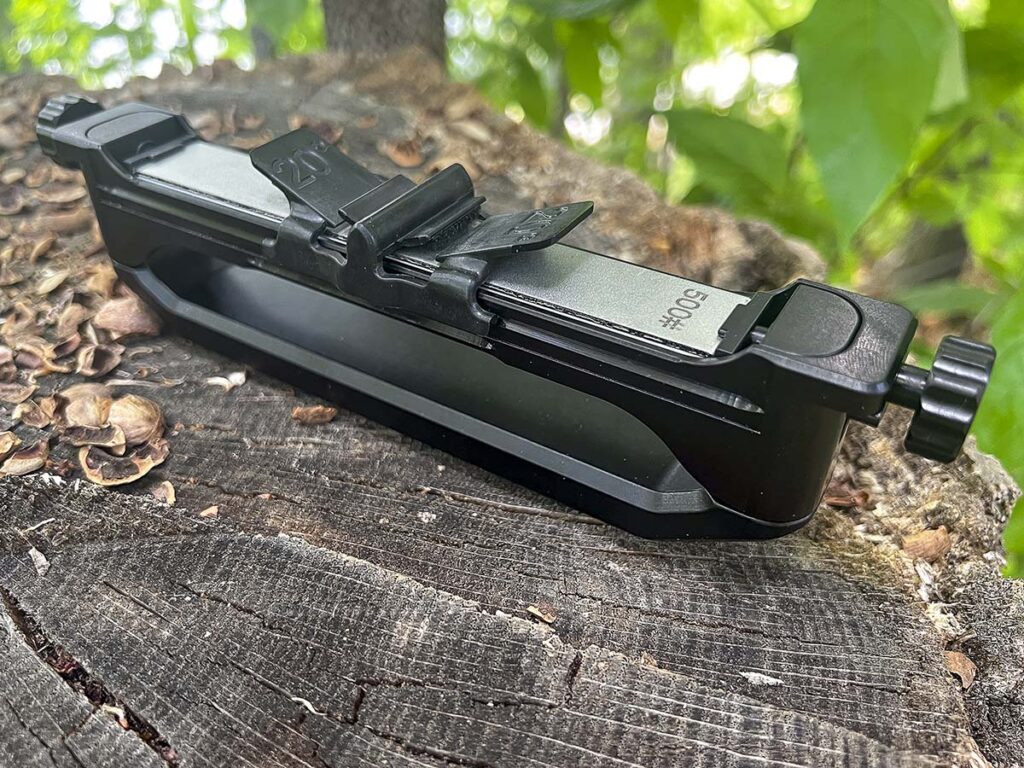
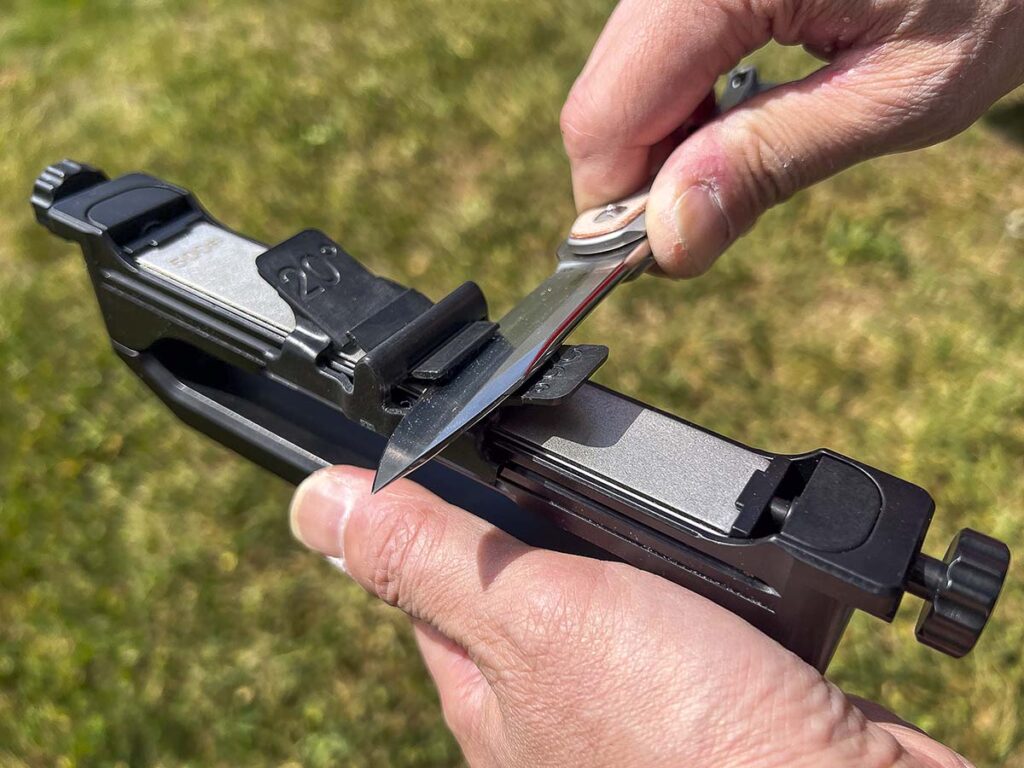
The Wicked Edge Venture Pro features a movable 20-degree angle guide that helps to keep your angle consistent, so that even beginners can achieve desirable results. And while not quite pocket sized, the until is perfectly proportioned for sharpening on the go.

Wicked Edge, primarily known for its high-end guide-honing systems, has recently turned its discerning eye to mobile sharpening. The result is the Venture Pro WE26. While more compact than most everything else the company offers, it is no less effective.

Starting with the build quality, Wicked Edge has constructed a system built to last. The Venture Pro’s frame is sturdy T6-6061 aluminum alloy, keeping the unit relatively light, yet extremely durable. The company holds the system together with stainless steel screws and a tension spring. And the honing surface is a double-sided diamond-coated steel plate—if you drop one, you don’t have to sweat it shattering. A cam system holds it in place and allows a painless switch between sides and grit size—500-grit diamond and a fine-grit ceramic. A plus. Yet this is only part of the sharpener’s selling points.

What really grabs attention is that the Venture Pro is a railed angle guide. The system is slick, essentially allowing you to pull your knife through, while the guide maintains a consistent 20-degree angle over the entirety of the sharpening surface. This element of the system deserves mention in and of itself. It is molded from a thermoplastic blend of POM (Delrin) and PTFE (Teflon), the result is a slick surface that all but guarantees a smooth stroke on each pass. The guide is removable and has a storage position on the rear of the sharpener for easy storage in a more compact configuration. The final perk, the unit includes a leather strop and a built-in guide on the rear side, so you can hone a blade to a mirror finish.

The Venture Pro features both 500-grit diamond stone and ceramic honing surface, as well as a leather strop. Wicked Edge sells other grits and different angled guides, to tailor the system to your knives.

The Venture Pro definitely isn’t pocket-sized, but it is small enough to be considered portable. Its size is a plus in this respect; it’s large enough to tackle a wide range of knife types and sizes. I found the system easy to master over the course of several sharpening sessions with pocketknives, tactical folders, kitchen knives and even scissors. The routine is simple: place the blade into the guide as far up to the tang as possible, draw the knife through while moving forward and repeat on the other side. The angle guide slides so easily across the frame of the sharpener that it almost feels like it’s not even there.
 
Given that the 500-grit side is diamond, I did not have to apply a ton of pressure to achieve the desired results. And, if you’re sure of your freehand skills, the guide can be removed to speed up the process.

At home, at camp or anywhere, the Venture Pro works every time to provide you with a guaranteed sharp edge. As a bonus, several other plates with different grit sizes are available as well as different angle guides (15, 17 and 25 degrees), in case you have a particular system you want to adhere to. No matter what, this made-in-the-U.S.A. sharpener has an edge.

Venture Pro Specs
Frame Material: T6-6061 Aluminum Alloy
Sharpening Material: 500-grit diamond stone, ceramic hone and leather strop
Weight: 10 oz.
Sharpening Surface: 8.25”
Features: Continuous 20-degree angle guide, integral handle
Country Of Origin: U.S.A.
MSRP: $189

Spyderco Sharpmaker

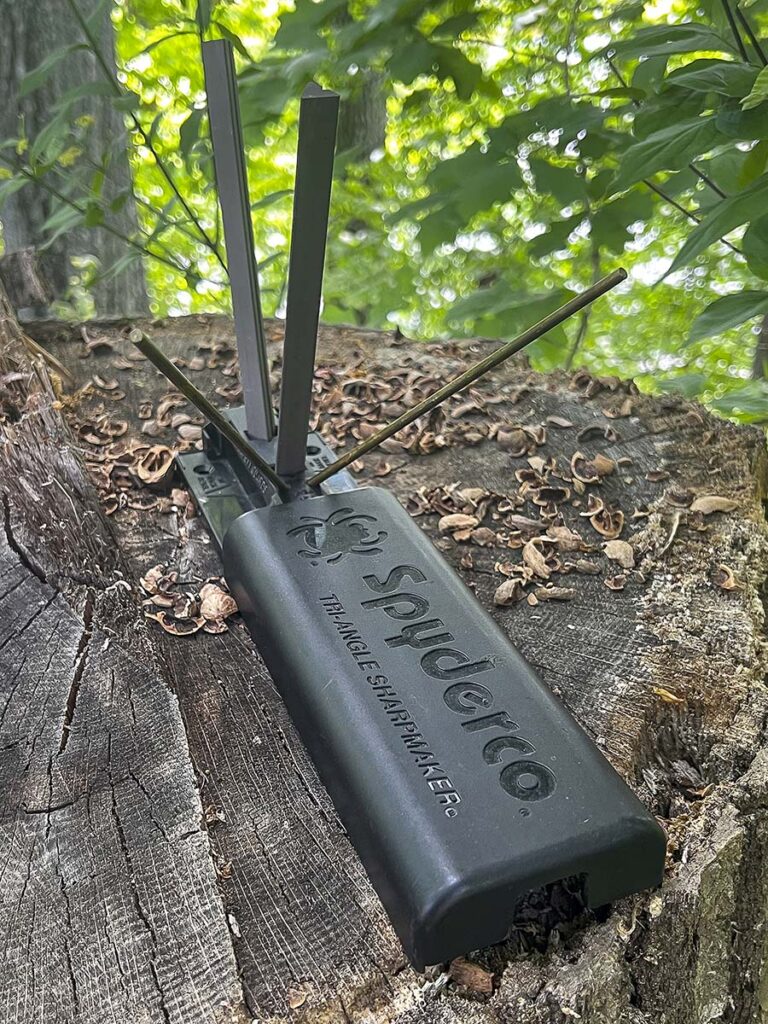
Absolutely time tested, the Sharpmaker has been a honing mainstay for a spell—namely because it works so well. Very simple in design, the portable sharpener features course and fine grain sharpening rods that can be set for a 20-degree edge and simply requires a downward stroke to do their business.

Spyderco’s model 204 Sharpmaker is a versatile, made in the U.S.A. sharpener and could be a primary sharpener on its own. But it’s how it breaks down, with all its hones nestled in the base, and the cover snaps over all of it, fully encasing the stowed sharpener that makes it a top choice for a portable sharpener.  

The Sharpmaker utilizes two pairs of alumina ceramic rods—medium grit (brown) and fine grit (white)—held in the plastic base at a 20-degree angle, forming a “V” shape. The proper way to use this is to hold your knife to where the blade is perpendicular to the tabletop and then, starting at the blade tang end, place the blade onto the home and, in one motion, travel down the hone and at the same time pull the blade toward you. Gentle pressure is generally all that is required to achieve a sharp edge. As an added safety precaution, Spyderco includes two brass protection rods that prevent cutting your hand while holding the base.

The Sharpmaker’s design allows you to sharpen on any flat surface—tabletop, workbench, desk or even the tailgate of a pickup truck. Making the tool extremely convenient, the alumina ceramic rods do not require lubrication with oil or water. Though they do require occasional cleaning. The rods darken over time due to swarf collecting on the surface. Scotch-Brite pads and powder sink cleaner make quick work of this fouling and restore the sharpening surface. Another cool feature of the Sharpmaker is the two grooves on the bottom of the base. This allows you to set any two matching hones into the base, with their flat sides up for a makeshift bench stone.  

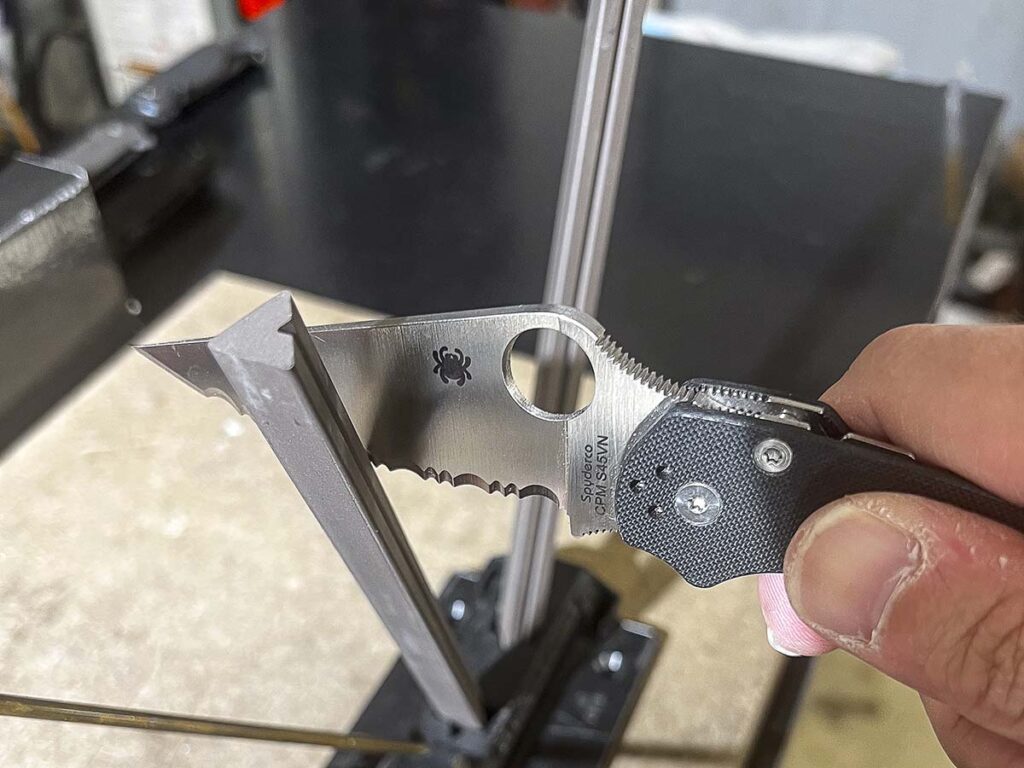
The Spyderco Sharpmaker 204 is the best sharpener to use with serrated knives, as it is easy to set up, easy to use and doesn't use oil or water for lubrication. The points of the triangular-shaped hones capture each tooth in the serration pattern effectively.
The Spyderco Sharpmaker 204 is the best sharpener to use with serrated knives, as it is easy to set up, easy to use and doesn’t use oil or water for lubrication. The points of the triangular-shaped hones capture each tooth in the serration pattern effectively.

The triangular shape of the hones was done on purpose and is a brilliant design. When you set up the honing where the flat sides face each other, the Sharpmaker effectively sharpens plain-edge blades. Rotate the hones so that the points face each other, and the Sharpmaker easily addresses serrated knives.

How well does the Sharpmaker work? Simply put—very well. It’s a must-have if you own any serrated knives, but as I said earlier, it will work just as well on plain-edge blades.  The sharpener is easy to set up and easy to use. There’s no mess since you don’t use fluid for lubrication, and it breaks down into an ultra-compact form factor that stows easily.  

Sharpmaker Specs
Frame Material: ABS plastic base
Sharpening Material: Alumina ceramic stones
Weight: 1.4 lbs.
Sharpening Surface: 7”
Features: Plain edge and serrated sharpening surfaces
Country Of Origin: U.S.A.
MSRP: $127

Benchmade Guided Field Sharpener

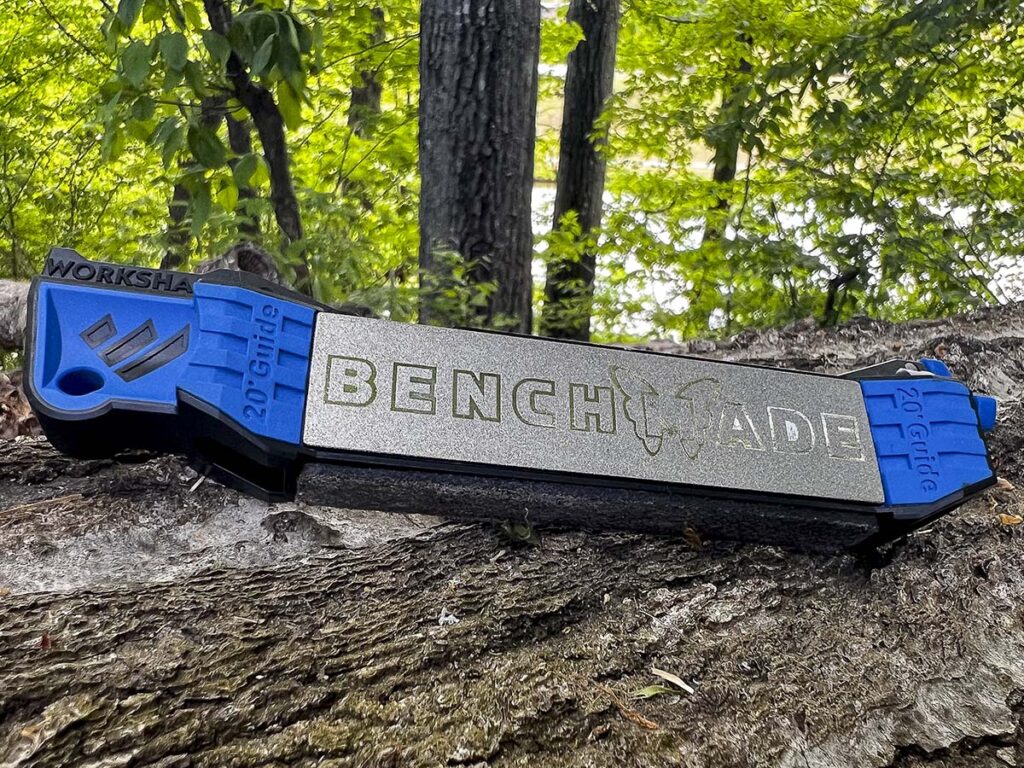
The Benchmade Guided Field Sharpener packs a lot into a small and affordable system. In addition to an integral angle guide, the system includes a diamond-infused sharpening plate, ceramic honing rods and a leather strop.

The Benchmade Guided Field Sharpener is the ultimate compact sharpener that is packed with so many features that you must use it to believe it. The unit is manufactured for Benchmade by Work Sharp, so it comes with a pedigree of a company that knows a thing or two about sharp cutting edges.

What you get with the Guided Field Sharpener (GFS) are coarse and fine diamond-coated sharpening plates held onto the body using rare-earth magnets. You also get a fine-grit ceramic rod for quick touch-ups. This rod has two sharpening surfaces—regular and ribbed, which are for more aggressive honing. You also get a smaller diameter ceramic rod, which addresses serrations. On top of all this, the unit has two sets of integral angle guides set permanently at 20 degrees. Finally, at one end of the sharpener frame is a leather strip for the final polishing of your edge. Folks, what you have right here is a comprehensive sharpening system in a pocket-sized form factor.  

While the Guided Field Sharpener works very well on folding hunters, tactical folders, multi-bladed pocketknives and some smaller fixed blades, it also handles larger blades, such as kitchen knives, as well. You must be mindful when working with a larger blade on a smaller sharpener and move the blade more efficiently to cover the entire cutting edge in one stroke.

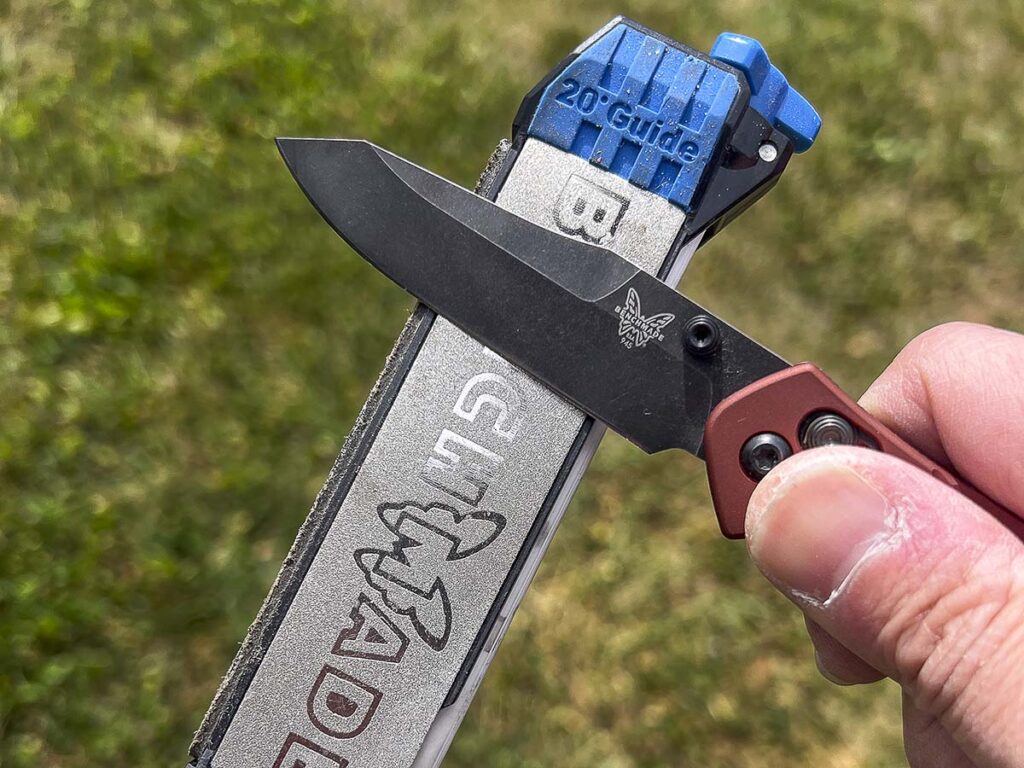
The Benchmade Guided Field Sharpener is made by Work Sharp and was designed as a comprehensive compact sharpener to take with everywhere. Aside from its accoutrements, one of the more desirable features of the tool is its lightweight, coming in at less than 5 ounces.

Using GFS is simple, you lay your blade onto the angle guide, then hold the handle steady and move the blade across the surface of the plate. You do need to remain conscious of your angle, as the guide only starts you at the right incline. Generally, you’ll start with the diamond hone to establish the edge, followed by the fine grit to define it. Finally, a few swipes on the ceramic rod, along with a finish on the leather strip, result in a hair-popping sharp edge.

Overall, the Benchmade sharpener is sized perfectly for everything from a rucksack to a coat pocket. It’s a powerful tool in a compact package, and a value. To this, it’s worth noting that the GFS is assembled in the U.S.A. from foreign and domestic components.

Guided Field Sharpener Specs
Frame Material: Polymer
Sharpening Material: Diamond plates, ceramic rods and leather strop
Weight: 4.7 oz.
Sharpening Surface: 6.87”
Features: Integral 20-degree angle guide
Country Of Origin: Assembled in U.S.A. from domestic and foreign components
MSRP: $50

More On Sharpening:

Advertisement

Must Read Articles

Read this before you make a knife

Knifemaking 101 – Read This Before You Make a Knife

  by Wayne Goddard My experience has taught me that there's nothing like digging in and getting started. I've often said the hardest part of the...
how to forge damascus steel

How to Forge Damascus

Advertisement
Advertisement