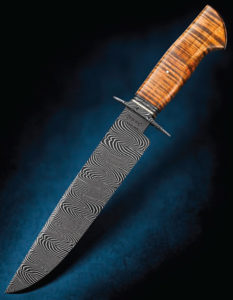
If the knife is well made, it will always have value. Josh Fisher’s bowie features a damascus blade of 1084 carbon and 15N20 nickel-alloy steels, and a handle of curly Tasmanian black wood. (Caleb Royer image)
Thinking of dipping your toe into the exciting world of collecting custom knives? Read these tips first.
What for Look for in a Custom Knife
Don’t buy or collect trends. Buying what’s “hot” today may mean selling at a loss tomorrow. Buy a knife because you like it, not because you think it will increase in value. If the knife is well made, it will always have value.
Decide what the knife will be used for and choose accordingly. Is it pleasing to your eye? Hold it and see how it feels in your hand.
Is it easy to carry? Is the edge geometry correct and are the grind lines even? Are there gaps at joints between the blade and guard? On a folder is there too much blade play—up and down and/or side to side?
Does the knife walk and talk? What about fit and finish?
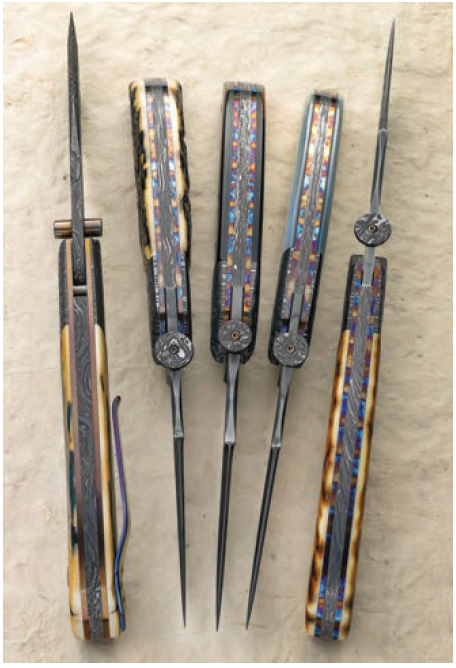
Is the edge geometry correct and are the grind lines even? Are there gaps at joints between the blade and guard? Don Hanson’s folders exhibit tight fit and finish from stem to stern. (SharpByCoop image)
On a linerlock or framelock does the lock engage too late or too early? Is lockup tight? Feel the knife all over for hot spots and evaluate it in terms of quality construction and materials, creativity, etc.
If the knife is a fixed blade, a sheath can add value. However, the knife needs a sheath only if it is important to you, though it may affect resale value. A good sheath can cost $75 to $150 to have one made, so this is a good benchmark of value detraction.
On the other hand, some sheaths can be distinctive works of art that can add significantly to the knife’s overall appeal and value.
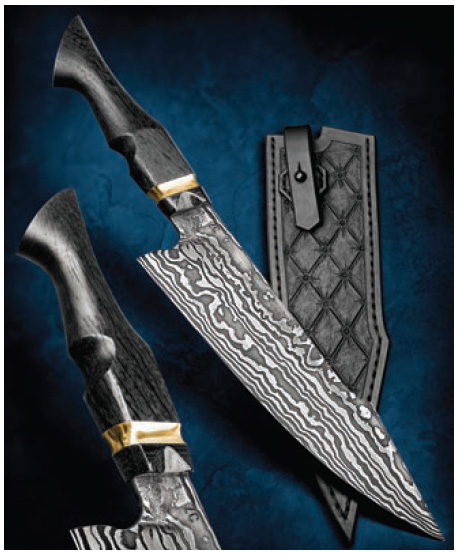
If the knife is a fixed blade, a sheath can add value. However, the knife needs a sheath only if it is important to you, though it may affect resale value. Zac Camacho offers a sheath with his zesty fixed blade in damascus and a handle of stabilized ancient bog oak. Overall length: 13.875 inches. (Caleb Royer edited image)
Commissioning a Completely New Custom Knife
Be wary of custom orders, as many things can go wrong, including long wait times before delivery, and makers who shun lengthy dialogue over what might be a healthy monetary investment on your part. Moreover, the finished knife may not meet your expectations.
Custom orders may be best for makers early in their careers. Veteran makers may wind up making a custom order that doesn’t represent their style, so the knife may not increase in value.
Place an order with enough time to pick the knife up at a time that works for you, such as during BLADE Show.
Determining Price of a Custom Knife
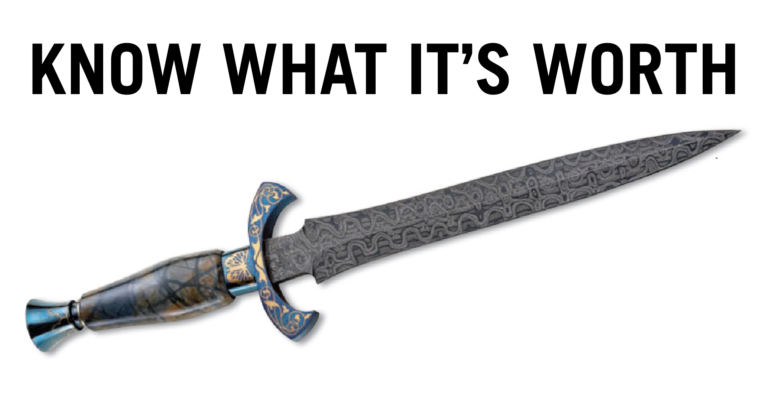
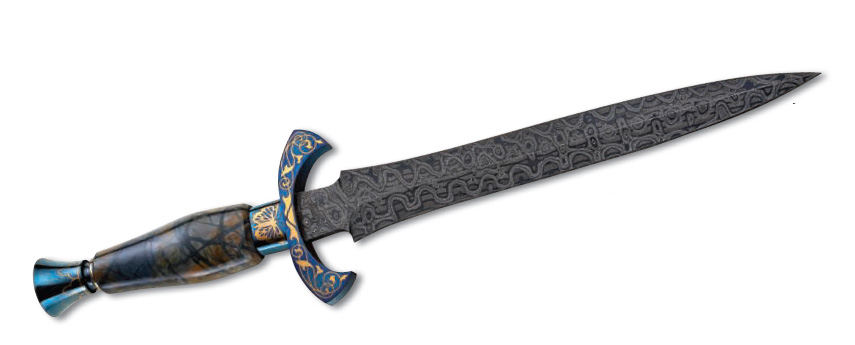
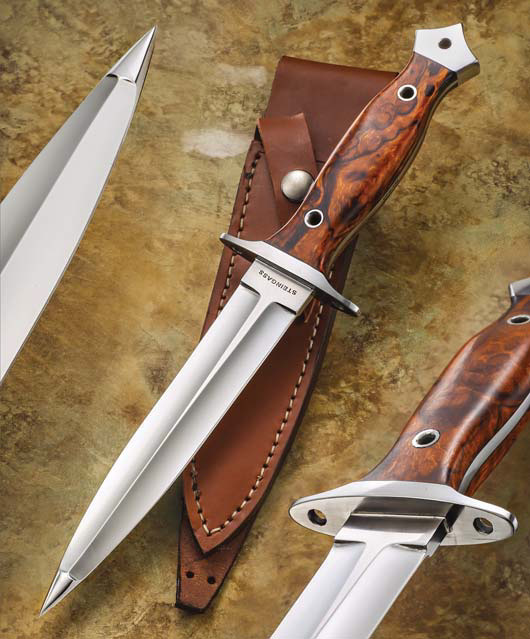
If you pay a high price for a knife, see if the maker has been in business for a number of years, has a strong following and that the knife is something special. Such a knife should be made of materials of a higher quality/more in demand than a less expensive model. An art dagger by Dennis Friedly with engraving by Gil Rudolph would appear to qualify on most all of these counts. (SharpByCoop image)
Never be afraid to ask a maker, purveyor or any seller why a knife costs what it does. Ask him/her for some background and history on the knife, both of which can embellish a knife’s value, especially if the knife is a vintage one.
If you pay a high price for a knife, see if the maker has been in business for a number of years, has a strong following and that the knife is something special. Such a knife should be made of materials of a higher quality/more in demand than a less expensive model.
If the maker is just starting out, be sure his knives are priced reasonably.
If the knife appears to be underpriced, be sure there’s not a mistake in its construction.
For a guide, check the prices of like knives on the sites of purveyors who have been in the business for a long time. They wouldn’t still be in business if they didn’t offer reasonable pricing.
Are Deposits Necessary?
One purveyor said you should never pay an upfront deposit on a custom order. No exceptions. Watch out for makers who claim to need the deposit to buy materials, etc. You are not a finance company.
Besides, as one purveyor said, “It’s unfortunately very human that it’s hard to get work done that is already paid for.”
Warranties
Ask for a written guarantee regarding what the maker will and will not cover in terms of damage caused by use/abuse, flaws in workmanship or materials (excluding natural materials that chip and crack), etc.
The warranty should last for the remainder the maker’s career.
While the definition of the “perfect” or “4.0” military knife is subjective, those who have been there know well how their knives perform and what it takes to build confidence that the indispensable tool can deliver.
So, with a clean slate, how would veterans of the military and the knife industry construct the finest knife for their own use?
1) Easy
“Durability and maintenance are primary, as they are with any tool or gun,” assessed Rob Cude, who spent 24 years in the U.S. Navy and retired in 2006 as an Explosive Ordnance Disposal Chief after completing tours in Africa, Yemen, Afghanistan and Iraq, with combat duty as a member of the CIF (Commanders in Extremis Force), a group of exceptionally trained Special Operations personnel.
Retired Navy EOD Chief Rob Cude prefers any of the “SV” stainless steels such as CPM S30V and paper or canvas micarta with a thread exposing finish on his military knives. Stellite® 6K—such as that on this fighter by Kit Carson—is another Cude favorite for blade material. (Cude image)
“The knife must be easy to maintain and built of quality materials that stay sharp, are easy to sharpen, and strong,” Cude continued. “Any of SV [CPM S30V, etc.] series steels are really good, and Stellite® for some uses such as diving. High carbon can also be used as blade steel, but it’s all about finish and coating. My handle choice is paper or canvas Micarta with a thread-exposing finish, but the aggressive G-10 textures on fixed blades like those by Strider Knives are really good as well. The material needs to be durable and chemical resistant with a slip-resistant finish when wet.”
While on active duty, Cude carried a Spyderco Police, Benchmade and Emerson folders, and Gerber fixed blades.
“In 1996, I contacted a few custom makers to help us with a fixed blade that met a variety of needs,” he remembered. “Later, I carried Kit Carson, Jones Brothers, Strider and R.J. Martin, all excellent knives that withstood the test of time and extreme conditions.”
His friendship with Cutlery-Hall-Of-Famer Kit Carson and contributions to a military knife design resulted in variants of the U2, which Buck Knives picked up as the Intrepid.
“Kit was not only a friend but a mentor in military career,” Rob noted.
2) Simple
A Pacific Cutlery Fer-de-Lance designed by the late David E. Steele was always with Kim Breed on deployment. Breed also carried a Swiss Army knife Champion in no small part for its tweezers and scissors for removing thorns. (Breed image)
Retired 5th Special Forces Master Sergeant and BLADE field editor Kim Breed makes knives and has done design work for Spartan Blades. He applies the KISS principle, always keeping it simple.
“The more moving parts, the higher the chance of failure,” he reasoned. “I make it a point to serve the military by providing the best knife with the soldier’s interest in mind. They provide me with important feedback on how my knives have performed, which allows me to tailor their needs into my designs.”
While serving with the Special Forces, Breed preferred lightweight knives that could perform a wide variety of tasks since most of his active duty time was spent living out of his rucksack.
“A Ferde-Lance designed by David E. Steele was always with me on every deployment. I also carried a Swiss Army knife Champion, as the tweezers and scissors were the best for removing thorns.”
For Kim, experience still points to the multifunctional blade style with a comfortable handle, and high carbon steel and Micarta are the most requested materials from active service personnel. Comfort, edge-holding ability and ease of sharpening are the top priorities.
“The fixed blade will always have a place with the soldier,” he asserted, “and some folders will be used for smaller tasks. Kydex seems to be the sheath of choice, as it is approved for airborne operations and securely holds the knife in a variety of positions. Blade shapes run the whole spectrum, but most are a version of a drop point or slightly upswept blade. A few soldiers like guards, but as long as the knife has a finger notch to keep the hand from slipping, it’s good. A bead-blasted finish is a favorite. A non-reflective blade is a must.”
3) Environmental Versatility
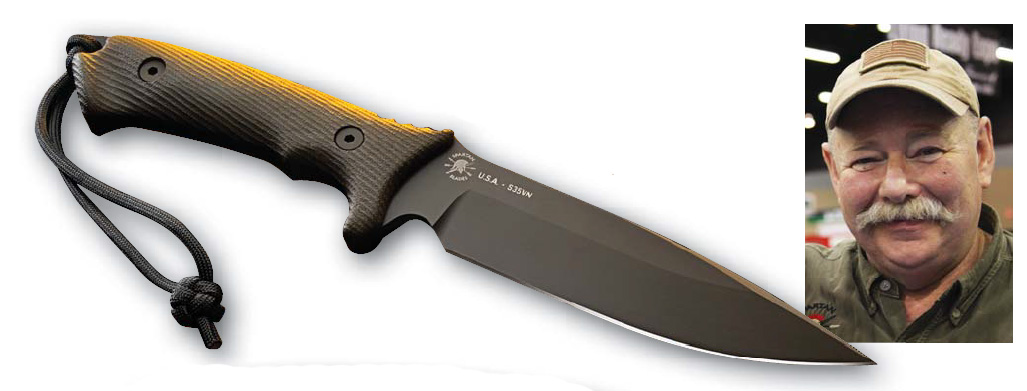
The steel of choice for Bill Harsey (inset) is CPM S35VN, which he says mimics the traits of a true tool steel but with stainless characteristics. S35VN blade steel and a handle of another Harsey favorite, Micarta, help complete the Harsey-designed Difensa from Spartan Blades. (Spartan Blades knife image)
William “Bill” Harsey Jr. has been around military-style knives for decades and worked in design with legendary Cutlery Hall-Of-Famer Col. Rex Applegate, as well as Chris Reeve Knives and Spartan Blades.
He says canvas Micarta handles are tough to beat for control in harsh conditions, including wet and cold and even in darkness. They have been approved for cleanup after exposure to chemical or biological weapons, too.
“I also believe that a knife must be able to retain its sharpness in hot and humid conditions such as marine, riverine and jungle environments,” he commented. “This takes some amount of stain resistance, as an edge can ‘go away’ in the sheath without ever being used.”
The steel of choice for Harsey is CPM S35VN, which he says mimics the traits of a true tool steel but with stainless characteristics. While he adds that good makers can utilize a range of blade steels and produce outstanding knives, non-stainless steels require more maintenance.
“One thing I’ve learned about discussing knives with members of the military is that the topic elicits strong responses, kind of like which handgun is the best,” said Harsey, who has made knives individually and in collaboration with U.S. Army Special Forces, U.S. Navy Special Warfare personnel and Canadian Special Forces.
“Many of the warfighters I know carry several knives in the field and when not in the field. Folders, fixed blades and tools all count.”
Harsey sees the basics as the most important aspects of the ideal military knife.
“I think the requirements for a good military use knife, which can be mission and region specific, are that the blade has a point, cuts and can be carried in a good sheath that works with the rest of the kit carried by the warfighter,” he concluded.
Forget the Movies
An Army veteran of the 7th Infantry Division (Light) during the invasion of Panama, the 82nd Airborne Division during the Gulf War of 1991, the 173rd Airborne Brigade during the Balkans air war, and a special mission unit in Special Operations during the global war on terrorism in Iraq and Afghanistan, Jack Stottlemire retired with the rank of sergeant major. (Stottlemire image)
During stints with the U.S. Marine Corps and Army, Jack Stottlemire, who makes custom knives for military personnel at Fort Bragg, North Carolina, near his home, has seen many a global hotspot.
A veteran of the 7th Infantry Division (Light) during the invasion of Panama, the 82nd Airborne Division during the Gulf War of 1991, the 173rd Airborne Brigade during the Balkans air war, and a special mission unit in Special Operations during the global war on terrorism in Iraq and Afghanistan, he retired with the rank of sergeant major. Jack also has carried numerous knives.
He put away his Gerber Mk II after carrying it briefly and went with a KA-BAR that performed well in multiple functions. He also has used a Buck 110 folder, M7 bayonet, Leatherman multi-tool, Air Force survival knife, Benchmade Stryker auto, and a Horrigan Fighter made by his squadron mate, Bob Horrigan, who was killed in action June 17, 2005.
“Unlike what you see in the movies,” Stottlemire explained, “soldiers and Marines do not carry large crew-served knives like in Rambo or The Expendables. A knife is a cutting tool for everyday tasks. For silent killing when warranted, a spike hawk is used more often than not in lieu of a knife in Special Operations on today’s battlefield.”
Stottlemire’s custom knives are made under the Rustick Knives brand, and word of mouth drives his sales. He has a large following among Navy SpecWar Teams and Air Force Combat Control Teams.
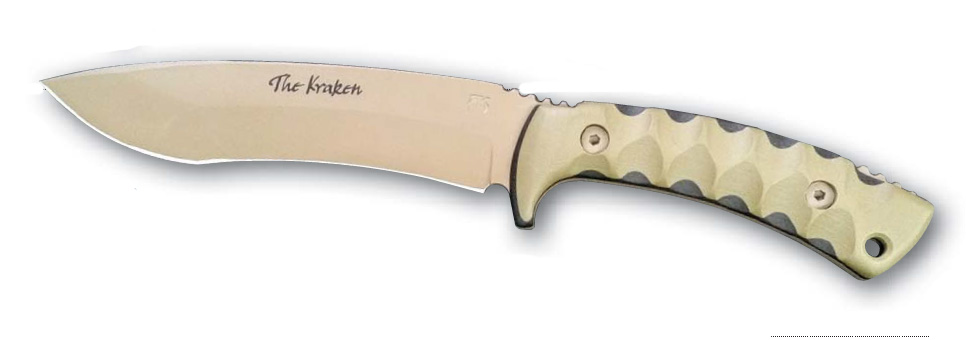
One of Jack Stottlemire’s best-selling knives for military personnel is the 6-inch-blade Kraken. The blade is finished in Cerakote™ with a flat-dark-earth color. The handle is G-10. (Stottlemire image)
“Carbon steel knives that are treated to 57-59 Rockwell are easier to sharpen in the field than most stainless steels,” he remarked. “Carbon is more affordable for the average ‘Joe’ also. I was surprised when a SEAL platoon ordered knives from me and did not want stainless. They preferred carbon with a Cerakote™ finish. Now, stainless does have its place, especially in a humid environment like Central America where you can actually watch an unprotected edge rust. But with proper maintenance and protective finishes, carbon can excel in these areas.”
Jack’s handle material of choice is G-10 and he uses that on all the custom knives he produces.
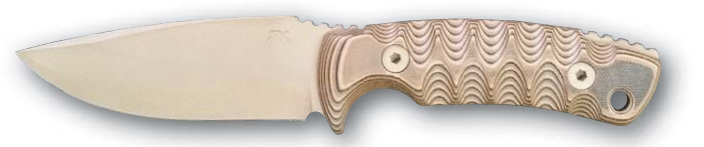
Another of Jack Stottlemire’s best-selling knives for military personnel is the 4-inch blade utility/combat knife. The handle is G-10 and the blade is finished in a flat-dark-earth Cerakote™. (Stottlemire image)
“It’s very tough and durable stuff that stands up to any abuse you throw at it,” he said. “Micarta would my second choice.”
From a military man’s perspective, Stottlemire says a knife needs to do one thing well—cut. Added options such as wrenches, screwdrivers or bottle openers are unnecessary in the field. A good point with a blade of 4-to-5 inches is usually more than enough to do the job well.
It Comes Down to Individual Preference
Overall, both fixed blades and folders useful in the field. Handles of durable synthetic such as Micarta are the top choice, while blade steel is a toss-up between carbon and stainless.
A blade length of up to 5 inches is ideal. Personal preference, though, remains a major factor, and the individual has the opportunity to decide what knife or knives to employ.
Editor’s note: This article originally appeared in the January 2010 issue of BLADE. However, the information presented is still relevant and useful to anyone interested in paracord-wrapped knife handles.
Advantages of Paracord-Wrapped Knife Handles
Affordable: Much less expensive than many natural and synthetic handle materials
Customizable: Available in a variety of colors
Convenient: Cordage is as near as your knife
Versatile: Paracord can be used in countless everyday and survival situations
Disadvantages of Paracord-Wrapped Knife Handles
Fixed blades only: Folders aren’t an option
Absorbent: Will soak up moisture (water, mud, blood), and may give off unpleasant odor as a result
Needs replacing: Wear and tear mean the wrap won’t last forever
Ergonomics: Some say gloved hands often find a better grip than bare hands
The Infinite Uses of Paracord
While for some it may be considered just a quick wraparound, for others it has proven to be a lifesaver. The simple paracord handle does more than meets the eye.
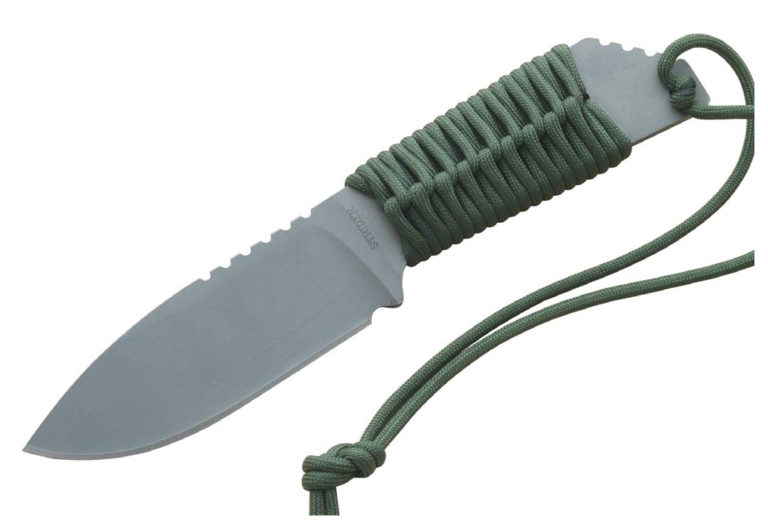
Functioning as a handle material that allows for the best fit for the size of the user’s hand, and one that can be added or removed in a matter of minutes, paracord is durable and relatively inexpensive. It also adds a dimension of survivability for those in the field.
Paracord pulls double duty as a bootlace, securing line, snare or even in a first-aid situation.
What’s the Best Kind of Paracord?
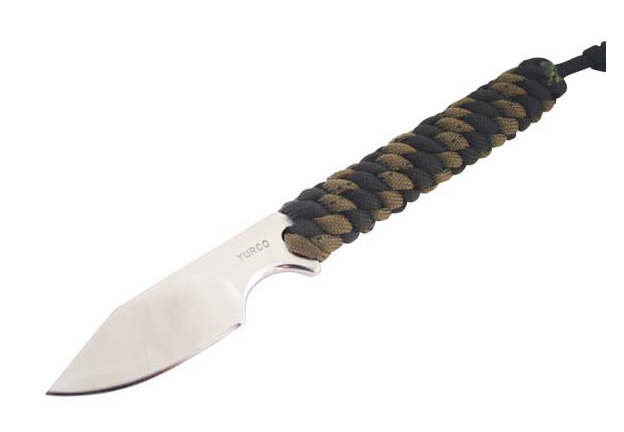
This Yurco model is available from Arizona Custom Knives. (photo courtesy of Arizona Custom Knives)
“The best paracord to use is military 550 cord,” explained custom knifemaker Mickey Yurco, who has employed paracord wrap for handles on as much as 40 percent of his knives. “It has seven inner strands of nylon cord, and the outer shell is tightly braided nylon. If you pull out the separate strands in a survival situation, you can make a bowstring, use it to catch a rabbit with a snare, use it for fishing line, and you can break down the inner core into three separate smaller strands for sewing a rip in a tent or as suture if you cut yourself.
“You can use the outer shell to lash branches together to build a lean-to or tie logs together for a raft. You can even use it to keep a fire lit because [paracord] will melt.”
Yurco also points out that when a paracord handle is unwrapped for another use, the gripping end of the knife is still intact. The entire piece is lightweight and, on the sheath or in a belt clip, as much as eight to 12 feet of additional paracord can be tightly wrapped as backup.
Two Schools of Thought
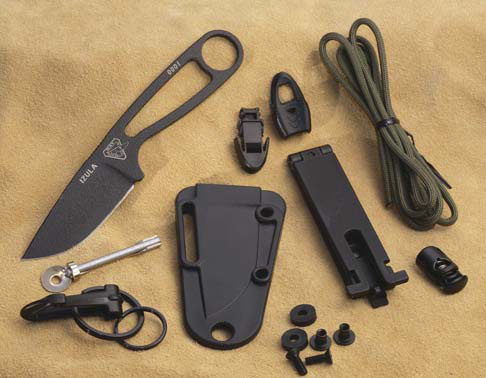
Interested in doing a wrap yourself? You certainly can. The Izula-B Kit includes the paracord wrap (upper right) and cod lock, and also the black molded sheath, large and small split rings, ferro fi re-starting rod, emergency whistle, plastic snap hook and MOLLE lock kit. (RAT photo)
Mike Fuller of TOPS Knives noticed its reputation rising around 2000.
“I first saw it during the Vietnam era, as some guys wrapped paracord around their sheaths just to have some extra cord if needed,” he commented at the time this article was published. “I did see a few homemade jeepspring knives with paracord wrapping.
“There are two schools of thought on the paracord,” Fuller continued. “In an emergency situation, you might have about 10 feet of cord to use for survival applications. In a wet situation, you might have a better grip, and some people feel that it assists when wearing gloves in the field.
“Paracord can in fact tear or become frayed and, if it gets soaking wet in really cold weather, some have said that their handles freeze and coat with ice. Several professional hunters have said that if you are field dressing an animal the blood may get into the cord and it’s difficult to clean and may carry a distinct odor.”
The Secret is the Simplicity
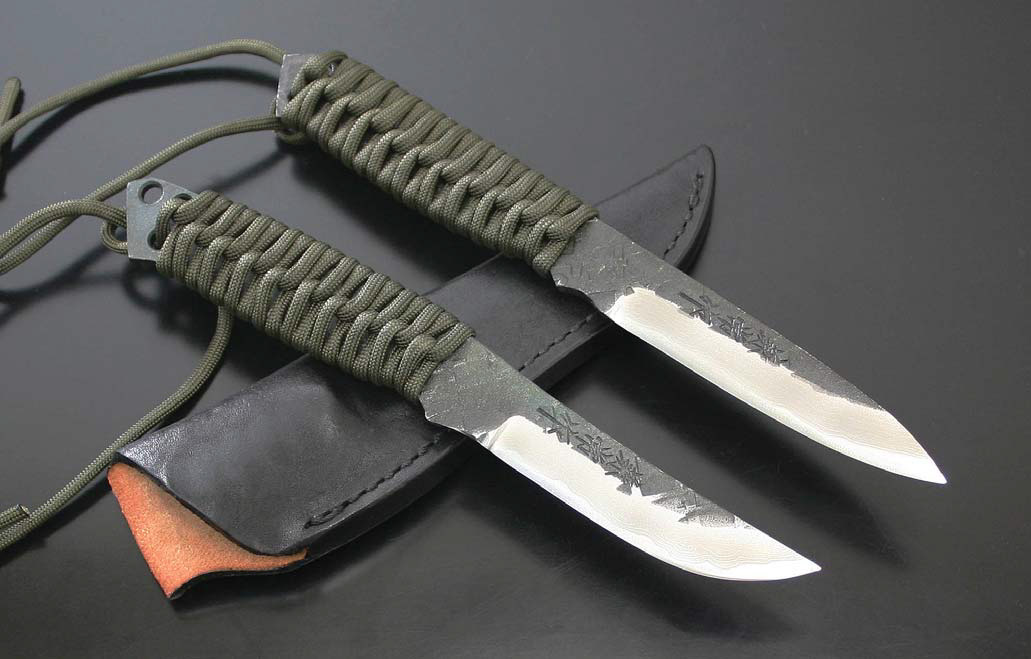
The Yumi (top) and Ya (bottom) from Kanetsune/Kitasho offer paracord-wrapped handles and blades of 15-layer White steel damascus. Each piece comes with a cowhide sheath. Overall lengths: 7.68 and 8.07 inches. (Kanetsune/Kitasho photo)
“People like paracord because it is so simple,” said Justin Gingrich, a consultant with Ontario Knife Co. “It allows them to customize a handle and still have a knife they can carry close to the body. You can wrap, rewrap and even change the cord to match the outfit you’re wearing.
“Paracord allows users to tailor the knife to themselves, beefing the handle up or thinning it out, and, if it gets dirty or frayed or messed up in any way, it’s easy to replace. It will absorb water and hold it, so you don’t want it on an unprotected high-carbon steel knife. You could get rusting issues with water or any other fluids. It will absorb blood if you are hunting, but then again, it’s a give and take since you can change it out pretty quickly.”
Conclusion
As with any knife feature, whether to go with a paracord-wrapped knife handle or not is up to the user. However, many knife collectors enjoy the versatility and customization that paracord offers. Far from a trend, paracord is here to stay as a handle option.
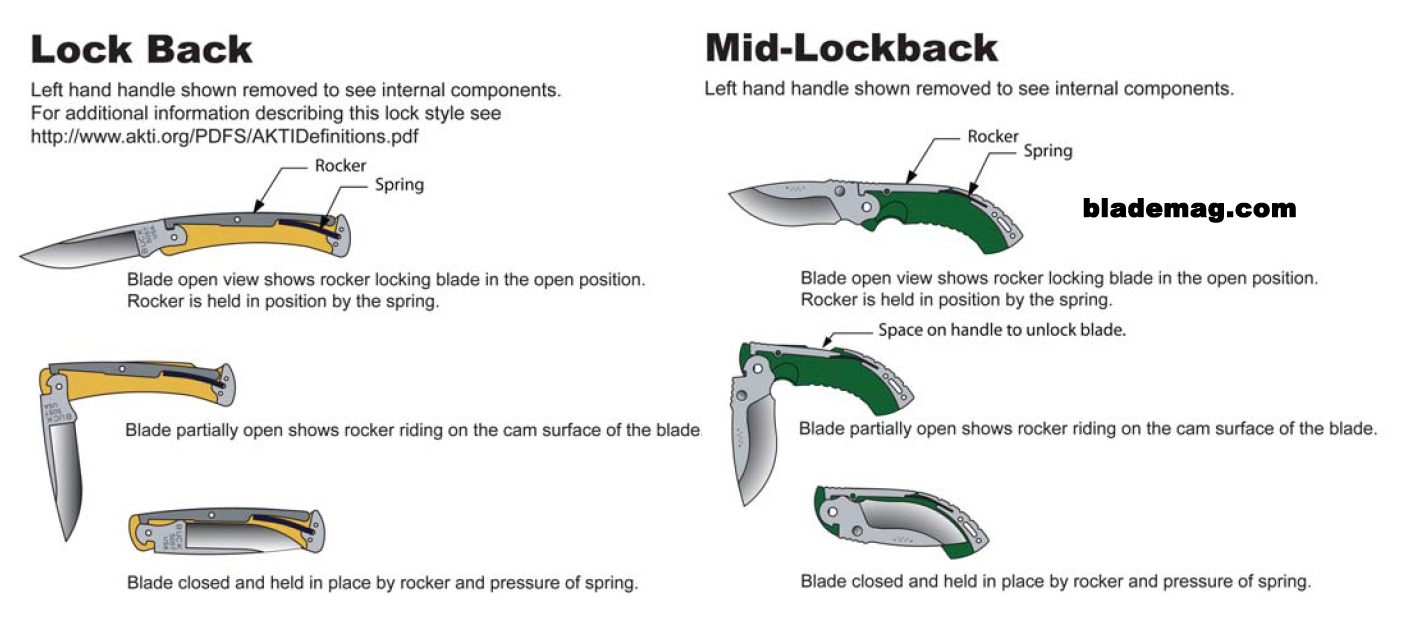
Despite or perhaps because of its requirement for tight tolerances, the lockback has a substantial lineage.
According to Bill Claussen, co-author of Sheffield Exhibition Knives, the lockback has been around in various forms since 15th-century Spain. Other European cutlers—including the French, Italians and English—have produced lockback variants during the past 500 years or so.
The Buck 110: A Gamechanger
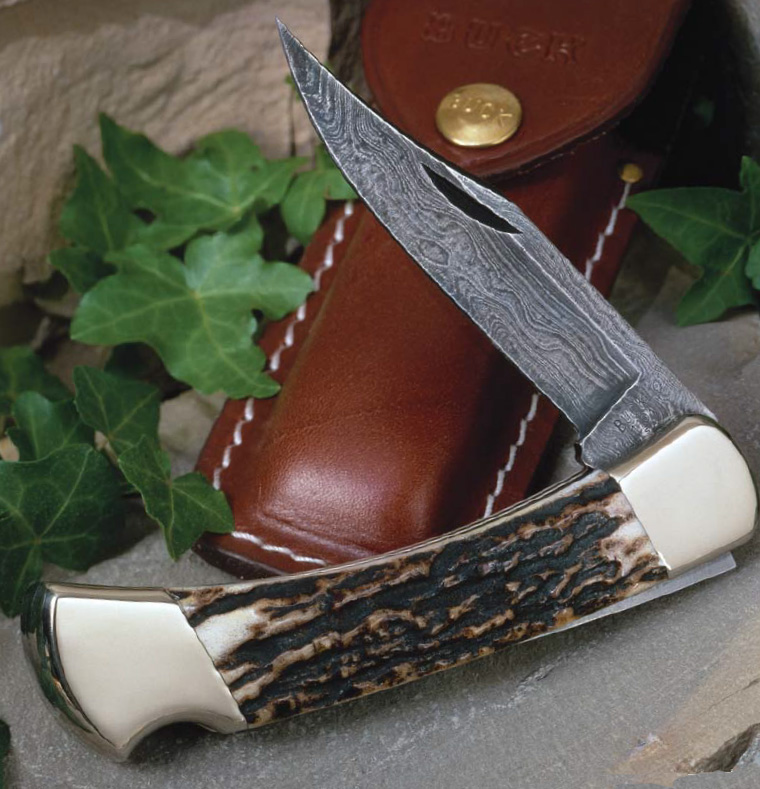
In the modern era, Claussen cites the Buck 110, which hit the market in 1964, as an industry icon.
“It changed the face of modern pocketknives,” he commented. “Although lockbacks had been introduced to the U.S. for more than 200 years, they were not made affordable and convenient in mass production until Al Buck introduced his knife. This knife was quickly adopted by sportsmen, tradesmen, truckers and other workmen as an ideal, all-around, heavy-duty work knife. Vintage 110s are hard to find today, and one in mint condition will cost a small fortune if you can find one.”
Production Challenges
Chairman of the board at Buck Knives, Cutlery Hall-Of-Famer Chuck Buck recognizes the pivotal role the 110 has played in modern lockback development, and acknowledges the challenges that surrounded the original premise of a practical production lockback.
“The lockback actually is a bar that goes across the back of the blade with the spring under it, and when you push down on the bar it rocks on a stainless rivet,” he said. “So, that was always hard to get exact because you did not want it to be loose and it needed to fit perfectly.
“You need to do fine blanking of the blades to achieve that and for years components had been machined, but with fine blanking you can get that done. We worked with the design for quite a few months, and it was all new to us. That was in 1963. The first knives on the market totaled about 250 in 1964, and then in 1965 we ended up making about 10,000 of them. It just grew from there. The 110 continues to be one of our most popular knives, and we are producing them now at a rate of over 1,000 per day. We have a whole crew that just makes the 110 folding hunter. To Buck, it has been something that has sold every year, and it just keeps getting better.”
Over the years, there have been a few tweaks to the lockback design of the Buck 110. For example, during the 1970s it was discovered users were placing a great deal of pressure on the blade, and the brass rivet in the mechanism itself was shearing. The brass rivet was replaced with a stainless steel component, and the 110 continues to sell well around the world.
From large retailers to mom-and-pop hardware stores, from Main Street to Moscow, the Buck 110 is a knife user’s mainstay.
It’s Human Nature
Claussen asserts another aspect of the popularity of folding knives and of lockbacks in particular has to do with human nature.
“It’s their mystique,” he related. “People seem to have a fascination for complicated things, plain and simple. Th is is generally true in life and very specifically in the collecting field. Watches, clocks and other collectibles are favored because of their complication. The general rule, with all things being equal, is that the more complications, the more desirability, hence greater value. To have a locking feature with a knife definitely adds mystique, aura and increased value.”
“This has got to be through the old way of human contact,” Bob Loveless knife specialist John Denton observed, “sort of like the lunchroom in school. You hang out, listen, see what is moving, what dealers are buying and, of course, now with the ‘inter-web,’ we have so much more information within seconds, while in the ’70s or ’80s we had to wait for BLADE® Magazine or the gun magazines to run stories on Loveless.
“Shows are still important to attend, but nowhere like they were years ago. Face to face is still part of the knife world.”
2) Maker Charisma
A lot depends on whether the maker has the kind of personality that appeals to the knife enthusiast. At BladeGallery, Daniel O’Malley specializes in one-of-a-kind custom knives. The answer includes multiple factors.
“There are a lot of things that go into making a knifemaker’s knives ‘hot,’” he reasoned. “Part of it is the personality of the maker. When a collector meets a maker for the first time, the collector often has a picture in his head of what the maker will be like. If the maker falls short [of the collector’s expectations], it can be quite disillusioning.”
3) Customer Service
“[The maker] being willing to repair knives when there is a problem is also very important,” O’Malley continued. “It can easily make the difference in a collector continuing to purchase a maker’s work. It can even be the difference in whether a person continues to collect the maker’s knives over time.
“After all, if a collector has spent a large sum of money on their collection, it can be very nerve wracking to find that it’s hard to get a damaged knife repaired. Similarly, it can be comforting if a problem can be relatively painlessly solved.”
4) Do Your Homework
Les Robertson of Robertson’s Custom Cutlery offers custom fixed blade and folding knives, including tacticals and presentation pieces, as well as some exclusives. His take on the delicate topic of a maker’s reliability and the quality of the maker’s work is sage advice for knife enthusiasts in any price range or level of experience.
“I give my client the very best information I have at the time,” Robertson asserted. “This includes issues with a maker or the quality of their work. Often, a maker’s skill level, quality, customer service, and/or delivery issues are overlooked because the knife can be sold immediately for a profit.
“Given the prices of many of the custom knives today, I highly recommend that collectors do their homework before purchasing a knife.
“I realize this takes away from the thrill of instant gratification and removes some of the fun out of the hobby. Long term, though, you will feel great about every knife you have bought, and your wallet will thank you.”
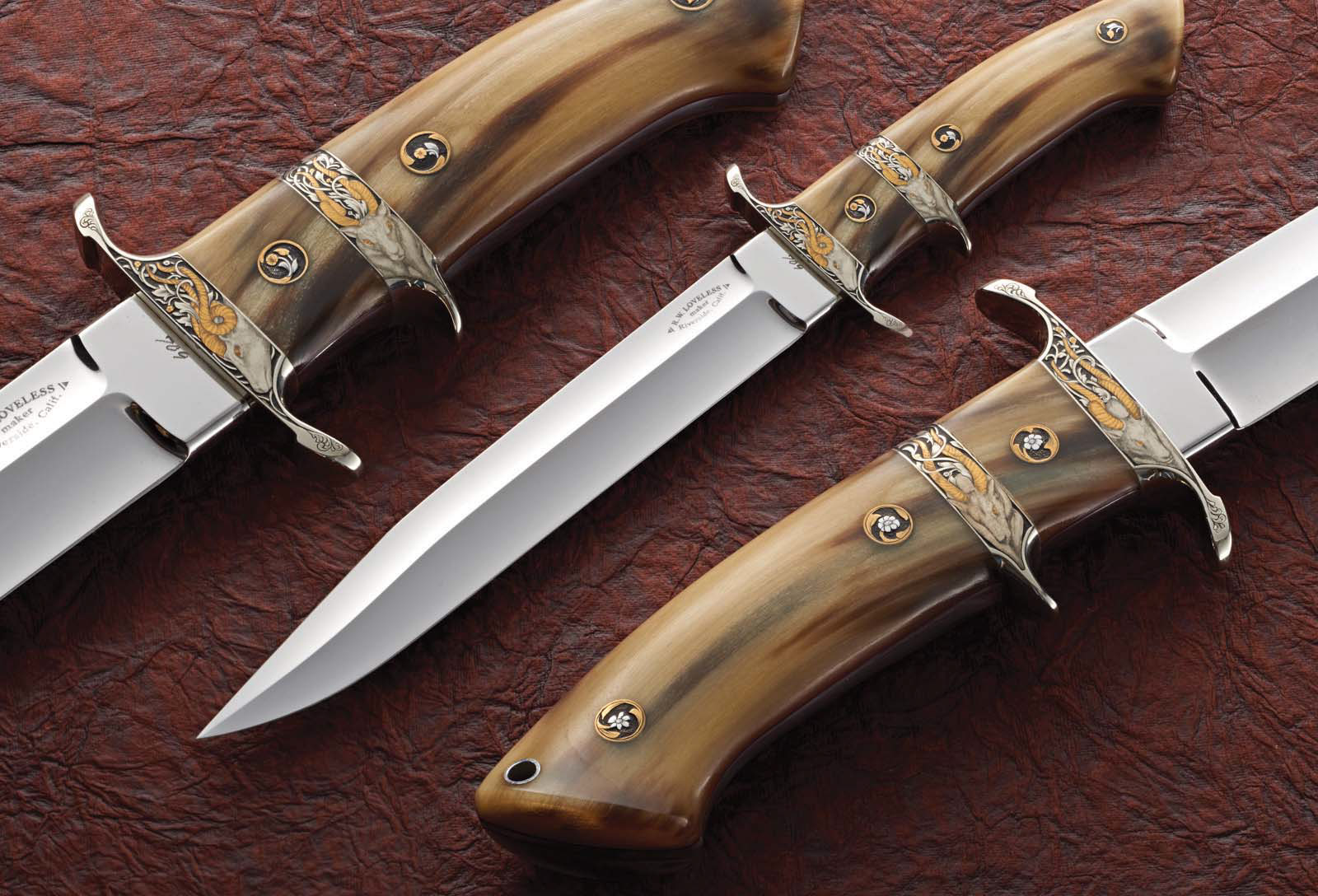
Purveyor John Denton said he turned down $60,000 at the 2014 BLADE Show for this Big Bear in sheep horn and Dan Wilkerson engraving. (PointSeven knife image)
5) Set An Allowance
Everyone, it seems, has spending limits. The role of the dealer often involves assisting clients in determining how much to spend. Recognition of the amount of disposable income available keeps a buyer/collector in the game.
6) Collect With A Purpose
Denton advises customers to acquire some knowledge on prices and to assess their real purpose for buying custom knives in the first place.
“First of all, you want collectors to be educated,” he commented, “and not to be buying just to make money. That is the most risky way to approach collecting. But then if they buy what they like and in three years can’t get 10 cents on the dollar, it will cut their knife buying down and drive them out of the market.”
Dealer Dave Ellis of Exquisiteknives.com notes that the investment perspective differs greatly from that of the collector who wants to enjoy, build and retain knives for years to come.
“When I chat with newbies,” he remarked, “a lot of them get into knives from an investment standpoint. They have read in the Wall Street Journal that investing in knives is a good idea, or heard about a knife that was purchased for $800 and then sold for $8,000. I tell them to buy what they like first and to worry about resale later because if it doesn’t pan out, then they won’t have to hold onto something they don’t like.”
Taking a measured approach is key to successful, price-sensitive acquisitions.
“I tell the collector to pace themselves,” Denton said. “Get into a knife that will be easy to turn if you get tired of it down the road. I’ve had several people ask me to build them a $300,000 collection, and I tell them I don’t do that because they will get mad if they don’t make 14 percent growth per year—and they don’t know why they’re buying the knife.
“The true collector has studied the knives and the market, and he will realize what knives are worth and what he can resell them for.”
Those who are new to the custom knife market can tap a great resource in a top dealer. Advice on the market, prevailing prices and hot makers is only part of the relationship. High-end folders by BLADE Magazine Cutlery Hall-Of-Fame® member Ron Lake, Warren Osborne and Jim Martin, along with Loveless fixed blades, are among Ellis’s offerings.
When Dave talks with a new buyer/collector, he asks a few basic questions.
“There are more heavy hitters getting in the game with lots of money,” he said, “but that doesn’t mean they are buying the right things. What have their interests been up to now? Did they grow up with knives? Do they carry and use a knife? What is their reason for buying now? Use it? Collect it? Give it to a nephew for college graduation? I don’t want to offer a $7,000 Loveless hunter when a $150 skinner by any smith will do.”
7) Attend Shows That Fit
Though knife shows may be one of many ways to gain information and see what is out there, the individual contact with dealers, makers and other knife enthusiasts is invaluable. Attending shows that mean the most to the individual buyer’s needs and wants helps in the education process and in finding the people and knives that enhance the experience.
Robertson attends the BLADE Show due directly to its diversity of custom knives for sale. He says that the Arkansas Custom Knife Show is also one of the premier forged blade shows and features apprentice, journeyman and master smiths in the American Bladesmith Society.
“The New York Custom Knife Show offers a variety of knives from very well-known custom knifemakers,” Robertson added. “This show in recent years has had more of a tactical knife flavor. The USN Show offers the widest variety of tactical folders you will see at any show in the world.”
These are just a few of Robertson’s picks. Other shows are out there, and many of them are quite beneficial to knife enthusiasts looking for certain styles of knives and/or makers.
Editor’s note: Ken Warner, the visionary behind and original editor of the acclaimed KNIVES annual book series, recently passed away. In tribute, BLADE is featuring this article from the August 2009 magazine issue about this titan of knives.
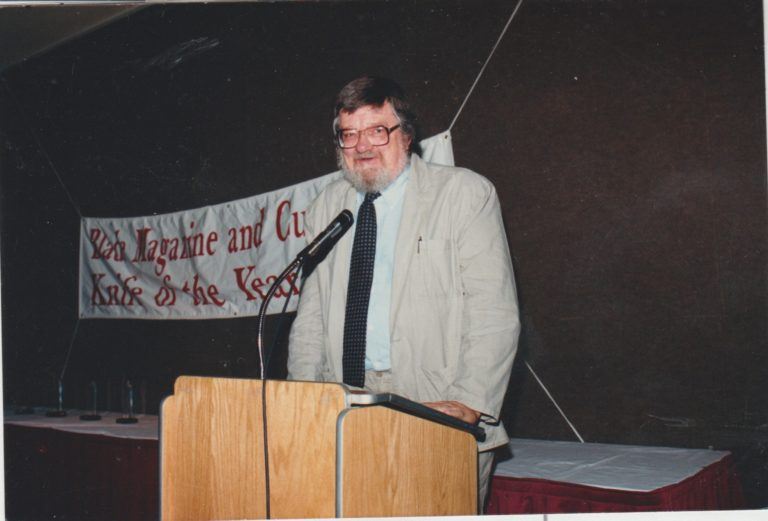
The turn of a phrase, the flow of the narrative, and simply getting the story straight are hallmarks of the writing craft. BLADE Magazine Cutlery Hall-Of-Famer® Ken Warner brought the ability to perform each of these, along with an unmatched eloquence, to the knife industry.
Universally, knife authorities acknowledge him as the individual who lifted custom knives out of the shadows. He helped to accomplish this with a straightforward, crisp, and clean writing style that captured the imagination of readers for nearly half a century.
A “True Poet” of the Knife Community
Warner edited and wrote much of the first Knives annual in 1981. The series went on to transform the knife industry. He continued editing the annuals until 2000. BLADE managing editor Joe Kertzman assumed the reins beginning with the 2001 edition.
“Ken Warner is the true poet of the knife community,” related BLADE field editor Ed Fowler. “While he did not write the most knife articles, what he did write was worth reading and serves as an eloquent inspiration for all who have thoughts to share. He had no axe to grind other than to share knowledge. As a fledgling knifemaker, I used to read his comments and soon learned that he knew well his subject matter.”
Though he is not currently writing—he instead stays busy offering a wide range of fixed blades and folders through his Ken Warner Knives knife company—there is always the possibility that Warner will return to print. Meanwhile, he says he is becoming computer savvy enough to run a knife forum on the internet and to continue his online blog (kenwarnerknives.blogspot.com). He also stays busy designing knives.
“I’m 80 years old,” he reflected, “and I have some things I want to say and there are some stories I can do that nobody else can do because I was there. I will get to that when I get to it.”
Forging a Path
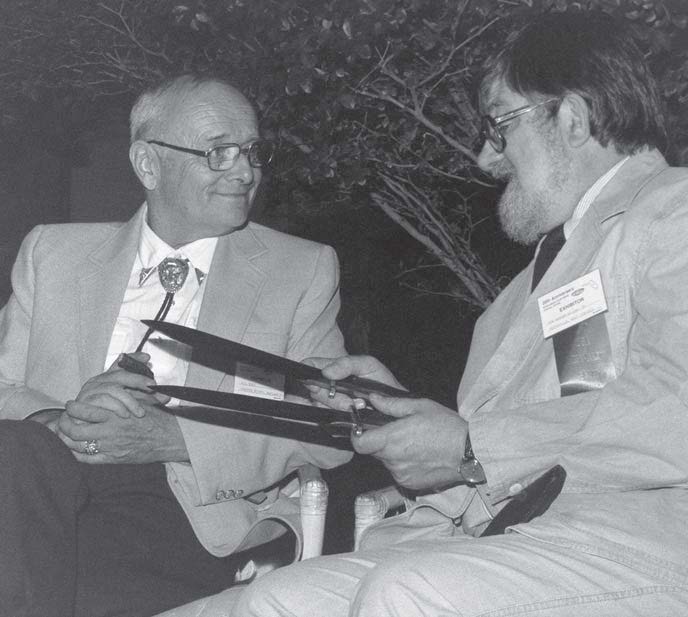
Blade Magazine Cutlery Hall-Of-Famers Bill Moran (left) and Ken Warner were good friends. According to Cutlery Hall-Of-Famer B.R. Hughes, Warner was the first to write about Moran and his knives in a national magazine. Here Moran and Warner visit and talk knives at an early 1980s Knifemakers’ Guild Show. (photo courtesy of B.R. Hughes)
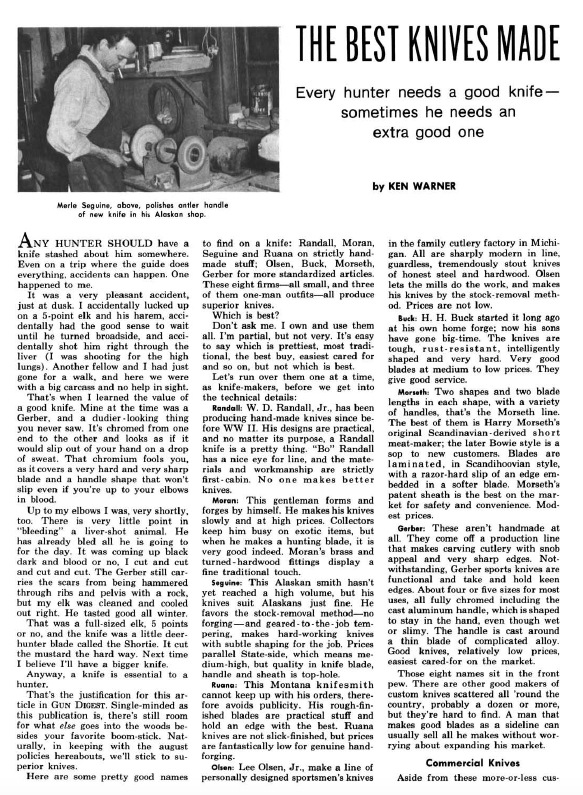
Literally, when custom knives began to gain national and international attention, Warner was there. In fact, he was the prime mover in publicizing the work of the knifemakers. As a writer for the popular annual Gun Digest, he started writing about knives in 1964. That first article, titled The Best Knives Made, has been reprinted numerous times.
Back then, though, it was a challenge just to get enough material to put a story together.
“I could hardly find any knifemakers,” Warner commented. “I found [Bill] Moran and [Bo] Randall, and Buck was small then and I wrote about them. However, a number of knifemakers and collectors have told me that the article got them started. Bob Loveless, for example, has told me that he was about to give up making knives because it wasn’t going any place. Then, he read the article and decided that somebody would understand. There was a time that I was actually giving away Loveless knives just to see what people thought of them. Butch and Rita Winter were pre-eminent collectors of handmade knives, and they told me I got them started.”
A Calling
Educating the general public about knives evolved into something of a mission for Warner. In 1976, he wrote The Practical Book Of Knives, a primer of information on the mechanics, components, function and terminology associated with knives. Through editorial contributions to a number of publications, he has managed to spread the word.
Along the way, he has gained a multitude of friends and admirers. One of the closest was with the legendary Cutlery Hall-Of-Famer, Bill Moran. BLADE field editor and Cutlery Hall-Of-Famer B.R. Hughes, co-author of the Moran biography, Master Of The Forge, credits Warner with his introduction to the great bladesmith.
A Man of Many Firsts
Ken Warner’s The Best Knives Made article in the Gun Digest 1966 book was a game-changing moment for what is now the modern knife industry.
“Ken was one of the first to write knowledgeably about handmade knives, and he’s important to me personally because he’s how I heard about Bill Moran,” Hughes remarked. “Ken used to live close to Moran’s shop and visited there often. He was the first to write about Moran in a national magazine. He mentioned Moran in the Gun Digest article in 1964, and that article did more to publicize handmade knives than everything written about them up to that time.”
Of course, Moran, Hughes, Don Hastings and Bill Bagwell went on to found the American Bladesmith Society in 1976 and the rest, as they say, is history.
Hughes said he remembers working at a magazine called Gunsport in the mid-1960s and Warner was the editor. Even then, Hughes knew Warner was something special.
“Ken’s writing was a cut above what I was used to seeing in a gun magazine,” Hughes continued. “I soon became shotgun editor of Gunsport, and no gun magazine of that day was going to publish a lot of knife articles, but Ken got a knife article in there from time to time.”
When Warner left Gunsport to publish his own magazine, Gunfacts, the idea of writing about knives had caught on.
Hughes said he recalls a memo circulating to ask if anyone else at Gunsport had an interest in or knowledge of handmade knives. Hughes raised his hand, contacted Cutlery Hall-Of-Famer A.G. Russell for a crash course in handmades, and took up writing about knives himself.
The Knives (KNIVES) Books
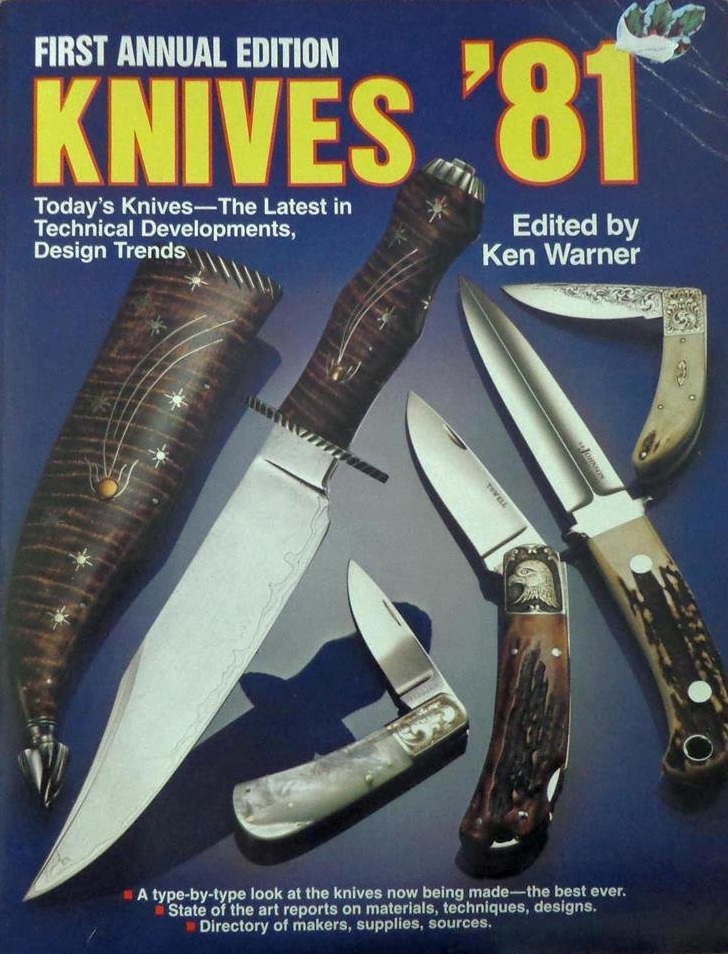
The cover of the knife book that started it all.
For many, Warner’s greatest single contribution to the knife industry was not that first article in Gun Digest, nor his continuing effort to publish knife stories in popular magazines. Rather, it was the publishing of the first Knives annual in 1981 that sparked what became an explosion of interest in handmade knives.
“The big thing with Ken is that he mainstreamed knife interest, and everybody credits him with that,” assessed Cutlery Hall-Of-Famer Bruce Voyles, with whom Warner co-authored the book Knives Digest in 1999. “That, in my opinion, was not his greatest contribution. That came when he got the Knives series started. For the first time you had a listing of not just a particular organization’s members but all knife people. You also had pictures. It was a snapshot of the state of the knife industry at the time, particularly handmades—and the industry was pretty disorganized at the time unless you were a member of the Knifemakers’ Guild.
“I think he gave tremendous publicity to people that had not gotten publicity,” Voyles continued. “Plus, there’s something that most people will not notice about him unless he has edited something they’ve written. He’s one of the most gifted editors I have ever known in any genre. He takes average stuff and makes it sound good, and makes good stuff sound fabulous while making it flow easily. The different thing about Ken’s writing and editing is that Ken made it readable. Most of the stuff before Ken was clumsy, and he made it interesting. He could make the phone book interesting. One of my favorite quotes was when his former wife said some years ago, ‘Ken has the most annoying habit of being right most of the time.’”
Recognition
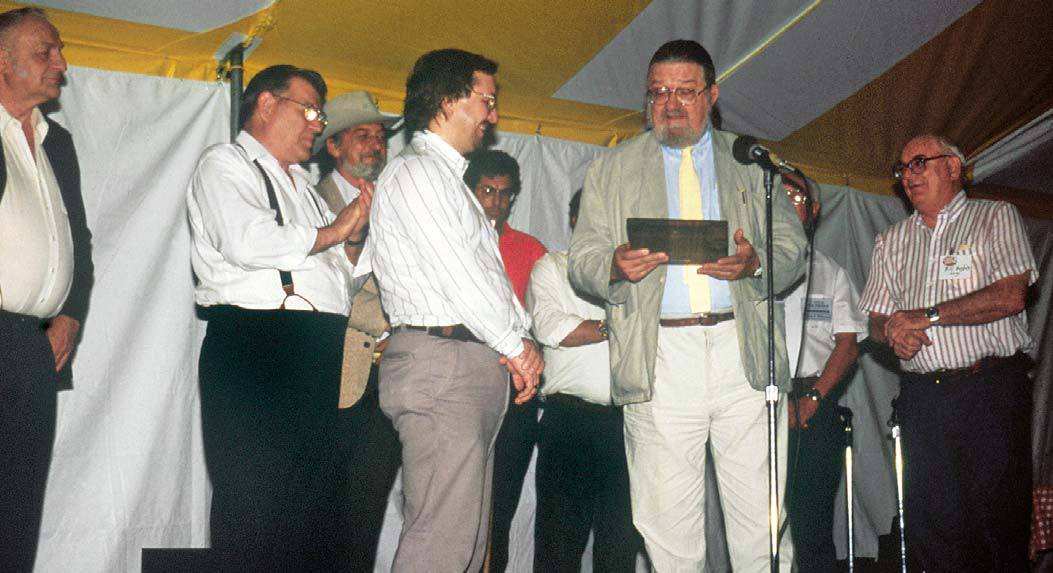
Ken Warner inducts Bruce Voyles into the BLADE Magazine Cutlery Hall Of Fame at the 1993 BLADE Show Awards Banquet in Stone Mountain, Georgia. From left: George Herron, A.G. Russell, Buster Warenski, the inductee, Paul Tausig, Joe Mangiaracina, Warner, Houston Price and B.R. Hughes. All but Tausig and Mangiaracina are in the Cutlery Hall Of Fame. Along with Col. Rex Applegate, Hughes joined Voyles as an inductee that year.
Among the many happenings during his association with Warner, Voyles will never forget that it was Warner who organized Voyles’ induction into the Cutlery Hall of Fame at the awards banquet of the 1993 BLADE Show. It was Voyles’ 40th birthday, and Warner took the stage to announce—to Voyles’ surprise—that he was being inducted by acclamation of all living members of the hall at the time.
When Warner and A.G. Russell were inducted into the hall at the 1988 BLADE Show, each was invited to the banquet to provide the introduction speech for the other’s induction. Neither Russell nor Warner knew they were being honored themselves.
“Ken said at the time that as long as there was a BLADE Show, he would eat the BLADE Show’s rubber chicken,” Voyles grinned. “Then, the next year we presented Ken with a rubber chicken and taped a knife that he liked inside the chicken’s mouth.”
Warner is also a member of the ABS Hall Of Fame and counts the society’s prestigious Don Hastings Award among his many honors.
A Lasting Legacy
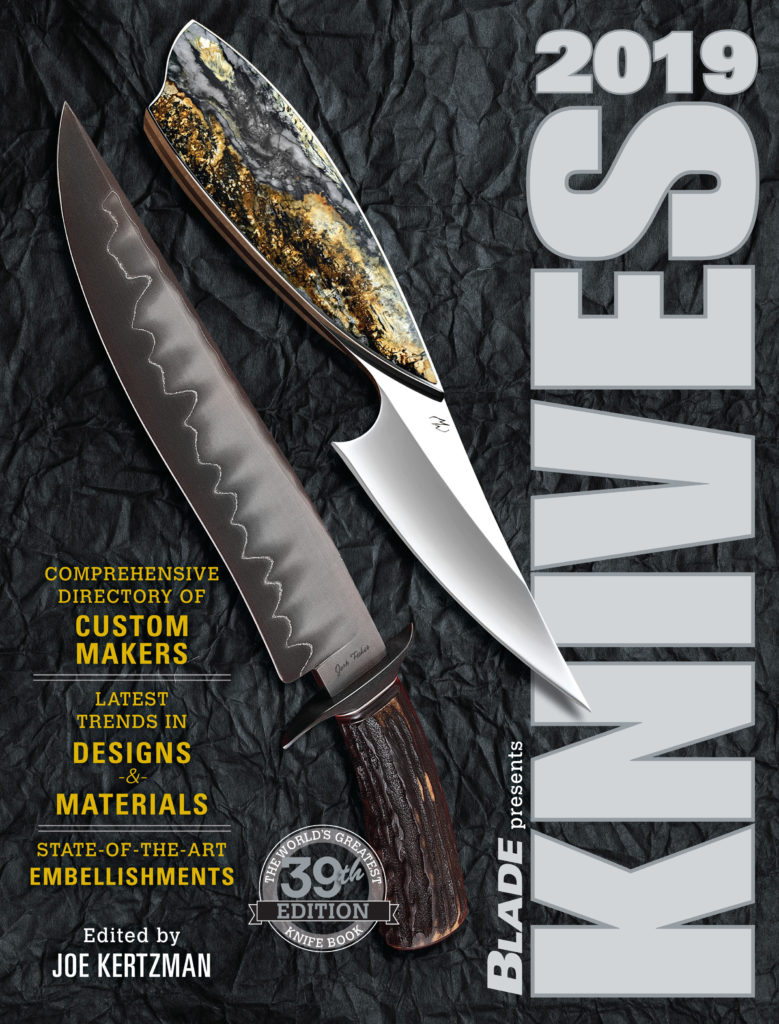
The most recent KNIVES annual book on shelves is KNIVES 2019.
Fowler said Warner was the right man for the successful development and promotion of what has become a virtually indispensable part of the knife industry, a book which will celebrate its 40th anniversary in 2020.
“Thanks to his knowledge, editorial ability, choice of writers and relevant topics, Ken started a legacy to the knife community that continues to this day,” Fowler noted. “Ken knew the difference between a hunter and an art knife, as well as the pretenders, and described each knife eloquently. Many of his one-sentence comments were worth hundreds of words. He inspired many makers through his comments on design, steels, handle materials, leatherwork and scrimshaw. Reading back through my collection of his books, I find many of his comments that I once glanced over were far from simple but offered great understanding and predictions of the future and well being of our community.”
A Renaissance Man
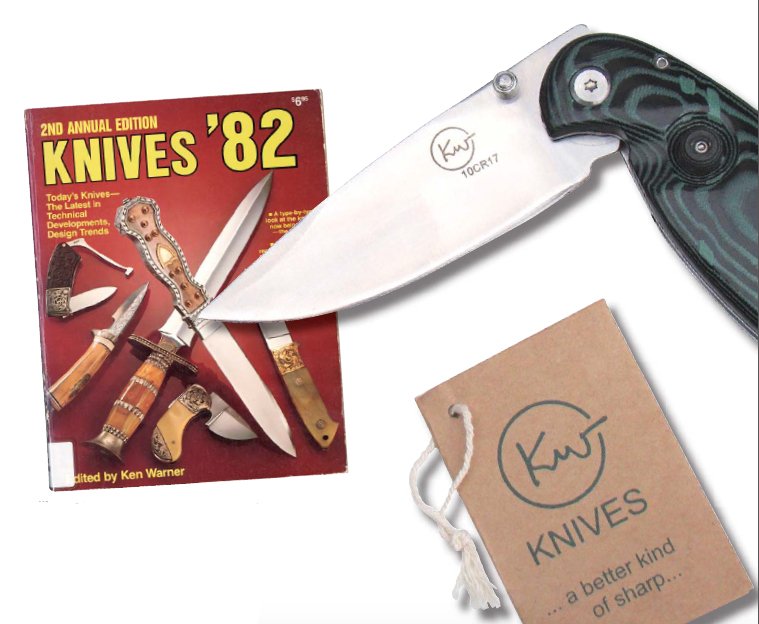
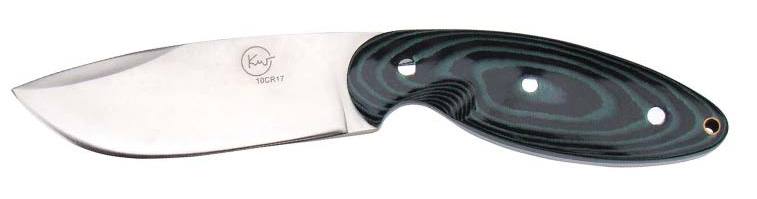
The Warner SGG is a knife of all work, with lots of belly and a good bit of sharp. The blade is 5 inches of 10CR17 and, of course, is convex ground all the way. The drop of the grip puts the edge where it is needed. (Warner photo and caption)
Warner, it turns out, is something of a renaissance man as well. Fowler related sharing a huge bowl of crab legs following the BLADE Show a few years back.
“We debated the styles of Steinbeck and Hemingway, as well as other great authors, what makes poetry great, and the responsibilities of authors,” Fowler recalled. “I learned that everything we write is an echo of our total experience. The more we read and the greater our personal experience, then the better we will be able to express our thoughts. There is no question in my mind that Ken Warner has been, is and continues to be one of the great, if not the finest, of icons of the community of knives.”
Perhaps the greatest test of a true “living legend” is that he has contributed to his lifelong interest, building something where little or nothing existed before, and assuring that his influence will last long after he and his contemporaries are gone.
In the case of Ken Warner and the knife industry, there is no better definition.
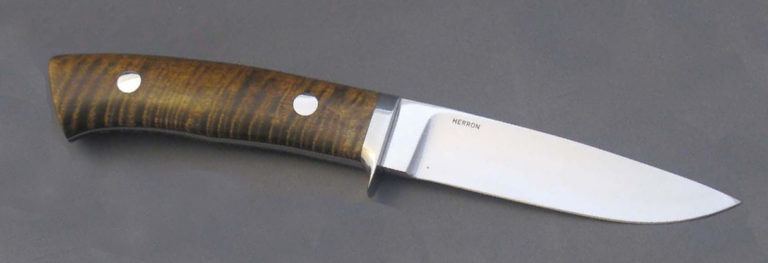
The tapered-tang Model 6 was one of George Herron’s best-known knives and was named in a poll as one of the 20 best knives ever made. The 4-inch blade is ATS-34 stainless steel and the handle is curly maple. Overall length: 9 inches. Herron made this one in his Aiken, South Carolina, shop. (Jay Mealing image)
Without a doubt, he was one of the best custom knifemakers to ever pursue the art. He gave information, expertise and precious time freely to those who wanted to learn. He was a crack shot, spitting in death’s eye during the Korean War and walking out of literal hell to fight another day.
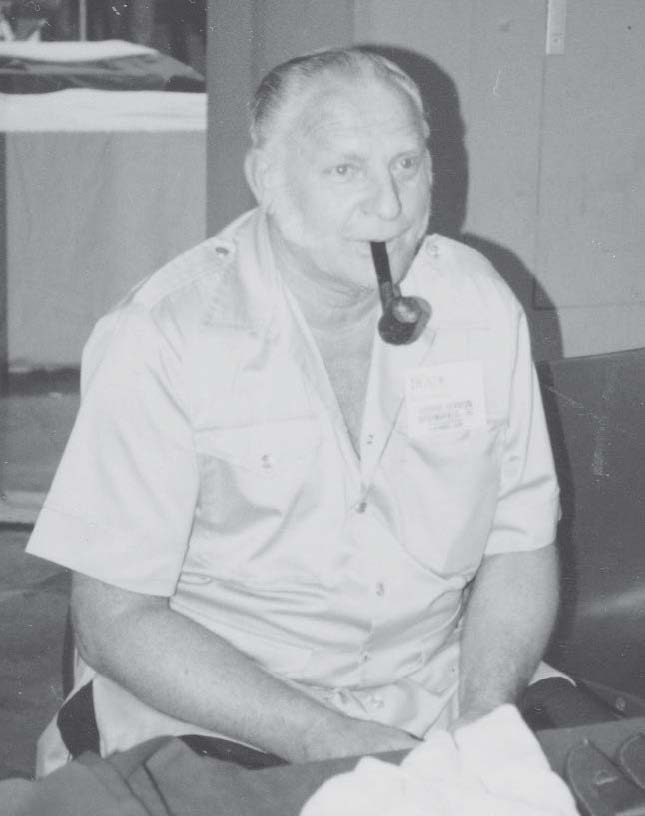
Mr. Herron hardly went anywhere without his trusty pipe.
“George Herron wasn’t just a great custom knifemaker,” began Bobby Branton, a custom maker who knew Herron and collected his knives for many years, “he was a great human being and a great person. You didn’t have to make knives for him to have an interest in you.”
Branton met George and his wonderful wife, affectionately known by the many who know her as “Miss Barbara,” when he was “bitten by the knife bug” and wanted to buy a few of the great maker’s knives.
“I started out as a collector and wanted to buy some John Nelson Cooper knives from a lady in a shop and found out from her that there were a number of South Carolina makers out there,” he recalled.
In his early days as a knifemaker, Branton bought the leading books on the topic by Sid Latham and David Boye. He noticed photos of some of Herron’s knives in Latham’s book and traveled to Herron’s home in Aiken and later Springfield, South Carolina.
“I called ahead of time and asked if I could stop by,” Bobby said. “I bought two knives with all the money I had. We looked around the shop and he was getting ready to go to a show. We went inside and he pulled a big deerskin off the table like a matador, and his inventory was sitting there.”
After Bobby made his first knife, he returned to Herron’s home to get a review of the effort.
“He said, ‘That’s nice, but if you’re going to make a knife, make a knife,’” Branton smiled. “He gave me tips and mentored me.”
A Custom Knifemaker Who Gave Back
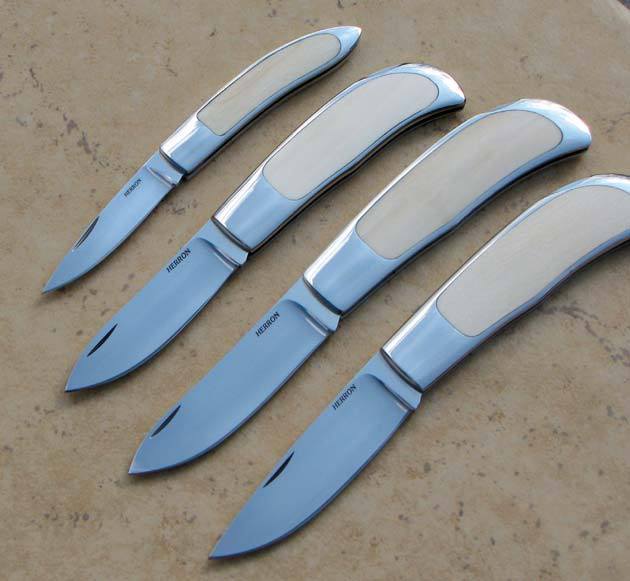
George Herron made many folders and varied his styles quite a bit over the years, including bolstered lockbacks, interframe lockbacks, slip-joint gent’s knives and others. The top knife is a slip-joint gent’s knife and the bottom three are interframe lockbacks. The scales are ivory. (Jay Mealing image)
George did the same for many would be custom makers who came calling. Custom maker Wayne Hendrix worked for him in the 1980s and learned to make custom knives from the master.
“He was a heck of a teacher,” Wayne said. “I tell you right now, if I went out there and picked a maker to work for, I couldn’t have picked a better one in terms of making working knives. His designs were simple and his knives were functional. He was a very intelligent man and he had common sense to go along with it. You don’t necessarily see someone with both that often.”
At the time he started working in the shop, Wayne indicated George was considered one of the world’s top five custom makers. Herron built a reputation of outstanding quality for a fair price, and part of his legacy is that his knives were affordably priced. He sold them by the thousands.
Wayne grew close to George, not just in the knife shop but in other aspects of life as well.
“I hunted with him and painted the inside of his house after they moved to Springfield,” he smiled. “It was super cold that winter, and he had an enclosed two-car garage where we set up his shop. We were a lot alike but he was a lot smarter than I am, and I consider him to be my second daddy. I couldn’t have picked a better maker to apprentice under, and I’m still riding George Herron’s coattails.”
The Secret To The Legacy
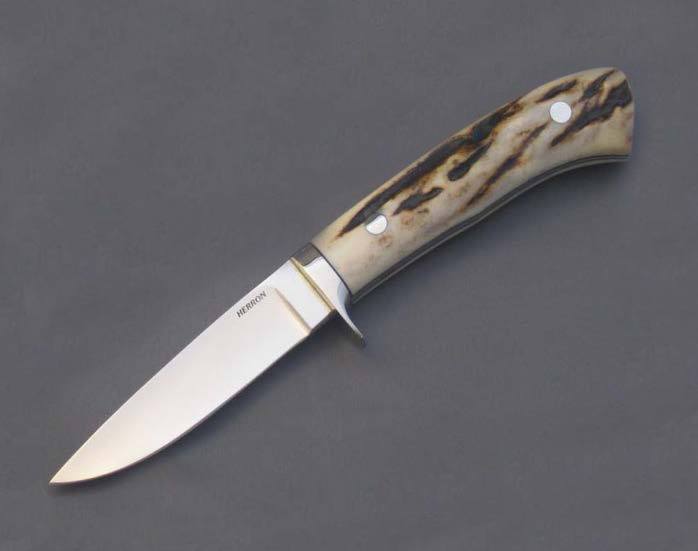
Named after Col. John Bigbie, the Bigbie skinner was another George Herron favorite. The 3.5-inch blade of ATS-34 stainless had a tapered tang and a stag handle. Overall length: 8 inches. This one was made in Herron’s Springfield, South Carolina, shop. (Jay Mealing image)
In an era when knifemakers looked to pricing of individual units as a barometer of their profitability, George was different. He never forgot that working people needed affordable knives.
“One time a committee of Guild members came to his table,” Cutlery Hall-Of-Famer and past BLADE publisher and editor Bruce Voyles remembered, “and they told him that he was selling his knives too cheap. He said, with a few words that I can’t repeat, that he would make and sell knives the way he wanted and they could do the same. Now, George sold most of his knives for $150 to $300, and most of those have doubled or tripled in value. None of the guys on that committee could say that their knives have done that.”
Voyles lighted up describing Herron as “a man’s man, gracious, courteous, or mean as he needed to be in a given situation.”
Perhaps the best tribute anyone could provide to the life and legacy of the great George Herron was Voyles’ effort to be at the only place on Earth he wanted to be when his friend passed away.
“We were in New Orleans at Mardi Gras,” Bruce commented. “On Fat Tuesday morning the telephone rang, and it was Bobby Branton telling me that Mr. George was gone. We loaded up and went home right then so we could attend the funeral in South Carolina. There are very few people I would have done that for.”
Such an effort proves one thing for sure. George Herron, larger than life, remains with those who knew him in undiminished spirit.
Meet Your Knifemaking Heroes At BLADE Show 2019
The world’s largest knife show takes place this June in Atlanta. Learn more here.