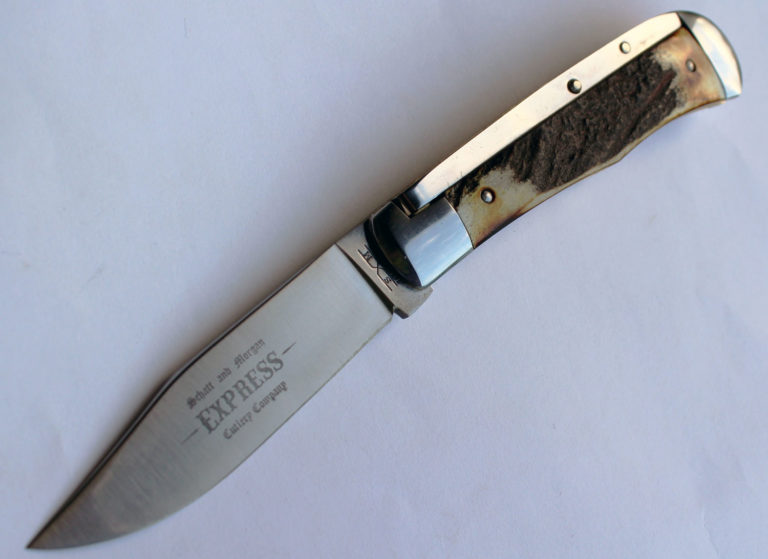
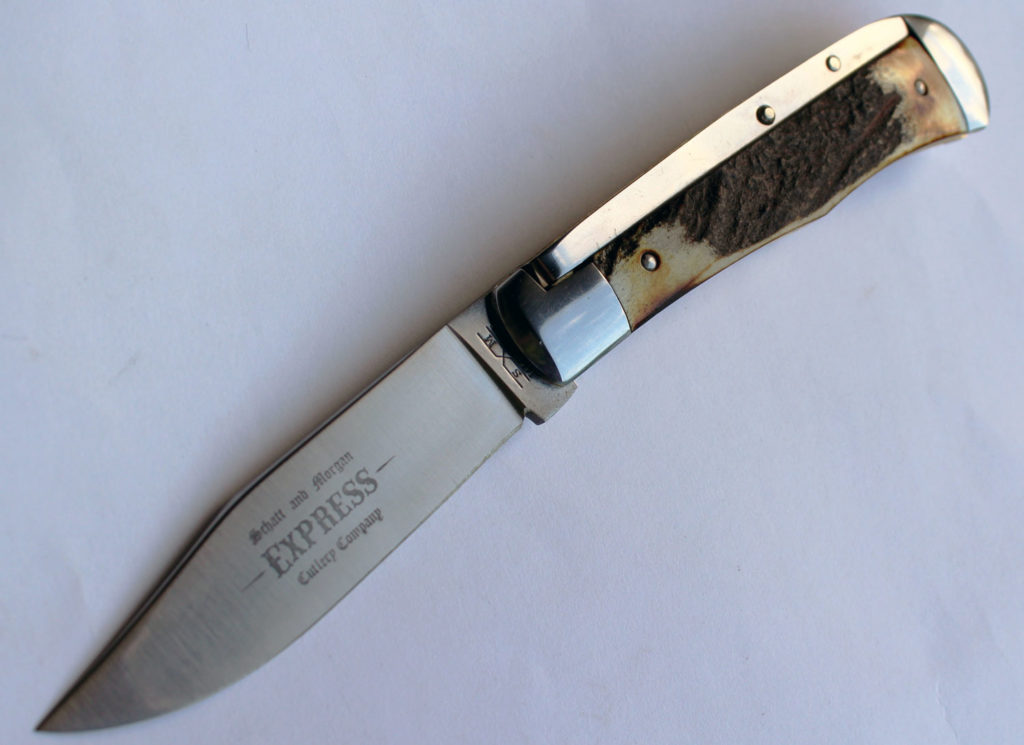
The #3EXP Mountain Man Express lever-lock pocketknife is one of Queen’s most recent models. The 3.75-inch blade is 1095 carbon steel. MSRP: $350.
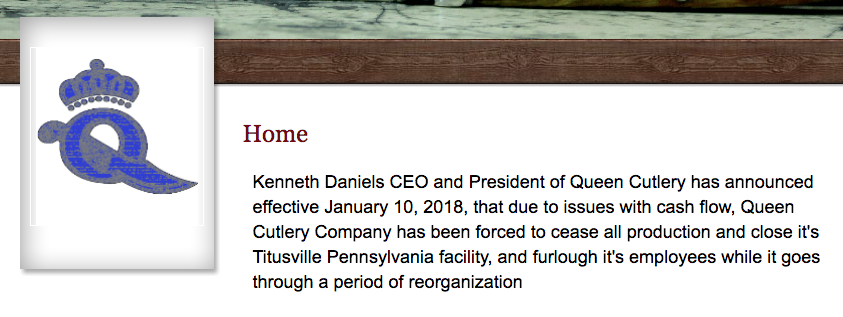
Queen Cutlery Co. has been forced to cease all production and close its facility in Titusville, Pennsylvania, as of today, Jan. 10, according to a Queen press release.
Kenneth Daniels, chief executive officer and president of Queen, cited issues with cash flow as the cause of the cessation of the company’s knife production. He added that all Queen employees will be furloughed while the company goes through a period of reorganization.
The announcement posted on Queen’s website.
According to Queen’s Ryan Daniels, more information concerning Queen’s future will be released in February.
Queen made knives under the Schatt & Morgan and Schatt & Morgan Express lines, as well as the private label lines of Queen Classics, Schatt & Morgan Premier, Tuna Valley Cutlery Co., Cougar Creek Knives and Trestle Pine Knives.
Queen traces its roots back to the old New York Cutlery Co. (Schatt & Morgan), which moved from Gowanda, New York, to Titusville in 1902. The company incorporated as Schatt & Morgan Cutlery Co., Inc., and began cutlery production in January 1903. The Schatt & Morgan knives were made until 1931.
Then known as Queen City, Queen had a number of contracts with the government during World War II and also supplied other cutlery companies in their war effort. Queen City supplied product to the Jersey City Depot from May 1944 through October 1954. In addition, Queen City furnished knives for Williams Brothers Cutlery in California from Nov. 18, 1942, to December 1945.
In 1991, Queen started re-issuing the Schatt & Morgan knives, a Robeson Series in 1995, and a “File & Wire” series in 1998.
Kenneth Daniels bought Queen in 2012 and Queen had been specializing in a wide range of traditional pocketknives since then.
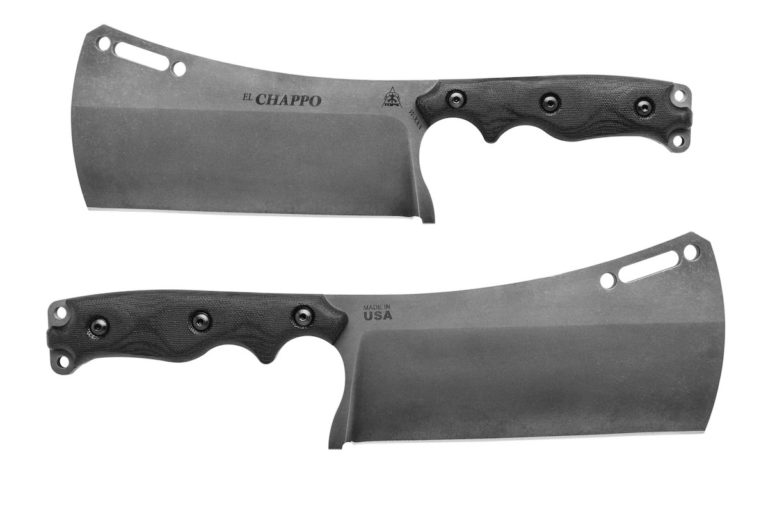
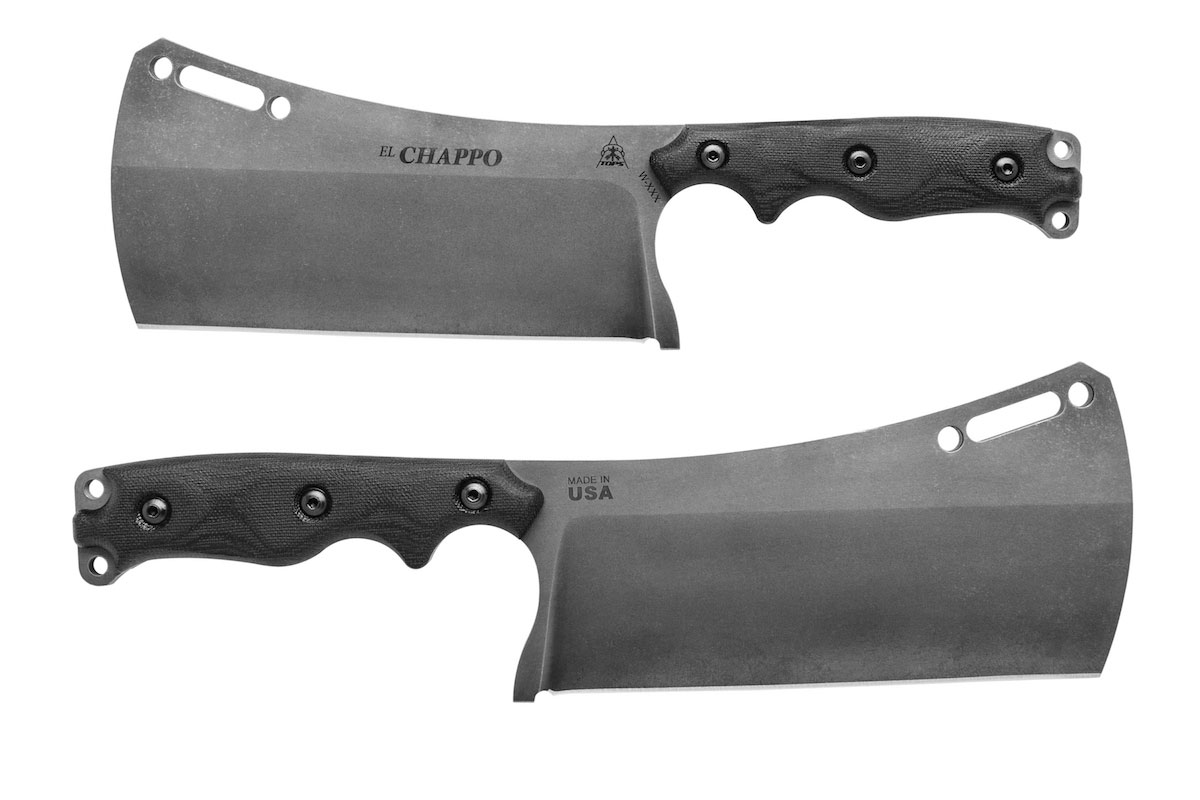
Designed by Leo Espinoza, the El Chappo cleaver from TOPS Knives features a 6-inch blade of 1095 carbon steel in an acid-rain finish.
If you want a handy outdoor blade for camp chores, skinning or a compact tool with enhanced chopping power, check out today’s ever-growing cache of cleavers.
Designed by Leo Espinoza, the El Chappo cleaver from TOPS Knives (above) features a 6-inch blade of 1095 carbon steel in an acid-rain finish. Rockwell hardness: 56-58 HRC. Handle: black canvas Micarta. Weight: 16 ounces. Overall length: 10.9 inches. Sheath: black Kydex.
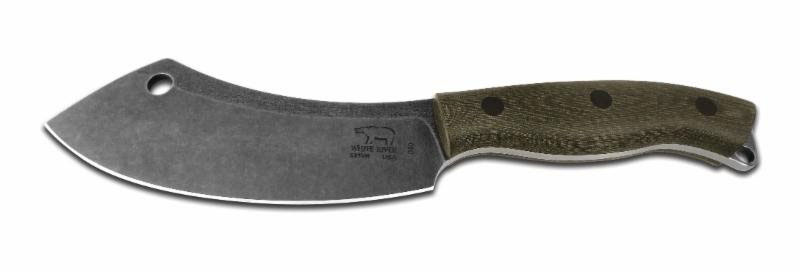
White River Knife & Tool is the latest outfit to join the chop party with its new Clever Camp Cleaver.
White River Knife & Tool is the latest cutlery company to join the party with its new Clever Camp Cleaver. Featuring a 5.5-inch blade of premium CPM S35VN stainless steel, the camp tool comes with a Micarta handle and a heavy-duty leather sheath. Weight: 9.2 ounces. Overall length: 10.25 inches. MSRP: $230.
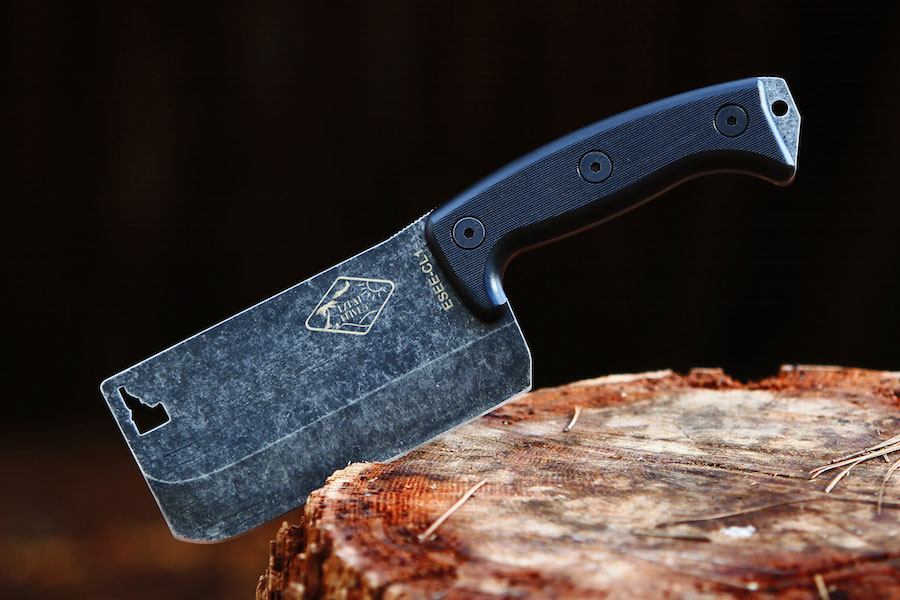
The CL1-Cleaver is one of the latest models in ESEE’s Expat Knives line. The 1095 carbon steel blade is 3.25 inches at its widest and 3/16 inch at its thickest.
The CL1-Cleaver is one of the latest models in ESEE’s Expat Knives line. The 1095 carbon steel blade is 3.25 inches at its widest and 3/16 inch at its thickest. Haft: black G-10. Finish: black oxide, tumbled. Weight: 25.5 ounces. Overall length: 11.5 inches. MSRP: $276.50 (includes a leather sheath).
The Reaver Cleaver from Zombie Tools is a full-tang chopping machine with an 18-inch blade of 5160 carbon steel in a Rockwell hardness of 55 HRC.
The Reaver Cleaver from Zombie Tools is a full-tang chopping machine with an 18-inch blade of 5160 carbon steel in a Rockwell hardness of 55 HRC. Weight: 3 pounds, 10 ounces. Overall length: 31 inches. MSRP: $374.95.
The Quest Custom Knives Custom Kutzu 2.2 Flipper is a micro-cleaver flipper folder with a 2-inch blade of CPM 154 stainless steel.
The Quest Custom Knives Custom Kutzu 2.2 Flipper is a micro-cleaver flipper folder with a 2-inch blade of CPM 154 stainless steel and a sculpted titanium 6Al-4V frame and pocket clip. Closed length: 3 inches.
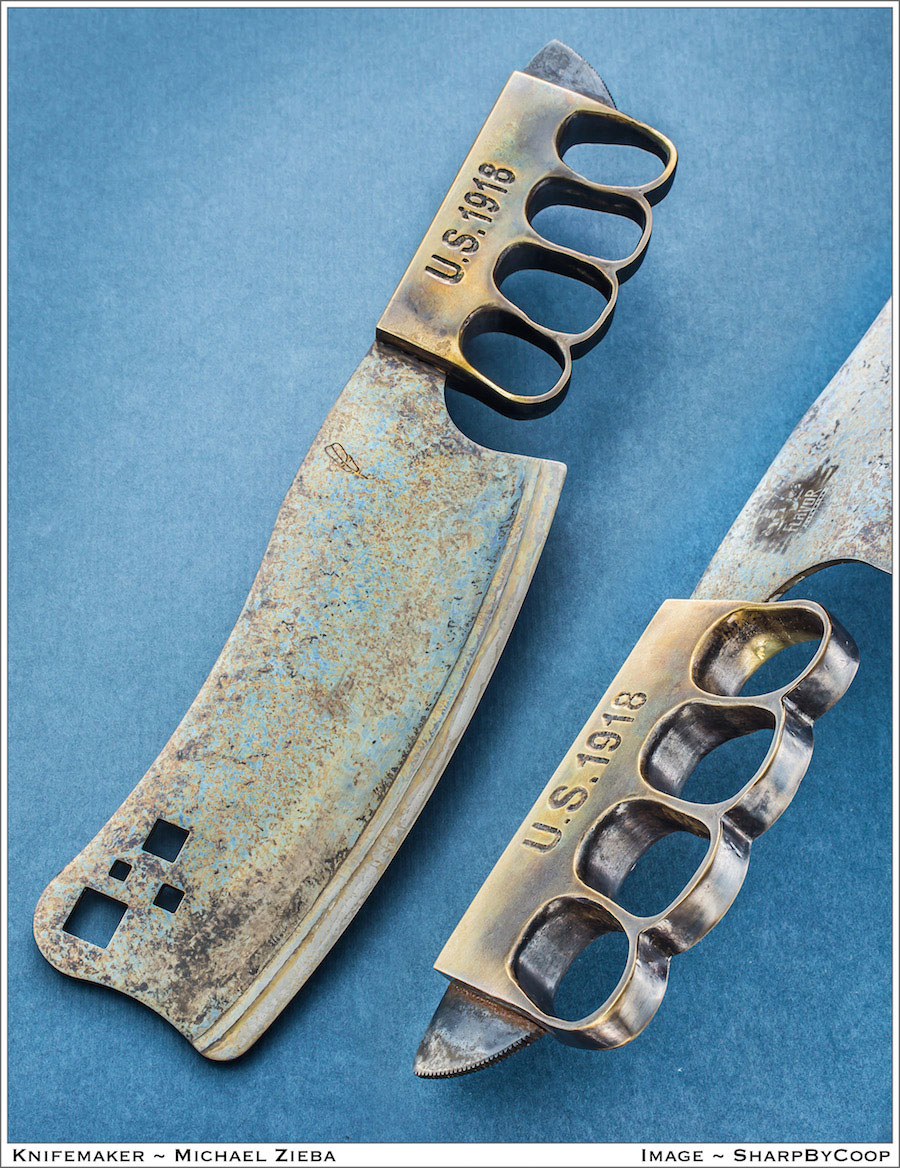
Michael Zieba’s cleaver sports the iconic brass-knuckle-guard handle taken from an original example of one of the most famous blades of World War I—the Trench Knife. (SharpByCoop image)Learn how to make knives with Murray Carter with this terrific knifemaking book. Only $7!
Michael Zieba’s cleaver sports the iconic brass-knuckle-guard handle taken from an original example one of the most famous blades of World War I—the Trench Knife. Zieba custom made the cleaver for Chris Wallace, aka “Flavor God,” a maker of seasonings who is big on the Internet. Zieba met Wallace on Instagram. Wallace supplied him with the original U.S. Mark 1 Trench Knife from his knife collection.
Zieba modified the knife’s iconic handle and integrated it into the cleaver blade, which is 52100 ball-bearing steel forged in a san-mai construction. He achieved the blue and gold patina with water and vinegar. “Sometimes you get blue or you may get another color. It depends,” he said. “You never know how it will come out. It’s just a reaction to the metal.”
The cleaver is one solid piece with a skull-crusher pommel. The square holes in the blade are for aesthetics. Zieba has done the blades with egg-shaped and round holes as well.
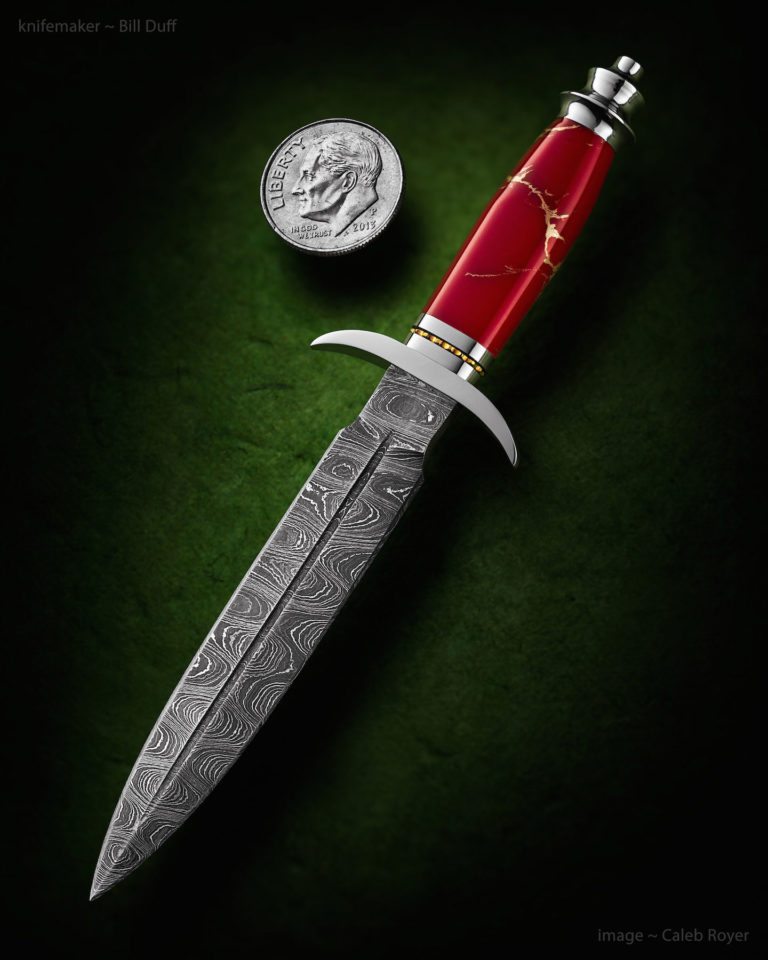
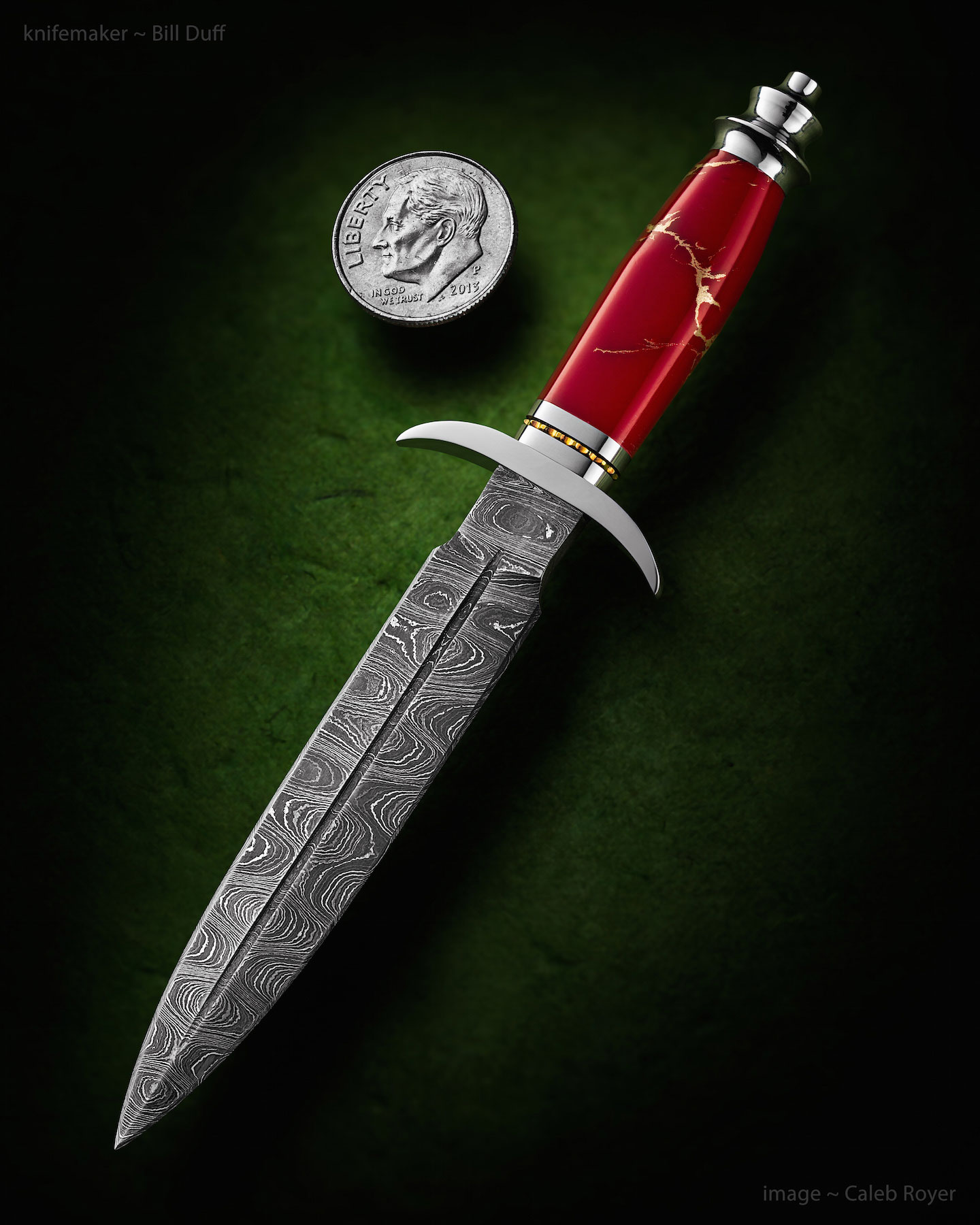
Brilliant red jasper caps off the grip of Bill Duff’s miniature dagger. (Caleb Royer image)
One of the better ways to celebrate Old Rock Day (you do celebrate, don’t you?) is with a custom knife sporting a handle of anything stony or fossilized.
What is Old Rock Day?
Celebrated on Jan. 7, Old Rock Day salutes rocks of all kinds. In some locales, children are encouraged to discover their first “pet rock,” and festivities may include painting and decorating the “faces” of rocks. Some gather attractive pebbles and stones to make original pieces of jewelry. Some build rock gardens, and some towns and villages hold competitions for the best-looking rock garden.
BLADE has You Covered on Old Rock Day
To avoid getting your Old Rock Day off to a rocky start, we recommend you check out some stone-cool knife handles made of rocks and fossilized materials. You may not get your rocks off, but, if you love knives like we do, you will most definitely rock on.
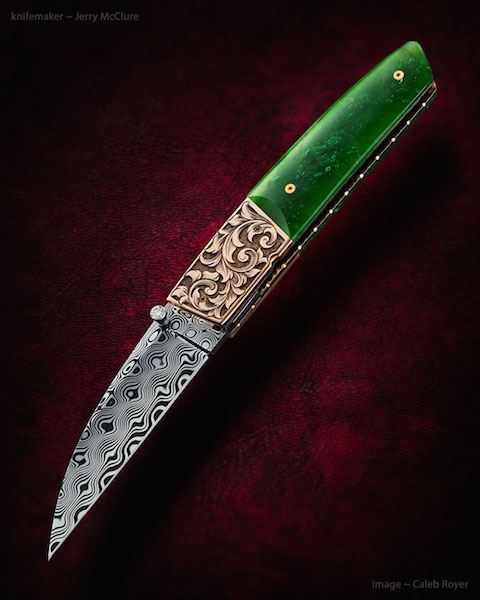
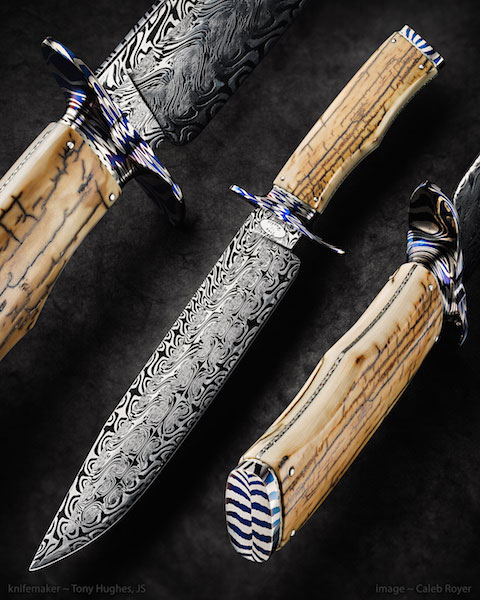
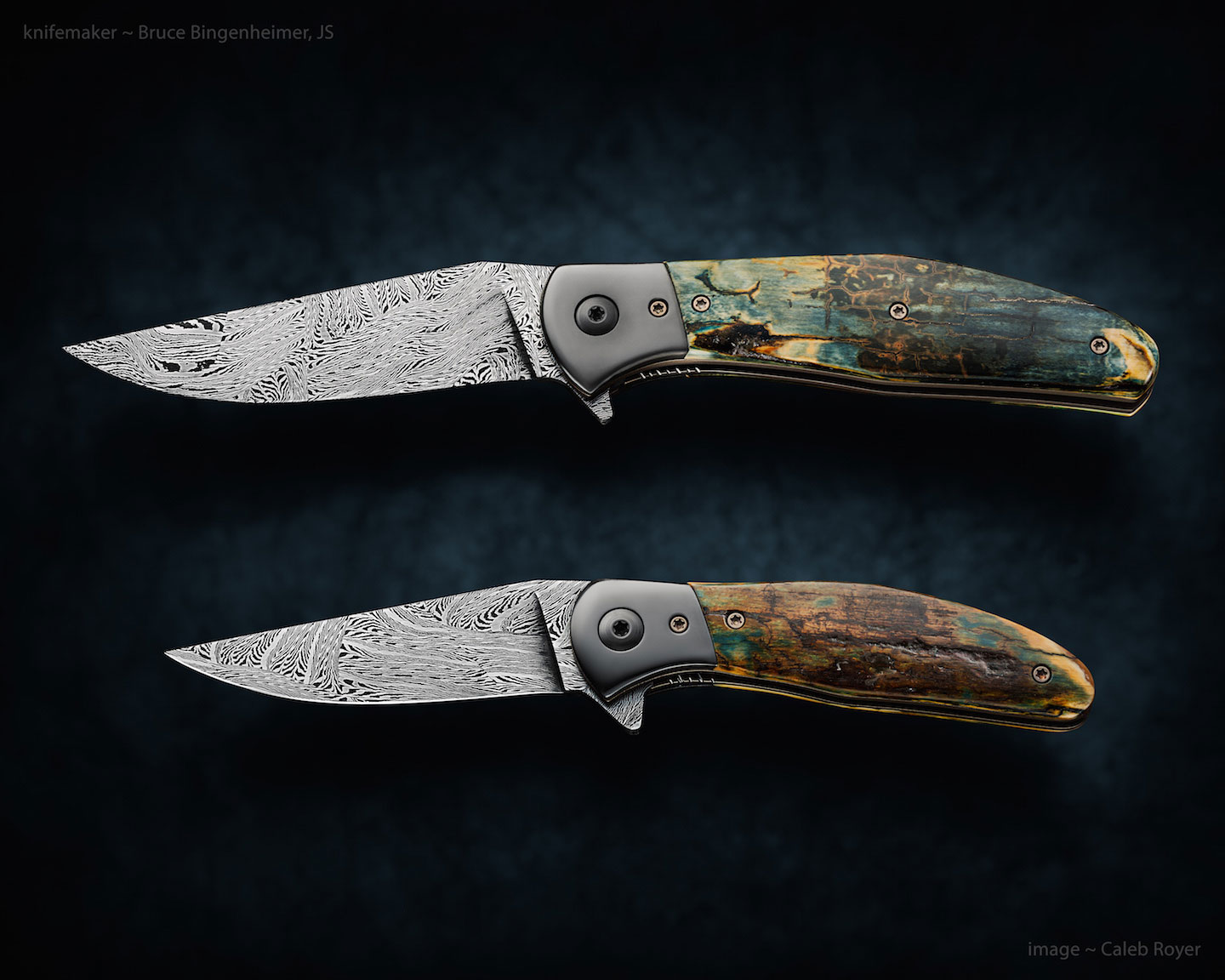
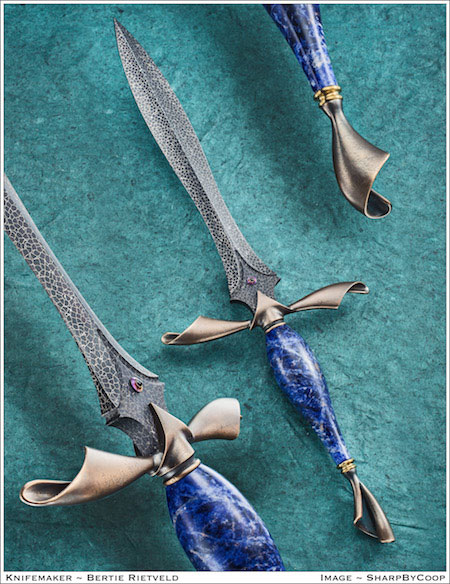
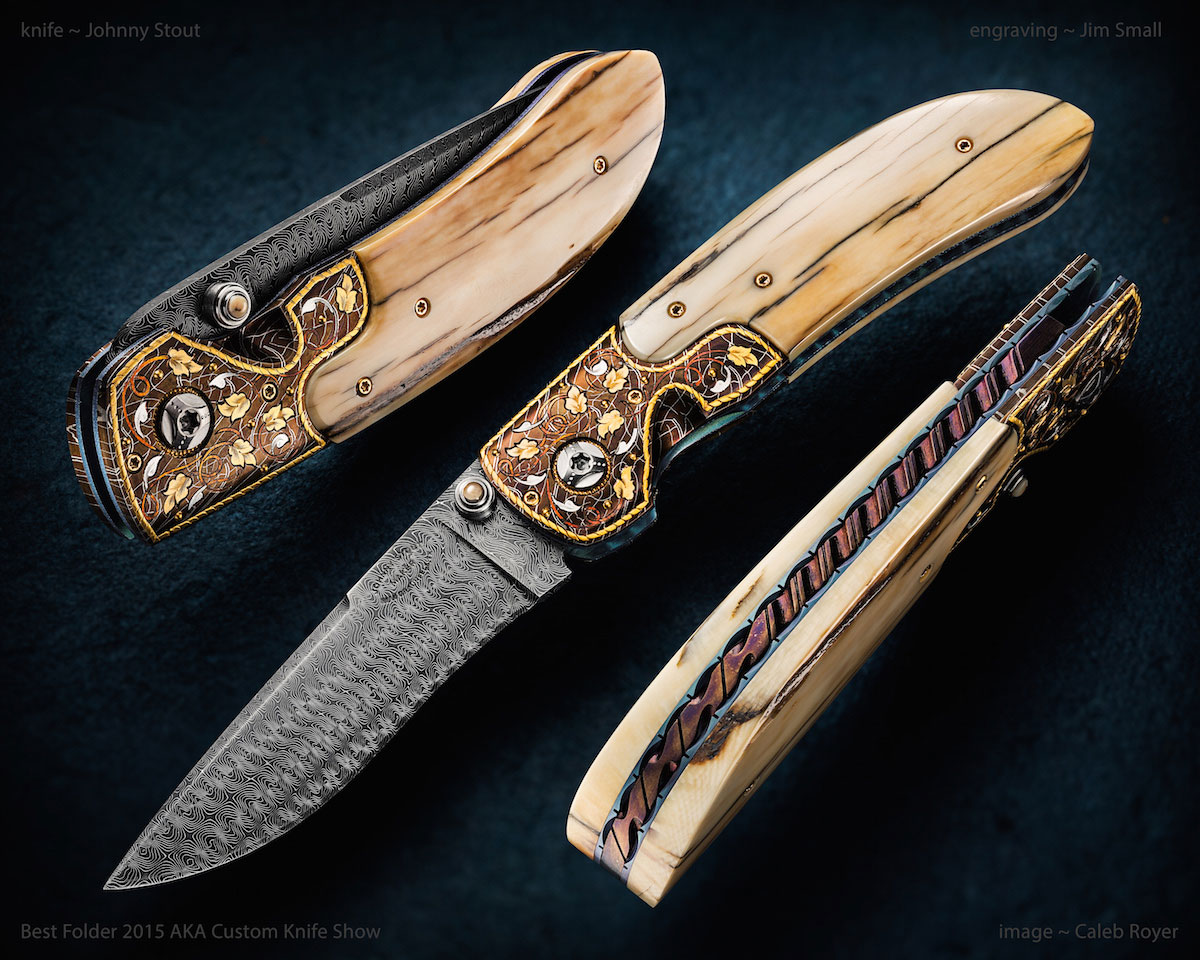
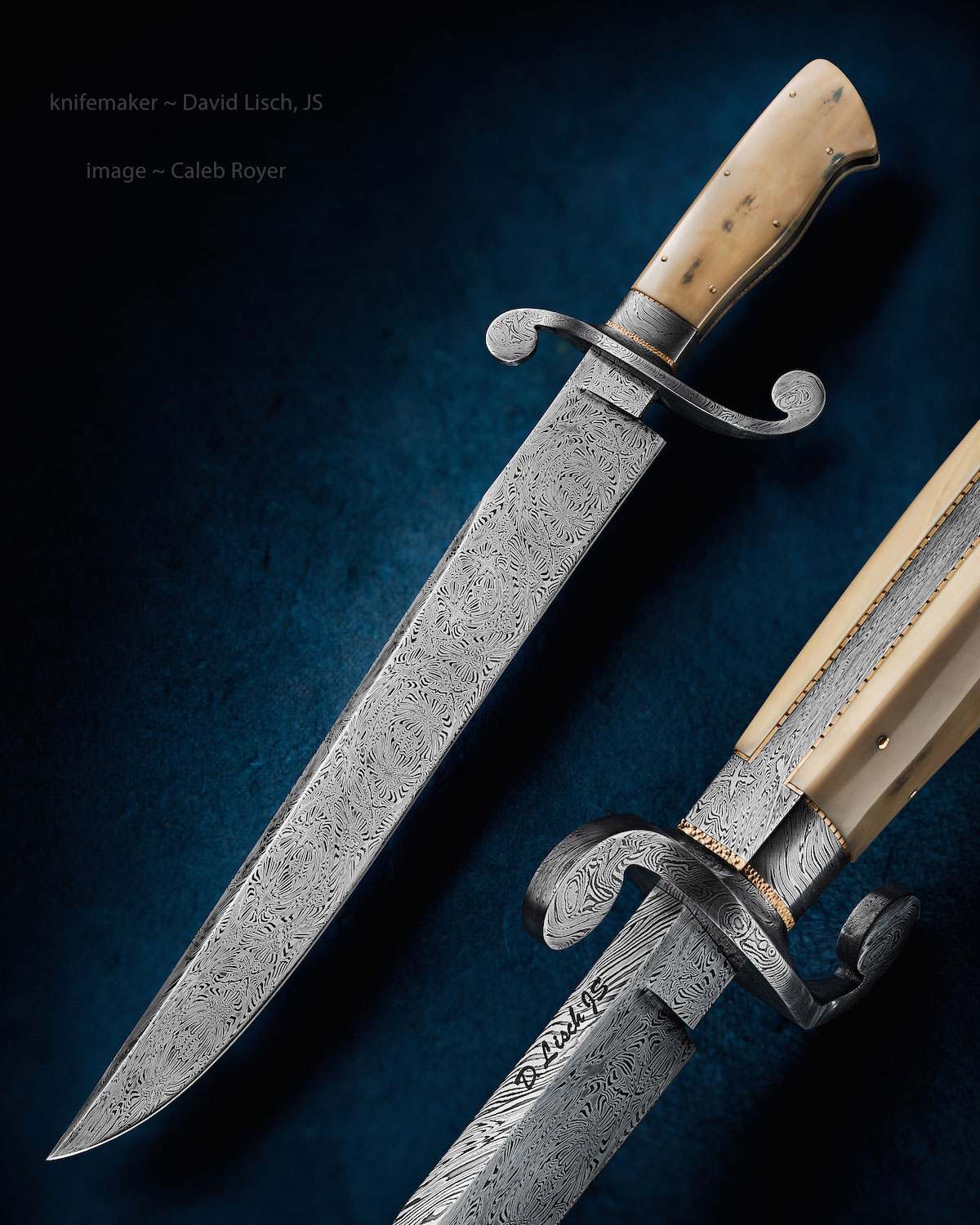
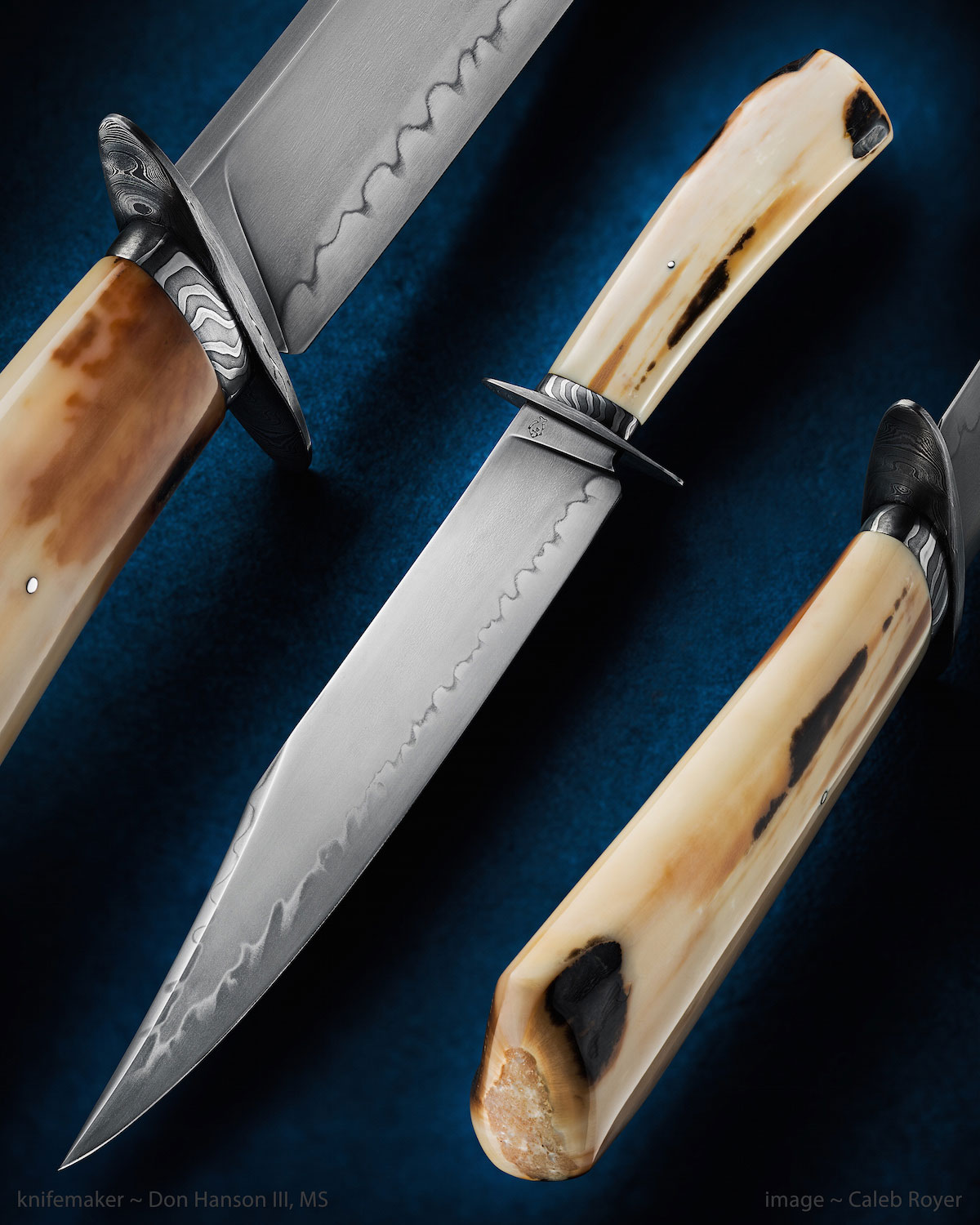
Jerry McClure outfits his Little Mama Folder with a handle of green nephrite jade. (Caleb Royer image)Mastodon ivory comprises the grip of a Tony Hughes bowie in a 9.5-inch blade of Turkish twist damascus. (Caleb Royer image)Bruce Bingenheimer’s BingaLor folders have handles of mammoth ivory. (Caleb Royer image)Sodalite stone caps off Bertie Rietveld’s Pinnacle dagger in nebula damascus. (SharpByCoop image)The Protégé by Johnny Stout boasts mammoth ivory scales and fileworked titanium liners. (Caleb Royer image)Ancient walrus ivory in a forged integral frame rocks the Slim Bad Fighter by David Lisch. (Caleb Royer image)Don Hanson opts for fossil ivory on his clip-point bowie with handsome hamon. (Caleb Royer image)
See More Beautiful Knife Photos
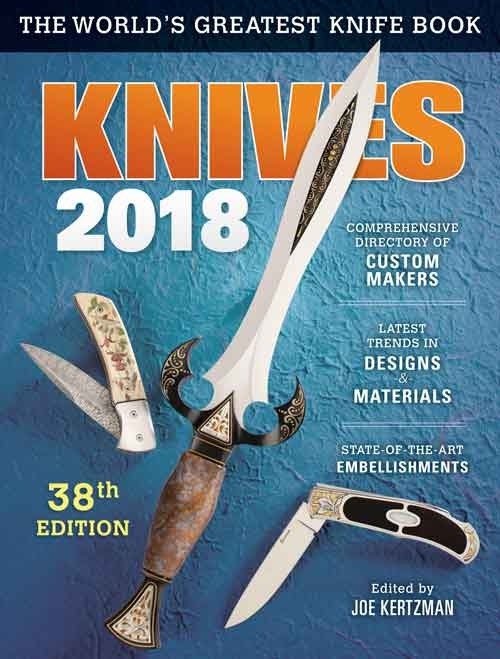
Knives 2018 features full-color photos of the world’s best custom knives. It’s THE book for knife collectors, knifemakers and anyone interested in functional art.
David Morrell, author of the novel First Blood, based the book’s title on an old dueling term.
“I thought of it as a kind of duel between the characters, and there’s a dueling term about drawing first blood,” he explained. “In some duels the person who drew first blood would be the victor, so there was a kind of irony here of who drew first blood and who was going to win in this harrowing conflict.”
Rambo is More Canadian than American
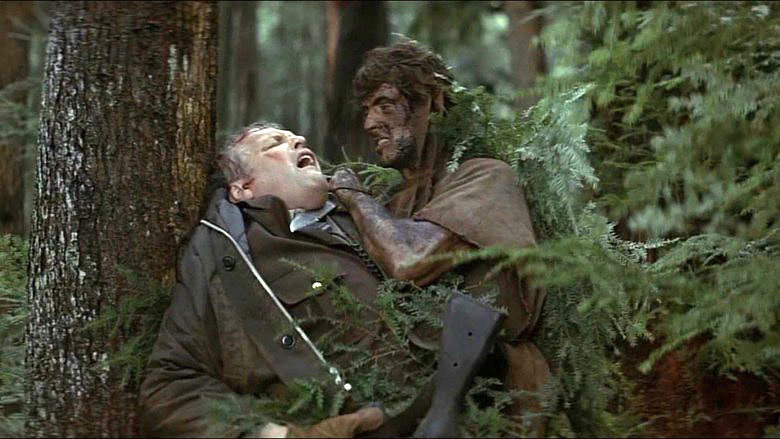
Though set in Kentucky in the novel First Blood, the movie’s locale was supposedly in the American Pacific Northwest. Actual filming was done in British Columbia. (image via imdb.com)
Born in Kitchener, Ontario, Canada, Morrell today is an American citizen.
The setting he chose for the novel, First Blood, was a wilderness area in Kentucky called the Grand Canyon of the East. However, Carolco, the production company that made the First Blood movie, wanted to do the flick in British Columbia, partly for financial reasons.
Meanwhile, for the purposes of the film, the locale would be identified as the American Pacific Northwest.
“It’s ironic that a Canadian created one of the most recognizable American icons,” Morrell noted. “It’s doubly ironic that the movie adaptation of First Blood was filmed in Canada’s British Columbia, even though my novel is set in Kentucky.”
Uncle Sam Makes an Appearance
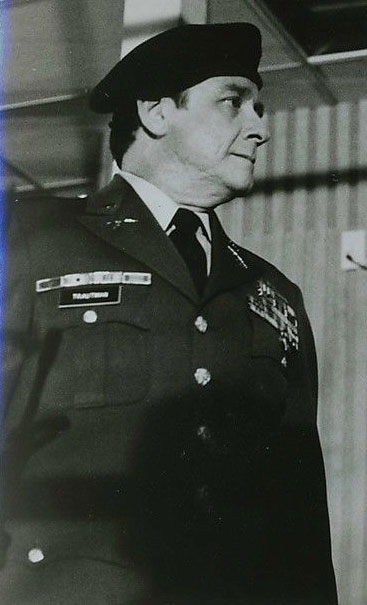
The First Blood character of Col. Sam Troutman, played by Richard Crenna in the movie, was inspired by an American icon. Can you guess which one? (image via imdb.com)
Morrell gave Col. Sam Troutman, played by Richard Crenna, the name Sam because he represents Uncle Sam. As Morrell noted, “I saw him as the system that had created Rambo.”
You Only Got Half the Story
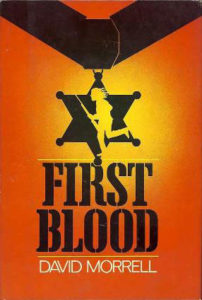
The original cover for “First Blood.”
Originally, First Blood was about 600 pages long. Morrell didn’t like it and so went back and started reading it again. He found a chapter he didn’t like and deleted it. He read the book again and found it moved faster as a result of the deletion.
“I had digressions for one of the deputies, and the man who flew the helicopter and so many different viewpoints in it that I began cutting this chapter and that chapter and found that all I had to do was have the alternating sections between Rambo and the police chief,” he said. “So I probably lost about 300 pages doing this. It was like sculpting, knocking bits of granite off to create a statue. I had written and written so much that I learned that by cutting back I got an intensity that I hadn’t expected. So it was a big lesson for me.”
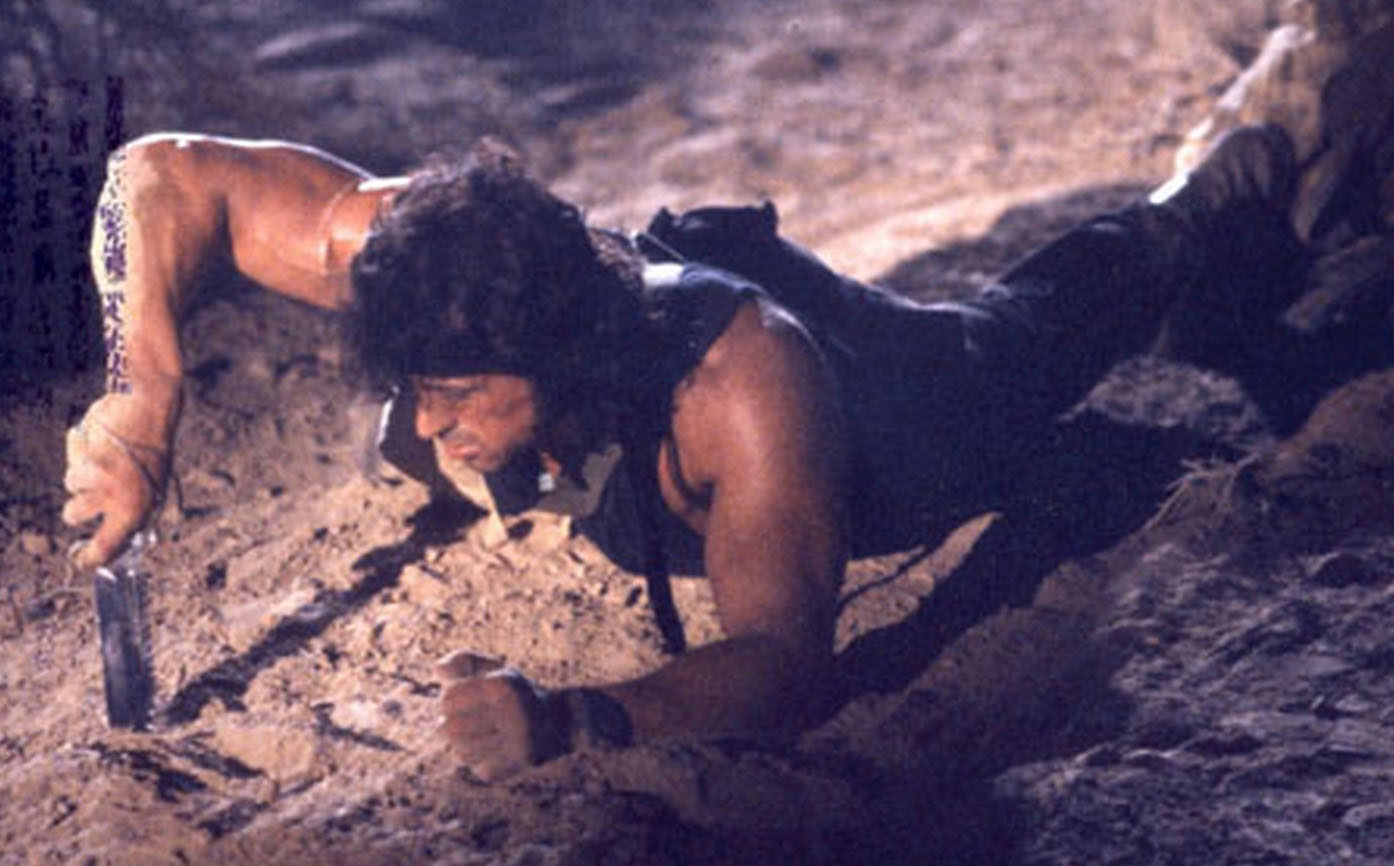
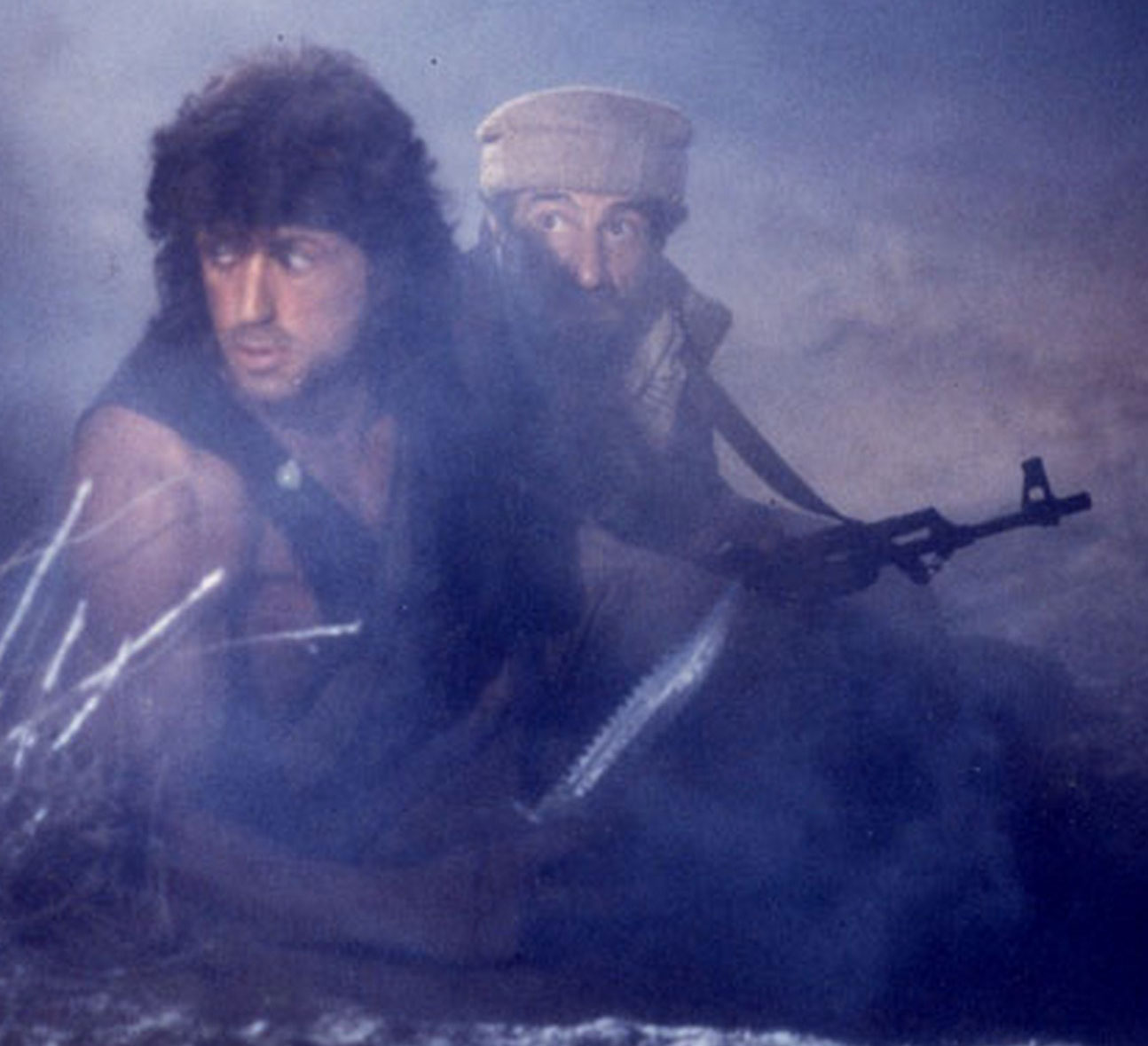
Rambo III was the first Rambo movie for which Gil Hibben made knives, taking over from Cutlery Hall-Of-Famer Jimmy Lile, who made the knives for the first two Rambo films. When Stallone contacted Hibben about doing the knife for the third film, Hibben made a prototype hollow-handle survival knife with sawteeth on the spine.
However, Stallone decided he wanted something different and opted for another of Hibben’s designs, the now famous Rambo III bowie. However, the minefield scenes for the third movie already had been filmed with Stallone using the first design, the knife known as the Rescue Mission Knife.
On the 25th anniversary of Rambo III, Hibben teamed with award-winning knifemaker Vaughn Neeley to fashion a limited edition of 100 specially marked, mirror-polished and serial-numbered 25th anniversary Rescue Mission knives. Go here for more information.
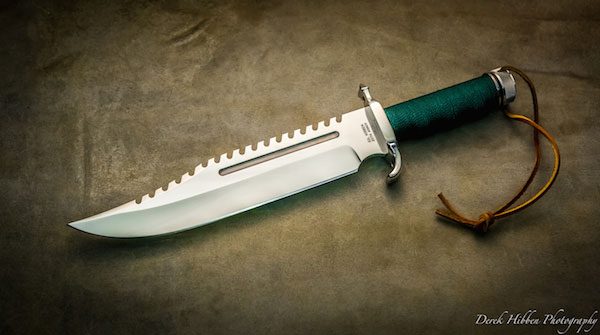
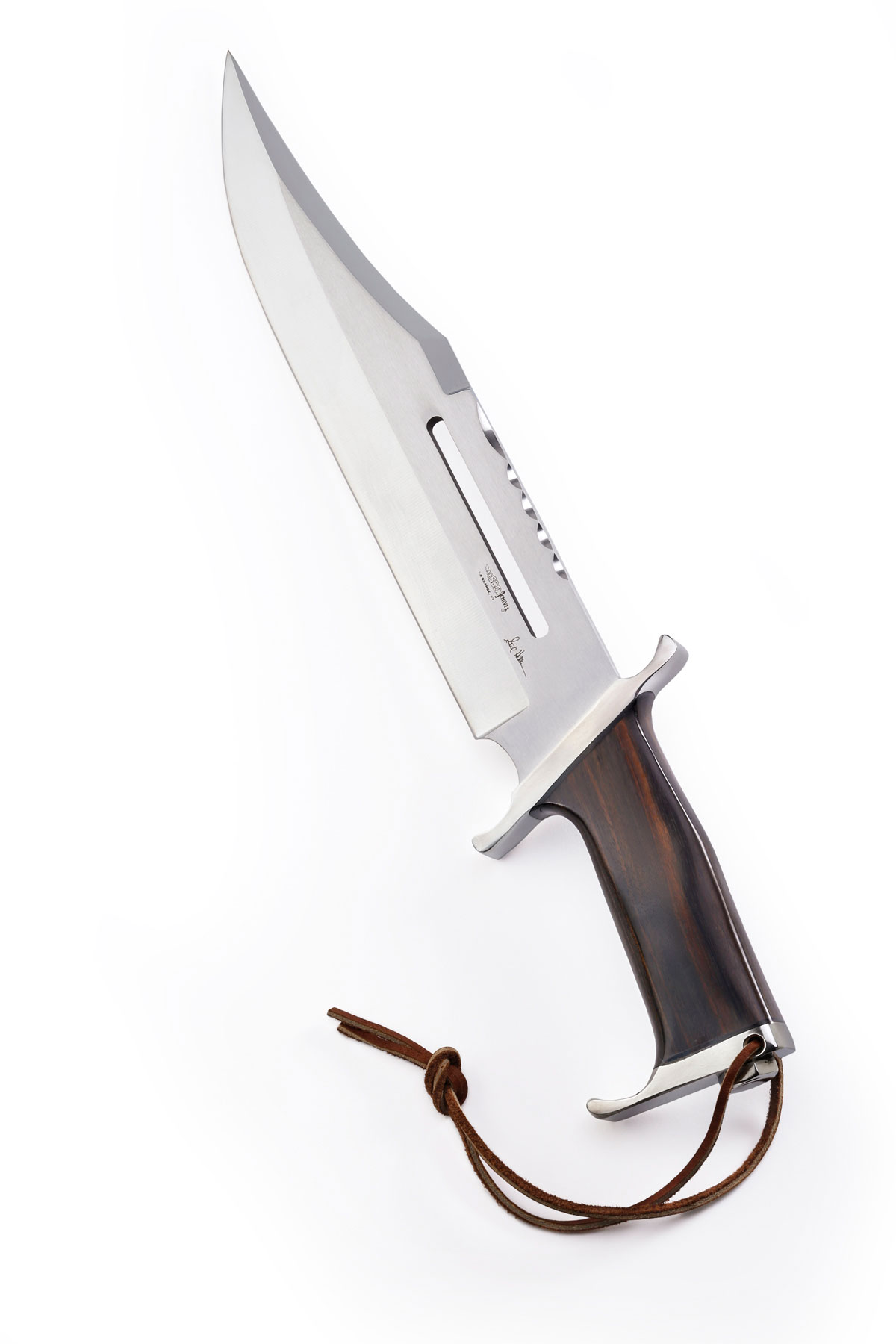
Instead of the Rescue Mission Knife, Stallone opted for Gil Hibben’s Rambo III bowie (shown here) as the featured knife for the third film. Stallone had more input on the design of the bowie, including the long cutout in the blade. (Kris Kandler image)
Editor’s Note: This article originally appeared in the February 2008 issue ofBLADE magazine, which you can download here.
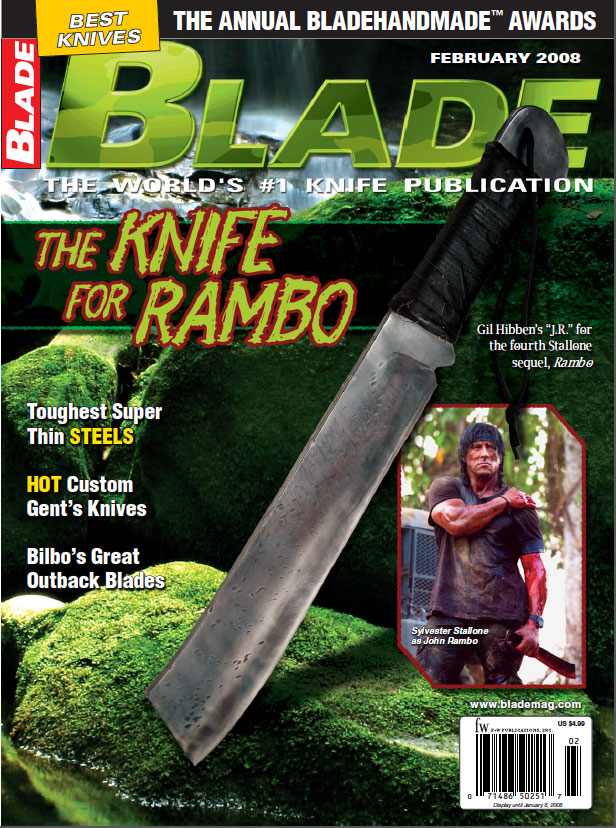
Over a quarter century after John Rambo burst onto the big screen and changed cutlery history forever, it is near time for the character created by author David Morrell to cut a worldwide cinematic swath with his indomitable knife once again.
As BLADE® was going to press, the fourth installment of the Rambo movie series, Rambo (aka Rambo IV) a Lionsgate film, was due to be released at movie theaters on Jan. 25, 2008. Sylvester Stallone wrote the screenplay, directs and stars in the movie that finds Rambo living a secluded life working as a snake catcher in Thailand some 26 years after Rambo first appeared in First Blood.
Rambo Knives: A Brief History
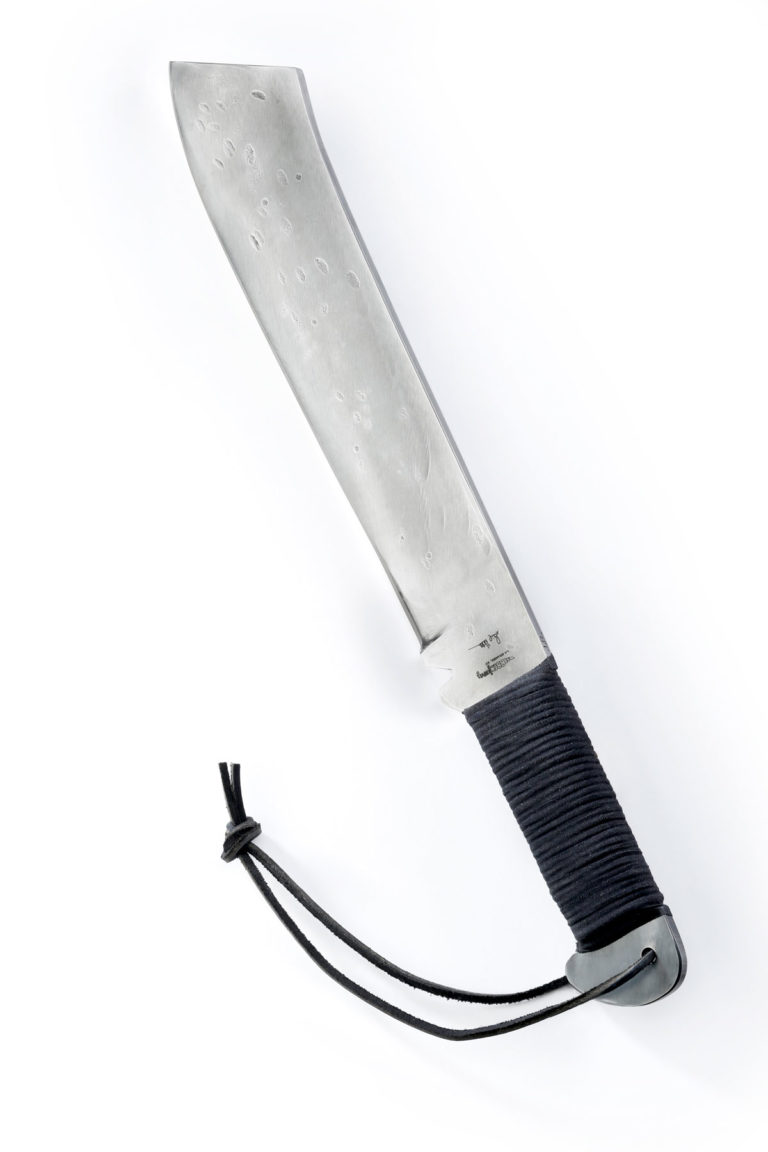
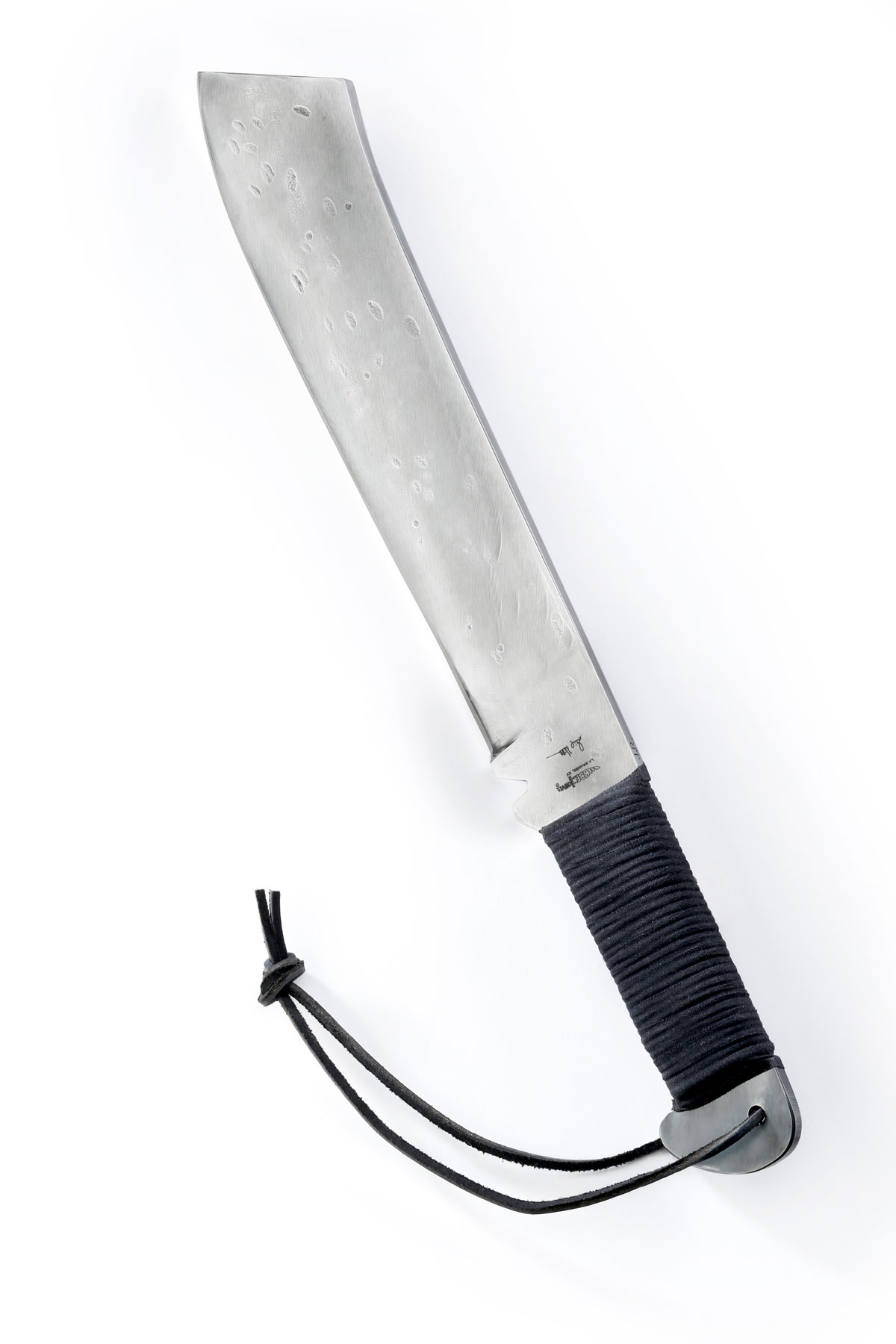
An isolated shot of the “J.R.,” the knife designed by Gil Hibben for the fourth Rambo film.
For Rambo III (1987), Stallone called on Cutlery Hall-Of-Fame knifemaker Gil Hibben to create the knife.
A Series of False Starts
For Rambo, Stallone once again called Hibben to help create a new knife for the movie. Stallone had a basic idea of what he needed and the knife was written into the script as an integral part of the movie. Hibben made at least five prototype versions of the piece before finally arriving at the design that will be used in the film.
In October 2006, Hibben began designing the knife. At first, the blade exhibited characteristics of the Rambo III model.
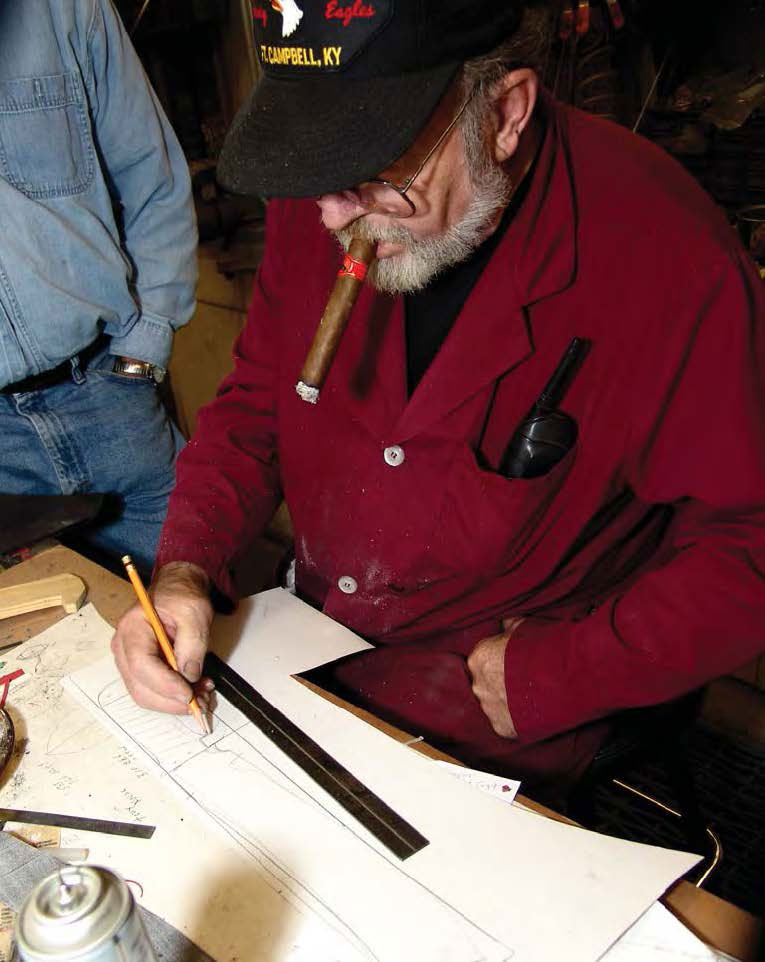
Hibben designs the knife in his shop in LaGrange, Kentucky. (photo by the author)
“My first one had a slot in the blade [as in the Rambo III knife] but in a machete or old Chinese sword design,” Hibben recalled. He also made a modified version in which he removed the top lug of the guard.
Stallone reportedly liked the blade design but said it was “too perfect.” He wanted something much more crude looking, as if it had been pounded out quickly from the limited resources Rambo has at his disposal in the movie.
It was back to the drawing board for Hibben.
“The blade size was originally 10 inches and Sly faxed me some pictures of some of the knives he’d seen from the cutting competitions,” the Cutlery Hall-Of-Famer explained. “He liked that style, so I made one up. It evolved from a 10-inch blade to a 12-inch one. It evolved from several sizes and shapes until I got what he liked.”
To make it authentic, Hibben forged the next few prototypes from pieces of a truck leaf spring. Since there was agreement on the basic blade design, next came the question of the handle and finish of the knife.
Hibben thought about what materials might be available to the character in the movie. He considered leather, wood, paracord, tape and even seat-belt webbing for use on the handle. The second prototype had a wooden grip wrapped in green paracord and an enclosed sheath. Hibben also made a third prototype with a leather-wrapped handle.
Again, the studio said it needed something more crude looking.
There’s Crude, and then There’s CRUDE
Sylvester Stallone, seen here playing John Rambo in the fourth movie in the franchise, holds Hibben’s final version. (photo by Karen Ballard from Rambo®, a Lionsgate film)
Prototype number four was a very simple design with a cord-wrapped handle. Hibben made one with green cord and one with black cord. It was close to being right, but the finish was still too slick to have been quickly forged as it is in the script.
Finally, Hibben decided that, considering John Rambo’s skills and experience and the materials that the title character would have available, the knife would have a cord-wrapped handle, perhaps covered with tape for additional grip. The blade would be marked with depressions from the hammer blows from being forged quickly without time or resources to put a fine finish on the blade.
“So I took it out of the heat treat and beat the heck out of it,” Hibben recalled. “I really made it look like Sly made it.”
Following the Rambo knife tradition, it would be a large, heavy blade with a thick spine. Assuming that Rambo would not have time or materials to make a new sheath but would still have the sheath from his previous knife, he opts to cut the end of the old Rambo IIIsheath to accommodate the larger blade and broader tip of the new knife. This is the knife and sheath in Rambo.
Rambo IV Knife Specs
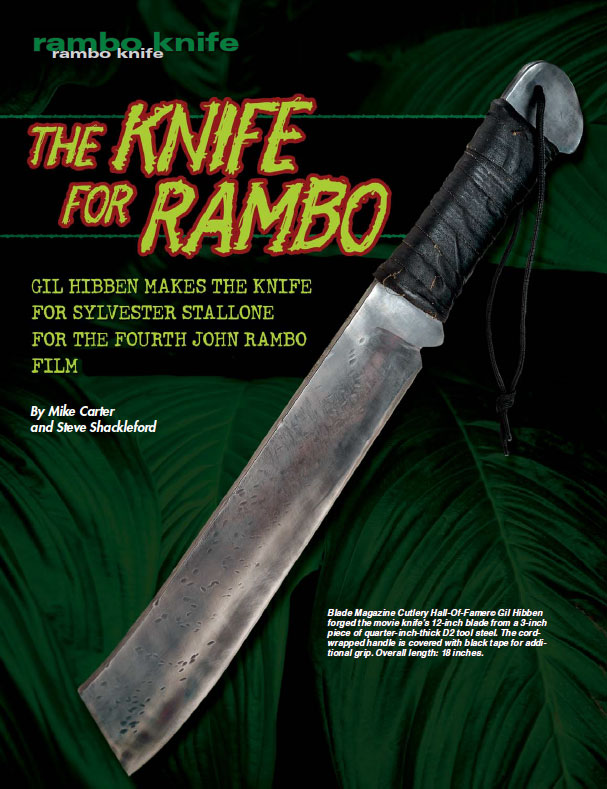
The final version, the “J.R.,” appeared on the cover of the February 2008 issue of BLADE. Click to download the issue.
The 12-inch blade is forged from a 3-inch piece of quarter-inch-thick D2 tool steel. As you might imagine, such a knife is somewhat heavy—2 pounds worth—so Hibben made some lightweight aluminum versions for Stallone to use when need be for safety’s sake during filming.
Since the movie was shot in the corrosion-inducing environs of the jungle, Hibben said he put Renaissance Wax on the non-stainless D2 to protect the blade from rust.
“There was a lot of rain there,” he noted. “Luckily they got out before the monsoons hit.”
The cord-wrapped handle is covered with black tape for additional grip. Eighteen inches overall, the knife comes in the modified Rambo III sheath.
Collector Pricing Reference
At press time (in 2008), Hibben was offering a handmade version of the knife in all the original materials—though with nicer sheaths—for $1,250. It is called the “J.R.” There will be 100 in all, with 25 of them already having been sold.
Knives are a dominant force in many of our lives. There are the classic designs, the valued collectibles and, perhaps most of all, the users. Of the latter the ones I remember in a special way are those with which I accidentally cut myself. Of those cuts, three stand out.
Cut Number 1
I was 11 or so and rode a Western Auto Wildcat bicycle—the kind with the Hollywood handlebars and banana seat with sissy bar—most everywhere. At the time the oil company then known as Esso, today’s Exxon, had the promotion “put a tiger in your tank” with Esso gasoline.
To help sell it they gave away furry toy tiger tails with elastic looped straps people attached to their car gas caps so the tails would fl op in the breeze as the cars motored along.
I had the bright idea that I would cut the looped strap of one of the tails in two and tie the resulting straps around my banana seat sissy bar so the tail would fl op in the wind as I rode my bike. (To my later chagrin, I didn’t know how to do the old loop-tie trick back then.)
I pulled a large serrated knife from the kitchen drawer and proceeded to cut the strap—and also the base of my left index finger. It was one of those ragged-jagged cuts, and, when Dad walked in and saw it, I thought he was going to come un-gas-capped, so to- speak. Oddly enough, I don’t remember the cut hurting that much.
Anyhow, five stitches later I had learned just how fragile human flesh is.
Cut Number 2
Years later while fishing I caught a bream and was in the process of filleting it with a Marttiini classic fillet knife when zip, zap! the blade went right through the bream and across, over and through the tip of that same left index finger. The cut did not require stitches but the Marttiini blade was sharp as the dickens, and my finger burned like fire to the bone almost immediately after I cut it.
To this day I can recall how it felt and shudder at the memory.
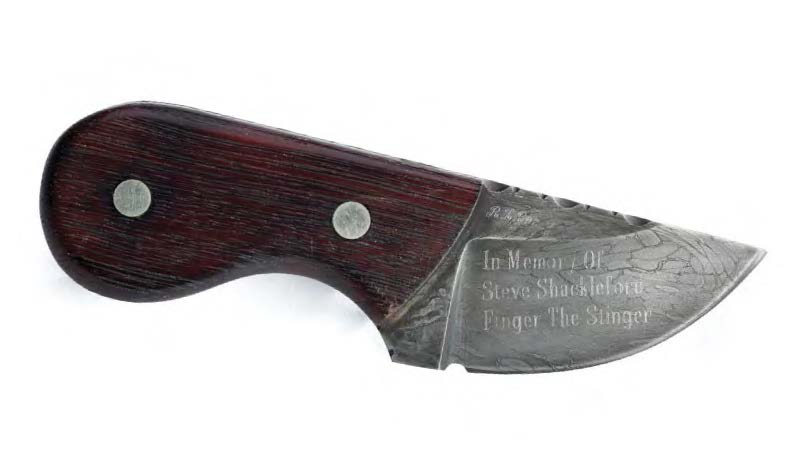
I propped up a small damascus fixed blade built by since-retired custom knifemaker Robert Brothers, along with its sheath, on a shelf. As the cameras photographed away, being the colossal klutz I am I bumped the shelf. The knife came tumbling down point-first into the webbed skin between my ring finger and pinky. You guessed it—I let out with the “sh__!” word in full earshot of the show’s television viewing audience.
Bruce took my on-air epithet better than I thought he would. (Unlike today, profanity was forbidden on television back then.) Maybe the best part was the knife did not sell and Brothers, being the good Samaritan, gave it to me—but not before having it etched, “In Memory of Steve Shackleford: Finger The Stinger.”
I don’t have the old serrated knife or the Marttiini fillet but I still have The Stinger—and, somehow, all my fingers, too.