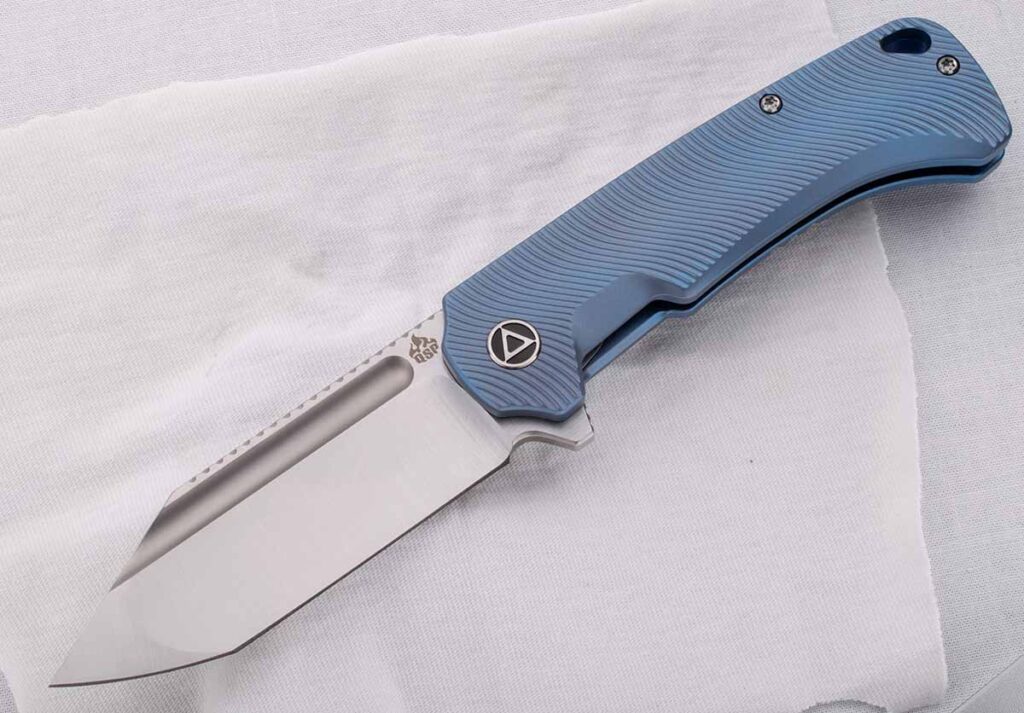
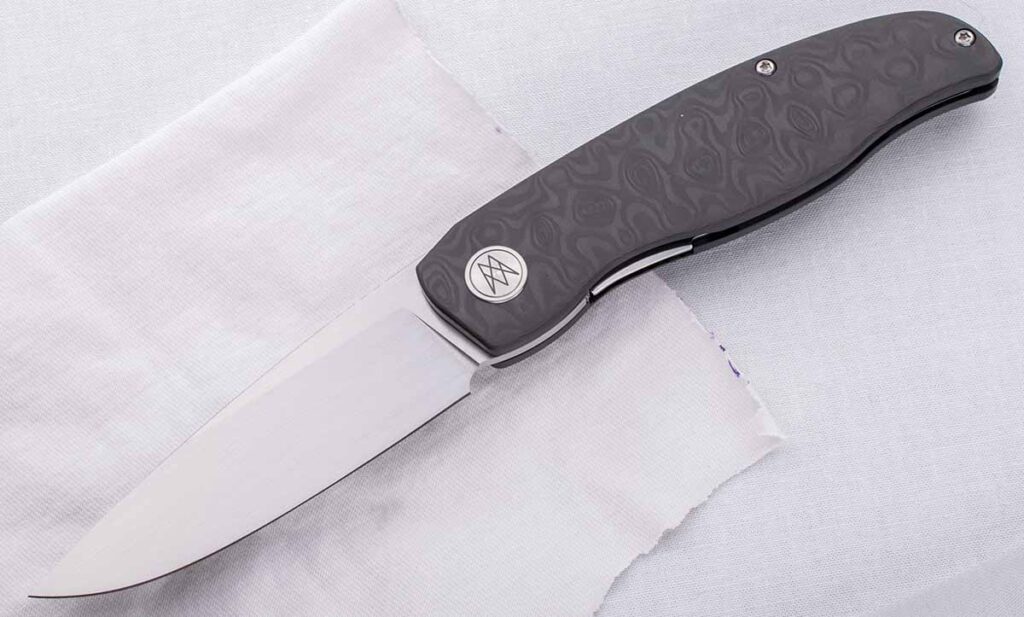
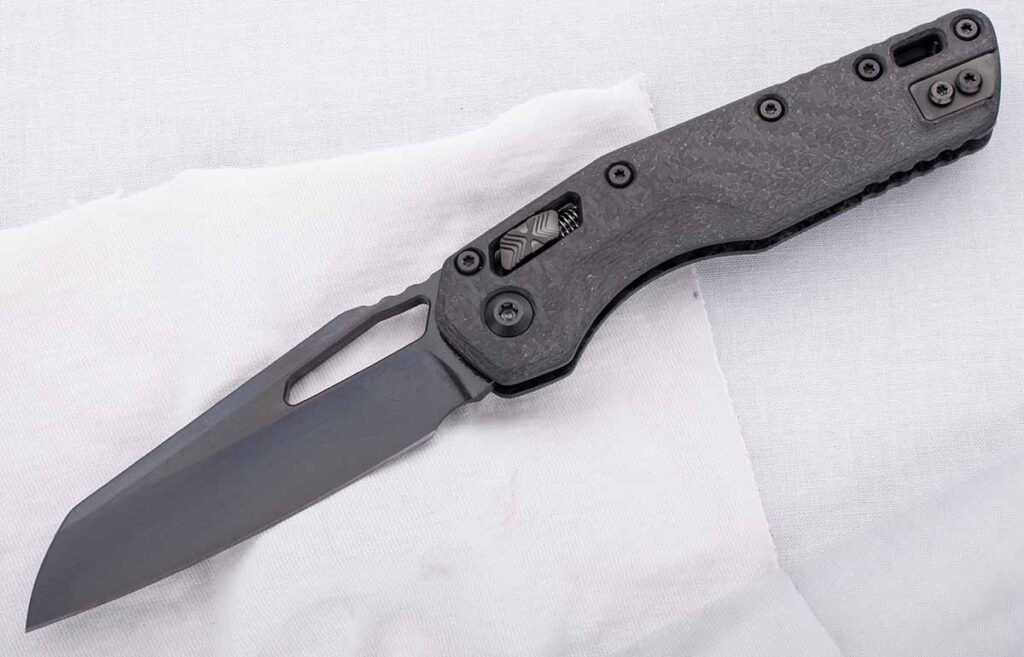
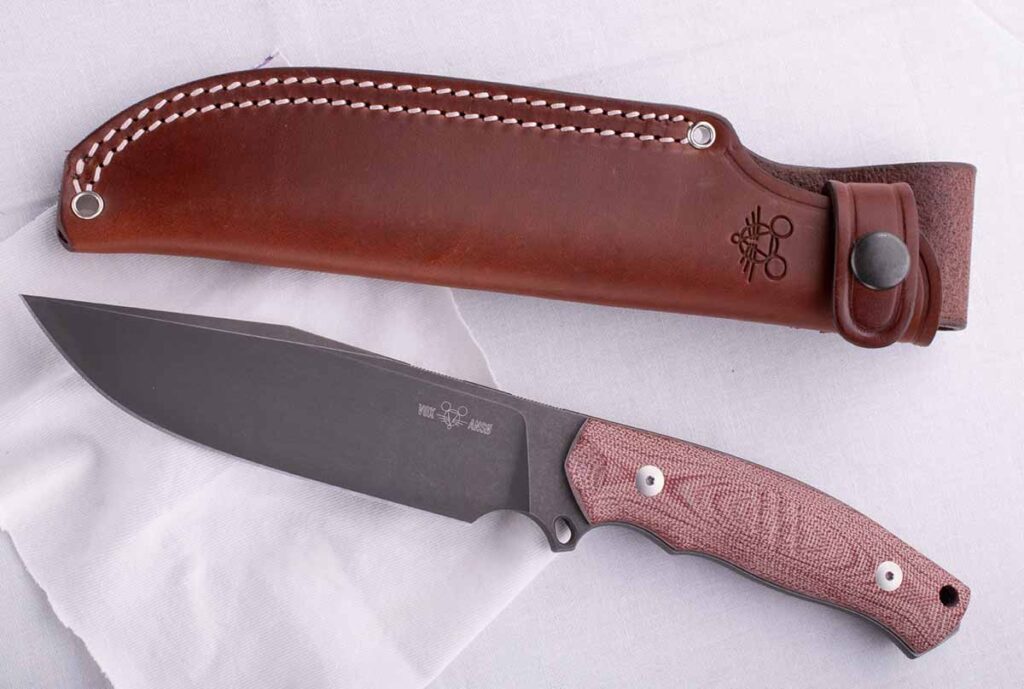
Discover the winners of the 2025 BLADE Show West Custom Knife Awards—nine categories of world-class craftsmanship.
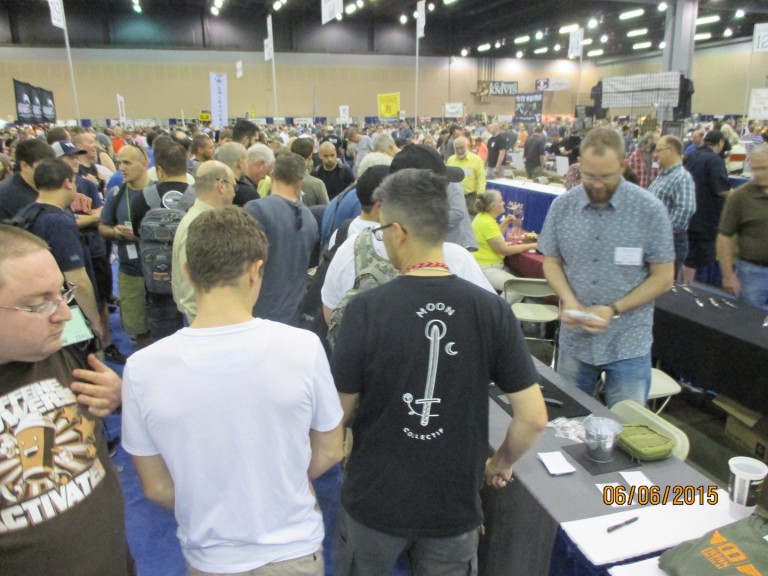
Salt Lake City once again became the hub of the knife world as the 2025 BLADE Show West took over the Salt Palace Convention Center October 10-11. Now in its fourthyear in Utah, the event drew an impressive mix of custom knifemakers, manufacturers, and collectors from across the country and abroad.
At the heart of the weekend stood the Custom Knife Awards—always one of the most anticipated moments of the show. Makers went head-to-head across nine categories, putting their best work forward for consideration. Judged by a panel of anonymous experts, the entries were measured on design, originality, choice of materials, functionality, and overall execution.
The results reflected the diversity and skill of today’s custom knife community. With a crowded field and no shortage of standout pieces, the 2025 competition underscored why BLADE Show West continues to be a must-attend event for knife enthusiasts everywhere.
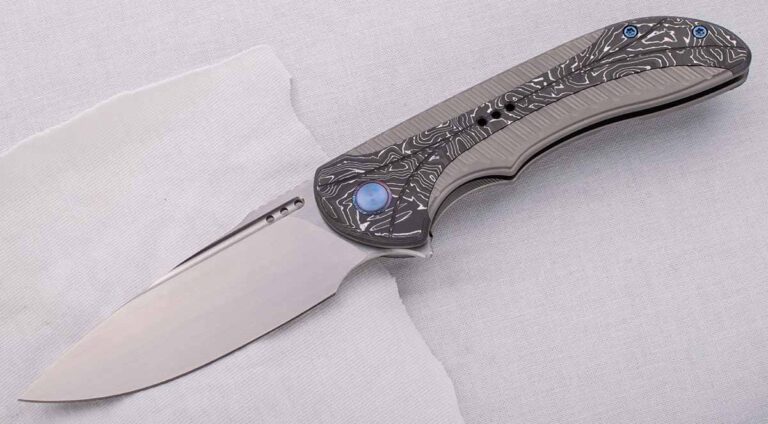
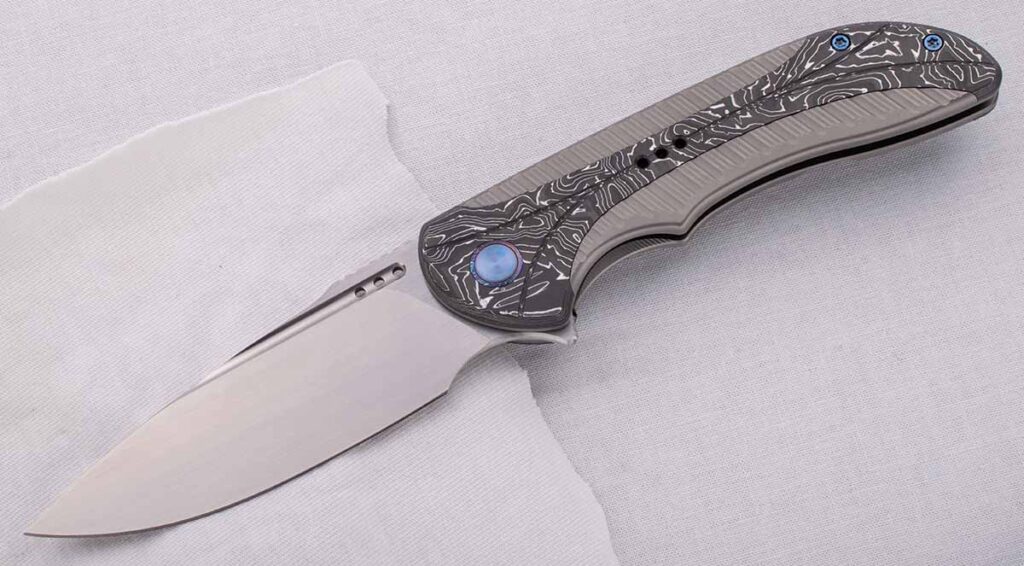
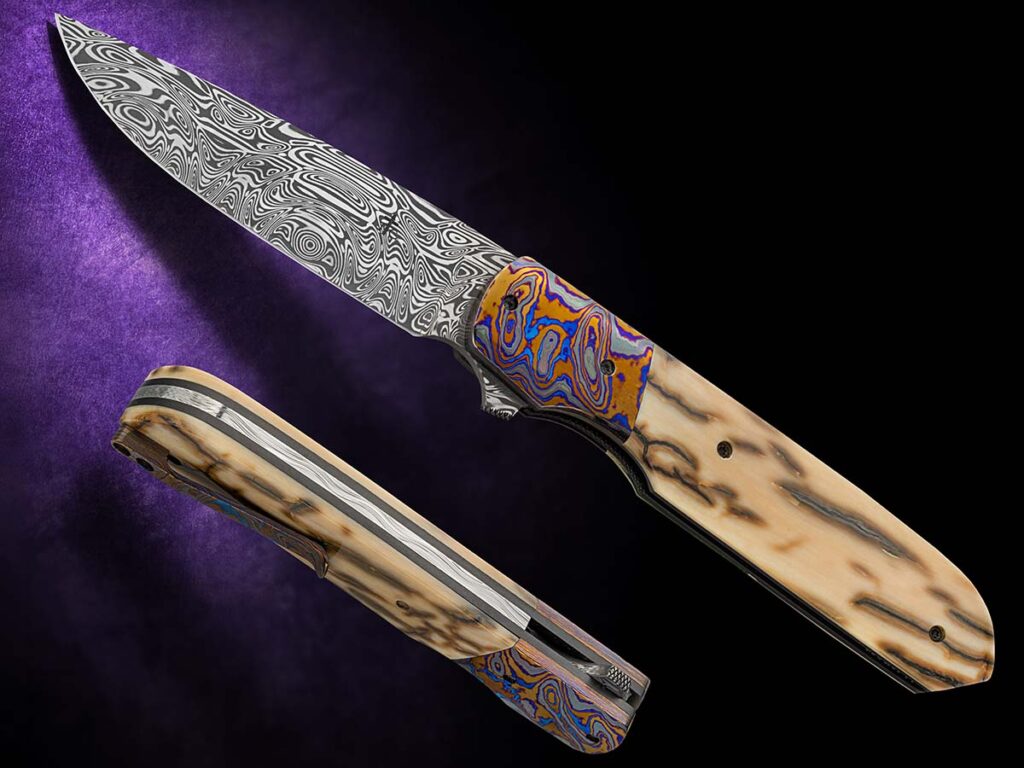
Best Custom Hunting Knife And Overall Best In Show: James Rodebaugh
Revel in a short list of knife industry milestones that transformed the knife world.
Editor’s Note: BLADE Magazine is celebrating its 50th anniversary of its founding this year. To recognize this milestone, we are running a series of articles looking at the changes to the knife world the publication has been privy to over its history.
Time marches on. And in the cutlery industry, the half century from the early 1970s to the present has been filled with both revolution and evolution.
From the corner of a massive hall at a gun show, the slight mention of a new style of field tool, and the basic everyday factory blade carried in the worker’s pocket, the knife industry, both custom and factory, has blazed its own trail over the past 50 or so years, emerging from a somewhat obscure existence to the mainstream. And along the way have been those moments of discovery, awareness and excitement that have marked the trail.
For reference, a few of those moments include the following.
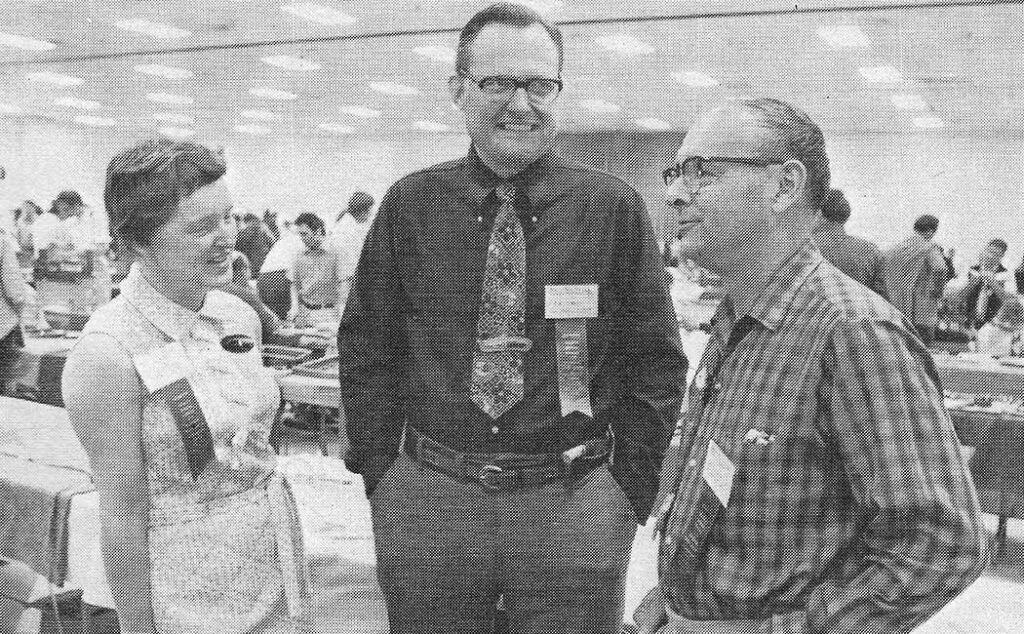
The first “meeting” of the Knifemakers’ Guild basically was the idea of A.G. Russell. What would become the Guild Show was the leading knife show for decades. A.G. (right) discusses a Harry Morseth knife with maker Lloyd Hale (left). (Sid Latham image)
1970s
Though what would become the Knifemakers’ Guild Show was first held in 1970, the show that occurred three years later is still talked about today. That was when Bill Moran reintroduced damascus steel for knife blades, kindling a revival of interest in damascus as the new “super steel” and generating a wave of collector fervor. Also in 1973, Blackie Collins founded The American Blade, a magazine for the knife industry like nothing that had been seen before. Known today as BLADE®, the publication remains a voice for the industry and a tangible contributor to the life and times of the knife enthusiast.
In the following decade, knife shows increased in number and attendance, including the BLADE Show, the New York Custom Knife Show, California Custom Knife Show and the Guild Show, the latter which led the pack for at least 20 years. At the same time, Guild members established industry trends, including the drop-point hunter and the popularization of super steels 154CM and ATS-34 by Bob Loveless, while A.G. Russell vigorously supported the knife industry through his advocacy, sharpeners, knives and growing catalog business.
Eric R Eggly, PointSeven Studios
In 1976, the American Bladesmith Society was formed, and those who forged their blades and worked in damascus at long last had their own organization to promote training and excellence with hammer-ins and other events that brought people together to learn the art of bladesmithing. By 1988, the ABS opened its own school, the Bill Moran School of Bladesmithing. For the first time, bladesmiths and knifemakers could take advantage of a year-round school that offered instruction in forging, bladesmithing and more.
1980s
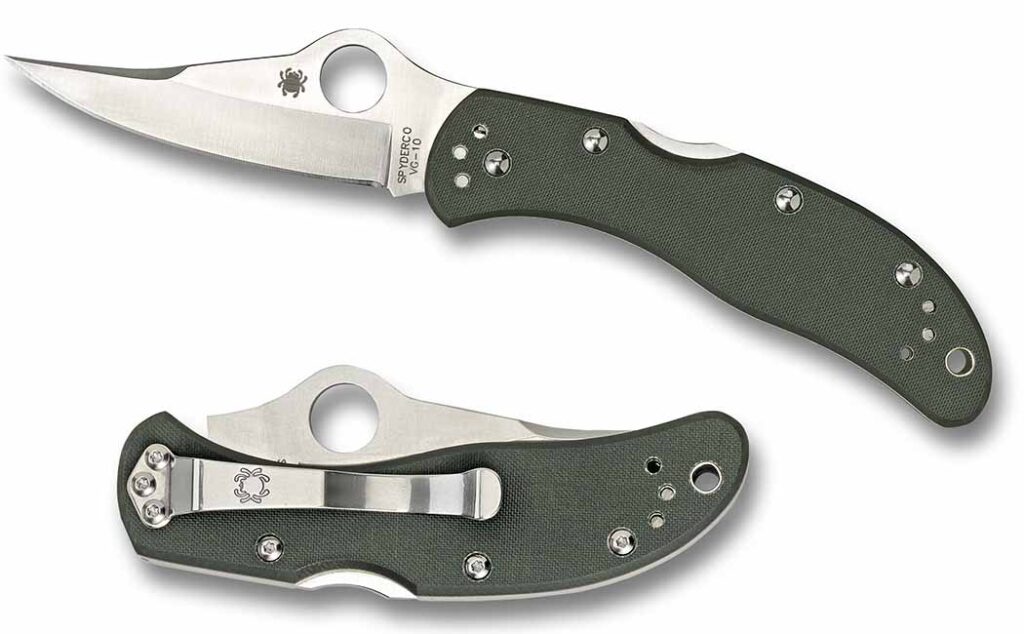
Nineteen-eighty-one saw the introduction of two watershed knife creations by Spyderco and Michael Walker. With the C01 Worker, Spyderco headman Sal Glesser introduced the first knife with both the famed hole in the blade for easier one-hand knife opening and a pocket clip for enhanced carry. Walker, meanwhile, debuted his groundbreaking linerlock folder. The innovations led to a concentration on ease of carry and deployment, focusing the industry on such elements that made the experience of knife ownership something even more special.
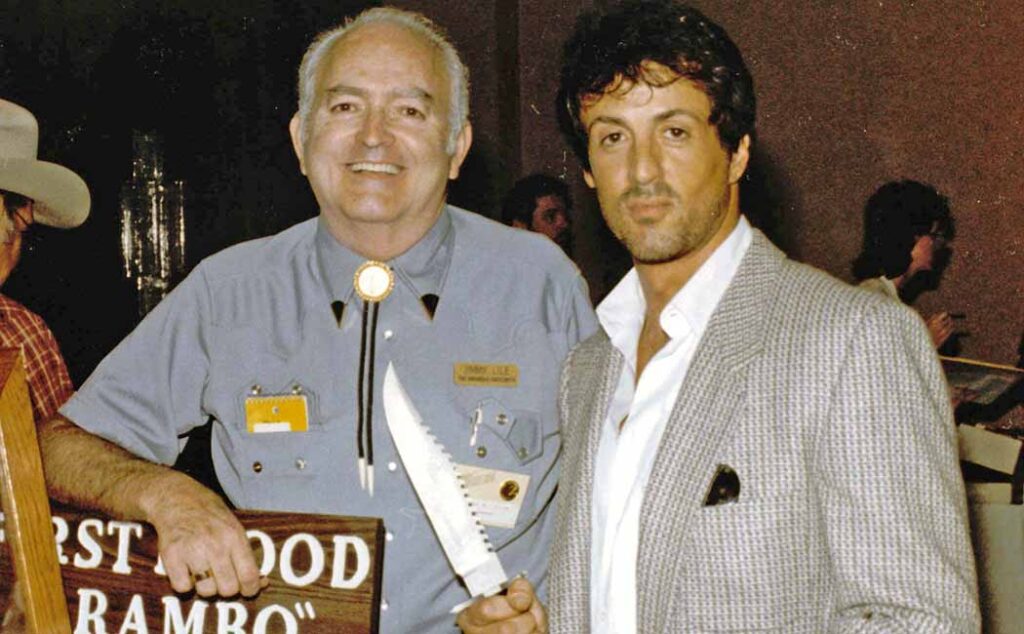
Jimmy Lile and Sylvester Stallone combined to use Lile’s survival knife in the 1982 movie First Blood, and knives were never the same again.
Hollywood took its turn in the early 1980s with the Rambo series of feature films and the knives that played starring roles. Cutlery Hall-Of-Famers Jimmy Lile and Gil Hibben became celebrities in their own right, and sure enough, other knife-and-sword-oriented films followed, including the Conan series, Commando, Predator and The Last of the Mohicans. These were just a few but the knives of custom makers profoundly influenced the marketplace. Soon enough, collaborations between custom knifemakers and factory knife companies began to flower.
1990s
By the 1990s, equipment such as CNC, laser cutters and CAD/CAM entered the knifemaking realm and brought about rapid change in the way custom and factory knives were made. The introduction of such hi-tech equipment into the maker’s shop gave rise to a debate over the very definition of handmade—a debate that continues to this day.
As early as the 1990s, the use of laser cutters—here cutting a hole in a Spyderco blade—CNC machines and other high-tech equipment began to take hold in the making of knives.
At the same time, the emergence of the internet brought the commercial knife market to the world, as custom makers, factories, dealers, collectors and others offered knives for sale on an unprecedented scale. The global reach of the internet led to a burst of information on every aspect of the knife industry, from websites, forums for the exchange of information, how-to videos, online auctions, and even a bit of the dark side—buyer beware! Know your customer and other maxims rang true.
Along with the information explosion, competition was more robust than ever, particularly with the onrush of China’s factory presence, not only in quantity but also, later, in quality. The Chinese influence has redefined notions of affordability, value, and how knives are produced and distributed, and the resulting market conditions continue to impact the buying habits of consumers worldwide.
2000s On
Of course, there are ongoing challenges. Two significant advocacy groups, the American Knife & Tool Institute (AKTI) and Knife Rights, assumed leading roles in responding to knife laws and particularly to the zeal of government regulation, which at times has threatened the livelihood and freedom of Americans to carry one of man’s oldest tools. Pro-knife legislation and the legalization of automatics in many states are evidence of the credible work that has been done, with much of the organized response from the knife industry resulting from the defeat of the 2009 effort led by U.S. Customs to reclassify one-hand knives as switchblades/automatics.
With the C01 Worker in 1981, Sal Glesser and Spyderco introduced the first knife with both the famed hole in the blade for easier one-hand knife opening and a pocket clip for enhanced carry. Released in 2014, the company’s C01GPGR Worker Sprint Run paid homage to the original C01.
Knife Innovation
The history of the modern knife industry is one of rapid change and continuing innovation. Long-time maker Tim Britton recalls the influence of Blackie Collins and Blackie’s foray into publishing. “Blackie could sell refrigerators to Eskimos,” he commented. “The American Blade magazine was one of his favorite projects, and his input and support facilitated the start of the Knifemakers’ Guild. We had one show, the Guild Show, where we could share fellowship and technology. Names like Buster [Warenski], Henry Frank, [W.W. “Bud”] Cronk, Jim Schmidt and Bob Loveless became famous at our annual shows.
“Virgil England took us to another planet and then along came the Chinese industrial monster,” he continued. “Tactical knives were their focus and they had no hesitation in copying American designs. The American Bladesmith Society developed a business model whereby rediscovered damascus steel could be taken to all new levels. There was never any question in this group about ‘what is a handmade knife’ or who is copying whose design. Knifesmiths flourished, and Forged in Fire has taken us all to a new level. Knifemaking caught on in other countries, and those makers continue to produce some of the finest work imaginable.”
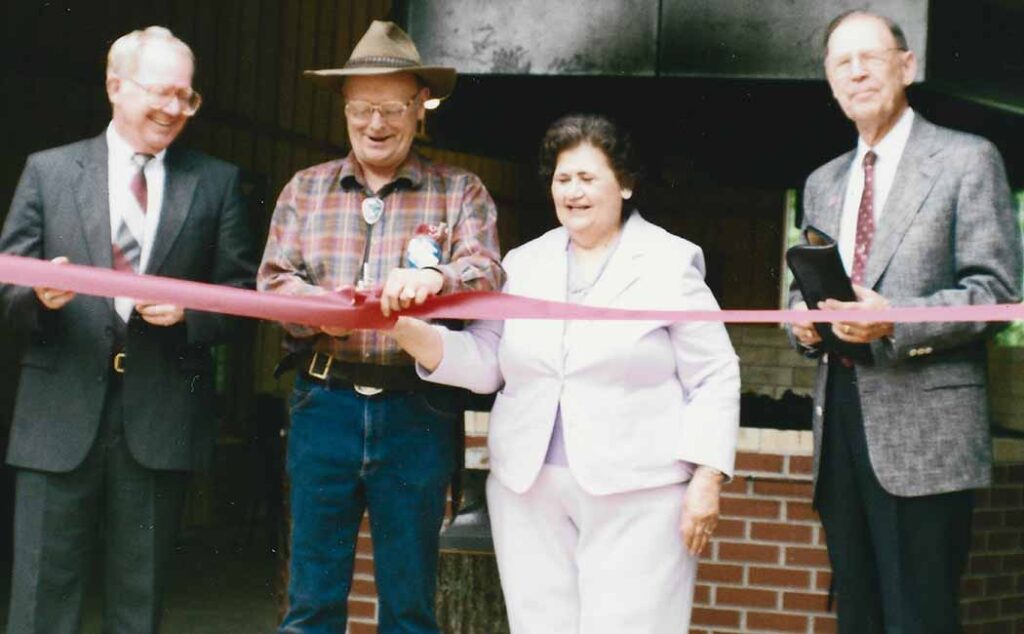
The ABS opened the Bill Moran School of Bladesmithing in 1988. The principals at the school’s ribbon cutting ceremony were, from left: Carl Nelson, president of Texarkana College, Bill Moran and Mrs. Margaret Moran, and Judge James Pilkington.
Custom knifemaker Jim Sornberger well remembers the early days of the Guild and its organization. “The Guild thing was first discussed in 1970, and that was Bob Loveless and A.G. Russell,” he said. “Actually, A.G. bought tables for a bunch of the guys and set that up. He said, ‘Let’s have a show and get a block of tables,’ and so he did that. The Guild was the best organization of knifemakers in the world, and it had the biggest knife show anywhere in the world for many years.”
As for technology, Sornberger says it is simply a fact of life. Evidence of progress and efficiency are seen in makers’ shops routinely today, including CNC equipment, mills, lathes, ingenious versions of versatile grinders and more. “You can’t reverse technology,” he reasoned. “There are always new methods of doing something.”
Ron Lake had a huge hand in the evolution of custom knives, introducing his clever tab-lock interframe folder and helping popularize 416 stainless. “It was a different world back when,” he remarked. “We had a small corner at a gun show, and Blackie Collins was sitting off by himself 30 feet away from me with a slipjoint knife, and I remember Loveless cut himself with that knife! A lot of people came and went from the knife world back in those days.”
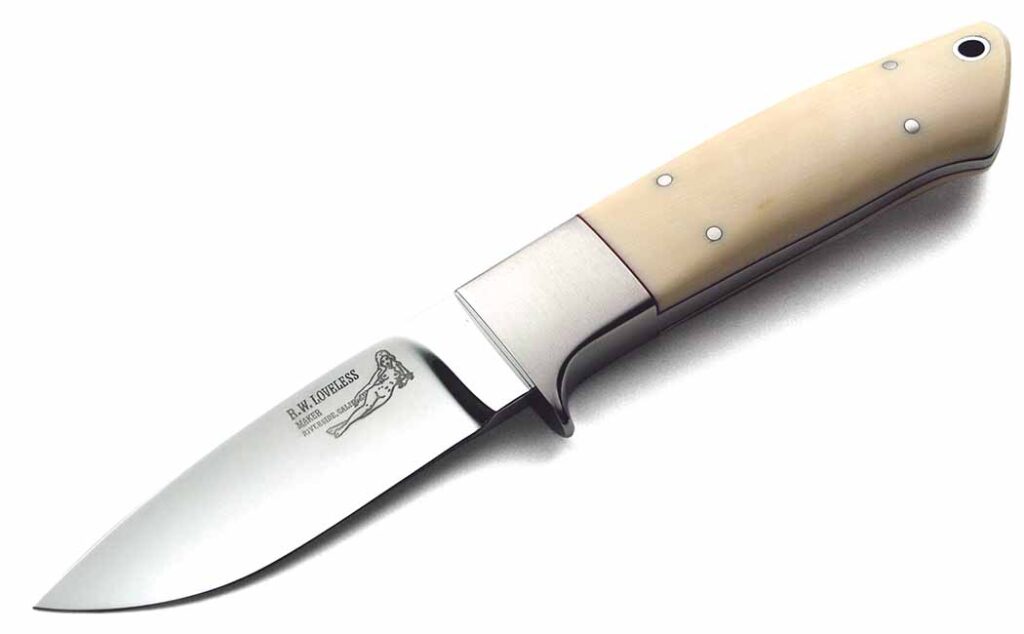
Contributions such as the dropped hunter by Bob Loveless were among the trends started by members of the Knifemakers’ Guild in the 1970s and beyond. (Exquisiteknives.com image)
As Moran brought damascus back into the spotlight in 1973 and other developments were coming along, Lake remembers the growing ranks of the virtuoso custom knifemakers, including Billy Mace Imel, Buster Warenski and others. He also recalls the sudden impact of Spyderco. “I think maybe it wasn’t so much the hole,” he said, “but the clip. That in itself was a mind-boggling event—maybe not so much at the time, but later as people started using it.”
Ron Lake, Bob Loveless, Bill Moran and A.G. Russell
The influential journalistic career of B. R. Hughes has made its own contribution to the modern knife world. Hughes was there in the beginning of the modern era. He planned the first Gun Digest Book of Knives along with Jack Lewis, and it hit the market in 1973.
“That was a meaningful year,” Hughes remembered. “Ron Lake, Bob Loveless, Bill Moran and A.G. Russell are the most influential individuals in the history of custom knifemaking, and A.G. played a bigger role than a lot of people give him credit for. He saw the need to organize and there was a meeting in Tulsa in 1970, and the first Guild Show was in 1971, and it grew unbelievably. They met in Houston and there were about 20 or so makers, and then the next year the show was in Kansas City, and there were 40 or 50, and it just kept growing.”
According to B. R., damascus was a catalyst for revival in American bladesmithing. “The inclusion of damascus saved bladesmithing,” he said, “and there were fewer than 15 bladesmiths in America in 1973. The number was going down. There was Bo Randall and then Rudy Ruana as well, but just a few younger bladesmiths.”
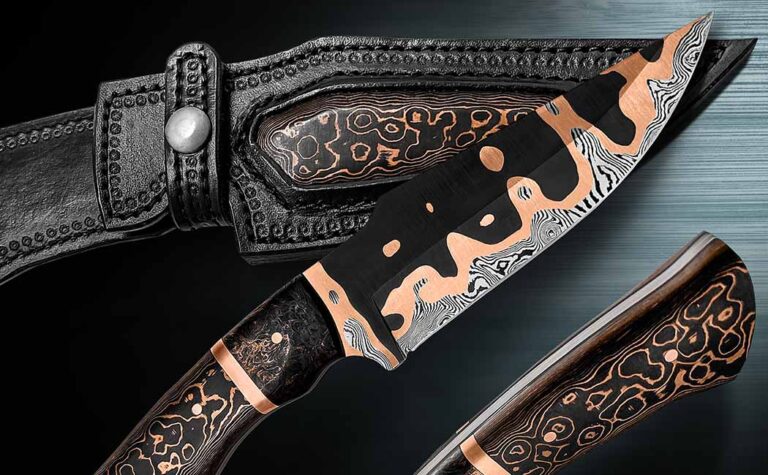
The use of a wide range of new materials in the making of knives exploded in the 1990s and continues to this day. One of the latest examples is Bill Moran reintroduced damascus for knives at the 1973 Guild Show and the rest is history. Moran (right) observes another successful Guild Show with Betty and Ted Dowell at the ’74 event in Kansas City. (Sid Latham image), employed here by Gerry Michael on the blade of his Fancy Harpoon model. (Jocelyn Frasier image edit)
Then, he says, the founding of The American Blade weighed in. “That was immense,” he offered. “I started writing about knives in the early 1960s, and there were primarily just gun magazines. I wrote for Gun Week, doing some knife articles for them, but there was no knife magazine, and the people I wrote about were people I met at gun shows. Without a knife magazine, it made it tough to write about knives.”
Hughes added, “I was fortunate to be around the first meeting of the Guild and things like that.” Indeed, B. R. saw and wrote about history as it was made.
Knife Industry Ups and Downs
These days, the world of knives continues to expand, to change, to elicit praise and criticism. Britton has watched much of this evolution. “Quality Chinese repros are available at flea markets and gun shows for $15 to $40,” he observed. “Many knifemakers are designing knives for knife companies, further blurring the differences between handmade and factory/manufactured. The internet is being used extensively for marketing—from very ornate websites to knife forums. The ‘Show Calendar’ page in BLADE is crammed full of announcements of shows from San Francisco to Paris. Several knife dealers have created a secondary market, and literally thousands of knives are available for sale 24/7.”
Concurrently, Britton is excited about what he notices these days. “We’re seeing abrasive materials, grinders, CNC equipment, new steels, and exotic types of handle materials from paua shells to hippos’ teeth,” he noted. “Creative craftsmen are exploring new horizons with acrylics and phenolics and stabilized wood burls. We see something new at every show.”
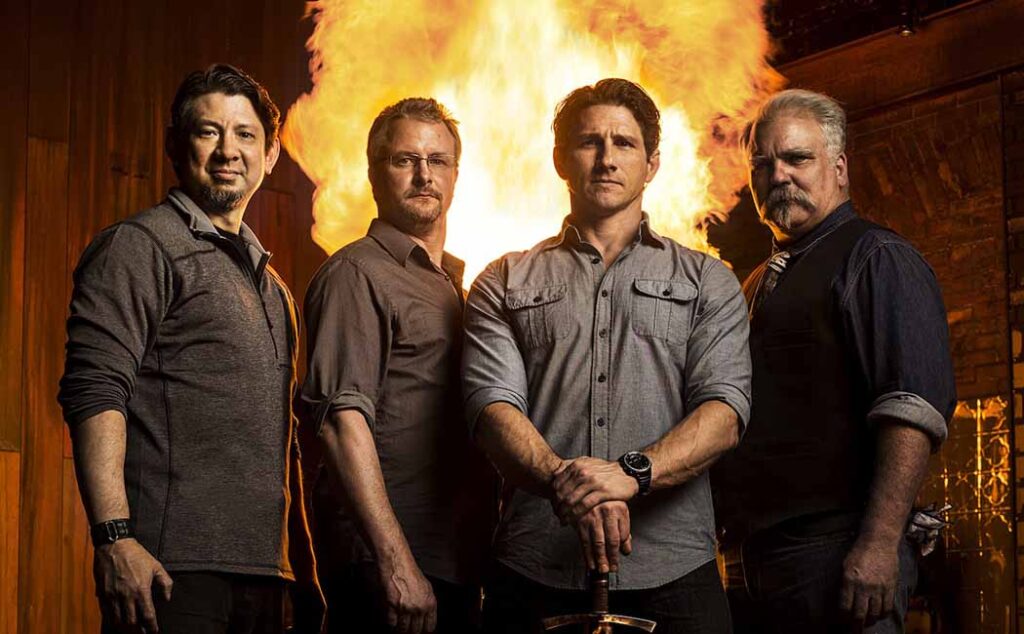
Forged in Fire debuted in 2015 and since then has exposed millions of television viewers to knifemaking and bladesmithing on a weekly basis.
That, succinctly, is a strong indication of an industry, a passion, a way of life that continues to flourish despite the strain and stress that are natural byproducts of absolutely anything and everything that is alive. A half century from now there will be more milestones, more discussions and even greater achievement.
Members of the BLADE Magazine Cutlery Hall Of Fame® mentioned in the story and sidebar are Blackie Collins, Sal Glesser, Gil Hibben, B. R. Hughes, Billy Mace Imel, Ron Lake, Jimmy Lile, Bob Loveless, Bill Moran, Bo Randall, Rudy Ruana, A.G. Russell, Jim Sornberger, Bruce Voyles, Michael Walker and Buster Warenski.
25 Knife Industry Milestones
1973 Bill Moran reintroduces damascus for knife blades at the Guild Show 1973 The American Blade debuts 1976 Bill Moran, B. R. Hughes, Don Hastings and Bill Bagwell found the American Bladesmith Society 1981 Spyderco debuts the C01 Worker, the first knife with both a blade opening hole and a pocket clip 1981 Michael Walker introduces a folder with the linerlock mechanism 1982 First Blood and Jimmy Lile’s Rambo knife appear in theaters 1983 Michael Walker first uses titanium in the construction of one of his linerlocks 1987 Buster Warenski completes the King Tut dagger reproduction 1988 The Bill Moran School of Bladesmithing opens in Old Washington, Arkansas 1992 Bruce Voyles moves the BLADE Show to the Renaissance Waverly Hotel in Atlanta, where it opens to rave reviews 1990s An explosion in Crucible Particle Metallurgy and the so-called “super steels,” and such materials as carbon fiber, mosaic damascus and more revolutionize knifemaking 1990s Computer numerically controlled equipment, laser cutters and more for knifemaking begin to appear 1990s Internet knife web pages, knife discussion forums, knife instruction videos and more start making their mark Mid-1990s Tactical folders begin to dominate the custom and factory knife industries 1997 The BLADE Show moves from the Renaissance Waverly Hotel to the adjoining Cobb Galleria Centre and completes its ascendancy as the world’s most important knife event 1990s Chinese companies begin entering the factory knife business 1998 The American Knife & Tool Institute (AKTI), the oldest surviving knife advocacy group, debuts 2001 Terrorists bring down the Twin Towers and the knife industry reacts with a slew of military inspired knives, tomahawks and more 2006 The Knife Rights advocacy group debuts 2009 The knife industry unites to defeat an attempt by U.S. Customs to declare all one-hand-opening knives switchblades/automatics 2010s Social media begins taking the internet knife business to the next level 2010s Knife Rights and AKTI work to overhaul anti-knife legislation, including overturning automatic/switchblade bans and establishing knife preemption laws at the state level 2010s European knife manufacturers such as LionSteel, Fox Cutlery, Maserin and others begin winning more than their share of BLADE Magazine Knife-Of-The-Year® Awards 2015 Forged in Fire debuts and exposes millions of television viewers to knifemaking and bladesmithing for the first time 2020 The pandemic ravages the world and also the knife world, closing knife shows everywhere—including the BLADE Show 2020s The knife industry survives the pandemic, and, thanks to internet sales, even thrives in some segments—and knife shows begin to return
BLADE Show is home to countless knives and just as many exclusive deals. Here are some outstanding highlights from our sponsors you don’t won’t want to miss.
Smoky Mountain Knife Works
WE Knife
Work Sharp
Big Daddy Unlimited
Wicked Edge
W.R. Case & Sons Cutlery
Hogue Knives
Kizer Cutlery
Microtech Knives
Smoky Mountain Knife Works Get Your Free Swag Bag at Booth 29
Stop by SMKW’s Booth (29) at BLADE Show, and we’ll give you an awesome free swag bag (while supplies last). Don’t wait!
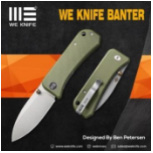
WE Knife WE KNIFE BANTER at Booth 725
See more of our new knives at Booth 725.
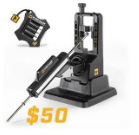
Work Sharp Precision Adjust Special $50 (Only 300 Available) – Booth 312
All orders over $50 include a FREE Micro Sharpener. Precision Adjust on sale for $50 while supplies last.
Big Daddy Unlimited We’ve SLASHED the price on our Big Daddy Unlimited annual membership!
Take a STAB at these savings ($79.41) & Sign up NOW! Click here.
Wicked Edge 10% Off – Booth 42
Come see us and our newest arrivals in Booth 42 and pick up your BLADE Show 2021 coupon for 10% off your favorite tool.
W.R. Case & Sons Cutlery FREE “Made in Bradford” Stickers from Case Knives! – Booth 109
Get a free “Made in Bradford” sticker when you stop by Booth 109 to check out the all-new Marilla™ and Kinzua™ EDC knives from Case!
CPM 20CV stainless steel blade with a Glow Rhino Tritium infused ABLE Lock® carbon fiber frame and blue titanium hardware. Exclusively available at BLADE Show at Booth 52.
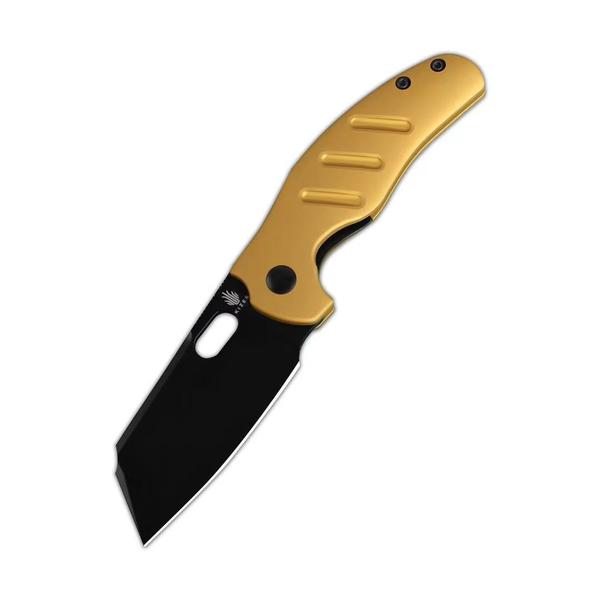
Kizer Cutlery 2021 BLADE Show knife – Kizer Sheepdog Mini C01c, 40th Anniversary Special edition
This special edition of the Sheepdog mini C01c is equipped with 154CM steel and champagne handles, only 300 available with a serial number. Get it here.
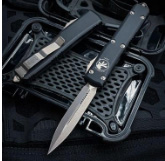
Microtech Knives Ultratech D/E for Only $160 – Booth 324
This year’s BLADE Show Special from Microtech Knives is the Ultratech D/E. Price is $160. Cash only. Limit one per person. Available at Booth 324.
The whole world will be cutting at the 35th Annual BLADE Show June 3-5 at the Cobb Galleria Centre in Atlanta. Knifemaker Jens Anso (behind the table) waits on customers at last year’s show.
The whole world will be cutting at the 35th Annual BLADE Show. Question is, will you be among them?
June 3-5 at the Cobb Galleria Centre in Atlanta, the BLADE Show is the event knife enthusiasts point to year round, with many saving their knife “fun” money just for this one show where custom knifemakers, factory knife companies, and knife accessory, material, machine and tool suppliers and more introduce their latest knives and knife-related products.
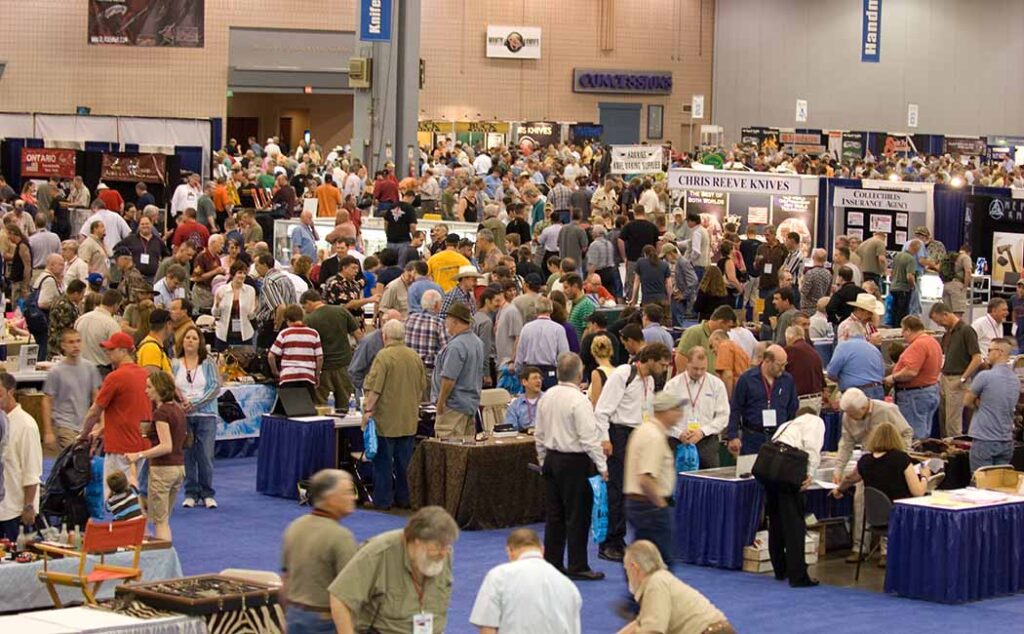
Whether you’re a veteran of or a newcomer to the “sharp wars,” have your ducks in a row so you will miss as little as possible at the show. (Let’s face it, with almost 1,000 exhibitors spread out over 144,000 square feet and non-stop knife action for most of the three-day event, it’s hard to see it all.) With that in mind, here’s a short list of things to do and see:
•Get a BLADE Show Program: Available for free in the show lobby, the program will have the show’s most-up-to-date exhibitor listings so you will know how to find your favorite knifemaker, knife company, dealer, supplier, purveyor, collection or what have you. Also, check the program for special customer deals, knife giveaways, contests, live demos, silent auctions and other cool offers;
•If you don’t know, ask: Everyone’s knife family at the BLADE Show, so if you don’t know something, ask. And if the person you ask doesn’t know, ask if he knows someone who does. This includes finding out where the hottest knives are. Strike up a conversation with those in the show and ask them what they’ve seen that’s cool. You’ll be surprised at how you can find some really great knives this way;
•Check out the Knife-Of-The-Year Awards display sponsored by Smoky Mountain Knife Works in the show lobby for the entrants in the factory knife awards competition;
•For the complete BLADE University class schedule—including J. Neilson’s class on how the Forged In Fire TV show selects contestants—and the BLADE Show seminar slate, see the signs in the show lobby;
•Be sure to attend the first-ever BLADE Show Women’s World Championship Cutting Competition and the 14th Annual BLADE Show Men’s World Championship Cutting Competition at 4:15 p.m. Saturday in The Courtyard under a new, sprawling tent sponsored by Burr King;
•Check out The Pit, the sunken lounge in the lobby of the host hotel Renaissance-Waverly each evening after the show, including the spillover from The Pit outside the hotel entrance, the perfect place to have fun and compare show notes with your fellow show patrons;
There’s much more, of course, much of which will be up to you and your inquisitiveness in finding it at the world’s most important knife event. See you there!
See Who Took Top Honors In Salt Lake City For The 2023 BLADE Show West Factory Knife Awards.
BLADE Show West took place Oct.13-14, 2023, at the Salt Palace Convention Center in Salt Lake City, Utah. It was the show’s second year in Utah and drew custom makers, manufacturers and collectors from around the county and world.
It also drew an impressive cadre of entrants for the BLADE Show West Factory and Custom Knife Awards. For Factory Knives, awards were given in six categories, while the Custom Knives awarded nine categories.
The Factory section was evaluated by a panel of undisclosed industry experts who judged the blades on a number of factors, including utility, design, creativity, materials and other traits.
BLADE Show West Factory Award Winners
Best In Show &Best Factory Import: WE Equivik
Best Factory Folder: QSP Rhino
Best Factory EDC: Mr. Mr. Designs D-Cipher Folder
Best American Made: Microtech Knives MS1
Best Factory Fixed Blade: Giant Mouse GMF4
See Past 2023 Factory Knife Of The Year® Awards Winners:
Tips and tricks to get the most out of attending a knife show.
Magazines, websites, and social media only give you a two-dimensional look at a knife. Nothing replaces the experience of handling a knife in person. While the internet is convenient, it cannot match the visceral sensation of holding a knife at a show.
There are many knife shows across America. Some are big, like the BLADE Show, while others are smaller, regional events. All shows have one thing in common: custom knives. Makers offer blades in many styles, materials and price ranges. No matter the show’s size, you can gain an advantage—and get the knife or knives you want—by research.
Today, even smaller shows have websites or social media pages listing exhibitors. The exhibitor list will help you identify who will be at the show. Before every show I attend or consider attending, I go through this list, looking for both familiar makers and those of whom I am unfamiliar. In particular, I look for makers from outside the U.S. From this, I create my own list.
For unfamiliar makers, I visit their websites or social media pages to explore their knives. This research allows me to refine my list and home in on those I’m truly interested in. Once my list is complete, I prioritize the makers whose knives I want to see and handle.
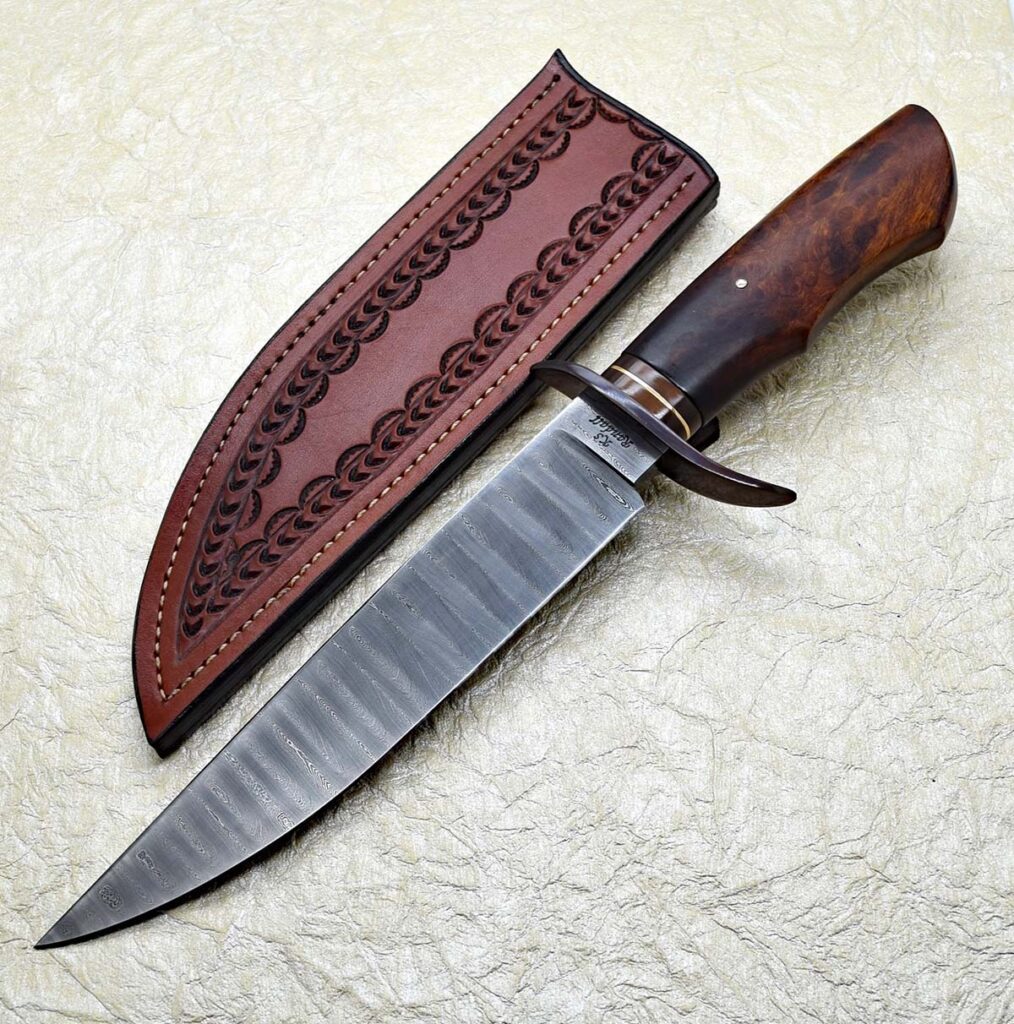
The ladder damascus on Steve Randall’s 8” bladed fighter hits the right balance between understated and complexity. (Alison Randall image)
The floor map is another invaluable tool for show planning. As its name implies, it is a map showing the location of each maker’s table or booth. The combination of the exhibitor list and the floorplan provides me with the first advantage of my show game plan—time management. The other aspect it helps with is money management; researching gives me an idea of how much a specific maker’s knives will cost. I adjust my priorities accordingly.
Bargain Hunting
Knowing who’s at a show out of the way, the next step is to use the various social media platforms again to discover what the makers are bringing to the show. Many show off the knives they are planning on displaying and selling well before the actual event. This helps me identify style, materials and prices of which I’m interested. Often, this information also further helps prioritize my list.
Note, due to constraints imposed by some social media platforms, pricing is not always included in knife descriptions on these platforms. There’s an easy way around this, given that there is nothing wrong with sending the maker a message asking for the price. Realize, for many makers, pricing the knife can be as challenging as making the knife. But knowing the price allows you to compare other makers’ prices for similar work.
Becoming familiar with pricing across the spectrum of a particular knife sector—say, bowies, EDC or hunting knives—ultimately helps you get the best knife for your money. And the best value often is a new maker discovered during list research. I make it one of my goals to find a new maker whose work I am unfamiliar with at every show I attend. While I am not successful every time, many of the makers I work with today I found exactly through this method.
Personal Logistics
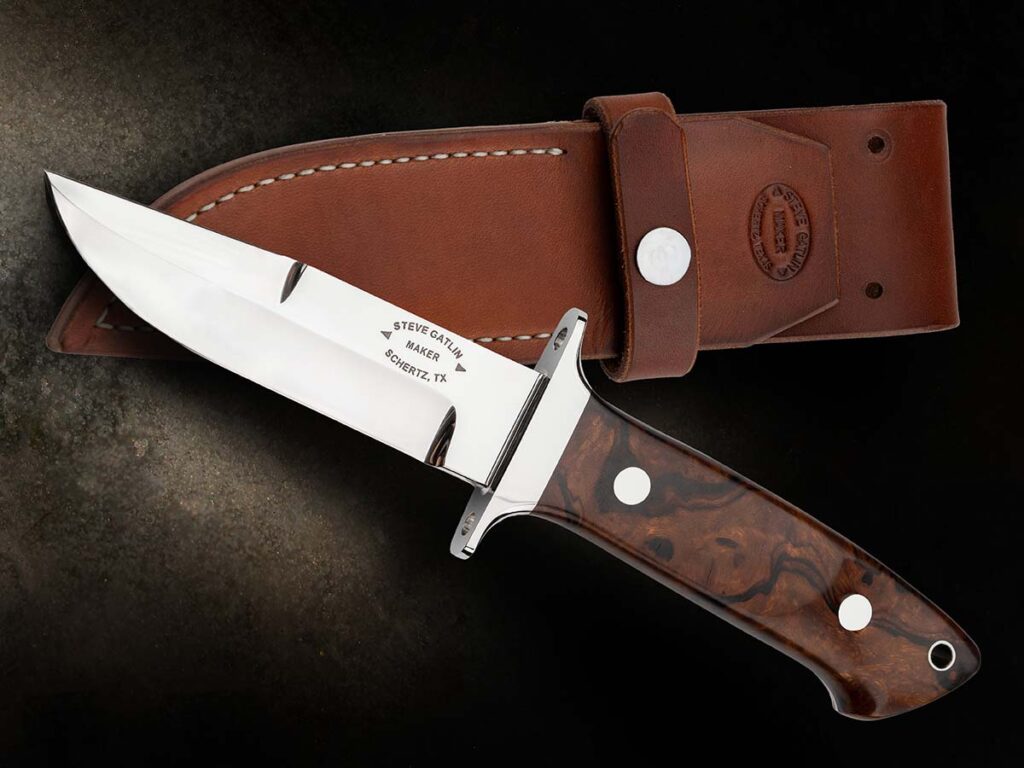
An homage to a classic design from BLADE Magazine Cutlery Hall Of Fame® member Bob Loveless. The author contends this is one of those knives you can only appreciate its lightness and quickness when it’s in your hand. (Karis Fisher image)
Research shouldn’t solely focus on the who and what at a show’s tables and booths. There is also a bevy of other factors to consider beforehand to make a show more pleasant.
It might sound obvious, but know where the show is located. Some smaller shows I have attended have been off the beaten path and difficult to find. I personally get frustrated having to hunt around for a venue, only to end up there after it’s already open.
Identifying the show hours is also crucial, as is understanding how most events organize their hours of operation. Most shows open earlier on the first day than on the second or third day. The inverse is generally true for closing—the last day usually ends earlier, especially for three-day shows.
It’s a good idea to also consider the restaurants you’ll eat at and the hotels you’ll stay in. The larger the show, the more crowded the restaurants and hotels. This is especially true with a large group; heading to a show with friends, plan on reservations for both room and board.
Don’t assume parking is right outside of the show’s location. That’s a recipe for trouble. Do your research and see if there is plenty of parking, where it’s located and, at some venues, how much it costs.
The final consideration is actually getting into the show—your tickets. If the show offers advance tickets, I recommend you purchase them before you arrive. You don’t want to be standing in line when the doors open.
Show Etiquette
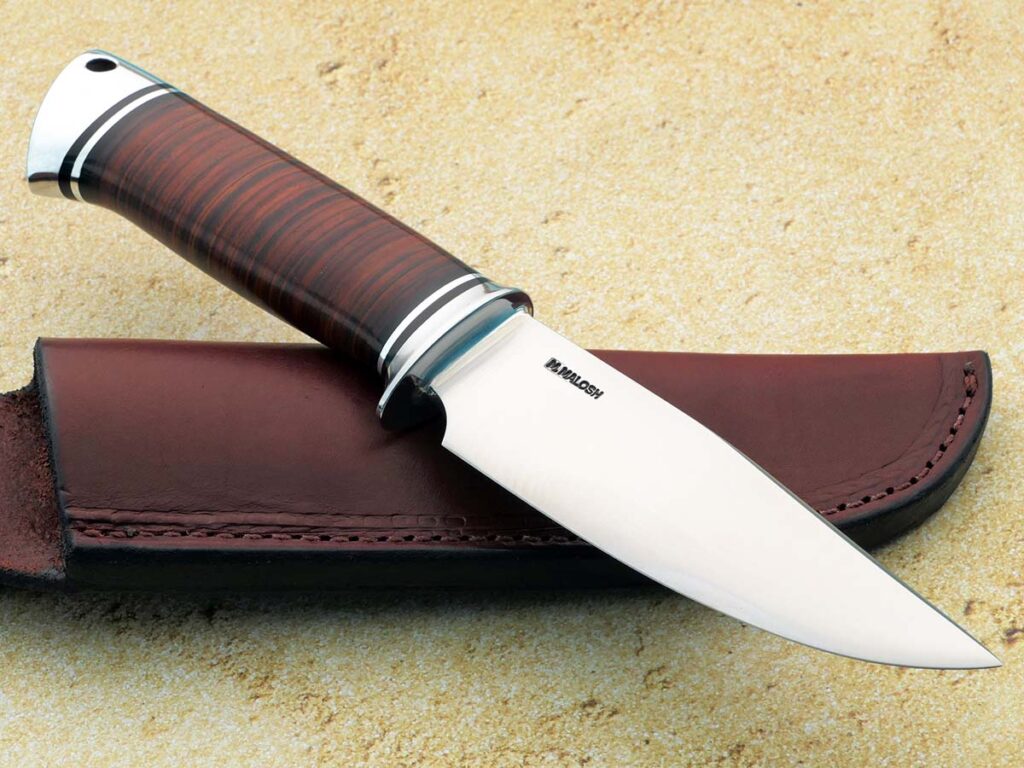
Beautifully spartan, Mike Malosh executes an extremely clean hunter that’s built for dead-serious work. (Robertson’s Custom Cutlery image)
It should come as no surprise that those attending a show are focused on the knives they came there to see. But don’t let your focus make you into a poor or even rude show attendee. Here are some recommendations to keep in mind while at the maker’s tables.
When in doubt, ask for permission to handle a knife. Makers want you to; they just want you to do so respectfully.
If you have children with you, watch their little hands. They want to grab the knives just like everyone else.
Replace the knife where you found it. Set the knife down and don’t just drop it on the table.
For those knife fighters out there, limit your moves at the table. Those knives are sharp!
Don’t put your drinks, backpacks, bags, etc., on the maker’s table. Accidents happen, and no one wants a knife scratched or damaged.
Wait for your turn. At a crowded table, more than one person has been cut trying to grab a knife.
Jason Clack has a lot going on with his liner lock, from it’s 3.5-inch damasteel blade to black Timascus bolster and mammoth ivory scale. (Jocelyn Frasier image)
Take your non-knife-related conversation away from the front of the table. Don’t block the table from potential customers.
Everyone loves a deal, but no one wants to be insulted by a lowball price. Makers may adjust their price, but ultimately, that is their decision. That said, cash can tip the negotiation in your favor.
Ask as many questions as you like. Education directly from the maker is part of your admission price.
Here’s The Deal
Like the makers, dealers range from brand new to very experienced. Also, like makers, many have specialties. Unlike makers, they deal in the aftermarket. The prices they ask for knives, and are willing to pay for knives, are based on current market prices. Like many collectibles, those prices fluctuate based on several factors.
A stunner from GTC Enigma, the titanium-handled spring-loaded tab opener is lightning fast. Even at first blush, this pocket gem looks like it’s built for speed. (GTC Knives image)
Additionally, keep in mind that when trying to sell knives to a dealer, you walked up to their table. The price they offer you may not be what you were hoping for. There is no reason to swear at them, call them names or accuse them of low-balling you. I have turned down thousands of knives because I didn’t think I could resell them. It was as simple as that.
Plan For Success
Even with a three-day show like the BLADE Show, time quickly slips away. Having a plan to get into the event and to the makers, in turn, the knives you’re interested in ensures you’ll have a good experience. In essence, it comes down to time and money—be sure to get the most out of each!
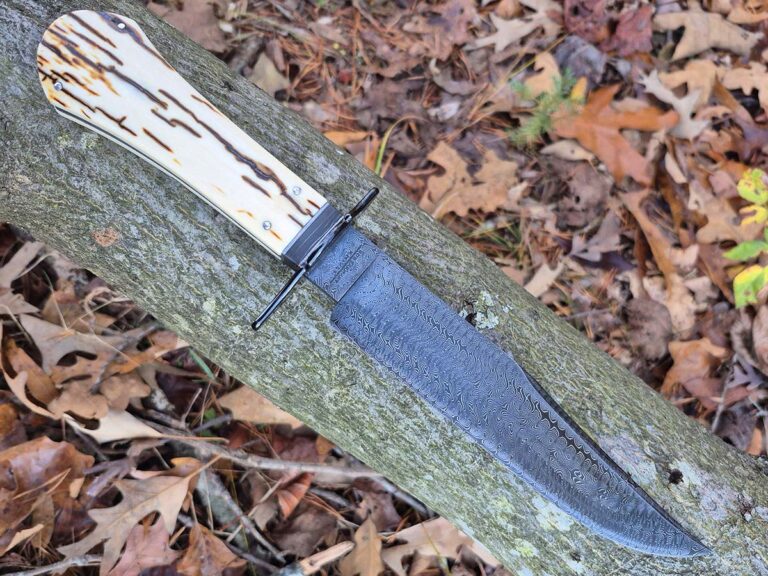
Maker: Bob Earhart Model: Frame Handle Fighter Blade Length: 7.5” Overall Length: 12.3” Blade Steel: 5-bar Turkish twist damascus Guard Material: Blued 1018 Steel Handle Material: Mammoth ivory Leather Sheath: Custom-made by the maker Comments: The knife has excellent balance and handle ergonomics. The frame handle is forged to shape, revealing the pattern. Bob is an ABS master smith. His BLADE Show Table Number is 19S. Price: $1,700 Email Address:[email protected]
Maker: Steve Randall Model: Damascus Fighter Blade Length: 8” Overall Length: 13” Blade Steel: Ladder pattern Damascus Guard Material: Browned carbon steel Handle Material: Desert Ironwood Leather Sheath: Custom-made by the maker. Comments: Contoured guard and handle create a knife with excellent balance and comfort in the hand. Precise ladder pattern damascus, competent work from an ABS master smith. BLADE Show Table Number is 3R. Price: $1,800 Email Address:[email protected]
Maker: Steve Gatlin Model: Loveless Style Chute Knife Blade Length: 4.5″ Overall Length: 9.25″ Blade Steel: CPM 154 Guard Material: Stainless steel Handle Material: Exhibition-grade Desert Ironwood Leather Sheath: Custom-made by the maker Comments: Steve’s exceptional version of the classic Loveless Chute. Light and quick in the hand. BLADE Show Table Number is 7E. Price: $1,400 Email Address:[email protected]
Maker: Mike Malosh Model: Bear Hunter II Blade Length: 4.5” Overall Length: 9 1/8” Blade Steel: W-2 Guard Material: Stainless steel Handle Material: Leather Leather Sheath: Custom-made by the maker Comments: Excellent balance and handle ergonomics. Classic look. It is built for serious work. BLADE Show Table Number 6O. Price: $425 Email Address:[email protected]
Maker: Jason Clark Model: 77 Liner Lock Blade Length: 3.5” Overall Length: 8.12 Closed Length: 4.5” Blade Steel: Damasteel Bolster Material: Black Timascus Handle Material: Mammoth Ivory Opener: Flipper Lock: Liner Clip: Black Timascus tip up Comments: Sleek and smooth. Great lock up! BLADE Show Table Number is 12E. Price: $1,550 Email Address:[email protected]
Maker: GTC Knives Model: Enigma Blade Length: 4″ Overall Length: 9 Closed Length: 4.5″ Blade Steel: Stainless steel Damascus Handle Material: Titanium Opener: SLT (spring-loaded tab) Lock: Inset liner Clip: Titanium tip up Comments: Slick and smooth. Next-level construction and precision. This knife features screwless and toolless construction. WOW. Blade Show Table Number 19A. Price: $3,500 Email Address:[email protected]
Who will be the 50th inductee into the BLADE Magazine (www.blademag.com) Cutlery Hall Of Fame at this week’s BLADE Show & Living Ready Expo (www.bladeshow.com)? Find out when the world’s biggest and most important knife show begins Thursday, May 31, and runs through Sunday, June 2, at the Cobb Galleria Centre in Atlanta.
While there, check out the latest in the finest custom and factory knives, the greatest knifemakers and knife companies, the legends of the industry, the most comprehensive seminar slate of any knife event, and much more.
Last year knifemaker Harold “Kit” Carson was a most popular 49th inductee into the Cutlery Hall Of Fame, and a who’s who of the knife industry attended the BLADE Magazine Awards Banquet the Saturday night of the show to celebrate the occasion. The 50th inductee will be announced at the BLADE Magazine Awards Banquet show Saturday night this year, too (tickets required).
The induction process began in February when living members of the Cutlery Hall Of Fame were contacted to submit a maximum of two nominations each for this year’s induction. Once those nomination submissions were made, a final ballot was compiled for the members to vote for their choices. Each member could vote for up to two nominees, with their first choice receiving two points and their second choice one point. The person with the most points is this year’s inductee.
Who will it be? Attend the BLADE Show & Living Ready Expo to find out. The inductee’s name will be included in a special news release that also will announce the BLADE Magazine Knife-Of-The-Year® awards and will be sent out via electronic media after Saturday night’s banquet.










 Smoky Mountain Knife Works
 WE Knife
 Work Sharp
 Wicked Edge
 W.R. Case & Sons Cutlery
 Hogue Knives
 Microtech Knives