Medieval Diners Sang Grace From Notation Knives

The V&A Museum in London is in possession of a rare notation knife.
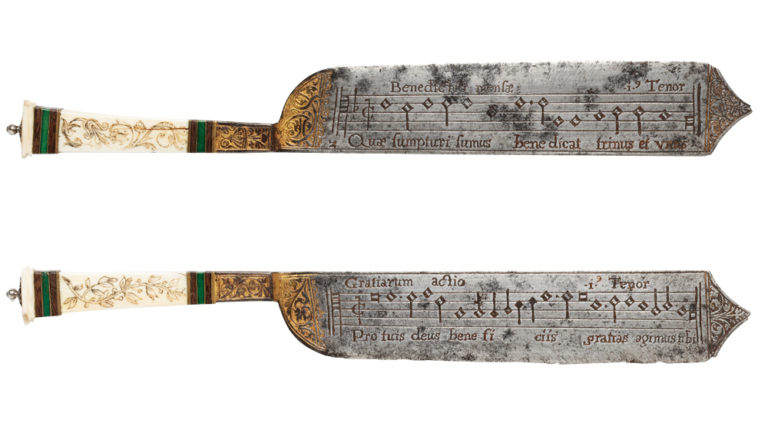
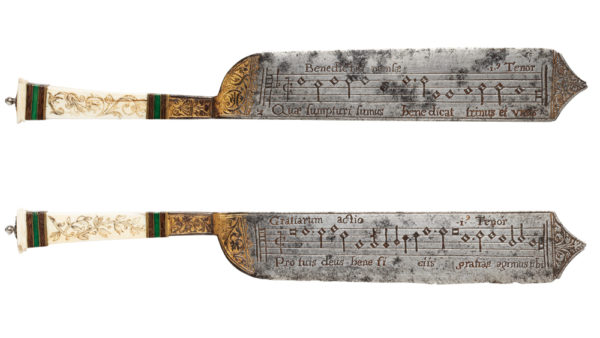
Notation knives dating from the mid-16th century were used to sing a pre-meal blessing and a post-meal grace. This example is on display at the Medieval and Renaissance Galleries at the Victoria & Albert Museum in London.

They’re called notation knives, and they’re engraved with what amounts to sheet music for multi-voiced song. They’re indicative of the formal role music played in medieval dining, according to Flora Dennis, an art historian and author of the book “Re-thinking Renaissance Objects: Design, Function and Meaning.” Holding the knife in the left hand, edge up, diners could see the notes and lyrics for the benediction, or blessing, sung before a meal. After the meal, again held in the left hand, edge down, the knife showed the music for the grace, thanking God for his generosity. Since cutting was done with the right hand, the knives may have been ritualistically transferred to the left hand, or they may have been solely used for singing purposes. Dating from the mid-1500s, one notation knife is on display at the Medieval and Renaissance Galleries at the V&A (Victoria & Albert) Museum in London, where Ms. Dennis works. There are others—seven in Paris, three in Philadelphia, two in The Hague, one in Austria, some in private collections—but as much as is known, much more remains unanswered about these rare items.

In addition to the 16 surviving notation knives, there are also written references to at least four others, according to Ms. Dennis. Essentially, though, the knives have been overlooked by historians because they don’t fit neatly into either “knives” or “music” and have been relegated to curiosity status. All the notation knives share a similar look. The steel blades are broad with straight spines and triangular points on center. According to V&A curator Kristen Kalber they may have been used to proffer a slice of meat to a diner, the point skewering the serving. Then again, squires normally carved meat and that was a highly skilled, status-imbued position. Carving rose to the level of entertainment with offerings carved from cooked fowls and beasts held aloft on forks. So, while some knives seem not to have been used other than to sing from, others show wear on the point and were definitely used.

Museum Curator And Historian Bring Notation Knife To Life

In this 2009 video V&A Museum curator Kristen Kalber shows the notation knife in the museum’s collection and demonstrates its use. Flora Dennis, an art historian at the museum, discusses the project that allowed the music on the knife to be recorded. Ms. Dennis holds a PhD in musicology, specializing in early music, and through an Arts and Humanities Research Council grant she was able to convert the music into modern notation, and then work with the Royal College of Music to bring it to life.

The points and the bolsters are engraved with leaf scrolls and strapwork, often gilded. The handles are made of ivory and green-dyed horn or bone with copper or brass spacers. The ivory is decorated with foliage, empty tablets of scrolls, Arabic or Moorish designs or winged cherub heads inlaid in black. The pommels are adorned with silver spherical knobs. The engravings are usually in Latin, though some are in the vernacular. The one from the V&A reads Benedictio mensae (The blessing of the table) on one side and Gratiarum actio (The saying of grace) on the other. The musical stave runs the length of the blade. In the upper right is the voice part, in this case “Tenor.” What this means is that there were different knives for different voices, in some cases as few as five or six or substantially more than 20.

Royal College Of Music Singers Record Two Versions Of The Meal Benediction


Knifemakers across Europe at the time would have been members of guilds and were specialized. Handles would have been made separately and assembled by the cutler who sold them. Ms. Dennis’ writings detail how challenging it can be to pinpoint where the notation knives were made or by whom. Knives were being made in Solingen and Nuremberg, Germany, and in Milan and Brescia, Italy. Possible guild marks show up in the form of arrows, fluers-de-lis or clovers, and etched Ns can be found on many of the blades, but those are more likely an engraver’s mark. One of Ms. Dennis’ knife consultants intimated that a Nuremberg mark would be on the tang, not the blade. The best guess is that they were made in France, with Italianate influence or for an Italian patron.

Were the knives collected after the gathering or did each singer keep his or her knife? In Ms. Dennis’ summation, judging by the scattering of surviving pieces, the latter might be more likely. It could also be that the knives were made for a group, such a monastery. In some instances, the strict, mass-like approach to such a shared meal could result in latecomers being fined for missing the benediction. What is clear is that the knives are not all from the same musical piece; there are two separate pieces of music represented by the known notation knives.

Royal College Of Music Singers Record Two Versions Of The Meal Grace


Interestingly, the notation knives are representative of both coming together and separating. It is the very nature of a knife to cut apart, but in this instance it is for the purpose of sharing, both repast and praise.

As Ms. Dennis writes:

“Benediction and Grace texts are inherently collective, expressing notions of conviviality and sharing. The knives reiterate this idea, needing to be brought together in a social context in order for their music to function. Simultaneously, however, they represent a contradictory action of dismembering and dividing. By slicing meat, the knives permit it to be shared between the gathered company in the same way that dismembering and scattering the musical text across the knives enabled a group to perform it collectively. The acts of uniting to say the Benediction and Grace, uniting to eat, and uniting to sing become inextricably intertwined with those of separating, dividing and sharing both meat and music.”

Bladecrafting Collection Includes 6 Classics

The 6-volume bladecrafting collection is available at less than half its normal cost.
The Bladecrafing Ultimate Collection includes two paperbacks and four ebooks for $34.99

Makers can’t go wrong with this collection. You’ll get two paperbacks: the third edition of “Blade’s Guide To Making Knives” and “How To Make Knives; and four e-books: “Greatest Loveless Knife Designs,” “Knife Grinding Secrets,” “Making Everyday Carry Knives” and “Fashioning A High-Tech Folding Knife.” Normally, this collection would cost over $70, but you can get it for half that.


 

W.R. Case & Sons Acquires Timberline Knife Brand

GATCO stopped production over the summer. Bear & Son Cutlery purchased the sharpener division and W.R. Case has officially announced that they bought the Timberline knife brand of GATCO.
GATCO, following Spyderco's lead, was a sharpening company that expanded into knives with its Timberline brand.
GATCO, following Spyderco’s lead, was a sharpening company that expanded into knives with its Timberline brand.

W.R. Case & Sons Cutlery Co. in Bradford, Pennsylvania, has purchased the Timberline knife brand from The Great American Tool Company, or GATCO. The plan at Case is to launch a new line of Timberline knives and accessories “into the existing portfolio,” according to a press release issued by Case media contact FJ Feightner. GATCO stopped production over the summer and sold its sharpener division to Bear & Son Cutlery.

“Case is excited to have acquired the Timberline brand assets, and we are developing a comprehensive market strategy around it, which includes future new products and a cohesive integration with the Case brand,” said Mark Paup, president and CEO of Zippo Manufacturing Co. and W.R. Case & Sons.

GATCO acquired Timberline in the early-to-mid 1990s, including knives designed by Timberline’s Vaughn Neeley, such as his folders with the patented NeeleyLock locking system. This transaction followed Spyderco’s lead as a sharpener company that expanded into knives.

Timberline’s specialty was tactical, hunting, utility and kitchen knives, among others. The Timberline Stealth, a tactical folder designed by Neeley, was the BLADE Magazine 1997 American-Made Knife Of The Year®. Here knife designer Swiss Bianco gives a little history of Timberline’s NeeleyLock knives.

Timberline expanded its line to include factory-custom collaborations with knifemakers like Brian Fellhoelter, Tim Herman, Russ Kommer, Greg Lightfoot, Charles Ochs and Butch Vallotton, as well as with designers like Swiss Bianco, George Sessions, Kelly Worden and Dave Young.

Timberline offered a collection of ceramic kitchen knives under the Cape Cod Collection label. In recent years, the company debuted its Javelin and Gas Monkey Garage lines.

Case has been in business since 1889. Its knives have gone from the battlefields of World War II literally to the moon. The company’s expertise is in traditional folding pocketknives, as well as fixed blade sporting knives. In 1981, capitalizing on its unique tang stamp, the company initiated The Case Collectors Club, which now has over 18,000 active members, and is one of the largest known knife collecting associations, according to Feightner.

Steve Shackleford, BLADE editor, contributed to this article.

You Can’t Have Just One Case Knife In Your CollectionW.R. Case & Sons Cutlery Co. has been making pocketknives since 1889.

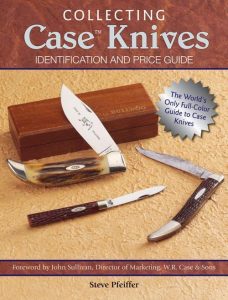
W.R. Case & Sons Cutlery Co. has 18,000 active members in The Case Collectors Club. Read more about the storied history of these traditional pocketknives in “Collecting Case Knives, Identification and Price Guide.”

Southern Grind Marine Pens Poem Of Combat

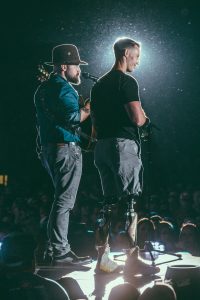
Zac Brown shares the stage with Southern Grind spokesman, Johnny Joey Jones.
Zac Brown’s Southern Grind deploys formidable spokesman, Johnny Joey Jones, a double amputee Marine staff sergeant.

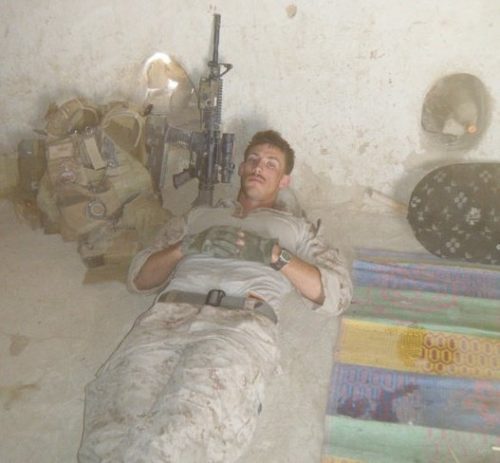
Johnny Joey Jones, Triple J to his friends and Explosive Ordnance Disposal technician to his Marine Corps brethren, wrote a poem about a particular day, a particular explosion, a particular knife, while on patrol in Afghanistan.

Jones, a double amputee and motivational speaker, is the spokesman and more for Zac Brown’s Southern Ground, which is an umbrella company that represents numerous 100-percent American-made and -sourced products, including the knife company, Southern Grind. Proceeds from the sale of these patriotic items benefit Camp Southern Ground, which strives to give kids of all races and religions, and especially those with neuro-developmental challenges, the positive influence of a camp experience. The camp also helps military families by offering the same experience to children who are dealing with a deployed, injured or deceased parent.

In May 2010, about three months before Staff Sergeant Jones would step on an IED and lose both legs above the knee, he was on patrol with a group of Marines. (In the Corps, EOD units go where they are needed, with whom they are needed.) They came to a small canal. “There is always lots of learning,” Jones said, and in this case, it was that you don’t want to use foot bridges to cross waterways. Such crossings would create bottlenecks, ideal spots for the enemy to booby-trap.

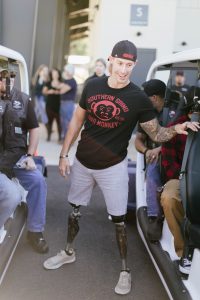
Double amputee Johnny Joey Jones is a motivational speaker and Zac Brown Southern Grind spokesman.
Prior to losing both legs above the knee Johnny Joey Jones was an Explosive Ordnance Disposal technician in Afghanistan.

To get across, first the sweeper, the Marine with the metal detector, went and then the mine-detecting dog and his handler went. “We think the dog stepped on the mine,” Jones said. “The Water So Cold” tells the story.


The Water So Cold

By Johnny Joey Jones

They say it passes

The pain so cold

Even atlas shrugged

Or so I’m told


He was out of sight

Walking on water

A fallen tree bridge

A bomb rang louder


His steps stopped so abrupt

Smoke and dirt were to breath

Gone in an instant

His bloody face screamed


I still see his face

Bloody and scared

The water so deep

Wet blood in his hair


He was screaming so loud

When I jumped in

I grabbed his body

I reached for his hand


The water a mess

Water touching my chin

I opened my mouth

The water rushed in


He yelled and screamed

I panicked and pulled

This boy would not die

In water so cold


I knew I had to do it

I was so frightened beneath

I had to reach down through it

The water so deep


I stalled for a moment

Whispered,” it’s gonna be ok”

“I’ve got you, they’ve got you”

He quieted his bloody face


They came to the bank

Reached down and pulled

This time I didn’t think

Lifting him high once more


In water so cold

I grabbed at his knees

Scared and surprised

I felt legs beneath


My mind rejoiced

His bloody face still screamed

Yet, his hand, his face

Torn open and bled


In the mix of it all

His knife in my hand

I meant to cut off his gear

He was missing only a hand


The bird came loud

So fast and fluttered

The shots rang out

From afar, from cover


I couldn’t shoot back

The bird flew, scattered


Frantically I scratched


To climb out of the water


His gear still a drift

His knife in my hand

Miles still to sift

Of this mine filled land


Days later, I stalled

Reached down, nervous sweat

My legs were still their

His knife, still wet


I gave his knife to the man

“Tell me he lived” I begged

“He lost a hand and an eye-

But he’s still got his legs”


Joey Jones mentored other recovering veterans and went on to become a motivational speaker.
Joey Jones not only took the lead in combat, he became a mentor to recovering wounded veterans like himself.

The knife was a folder issued to Marines. “I was going to cut off his gear, but guys reached down to pull him out. Days later I realized I still had his knife in my cargo pocket,” Jones said. “I gave it to his first sergeant to give it back to him,” Jones said. That first sergeant is the man in the poem of whom the speaker asks about the Marine’s condition.

Jones has had a poetic streak most of his adult life. Since separating from the service, he has earned his Bachelor’s degree from Georgetown University in public policy. “I don’t go back and edit,” Jones said. He wants the poems to represent him authentically, as he was at the time.

Check back to read more about this inspirational wounded warrior.

To learn more about how Jones and Brown met and the knives made by Southern Grind, be sure to subscribe to BLADE® Magazine.


‘Fighting Folders’ Offers Class Instruction At Home

'Fighting Folders' is cheaper than a class and can be watched repeatedly from the comfort of your living room.
In “Fighting Folders” Michael D. Janich instructs viewers on the myths surrounding folding knives and how to employ them in a self-defense situation.

You don’t have to have been in combat to know that sometimes Plan B—the knife—can quickly become Plan A when it comes to self-defense. Often our everyday carry is a folder. This DVD can get you started on proper grip, one-handed openings and other tactics using folding knives. The $39.95 price is less expensive that a class and can be watched repeatedly in the comfort of your home.


5 Ways To Get Your Knives Featured In BLADE

Here are 5 ways to get your knives featured in BLADE, either in print or online. Our goal is to include as many different types of knives and as many different knifemakers and manufactures as we can in each issue and online. We try not to double up on any individual or company, though sometimes it’s unavoidable. That means that we’re always looking for makers who haven’t been featured before. There are some restrictions, but those will be covered under each category.

If you're a knifemaker wanting to get your work exposed through BLADE magazine, be sure to follow us on Facebook, Twitter and Instagram.
Be sure to Like and Follow BLADE Magazine on Facebook. If you’re on Twitter, look for BLADE Magazine. We’re @blade_magazine on Instagram.

First, please Like and Follow BLADE Magazine on Facebook and Follow BLADE Magazine on Twitter and @blade_magazine on Instagram. That way you can see online stories when they’re posted, which may prompt other story ideas.


3 essentials for all 5 publishing options

  1. Our Enthusiasm

We have to like your knife. But wait! We like ALL kinds of knives: cooking, everyday carry, bushcraft, hunting, tactical. We like fixed blades and folders of every deployment and locking mechanism. We like art knives that we’d be proud to put on our shelves. We like all shapes and sizes of knives, of every conceivable blade design and grind. We welcome smiths, stock-removal makers, manufacturers, collectors. Whether you’re just reaching your artistic stride or you’ve been involved in the knife industry for decades, you’re part of the BLADE community. So, don’t be shy. Chances are, we’ll thoroughly appreciate your knife or your perspective on the industry. The only way we’ll be able to see your knife, however, is if you show it to us in a well-done photograph.

  1. Your Enthusiasm

How hard are you willing to work to make your knife look its best in a photo? Or, are you willing and able to hire a professional to take photos so that you can concentrate on knifemaking? The answer to either of those questions will be the measure of your enthusiasm. Other pieces of information will be required, but those details seem easier to acquire than photographs that do justice to your knife.

  1. High-Quality Images

Poor-quality photos will definitely dampen our enthusiasm to publish them, no matter how beautiful your knife is. If the photo is out of focus, low resolution, poorly composed, lacking in contrast, flat or poorly lit, we’ll ask you to get better photos. As challenging as it will seem, it ensures that a poor image doesn’t run side by side with a stellar one, making your knife look lesser than it really is. You can read more about what we expect by reading “6 Things BLADE Looks For In a Knife Photo.”

Let’s say you have terrific photos, then what?

5 ways to get your knives featured in BLADE

  1. ‘What’s New’
A maker can be in “What’s New” only once every 12 months, and precedence is given to makers who have not been published before.
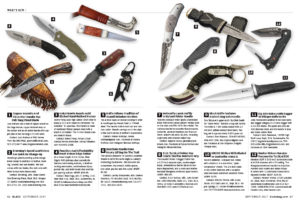
The “What’s New” section of BLADE magazine features knives from six manufacturers and six custom knifemakers. Occasionally a tomahawk, tool or knife accessory will be included, but the focus, as always, is on knives.

The “What’s New” section of BLADE magazine highlights 12 new knives each issue, six from manufacturers, six from custom knifemakers. And, guess what? If you’ve never been in “What’s New” before, everything you’ve made is “new” in that not all of our readers have seen your work before. If you’ve already been in “What’s New,” perhaps there is something new you’ve been trying out: a different design or grind, or you usually make fixed knives and now you’re moving into folders, or you’re using a different engraver. After being in “What’s New,” you must wait at least 12 months before you can be eligible again, and makers who haven’t been in before will take precedence. Just to reiterate, our goal is to get as many different knives into BLADE as possible. We will occasionally include a tomahawk, sharpener or other knife accessory, but mostly the section features factory and custom knives.

Requirements: High-Resolution Image, Short Description

All that’s needed for “What’s New” is a high-resolution, print-quality image of your knife. Bottom line: 300 dpi or higher, 8-10 inches on the longest side, be that vertical or horizontal, and .jpg format. Now, for “What’s New” we use “cutaways,” or just the knife devoid of its background. This means that you don’t need to worry about creating an artistic vignette or still life with your knife. You do have to worry about getting the best picture you can get. For more on what makes an acceptable photo, read “6 Things BLADE Looks For In A Knife Photo.”

You will also need to supply a list of specs and a few sentences describing the item’s usage. Be sure to note if there’s anything new-to-you about it. They say there are no new stories, just different ways of telling them, and that could also be said of knives. True innovation does happen, and of course, we’re eager to hear about that. However, a maker might be working on new things all the time in his or her shop and that counts!
  1. ‘Knifemaker Showcase’
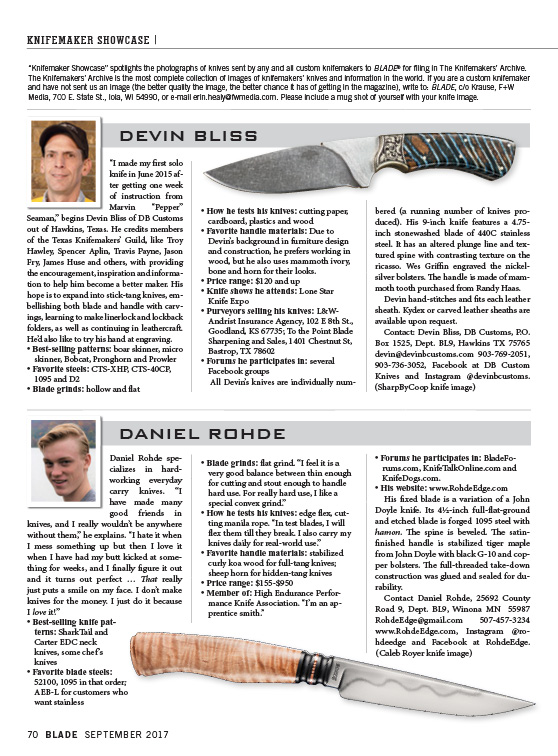
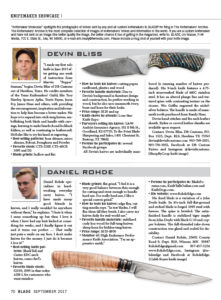
“Knifemaker Showcase” features six custom knifemakers in the pages of BLADE magazine every month.
In BLADE magazine’s “Knifemaker Showcase,” six custom knifemakers are featured every month. A well-done knife image, a mugshot and an interview are required for inclusion in this section.

“Knifemaker Showcase” features six custom knifemakers each month all with a half-page layout that includes a mugshot, cutaway knife image and bulleted interview. The goal here is find out more about you, your start in knifemaking, your influences and your preferred materials, designs and ways of connecting with your customers. You’ll need to answer a questionnaire, explaining why you make the choices you do when crafting a knife. You can type out your answers, or if you’re not into typing, we can interview you over the phone once you’ve had a chance to think about your answers. After you’ve been in “Knifemaker Showcase,” you must wait at least 12 months before you’re eligible to be in it again, and makers who’ve never been featured before will take precedence. That way we can shine the spotlight on as many different makers as possible.

Requirements: High-Resolution Knife Image, Mugshot, Completed Questionnaire

Again, our designers use cutaway images of knifes in this section, so a clean backdrop is best. You want to make sure your contrast is good and that nothing, including shadow, fabric, grass, encroaches on the edges of the knife. To learn more about the differences between a good photo and a bad one, read “6 Things BLADE Looks For In A Knife Photo.”

A mugshot is a portrait of you. It can be taken outside or in your shop, but the background will be mostly eliminated since we’ll be cropping in on your face. Don’t wear sunglasses. This is a chance for readers to meet you face-to-face, so to speak. If you’re wearing a hat, just make sure your face is not cast in shadow. Even though it will run small, your photo still needs to be print-quality. Keep in mind that if you submit a family portrait, for example, we will need to crop in on just you, so the size and resolution will need to be higher to account for that.
You’ll need to answer all the questions on the questionnaire unless something doesn’t apply to you. Too much information is better than too little.

  1. BLADEmag.com
Those within the knife industry who want to try their hand at writing can query the managing editor at BLADE magazine for guest blog opportunities.
“Mightier Than The Sword with Erin Healy” is one BLADEmag.com blog where knifemakers and manufacturers can suggest story ideas of interest to everyone within the industry.

The blogs on our website allow us to take as much or as little space as is required to tell a story. Here is where we have the freedom to explore all kinds of stories related to the industry. BLADEmag.com stories can be about manufacturers, distributors, collectors or knifemakers; they can cover everything from how you made a cast spruce cone handle to how you’ve used knives in your family or on the job, whether it’s skinning deer, cross-chopping herbs in a restaurant kitchen or employing various grips in edged-weapon martial arts. The story can be about one particular knife or a collection. The source can be a multinational corporation with operations on more than one continent or a lone individual in his or her shop. BLADEmag.com strives to be a resource for all things knife, so histories and how-tos are of particular interest.

We welcome guest bloggers, provided the topic you’re writing about is not self-promotional. What this means is that you cannot write about your own knives or services. Pay is non-existent, but bragging rights are impressive. You will need to be able to write well, or be open to guidance and editing. You will need to provide a paragraph-long biography and a mugshot to run with your story, as well as illustrative images.

Requirements: A Good Story, Good Images

The thing about a story, whether it’s a topic you suggest for us to explore or one you’d like to try your hand at writing, is that it needs to have a story—a beginning, middle and end, an angle, a hook. If you as someone in the knife industry find it interesting then, chances are, others will as well. Even though BLADEmag.com will always focus on the knife, we also know that it is the people behind the knife that makes the story compelling to read. The whys are always interesting to include, as well as trying to describe how a material or process contributes to the feel or wow-factor of a knife.

Images can be of web quality, but still need to be well composed. For more about how to take high-quality photos, read “6 Things BLADE looks For In A Knife Photo.”

  1. BLADE Magazine

Although knifemaker profiles are reserved for Knifemaker Showcase in print and BLADEmag.com stories online, other ideas for BLADE magazine are always welcome. The final decision for a feature article within the pages of BLADE rests with the editor. Oftentimes in the course of conducting an interview with a manufacturer or knifemaker for “What’s New,” “Knifemaker Showcase” or BLADEmag.com, we find other stories to write about in print.

Requirements: Exceptional Print-Quality Images, Extensive Interview

To get a story into print, images must be top-notch. Focus, contrast, lighting, composition, depth of field all matter. Resolution must be high; size must be large. To fully understand what this means, read “6 Things BLADE Looks For In A Knife Photo.”

  1. Social Media

Make sure to follow us on  tag us in your social media photos so we see them and use #BladeMagazine

Requirements: Images, Specifications, Intended Usage, Contact Information

Ready? Email Us

Email your photos with specs, information, and details to [email protected]. Remember that the photo must be  Did I mention photos? Before you get in touch, give “6 Things BLADE Looks For In A Knife Photo” a read.


Southern Grind Spokesman Remembers The Fallen

Marine SSG Johnny Joey Jones is spokesman for Zac Brown's Camp Southern Ground, which is funded in part by proceeds of Southern Grind knife company.
Marine Explosive Ordnance Disposal Technician Staff Sergeant Johnny Joey Jones inspects a knife at Zac Brown’s knife company. The Southern Grind spokesman remembers the fallen, especially the mine sweeper who died in the explosion that took Jones’ legs.

In 2010 ABC Nightline produced a three-part series on Marine Explosive Ordnance Disposal (EOD) Technician Staff Sergeant Johnny Joey Jones. During eight years of service, Jones deployed to both Iraq and Afghanistan. It was while in Helmand, Afghanistan, on August 6, 2010, that Jones stepped on an improvised explosive device, losing both his legs and severely injuring one arm. In the face of inordinate challenges, Jones not only maintained a positive outlook, but became a beacon of hope to his fellow amputees, his fellow veteran collegiates and the public who follow his charity work and appearances on Fox News. Triple J or Joey, as his friends call him, is now spokesman for Zac Brown’s Camp Southern Ground, a 400-acre camp and retreat for children and military families that is funded by the proceeds of numerous artisan shops, including Southern Grind, the musician’s knife company. You can read more about Jones and some of the substantial knives offered through knife-lover Zac Brown’s company in the September issue of BLADE Magazine. (If you can’t find BLADE near you, subscribe.) But no matter how far Jones progresses physically, no matter what business pinnacle he reaches, the Southern Grind spokesman remembers the fallen, one fallen in particular, the man who died in the explosion that took Jones’ limbs: Marine engineer and mine sweeper, Corporeal Daniel Greer.

Marine Staff Sergeant Johnny Joey Jones served in both Iraq and Afghanistan.
In the course of eight years of service in the Marine Corps, Staff Sergeant Johnny Joey Jones was deployed to both Iraq and Afghanistan as an Explosive Ordnance Disposal technician. In 2010 he lost both his legs in an explosion. No matter what he does: recovering from his wounds, inspiring fellow veterans as they recover, making motivational presentations, representing charity organizations, appearing on Fox News as a commentator, or as current spokesman for Zac Browns Camp Southern Ground and Southern Grind, the musician’s knife company, Jones is always positive and never fails to remember the Marines, soldiers, sailors and airmen who died in service to our country.

A TV Crew Interviews Jones in Afghanistan, Unaware Of The Fate To Befall Him

Jones’ Recovery Is Motivated By Fellow Wounded Brethren And The Fallen

Jones Remembers The Marine Who Died In The Explosion That Took His Legs

Jones’ Second Chance At Life Is In Honor Of Those Who Died In Combat

No Matter The Obstacle Jones Has Some Marine-Tough Encouragement

Get Two Military Knives Issues Of BLADE For The Price Of One

BLADE's Military Knives issues for 2010 and 2011 are on sale for $5.99 in downloadable .pdf format.

Read about the styles of knives most often carried into war and lots more in this two-pack of BLADE’s Military Knives issues for 2010 and 2011.

Boldly designed military knives, stories of knives that saved the lives of men in combat, soldiers who make knives for soldiers, and makers who support the troops, it’s all covered in these two special issues. Normally, $11.90, this download .pdf pack is on sale for $5.99.

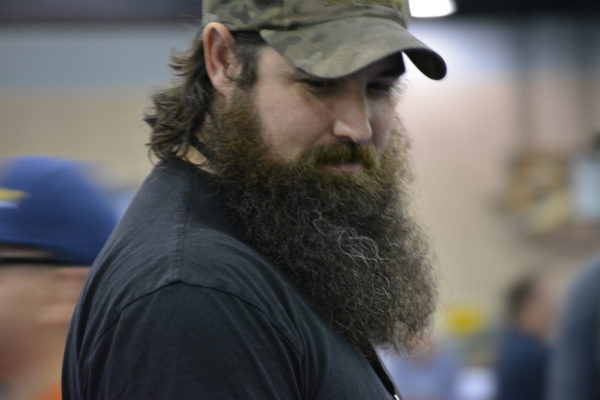
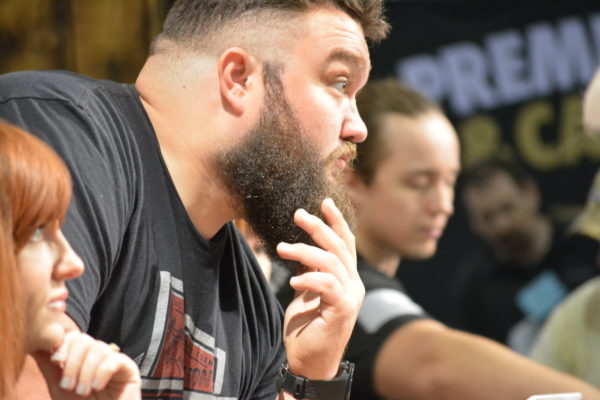
30 Beards Of BLADE Show That Impressed All

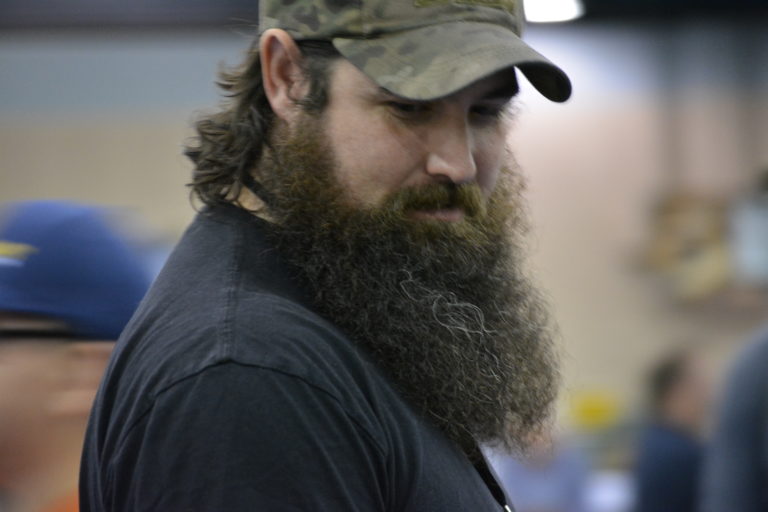
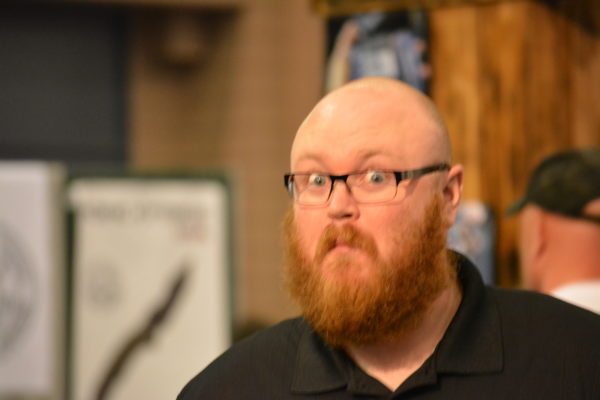
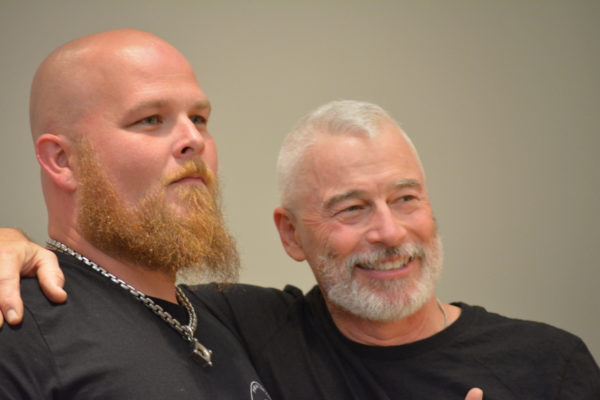
Short, long, thick, thin—and we’re not talking about the wide variety of knives at BLADE Show. No, we’re talking about facial hair that made men nod and women blush. The beards of BLADE Show impressed all! This collection is only a small representation of what we saw at the show. We don’t care about the ebbs and flows of fashion or laboratory tests on what’s found in beards, which frankly only tell us that bearded men live life to the full extent of their whiskers! Here at BLADE, we only hope the tradition continues.

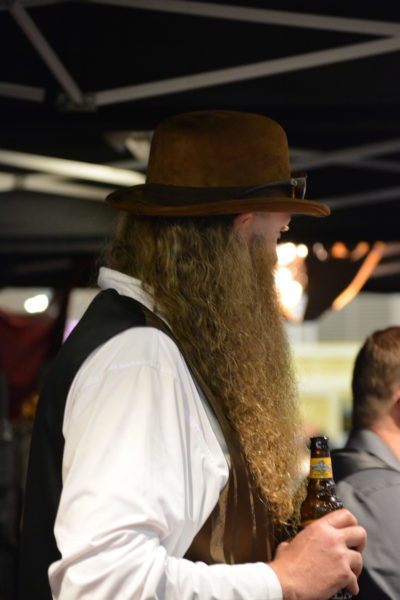
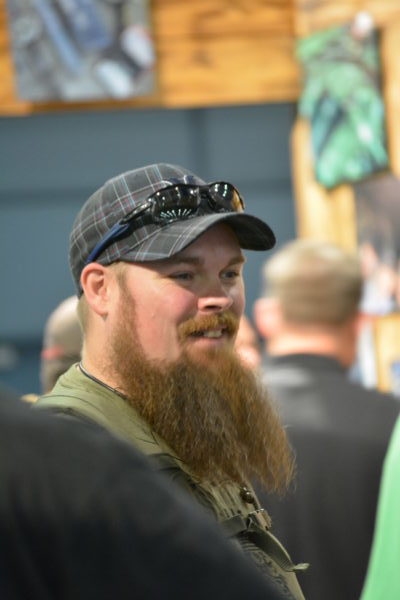
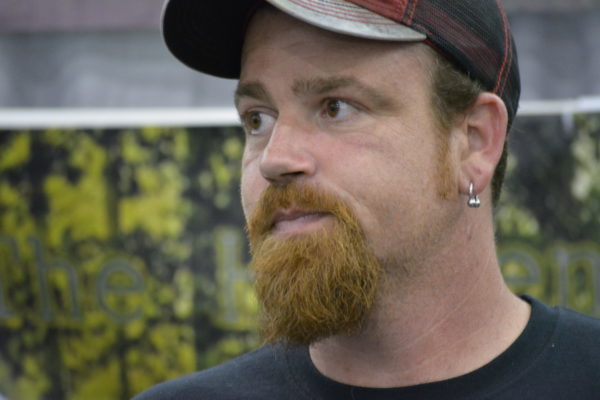
The beards of BLADE Show impressed all. This example of a full beard is combined with longer hair for a decidedly not-hipster, backwoodsy look.
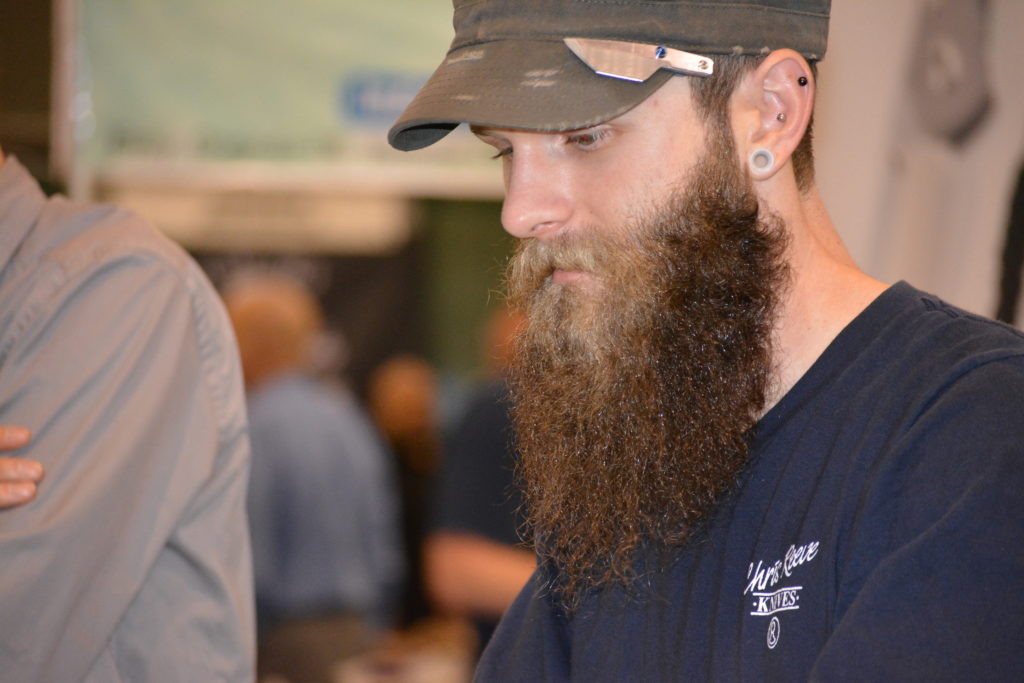
Another Bandholz, only this one with shorter hair, could be seen at the Chris Reeve Knives booth. We also liked the hat adornment. We guess BLADE Show had something to do with knives, but back to beards…
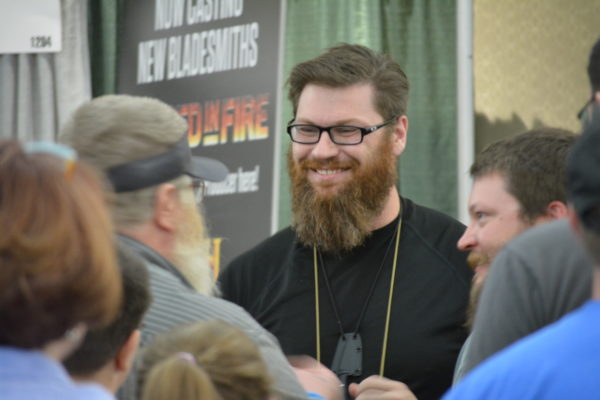
We liked all the beards at BLADE Show.
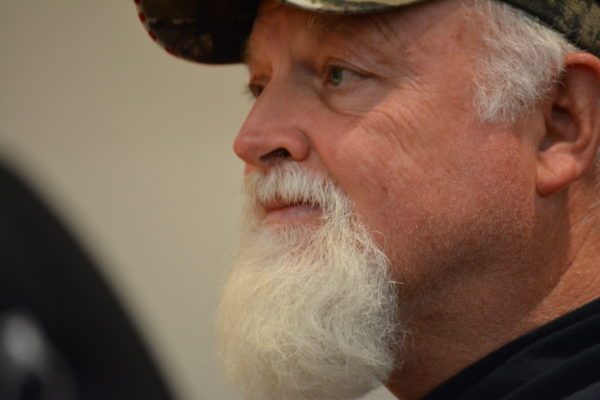
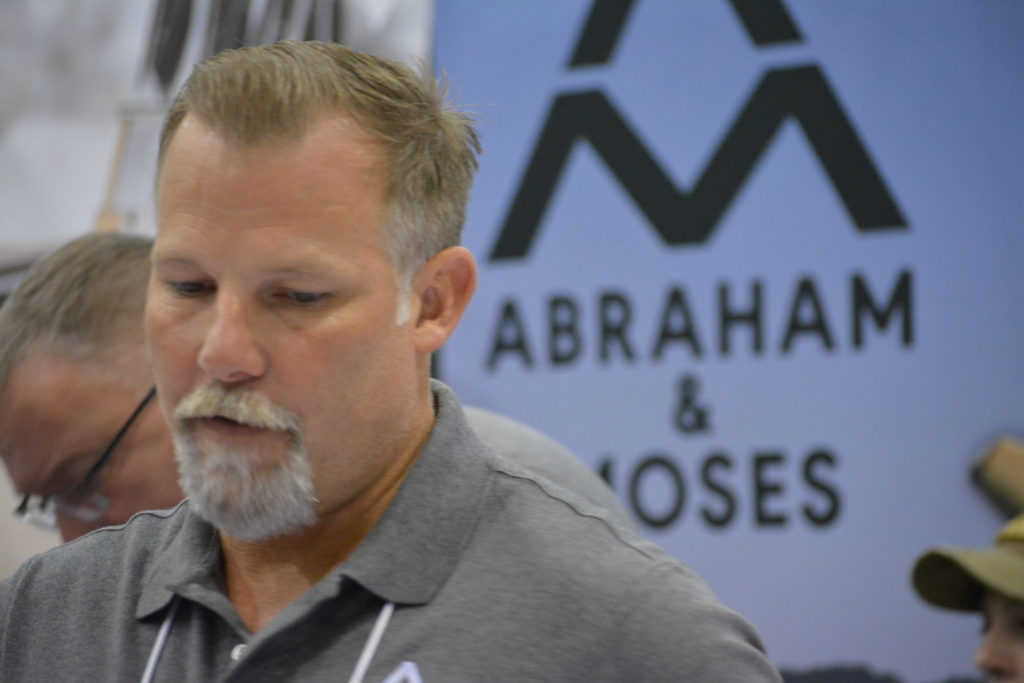
Lou Goodman of Abraham & Moses Survival Equipment sports a neat Van Dyke, which is any mustache-beard combo but with cheeks clean-shaven.
Beards, beards and more beards at BLADE Show.
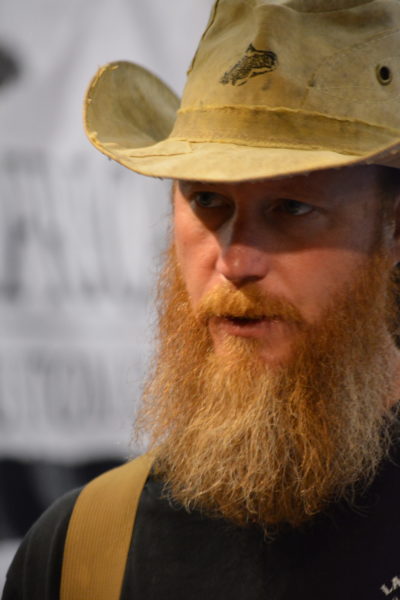
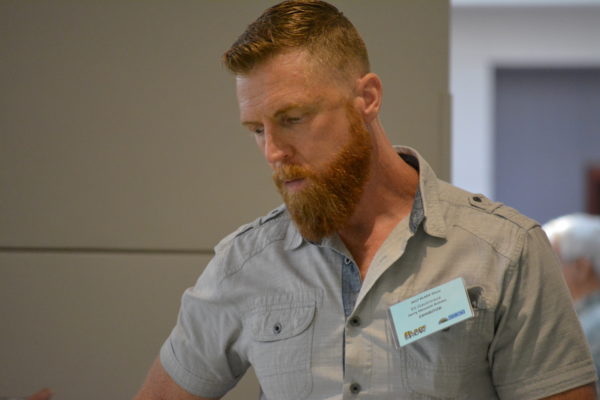
We liked the gradations of red in this full beard on Larry Roberts, “Alone” Season 2’s runner-up.
BLADE Show was a not only a feast for the eyes of knives, but of beards as well.
Ever see a Lynyrd Skynyrd concert? We found this full beard-long hair combination, if we remember correctly, at Zombie Tools.
Al Mar at BLADE Show 2017 contributed mightily to the Beards at BLADE Show collection.
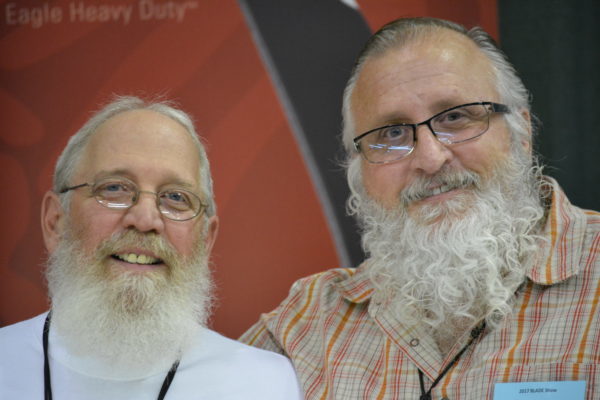
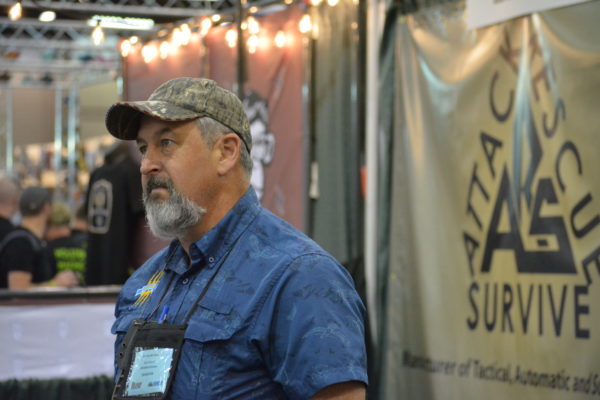
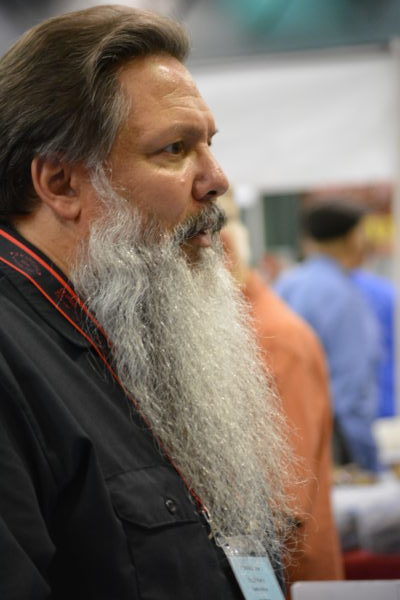
These old-school gentlemen at Al Mar offered two styles of white whiskers and we loved them both!
Facial hair in combination with hair produces all kinds of striking looks at BLADE Show 2017.
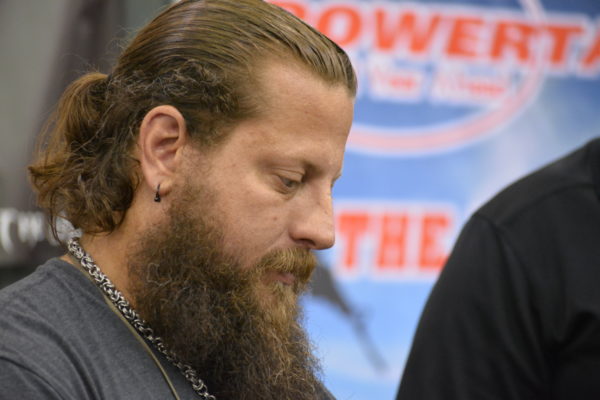
At Rustick Knives we found the warrior tradition expressed in a samurai-esk ponytail and full beard on the owner of Harp Leather.
The beards of BLADE Show came in all shapes and lengths and we liked them all.
Dave Wenger, owner of Wenger Blades in Hudsonville, Michigan, rolled with a Hollywoodian, which from what we can figure is a trailback that meets up with sideburns. Who cares what they call it; we like it!
The Beards of BLADE Show came in all colors.
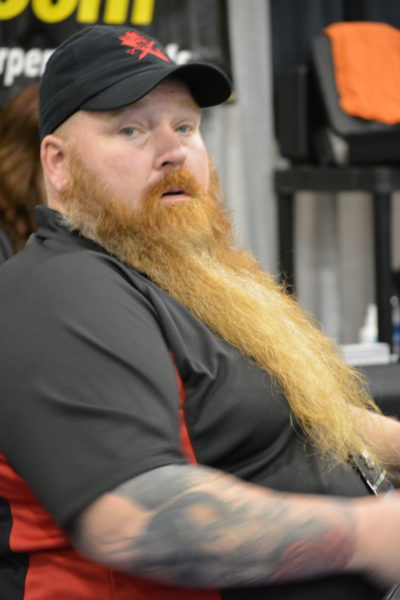
Dan “Jake” Jaquay of KME Sharpeners chilled out on Sunday at BLADE Show with his flame-red chin tresses.
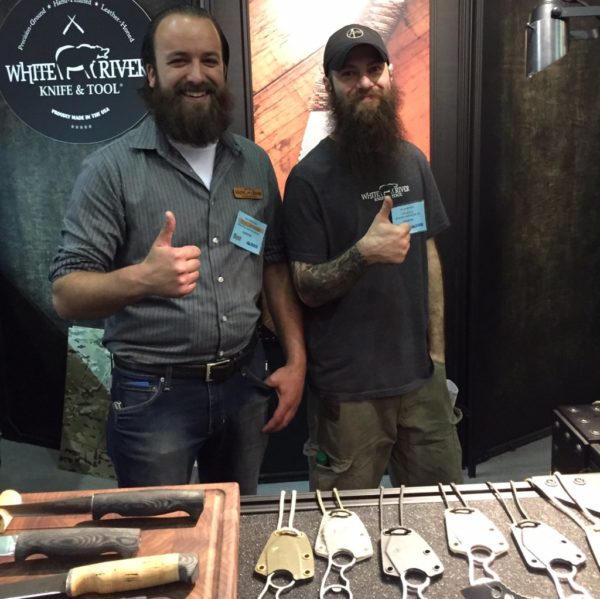
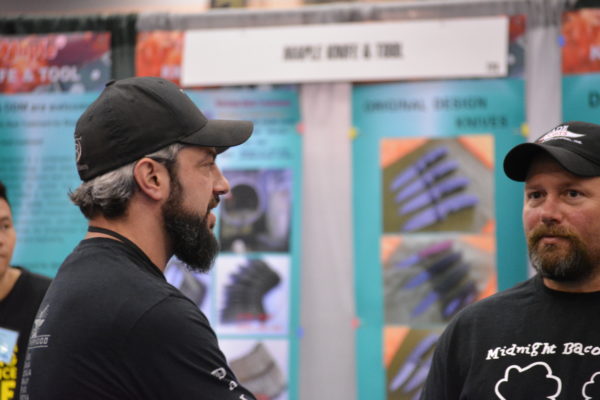
White River Knife and Tool had two significant beard-wearing men manning its booth.
Our photographer went back more than once to try to capture the wildness at White River Knife and Tool, but could never seem to catch Matt C. and Alan N. at the same time. Fortunately, they caught wind of our mission and sent this along. Double-YES!
BLADE Show beards kept turning heads.
Officially a Van Dyke, the goatee on this show attendee is going as far as it wants.
Exhibitors and BLADE Show attendees both provided plenty of beards for the feasting.
Eli Gautreaux of Jerry Hossom Knives checked out the Knife of the Year Award entries in the lobby.
We do not care whats the beards are called, we just hope to see them at BLADE Show 2018!
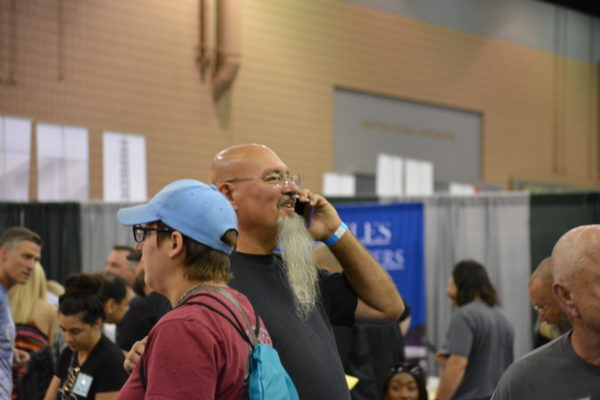
A show-goer seems to be having a good time while we admire his Hollywoodian done to full length.
The BLADE Show was as much about beards as it was about knives.
We found that bearded men tended to have bearded friends, so we often got twofers!
BLADE Show was not just about the blades.
A barback at Key Bar caresses the whiskers.
BLADE Show 2018 will be held June 1-3.
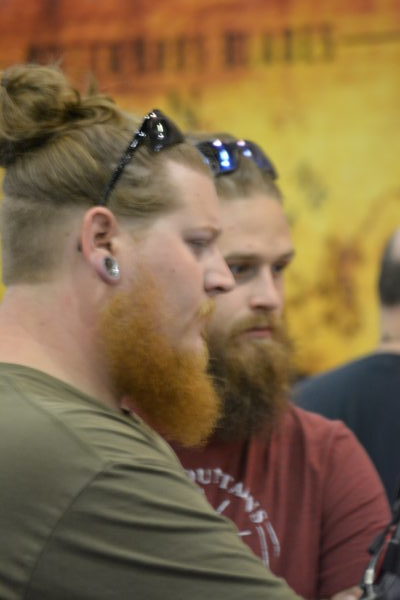
These two show-goers worked the man buns, ear stretcher and shades.
There were knives and beards aplenty at BLADE Show 2017.
As much as we tried to capture bearded men unaware, they often knew they were being watched.
BLADE Show beards came in all colors and lengths.
This lucky winner at the Ernest Emerson Custom Knives Lottery almost looks like he is starting a French fork-style of beard. Ernie looked as debonaire as always.
Young and old alike sported righteous beards at BLADE Show.
Ken Hunt of Attleboro Knives in Idaho sports a salt and pepper Van Dyke.
BLADE Show is three days of blades and , it turns out, beards.
Another lucky winner at the Emerson Knives Lottery, Sevag Tankian, rocks a distinctive full beard.
The Beards of BLADE Show just keep on coming.
Stephan Fowler of Fowler Blades paired his full beard with a tactikilt one day, but, well, that’s a story for another BLADE Show.
The Beards of BLADE Show turned out offer and endless assortment of beards.
This luxurious white Van Dyke was worn well by a gentleman attending the Emerson Custom Knives Lottery on Saturday.
Beards, beards and more beards were the backup attraction at BLADE Show 2017.
We always enjoy talking with new knifemakers…oh, and look, a beard. We hope to see this knifemaker back again next year, along with many others. Like and Follow “Erin at BLADE” on Facebook for guidance on how to get your knife into BLADE Magazine.
Beards kept heads turning all weekend long at the Cobb Galleria Centre at BLADE Show 2017.
A righteous beard! If a knife doesn’t catch your eye at BLADE Show, we’re thinking a beard or two might.
Beards and blades: What more is there at BLADE Show, the largest knife show in the world.
Be sure to plan for BLADE Show 2018 starting now. You know there will be plenty of knives, and if there’s ever an exhibition of beards, this is the place!

Three-Book Collection Helps Knifemakers Of All Levels

Three-book knifemaking bundle is only $34.99.
This three-book set will be referred to repeatedly by those both new and established in the knifemaking craft.

Did BLADE Show 2017 get you pumped for knifemaking? This two-paperback, one-e-book set will answer question for those new to the art, while also reaffirming or acting as a review for those more established in their craft. Included are: “How To Make Knives,” “The Wonder of Knifemaking” and “Wayne Goddard’s $50 Knife Shop, Revised.” Normally this trio would cost you $99.97, but you can get it now for $34.99.

GiantMouse Builds A Better Collaboration Model

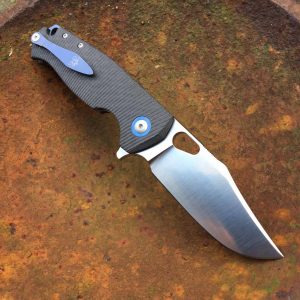
The GM2 has the GiantMouse logo on the blue anodized titanium clip.
GiantMouse is pushing the boundaries of two renowned Danish designers, but together with an American businessman are building a better collaboration model.

By now knife industry followers know that renowned Danish knife designers Jesper Voxnaes and Jens Anso teamed up to create GiantMouse LLC. What you might not know is that a California businessman with a love of knives became the organizational drive behind the endeavor. Jim Wirth asked a simple question over beers with Voxnaes and Anso that solidified the venture, and bettered the collaboration model creatively and financially.

When Wirth turned 14, his older brother Chris gave him a small Gerber pocketknife with mother-of-pearl scales as a birthday present. He loved looking at that work of art, and yet, the knife got plenty of use too. From then on, Wirth began attending knife shows, like the former Bay Area Knife Collectors Association show in Santa Clara. He joined that organization so he could attend the meetings and learn more about the knife industry.

His love of knives—and watches—grew and he continued to attend shows, adding the New York Custom Knife Show and BLADE Show. Meanwhile, he developed a data warehouse-business intelligence firm that became an Inc. 500 Fastest-Growing Company. After a merger, Hewlett-Packard bought the company, and Wirth was set as far as his family and living expenses were concerned. He began consulting, advising owners of young businesses and angel-investing, or backing business that show promise.

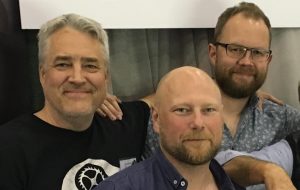
The American businessman and Danish designers behind the success of GiantMouse Knives.
Jim Wirth, left, a businessman and angel investor, suggested that Danish designers Jesper Voxnaes, middle, and Jens Anso, right, start a new company to produce knives they collaborate on, sharing in profits rather than receiving a royalty percentage.

Wirth had always been a fan of the work of Voxnaes and Anso, so at a BLADE Show, although he’d met them before as a customer, he was more formally introduced to the men through a common friend. Over drinks, Wirth inquired about the royalties each knifemaker was making in their partnerships with well-known manufacturers. Although mum on details, designer royalties on any manufacturing collaboration range from 3 to 7 percent, sometimes as high as 10, of net sales. There are countless variables that determine the final cut, however, according to numerous sources in the knife and product development industries, 5 percent is thought to be fair for both the designer and the factory that takes the risk on whether the product will be a success or not.

Voxnaes and Anso revealed that they had indeed co-designed some knives together. They had even come up with a potential company name, GiantMouse, because Denmark is a tiny country in a giant world and they wanted GiantMouse to be a small knife brand in a giant knife industry. Wirth asked why they hadn’t produced these knives they’d worked on. And with that question, GiantMouse came into being.

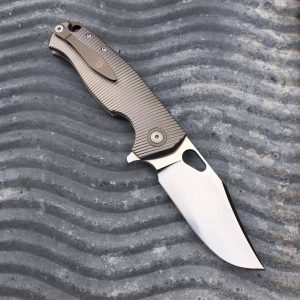
GMP2 is released with a upscaled finish, also in limited quantity, but still at a collectable cost.
The P in the GMP2 version stands for pirate and if you look closely, the mouse logo is wearing an eyepatch.

The three men determined that they would only do limited runs of folders four times a year, 300 in a standard finish and 100 in a special finish. These 100 “pirate” versions would include the GiantMouse logo with a patch over its eye. The GM2—GM for GiantMouse and 2 for sequential order—for example, is a full-size everyday carry folding bowie with carbon fiber handle scales. The backspacer, clip and pivot ring are a rich blue anodized titanium. The nested lockbar is also titanium. The 3.3-inch blade is made of Bohler M390 Microclean powder corrosion-resistant martensitic stainless steel with a satin finish and is ground to a 0.157-inch thickness. The handle length is 4.62 inches, and the knife weighs 4 ounces.

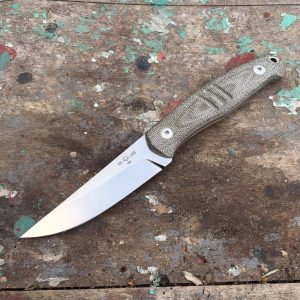
The GMF2 is based on a Nordic work knife, but can be used for bushcrafting or everyday chores.
The GiantMouse team knew they always wanted to have some knives available for sale, so they do not limit sales of their fixed knives like the GMF2.

Although the folders are discontinued as soon as the 400 pieces sell out, the GiantMouse fixed-blade runs are unlimited. The GMF2—F for fixed—for example, with leather sheath, is a throwback to a Nordic work blade that can be used for everything from bushcrafting to everyday tasks. The 3.62-inch blade is made of Bohler N690 cobalt high-performance powder steel, ground to a 0.157-inch thickness and finished in a fine stonewash. The 4.43-inch Micarta handle brings the overall length to 8.12 inches. The knife weighs 4.1 ounces.

The way the designers look at it, according to Anso, is that by working very closely and combining their skills, each designer is forced out of his individual comfort zone. Integrating each maker’s ideas and style without compromising on design quality is “a difficult task but makes for a very strong design if done right.” It’s important to each man that the other is able to vouch for everything involved in the design. Both must be happy with the final result of each knife.

Anso and Voxnaes both started making knives in 1989, and they both lived in rural northern Jutland, only about 30 miles apart. They didn’t actually meet until 2005 at a small knife show. They instantly hit it off and have been close friends and colleagues ever since, explained Anso.

The two friends met Wirth at a BLADE Show when Wirth was collecting knives. “With Jim’s well-known talent for business, high ethics and passion for quality, combined with our skills and experience in the knife business, the idea of GiantMouse Knives started to take form,” Anso stated.

As chief executive officer, Wirth drew up the articles of incorporation and launched the website. He also set up the fulfillment center in Southern California. The knives are manufactured in Maniago, Italy, and Voxnaes and Anso handle all interactions with the manufacturer from approving prototypes, through test runs, to quality control of the finished knives. A final inspection is performed when the knives arrive in California. Out of a run of 400, perhaps a half-dozen will be returned because the blade is slightly off center or a flipper action isn’t as smooth as it should be. The knives are then sent to the fulfillment center where they are put in branded packaging and sent to customers.

One might figure that short runs of well-designed knives would be unaffordable because you don’t have a high number of pieces over which to spread the start-up costs. There can also be fees if runs don’t meet a minimum quantity. But the founding trio at GiantMouse committed themselves to this route because it incentivized the designers. “They’re challenged to create more designs. It’s exciting,” Wirth said. And as partners in the company, the designers share in the profits with Wirth. This both pushes the designers and rewards them for their efforts perhaps more than a percent-of-net-sales royalty would.

All along the goal has been to create exceptional knife designs, produce them at the highest quality possible and keep them affordable. For example, the maker’s list price for the GM2, in standard finish, is $325; the GMP2—the P standing for pirate—in special finish, is $375. Ten dollars from the sale of every folder, and currently $20 from every fixed blade, is donated to Save The Children. (The organization helps ensure children at home and abroad receive the heath care, nutrition, education and protection they need to grow up happy and secure.)

Wirth said that he got to go to Demark and see the operations of both designers. Then the trio drove to a knife show. “I sat in the back and listened to Jens and Jesper talking in Danish. Every once in a while, I’d hear ‘Jim,’ and I’d be like, ‘heeey.’ The only Danish I learned was something written on the radio, something like ‘the radio isn’t on.’ Now that’s what I say to them when I see them.” Wirth laughed telling the story. He seemed happy, like you might imagine a 14-year-old boy would be over receiving a beautifully designed knife.

Know What Great Knife Design Is

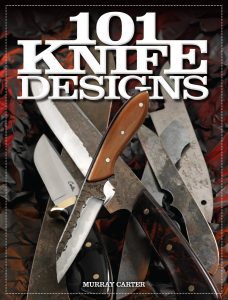
"101 Knife Designs"will give you both theory and beauty behind the great knife designs.
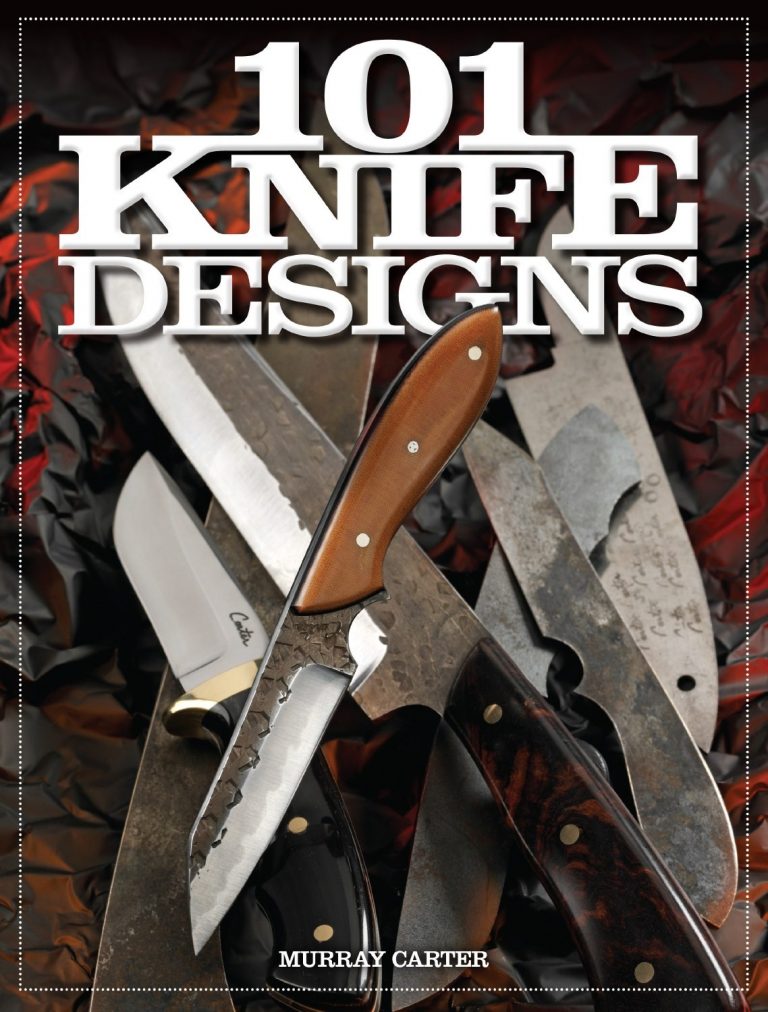
“101 Knife Designs”will give you both theory and beauty behind the great knife designs.

Understanding what makes a great design makes you a better collector and a better maker. “101 Knife Designs” by Murray Carter will not only inspire your work with detailed discussion of blade design, but will give you full-color images of exquisitely designed knives to ogle. At $19.53 you save $10.43 off the cover price.

Advertisement

Must Read Articles

Read this before you make a knife

Knifemaking 101 – Read This Before You Make a Knife

  by Wayne Goddard My experience has taught me that there's nothing like digging in and getting started. I've often said the hardest part of the...
how to forge damascus steel

How to Forge Damascus

Advertisement
Advertisement