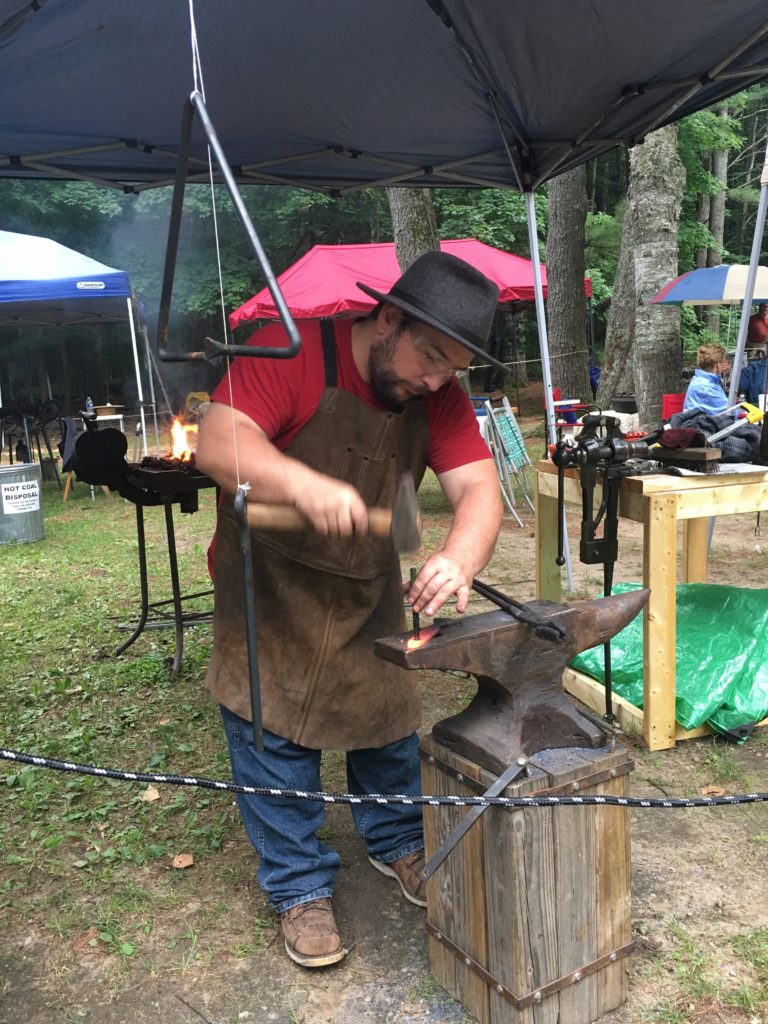
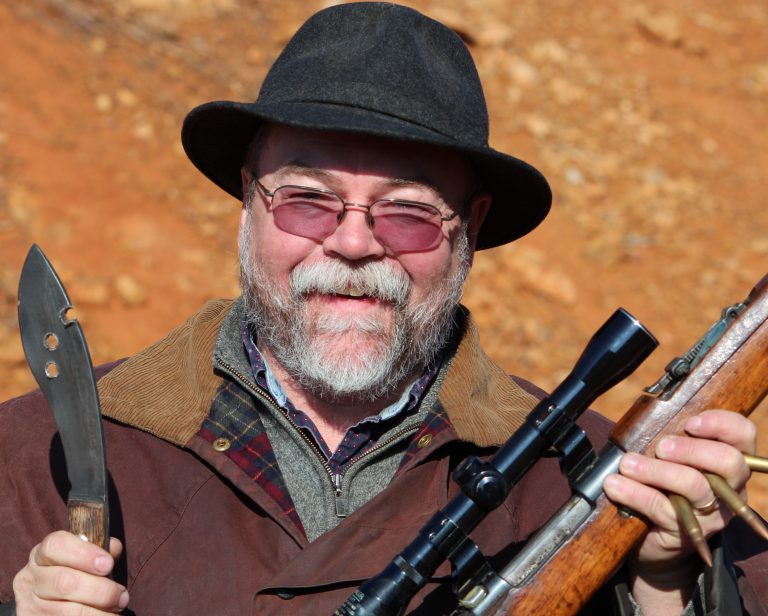
David McConnell is a stamping press repairman who hopes to convert to full-time bladesmithing soon. His first knife, was a cheap Wal-Mart special. Over the years he got frustrated with the lack of quality in such knives and began thinking about making his own. He knew he could make a better knife for himself, and he did. Only his buddy loved it so much that he bought it from him, David said, laughing.
David McConnell of North Woods Forge in Michigan. He forges, preferring a primitive style, using natural materials..
The self-taught bladesmith has been making knives for 11 now, including tomahawks and axes. “I like to make hunting knives and more traditional stuff,” David noted.
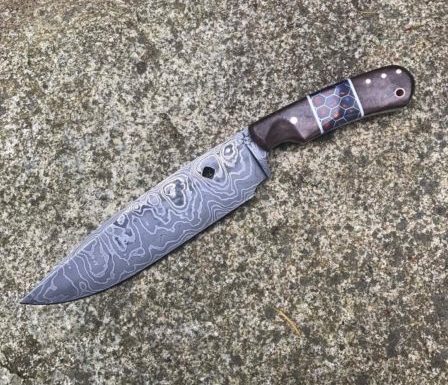
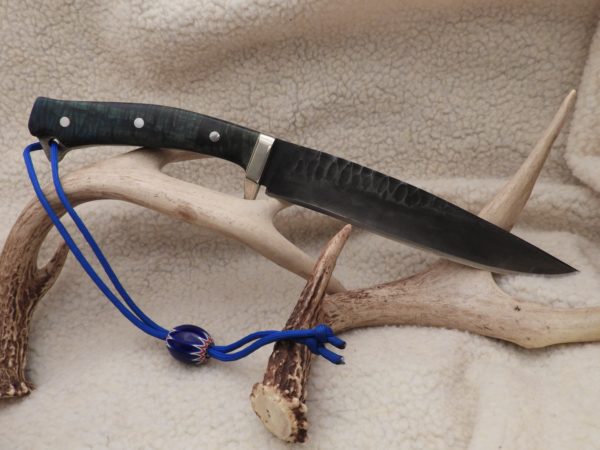
David McConnell made this bowie with an 8-inch blade of 1075 steel. The handle is blue-dyed and stabilized curly maple. Blue curly maple bowie. Guard is nickel silver. Overall length is 14 1/4 inches. Contacts listed at the bottom of this article.
He is an avid grouse and deer hunter, as well as and ice and fly fisherman. He lives in Kalkaska, Michigan, with his wife and 15-year-old son.
David McConnell started teaching his son Parker McConnell to fish early in life. The National Trout Festival, now in its 81st year, is held in April in Kalkaska, Michigan. Parker got this trout in the kid’s pond.
Best-selling knife patterns: 3 ½- to 4-inch-bladed bird-and-trout, 4- to 7-inch-bladed straight-back hunter, classic bowie
Favorite blade steels: W2 for hamon, toughness, ease of forging and grinding; 1075 for ease of forging and heat-treating
Blade grinds: flat ground, sometimes with appleseed edge
How he tests his knives: “If it can cut a nail and have no deformation or chipping and still stay shaving-sharp, I would have to say that’s a pretty good blade,” David commented.
Favorite handle materials: bone, wood, antler. “I just like the feel and warmth you get from natural materials.”
Price range: $85-$600
Knife shows he attends: local gun-and-knife shows and blacksmithing events
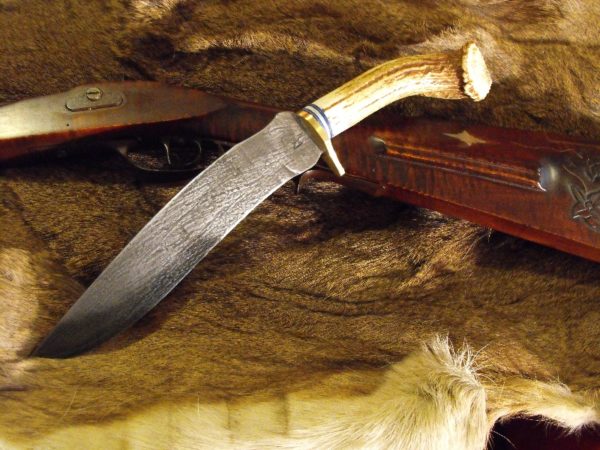
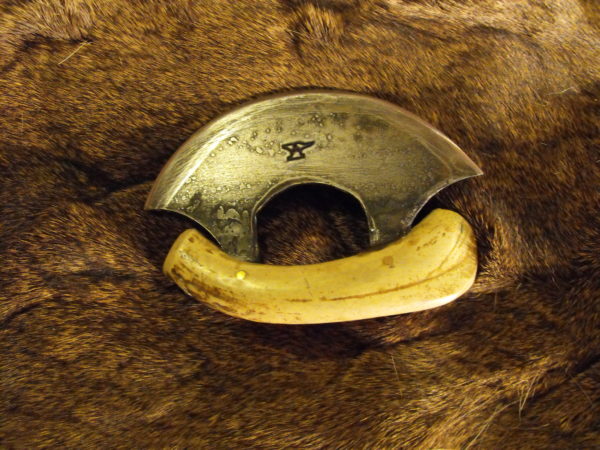
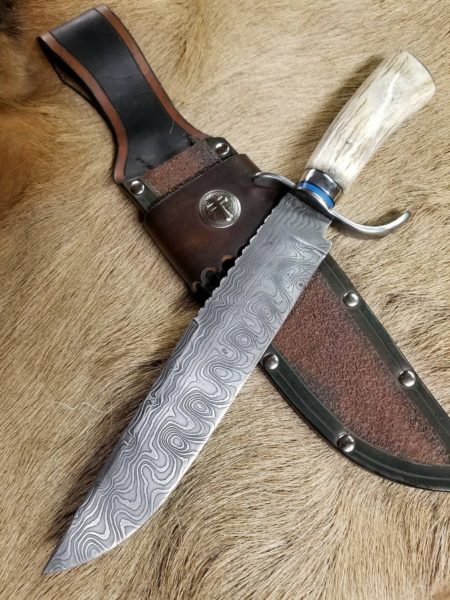
This 15-inch bowie has a 8 7/8-inch blade, flat-ground, appleseed-edged and forged from 1084 cable-patterned steel. The handle is made from axis deer crown antler with a brass guard and blue and white fiber spacers. Maker’s list price: $375.Bladesmith David McConnell puts on a forging demonstration at Black Iron Days at Hartwick Pines State Park in Grayling, Michigan. Every August blacksmiths from all over Michigan and a few from Ohio host demonstrations for the public for the whole weekend.North Woods Forge’s ulu has a 4 1/2-inch blade forged from 1095 steel. The handle is made from whitetail antler. David McConnell loves making primitive pieces and being an avid deer hunter, he often opts for antler material.
You can read your digital issues of BLADE Magazine anywhere you have your phone, tablet or computer, and there’s no need to find storage for all your old issues.
If piling-up issues of magazines seems like a waste to you… If you feel like you don’t have time to read a magazine… If you like the stories we offer in BLADE, but want a more economical option, then a digital subscription is the answer. An annual subscription to BLADE is $17.98, $4 off the print price.
Creek Stewart uses his survival knowledge, and a few good knifes, to tell a rockling adventure story, with a good romance interwoven throughout.
Valentine’s Day saw the release of survivalist and Whiskey Knives co-collaborator Creek Stewart’s young-adult romance novel, “Rugosa.” What knife enthusiasts will appreciate about this adventure is that by page 4 a machete crafted from a lawn-mower blade has made an appearance, and many others follow.
In the dystopian world of post-globalization America, 17-year-old Omaha Hoyt must leave the farm and woods were he is most at ease and travel to the city to rescue his love. The plan is to stay on back roads and subsist off his trapping and foraging skills. Very quickly plans change and the lifelong Boy Scout is forced to help someone he meets along the way.
Omaha’s pocketknife gets lots of use, and his sister makes a survival girl’s dream barrette that is shaped like a butterfly with cutting edges, a fishing line wrap with hooks for antennae, and is apparently weighted for easy throwing as a weapon. In what one might consider the equivalent of a gun getting reloaded in a movie, in the book there is actually a knife-sharpening scene.
This is not to say that “Rugosa” is knife heavy. It’s first and foremost a survival story about a 17-year-old who uses his scout training to survive physical and emotional challenges. But knives are more than an essential tool in this book. They each have a story behind them. Even the knife used against the protagonist is rich in lore.
“Rugosa” is also equal part love story. An author must possess the emotional intelligence to remember what it was like to be 17 and be able to convey what’s going on in the heart of a young man before that youth necessarily understands his own emotions, never mind knows how to convey them. It’s hard not to come across as a mature adult when writing from the perspective of a teen, but Creek creates a believable character. You can read more about the wilderness survival instructor and knife co-collaborator at “Survivalist Creek’s Life Led Naturally to Whiskey Knives.”
The book’s opening is slightly choppy, but only because editors now demand action begin in the fist paragraph. The beginning describes the farm and woods where Omaha lives with his mother and sister and the secret storage bunker he keeps hidden by “Rugosa.” It’s relaxed reading and idyllic, but once Omaha departs on his mission, the excitement is ramped up and the pace is non-stop. It’s easily read in a day or two.
You can get the paperback edition of “Rugosa” for $14.99 and the Kindle version for $3.99 through Amazon. Young-adult novels are one of the healthiest segments of publishing, probably because they’re fun for adults to read as well.
If you’d like to learn more about how Creek collaborated with Hank Gevedon of Reptile Toolworks to create Whiskey Knives, the bushcrafters that look like they stepped out of a 1700s mountain man’s kit, be sure to pick up the June 2017 edition of BLADE Magazine.
And yes, Creek is working on a follow-up novel to “Rugosa.” It takes place during the same timeframe but is told from the perspective of Omaha’s love interest, London, while she struggles to survive during the hostile takeover of Philadelphia.
Build a bug-out bag for your next adventure
Follow Creek’s instructions for putting together your emergency kit and you’ll have least a fighting chance of surviving.
We’re kicking off a new series at BLADEmag.com called Midweek Maker. Each Wednesday we’ll feature a different knifemaker. The first six installments feature active-duty military or veterans. This week: Midweek Maker Military-Style: Dustin Driver of Driver Defense Knives.
Dustin Driver of Guntersville, Alabama served in the U.S. Army from 2004 to 2010. He was a communications expert, deploying to Iraq, 2005-2006, and Kuwait, 2007-2009. He uses that training and experience in his current job as a system and network administrator for a government contractor.
In October 2015 he was looking for a hobby. “I have always been into knives and have always been creative and good at making things,” Dustin noted. Aside from some You Tube videos and Internet research, he is essentially self-taught. “I have a beautiful daughter who has cerebral palsy, so I try and do a few charity knives a year to benefit cerebral palsy and other special needs areas.”
Best-selling knife patterns: Belladonna, an EDC mini cleaver; Toxin, an everyday carry with several blade styles; Timber Rattler, a small neck knife
Favorite blade steels: 1095 for consistent heat-treat; S35VN as a good all-around steel; pattern-welded steel from Alabama Damascus Steel
Blade grinds: flat with plans to offer hollow. “I like thick blades with full or high flat grinds. The thick spine makes for a strong blade, and the high flat grinds make them nice slicers.”
How he tests his knives: chopping 2-by-4s, field use, slicing paper
Dustin Driver bought a mill and he’s experimenting with fullers. He likes the looks of them when they end in a bevel. His Toxin model comes in a variety of blade styles, including a drop-point with or without hamon.
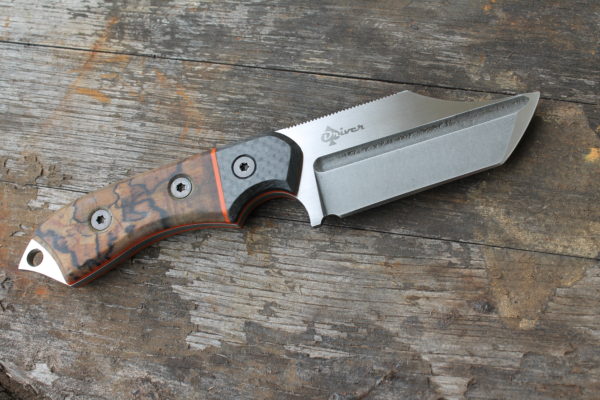
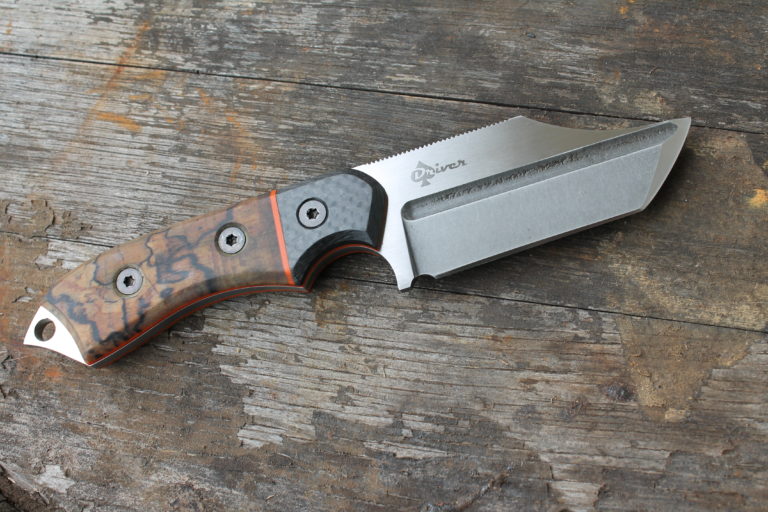
The 7.5-inch Driver Defense Toxin is a tanto-bowie with fuller made out of S35VN steel. The flat-ground blade measures 3 inches. The scales are stabilized spalted maple with carbon fiber bolster and orange G10 liner and spacer. Maker’s list price: $350 with Kydex sheath.
Contact Dustin Driver, 256-975-9857, [email protected], on Facebook at Driver Defense and on Instagram @driverdefenseknives. His Facebook Group is Driver Defense EDC. You’ll want to ask to join that one. Dustin makes beef jerky, too, and he’s a big-hearted guy with frequently donates portions of proceeds to charity.
Subscribe To BLADE For More Stories Like This
An annual U.S. subscription to BLADE is $21.98. You can get your 13 issues sent to Canada for $39.98 and internationally for $49.98. Or go green and get your issues sent digitally for $17.98.
A one year’s subscription to BLADE will ensure you’re the first to read all six Knifemaker Showcase stories. You’ll also get the latest knife news, knifemaking how-tos, knife reviews, plus knife history and articles that tap into the knowledge of both the legends and the up-and-comers. Don’t miss out. Subscribe.
Depending on where you live and by what method you hunt, deer season is underway. There are any number of blade patterns you could select for a skinning knife, but why are they shaped the way they are? What is the maker considering when he crafts a knife he calls a skinner? Let’s look at 20 examples of 5 types of skinners, plus an extra.
1. Bull-Nose Skinners
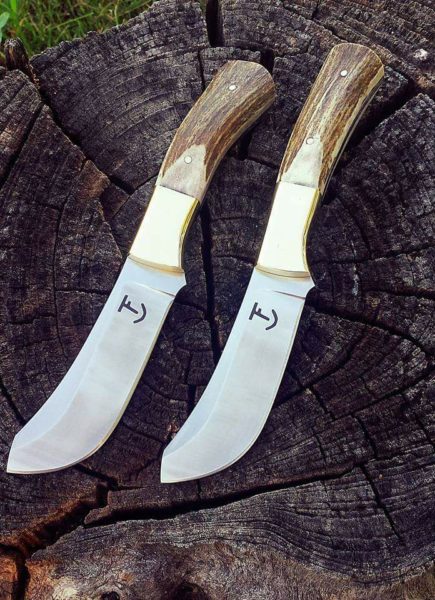
“The blunt tip in conjunction with the trailing point helps from punching through the hide,” noted Travis Fleming of Fleming Fabrications in North Texas about bull-nose skinners.
This set of bull-nose skinners were made for a father and son by Travis Fleming. The 4 1/2-inch blade is made out of CPM 154 stainless steel. The bolster is brass, and the antler handles were supplied by the son from the first buck he got with his dad. Overall length: 9 inches. Maker’s list price: $500/set. Contact Travis Flemming at [email protected] or on Facebook at Fleming’s Fabrications.
Josh Bryant of JB Custom Knives put it this way: “The bump and large drop at the tip are intended to go over guts without popping them.”
Josh Bryant’s Mini Green River Skinner is made with a 2 3/4-inch blade out of CPM 154 steel. The handle is made of dyed stabilized maple burl. Overall length is 6 inches. Maker’s list price: $180 with leather sheath made by the maker. Contact Josh Bryant at [email protected], on Facebook at JB Custom Knives and on Instagram @jb_custom_knives.
“I like a skinner made with a CPM steel,” Mike Cleveland of Half Life Knives commented. “(It) keeps its edge longer and that means more game prepared before sharpening.” Mike added: “I prefer the fuller belly for its ability to cape around tight areas. I value that over the ability to stab in a skinner. With this style of blade you’ll finish ahead of those with a sharper point.”
Michael J. Cleveland of Half Life Knives uses CPM S90V to make the 3.85-inch blade on this skinner. The overall length is 8.5 inches. The handle is made of mammoth bone with Voodoo Resin bolsters. Maker’s list price: $650 with leather sheath. Contact Mike Cleveland at Half Life Knives on Facebook or at 405-627-6097.
2. Drop-Point Skinners
The drop-point skinner is one of the most, if not the most, popular skinning knife blade design. Within the drop-point category, however, there is plenty of individual styling.
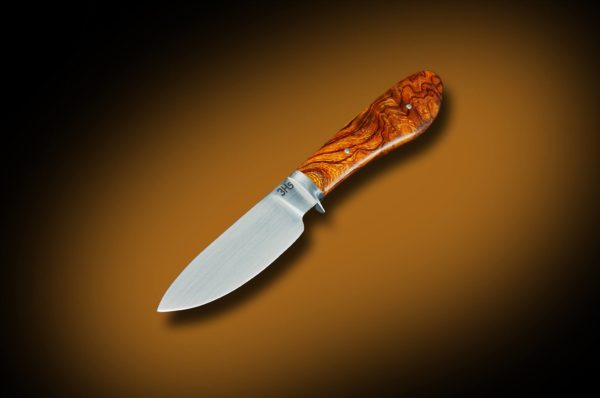
When Raymon Hunt of 3H’s Knives LLC makes a skinner, he strives for “enough belly for caping, but with enough point to make opening the cavity easy without piercing the organs.” A skinner should be balanced and lightweight, he notes. “It is amazing how carrying a heavy knife along with a rifle on a six-hour stalk through the bush can wear you out.” Raymon added that comfort is important. There should be no areas on the handle that could produce hot spots.
Raymon Earl Hunt’s Nessmuk-style drop-point hunter has a forged 4-inch flat-ground blade made out of 1075 steel. The convex cutting edge is 3 1/2 inches, and the knife is 8 1/2 inches overall. The mortised handle is made with exhibition-grade desert ironwood with sterling silver pins and 416 stainless steel guard. Maker’s list price: $600 (includes sheath). Contact Info: Ramon Hunt at www.3hsknives.com, raymon.hunt@3hsknives and on Facebook at 3H’s Knives, LLC.
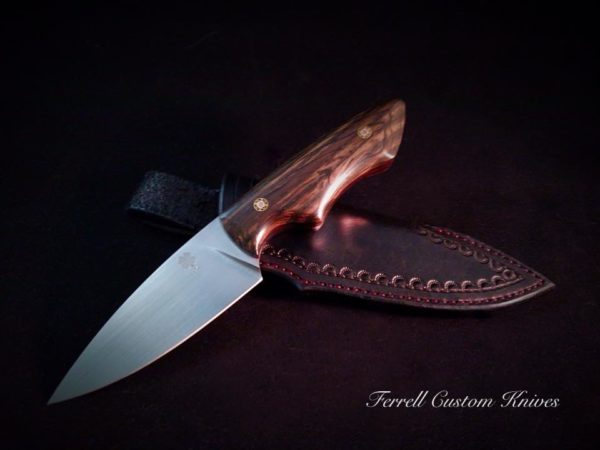
“I feel the most important parts of a good skinner are on edge-holding and the ability to be sharpened easily in the field,” Lane Ferrell of Farrell Custom Knives commented. He pointed out that comfort, not being too heavy and being balanced well, is essential “since some skinning jobs can take a while to finish.” He noted that a skinner “should also be small enough to be carried on a belt or in a pack, but large enough to get the job done effectively.”
Lane Ferrell’s Razorback model skinner has a 4.25-inch blade made with 1084 steel. The handle is Russian bog oak with red G10 liners and mosaic pins. Overall length is 8.75 inches. Price $275 with vegetable-tanned leather sheath with red stitching. Contact Lane Ferrell at [email protected] or Facebook at Ferrell Custom Knives.
“I do such a wide variety of skinners that it all depends on what the customer wants,” Spencer Aplin of STA Custom Knives noted. “Most people want a 3- to 4-inch drop-point. Then the second most requested is a trailing-point 4- to 5-inch blade.” And in Spencer’s experience, a whopping 99 percent want finger grooves.
This Spencer Aplin skinner has a 4-inch blade made of ELMAX Steel. The handle is made with stabilized myrtle burl. Maker’s list price $550 with padded zippered pouch. Hand-tooled and carved sheathes are available upon request at an additional cost. Contact Spencer Aplin at [email protected], www.stacustomknives.com or on Facebook at STA Custom Knives.
Chris Rowley made this 3.25-inch blade from pattern-welded 1084 and 15N20 steels. The overall length is 7.5 inches. Scales are by Voodoo Resins. Maker’s list price: $350 with Kydex sheath. Contact Chris Rowley at [email protected] and at Nomad Custom Knives and Tools group on Facebook.
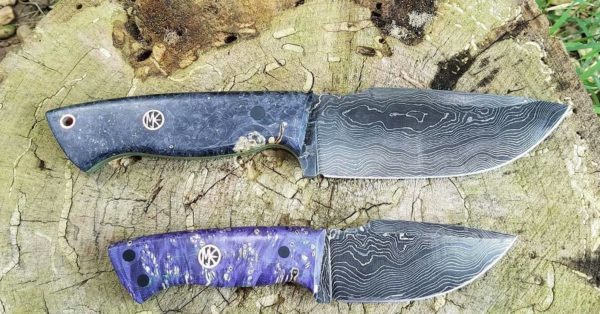
Mike Jeffries of 2 Birds Metalworks made the smaller skinner in this set as a companion to the camp knife. “The slight fighter profile and small size make it excellent for thumb, as well as index, purchase for those internal and fine skinning tasks,” Mike noted.
This drop-point set was made with pattern-welded steel from Alabama Damascus Steel. The scales are made from dyed box-elder burl. The blade on the bottom knife is 3 inches, contributing to an overall length of just over 7 inches. Maker’s list price: $320 with leather sheath. Contact Mike Jefferies at [email protected], on Facebook at 2Birds Metalworks and on Instagram @2birdsmetalworks.
The carbon content in the steel James McClendon used to make this skinner is approximately 1.27 percent. “Makes a most excellent knife,” James declared. “Those old files are getting harder to find.” James likes the “second-to-none on edge-holding–at least as simple-carbon steels go.” He added that the addition of a soft backdraw gives the blade toughness. “I just prefer a guard on a blade so sharp it could take a finger off with one slip. LOL. I also leave just a hint of the file teeth but not enough to hold contaminants.”
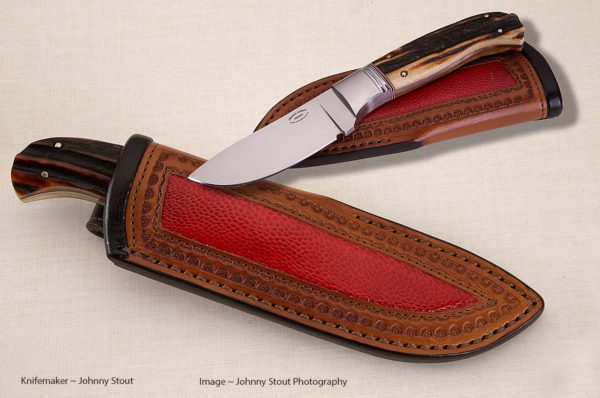
James McClendon made this 4-inch drop-point hunter/skinner out of a Black Diamond file. The bolt-through handle is made of stabilized stag. Overall length is 8 1/2 inches. Maker’s list price: $180 with sheath. Contact James McClendon at [email protected].Johnny Stout’s Rio Grande Skinner has a 3 3/4-inch blade made out of 154 CPM steel. Overall length is 8 inches. Handle is made from amber stag antler. Fluted bolsters are 416 stainless steel. Maker’s list price: $925 with custom Paul Long sheath with red full-quill ostrich inlay. Contact Johnny Stout at 830-606-4067 or [email protected].
Will Thompson put it this way: “The 3 1/4-inch blade is perfect to get around those places that you just can’t get to with a bigger blade. It’s ready to help you get those hams and backstraps to the ice.”
Will Thompson made this 3 1/4-inch drop-point blade out of 1095 carbon steel. The Plantstone handles are by Robert Belcher. Overall length is 6 7/8 inches. Maker’s list price: $120 with leather sheath. Contact Will Thompson at [email protected] or 910-385-6021.Phill Bilkey’s Sambar Skinner has a 3.5-inch blade made of 1085 carbon steel. The handle material is Australian sambar antler with red G10 liners. $200 AUD with leather sheath. Contact: Southern Cross Custom Knives on Facebook.Eric Pearson of Lake Effect Knifeworks made this 4.25-inch hollow-ground drop-point blade out of 1095 steel with hamon. Overall length 9 3/4 inches. The scales are big-leaf maple burl. Maker’s list price: $200-plus. Contact Eric Pearson at Lake Effect Knifeworks on Facebook.
3. Nessmuk-Style Skinners
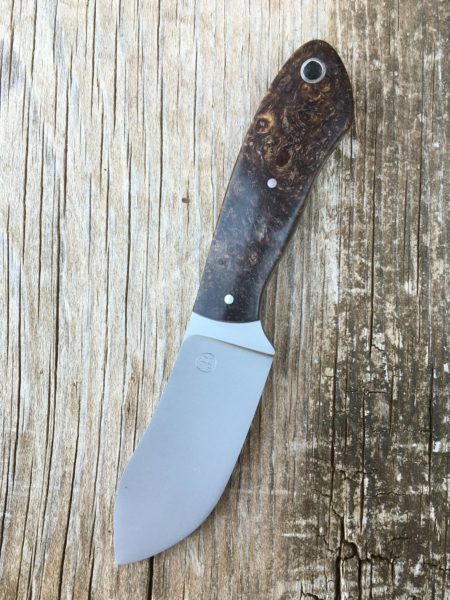
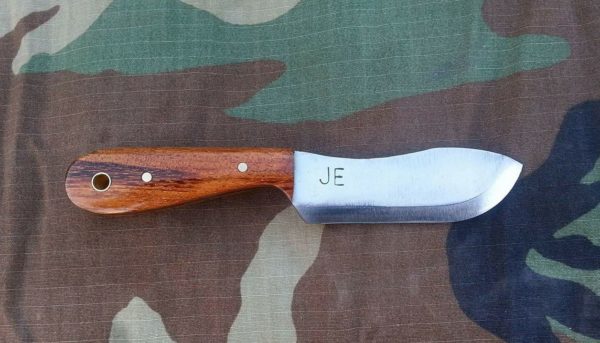
Joe Elinburg in northeast Florida likes the Nessmuk pattern for a skinner. “The rounded point makes skinning easier with less chance of putting a hole in the hide if you’re going to save it for tanning,” he commented. “Also the swoop in the back of the blade makes a great finger rest for more control of the blade.”
This Mini Nessmuk Skinner is made by Joe Elinburg in northeast Florida out of 1095 high carbon steel. The 3-inch blade is convex ground. Overall length is 6 inches. Handle material is camaru. Maker’s list price: $90 with Kydex sheath with mounted metal belt clip. Contact Joe Elinburg at [email protected], @jecustomknives on Instagram or call 904-962-0341.
4. Spear-Point Skinners
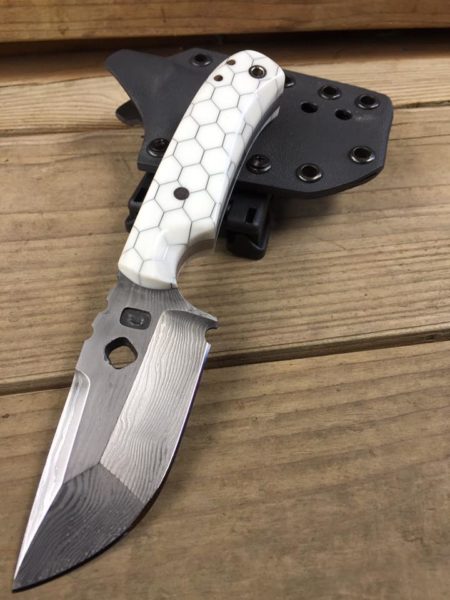
“I have always been a fan of spear-point skinners,” Jon Waltz commented. His son designed this model, and Jon made a few changes by adding the thumb ramp and expanding the belly. The deep finger guard and thumb ramp allow for full control of the blade. “The hollow grind makes for a extremely sharp cutting edge, and the large belly is great for slicing through flesh with precision,” Jon added.
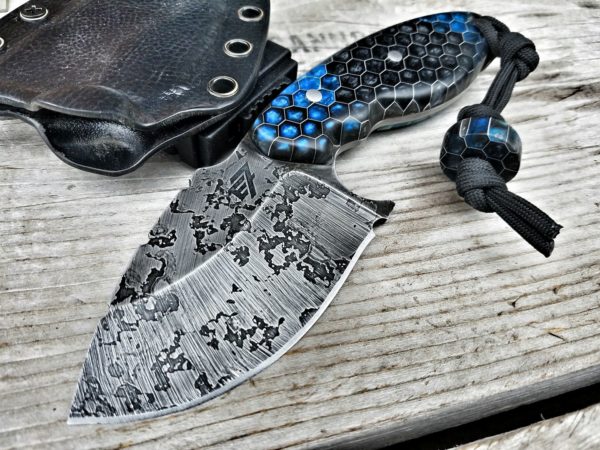
Jon Waltz of Edge7 Custom Knives calls this model the 24/7 Skinner. The Hex resin scales are custom-made. Overall length is 7 inches. The 3-inch hollow-ground blade on this particular one is made of CPM D2 steel, but they are now made in PSF27 steel. Available finishes include acid etched, sandblasted and stonewashed. Makers list price: $275 and up with leather or Kydex sheath with combat loop. Contact Jon Waltz through www.edge7customknives.com.
Denny Furey of Furey’s Urban Combat Knives Unlimited uses NJ Steel Baron 1095 steel to make his Sukina, which is Japanese for skinner. Overall length is 7.75 inches with a 3.25-inch blade with a dark blued polished finish. The handle scales are Rob Carper Innovations (RCI) stabilized, dyed spalted maple. Maker’s list price: $175 with Kydex sheath with belt attachments. Contact Denny Furey at Furey’s Urban Combat Knives Unlimited on Facebook.
5. Trailing-Point Skinners
Trailing-point skinners excel for skinning small game, and are probably the second most popular skinning knife blade design behind drop-points.
“I believe that the finger groove and the thinned spot between it and the spine allows for easier indexing when trying to be precise while skinning raccoons or fox,” commented Tyler Freund of Freund’s Custom Knives. “One can simply pinch the knife between their thumb and finger. Much like you would a scalpel.” In addition, “the thin tip and thin steel lets the user make less intrusive cuts and more precise cuts around the wrists and ankles of the coon,” Tyler explained. He feels this would be more challenging with a bigger-bellied or thicker-bladed knife. “The knife has just enough belly in it that you can draw the knife and skin efficiently once you’ve gotten around the ribs,” he concluded.
Tyler Freund made this small-game skinner for a local trapper. The 3-inch trailing-point blade is made out of Vegas Forge’s raindrop-patterned steel, and the maker added file work along the spine. The handle is bone Micarta paired with Mike Sakmar mokume-gane. The knife is 7 1/4 inches overall. Maker’s list price: $350. Contact Tyler Freund at Freund’s Custom Knives on Facebook or on Instagram @tylerfreund08.Bryce Love’s trailing-point skinner has a 5-inch acid-etched stonewashed blade made out of 1095 steel. Overall length is 9 inches. The handle is made from curled cherry. Maker’s list price: $140. Contact Bryce Love on Facebook at 50Cal Forge or [email protected].
“This skinner has a short blade with pointed tip to reach into tight areas when skinning and caping,” Scooter Davis of Rough Run Forge explained about his Shrade-Sharpfinger-like knife. “The recess on the spine serves as a finger rest, allowing you to choke up forward on the knife for more control.”
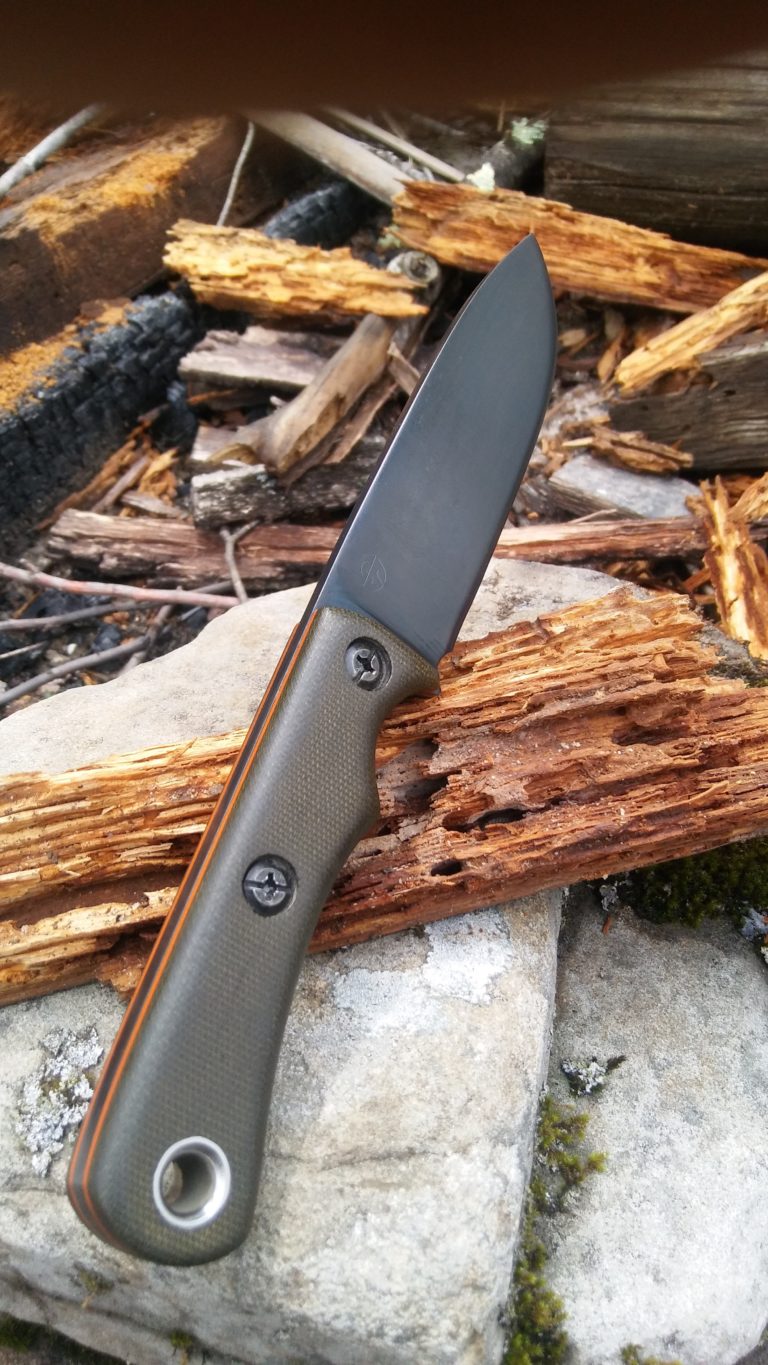
Scooter Davis made this Shrade-Sharpfinger-style skinner with a 2 1/2-inch hollow-ground blade forged from 52100 steel. The scales are prickly pear cactus fastened with stainless steel corby pins. Maker’s list price: $175 with leather sheath. Contact Scooter Davis at Rough Run Forge on Facebook or call 540-560-1672.
Although not a traditional trailing-point blade shape, an upswept point is still evident. Richard Darby’s customer said you can make long sweeping cuts with this big-bellied blade design, as well as flesh with it. “Plus it gives a longer cutting edge for the length of the blade,” Richard noted.
Richard Darby’s big belly skinner has a 4.5-inch blade of 1095 steel with hamon. Overall length is 9 inches. The handle is made with flame masur birch from JHue Custom Sales. Maker’s list price: $150. Contact Richard Darby at [email protected].
Miscellaneous Skinners
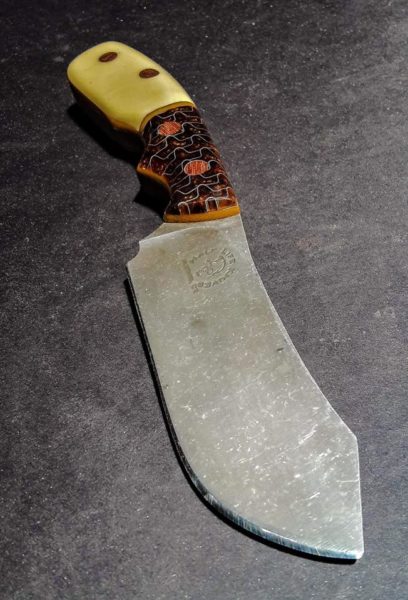
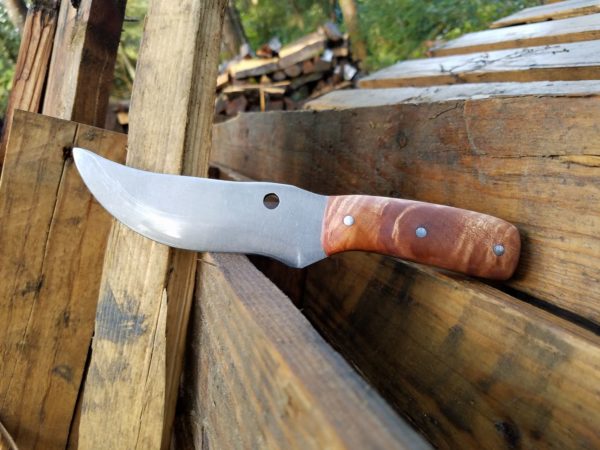
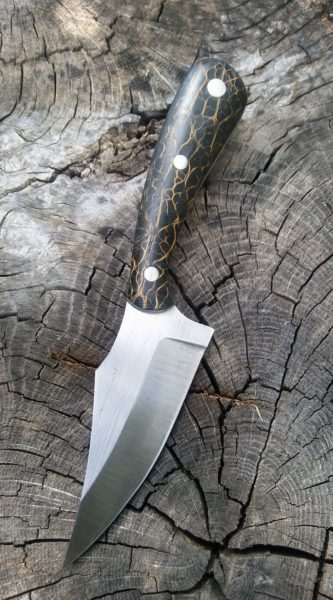
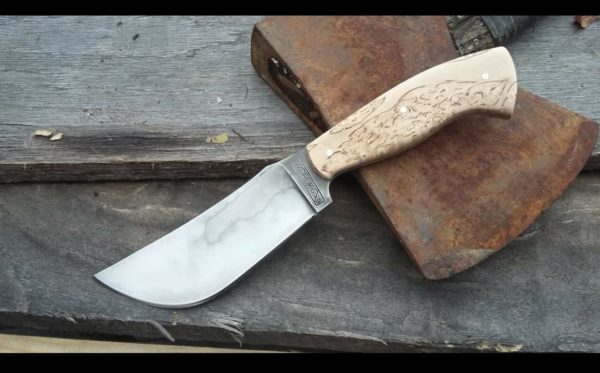
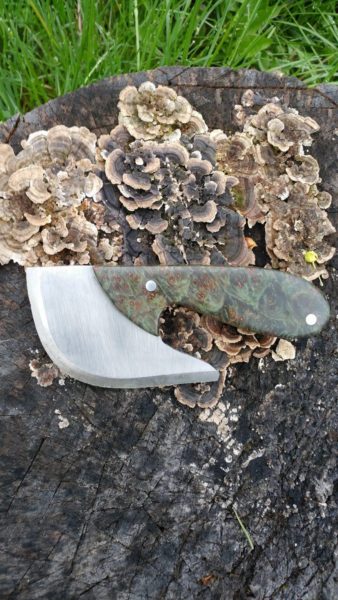
When you skin, the idea is to pull the skin back and make sweeping slices like you would when using an ulu, but it’s not an ulu, Matthew Nolan from Angry Beaver Knives explained. “The whole handle fits in your hand while grasping the blade with thumb and pointer finger…more blade…angles…equals more slicing…and it fits nice in the hand for sweeping strokes.”
Matthew Nolan’s Dear Beaver deer skinner is made out of 15N20 or 1095 steels. The overall length is 5 to 6 inches, depending on the hand size of the customer. The scales are Dustin Smith lace maple burl at Simply Scales. Maker’s list price: $225 with Kydex only sheath. Contact Matthew Nolan at Angry Beaver Knives at [email protected] or at 518-791-2551.
Learn Which Knife Designs Stand The Test Of Time
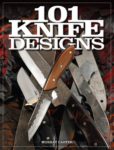
“101 Knife Designs” provides actual scaled patterns that you can use to spark your own designs. At $19.53, you’ll be saving 35 percent on a classic.
Compare and contrast different skinner designs as well as knife patterns of all types. Hiro Soga’s images will satisfy your knife eye-candy jones, you’ll be able to delve into the theory of blade design and you’ll get 101 scaled patterns that you can use to initiate you’re own design. “101 Knife Designs” by Murray Carter is a must-have in hard copy so you can work with the designs, mark with notes and refer to again and again.
When Jerry Davis was a baby he was scooting across the floor and his grandmother dubbed him Scooter. He is a third-generation welder and fabricator. His dad made knives as a hobby, and by the time Scooter was a teenager, he, too, was making knives.
Schooter Davis, a Desert Storm US Marine Corps veteran, specializes in small everyday carry knives, skinners and survival knives.
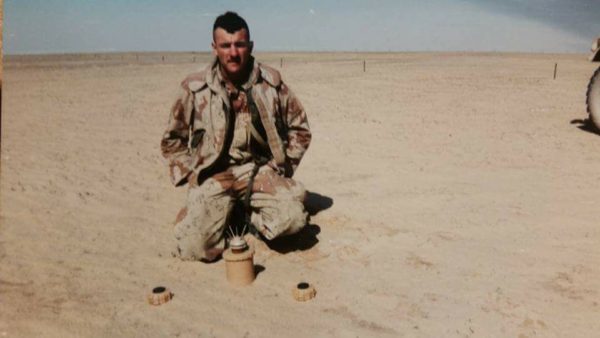
At 19 he entered the U.S. Marine Corps and served as a heavy equipment engineer during Desert Storm. The Gulf War veteran served four years then returned to West Virginia.
Scooter Davis served in the U.S. Marine Corps during Desert Storm. The Gulf War vet then returned to his native West Virginia.
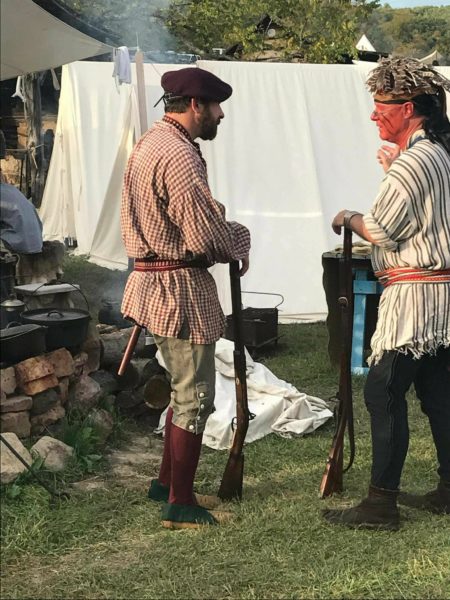
When he isn’t making knives, he’s attending rendezvous, living history gatherings that bring early American frontier days to life. He makes many items in his kit and, of course, period-appropriate knives.
“A primitive rendezvous is a living history event,” Scooter Davis explained. “I have enjoyed them since I was a child. It’s like taking several steps back in time and I enjoy crafting knives and other items that represent that time period [early American frontier].”He’s also a singer and musician, playing weddings, parties and other events, equally comfortable with Sinatra or Stevie Ray Vaughan.
The quintessential Renaissance man, Scooter Davis of Rough Run Forge, can also perform anything from smooth jazz to country.
“I’ve always been an artistic feller, always making things. I can make just about anything,” Scooter said. But what really inspired him was the quality of the work he saw coming out of other knifemakers. John Savage has been a good friend along the way. “My goal is to create blades worthy of being used in the outdoors.”
Best-selling knife patterns: small everyday carry, skinning, survival
Favorite blade steels: 1095 for ease of forging, toughness; 52100 for toughness, edge retention
Blade grinds: flat for deep cutting and skinning, convex Scandi for durability in hard use
How he tests his knives: field use, chopping mountain laurel, slicing paper, cutting small bolts, shaving
Favorite handle materials: Micarta for toughness and durability; wood and bone for beauty and value. “I am partial to rare and hard-to-find materials,” Scooter noted.
Price range: $150 and up
Online purveyors: Pendleton County Outdoors, www.pendletoncountyoutdoors.com
Knife shows he attends: Greater Shenandoah Valley Knife Show, Harrisonburg, Virginia
Member of: American Bladesmith Society
Forums he participate in: Facebook Groups, Knife Dogs, BladeForums.com
This bowie has a 13 1/2-inch blade made of pattern-welded steel by Zoe Crist Knives. The handle is comprised of elk antler, stainless steel and G-10 spacers. The maker’s own pattern-welded steel was used on the guard. Maker’s list price: $800. Contacts listed at the bottom of this article.Scooter Davis’ seax is 10 1/2 inches long with a 5 1/2-inch blade made from W2 steel with hamon. Avocado Micarta scales were used for the handle. Maker’s list price: $250. Contacts listed at the bottom of this article.The W.A.C.K.-1 (Wilderness Area Camp Knife) has a 5-inch blade forced from 1095 high-carbon steel. The scales are fashioned from OD green canvas Micarta with hunter orange G10 liners and a ½-inch stainless steel lanyard tube. Contacts listed at the bottom of this article.
Contact Scooter Davis at 540-560-1672, [email protected], on Facebook at Rough Run Forge and Instagram @roughrunforge.
A Digital Subscription To BLADE is the Answer
You can read your digital issues of BLADE Magazine anywhere you have your phone, tablet or computer, and there’s no need to find storage for all your old issues.
If piling-up issues of magazines seems like a waste to you… If you feel like you don’t have time to read a magazine… If you like the stories we offer in BLADE, but want a more economical option, then a digital subscription is the answer. An annual subscription to BLADE is $17.98, $4 off the print price.
Browning’s line of Jared Wihongi Signature knives is as fierce as its SWAT operator namesake.
Jared Wihongi is a native New Zealander who began training in martial arts at an early age. As a young man he had the chance to live in the Philippines and study an edged-weapon style of fighting called Pekiti Tirsia Kali. Jared has spent 14 years as a law-enforcement special weapons and tactics operator. He also instructs other SWAT team members as well as elite military operatives in edge-weapon skills. He has advised Browning on its Black Label tactical family of knives and now has his own signature line, strikingly designed with Maori-inspired blade etchings. Be sure to subscribe to BLADE magazine to read about the Jared Wihongi Signature line of combat knives in the August issue, on sale May 16, 2017. To learn more about Jared Wihongi’s upbringing and training, read “Browning Launches Wihongi Line of Maori-Inspired Knives.”
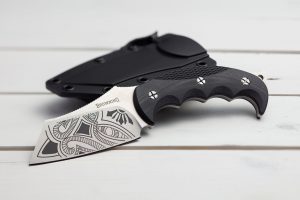
The Jared Wihongi Signature Fixed has a canoe-shaped handle that is ergonomically correct in both a forward and overhand grip. The etchings are borrowed from Maori tattoo patterns.
To meet Jared Wihongi and hear him discuss his style and philosophy of knife fighting, here are some well-done videos by Funker Tactical. In the first, Jared discusses how the foot movements used in Filipino knife fighting can aid in an empty-hand or firearm scenario. In the second, Jared addresses how the skills developed through the practice of Pekiti Tirsia Kali are relevant to the reality on today’s street or battlefield. And in the last video, Jared talks about why you should train wearing what you wear in your work or your everyday life. Law enforcement and military especially need to practice wearing their equipment so they understand how their range of motion, breathing and other functions are affected by the added weight.
In “Fighting Folders” Michael D. Janich instructs viewers on the myths surrounding folding knives and how to employ them in a self-defense situation.
Micheal D. Janich covers how to use empty-hand skills, quick one-hand deployment techniques and knife-fighting tactics so you can lean on your folder as part of your self-defense kit. This DVD is well worth the $39.95 when you consider you can watch it repeatedly in the comfort of your home, practicing its demonstrated skills until you’re ready to take your training to the next level.
The June issue of BLADE® magazine features a story about wilderness survivalist Creek Stewart and his line of Whiskey Knives, made by Hank Gevedon and crew at Reptile Toolworks in Mt. Vernon, Kentucky. Whiskey Knives are carefully tested, but Hank likes to destroy a few from time to time to spot-check their quality. He starts by bending a Whiskey Corvid model to show that the hard outer layer of the A36 carbon steel will crack when bent in half, but that the knife will stay intact because of the tough inner core. Then he gets to shooting them. Besides, Hank’s just entertaining to listen to.
A Bent Whiskey Corvid Knife Still Chops and Slices
Hank Shoots A Whiskey Corvid with an 8mm Mauser FMJ
So what does all that mean to the knife owner? Well, you won’t want to bend your knife in a vise or shoot it at the range, but the following review of the destructive testing explains how the makuri method of construction can produce a sharp, yet tough knife, ideal for hard-use bushcrafting needs.
What Does Destructive Testing Reveal About Whiskey Knives?
Sure They’re Sharp, But How Sharp?
Know How to Sharpen Your Knives
A collection of knives is only as good as it is sharp. Understand how to sharpen all styles of grinds, along with other tips on caring for your collection.
The blades on Whiskey Knives are asymmetrical hollow-ground, meaning that you only need to sharpen one side, the one with the Creek logo on it. The other side just requires a touch-up. Reptile Toolworks puts instructions in the crate with each Whiskey Knife it sends out, but what about your other knives? “Sharpen A Knife, And Care For Your Collection” by BLADE editors covers all aspects of sharpening, demystifying the process and ensuring you have the knowledge to keep your knives sharp at home and in the field.