
The BLADE Blogs

The blogs of the BLADE editors, Steve Shackleford and Erin Healy.

Fish Knives Combine Form & Function

Here’s plenty of proof that a fillet knife can be put to extreme use, and still be a work of art.

The following is written by Tom Carpenter, and reprinted from the June 2013 issue of BLADE® Magazine.

Filleting fish under wet, sometimes salty conditions isn’t the kind of work or environment you want for your best knives. So you might suffer through with a mass-produced imitation of the real thing. But there’s no need to use an inferior tool. Consider the fish and fillet knives of Phil Wilson, Todd Kopp, Kevin D. Cross and John Cammenga of White River Knife & Tool. First, let’s get right down to the fish knife fundamentals.PhilWilson2
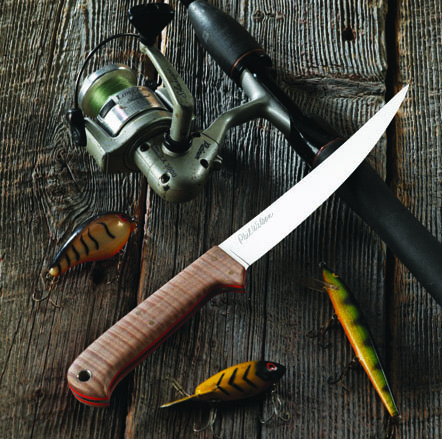
Knifemaker Phil Wilson’s “Shelter Cove” fillet knife (left) sports a 7-inch N690 blade, a fiddleback-maple handle and red spacers. He says a fillet knife should have some flexibility and be ground thin.


The basic features that make for a functional and efficient fillet knife are: a comfortable, secure grip that won’t slip and slide in your hand while doing wet, slimy chores; a sharp blade that is relatively thin and flexible for precision work, and holds an edge; and materials that can stand up to abuse like moisture, blood, and frequent washing and drying.

Wilson, Kopp, Cammenga and Cross craft fish and fillet knives that fit all these criteria and more. Here’s where they put their focus.

Working under the business name Seamount Knife Works, Wilson has been making fillet knives for almost 30 years. “A simple design is best,” he says, “clean and smooth without a lot of holes and crooks and crannies to get packed up with gunk. A good finger guard and a butt end on the handle prevent slippage under wet and slimy conditions.”kc3
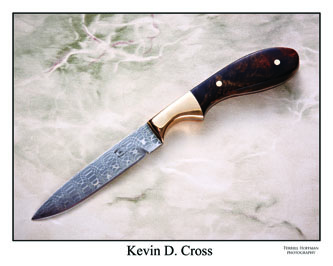
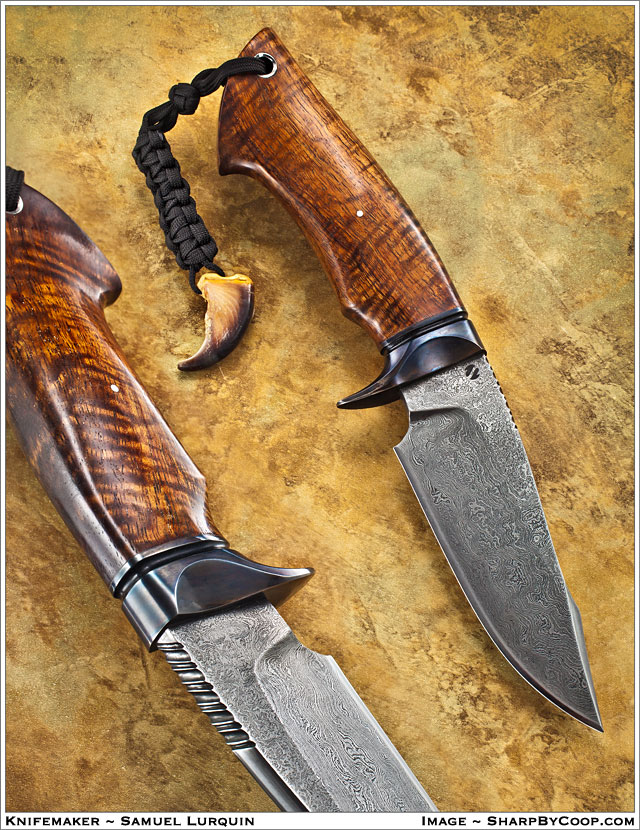
As far as the stainless-damascus blade Kevin D. Cross used for his bird and trout knife (left), the maker says there is a segment of sportsmen who appreciate a beautiful and functional knife. The piece also includes a desert-ironwood handle and bronze bolster. His list price: $400. (Hoffman photo)


As for blade material, “stainless steel is mandatory,” stresses Wilson. “I have used 440C, 154CM, AEBL, CPM-S90V, 12C27, CPM-S60V, CPM-S30V and CPM-154. Yes CPM-S90V—it still makes an awesome fillet knife, but now I feel it is overkill for the application. Given proper heat treatment, they all make a good fillet knife. These days I am using CPM-154, CPM-S30V and N690 mostly. These steels are in pretty much the same category for edge holding and ductility. A [reading] of 60 HRC seems to be the best target hardness for all of them.”

Blade characteristics are important, too. “A fillet knife should have some flexibility and be ground pretty thin,” says Wilson. “I like a springy feel in the first half of the blade from the tip back. Flex is a function of the blade geometry rather than hardness or steel grade.Mike Mooney Best Filet

Mike Mooney’s “Coho” model (left) won Best Fillet Knife at the 2011 Professional Knifemakers Association Show. It sports a 6-inch CPM-S30V blade, a dyed and stabilized redwood burl handle, and a 416 stainless steel bolster. (Buddy Thomason photo)

“Blade lengths from 6 to about 9 inches will handle most fillet work,” he adds, “and also double as boning, slicing and carving knives in the kitchen. Edge holding on a fillet knife is not quite as important as on a hunting/utility knife. A fillet knife can clean a box of fish and then get touched up at home or on the boat later. So a little lower hardness can be traded off for some added ductility on a thin, flexible blade.”


Non-Slip Grips

Handle material is critical. “I’m using mostly canvas Micarta® handles,” states Wilson. “An option is G-10. Both are naturally non-slip and do not soak up moisture.”

Kopp earned “Best Fillet Knife” honors at the 2010 Professional Knifemakers Association Show with his damascus fillet knife. He strayed from traditional stainless steel for his award-winning knife, opting instead for a damascus of 1084 and 15N20 carbon steels.StepUp_8_Maple_02
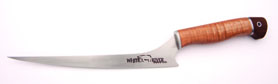
John Cammenga of White River Knife & Tool offers wood-handle fillet knives like this model (left) with a SM-100 blade and tiger-maple handle. Cammenga explains, “At the BLADE Show and SHOT Show, we introduced the world’s first fillet knife made with a blade of SM-100, a corrosion-proof alloy. This particular custom measures 63 HRC on the Rockwell hardness scale, features a 3/16-inch-thick spine and is still flexible! It is a ‘step-up design’ where the handle is notably higher than the cutting edge. The knife was designed by Steve Geelhoed, and while the original is not for sale, replicas sell at $750 each.”

“I used carbon steel on this because it holds an edge better than some of the stainless steels,” Kopp explains. “It does, however, require more care than stainless blades.”

The attractiveness of the damascus pattern is certainly inviting. “Yes, it’s kind of unique seeing a damascus blade on a fillet knife,” he admits. And what about function? “My brother used it on a fishing trip,” Kopp relates, “filleting 30 or so fish with it, and he was pleased with its performance. In fact, I think it outperformed an electric fillet knife!”Kopp Best Fillet orig
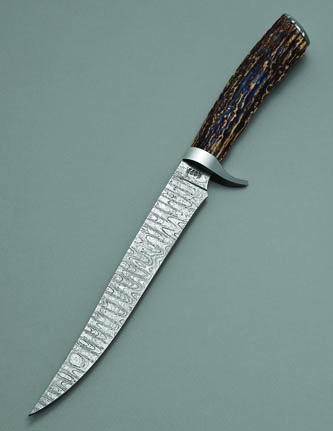
Maker of the Best Fillet Knife at the 2010 Professional Knifemakers Association Show, Todd Kopp chose a 7.5-inch damascus blade and sambar-stag handle for this particular model (left). Note the small details like how he carved the 416 stainless steel buttcap to match the natural grooves of the stag. The maker’s list price: $475. (Buddy Thomason photo)

Cammenga runs White River Knife & Tool, a family-owned business with a full array of fillet knives in its line. “A strong case can be made for many great alloys available today,” he says. “We chose 440C for our Limited Production and Custom Finished versions in 2013. This high-carbon, stain-resistant steel retains our hand-sharpened, leather-honed edge for a very long time. It also provides reasonable corrosion resistance.”

Cammenga uses wood handles on the fillet knives. “The wood is stabilized and will not shrink, swell, or absorb blood or oil,” he explains. “We also offer a cork handle with a wooden pommel. The cork handle with a 6- or 8-inch blade will float [if the knife is dropped in the water]. Also, our unique ‘step-up design’ helps to keep the handle [and knuckles] a little farther off the cutting area, a nice feature when filleting on less than ideal surfaces.”

Flexible On Flexibility

Cammenga says he thinks blade flexibility on fillet knives is largely a personal preference. “At the 2013 SHOT Show, we received some comments that our blades could be a little more flexible, and some that they could be less flexible,” he recalls. “Our current offering tends to be more rigid on the 11-inch blade, moderate on the 8- inch blade and more flexible on the 6-inch.

“That which makes a good knife makes a good fillet knife.”

Bird and trout knives certainly fit in the fillet knife family. Cross uses straight stainless steel on some of his knives, but adds a beautiful twist to others.

“Yes, actually I use both straight stainless and stainless damascus, depending on the customer,” Cross remarks. “With exposure to the water, the stainless aspect is important. As for stainless damascus, it looks a bit classier and there is a segment of sportsmen who appreciate a beautiful and functional knife to go with their Parker shotgun or Sage reel.”

Bird and trout knives have to pull double duty. How does damascus steel perform on the fishing half of that equation? “This knife works well for its appointed tasks,” he concludes. “But as with any short blade, there is not a great deal of flex. It is certainly possible to make the blade thin and flexible, though.”

Cross’s bird and trout knife employs bronze fittings. “Bronze is tough, and stain and corrosion resistant, especially to salt water. It is harder than brass, develops a nice, warm patina, and is easy to care for.” Function plus beauty: just the things knife lovers tend to value.

You make fillet knives do their work under tough conditions. But don’t suffer with low-quality knives. Craftsmen such as Wilson, Kopp, Cammenga and Cross have proven that you can combine function and form in beautiful fish knives.
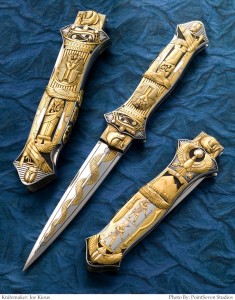
Knifemaker Joe Kious Perishes In Accident

Veteran knifemaker Joe Kious, popularizer of the “Pocket Locket” style of high-end art folder and long-time Knifemakers’ Guild member, passed away Dec. 5 as a result of injuries suffered in a vehicle accident.

A resident of Kerrville, Texas, Kious was a full-time knifemaker who sold his first knife in 1969. He specialized in investment-quality interframes and bolstered folders, some bringing up to as high as $10,000 apiece.

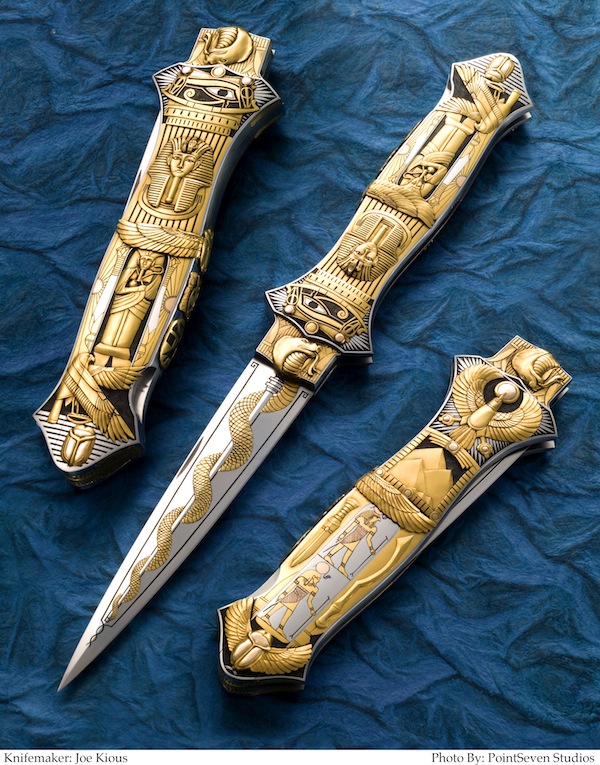
However, it is his Pocket-Locket models for which he may be best remembered. Featuring elaborate engraving, the folding knives include a small compartment in the handle with a sliding panel that slides back to reveal another engraved scene inside.

“Joe was a staunch supporter of the Knifemakers’ Guild and believed in handmade knives,” said knifemaker and fellow Guild member Edmund Davidson. “Joe had a wonderful personality, was very easy to speak with and would tell you anything you wanted to know. He held nothing back and had no secrets. His knives reflected a great deal of thought, craftsmanship and artistry. He was a true master and genuine person. He will be sorely missed. When we lose a man of his caliber, we are all diminished.”

“Joe was a gentleman who loved his family, friends, enjoyed shooting, fine scotch and making knives,” noted Michael Donato of KnifePurveyor.com. “Please keep his family in your thoughts and prayers.”

A member of a close-knit group of Texas-based Guild knifemakers that includes Warren Osborne, Tom Overeynder and others, the stately Kious was liked and respected by most everyone who knew him in the industry. A lean, handsome man with a full head of grey-white hair, he was soft-spoken but never at a loss for words or a well-thought-out opinion.

Though he did not make BLADE® Magazine’s 40th anniversary list of top knifemakers—he received enough votes to make honorable mention—his Pocket Locket was chosen No. 6 among the most important custom knives of the period from 2001-2012 in the magazine’s 40th anniversary list of top custom knives.

“Joe’s Pocket Locket is important because it is the most flexible engraving platform ever offered,” noted custom knife purveyor Paul Shindler of KnifeLegends. “It includes many models and styles but offers pretty much endless possibilities for the imagination of any collector. The Pocket Locket may be the most important engravable knife ever conceived.”

Added Donato, the Pocket Locket “has a very high ‘cool factor’ to it and has served as a canvas for many of the best engravers to work their magic. Joe’s Pocket Lockets are featured in many books, magazines and great collections worldwide.”

The world of knives lost knifemaker Joe Kious to a traffic accident Dec. 5.
Joe Kious, popularizer of the “Pocket Locket” art folder, was killed in a vehicle accident Dec. 5. His “two-door Pocket Locket” in a King Tut theme with Ron Skaggs engraving won Best Knife Collaboration at the 2007 BLADE Show and served as the cover knife for the December 2007 BLADE®.

‘Alone’ survivalist Larry Roberts praises LTWK’s Genesis

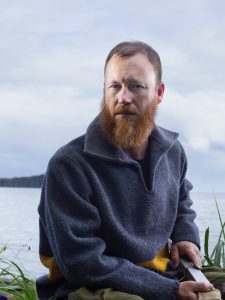
Larry Roberts appeared on the second season of "Alone" and held out 64 days in the Vancouver Island wilderness.
Larry Roberts used the L.T. Wright Knives’ Genesis to survive as a participant on the History channel’s “Alone.”

Larry Roberts, runner-up in the second season of the History channel’s wilderness survival show “Alone,” lasted 64 days in the harsh environs of Vancouver Island with one knife: the Genesis made by L.T. Wright Knives. L.T. Wright knew Roberts as a customer and because he wrote articles for the company’s Self Reliance Illustrated magazine. What he didn’t know, because “Alone” participants are not allowed to discuss the show, was which knife Roberts used on the show. When Roberts was allowed to talk about his experiences, he raved to Wright about how much he appreciated the Genesis. Wright suggested they team up, and a winning partnership was born.

On Dec. 16, LTWK introduced its Larry Roberts Signature Edition Genesis to the public. Fans of the “Alone” star and members of the LTWK Pout House club were eligible for pre-release access for 24 hours prior to the general release.

The premise of the reality show is that a group of outdoorsmen and women are deposited in a remote locale—alone—and whoever can survive the longest, wins—$500,000 to be exact. They are positioned so that natural obstacles prevent them from encountering each other. There is no crew; the participants film themselves and are resupplied with batteries and camera chips. They must build shelters, find enough to eat without expending too many calories, stave off hypothermia and marauding animals, and maintain their sanity.

So, how exactly did Roberts use his knife? The list is extensive. He built small game traps and a fish trap. He used it batonning, feather-sticking, harvesting spruce sap and cedar bark, gutting and filleting fish, processing mice and prying shellfish off of rocks. He used it to make a spoon, a spatula and a fork. He harvested mushrooms with his Genesis, cut cordage and used the sharp 90-degree spine of the knife to strike his ferrocerium rod to start fires. He used the knife to make a spear and tent stakes, and even for first-aid and hygiene tasks, such as removing a splinter or cleaning his fingernails.

The LTWK Larry Roberts Signature Genesis comes with a true 8-oz. leather sheath with dangle and farro rod loop.
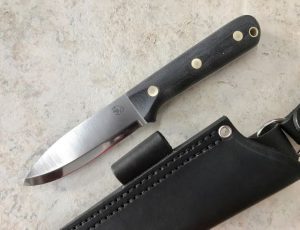
The Larry Roberts version of the LTWK Genesis has a broomstick handle and sharpened spine to assist in firebuilding.

The knife measures 9 inches overall. The 4.25-inch blade has a Scandinavian grind, and the chiseled edge is ideal for bushcrafting skills like making kindling, tent stakes and stripping bark, L.T. Wright explained. It used to be, he continued, that outdoor knives were overbuilt to account for hard use in the field, but now that the education and skill level of outdoorsmen has advanced, often through watching and practicing skills learned just on YouTube, thinner-edged knives are sought after by outdoorsmen and survivalists. Roberts, too, praised the knife’s ability to bite deeply into wood.

The Genesis offers a 1/8-inch-thick spear-point blade made of A2 tool steel, following a Kephart design overall. The knives are tested to 57 to 59 HRC on the Rockwell hardness scale, so they are tough but hold an edge, Wright said. The A2 steel, in the opinion of both Wright and Roberts, outperforms O1 and 1095 for edge retention, and corrosion and stain resistance. For his time on the island, Roberts only stropped his knife on his leather belt to remove micro-oxidation from humidity and moisture. He never had to resharpen it at all.

The Roberts version of the Genesis has a broomstick handle because Roberts found the thicker handle easier to hold and control. It also has thumb scallops and a sharpened spine for striking a fire steel against. LTWK made the black Micarta handle with white liners because Roberts likes the black-and-white contrast. The blade is stamped with Roberts’ rendition of his Vancouver Island nemesis: a mouse. “It became an obstacle for me to overcome,” he said of the creature he battled during the show.

The MSRP of the Larry Roberts Signature Edition Genesis is $225 and includes a true 8-ounce black leather sheath with a dangler and 3/8-inch ferro rod loop. Wright prefers to purchase 10-ounce double-died leather from Spen Stelzer, the owner of JRE Industries in Illinois, and have it split to 8 ounces so there are no discrepancies. “We can control consistency better that way,” he explained.

Roberts wanted the largest ferrocerium rod he was allowed to have during the show, so he went with a ½-inch rod and wasn’t able to use the loop that comes with the Genesis sheath. Roberts did use the dangler, however. He explained that it allowed the knife to hang where his hand fell naturally for easy access—just like a gunslinger in a western—and yet carry out of the way of a backpack or any other gear.

Wright grew up playing Tarzan and Rambo in the woods as a boy, and, of course, the tactical use of knives and their implementation in hunting and bushcraft interested him all along. But he wanted to make a living making knives, so he listened to what people told him they wanted. “If you go to a show and come home with all the knives you brought, you’re not going to be in business long,” he said. Like the survivalist industry itself, as the education and skill levels of users advance, so too must the sophistication of the knives. Wright listened.

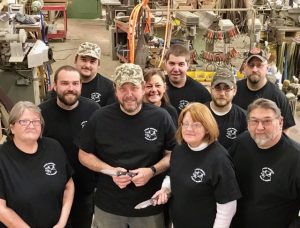
The crew at L.T.Wright Knives specialize in knives that are favored in bushcrafting.
L.T. Wright (front row, second from left) was surprised and happy to find out his Genesis was the knife Larry Roberts used on the “Alone” series.

At first he made knives as L.T. Wright then as Blind Horse Knives and he’s back as L.T. Wright Knives. Wright learned to make knives from R.W. Wilson, who made the tomahawks for the 1972 movie “Jeremiah Johnson,” a cult favorite among outdoorsmen. “He’s probably sold off all of those,” Wright said, “but I do have a prototype of a tomahawk he made for the Texas Rangers.”

So, it is fitting that Wright should partner up with a man who carried his knife in a reality-based outdoorsman show for the small screen. Roberts grew up in Oregon, spending as much time outside as he could, bait-fishing for steelheads in the Rogue River and bow hunting. His first knife was probably a 3-inch lockback Buck pocketknife, he said. He married his high-school sweetheart, and they had a son and a daughter, now grown and on their own.

Roberts attended the Pathfinder School, LLC Survival Classes offered in Jackson, Ohio, through Self Reliance Outfitters. An instructor at the top-rated school, Dave Canterbury, had been on Discovery Chanel’s “Dual Survival” show, and Roberts had heard about “Alone” from a season one participant named Josh Chavez. Roberts had been looking for a challenge, a real-world way to apply the skills he’d learned. “This was it,” he said, and applied online.

You can be a superb outdoorsman, Roberts pointed out, but if you can’t express yourself in front of a camera, you won’t be selected for the show. Although more shy in real life, Roberts is a natural in front of the camera. He sent along hours of footage of himself conducting survival skills. He made the cut, and a total of 20 finalists attended a boot camp in New York. They were tested on their comfort level in the outdoors in a city park. They underwent both medical and psychological testing, and were trained extensively on how to operate the cameras they would be using to film themselves for the show.

Even though Roberts eventually had to “tap out” because he could not get enough food to compensate for the calories he expended, his life has changed from being on “Alone.” He teaches now for Pathfinder and privately on his own farm. He attended the Primitive Living Skills Conference, Rabbitstick, in September in Idaho and will be attending Winter Count, Feb. 12-18 in Maricopa, Arizona.

Roberts can’t say enough good things about the LTWK Genesis. It’s everything he ever wanted in a knife, in every way. Similarly, he can’t say enough good things about L.T. and his crew at LTWK. It was on the island, at night, when Roberts began designing a tattoo he wanted to get. It incorporated everything that was important to him during the “Alone” challenge. You can read about his experiences on the show and how the tattoo both gave him something to think about and something to look forward to getting in “Star of History Channel’s ‘Alone’ Talks Survival and Tattoos,” an interview by Kirstie Kovats in Inked magazine.

Of course, the mouse figures prominently in the design, as does the knife.

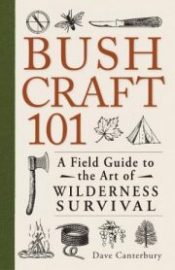
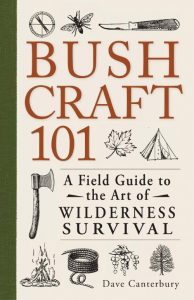
‘Bushcraft 101’ teaches the fundamentals of survivability

"Bushcraft 101" is a solid place to start your wilderness survival education, and can be a continued resources as you advance in your skill level.
Dave Canterbury, instructor at top-rated wilderness survival Pathfinder School in Ohio, explains the 5 Cs of survivability in his “Bushcraft 101.”

Not sure where to start with your quest to master wilderness survival skills? Dave Canterbury, the primitive arts instructor at Pathfinder School in Ohio mentioned above, has written a book that’ll help you get back to basics, enjoy the outdoors and understand the essentials of wilderness survival.

Save

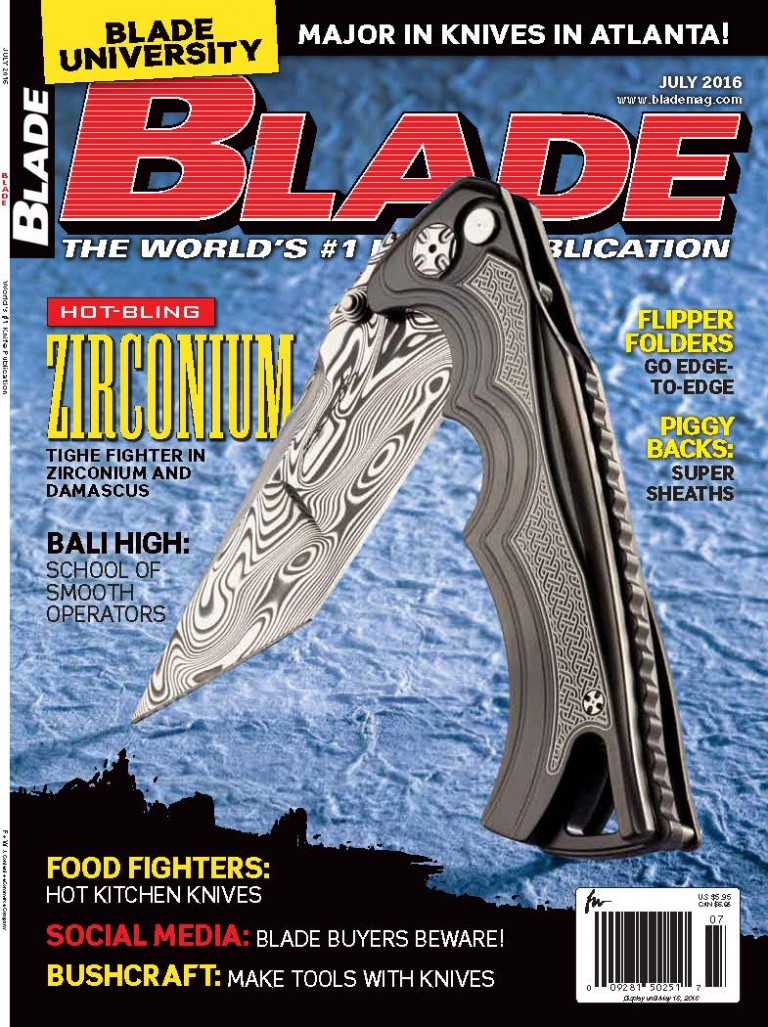
Hot-Bling Knifemaking Thing: New BLADE

New BLADE on newsstands now!
Zirconium is the hot-bling knifemaking thing in the latest BLADE®, on newsstands now!

Zirconium as the hot-bling knifemaking thing, the complete curriculum and class schedule for the 3rd Annual BLADE University, how to avoid getting burned buying knives on social media and more highlight the new BLADE®, on newsstands now!

Spearheaded by Brian Tighe’s stunning Tighe Fighter cover piece, the story on zirconium outlines one of today’s hottest materials for custom knives. Originally started by Black Timascus™ and sustained by zirconium and Zircu-Ti, the material or variations thereof is used for bolsters, scales and other knife accents.

Held the Thursday before through the Saturday of the June 3-5 BLADE Show at the Cobb Galleria Centre in Atlanta, the 3rd Annual BLADE University gathers some of the cutlery industry’s leading knifemakers, knife manufacturers, knife users and others for three days of the most educationally diverse instruction anywhere. Among the highlights will be a class on what Forged In Fire TV officials look for in contestants, with one of the stars/panel judges on the show, ABS master smith J. Neilson, presiding. Other classes will include how to grind, how to sharpen, how to build and tune a flipper folder, how to make a spike tomahawk, how to make a cut ‘n shoot knife and many more, with such instructors as knifemakers Rick Hinderer, Les George, Jason Brous, Lucas Burnley and Tom Krein, ABS master smiths Joe Szilaski, Steve Culver, Joe Keeslar, Timothy Potier and Wally Hayes, factory knife leaders Curtis Iovito of Spartan Blades and Rod Bremer of CRKT, and many others.

In the last issue of BLADE, the top knifemakers on Facebook were named by virtue of a poll of BLADE Facebook page members. As promised after that story, this time BLADE delves into how to avoid getting taken to the cleaners on social media by those who are the opposite of the top Facebook makers—those who are more into making money for themselves than selling you a good knife.

There’s much more this issue, including: how to make tools with knives; the latest in piggyback sheaths; the Ed Fowler Edge Test; hot custom balisongs/butterfly knives; tests of four new kitchen knives and two flippers folders; nine mini-knifemaker profiles; a salute to the late Phill Hartsfield; and much more, all in the new BLADE.

Tennessee Knife Rights Bill to Senate Vote—Contact Today!

Knife Rights reports that Tennessee Senate Bill SB1015, which would enact the state’s Knife Law Preemption, repeal Tennessee’s antiquated ban on automatic knives (switchblades) and repeal the the state’s 4-inch knife length limitation, has been voted out of committee with a 7-1 vote of recommendation for passage. Requested by Knife Rights and sponsored by Sen. Mike Bell, the bill now moves to the full Senate.

Preemption ensures citizens can expect consistent enforcement of state knife laws everywhere in a state. Preemption prevents the creation of, or eliminates, a patchwork of local ordinances and laws more restrictive than state law which serve to confuse or entrap those traveling within or through the state. Knife Rights has helped pass similar Knife Preemption Laws in Arizona, Utah, New Hampshire and Georgia and helped repeal knife bans in New Hampshire, Washington and Missouri.

If you live, work or travel in Tennessee, please contact your senator and ask him/her to vote Yes on SB1015.

Whether writing or calling, all that is necessary is to simply ask them to vote in favor of SB1015. Keep it short and to the point.

For more info visit www.KnifeRights.org.

10 U.S. Finalists Named For BLADE Show World Title Match

Donavon Phillips (pictured at the 2010 BLADE Show World Cutting Championship) won BladeSports International’s recent U.S. National Championships in Mountain View, Arkansas, and headlines the 10 U.S. qualifiers for the BLADE Show World Cutting Championship, which will be held June 11 during the BLADE Show.


The other qualifiers, in order of their finish in the U.S. Nationals: Dan Keffeler, Ted Ott, Gary Bond, Evan Martin, Bud Robbins, Lars Rosenblad, Jose Diaz, Michael Eubanks and John Czagas.


BSI Executive Director Jose Diaz, who is also one of the qualifiers, said he expected all 10 to attend barring any unforeseen circumstances.


International cutters expected to compete include the United Kingdom’s Ian “Longstrider” Allen-Rowlandson and Farid Mehr, and Ed de Pauw of Holland.


The BLADE Show will be June 10-12 at the Cobb Galleria in Atlanta. For more information, click on “BLADE SHOW” in bar above.


KA-BAR Knives Marks 115 Years In Business

One of America’s oldest and proudest knife manufacturers, KA-BAR Knives will celebrate its 115th birthday on April 29, 2013. The Olean, NY company will ring in the occasion by giving thanks to the KA-BAR community and reflecting on KA-BAR’s legendary legacy.  60499_640935762590653_298518607_n

KA-BAR will be holding several giveaways featuring some of the company’s most popular models. Videos, historical images and products, and new product information will also be announced in the week leading up to KA-BAR’s birthday. Ka-Bar 6112CU

For more information and to enter the KA-BAR giveaways please visit KA-BAR’s social media channels: Facebook.com/KABARKNIVES and twitter.com/KA_BAR.  For additional information on KA-BAR or to purchase a KA-BAR knife, please visit KA-BAR.com.

Advertisement

Must Read Articles

Read this before you make a knife

Knifemaking 101 – Read This Before You Make a Knife

  by Wayne Goddard My experience has taught me that there's nothing like digging in and getting started. I've often said the hardest part of the...
how to forge damascus steel

How to Forge Damascus

Advertisement
Advertisement