Our Knife Of The Day for this wondermous Dec. 4 is Steve Culver’s reproduction of what’s known as the “Searles/Fowler Bowie.” The 9 1/8-inch blade is 1095 carbon steel and the blackwood handle features sterling silver pins and 24k-gold fittings. For more information visit Mr. Culver’s website at www.culverart.com or call 785-484-0146
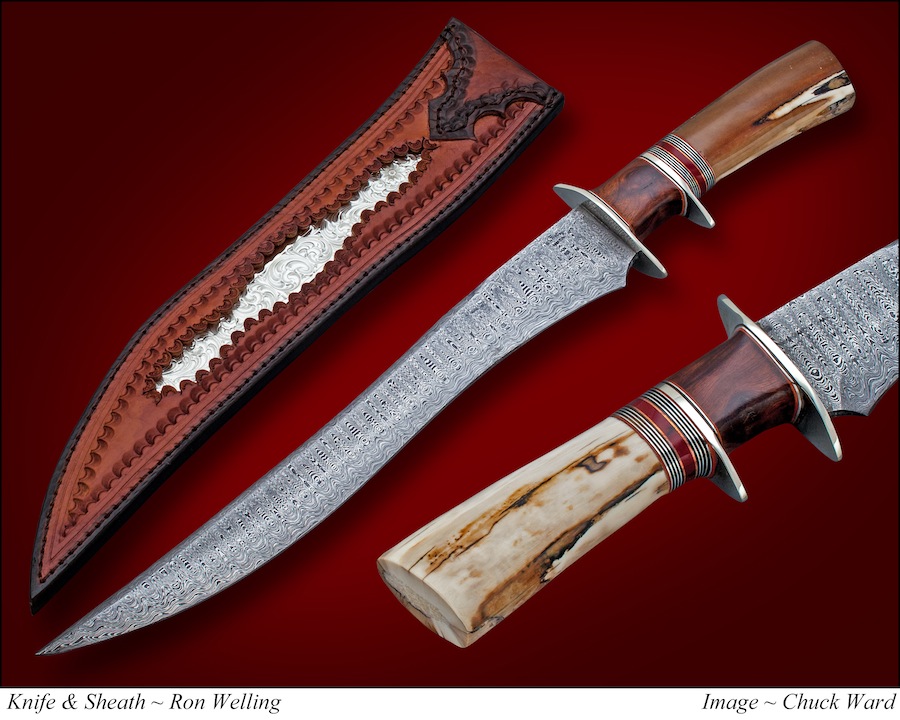
A measure that would have banned the sale of such beautiful mammoth ivory knives as this one by Ron Welling failed to pass muster in Washington state. (Chuck Ward photo)
Knife and ivory legislation that affects your right to own, carry and sell knives at both the federal and state levels has been heating up lately, including a victory for proponents of the sale of legal elephant and mammoth ivory in the state of Washington.
Washington’s proposed bans were overcome by a combined effort that included Knife Rights, the NRA and the Legal Ivory Rights Coalition, Mike Vellekamp of Fox Knives USA and Tim Wegner of Blade-Tech.
According to Knife Rights’ Doug Ritter, the proposed bans would not have saved a single living elephant while “taking hundreds of millions of dollars from millions of honest, law-abiding Americans. It makes no sense to unfairly penalize Americans for the illegal and immoral activities that continue to threaten elephants, and which these proposed ivory bans do nothing to ameliorate.”
Meanwhile, among the new or pending measures at the state and federal level are:
•Knife law preemption bills in Indiana, Kentucky, Mississippi, Nevada, Oklahoma, South Carolina, Texas and Vermont, measures that ensure consistent enforcement of state laws everywhere in each applicable state, and a special federal knife preemption law that would protect transporting knives from state to state in certain instances;
•Laws affecting switchblades and other specific knife styles/patterns in Illinois, Maine, Nevada, New York and Oklahoma;
•New ivory bans in Florida, Illinois, Vermont, New York and Hawaii, with ivory bans pending in Connecticut, Maryland, Iowa, Oklahoma and California, and the African Elephant Conservation and Legal Ivory Possession Act on the federal level, and;
•In one of the world’s leading anti-knife nut capitals, New York Sen. Tony Avella of Queens proposed a ludicrous ban on machetes after several recent local attacks involving the utilitarian tools.
U.S. Senators Mike Enzi (R-WY) and Ron Wyden (D-OR) introduced the federal Knife Owners’ Protection Act (KOPA) this past Wednesday. KOPA would allow legal interstate travel of those transporting knives, provided the knives are transported to and from states where the law allows possession of said knives, and the knives are transported in closed containers. For more information, visit AKTI.org.
Oklahoma bills for knife preemption and to repeal the switchblade ban cleared major hurdles recently when both were passed by the Oklahoma House Public Safety Committee. Both measures head to the state House before going to the Senate. For more information on them and other state knife laws—including the ridiculous anti-machete bill in New York—visit kniferights.org.
At least two of the new state ivory laws—in Florida and Illinois—ban not only the sale of ivory but also the sale of mammoth ivory and/or make no exemptions for the sale of mammoth ivory. Meanwhile, the new punitive measure in New York would increase the criminal and civil penalties in its already existing laws banning the sale of ivory from living animals and mammoth ivory. On the up side, Hawaii has tabled its proposed ivory bans, though that scheduling “could change at any time.” For more information, visit elephantprotection.org.
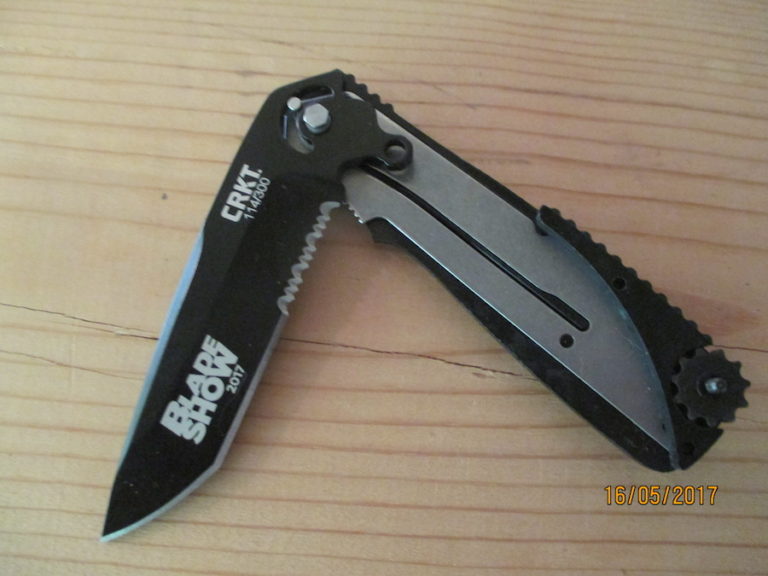
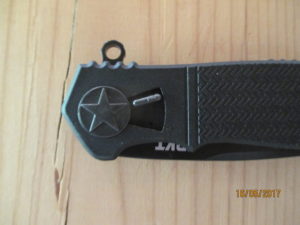
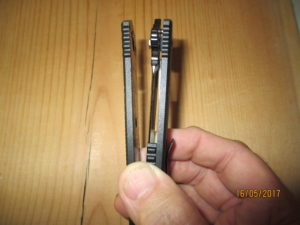
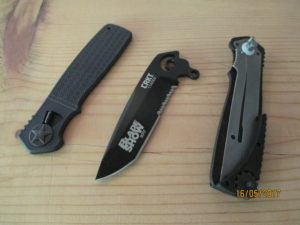
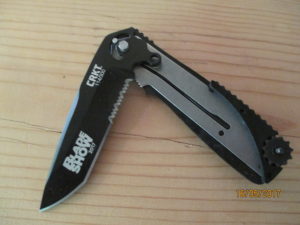
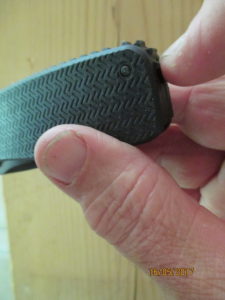
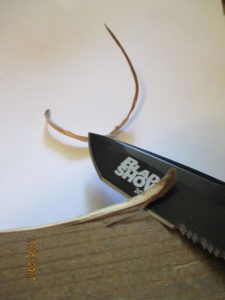
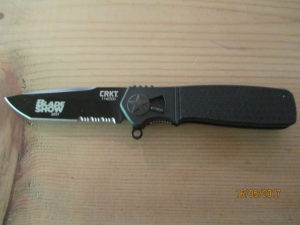
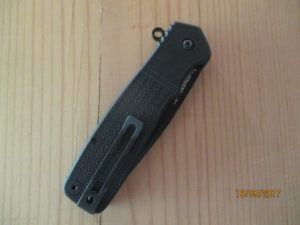
The 2017 BLADE Show Knife and its 1.4116 stainless steel blade cut stationery with ease after whittling curlicues. It was very sharp out of the box.To begin disassembly of the 2017 BLADE Show Knife, push the lever on the bolster up.The sensation of holding a knife that’s coming apart in your hand is kind of cool.The 2017 BLADE Show Knife separates into three parts: two handle halves and the blade. Keep it super simple, you might say.Partially reassembled you can see the liner lock spring and wheel in the handle butt.Rotate the wheel in the handle butt clockwise until the handle separates.
The centerpiece of the 2017 BLADE Show Knife, however, is Onion’s “Field Strip” technology, which enables you to easily disassemble the knife for cleaning and reassemble it in a matter of seconds without the need of a takedown tool of any kind.
Sounds easy but what about people with 10 thumbs like me? I pulled out the 2017 BLADE Show Knife and opened and closed it a few times. The flipper opener works well. I tried whittling some curlicues from a board and cutting stationery, both with good success. The blade was very sharp out of the box.
The directions for the “Field Strip” feature are pretty straightforward. With the knife in the closed position, push the lever on the bolster up. No problem. Rotate the wheel on the handle butt clockwise until the handle separates. The wheel is notched with gears. I found it turned well either with one of my 10 thumbs or my “second thumb” that passes for an index finger. The handle separates into three pieces—two handles and the blade—all simple to clean when the time comes.
To reassemble, put the three pieces back together, press down on and hold the pivot, rotate the wheel counter-clockwise until snug, and push the pivot lever down. It’s pretty easy, even for me.
The CRKT Homefront Tactical is the Official 2017 BLADE Show Knife.
A couple of things: If, after reassembly, the pivot lever balks any when you try and push it down, tweak the screw on the reverse side of the pivot pin until the lever cooperates. Also, be sure the white washers on the pivot pin stay put when you have the knife apart. If they were to come off for any reason during cleaning and/or reassembly, they could be difficult to find. You may even want to remove them during cleaning and apply a small dab of oil to keep them lubricated.
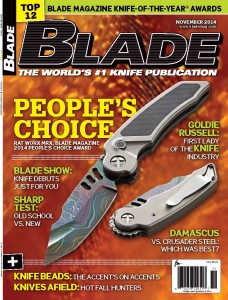
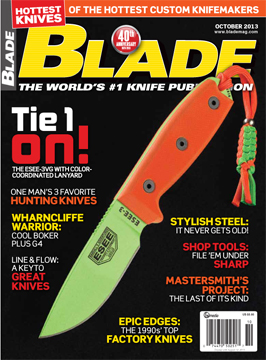
The eye-popping ESEE-3VG in a Venom Green blade, orange G-10 handle and a lanyard to match is the cover knife for the October BLADE® (www.blademag.com), on newsstands now!
The knife is an appetizer for the lead-in story on lanyards and beads, a growing accessory trend on today’s finest knives.
Want the inside story on the real reason the TSA decided to tuck its wings and rescind its approval of carry-on knives on commercial airliners? American Knife & Tool Institute’s Jan Billeb fills you in via the special question-and-answer story, “TSA Carry-On Knife Plan Grounded.”
The hottest makers’ hottest custom knives are the focus of BLADE (www.blademag.com) Managing Editor Joe Kertzman’s “Knives & Makers Catch Fire!” and custom knife purveyor Les Robertson offers the conclusion of his informative story on “What To Look For In A Forged Knife.”
If you like knife tests, MSG Kim Breed (5th Special Forces, retired) puts the Boker Plus G4 through the paces in “Wharncliffe Warrior,” and new BLADE (www.blademag.com) contributor Alan Clemons reveals his trio of favorite hunting knives in the aptly named “One Man’s 3 Favorite Hunters.”
Bladesmiths basically sprouted from the blacksmithing trade, but there are differences between the two vocations. ABS master smith Joe Szilaski outlines those differences in “Bladesmiths vs. Blacksmiths: What’s the Difference?”
Ever think about what goes on in a maker’s mind before he designs a knife, how he arrives at a certain line or curve, a rounded edge here or a palm swell there? ABS master smith Lin Rhea explains some of those thought processes in “Line & Flow: A Key To Top Knives.”
Factory/custom collaboration knives go back over 40 years, but they didn’t really take off until the early 1990s–and they’re still going strong. Dexter Ewing takes you on a tour of the latest versions in “Stylish Steel: It Never Gets Old!”
Brian Tighe, maker of the “Twist Tighe” in all Damasteel damascus steel, is slated to be among the world’s top custom makers exhibiting their knives at the 23rd Annual East Coast Custom Knife Show Friday through Sunday, March 2-4.
Produced by Steve D’lack of Hawthorn Galleries, the show will be held at the Westin Hotel-Jersey City Newport in Jersey City, New Jersey.
For more on the latest knives, knife legislation, knifemaking instruction, knife trends, knifemakers, what knives to buy and where and much more, subscribe to BLADE Magazine, the World’s No. 1 Knife Publication. For subscription information click onhttp://www.shopblade.com/product/blade-magazine-one-year-subscripti…?r+ssfb030112#BL1SU
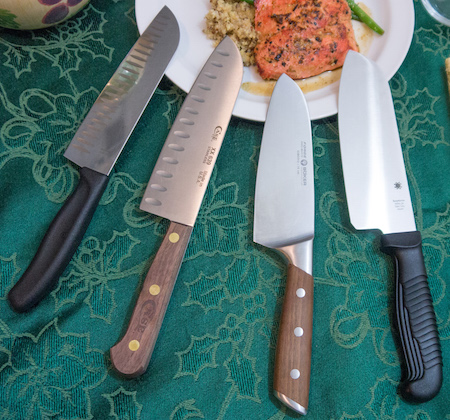
Thanksgiving cutters, Japanese style, from left: Victorinox SwissClassic Santoku, Case Santoku, Boker Forge Santoku Maple and Spyderco K08 Santoku.
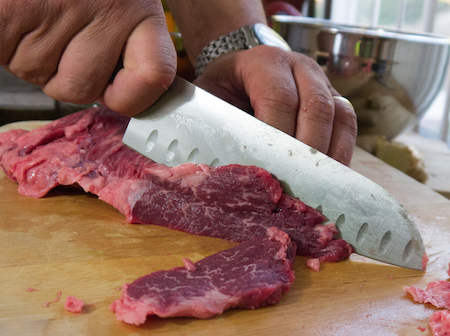
Santokus are Thanksgiving cutters, Japanese style. A design that originated in the Land of the Rising Sun, the santoku is a specialized tool well suited to preparing holiday meals. From cutting meat to dicing veggies and cutting fruit for creative holiday salads and such, santokus are perfect for Gobbler Day.
Santokus have a wide blade sometimes with scallops, which are supposed to create less friction than a solid blade, a sheepfoot tip, and are lighter and thinner than a French or German chef’s knife. Their length runs between 5 and 8 inches. The Thanksgiving cutters do not have a bolster. They have a straight edge with no curve.
San-to-ku is Japanese for the three cutting tasks for which the knife is designed: slicing, dicing and mincing. It is a specialized knife that, in the Japanese view, is optimized for the three aforementioned tasks. The straight edge of a santoku does not allow for the rocking motion commonly used with a French or German chef’s knife.
Cuts are made straight down with little or no forward movement, almost a guillotine action, which, again in the Japanese view, allows slicing very thin pieces of whatever’s being cut with precision. The Thanksgiving cutters are not meant to be all-around kitchen knives. An all-around knife used to cut many things is not a Japanese concept. The Japanese chef will typically have a vast array of knives, each one designed for a specific function.
Japanese kitchen knives typically have a chisel grind, which also contributes to cutting very thin slices with precision, as you may have seen sushi chefs do. The chisel grind is optimal for slicing, say, very thin slices of turkey, with the caveat that there are left and right grinds. If you are right handed you’ll need a blade ground on the right side. The chisel grind doesn’t work well for cutting through thick media, such as roasts and ribs because the chisel grind—since the edge is off center—will cause the blade to cut off center, and to wander. Also, the thin edge of a Santoku should not be used to cut through joints or bones, or to disjoint, say, a chicken.
HAPPY MARRIAGE
One reason santokus make such good Thanksgiving cutters is their ability to cut small meat slivers. The Boker Forge Santoku Maple is a classic example.
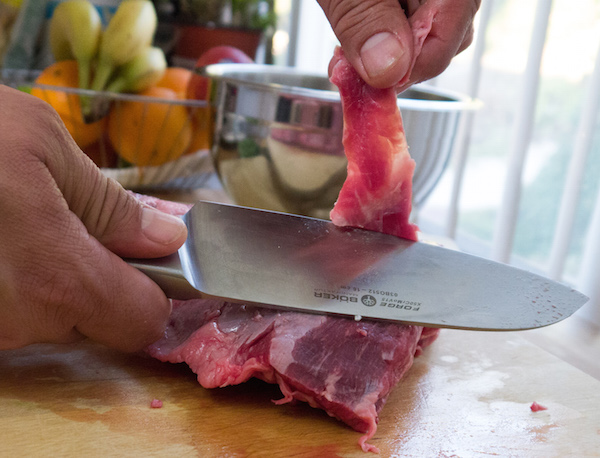
With its hefty blade, full tang, nicely sculpted bolsters and maple scales, the Boker Forge Santoku Maple is a happy marriage of a classic santoku and a German or French chef’s knife. While it lacks the acute point of a chef’s knife, the slight point is usable. The edge does have somewhat of a curve, which allows the rocking motion Western-trained chefs, and many domestic home cooks, are accustomed to using. It is the only one of the four knives reviewed that I would use to cut through pork rib joints, chicken backs, etc. The Boker is almost a mini cleaver as well as being an excellent slicer. It is a handsome knife and comfortable for long periods of work.
Thanksgiving cutters must be adept at slicing veggies, and the Boker Forge Santoku Maple is that and more.
STURDY STUDY
With its walnut scales and full tang, the Case model is also a sturdy example of a Santoku. It has a barely perceptible curve to the edge and a scalloped blade. The Case looks more like a classic santoku than the Boker, but like the Boker has a thicker blade than a standard Japanese santoku. It felt solid in hand and while not as sculpted as the Boker, the traditional American handle was comfortable during extended use. The Case sliced, diced and minced as well as thin-bladed Santokus while giving the impression that it would be up for harder work if need be.
Thanksgiving cutters must be able to tackle meat slicing and the Case Santoku is a prime-cut cutter.
21st-CENTURY SHARP
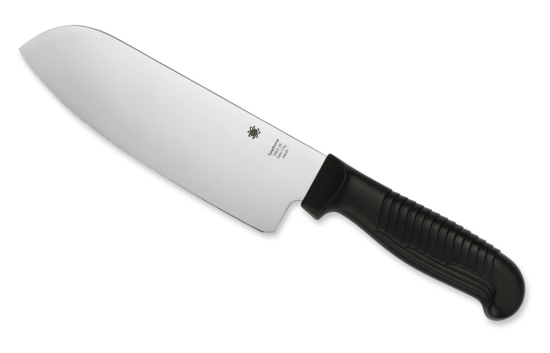
Spyderco image
With its wide blade, classic Santoku profile, comfortable, molded grip and graceful overall appearance, the Spyderco K08 looks like a 21st-century interpretation of a classic—which is pretty much what it is. It is a very lightweight knife with an extremely thin blade, which is optimal for doing what a santoku is supposed to do. The Spyderco does have a slight curve toward the tip, which I think adds to its smooth lines. Since I am accustomed to using a French or German chef’s knife, the curve also made it easier for me to work my way through piles of squash and mushrooms, especially mushrooms, which I find hard to slice. The blade also made it easy to slice salmon smoothly and evenly.
ENTRY-LEVEL PRO
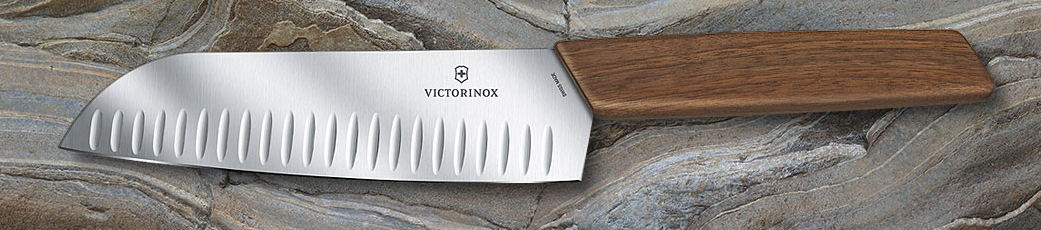
Victorinox image
Victorinox makes the knives The American Culinary Institute gives to its students: chef’s knives, paring knives, bread knives and, yes, santokus. Pro chef Shawn Carlson’s first professional knife roll contained only Victorinox knives. So, he was familiar with the Victorinox characteristics: thin profile, very sharp, fairly soft steel that requires frequent steeling but which comes back to a fine edge quickly, and which does not chip if dropped on a kitchen floor. It has the standard santoku shape: flat edge and sheepfoot tip rather than a curved profile and pointy tip. I missed a curved edge and had trouble adjusting to the flat straight edge. Shawn did not—again, a pro is a pro. It is an entry-level professional knife.
FLAIR GAME
If you enjoy cooking and take pleasure in using specialized tools, you’ll find a santoku a welcome addition to your quiver of Thanksgiving cutters—keeping in mind that a santoku is a specialized tool. If you like to keep things simple, an 8-inch chef’s knife and a 4-inch paring knife will do most any kitchen job—if not with the flair of a santoku.


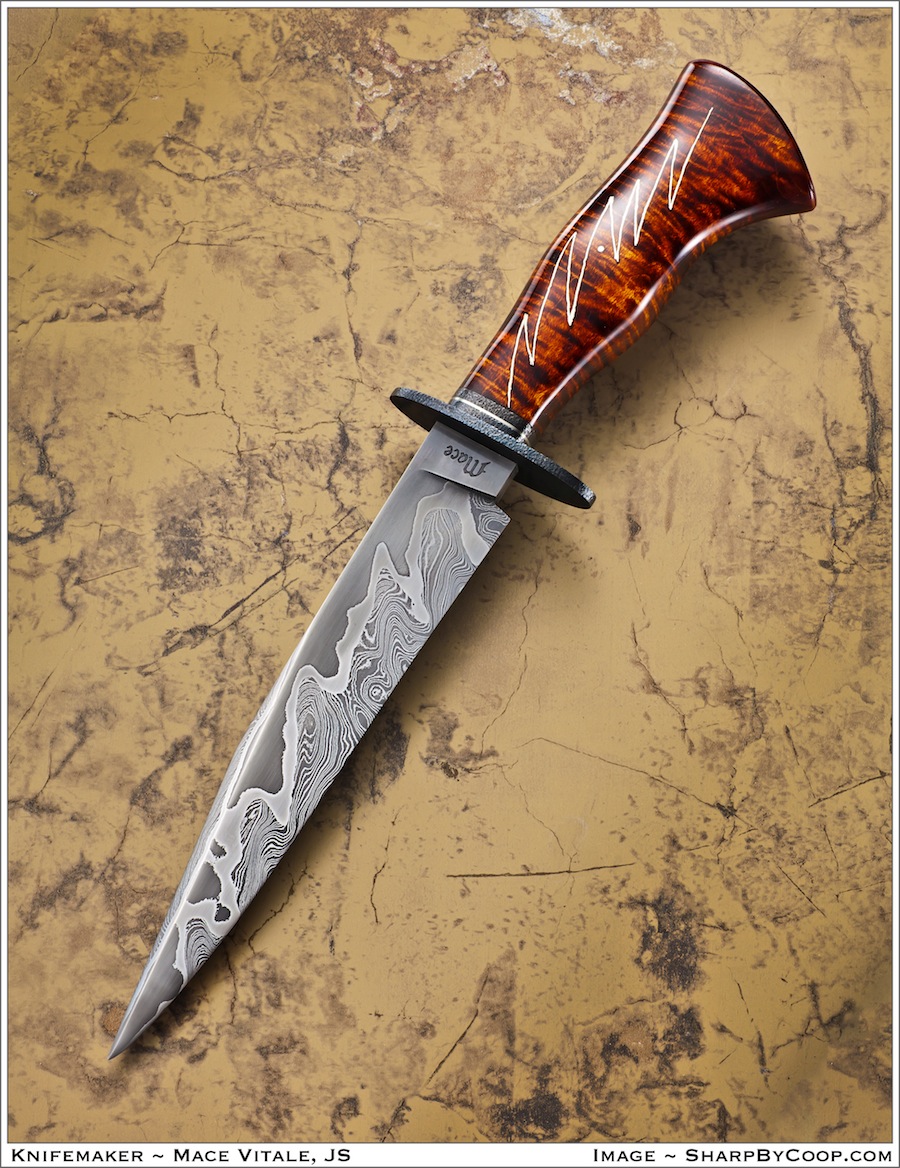
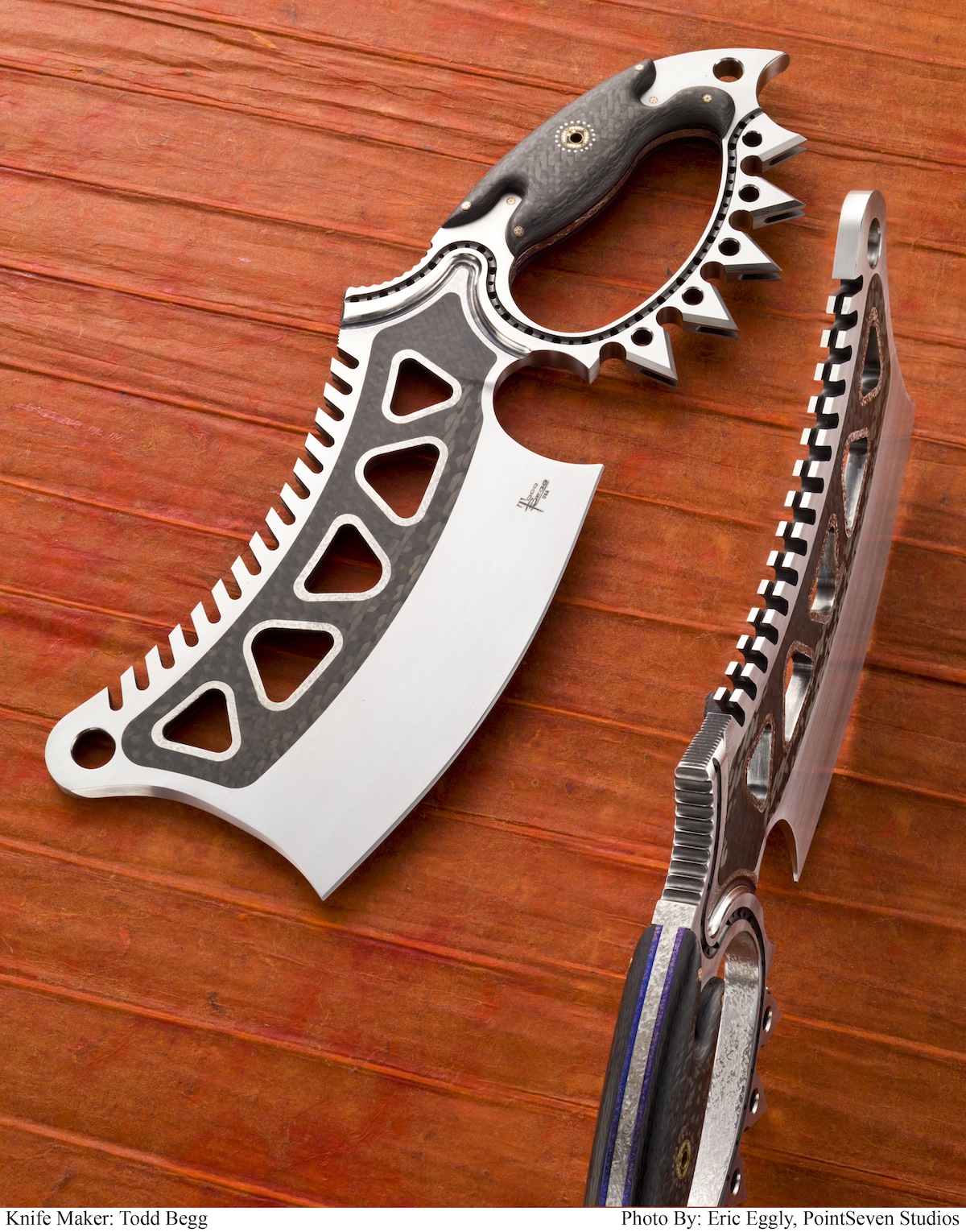


 Our Knife Of The Day for this wondermous Dec. 4 is Steve Culver’s reproduction of what’s known as the “Searles/Fowler Bowie.” The 9 1/8-inch blade is 1095 carbon steel and the blackwood handle features sterling silver pins and 24k-gold fittings. For more information visit Mr. Culver’s website at www.culverart.com or call 785-484-0146