


The BLADE Blog w/Steve Shackleford

Knives, knife people, knife news, knife use, knife collecting, knifemakers, knife events, the BLADE Show, BLADE Magazine, and more.

Custom Knives That Are Best For You

Cusotm knife purveyors come in all flavors.
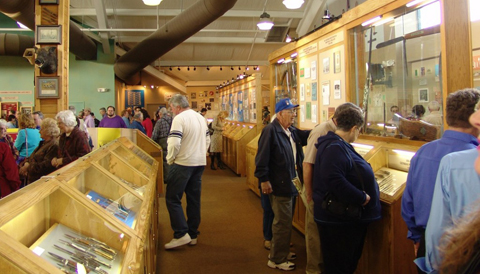
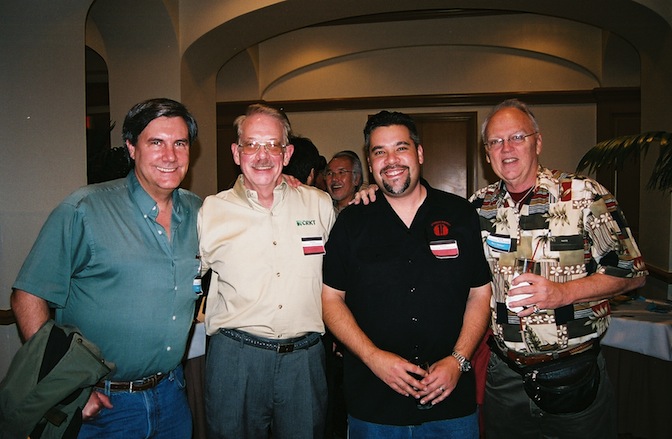
Custom knife purveyors can help you find the knife that’s best for you. In the foreground, from left: Dan Delavan, knifemaker Pat Crawford, Strider Knives’ Josh Lee and Dave Nittinger. Dan and Dave are veteran custom knife purveyors.

Choosing the custom knives that are best for you can be a tricky proposition. There are a number of things to consider, including how much money you have to spend, whether you’re buying the knife to use, collect or resell, and other factors. Especially if you’re new to the market, looking to change the focus of the kinds of knives you buy or simply unsure which knife is best for you, a custom knife purveyor (also known as a dealer) is out there who can help you.

There are a number of different types of custom knife purveyors. Some specialize in one type of knife only, such as art knives or tactical knives. Since tactical knives have been hot for a long time, there are probably more tactical knife purveyors than any other type.

On the other hand, some purveyors may specialize in two or more knife genres, such as tactical and handforged, for instance. Others may sell one maker’s knives only, such as those made by BLADE Magazine Cutlery Hall-Of-Fame© member Bob Loveless. Still others may sell the knives of a select iconic few, such as Loveless, Jim Schmidt, Cutlery Hall-Of-Famers Bill Moran and Ron Lake, and a few others.

The serious ones have websites with professionally photographed images of the custom knives they offer for sale, and/or advertise their purveying service in knife magazines and/or other media. A sign of a purveyor who is in business for the long haul is one who advertises consistently over an extended period of time. (The latter also goes for knifemakers.) Still other purveyors may photograph their knives for marketing purposes—with some being quite good at it—own a brick-and-mortar retail knife store, and a very few produce/coordinate their own knife shows. Some purveyors do two or more of the preceding and at least one does all three.

To find out which purveyor fits your needs, ask around at knife shows, knife discussion forums, social media sites and other venues, check websites and knife magazines, etc. Talk to your friends or acquaintances who buy custom knives or ask them for the names of others who buy custom knives. Tell them what kinds of knives you’re looking for and ask them which purveyors are the best at providing such knives and offer the best customer service. Get as many opinions as you can. It’s better to have more information than not enough. Whittle the purveyors down to a select few you think you might want to work with and call them and feel them out. Go with the one you connect with best—in other words, go with your gut feeling in picking the one you want to use.

Before we continue, some fundamentals on how purveyors obtain the knives they sell is in order. It’s really pretty cut and dried: the purveyors attend select knife shows in search of the top knives and makers and/or establish relationships with those makers—and a select knife show is always a great place to both meet the maker and see some of his/her best work. The best purveyors work with proficient makers who are good at meeting deadlines on the knives they agree to make, offer good customer service if something goes wrong with the knife, and who, in general, appeal to custom knife enthusiasts of most all stripes. The purveyor will reach an agreement with the maker to buy one or more of his or her knives and then sell the knife/knives at enough of a markup to make a profit, stay in business and buy more knives for sale. That’s pretty basic, but that’s essentially how it works.

Why should you buy from a purveyor instead of a maker? Actually, if you can bypass the purveyor and buy directly from the maker, you probably should. However, that’s not always possible and is where purveyors come in. (Besides, as noted, if you’re new to the market or unsure of what to buy, the guidance a capable purveyor can provide in buying a custom knife can be invaluable.) Through the working relationships they establish with leading makers, purveyors have access to knives from those makers that most individual custom knife enthusiasts do not. Many makers have to struggle to make deadlines for other custom orders and knife shows, and often cannot fill your order quick enough or before the knife loses some of its luster and is no longer “hot.” Purveyors, on the other hand, may have the knife in question in stock or something from the maker that will fill your needs immediately.

As an aside, if you look around enough, you will no doubt hear from some that one purveyor or another is prejudiced in favor of a certain maker or makers. Whenever you hear this, take it with a grain of salt because most all purveyors will indeed be prejudiced in favor of makers that are a) easy to work with and b) make deadlines—traits that you would probably like in a maker as well.

These are just some of the things to look for in a custom purveyor. The more you look and ask around, the more you will find other traits that will make the custom purveyor the best for you and your knife needs.

GROUP-T1346-T1348Recommended for You:

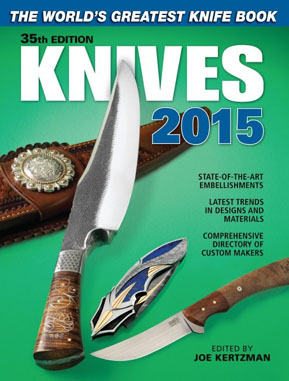
KNIVES 2015

See the latest knives, swords, and edges of all types, and explore the latest trends in blades, steels, styles, and materials. Gaze upon a “State of the Art” section parading engraved, scrimshawed, jewel-inlaid, carved, etched, sculpted and forge-welded, and Damascus and mosaic-damascus knives. Click here.
No Knives On Planes After All

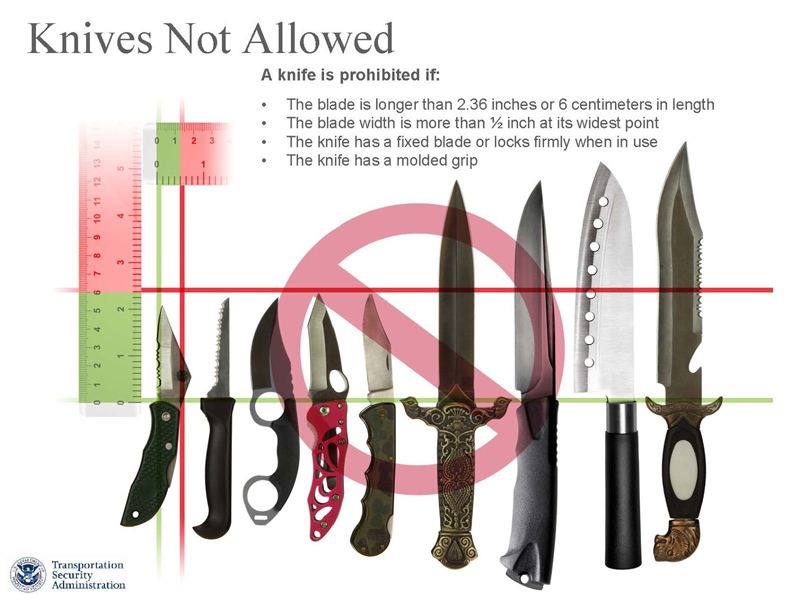
After much hue and cry from those who equate knives with all that’s evil and wrong with the world, the Transportation Security Administration has backed off from its plan to allow small carry-on knives on commercial flights.

Knives will continue to be allowed in checked luggage.

The goofball wording that also would have allowed bats, golf clubs, hockey sticks, pool cues, ski poles and lacrosse sticks probably didn’t help the original ruling that would have allowed knives.

A big reason it failed, though, was due to such anti-knife zealots as Sen. Charles Schumer of New York, as well as 145 House members signing a letter to TSA Administrator John Pistole to keep the current rules in place. Also, flight attendant union protests and airline officials’ opposition played a part, too.

Meanwhile, more anti-knife mania reared its ugly head in the form of a Homeland Security spending bill that would block the TSA from spending money to implement the change. That bill is still in the works and is expected to pass.

While some, such as Debra Burlingame, whose brother was the pilot of one of the planes that hit the Twin Towers on Sept. 11, 2001, reversed their opposition to the change after hearing Pistole’s arguments, it wasn’t enough to hold off the anti-knife circus.

For more, stay tuned to www.blademag.com and BLADE® Magazine.

Knifemakers to Watch in 2012

Bladeart.com’s Larry Brahms includes Todd Rexford among the makers who employ exceptional design, materials, and fit and finish, and yet never deviate from the knife’s ultimate purpose—to cut. “Injection” features Chad Nichols’ Fade stainless damascus and Mokuti accents throughout. (SharpByCoop.com photo)


Here are a few to add to your list of those “moving on up”

By Stephen Garger


Technological and design advances in the knifemaking arena seem to have come quicker over the past couple of years. This may be due, at least in part, to the increasing number of makers—including those outside U.S. borders—exploding on the scene. In addition, steels, patterns and handle materials are evolving within a context of quickened networks of communication that allows information to be shared instantly.

     Taken as a whole, this may make it difficult for the average knife enthusiast to keep up—not only with advances in knifemaking, but with the makers who bear watching in the coming year. Such a group includes not only new makers but also experienced ones who may just be coming into their own, or have developed a new style or technique.

    Bladeart.com’s Larry Brahms lists knifemakers Brad Southard, Jeremy Marsh, Todd Rexford, Michael Burch, Sal Manaro and Aaron Fredrick among those to watch, noting that over the past year all six have grown dramatically in the craft. “Each utilizes exceptional design, materials, and fit and finish, and yet they never deviate from the piece’s ultimate purpose, which is to cut,” Brahms noted.

    Frederick also is one BladeGallery.com President Dan O’Malley tabbed to watch in 2012. “Aaron was one of the first tactical makers to really hit the market and was becoming very well known when, in 2004, he went into the military to serve his country,” O’Malley said. “When Aaron returned to the U.S. and knifemaking toward the end of 2010, his designs were highly influenced by his overseas experiences, and his melding of tactical styles with gent’s folders is spectacular—combining an exceptional fit and finish with brawn.”

    Frederick’s 3PS model is a good example and combines materials such as lightning-strike carbon fiber with damascus bolsters and a stainless blade for a BladeGallery.com price of $525. “Aaron’s work was on the forefront of the movement toward using the flipper mechanism,” O’Malley stated, “and his smooth action makes this opener a fantastic choice for quick tactical deployment.”      


Price Competitive

Two other makers O’Malley said to study are Andre DeVilliers and Michael Quesenberry. DeVilliers is a self-taught member of the South African Knifemakers Guild O’Malley described as “a maker who is going places. His distinctive knives are innovative, dependable and beautiful.” The relatively lower cost of living in South Africa allows DeVilliers to be price competitive in the U.S. market while keeping pace with the coolest and hottest materials.

    “Most of his knives are designed for hard use but also have a refinement that is rarely found in knives of that type, which creates a category I like to call ‘dress tactical,’” O’Malley said. “Andre is using hi-tech steels like 19c27 and Damasteel stainless damascus, and is a big fan of ‘nightmare grinds,’ and does some of the best of those grinds in the business.” O’Malley indicated DeVilliers’ “Pathfinder” is a well-thought-through folder featuring strong construction, with aggressive geometric lines and a BladeGallery.com price of around $550, depending on materials.

    “Michael Quesenberry is a part-time knifemaker, a self-confessed hobbyist, but an extraordinarily talented one,” O’Malley began. Most of Quesenberry’s knives are forged, though he will grind stainless steel on customer request. “Michael considers it a point of pride that he does all his own leatherwork and damascus, as well as heat treating and cryogenic treatment,” O’Malley reported. “He does everything from field-use hunters to dramatic art knives, and his control over damascus is particularly exceptional—even creating mosaic damascus knives with integral bolsters, which is a particularly difficult technique.”

    Quesenberry credits Roy Holt with getting him started on the right path to knifemaking, and also values the friendship of makers Gary Iames and Buz Johns for inspiring him to craftsmanship levels he never dreamed possible. BladeGallery.com’s price for a Quesenberry damascus integral with a stag handle is around $1,100. O’Malley also mentioned Andre Thorburn, Daniel Winkler (specifically the Winkler II line), and Sniper Bladeworks (Lance Abernathy and Jody Muller) as makers to watch.   


Guild’s Field

The makers purveyor Don Guild deems those to keep an eye on in 2012 are all well known: Emmanuel Espinosa, Stephen Olszewski, Ken Steigerwalt, Juergen Steinau and Wolfgang Loerchner. An award-winning maker, Loerchner has crafted many fixed blades. According to Guild, though, Loerchner is concentrating on art folders that display exceptional fit and finish.

    “An art knife of superior, velvety mechanical operation that also has the eye appeal that drives [Loerchner’s] work is not being done by another maker I know of,” Guild opined. “To combine art and mechanics [Guild’s emphasis] in the same knife is a rare talent only a few makers possess, and that combination serves to provide an understated beauty of form and function. Everything he creates is truly handmade and has been sought by top collectors for years, and now the international trade is chasing his work.”

    The proliferation of makers renders the field increasingly hard to chart—a challenge that merely adds to the fun of buying and collecting knives. The makers described herein only scratch the surface of those to watch in 2012. However, they give you some to be on the lookout for while balancing the search with your own experience and subjective taste.


For more on the latest knives, knife legislation, knifemaking instruction, knife trends, knifemakers, what knives to buy and where and much more, subscribe to BLADE® Magazine, the World’s No. 1 Knife Publication. For subscription information click on http://www.shopblade.com/product/blade-magazine-one-year-subscripti…?r+ssfb021312#BL1SU


Knife Museum “Dissolved”; Collection to 3 New Venues

After over 30 years of operation, the National Knife Museum (NKM) is “being dissolved.” However, the old museum’s knife inventory will carry on at three separate museums, according to Lisa Sebenick, president of the National Knife Collectors Association (NKCA) and secretary of the NKM.

The only museum of its kind in the USA, the NKM had been housed on the mezzanine of Smoky Mountain Knife Works in Sevierville, Tennessee, since late 2006. The original rent for the space was all of $1 per year. “The officers, directors and staff of the National Knife Museum sincerely thank Smoky Mountain Knife Works/Kevin Pipes for giving our collection of cutlery a home these past seven years,” an NKM release stated.

National Knife Museum is dissolved. (Mike Carter image)
The National Knife Museum is being dissolved. Its knife inventory will be relocated to three new locations. (Mike Carter image)

According to Sebenick, the museum’s knife inventory will be donated to three different museums: the National Rifle Association Museum in Springfield, Missouri, the Berman Museum of World History in Anniston, Alabama, and the Janney Furnace Museum in Ohatchee, Alabama.

As for the 50 or so Bill Moran knives that were exhibited at the NKM, an official statement from the Moran Foundation was that no decision had been made for those knives at press time. At some future date, perhaps some of the Moran knives would be put on loan elsewhere, the statement concluded.

The NKM was the vision of BLADE Magazine Cutlery Hall-Of-Fame© member Jim Parker. Located in Chattanooga, Tennessee, the original museum was built in 1981 and was the creation of the NKCA as a separate, educational, non-profit corporation. It opened its doors in 1982. It was moved to Sevierville in 2006.

According to Pete Cohan in BLADE’s Guide to Knives & Their Values, 7th Edition, while many NKCA members were heavily involved in the original museum’s creation, it was the donation of three major individual knife collections—those of Cutlery Hall-Of-Famer Frank Forsyth, Dr. James Wilkison and Dr. William Rosenthal—that created the foundation for a comprehensive museum display collection.

During its run at Smoky and in addition to the many other knives it exhibited, the NKM also included the custom knife collection of Cutlery Hall-Of-Famer Joe Drouin, a number of club knives from knife clubs around the country, various knife ephemera and more.

For the latest knives, knife news, trends and more, stay tuned to blademag.com.

A Few Great Everyday Carry Knives

Best everyday carry knives

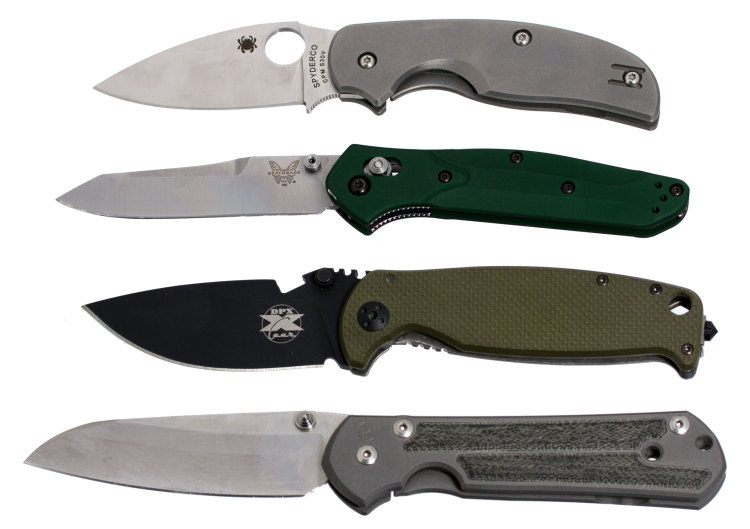
No. 1 for knife enthusiast Nick Morgan is the Chris Reeve Sebenza. “The tolerances are so much better on Chris Reeve knives than any other production knives, and you’ll find just about perfect fit and finish on every model. I love the blade and handle shapes, and the plain, simple looks are beautiful,” he said.

The Spyderco Sage2 is second on Morgan’s list. “I love the deep-carry wire clip—for my money the best clip in the industry,” he stated. “The profile of the titanium Sage2 is thinner than the carbon fiber Sage1, so using and carrying it is noticeably nicer.”

Morgan said the Benchmade 940 is a blast to play with due to the AXIS lock. “It’s super easy to open and close, and it’s fast!” he emphasized. “The reverse tanto blade shape is my favorite. For cutting, whittling and stabbing, it’s strong, sharp and great looking. It’s the best knife to sit in front of the TV and flip open/closed hundreds of times.”

Next on Morgan’s list is the DPx HEST 2.0, “a knife that can survive heavy-duty use day after day. I love the functional blade shape and, at 3.25 inches, it’s big enough for 99 percent of my cutting tasks while not being too big that it scares people when I use it in public. It locks up solidly like the Sebenza and I love the extra features—bottle opener, wire stripper and glass breaker/skull crusher, the latter which is really nicely executed. My favorite feature is the bayonet clip—it buries so deep in the pocket that nobody suspects I’ve got a knife on me.”

Last on Morgan’s list is what he terms the “best-bang-for-the-buck” knife: the Large Buck Vantage Pro. “It has a great blade and handle shape, I love the flipper, it has top quality blade steel [CPM S30V] and handle material, an excellent deep-carry bayonet clip, it’s USA made and has a nice, slim profile. Best of all,” he added, “it’s less than half the cost of every other knife on my list.”

For more EDC knives, check out this selection at ShopBlade.com.

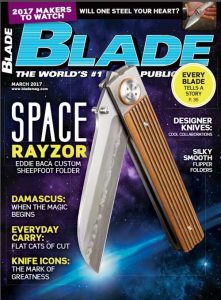
Which Knifemakers Will Excel in 2017?

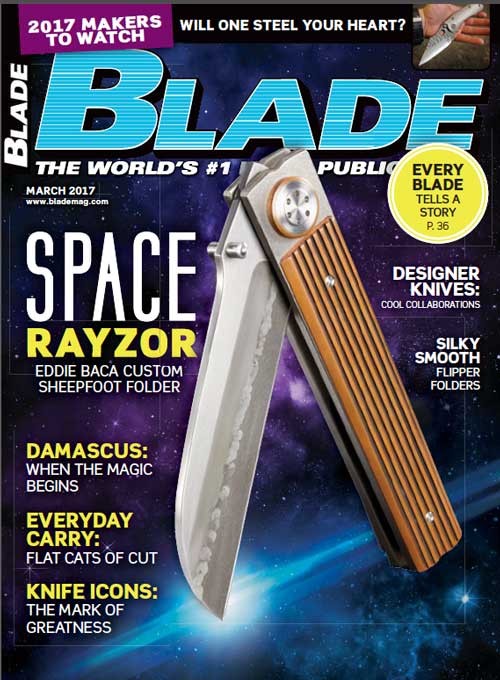
Which knifemakers will excel in 2017? What is the mark of knife greatness? When does the magic begin in the making of mosaic damascus, aka canned steel? What were the knife industry’s top stories of 2016? What will not happen in the knife industry in 2017? These and other edge-pressing questions are answered in the latest issue of BLADE®, on newsstands now!

Custom knifemaking is a whirlwind of talented individuals worldwide. Picking the ones on the verge of breakout years is no easy task, but BLADE feature writer Pat Covert tackles the assignment with gusto, interviewing some of the custom industry’s top authorities for their opinions on the subject. Find out which makers will take their work to the edge and beyond in “Will One Steel Your Heart?”

What is the mark of knife greatness? One leading indicator is a knife that, after its debut, serves as a yardstick against which all subsequent knives of a similar type are measured. BLADE field editor Mike Haskew examines these “yardstick knives” in “The Mark of Greatness.”

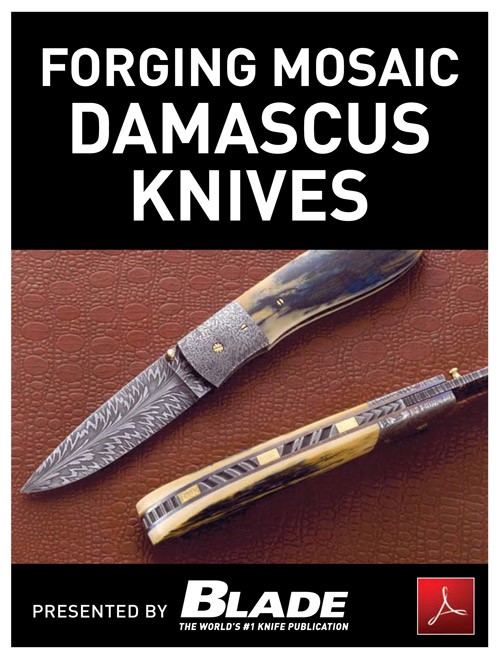
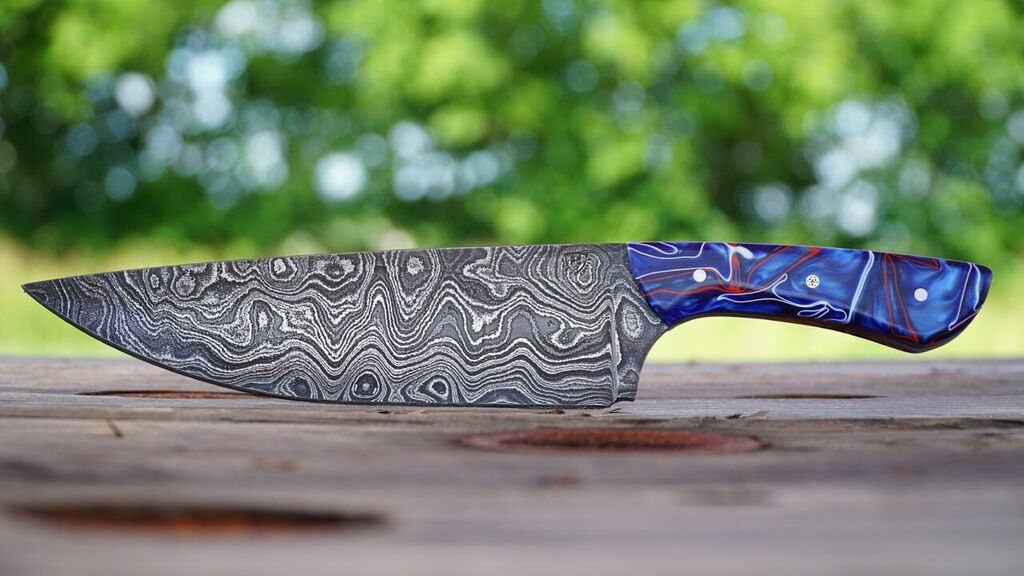
Mosaic damascus, aka canned steel, provides some of the most beautiful and intricate of blade materials. BLADE feature writer Daniel Jackson visits with some of today’s forgers of the scintillating steel to find out not only why they do it but how in “When The Magic Begins.”

The year past had more than its share of cool happenings in the knife industry, including the first-ever

Mosaic damascus
Read how mosaic damascus is forged, such as on these folders by Mike Tyre, in “When The Magic Begins.” (PointSeven image)
Borka Blades
Which knifemakers will excel in 2017? One Neil Ostroff highly recommends is Sebastijan Berenji of Borka Blades. (True North Knives image)
BLADE on newsstands
Find out which knifemakers will excel in 2017 in the latest issue of BLADE®, on newsstands now!

BLADE Show Women’s World Championship Cutting Competition, burgeoning knifemaking stars on social media, pro-knife legislative gains, a world record price for an American knife at auction and much more. Read all about it in “Sharp and Sweet ’16.”

Predicting what will happen in the coming year is a skill far beyond that of yours truly. However, one thing I can do is predict what will not happen in the coming year. Of course, one question remains: Can I even do that? It will take one year to find out. Check out my predictions in “What Will Not Happen in 2017.”

There’s much more in the latest BLADE, including an educational examination of knives and the Second Amendment by Knife Rights’ Doug Ritter (page 6), tests of the latest tantos, flipper folders and factory/custom collaborations, the hottest convenient carry knives and much more, all in the March 2017 BLADE, on newsstands now! For subscription info, click here.

Save

Save

Save

Save

Save

Navy SEAL’s Super Bolo!

Nearly 20 years later and with my original bolo in disrepair, I thought it time to replace it with an updated and more technologically sophisticated design. My goal was to find a knifemaker from my home state of Kentucky who would be capable and willing to collaborate on the project. It was not long before several members of the Knifemakers’ Guild recommended Gene Baskett. A Guild member since 1981, Gene has proved to be one of Kentucky’s finest custom knifemakers and has earned the respect of his peers for the quality work he produces.

He and I based the knife’s design on the old bolo I had used when I served in the SEALs. Our decision was to go with CPM-154 stainless steel, and Gene made several blade adjustments. We experimented with a rubber handle made from extremely durable horse matting material—a perfect Bluegrass State touch, and a substance also favored by a number of makers and contestants in the cutting competitions. The resulting grip is firm yet shock absorbing. The handle can also be securely grasped when wet. My concerns were simple: durability and performance. I wanted a knife that would withstand a heavy amount of punishment and still perform well.

Both Gene and I agree that the knife has exceeded our expectations. Its cutting ability is just plain scary. Without honing the original edge applied by Gene, I put the knife to the test. He already had whacked through 1-inch saplings, and still the blade was gliding through blades of grass and straw. My test consisted of saplings, 1-inch tree branches and wild grape vines. All were easily severed with one clean hit.

After 20-to-30 strikes on branches and vines, I moved on to a grass mat wrap 4 inches in diameter. The grass mat was wrapped tightly around a 1-inch piece of dried bamboo. One diagonal strike went completely through. I finished the test with a piece of quarter-inch tanned cowhide. With only slight pressure, the bolo sank through the hide from tip to handle. Drawing the blade out and away left a clean, effortless cut through 8 inches of hide. The blade was still quite sharp afterward.—BY STEVE WATKINS, retired Navy SEAL

For the complete story on the author’s super bolo, you can get the digital version of the December BLADE® by clicking on http://www.shopblade.com/blade-dec-2012-digital-issue?lid=SSfbbl101612

PICTURE CAPTIONS, FROM TOP

TOP: At top is the author’s old bolo and leather sheath and below it is Gene Baskett’s Super Bolo and Kydex® sheath. (photo courtesy of Steve Watkins)

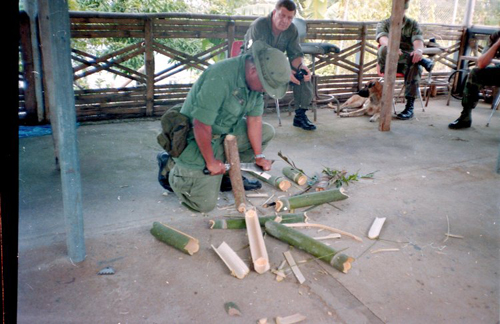
MIDDLE: One of the instructors near the author’s duty station in the Philippines circa 1990 splits wood with the author’s old bolo. (photo courtesy of Steve Watkins)

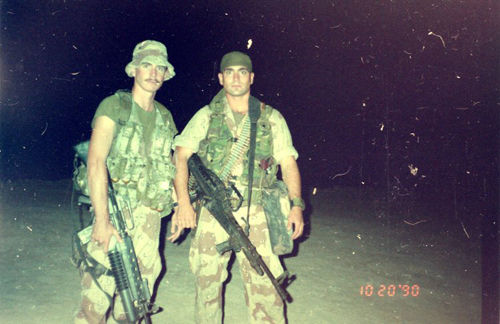
BOTTOM: The author (right) and his friend, Brad O’Neill, on patrol circa 1990. The author is shown holding an M-60 (7.62mm) and his friend an M-16 with an M-203 (a 40mm grenade launcher). (photo courtesy of Steve Watkins)

Advertisement

Must Read Articles

Read this before you make a knife

Knifemaking 101 – Read This Before You Make a Knife

  by Wayne Goddard My experience has taught me that there's nothing like digging in and getting started. I've often said the hardest part of the...
how to forge damascus steel

How to Forge Damascus

Advertisement
Advertisement