Larry “The Hammer” Harley, one of the stars of National Geographic’s hot new TV series, Lords of War, will exhibit his knives and conduct a seminar at the BLADE Show (www.bladeshow.com) May 31-June 2 at the Cobb Galleria Centre in Atlanta.
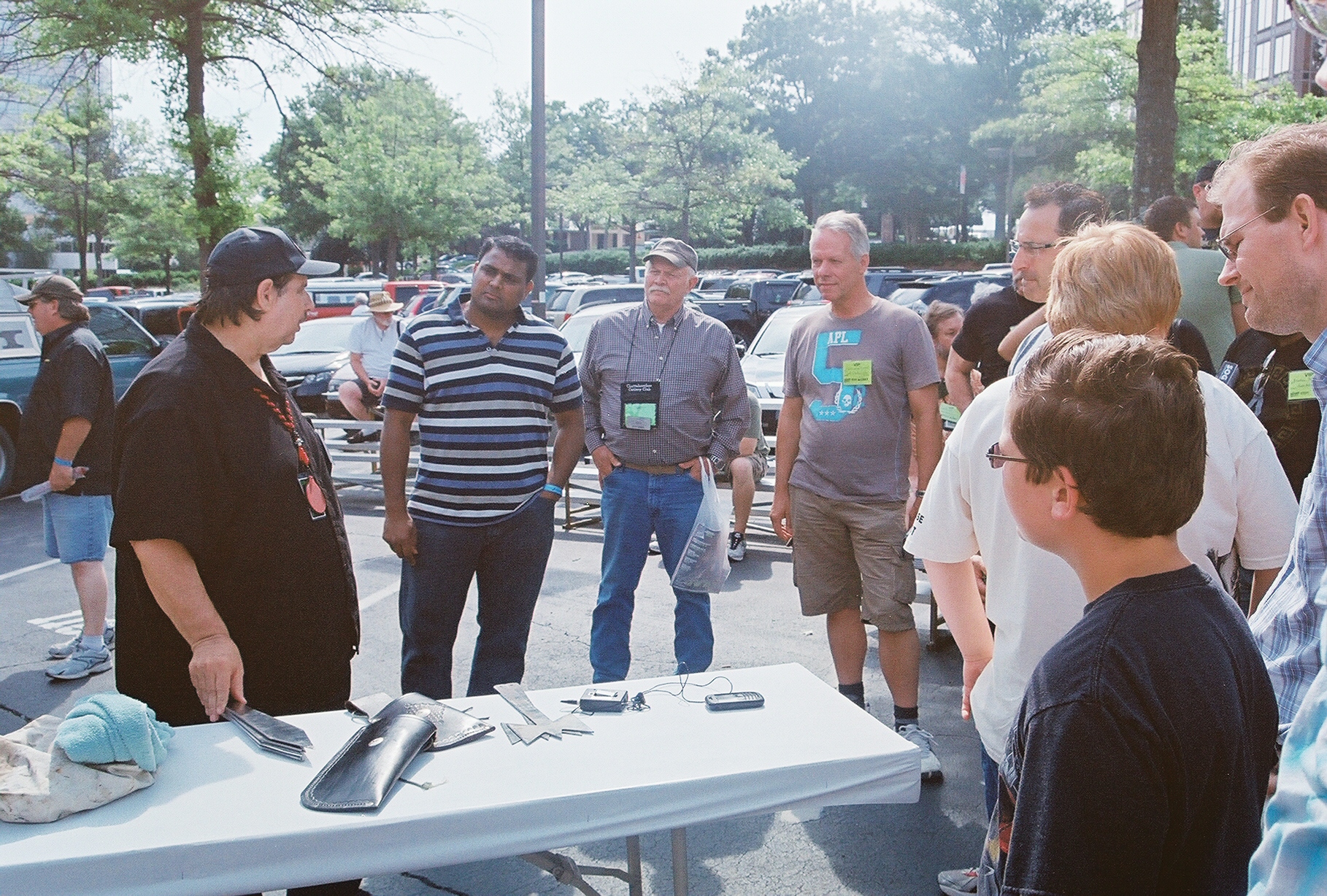
Meet The Hammer in person at his BLADE Show seminar 3 p.m. Saturday in Room 104 of the Cobb Galleria and ask him any and all questions concerning knives, swords, his TV show and more. And bring the kids, too. Larry’s presentation is suited for the entire family. He also will be exhibiting his knives in the BLADE Show hall at table 9Q .
Larry “The Hammer” Harley, one of the stars of National Geographic’s “Lords of War” TV show, will exhibit his knives and conduct a seminar at the BLADE Show.
Harley has long been known to knife enthusiasts as a fine knifemaker, an ABS journeyman smith and among the more colorful characters in the knife industry. It is small wonder that the National Geographic Channel picked him to be one of the stars of its Lords of War television series. On the show Larry appraises any and all knives, swords and edged weapons, and also helps test fire the antique and other guns appraised—and he almost always outshoots his Lords of War co-stars in the process.
The Hammer’s credits are many. In addition to making knives for many years, he has involved himself in the knife industry in a number of ways. He conducted knife hog hunts for several years and was among the first to win at the early ABS cutting
competitions. He is also extremely active in teaching bladesmithing to youngsters, including a heavy involvement in same with the ABS. He has conducted hammer-ins for both youths and adults at his shop in Bristol, Tennessee. His son Richard has been making knives for a number of years now and is quite good at it. Though The Hammer may come across as a good ol’ country boy—which he is—he is also highly educated and well-versed in a wide range of topics. Meet him at the BLADE Show. You will enjoy it.
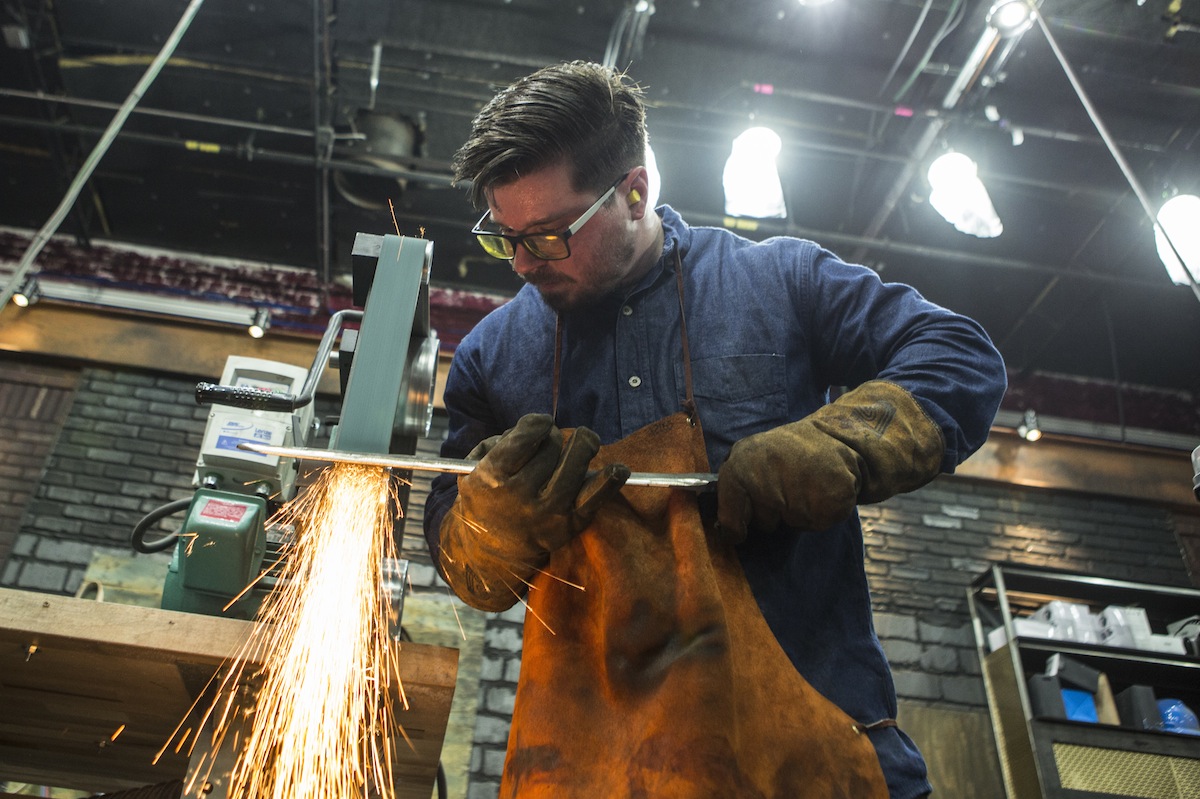
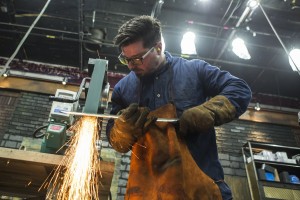
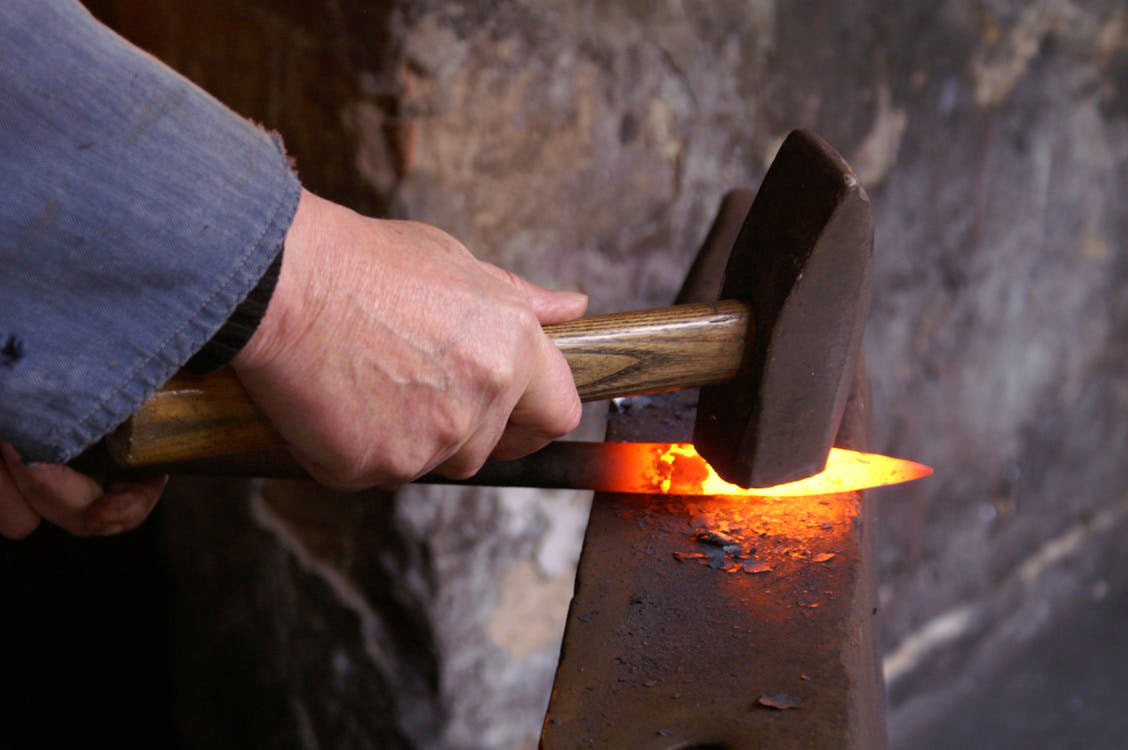
Forged In Fire is an original stand-alone competition show featuring bladesmiths competing against each other to create some of the most iconic edged weapons from history. (photo by David S. Holloway)
ABS master smith J.D. Smith will join three other bladesmiths on the latest installment of The History Channel’s Forged In Fire tonight at 10 p.m. Eastern.
Forged In Fire is a reality TV show in which the contestants are charged with designing and making a knife of their choice via various requirements imposed by the show’s judges—ABS master smith James Neilson, ancient weapons specialist David Baker and combat specialist Doug Marcaida. The smiths have three hours to complete the knife inside the studio’s well-equipped forge—and host Wil Willis is there to ensure the contestants know when time is almost up. In the end of the studio segment, two smiths emerge and are charged with building a special knife, sword or other edged tool of the judges’ choosing at the smiths’ home forges. The smiths have five days to complete the project and the piece deemed best in terms of performance, design, etc., by the judges results in the winner earning a $10,000 prize.
You never can tell what may happen—both in the studio forge and at the smiths’ home forges. Everything from the contestants catching the floor and even themselves on fire, unusual approaches to making knives, and the pressure and confusion that result from the time limits on making the knives can result in some high drama. It’s really entertaining TV and the ratings the show is receiving have been steadily climbing as a result.
After five weeks, Forged In Fire has gained double-digit growth across all key demographics compared to its live premiere: +74 percent in the 25-54 age group, +73 percent in the 18-49 age group and +32 percent in total viewers. In all, Forged In Fire is averaging 1.4 millions viewers—arguably the most people to see/watch a knife-related event in history.
In tonight’s episode, an Elizabethan rapier will be the ultimate blade project the finalists will make for the judges’ perusal. Be sure to check your local listings for when the program will air in your time zone.
Some of the world’s top knives and knifemakers will descend on Jersey City, New Jersey, March 1-3 for the 24th Annual East Coast Custom Knife Show (ECCKS).
Ron Lake’s stag interframe tab-lock folder. (Dave Ellis photo)
Great knives have face. I’m not talking about a face like on a Halloween mask, but a knife with a design or style that’s recognizable by a large number of knife enthusiasts as having been made first by one knifemaker and one knifemaker only.
The face, in this instance, is the unmistakable knife design or style of the maker in question.
There are at least two provisos: 1. To fully qualify as a knife with face the knife must be recognizable by a large number of knife enthusiasts. Now, there no doubt are great knives made by makers that one or a few enthusiasts may recognize as being the knives of specific makers, but the ones that really fill the bill are the ones many enthusiasts can look at and say, “Yep, that’s so-and-so’s knife.” It’s effective in terms of a conversation starter among knife enthusiasts who are friends, or as a conversation icebreaker among those who have just met. They don’t know each other but they do know great knives with face.
2. Some of the makers of knives with face have had their designs with face emulated by many others. Even so, if the knife has face those who recognize it will say that it’s in the style of the maker who originated it.
Following is a selection of great knives with face and why they qualify. Enjoy!
The Bob Loveless dropped or drop-point hunter. The Loveless drop-point hunter is one of the great knives with face on this list that meets Proviso 2 above. While it may not appear to be all that unusual, the drop-point style of the blade—where the blade tip falls below the plane of the spine—is something Loveless popularized in the 1970s and ’80s, and it remains his signature style to this day.
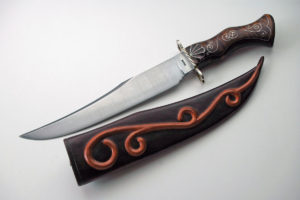
The Bill Moran style. Actually, as with Loveless, any number of Moran knives have face, though I’ve chosen one of my favorites: the ST-24. The flowing blade with a long clip point and ergonomically contoured dropped handle with silver wire inlay is unmistakably a Moran.
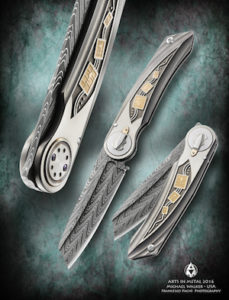
The Michael Walker style. Walker’s linerlock folder changed knives forever but he also makes models unlike anyone else. Outfitted with any number of his clever and innovative locks, each of which gives the handle a notably different look at the pivot, Walker’s knives use the latest and most exotic materials, are embellished in any number of creative and ornate ways, and usually have some of the most interesting blade shapes you’ll ever see.
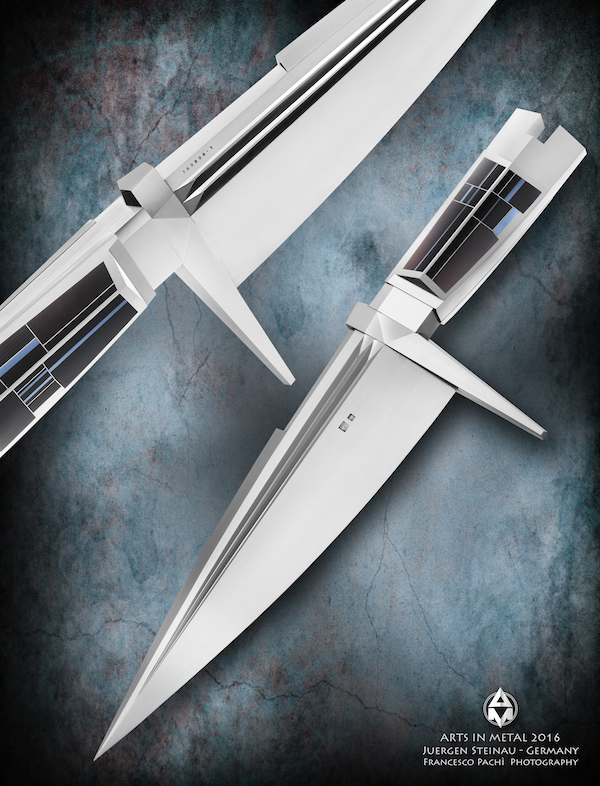
The Jurgen Steinau style. When I first saw one of Jurgen Steinau’s knives, at first I wasn’t even sure I was looking at a knife. The designs, angles and materials of his knives are like something from a book on intergalactic architecture. Suffice it to say, Steinau’s great knives have face—and then some!
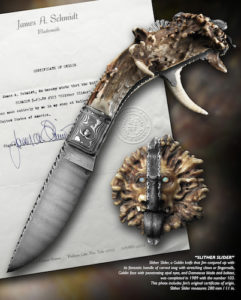
Jim Schmidt’s Goblin Folder. Schmidt’s Goblin Folders have face in more ways than one. Not only do they have the face of a goblin on the handle’s stag butt, but that face makes the knife unmistakable as the style originally made by Mr. Schmidt. A number of his other models have face as well.
There are others who make great knives with face. Which ones make your list?
1 The Loveless dropped or drop-point hunter has face in large part because of the drop-point blade with the tip that drops below the plane of the spine. An original is shown at bottom here, with a Schrade repro at top.4 Jurgen Steinau’s great knives have face for their design, angles and materials that look like something straight out of a book on intergalactic architecture.3 Michael Walker’s spectacular folders have face for any number of reasons, from their distinctive pivots to their exotic materials, creative embellishments and standout blade shapes.2 Bill Moran’s ST-24 has face thanks to the long, flowing blade and ergonomic dropped handle with silver wire inlay—not to mention his distinctive sheaths. Those who know great knives recognize the Moran style immediately.
5 Jim Schmidt’s Goblin Folder has face in more ways than one—it actually has the face of a goblin on the handle butt!
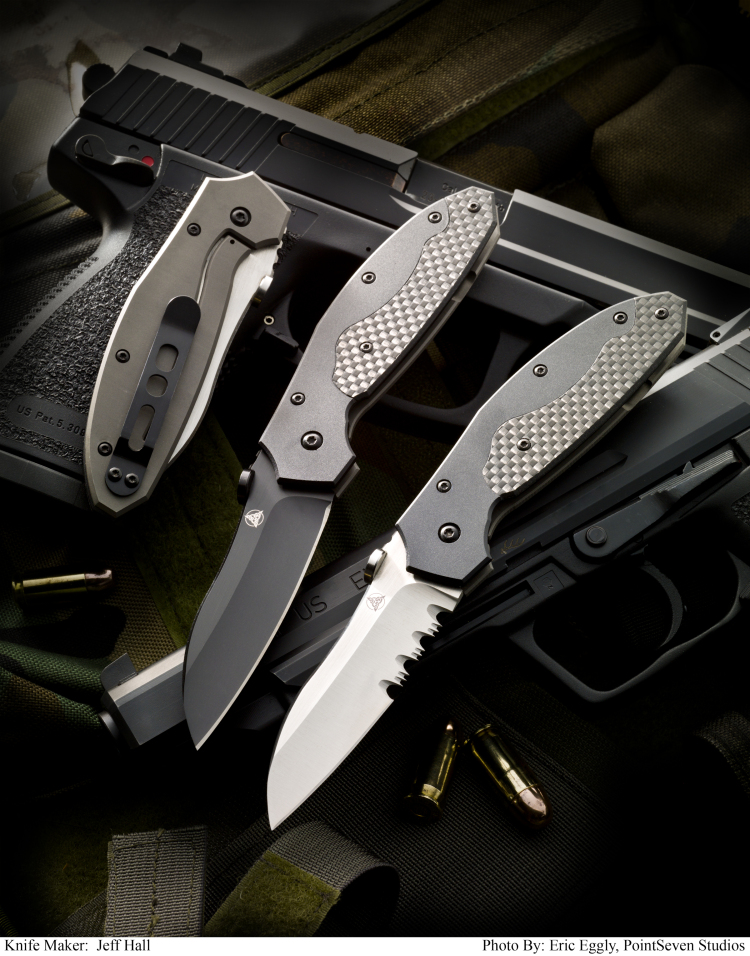
Our knife—make that knives—of the day for Dec. 16 are Jeff Hall’s stylish framelock folders in a choice of blade finishes and plain and partially serrated edges, the serrations being especially dramatic as far as serrations go. The frames feature carbon fiber inlay and skeletonized pocket clips.
You can’t beat fixed blades for down-and-dirty, heavy-duty hunting knife use, and three hot factory examples from ShopBlade are more than ready for the woods.
Designed for fish and small game, the Buck 102BR Woodsman (second from top) boasts old-time Buck styling in an affordable ShopBlade price of $39.99. Overall length: 7.75. inches.
Speaking of Moran, Spyderco’s Bill Moran upswept hunter (top) boasts a VG-10 stainless blade and a comfy palm swell handle of fiberglass-reinforced nylon (FRN) at a ShopBlade price of $99.96. For out-of-the-box sharpness, this one is hard to beat.
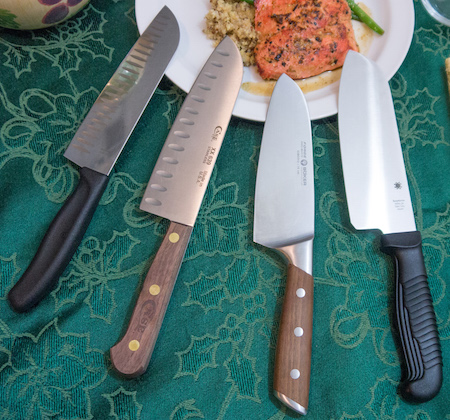
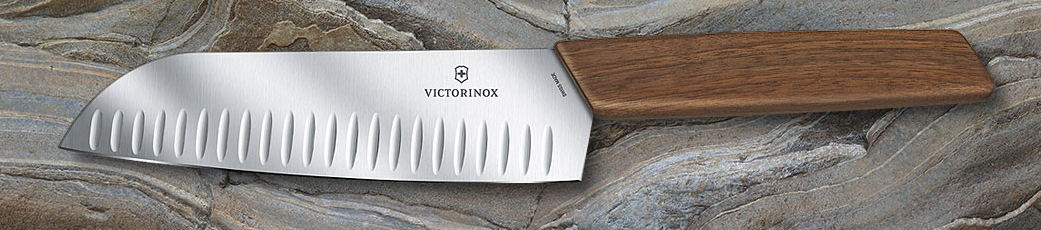
Thanksgiving cutters, Japanese style, from left: Victorinox SwissClassic Santoku, Case Santoku, Boker Forge Santoku Maple and Spyderco K08 Santoku.
Santokus are Thanksgiving cutters, Japanese style. A design that originated in the Land of the Rising Sun, the santoku is a specialized tool well suited to preparing holiday meals. From cutting meat to dicing veggies and cutting fruit for creative holiday salads and such, santokus are perfect for Gobbler Day.
Santokus have a wide blade sometimes with scallops, which are supposed to create less friction than a solid blade, a sheepfoot tip, and are lighter and thinner than a French or German chef’s knife. Their length runs between 5 and 8 inches. The Thanksgiving cutters do not have a bolster. They have a straight edge with no curve.
San-to-ku is Japanese for the three cutting tasks for which the knife is designed: slicing, dicing and mincing. It is a specialized knife that, in the Japanese view, is optimized for the three aforementioned tasks. The straight edge of a santoku does not allow for the rocking motion commonly used with a French or German chef’s knife.
Cuts are made straight down with little or no forward movement, almost a guillotine action, which, again in the Japanese view, allows slicing very thin pieces of whatever’s being cut with precision. The Thanksgiving cutters are not meant to be all-around kitchen knives. An all-around knife used to cut many things is not a Japanese concept. The Japanese chef will typically have a vast array of knives, each one designed for a specific function.
Japanese kitchen knives typically have a chisel grind, which also contributes to cutting very thin slices with precision, as you may have seen sushi chefs do. The chisel grind is optimal for slicing, say, very thin slices of turkey, with the caveat that there are left and right grinds. If you are right handed you’ll need a blade ground on the right side. The chisel grind doesn’t work well for cutting through thick media, such as roasts and ribs because the chisel grind—since the edge is off center—will cause the blade to cut off center, and to wander. Also, the thin edge of a Santoku should not be used to cut through joints or bones, or to disjoint, say, a chicken.
HAPPY MARRIAGE
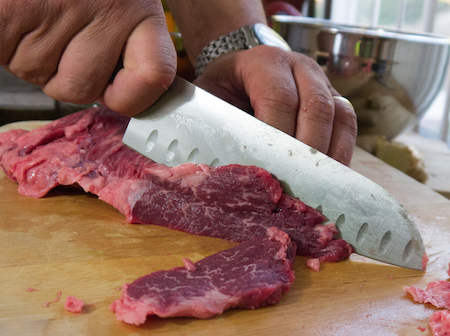
One reason santokus make such good Thanksgiving cutters is their ability to cut small meat slivers. The Boker Forge Santoku Maple is a classic example.
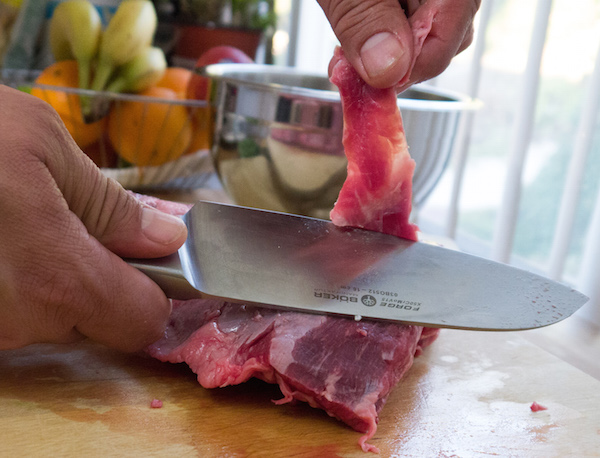
With its hefty blade, full tang, nicely sculpted bolsters and maple scales, the Boker Forge Santoku Maple is a happy marriage of a classic santoku and a German or French chef’s knife. While it lacks the acute point of a chef’s knife, the slight point is usable. The edge does have somewhat of a curve, which allows the rocking motion Western-trained chefs, and many domestic home cooks, are accustomed to using. It is the only one of the four knives reviewed that I would use to cut through pork rib joints, chicken backs, etc. The Boker is almost a mini cleaver as well as being an excellent slicer. It is a handsome knife and comfortable for long periods of work.
Thanksgiving cutters must be adept at slicing veggies, and the Boker Forge Santoku Maple is that and more.
STURDY STUDY
With its walnut scales and full tang, the Case model is also a sturdy example of a Santoku. It has a barely perceptible curve to the edge and a scalloped blade. The Case looks more like a classic santoku than the Boker, but like the Boker has a thicker blade than a standard Japanese santoku. It felt solid in hand and while not as sculpted as the Boker, the traditional American handle was comfortable during extended use. The Case sliced, diced and minced as well as thin-bladed Santokus while giving the impression that it would be up for harder work if need be.
Thanksgiving cutters must be able to tackle meat slicing and the Case Santoku is a prime-cut cutter.
21st-CENTURY SHARP
Spyderco image
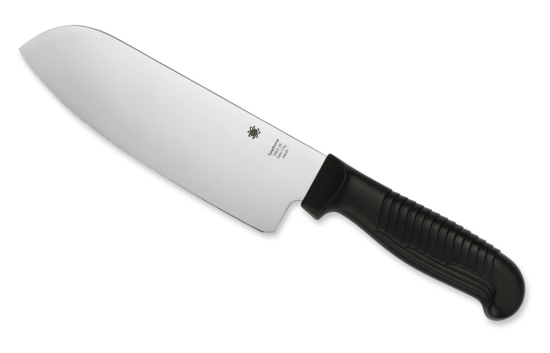
With its wide blade, classic Santoku profile, comfortable, molded grip and graceful overall appearance, the Spyderco K08 looks like a 21st-century interpretation of a classic—which is pretty much what it is. It is a very lightweight knife with an extremely thin blade, which is optimal for doing what a santoku is supposed to do. The Spyderco does have a slight curve toward the tip, which I think adds to its smooth lines. Since I am accustomed to using a French or German chef’s knife, the curve also made it easier for me to work my way through piles of squash and mushrooms, especially mushrooms, which I find hard to slice. The blade also made it easy to slice salmon smoothly and evenly.
ENTRY-LEVEL PRO
Victorinox image
Victorinox makes the knives The American Culinary Institute gives to its students: chef’s knives, paring knives, bread knives and, yes, santokus. Pro chef Shawn Carlson’s first professional knife roll contained only Victorinox knives. So, he was familiar with the Victorinox characteristics: thin profile, very sharp, fairly soft steel that requires frequent steeling but which comes back to a fine edge quickly, and which does not chip if dropped on a kitchen floor. It has the standard santoku shape: flat edge and sheepfoot tip rather than a curved profile and pointy tip. I missed a curved edge and had trouble adjusting to the flat straight edge. Shawn did not—again, a pro is a pro. It is an entry-level professional knife.
FLAIR GAME
If you enjoy cooking and take pleasure in using specialized tools, you’ll find a santoku a welcome addition to your quiver of Thanksgiving cutters—keeping in mind that a santoku is a specialized tool. If you like to keep things simple, an 8-inch chef’s knife and a 4-inch paring knife will do most any kitchen job—if not with the flair of a santoku.