The BLADE Blog w/Steve Shackleford

Knives, knife people, knife news, knife use, knife collecting, knifemakers, knife events, the BLADE Show, BLADE Magazine, and more.

Top Knifemakers Highlight BLADE University

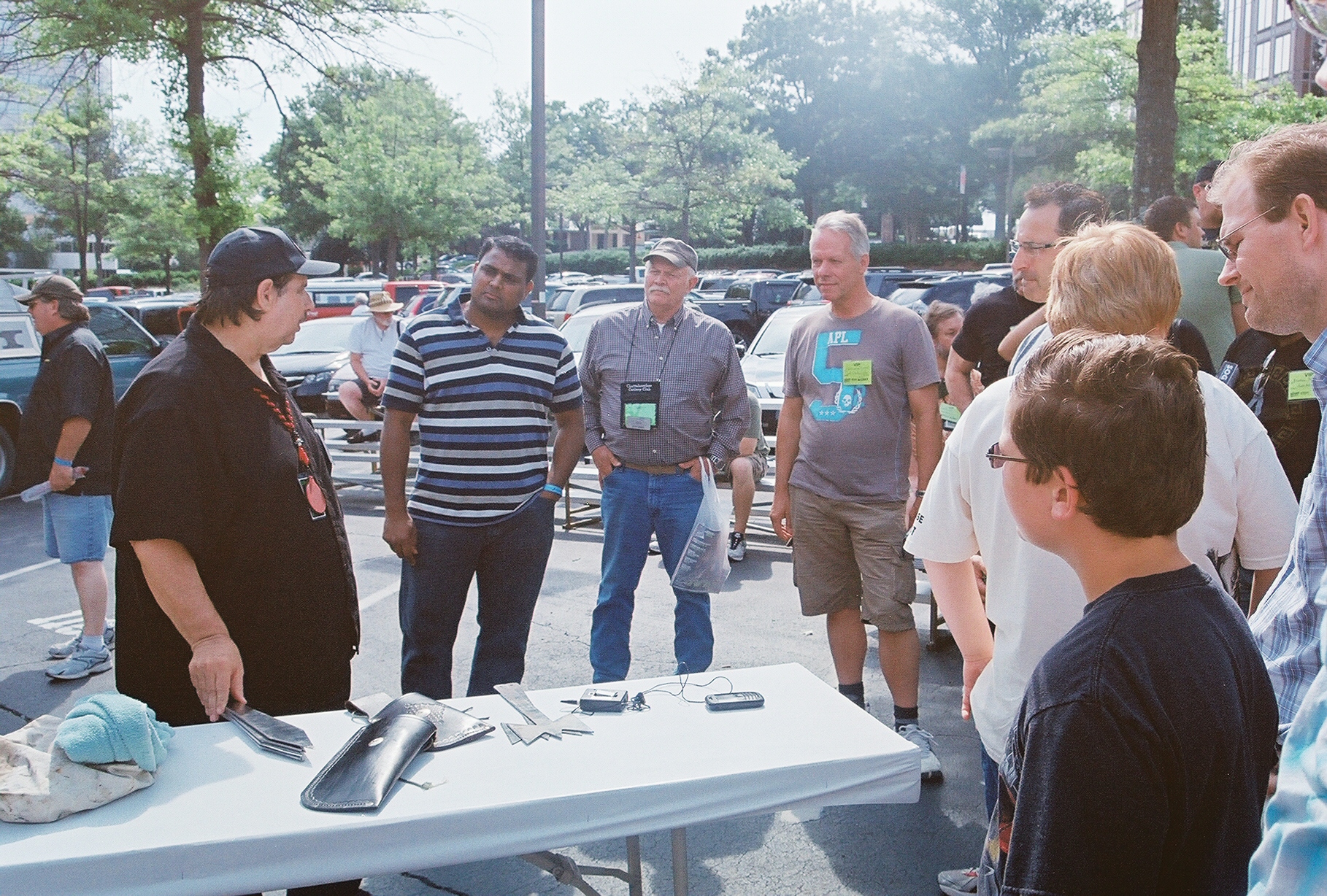
Rick Hinderer will be among the instructors at BLADE U.
Rick Hinderer will be among the leading names in knives serving as instructors at the 2nd Annual BLADE University.

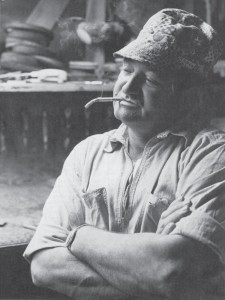
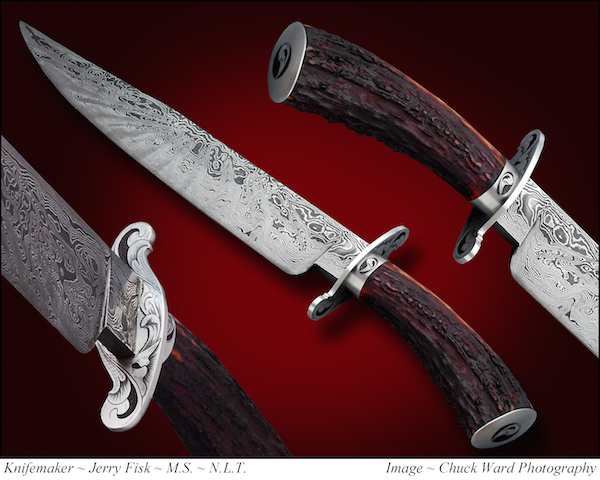
Leading knifemakers Rick Hinderer, Ryan Johnson of RMJ Tactical, ABS master smiths Jerry Fisk, Joe Keeslar, Tim Potier and Lin Rhea, Lucas Burnley, Tom Krein, Jason Brous, Murray Carter, HEPK master smith Ed Fowler and many others will be among the instructors for the 2nd Annual BLADE University.

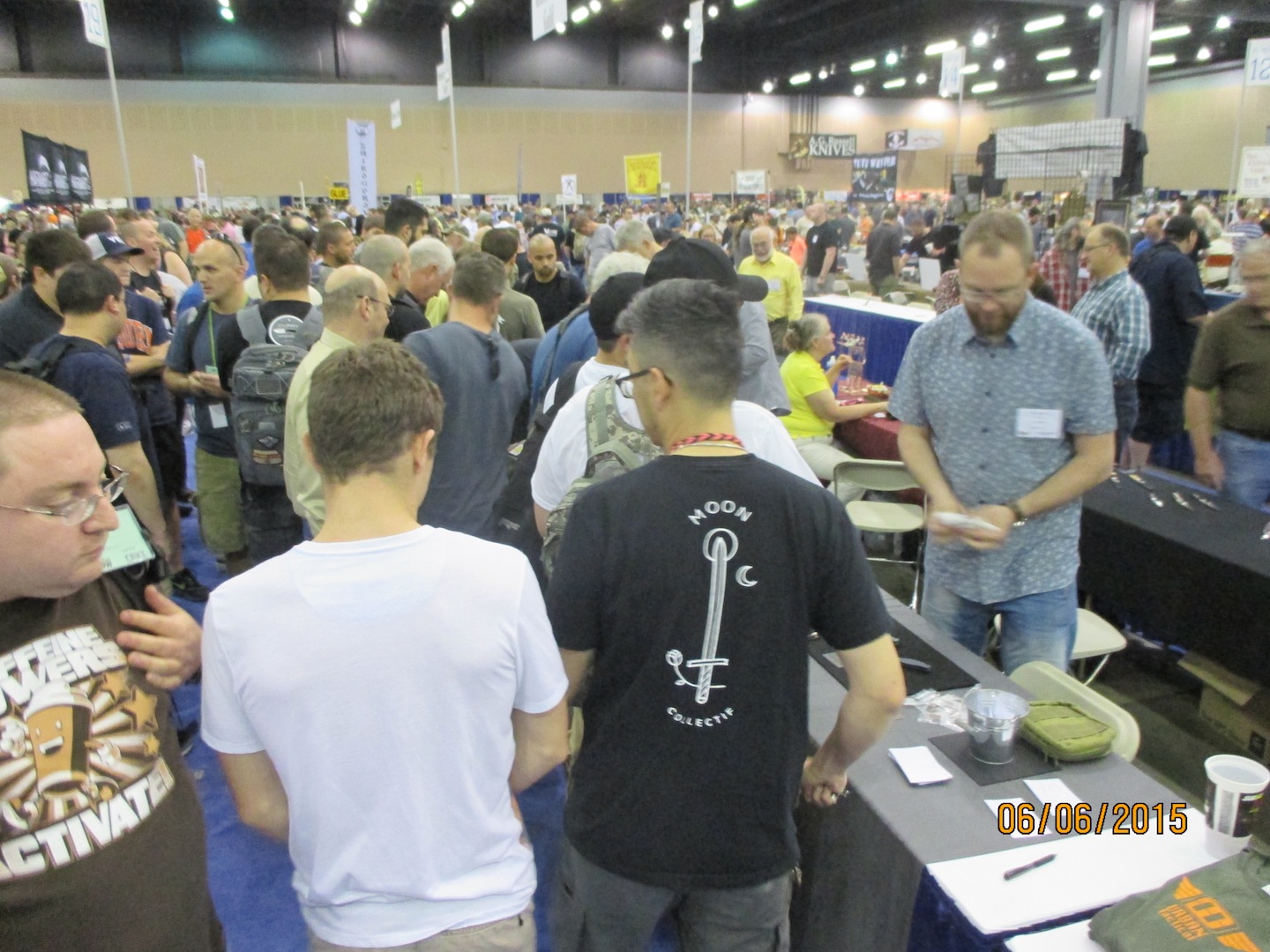
Held the Thursday prior to and through the Saturday of the BLADE Show—the latter which will be June 5-7 at the Cobb Galleria Centre in Atlanta—BLADE University is a whole new concept in knife show instruction that covers knifemaking, knife collecting, engraving, Japanese swords, knife design, bushcraft, sharpening and much more.

The class schedule:

THURSDAY, JUNE 4

  • Knives The ABS Way, Room 104

10 a.m.-11:30 a.m.: Introduction to Bladesmithing—ABS master smith Tim Potier

12:30 p.m.-2 p.m.: How To Make a Knife From Meteorite, with ABS master smith Lin Rhea

2:15 p.m.-3:15 p.m.: Part I of Handles and Guards, with ABS master smith Joe Keeslar

3:30 p.m.-4:30 p.m.: Part II of Handles and Guards, with ABS master smith Joe Keeslar

FRIDAY, JUNE 5

  • How To Grind a Knife Blade Part I, Room 109

8:30 a.m.-9:30 a.m.: Proper Tools and Safety Gear/Tips, with knifemakers Tom Krein and Lucas Burnley, and Chris Williams of Wilmont Grinders

-How To Grind a Knife Blade, The Courtyard

9:45 a.m.-10:45 a.m.: How To Grind, Part I, with knifemakers Tom Krein and Lucas Burnley, and Chris Williams of Wilmont Grinders

-How To Grind a Knife Blade, The Courtyard

11 a.m.-12 p.m.: How To Grind, Part II, with knifemakers Tom Krein and Lucas Burnley, and Chris Williams of Wilmont Grinders

  • GRS Engraving Instruction, Room 107

8:30 a.m.-10 a.m.: Introduction and techniques, including drawing, transfer and graver sharpening

10:30 a.m.-12 p.m.: Hands-on engraving, including hand engraving, finishing and Q&A

  • How To Sharpen Any Blade, Room 104

12:30 p.m.-1:45 p.m.: Big Knives, Axes/Tomahawks, Razors and More, with knifemaker Murray Carter

  • How To Choose Your Knife, Room 104

2 p.m.-3:15 p.m.: Choosing a Knife You Can Depend On For Survival, including Design Aspects, Construction and Questions to Ask The Maker, with Ed Fowler, HEPK Mastersmith

  • Collecting Wartime Randall Knives, Room 109

3:30 p.m.-4:45 p.m.: What’s Hot In Wartime Randall Knives, with Randall knife purveyor Gary Clinton

  • Collecting & Maintaining Japanese Swords, Room 107

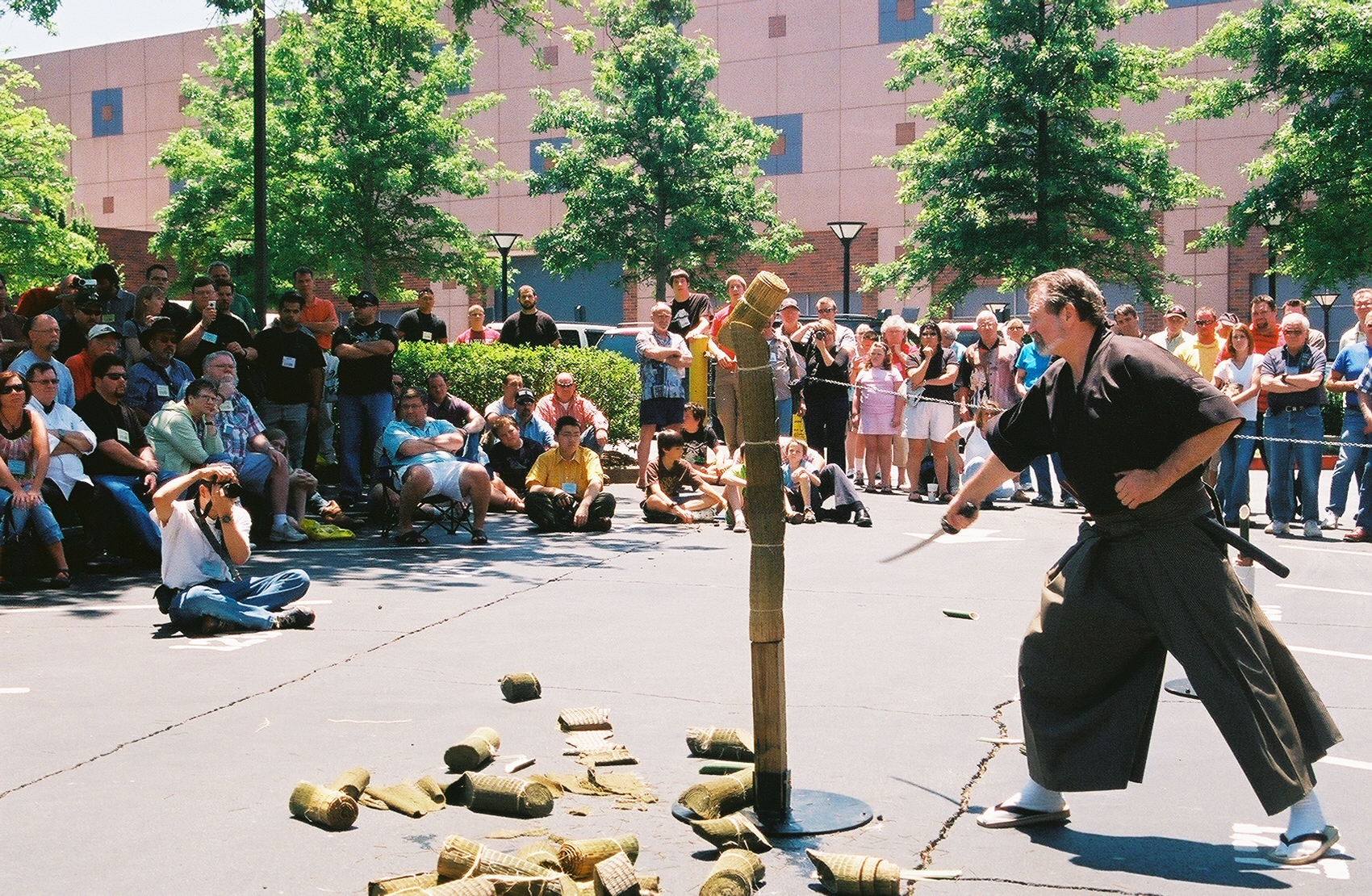
5 p.m.-6:15 p.m.: What To Look For When Buying a Japanese Sword and Proper Japanese Sword Care/Maintenance, with Wally Hostetter

SATURDAY, JUNE 6

  • From One-Man Shop To Semi-Production/Production: How The Pros Do It, Room 107

8:30 a.m.-9:30 a.m. Jason Brous/Brous Blades

9:45 a.m.-10:45 a.m.: Rick Hinderer/Rick Hinderer Knives

  • Bushcraft Knife Survival School, Room 109

9:45 a.m.-10:45 a.m.: Knife Design & Function, with Abe Elias

11 a.m.-12 p.m.: Knife Skills: How To Get The Most Out Of Your Knife, Including Proper Grips and Cutting/Chopping Techniques, with Abe Elias

  • Using 3D CAD/CAM Software In Knife Design & Knifemaking, Room 107

11 a.m.-12 p.m.: Ryan M. Johnson, RMJ Tactical, LLC

  • Designing and Making a Combat Knife, Room TBD

11 a.m.-12:15 p.m.: Design, Manufacture, Uses, Soldiers’ Needs, Peacetime Effects and More, with knifemaker Bill Harsey and Curtis Iovito and Mark Carey of Spartan Blades

  • How To Get Your Knife Design Put Into Production/Do A Factory/Custom Collaboration, Room 104

12:30 p.m.-1:45 p.m.: Knifemaker Brian Tighe and Rod Bremer of CRKT

2 p.m.-3:15 p.m.: Knifemaker Tony Bose & John Sullivan of W.R. Case & Sons Cutlery Co.

3:30 p.m.-4:45 p.m. ABS master smith Jerry Fisk & John Cammenga of White River Knife & Tool

For details on how you can enroll for BLADE University and/or to buy tickets for the BLADE Show, visit bladeshow.com or CLICK HERE. For more information, e-mail [email protected].


Recommended for You:

Knife Grinding Secrets DownloadKnife Grinding Secrets (Download)
Author R.J. Martin, whose knives are some of the most popular and sought-after in the industry, instructs on flat- and double-hollow-grinding knife blades. Martin a frequent contributor to BLADE® Magazine, frequency, offers up his methods for blade grinding. You won’t be disappointed. Follow along as R.J. covers:

– Profiling a Chisel-Ground Blade
– Grinding the Bevel of the Kwaiken Model
– The Finesse of Grinding
– The Feared Flat Grind
– More!

Instant Download Here

Best Knives Under $50 Top New BLADE

The best knives under $50, how to make one of the industry’s hottest folders, and two custom knife industry veterans doing their best to protect elephants and your legal ivory are among the highlights of the new BLADE®, on newsstands now!

Budget concerns are at the top of most people’s lists these days, including those of knife enthusiasts. Dave Rhea shows you how to save a few bucks and still get an outstanding knife at a reasonable price in “Best New Knives Under $50.”

Best knives under $50 in new BLADE.
The best knives under $50 and more highlight the new BLADE®, on newsstands now!

Sandra Brady and Linda Karst-Stone are known throughout the custom knife industry as two of the best scrimshanders. They have a vested interest in the nationwide attack on legal elephant and ancient ivory by the federal and state governments. If you think all Sandra and Linda care about is their livelihoods and not the plight of elephants and the state of legal ivory, you would be wrong. Find out what the federal and state grab on legal ivory is really about in the “Dynamic Duo of Ivory” by Pat Covert.

Popularized by the late BLADE Magazine Cutlery Hall-Of-Fame© member Kit Carson, flipper folders remain one of today’s hottest knives in the custom and factory industries. ABS master smith Wally Hayes shows you what goes into making one of these fast-opening models in “How To Make A Flipper Folder.”

Protecting a knife from the physical degradations of hard use, the elements and more is one of the reasons many companies coat the blade and sometimes even the handle in a variety of different finishes. Find out what the finishes are, how they are applied and more in Mike Haskew’s “Coats of Many Colors.”

Also this issue: tests of the latest hatchets, neck knives and two new folders, those who forge damascus in quantity for use by other knifemakers and companies, 41 reasons you may be an edgeneck and much more in the latest BLADE.


Best of the Weed Whackers

A big pot plant (top) requires a big knife such as the KA-BAR Kukri Machete. The 11.5-inch, hollow-ground blade is 1085 carbon steel with a Rockwell hardness of 52-54 HRC—the lower hardness providing the malleability needed for chopping—and the handle is black Kraton G. MSRP: $75.63. (Above) A U.S. Immigration and Customs Enforcement agent uses an ESEE light machete to eradicate a field of marijuana plants somewhere in South America. (photo courtesy of ESEE Knives)

    The big blades have revolutionized the way drug enforcement eradicates marijuana plants

    By Pat Covert

Sometimes only a big knife will do. Other times only a really big knife will do! Such is the case when eradicating plants that supply illegal drugs such as marijuana and cocaine.

    You have seen news stories about busts of illegal pot fields and the controlled burns in their aftermath. BLADE® takes this opportunity to fill you in on drug raids and eradication and, in the process, give you some insight into the best in “weed whackers.” We consulted a panel of experts, including an active special agent for U.S. Immigration and Customs Enforcement (ICE) who has participated in eradications all over the USA and other countries. In addition, we talked to factory officials who shared information on the dope cutters they offer.

    Marijuana is by far the most actively used controlled substance in the USA, comprising about 80 percent of all illicit drugs combined. In 2010, over 23,500 outdoor growth sites of the illegal weed were eradicated, and almost 5,000 indoor growing facilities were eliminated. Marijuana plants average between 5-to-10 feet high and even taller in the right climes.

    Cocaine is processed from coca leaves. The coca plant, which averages 7-to-10 feet high, can be found throughout most of Latin America but is most prominent in Bolivia, Columbia and Peru. It is estimated that the USA consumes half the world’s processed cocaine. Since most of the cultivation is in South America, that’s where most eradication efforts, including those by U.S. enforcement agents, take place. It is a big job for law enforcement officials, and big knives play an important role.

The Takedown

The ICE special agent said he preferred not to get into the specifics of how illegal growing fields are located and monitored by the authorities, but he did comment on where such fields tend to be situated.

    “A typical marijuana ‘grow’ [a.k.a. garden] is located in a remote section of the local wilderness accessible to a water source,” he begins. When raiding a field, he says the element of surprise is essential. “The takedown is similar to a military patrol and assault,” he explains. “The grow has to be surrounded to keep the growers from escaping the perimeters. Officers must be prepared to make multiple arrests and manage those arrests under pressure and confusion. Air support is also essential in providing cover, keeping the growers’ movements limited.”

    Once arrests have been made and the field secured, the hard job of eradication begins. “Taking the plants out of the ground is hard work,” the ICE agent says. “All the plants have to be removed. Some are taken by the roots, while others are cut at the base. The intricate watering systems also have to be dismantled and removed. The harvested plants are destroyed by being burned.” Once the plants are cut and stacked, the agents use helicopters to sling load the plants out in large nets. “The grows usually net between 5,000 to 20,000 plants, depending on the location,” he adds.

Long Blade, Flared Tip

There is no shortage of knives that can be used to take down illegal crops. Typically, a good dope chopper will have a long blade with a flared tip to add extra weight—and power—to the main area of contact. An ample handle is also preferred to give comfort to the hand over extended use. Owner and founder of ESEE Knives, Jeff Randall has been with agents on eradication assignments where his knives have seen action. “Most of the agents we deal with love our product, especially the agents dealing with coca and marijuana crops in South America, but they are used domestically as well,” he observes. “The ESEE Lite Machete and Junglas models do the best, depending on the particular plant.”

    KA-BAR senior designer and engineer Paul Tsujimoto says his company has a number of knives used for drug eradication. “The KA-BAR Heavy Cutting Tools line, which includes the Large Heavy Bowie, Grass Machete, Cutlass Machete and Kukri Machete, is almost entirely suited for heavy jungle-vegetation clearing duty,” he notes. “Our relatively new Big Brother [a large 14.2-inch version of the original USMC fighting/utility knife] has also proven itself in jungle environments.”

    Tsujimoto cited some recent additions to KA-BAR’s lineup that have proved their worth in the battle against drugs as well. “We also have a new line, Zombie Knives, that has a [Pestilence] Chopper and [War] Sword that have proven excellent at clearing and leveling plants, and our Johnson Adventure Blades line has a model called the Potbelly that is an excellent chopper. All of these knives have seen service in the drug eradication service, both domestic and overseas.”                                                                                                                                         

    In knife circles, Becker Knife & Tool founder and chief designer Ethan Becker is perhaps best known for his Machax model, a machete/ax hybrid.

    “Most of the feedback I have gotten over the years has involved the Machax,” he notes.” “I know the Kentucky State Police special ops team used the Machax for years with great success. In addition to the Machax, our most suited blades for the job are the BK9 Combat Bowie and the BK6 Patrol Machete.”

    Becker related an incident most instructive involving the Machax.

    “I made a cold sales call on a surplus store near Ashland, Oregon, some years ago,” he says. “The owner took one look at the Machax and said, ‘I’ll sell a bunch of these.’” When Becker asked the storeowner who the customers were he had in mind, the man replied, “Growers and the cops chasing ’em!”

Choppers In Action

The ICE special agent and his fellow agents had a chance to test a group of knives to evaluate their performance in cutting down the illicit drug plants.

    “The ESEE Junglas was the first tool we tested on the first grow of the season. The Micarta® handle was very ergonomic and easy to grip. Compared to a typical machete it has a shorter blade, but is much thicker and more robust,” he notes. “The blade performed very well cutting through the base of the marijuana plants. The Junglas was probably the highest quality knife/tool we used and definitely did the job.”

    However, for removing plants, the agent says he found the ESEE Lite Machete to be a better performer. “The Lite Machete changed the way we removed plants from the grows. Although the blade was much longer and not as thick as the Junglas, we were able to stand upright and cut the plants,” he explains. 

    The agents also ran several KA-BAR knives through the wringer. “KA-BAR sent the Grass Machete, Cutlass Machete, Kukri Machete and Wart Hog. We had several of each style and they were handed out to task force officers to be tested. I discussed with the officers how [the knives] performed, and the Grass Machete had the best fit and style for cutting the marijuana plants,” the agent says. Cold Steel also sent knives to be tested and, according to the agent, one particular model came out on top. “Cold Steel’s version of a light machete is called the Latin Machete,” he notes. “I would rate the Latin Machete 4.5 out of a possible 5.”

    Of all the knives tested, the agents’ favorites were the light machetes. “All the officers that used the blades came to a consensus that the Cold Steel Latin Machete and ESEE Lite Machete were the best for working in the grows to remove the plants. This [took] into consideration the weight of the knife, ease of carry, performance in removing plants, and ability to hold an edge after use,” the agent relates. “We noticed a change in the way the grows were being taken down. What previously took several hours to remove was now taking less than or close to an hour.” 

    While BLADE recommends leaving illegal plant eradication to the professionals, if you have to clear land of brush and small trees, the information herein should prove quite helpful. I have used a kukri to clear underbrush for many years but plan on trying several of the light machetes used by the ICE agents.

For more on the latest knives, knife legislation, knifemaking instruction, knife trends, knifemakers, what knives to buy and where and much more, subscribe to BLADE Magazine, the World’s No. 1 Knife Publication. For subscription information click on http://www.shopblade.com/product/blade-magazine-one-year-subscripti…?r+ssfb031112#BL1SU


Another First for Forged In Fire

Forged In Fire and the BLADE Magazine Publisher's Award.
Forged In Fire made a different kind of history when it won the BLADE Magazine 2016 Publisher’s Award. (Miller Mobley/HISTORY)

When Forged In Fire won the BLADE Magazine 2016 Publisher’s Award during this year’s BLADE Show, it was the first time a television program of any kind was recognized by BLADE® Magazine in such a manner. Selected by the BLADE staff, the Publisher’s Award honors a person or organization that has furthered the knife community in a fashion that bodes well for the future of that community, both inside and out. Forged In Fire on History answers that requirement—and then some.

It’s rare that knifemaking of any type is given the high-profile exposure of television coverage, much less a weekly program of its own. However, Forged in Fire has done just that and much more. Those who watch it are familiar with the group of bladesmiths it gathers each week, each group different from the last, with the bladesmith in each charged with forging a knife—often in a very exotic style—in a stated time limit under the watchful gaze of a panel of judges and millions of TV viewers. Meanwhile, the winner of each episode earns a grand prize of $10,000.

As with most high-profile endeavors, there are those who criticize the program for portraying knives in a so-called negative way and creating an atmosphere that is not conducive to making the best knife possible—but then making the best knife possible is not necessarily the goal. The goals include to demonstrate not only how tough it can be to make a quality knife under a short deadline but also to entertain—and Forged in Fire does that quite well. Meanwhile, bladesmiths, knifemakers and the knife industry in general are getting more exposure before more people than ever before. And that is a great thing.

Now on the cusp of entering its third season, Forged In Fire will have a different look with ABS master smith Jason Knight filling in for ABS master smith J. Neilson. We fully expect the show to enjoy yet another banner season, and for bladesmithing and the knife community in general to continue to benefit from the unprecedented exposure such a TV show brings to knives the world over.


Want to Get Started in Knifemaking?

Best books for beginner knifemakersFor those new to knifemaking, BLADE put together a special collection just for those starting out. The Complete Knifemaking Collection gathers great knifemaking books and tutorials to get you up to speed in no time. The price is unbeatable, too.

Order the Complete Knifemaking Collection from ShopBlade.com.

Do’s & Don’ts of Knives

DO ask a maker's permission before picking up a knife from his table at a knife show.
DO attend as many knife shows as possible—such as here at the BLADE Show (www.bladeshow.com)—to handle knives and meet the makers.

The do’s and don’ts of knives are many. Knowing them will make your knife experience much more rewarding and satisfying. Here are but a few:

DO use a sharpener to touch up the edge of your knife after each use or at the end of each day of use.

DON’T use your knife as a pry bar (unless it has a pry tip and is designed for such use).

DO rinse off and dry your non-stainless carbon steel knife after each extended use or at the  end of day of each use (it’s probably not a bad idea to do the same no matter what the blade material is).

DON’T store your knife in a leather sheath for extended periods.

DO cut away from other people/your body when cutting rope, cardboard boxes open, etc.

DON’T show off flipping your folding knife open and closed at knife shows in crowds of people or around any area crowded with people, for that matter.

DO ask a maker’s permission to pick up a knife from his table at a knife show.

DON’T open more than one blade at a time on a multi-blade folder (it puts unnecessary pressure on the backsprings; besides, it’s a good way to get accidentally cut).

DO carry a knife whenever possible where it is legal to do so (and when the knife meets local legal requirements).

DON’T pull out a loupe/magnifying glass to closely inspect a new custom or handmade knife at a knife show (it’s just not considered good form; besides, unless you’re legally blind, if you can’t see what’s right or wrong with a knife with the naked eye, then it’s not worth worrying about).

DO attend as many knife shows as you can and view knives up close and personal and meet the makers who build them.

DON’T interrupt a conversation between a maker and someone he or she is talking to at his or her table at a knife show. It’s rude.

DO read as much as you can about knives, their history and their makers.

DON’T take everything you read about knives as gospel. Always look for at least one additional opinion on the subject.

One final DO is to check out these knife deals BLADE‘s lined up for you at ShopBlade.com.

SHOT: Edged Evolution of Change

Outdoor Edge Harpoon.
The Harpoon designed by Jerry Hossom is new from Outdoor Edge.

The factory knife industry is always evolving and the evolution of change exhibited by the latest and greatest sharp stuff at the 2015 Shooting, Hunting, Outdoor Trade Show at the Sands Convention Center in Las Vegas was a case in point.

Automatics appeared in increasing numbers, both by companies known for them, such as Pro-Tech and Benchmade (CLA or Composite Lite Auto), and those not known for them as much, including Buck (Impact), Kershaw (Launch 1, 2 and 3), Hogue (EX-AO1, AO3 and AO2) and Timberline (18-Delta). Machetes were in abundance, including those by Outdoor Edge (Brush Demon), CRKT (Mah-Chete designed by Liong Mah), Timberline (Machete Survival System), Condor (Duku and Mini Duku) and the CHOP slated for a BLADE Show debut by DPx Gear. More in big fixed blades included a bolo (Jungle Bolo) and a bowie knife (Jungle Clip-Point) from Benchmade, the Camp 12 by Kershaw, a Steel Will bowie and also tactical fixed blades, the latter including a stretched-out-and flatter version of the Jerry Fisk Sendero in CPM S30V from White River, and Canal Street Cutlery’s Green River Tactical Knives in D2 tool steel with handle slabs by VZ Grips and model numbers based on special dates/battles of the Iraq and Persian Gulf Wars.

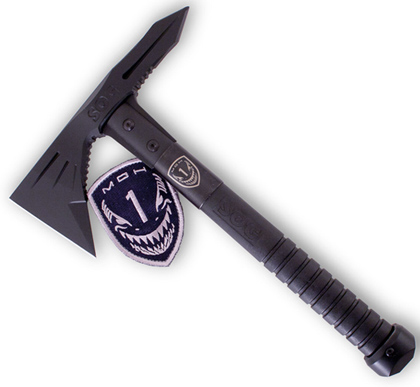
Also proliferating were models in a tomahawk, hatchet or hatchet configuration from 5.11 Tactical, Hogue, Spyderco (Szabohawk), Kershaw (Tinder), SOG Specialty Knives & Tools (Survival Hawk), Timberline (Tomahawk CBT/Combat Breaching Tool) and Puma (Tomahawk XP and Packable Hatchet). A design collaboration with Allen Elishewitz, the Hogue model is especially noteworthy with hammer poll and spike attachments to make it two hawks in one.

Chef'sChoice Hybrid.
The new Chef’s Choice Hybrid AngleSelect from Edgecraft combines electrice and manual sharpening stages and is desgined for sharpening traditional European/American at a 20° angle and Asian style knives at a 15° angle.

Knives designed by or dedicated to military heroes were highlighted by a Case V-42 based on vintage drawings of the original model made for World War II’s First Special Service Force, the father of today’s spec ops units, with two surviving FSSF members—93-year-old Eugene Gutierrez and Del Stonehouse, 90—on hand at the Case booth to visit with show attendees. Buck offered the 245 Matt Would Go Knife designed by Navy SEAL Matthew J. Leathers, who was lost at sea during open ocean training exercises in 2013. Camillus featured new tactical fixed-blade designs by retired Green Beret Grady Powell and retired Navy SEAL Jared Ogden of National Geographic TV’s Ultimate Survival Alaska. (Editor’s note: All of the preceding military knives will be featured in special stories in an upcoming BLADE®.)

Other knives with a celebrity influence include new Kutmaster fixed blades inspired by the Pigman TV series. Condor premiered the Primitive Bush Knife used by survivalist Matt Graham on the Discovery Channel’s Dual Survival reality show.

It’s not a knife event without new tactical folders. Emerson Knives, Inc., debuted four entries—the Sheepdog, Iron Dragon, Hattin and Combat Systems Fighter—and Kershaw a larger version of its most popular Emerson collaboration, the CQC-4KXL. Coast Cutlery presented three smooth-opening, economical tactical folders (models TX399, TX395 and TX360) with design input from Spec Ops personnel. Krudo had four new folder designs—three flippers and an Asian-influenced model with a modified tanto blade called the Dao.

Other introduced models and items of note include:

  • ESEE’s long-awaited Camp-Lore bushcraft series, the Ontario Bushcraft Woodsman chopper and the Saker, a bushcraft design by BLADE contributor Abe Elias for CRKT;
  • Zero Tolerance addressed the lower-end and smaller-knife industry segments with smaller folders (the 0450 and 0452CF) designed by Dmitry Sinkevich in the $200 MSRP range, and also introduced the model 0630 folder which includes Ernest Emerson’s wave-opening feature;
  • DPx is working on a new version of its pivoting-handle-and-blade-guard design, also set for a BLADE Show debut, that is easier to operate and will be in a skinning knife configuration;
  • White River’s hunting knife collaborations with Fisk, the Sendero Bush knife, with CPM S30V blade steel and an MSRP of $220;
  • Hogue and Benchmade (a river knife) fixed blades with lock-and-switch-release sheaths for both secure knife carry and easy deployment;
  • For the ladies, 5.11 Tactical’s black folders with assorted handle color inserts with matching anodized liners;
  • Traditional pocketknives by Queen that include Schatt & Morgan Anglo-Saxon patterns and those by Case in handles by Eagle Grips;
  • Timberline’s Trophy Drop-Point hunters designed by knifemaker/professional Alaskan hunting guide Russ Kommer;
  • Spartan Blades is developing a lapel dagger and a redo of an old Bill Harsey tactical folder design;
  • Smith’s and its new Edgesport outdoor specialty tools and product line includes a natural tinder maker w/fire starter ($8.99 MSRP); Pack Pal Sharpener and Fire Starter w/emergency whistle ($9.99 MSRP); Pocket Pal X2 Sharpener and Survival Tool (sharpener, LED light, compass, whistle and fire starter, $14.99 MSRP); Survival Knife (a folder w/sharpener, whistle and fire starter, $19.99 MSRP); Survival Knife and Kit (w/collapsible silicon cup, fishing kit, duct tape, safety pins, emergency blanket, zip ties and tinder, $39.99); and Ultimate Survival Kit and Multi Tool 10-N-1 Multi-tool w/basic survival and first-aid kit, $49.99 MSRP).

The latest issue of BLADE is on newsstands now!Recommended:

Stay abreast of the latest developments on this and many more knife rights issues with a subscription to BLADE.

Knife Brings World Record Price

Roosevelt's knife
On one side of President Theodore Roosevelt’s knife is a forest scene with two men behind a tree, one standing with rifle in hand, the other crouching.
President Theodore's Roosevelt's knife.
The top of the handle of President Theodore Roosevelt’s knife is carved in the shape of an eagle’s head of solid gold. The eagle’s eyes are garnets.
Roosevelt circa Oct. 1910.
Theodore Roosevelt in October 1910.

A knife presented to President Theodore Roosevelt brought a world record price of $414,000 at auction this past weekend, Sept. 9-11.

It is believed to be the most ever paid for an American knife at auction, according to the auctioneer, Rock Island Auction Co.

The previous world record price for a knife at auction reportedly was $270,000 in 2006 for a piece that was linked to Sam Houston.

Made by J. Russell & Co. of Massachusetts and with an ornate handle of gold and platinum by New York luxury jewelry retailer Dreicer & Co., the knife originally was presented to Roosevelt “to carry with him on his African hunting trip” by James W. Gerard, New York Supreme Court Justice and later ambassador to Germany. The knife was said to have cost $1,250 when it was presented to Roosevelt in 1909, which is about $33,266 in today’s money. The knife had been in the Roosevelt family ever since until this past weekend’s auction.

The 6-inch spear-point blade has a mottled gray patina and is etched on the left side with “PRESENTED TO/THEODORE ROOSEVELT/BY HIS FRIEND/JAMES W. GERARD.” The blade mark is J. RUSSELL & CO./GREEN RIVER WORKS. The “T” guard is bear heads sculpted in gold. The sculpted gold handle has a pommel in the shape of a highly detailed eagle head with red garnet eyes. The left side of the handle has a frontier scene on a platinum background. Overall length: 11.5 inches.

When Roosevelt died in 1919, the knife became part of the estate of his widow, Edith C. Roosevelt. From there it went to Mrs. Roosevelt’s eldest daughter, Ethel Roosevelt Derby, probably sometime around Mrs. Roosevelt’s death in 1948. In 1976, Mrs. Derby presented it as a gift to the knife’s consignor, who wishes to remain anonymous, as the consignor was about to marry Mrs. Derby’s granddaughter. The consignor and Mrs. Derby’s granddaughter used the knife to cut the cake at their wedding ceremony.

In 2013, Stuteville Antiques & Appraisals reportedly valued the knife at a quarter of a million dollars.


Make Your Own Legendary Knife

Best books about making knives and knifemakingThe third edition of BLADE’s Guide to Making Knives gives you all the information you need to start making knives. At less than $20 when you order directly from BLADE, it’s the best investment in your knifemaking career you can make.

Pick up your copy of the best knifemaking book under the sun.

Save

Save

Save

Save

Save

Save

Advertisement

Must Read Articles

Read this before you make a knife

Knifemaking 101 – Read This Before You Make a Knife

  by Wayne Goddard My experience has taught me that there's nothing like digging in and getting started. I've often said the hardest part of the...
how to forge damascus steel

How to Forge Damascus

Advertisement
Advertisement