The BLADE Blog w/Steve Shackleford

Knives, knife people, knife news, knife use, knife collecting, knifemakers, knife events, the BLADE Show, BLADE Magazine, and more.

Knife Of The Day XV: O’Hare Tanto

     Our Knife Of The Day is Sean O’Hare’s tanto. It sports a flat-ground, 3.75-inch blade of CPM-154 stainless steel, a stabilized buckeye burl handle with a bird’s-beak butt, and a 416 stainless steel guard. Sean also made the leather pouch sheath. His price for a similar piece: $395.

     “This one is a bit of a departure from my norm as it is a tanto style,” Sean noted. “I was very pleased with the way it turned out. So far this is the only [tanto] I have made. It sold right away at the New York Custom Knife Show.”

     For more information contact Sean at [email protected].

     For more on the latest knives, knife legislation, knifemaking instruction, knife trends, knifemakers, what knives to buy and where and much more, subscribe to BLADE® Magazine, the World’s No. 1 Knife Publication. For subscription information click on http://www.shopblade.com/product/blade-magazine-one-year-subscripti…?r+ssfb013012#BL1SU

Veterans’ Knives for Veterans Day

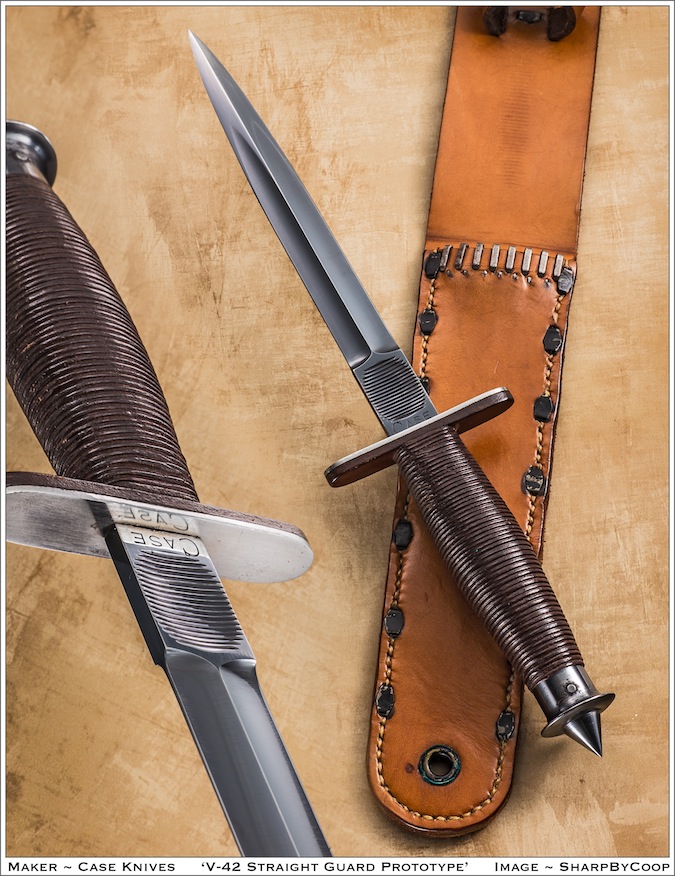
Case V-42 dagger.
The classic Case V-42 with thumbprint ricasso. (SharpByCoop image)
World War II Mark 1's.
Two Mark 1’s, one by Pal (top) and Robeson (bottom).

In honor of Veterans Day, here are a few of the veterans’ knives that have seen action over the past century in the service of our country:

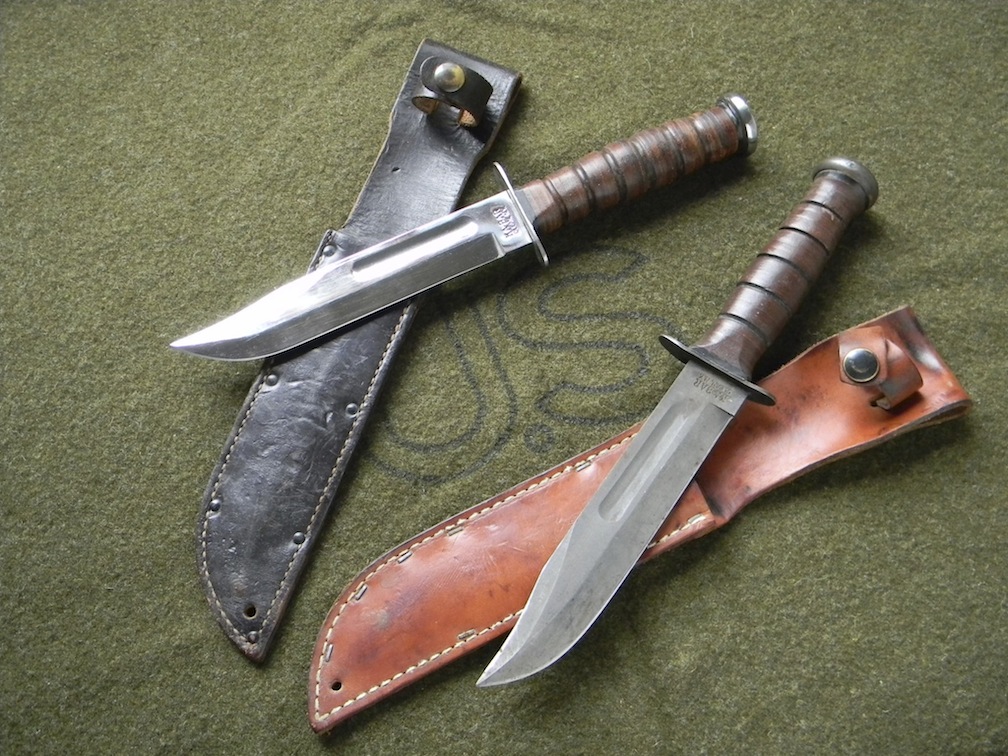
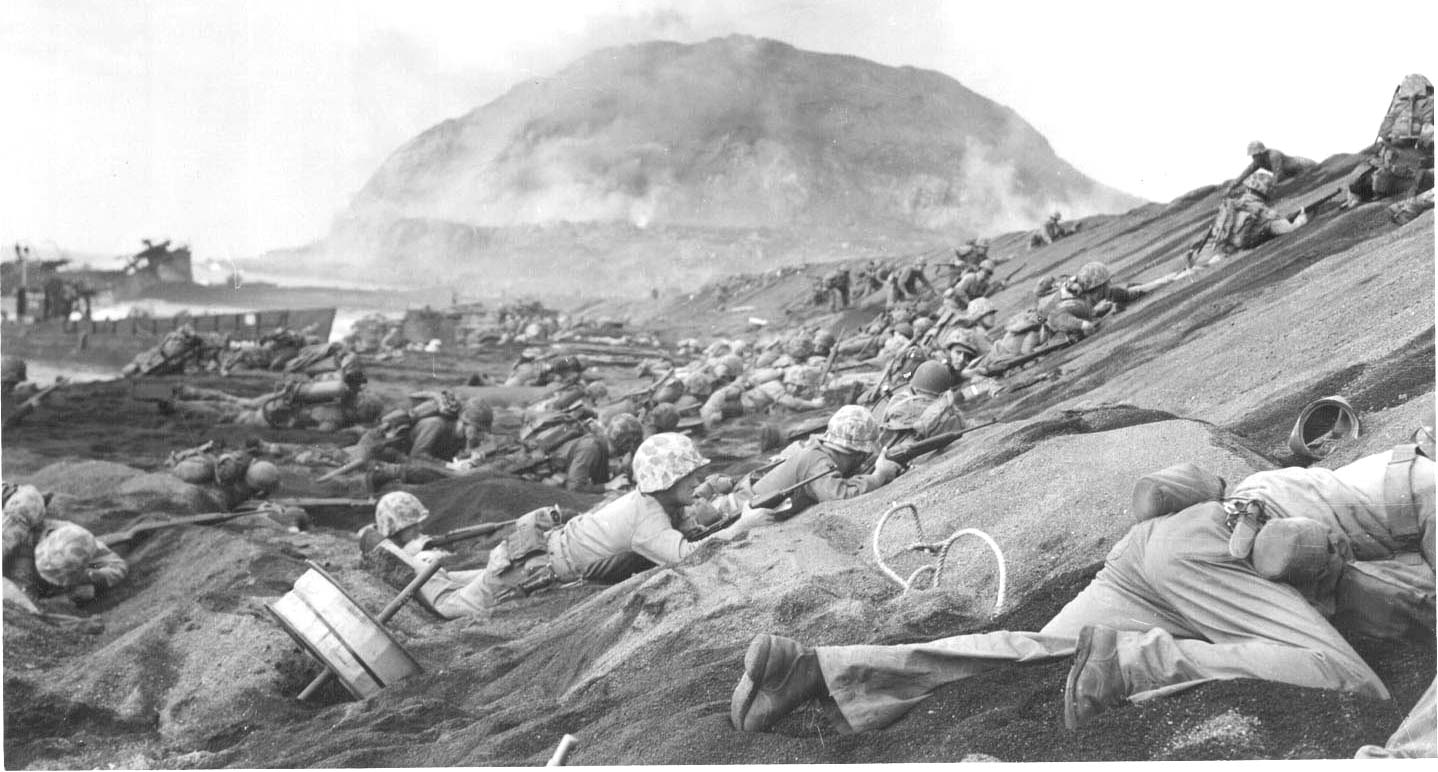
•U.S.N. Mark 2/U.S.M.C. fighting-utility knife: Known to many simply as a KA-BAR or kabar, it was made during World War II not only by Union Cutlery/KA-BAR but also, among others, Pal, Case, Camillus, Utica, Conetta and Robeson Shuredge. The iconic picture of it on the hips of U.S. Marines on the black sands of Iwo Jima tells it all—it was there and so were the Marines, who, by the way, are also celebrating their 240th anniversary. Semper Fidelis!;

•U.S. Mark I Trench Knife: It has all the trimmings: skull crusher, dagger blade, and the four finger holes in the knuckle guard. It reeks of Doughboys, Over There and Jimmy Cagney’s The Fighting 69th;

•Randall Model #1-8: WIth its stacked-leather grip and flowing blade, slightly dropped handle, double guard and narrow tang opening into a magnificently ground clip-point blade, the Model 1 has some of the most beautiful lines of any knife ever made;

KA-BAR Mark 2's.
Two Mark 2’s stamped “KA-BAR.”

•Case V-42: Classic skull crusher, cylindrical/swell-center handle, double guard, dagger blade and the clincher, the thumbprint indentation iwth grooved lines on the ricasso alone would guarantee the V-42 a place in any pantheon of military knives;

•Gerber Mark II: The one with the “cat-tongue” handle—so-called because of the feel of the grip created by spraying molten stainless steel onto the aluminum—and the wasp-waisted blade is a favorite from the Vietnam War;

•SOG Recon: The “twin-peak” blade spine readily identifies this military classic from the Vietnam War. “SOG” comprises the last three letters in the MACV-SOG acronym, the seven which stand for Military Assistance Command Vietnam-Studies and Observations Group;

•Ulster Mountain Pocketknife: These utlilitarian pocketknives reportedly were issued to the First Special Service Force during World War II and later to the troops of the 11th Mountain Division.

Marines at Iwo.
U.S. Marines land at Iwo Jima, their U.S.N. Mark 2’s/Ka-Bar fighting/utility knives at their sides.

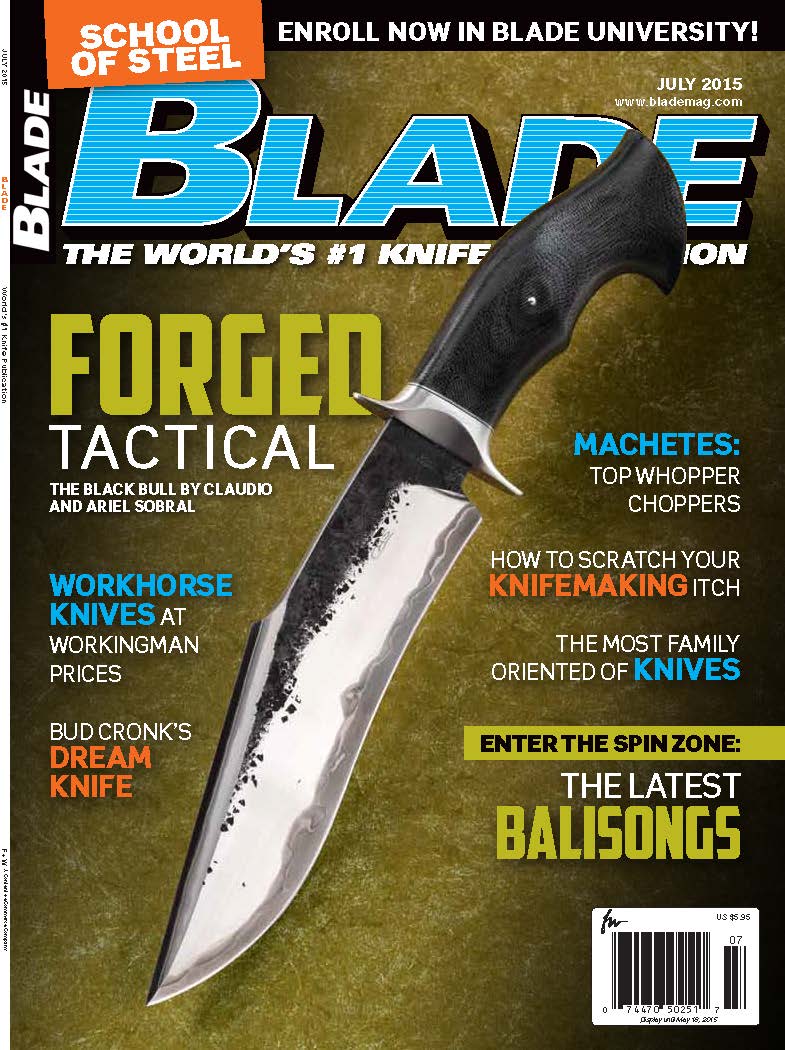
Forged Tacticals Heat Up in New BLADE®

Forged tacticals in new BLADE!
Forged tacticals are heating up in the new BLADE®, on newsstands NOW!

Forged tacticals as a trending new niche market, perhaps the best knives to use in corrosive saltwater environments, four hot new butterfly knives, the latest machetes and a comprehensive preview of the 2nd Annual BLADE University highlight the new BLADE®, on most newsstands today.

Purveyor Les Robertson specializes in tactical and handforged knives, so it only stands to reason he would be on the cusp of the edge if forged tactical knives were to become hot as firecrackers—and apparently such is the case. Find out why, which ones are hot and more in Robertson’s “A Niche Market In The Making?”

Spyderco has long touted its H1 steel as being not just stainless but stain proof. Ocean kayaker Lance Clinton decided to try out the company’s Pacific Salt model while floating off the coast of Costa Rica. Find out what he found out about this intriguing blade material in “Down To The Sea With Knives.”

Balisongs—aka butterfly knives—have long intrigued edged enthusiasts, and the latest examples of the genre will capture your fancy in “Enter The Spin Zone.” Factory machetes, meanwhile, are appearing in ever-increasing numbers. Check out some of the latest of the long blades in “Those Magnificent Machetes.”

BLADE University, a fresh approach to knife education at knife shows, was a huge hit at last year’s BLADE Show—and this year’s 2nd Annual BLADE University has been expanded to cover a wider range of topics, including knife grinding, collecting, how to have your design picked up by a knife manufacturer, 3D CAD/CAM knife design, how to engrave, how to design combat knives, how to make handles and guards, introduction to bladesmithing, how to sharpen, what to look for in the best high performance knife and much. Get the complete lowdown in “School of Steel.” BLADE University will commence a day before through the show Saturday of the BLADE Show, which will be June 5-7 at the Cobb Galleria in Atlanta.

There’s much more in the latest issue of BLADE. Check it out at your local newsstand.


The latest issue of BLADE is on newsstands now!Recommended:

Stay abreast of the latest developments on this and many more knife rights issues with a subscription to BLADE.

First Family of Swedish Steel

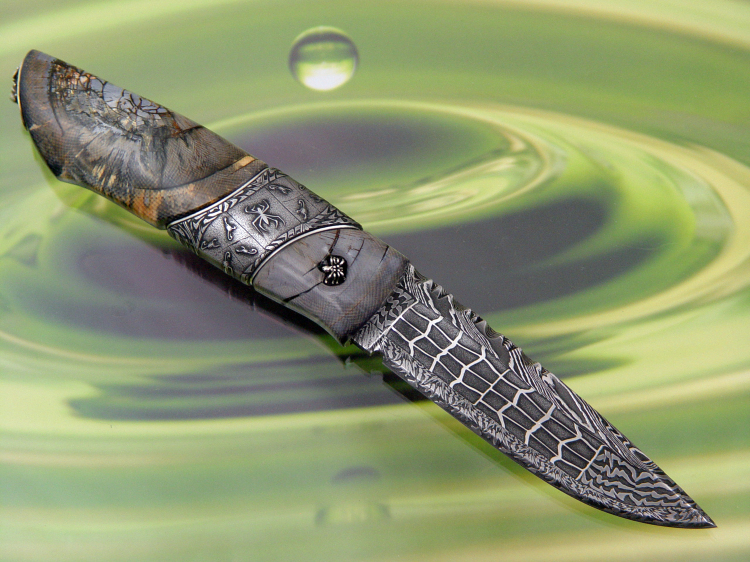
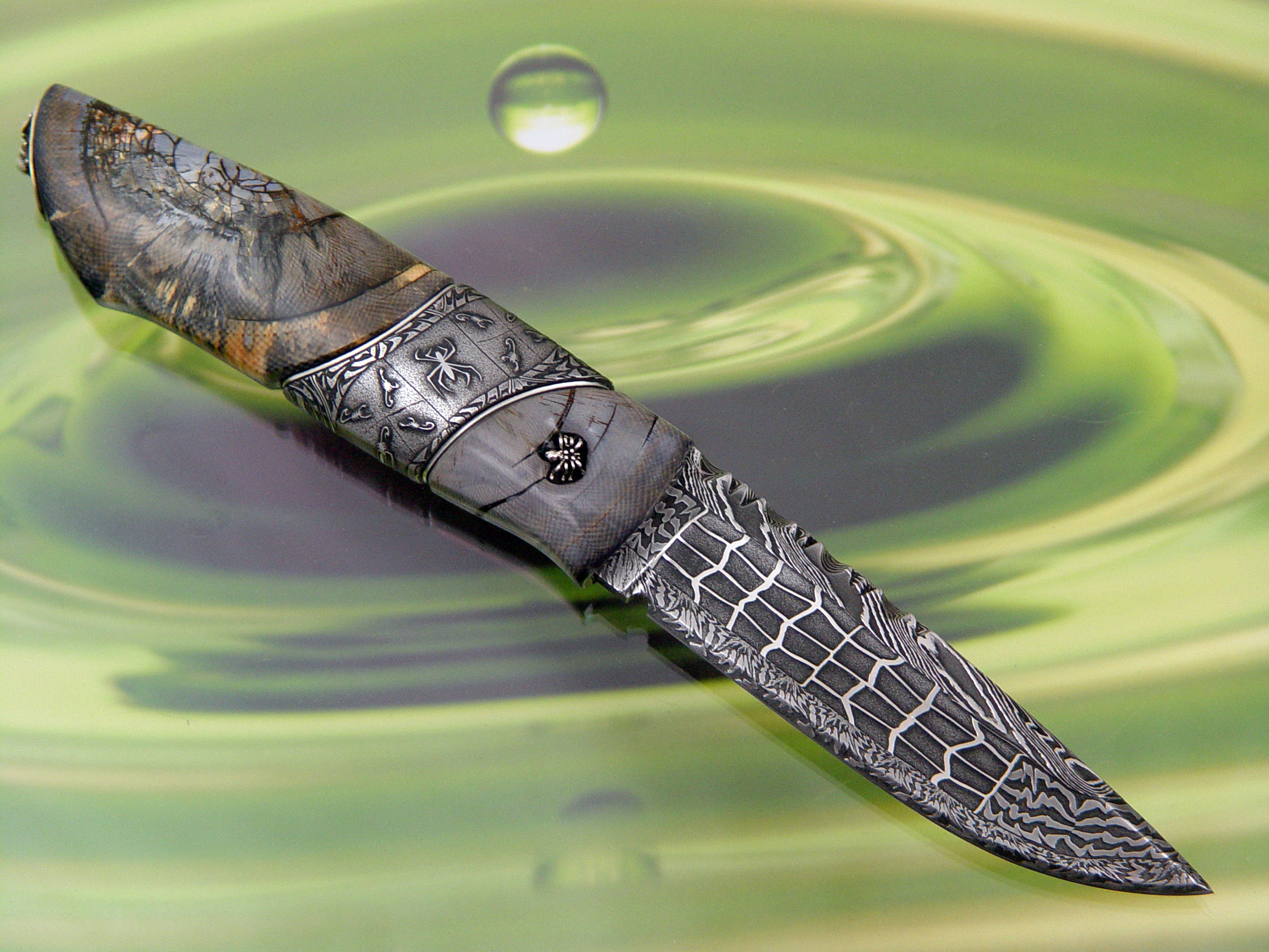
“Mammoth Spider” by Thomas Lofgren features a blade of a net-pattern mosaic damascus forged by Mattias Styrefors, a mammoth ivory and mosaic damascus handle, and sterling silver detail. (Lofgren photo)


Thomas and Claes Lofgren


Among the noteworthy Swedish knifemakers who have burst on the international cutlery scene in recent years, one of the names that stands out is Lofgren—father Thomas and son Claes.

    It is the family’s favorite sport, fishing, which brought Thomas to handmade cutlery. An annual family rite is to spend 10 days fishing—and fishing only—in the Lofoten Islands of Northern Norway. The waters are fish rich and it is not uncommon to pull out one in the 18-to-24 pound range. When you catch them you have to fillet them, which calls for a pretty good knife. Hence, Thomas began making such knives about 20 years ago. The first one cut reasonably well but was so ugly he felt obligated to make another one, and he has not quit making them since. He learned a few things from a book on knifemaking but the real trigger for improvement was an encounter with Roland Stromberg, an experienced maker. Roland taught him how to sew a nice sheath and from there showed him how to improve the general quality of his work.

    Having a technical background, Claes started getting interested in the craft in 2000, which made knifemaking just that much more important to Thomas. Since then there have been many elements of progress, emulation and sharing between father and son in the knife field. Now they are both part-time makers. Claes also works for an industrial company, and Thomas was instrumental in coordinating the 2005 and 2008 Sävsjö International Knife Expo. Thomas also found time recently to write the book, Making a Sheath for a Nordic Style Knife. It includes 150 of his own photos and sold 2,600 copies in its Swedish version, was translated into French and is now being published in German and Russian. Meanwhile, He exhibits at many shows in Sweden, other European cities (Paris, Helsinki, Solingen, Nontron), and in the USA. 

    His knife motto is “What stops growing will soon be dead.” Consequently, Thomas is always trying to improve, learning new techniques—Claes’s contributions are important in this regard—looking for new materials, and experimenting with fresh combinations of shapes and colors. “I like challenges, to walk on thin ice, even if I am not a very good swimmer,” he quipped.

    All his knives are distinctive. Even on models of similar design, he introduces many different decorations of handle and sheath, and combinations of colors and materials. In the past few years he turned toward even more high-quality materials. He is using less wood and more mammoth and walrus ivory, hippopotamus or warthog tooth, giraffe bone, etc. If he uses wood, it is often stabilized and colored. Once in a while he will embellish his knives with gold and silver, or a small precious or semi-precious stone. He prefers mosaic damascus for his blades, especially that of Conny Persson or Johan Gustafsson, or sophisticated damascus by Mattias Styrefors and André Andersson. His knives have won a number of awards in judging competitions at Swedish and American knife shows.


LIKE FATHER …

Claes’s background includes welding, most notably operating a robotic welding machine for three years. As the company he worked for expanded, a part-time position for supervising the planning of materials supply was created. Claes applied for the post and got it.

    For years he knew his father made knives, but Claes was not interested. However, in 2001 he watched his father and Johan Gustafsson board an airliner for the Knife Expo near Los Angeles (Pasadena), and “felt envious when Dad took off.” Wanting to experience the USA and California—and, of course, “California girls”—Claes saw making knives as one way to pay for the trip. His knowledge of metalworking and materials, plus the teaching of the basics by his father, resulted in very quick progress. Five months after making his first knife alone, he entered it in a judging competition at the Ludvika Show in Sweden and won in his chosen category. It was an enormous boost. By February 2002, he already had enough pieces ready to accompany his father to the Knife Expo. Since then it has become a sort of tradition for father and son to attend the Knife Expo and Ludvika Knife Week, as well as several other European shows.

    Claes’s knives share several points of similarity with his father’s. Both makers prefer mammoth bark ivory (the “bark” is the outside crust of the tusk), the same steel suppliers, quality sheaths in the Nordic style, and the same way of naming knife models. Nonetheless, not all the similarities are the result of Thomas’s influence. It is often Claes’s ideas and imagination that inspire his father.

    There are also some differences between the two. “Thomas’s knives are well made and imaginative, but with a more traditional approach. He has a feel for elegant and functional knives,” Samuel Karlsson stated. “Claes’s knives are more daring; his designs are more adventurous and extreme.”

    Being younger and with more of a technical background, Claes probably experiments more than Thomas. “The worst thing that can happen is that it goes wrong and I have to start all over again,” the younger Lofgren observed. “It can cost some material but I think it’s worth a try. I find it exciting to cross the line to find new approaches.”

    I would be remiss if I did not mention that Anna, Claes’s younger sister, also is a very good maker and has won prizes in judging competitions at Swedish knife shows. For the moment her knifemaking career is on hold as she works with her partner on restoring a farm they bought and caring for a 2-year-old boy. Meanwhile, Claes’s partner, Monika Bengtsson, also is making her first knives. “I think that I can retire now, before they all become too good for me!” Thomas laughed. “The only person not making knives in the family is my wife, Ann-Charlotte. But I can tell you that she bought two small blades …”

    Father and son makers are not uncommon, and father and daughter are less frequent. But if you add son, daughter, partner of the son and maybe one of these days the mother, a real first family of Swedish steel is in the making.—by Francis Anglade

Thomas and Claes Lofgren

+4670 834 9229 (Claes)

+46381 135 73 and +4670 69 77 405 (Thomas)

[email protected]

www.lofgrenknives.com

Specialties: Both make one-of-a-kind knives in similar styles and materials

Blade Steels: Mosaic damascus forged by Conny Persson, Johan Gustafsson, Joe Olson and Henry Hilden, and damascus forged by Mattias Styrefors and André Andersson

Handle Materials: Mammoth (including bark) and walrus ivory, hippo and warthog tusk, giraffe bone and woods (the latter often stabilized and colored)

Embellishment: Occasionally gold and silver, and precious and semi-precious stone inlays; some engraving by Jonny Walker Nilsson

Sheaths: Nordic style

Author! Author!: Thomas wrote the book, Making a Sheath for a Nordic Style Knife, which sold 2,600 copies in the Swedish version and has been translated into French, German and Russian

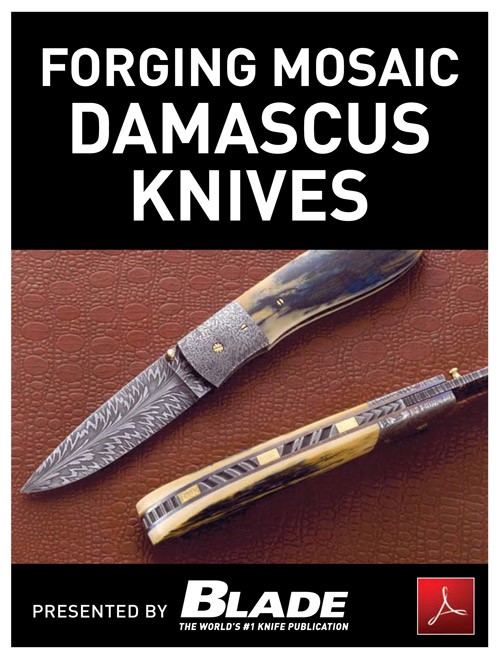
If you’re looking to make your own mosiac damascus, look no further than the Forging Mosaic Damascus Knives download from BLADE. You’ll learn the foundation of this fascinating process to be able to build your own great designs.


Click here to get the download for just $4.99.

Englehart’s Dad’s World War II Knife

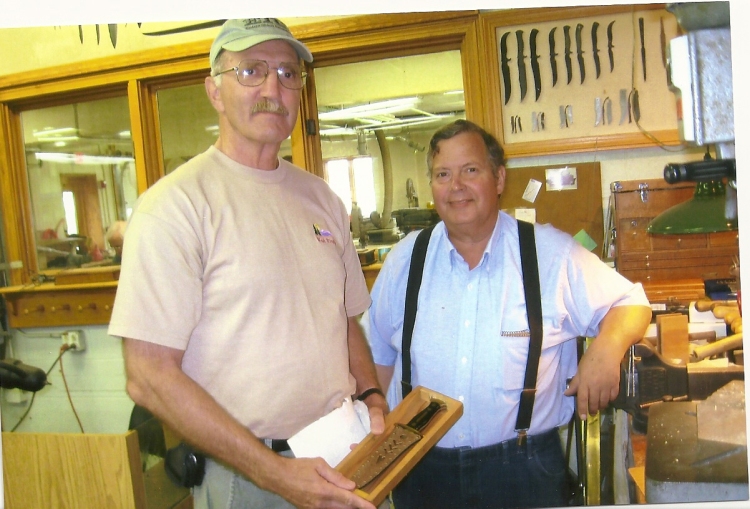
The author (left) holds his dad’s World War II Warther Commando Knife in the Warther knife shop in Dover, Ohio. At right is knifemaker Dale Warther, grandson of Ernest Warther. Dale passed away in 2010. (photo courtesy of Gene Englehart)


     Editor’s note: On page 114 of the December BLADE®, we ran the story “Ed’s Dad’s WWII Ek” about the knife BLADE field editor Ed Fowler’s dad carried during the Second World War. Along with the story we asked readers to send us pictures and information about their dads’ military knives. It didn’t take long for reader Gene Englehart to supply the following.

     My father, Orville Englehart of Paw Paw, Illinois, spent four years in the Navy as a chief petty officer during World War II.  He was stationed stateside, training aircraft mechanics in Michigan, Florida and Oklahoma.

     I believe it was when he was stationed in Michigan that he ordered a Commando Knife from Ernest Warther in Dover, Ohio. After Dad got the knife, he kept it in the original box and, as far as I know, never used it. It has a 7-inch blade with his name and serial number engraved on it.

     Ever since I was a little kid the knife fascinated me, and I was forbidden to touch it. In 2009, I took it with me on a trip East that included a visit to the Warther Museum and workshop in Dover. I had the good fortune to meet Ernest’s grandson, Dale, and show him the knife. He told me the copper in the sheath came from a local sheriff who had confiscated it from a moonshine still. The brass came from the kick plates on the men’s room door at the local high school. Ernest’s son Dave took it home for the war effort. Ernest made only about 1100 of these knives and sold them for about $15 apiece, which is probably less than they cost him to make.

    Ernest was a genius and an incredibly skilled carver and craftsman. Dale was very gracious to me the day I visited his shop, and I was very sad to hear of his passing about a year later.

     I consider Dad’s Warther Commando knife to be a family heirloom now.


Do you have your dad’s knife or any knife used by any family member—including you—while in the service? Send a photograph or photographs of it and/or of you or the family member holding it, any information/anecdotes about the knife and its use by the family member who owned/carried it, along with the knife’s specs—brand/maker, model, overall length, your family member’s name, rank and branch/years/theater of service, etc.—to BLADE, c/o “Knives Of Heroes,” 700 E. State St., Iola, WI 54990. If digital, the image(s) must be at least 600 K. E-mail it/them to [email protected].


To read similar stories and the latest knife news, forums, blogs and much more, subscribe to BLADE®. For subscription information, click on http://www.shopblade.com/product/blade-magazine-one-year-subscription-us/?r+ssfb111211#BL1SU

What’s Your “Comeback” Knife?

Is there a specific knife model, a knife style or some other knife feature, gizmo or what have you that you don’t see anymore but would like to see make a comeback?

It can be just about anything—custom or factory, combat or kitchen, utility or fantasy—you name it and you discuss it. A picture of it sure would help matters.

Here’s an example.

I’d like to see Spyderco bring back the Maddox one-hand utility knife. Designed by Joe Maddox for a friend who had a broken arm, the Maddox is tailor-made for use by those who can use only one hand. However, my wife Susan—who has two healthy hands, by the way—uses it on a regular basis in the kitchen for any number of chopping/dicing chores. The ulu-style blade and handy wood handle combine to make a great tool for exerting downward pressure and a rocking-type cutting motion on a cutting board.

By the way, I got the idea for this short story from Spyderco’s Joyce Laituri, winner of the BLADE Magazine 2013 Publisher’s Award for her stellar career as Spyderco marketing manager and public relations guru.

What about you? What knife would you like to see make a comeback, or what knife or knives made long ago but are no longer would you like to see offered today? Or, is there a style or type of knife that’s rarely made that you’d like to see more of? It can be most anything—a special kind of folder, multi-blade, folding bowie, etc. Or, it can be a knife made from a vintage blade steel or handle material, an old style of embellishment no longer or rarely used, etc.

For more on the latest knives and knife news, stay tuned to www.blademag.com.

How about a comeback of the Spyderco Maddox?
The Spyderco Maddox is an example of a discontinued knife the author would like to see make a comeback.


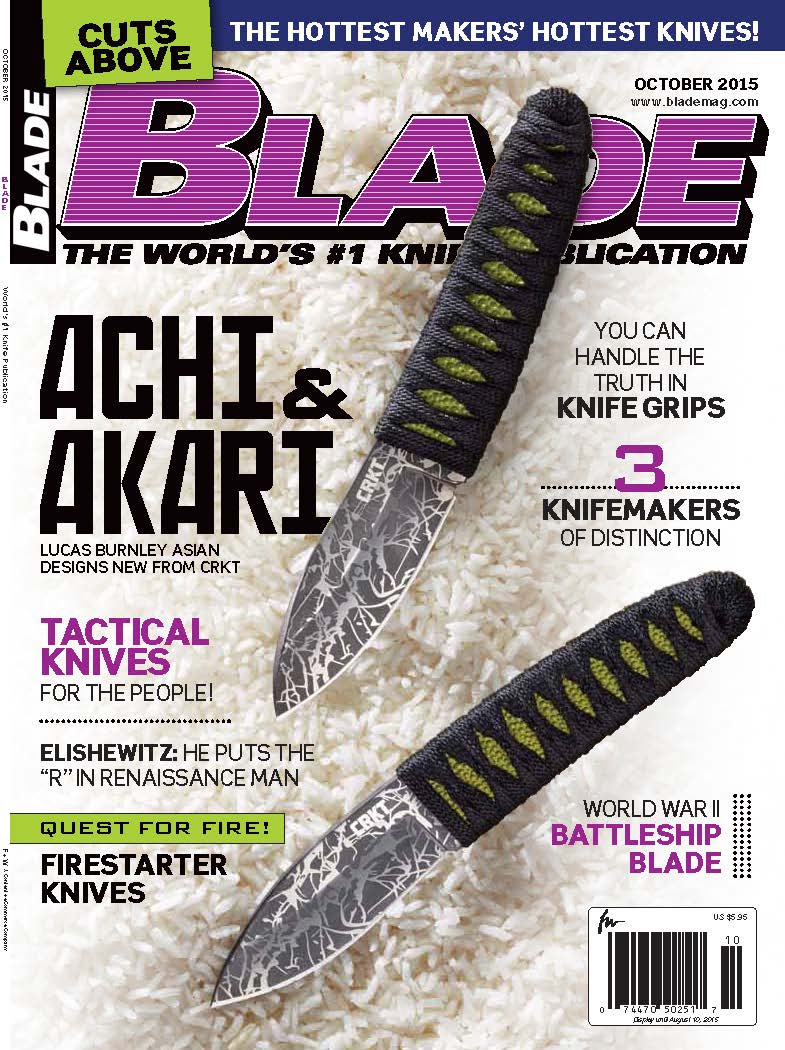
New BLADE On Newsstands Now!

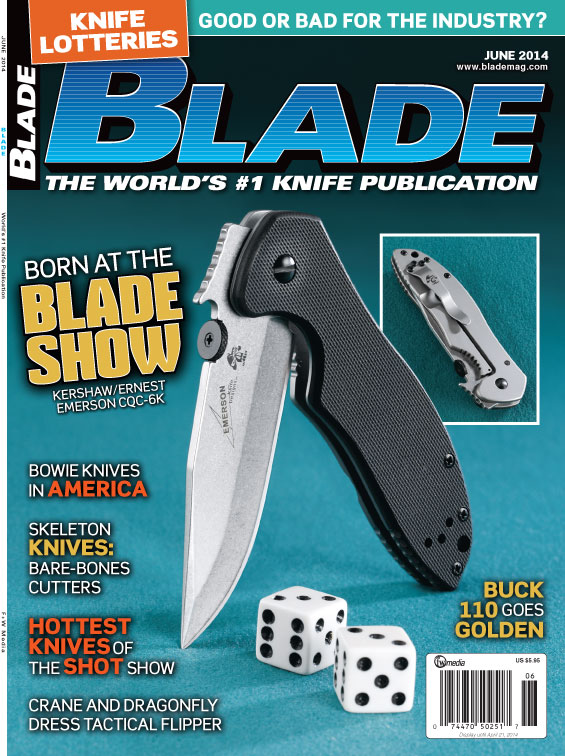
The new BLADE showcases the hottest knives of the SHOT Show—including the new Kershaw/Emerson CQC-6K on the cover—the inside scoop on knife lotteries, field tests of the latest skeleton knives and more.

June BLADE hits newsstands today!
Check out the June BLADE, on newsstands today!

Held this past January at the Sands Expo Center in Las Vegas, the SHOT Show is the annual coming out party for the latest in knives, guns, deer stands, sharpeners and everything that has to do with shooting and hunting. The movers and shakers of the cutlery industry were there to present the newest in tactical, outdoor, kitchen, sporting, bushcraft and just about any knife you can think of. BLADE was there to scope it all out and you can be too in the pages of the June issue.

Knife lotteries are one of the hottest tickets in the industry. Knife enthusiasts who normally can’t even sniff buying the knives of some of today’s hottest makers due to long waiting lists have an equal chance at the makers’ new knives through the lotteries. But are the lotteries really all they’re cracked up to be? Find out the good and the bad of an industry juggernaut in the new BLADE.

Bare-bone cutters, skeleton knives are cool tools that offer a minimalist approach to design but maximum cutting output for blades their size. Find out how some of the newest models perform in this issue.

The Buck 110 is one of the icons of the knife industry and this year celebrates its 50th anniversary. Get the lowdown on the history of the famous folding hunter and all the various sweepstakes surrounding the knife’s golden anniversary in the new BLADE.

Open through June 22, “A Sure Defense: The Bowie Knife In America” is a celebration of perhaps the world’s most famous American knife. Held at the Historic Arkansas Museum in Little Rock, the exhibit features some of the world’s oldest and most valuable antique bowies from the 19th century. Read all about it this issue.

To subscribe to the digital edition of BLADE, visit

http://www.shopblade.com/blade-1-yr-digital-subscription. 

To subscribe to the print edition, visit

http://www.shopblade.com/blade-magazine-one-year-subscription-u-s

For the latest knives, knife trends, news and more, stay tuned to www.blademag.com.

Advertisement

Must Read Articles

Read this before you make a knife

Knifemaking 101 – Read This Before You Make a Knife

  by Wayne Goddard My experience has taught me that there's nothing like digging in and getting started. I've often said the hardest part of the...
how to forge damascus steel

How to Forge Damascus

Advertisement
Advertisement